Exhibition | Times in Tapestry

Judocus de Vos after the model by Philippe de Hond, La Rencontre des belligérants, tapestry from l’Art de la guerre, ca. 1718–24, Brussels
(Lausanne: Fondation Toms Pauli, donation Mary Toms)
◊ ◊ ◊ ◊ ◊
Now on view at mudac:
Times in Tapestry / Tisser son temps / Am Webstuhl der Zeit
Musée cantonal de design et d’arts appliqués contemporains, Lausanne, 7 November 2025 — 8 March 2026
mudac and Fondation Toms Pauli are proud to present this exhibition dedicated to tapestry as a vector for social and political discourse.
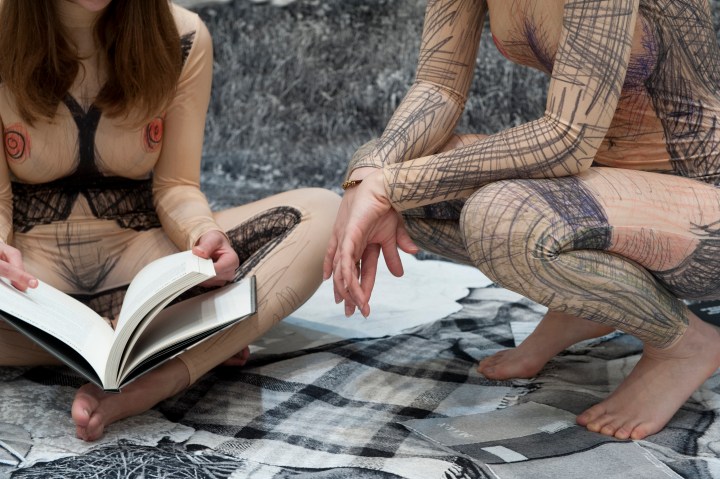
Goshka Macuga, Performance of Death of Marxism, Women of All Lands Unite, 2013, wool tapestry with two women wearing printed lycra suits, 560 × 290 cm, 2013.
Far from being confined to a decorative role, tapestry has always been a powerful tool for storytelling. From medieval times to contemporary creations, it provides a space for dialogue at the crossroads of collective aspirations, historical narratives, and contemporary issues. The exhibition brings together major works from the Toms collection, woven in the prestigious Brussels workshops between 1660 and 1725, alongside contemporary creations by Goshka Macuga and Grayson Perry. Tapestries, such as The History of Scipio Africanus and The Emperors Titus and Vespasian, depict glorious and symbolic episodes from Roman narratives. At this occasion two tapestries will be presented to the public for the first time, highlighting the value and prestige of this collection, owned by the State of Vaud.
These historical masterpieces resonate with the powerful creations of Goshka Macuga and Grayson Perry. Through tapestries such as Perry’s The Vanity of Small Differences and bespoke works by Macuga, the exhibition explores contemporary themes of social struggle, critiques of consumer society, and power dynamics. For this occasion, Macuga will create a unique textile work, specially created in dialogue with the Toms collection, which will enhance the exhibition with a distinctive and contemporary perspective. The confrontation of ancient and contemporary works highlights the timeless power of tapestry, with its visual language capable of conveying complex messages and fostering reflection on universal issues.
The exhibition press kit is available here»
More on the Toms Collection is available from the press release:
The Toms Collection is one of the most significant privately assembled collections of historic tapestry from the second half of the 20th century. Bequeathed to the State of Vaud by Mary Toms in 1993, it comprises over one hundred wall tapestries and decorative pieces from major European workshops, dating from the early 16th to the late 19th centuries. After amassing a fortune in real estate, British developer Reginald Toms (1892–1978) and his wife Mary (1901–1993) settled at Château de Coinsins in French-speaking Switzerland in 1958, where they discovered a passion for historic textiles. During the 1960s, they acquired over a hundred works, including furniture, carpets, and embroidery.
More than fifty tapestries in the collection originate from the leading workshops of Flanders, particularly from the 17th to the 18th centuries. The gold- and silver-threaded masterpieces on show are drawn from the original Toms collection and later acquisitions by the Toms Pauli Foundation, established in 2000. Known for its geographical, chronological and thematic breadth, as well as its outstanding state of preservation, this collection, owned by the State, has been exhibited in venues such as Payerne Abbey, the Metropolitan Museum in New York, the MCBA in Lausanne, the Palacio Real in Madrid, the Cité de la Tapisserie in Aubusson and Musée Rath in Geneva. It now takes pride of place at mudac for this landmark exhibition.
While the name Mary Toms is now recognised worldwide thanks to her prestigious collection, the life of the donor herself remains largely private. Trained as a secretary, Mary Alice Winterton married Reginald Toms in 1933. Reginald had achieved considerable success in finance and real estate, allowing the couple to live an international life between Britain, South Africa, Monte Carlo, and Ireland, before finally settling in French-speaking Switzerland in 1958, where they acquired the Château de Coinsins. In the short span of just ten years (1959–1969), Mary and Reginald Toms assembled, through purchases on the London art market, one of the world’s largest private collections of tapestries from the 16th to the 19th centuries, outside royal or aristocratic holdings.
Until Reginald’s death in 1978, the couple kept their collection relatively private. Yet they were fully aware of its exceptional nature and were concerned with ensuring its preservation. In 1990, Mary Toms drew up a will bequeathing to the Canton of Vaud the Château de Coinsins, its furnishings, art collections and the surrounding vineyard. Upon accepting this legacy, the State undertook to preserve and promote the remarkable collection of tapestries that Mary and Reginald Toms had so passionately assembled during the 1960s.
Based in Lausanne since its founding in 2000, the Toms Pauli Foundation is an active institution on both Swiss and international stages. Its core mission is to research, preserve and promote collections of historic and 20th-century textile art owned by the State of Vaud. The Foundation’s heritage consists of a significant collection of European tapestries and embroidery dating from the 16th to the 19th century, bequeathed by Mary Toms in 1993, as well as textile artworks from 1954 to 2011 that are emblematic of the Nouvelle Tapisserie movement.
Lacking its own exhibition space to showcase its exceptional holdings, the Foundation regularly presented its collections abroad. Since 2020, the Toms Pauli Foundation has been based at Plateforme 10. Its offices, collections, and specialised library are housed within the building of the MCBA. The public can discover the Foundation’s historic and contemporary collections through temporary exhibitions held at Plateforme 10—such as the major 2023 exhibition Magdalena Abakanowicz: Textile Territories, organised in collaboration with Tate—and in other venues in Switzerland and beyond. At the end of 2025, another piece from the Titus and Vespasian series will go on display at the MCBA as a follow-up to the Tisser son temps exhibition.
As the successor to the Centre International de la Tapisserie Ancienne et Moderne (CITAM), the organisation behind the Lausanne Tapestry Biennials from 1962 to 1995, the Foundation also maintains artist archives from these historic events and regularly hosts researchers from around the world.
Exhibition | Beyond The Medici: The Haukohl Collection
Given that the exhibition has been on tour since 2018, it’s laughable that I’ve missed it for so long. The latest iteration is now on view in Phoenix under the title Florentine Baroque: The Haukohl Collection. –CH
Beyond The Medici: The Haukohl Collection
Kuntsammlungen und Museen Augsburg, 20 October 2018 — 20 January 2019
Arp Museum Bahnhof Rolandseck, Remagen, 10 February — 8 September 2019
Musèe National d’historie et d’art, Luxembourg, 16 October 2020 — 21 February 2021
Palais de Beaux Arts, Brussels, June — September 2021
Rollins Museum of Art, Winter Park, Florida, 23 September — 31 December 2023
David Owsley Museum of Art, Ball State University, Muncie, Indiana, 24 February — 24 August 2024
Georgia Museum of Art, Athens, 1 February — 18 May 2025
Phoenix Art Museum, 28 August 2025 — 26 July 2026
 Florentine Baroque: The Haukohl Collection presents more than 30 examples of painting, sculpture, and decorative arts drawn from the most important Florentine Baroque art collection outside of Italy, assembled over more than 40 years by Houston-based art collector and co-founder of the Medici Archive Project Sir Mark Fehrs Haukohl. Featured artworks by local Florentine artists and artists living across Europe reflect Florence’s flourishing art industry, as well as the cultural and intellectual legacy of the Medici Grand Dukes on the Renaissance and Baroque movements.
The catalogue is available from Distributed Art Publishers (Artbook) . . .
Federico Berti, ed., Beyond the Medici: The Haukohl Family Collection (Milan: Silvana Editoriale, 2019), 288 pages, ISBN: 978-8836641284, $60.
Sir Mark Fehrs Haukohl, a Houston-based art collector and cofounder of the Medici Archive Project, has built America’s largest private collection of Florentine baroque paintings from the 17th to 18th centuries. The paintings, drawings, textiles, and sculpture illustrated in the collection document the Medici patronage and artists of the period. Particular attention is paid to the Dandini Family of painters: Cesare, Vincenzo, Pier and Ottaviano. Essays by Eike Schmidt, James Bradburn, Federico Berti, Fabio Sottili, and Francesco Scasciamacchia address a broad overview of collecting and history of the period.
Exhibition | Anton Raphael Mengs (1728–1779)
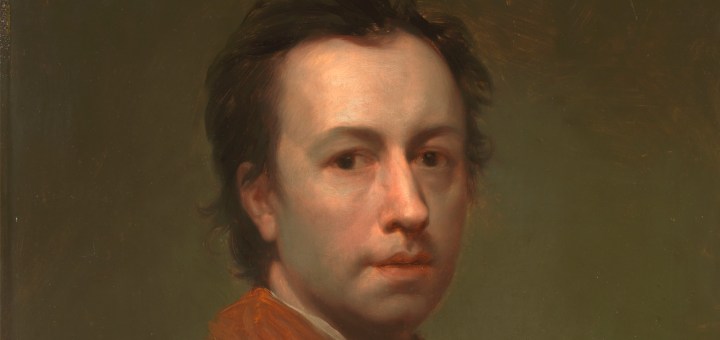
Anton Raphael Mengs, Self-Portrait, detail, 1761, oil on panel, 63 × 50 cm
(Madrid, Museo Nacional del Prado)
◊ ◊ ◊ ◊ ◊
From the press release for the exhibition:
Anton Raphael Mengs (1728–1779)
Museo Nacional del Prado, Madrid, 25 November 2025 — 1 March 2026
Curated by Andrés Úbeda and Javier Jordán de Urríes
The Museo del Prado and Fundación BBVA present an ambitious exhibition devoted to Anton Raphael Mengs, a key figure in the birth of Neoclassicism and one of the most influential artists of the 18th century. Anton Raphael Mengs (1728–1779) offers a detailed analysis of the painter’s work, thought, and legacy, in dialogue with the great masters of the past. It brings together a total of 159 works—including 64 paintings, 14 examples of the decorative arts, and 81 drawings, prints and studies on paper—allowing visitors to explore both the artist’s role as court painter and muralist as well as his intellectual and theoretical dimension. The works have been loaned from twenty-five international and nine Spanish institutions and ten private collections, reflecting the European reach of Mengs’s influence and the richness of his legacy.
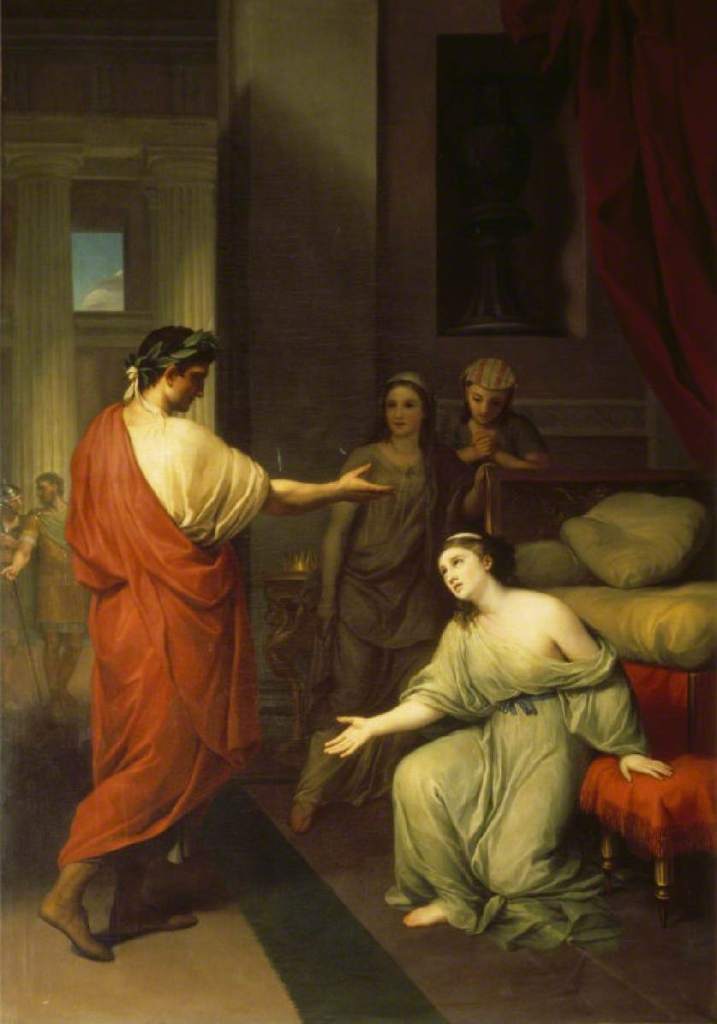
Anton Raphael Mengs, Octavian and Cleopatra, 1760, oil on canvas, 300 × 212 cm (National Trust Collections, Stourhead, The Hoare Collection).
The exhibition traces the artist’s journey from his training in Dresden and Rome to his rise to prominence as court painter to Charles III. It highlights his connections with figures such as Raphael, Correggio, and Winckelmann, as well as his role in redefining artistic taste in Europe. Exceptional loans that enrich the exhibition’s argument include The Lamentation over the Dead Christ from the Galería de las Colecciones Reales, Madrid; Jupiter and Ganymede from the Palazzo Barberini, Rome; and Octavian and Cleopatra from the National Trust Collections, United Kingdom.
The show is structured into ten thematic sections, combining a biographical survey of this cosmopolitan artist with areas devoted to specific aspects of his work and thought. Visitors will learn more about Mengs’s early training in Dresden and Rome under the strict discipline of his father, the court painter Ismail Mengs, and discover how the influence of Raphael and Correggio profoundly influenced his style and aspirations.
A section on “The Constant Challenge to Raphael” analyses Mengs’s conscious emulation of that artist, evident in works such as The Lamentation over the Dead Christ, displayed in a dialogue with Raphael’s Lo Spasimo di Sicilia. The sections on Rome, entitled “Rome, Caput Mundi” and “Rome: Fascination with the Ancient World,” show the impact of the Eternal City on Mengs’s work, both as a spiritual capital and as a repository of classical civilisation, with portraits of sitters such as Pope Clement XIII and Cardinal Zelada, as well as copies of antique sculptures that inspired the artist’s ideal of beauty.
 The exhibition also addresses Mengs’s complex relationship with the archaeologist Johann Joachim Winckelmann. “The End of Mengs’s Relationship with Winckelmann” tells the story of a friendship betrayed by the falsification of the fresco Jupiter and Ganymede. The section “Mengs, Painter-Philosopher” explores the artist’s theoretical activities, which made him an intellectual reference for Enlightenment art, and analyses the critical reception of his work after his death.
The patronage of Charles III is of central importance. The section “Painter to His Catholic Majesty and the Madrid Court” features portraits of the royal family and figures from Enlightenment Spain, while “Mengs, Painter of Frescoes” highlights the artist’s abilities at decorating large surfaces, such as the frescoes in the Royal Palace in Madrid. The section “Mengs as an Exponent of the New Enlightenment Devotion” focuses on his contribution to religious painting, influenced by Raphael, Correggio, Guido Reni, and Velázquez. Finally, “Mengs’s Legacy” looks at the painter’s influence on subsequent generations of artists, including Antonio Canova and Francisco de Goya.
Organised by the Museo Nacional del Prado with the exclusive sponsorship of Fundación BBVA, Anton Raphael Mengs (1728–1779) is curated by Andrés Úbeda de los Cobos, Head of the 18th-century Painting Collection and Goya at the Museo del Prado, and Javier Jordán de Urríes y de la Colina, Curator of 18th-century painting at Patrimonio Nacional.
Andrés Úbeda and Javier Jordán de Urríes, eds., Antonio Raphael Mengs, 1728–1779 (Madrid: Prado, 2025), 488 pages, ISBN: 978-8484806455, €38. Spanish edition.
Exhibition | Teatime: Chinese Enamels from the Taft Collection
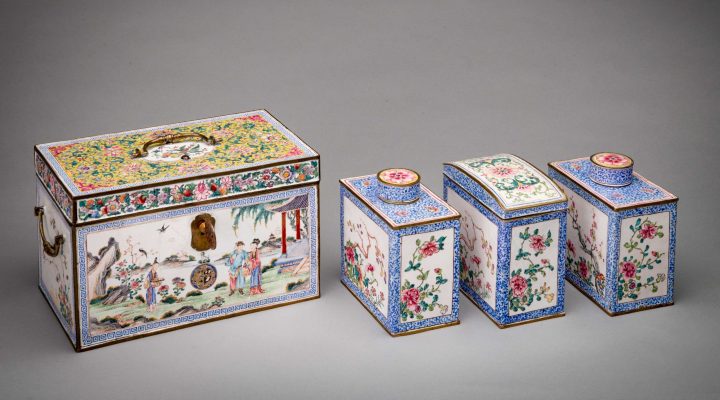
Tea Caddy with Armorial Decoration, ca. 1750–60, Qing dynasty, enamel on copper with gilded copper mounts (Cincinnati: Taft Museum of Art, Bequest of Compton Allyn, 2014.1.27.1, 2a-b, 3a-b, 4a-b).
◊ ◊ ◊ ◊ ◊
From the press release for the exhibition:
Teatime: Chinese Enamels from the Taft Collection
Taft Museum of Art, Cincinnati, 15 November 2025 — 22 March 2026
The Taft Museum of Art presents Teatime: Chinese Enamels from the Taft Collection, the museum’s first exhibition dedicated to the history of tea and its cultural legacy. Adorned with colorful designs, the works of art included in the show are part of a bequest of 89 enamels from the late Reverend Compton Allyn. His 2014 donation forms one of the world’s largest known public collections of Chinese painted enamels. Featuring 24 rarely seen works from the museum’s collection—most of which are typically in storage—Teatime offers a unique opportunity to explore the beauty, symbolism, and craftsmanship of enamelware in the context of tea culture in China and beyond.
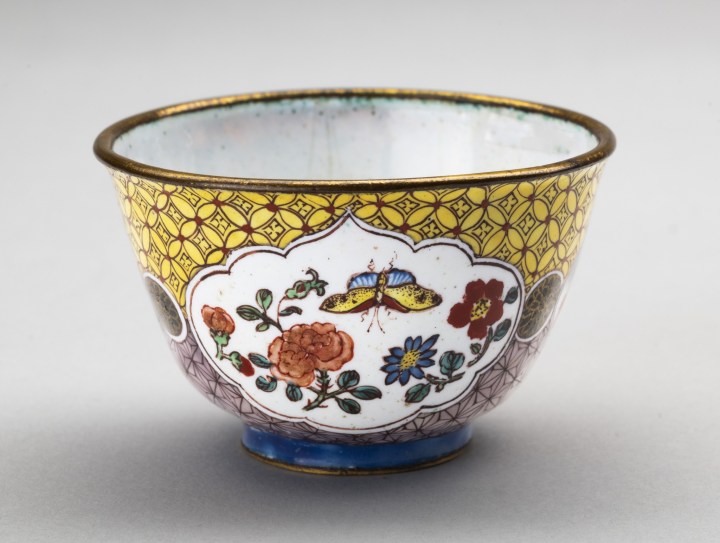
Cup with Flowers and Insects, ca. 1740–95, Qing dynasty, enamel on copper (Cincinnati: Taft Museum of Art, Bequest of Compton Allyn, 2014.1.40.1).
From intricately decorated teapots and cups to saucers and tea caddies, the objects on view reflect the skill of Qing dynasty artisans. These works were probably intended for Western buyers, as the passion for tea spread from China to Europe and America in the 1700s. Dutch merchants had first begun importing tea into Europe in the early 1600s. In 1662, King Charles II of England married the Portuguese noblewoman Catherine of Braganza, who brought her love of tea to the English court. The beverage quickly became popular with the aristocracy, and eventually the craze for tea permeated Western society. Of course, Westerners not only wanted tea leaves from China, they wanted teapots, cups, saucers, and accessories. Today, the skillfully created works of art in Teatime help tell the story of tea’s roots in China and how it became all the rage in 18th-century Europe and America.
“The Taft has a long history steeped in tea traditions—from New Year’s Day parties thrown by museum founders, Anna Sinton Taft and Charles Phelps Taft, in the early 1900s to festive holiday teas offered to visitors today—so it is fitting to celebrate this beloved beverage in an exhibition that also highlights some of the beautiful works of art in the collection,” says Taft Museum of Art Associate Curator, Ann Glasscock.
Visitors who want to extend the tea experience can explore the museum’s Chinese porcelain teapots and other tea-related objects on view in the collection galleries, and through Sunday, January 4, they can enjoy a tea-themed holiday tree with decorations by contemporary artists in the Duncanson Foyer and see the annual holiday display in the Dining Room, “All Set for Afternoon Tea.”
The museum’s 200-year-old historic house was once home to notable Cincinnatians such as Nicholas Longworth and museum co-founders Anna Sinton Taft and Charles Phelps Taft. The one-of-a-kind landmark is now a destination of international cultural significance. The museum’s collection of more than 800 objects includes important Chinese porcelains, European decorative arts, French Renaissance enamels, American furniture, and masterpiece paintings by Thomas Gainsborough, Francisco Goya, Rembrandt van Rijn, John Singer Sargent, J. M. W. Turner, and James McNeill Whistler. Eight monumental landscape murals by Robert S. Duncanson, the first Black American artist to achieve global acclaim, also adorn the walls of the museum’s foyer.
Exhibition | The Grand Dauphin (1661–1711)
Now on view at Versailles:
The Grand Dauphin (1661–1711): Son of a King, Father of a King, but Never a King
Château de Versailles, 14 October 2025 — 15 February 2026
Curated by Lionel Arsac and Lorène Legrand
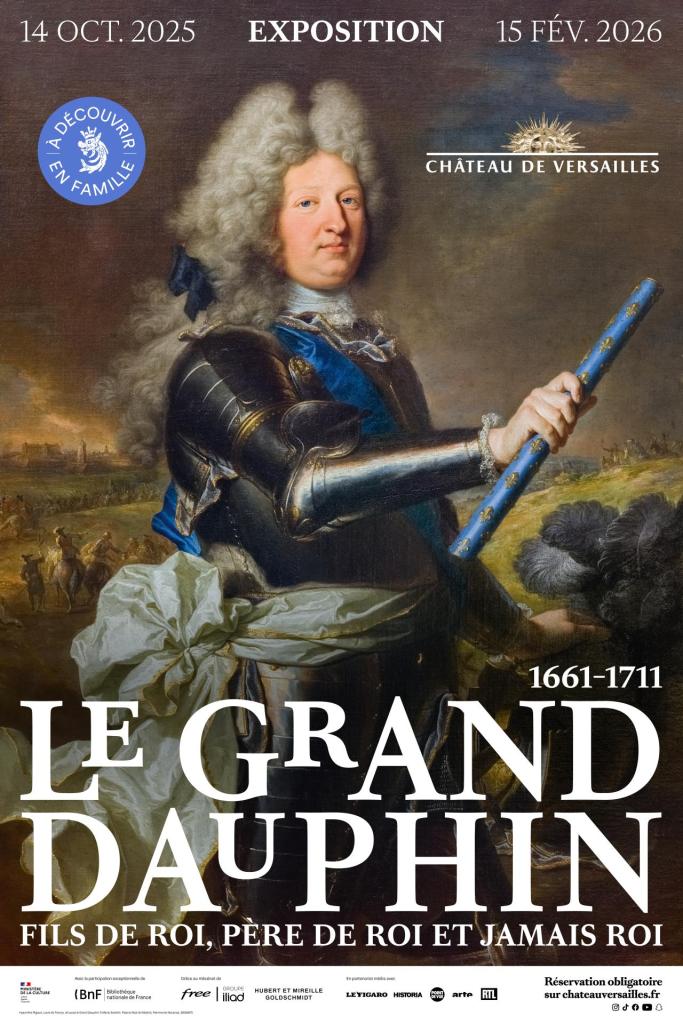 The Palace of Versailles is presenting an exhibition devoted to the Grand Dauphin, Louis de France, the eldest child of Louis XIV. It traces the life of this often overlooked prince through nearly 250 works from French and international collections. As heir to the throne, he was the focal point of Bourbon dynastic ambitions, without ever reigning, but his education, residences, and taste for the arts reflect the destiny which was his due.
Born in 1661 at the château de Fontainebleau, Louis de France was the first son of Louis XIV and Maria Theresa of Spain. During his lifetime as Dauphin, he was called ‘Monseigneur’ but was given the name ‘Grand Dauphin’ after his death in 1711, to distinguish him from his son, the Duke of Burgundy.
This heir to the crown died prematurely of smallpox in April 1711 at the château de Meudon, four years before his father. His eldest son, the Duke of Burgundy, died a year later, leaving behind two children. The eldest child, the two-year-old Duke of Anjou, became the dauphin and acceded to the throne in 1715 after the death of Louis XIV under the name Louis XV. Although the Grand Dauphin did not reign, he remains a key figure in the Bourbon dynasty: grandfather to Louis XV, great-great-grandfather to Louis XVI, Louis XVIII and Charles X, and father of Philip V, first sovereign of the Spanish branch of the Bourbons, which still reigns to this day.
The Grand Dauphin’s entire life was spent preparing to be king, and he received a rigorous education in the arts, war, and government. His life was summed up by Saint-Simon in the famous formula: “Son of a king, father of a king, but never a king.” It embodies the paradox of a prince who was trained to rule, but was never crowned.
Aside from his political duties, the Grand Dauphin also developed a keen taste for the arts and the pleasures of the court. He was an avid collector and assembled a large number of works of art, some of which will be exhibited for the first time due to exceptional loans, notably from the Prado Museum in Madrid.
The exhibition, created with the exceptional participation of the BnF Museum, turns the spotlight on what it meant to be the Dauphin of France under the Ancien Régime by retracing the major stages of the life of the Grand Dauphin. It is presented in three sections mirroring Saint Simon’s formula, and explores his education as a prince, his life at court, and his involvement in affairs of state.
Lionel Arsac and Lorène Legrand, eds., Le Grand Dauphin: Fils de Roi, Père de Roi et Jamais Roi (Dijon: Éditions Faton, 2025), 472 pages, ISBN: 978-2878444087, €54.
Constable 250
From the Colchester and Ipswich Museums:
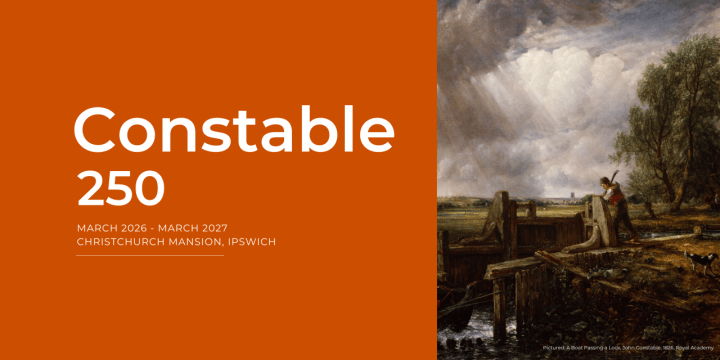
Constable 250
Christchurch Mansion, Ipswich, March 2026 — March 2027
2026 marks the 250th anniversary of the birth of Suffolk born artist, John Constable (1776–1837), who would become one of the most important of all British painters. To commemorate his life and work Colchester and Ipswich Museums present Constable 250, a programme of exhibitions and activities at the heart of which will be three landmark exhibitions at Ipswich’s Christchurch Mansion, featuring works from CIMS own collections alongside major loans from across the UK.
Watch this space for ticket and booking details, which will be available in the new year, along with further information about Constable 250 Project activities.
Constable: A Cast of Characters
28 March — 14 June 2026
Introducing those who inspired and supported the artist. New work by international sculptor and direct descendant, Sasha Constable will also feature.
Constable: Walking the Landscape
11 July — 4 October 2026
Showcasing loans from Tate, V&A, Royal Academy, National Galleries of Scotland, and many in Suffolk for the first time. Seen alongside Colchester & Ipswich’s Constable collection, all exploring the theme of walking.
Constable to Contemporary
24 October 2026 — 28 February 2027
The final exhibition will highlight the relevancy and contemporary responses to Constable’s art.
Exhibition | Turner & Constable
Opening soon at Tate Britain:
Turner & Constable: Rivals and Originals
Tate Britain, London, 27 November 2025 — 12 April 2026
Curated by Amy Concannon, with Nicole Cochrane and Bethany Husband
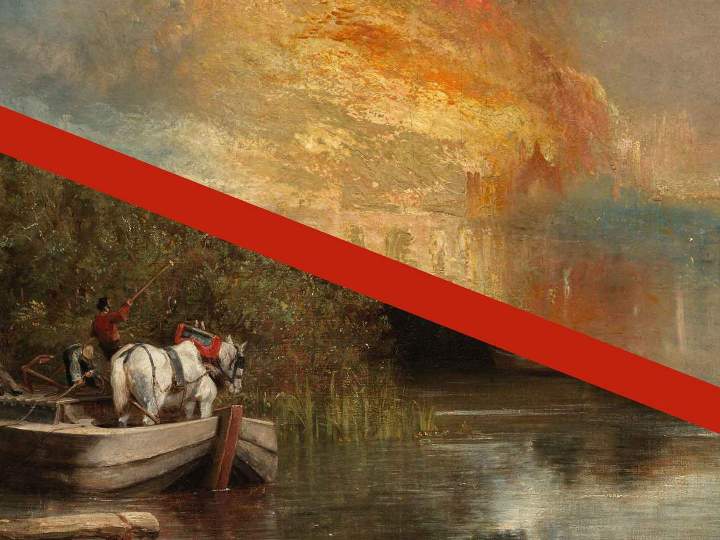 The definitive exhibition of two pivotal British artists in the 250th year of their births
Two of Britain’s greatest painters, J.M.W. Turner and John Constable were also the greatest of rivals. Born within a year of each other—Turner in 1775, Constable in 1776—the art critics of the day compared their paintings to a clash of ‘fire and water’.
Raised in the gritty heart of Georgian London, Turner quickly became a young star of the art world despite his humble beginnings. Meanwhile Constable, the son of a wealthy Suffolk merchant, was equally determined to forge his own path as an artist but faced a longer, more arduous rise to acclaim. Though from different worlds, both artists were united in their desire to transform landscape painting for the better.
With the two painters vying for success through very different but equally bold approaches, the scene was soon set for a heady rivalry within the competitive world of landscape art. Turner painted blazing sunsets and sublime scenes from his travels, while Constable often returned to depictions of a handful of beloved places, striving for freshness and authenticity in his portrayal of nature.
Marking 250 years since their births, this landmark exhibition explores Turner and Constable’s intertwined lives and legacies. Discover unexpected sides to both artists alongside intimate insights seen through sketchbooks and personal items. Experience many of the artists’ greatest works, with over 170 paintings and works on paper. Highlights include Turner’s momentous 1835 The Burning of the Houses of Lords and Commons, not seen in Britain for over a century and The White Horse 1819, one of Constable’s greatest artistic achievements. This is a one in a lifetime opportunity to explore the careers of the two greatest British landscape painters, seen—as they often were in their own time—side by side.
Amy Concannon, ed., Turner and Constable: Rivals and Originals (London: Tate Publishing, 2025), 240 pages, ISBN: 978-1849769853, £32. With additional contributions from Thomas Ardill, Nicole Cochrane, Sarah Gould, Katharine Martin, Nicola Moorby, Nick Robbins, Emma Roodhouse, and Joyce Townsend.
Colonial Williamsburg’s Antiques Forum, 2026
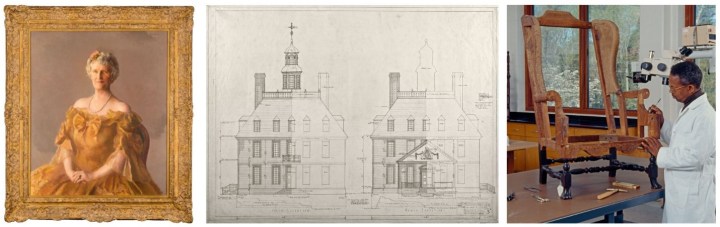
Left: Robert Brackman, Portrait of Abby Aldrich Rockefeller (Mrs. John D. Rockefeller), 1941, oil on canvas·(Gift of the Blanchette Hooker Rockefeller Fund through the generosity of John D. Rockefeller 3rd, his wife Blanchette Hooker Rockefeller, and their four children, 2019-82, A&B). Center: David Hayes, Governors Palace North and South Elevations, Drawing #5, 30 October 1931. Right: Upholstery Conservator Leroy Graves Examines an Easy Chair in the Conservation Lab RIG.
◊ ◊ ◊ ◊ ◊
In 2026 the US will turn 250 and Colonial Williamsburg 100. From the Antiques Forum press release:
78th Annual Antiques Forum at Colonial Williamsburg
Online and in-person, Williamsburg, Virginia 19–25 February 2026
Scholarship applications for students and emerging scholars due by 16 December 2025
The Colonial Williamsburg Foundation will host its 78th Annual Antiques Forum February 19–25, 2026. Offered both virtually and in-person, this year’s conference is organized around the Foundation’s mission statement, “That the future may learn from the past.” To commemorate the 250th anniversary of American independence and the 100th anniversary of Colonial Williamsburg’s founding, the 2026 forum will explore past inspiration and future influence through the lens of material culture and the decorative arts. Forum attendees will also have an exclusive opportunity to preview Colonial Williamsburg: The First 100 Years, a new exhibition at the Art Museums of Colonial Williamsburg opening February 28.

Mourning Ring with Print of George Washington, possibly by the Philadelphia jeweler Jean-Simon Chaudron with a print by Charles Balthazar Julien Fevret de Saint-Memin, ca. 1800, copper/gold/silver alloys, enamel, paper, glass (Colonial Williamsburg, Gift of Mike and Carolyn McNamara, 2025–26). The ring descended through the family of the Marquis de Lafayette who may have acquired it during his tour of the United States in 1824–25.
Curators and scholars from Colonial Williamsburg will be joined by leading experts and collectors from across the nation to present on historic preservation, decorative arts, antiques, architecture, historic costume and more. President and CEO of the Museum of the American Revolution in Philadelphia, Dr. R. Scott Stephenson, will open the conference with a keynote address that expands upon their recent exhibition, Banners of Liberty: Flags that Witnessed the American Revolution. Additional guest presenters include Jeff Evans, decorative arts specialist; Calder Loth, senior architectural historian, Virginia Department of Historic Resources; Amanda Keller, executive director, Wilton House Museum; Elyse Werling, director of interpretation and collections, Preservation Virginia; Samantha Dorsey, independent consultant; Matthew Wood, curator, Castle Howard; William L. Coleman, director of the Andrew & Betsy Wyeth Student Center, Brandywine Museum of Art; Janine Skerry, independent consultant; and emerging scholars presenting new scholarship as part of the Carolyn and Michael McNamara Young Scholars Series sponsored by the Decorative Arts Trust.
The majority of conference activities will take place in the Virginia Room of the Williamsburg Lodge, located at 310 S. England Street. A variety of exclusive pre- and post-conference activities are available for in-person registrants, as are special room rates at Colonial Williamsburg hotel properties. A limited number of in-person and virtual attendance scholarships are available to students and emerging professionals in relevant positions or programs; scholarship applications are due by December 16. In-person registration is $660 per person through January 4 and includes a welcome reception, continental breakfasts, coffee and refreshment breaks, conference reception and dinner, and presentations as well as access to the conference streaming platform. Virtual-only registration is $150 per person and includes access to all general session presentations through the conference streaming platform. Both in-person and virtual-only registrations include a seven-day ticket voucher to Colonial Williamsburg’s Art Museums and Historic Area, valid for redemption through December 31, 2026. Registration and payment in full are required by Sunday, February 8.
Details are available here»
Antiques Forum is sponsored by Roger & Ann Hall and Friends of Colonial Williamsburg Collections, Mark & Loretta Roman, Jeffrey S. Evans & Associates, Brunk Auctions, The Decorative Arts Trust, Doyle Auctions, Americana Insights, Winterthur Museum, Jamestown Yorktown Foundation, Bayou Bend, and The National Institute of American History & Democracy.
Exhibition | Enlightenment Princess: Marie Catherine de Brignole-Sale
Now on view at Chantilly:
From Monaco to Chantilly, A Princess of the Enlightenment in Search of Freedom
Château de Chantilly, 18 October 2025 — 4 January 2026
Curated by Mathieu Deldicque and Thomas Fouilleron
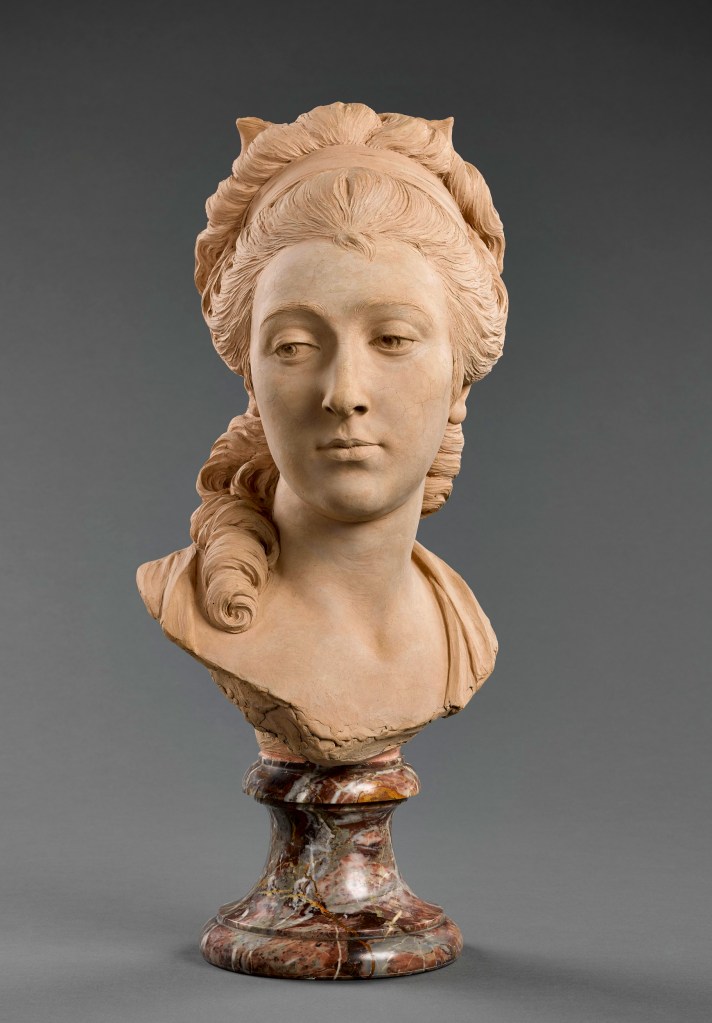
Claude Dejoux, The Princess of Monaco (Marie Catherine de Brignole-Sale), 1783, terracotta (Paris: Musée du Louvre).
Following the 2024 exhibition on the romantic destiny of Louise d’Orléans, the first Queen of the Belgians, the Musée Condé now turns its attention to another little-known yet remarkable woman who left a lasting mark on its history: Marie Catherine de Brignole-Sale, Princess of Monaco and later Princess of Condé (1739–1813). Thanks to an ambitious partnership with the Princely Palace of Monaco, this landmark exhibition, a collaborative research project involving the archives of the palace and those of the Condé Museum, sheds new light on the romantic life and artistic patronage of an extraordinary figure whose influence spanned the Age of Enlightenment and the French Revolution.
The Princess from the Sea
Born in Genoa on 16 September 1738, the only daughter of the Marquis of Brignole-Sale and a doge’s niece, Marie Catherine came from one of the most powerful families in this influential Mediterranean republic. Raised in Paris, she was celebrated as “the prettiest woman in France” and soon caught the attention of Prince Honoré III of Monaco (1720–1795). Though significantly older and initially hoping for a more prestigious match within the French nobility, the Prince ultimately opted for a less exalted but more financially advantageous alliance. After the sumptuous wedding on 15 June 1757, which was fraught with formal tensions, the new, young Princess of Monaco lived up to expectations by giving birth to two little princes. She is a regular at Parisian salons and confidently navigates the Hôtel de Matignon, the royal couple’s Parisian residence. The collections from the Prince’s Palace of Monaco will allow visitors to relive the splendour of Monaco and admire, among other treasures, dynastic portraits exceptionally leaving the palace walls to be exhibited at Chantilly.
A Resounding Split
The marriage did not last. Marie Catherine’s growing boredom, persistent rumours of an affair with the Prince of Condé, her refusal to move to Monaco, and the jealous nature of Honoré III, along with accounts of his mistreatment, gradually led to a deepening crisis. This culminated in the princess petitioning the Parliament of Paris for a legal separation of property and person. Swayed by the influence of the Prince of Condé, the court ruled in her favour on 31 December 1770.
Love and Friendship: The Princess of Monaco and the Prince of Condé
From then on, the Princess of Monaco was emancipated. As a reader of the philosophers of the Enlightenment, she existed in her own right and was free to live out her passions alongside her dear friend, Louis Joseph de Bourbon, Prince de Condé (1736–1818), whom she never left. In Paris, near the Palais Bourbon, which the Prince had expanded at great cost as a reflection of his love for the princess, architect Alexandre Brongniart designed the Hôtel de Monaco for the Princess in the 1770s. Though the residence was destroyed during the Revolution, it was later rebuilt and has housed the Polish Embassy since 1937. Brongniart’s monumental architectural plans reflect the ambition of a princess who was both builder and patron, offering a glimpse into the refined interiors she envisioned.
The Betz Refuge of a Woman of the Enlightenment
Not far from Chantilly, but still at somewhat of a distance, Marie Catherine chose the Château de Betz (now Crépy-en-Valois in the Oise department) as the ultimate refuge and expression of her personal preferences. There, echoing what the Prince of Condé envisioned at the Palais Bourbon and at Chantilly, she championed a new Rousseau-inspired taste: a return to nature and the rise of English-style gardens. At the same time, she embraced the latest Asian exotic trends and supported the early stirrings of a neo-medieval aesthetic destined for a brilliant future. They were surrounded by some of the most innovative and gifted architects, sculptors, landscape designers, painters, and draughtsmen of the final years of the Ancien Régime. From one Temple of Friendship to another, the emotions shared by this aesthetically minded couple were immortalised in stone, marble, and plaster by artists such as Jean-Baptiste Pigalle and Claude Dejoux. Hubert Robert— the great stylist, painter, and garden designer—worked for the princess. Superb leaves from his work illustrate the innovative aesthetic that Marie Catherine deploys in her gardens at Betz: the neo-Gothic style.
The Monaco Migrant in the Revolution
The French Revolution hit the Princess of Monaco and the Prince of Condé hard. The ruthless prince of the blood quickly took command of one of the main armies of the counter-revolution, and the Princess of Monaco followed him on the roads of emigration throughout Europe, from Italy to Russia. The exhibition traces the romantic journey of a couple caught in the upheaval of revolution, torn between despair and a deep sense of honour.
Princess of Condé, at Last
Her hardships only really came to an end during her final years in England (1801–1813), when the now widowed Princess of Monaco was finally able to marry her eternal lover and become, at last, the Princess of Condé, before breathing her last in 1813 at Wimbledon, without ever having had the chance to return to France. The touching marriage contract of a couple over 70 years old, far from their homeland, brings this first monographic exhibition dedicated to the Princess of Monaco to a close. Its aim is to restore this great patron to her rightful place, to better understand her role in the arts, and to bring her hotels, parks, and châteaux back to life through previously unseen sculptures, paintings, drawings, engravings, and archival documents.
Curators
Thomas Fouilleron, Director of the Archives and Library of the Prince’s Palace of Monaco
Mathieu Deldicque, Lead Heritage Conservator, Director of the Condé Museum
Mathieu Deldicque and Thomas Fouilleron, eds., De Monaco à Chantilly, une princesse des Lumières en quête de liberté (Paris: In Fine éditions d’art, 2025), 208 pages, ISBN: 978-2382032336, €35.
Exhibition | Kids! Between Representation and Reality
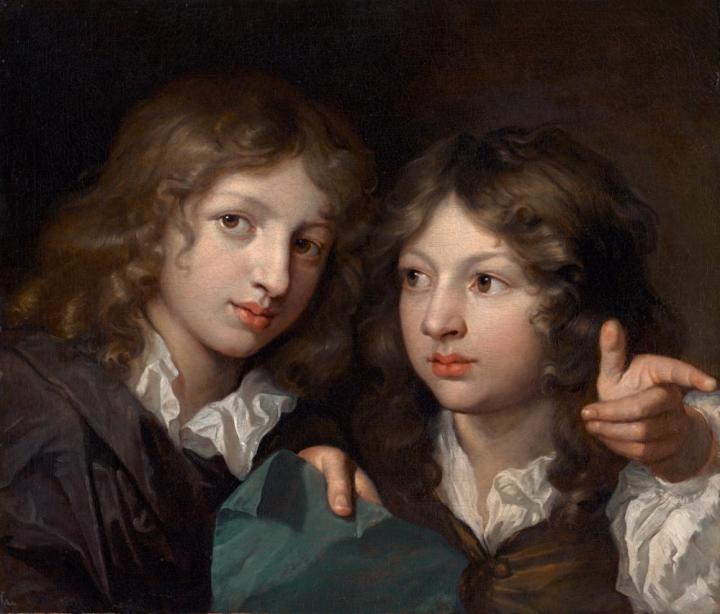
Caspar Netscher, A Portrait of Two Boys, Presuambly the Artist‘s Sons Everardus and Constantijn, ca. 1680–83
(Amsterdam: Collection Bob Haboldt)
◊ ◊ ◊ ◊ ◊
From the press release for the exhibition:
Kids! Between Representation and Reality
Bucerius Kunst Forum, Hamburg, 28 November 2025 — 6 April 2026
The exhibition Kids! Between Representation and Reality at the Bucerius Kunst Forum is dedicated to the representation of children in art from the 16th to the 21st century. Six chapters approach the subject from different perspectives and show not only paintings but also photographs, works on paper, prints, media art, and sculptures. The exhibition includes works by Tizian, Anthonis van Dyck, Oskar Kokoschka, Paula Modersohn-Becker, Nobuyoshi Araki, Thomas Lawrence, Joshua Reynolds, Rineke Dijkstra, Judith Leyster, Christoph Amberger, Gerhard Richter, and many more. The multifaceted nature of the exhibition illuminates the diverse perspectives and functions of children’s pictures over the centuries. Whether as a symbol of power and domination, as an expression of compassion or as snapshots of happy and sad childhoods: The depictions bear witness to the changing understanding of childhood over the centuries and at the same time illustrate the significance phase of life.
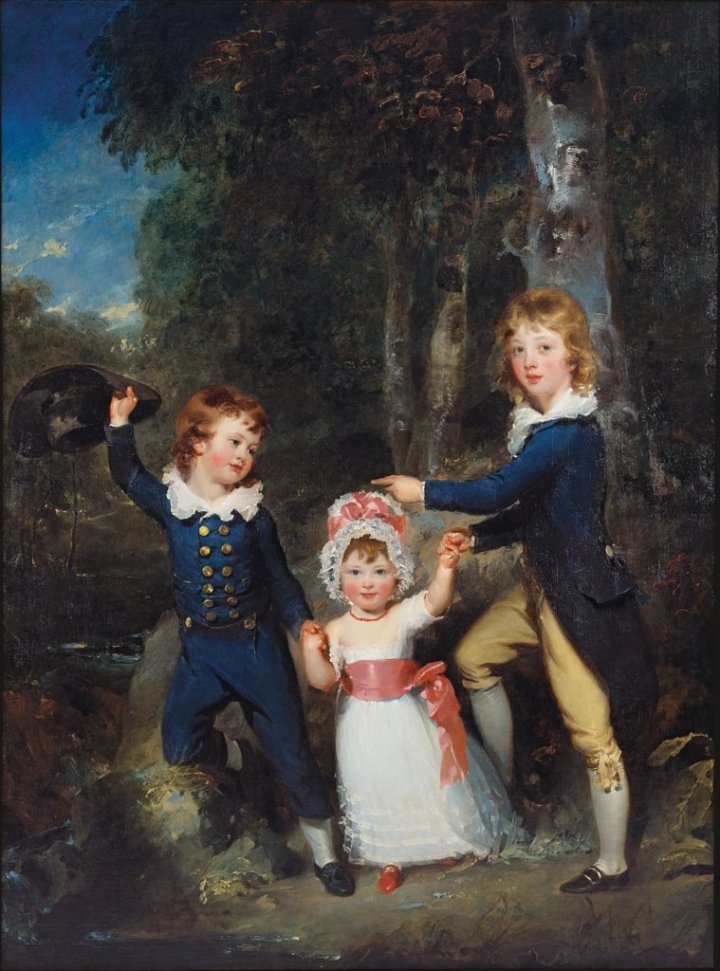
Thomas Lawrence, Portrait of the Children of Lord George Cavendish, 1790 (Frankfurt am Main: Städel Museum, Permanent Loan from the Adolf and Luisa Haeuser Foundation for Art and Culture).
The topic of images of children reflects the values and norms of a society and their changes in a special way. Images of children can be used to draw conclusions about social structures and power relations. Origin, status, and sometimes gender play an important role here. At the same time, over the centuries, social groups have influenced each other in the staging of their children and adapted their own representations in the process. How children are shown today is therefore linked to the reception of images of children from earlier times.
The exhibition reveals such cross-references and influences from the past to the present day and also identifies recurring patterns. The exhibition thus begins with a presentation of depictions of Madonna, in which the ideas of mother-child relationships and their influence up to the present day become clear. The father, on the other hand, usually fades into the background. Only when it comes to presenting the progenitor of the family do fathers proudly and consciously show themselves at the side of their young offspring. Until modern times, intimate father-child images were a rarity.
Created in aristocratic circles around 1500, the child portrait was intended to underpin the continuity and claim to power. Against this backdrop, portraits were often created showing the successors to the throne in armor as small adults. In this way, they were prepared for the future role of general and ruler. A playful variant is the portrait historié, in which the children were depicted as ancient gods, for example. Daughters were depicted at a very young age for reasons of marriage policy. Through strategic marriage promises and early marriages, it was possible to expand one’s own political influence and territorial power. In the course of the 16th century, the upper classes also portrayed their children, albeit less elaborately. In the 17th century, however, the representative and extravagant portrait of a child became increasingly popular in wider society.
In the 17th century in particular, Dutch and Spanish genre painters took up the motif of poor children, which still lives on today. The artists were not necessarily interested in taking a socially critical stance. It is not uncommon for children in financially disadvantaged, often precarious life situations to have a smile written all over their faces. Child labor was not fundamentally rejected either. It was seen as a positive contribution that children could make to the family income.
 Photographs illustrate how differently children grow up globally and structurally to this day. For many children, the street and not the nursery is the place where they come together, interact socially and play together. How the depiction of children has changed over the centuries is made particularly clear in the exhibition by the works of deceased adolescents. In the past, portraits of deceased children were the only means of preserving their memory. Today, commemoration takes place in a different way—for example through lifelike photographs that show children in happy life situations.
The most serious change, which testifies to a different conception and definition of childhood, took place at the end of the 17th century and in the 18th century. Children were now allowed their own development—as close to nature as possible and away from the adult world. The children’s room also became increasingly important, and toys and special children’s literature were regarded as fundamental elements of its furnishings. The theme of ‘being a child’ is still one of the most popular pictorial themes in the visual arts today: trying things out, pushing oneself to the limits, drawing, playing, and togetherness are characteristic of the most important phase of a person’s life.
For the first time at this exhibition, young visitors can borrow a discovery case free of charge at the ticket office or cloakroom. The kit offers elementary school-aged art explorers the opportunity to experience art in a playful way and contains various viewing tools and materials. A telescope, colored glasses, a prism, and a magnifying glass invite them to explore the exhibition and the museum on their own. The kit also includes exciting tasks that draw attention to details in the art. In this way, they learn more about art in a playful way, actively engage with the works, and develop their own perspectives on them.
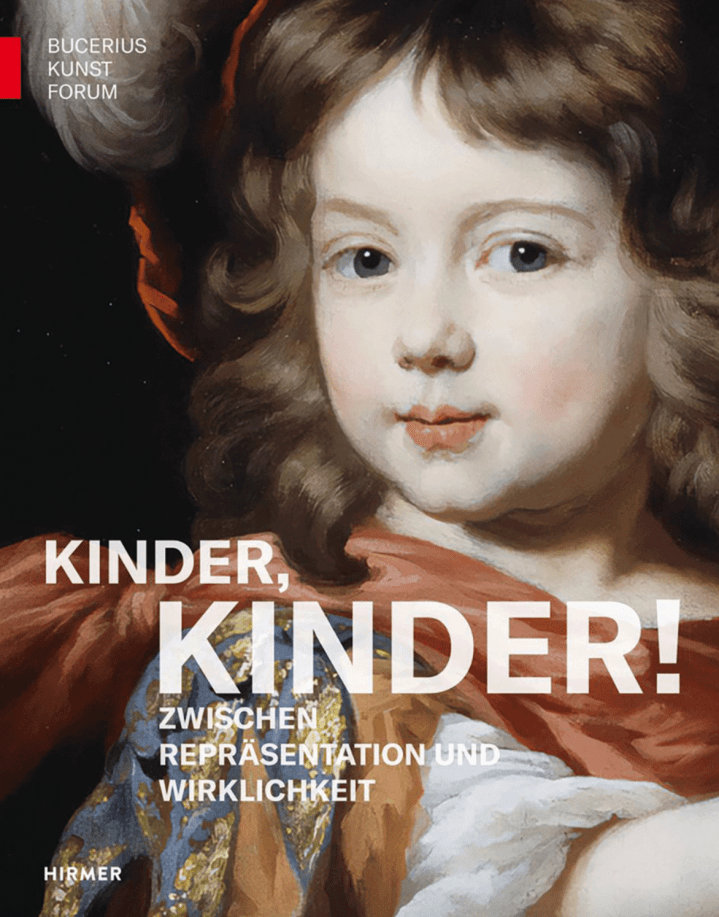
Katrin Dyballa, ed., Kinder, Kinder! Zwischen Repräsentation und Wirklichkeit (Munich: Hirmer Verlag, 2025), 288 pages, ISBN: 978-3777444963, €50.










leave a comment