Exhibition | America at 250
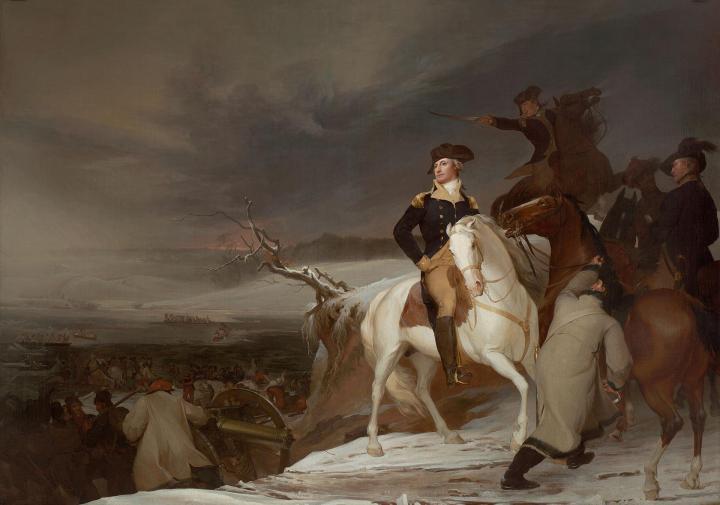
Thomas Sully, The Passage of the Delaware, 1819, oil on canvas, 147 × 207 inches
(Museum of Fine Arts Boston, 03.1079)
◊ ◊ ◊ ◊ ◊
Opening soon at the MFABoston:
America at 250
Museum of Fine Arts, Boston, opening 19 June 2026
The MFA’s major reinstallation of the 18th-century Art of the Americas galleries will integrate art from across North, Central, and South America, and the Caribbean—including works by Native American and Indigenous makers—to present a broader view of cultural exchange across the continent during a pivotal time in history. The galleries feature more than 400 objects—including icons of the MFA’s collection, long unseen works, and new acquisitions—that range from the monumental to the miniature.
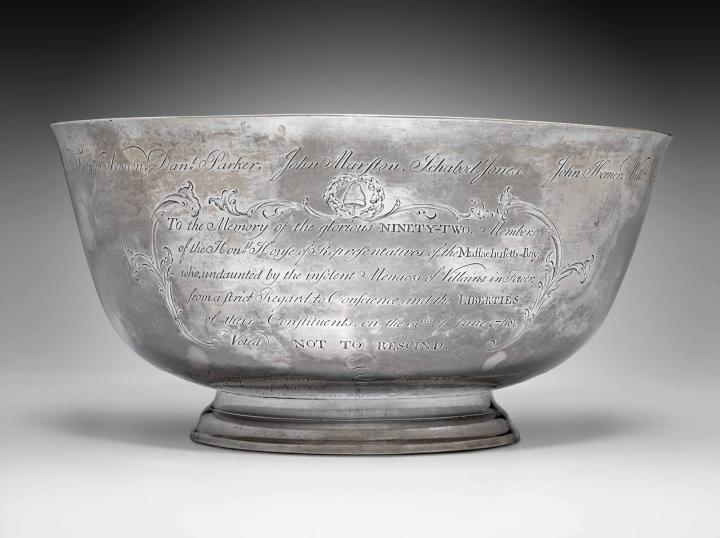
Paul Revere Jr., Sons of Liberty Bowl, 1768, silver (MFA Boston).
A silver bowl. A Founding Father memorialized at monumental scale. A charismatic silversmith considering his craft. A towering mahogany desk and bookcase. Certain paintings, sculptures, decorative arts, and works on paper from the MFA’s Art of the Americas art collection, along with the artists who created them, played a pivotal role in shaping the early history of the United States. Today, as we approach 250 years since the country’s founding, they likewise have a unique ability to recount and reflect that history while also inviting us to reconsider it.
Coinciding with the 250th anniversary of American Independence, the MFA is reimagining its 18th-century galleries on level one of the Art of the Americas Wing for the first time since they opened in 2010. The new display, which opens in June 2026, brings together works from across the Americas—integrating Native and non-native, North, South, and Central American, and Caribbean art—and explores how artists have contributed to, or in some cases resisted, ideas of nationhood and identity. Visitors can immerse themselves in a range of stories and experiences, discovering the interconnectedness of the Americas and its history, institutions, and people.
Gilbert Stuart’s unfinished portrait of George Washington (1796)—the foundational image of the nation’s first president in the public imagination—offers viewers a prescient reminder that democracy is constant work in progress. An early piece of American protest art, Paul Revere’s Sons of Liberty Bowl (1768) honors a group of Massachusetts rebels who paved the way for the Revolution. A ceramic jar (1857) by the enslaved potter and poet David Drake exemplifies literacy as an act of resistance in the decades before the Civil War. Thomas Sully drew on artistic traditions of heroism for The Passage of the Delaware (1819), which portrays George Washington in a dramatic scene of bravery. Meanwhile, a recently acquired work by Alan Michelson, a Mohawk member of Six Nations of the Grand River, offers a contemporary critique of Washington, who was known to the Mohawk Nation as ‘Town Destroyer’. These and the many other works on view reveal a past in dialogue with the present and propose endless possibilities for assessing history as we look ahead to the future.










leave a comment