Exhibition: The Occult as Inspiration
From the exhibition website:
Europe and the Spirit World or the Fascination with the Occult, 1750-1950
Musée d’Art Moderne et Contemporain, Strasbourg, 8 October 2011 — 12 February 2012

ISBN : 9782351250921, 48€
Europe and the Spirit World or the Fascination with the Occult, 1750-1950 is a cross-disciplinary exhibition exploring the influence of the occult on artists, thinkers, writers and scholars throughout Europe, at decisive moments in the history of the modern world. The exhibition is organized into three sections:
- The creative arts: painting, drawing, sculpture, print-making and photography, the literature of the irrational and unexplained.
- The esoteric tradition revisited, with an extensive chronological survey encompassing the movement’s foundational texts and print iconography.
- The relationship between occult phenomena and the scientific world, through key scholarly figures and thinkers, and an examination of their experiments and scientific instruments.
With some 500 works of art, 150 scientific artefacts, 150 books and 100 documents from a host of European countries, Europe and the Spirit World will be presented in a dedicated 2500-m² space at the the Museum
of Modern and Contemporary Art of Strasbourg.
◊ ◊ ◊ ◊ ◊
Exhibition catalogue: L’Europe des esprits ou la fascination de l’occulte, 1750-1950 (Éditions des Musées de la Ville de Strasbourg, 2011), 450 pages, ISBN: 9782351250921, 48€.
Exhibition: Monkeys and Dragons at Chantilly
The following press release comes from the Musée Conde. -HB
Singes et Dragons: La Chine et le Japon à Chantilly au XVIIIe Siècle
Musée Conde, Château de Chantilly, 14 September 2011 — 1 January 2012
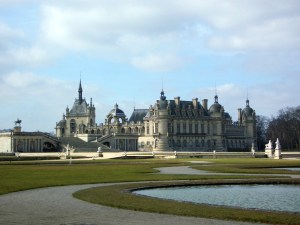
Pour la rentrée de septembre 2011, le musée Condé propose une exposition qui s’inscrit dans la thématique du « voyage » qui sera développée jusqu’à la fin 2011 par le Domaine de Chantilly. En effet, les visiteurs sont invités à remonter le temps, au XVIIIe siècle, quand artistes et artisans réalisaient des œuvres peintes ou d’art décoratif sur commande, afin de combler un goût immodéré pour les décors asiatiques où singes et dragons se mêlaient parfois avec délicatesse aux animaux familiers de nos campagnes.
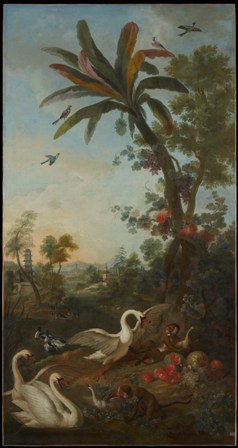 En ce début du XVIIIe siècle, alors que la France se passionne pour l’exotisme, le duc de Bourbon, prince de Condé (1692-1740), collectionne pour son Château de Chantilly les porcelaines, les indiennes – tissus peints ou imprimés fabriqués en Asie entre le XVIIe siècle et le XIXe siècle – et les meubles en laque de Chine et du Japon. Il les fait copier par des artisans français et crée pour ce faire trois manufactures. En mécène entrepreneur passionné, il commande en 1735 au dessinateur Jean-Antoine Fraisse (1680-1739) un album de modèles, gravés en taille-douce, d’après ses collections. Les artisans au service du prince s’en inspirent, notamment pour les porcelaines de Chantilly ; et ce jusqu’en 1740 à la mort du Prince et au tournant de cet engouement pour l’exotisme. C’est à partir de cet ouvrage in-folio rarissime que Nicole Garnier, conservateur général du patrimoine chargée du musée Condé, a conçu son exposition de rentrée où sont présentés outre les deux exemplaires enluminés provenant des collections du Château de Chantilly et de la Bibliothèque nationale de France (Bnf), des gravures de Fraisse (dont deux de plus de trois mètres sont extraites de l’exemplaire enluminé), d’autres de Jean-Baptiste Guélard (1698-1767), des peintures de Christophe Huet (1700-1759) et des pièces d’art décoratif représentatives de cette époque où l’Extrême-Orient était de mise à la Cour et dans les plus belles demeures. . . .
The full press release is available here»
◊ ◊ ◊ ◊ ◊
Catalogue: Manuela Finaz de Villaine and Nicole Garnier-Pelle with assistance from Eléonore Follain, Singes et Dragons: La Chine et le Japon à Chantilly au XVIIIe siècle (Chantilly: Édité par la Fondation pour la Sauvegarde et le Développement du Domaine de Chantilly, 2011), 64 pages, ISBN: 9782953260335, 12€.
Small Exhibition at the V&A: Venetian Visions
From the V&A:
Venetian Visions: The Art of Canaletto, Tiepolo, Carlevarijs, and Their Contemporaries, 1700–1800
Victoria & Albert Museum, London, 7 October 2011 — 1 April 2012

Giambattista Tiepolo, "Apollo and Marsyas,"ca. 1725 (V&A)
The eighteenth century was possibly the last great period of Venetian art. It witnessed a wealth in artistic production from paintings, drawings and prints to porcelain, lace and glass. This display will draw from the V&A collections of prints, drawings, textiles, ceramics and glass to showcase Venetian arts during this age of stylistic splendour.
◊ ◊ ◊ ◊ ◊
Complementing our permanent collections, there are many free temporary displays around the V&A. They range in size from a single case to a room.
Exhibition: The Young Tiepolo, The Discovery of Light
Xavier Salomon reviews the exhibition in the October issue of The Burlington (pp. 698-99). From the Udine website:
Il giovane Tiepolo: la scoperta della luce
Civic Museum of Udine, Castello, Udine, 4 June — 4 December 2011
Curated by Giuseppe Pavanello and Vania Gransinigh
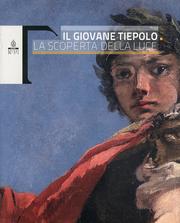
ISBN: 9788895752112
Che cosa caratterizza l’esordio di un giovane pittore di genio? Quali percorsi mentali e creativi presiedono alla formazione di un artista di talento? A questa e ad altre domande proverà a dare risposta la mostra che i Civici Musei di Udine inaugurano il 4 giugno 2011 all’interno della terza edizione delle Giornate del Tiepolo. L’esposizione, dal titolo Il giovane Tiepolo: la scoperta della luce, è rivolta proprio a ricostruire, attraverso le opere più significative, il periodo giovanile dell’attività di Tiepolo, prima del suo soggiorno udinese del 1726.
Se, nel corso del suo apprendistato presso la bottega del pittore accademico Gregorio Lazzarini, l’artista ebbe modo di confrontarsi con i modelli offerti dalla tradizione figurativa veneta del Cinquecento, egli si dimostrò particolarmente attento anche a quanto i suoi contemporanei andavano sperimentando, e alle nuove teorie sulla luce di ispirazione newtoniana. Le opere di Federico Bencovich e Giambattista Piazzetta rappresentarono per il giovane Tiepolo un punto di riferimento ugualmente importante che egli seppe assimilare in maniera originale, in sintonia con il suo essere “tutto spirito e foco,” attraverso un linguaggio pittorico costruito sull’interpretazione luminosa dell’immagine. Ed è proprio su questa peculiare visione tiepolesca della luce che l’esposizione udinese si focalizza, ripercorrendo il tracciato di un’attività che dalle tele dipinte per la chiesa veneziana dell’Ospedaletto si dipana, per il tramite delle decorazioni di Palazzo Sandi, fino al ciclo di affreschi realizzati a Udine nel Palazzo Patriarcale.
I dipinti in esposizione permettono così di documentare il passaggio da una pittura costruita nella luce, secondo precise fonti di illuminazione interne all’immagine, a una pittura costruita dalla luce, nella quale forme e volumi appaiono generati, come vetro soffiato, dall’interna energia luminosa della materia. In mostra sono presentate opere provenienti dai musei di Venezia, Milano, Torino e da alcune delle più prestigiose collezioni pubbliche e private internazionali.
Comitato scientifico: Svetlana Alpers, William L. Barcham, Linda Borean, Caterina Furlan, Peter O. Krückmann, Giuseppe Pavanello e Catherine Whistler.
◊ ◊ ◊ ◊ ◊
Catalogue: Giuseppe Pavanello and Vania Gransinigh, eds., Il Giovane Tiepolo. La Scoperta della Luce (Udine: Civici Musei e Gallerie di Storia e Arte di Udine, 2011), 207 pages, ISBN: 9788895752112, €45 / $87.50.
George Washington Life Mask
With Halloween around the corner, ’tis the season for masks: The Morgan Library and Museum in New York City features an online exhibition where virtual museum-goers can digitally examine the life mask of George Washington. The high- definition zoom technology allow viewers to inspect the details of the mask without having to travel to the brick-and-mortar museum. -AS
Excerpt from the online exhibition:
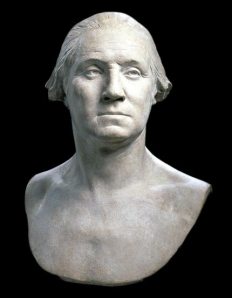
Jean-Antoine Houdon, "Bust of George Washington" clay (Mount Vernon, Virginia)
In 1785 the French sculptor Jean-Antoine Houdon visited George Washington (1732–1799) at his Mount Vernon residence. There he observed the general and made a plaster cast of his face—the Morgan’s life mask. He then used the mask to complete the face on his clay bust of Washington, which he left at Mount Vernon (Fig. 1). Houdon returned with the life mask to Paris, where he sculpted the final marble life-size sculpture of Washington now in the Richmond Capitol (Fig. 2). The statue was commissioned by the Virginia legislature and was erected in 1796, the year Washington issued his farewell address following his second term as president. The Morgan’s life mask of Washington is unique and represents the truest likeness of the country’s first president. Pierpont Morgan likely acquired the mask in Rome from the son of the American sculptor William Wetmore Story.
In order to make a mold of Washington’s face, Houdon had the general lie down. He prepared Washington’s face with a protective layer of grease and covered his eyes before adding a coat of wet plaster, inserting straws in the general’s nose so that he could breathe. Once the plaster hardened, Houdon removed the cast and poured plaster into the mold to make a positive model, destroying the mold in the process. It is this positive model that constitutes the Morgan’s life mask. Because Washington’s eyes were closed, in the final mask Houdon had to sculpt the open eyes based on caliper measurements, as well as retouch the nostrils, which were hampered by the breathing apparatus. The air bubbles in Washington’s cheeks were produced as the plaster settled in the mold.
The life mask recently served as a starting point for a team of forensic anthropologists working at Mount Vernon to re-create effigies of the “real” George Washington at three different moments in his life. Using the Morgan’s cast of the fifty-three-year-old Washington’s face, scientists were able to project the changes in his bone structure and appearance from his youth through old age. . . .
More information is available here»
New Acquisition: Gainsborough and the Netherlands
News of this recent acquisition, as noted by Hélène Bremer, is remarkable in itself given the importance of the Dutch for eighteenth-century landscape paintings. That funds were raised in part through crowd funding makes it all the more interesting:
 The Rijksmuseum Twenthe in Enschede, a museum with an emphasis on seventeenth- and eighteenth-century art, has acquired the first painting by Thomas Gainsborough for a Dutch museum. Crowd funding this summer secured the painting for the museum collection. Wooded Landscape (1745-46), an early work made in Suffolk, will be on display in the specially created Landscape Gallery until early January. The addition of this landscape by Gainsborough to the collection will mean that Rijksmuseum Twenthe will be one of the few museums in the world which can show the influence that Dutch seventeenth century artists had on both English and Dutch painters of the eighteenth century.
Early Goya at the Prado
As noted at ArtDaily.com (5 October 2011) . . .

Francisco de Goya, "The Victorious Hannibal," 1771
◊ ◊ ◊ ◊ ◊
The display of The Victorious Hannibal at the Museo del Prado offers visitors an exceptional opportunity to see one of the most important and impressive works from Goya’s early career. Painted in the spring of 1771, it falls within a period not previously represented in the Prado’s rich and remarkable collection of the artist’s works. Through an agreement reached between the Museum and the Fundación Selgas-Fagalde to promote and disseminate their respective collections and the artistic heritage that these institutions house, Goya’s work is being shown at the Prado alongside his Italian Notebook, a sketchbook that he acquired during his time in Italy (1769-71). Among numerous other drawings and annotations, it contains sketches for the composition of The victorious Hannibal and its principal figures, namely Hannibal and the bull’s head of the allegorical figure of the River Po, which the Carthaginian general crossed.
The Victorious Hannibal is a work of clearly outstanding technical merit, evident in its harmonious composition, skilled treatment of light, and the deft, firm brushstrokes that model the figures through colour and light.
The painting was first presented as an undoubtedly autograph work by Goya in 1994, a year after it had been identified at the Prado and as part of one of the exhibitions organised to celebrate the Museum’s 175th anniversary. It now returns to the Prado for display in one of the Goya galleries for six years through the present agreement. In return, the Prado will carry out the technical study and restoration of five works in the Fundación Selgas-Fagalde collection and organise two exhibitions to be held at the Fundación in Cudillero (Asturias). . . .
The full article is available here»
Exhibition: Decoding Images of Maharaja
From the Asian Art Museum of San Francisco:
Decoding Images of Maharaja: The Splendor of India’s Royal Courts
Victoria & Albert Museum, London, 10 October 2009 — 17 January 2010
Art Gallery of Ontario, Toronto, 17 November 2010 — 3 April 2011
Asian Art Museum of San Francisco, 21 October 2011 — 8 April 2012
Virginia Museum of Fine Arts, Richmond, 21 May — 19 August 2012

Amar Singh II, ruler of the kingdom of Mewar, 1700–50. City of Udaipur. Opaque watercolor on cloth (London: V&A)
The word maharaja evokes for many an image of a bejeweled and turbaned ruler, whose authority is absolute, whose wealth is immense, who indulges in a lavish lifestyle. But that is only a part of the picture, and more applicable to a later chapter of history at that, after India became a colony of the British empire in the mid-nineteenth century. Although Hindu and Muslim rulers were also known by other titles — including maharana, maharao, nawab, and nizam — the word maharaja, which means “great king,” came to be used as a generic term to describe all of India’s kings.
An exhibition on the splendors of India’s royal courts initially aroused my skepticism. There should be more compelling reasons for an exhibition than merely to admire two hundred beautiful objects. Granted, admiring beautiful objects is something that we as art lovers, art historians, and curators love to do, but sometimes that is not enough. Especially not when the objects have more interesting stories to tell. Refreshingly, the Maharaja exhibition redresses commonly held perceptions and succeeds in adding greater depth and nuance to its subjects. Nearly every object included in the display has a great story and multiple layers of meaning behind it.
The two principal narrative arcs around which the exhibition is organized bring to life the complex and fascinating worlds of India’s great kings. They help us to understand the real people behind the objects that were made for them. The first goes behind the scenes to analyze the roles and qualities of kingship in India. The second traces the ways the institution of kingship shifted against a rapidly changing political and historical backdrop from the early eighteenth century through the 1930s, a period that saw a change in the maharajas’ status from independent rulers to “native princes” under British colonial rule. All of this is illustrated by a stunning range of objects from paintings and photographs to arms and armor, furniture, costumes, and jewelry.
The many paintings and photographs of the maharajas on display not only document the active presence of real people who lived real lives but also offer us a glimpse into the worlds inhabited by them. The modes of representation offer considerable information. Whether or not as deliberate design, the ways in which the subjects are depicted, their gestures and stances, the objects that have been included in or left out of their mages, and the overall settings tell us something about how they wished to be viewed both in their own time and in posterity. Looking closely at the representations of individual maharajas in the exhibition enables us as modern viewers to enter the now-distant world of these individuals and relate to them, and to realize that such portraits may not after all be that different in their intent and function from the single image that we choose to represent us on our Facebook profiles.
—Qamar Adamjee, assistant curator of South Asian Art at the Asian Art Museum of San Francisco
◊ ◊ ◊ ◊ ◊
Note: The Richmond venue was added to this posting on 21 May 2012; details are available here»
Exhibition and Colloquium: The Hôtels Particuliers of Paris
As noted by Hélène Bremer, from the museum’s website:
The Townhouse: A Parisian Ambition / L’hôtel particulier: Une ambition parisienne
Cité de l’Architecture & du Patrimoine, Palais de Chaillot, Paris, 6 October 2011 — 19 February 2012
Curated by Alexandre Gady
The townhouse is a key part of Paris’s architectural character, and we can trace the story of the capital by studying the development of the townhouse in different districts of the city.
 The Parisian townhouse made its first appearance in the Middle Ages and became more popular during the 16th century when, thanks to François I, Paris again became the political capital where the monarchic state assembled and settled. It was important to be at court, near the king, and, therefore, at Paris. This golden age continued throughout the 17th, 18th and 19th centuries. The last of the townhouses were built in the period between the two world wars, marking the end of a long history, but they still exist in today’s 21st-century Paris and are very much in use: (museums, embassies, ministries). This exhibition aims to explore this history and takes the visitor on three complementary and illuminating journeys, in a bid to discover the secret of the Parisian townhouse.
The first section features a small reconstructed townhouse, between garden and courtyard, with different authentically decorated rooms for the visitor to explore. In this way, each visitor can enjoy a sense of familiarity with, and ownership of, the building. The building is not an exact replica of an existing townhouse but aims rather to convey a general impression, an overall picture, with each “external” and internal space specifically designed for educational purposes.
In the second section of the exhibition, the visitor will take a journey through the history of the townhouse, this time organized chronologically, from the Middle Ages to the Belle Epoque. This part of the exhibition, displayed in a vast open space, presents a series of large models of townhouses, specifically chosen for their distinctive characteristics – hôtels de Cluny, Lambert, Thélusson and finally the Palais-Rose (these last two buildings no longer exist) – complete with an interactive terminal with wonderfully illustrated information on some 300 town houses.
The last section offers themed reading, examining the Parisian hotel as an architectural object. Three “alcoves” will be devoted to the relationship between the city and the townhouse – a relationship which was both passionate and destructive. A further three sections allow the visitor to explore the external architecture of the townhouse (façades overlooking gardens and courtyards), its interior décor, gardens and finally internal layout. To complete the display, there is a multi-touch screen on the layout and organization of the townhouse, presented in a fun way.
Alexandre Gady, L’hôtel particulier de Paris: Du Moyen Age à la belle époque, second edition (Paris: Parigramme, 2011), 320 pages, ISBN: 9782840967040, €49.
◊ ◊ ◊ ◊ ◊
Colloquium: L’hôtel particulier des capitales régionales, une ambition française
Cité de l’Architecture & du Patrimoine, Palais de Chaillot, Paris, 2-3 December 2011
Ce colloque placé sous la direction scientifique de Pascal Liévaux, conservateur en chef à la Direction générale des patrimoines et Alexandre Gady, professeur à l’université de Nantes, commissaire de l’exposition L’Hôtel particulier. Une ambition parisienne, fait écho à cette manifestation.
Il propose d’en élargir la thématique à l’ensemble du territoire national et donnera la parole à des chercheurs et à des professionnels du patrimoine. Ces spécialistes témoigneront des dernières avancées dans la connaissance, la conservation, la restauration et la mise en valeur de ces édifices complexes qui, associant au plus haut niveau d’excellence l’architecture, l’art des jardins et celui du décor, témoignent de trois siècles de vitalité et de diversité de l’architecture urbaine sur l’ensemble du territoire national.
Exhibition: Master Drawings from the Crocker Art Museum
From The Frances Lehman Loeb Art Center at Vassar:
A Pioneering Collection: Master Drawings from the Crocker Art Museumm
Portland Art Museum, Oregon, 12 June — 19 September 2010
Crocker Art Museum, Sacramento, California, 10 October 2010 — 6 February 2011
Frances Lehman Loeb Art Center, Vassar College, Poughkeepsie, New York, 16 September — 11 December 2011

Hubert Robert, "Massacre of the Innocents," 1796, chalk, brown, and red, on paper, 8 1/4 in. x 7 1/4 in. (Sacramento: Crocker Art Museum)
A Pioneering Collection: Master Drawings from the Crocker Art Museum includes 57 rarely seen works by artists such as Albrecht Durer, Fra Bartolommeo, Anthonie van Dyck, Francois Boucher, and Jean-Auguste-Cominque Ingres. The exhibition is divided thematically into four sections of drawings from Italy, the Low Countries, France, and Central Europe.
These drawings date from the late 15th- to the mid-19th centuries and were purchased between 1869-71 by forward-thinking railroad magnate E. B. Crocker, forming the basis of the Crocker Museum’s master drawings collection. In total, the Crockers purchased 1344 master drawings and 700 paintings during their time in Europe and these formed the basis of their private art gallery, which opened in 1872, featuring visitors like the queen of Hawaii and former U.S. President Grant. Following the death of Edwin Crocker, his wife Margaret transferred the gallery to the California Museum Association, now the Crocker Art Museum. Their old master drawing collection was one of the first historically to be opened to the
public in 1885.
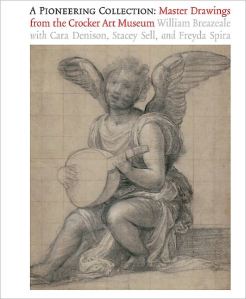 This exhibition was organized in celebration of the Crocker’s Anne and Malcolm McHenry Works on Paper Study Center and exhibition space, designed to significantly enhance public access to this collection of master drawings.
A catalogue by lead author and Crocker Art Museum curator Wiliam Breazeale; Cara Dufour Denison, curator at the Morgan Library and Museum; Stacey Sell, associate curator of Old Master drawings at the National Gallery of Art, and Freyda Spira, research associate at the Metropolitan Museum of Art, accompanies the exhibition and will be available at the Art Center gift shop (Paul Holberton Publishing, 2010, $35).
A full checklist for the exhibition is available here»










 Enfilade
leave a comment