Exhibition: ‘Princely Treasures’ from the V&A in Perth
Princely Treasures: European Masterpieces, 1600 – 1800
The Art Gallery of Western Australia, Perth, 24 September 2011 — 9 January 2012

François Boucher, "Jeanne-Antoinette Poisson, Marquise de Pompadour," 1758 V&A: 487-1882 ©Victoria and Albert Museum
The Art Gallery of Western Australia is hosting its second major international exhibition of the year ‐ a treasure trove of European decorative art from London’s Victoria and Albert Museum. Princely Treasures: European Masterpieces 1600 – 1800 from the Victoria and Albert Museum comprises more than 90 magnificent artworks and objects, rarely seen on Australian shores. Coming exclusively to Perth, this significant and highly visual collection includes painting and sculpture, ceramics and glass, metalwork and furniture, textiles and tapestries, personal adornment and dress, armoury, prints and drawing. Many of these pieces are coming to Australia for the first time and were originally acquired by European men and women of power, wealth and taste between 1600 and 1800. Made by Europe’s finest artists and craftsmen, and using precious materials from around the world, these masterpieces originate from all corners of the continent – from Britain and France, Italy and Germany, Russia and Spain, Austria and Belgium, Holland and Sweden.
The exhibition is the second in the Art Gallery of Western Australia’s Great Collections of the World series and will open on 24 September 2011 and run until 9 January 2012. This exclusive WA showing will give Perth residents and visitors an unprecedented opportunity to experience first‐hand the opulence and splendour of these rare treasures. Stefano Carboni, Director of the Art Gallery of Western Australia, said Princely Treasures was an exhibition with wide public appeal and a major coup for Perth. “I am proud to host such a colourful and rich collection which will not only delight visitors young and old including art lovers, history buffs and antique enthusiasts, it will also provide an intimate view into the lives of the wealthy and powerful in Europe past,” he said. “The rich textiles, truly opulent furniture and stunning clothing and personal apparel are a wonder, as is the outstanding craftsmanship, use of dazzling materials and historical nature of many of the pieces such as the suits of armour. I would encourage all Western Australians to take this rare opportunity to experience the beauty and richness of these stunning artworks and historical objects while we are lucky enough to have them on our shores,” Mr Carboni said.
The Princely Treasures exhibition is to be presented in five different themes, encapsulating important aspects of courtly life in Europe at that time.
- Princely Patronage presents the key figures who were the great patrons of the arts in Europe between 1600 and 1800, and some of the most sophisticated objects that circulated around European courts.
- Power and Glory explores how representations of war were used to decorate objects commissioned for courtly use, from armour and weapons to tapestries and paintings.
- Religious Splendour reveals the nature of objects made for worship, commissioned by secular or ecclesiastical patrons for public or private devotional use.
- Display and the Domestic Interior presents furniture, textiles and ceramics made for use in the home, either for decorative or social purposes.
- Fashion and Personal Adornment reveals the care and attention aristocratic men and women took to dress in fashionable style from head to toe.
Exhibition: Matthew Buckingham: ‘The Spirit and the Letter’
From the Brooklyn Museum:
Matthew Buckingham: The Spirit and the Letter
Brooklyn Museum, 3 September 2011 — 8 January 2012
Curated by Elizabeth Sackler

Matthew Buckingham, Still from "The Spirit and the Letter," 2007, continuous video projection with sound, electrified chandelier, mirror.
Matthew Buckingham’s installation The Spirit and the Letter is an homage to Mary Wollstonecraft, the eighteenth-century writer and philosopher. Comprised of a video projection and sculptural components, Buckingham’s work questions the role that social memory and historical representation play in contemporary life, encouraging viewers to question how they hear and see what is most familiar to them. Excerpts from Wollstonecraft’s writing, compiled and edited by Buckingham, are spoken as a monologue in the video. The text is primarily drawn from Wollstonecraft’s important A Vindication of the Rights of Woman, in which she passionately asserted the equality of the sexes and demonstrated through her own intellectual rigor that women are not inferior to men. The essay, the earliest known treatise on the subject, has been viewed as the foundation of the modern women’s rights movements in the Western world.
Exhibition: ‘Infinite Jest’
Now on at the Met:
Infinite Jest: Caricature and Satire from Leonardo to Levine
Metropolitan Museum of Art, New York, 13 September 2011 — 4 March 2012
Curated by Constance McPhee and Nadine Orenstein

ISBN: 9780300175813, $45
The exhibition explores caricature and satire in its many forms from the Italian Renaissance to the present, drawn primarily from the rich collection of this material in the Museum’s Department of Drawings and Prints. The show includes drawings and prints by Leonardo da Vinci, Eugène Delacroix,Francisco de Goya, Henri de Toulouse-Lautrec, and Enrique Chagoya alongside works by artists more often associated with humor, such as James Gillray, Thomas Rowlandson,Honoré Daumier, Al Hirschfeld, and David Levine. Many of these engaging caricatures and satires have never been exhibited and are little known except to specialists. . . .
The second section of the exhibition will explore social satire expressed in works devoted to eating and drinking, gambling, male and female fashion, art, and crowds. The eighteenth and nineteenth centuries are known as the golden age of caricature and satire, with William Hogarth, Gillray, Rowlandson, and George Cruikshank producing lively examples in Britain, and Honoré Daumier and Boilly doing the same in France. These artists cleverly inserted recognizable caricatures into satirical frameworks to mock contemporary society. Extreme fashion provided satirists with an ever-changing source of humor beginning in the 1760s and a selection of sartorial caricatures will be on view. . .
Carol Vogel reviewed the exhibition for The New York Times (12 May 2011).
Exhibition: ‘Passion and Precision in the Age of Revolution’
From the MFA:

Passion and Precision in the Age of Revolution
Museum of Fine Arts, Boston, 20 August 2011 — 13 May 2012
European art of the late eighteenth and early nineteenth centuries is dominated by two powerful artistic movements: Neo-classicism and Romanticism. Neo-Classicism is marked by purity, austerity, clarity, and an almost abstract obsession with the linear. The style was stimulated by the recent archaeological discoveries at Pompeii and Herculaneum and by pageants and festivals of the French Revolution that referred back to Republican Rome. By contrast, Romanticism was an art of extremes, of melodrama: the dramatic interplay of light and shadow rather than linear purity. Romantic artists believed in nature—whether wild landscape, wild beasts, or the animal impulses of humankind—as an uncontrollable force, inspiring awe and terror. “Passion and Precision in the Age of Revolution” features about forty-five works by artists including Ingres, Delacroix, Desprez, Prud’hon, Turner, Blake, Gericault, Girodet, Flaxman, and Schinkel.
Gainsborough Linley Portraits Reunited at Dulwich
Press release from Dulwich Picture Gallery in London:

Thomas Gainsborough, "Elizabeth and Mary Linley," ca. 1772 (Dulwich Picture Gallery)
Known in their times as the ‘nightingales’, Elizabeth and Mary Linley were the most beautiful and talked-about young girls in Bath’s society in the 1770s. From a musical family, they were applauded on the theatre stages of Bath and London, as much as they appeared in the newspapers of the day as society figures. They were portrayed together, in 1772, by Thomas Gainsborough, who was a close friend of their father’s, and their neighbour in Bath. The painter had seen Elizabeth and Mary grow before his eyes and tenderly represented them in their magnificent large canvas known as The Linley Sisters, now at Dulwich Picture Gallery.
In the same year as the Dulwich painting was finished by Gainsborough, Elizabeth eloped to France with the young playwright Richard Brinsley Sheridan, causing a great scandal. A year later, in 1773, the two were married. Elizabeth did not expect the marriage to be an unhappy one, constantly marked by Sheridan’s infidelities. Elizabeth gave up singing and supported her husband in his career as a writer and politician.

Thomas Gainsborough, "Mrs. Elizabeth Richard Brinsley Sheridan," 1785-87 (Washington, D.C.: National Gallery)
Gainsborough was to portray Elizabeth at different points in her life. This is his last image of her – aged thirty-one- only a few years before her untimely death of tuberculosis in 1792. Elizabeth sits under a tree in the open countryside – a windswept valley so different from the delicate violets and primroses of the earlier double portrait at Dulwich. Elizabeth’s entire figure is transformed by the romantic wind in the canvas, just as passion swept her short life. After her death, William Jackson noted that “as a singer she is perished forever, as a woman she still exists in a picture painted by Gainsborough.”
Earl A. Powell III, the Director of the National Gallery of Art Washington, said: “We are delighted that Gainsborough’s Mrs Richard Brinsley Sheridan will represent the National Gallery of Art at the Bicentenary celebrations of Dulwich Picture Gallery.” The masterpiece will be on display from 6 September – 2 October 2011.
Exhibition: ‘Capability’ Brown at Compton Verney
From Compton Verney:
‘Capability’ Brown and the Landscapes of Middle England
Compton Verney, Warwickshire, 25 June — 2 October 2011
Curated by Steven Parissien and Tim Mowl
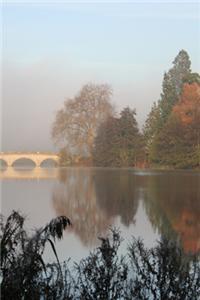 Set in its own ‘Capability’ Brown landscape, Compton Verney is the ideal location for the first-ever exhibition about internationally-renowned landscape designer Lancelot ‘Capability’ Brown (1716-83). This exhibition brings the man and his genius to life through a series of case studies of ‘Capability’ Brown landscapes from the Midlands. It looks at how Brown designed his natural, neoclassical arcadias; how his landscapes were designed to work in practice; how Brown responded to technological advances in shooting and carriage-making; and how he addressed the enormous task of moving tons of earth and creating hills, vales and lakes in an age before tractors or JCBs.
The focus is on famous ‘Capability’ Brown landscapes in the Midlands region, including Croome, Charlecote Park, Combe Abbey and of course Compton Verney itself. It will showcase the very latest research on the design and use of Georgian landscapes with paintings, maps, accounts, historic guns, manuals and specially-
commissioned photography.
The exhibition is curated by Compton Verney’s Director, Georgian expert Dr Steven Parissien, and Professor Tim Mowl, Director of the Landscape and Garden History Centre at the University of Bristol and founding author of Redcliffe Press’s county guides to the Historic Gardens of Britain.
A 27-page gallery guide is available as a PDF file here»
◊ ◊ ◊ ◊ ◊
Laura Mayer, Capability Brown and the English Landscape Garden (Oxford: Shire Publications, 2011), 64 pages, ISBN: 9780747810490, $12.95.
 Laura Mayer presents a concise and colourful introduction to Brown and other leading landscape gardeners of the eighteenth and early nineteenth centuries, such as William Kent, Richard Payne Knight and Humphry Repton. She explores how competing ideas in garden design were shaped both by changes in prevailing fashion and by the innovations of particular designers, and why Brown’s designs are currently considered to be the epitome of landscape gardening in this period.
Laura Mayer is studying for a Ph.D. in eighteenth-century gardens at the university of Bristol under the supervision of Professor Timothy Mowl. She won the 2010 Garden History Society essay prize and is working, with Mowl, on ‘The Historic Gardens of England: Northumberland’.
Five Eighteenth-Century Exhibitions at McMaster University
From The McMaster Museum of Art in Hamilton, Ontario:
This fall, explore 18th-century art and its ongoing influence in five concurrent exhibitions of historical and contemporary art. Rising to the Occasion is mounted in conjunction with and as a complement to the McMaster University John Douglas Taylor Conference The Immaterial Eighteen Century, October 27-29.
◊ ◊ ◊ ◊ ◊
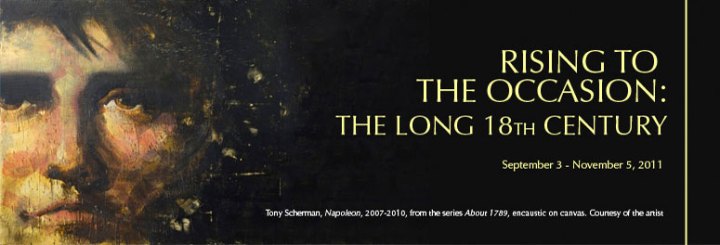
Rising to the Occasion: The Long 18th Century
The McMaster Museum of Art, Hamilton, Ontario, 3 September — 5 November 2011
Rising to the Occasion: The Long 18th Century is the governing title for exhibition-episodes that explore facets of culture and society in the 18th century—ideas, rather than attempts to tell the story of art as history. But art has a value in a historical reckoning—it does rise to the occasion, and allows both a mirror and lens perspective.
The choice of exhibition works interweaves the historical and the contemporary in order to open up different discussions—the legacies of the 18th century—enlightenment, empiricism, revolution and innovation and the instability of these ideas, as they speak to our unstable time. The keynote episode is borrowed directly from the title of Rebecca Belmore’s Rising to the Occasion. The original occasion was Belmore’s response to the Duke and Duchess of York’s official visit to Canada in 1987; she cobbled together and wore a hybrid-material dress in the manner and style of the 19th century. The new context is the inclusion of John Verelst’s so-described “Four Indian Kings” paintingswhich were commissioned by Queen Anne in 1710. The now disembodied Belmore dress as object-artifact has a resonance with Jean-Antoine Houdon’s 1767 life-sized plaster flayed figure—sculpted to show the body muscles—and in turn George Romney’s portrait with an écorché figure.
Paintings by Jean-Joseph Taillasson and Angelica Kauffmann, draw their subject matter from the classical world to send messages to their “18th-century present.” Taillasson’s audience was the new social order of post-Revolutionary France; for Kauffmann, a subject that could appeal to the heroic—in the wake of the first “global” Seven Years War—and her metatext on the role of women. A contemporary counterpoint is Tony Scherman’s monumental Napoleon painting, from his About 1789 series, which Scherman describes as a forensic portrait. Likewise, John Massey’s 1985 photo-collage serigraph Versailles is another forensic moment and constructed embodiment; an arm of collaged gold that cannot rise, gripped by the arm of the artist. Angela Grauerholz’s black and white photograph Voltaire’s Study (Voltaire was one of the great writer and humanists of the 18th century) has a subtle counterpoint in Taillasson’s painting, as Jiri Ladocha’s suite of Voltaire portraits have with the Houdon figure. Ladocha worked with a mould from Houdon’s Voltaire portrait bust, reconstructed as if it were a Cubist vision—the deep past, the historical modern, and the present.
◊ ◊ ◊ ◊ ◊

Jinny Yu and Don Andrus: Cadenza
The McMaster Museum of Art, Hamilton, Ontario, 3 September — 5 November 2011
Cadenza is a collaborative artist project. Jinny Yu and Don Andrus agreed upon the starting point, an early, major mural The Brazen Serpent, by Giovanni Battista Tiepolo (Italian, 1696-1770), and to work to the original dimensions, 164 x 1365 cm. The Brazen Serpent, is based on a biblical story of Moses and commissioned for the SS. Cosma e Damiano church in Venice. As a consequence of Napoleon’s invasion of Italy in 1797, and the suppression of the church, the mural was removed and taken to Castelfranco, 40 km away. It was left rolled up until the end of the 19th century when it was reinstalled at the Galleria dell’Accademia in Venice, a museum dedicated to Venetian painting from the Byzantine era to the 18th century.
The why of Tiepolo, and this mural, is different for the two artists. For Jinny Yu—working with oil on aluminium panels and a grisaille (monochromatic) technique—it was the condition of the work, the striations and loss of painting that occurred during its history, that opened up “modern questions.”
Yu wrote:
I am fascinated by the pictorial tension that is present due to the co-existence of illusional space Tiepolo created and the cracks on the surface of the painting left by years of bad conservation. I “express” these cracks on the surface of my work to emphasize a receding space—to explore the boundary between illusion and reality in painting.
For Andrus, it was the challenge of working figuratively, and at the same time, understanding and admiring Tiepolo’s contribution as one of the great colourists of the 18th century. He decided to “extract” twelve heads/portraits from the Tiepolo mural, but based eleven of them on individuals on Prince Edward Island—the twelfth is Jinny Yu. As he also commented on the importance and value in mining art history as if a geological undertaking, thereby revealing something below the surface.
The title Cadenza is apt, a term in music referring to improvisations within a scored piece of music. It was chosen as a reference to their intention in creating their own particular variation on Tiepolo’s mural.
◊ ◊ ◊ ◊ ◊

A Glimpse of China in the 18th Century
The McMaster Museum of Art, Hamilton, Ontario, 23 August 2011 — 7 January 2012
Curated by Angela Sheng
The 18th century in China witnessed the reign periods of three important Manchu emperors of the last imperial Qing (pronounced as ch’ing) dynasty (1644-1911): Emperor Kangxi (r. 1662-1722), Emperor Yongzheng (r. 1723-1735), and Emperor Qianlong (r. 1736-1795). Both Emperor Kangxi and his grandson, Emperor Qianlong, were intensely interested in other cultures. They emulated the scholarly elite of the Han majority whom they ruled, for example, composing poems and writing them in calligraphy and displaying them in many forms. Similarly, they showed much curiosity about the west. During these three prosperous reigns, the arts flourished at court with far-reaching implications for innovation. In this exhibition, with works from the McMaster Museum of Art, and private collections, we present a mere glimpse of the rippling effects as contrast to that which highlighted the 18th century in the West.
◊ ◊ ◊ ◊ ◊

The ‘Floating’ Urbanities of Utamaro and Hogarth: Pictures for Women?
The McMaster Museum of Art, Hamilton, Ontario, 23 August 2011 — 7 January 2012
Curated by Mark A. Cheetham
The famous printmakers and painters William Hogarth (1697-1764) and Kitagawa Utamaro (c.1753-1806) lived worlds apart. What little Hogarth knew of Asian art fell under the broad heading of Chinoiserie: lacquer, porcelain, and figurines popular in Britain since the East India Company traded out of Hirado, Japan c.1613-23. As late as the Great Exhibition of 1851 in London—almost a century after Hogarth’s death—the specific qualities of Japanese art remained officially a subset of Chinese achievement. Utamaro was equally unaware of European art.
Art historians like to see verifiable aesthetic influence of the sort Japanese art so powerfully exercised on British artists beginning in the 1860s. That wasn’t the relationship between Utamaro and Hogarth, but their remoteness can free us to consider connections other than those of cause and effect. Hogarth and Utamaro were strategically involved with the thriving commerce in prints in their respective metropolises and societies. Both struggled against competition and state censorship. We can also witness the unstable vicissitudes of two of the 18th century’s most vibrant visual cultures in these artists’ signature trade in images of women.
Both artists offered the many viewers of their prints infinitely intricate typologies of women and their activities. Hogarth mirrored the shifting social sands of London through endless anecdote. Utamaro construed Edo’s visual culture of women more simply and subtly but with no less purpose. Seeing this work together, we may productively reverse common opinion that would contrast Utamaro’s connoisseurial appreciation of women with Hogarth’s overt moralizing.
◊ ◊ ◊ ◊ ◊

First Contact? Artists of the Cook Voyages
The McMaster Museum of Art, Hamilton, Ontario, 26 August 2011 — 7 January 2012
As Australian art historian Bernard Smith wrote, the three voyages of Captain Cook (between 1768 and 1780) greatly enhanced the economic and political power of Europe in the Pacific, and added appreciably to a body of knowledge in the areas of botany, meteorology and a “nascent science of ethnography.”
The Cook voyages were not the absolute first contact, but they represented the first encyclopaedic and rigorous scientific exploration and documentation of the Pacific Rim and Antipodes. To this end, Cook was astute in enlisting professional artists to record plants, land, “effects” and people, and placed unprecedented demands on their skills and inventive responses, underscored by the instructions he gave; “to observe the Genius, Temper and Disposition…of the Natives and Inhabitants.” While this visual record is rarely considered within art history, Smith argued forcefully that it made a significant contribution to European empiricism of the 18th century. He proposed that it characterized a new respect and appreciation for drawing in the 18th century.
First Contact? is drawn from the collections of the Library and Archives Canada and the Art Gallery of Greater Victoria, including 2nd and 3rd voyage drawings by artists William Hodges and John Webber, and related works by Nathaniel Dance, James Basire, John Keyse Shirwin, and William Woollett. A complement component, from the McMaster Museum of Art collection, are works on paper by François Boucher, John Flaxman, Thomas Gainsborough, James Jeffreys and Giovanni Battista Tiepolo.
Exhibition: ‘Adapting the Eye: An Archive of the British in India’
From the YCBA:
Adapting the Eye: An Archive of the British in India, 1770-1830
Yale Center for British Art, New Haven, 11 October — 31 December 2011
Curated by Holly Shaffer with Gillian Forrester
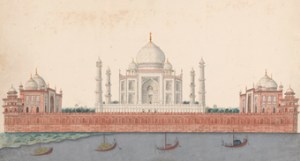 Organized to complement the Center’s major exhibition on Johan Zoffany, who spent six productive years in India, Adapting the Eye explores the complex and multifaceted networks of British and Indian professional and amateur artists, patrons, and scholars in British India in the later eighteenth and early nineteenth centuries, and their drive to create and organize knowledge for both aesthetic and political purposes. Selected from the Center’s rich holdings, the exhibition includes a diverse range of objects from both high art and popular culture, including albums, scrapbooks, prints, paintings, miniatures, and sculpture, demonstrating how collecting practices and artistic patronage in India during that period constituted a complex intersection of culture and power.
The starting point and central focus of the exhibition is a remarkable and little-known archive in the Center’s collection assembled by Charles Warre Malet and the British artist James Wales. Warre Malet was the East India Company’s Resident in Pune between 1785 and 1798. He and Wales commissioned over a hundred works on paper by British and Indian artists, which are included in the archive together with extensive manuscript material and vivid sketches of landscape, architectural sites, scenes from everyday life, and diplomatic ceremonial events. An extensive selection of drawings from the archive, complemented by other works from the collections, provides a unique window into central India at a critical historical moment. A pivotal figure in this rich cultural interchange was the highly accomplished Indian draftsman and sculptor Gangaram Tambat, who drew on both indigenous and European artistic conventions; his remarkable hybrid drawings are juxtaposed with works by British artists, including William Hodges, William and Thomas Daniell, Robert Mabon, and James Wales.
Exhibition: ‘Luminous Paper, British Watercolors and Drawings’
From a Getty press release:
Luminous Paper: British Watercolors and Drawings
At the J. Paul Getty Museum, Getty Center, Los Angeles, 19 July — 23 October 2011
Curated by Julian Brooks

Thomas Girtin, "Durham Cathedral and Castle," ca. 1800 watercolor over pencil heightened with gum Arabic (Los Angeles: The J. Paul Getty Museum)
Watercolor is one of the most challenging artistic techniques—capable of extraordinary luminosity but often resistant to control. Luminous Paper: British Watercolors and Drawings presents more than 25 works of the 1700s and 1800s by some of the greatest masters of the medium, many on view for the first time.
Featuring the work of some of the most famous British artists, including J.M.W. Turner, William Blake, and Samuel Palmer, this exhibition reveals their multifaceted innovations in the field of drawing and watercolor painting. From Turner’s use of his thumbprint to roughen the texture of wash in a whirling seascape, to the reflected and re-reflected light built in layers by John Sell Cotman, the medium of watercolor was transformed beyond recognition. Other artists experimented with novel subject matter or new modes of representation, playing important roles in the development of European drawing and watercolor painting.
“Key works have been added to the Getty’s collection in the last few years as part of an ongoing initiative to build our holdings of British drawings and watercolors to better represent the wider European tradition,” said Associate Curator Julian Brooks, who curated the exhibition. “Many of these works have been recently acquired and we’re thrilled to be publicly displaying them for the first time in generations.”
Among the recent acquisitions is Durham Cathedral and Castle (about 1800) by Thomas Girtin, a dramatic view of a medieval cathedral and castle set on a rocky outcrop above the water, amid the moving light of a bright, cloudy sky. Girtin died of tuberculosis at the age of 27, two years after making this drawing. His rival J.M.W. Turner is reputed to have said “Had poor Tom lived, I would have starved.” Another is View of the Church of Our Lady of Hanswijk, Mechelen (1831) by Thomas Shotter Boys, a central figure in Anglo-French artistic exchange of the period, and one of the most sophisticated practitioners of watercolor. He excelled in capturing effects of atmosphere and mood. (more…)
Exhibition: ‘Sin and the City’, Hogarth at Princeton
From the exhibition website:
Sin and the City: William Hogarth’s London
Firestone Library, Princeton University, 26 August 2011 — 29 January 2012

William Hogarth, "Beer Street," 1751, etching and engraving (Princeton University: Graphic Arts Collection, Firestone Library)
This fall the Princeton University Library will celebrate eighteenth-century London as seen through engravings by one of its most popular storytellers. Sin and the City: William Hogarth’s London, on view 26 August 2011 to 29 January 2012, presents Hogarth’s unflinching chronicle of the city’s development from a medieval town to a swirling modern metropolis.
Whether examining scenes along the impoverished roads of St. Giles parish, peering into the dark cellars of Blood Bowl Alley, or accompanying a procession to the Tyburn gallows, Hogarth’s engravings plunge us into a city that is not only grand and powerful but also chaotic, crime-ridden, and sometimes even heartbreaking.
The exhibition includes 70 engravings by Hogarth, along with the work of his contemporaries, such as Jonathan Swift, John Gay, and Henry Fielding, among others. Period maps and original documents from the first production of The Beggar’s Opera will also be on view.
A full exhibition checklist is available here»
◊ ◊ ◊ ◊ ◊

Afternoon Roundtable Discussion: A Midnight Modern Conversation
Princeton University, 7 October 2011
With
Linda Colley, Shelby M.C. Davis 1958 Professor of History, Princeton University;
Mark Hallett, Professor of History of Art, University of York;
Tim Hitchcock, Professor of Eighteenth-Century History, University of Hertfordshire; and
Claude Rawson, Maynard Mack Professor of English, Yale University.
James Steward, Director of the Princeton University Art Museum will moderate.
A reception will follow.
◊ ◊ ◊ ◊ ◊
Additional information is available at the Events page. The exhibition organizers have also created a useful map detailing key locations for Hogarth’s prints.










 Enfilade
leave a comment