Portrait Miniatures in Milwaukee
From the Milwaukee Art Museum:
Intimate Images of Love and Loss: Portrait Miniatures
Milwaukee Art Museum, 8 July — 31 October 2010
Curated by Catherine Sawinski

John Barry, "A Young Girl," ca. 1790 (Milwaukee Art Museum)
The portrait miniatures featured in Intimate Images of Love and Loss are from continental Europe, Britain, and America, and were drawn from the Museum’s Collection and a number of Milwaukee-area collections. The small-scale portraits, most measuring less than three inches tall, are painted on ivory and set within beautifully made cases of glass and metal. The more than sixty objects in the exhibition, now on display as works of art, were once highly personal possessions that were held and worn. Miniatures developed from illustrations in medieval illuminated manuscripts. The word “miniature” derives from the Latin word miniare, meaning “to paint with red lead,” which was one of the techniques used to color manuscripts. Eventually, these illustrations within the text were viewed as small paintings, and were produced independent of the manuscripts. The word “miniature” to mean something small came later.
The portrait miniature emerged in the sixteenth century when nobles used them as gifts to make political alliances. With the rise of the middle class and the tendency towards sentimentality in the late eighteenth century, the demand for portrait miniatures skyrocketed. Their small scale reflects their domestic and private role. Commonly worn as jewelry, they were also displayed on the wall of the home as a type of “family album.” Often miniatures were framed with arrangements of hair from the one portrayed to strengthen the personal connection or as a remembrance of a deceased loved one.
Exhibition in Atlanta: ‘Islamic Calligraphy’
From The Carlos Museum (thanks to Courtney Barnes for her account at Style Court) . . .
Islamic Calligraphy and the Qu’ran, ca. 1600-1900
The Carlos Museum, Emory University, Atlanta, 28 August — 5 December 2010

Calligrapher’s storage box from Turkey, eighteenth century, wood inlaid with tortoiseshell (over gold leaf), ivory, brass, mother-of-pearl and bone. Private Collection.
The Carlos Museum will host complementary exhibitions showcasing exceptional masterworks of Islamic calligraphy and related objects. Islamic Calligraphy and the Qu’ran combines Traces of the Calligrapher: Islamic Calligraphy in Practice, c. 1600–1900 and Writing the Word of God: Calligraphy and the Qur’an, and will be on view from August 28 to December 5, 2010.
The exhibitions and accompanying community outreach and educational programs will celebrate the rich religious and artistic tradition of calligraphy, or “beautiful writing,” the most esteemed of the Islamic visual arts. The varied works of calligraphy in the exhibitions—from practice alphabets to elaborately finished manuscripts—serve as traces of individuals, belief systems, and cultures. The costly and exotic materials lavished on writing instruments also document the international trade of the period, from 1600 to 1900, and create a rich material legacy that fuses aesthetics and piety.
Approximately 150 objects and works from an important private collection in Houston and the Arthur M. Sackler Museum, Harvard University Art Museums convey the elegance of the esteemed art form and reveal the skills of the many artisans—calligraphers, paper makers, gold beaters, illuminators, bookbinders, and metalworkers, to name a few—involved in the creation of the tools, the calligraphies, and the manuscript folios.
The practice of calligraphy constituted an expression of piety, as stated in the hadith (associated with the Prophet Muhammad): “the first thing created by God was the pen.” Calligraphy became a worthwhile endeavor for men of all stations and served as a permanent record of the calligrapher’s character.
Traces of the Calligrapher maps the practice of the calligrapher from the 17th through the 19th centuries both through examples of calligraphy, as well as through tools of the trade. The objects in the exhibition come from Iran, Turkey, and India, and include reed pens, penknives (used to cut the nib of the pen), and maktas (used to hold the pen during this process), in addition to inkwells, scissors, burnishers, storage boxes, and writing tables.
The fine craftsmanship of these objects is revealed in the exquisite and detailed designs, which often employ precious materials such as jade, agate, ivory, ebony, silver, and gold. Calligraphic practice exercises and fair copies are displayed alongside these implements, and a video shows a master calligrapher at work. Together, the objects and their output present a comprehensive overview of the intimate world of the calligrapher and the environment in which he worked.
Writing the Word of God is devoted to key developments of the Islamic scripts of distinct cultural areas, spanning from Spain and North Africa to greater Iran from the seventh to the 15th centuries. A selection of approximately 20 folios from now-dispersed Qur’ans from the regions will illustrate the rich variety and system of scripts.
The exhibitions were organized by the Museum of Fine Arts, Houston, and the Harvard University Art Museums, and were curated by Mary McWilliams, Norma Jean Calderwood Curator of Islamic and Later Indian Art at the Arthur M. Sackler Museum, and David J. Roxburgh, Prince Alwaleed bin Talal Professor of Islamic Art History at Harvard University.
Lawrence Exhibition and Conference
Opening next month at the NPG in London is a major exhibition on Thomas Lawrence, which will then appear in New Haven in the first part of next year. As noted by The Art History Newsletter, Mark Brown of The Guardian offers a preview. As noted previously here at Enfilade, the Paul Mellon Centre will sponsor a two-day conference in conjunction with the show November 18-19.
◊ ◊ ◊ ◊ ◊
Thomas Lawrence: Regency Power and Brilliance
National Portrait Gallery, London, 20 October 2010 — 23 January 2011
Yale Center for British Art, New Haven, 24 February — 5 June 2011
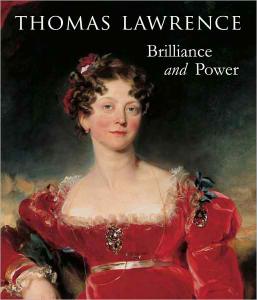 This will be the first exhibition in the United Kingdom since 1979 to examine Lawrence’s work and the first substantial presentation of this artist in the United States. It will present Lawrence as the most important British portrait painter of his generation and will explore his development as one of the most celebrated and influential European artists of the late eighteenth and early nineteenth centuries. By his untimely death in 1830, Lawrence had achieved the greatest international reach and reputation of any British artist. Based on new research and fresh perspectives, this exhibition will introduce Lawrence to a new generation of museum visitors and students. It will also contextualise his work in the light of recent scholarship on the art, politics and culture of the period. The exhibition will include the artist’s greatest paintings and drawings alongside lesser known works in order to provide a fresh understanding of Lawrence and his career. It will contrast his approach to sitters according to age and gender, juxtapose the power and impact of his public works with the intimacy and intensity of those portraits of his friends and family, trace his innovations as a draughtsman and painter, and place him within the broader contexts of the aesthetic debates, networks of patronage and international politics of his day.
Conference: ‘Visual & the Verbal’ Occasioned by Barry Exhibition
The Visual and the Verbal in the Eighteenth Century
University of Kent, 5 November 2010
Sponsored by the Paul Mellon Centre
 The conference is being organised in conjunction with the exhibition In Elysium: Prints by James Barry, co-curated by Ben Thomas and Jon Kear. The conference will conclude with a drinks reception and exhibition viewing. Attendance at the conference, reception and exhibition is free but spaces are limited to 50. Please contact Jennie Batchelor (J.E.Batchelor@kent.ac.uk) to reserve a place. Places will be allocated in order of date of application.
Programme
9:00-9:30 Registration
9:30-10:00 Jenny Uglow (Kent), ‘Hogarth and Fielding: an Irregular Alliance’
10:00-11:00 Peter de Bolla (King’s College, Cambridge), ‘The Necessity of Judgement’
11:00-11:30 Coffee/tea break
11:30-12:30 John Barrell (York), ‘War and the Moral Economy in North East Wales, 1794’
12:30-13:30 Lunch (provided for speakers only)
13:30-14:30 Harriet Guest (York), ‘The Death of James Cook and the American Crisis’
14:30-15:30 Michael Rosenthal (Warwick), ‘Describing the Colony: The British in New Holland, c. 1788-1823’
15:30-16:00 Coffee/tea break
16:00-17:00 Michael Phillips (York), ‘No. 36 Castle Street East: A Reconstruction of James Barry’s House, Painting and Printmaking Studio’
17:30 Drinks reception and viewing of the exhibition In Elysium: Prints by James Barry
North Carolina Earthenware Opens in Milwaukee
From the Milwaukee Art Museum:
Art in Clay: Masterworks of North Carolina Earthenware
Milwaukee Art Museum, 2 September 2010 — 17 January 2011
Old Salem Museum & Gardens, 21 March — 14 August 2011
Colonial Williamsburg, 26 September 2011 — 24 June 2012
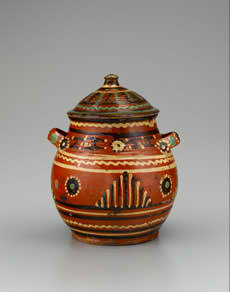
Sugar Pot, Alamance County, North Carolina, 1790–1800. Lead-glazed earthenware. H. 10 in. Courtesy, Old Salem Museums & Gardens. Photo by Gavin Ashworth.
Slipware, sculptural bottles, faience, and creamware are all part of the rich artistic legacy of North Carolina’s first earthenware potters. During the last half of the eighteenth century, artisans of European descent introduced a variety of old-world ceramic traditions to the Carolina backcountry. From storage and cooking vessels with deeply rooted antecedents to sophisticated ornamental ware with Islamic, Asian, and European overtones, the work of these artisans was as diverse as the culture it helped sustain. North Carolina potters transformed the simplest of materials into vessels of practical utility, astonishing beauty, and cultural and religious significance.
Art in Clay is the first major survey of these earthenware traditions and features more than 150 objects. The exhibition explores, among others, work related to the multi-generational Loy family tradition, which originated in France, and that by Moravian immigrant potters who were trained (or influenced) by Gottfried Aust. Aust (American, b. Germany, 1722–1788) was a master potter trained in Saxony, Germany, who later found a home in the North Carolina Moravian missionary settlement. Superior in quality to the pottery the early American colonists were creating, the slip-decorated earthenware, though utilitarian, represented the religious beliefs for which their makers had once been persecuted, and allowed the settlers to maintain a sense of cultural identity in the new world.
Exhibition: Hendrix at the Handel House
Press release (PDF) from the Handel Museum:
Hendrix in Britain
Handel House Museum, London, 25 August — 7 November 2010 (flat visits from 15-26 September)

Jimi Hendrix at his flat at 23 Brook Street, ©Barrie Wentzell
Commemorating the 40th anniversary of Jimi Hendrix’s death on 18 September 1970, Hendrix in Britain takes place at Handel House Museum at 25 Brook Street, the Mayfair townhouse in which composer George Frideric Handel lived and worked for 36 years. Handel wrote his most popular and enduring music, including Messiah, in the house and died there in 1759. In 1968, Jimi Hendrix moved into the top floor flat of 23 Brook Street, with his English girlfriend Kathy Etchingham, and it became his home during long periods of playing in many venues across town.
The flat is now used as the administrative offices of Handel House Museum. But, to mark the anniversary, it will be opened to the public for a 12-day stretch during the run of the exhibition, including the 18 September anniversary date (15-26 September). Previously, the flat has only been open for guided tours on specific one-off dates. To accommodate the special opening, Museum staff will move out temporarily, taking their office furniture and equipment with them, to allow visitors to tour the rooms in which Hendrix lived, wrote, played and entertained many of his contemporaries during an important and prolific period in his life.
Hendrix in Britain will explore several aspects of Jimi Hendrix’s life and career. Featuring exhibits rarely seen or never previously displayed in the UK, as well as a host of images, film clips and music, the exhibition will trace his rise to fame, his songwriting craft, his extraordinary guitar playing and his lasting impact on music and popular culture. Among the items on display will be handwritten lyrics; a distinctive orange velvet jacket and Westerner hat worn by Hendrix in performance, on film and in album photography; Hendrix’s scrawled travel directions to the Isle of Wight Festival, scene of his final significant performance in August 1970; and UK concert memorabilia.
Sarah Bardwell, Director of Handel House Museum, said “We are excited to be celebrating the life of Jimi Hendrix. After moving to Brook Street in 1968, Hendrix learned of the Handel connection with the building and headed to One Stop Records in South Molton Street and HMV in Oxford Street to pick up whichever records of Handel music he could find. Clearly he was intrigued by the connection and we’re pleased to be celebrating his own legacy today. We are delighted to be opening up the flat which was a true home base to Hendrix during his seemingly endless schedule of touring in the UK and elsewhere.”
Brought to London by manager Chas Chandler in September 1966, Jimi Hendrix quickly established a reputation as a spectacular live performer, based on an intensive period of playing such London clubs as the Speakeasy, Bag o’ Nails and Marquee, as well as venues across the UK, often delivering more than one set per night. The success of his first two single releases, Hey Joe (December 1966) and Purple Haze (March 1967), and his first album with the Jimi Hendrix Experience, Are You Experienced? (May 1967), coupled with the reputation established by his UK shows, led to fame, ensuring that when he returned to play shows in the USA, only nine months after he had arrived in London, he was already a European star.
23 Brook Street, which carries an English Heritage Blue Plaque in memory of Hendrix (alongside the Blue Plaque for Handel), is the only Hendrix site anywhere in the world to be officially recognised. When he moved in with Kathy Etchingham in 1968, the rent charge was £30 per week; when Handel lived in the building next door he paid rent of £60 per year.
Spanish Drawings at The Frick This Fall
Press release (PDF) from The Frick:
The Spanish Manner: Drawings from Ribera to Goya
The Frick Collection, New York, 5 October 2010 — 9 January 2011

Catalogue by Jonathan Brown, Lisa Banner, Susan Grace Galassi, Reva Wolf, and Andrew Schulz (Scala, 2010), ISBN: 9781857596519, $65
The greatest Spanish draftsmen from the seventeenth through the nineteenth century—Ribera, Murillo, and Goya, among them—created works of dazzling idiosyncrasy. These diverse drawings, which may be broadly characterized as possessing a specifically “Spanish manner,” will be the subject of an exclusive exhibition at The Frick Collection in the fall of 2010. The presentation will feature more than fifty of the finest Spanish drawings from public and private collections in the Northeast, among them The Metropolitan Museum of Art, The Hispanic Society of America, The Morgan Library & Museum, the Princeton University Art Museum, and the Philadelphia Museum of Art. Opening the show are rare sheets by the early seventeenth-century masters Francisco Pacheco and Vicente Carducho, followed by a number of spectacular red chalk drawings by the celebrated draftsman Jusepe de Ribera. The exhibition continues with rapid sketches and painting-like wash drawings from the rich oeuvre of the Andalusian master Bartolomé Esteban Murillo, along with lively drawings by Francisco de Herrera the Elder and his son and the Madrid court artist Juan Carreño de Miranda, among others.
The second part of the exhibition will present twenty-two sheets by the great draftsman Francisco de Goya, whose drawings are rarely studied in the illuminating context of the Spanish draftsmen who came before him. These works, mostly drawings from his private albums, attest to the continuity between his thematic interests and those of his Spanish forebears, as well as to Goya’s own enormously fertile imagination. The exhibition is organized by Jonathan Brown, Carroll and Milton Petrie Professor of Fine Arts, New York University; Lisa A. Banner, independent scholar; and Susan Grace Galassi, Senior Curator at The Frick Collection. It will be accompanied by a fully illustrated catalogue with entries by the show’s organizers and by Reva Wolf, Professor of Art History, State University of New York at New Paltz, and author of Goya and the Satirical Print in England and on the Continent, 1730–1850, and by Andrew Schulz, Associate Professor of Art History and Department Head at the University of Oregon and author of Goya’s Caprichos: Aesthetics, Perception, and the Body. The exhibition is made possible, in part, by the David L. Klein Jr. Foundation, Elizabeth and Jean-Marie Eveillard, and the Samuel H. Kress Foundation. The accompanying catalogue has been generously underwritten by the Center for Spain in America.
Grasmair Exhibition: Religious Painting in South Tyrol
From Südtirol.online:
Johann Georg Grasmair (1691–1751), Barockmaler in Tirol
Diözesanmuseum, Brixen, Italy 12 June — 31 October 2010

Johann Georg Grasmair, "König aus dem Aufsatzbild der Heiligen Drei Könige," 1729, (Brixen: Diözesanmuseum Hofburg)
Die Ausstellung in der Hofburg Brixen bietet erstmals einen repräsentativen Querschnitt durch die verschiedenen Werkgruppen von Johann Georg Grasmair, einem hervorragenden, aber wenig beachteten Meister der Tiroler Barockmalerei. Grasmair wurde 1691 als Sohn des Glockengießers Jörg Grasmair und seiner Ehefrau Anna Maria Maurer in Brixen geboren. Er erlernte zwar das Glockengießerhandwerk, widmete sich in weiterer Folge aber ganz der Malerei. Nach einer ersten Lehre bei Giuseppe Alberti in Cavalese begab er sich zunächst nach Venedig und dann weiter nach Rom, wo er von der Malerei Carlo Marattas und dessen Schule seine wichtigste künstlerische Prägung erhielt. Dem streng klassisch ausgerichteten römischen Barockstil in der Tradition Marattas blieb Grasmair zeitlebens verpflichtet.
Um 1721 kehrte er von seinem mehrjährigen Aufenthalt in Italien zurück, vermählte sich mit Anna Katharina Hueber aus Mauls und schuf erste Werke in Brixen, Klausen und Niederdorf. Von 1722–1724 war er als Hofmaler der Familie Fürstenberg in Donaueschigen (Baden-Württemberg) tätig.

ISBN: 9788888570143
1724 kehrte Grasmair nach Tirol zurück und ließ sich in Wilten bei Innsbruck nieder. Dort soll er, zeitgenössischen Berichten zufolge, still und anspruchslos bis zu seinem Tode am 28. Oktober 1751 gelebt haben, obwohl er mit den besten Künstlern seiner Zeit wetteifern konnte. Zu den wichtigsten Auftraggebern für Grasmair zählen die Klöster der Serviten und Jesuiten in Innsbruck sowie die Kirche im Allgemeinen, weshalb sein Werk vorwiegend religiöse Themen umfasst. Bekannt sind vor allem seine Altarbilder für renommierte Nordtiroler Kirchen wie den Dom von Innsbruck, die Basilika von Wilten, die Innsbrucker Landhauskapelle oder die Pfarrkirchen von Axams, Fulpmes und Schwaz. Auch in Südtirols Kirchen ist eine Reihe von Werken Grasmairs vorhanden, so etwa in Brixen in der Hofburgkapelle und in der Schutzengelkirche in Stufels, in Neustift, Bruneck, Sterzing, Klausen, Lajen, Lana, Untermais, Naturns und Montan. Einzelne Werke schuf Grasmair auch für das Trentino.
Neben sakralen Werken zeigt die Ausstellung auch wenig bekannte Landschaftsbilder und Darstellungen von allegorischen und mythologischen Themen, die Grasmair für adelige Auftraggeber schuf. Auch seine Ölskizzen und zahlreichen Zeichenstudien, die bisher kaum beachtet wurden, werden in der Ausstellung erstmals gewürdigt. Anders als viele Maler seiner Zeit widmete sich Grasmair ausschließlich der Ölmalerei und nicht auch der prestigeträchtigeren Freskomalerei. Trotzdem galt er bei seinen Zeitgenossen als hoch geschätzter Maler. Seine heute geringe Bekanntheit ist wohl hauptsächlich auf den begrenzten Schaffensraum (Tirol und Trentino) zurückzuführen. Von der künstlerischen Qualität seines Schaffens her ist Grasmair durchaus mit Paul Troger und Michael Angelo Unterberger zu vergleichen, auch wenn er deren überregionale Karriere nicht mitgemacht hat. Im Katalog zur Ausstellung ist erstmals das gesamte Schaffen des Künstlers berücksichtigt und mit einem umfassenden Werkverzeichnis dokumentiert.
Sino-French Relations in the Eighteenth & Ninteenth Centuries
From the museum’s website:
La Soie & le Canon, France-Chine (1700-1860)
Musée d’Histoire de Nantes, 26 June — 7 November 2010
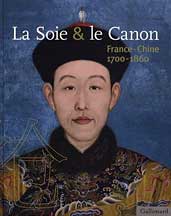
Catalogue ed. by Bertrand Guillet, ISBN: 9782070129492, $72.50
En octobre 1700, L’Amphitrite, premier navire français à commercer avec la Chine, revient en France et c’est à Nantes, grand port de commerce colonial, qu’il vend sa cargaison : thé, soie, porcelaine, nacre, ivoire, panneaux laqués… Cette première arrivée massive d’objets et produits nourrit une véritable fascination pour la culture chinoise. C’est ainsi que se développe en France « un goût pour la Chine » dont on a oublié l’ampleur. Il est alimenté par les Jésuites présents à la cour de Chine. L’Europe devient sinophile. Artistes et artisans produisent dans le goût chinois. Jusqu’à la fin du 18e siècle, ce commerce au volume marginal mais dont l’influence se révèle marquante, est dominé par les Chinois qui dictent leurs conditions aux Occidentaux. Ces derniers n’arrivent cependant pas à introduire en retour leurs produits commerciaux. La Chine attire de plus en plus les convoitises et peu à peu, « le mythe » s’écorne. Les guerres de l’Opium au 19e siècle, avec en point d’orgue le sac du Palais d’été à Pékin en 1860, achèvent la bascule du rapport économique au profit des Européens et participent au déclin de l’Empire du Milieu.
L’exposition La Soie & le Canon met en lumière les relations franco-chinoises entre ces deux dates – 1700/1860 – et montre l’évolution du regard porté sur cet Extrême-Orient lointain qui suscita tour à tour fascination et rejet, en s’appuyant sur la présentation d’objets et documents prestigieux prêtés par de grands musées dont le musée national des arts asiatiques Guimet, partenaire associé au projet. Avec cette exposition d’histoire, le musée d’histoire de Nantes propose une démarche inédite en montrant les différentes phases qui ont caractérisé dès l’origine les relations entre la France et la Chine. Plus largement, l’exposition contribue à faire mieux comprendre notre rapport à la Chine d’aujourd’hui, toujours fascinante, souvent critiquée, alors que s’amorce un nouvel équilibre mondial dans lequel ce géant qui rassemble un cinquième de l’humanité joue un rôle de premier plan.
Exhibition: Gainsborough and the Modern Woman
From Art Daily (19 July 2010) . . .
Thomas Gainsborough and the Modern Woman
Cincinnati Art Museum, 18 September 2010 — 2 January 2011
San Diego Museum of Art, 29 January — 1 May 2011
Curated by Benedict Leca
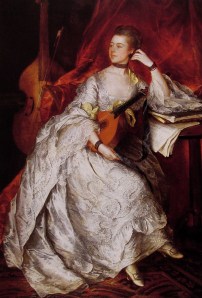
Thomas Gainsborough, "Portrait of Ann Ford" (later Mrs. Philip Thicknesse), 1760 (Cincinnati Art Museum)
The portraits of Thomas Gainsborough (1727-1788) made him perhaps the most famous British artist of the late eighteenth century. Nobles, statesmen, musicians and the range of men and women of the period’s merchant class all sat for him. But it is his portraits of notorious society women—widely considered among the greatest of the Western tradition—which attracted the most attention.
Eighteenth-century viewers appreciated these paintings differently than we do today. In his own time, Gainsborough’s portraits of actresses, performers and courtesans were seen as unconventional, if not radical, not only because of the type of woman they portrayed but also because of the unconventional way they were painted. “These stunning portraits not only give us a perspective on the history of portrait painting and celebrity, but also on the history of women’s progressive self-fashioning, which equally deserves art historical recognition. These are provocative women provocatively painted,” explains exhibition curator Benedict Leca.
Organized by the Cincinnati Art Museum in association with the San Diego Museum of Art, Thomas Gainsborough and the Modern Woman is the first exhibition devoted to Thomas Gainsborough’s feminine portraiture, and the first to focus specifically on modernity and femininity in Georgian England from the perspective of Gainsborough’s groundbreaking portraits of women. Coinciding with the comprehensive cleaning and restoration of the Cincinnati Art Museum’s iconic Ann Ford (Mrs. Thicknesse), this exhibition unites a choice selection of thirteen paintings from renowned museum collections in the United States and Britain to illuminate the role that Gainsborough ’s extraordinary portraiture played in defining new, progressive feminine identities. Among others on view at the Cincinnati Art Museum, September 18, 2010 – January 2, 2011 will be Mrs. Siddons (National Gallery, London), Mrs Richard Brinsley Sheridan (National Gallery, Washington), Giovanna Baccelli (Tate Britain), Grace Dalrymple (Metropolitan Museum of Art), Viscountess Ligonier (Huntington Library, Art Collections and Botanical Gardens). The exhibition will also feature a small selection of period dresses from the Cincinnati Art Museum’s rich fashion arts and textile collection, thereby further contextualizing Gainsborough’s portraits while affording visitors a view of the material accessories of the “modern woman.” . . .
The Art Daily article is available here»
◊ ◊ ◊ ◊ ◊
Exhibition catalogue: Benedict Leca, Aileen Ribeiro, and Amber Ludwig, Thomas Gainsborough and the Modern Woman (London: Giles, 2010), ISBN: 9781904832850, $49.95.
 This beautifully illustrated volume focuses specifically on Thomas Gainsborough’s portraits of well-known, “liberated,” society women, and the way in which the artist executed these special commissions. Thomas Gainsborough and the Modern Woman draws us away from his predominant reputation as a landscape painter, and shows how such portraits were both an affirmation by Gainsborough of his own position in the artistic world of Georgian England, and of the desire of his sitters (including leading artists, musicians, actresses and intellectuals) to be seen as self-assured progressive women.
Author Benedict Leca takes as his starting point the Cincinnati Art Museum’s famous and newly restored portrait of Ann Ford (1760), widely considered the finest of the masterpiece portraits created by Gainsborough at Bath in the early 1760s. He addresses this early portrait as typifying Gainsborough’s comparatively permissive attitude with regard to how notorious women should be presented, and offers a compelling view of Gainsborough’s peculiar manner of painting, one that established the artist as the foremost portraitist of modern life. Featuring portraits from international collections, including Tate Britain, the Metropolitan Museum of Art, the J Paul Getty Museum and the National Gallery, London, this ground-breaking new volume also includes an essay by Aileen Ribeiro examining the portrait of Ann Ford in detail, and by Amber Ludwig discussing the role of feminine identity in 18th-century London.










 Enfilade
1 comment