Exhibition | The Sassoons
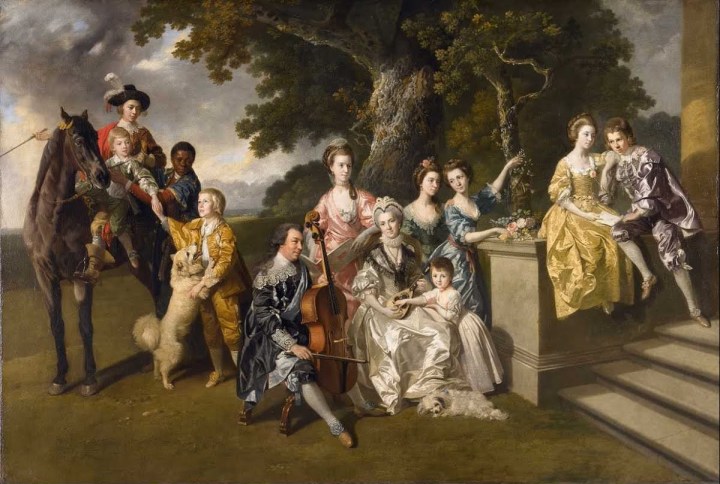
Johan Zoffany, The Family of Sir William Young, 1767–69, oil on canvas; 45 × 66 inches (National Museums Liverpool, Walker Art Gallery). Formerly in the Philip Sassoon Collection.
◊ ◊ ◊ ◊ ◊
From the press release (17 November 2022) for the exhibition:
The Sassoons
The Jewish Museum, New York, 3 March — 13 August 2023
Organized by Claudia Nahson and Esther da Costa
The Jewish Museum presents The Sassoons, an exhibition that reveals the fascinating story of a remarkable Jewish family, highlighting their pioneering role in trade, art collecting, architectural patronage, and civic engagement from the early 19th century through World War II. The exhibition follows four generations from Iraq to India, China, and England, featuring a rich selection of works collected by family members over time.
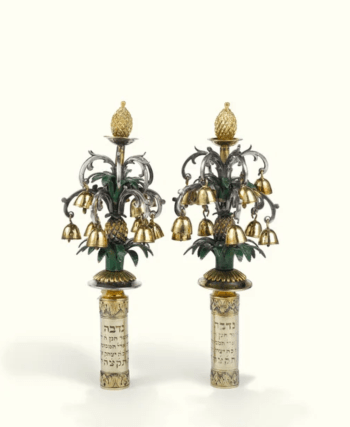
Torah finials, England, probably London, 1804, dedicated in 1834/35 (Hebrew inscription date), silver parcel gilt, and enamel, 6 inches (Collection of Jane and Stuart Weitzman). Formerly in the Reuben and Flora Sassoon Collections.
Over 120 works—paintings, Chinese art, illuminated manuscripts, and Judaica—amassed by Sassoon family members and borrowed from numerous private and public collections are on view. Highlights include Hebrew manuscripts from as early as the 12th century, many lavishly decorated; Chinese art and ivory carvings; rare Jewish ceremonial art; and Western masterpieces including paintings by Thomas Gainsborough and Jean-Baptiste-Camille Corot, and magnificent portraits by John Singer Sargent of various Sassoon family members. The Sassoons explores themes such as discrimination, diaspora, colonialism, global trade, and war that not only shaped the history of the family but continue to define our world today.
The exhibition narrative begins in the early 1830s when David Sassoon, the patriarch of the family, was forced to leave his native Baghdad due to the increasing persecution of the city’s Jewish population. Establishing himself in Mumbai (then Bombay) and initially involved in the cotton trade, his vision led the family from Iraq to India, China, and finally England where his descendants gradually settled over the decades. His activities soon grew to include the opium trade, which had escalated after the collapse of the East India Company in the mid-19th century, ending its monopoly and allowing private companies to engage in this profitable enterprise. He aligned with and benefitted from British colonial interests soon extending his business to China and England by deploying his eight sons to oversee new branches in Shanghai, Hong Kong, and London.
Although less known, the Sassoon women were discerning collectors. The exhibition will pay special attention to these unsung patrons of art. Rachel Sassoon Beer became the first woman in Britain to edit two newspapers, The Sunday Times and The Observer, and played a crucial role reporting on the Dreyfus affair in Britain. Her painting collection, sold at auction in 1927, listed, among other great works, one drawing and 15 paintings by Corot, a Constable, and a Peter Paul Rubens. Of a younger generation, Hannah Gubbay, a Sassoon on both her father’s and her mother’s side, was a major collector of 18th-century art, furniture, and porcelain, as was her cousin, Mozelle Sassoon.
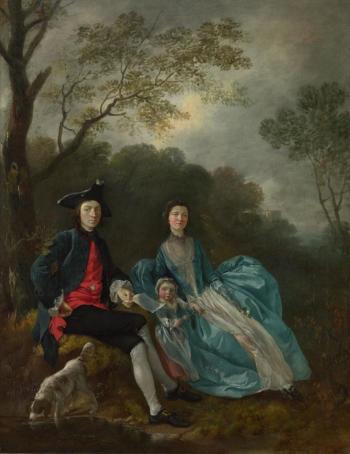
Thomas Gainsborough, Portrait of the Artist with His Wife and Daughter, ca. 1748, oil on canvas, 36 × 28 inches (London: National Gallery; acquired under the acceptance-in-lieu scheme at the wish of Sybil, Marchioness of Cholmondeley, in memory of her brother, Sir Philip Sassoon, 1994). Formerly in the Philip Sassoon Collection.
The exhibition also highlights the distinguished properties of the Sassoons in the United Kingdom. A Member of Parliament for the Conservative Party, Sir Philip Sassoon made active use of his three great residences, Park Lane (now destroyed) and Trent Park in London, and Port Lympne in Kent. Surrounded by landscaped gardens (in the case of Trent Park and Port Lympne) and filled with priceless works of art, all three were used by the government for high-profile cabinet meetings and receptions of foreign dignitaries and celebrities. Paintings of Port Lympne by Sir Winston Churchill, a frequent visitor, are featured.
The last section of the exhibition focuses on the service of a younger generation of Sassoons in the First World War. Sir Victor Sassoon served in the Royal Flying Corps, barely surviving an airplane crash that left him permanently disabled. Sir Philip Sassoon, private secretary to Field Marshal Douglas Haig, recruited his artist friends including John Singer Sargent to cover the war, and several of these works will be on display. A very different war is experienced through the poetry of Siegfried Sassoon. Though a brave and much decorated soldier, his graphic and shocking portrayal of the trenches and fierce criticism of the establishment were emblematic of a generation scarred by war’s brutality. Some of the journals he wrote and illustrated during battle, including his famous anti-war statement, will be on view.
 During the Second World War, some 18,000 Jewish refugees arrived in Shanghai fleeing Nazi Europe. They were able to survive the war thanks to the money raised by members of the Baghdadi Jewish community who resided in the city at the time. Prominent among them was Sir Victor Sassoon who donated considerable funds and placed several buildings at the disposal of the International Committee for European Immigrants.
Numerous private and public collections have contributed loans to the exhibition including His Majesty King Charles III, the British Museum, the National Gallery of London, the National Trust of Britain, the Tate, the Victoria & Albert Museum, the British Library, the Houghton Hall Collection, the Cambridge University Library, the Fitzwilliam Museum, the National Gallery of Ireland, the Israel Museum, the Metropolitan Museum of Art, the Museum of Fine Arts Boston, the Cleveland Museum of Art, and the Yale Center for British Art.
The Sassoons is organized by Claudia Nahson, Morris and Eva Feld Senior Curator at the Jewish Museum, New York, and Esther da Costa Meyer, Professor Emerita at Princeton University. The exhibition design is by Leslie Gill and Adam Johnston, Leslie Gill Architect; graphic design by Miko McGinty.
Esther da Costa Meyer and Claudia J. Nahson, The Sassoons (New Haven: Yale University Press, 2023), 256 pages, ISBN: 978-0300264302, $60.
The Burlington Magazine, March 2023
The eighteenth century in the March issue of The Burlington . . .
The Burlington Magazine 165 (March 2023)
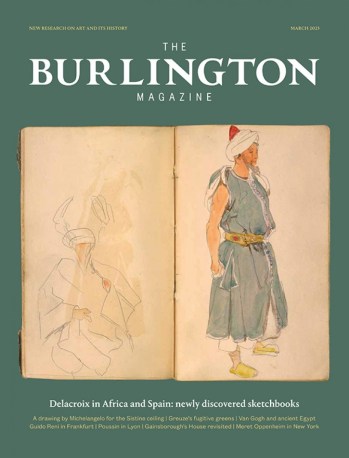 E D I T O R I A L
• “Omai,” p. 219.
Given his undisputed central place in the history of British art, it is surprising that the three-hundredth anniversary of the birth of Joshua Reynolds is not being celebrated this year with more éclat. The principal tribute will be an exhibition Reframing Reynolds: A Celebration (24 June – 29 October 2023) at the Box in Plymouth, the city where Reynolds made his reputation—he was born on 16th July 1723 at Plympton, on its outskirts. The exhibition will explore the patronage he enjoyed from the Eliot family of Port Eliot, St Germans, and will be supplemented by the museum’s collection of paintings by Reynolds, the largest outside London.
Reynolds’s reputation rests largely on his portraits, so it might have been expected that the museum that contains the largest number, the National Portrait Gallery, London (NPG), would have marked the occasion with an exhibition of its own, but given that it has been closed for the past three years for a comprehensive redevelopment and redisplay, due to be unveiled on 22nd June, it has had other priorities. Yet any disappointment that the NPG is neglecting Reynolds in his anniversary year was allayed by the announcement last August that it is seeking to raise £50 million to acquire one of his greatest paintings, the full-length portrait of Omai, the first Polynesian to visit Britain. Universally praised ever since it was first seen in public, at the Royal Academy of Arts in 1776, it is a work both of great beauty and of compelling historic interest as a document of the earliest European encounter with Pacific cultures. . . Keep reading here»
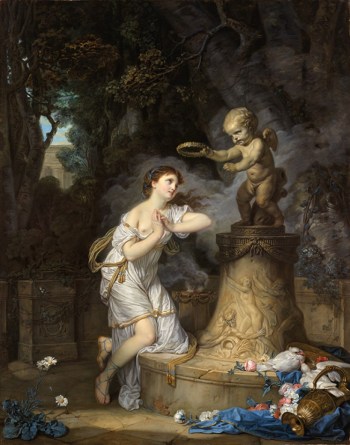
Jean-Baptiste Greuze, A Young Woman Praying at the Altar of Love (Votive Offering to Cupid), 1767, oil on canvas, 146 × 113 cm (London: The Wallace Collection).
A R T I C L E S
• Yuriko Jackall, Barbara H. Berrie, John K. Delaney, and Michael Swicklik, “Greuze’s Greens: Ephemeral Colours, Classical Ambitions,” pp. 268–79.
Jean-Baptiste Greuze was criticized in his lifetime for the unduly muted palette of some of his paintings. New technical analysis, combined with the recent discovery of a list in his handwriting of pigments he used, has revealed that his greens have faded because they incorporate fugitive yellow lakes, a practice Greuze continued even after its disadvantages were obvious.
R E V I E W S
• Roko Rumora, Review of the exhibition Chroma: Ancient Sculpture in Color (The Metropolitan Museum of Art, 2022–23), pp. 312–15.
• Desmond Shawe-Taylor, Review of the newly opened, expanded Gainsborough’s House (Sudbury), pp. 322–25.
• Friso Lammertse, Review of the newly renovated Royal Museum of Fine Arts, Antwerp (KMSKA), pp. 332–35.
• Simon Swynfen Jervis, Review of Jean-Pierre Fournet, Cuirs dorés, ‘Cuirs de Cordoue’: un art européen (Éditions d’art Monelle Hayot, 2019), pp. 342–43.
• Gauvin Alexander Bailey, Review of Aaron Hyman, Rubens in Repeat: The Logic of the Copy in Colonial Latin America (Getty Research Institute, 2021), pp. 343–44.
• Stephen Bann, Review of Joanthan Ribner, Loss in French Romantic Art, Literature, and Politics (Routledge, 2022), pp. 344–45.
• Charlotte Gere, Review of Julius Bryant, Enriching the V&A: A Collection of Collections, 1862–1914 (Lund Humphries and V&A Publishing, 2022), pp. 345–46.
• Jennifer Johnson, Review of Sam Rose, Interpreting Art (UCL Press, 2022), p. 350.
Exhibition | American Art from the Spanish Empire
From the press release for the exhibition:
From the Andes to the Caribbean: American Art from the Spanish Empire
Harvard Art Museums, Cambridge, 3 March — 30 July 2023
Organized by Horace Ballard

Artist active in the Viceroyalty of Peru, after Diego de Ocaña (1585–1608), Our Lady of Guadalupe at Extremadura, 1730–80, oil on canvas (Carl & Marilynn Thoma Collection, TL42430.6; photo by Jamie Stukenberg).
This spring, the Harvard Art Museums invite visitors to discover a more expanded story of American art through an unparalleled collection of Spanish colonial paintings. From the Andes to the Caribbean: American Art from the Spanish Empire presents 26 works from the Carl & Marilynn Thoma Foundation—the premier U.S. private collection of 17th- to 19th-century paintings from South America and the Caribbean—together with works from the Harvard Art Museums and other Harvard University collections. The presentation marks the museums’ first ever exhibition combining religious and secular art of the Spanish Americas.
The exhibition has been organized for the Harvard Art Museums by Horace D. Ballard, the Theodore E. Stebbins, Jr. Associate Curator of American Art, and is Ballard’s first major exhibition at Harvard since joining the museums in 2021. Natalia Ángeles Vieyra, Associate Curator of American Art at the Worcester Art Museum, contributed to the early thinking of the show when she served as the 2019–22 Maher Curatorial Fellow of American Art at the Harvard Art Museums. From the Andes to the Caribbean will be on display March 3 through July 30, 2023, in the museums’ special exhibitions gallery on Level 3. All in-gallery materials are being presented bilingually, in Spanish and English.
The Spanish empire and its mercantile companies were the dominant colonial force in America from 1492 to 1832. Five years before Portugal established American settlements and nearly a century before Britain and France claimed land in the hemisphere, wealth from America’s colonial territories (viceroyalties) of New Spain and Peru made Spain the richest nation on Earth. Though Spain is no longer an empire, its colonial past continues to inform the art and culture of the Americas.
From the Andes to the Caribbean emphasizes three key themes related to culture and empire: the political and spiritual work of Catholic icons; the ways in which empire begets hybrid cultural identities; and the relationship between labor, wealth, and luxury. Paintings from present-day Bolivia, Cuba, Ecuador, Peru, Puerto Rico, and Venezuela are presented alongside works on paper and design objects made with Cuban and Honduran mahogany, Mexican cochineal, and Peruvian silver, underlining the great diversity of works of art broadly referred to as either ‘Viceregal’, ‘Spanish colonial’, or simply ‘American’.
“My hope for this exhibition is to begin to unravel decades-long assumptions and half-truths about the definitions and origins of American art,” said Ballard. “In exploring works of print and design, as well as painted icons and portraiture from the 17th and 18th centuries in the Viceroyalties of Peru and New Spain, I aim to expand the narratives that many North American collections, including the Harvard Art Museums, have told for generations.”
The 50 objects on view include 26 paintings on loan from the Carl & Marilynn Thoma Foundation, dating from roughly 1600 to the mid-19th century, including exquisitely rendered depictions of Christian saints, angels, and the Holy Family, as well as portraits of those who had political and military influence within the royal court of Spain; 18th-century wood furniture and silver tableware from the Harvard Art Museums’ collections; samples of pigments and metals from the Straus Center for Conservation and Technical Studies that show some of the materials mined by Indigenous laborers and used by Spanish colonial artists in their work; a 1729 volume of The English Pilot, a series of sea atlases produced in England that chart the major ports and cities in the Americas, on loan from the Harvard Map Collection; and on loan from Harvard’s Arnold Arboretum Library, a 1787 French text that explains the production of carmine, a highly prized pigment whose secrets of manufacture were closely guarded by the Spanish.
“The names of many of the artists of the works in the exhibition are unknown to scholars, as racism, market factors, customs of religious humility, and the ethos of the guilds or workshops in which the works were created makes it difficult to assign authorship,” said Ballard.
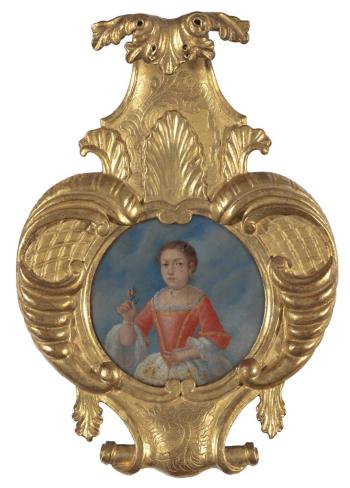
Diego Antonio de Landaeta, Portrait of Petronila Méndez, 1763, oil on panel, 6.5 × 7.5 inches (Carl & Marilynn Thoma Collection, TL42430.26; photo by Jamie Stukenberg).
However, key examples of paintings from three African diasporic makers are on display: Juan Pedro López (1724–1787), considered the finest artist active in 18th-century Venezuela; José Campeche y Jordán (1751–1809), arguably the greatest religious painter born in America during the centuries of colonial rule and occupation; and Diego Antonio de Landaeta (active 1749–1799), a member of a large family of artists working in 18th-century Caracas. López’s Our Lady of Guidance (1765–70) depicts a statue that was installed in a niche within the Catholic church of San Mauricio in Caracas, Venezuela, in 1704. Tobias and the Angel (1787), by Campeche y Jordán, is based on a narrative from around 300–200 BCE, in which the archangel Raphael disguises himself and accompanies the blind Tobias on a long journey. Landaeta’s portrait of Petronila Méndez (1763), a wealthy child from colonial Venezuela, is the only extant work by the artist that has been identified.
Importantly, the exhibition also explores materials that artists used in their work and that were traded extensively across the world, including copper, silver, gold, cochineal, and mahogany. Silver from the Viceroyalty of Peru (present-day Bolivia) was extremely significant in the world economy, including colonial-era Boston. It is estimated that 60–80 percent of the world’s silver during America’s colonial era came from Potosí, an Inkan settlement in the Andes. A majority of the eight silver works on display, including casters, sugar vessels, and coins from the Harvard Art Museums’ collections, are believed to be molded from silver mined at Potosí. A tea chest, tea table, and bombé secretary desk of English design provide elegant examples of transatlantic furnishings crafted from mahogany, a prized shipbuilding material with a history inseparable from colonialism and the enslaved labor used to grow, fell, and process the wood for manufacture.
Loans and exhibition coordination courtesy of the Carl & Marilynn Thoma Foundation. Support for the exhibition is provided by the Henry Luce Foundation Fund for the American Art Department; the Bolton Fund for American Art, Gift of the Payne Fund; the Alexander S., Robert L., and Bruce A. Beal Exhibition Fund; and the Gurel Student Exhibition Fund. Related programming is supported by the M. Victor Leventritt Lecture Series Endowment Fund.
The curatorial team extend their special thanks to artist and educator Gabriel Sosa, who served as the chief translator of exhibition materials; curator and scholar Suzanne Stratton-Pruitt; Kathryn Santner, 2022–24 Mayer Center Fellow, Denver Art Museum; Thomas B.F. Cummins, Dumbarton Oaks Professor of Pre-Columbian and Colonial Art, Harvard University; and colleagues at the Harvard Map Collection, the Harvard University Herbaria & Libraries, and Harvard’s David Rockefeller Center for Latin American Studies.
Symposium | Spain and the Hispanic World

Giovanni Vespucci, World Map, 1526, ink and colour on four sheets of parchment, 85 × 262 cm
(New York: The Hispanic Society of America)
◊ ◊ ◊ ◊ ◊
This week at the RA, in connection with the exhibition Spain and the Hispanic World, on view until 10 April 2023:
Spain and the Hispanic World Symposium: Cross-Cultural Exchanges
Royal Academy of Arts, London, 24 March 2023
The Royal Academy of Arts will host an academic symposium exploring the global exchange of Spanish art and culture—from the Islamic legacy of Al-Andalus to the transatlantic connections between Spain and Latin America. This interdisciplinary symposium, timed to coincide with our exhibition of treasures from the Hispanic Society Museum & Library, explores current academic perspectives on the histories of cultural exchange surrounding the Spanish and Latin American worlds.
We begin by considering material cultures through the movement of objects, tracing global exchange in the contexts of empire and colonialism. We move on to consider global imperialism through the lens of faith, studying religious art and objects. From the society of Al-Andalus to the history of Spanish Catholicism in Mexico, we look beyond the export of Spanish culture, to the influences and exchanges that were simultaneously being brought back into Iberia. Finally, we explore the legacies of Spanish art and literature in Latin America, investigating the layers of cultural difference caused by colonialism, as well as using a materials-based approach to investigate how these layers appear in objects and artworks. The symposium concludes with an artist in-conversation with Ana Maria Pachecho, exploring how the themes and ideas discussed throughout the day are still relevant to contemporary artist practice.
This intensive one-day symposium is a key moment in driving forward conversations and discussions on the art of the Latin world and is open to scholars, enthusiasts, and anyone wanting to know more about this groundbreaking exhibition. Ticket fees (£45 / £15) include exclusive early-morning access to the RA’s exhibition Spain and the Hispanic World starting at 8:30am and a drinks reception at 6:00pm.
This will be the first iteration of an annual symposium made possible by the Armando Garza-Sada Sr. Endowment for the Arts.
S P E A K E R S
Andrew M. Beresford is Professor of Medieval and Renaissance Studies at the University of Durham, and has published widely on Iberian art and literature, focusing principally on the cults of the saints and the signifying potential of the human body. His most recent book (2020) offered a study of the flaying of St Bartholomew.
Caroline Egan is Assistant Professor of Colonial Latin American Literature in the Department of Spanish and Portuguese at Northwestern University. Her research examines the portrayal of Indigenous languages in the sixteenth and seventeenth centuries, focusing especially on works composed in and about Nahuatl, Quechua, and Tupi and their circulation in the transatlantic world. Dr Egan has published in the Bulletin of Hispanic Studies, Hispanic Review, and Latin American Literature in Transition Pre-1492-1800, edited by Rocío Quispe-Agnoli and Amber Brian (Cambridge University Press).
Akemi Luisa Herráez Vossbrink is a Researcher at Nicolás Cortés Gallery in Madrid, an Old Master gallery focusing on Spanish, Italian, and Latin American art from the fifteenth century to the early twentieth century. She has been the Enriqueta Harris Frankfort Curatorial Fellow at the Wallace Collection, as well as a curatorial fellow at the National Gallery and the Meadows Museum. Her doctoral thesis at Cambridge focused on Spanish seventeenth-century artist Francisco de Zurbarán and his reception in the Americas.
Claudia Hopkins is Director of the Zurbarán Centre for Spanish and Latin American Art at Durham University, and Associate Editor of the Getty-funded journal Art in Translation. She has published widely on nineteenth- and twentieth-century Spanish art and curated the exhibition La España romántica. David Roberts y Genaro Pérez Villaamil (Real Academia de Bellas Artes de San Fernando, Madrid, 2021–22). Her forthcoming book discusses Spanish art in relation to attitudes to al-Andalus and Morocco (from Romantic liberalism in the 1830s, to colonial discourse before Moroccan independence in 1956).
IIona Katzew is Curator and Department Head of Latin American Art at the Los Angeles County Museum of Art (LACMA). Her most recent exhibition Archive of the World: Art and Imagination in Spanish America, 1500–1800 (2022) foregrounds the museum’s notable holdings of viceregal art. She was project director and co-curator of Painted in Mexico, 1700–1790: Pinxit Mexici (2017–18), which travelled to the Metropolitan Museum of Art and Fomento Cultural Banamex, Mexico City. She holds fellowships from the Metropolitan Museum of Art, the Getty, and Fulbright. In 2018 she was selected by Artsy as one of the top 20 international curators taking a cutting-edge approach to art history.
Emmanuel Ortega is the Marilynn Thoma Scholar and Assistant Professor in Art of the Spanish Americas at the University of Illinois at Chicago, and a Scholar in Residence at the Newberry Library for 2022–23. Ortega has lectured internationally on images of autos-de-fe, nineteenth-century Mexican landscape painting, and visual representations of the New Mexico Pueblo peoples in Novohispanic Franciscan martyr paintings. Ortega has curated the exhibition Contemporary Ex-Votos: Devotion Beyond Medium, at the New Mexico State University Art Museum.
Adjoa Osei is a Research Fellow at Trinity College, University of Cambridge. She is a cultural historian whose research explores themes that are at the intersection of Performing Arts, Afro-Latin American Studies, and Francophone Studies. Her PhD, from the University of Liverpool, was in Latin American Studies, and her MPhil, from the University of Oxford, was in Portuguese Studies. Her research has been published in journals including Atlantic Studies and the Journal of Romance Studies, and she is a BBC New Generation Thinker.
Gabriela Siracusano is Scientific Researcher at CONICET (National Research Council, Argentina) and Director of the Centro MATERIA at the Universidad Nacional de Tres de Febrero (UNTREF), as well as Chair Professor at the Universidad de Buenos Aires. She has been a Guggenheim Fellow and a Getty Scholar, and has authored books including Pigments and Power in the Andes (London, Archetype, 2011) and Materia Americana (2020) (in co-edition with Agustina R. Romero). She received the 2022 Gratia Artis Award by the National Academy of Fine Arts.
Lucy West is Assistant Curator at Dulwich Picture Gallery, where her focus is on the Spanish and Italian paintings. She was previously Assistant Curator of Paintings at the Royal Collection Trust, London, and has worked across curatorial departments at the Ferens Art Gallery, Hull; the National Gallery, London; and Compton Verney, Warwickshire. Lucy is also completing an AHRC-funded PhD with the National Gallery, the Bowes Museum, and Leeds University, interrogating the roles of art dealers and agents in the market for Old Master paintings in nineteenth-century Britain.
Ana Maria Pachecho is a Brazilian artist who has lived in England since 1973. Pacheco is best known for her dramatic polychrome wooden sculptures. Her work draws upon the rich diversity of Latin American culture with echoes of African art, a reminder of the slave trade’s links with Brazil. She was the National Gallery’s Associate Artist between 1997 and 2000, when she produced the monumental multi-figured sculpture Dark Night of the Soul, inspired by the work of the sixteenth-century Spanish mystic, Saint John of the Cross. Her work has been shown in Cathedrals at Chichester, Norwich, and Salisbury, and most recently at the Galway International Arts Festival in 2022.
Colin Wiggins was Head of Education and Special Projects Curator at the National Gallery. He was responsible for the Associate Artist scheme and worked with artists such as Paula Rego, Peter Blake, and Michael Landy.
Print Quarterly, March 2023
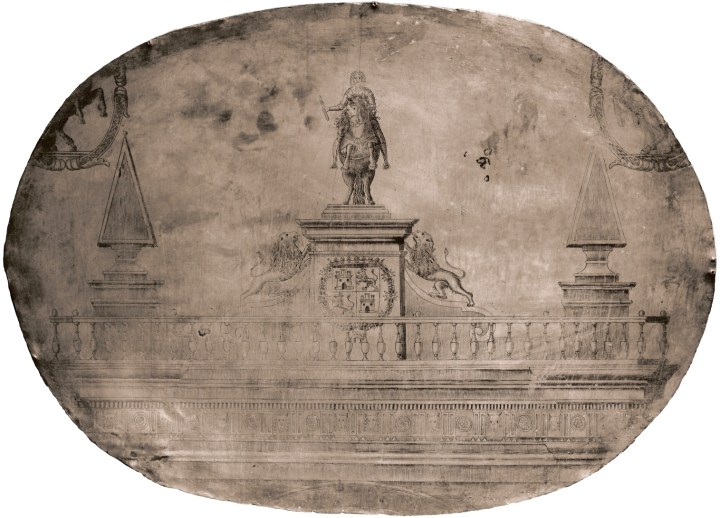
Juan Francisco Rosa, Equestrian Monument to Philip V, ca. 1738–45, engraved copper-plate, 26 × 36 cm (Chicago: Carl and Marilynn Thoma Foundation). The plate was cut into an oval, likely from what was originally a rectangle, and used as a support for an oil painting; on the other side is The Christ Child with St Joseph.
◊ ◊ ◊ ◊ ◊
The long eighteenth century in the latest issue of Print Quarterly:
Print Quarterly 40.1 (March 2023)
A R T I C L E S
• Emily C. Floyd with Suzanne Stratton-Pruitt, “Juan Francisco Rosa: Engraver to the Elite in Eighteenth-Century Lima,” pp. 33–51.
This article explores the life and works of the limeño engraver Juan Francisco Rosa (active in Lima, Peru, 1735–1756), with in-depth discussions pertaining to popular themes in his prints, patrons and contributions to the historic documentation of events and lost works in Lima. It adds two remarkable works to his oeuvre—a copperplate, now cut in two, and an illumination associated with a patent of nobility. The plate documents a famous statue of Philip V that was placed in 1738 on the bridge over the river Rímac and soon destroyed in the 1746 earthquake. The article demonstrates that Rosa produced important commissions for powerful organizations and individuals in the viceregal hierarchy, suggesting his prominence as an artist in mid-eighteenth-century Lima.
N O T E S A N D R E V I E W S
• Antony Griffiths, “Altered Plates,” pp. 63–66. Drawing attention to an anecdote in a 1726 biography of the London publisher, newspaper editor, and controversialist Abel Roper, this note charts the chronology of an altered plate by William van de Passe depicting the Duke of Buckingham on horseback in the first state, published 1625. The plate was then modified around 1630/32 in the second state to represent James, 1st Duke of Hamilton, before being transformed again in the third state of 1654–58 to portray Oliver Cromwell as Lord Protector. The plate is documented to have been subjected to a fourth “very profitable” change, altered to portray William III, though no impression has yet been found.

Romeyn de Hooghe, Les Monarches Tombants (James II falls off the back of a unicorn at left, Louis XIV on a globe at right, while William III is raised on a shield in the background), 1689, etching, sheet includes letterpress text below the image (Amsterdam: Rijksmuseum).
• Peter van der Coelen, Review of Meredith McNeill Hale, The Birth of Modern Political Satire: Romeyn de Hooghe (1645–1708) and the Glorious Revolution (Oxford University Press, 2020), pp. 66–68. Peter van der Coelen is persuaded by Hale’s argument that the satires De Hooghe produced between 1688 and 1690 were decisive for the development of political satire as a genre and that the birth of the genre should therefore be located not in eighteenth-century England but in the Dutch Republic of the late seventeenth century.
• Helmut Gier, Review of Eckhard Leuschner and Friedrich Polleross, eds., “Der Augsburger Kupferstecher und Verleger Johann Ulrich Kraus (1655–1719),” in Frühneuzeit-Info 32 (2021), pp. 68–71. A review of nine conference papers addressing Johann Ulrich Kraus, one of whose most important contributions to the history of art was the reception and dissemination in central Europe of the art favoured at the court of Louis XIV.
• Stephen Salel, Review of Timothy Clark, Hokusai: The Great Picture Book of Everything (British Museum Press, 2021), pp. 71–73.
• Janis A. Tomlinson, Review of the exhibition catalogue, Véronique Gerard, ed., Goya: Génie d’Avant-Garde. Le Maître et son École (Musée des Beaux-Arts and Éditions Snoeck, 2020), and “Goya peintre,” in Technè 53 (2022), pp. 73–75. Did Goya have a workshop? Whereas Goya’s prints seem to be a well-defined body of work, whose technique has been well-studied, as have their preparatory drawings and visual and historical sources, the paintings are another matter. Imitations, copies and forgeries began to circulate within a decade of Goya’s death and continue to complicate our understanding of his oeuvre. . . [These] two contributions . . . address some of these questions in very different ways.
• Heather Hyde Minor, Review of Ginevra Mariani, ed., Giambattista Piranesi: Matrici incise 1743–1753 (Edizioni Gabriele Mazzotta, 2010); Giambattista Piranesi: Matrici incise 1756–1757. Le Antichità Romane Lettere di giustificazione 2 (Edizioni Gabriele Mazzotta, 2014); Giambattista Piranesi: Matrici incise 1761–1765 (Editalia, 2017); and Giambattista Piranesi: Matrici incise 1762–1769 (De Luca Editori d’arte, 2020), pp. 102–06. This review explores the four-volume series of publications dedicated to cataloguing and discussing the 964 autograph printing plates by Giovanni Battista Piranesi in the collection of the Istituto Centrale per la Grafica in Rome. Further Matrici incise volumes are expected to be published in due course.
• Roger Kneebone, Review of the exhibition catalogue, Monique Kornell, ed., Flesh and Bones: The Art of Anatomy (Getty Research Institute, 2022), pp. 106–11. This review highlights the complex intersections between artists, engravers, anatomists and clinicians over four centuries. Worthy of note are the ways multiple perspectives from different kinds of parties informed the appearance of anatomical illustrations depending on their purpose and audience, resulting in images that were not always neutral in their ‘factual’ representations.
Exhibition | Across Shared Waters
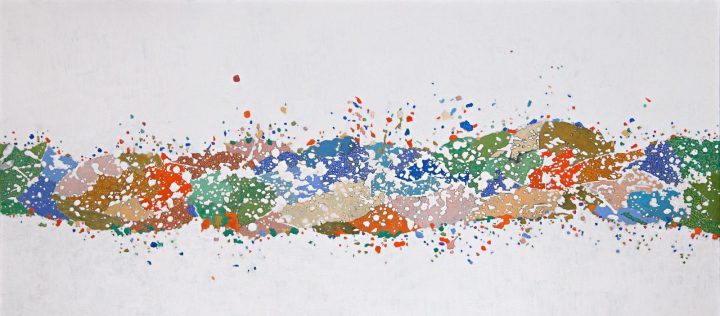
Pema Rinzin, Abstract Sound #4, 2010, ground mineral pigment on wooden panel. Rinzin was born in 1966 in Tibet; studied in Dharamsala, India; lived and worked in Nagano, Japan and Wurzburg, Germany; and now lives and works in New York City.
◊ ◊ ◊ ◊ ◊
From the press release for the exhibition:
Across Shared Waters: Contemporary Artists in Dialogue with Tibetan Art from the Jack Shear Collection
Williams College Museum of Art, Williamstown, Massachusetts, 17 February — 16 July 2023
Organized by Ariana Maki, with Elizabeth Gallerani and Nicholas Liou, with research support from Priya Rajbhandary and Tibetan translation by Rongwo Lugyal
The Williams College Museum of Art (WCMA) is delighted to present Across Shared Waters: Contemporary Artists in Dialogue with Tibetan Art from the Jack Shear Collection, on view from 17 February through 16 July 2023. Much as the headwaters of Asia’s major rivers form in the Tibetan plateau and flow into the world’s seas, interest in Tibetan art and culture has circulated globally, inspiring artists within Tibetan regions and throughout the world. Across Shared Waters presents works by 11 contemporary artists of Himalayan heritage alongside traditional Tibetan Buddhist rolled paintings, or thangka, from the Jack Shear Collection, a juxtaposition that highlights the richness and diversity of Tibetan artistic expression and fosters greater understanding and appreciation of Himalayan histories and identities.
 Traditional works in Across Shared Waters are part of a generous initiative by collector Jack Shear to foster collaboration among the art museums of Williams, Skidmore, and Vassar Colleges. The paintings and other objects comprising the gift will be used for education, research, and informed display. Across Shared Waters is the second in a series of exhibitions of the Jack Shear Collection of Tibetan Art. The first, Mastery and Merit: Tibetan Art from the Jack Shear Collection, was on view at the Loeb Center at Vassar College in the spring and summer of 2022. The third exhibition will be on view at the Tang Teaching Museum at Skidmore College beginning in August 2023.
The WCMA exhibition is organized by guest curator Ariana Maki, the Associate Director of the University of Virginia Tibet Center and Bhutan Initiative, with Elizabeth Gallerani, Curator of Mellon Academic Programs, and Nicholas Liou, Mellon Curatorial Fellow and MA ’24, along with research support from Curatorial Intern Priya Rajbhandary ’25. Tibetan translation is provided by Rongwo Lugyal.
Pamela Franks, Class of 1956 Director of WCMA, said, “The Williams College Museum of Art is thrilled to participate in this visionary, collaborative approach that engages three leading liberal arts colleges and expands our collective research and teaching capacities to appropriately present this important work. This initiative highlights WCMA’s ongoing commitment of both sharing the art itself and collaborating across institutions to strengthen the pedagogical approaches and research resources within our teaching museum. I am so grateful to Jack Shear, our colleagues at the Skidmore and Vassar museums, and for the engaged scholarship of guest curator Ariana Maki throughout the development of these three exhibitions. We look forward to collaboration long into the future.”
“The Shear Collection provides remarkable examples of traditional Tibetan Buddhist art and its wide range of uses and meanings,” Maki said. “As the academic approach to Buddhism is generally text-focused, the paintings and 3-D objects from Shear offer faculty an incredible set of resources to further enrich their courses and help broaden student understanding of Buddhist practices. Displaying these works allows everyone direct access to better study and appreciate how historical artists masterfully gave form to highly sophisticated philosophical principles.
“It’s exciting to experience the traditional works alongside contemporary paintings and photography. The juxtaposition reflects the innovations and incredible creativity of Himalayan makers, whose works invite us into their lived experiences and challenge us to consider issues that both impact them as individuals and all of us as members of a global society,” Maki said.
Created between the 18th and 20th centuries, the thangka feature elaborate depictions of Buddhist narratives, deities, and practices. Talented, highly trained artists produced engaging scenes detailing the lives of the Buddha, chronicled incarnation lineages, and transmitted teaching stories. Some works would be used by initiates to support advanced meditation techniques while others depict deities who aid Buddhist practitioners with everyday concerns, granting blessings of wealth, long life, protection, or healing.
The traditional thangka are displayed in conversation with contemporary works by featured artists based around the world, including Marie-Dolma Chophel, Dedron, Nyema Droma, Gonkar Gyatso, Tenzin Norbu Lama, Kesang Lamdark, Tashi Norbu, Karma Phuntsok, Pema Rinzin, Rabkar Wangchuk, and Palden Weinreb. While some draw inspiration from Tibetan cultural markers, including repurposing or reimagining Buddhist imagery, others source inspiration completely outside those frames. Exploring themes of identity, consumerism, place, and cultural expectations, the artists employ a diverse range of media, from ground mineral pigments to acrylic paint, digital photography, mixed media works, and resin cast sculptures.
A complete press kit including images can be found here»
Poster Images Left: Lama Tashi Norbu, Accepting Flowers’ Culture, 2013, mixed media (Shelley and Donald Rubin Private Collection). Norbu was born 1974 in Jigmenang, Bhutan, studied in Dharamsala, India and Ghent, Belgium; and now lives and works in Emmen, The Netherlands.
Right: Unidentified maker, Shakyamuni Buddha with Arhats and Four Guardian Kings, eighteenth century, distemper on cloth, Central Tibetan style (Jack Shear Collection of Himalayan Art).
Exhibition | Pierre Varignon (1654–1722)
Now on view at the Mazarin Library in Paris:
Pierre Varignon (1654–1722): Pratique et transmission des mathématiques à l’aube des Lumières
Bibliothèque Mazarine, Paris, 18 January — 15 April 2023
Curated by Sandra Bella, Jeanne Peiffer, and Patrick Latour
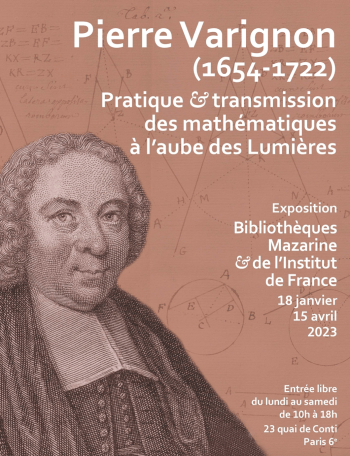 La carrière de Pierre Varignon, né à Caen en 1654 et mort à Paris en 1722, s’articule essentiellement autour de ses activités d’enseignant et d’académicien. Titulaire de la première chaire de mathématiques de l’Université de Paris, établie au Collège Mazarin dès l’ouverture de celui-ci en 1688, il fut aussi lecteur au Collège royal à partir de 1706, et contribua ainsi à la formation de nombreux savants et ingénieurs. L’Académie des sciences, dont il devint membre en novembre 1688 et au sein de laquelle il joua un rôle important, lui procura par ailleurs un cadre privilégié pour ses recherches, en facilitant leur diffusion à travers les périodiques académiques (Mémoires de l’Académie royale des sciences et Journal des savants).
En tant que géomètre, Varignon a su reconnaître le pouvoir d’innovation de l’analyse leibnizienne, dont il fut en France l’un des premiers défenseurs. Mais son activité scientifique se déploie sur de plus amples territoires. Sa carrière est encadrée par deux ouvrages, le Projet d’une nouvelle mechanique, qui lui ouvre en 1687 les portes du monde savant, et la Nouvelle mecanique ou statique, publiée de manière posthume en 1725. De fait ses apports à la mécanique sont aussi décisifs que variés, tant dans ses aspects théoriques (transposition en termes analytiques leibniziens des lois de la dynamique newtonienne, unification de la statique, travaux sur les forces centrales…) que dans ses applications pratiques.
Savant presque « ordinaire » à l’aube des Lumières, sans laisser d’œuvre aussi conséquente que certains de ses contemporains et correspondants européens comme Leibniz (1646–1716), Newton (1643–1727) ou encore les frères Jacques (1654–1705) et Jean (1667–1748) Bernoulli, Varignon contribue néanmoins, par son enseignement et ses travaux, à la constitution d’une tradition d’application des mathématiques et au développement de la mécanique analytique.
Commissariat
Sandra Bella (Université Paris Cité, Laboratoire SPHere)
Jeanne Peiffer (Centre Alexandre Koyré)
Patrick Latour (Bibliothèque Mazarine)
Exhibition | Crafting Worldviews: Art and Science in Europe, 1500–1800

Set of 24 Microscope Slides (signed: “AYpelaar & comp”), Netherlands, ca. 1808–11, brass, glass, ivory, mahogany, natural specimens, and a handwritten inscription in brown ink (Yale Peabody Museum, The Lentz Collection).
◊ ◊ ◊ ◊ ◊
From the press release for the exhibition:
Crafting Worldviews: Art and Science in Europe, 1500–1800
Yale University Art Gallery, New Haven, 17 February — 25 June 2023
Organized by Jessie Park and Paola Bertucci
The Yale University Art Gallery presents Crafting Worldviews: Art and Science in Europe, 1500–1800, an exhibition that showcases nearly 100 objects from across Yale University’s collections, including the Gallery, the Yale Peabody Museum, the Beinecke Rare Book and Manuscript Library, the Harvey Cushing/John Hay Whitney Medical Library, the Yale Center for British Art, and the Lewis Walpole Library, as well as the collection of Thomas Lentz, Professor Emeritus of Cell Biology at the Yale University School of Medicine. Co-organized by Jessie Park, the Nina and Lee Griggs Assistant Curator of European Art, and Paola Bertucci, Associate Professor, History of Science and Medicine Program at Yale University and Curator of the History of Science and Technology Division, Yale Peabody Museum, Crafting Worldviews examines the inseparable relationship among art, science, and European colonialism from the 16th through the 18th century—an era of voyage, trade, and Europe’s territorial dominance on a global scale. The objects included reveal histories of invention and appropriation, consumption and exploitation, collaboration and conflict.
The works featured in this multidisciplinary exhibition cross the modern-day boundaries of art and science and range from the everyday, such as books, maps, globes, drafting tools, microscopes, playing cards, and sundials, to the more unusual, such as a hand-cranked model of the solar system, an automaton clock, and anatomical figures. Crafted from both locally and globally obtained materials, including brass, ivory, mahogany, and ebony, these objects are remarkable not just for their exquisite design but also their intricate construction. Together, they illuminate the role that art and science have played in shaping Europeans’ understanding of the world and their place within it.
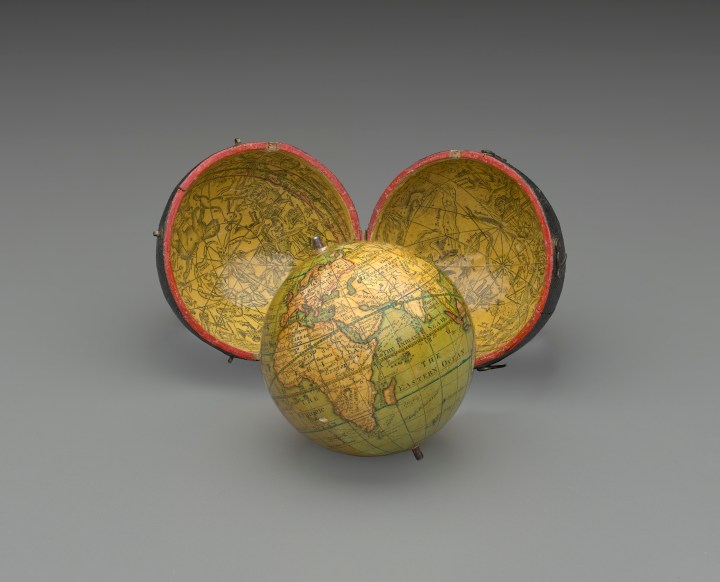
Pocket Globe with a Case (signed: “LANE’s Improved GLOBE | London”), England, ca. 1783–1803, hand-colored gores and steel; case: shagreen and brass (The Lentz Collection, on loan to the Yale Peabody Museum).
◊ ◊ ◊ ◊ ◊
The exhibition also addresses the intellectual, artistic, and scientific foundations of European colonialism, whose legacy continues in the present. According to Jessie Park, “In our current age of reckoning with racism and exploitation, we found it imperative to call our attention to the foundations of such forms of injustice. Visitors will encounter not only objects of noteworthy craftsmanship but also the realities of their production and consumption in the era of colonialism, which laid the groundwork for ongoing discrimination.”
Paola Bertucci notes that, for her, the exhibition “is a dream come true. I’ve always wanted to display scientific instruments to tell stories that we don’t typically associate with science. Early modern scientific instruments are usually presented in art museums as intriguing marvels. I was eager to emphasize instead the role of these objects in shaping European taste, everyday life, and a sense of superiority toward other cultures.”

Portable Sundial with a Compass (signed: “Butterfield AParis”), France, ca. 1690, silver, glass, and blued steel (The Lentz Collection, on loan to the Yale Peabody Museum of Natural History).
The exhibition is thematically divided into six sections. Serving as an introduction to the exhibition, “Voyages of Conquest” details the colonization of new lands through oceanic navigation, foregrounding objects such as the sextant, octant, compass, and theodolite as tools of power and dominance. Building on this introductory section is “Workshops of Power,” which explores how colonialism impacted and shaped the manufacture of both scientific instruments and everyday items made by skilled artisans. “Clockwork Cosmologies” features a variety of geared mechanisms—real and imagined—such as watches, astrolabes, and mills, to examine the ways in which Europeans visualized an orderly universe, measured time, or promoted colonial projects. “Consuming Science,” which presents the role of science in the education and social life of the elites, includes objects like tobacco pipes, shagreen-covered microscopes, and electrical machines made of mahogany. “Bodies of Nature” showcases anatomical illustrations, books on natural history, and other objects to address how scholars regarded scientific research as a hunt for the secrets of nature. Finally, “Worlds Seen and Unseen” examines the ways in which contemporary stereotypes about non-European worlds were articulated in portrayals of nature and people from Asia, Africa, and the Americas.
To assist the co-curators in sensitively addressing the topics presented in the exhibition, the Gallery formed an advisory committee. Members included Salwa Abdussabur (Founder and Creative Director, Black Haven), Marisa Bass (Professor, History of Art, Yale University), Adrienne L. Childs (Adjunct Curator at the Phillips Collection, Washington, D.C., and independent scholar), Meleko Mokgosi (Associate Professor and Director of Graduate Studies, Painting/Printmaking, Yale School of Art), Ayesha Ramachandran (Associate Professor, Comparative Literature, Yale University), Romita Ray (Associate Professor and Director of Undergraduate Studies, History of Architecture, Syracuse University), and Carolyn Roberts (Assistant Professor, History of Science and History of Medicine, and African American Studies, Yale University). Their insights were crucial for shaping this project.
Exhibition | Claude Gillot: Satire in the Age of Reason

Claude Gillot, Scene of the Two Carriages / Les Deux carrosses, ca. 1710–12, oil on canvas, 127 × 160 cm
(Paris: Musée du Louvre, RF2405)
◊ ◊ ◊ ◊ ◊
Now on view at The Morgan:
Claude Gillot: Satire in the Age of Reason
The Morgan Library & Museum, New York, 24 February — 28 May 2023
Curated by Jennifer Tonkovich
Around 1700, as an increasingly pious Louis XIV withdrew to Versailles, Paris flourished. The dynamic artistic scene included specialists such as Claude Gillot (1673–1722) who forged a career largely outside of the Royal Academy, designing everything from opera costumes to tapestries.
 Known primarily as a draftsman, Gillot specialized in scenes of satire. He found his subjects among the irreverent commedia dell’arte performances at fairground theaters, in the writings of satirists who waged the Quarrel of the Ancients and Moderns, and in the antics of vice-ridden satyrs whose bacchanals exposed human folly. Gillot’s amusing critiques and rational perspective heralded the advent of the Age of Reason while his innovative approach attracted the most talented artists of the next generation, Antoine Watteau and Nicolas Lancret, to his studio.
With over seventy drawings, prints, and paintings, including an exceptional contingent from the Louvre, Claude Gillot: Satire in the Age of Reason explores the artist’s inventive and highly original draftsmanship and places his work in the context of the artistic and intellectual activity in Paris at the dawn of a new century.
The catalogue accompanying the exhibition, published by Paul Holberton, will provide the first comprehensive account of Gillot’s career.
Jennifer Tonkovich, Claude Gillot: Satire in the Age of Reason (London: Paul Holberton, 2023), 240 pages, ISBN: 978-1913645373, $60.
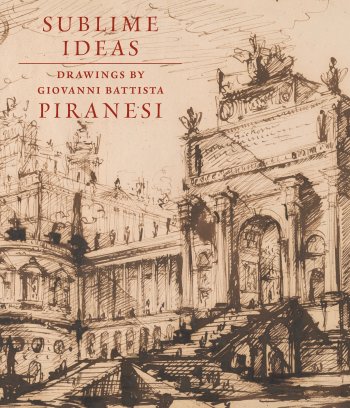
Exhibition | Sublime Ideas: Drawings by Giovanni Battista Piranesi
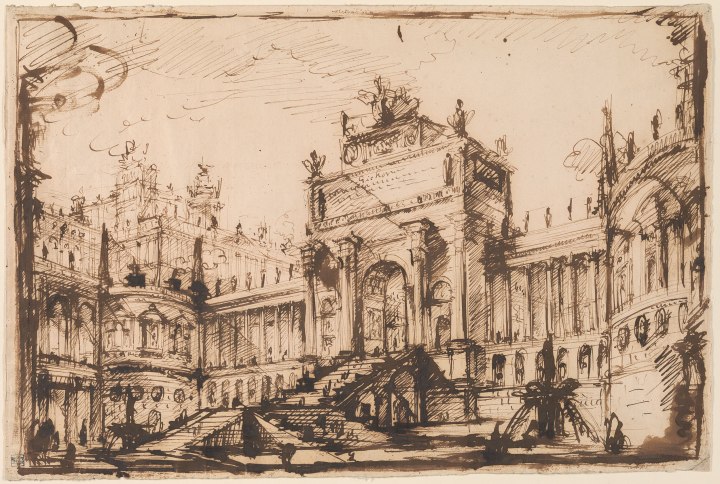
Giovanni Battista Piranesi, Fantasy of a Magnificent Forum, ca. 1765, pen and brown ink and wash, 33 × 49 cm
(New York: Morgan Library & Museum, 1974.27)
◊ ◊ ◊ ◊ ◊
From the press release for the exhibition:
Sublime Ideas: Drawings by Giovanni Battista Piranesi
The Morgan Library & Museum, New York, 10 March — 4 June 2023
Curated by John Marciari
In a letter written near the end of his life, Giovanni Battista Piranesi (1720–1778) explained to his sister that he had lived away from his native Venice because he could find no patrons there willing to support “the sublimity of my ideas.” He resided instead in Rome, where he became internationally famous working as a printmaker, designer, architect, archaeologist, theorist, dealer, and polemicist. While Piranesi’s lasting fame is based above all on his etchings, he was also an intense, accomplished, and versatile draftsman, and much of his work was first developed in vigorous drawings.
The Morgan holds the largest and most important collection of Piranesi’s drawings, well over 100 works that encompass his early architectural capricci, studies for prints, measured design drawings, sketches for a range of decorative objects, a variety of figural drawings, and views of Rome and Pompeii. These form the core of the exhibition, which will also include seldom-exhibited loans from a number of private collections. Accompanied by a publication offering a complete survey of Piranesi’s work as a draftsman, the exhibition will be the most comprehensive look at Piranesi’s drawings in more than a generation.
 This exhibition begins with Piranesi’s interest in theoretical architecture, showing works that combine an imaginative and fantastic approach to architectural study with a bookish understanding of ancient buildings and a Romantic appreciation of ruins. This blend of fantasy and theory would eventually give birth to the Invenzioni caprici di carceri (Capricious Inventions of Prisons), his most famous work. The drawings in the Morgan’s collection show how Piranesi’s work developed from precise architectural drawings to imaginative fantasies. Later sections of the exhibition document Piranesi’s study of the inventive work of Tiepolo in a series of trips to his native Venice, his turn from architectural theory and fantasy to archaeology, and his work as a practicing architect and as a designer and dealer of classicizing interior decoration.
The exhibition also highlights the role of paper in Piranesi’s working practice, showing his use and reuse of earlier drawings in later works. Close study of his surviving sheets makes clear that Piranesi preserved drawings in the workshop to serve as inspiration for future projects, and many sheets have reworking that can be dated years after the original drawing, a testament to the continual reuse of his archive.
Highlights of the exhibition include Design for a Ceremonial Gondola (1745–47), a large and fanciful design for a craft that was surely never set afloat; Piranesi nonetheless reused much of the decorative language in subsequent works. Piranesi’s Fantasy of a Magnificent Forum (ca. 1765) is one of his most accomplished fantasies, showing a play on ancient Roman architecture in a dramatic sketch that was likely dashed off as a command performance of his skill as a draftsman. The Proposed Alteration of San Giovanni in Laterano, with Columnar Ambulatory (ca. 1763–64) is Piranesi’s largest architectural drawing, a rendering almost five feet wide with an ambitious plan for the expansion of one of the largest churches in Rome. In addition, this exhibition includes a number of preparatory designs for his etchings, including very rare proof impressions of his printed views of Rome and Tivoli with drawn corrections by the artist. The exhibition ends with a group of large drawings of Pompeii, made in the bold style that Piranesi adopted in the last few years of his life.
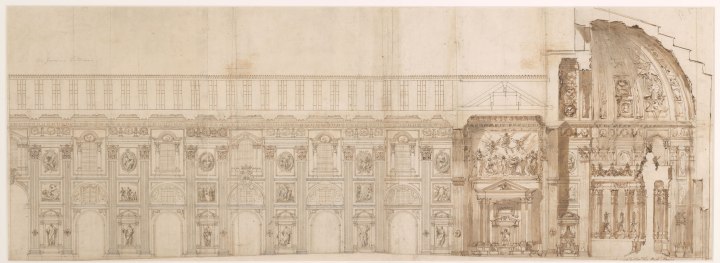
Giovanni Battista Piranesi and workshop, Proposal for the Alteration of San Giovanni in Laterano, with Columnar Ambulatory, ca. 1763-64, pen and brown ink and wash, and gray wash, over graphite, on paper, 21 × 58 inches (New York: Morgan Library & Museum, 1966.11:55).
◊ ◊ ◊ ◊ ◊
The Morgan’s Director, Colin B. Bailey, said, “Given the depth of our collection of drawings by Giovanni Battista Piranesi, the Morgan has long been a leading institution in the study of his works. This new exhibition, the most complete showing of our Piranesis since 1989, reflects long study as well as new discoveries, and will bring Piranesi alive to a new generation of visitors.”
This exhibition is curated by John Marciari, Charles W. Engelhard Curator, Head of the Department of Drawings and Prints, and Curatorial Chair. Marciari is also the author of the accompanying publication, which reaches beyond the Morgan’s collections to offer a complete survey of Piranesi’s work as a draftsman. Marciari explains, “Very few of Piranesi’s drawings were carefully finished works made for sale or exhibition, but in looking closely at the hundreds of working drawings that survive, we not only see the artist devising new ideas and working through problems, but also understand how the archive of drawings served his workshop as a constant source of inspiration.”
John Marciari, Sublime Ideas: Drawings by Giovanni Battista Piranesi (London: Paul Holberton Publishing, 2023), 224 pages, ISBN: 978-1913645380, £40 / $60.
◊ ◊ ◊ ◊ ◊
Note (added 6 March 2023) — The exhibition was originally planned for 2020 (May–September) to mark the 300th anniversary of Piranesi’s birth; like so many other things, it had to be rescheduled for obvious reasons.










 Enfilade
leave a comment