Exhibition | A Grand Chorus: The Power of Music

Left: Therese Schwartze, A Choir of Foundling Girls, ca. 1910 (London: Foundling Museum). Center: Mikhail Karikis, We Are Together Because, 2025, at Centro de Arte Moderna Gulbenkian (Photo by Pedro Pina), Right: Foundling Hospital, The Chapel, detail, Microcosm of London, pl. 37, published 1808, hand-colored etching and aquatint (London: Foundling Museum).
◊ ◊ ◊ ◊ ◊
Originally associated with Easter more than Christmas, Handel’s Messiah did have its American premier on 25 December in 1818 at Boston’s Boylston Hall. This exhibition at The Foundling unpacks the legacy of its triumphal ‘Hallelujah Chorus’:
A Grand Chorus: The Power of Music
Foundling Museum, London, 2 October 2025 — 29 March 2026
Explore the life-affirming power of music through the lens of Handel’s iconic ‘Hallelujah Chorus’.
Looking at the exhilarating experience and enduring impact of the ‘Hallelujah Chorus’ in the past and present, A Grand Chorus explores, across all four floors of the Museum, the profound effect that music can have on both listeners and performers, encouraging visitors to think about their own physical and emotional connections with music, either through encounters with the ‘Hallelujah Chorus’ or reflecting on music that has transformed and enriched their own lives.
A Grand Chorus brings together musical scores, librettos, and musical instruments as well as paintings, photographs, audio, video, personal testimony, and other archival material spanning three centuries. The exhibition takes a fresh look at the origins and enduring popularity of the ‘Hallelujah Chorus’, as well as reflecting on the impact of music on the lives of former Foundlings and care-experienced individuals. Originally composed as part of his famous Messiah oratorio, Handel later incorporated the ‘Hallelujah Chorus’ into an anthem he created specially for the Foundling Hospital that premiered in 1749 to help raise money for the charitable institution.
The exhibition also showcases a major sound and video installation by Mikhail Karikis, We Are Together Because… (2025), the first time the work has been presented in the UK. Featuring a powerful anthem for a new generation, Karikis’s work can be imagined as a contemporary counterpart to the ‘Hallelujah Chorus’.
More information is available here»
Installation | Revolution!

Paul Revere Jr., after Henry Pelham, The Boston Massacre, or, The Bloody Massacre perpetrated in King Street, Boston on 5 March 1770 by a party of the 29th Regiment, detail, 1770, hand-colored engraving and etching, second state, sheet: 11 × 9.5 inches (New York: The Metropolitan Museum of Art, Gift of Mrs. Russell Sage, 1910, 10.125.103).
◊ ◊ ◊ ◊ ◊
Opening soon at The Met:
Revolution!
The Metropolitan Museum of Art, New York, 19 January — 6 August 2026
Curated by Sylvia Yount, Constance McPhee, and Wolf Burchard
This special installation marks the 250th anniversary of the Declaration of Independence, the founding document of the United States of America. Works drawn from many different areas of The Met offer a wide view of the roots, course, and aftermath of the Revolutionary War (1775–1783)—from early conflicts between colonists and Indigenous peoples and the 1765 Stamp Act imposed by the British government on its North American colonies to George Washington’s voluntary retirement, in 1797, from his two-term presidency.
Rarely seen prints reveal the transatlantic circulation of news about the struggle for independence during a fractious political era. This window into the era’s print culture highlights the global dimensions of the rebellion, the contested ideas about liberty that shaped it, and its consequential outcomes. Also on view are American and European works of art that depict a range of significant individuals. These include iconic contributors to the Declaration of Independence John Adams, Benjamin Franklin, and Thomas Jefferson; patriots and presidents such as Paul Revere and George Washington; the Wampanoag chief Metacomet, whose conflicts with early British colonists laid the groundwork for revolution; Mohawk leader Thayendanegea, who allied with the British in an effort to retain Indigenous sovereignty; and African American poet Phillis Wheatley, who raised her voice against an expansive tyranny in her call for emancipation. Together, these artworks acknowledge multiple complex and intertwined histories that continue to resonate in the United States and beyond, some two and half centuries later.
Revolution! is curated by Sylvia Yount, Lawrence A. Fleischman Curator in Charge of the American Wing; Constance McPhee, Curator, Department of Drawings and Prints; and Wolf Burchard, Curator, Department of European Sculpture and Decorative Arts.
◊ ◊ ◊ ◊ ◊
With this additional information from the press release:
The American Wing will also feature in its Alexandria Ballroom (Gallery 719), an historical interior focused on George Washington and his complex legacy—from fall 2025 through early August 2026—with artist Titus Kaphar’s 2016 ‘tar’ portraits of Ona Judge and William Lee, both enslaved members of the Washington family’s households, on loan from private collections. In addition, from March through summer 2026, a recent acquisition by Carla Hemlock (Mohawk) will be on view in dialogue with Rembrandt Peale’s portrait of Washington in the foyer of the Art of Native America installation (Gallery 746 South).
◊ ◊ ◊ ◊ ◊
The Art of the American Revolution: A Conversation with Ken Burns and Sarah Botstein
Thursday, 29 January 2026, 6pm
The Museum will present a panel discussion on the “Art of Revolution” with filmmakers Ken Burns and Sarah Botstein, co-directors with David Schmidt of their new documentary, The American Revolution; historians Philip Deloria and Jane Kamensky; and art historian Gwendolyn DuBois Shaw, along with a screening of excerpts from the PBS series, produced exclusively for The Met, highlighting the creative process of visual storytelling. The conversation will provide an opportunity to reflect on the continued relevance of historical imagery and the power of art to explore the varied stories of the country’s founding.
Exhibition | Ringleaders of Rebellion: Charleston in Revolt, 1775–1783
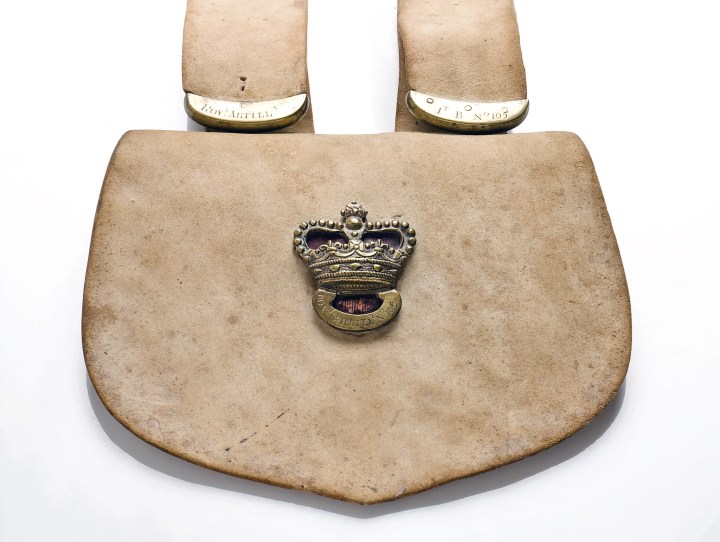
Cartridge Box, one of the best-preserved examples of its kind from the Revolutionary War
(Charleston Museum)
◊ ◊ ◊ ◊ ◊
From the press release for the exhibition:
Ringleaders of Rebellion: Charleston in Revolt, 1775–1783
Charleston Museum, 31 January — 20 September 2026
To mark 250th anniversary of the Declaration of Independence, the Charleston Museum will present a special exhibition in the Historic Textiles Gallery; Ringleaders of Rebellion: Charleston in Revolt, 1775–1783 provides an in-depth overview of the Lowcountry’s role in the Revolutionary War, featuring objects from the Museum’s collections alongside special pieces on loan during certain months of the display.
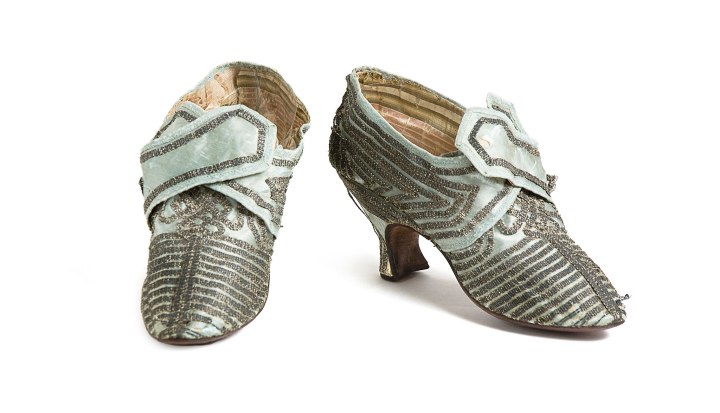
Shoes that belonged to Eliza Lucas Pinckney (Charleston Museum).
Among the latter will be a broadside of the Declaration of Independence, one of the first copies of the document printed in Charleston after news of its adoption reached the city in August 1776. The document, loaned from the Gilder-Lehrman Institute of American History, will be shown May 29 to August 30. Another remarkable piece is the logbook of the Royal Navy’s HMS Bristol, the flagship of Commodore Peter Parker during the Battle of Sullivan’s Island. This record of the ship’s daily activities (on view from June 15 to September 20) comes from the Royal Museums of Greenwich and will be a key addition to the exhibition as 2026 also represents the 250th anniversary of the Battle of Sullivan’s Island. In addition, the show will feature archaeological pieces from battlefields around the state including Camden, Ninety Six, Fort Motte, and Fort Watson. From May 23 to July 26, the Museum will present Eliza Lucas Pinckney’s silk gown, along with her recently conserved shoes and sash (supported by the fundraising efforts of the Eliza Lucas Pinckney chapter of the Daughters of the American Revolution).
Several new acquisitions will also be featured, including a ‘Brown Bess’ musket (the primary infantry weapon of the British army during the Revolutionary War), an officer’s camp bed from the era, a pair of period leather horseman’s breeches, and a William Lee bracket clock. William Lee, a Charleston clockmaker, was one of the paroled prisoners whom the British exiled to St. Augustine, Florida in 1780 for clandestinely continuing rebellious activities. British officers referred to them as the “Ringleaders of Rebellion.”
Funding for the Ringleaders exhibit was made available by SC250, the Therblig Foundation, the Post and Courier Foundation, and Henry and Sylvia Yaschik Foundation.
Exhibition | Jewish Worlds Illuminated: Hebrew Manuscripts
Now on view at The Grolier Club:
Jewish Worlds Illuminated: A Treasury of
Hebrew Manuscripts from the Jewish Theological Seminary Library
The Grolier Club, New York, 17 September — 27 December 2025
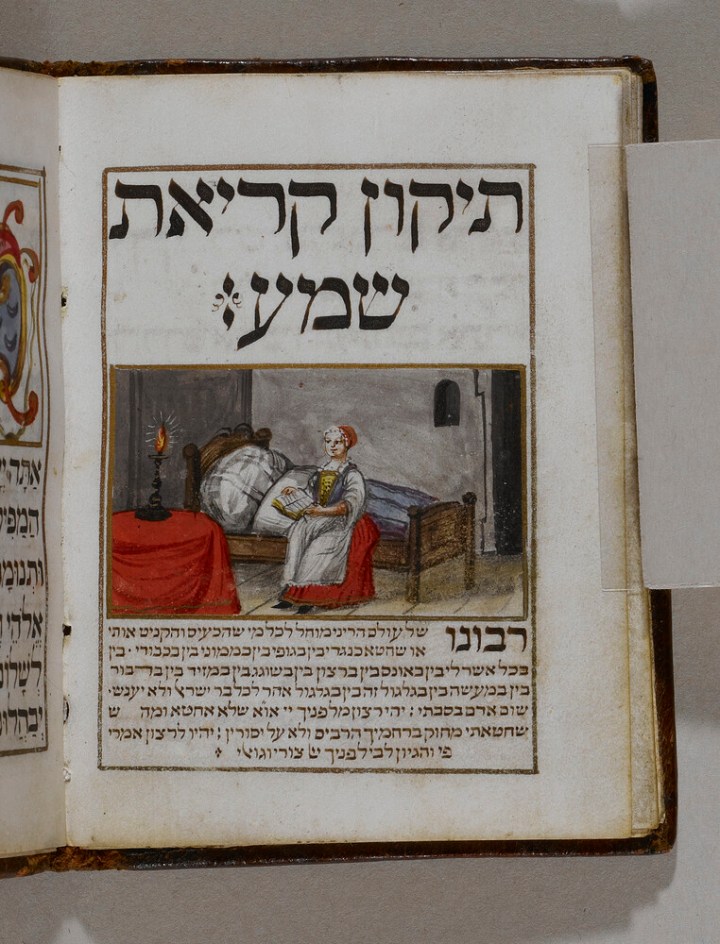
Grace after Meals, Daily Blessings with Shema and Prayers for Bedtime; scribe: Aaron Wolff Herlingen of Gewitsch, Vienna, 1724 (New York: JTS MS 8232).
Since the time of the Babylonian Exile in the early sixth century BCE, the vast majority of the world’s Jews have lived in diasporas—scattered across many lands, cultures, and languages. In these communities, Jewish wisdom and creativity often found their fullest expression in the creation of books. Manuscripts became vessels of memory, imagination, and identity, preserving the richness of Jewish life from Antiquity into modern times. Within their pages are the voices of scholars and poets, scribes, and artists, which afford us a window into the everyday experiences of Jews across the globe. The Library of the Jewish Theological Seminary, established in New York in 1886, houses one of the world’s largest and most important collections of Hebrew manuscripts and printed books.
With items dating as far back as the ninth century and originating from lands as varied as Spain, Italy, France, Germany, Turkey, Egypt, Iraq, Iran, Morocco, and Yemen, the collection represents more than ten centuries of Jewish scholarship, spanning the spectrum of Bible, liturgy, rabbinics, kabbalah, science, literature, and philosophy. Jewish Worlds Illuminated is the most extensive display ever of the JTS Library’s Hebrew manuscript treasures and is the first exhibition at the Grolier Club devoted exclusively to Jewish books. Each case presents scribal and artistic masterpieces from a particular region or period, inviting you to enter a historical Jewish setting and consider it alongside others. The works displayed stand as enduring testimony to Jewish intellectual, cultural, and artistic life across centuries and continents.
Visit the exhibition online»
Exhibition | Art of Faith from the Jewish Museum, New York
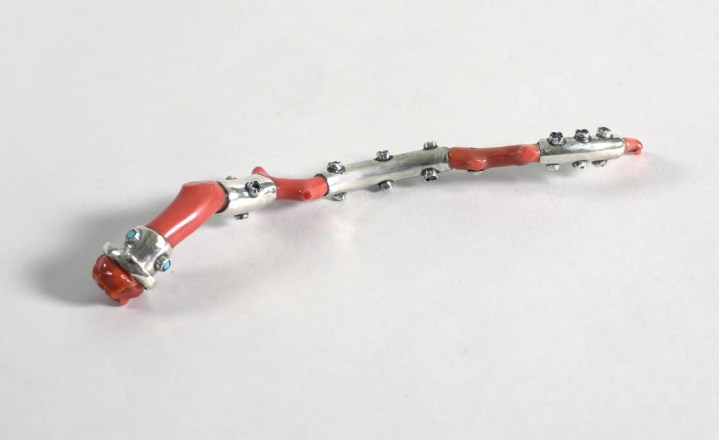
Torah Pointer, 18th century, coral and silver
(New York: Jewish Museum)
◊ ◊ ◊ ◊ ◊
From the press release for the exhibition:
Guests of Honor: Art of Faith from the Jewish Museum, New York
Detroit Institute of Arts, 5 December 2025 — 3 January 2027
The Detroit Institute of Arts presents a special exhibition in partnership with the Jewish Museum in New York, highlighting the heritage, traditions, and vibrancy of thriving Jewish communities from Europe, the Middle East, and North Africa. Guests of Honor: Art of Faith includes 13 exceptional ceremonial objects, dating from the 1400s to the 1900s, that illustrate connections across faith traditions.
With the works placed throughout the museum, this DIA Guests of Honor presentation offers a rare opportunity to experience exquisite objects of Jewish ceremonial art alongside pieces produced for Christian and Islamic patrons in the same period. These diverse works both demonstrate the specificity of Jewish communities, their holidays and rituals and mutual influence of craftspeople, artists, and patrons across faiths. This loan from New York’s Jewish Museum brings a culturally specific set of artworks into conversation with DIA’s encyclopedic collections.
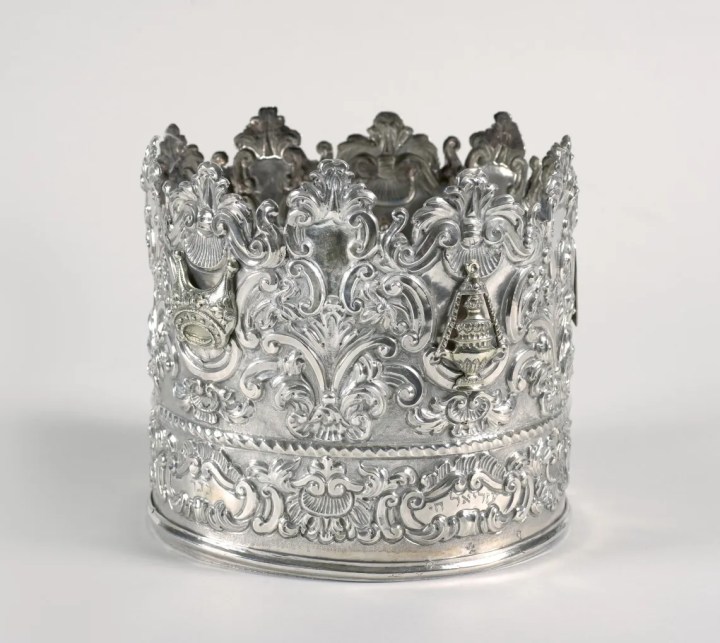
Giovanni Maria Ronchi (active in Ferrara, 1764–1801), Torah Crown, 1764–77, silver, partial gilt (NY: The Jewish Museum, F3688).
“The Detroit Institute of Arts is deeply honored to collaborate with the Jewish Museum to bring these extraordinary Jewish ceremonial artworks to our community,” said Detroit Institute of Arts Director Salvador Salort-Pons. “This partnership represents more than a loan of objects; it is a testament to the power of cultural institutions working together to preserve and share the richness of Jewish history as well as artistic and spiritual life. Through this exhibition, we hope to foster greater understanding and appreciation for Jewish history and culture, while strengthening the bonds between our institutions and communities.”
Among the items are several that adorn Torah scrolls, the holiest text of Judaism. These objects reflect both Jewish practice as well as the artistic styles of their places of production. The oldest of the works on view include a silver Torah shield from the 1660s, one of the earliest surviving pieces of Jewish ceremonial art from Nuremburg, Germany. This specific shield is decorated with unicorns, lions, and foliage, echoing styles popular in German art across religious communities in the period. The exhibition also includes three sets of Torah finials (ornamental metal objects placed atop the wooden rollers of a Torah scroll) featuring small bells to announce the movement of the holy text during congregational processions. These three sets of Torah finials come from distinct Jewish communities—one was crafted in London by the noted silversmith Solomon Hougham in the 1700s, another made in Iran a century later, and the third made in Morocco in the early 1900s—and reflect how Jewish communities across the world ornament the Torah in different ways. The exhibition also includes two silver Torah crowns used to beautify the Torah scroll: one from the late 1700s made in Ferrara, Italy, an important center of Jewish life since the 1100s; and the other made in North Africa in 1898–99.
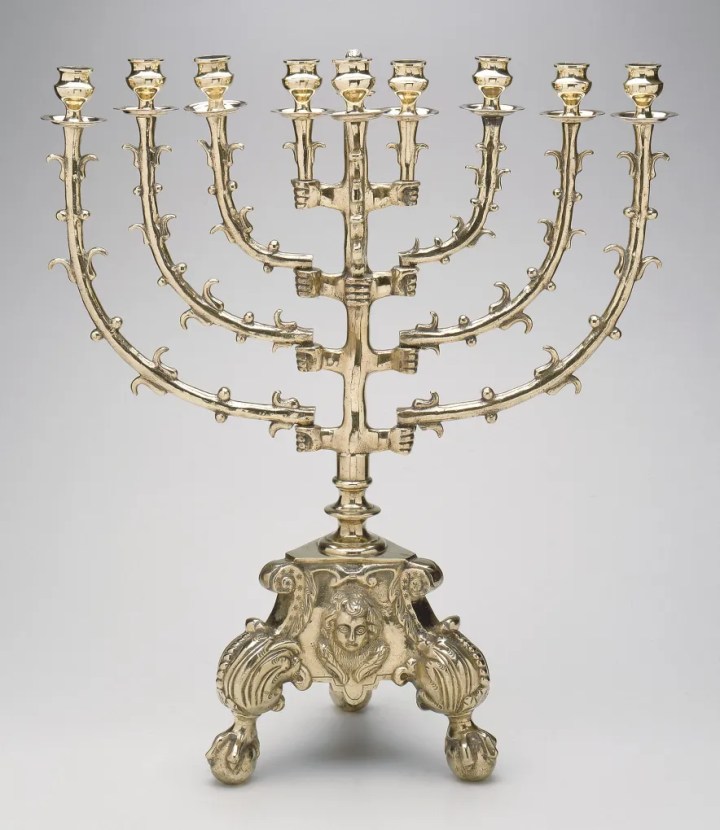
Hanukkah Lamp, Northern Rhineland, late 17th or early 18th century, cast copper alloy, 24 × 22 × 11 inches (NY: Jewish Museum, F5591).
Alongside objects centering the Torah in Jewish ceremonial life are works connected to Jewish holidays and festivals. These works also reflect the broader context in which they were made and first used. An Eastern European spice container (used during the Havdalah ceremony at the end of the Jewish Sabbath) resembles the form of a Gothic clock tower, echoing the architecture of the region. A silver container for an etrog (a fruit used to celebrate the fall holiday of Sukkot) made in the Ottoman Empire in the late 1800s is adorned with designs similar to Islamic silver from the same time and place. Two Hanukkah lamps, one from northern Germany and one from Ottoman Baghdad, share characteristics with designs popular in each region.
Presented alongside DIA’s outstanding collections of Islamic Art and European Decorative Arts, these works of Jewish ceremonial art help tell a broader story of interfaith interaction, shared creativity, and culture around the world.
“Working alongside our collaborating partners at the Jewish Museum to select these pieces has been an incredible journey of discovery and scholarship,” said Judith Dolkart, Detroit Institute of Arts Deputy Director, Art, Education & Programs. “Each artwork tells a unique story—of faith, resilience, craftsmanship, and community—and together we have carefully identified objects that will resonate with our visitors on multiple levels. I am excited for our audiences to experience the beauty, meaning, and history embedded in each piece.”
Guests of Honor: Art of Faith from the Jewish Museum, New York is organized by the Detroit Institute of Arts. The exhibition is generously supported by the William Davidson Foundation.
Exhibition | Adorning Ritual: Art from the Jewish Museum, New York
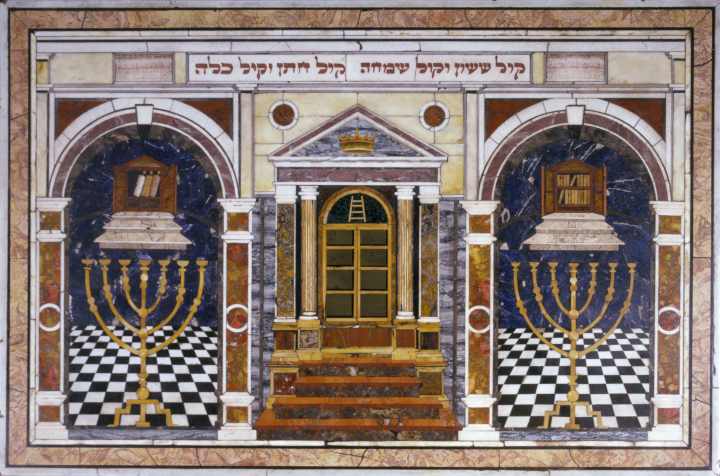
Marriage Wall Panel or Tabletop, 18th–early 19th century, marble inlaid with cut stones, 58 × 38 × 2 inches
(NY: The Jewish Museum, 2007-1)
◊ ◊ ◊ ◊ ◊
Now on view at the Cleveland Museum of Art:
Adorning Ritual: Jewish Ceremonial Art from the Jewish Museum, New York
Cleveland Museum of Art, 25 May 2025 — 10 May 2026
The Cleveland Museum of Art houses an encyclopedic collection, giving visitors valuable insights and perspectives into the lives and cultures of people around the world and throughout time. To enhance its permanent collection and to more fully represent the stories and objects important to our communities, the museum is displaying art on loan from the Jewish Museum, New York, in six galleries.
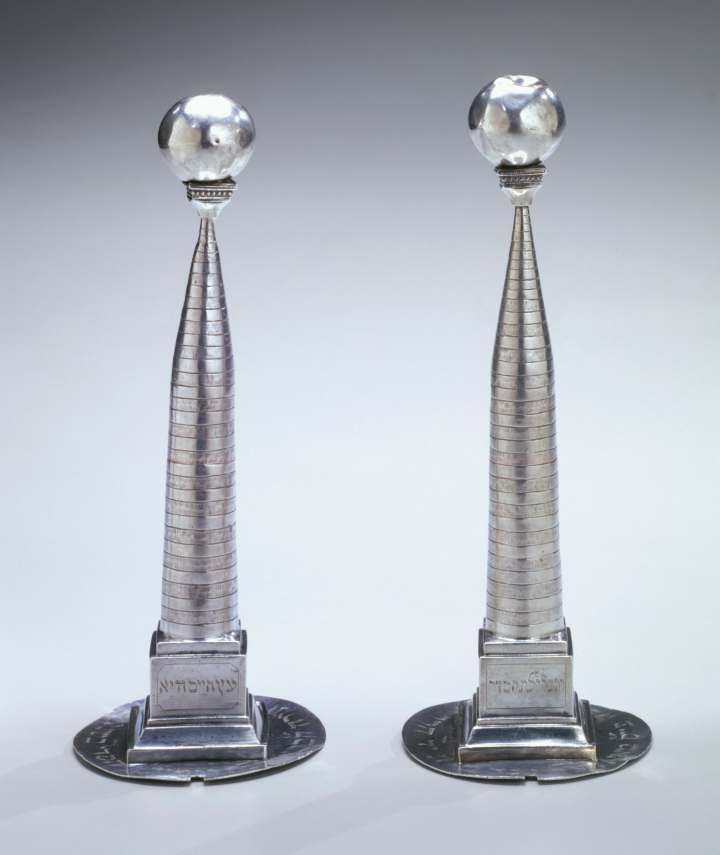
Heinrich Wilhelm Kompff, Torah Finials, 1797–99, silver, 11 inches high (NY: The Jewish Museum).
Most of the works are ritual objects relating to Judaism or the lives of Jewish people, from silver Torah finials to an inlaid marble panel commemorating a marriage. The objects have been placed in context with other works of the same time or region, allowing a fuller narrative to unfold. As you encounter these objects in the galleries, we invite you to consider their relationships to the other works in these spaces.
In addition to the loans from the Jewish Museum, two examples of Jewish ceremonial art from local collections are on display in two additional galleries: an etrog box recently acquired by the Cleveland Museum of Art and a miniature Torah ark on loan from the Mishkan Or Museum of Jewish Cultures in Beachwood, Ohio.
Exhibition | Stan Douglas: Tales of Empire
From the press release for the exhibition:
Stan Douglas: Tales of Empire
McMichael Canadian Art Collection, Kleinburg, Ontario, 5 December 2025 — 22 March 2026
Curated by Sarah Milroy
This winter, the McMichael Canadian Art Collection presents Stan Douglas: Tales of Empire, a landmark exhibition surveying three decades of work by internationally acclaimed Vancouver-based artist Stan Douglas. The exhibition brings together five major photographic series that explore the histories, legacies, and enduring reverberations of colonialism across continents and centuries. Curated by Frances & Tim Price Executive Director and Chief Curator Sarah Milroy, Tales of Empire investigates the power structures, mythologies, and lived realities shaped by imperialism through Douglas’s technically masterful and conceptually incisive lens.
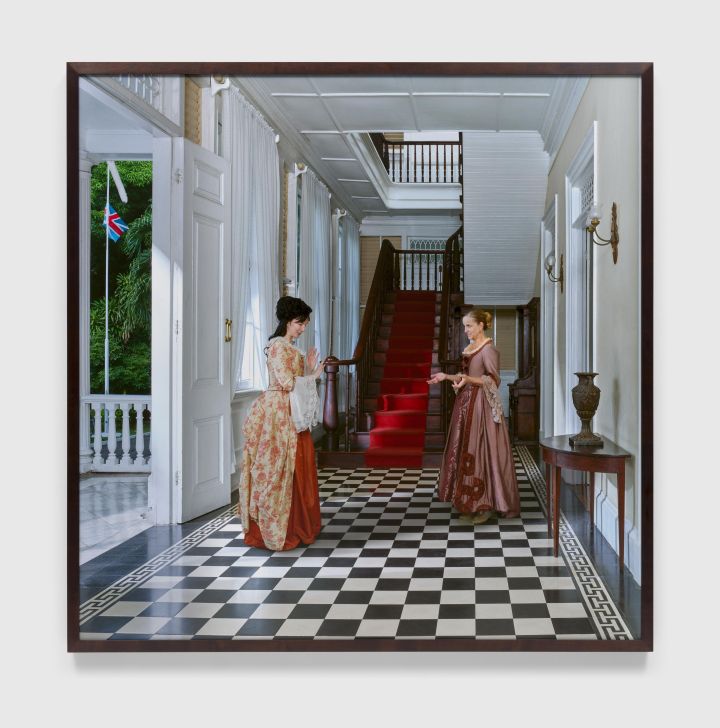
Stan Douglas, Act I, Scene V: In which Polly Peachum is Greeted at the Ducat Estate by Family Friend Diana Trapes, who Will Ultimately Betray Her, 2024, inkjet print on Dibond aluminum, 150 × 150 cm (courtesy of the artist, Victoria Miro, and David Zwirner).
• The Nootka Series (1996) — Created on the northwest coast of Vancouver Island, this series traces the enduring presence of Indigenous communities and moments of early contact with European settlers. At the McMichael, these photographs are being shown in dialogue with historical paintings by A.Y. Jackson, opening a compelling conversation between Douglas’s contemporary vision and the Group of Seven’s early twentieth century perspective.
• The Cuba Series (2005) — Capturing the complex architectural and political landscape of Havana and other Cuban towns, these images illuminate how centuries of Spanish, American, and Soviet influence have shaped the city’s identity and visual fabric.
• The Western Series (2006) — Set in British Columbia’s interior, this series examines landscapes marked by resource extraction, revealing how settler-driven development has altered the environment and reshaped the region.
• The Klatsassin Series (2006) — A cinematic re-imagining of a violent episode of Indigenous resistance in nineteenth-century British Columbia. Douglas invents a cast of characters associated with the event, blurring the boundaries between fact and fiction while probing how stories of colonial conflict are constructed and remembered.
• The Enemy of All Mankind (2024) — Douglas’s most recent project draws inspiration from Polly (1729), the satirical sequel to John Gay’s The Beggar’s Opera. Featuring a costumed ensemble, the series restages scenes of decadence, intrigue, and misadventure in the Caribbean, using Enlightenment-era satire to critique the moral bankruptcy of colonialism for a contemporary audience.
Across these bodies of work, Douglas dissects and dramatizes the machinery of empire—its spectacle, its systems, and its violence—while inviting viewers to reconsider how histories are recorded, contested, and retold.
◊ ◊ ◊ ◊ ◊
 Stan Douglas (b. 1960, Vancouver) is an internationally renowned artist whose multidisciplinary practice spans photography, film, video, installation, and theatre. Since the 1980s, he has created technically ambitious works that explore the complexities of history, collective memory, and the lasting imprint of colonialism. Through innovative uses of both analog and digital media, Douglas restages pivotal historical moments—often at cultural, political, or social tipping points—blurring the boundaries between documentary and fiction, cinema, and visual art.
Douglas has been featured at the Venice Biennale five times, most recently in 2022 with the acclaimed video installation ISDN. His work has been presented in solo exhibitions at major institutions worldwide, including the Centre Pompidou, MoMA, and the National Gallery of Canada and is held in leading museum collections across North America and Europe. Recent projects include a permanent public commission at New York’s Moynihan Train Hall (2021) and the recent survey Stan Douglas: Ghostlight at Bard College’s Hessel Museum of Art in 2025. He is the recipient of numerous awards, including the Audain Prize for Visual Art (2019); the Hasselblad Foundation International Award in Photography (2016); the third annual Scotiabank Photography Award (2013); and the Infinity Award from the International Center of Photography, New York (2012). In 2021, Douglas was knighted as a Chevalier of the Ordre des Arts et des Lettres by the French Minister of Culture, and in 2023 he was awarded an honorary doctorate by Simon Fraser University, Greater Vancouver. Douglas lives and works in Vancouver.
Stan Douglas: Tales of Empire (Kleinburg: McMichael Canadian Art Collection, 2025), 128 pages, $35 CAD. Introduction by Sarah Milroy, an interview with the artist, and an essay by André Alexis.
Research Project | Generation Landscape
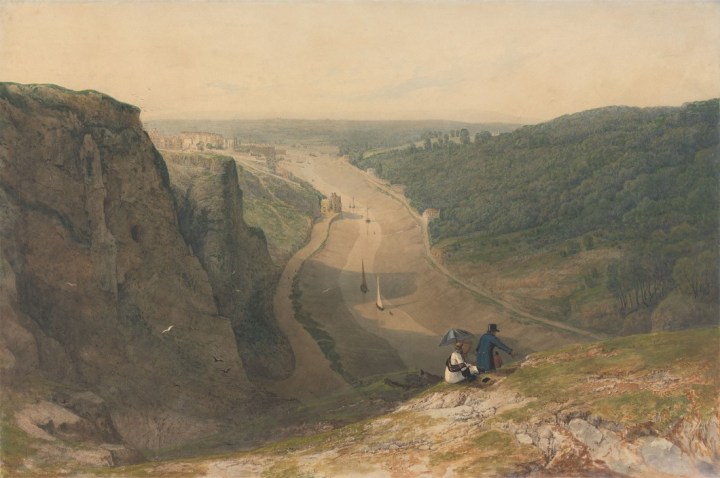
Francis Danby, The Avon Gorge, Looking toward Clifton, ca. 1820
(New Haven: Yale Center for British Art, Paul Mellon Collection)
◊ ◊ ◊ ◊ ◊
From the Paul Mellon Centre:
With the completion of the online catalogue of the Turner Bequest at Tate, supported by the PMC and launched with a major international conference, Turner 250 at Tate, this is a watershed moment for the study and understanding of the contribution of English landscape painting within the wider contexts of European and world culture. Generation Landscape will bring art historians, curators, academic researchers, and creative voices together to think afresh about this significant moment in art history, when a generation of emerging artists created paintings and graphic works offering bold and often experimental new visions of nature, the landscape and the purpose of art itself—and why these images continue to carry such imaginative force today.
Sarah Turner, Director of the PMC, said: “Collaborating to support a vibrant infrastructure of research is at the heart of the PMC’s approach. Through our funding, we are really delighted to bring together the convening potential and academic expertise offered by the Courtauld’s new Manton Centre with our partners at museums and galleries in Ipswich, Bristol, and Margate. This partnership is going to build on the foundations of the extraordinary body of scholarship that already exists on artists such as Turner and Constable and will support a new generation of curators, researchers, and artists to engage with it and shape different and original responses for audiences today. “
Steve Edwards, Director of the Manton Centre at The Courtauld, said: “Sir Edwin Manton built an art collection centred around the important generation of English landscape painters: Constable, Gainsborough, Girtin, Turner, and others. This collaboration between the Manton Centre and the Paul Mellon Centre for Studies in British Art establishes a dialogue with the artists at the heart of his interests to consider the meanings and values that have shaped Britain. Generation Landscape will support and promote new scholarship and curatorial work concerned with landscape and nature, providing an exciting opportunity to place contemporary research in conversation with a moment when both British art and British society were undergoing profound change.”
Generation Landscape is a three-year programme of research and events organised by the Paul Mellon Centre for Studies in British Art and the Manton Centre at The Courtauld.
With additional information here:
This research project is founded upon the simple fact that a stellar collection of British landscape artists—including J.M.W. Turner, John Constable, Thomas Girtin, and John Sell Cotman—were born within just a few years of each other (1775 in the case of the earliest, Girtin and Turner, and 1782 in the case of the latest, Cotman). Generation Landscape is intended to look afresh at the kinds of landscape imagery produced by these individual artists and their contemporaries. It will do so from a variety of art-historical perspectives, including those that are being newly developed in response to our current environmental crisis.
Generation Landscape encompasses and complements detailed new research on a number of the individual practitioners listed above. This activity includes the production of a new online catalogue of Thomas Girtin’s works, written by Dr. Greg Smith, published in 2022. Research undertaken as part of the project fed into the major 2025 Tate Britain exhibition Turner and Constable: Rivals & Originals. More broadly, Generation Landscape aims to chart the trajectories of this distinctive cohort of landscape artists in relation to a shared set of interests, experiences, and circumstances. It will look at how these practitioners and their works interacted with, and differed from, each other, and responded in both comparable and contradictory ways to the challenges—artistic, cultural, political, and environmental—thrown up by their era.
Generation Landscape was initiated in 2021 by Mark Hallett, former Director of the Paul Mellon Centre.
Exhibition | Art around 1800
Now on view at the Hamburger Kunsthalle:
Art around 1800: An Exhibition about Exhibitions
Kunst um 1800: Eine Ausstellung über Ausstellungen
Hamburger Kunsthalle, 5 December 2026 — 29 March 2026
Curated by Petra Lange-Berndt and Dietmar Rübel
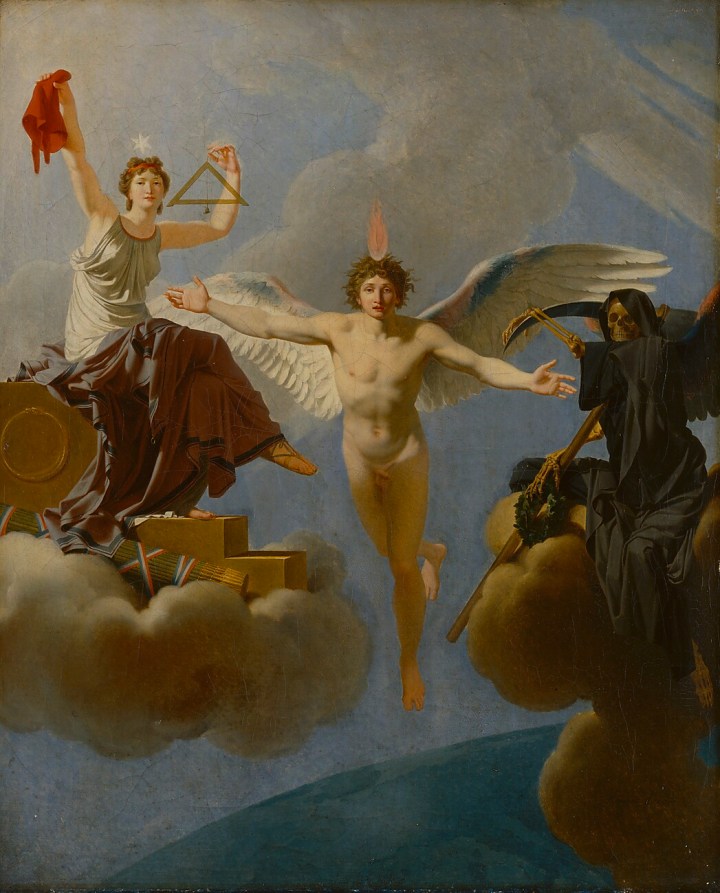
Jean-Baptiste Regnault, Liberty or Death, 1794, oil on canvas, 60 × 49 cm (Hamburger Kunsthalle; photo by Elke Walford).
Art around 1800 revisits the legendary exhibition cycle of that name on view at the Hamburger Kunsthalle some fifty years ago. Presented in nine parts from 1974 to 1981, the series examined the impact of art in the ‘Age of Revolutions’, launching seminal debates on the social relevance of art that continue to resonate today. The effect was to write a new history of European art by focusing on themes and artists that broke with the conventions of their time: Ossian, Caspar David Friedrich, Johann Heinrich Füssli, William Blake, Johan Tobias Sergel, William Turner, Philipp Otto Runge, John Flaxman, and Francisco Goya. The current exhibition will comment on the historical displays created under the aegis of then director Werner Hofmann and update their approach from a contemporary perspective. For this purpose, over 50 paintings, books, and works on paper from the Kunsthalle’s collection from around 1800 will be brought together with selected loans and works by contemporary artists.
Arranged in ten chapters, Art around 1800 examines themes such as dreams, political landscapes, and revolutionary energies from the viewpoint of the present day. Emphasis will also be placed on aspects that were missing from the shows of the 1970s, or which only came to light to some extent, yet are relevant for the period around 1800: feminism, Jewish culture, and people of colour. Like the original series of shows, the current exhibition is presented in the domed hall on the upper floor of the new museum wing inaugurated in 1919. In the 1970s, this area served as a central ‘space for contemplation’ and for curatorial experiments. Sculptor Marten Schech from Berlin has designed the exhibition architecture as a sculptural intervention.
Guest Curators
Petra Lange-Berndt (University of Hamburg)
Dietmar Rübel (Academy of Fine Arts Munich)
Petra Lange-Berndt and Dietmar Rübel, eds., Kunst um 1800, Kuratieren als wissenschaftliche Praxis: Die Hamburger Kunsthalle in den 1970er Jahren (Berlin: Hatje Cantz Verlag, 2024), 440 pages, ISBN: 978-3775756174, €48. With contributions by David Bindman, Johannes Grave, Charlotte Klonk, Petra Lange-Berndt, Jenny Nachtigall, Dietmar Rubel, Richard Taws, Monika Wagner, et al.
Exhibition | Versailles and the Origins of French Diplomacy
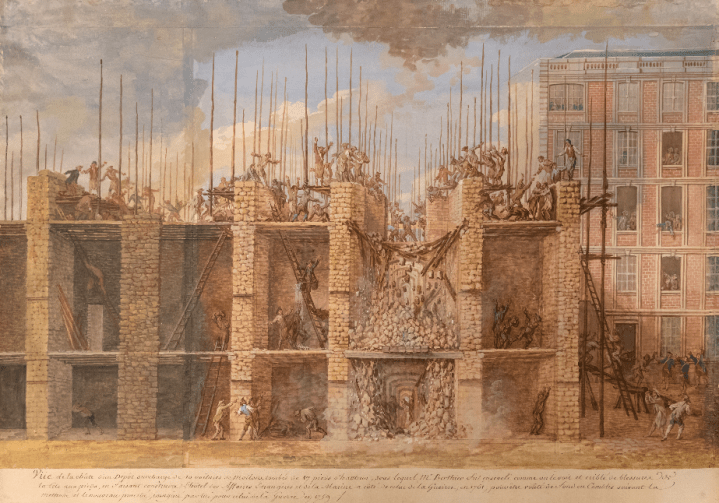
Louis-Nicolas van Blarenberghe, Accident survenu lors de la construction de l’hôtel des Affaires étrangères et de la Marine, à Versailles en 1761, ca. 1761, gouache over black chalk on paper, 38 × 56 cm (Bibliothèque Municipale de Versailles, Inv. 29359).
◊ ◊ ◊ ◊ ◊
Now on view at Versailles:
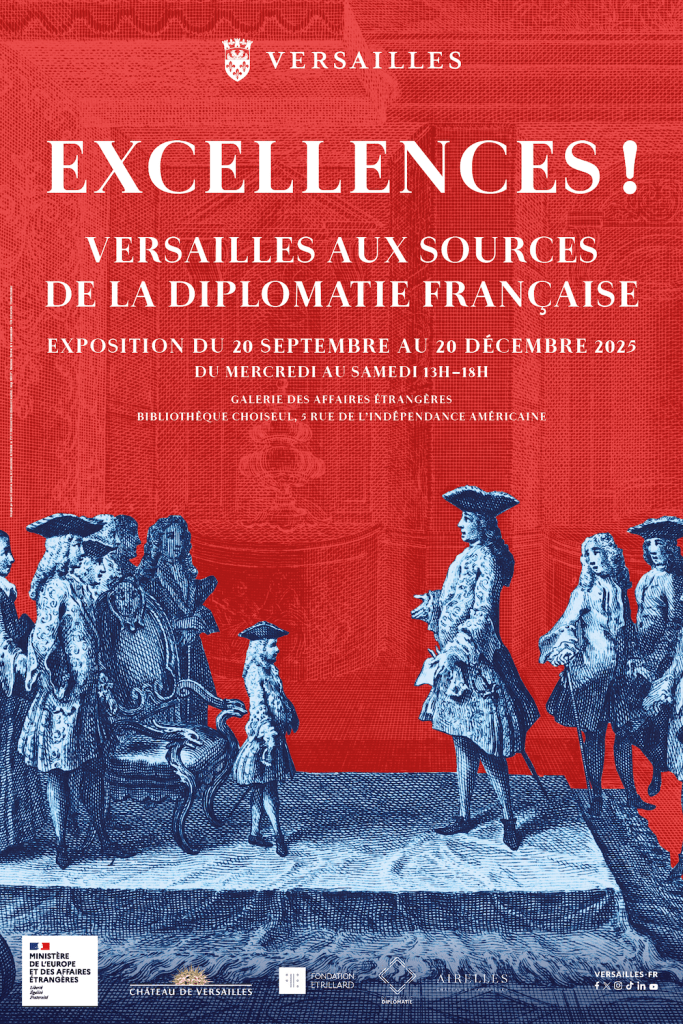
Excellences! Versailles aux Sources de la Diplomatie Française
Bibliothèque Choiseul, Versailles, 20 September — 20 December 2025
Curated by Sophie Astier and Vincent Haegele
La Ville de Versailles en collaboration avec les archives du Ministère de l’Europe et des Affaires étrangères présente l’exposition Excellences ! Versailles aux sources de la diplomatie française, dans un cadre emblématique : la Galerie des Affaires étrangères, lieu de diplomatie française et de la construction d’une administration moderne de la diplomatie. Une sélection exceptionnelle de documents retrace l’histoire de la diplomatie française sous l’Ancien Régime : 157 pièces originales dont près de la moitié, appartenant aux archives des Affaires étrangères, reviendront à Versailles pour la première fois depuis la Révolution française.
 Parmi ces pièces, on peut admirer des documents chargés d’histoire comme le traité de Cambrai dit Paix des Dames (1529), le traité de Westphalie qui termine la guerre de Trente Ans (1648), le traité de Paris (1763), la ratification du contrat de mariage scellant l’union de Louis XVI et Marie-Antoinette (1770), le traité de Versailles concluant la guerre d’Indépendance américaine (1783)…
Du règne de François Ier jusqu’à la guerre d’Indépendance américaine, découvrez l’histoire de la diplomatie française ainsi que la formalisation de ses pratiques et la construction d’une administration moderne. Le propos sera complété par différents portraits et objets d’arts permettant d’illustrer la vie d’ambassade et l’importance des cadeaux diplomatiques.
Une autre thématique abordée sera celle de la diplomatie officieuse, celle des espions, des messages codés et des opérations occultes, en faisant la part belle à ses acteurs les plus mystérieux, comme le chevalier d’Eon, qui sera évoqué par des correspondances, mais aussi par un étonnant portrait mi-homme mi-femme conservé dans les collections de la bibliothèque.
Le parcours de l’exposition est organisé en cinq étapes, qui sont à la fois chronologiques et thématiques. On y trouve une sélection de pièces tirées des collections de la bibliothèque municipale et des Archives diplomatiques, enrichies par quelques prêts exceptionnels venus d’autres institutions, notamment le Musée national des châteaux de Versailles et de Trianon. Dans chaque salle, un ou plusieurs documents constituent un « focus géographique » en lien avec les intitulés historiques des lieux. Le parcours se conclut sur la reconstitution d’un bureau de commis, tel qu’il existait dans la galerie sous Louis XV et Louis XVI.
The exhibition brochure is available here»
Excellences! Versailles aux sources de la diplomatie Française (Dijon: Éditions Faton, 2025), 192 pages, ISBN: 978-2878444056, €27. With contributions by Sophie Astier, Virginie Bergeret-Maës, Guillaume Frantzwa, and Vincent Haegele.










 Enfilade
leave a comment