Exhibition | Revolutionary Prints from Britain and America
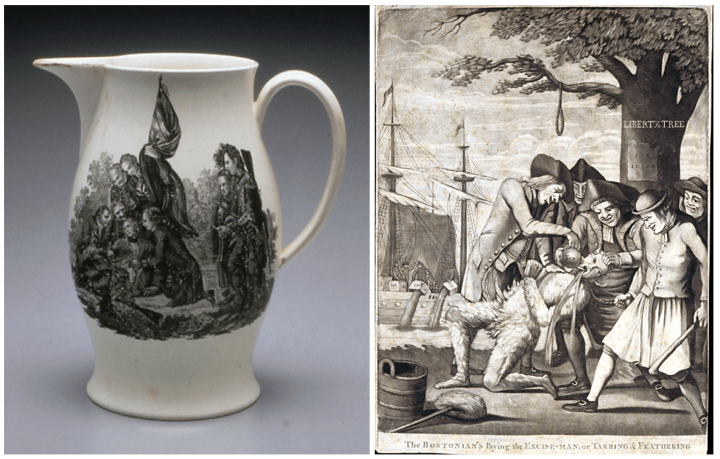
Left | Josiah Wedgwood, creamware jug, transfer printed with an image based on the painting The Death of General Wolfe by Benjamin West (Milwaukee: Chipstone Foundation; photo by Gavin Ashworth). Right | Philip Dawe, The Bostonians Paying the Excise-Man or Tarring and Feathering, 1774, London, mezzotint with engraving (Milwaukee: Chipstone Foundation; photo by Gavin Ashworth).
◊ ◊ ◊ ◊ ◊
Now on view at the Haggerty Museum of Art:
Defying Empire: Revolutionary Prints from Britain and America
Haggerty Museum of Art, Marquette University, Milwaukee, 4 June — 1 August 2026
Curated by J. Patrick Mullins, with Jonathan Prown and Jessica Cooley
On the occasion of the Semiquincentennial of the U.S. Declaration of Independence, the Haggerty Museum of Art at Marquette University welcomes visitors to visualize a passionate, participatory Revolution. Its summer exhibition, Defying Empire: Revolutionary Prints from Britain and America, explores how eighteenth-century British and American prints shaped public opinion about politics, from the French and Indian War through the end of the Washington presidency. Drawn from the collections of the Chipstone Foundation and the Haggerty Museum, the exhibition brings together more than twenty prints on paper, a selection of transfer printed ceramics, and an eighteenth-century maple dining table. Through works by both Britons and Americans of diverse political persuasions, it interprets the Revolutionary era as a time of transatlantic cultural exchange in which political ideas were communicated not just by documents like the Declaration but also objects from the fine and decorative arts.
In the eighteenth century British-speaking world, printed cartoons, portraits, and landscapes circulated widely, accessible to a much broader public than most official documents. These images could trigger such responses as amusement, contempt, reverence, and outrage, spurring viewers to political action. As creators and consumers, middle-class and working-class men and women used etchings, mezzotints, punchbowls, and teapots to participate in elite conversations about imperial authority and colonial resistance. Defying Empire provides an array of these politically charged artworks, including such featured objects as a creamware jug by Josiah Wedgwood interpreting The Death of General Wolfe, prints by William Hogarth satirizing Whig leaders like William Pitt and John Wilkes, Charles Willson Peale’s iconic portraits of George Washington and Benjamin Franklin, and Paul Revere’s inflammatory Bloody Massacre. Replicas of additional prints are displayed on a ‘coffeehouse table’ for visitors to handle and examine at their leisure.
Defying Empire: Revolutionary Prints from Britain and America was curated by Dr. J. Patrick Mullins, Associate Professor of History and Public History Director at Marquette University, in collaboration with Mr. Jonathan Prown, Dr. Jessica Cooley, and the staffs of the Chipstone Foundation and Haggerty Museum of Art. A virtual exhibit and catalog of curatorial essays will be available in Fall 2026 at the Chipstone website. For more information, visit the museum online, or contact Dr. Patrick Mullins at john.mullins@marquette.edu.
Support for this exhibition is generously provided by the John P. Raynor, S.J. Endowment Fund and in part by a grant from the Wisconsin Arts Board with funds from the State of Wisconsin and the National Endowment for the Arts.
Exhibitions | America 250 at the MFAH
From the press release for the presentation and series of exhibitions:
America 250 at the MFAH
Museum of Fine Arts, Houston, 1 July 2026 — 3 January 2027
Organized by Kaylin Weber and Christine Gervais
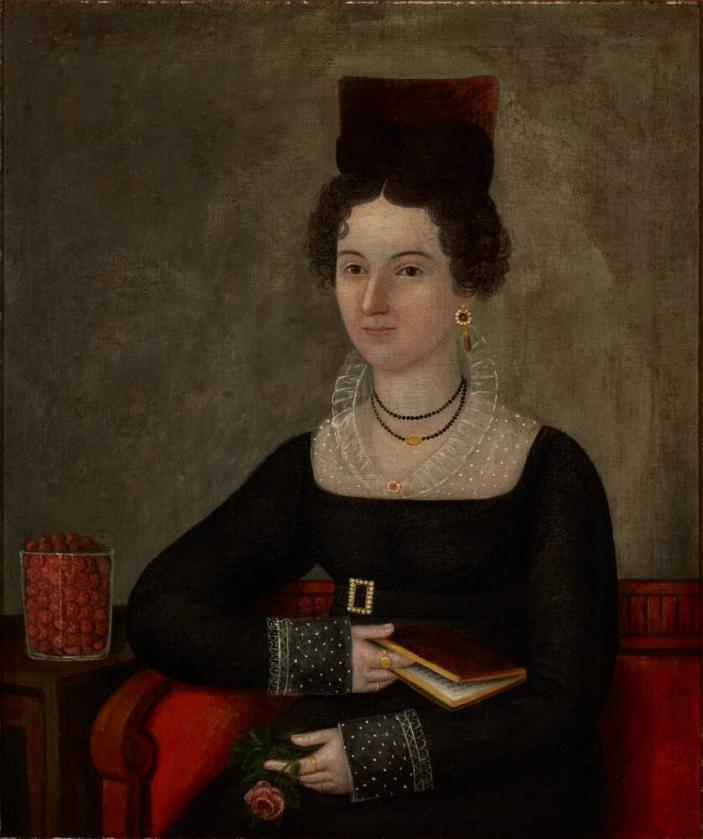
Joshua Johnson (ca. 1765–after 1825), Lady on a Red Sofa, 1820–25, oil on canvas, 30 × 25 inches (MFAH, 2026.5).
The Museum of Fine Arts, Houston marks the 250th anniversary of America’s founding with a roster of more than 70 artworks that speak to the American experience from across its campus and collections—from antiquities to global modern and contemporary art. Beginning 1 July 2026, visitors to the MFAH main campus and its two decorative-arts house museums, Rienzi and Bayou Bend Collection and Gardens, can map their own pathway, indoors and out, guided to the artworks and newly created audio stops and labels that discuss each of them from this historical and cultural perspective.
Comments Gary Tinterow, director and Margaret Alkek Williams chair of the MFAH, “The collections of the Museum of Fine Arts, Houston take pride of place within our galleries and our curators are continually engaging with and revisiting these works of art. On the occasion of the nation’s 250th anniversary, we saw a singular opportunity to look at our collections and select objects that reflect the multitudes of individuals who have contributed to the identity of our nation. The curators’ choices will allow our visitors to experience our collections framed within a series of illuminating and sometimes surprising narratives.”
The America 250 presentation has been organized by Dr. Kaylin H. Weber, The Lora Jean Kilroy Curator of American Painting and Sculpture, and by Christine Gervais, MFAH Curator for Decorative Arts and the Fredricka Crain Director of Rienzi.
◊ ◊ ◊ ◊ ◊
A New Nation: The Early United States as Reflected in Books and Objects
from the Powell Library and the Bayou Bend Collection
Kitty King Powell Library, MFAH, 1 May — 29 August 2026
In honor of the 250th anniversary of the Declaration of Independence, this display features books and objects from the early years of the United States representing various achievements and aspects of the period. The first encyclopedia printed in America by Thomas Dobson celebrated the country’s new identity, its history, and geography. It also presented the latest international technological and scientific discoveries that supported economic development. Other works demonstrate the importance of maintaining the military strength and strategic alliances that enabled the victory over Britain and that would also be needed to protect the citizens’ hard-won liberty. Surveying instruments and manuals assisted the country’s rapid expansion into new territory. Items related to Benjamin Franklin represent the importance of the Founding Fathers to the society and culture of the new nation.
◊ ◊ ◊ ◊ ◊
George Washington: America’s Enduring Icon
Bayou Bend, MFAH, 11 February — 22 November 2026
George Washington: America’s Enduring Icon includes objects from the 18th, 19th, and 20th centuries featuring images of George Washington during his lifetime, as well as many that mourned or honored him after his death. On view at the MFAH house museum Bayou Bend, the exhibition examines the many ways that Americans have recognized, honored, celebrated, memorialized, and appropriated the memory of Washington.
Exhibition | Celtic Art Across the Ages
Now on view at Harvard Art Museums, the exhibition spans a wide period including the reception of Celtic art in the 18th and 19th centuries.
Celtic Art Across the Ages
Harvard Art Museums, Cambridge, Massachusetts, 6 March — 2 August 2026
Curated by Susanne Ebbinghaus, with Penny Coombe, Laure Marest, and Matthew Rogan
 Discover the many forms of Celtic creativity and their artistic legacies in this sweeping story that spans ancient to modern times.
When you think of the word ‘Celtic’, what do you picture? Perhaps intricate knotwork designs, legendary warriors, or mystical spirituality? Maybe even a certain NBA team? Celtic Art across the Ages will introduce visitors to the worlds of the various peoples who were historically labeled ‘Celts’—through the objects they created, the interactions they had across the European continent, and the myths that shaped their legacy, then as now. The exhibition stretches from 800 BCE through today, showcasing the craftsmanship, innovation, cultural connections, and multilayered reception that characterized Celtic art in Europe and beyond.
The first major exhibition on this topic to take place in the United States, Celtic Art across the Ages offers an unprecedented opportunity to explore masterful metalwork, including exquisitely decorated weaponry, jewelry, and horse and chariot trappings of the first millennium BCE Iron Age and early medieval times, all brought to light through archaeological discoveries of the last 200 years. See how imagery transformed under Roman rule, and trace the revival of Celtic art and identities in the modern era. From shape-shifting ancient ornaments to the more well-known Celtic iconography of medieval Ireland and Scotland, the objects in this exhibition reveal rich and complex artistic traditions that defy stereotypes of what constitutes ‘Celtic art’.
The exhibition is curated by Susanne Ebbinghaus, George M.A. Hanfmann Curator of Ancient Art and Head of the Division of Asian and Mediterranean Art, with Penny Coombe, Kelekian Curatorial Fellow in Ancient Art, Laure Marest, Damarete Associate Curator of Ancient Coins, and Matthew Rogan, Senior Curatorial Assistant for Special Exhibitions and Publications.
The catalogue is disributed by Yale UP:
Susanne Ebbinghaus, ed., Celtic Art Across the Ages (Cambridge: Harvard Art Museums, 2026), 272 pages, ISBN: 978-0300286380, $45. With contributions by Franck Abert, Sophia Adams, Bettina Arnold, Kathryn Brush, Kimberly Cassibry, Michael Dietler, Christian Dupont, Susanne Ebbinghaus, Astrid Fendt, Ana Franjić, Martin Goldberg, Gloria Polizzotti Greis, Karina Grömer, Vanessa Haussener, Veronika Holzer, Thomas Hoppe, Fraser Hunter, Marina Kliger, Rachel Love, Laure Marest, Catherine McKenna, Nancy Netzer, Laurent Olivier, Sean Rainbird, Matthew Rogan, Maeve Sikora, Adrian Stähli, Georg Tiefengraber, and Katharina Ulmschneider.
Exhibition | Lacoste Donation to the Louvre: French Silver
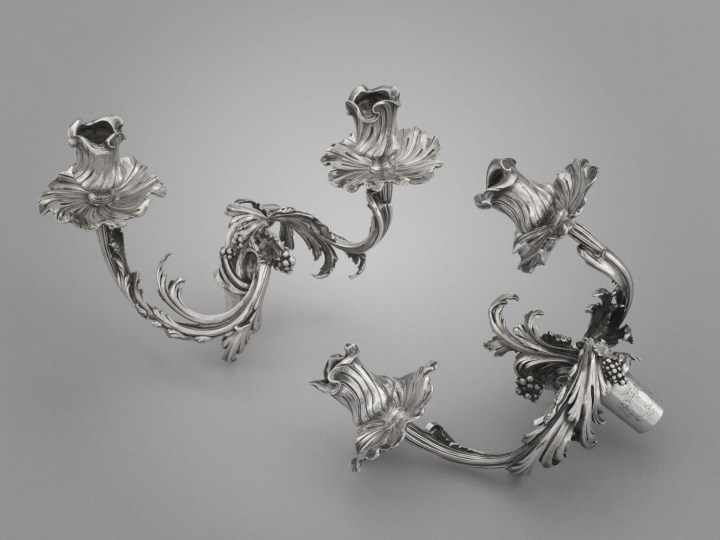
Charles II Ballin (1661–1754), Paire de chandeliers
(Paris: Musée du Louvre, photo by Julien Vidal)
◊ ◊ ◊ ◊ ◊
From the press release for the exhibition:
The Michel Lacoste Donation to the Musée du Louvre:
French Metalwork from Pierre Mangot to Jean-Élisée Puiforcat
Musée du Louvre, Paris, 26 June — 11 January 2027
Curated by Anne Foray-Carlier
The Louvre has opened a special exhibition devoted to a major promised donation from collector Michel Lacoste, bringing together 100 pieces of French silverwork from the 16th to the 18th century. The Michel Lacoste Donation to the Musée du Louvre: French Metalwork from Pierre Mangot to Jean-Élisée Puiforcat will be on view in the museum’s Sully Wing, Room 605, until 11 January 2027. For more than six months, visitors will be able to see the Lacoste pieces displayed together alongside the Louvre’s own holdings of silver and ceramics.
The donation, formalized in November 2025, reflects decades of collecting by Lacoste, the youngest son of French tennis legend René Lacoste, whose nickname ‘the Crocodile’ became the emblem of the famous sportswear brand founded in 1933. Because Michel Lacoste is a Swiss national, the gift was structured as a deferred donation of existing property, meaning the works will become property of the French State upon his death. For now, the Louvre is giving the public a rare opportunity to see the collection as a whole.
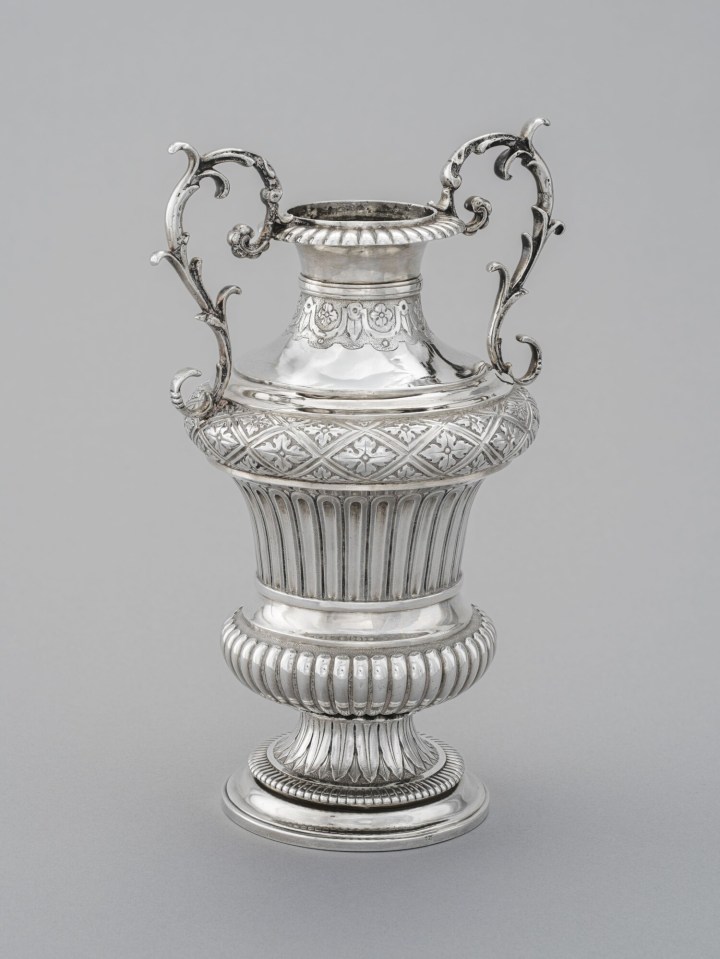
Jean-Baptiste Loir, Vase à deux anses en argent (Silver Two-Handled Vase), 1701–02 (Paris: Musée du Louvre, photo by Julien Vidal).
The 100 works represent roughly a quarter of the silver collection assembled by Lacoste since the 2000s. Chosen in close consultation with the Louvre’s Department of Decorative Arts, the pieces were selected to complement and enrich the museum’s existing holdings, particularly in the area of 17th-century French silverwork. Nearly a quarter of the donation consists of Parisian and provincial works from that century, a field in which examples have become increasingly scarce on the art market.
The display also introduces important names not yet represented in the Louvre’s collection, including Jean-Baptiste Chéret, Pierre-François Bonnestrenne, and Joseph-Théodore Vancombert. Other pieces deepen the museum’s representation of celebrated masters such as Nicolas Delaunay, Claude II Ballin, François-Thomas Germain, and Jacques-Nicolas Roëttiers.
To make room for the donation, the Louvre has reworked the existing presentation in Room 605. Some objects have been temporarily removed, while others from storage have been added to create visual and historical dialogues with Lacoste’s pieces. A colorful scenographic design helps visitors immediately identify the works from the donation and see them in relation to the museum’s permanent collection. The exhibition is curated by Anne Foray-Carlier, Senior Heritage Curator, Department of Decorative Arts.
One of the most notable aspects of Lacoste’s choices is the attention given to provincial centers of French silverwork in the 17th and 18th centuries. While many of these works drew inspiration from Parisian models, they also reveal local originality, technical confidence, and a refined sense of form.
Lacoste’s passion for silverwork began with a catalogue. As a young man, he was given the sale catalogue of the famed Puiforcat collection by his maternal grandmother. The auction, planned for 1955, never took place because the Greek shipowner Stavros Niarchos acquired most of the works and later donated them to the Louvre with reservation of usufruct. That gift transformed the museum’s holdings in French silverwork at a time when the collection was still relatively limited.
Captivated by the Puiforcat collection and by the figure of Louis-Victor Puiforcat as a collector, Lacoste began visiting auction houses, meeting specialized dealers, and building relationships with experts and art historians. His first major acquisitions came during the celebrated sales of the David David-Weill collection in the 1970s. Although he sold part of that early collection in 1999, he soon began collecting again.
With this donation, Lacoste is now sharing a lifelong passion with the public and helping secure the future of a group of works that speak to the elegance, technical brilliance, and historical depth of French silverwork. The choice of the Louvre feels especially fitting. The museum already holds much of the Puiforcat collection that first inspired Lacoste, and with this new donation, that story of collecting, transmission, and public heritage comes full circle.
Exhibition | America at 250
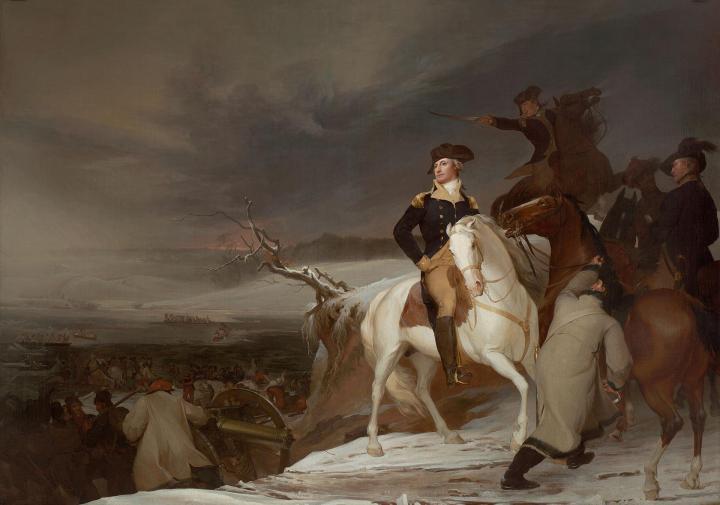
Thomas Sully, The Passage of the Delaware, 1819, oil on canvas, 147 × 207 inches
(Museum of Fine Arts Boston, 03.1079)
◊ ◊ ◊ ◊ ◊
Opening soon at the MFABoston:
America at 250
Museum of Fine Arts, Boston, opening 19 June 2026
The MFA’s major reinstallation of the 18th-century Art of the Americas galleries will integrate art from across North, Central, and South America, and the Caribbean—including works by Native American and Indigenous makers—to present a broader view of cultural exchange across the continent during a pivotal time in history. The galleries feature more than 400 objects—including icons of the MFA’s collection, long unseen works, and new acquisitions—that range from the monumental to the miniature.
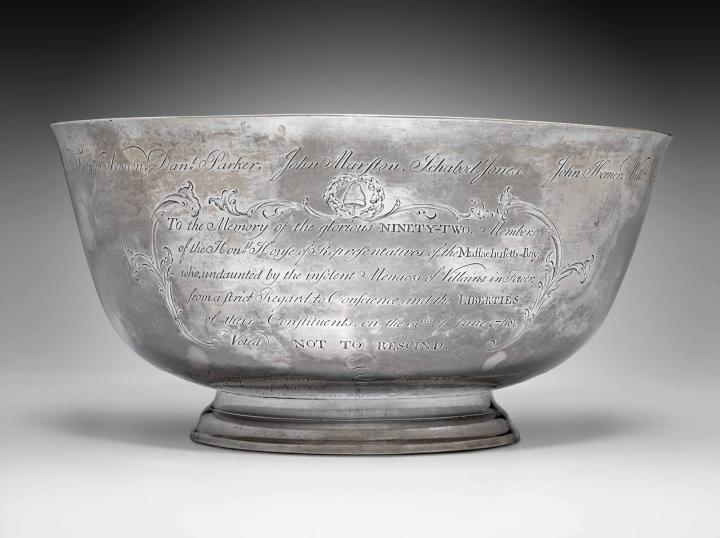
Paul Revere Jr., Sons of Liberty Bowl, 1768, silver (MFA Boston).
A silver bowl. A Founding Father memorialized at monumental scale. A charismatic silversmith considering his craft. A towering mahogany desk and bookcase. Certain paintings, sculptures, decorative arts, and works on paper from the MFA’s Art of the Americas art collection, along with the artists who created them, played a pivotal role in shaping the early history of the United States. Today, as we approach 250 years since the country’s founding, they likewise have a unique ability to recount and reflect that history while also inviting us to reconsider it.
Coinciding with the 250th anniversary of American Independence, the MFA is reimagining its 18th-century galleries on level one of the Art of the Americas Wing for the first time since they opened in 2010. The new display, which opens in June 2026, brings together works from across the Americas—integrating Native and non-native, North, South, and Central American, and Caribbean art—and explores how artists have contributed to, or in some cases resisted, ideas of nationhood and identity. Visitors can immerse themselves in a range of stories and experiences, discovering the interconnectedness of the Americas and its history, institutions, and people.
Gilbert Stuart’s unfinished portrait of George Washington (1796)—the foundational image of the nation’s first president in the public imagination—offers viewers a prescient reminder that democracy is constant work in progress. An early piece of American protest art, Paul Revere’s Sons of Liberty Bowl (1768) honors a group of Massachusetts rebels who paved the way for the Revolution. A ceramic jar (1857) by the enslaved potter and poet David Drake exemplifies literacy as an act of resistance in the decades before the Civil War. Thomas Sully drew on artistic traditions of heroism for The Passage of the Delaware (1819), which portrays George Washington in a dramatic scene of bravery. Meanwhile, a recently acquired work by Alan Michelson, a Mohawk member of Six Nations of the Grand River, offers a contemporary critique of Washington, who was known to the Mohawk Nation as ‘Town Destroyer’. These and the many other works on view reveal a past in dialogue with the present and propose endless possibilities for assessing history as we look ahead to the future.
Exhibition | Revolutionary Women
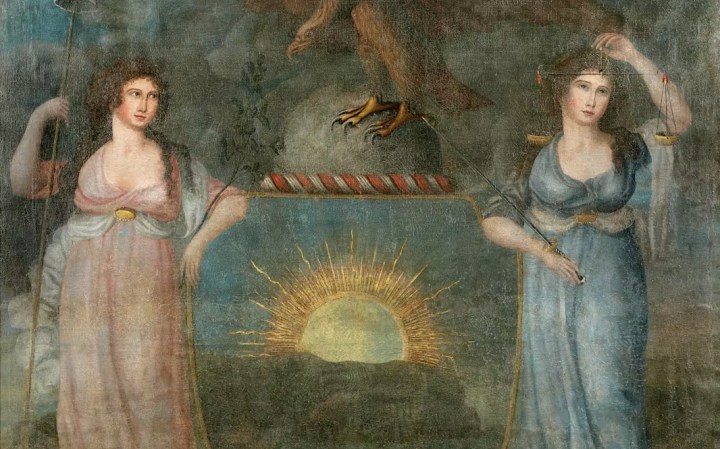
Excelsior with Allegorical Figures of Liberty and Justice, late 18th century.
◊ ◊ ◊ ◊ ◊
This summer the museum will also present its own unique copy of the Declaration, as Jennifer Schuessler reports in The New York Times (5 June 2026) . . .
“For generations, the institution (formerly the New-York Historical Society) has quietly held a rare, unattributed broadside of the Declaration, one of only a handful with no printer’s name attached. From June 18 to July 5, it will be on public display for the first time, along with a tentative attribution, to a New York City printer named Samuel Loudon.”
From the press release for the exhibition:
Revolutionary Women
The New York Historical, 29 May — 25 October 2026
Curated by Anna Danziger Halperin, Tessa Bangs, Isabelle Held, Rachel Pitkin, and Lauren Cain
Commemorating the nation’s semiquincentennial year, The New York Historical presents Revolutionary Women, a new exhibition on view in the Joyce B. Cowin Women’s History Gallery. Moving beyond the myths and legends that have long shaped narratives of the American founding, this exhibition draws on extensive research in The Historical’s Patricia D. Klingenstein Library to illuminate the lives of the women who helped define the American experiment. Through the close examination of overlooked primary sources—including letters, financial ledgers, and archaeological artifacts such as shoe soles and children’s toys excavated from military camps—Revolutionary Women reconstructs a compelling, evidence-based reappraisal of the 18th century, positioning women as central actors in the political, social, and economic transformations of the era.
“To understand the history of our nation, we must look at what is revealed in the margins of the traditional narrative,” said Dr. Louise Mirrer, president and CEO, The New York Historical. “This exhibition moves past symbolism to center the real expertise and labor of women who navigated a world of blurred allegiances to help found the United States. By unearthing these hidden contributions, we hope to shift how the American Revolution is understood for generations to come.”
At its core, the exhibition cuts through 250 years of mythmaking to reveal the documented realities behind iconic Revolutionary-era women. It spotlights figures such as Deborah Sampson, whose story of military enlistment was amplified in early print culture, alongside Abigail Adams and Phillis Wheatley Peters, who wielded Enlightenment ideals to expose the contradictions of a male-dominated republic. The exhibition also dismantles enduring legends like ‘Molly Pitcher’, revealing the figure likely to have been a composite of several women, including Margaret Corbin (‘Captain Molly’), the first woman to receive a federal pension after being wounded in combat, as confirmed by military and Board of War records. Drawing on rich archival evidence, including a public tribute from George Washington to widows who helped American prisoners, Revolutionary Women replaces folklore with a vivid, verifiable account of women’s central role in the time of America’s founding.
Using the New York region as a microcosm of the broader struggle for independence, the exhibition reveals the breadth of women’s economic and civic influence in a contested landscape. As men went to war, women assumed control of businesses, carried intelligence across military lines, and sustained the conflict through medical and logistical support. Archival materials, including the business records of merchant Mary Alexander, underscore women’s longstanding participation in transatlantic trade networks. Evidence from early ledgers of the Tontine Coffee House—the heart of early New York’s financial district—further documents women such as Rebecca Gomez as active investors and stakeholders, offering a powerful corrective to narratives that have long excluded women from the growing early American financial system.
For women of color and Indigenous women, whose voices were often suppressed by dominant narratives, Revolutionary Women reinterprets traditional sources to foreground their agency and resilience, telling the story of individuals like Elizabeth ‘Mumbet’ Freeman, whose court case, Brom and Bett v. Ashley (1781), set the legal precedent to abolish slavery in Massachusetts. Molly Brant, a Mohawk woman of the Wolf Clan, chose loyalty to the British over the Revolutionary forces, believing that it offered the best chance to protect Haudenosaunee lands from colonial expansion. The letter granting Brant a pension from the British government for her diplomatic service is on view. Meanwhile, soldiers’ orderly books and diaries from the Sullivan Campaign, while recording the destruction of Haudenosaunee lands, inadvertently preserve evidence of Indigenous women’s agricultural knowledge and authority.
Personal relationships are also explored in the exhibition. On display is a love poem written by Patriot Major Aquila Giles, who met his future wife, Eliza Shipton, the niece of a Loyalist, after he was captured. The star-crossed lovers secretly exchanged letters, and eloped in 1780 to thwart their impending separation. A woman’s shoe sole, children’s toys, and other archaeological evidence mark the presence of women and children in military camps and in occupied New York.
In the post-war years, women turned to the emerging legal system to assert their rights and redefine the boundaries of citizenship. Court records and legal depositions, like the property lawsuits of Elizabeth Rutgers, who sued for back rent when her brewery was occupied during the British occupation, demonstrate that women actively challenged the limits of the law.
The exhibition concludes by examining how women played a decisive role in building the social and economic infrastructure of the new nation. In the absence of robust public services, they established philanthropic and educational institutions that bound the city and nation together, while their wealth and labor provided an invisible backbone to the early republic’s economy. Acting as traders, financial participants, and diplomatic intermediaries, women sustained the nation’s daily operations, an often unrecognized foundation that Revolutionary Women brings to light, recasting their expertise as central rather than peripheral to the Revolutionary era. Through materials ranging from a sampler made at the New-York African Free-School to a portrait of Elizabeth Schuyler Hamilton, a founder of the Orphan Asylum Society—Revolutionary Women ultimately challenges audiences to reconsider whose stories endure, and to ask a vital question: How would you tell the story of the Revolution?
Revolutionary Women is curated by Anna Danziger Halperin, director for the Center for Women’s History; Tessa Bangs, Mellon Foundation Postdoctoral Fellow in Women’s History and Public History; Isabelle Held, Mellon Foundation Postdoctoral Fellow in Gender and LGBTQ+ History; and Rachel Pitkin and Lauren Cain, both Mellon Foundation Predoctoral Awardees in Women’s History.
Display | The Declaration of Independence at The Morgan
From the press release for the exhibition:
The Declaration of Independence: Rare Americana from the Collection
The Morgan Library & Museum, New York, 5 May — 13 September 2026
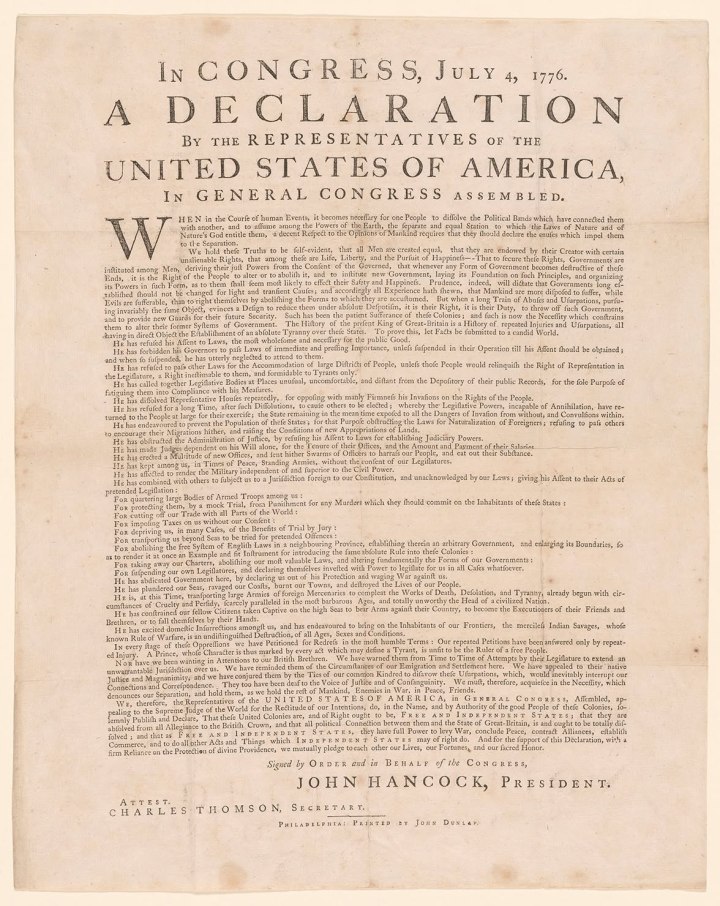
Declaration of Independence (Dunlap Broadside), 1776, printed in Philadelphia by John Dunlap (New York: The Morgan Library & Museum, PML 77518).
In honor of the 250th anniversary of the Declaration of Independence, the Morgan Library & Museum presents a select group of important materials relating to the history of the founding of the nation in the rotunda of the historic library from May 5 until September 13, 2026. Placed in conversation with each other, the six works in this installation provide a snapshot of a robust area of the Morgan’s collection that speaks to the vitality of the country in its nascence.
The centerpiece of the installation is a rare copy of the Declaration of Independence. Known as the “Dunlap Broadside,” this artifact of the nation’s founding was typeset by John Dunlap on the night of July 4, 1776 for distribution to “the several Assemblies, Conventions & Committees or Councils of Safety and to the several Commanding Officers of the Continental troops.” Among the rarest of the rare in this category, it is one of only twenty-six recorded copies surviving today. As a foundational document it is put in context with other important works from the period. Thomas Paine’s radical polemic Common Sense, for example, published earlier that year, gave the nation’s founders a solid rationale for a break from monarchical rule based on the principles of reason.
Also included are correspondences from key figures of the Revolutionary period. A letter dated June 29, 1776, from Patrick Henry, written upon his appointment as Governor of Virginia, reveals the combined sense of humility and anxiety he felt regarding his ability to lead the infant commonwealth through the war effort to combat the “Tyranny of the British King.” Another letter from Martha Washington to her sister Anna Maria ‘Nancy’ Dandridge Bassett, dated August 28, 1776, shows us a window into life on the home front, as she reports on the massive troop movements through Philadelphia toward New York.
In addition, the installation features a life mask of George Washington. In 1785, the French sculptor Jean Antoine Houdon (1741–1828) visited Washington at his Mount Vernon residence. To make a mold of the future first president’s visage, Houdon had Washington lie down and then applied a protective layer of grease followed by a layer of plaster. Once hardened, the mold was removed, and plaster was poured into it to make this positive cast. Houdon brought this ‘life mask’ with him to France and apparently used it while working on the marble statue of Washington for the Virginia State Capitol.
Exhibition | A Day in the Eighteenth Century
Now on view at the Musée des Arts Décoratifs:
A Day in the Eighteenth Century: Chronicle of a Parisian Townhouse
Musée des Arts Décoratifs, Paris, 18 February — 5 July 2026
Curated by Ariane James-Sarazin and Sophie Motsch
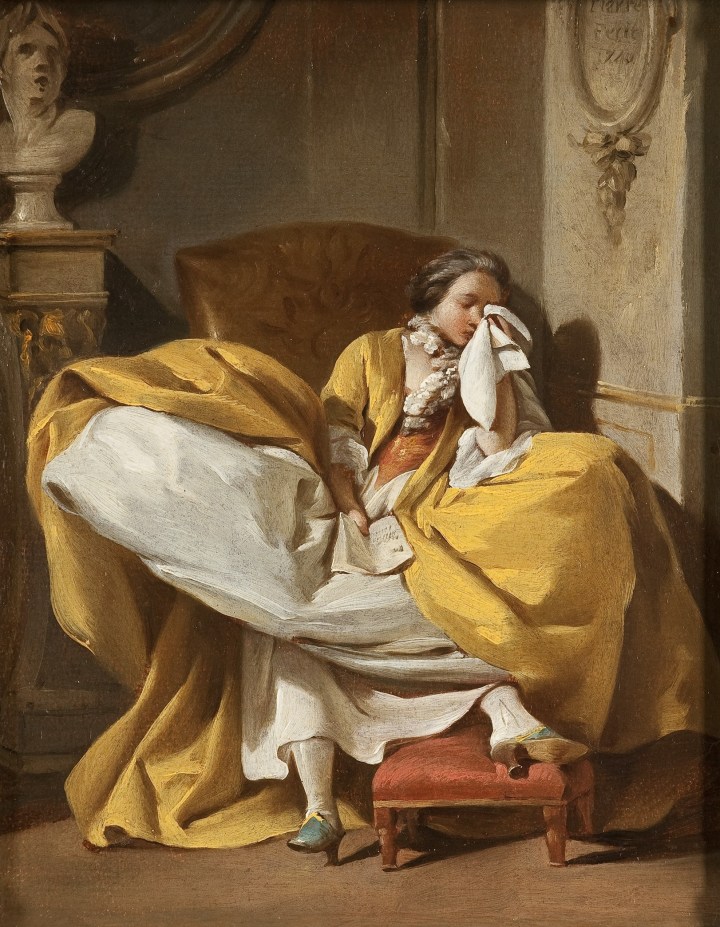
Jean-Baptiste Marie Pierre, La Mauvaise Nouvelle (The Bad News), oil on canvas, 23.5 × 18.5 cm (Paris: Musée des Arts Décoratifs).
A Day in the Eighteenth Century: Chronicle of a Parisian Townhouse invites visitors to step inside the intimate world of an eighteenth-century aristocratic residence and its inhabitants—masters, servants, and household animals. Featuring more than 550 original objects, drawn from the museum’s collections and for most of them, rarely on view, the exhibition gathers all fields of expression of the decorative arts—wood panelling and wallpapers, furniture, ceramics, silverware, clothing and fashion accessories, toys, and jewellery—to recreate the life of a Parisian hôtel particulier in the 1780s. In a cinematic, sound-filled and scented atmosphere, the visitors wander from room to room as if they were close acquaintances, friends, or privileged guests of the family.
The exhibition is curated by Ariane James-Sarazin, Chief Heritage Curator responsible for the seventeenth- and eighteenth-century collections and the Nissim de Camondo collection, together with Sophie Motsch, Assistant Curator.
Ariane James-Sarazin and Sophie Motsch, eds., Une journée au XVIIIe siècle, chronique d’un hôtel particulier (Paris: Éditions Les Arts Décoratifs, 2026), 528 pages, ISBN: 978-2383140351, €39.
Exhibition | Microhistories of the Andes
From the press release for the exhibition:
Microhistories of the Andes
San Antonio Museum of Art, 24 May 2026 — 23 May 2027
Curated by Kristopher Driggers
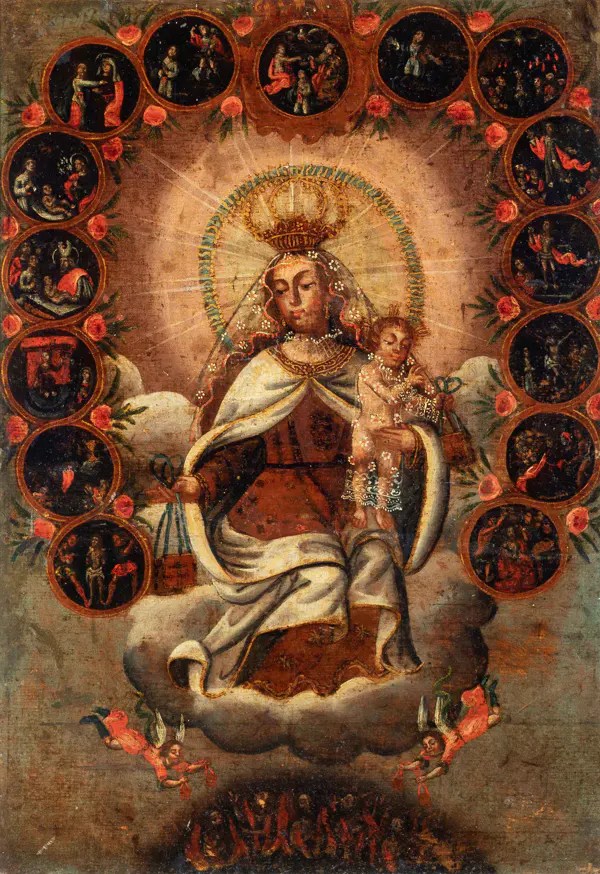
Our Lady of Mount Carmel, Peru, late 18th century, oil on canvas, 45 × 31 cm (San Antonio Museum of Art, 2003.45).
Named one of the must-see shows this spring by The New York Times, the San Antonio Museum of Art (SAMA) presents Microhistories of the Andes, an exhibition that closely examines individual objects to draw out larger stories about their culture of origin. Curated by Kristopher Driggers, Curator of Latin American Art, Microhistories of the Andes will be on view in the Golden Gallery from 24 May 2026 to 23 May 2027. The exhibition explores Andean cosmologies, cultural conceptions of agricultural practices, objects of devotion and spirituality, and the histories of materials across land and time.
Microhistories of the Andes highlights textiles, ceramic sculptures, paintings, metalwork, and feather arts from the Andean region, including recent acquisitions, such as a gift from Hank Lee in memory of Margie M. Shackelford, and gifts from prominent collectors such as Lindsay and Lucy Duff.
“Microhistories of the Andes poses a question to our visitors: How do singular objects become the starting point for telling broader stories about the past?” Driggers said. “At art museums, we are used to thinking of artworks as exemplifying broader narratives. With its framing, this exhibition brings our attention to the way we move from objects to the larger human stories behind them, with SAMA’s collection as the starting point—including recent gifts to the collection and works that have not been seen in many years.”
Featuring ancient objects from as early as the first millennium AD to more recent objects from the twentieth century, this exhibition examines the cultural context in which they were created. Additionally, highlighting objects from different countries across the Andean region provides a comprehensive look at the region’s diverse history and landscapes, including mountainous, desert, and tropical areas.
Exhibition | William Blake: The Age of Romantic Fantasy
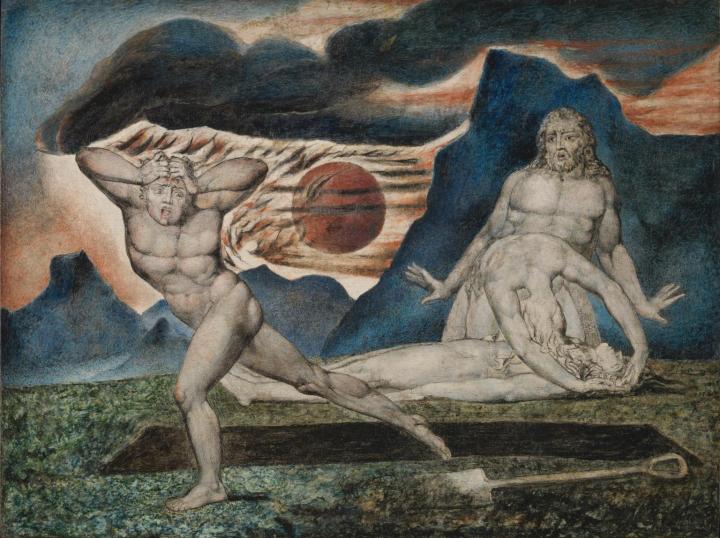
William Blake, The Body of Abel Found by Adam and Eve, ca. 1826, ink, tempera, and gold on mahogany
(London: Tate, N05888).
◊ ◊ ◊ ◊ ◊
From the press release for the exhibition:
William Blake: The Age of Romantic Fantasy
National Gallery of Ireland, Dublin, 16 April — 19 July 2026
Curated by Alice Insley and Anne Hodge
The National Gallery of Ireland is presenting a new major exhibition William Blake: The Age of Romantic Fantasy. This loan exhibition from Tate, curated in partnership with the National Gallery of Ireland, presents a selection of Blake’s most iconic works of art, alongside paintings and drawings by his contemporaries. It offers a rare opportunity to encounter one of the most visionary figures in art and literature.
William Blake (1757–1827) is a singular force in the history of art. Poet, painter, and printmaker, he created a visionary universe of mythic beings and prophetic scenes, exploring heaven and hell through a language entirely his own. In a world shaped by revolution and social upheaval, Blake and his peers pushed art into bold new territories using the power of the creative imagination.
 Wildly unconventional in terms of both technique and thought, Blake developed a distinctive visual language to explore opposing forces of creation and destruction, reason and imagination. His inventive works have resonated far beyond his own era. Blake’s influence continues to echo through contemporary culture, inspiring musicians such as U2, Bob Dylan, and Patti Smith; filmmakers including Ridley Scott and Martin Scorsese; writers from J.G. Ballard to Allen Ginsberg; and designers such as Una Burke, whose work features in a special three-piece collaboration accompanying the exhibition in the Gallery’s gift shop.
Opening with a selection of Blake’s iconic large colour prints, William Blake: The Age of Romantic Fantasy immediately immerses visitors in the drama and visionary intensity that defines his work. These striking images introduce the exhibition’s central themes, which unfold across a series of sections that place key works by Blake alongside paintings and drawings by the artists he admired and those who were inspired by him. By placing Blake in a wider context of originality and experimentation, the exhibition offers a compelling insight into a transformative moment in European art. It provides a window into uniquely imaginative works of art that address many topics that are as urgent and relevant today as they were during the Romantic period. . . .
Speaking on the opening of the exhibition, Dr Caroline Campbell, Director of the National Gallery of Ireland, said: “It is very exciting to continue our partnership with our colleagues at Tate and present the work of William Blake alongside his contemporaries in this major exhibition. The impact that Blake and the era of Romanticism have had on Western art cannot be overstated. William Blake: The Age of Romantic Fantasy allows our visitors to explore a familiar name in much greater depth. We hope that it will inspire and delight all who visit the National Gallery of Ireland during spring-summer 2026. I also take this opportunity to thank our Partners at Tate, the supporters of our William Blake Giving Circle and the Department of Culture, Communications and Sport for their ongoing support.”
Anne Hodge, Curator of Prints and Drawings at the National Gallery of Ireland said: “William Blake is such an iconic figure in art and literature. I am delighted that our visitors will be able to enjoy a selection of his work in context, alongside that of his fellow artists. Many people are aware that he wrote the poem The Tyger, but know little else about him. This exhibition will provide a window into the richness of Blake’s imagination and his innovation as an artist.”
Alice Insley, Curator British Art, 1730–1850 at Tate, said: “William Blake is today celebrated for the great originality and vision of his art and poetry. Yet he was not alone in giving his imagination free rein. This exhibition shows Blake’s extraordinary works alongside paintings and drawings by his contemporaries—those who he admired and those who he inspired—to reveal how British art was taken in exciting new directions in this moment. We are delighted to be able to share these works from Tate’s collection with visitors to the National Gallery of Ireland and hope that they will continue to inspire across the centuries.”
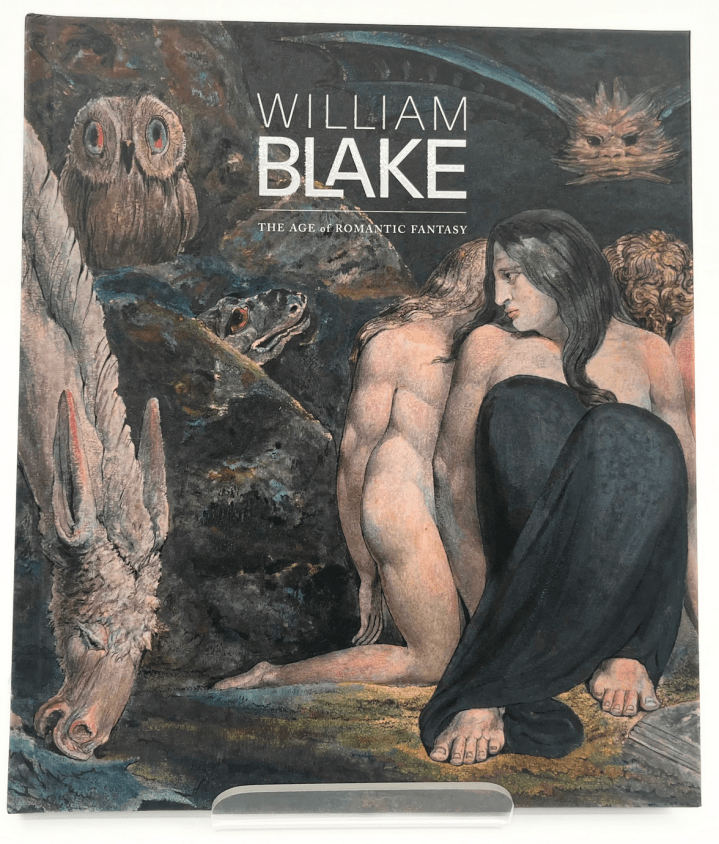
Alice Insley, Anne Hodge, and Christina Morin, William Blake: The Age of Romantic Fantasy (Dublin: The National Gallery of Ireland, 2026), 144 pages, ISBN: 978-1911716129, €40.










leave a comment