Exhibition Catalogue | Dare to Know
Now available for purchase, the catalogue for the exhibition is one of The New York Times’ ‘best art books of 2022’. Congratulations to everyone involved! The show is on view until 15 January 2023.
Edouard Kopp, Elizabeth Rudy, and Kristel Smentek, eds., Dare to Know: Prints and Drawings in the Age of Enlightenment (Cambridge: Harvard Art Museums, 2022), 334 pages, ISBN: 978-0300266726, $50.
 Are volcanoes punishment from God? What do a fly and a mulberry have in common? What utopias await in unexplored corners of the earth and beyond? During the Enlightenment, questions like these were brought to life through an astonishing array of prints and drawings, helping shape public opinion and stir political change. Dare to Know overturns common assumptions about the age, using the era’s proliferation of works on paper to tell a more nuanced story. Echoing the structure and sweep of Diderot’s Encyclopédie, the book contains 26 thematic essays, organized A to Z, providing an unprecedented perspective on more than 50 artists, including Henry Fuseli, Jean-Honoré Fragonard, Francisco Goya, Jean-Baptiste Greuze, William Hogarth, Giovanni Battista Piranesi, and Giambattista Tiepolo. With a multidisciplinary approach, the book probes developments in the natural sciences, technology, economics, and more—all through the lens of the graphic arts.
Edouard Kopp is the John R. Eckel, Jr., Foundation Chief Curator at the Menil Drawing Institute in Houston; Elizabeth M. Rudy is the Carl A. Weyerhaeuser Curator of Prints at the Harvard Art Museums, Cambridge, MA; and Kristel Smentek is associate professor of art history in the Department of Architecture at the Massachusetts Institute of Technology, Cambridge, MA.
With contributions by J. Cabelle Ahn, Elizabeth Saari Browne, Rachel Burke, Alvin L. Clark, Jr., Anne Driesse, Paul Friedland, Thea Goldring, Margaret Morgan Grasselli, Ashley Hannebrink, Joachim Homann, Kéla Jackson, Penley Knipe, Edouard Kopp, Ewa Lajer-Burcharth, Heather Linton, Austėja Mackelaitė, Tamar Mayer, Elizabeth Mitchell, Elizabeth M. Rudy, Brandon O. Scott, Kristel Smentek, Phoebe Springstubb, Gabriella Szalay, and Christina Taylor.
Exhibition | Women on Paper
From the press release for the exhibition:
Women on Paper
Rijksmuseum, Amsterdam, 3 December 2022 — 5 June 2023
The Rijksmuseum presents Women on Paper, an exhibition about women who have made their mark on art history. Work by a selection of women artists from the Rijksmuseum collection has been brought together in five rooms in different parts of the museum. Included are drawings, prints, and photographs by Gesina ter Borch, Berthe Morisot, Käthe Kollwitz, and Julia Margaret Cameron, as well as recent acquisitions by Cornelia de Rijck and Thérèse Schwartze. Women on Paper is the result of a long-term study to take stock of work by women artists in the Rijksmuseum collection and create a more balanced representation in the collection and exhibition.

Cornelia de Rijck, Butterflies: A Small Tortoiseshell, a Dryas Lulia, a Heliconius Sara, a Large Tortoiseshell, a Heliconius Melpomene, a Comma, and Others, ca. 1700, watercolor and bodycolor, watermark posthorn within a shield surmounted by a crown, 28 × 20 cm (Amsterdam: Rijksmuseum, purchased with the support of I.Q van Regteren Altena Fonds/Rijksmuseum Fonds). The work sold at Christie’s in New York on 28 January 2021 (online sale #19290, lot 71) for $30,000, ten times its high estimate.
Women were commonly educated within the family, and as with other professions, the production and publishing of prints was often a family business. Printmakers Diana Mantuana and Barbara van den Broeck developed into independent and enterprising engravers, and the 15th- and 16th-century print cabinet is dedicated to their work. The display in the 17th-century cabinets centres on the work of Magdalena de Passe and Gesina ter Borch. De Passe, like her three brothers, was trained as an engraver, and her work was highly regarded. Ter Borch came from an artistic family and devoted her life to art. On display are watercolours characterised by originality, humour, and beauty, alongside highly personal poems, writing, and drawings by Ter Borch and her family. The display in the 18th-century print cabinet focuses on flora and fauna, with watercolours by artists including Dorothea Maria Graff and Alida Withoos, whose precise and colourful work was an important contribution to the developing natural sciences. Their travels took them to a wide range of destinations, as far afield as Suriname.
The final print room focuses on the 19th century, with work by artists including Thérèse Schwartze, Lizzy Ansingh, Julia Margaret Cameron, and Eva Watson-Schütze. In the early 19th century, an exhibition circuit arose for drawings and pastels, through which many women artists achieved recognition and commercial success. The advent of photography brought another art form that was embraced by women for its many artistic possibilities.
Women on Paper and the research project have been made possible in part by the Women of the Rijksmuseum Fund. The exhibition in the print cabinets is on display from 3 December 2022 to 5 June 2023.
Exhibition | The Secret of Colours: Ceramics in China and Europe
Now on view at the Baur Foundation, Museum of Far Eastern Art:
The Secret of Colours: Ceramics in China and Europe from the 18th Century to the Present
Le secret des couleurs: Céramiques de Chine et d’Europe du XVIIIe siècle à nos jours
Fondation Baur, Musée des arts d’Extrême-Orient, Geneva, 14 September 2022 — 12 February 2023
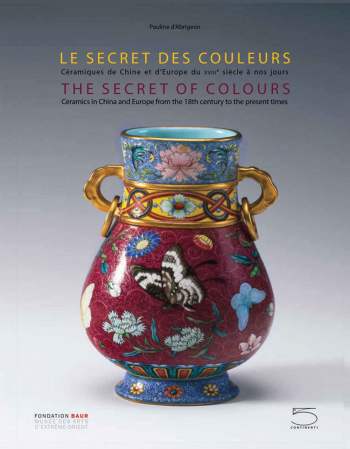 This exhibition tells the often turbulent story of the quest for colour on porcelain in China and France. It contrasts two crucial moments in the history of porcelain driven by the desire to extend the range of enamels. They occurred at the turn of the 18th century in China and during the 19th century in France, two periods during which the interactions between Europe and China, whether cultural or belligerent, were particularly intense.
The first room in the exhibition introduces visitors to enamelling techniques, the notions of translucent and opaque enamels, and to the famille verte and famille rose. This is followed by a presentation of Chinese enamelled porcelain, principally from the reigns of Kangxi (1662–1722), Yongzheng (1723–35), and Qianlong (1736–95), which are among the jewels of Alfred Baur’s collection and which exemplify the use of colour on porcelain over a period of more than a century. The new palette developed in the imperial workshops was soon exported from the port of Canton on porcelain and copper-enamel wares on that had been specially designed for the Western market.
The second section of the exhibition takes place a century later in France, at the Sèvres manufactory, where Chinese colors, long coveted for their brilliance, were keenly researched. Missionaries, chemists, and French consuls in China all contributed to bringing back samples to France where the mysteries of Chinese manufacturing techniques could be fathomed.
The last part of the exhibition introduces more contemporary research on the use of color, first of all by Fance Franck (1927–2008), who from the late 1960s worked with the Sèvres factory to recreate the famous ‘fresh red’ (‘rouge frais‘) or ‘sacrificial red’ (‘rouge sacrificiel‘) that had been mastered by the potters in Jingdezhen several centuries earlier. The exhibition’s investigation into this endless chromatic quest is brought to a close by the pure and gleamingly colourful works of Thomas Bohle (b. 1958).
Pauline d’Abrigeon, Le secret des couleurs: Céramiques de Chine et d’Europe du XVIIIe siècle à nos jours (Milan: 5 Continents Editions, 2022), 170 pages, ISBN: 979-1254600054, €45. Bilingual edition (French and English).
Cover image: Vase with handles, porcelain and polychrome enamels on glaze, China, Jingdezhen, Qing Dynasty, mark and reign of Qianlong (1736–1795) (Geneva: Fondation Baur).
Exhibition | François Boucher, du théâtre à l’Opéra
Now on view at the Musée des Beaux-Arts in Tours:
L’amour en scène! François Boucher, du théâtre à l’Opéra
Musée des Beaux-Arts, Tours, 5 November 2022 — 30 January 2023
Curated by Jessica Degain and Guillaume Kazerouni

François Boucher, Sylvie Cures Philis of a Bee Sting, 1755, oil on canvas, 103 × 138 cm (Paris: Banque de France).
Le musée des Beaux-arts de Tours propose de mettre en lumière un pan méconnu de la carrière de François Boucher (1703–1770), peintre majeur du 18ᵉ siècle au service de Louis XV et de Madame de Pompadour : sa passion pour le théâtre et l’opéra. Actif à l’Opéra de Paris, à l’Opéra-Comique et au théâtre des Petits Cabinets à Versailles, François Boucher oeuvre tout au long de sa vie à près d’une centaine de spectacles. Qu’il conçoive ou supervise les décors et les costumes de scène, aucun autre peintre de son temps ne fut autant investi dans le monde théâtral.
Point de départ de l’exposition et restaurés à cette occasion, les quatre tableaux du musée de Tours, chefs-d’oeuvre de l’art rocaille, témoignent de l’engouement de l’artiste pour les arts de la scène. Aux côtés de l’esquisse d’Apollon couronnant les arts, réputée être un projet de rideau de scène pour l’Opéra, les trois peintures d’Apollon et Issé et de Sylvie et Aminte mettent à l’honneur les opéras baroques d’Issé et de Silvie. Apollon révélant sa divinité à la bergère Issé est en effet peint par Boucher en 1750 pour la marquise de Pompadour, en souvenir de ses représentations théâtrales à Versailles dans le rôle d’Issé. De même, les tableaux de Sylvie fuyant le loup et Aminte revenant à la vie dans les bras de Sylvie rappellent son apparition théâtrale dans le rôle de la nymphe. Conçus à l’origine pour former un ensemble de quatre tableaux, la série de l’histoire de Sylvie et Aminte sera réunie pour la première fois depuis le 18ᵉ siècle, grâce aux prêts exceptionnels de la Banque nationale de France (qui conserve aujourd’hui Sylvie guérit Philis de la piqûre d’une abeille et Sylvie délivrée par Aminte). OEuvres de maturité, ces tableaux constituent un magnifique témoignage du talent de François Boucher à dépeindre des univers bucoliques, merveilleux et théâtraux.
 Complétés par une soixantaine d’oeuvres, en particulier de la Bibliothèque nationale de France et du Musée du Louvre, l’exposition permettra par ailleurs d’illustrer d’autres contributions de Boucher aux arts de la scène. De ses gravures de jeunesse pour illustrer les OEuvres de Molière, dont on célèbre cette année le quatre centième anniversaire de la naissance, aux décors et costumes conçus pour divers opéras tels Armide ou Aline, reine de Golconde, les oeuvres rassemblées éclairent la vitalité de sa création.
Déployés autour des tableaux du musée, estampes, tapisseries et objets d’art décoratifs s’accompagneront d’oeuvres d’art moderne et contemporain, de Berthe Morisot à Cindy Sherman. La contribution du créateur de mode Sami Nouri révélera enfin comment Boucher et le rococo continuent à inspirer les artistes du 21e siècle.
L’exposition est à découvrir du 5 novembre 2022 au 30 janvier 2023, grâce aux prêts prestigieux de nombreuses institutions : Bibliothèque national de France / Musée du Louvre / Musée national des Châteaux de Versailles et de Trianon / Moulins, Centre national du costume de scène / Narbonne, musée d’art et d’histoire / Paris, Mobilier national / Paris, musée Marmottan-Monet / Centre National des Arts Plastiques / Paris, Banque de France / Sèvres, Cité de la Céramique / Paris, musée des Arts décoratifs / Paris, musée Cognacq-Jay / Paris, Petit Palais / Agen, musée des Beaux-Arts.
Love on Stage! Francois Boucher, from the Theater to the Opera
Commissariat de l’exposition
• Jessica Degain, conservatrice du patrimoine chargée des collections XVIIᵉ–XIXᵉ siècles du musée des Beaux-Arts de Tours
• Guillaume Kazerouni, conservateur, chargé des collections anciennes du musée des Beaux-Arts de Rennes
Jessica Degain, L’amour en scène! François Boucher, du théâtre à l’Opéra (Paris: Éditions Snoeck, 2022), 239 pages, ISBN: 978-9461617200, €29.
Exhibition | Michaelina Wautier and ‘The Five Senses’
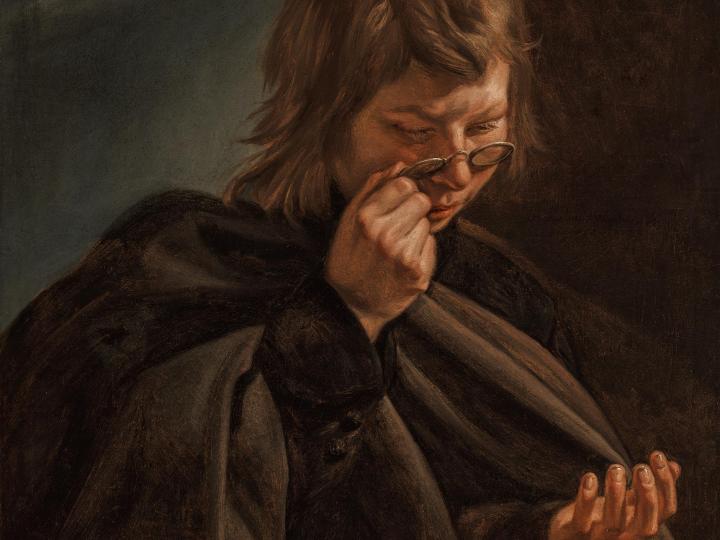
Michaelina Wautier, detail of Sight from The Fives Senses series, 1650
(Collection of Rose-Marie and Eijk van Otterloo, on loan to the MFA)
◊ ◊ ◊ ◊ ◊
Predating even the long eighteenth century, this was the first I learned of the artist (though a 2021 posting here at Enfilade did note an auction sale). –CH.
Now on view at Boston’s MFA:
Michaelina Wautier and The Five Senses: Innovation in 17th-Century Flemish Painting
Museum of Fine Arts, Boston, 12 November 2022 — 12 November 2023
Organized by Christopher Atkins and Jeffrey Muller, with six PhD students from Brown University
Centered around her rare series The Five Senses (1650), this is the first gallery space in the Americas dedicated to the art of Michaelina Wautier (1614–1689), a painter from Brussels all but forgotten until the recent rediscovery of her work. The set of five pictures was virtually unknown until it was acquired by Rose-Marie and Eijk van Otterloo and lent to the MFA in 2020. Here, it is joined by Wautier’s remarkable Self-Portrait (1645), on loan from a private collection and on public view in the US for the first time.
Wautier’s technique, process, and training are mysterious. Few records about her life exist, due in part to her gender. This exhibition, organized by the MFA’s Center for Netherlandish Art in collaboration with a professor and six doctoral students from Brown University, presents new scholarship about the artist and her unusual career as a female painter working in mid-17th-century Brussels.
The Five Senses and Self-Portrait, all of which have only been attributed to Wautier in recent years, are among fewer than 40 known works by the artist. Wautier focuses on boys—a different model in each painting—performing everyday activities in her detailed portrayals of Sight, Hearing, Smell, Taste, and Touch. Accompanying prints by her predecessors and contemporaries, including Cornelis Cort (1533–1578) and Johannes Gillisz. van Vliet (about 1610–about 1640), demonstrate Wautier’s originality, showcasing how she defied a convention at the time of depicting the senses as experienced by idealized women. In her Self-Portrait, Wautier presents herself both in a formal aristocratic setting and as a professional artist, facing an easel and holding painting tools. Together, these extraordinary pictures are exemplary of Wautier’s unique style and brushwork. The exhibition also features a print after a now lost portrait by Wautier from MFA Boston that has never been on view.
The installation is accompanied by the first volume of the digital publication series CNA Studies, edited by Professor Jeffrey Muller and with essays by the six organizing students: Yannick Etoundi, Sophie Higgerson, Emily Hirsch, Regina Noto, Mohadeseh Salari Sardari, and Dandan Xu.
This is the second in a series of collaborations between the CNA and its academic partners that draws on MFA Boston’s deep collection of Dutch and Flemish art in new and unexpected ways, bringing new perspectives and diverse voices to the forefront while showcasing cross-disciplinary scholarship. The previous installation, A Modern Art Market, was on view from November 2021 through October 2022.
◊ ◊ ◊ ◊ ◊
More information is available from this piece in The NY Times:
Milton Esterow, “For Centuries, Her Art Was Forgotten, or Credited to Men. No More,” The New York Times (2 December 2022). The work of Michaelina Wautier, a 17th-century artist, was long overlooked. She is belatedly gaining recognition as an old master, as the first US show of her work opens in Boston.
In addition to the MFA’s exhibition, the article addresses the work of Professor Katlijne Van der Stighelen (University of Leuven), who learned of Wautier’s work in 1993 and organized the 2018 exhibition Michaelina Wautier: Baroque’s Leading Lady, held at Antwerp’s Museum aan de Stroom.
Online Exhibitions | Museum of the American Revolution
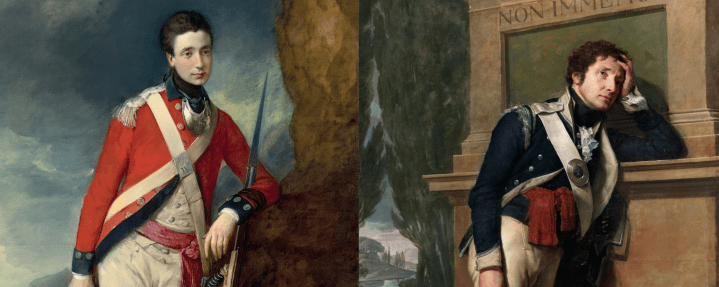
Left: Thomas Gainsborough, Portrait of Richard Mansergh St. George, detail, 1776 (Melbourne: National Gallery of Victoria). Right: Hugh Douglas Hamilton, Portrait of Richard Mansergh St. George, detail, ca. 1796 (Dublin: National Gallery of Ireland, purchased, 1992)
◊ ◊ ◊ ◊ ◊
From the Museum of the American Revolution:
Cost of Revolution: The Life and Death of an Irish Soldier
Museum of the American Revolution, Philadelphia, 28 September 2019 — 17 March 2020, online version ongoing
What can a life tell us about an era? These two portraits depict Richard Mansergh St. George, an Irish soldier who fought against two revolutions, one in America and one in Ireland. To the left is the young and confident St. George in 1776, dressed in his British Army uniform, ready to ship off to fight the American ‘rebels’. To the right is Richard Mansergh St. George grieving at his wife’s tomb two years before his tenants killed him at the beginning of the Irish Revolution of 1798.
In the 20 years separating his portraits, St. George’s life changed dramatically. He survived a severe head wound in America, mourned over the tragic death of his wife, and saw the power of kings and of gentlemen like himself violently challenged on two continents. Along the way, St. George created and commissioned artwork to deal with his trauma and make sense of his rapidly changing world. His portraits, paintings, sketches, and cartoons provide new insight into the personal cost of revolution and the entangled histories of the American Revolution of 1776 and the Irish Revolution of 1798.
1 St. George’s Ireland: A Divided Population
2 American War: Fighting for the Crown
3 Wounded Veteran: A Man Versed in Misfortune
4 Irish Revolution: Fighting for Independence in 1798

1797 New Jersey Electoral Reform Enrolled Law
(New Jersey State Archives, Department of State)
◊ ◊ ◊ ◊ ◊
From the Museum of the American Revolution:
When Women Lost the Vote: A Revolutionary Story, 1776–1807
Museum of the American Revolution, Philadelphia, 2 October 2020 — 25 April 2021, online version ongoing
Women voted in Revolutionary America, over a hundred years before the United States Constitution guaranteed that right to women nationally. The 1776 New Jersey State Constitution referred to voters as “they,” and statutes passed in 1790 and 1797 defined voters as “he or she.” This opened the electorate to free property owners, Black and white, male and female, in New Jersey. This lasted until 1807, when a new state law said only white men could vote. What can this story of changing laws about who could vote from the earliest days of American democracy teach us about what it means to vote and what it takes to preserve and expand that right? A newly discovered set of sources—lists of men and women, Black and white—who voted in New Jersey between 1798 and 1807 set off our quest to find the answers.
1 How Did Women Gain the Vote? The Promise of 1776 for Women
2 How Did the Vote Expand? New Jersey’s Revolutionary Decade
3 How Did Women Lose the Vote? The Backlash
4 How Was the Vote Regained? Redemption
Exhibition | Ignatius Sancho: A Portrait
Now on view at Gainsborough’s House:, which just reopened after a £10m refurbishment, including a new three-story building, by ZMMA:
Ignatius Sancho: A Portrait
Gainsborough’s House, Sudbury, 21 November 2022 — 26 February 2023
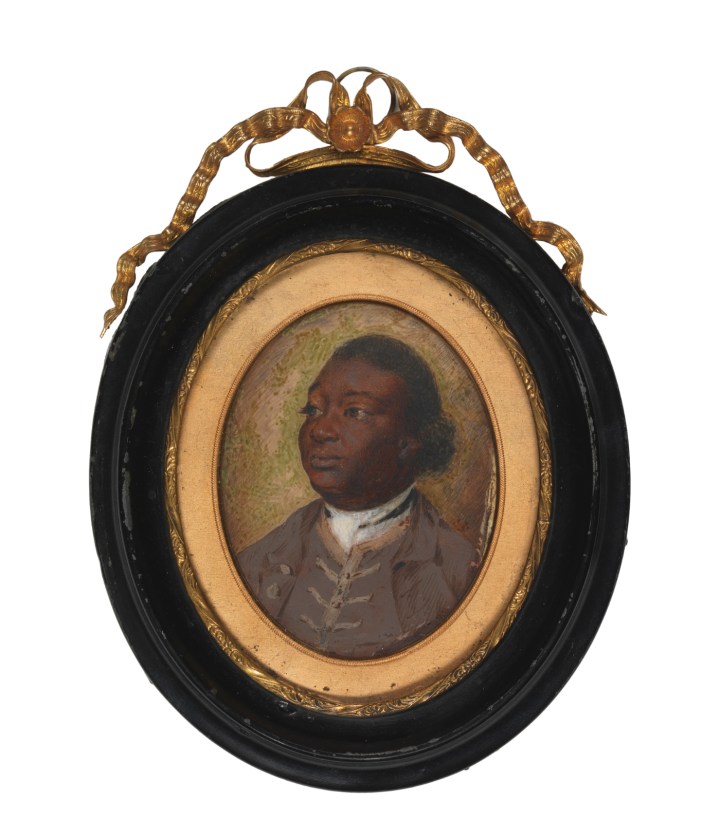
Unknown artist after Thomas Gainsborough, Portrait of Ignatius Sancho, ca. 1802–20 (Gainsborough’s House and NPG)
In 1768 Thomas Gainsborough painted the portrait of Ignatius Sancho (c. 1729–1780), who was then valet to the Duke of Montagu. The portrait of Sancho is a rare depiction of an African in eighteenth-century Europe shown not as an enslaved person, servant or caricature, but as a gentleman. After Sancho’s death, the portrait was engraved and used to illustrate a publication of his letters, which played a significant role in the abolitionist movement. On display at the centre of this exhibition is a rare copy of the portrait in miniature, which was jointly acquired by Gainsborough’s House with the National Portrait Gallery in 2019.
Sancho lived a remarkable life. Born to enslaved parents in the West Indies, he became famous for his correspondence with the author Laurence Sterne and for the grocers that he ran in Westminster. He was the first African to receive an obituary in the British press. The temporary exhibition Ignatius Sancho: A Portrait, aims to shed light on just a few of the interesting and varied aspects of Sancho’s life using his published letters as inspiration. It is supported by loans from the National Portrait Gallery and The Laurence Sterne Trust.
The exhibition has been created in partnership with the National Portrait Gallery as part of their transformational Inspiring People project that includes an extensive programme of nationwide activities, funded by The National Heritage Lottery Fund and Art Fund.
The Burlington Magazine, November 2022
The eighteenth century in the November issue of The Burlington . . .
The Burlington Magazine 164 (November 2022) — Sculpture

Massimiliano Soldani Benzi, Lamentation over the Dead Christ, 1690–92(?), gilded bronze, 57 × 40 cm (Córdoba Cathedral).
E D I T O R I A L
• The Parthenon Sculptures, p. 1063.
A R T I C L E S
• Fernando Loffredo, “Soldani’s Lamentation in Córdoba,” pp. 1118–22.
R E V I E W S
• Colin Bailey, Review of the exhibition catalogue, Renoir: Rococo Revival (Städel Museum, Frankfurt am Main, 2022), pp. 1150–53.
• Joseph Connors, Review of Livio Pestilli, Bernini and His World: Sculpture and Sculptors in Early Modern Rome (Lund Humphries, 2022), pp. 1160–62. [Pestilli “mines the correspondence of the directors of the Académie de France and sorts through student drawings in the Accademia de San Luca to find that well into the eighteenth century Bernini was copied more than any other artist” (1162).]
• Jamie Mulherron, Review of Alexandre Maral and Valérie Carpentier-Vanhaberbeke, Antoine Coysevox (1640–1720): Le sculpteur du Grand Siècle (Arthena, 2020), pp. 1165–66.
• Hugo Chapman, Review of Carel van Tuyll van Serooskerken, The Italian Drawings of the Seventeenth and Eighteenth Centuries in the Teyler Museum (Primavera Pers, 2021), pp. 1166–67.
• Christopher Martin Vogtherr, Review of Sarah Salomon, Die Kunst der Außenseiter: Ausstellungen und Künstlerkarrieren im absolutistischen Paris jenseits der Akademie (Wallstein Verlag, 2021), pp. 1167–68. [Salomon’s book focuses on four institutions: the Académie de Saint-Luc, the Colisée, the Salon de la Correspondence, and the Exposition de la Jeunesse.]
• Stephen Lloyd, Review of Magnus Olausson, Miniature Painting in the Nationalmuseum: A World-Class Collection (Nationalmuseum Stockholm, 2021), pp. 1168–70.
O B I T U A R I E S
• Michael Hall, Obituary for Mark Girouard (1931–2022), pp. 1171–72.
Exhibition | Beyond Boundaries
From the introduction of the catalogue, available online, for the show now on view at Robert Simon Fine Art:
Beyond Boundaries: Historical Art by and of People of Color
Robert Simon Fine Art, New York, 27 October — 16 December 2022
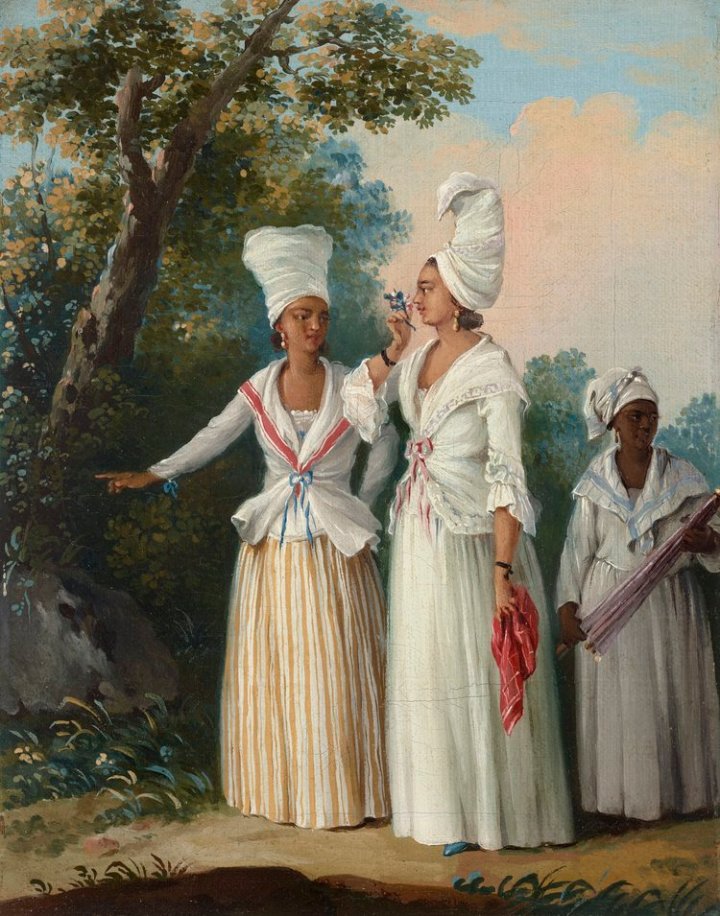 Diversity is a crucial issue in the contemporary art world today. But what of the art of the past? Beyond Boundaries brings to light an array of paintings, sculpture, and other works of art from the 17th to 19th centuries, from Europe and the Americas, that explore subjects and makers often overlooked in traditional art history. But unlike many thematic exhibitions, there is no underlying social or political philosophy. Rather we have attempted to explore diversity simply by exhibiting diverse works of art—each chosen as it in some ways illustrates an aspect of the historical past, some surprising and empowering, others uncomfortable or disturbing.
Agostino Brunias, one of six paintings in a series here identified as Free Men and Women of Dominica and an Indigienous Family of St Vincent, oil on canvas, 12 × 9 inches.
Exhibitions | Stitched in Time / The Art of the Quilter
From the press release (25 October 2022) for the new exhibitions:
Stitched in Time: American Needlework
DeWitt Wallace Decorative Arts Museum, Colonial Williamsburg, 3 December 2022 — 2 January 2025
The Art of the Quilter
Abby Aldrich Rockefeller Folk Art Museum, Colonial Williamsburg, 3 December 2022 — August 2023
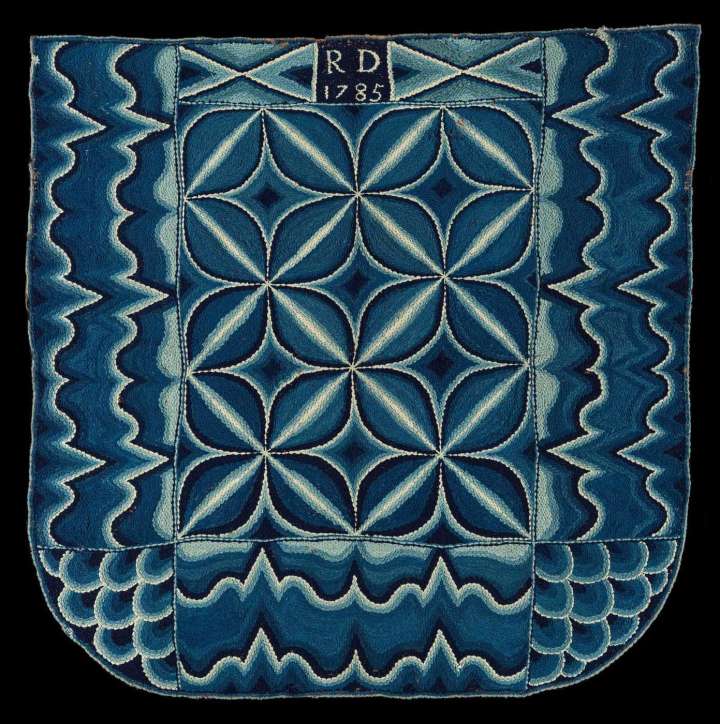
Bed Rug, Connecticut, possibly Norwich or New London, 1785 (Colonial Williamsburg, Museum Purchase, Dr. and Mrs. T. Marshall Hahn Jr. Fund, 2014.609.6).
Two new textile exhibitions opening at the Art Museums of Colonial Williamsburg on 3 December 2022 are sure to delight museum visitors. Stitched in Time: American Needlework, an exhibition of nearly 60 examples of bedrugs, whitework, embroidered hand towels, quilted petticoats, samplers, mourning and commemorative needlework, crewelwork, needlework with religious and geographical influences as well as sewing accessories, will remain on view through 2 January 2025 at the DeWitt Wallace Decorative Arts Museum. Additionally, an entirely new rotation of objects in the popular exhibition The Art of the Quilter that opened in 2021 will feature 15 pieces, 12 of which are recent acquisitions that have never before been displayed. This configuration of the exhibition, which will remain on view through August 2023 at the Abby Aldrich Rockefeller Folk Art Museum, will include eleven large quilts, one woven coverlet and three doll-size quilts that tell stories about people from America’s past and the societies in which they lived.
“For decades The Colonial Williamsburg Foundation has collected textiles from a broad and highly diverse array of ethnic, cultural, and regional communities,” said Ronald Hurst, senior vice president for education and historic resources. “These new exhibitions allow us to share these beautiful and story-laden documents of early American society with the visiting public.”
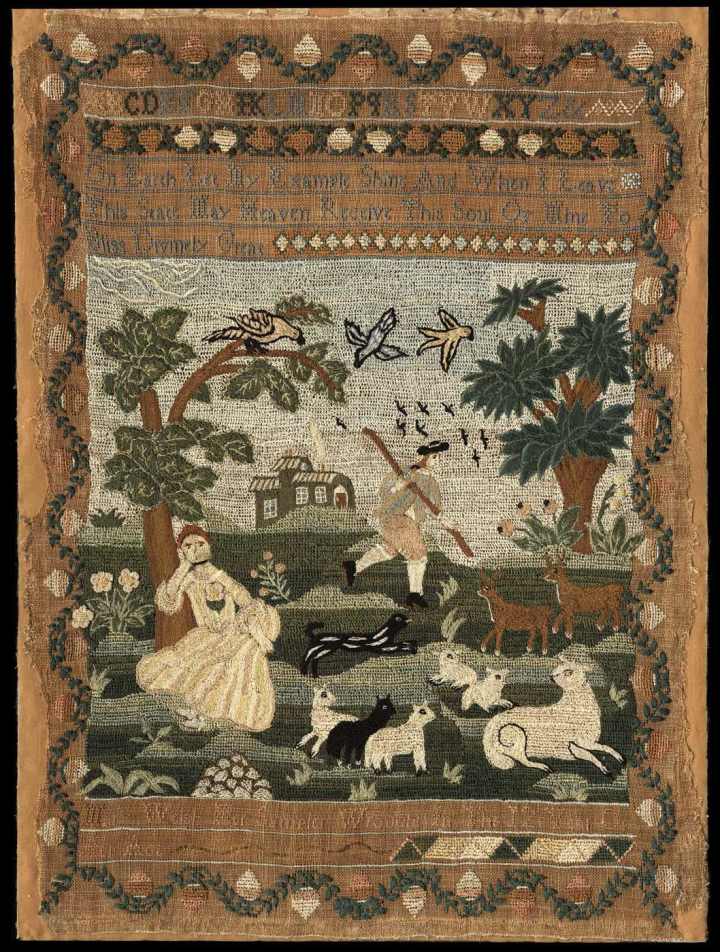
Sampler by Mary Welsh, Massachusetts, ca. 1770 (Colonial Williamsburg, Museum Purchase, 1962-309).
Needlework and sewing were common threads in the lives of most 18th- and 19th-century females across social, economic, and geographical boundaries. Early American women—whether poor, enslaved, indigenous, middle class, or wealthy—contributed to their family’s household furnishings and enriched their homes and clothing by embellishing textiles with decorative stitches. Sewing and mending everyday household textiles, such as bed and table linens and clothing, was another way for women to contribute economically to their family. Stitching needlework projects was not only a creative outlet for many housewives, but was also an educational tool for young schoolgirls. These themes are the basis for Stitched in Time: American Needlework, which will be on view in the Len and Cyndy Alaimo Gallery. The exhibition will also highlight the diversity and regional variations of American needlework that can be traced through the ethnic origins of the makers, trade and migration patterns, influential teachers and artists, current fashions, religious affiliations, geography, and even climate.
“We are excited to share The Colonial Williamsburg Foundation’s regionally and ethnically diverse needlework collection with our museum visitors,” said Kimberly Smith Ivey, senior curator of textiles. “Over 50 textiles for comparison have been selected from regions of New England, the Mid-Atlantic, the South, and the Western Frontier. Highlights of the exhibition include a schoolgirl sampler created by a young Jewish girl who inscribed her work with her hometown of Chicago. Another extraordinary embroidery was created by an Irish immigrant in Frenchtown, Michigan, at the Oblate Sisters of Providence School, which was cofounded by Mother Theresa Maxi Duchermin, a Catholic of color.”
Among the many other highlights of Stitched in Time is a rare bed rug made probably in Norwich, Connecticut, in 1785 by an unknown maker who signed the rug “RD.” The rug relates to a group of embroidered rugs created in the Connecticut River Valley. It was made by darning, or stitching, closely spaced rows of heavy wool yarn through a woolen ground, leaving most of the stitches visible on the surface. The side and bottom borders consist of abstract scalloped and peaked lines similar in appearance to Irish stitch needlework, but worked with darning stitches. This bed rug is especially attractive because of its remarkable condition.
Among the many examples of extraordinary samplers in the exhibition is one made in 1827 by Mary Rees, a student of Elizabeth Robinson (1778-1865), in Montgomery County, Pennsylvania. Robinson, an unmarried woman who lived with her five unmarried sisters in their family homestead left to them by their father, worked as a schoolmistress to help support the family. At least eight samplers or pictures have been identified from Elizabeth Robinson’s school. Mary Rees’ cross-stitched verse and her pictorial composition made of silk and wool embroidery threads on a linen ground are perfectly suited to each other. The verse implores all living things to praise their Maker, while the imagery shows some of the plants and animals requested to pay such tribute. Rees’ careful selection of thread color and the direction and type of stitching makes the scene both decorative and naturalistic. The embroidered scene bordered in black stitches to imitate a reverse painted glass mat and the title, date, and signature worked in bright threads to mimic a more expensive gold leaf inscription are characteristics found on other embroideries worked under the instruction of Elizabeth Robinson.
A highly sophisticated embroidered picture attributed by family history to Orra Sears (1798–1872) of Bloomfield, New York, is another highlight of Stitched in Time. It is believed that Orra created the picture in 1816, when she was a boarding student at the Litchfield Female Academy in Connecticut. School records indicate that Orra attended the school that year; she was one of at least 2,000 girls from nearly every state who attended the academy from 1792 through 1833 when the school operated. Students from out of town, such as Orra, boarded with Litchfield families. American educational goals of the period stressed the proficient duplication in embroidery of idealized themes that were widely recognized and approved of, rather than the development of individual creativity. Needlework compositions were taken from existing illustrations, usually English engravings or other printed images. Here, at least four different prints depicting views of Chiswick, an English country house, were used to create the scene on Orra’s embroidered and painted picture.
In its second year of a three-year exhibition, The Art of the Quilter’s latest rotation in the Foster and Muriel McCarl Gallery promises to continue delighting quilt aficionados with its new selection of quilts from The Colonial Williamsburg Foundation’s heralded collection from the early 19th century to present day. These diverse quilts allowed women to express artistic instincts while also creating a warm and practical bedcover for their loved ones. Making quilts was often a community activity, in which neighbors and relatives enjoyed the pleasures of joint work and socializing.
Ivey said of the exhibition, “We are literally covering America with this exhibition. The bed coverings display a variety of techniques, colors and materials, and demonstrate America’s multicultural society with examples from the Anglo-American, German, Amish and Mennonite communities.” . . .
The full press release is available here»










leave a comment