Summer School | Women and Temporalities in Early Modern Europe
From ArtHist.net:
A Place in Time: A Summer School for the Study of
Women and Temporalities in Early Modern Europe
Université de Lille and Palais des Beaux-Arts de Lille, 6–8 July 2026
Applications due by 30 April 2026
“I’m just a woman, loaded down with household cares; Yet I still love to read good books, though time’s so scarce I seldom can indulge in such a luxury. A man is privileged here as I can never be. […] So while I sit and read, I also scale the fish and sew and mend our clothes while writing verse like this.”
In an answer to an admirer of her work, Dutch writer Aurelia Zwartte (1682–after 1768) somewhat humorously suggested that her daily chores make her free time so scarce that she resorts to writing and mending clothes at the same time. Such explicit acknowledgement of the way gender affects one’s experience of time is not novel in the early-modern period. As books of civility rose in popularity, women’s time became increasingly codified by schedules that ruled their chores and moments of worship, and by theories and guidelines about each stage of their lives. Oftentimes, the aim was to keep them constantly busy to uphold the respectability of the household and avoid impure thoughts.
Simultaneously, alternative ways for women to spend their time were explored by male and female advocates alike in the context of a European querelle des femmes. As one of the central themes of the querelle, conversations around women’s education raised the crucial question of how women should spend their time. Education treatises and European philosophy were sites of debate over how women’s time should be divided among their chores, intellectual pursuits, and spiritual life. Widowhood was also a moment that, perhaps most of all, raised the question of how women with greater jurisdictional freedom could orient their lives and time while avoiding idleness. In short, women’s time was scarcer than men’s, as English writer Mary Astell aptly concluded: “we cannot […] suffer the least minute to escape us” (Astell 1697, p. 80).
This sense of urgency points to a differentiated experience of time depending on one’s gender and class, but also to an awareness of this gender and social gap. And while they were especially numerous in the sixteenth and seventeenth centuries, women in power were equally conscious of their limited agency over their own time, as they were often under more scrutiny or placed in precarious political positions as regents or appointed governors, acting not only as temporary agents but also as intermediaries between a masculine power and the people they governed. Maria de’ Medici suffered from this in exile, as she struggled to control her image and legacy through reminders of her ties to power, portraying herself as the regent of France, widow of a king and “mother of three crowns.” In doing so, she presented herself as the link between past and future power, emphasising her indispensable role by appropriating two symbolically powerful stages of a woman’s life, motherhood and widowhood.
Likewise, research has often underlined how crucial Habsburg women were in the family’s strategies of political alliances as well as their awareness of their role in perpetuating its power and image. In Madrid, Queen Elisabeth of France’s devotion to the Virgin echoed the rhythm of her own maternity to showcase her role in the perpetuation of the dynasty and her predecessor’s legacy.
These considerations point to the potential of research where questions of gender, time, and power intersect, especially for the early modern period. While certain frameworks offer promising insights into a plurality of temporal experiences informed by one’s social milieu, they often overlook gender as a determining factor. However, in the past few decades and with the centrality of time in queer studies, several contributions have centred the relationship between time and gender. Adaptations of these frameworks to case studies have proved particularly fruitful in demonstrating women’s references to different temporalities to assert their legitimacy and power. Such an approach could reveal alternative ways of exercising power by intervening in time on a different level—waiting, temporising, retiring, etc, which would highlight manifestations of agency even in actions or situations that modern researchers may overlook.
The goal of this summer school, organised with the support of the Institut du Genre, the FNS/Sinergia project Capturing the Present in Northwestern Europe, 1348–1648 and HARTIS (Université de Lille), partnered with the Palais des Beaux-Arts de Lille, is to help doctoral students develop an interdisciplinary reflection on the intersection between gender and time in the early-modern period. Our approach combines the results of the project AGENART: La agencia artística de las mujeres de la Casa de Austria, 1532–1700 with ongoing research within the project Capturing the Present in Northwestern Europe, 1348–1648. With the help of invited keynote speakers, workshops around secondary literature, primary written and visual sources (notably from the Palais des Beaux-Arts’s collections), and discussions around the candidates’ research, we aim to foster interest in this framework and complexify approaches to gender studies and key themes such as the question of agency or the inscription of women in history. This summer school will be structured around three main themes:
Theme 1 | Rhythmic Lives
This theme proposes a conceptualisation of time as a question of rhythm, which makes it possible to conceptualise differentiated experiences of time as defined individually and externally. How were biological rhythms conceptualised culturally? What other rhythms were imposed on women, and were they sites of negotiation? How were women’s lives divided and conceptualised, and how did women personally engage with these abstract categories? What social factors weighed in on the definition of normative rhythms? How did women negotiate their own rhythms or suspension in normative rhythms? Crucial to this theme is questioning temporalities often conceptualised as a-historical, such as ageing or pregnancy, which in turn challenges bioessentialist views of women’s lives.
Theme 2 | Thinking in the Long Term
This theme centres women’s engagement with the sometimes distant past or future, and notably questions of heritage and legacy. How did women’s strategies of self-imaging incorporate the past and the future? To what extent were they sensitive to their relationship to history, and how did that play into the way they chose to spend their time? Were they aware of the precariousness of their power or situation, and did they look for other ways to make it last or build a legacy? What conflicts did they encounter in doing so, and did they have agency over their own image? Were there attempts at writing a history or anthology of important women, and if so, on what terms? What biases do primary sources present for us when reconstituting the lives or works of early-modern women?
Theme 3 | Time and Power
This theme investigates the extent to which gender intervened in women’s power over various temporalities. Did women’s specific modes of accessing power engender different possibilities of negotiating with time? Were there cases in which gender did not matter? Were there cases of time-sensitive competition with men of similar power? Were political hierarchies reflected in differentiated experiences of time?
Activities and Outputs
• Presentation (10 minutes) followed by a 20-minute discussion for each participant
• On-site discussions around objects in the Palais des Beaux-Arts de Lille, notably in the graphic arts and numismatic collections, with a presentation of the collections by each curator
• Keynote presentations, notably by Dr Catherine Powell-Warren
• Reading workshop and methodological discussion
• Publication of each participant’s bio and written presentation on the Capturing the Present in Northwestern Europe, 1348–1648 project website.
Funding: lunch, coffee breaks, and dinners are covered by the organisers for all participants. We encourage participants who are not based in Lille to ask their institutions to cover transportation and accommodation.
This summer school is open to both doctoral students and master’s students who wish to pursue a PhD, specialising in the human sciences and the early modern period, with no requirements in terms of nationality or institution. Both English and French will be spoken.
Applications, in English or French, should be sent before 30 April 2026 to both Agathe Bonnin (bonninagathe@gmail.com) and Léon Rochard (leon.rochard@univ-lille.fr), with the following, in PDF format:
• CV (maximum three pages)
• A description of the current research project, thesis, or dissertation (max. 3 500 characters) with an indication of the potential interest of this summer school to the project
• An abstract for a presentation connected to one or several of the three proposed themes (max. 3 500 characters). It can be a case study, a methodological interrogation, a paper project…
The selection committee will inform the candidates of their decision in early May 2026.
AHRC Studentship | Sarah Sophia Banks (1744–1818)
From UCL:
Rediscovering a Woman Collector at the British Library:
New Sources and Perspectives on Sarah Sophia Banks
Supervised by Lucy Brownson, Elizabeth Shepherd, Felicity Myrone, Maddy Smith, and Alice Marples
Applications due by 14 April 2026
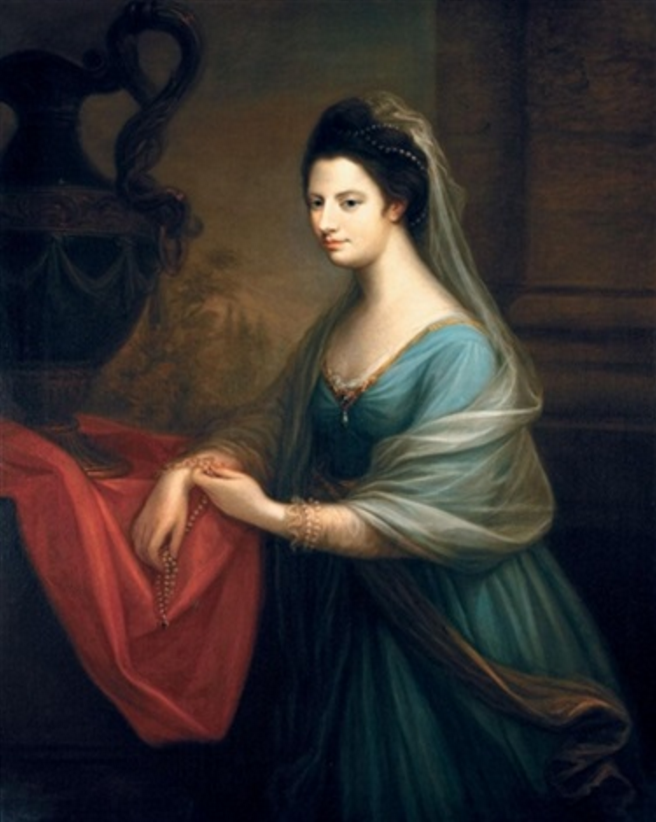
Angelica Kauffman, Portrait of Sarah Sophia Banks, oil on canvas, 49 × 40 inches.
It is intended that interviews will take place in person on Thursday 30 April 2026 at the British Library or UCL, but we will also offer online interviews for those unable to attend in person.
University College London (UCL) and the British Library are pleased to announce the availability of a fully funded Collaborative Doctoral Studentship from 1 October 2026 under the AHRC Collaborative Doctoral Partnership Scheme. This research will examine the collecting, knowledge production, and documentary practices of Sarah Sophia Banks (1744-1818), one of the most important antiquarian collectors of her time. It will interrogate Banks’s holdings at the British Library and elsewhere from a critical archival perspective, exploring these dispersed collections—and the taxonomies she devised for them—as maps of the social, intellectual, and imperial networks she inhabited.
This project will be jointly supervised by Dr Lucy Brownson and Prof Elizabeth Shepherd at UCL Department of Information Studies (UCL:DIS), and Felicity Myrone, Maddy Smith and Dr Alice Marples at the British Library. The student will spend time with both UCL:DIS and the British Library and will become part of the wider cohort of AHRC CDP funded PhD students across the UK.
UCL and the British Library are keen to encourage applications from a diverse range of people, from different backgrounds and career stages, and particularly welcome those currently underrepresented in doctoral student cohorts.
The Research Project
Extensive materials collected by the antiquarian collector Sarah Sophia Banks (1744–1818) were divided at her death and are held across the British Library, Royal Mint, and Prints & Drawings and Coins & Medals departments at the British Museum. Varying institutional interests and practicalities have impacted their visibility, and the focus of scholarship to date has been on the holdings at the Museum and her prints and ephemera in nine albums in the Library (L.R.301.h.3-11). This studentship will explore the significant holdings that are yet to be explored at the British Library, revealing Banks’s own cross-format interdisciplinary knowledge taxonomy in detail for the first time.
Banks wrote catalogues of her own collections and kept notes regarding provenance, many of which have been overlooked to date. This project will use these sources to rediscover the full extent and original arrangement, purpose and source of Banks’s prints, drawings, ephemera, books and manuscripts, focusing on those at the British Library. The student will explore Banks’s networks of knowledge, methods of collecting, network of contacts, and her strategies and systems for categorising her visual and textual materials. The project asks larger questions around the role of women collectors, knowledge practices, collecting history and scholarship, the emergence of (male) expertise, disciplinary norms and museological frameworks in the 18th and 19th centuries, and the relative status of visual and textual knowledge. While her brother Joseph Banks’s collections as a whole and Sarah Sophia Banks’s collections beyond the Library have had sustained academic attention, her holdings at the Library remain largely underexplored. This project matches the recent full cataloguing of her collections at the Royal Mint and British Museum, facilitating cross-institutional research, and impacting practically upon reader access to and understanding of these materials and their provenance.
This project calls for an interdisciplinary approach encompassing critical archival studies, museum studies, and feminist historiography to interrogate the research questions outlined below. The successful candidate will be embedded as an archivist and researcher—or, to paraphrase Lynée Lewis Gaillet (2012), archivist-as-researcher—working to catalogue and research Banks’s holdings at the Library. This research-by-doing will enable the student to familiarise themselves with the collection and identify foci for this study, by selecting specific areas of Banks’s collections and reading them as local windows onto global histories of British colonial expansion (Evans, 2021). The student will be encouraged to explore creative ways of tracing and mapping Banks’s dispersed holdings across institutions, their multiple and parallel provenances, and what they can reveal about the social and political worlds through which Banks and her contemporaries moved. Case studies will contextualise and deepen analysis of Banks’s gendered collecting and will bring insights into the longer histories of the curatorial and archival practices that shape dominant paradigms of knowledge organisation today. Ultimately, the student will be encouraged and empowered to devise their own methodological framing and draw out original insights on how Banks and her collections intersect with gender, class, and empire.
Possible Research Questions
• How and when did Sarah Sophia Banks acquire her collections? What do her annotations reveal about her network and collecting practices in the 18th century? How do these names connect with the Banks collections beyond the Library?
• What do Banks’s collections reveal about the imperial, social, cultural and gendered dimensions of her life and the worlds through which she moved?
• What knowledge systems and material ordering practices did she employ? How did she order and construct her unique assemblages? What does this tell us about gendered ways of structuring collections?
• How did her collecting constitute a form of ‘worldmaking’, particularly given her and her family’s social and global networks and perspectives?
• What is the evidence for Banks’s knowledge of other collections (in Britain or abroad)? How did this impact on her own practices?
• How did the nascent professionalism of male collecting and museology in her lifetime affect her collecting?
• Is she quoting from her own (or her brother’s) copies of works in her notes and cross-references? Can we reconstruct her library as a whole? How much survives?
• Can we reconstruct how the collection was physically placed at home, and what does this reveal about its history, value, visibility and use? How might dispersed and mixed-media collections be represented and made visible intra-institutionally?
• What might a history of Banks’s collections reveal about the broader ontologies and taxonomies of knowledge that shape many of our cultural institutions today?
Benefits and Opportunities
The successful candidate will be registered with the Department of Information Studies in the Faculty of Arts and Humanities at UCL. UCL is London’s leading multidisciplinary university, ranked 9th in the 2026 QS World University Rankings and rated 2nd in the UK for research power in the Research Excellence Framework 2021. UCL:DIS is an international centre for research and teaching in the fields of archival studies, librarianship, publishing and digital humanities and is host to the Centre for Critical Archives and Records Management Studies (CCARM). The Department, the Faculty of Arts and Humanities and the UCL Doctoral School all offer complementary programmes for research training and personal development for doctoral students. All doctoral students in UCL:DIS are enrolled on compulsory research methods and training classes in their first year to support their research plan development, writing skills, research ethics and appropriate research methods. These classes and other departmental activities support the research student cohort and individual research development.
At the British Library, the student will become part of a vibrant cohort of collaborative doctoral researchers and benefit from staff-level access to the Library’s collections, resources and in-house training and development opportunities. CDP students also benefit from a dedicated programme of CDP Consortium events delivered in tandem with the other museums, galleries and heritage organisations affiliated with the AHRC CDP scheme, designed to provide CDP researchers with the knowledge, networks and skills to thrive in their future careers.
This collaborative PhD studentship offers the opportunity to combine academic training with practice-based experience and research behind the scenes of a major cultural institution. The project offers a combination of sustained and systematic analysis of a dispersed collection with visual analysis, giving the student a broad knowledge of print history and artists, as well as a wider understanding of recordkeeping practices and systems such as scrapbooking, extra-illustration and commonplace books.
Given staff-level access to relevant holdings, the student will receive training in and gain hands on experience of handling, identifying, researching and cataloguing books, manuscripts, archives, and prints. They will catalogue using specially designed spreadsheets to create records which will then be ingested to the British Library’s main and archives and manuscripts catalogues. We will encourage the student to engage in supervised social media activity reflecting their discoveries. In contributing to blog posts, they will receive support and feedback regarding the use of social media tools and the development of writing skills, in accordance with Library guidelines and practice. They will also be encouraged to work with and potentially shadow colleagues in Conservation, Metadata, Digitisation, Western Heritage and Culture and Learning at the Library, gaining broad understanding of the history of the collections, and how they are being made more accessible through research, cataloguing, digitisation and display projects.
Details of Award
The PhD studentship can be undertaken on a full-time or part-time basis from 1 October 2026.
AHRC CDP doctoral training grants fund studentships for 4 years full-time or part-time equivalent (up to 7 years). AHRC CDP doctoral training grants also make provision of funding for student development activities to help the student extend their wider skills portfolio and improve their career prospects.
The award pays tuition fees up to the value of the full-time home UKRI rate for PhD degrees and UCL has agreed to waive the difference between the UK and overseas fees rate. International candidates will be required to reside in the UK until completion of the PhD. The indicative fee level for Research Council studentships for 2026/27 is £5,151. The award also pays full maintenance for all students, both home and international students. This stipend is tax free, increases slightly each year, and is the equivalent of an annual salary, enabling the student to pay living costs. The indicative UKRI Minimum Doctoral Stipend for 2026/27 is £21,383. An additional London Weighting allowance of £2000/year will be applied for this studentship. In addition, the successful candidate will receive a CDP maintenance payment of £600/year. Further details on UKRI funding for doctoral training can be found on the UKRI website.
In addition, the successful student will be eligible for an additional research allowance courtesy of the British Library, up to £1,000 per financial year or part-time equivalent, for the duration of the project.
Additional information is available here»
Burlington Magazine Scholarship | French 18th-Century Art
The application period closes next Tuesday, from The Burlington:
The Burlington Magazine Scholarship | French 18th-Century Fine and Decorative Art
Applications due by 31 March 2026
 The Burlington Magazine is pleased to announce its ninth annual scholarship to provide funding over a 12-month period to those engaged in the study of French 18th-century fine and decorative art, enabling them to develop new ideas and research that will contribute to this field of art historical study.
Eligibility
Applicants must be studying, or intending to study, for an MA, PhD, post-doctoral or independent research in the field of French 18th-century fine and decorative arts within the 12-month period the funding is given (i.e. September 2026 – August 2027). The funding is open to UK and international applicants.
Research funded by this scholarship may lead to the submission of articles for publication in the Magazine: as such, the panel are looking for object related research, of the kind that the Burlington publishes.
Support and Duration
£12,000 is awarded to one recipient per year and applies to a 12-month period. Payments are made in Pound Sterling. Payments of £3,000 are normally made on a quarterly basis, with the first payment being disbursed within one month of the recipient being formally notified that they have been awarded the scholarship. Some flexibility in the payment schedule can be made, with prior approval, depending on the recipient’s circumstances. Before payment can be made, the recipient must have formally accepted the grant. Any unspent funds at the end of the grant period must be returned to The Burlington.
Eligible costs
• Travel and subsistence costs
• Book costs related to the research
• Image costs related to the research
• Facility/museum/archive access costs or related fees, such as photocopying
Cost NOT allowed
• Travel or registration costs for conference/meeting/workshop/training attendance, collaborative visits, or any training.
• Computer costs, unless it is a dedicated cost that is essential to the proposal and the importance has been clearly justified within the application.
• Any staff costs, whether personal payments (including salary) to the applicant or to other individuals including overseas collaborators, postgraduate, doctoral students and for other members of staff.
• Membership costs to any association(s)/organisation(s)
• General journal subscription costs
Key Dates
The start date of successful applications should be at the beginning of the academic year (generally September). Earlier start dates will be considered for independent scholars or post-doctoral research. The closing date is Tuesday, 31 March 2026. The successful applicant will be notified by 29 May 2026.
Application Procedure
Applicants must provide
• CV
• Description of project/research (no longer than 2 pages of A4)
• Budget
• Proof of Institution you are attending/will attend – if applicable
Applications can only be submitted via email. All application documents must be submitted in PDF or Word document (.docx) format and emailed to scholarship@burlington.org.uk. Shortlisted candidates will be contacted and asked to provide two references for further review by the Selection Panel. All correspondence should be conducted in English.
Monitoring the Award
Grant recipient(s) will provide two reports:
• The first, to be submitted six (6) months after receiving notification of the grant, is an interim written report to the panel on the status and progress of their research. It should be no less than 2-pages of A4 paper, in English.
• The second is a final report to submitted no later than two months after the grant comes to an end. The written report will consist of no less than 2-pages of A4 paper, in English, summarising the results of the research, as well as the spending allocation of the funds received. The recipient will also provide a copy of the thesis or independent research document or publication when it is completed.
Award Acknowledgement and Logo
We ask all award-holders to acknowledge our support in any publicity, conference or workshop talks, promotional material or publications associated with the research funded by The Burlington Magazine. Logos can be provided upon request.
Enquiries
If you have any enquiries about the submission of your application, please contact us at scholarship@burlington.org.uk.
Previous Recipients
2025 Ane Cornelia Pade (University of Cambridge)
2024 Pierre Marty (University of Toronto)
2023 Geoffrey Ripert (Bard Graduate Center)
2022 Alexander Dencher (Leiden University)
2021 Raha Shahidi (University of Sydney)
2020 Axel Moulinier (École du Louvre / University of Bourgogne)
2019 Aurora Laurenti (University of Turin)
2018 Konrad Niemira (University of Warsaw)
Call for Applications | Painted Wall Preservation Scholarship
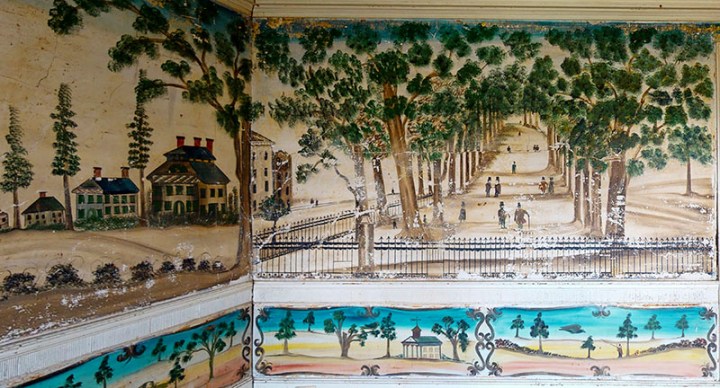 Interior of the Hersey-Whitten House, which was constructed in the late-18th or early-19th century in the village of Center Tuftonboro, New Hampshire. Originally built for the Copp family, it was once a dance hall and inn. Learn more from The Center for Painted Wall Preservation»
◊ ◊ ◊ ◊ ◊
From the scholarship announcement:
The Center for Painted Wall Preservation Scholarship
Applications due by 30 April 2026
The Center for Painted Wall Preservation (pwpcenter.org) invites undergraduate and graduate students, independent scholars, and artisans, whether established or in training, to apply for this scholarship, which aims to develop educational projects that further our mission through documentation, conservation, and preservation—where art, history, craft, and science meet.
This year’s scholarship of $2000 will be awarded to the individual whose proposal for an educational, scholarly project is deemed best designed to further the stated mission of our organization—to further the study, understanding, and appreciation of paint-decorated plaster walls and associated interior colorized items of the 18th and early 19th centuries in New England and New York, and to educate the public about this unique and vulnerable cultural heritage. Interested parties may apply for an Application Process Summary and Application Form by contacting info@pwpcenter.org with ‘Scholarship Fund’ in the subject line. Applications will be accepted from 1 January until midnight, 30 April 2026.
The Center for Painted Wall Preservation is a nationally recognized 501(c)(3) Nonprofit Organization.
Funding | Burlington Bursaries for Researching Drawings
From ArtHist.net:
The Burlington Magazine’s Travel Bursaries for Researching European Drawings
Applications due by 1 February 2026
We are delighted to announce a new initiative: The Burlington Magazine Travel Bursaries, generously funded by the Rick Mather David Scrase Foundation. These bursaries are designed to support emerging art historians undertaking research on old master drawings. The awards will fund travel to major collections worldwide to study works of Western art on paper from the Renaissance to 1900.
Typical awards will range from £2,000 to 2,500 for travel within Europe and £3,000–3,500 for intercontinental travel. Applications are welcomed from postgraduate and curatorial researchers worldwide. The deadline for applications is Sunday, 1 February 2026. Further details and application guidelines can be found at The Burlington website.
Fellowships | The Reception of Antique Works of Art and Architecture
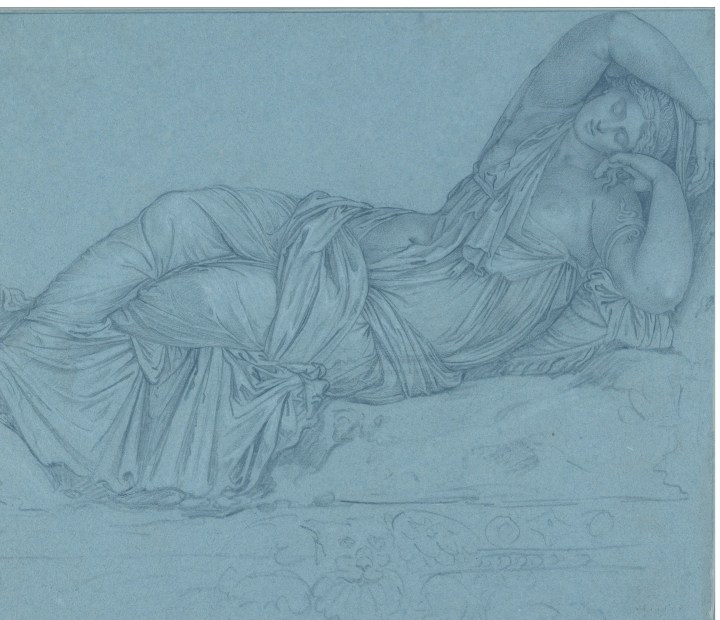
Hendrick Goltzius, Cleopatra/Ariadne, 1590–91, black and white chalk with pencil on blue paper, 25 × 30 cm
(Haarlem: Teylers Museum, purchased from the Odescalchi heirs in Rome, 1790, N061; CensusID 47461)
◊ ◊ ◊ ◊ ◊
From ArtHist.net:
Census Fellowship in the Reception of Antiquity, 1350–1900
Humboldt-Universität (Berlin), Bibliotheca Hertziana (Rome), Warburg Institute (London), March–December 2026
Applications due by 31 January 2026
The Institut für Kunst- und Bildgeschichte, Humboldt-Universität zu Berlin, the Bibliotheca Hertziana – Max Planck Institute for Art History, and the Warburg Institute, School of Advanced Study, University of London, are pleased to announce a fellowship in Berlin, Rome, and London, offered at either the predoctoral or postdoctoral level. These fellowships grow out of the longstanding collaboration between the Humboldt, the Hertziana, and the Warburg in the research project Census of Antique Works of Art and Architecture Known in the Renaissance.
The fellowships extend the traditional chronological boundaries of the Census and are dedicated to research and intellectual exchange on topics related to the reception of antiquity in the visual arts from approximately 1350 to 1900. In the context of the fellowships, the topic of the reception of antiquity is also broadly conceived without geographical restriction. Proposals can optionally include a digital humanities perspective, engage with the database of the Census, or make use of the research materials of the Census project available in Berlin, Rome, and London.
The Humboldt, the Hertziana, and the Warburg sponsor a research grant of 6 months for students enrolled in a PhD program (predocs), or 4 months for candidates already in possession of a PhD (early career postdocs). Fellows can set their own schedule and choose how to divide their time evenly between at least two institutes, of which one must be the Hertziana. The stipend will be set at about 1,500 EUR per month at the predoctoral level and about 2,500 EUR per month at the postdoctoral level, plus a travel stipend of 500 EUR. The fellowship does not provide housing.
The sponsoring institutes adhere to the principles of diversity, equity, and inclusion, and therefore encourage applications from underrepresented groups. Candidates can apply via the portal available on the Hertziana website. They should upload the requested PDF documents in English, German, or Italian by 31 January 2026, with details of their proposed dates for the fellowship during the year 2026 (starting earliest March, ending latest December 2026).
Call for Papers | Graduate Symposium: Single Object Studies
From ArtHist.net:
One and Done: Single Object Studies
Art & Architectural History Graduate Symposium
University of Virginia, Charlottesville, 25–26 March 2026
Proposals due by 1 December 2025
The Art History Graduate Association (AHGA) at the University of Virginia is excited to announce our upcoming graduate research symposium titled One and Done: Single Object Studies.
Keynote Speaker
Jennifer Raab, Professor of History of Art at Yale University and author of Relics of War: The History of a Photograph (Princeton University Press, 2024)
This is a symposium about single objects. Dr. Jennifer Raab’s recent monograph, Relics of War: The History of a Photograph, examines how one photograph—carefully staged by Clara Barton through acts of collecting, naming, and labeling—transformed salvaged artifacts from a Civil War prison camp into material testimony, serving as both evidence of absence and witness to wartime suffering. Inspired by her methodological commitment to writing about a single photograph, this symposium turns to the potential of singularity.
One and Done: Single Object Studies invites graduate students across disciplines to share the intellectual, methodological, and narrative possibilities of centering a singular object of study—whether an artifact, image, monument, architectural structure, manuscript, or unique material form. In turning to the singular, this interdisciplinary symposium asks: How does a focused examination of one object–or one object type–open up expansive questions and stimulate critical discussion? What sorts of approaches can be taken when we examine an object? What roles do materiality, affect, or embodied engagement play when our research dwells with a single object over time? How do practices of display, collection, and conservation shape our understanding of singularity and its interpretation? And what are the rewards–or the risks–of asking one object to stand in for many?
We welcome submissions from graduate students at all stages whose work engages with visual, material, spatial, or object-centered inquiry across discipline, time, and geography. Paper presentations should be 20 minutes in length and will be followed by a Q&A session. Submissions should be original but may include previously published/written material that has been substantially reframed to focus on a single object.
Possible approaches include, but are not limited to:
• Object’s biography and afterlives
• Techniques of making and materials analysis
• Social, cultural, and/or ritual contexts
• Relationships between individuals and objects (makers, patrons, viewers, collectors)
• Mobility and circulation
• Spatial/Distribution analysis
• Categorization and decategorization of a particular form
Please submit a CV and a 250-word abstract along with an image of the studied object (with full caption) as a single PDF to uvagradsymposium2026@virginia.edu by 1 December 2025. Applicants will be notified by 20 December 2025. Limited funds will be available to help cover expenses associated with presenting at the symposium.
Call for Papers | Graduate Symposium: ‘Ghost Stories for Grown-Ups’
From ArtHist.net:
‘Ghost Stories for Grown-Ups’: Hauntings, Afterlives, and Reawakenings
Washington University in St. Louis, 13–14 February 2026
Proposals due by 8 December 2025
The Department of Art History and Archaeology at Washington University in St. Louis is seeking papers for its 2026 Graduate Student Art History Symposium (GSAHS). The theme of the symposium is ‘Ghost Stories for Grown-Ups’: Hauntings, Afterlives, and Reawakenings, and the event will be held in-person on our campus in St. Louis 13–14 February 2026.
While working on the Mnemosyne Atlas (1925–29), Aby Warburg characterized his art historical practice as a “ghost story for grown-ups.” As scholars, we are often all too familiar with recurring images, motifs, and ideas that persist in the canon or emerge from the archive as if of their own volition. Similarly, many communities have their own traditions and tales of spirits or spectral encounters that linger in visual culture. Many studies across the humanities have attended to the culture of the afterlife, both literally and figuratively. In his book Specters of Marx (1993), Jacques Derrida introduced the theoretical framework of “hauntology” to consider elements of the social and cultural past that endure and reappear in a manner of ghostliness. Furthermore, sociologist Avery Gordon contends that such hauntings are an index of “dispossession, exploitation, and repression” that reemerge in order to demand being addressed. This symposium seeks to lift the veil by critically engaging with hauntings, afterlives, and ghostliness as both cultural phenomena and a conceptual model for art historical inquiry.
We invite current and recent graduate students in art history, archaeology, visual culture and related disciplines to submit abstracts for this symposium. Submissions may explore aspects of this theme as manifested in any medium, historical period, cultural, and geographical context. We welcome potential topics from any time period/geographical area that contend with ghosts, phantoms, spirits, or hauntings, including but not limited to:
• Spirit photography
• Ghosts, spirits, and demons in historical folk and religious art
• Spectral images in theatre and cabaret performances
• Paranormal and horror cinema
• The afterlives of artworks, motifs, notable figures, or ideas
• The persistence and/or reemergence of repressed peoples, beliefs, and images
• Art made in the wake of war, genocide, or tragedy
• Mausoleums, tombs, memorials, or other elements of the built environment connecting the living with the dead
• The display of human remains, sacred relics, and objects that house spirits in museums, cultural institutions, and tourist attractions
To apply, please submit a 350-word abstract and a CV in a single PDF file by Monday, 8 December 2025, to Jillian Lepek and Hannah Wier at gsahs@wustl.edu. Selected speakers will be notified by Friday, January 2. Paper presentations must not exceed 18 minutes in length and should be accompanied by a PowerPoint presentation. The symposium will be held entirely in-person at Washington University in St. Louis. Modest honoraria will be provided to student speakers to offset the cost of travel and accommodation.
Keynote Speaker: Dr. Patrick R. Crowley, Associate Curator of European art at the Cantor Arts Center, Stanford University
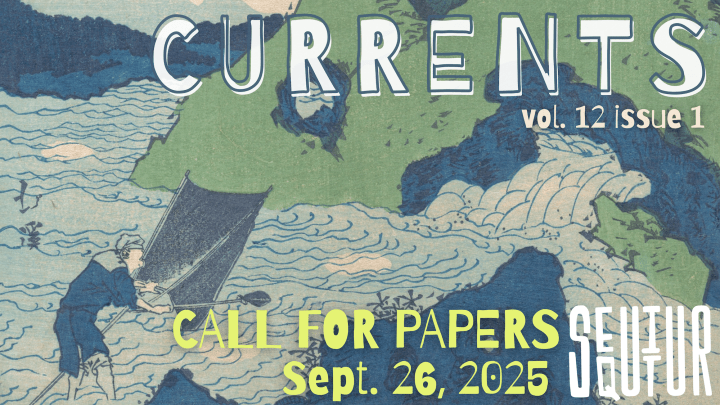
Call for Articles | Sequitur (Fall 2025): Currents
◊ ◊ ◊ ◊ ◊
From the Call for Papers:
Sequitur, Fall 2025 | Currents
Submissions due by 26 September 2025
The editors of SEQUITUR, the graduate student journal published by the Department of History of Art & Architecture at Boston University, invite current and recent MA, MFA, and PhD students to submit content on the theme of “Currents” for our Fall 2025 issue.
This issue invites submissions that consider how artistic activity and material culture make visible, help detect, and even resist the invisible forces at work in our world. When used in the scientific fields of meteorology or hydrology, currents describe the perpetual motion of air and water. In the study of the humanities, the term might connote a prevailing trend or the zeitgeist of a particular historical moment.
Furthermore, scholarship in the blue humanities frames oceanic and cultural currents as part of an assemblage, suggesting that the ocean’s liquid perpetual motion and heterogeneous material composition are more than just a backdrop for human culture. At its surface, the ocean has served as a site of imperial conquest, extractivism, and militarization, but is also a site of migration, diaspora, and resistance. Scholars Kimberley Peters and Philip Steinberg even use the concept of the ocean, and all that it intermingles with, as a “Hypersea” to describe how the ocean exceeds its liquid form, perpetual cycles, or a specific body of water by permeating and shaping physical matter, such as the atmosphere and our bodies, but especially our imaginations. Peters and Steinberg’s work provokes further consideration of what art historical scholarship might look like when informed by natural and social currents that exceed their boundaries and inscribe one another.
From 17th-century Dutch still life painters’ fascination with the products of colonial and transoceanic trade to contemporary work such as Hito Stereyl’s Liquidity Inc. (2014), which draws parallels between liquid currents and the fluidity of financial assets, identities, and borders in a digital world, artists, architects, and collectors have responded to the questions and conditions shaped by natural and social currents. This issue seeks to collect scholarship spanning antiquity to the present that grapples with such currents as complex, historical assemblages and asks where art might serve as a tool to interrogate them.
Possible subjects may include, but are not limited to:
• Currents, Movement, and Temporality: Flow; perpetual motion; flux; swell; direction; circulation; pushing and pulling; present; contemporary; prevailing; instant; prediction; ongoing; trends
• Currents and Systems: Weather patterns; transoceanic drift; mapping; hydrocommons; oceanic and atmospheric ecologies; rivers; oceans
• Currents and Culture: (Un)intended distribution (shells, marine salvage, etc.); spirituality and religion (ritual, baptism, purification, etc.); contact zones; migration; undercurrents
• Currents and Scholarship within the Oceanic Turn: transoceanic imaginaries (Elizabeth DeLoughrey); a “poetics of planetary water” (Steve Mentz); tidalectics (Kamau Brathwaite); the Undersea, and other theoretical methods (including works of Stacy Alaimo, Hester Blum, John R. Gillis, Epeli Hau’ofa, Melody Jue, Astrida Neimanis, Serpil Oppermann, or Philip Steinberg, among many others)
SEQUITUR welcomes submissions from graduate students in the disciplines of art history, architecture, archaeology, fine arts, material culture, visual culture, literary studies, queer and gender studies, disability studies, memory studies, and environmental studies, among others. We encourage submissions that take advantage of the digital format of the journal.
Founded in 2014, SEQUITUR is an online biannual scholarly journal dedicated to addressing events, issues, and ideas in art and architectural history. SEQUITUR, edited by graduate students at Boston University, engages with and expands current conversations in the field by promoting the perspectives of graduate students from around the world. It seeks to contribute to existing scholarship by focusing on valuable but often overlooked parts of art and architectural history. Previous issues of SEQUITUR can be found here.
We invite full submissions in the following categories. Please submit your material in full for consideration in the publication:
Feature essays (1,500 words)
Content should present original material that falls within the stipulated word limit (1,500 words). Please adhere to the formatting guidelines available here.
Visual and creative essays (250 words, up to 10 works)
We invite M.Arch. or M.F.A. students to showcase a selection of original work in or reproduced in a digital format. We welcome various kinds of creative projects that take advantage of the online format of the journal, such as works that include sound or video. Submissions should consist of a 250-word artist statement and up to 10 works in JPEG, HTML, or MP4 format. All image submissions must be numbered and captioned and should be of good quality and high resolution.
We invite proposals for the following categories. Please write an abstract of no more than 200 words outlining your intended project:
Exhibition reviews (500 words)
We are especially interested in exhibitions currently on display or very recently closed. We typically prioritize reviews of exhibitions in the Massachusetts and New England area.
Book or exhibition catalog reviews (500 words)
We are especially interested in reviews of recently published (1–3 years old) books and catalogs.
Interviews (750 words)
Please include documentation of the interviewee’s affirmation that they will participate in an interview with you. Plan to provide either a full written transcript or a recording of the interview (video or audio).
Research spotlights (750 words)
Short summaries of ongoing research written in a more casual format than a feature essay or formal paper. For research spotlights, we typically, but not universally, prioritize doctoral candidates who plan to use this platform to share ongoing dissertation research or work of a comparable scale.
To submit, please send the following materials to sequitur@bu.edu:
• Your proposal or submission
• A recent CV
• A brief (50-word) bio
• Your contact information in the body of the email: name, institution, program, year in program, and email address
• ‘SEQUITUR Fall 2025’ and the type of submission/proposal as the subject line
All submissions and proposals are due 26 September 2025. Please remember to adhere to the formatting guidelines available here. Text must be in the form of a Word document, and images should be sent as .jpeg files. While we welcome as many images as possible, at least one must be very high resolution and large format. All other creative media should be sent as weblinks, HTML, or MP4 files if submitting video or other multimedia work. Please note that authors are responsible for obtaining all image copyright releases before publication. Authors will be notified of the acceptance of their submission or proposal the week of 15 October 2025, for publication in January 2026. If you have any questions, please do not hesitate to contact the SEQUITUR editors at sequitur@bu.edu.
The SEQUITUR Editorial Team
Ada, Emma, Hamin, Isabella, Jenna and Megan
SAAM Fellowships in American Art
From SAAM:
Fellowships in American Art | Smithsonian American Art Museum
The Smithsonian American Art Museum and its Renwick Gallery invites applications to its premier fellowship program, the oldest and largest in American art. Scholars from any discipline whose research engages the art, craft, and visual culture of the United States are encouraged to apply, as are those who foreground new perspectives, materials, and methodologies. Fellowships are residential and support full-time research in the Smithsonian collections. SAAM is devoted to advancing excellence in art history and encourages candidates from all backgrounds to apply.
Each fellow is provided a carrel in SAAM’s Research and Scholars Center. There, they have access to the museum’s collection of over 46,500 works, specialized study collections and databases, the Smithsonian’s Archives of American Art, and an 180,000-volume branch library specializing in American art. The Research and Scholars Center is a short walk from other Smithsonian museums and libraries, the Library of Congress, the National Archives, and the National Gallery of Art. Regular workshops, seminars, and lectures provide a forum for lively scholarly exchange and professional advancement.
Candidates may apply to one or more of the following three opportunities:
• SIFP Fellowships at SAAM
SAAM hosts fellows through the Smithsonian Institution Fellowship Program (SIFP) and awards its own named fellowships to predoctoral, postdoctoral, and senior candidates from this general pool. Stipend:$10,000 for a ten-week term at the graduate student level; $45,000 for a twelve-month term at the predoctoral level; $57,000 for a twelve-month term at the postdoctoral and senior levels. Deadline: 15 October 2025.
• Betsy James Wyeth Fellowship in Native American Art
This joint fellowship at SAAM and the National Museum of the American Indian is awarded for a twelve-month term at the predoctoral level or a nine-month term at the postdoctoral or senior level. Stipend: $53,000. Deadline: 15 October 2025.
• Audrey Flack Short-Term Fellowship
One fellowship is awarded annually at the predoctoral, postdoctoral, or senior level for a one-month term. Stipend: $5,000. Deadline: 1 February 2026.
For general information about our program, visit AmericanArt.si.edu/fellowships. For further guidance on how to apply, watch our tutorial on SAAM’s YouTube channel.










 Enfilade
leave a comment