Call for Articles | Japonisme and Fashion
From the Call for Papers:
Japonisme and Fashion — Special Issue of the Journal of Japonisme, 2024
Edited by Elizabeth Emery and Mei Mei Rado
Articles due by 1 July 2023
Japanese garments and textiles have captured the European imagination since the seventeenth century, exerting particular influence on European and American fashion after the 1860s when artists such as Whistler, Tissot, and the Rossettis competed to acquire kimono from shops such as that of Emile and Louise Desoye at 220 rue de Rivoli in Paris. They promptly emulated Japanese motifs in their own artistic creations, such as Whistler’s Princesse du pays de la porcelaine (1864–65). From paintings, poetry, and music to clothing, costume design, and cosplay, artists and designers from around the world have continued to create new japoniste works inspired by Japanese fashion.
Building on recent interest on the worldwide impact of Japanese fashion (museum exhibits and publications by scholars such as Akiko Fukai), this special issue of the Journal of Japonisme, to be published in 2024, welcomes complete essays in English (translation from French may be possible; please enquire) dedicated to figures or movements from around the world that have taken Japanese garments, textiles, or patterns as inspiration for new artistic creations. Each submission should be no longer than 20 pages (including notes) and may include up to 12 images, which will appear in color online, but black and white in print. Authors are responsible for obtaining the relevant permissions. For information about format, submission, and peer review please consult the Author Instructions. Articles should be submitted by 1 July 2023 via Editorial Manager. For more information or questions, please contact submissionsJOJ@gmail.com.
The Journal of Japonisme accepts submissions dedicated to the worldwide reception of Japanese art and culture in history, visual culture including the history of art and design, the decorative arts, painting and the graphic arts, architecture, fashion, film, literature, aesthetics, art criticism, and music. Articles related to collectors of Japanese art, either specific museums or individuals, are also encouraged.
Print Quarterly, December 2022
The long eighteenth century in the latest issue of Print Quarterly:
Print Quarterly 39.4 (December 2022)
A R T I C L E S • Antony Griffiths and Giorgio Marini, “Some Italian Importers of British Prints in the 1780s,” pp. 412–22. “There is little evidence of interest or awareness of British printmaking in Italy before the last quarter of the eighteenth century. In those years, however, things began to change with remarkable speed. The purpose of this article is to draw attention to five importers of British prints—Molini in Florence, Micali in Livorno (Leghorn), Montagnani in Rome, and Viero and Wagner, both in Venice—all of whom produced catalogues of their imported stock within the five years between 1785 and 1789. When considered as a group, these catalogues give evidence of how quickly dealers were able to import newly published stock and how varied tastes were in these years” (412). N O T E S A N D R E V I E W S
• Giorgio Marini, Note of the exhibition catalogue Delfín Rodríguez Ruiz and Helena Pérez Gallardo, eds., Giovanni Battista Piranesi en la Biblioteca Nacional de España (Biblioteca Nacional de España, Madrid, 2019), pp. 444–46.
• Laurence Lhinares, Note on the Print Collection of Horace His de La Salle (1795–1878), occasioned by the exhibition Officier et Gentleman: La Collection Horace His de La Salle (Louvre, 2019–20) and the recent purchase by the Fondation Custodia of a copy of the 1856 sale catalogue of the collector’s prints, pp. 446–50.
• Paul Coldwell, Note on Elizabeth Jacklin, The Art of Print: Three Hundred Years of Printmaking (Tate, 2021), pp. 450–51.
• Rachel Sloan, Note on Kinga Bódi and Kata Bodor, eds., The Paper Side of Art: Eight Centuries of Drawings and Prints in the Collections of the Museum of Fine Arts – Hungarian National Gallery, Budapest (2021), pp. 451–52.
• Anne Leonard, Review of the exhibition catalogue, Rena Hoisington, Aquatint: From Its Origins to Goya (National Gallery of Art / Princeton University Press, 2021), pp. 466–71. The catalogue won the 2022 IFPDA book award and discusses many notable innovators in the aquatint medium, including Giovanni David and Maria Catharina Prestel.
N O T E S A N D R E V I E W S
• Giorgio Marini, Note of the exhibition catalogue Delfín Rodríguez Ruiz and Helena Pérez Gallardo, eds., Giovanni Battista Piranesi en la Biblioteca Nacional de España (Biblioteca Nacional de España, Madrid, 2019), pp. 444–46.
• Laurence Lhinares, Note on the Print Collection of Horace His de La Salle (1795–1878), occasioned by the exhibition Officier et Gentleman: La Collection Horace His de La Salle (Louvre, 2019–20) and the recent purchase by the Fondation Custodia of a copy of the 1856 sale catalogue of the collector’s prints, pp. 446–50.
• Paul Coldwell, Note on Elizabeth Jacklin, The Art of Print: Three Hundred Years of Printmaking (Tate, 2021), pp. 450–51.
• Rachel Sloan, Note on Kinga Bódi and Kata Bodor, eds., The Paper Side of Art: Eight Centuries of Drawings and Prints in the Collections of the Museum of Fine Arts – Hungarian National Gallery, Budapest (2021), pp. 451–52.
• Anne Leonard, Review of the exhibition catalogue, Rena Hoisington, Aquatint: From Its Origins to Goya (National Gallery of Art / Princeton University Press, 2021), pp. 466–71. The catalogue won the 2022 IFPDA book award and discusses many notable innovators in the aquatint medium, including Giovanni David and Maria Catharina Prestel.
The Burlington Magazine, November 2022
The eighteenth century in the November issue of The Burlington . . .
The Burlington Magazine 164 (November 2022) — Sculpture

Massimiliano Soldani Benzi, Lamentation over the Dead Christ, 1690–92(?), gilded bronze, 57 × 40 cm (Córdoba Cathedral).
E D I T O R I A L
• The Parthenon Sculptures, p. 1063.
A R T I C L E S
• Fernando Loffredo, “Soldani’s Lamentation in Córdoba,” pp. 1118–22.
R E V I E W S
• Colin Bailey, Review of the exhibition catalogue, Renoir: Rococo Revival (Städel Museum, Frankfurt am Main, 2022), pp. 1150–53.
• Joseph Connors, Review of Livio Pestilli, Bernini and His World: Sculpture and Sculptors in Early Modern Rome (Lund Humphries, 2022), pp. 1160–62. [Pestilli “mines the correspondence of the directors of the Académie de France and sorts through student drawings in the Accademia de San Luca to find that well into the eighteenth century Bernini was copied more than any other artist” (1162).]
• Jamie Mulherron, Review of Alexandre Maral and Valérie Carpentier-Vanhaberbeke, Antoine Coysevox (1640–1720): Le sculpteur du Grand Siècle (Arthena, 2020), pp. 1165–66.
• Hugo Chapman, Review of Carel van Tuyll van Serooskerken, The Italian Drawings of the Seventeenth and Eighteenth Centuries in the Teyler Museum (Primavera Pers, 2021), pp. 1166–67.
• Christopher Martin Vogtherr, Review of Sarah Salomon, Die Kunst der Außenseiter: Ausstellungen und Künstlerkarrieren im absolutistischen Paris jenseits der Akademie (Wallstein Verlag, 2021), pp. 1167–68. [Salomon’s book focuses on four institutions: the Académie de Saint-Luc, the Colisée, the Salon de la Correspondence, and the Exposition de la Jeunesse.]
• Stephen Lloyd, Review of Magnus Olausson, Miniature Painting in the Nationalmuseum: A World-Class Collection (Nationalmuseum Stockholm, 2021), pp. 1168–70.
O B I T U A R I E S
• Michael Hall, Obituary for Mark Girouard (1931–2022), pp. 1171–72.
Journal18, Fall 2022 — Silver
In the latest issue of J18:
Journal18, Issue #14 (Fall 2022) — Silver
Issue edited by Agnieszka Anna Ficek and Tara Zanardi

I N T R O D U C T I O N
Agnieszka Anna Ficek and Tara Zanardi
In his 1656 treatise El Paraíso en el Nuevo Mundo, Antonio de León Pinelo contends that the amount of silver extracted from Potosí’s Cerro Rico was enough to build a bridge of silver from the top of the mountain to the doors of Madrid’s Royal Palace: 2,070 leagues long, 14 rods wide, and 4 fingers thick.[1] The vivid imagery of León Pinelo’s account encapsulates the magnitude of silver’s potential as the material foundation for a fantastical building project that could physically scale the earth much like the Spanish Empire did politically, militarily, and financially. Silver’s beauty, mutability, and strength coveted by Spanish colonists led to the production of spectacular objects, such as the ornamental plaque from a Jesuit Mission in the Andean highlands that serves as this issue’s cover image. At once luxurious and symbolic, the plaque’s decoration features tulips and other plants cultivated in Europe, interwoven in a repouséd floral ground with indigenous passion flowers (mburucuyà), nibbled by native birds, to create an image of a harmonious colonial society. Both the imaginary bridge and the ornamental plaque belie the violence the Spanish Crown and the Church exerted in subjugating native populations and instituting a system of forced labor to extract this precious metal.
Within and beyond the Spanish Empire, silver financed wars, upheld dynasties, and cemented political alliances. Forged into currency, silver funded slavery and the institution’s production of goods such as sugar and cacao. Silver was also valued around the globe for its pliability and sheen. From Beijing to Versailles, Mexico City to Lisbon, it furnished grand homes, glittering on dinner tables and dressing tables alike. Skilled artists manipulated silver into opulent objects, capitalizing on its luster to fabricate sinuous forms in small-scale decorative artworks as well as ambitious commissions that communicated wealth and political might.
This issue probes silver’s capacity for metamorphosis—from raw material into objects and currency. Such transformative characteristics made it a valuable medium for artists, a tool for global expansion, and a form of income for rebuilding state treasuries. . . .
A R T I C L E S
• Dani Ezor — ‘White when Polished’: Race, Gender, and the Materiality of Silver at the Toilette
• Christina K. Lindeman — Silver Thread Textiles: Industry, Dynasty, and Political Power in Eighteenth-Century Prussia
• Susan Eberhard — The Asian Silver Chocolatière: The Transpacific World in a Diplomatic Gift
E X P L O R A T I O N S
• James Middleton — An Eighteenth-Century Portrait Miniature on Silver: An Artifact from the Silver Age of Mexico
• José Andrés De Leo Martínez — La distinción del cáliz de Puebla de los Ángeles en el s. XVIII, entre dos Mundos
• Christina Clarke — Reanimating the Goldsmith: An Artisanal Reading of the Archive
Cover image: Ornamental Plaque (mariola or maya), one of a pair, 1725–50, Moxos or Chiquitos missions, Alto Peru (present-day Bolivia), silver, 42 × 31 × 3 cm (Museum of Fine Arts Boston, 1992.346).
◊ ◊ ◊ ◊ ◊
R E C E N T N O T E S & Q U E R I E S
• Jessica L. Fripp — Review of Raphaël Barontini’s show Blue Lewoz (Paris: Mariane Ibrahim Gallery, summer 2022), published in J18 October 2022. Link»
The title Blue Lewoz brings together léwoz, the music and dance created by the enslaved people on Guadaloupe, and indigo blue, a dye that was a staple of the transatlantic slave trade. Barontini writes on his Instagram that Creole Dancer was inspired by a 1950 collage by Matisse of the same name, and a tribute to the “Caribbean women and the place of the dance in the Guadeloupean léwoz tradition.” From this twentieth-century inspired work, viewers quickly moved into an alternative history of fashion and luxury of early modern Europe: collages that incorporate Jean-Marc Nattier’s eighteenth-century dresses, Bronzino’s elaborate fabrics, and Elizabethan ruffs. While Barontini’s appropriation and sources stretch wider than the long eighteenth century, many of the fashions in those portraits were the product of, as Alicia Caticha notes, “Atlantic slave trade and a host of other exploitative global networks.” And, as scholars such as Anne Lafont and Mechtild Fend have shown, portraits were often used to construct and highlight whiteness.[1] Barontini’s work reinvents those portraits and, through collage, tapestries, and textiles, celebrates resistance and Caribbean festivals. . .
• Michelle Sylliboy — “Artist’s Notes: Nm’ultes is an Active Dialogue: I Reclaiming Komqwejwi’kasikl, II An Autobiographical Creative Inquiry, and III forthcoming” published in J18 in three parts, June 2022, October 2022. Link»
Published in three installments, this intervention by L’nu interdisciplinary artist, poet, and scholar Michelle Sylliboy offers an Indigenous perspective on the colonial archive. Sylliboy responds to the dehumanizing accounts of her ancestors in Nouvelle Relation de la Gaspésie (Paris, 1691) and reclaims the komqwejwi’kasikl language from its author, French missionary Chrestien Le Clercq, who culturally appropriated its writing system. Using autobiographical creative inquiry and Nm’ultes theory, Sylliboy addresses the ongoing impact of settler colonialism on her people, the L’nuk. As a survivor of intergenerational trauma, she tells the intersecting stories of healing and reconnecting with the worldview of her ancestors, who have been caretakers of a land that stretches from the Gaspé peninsula to Newfoundland since immemorial times.
Furniture History 2022
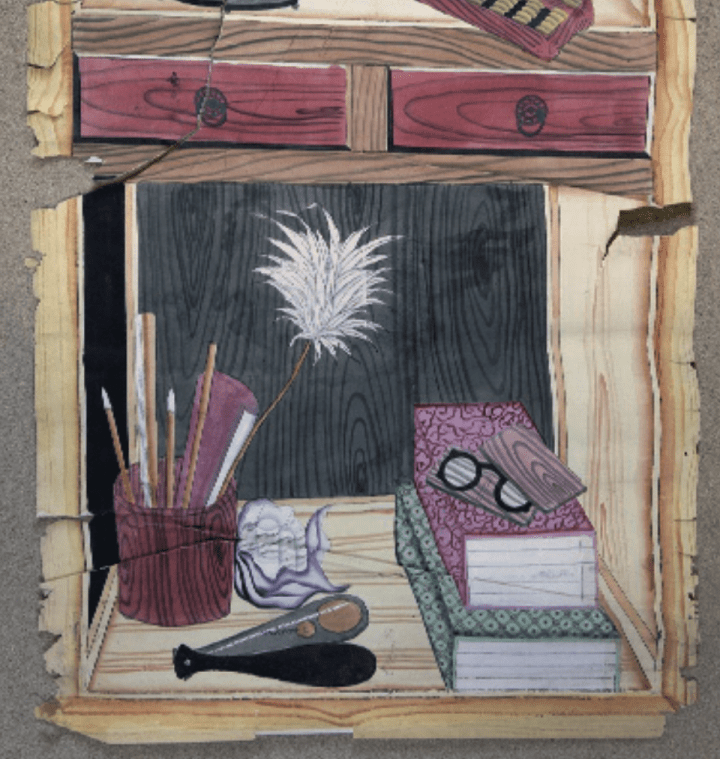
Wenfangtu, detail, ca. 1750, China, coloured woodblock print, 110 × 50 cm
(Stockholm: Nordiska Museet)
◊ ◊ ◊ ◊ ◊
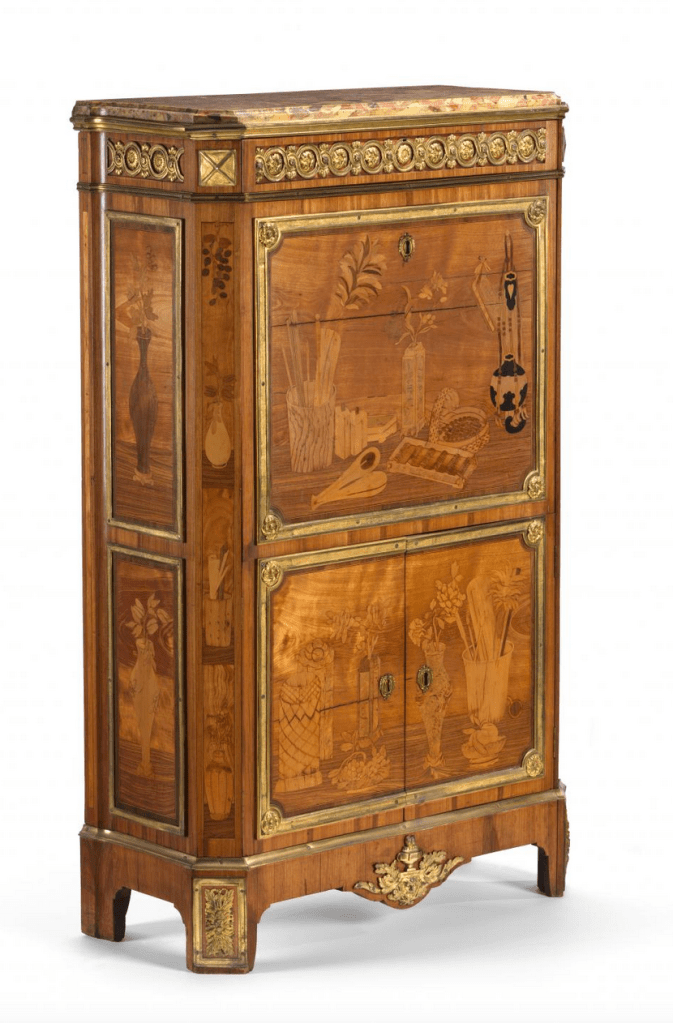
The long eighteenth century in the latest issue of Furniture History, from The Furniture History Society . . . I would particularly note the the article by Kee Il Choi, Jr, which identifies a category of Chinese woodblock prints (wenfangtu / 文房圖) as graphic source materials for marquetry panels of French furniture, especially pieces from the early 1770s—an alternative to the traditional assumption of carved Coromandel (kuancai) lacquer screens. In addition to being an ‘origins’ story, it’s fascinating material as the prints themselves raise myriad rich questions (wenfangtu are now known only from examples outside of China). –CH
 Furniture History 58 (2022)
A R T I C L E S
• Christopher Rowell, “The Carved Room at Petworth Revisited and Grinling Gibbons as an Auctioneer, Dealer, and Collector,” pp. 39–128.
• Kee Il Choi, Jr , “From Lieux to Meubles: Chinese Woodblock Prints and French Marquetry of the 1770s,” pp. 129–156.
• Irene Alessandra Meneghetti, “Transfer Printing on Wood: Research and Replication Based on Two Side Tables Attributed to Joseph Schneevogl,” pp. 157–174.
• Sarah Medlam, “Fit for a Prince: Seddon’s Cradle for Shiloh, the Prince of Peace, the Expected Child of Joanna Southcott, 1814,” pp. 175–198.
• Rufus Bird, “John Girdwood: A Modern Edinburgh Antiquary,” pp. 199–226.
A satinwood and marquetry secrétaire à abattant with gilt-bronze ormolu mounts, ca. 1775, France; stamped: René Dubois (maître, 1754–99), 137 × 84 cm (Melbourne: National Gallery of Victoria, 705.a-i-D4).
American Art, Fall 2022
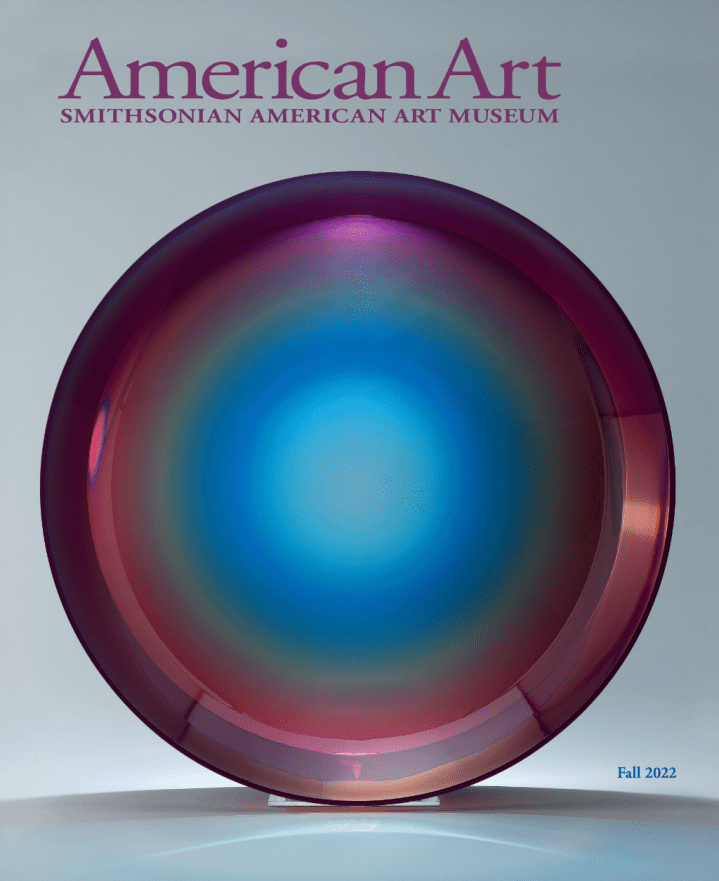
The latest issue of American Art includes eight essays aimed at ‘Seeing the Survey Anew’. I was particularly intrigued with the piece by K. L. H. Wells on the Index of American Design, a WPA Federal Art Project (1936–1942) that produced thousands of illustrations documenting decorative arts before 1900; the article specifically addresses the “treatment of Shaker and Southwestern design as prime examples of how this government survey of American art helped codify White racial formation” (10). Katherine Fein’s essay is also fascinating, though now I’ve ventured into the dangerous shoals of recommendations. By all means, have a look at all of these thoughtful essays. –CH
 American Art 36.3 (Fall 2022)
Commentaries: Seeing the Survey Anew
• Kirsten Pai Buick, “Seeing the Survey Anew: Introduction,” pp. 2–4.
• Jessica L. Horton, “Seeing the National Museum of the American Indian Anew as a Diplomatic Assemblage,” pp. 5–9.
• K. L. H. Wells, “Indexing Whiteness to American Design,” pp. 10–14.
• Michael Lobel, “Reframing Illustration,” pp. 15–19.
• Katherine Fein, “Picturing White Skin on Elephant Tusk,” pp. 20–23.
• Zoë Colón, “Material Absence, Relational Presence: Courtney M. Leonard and the Shinnecock Whales,” 24–27.
• Alexis Monroe, “Whiteness and the West before the Transcontinental Railroad,” pp. 28–32.
• Tanya Sheehan, “Where to Begin: Marking Race in Surveys of American Art,” pp. 33–37.
The Burlington Magazine, September 2022
The eighteenth century in the September issue of The Burlington . . .
The Burlington Magazine 164 (September 2022)
 E D I T O R I A L
• “A Practical Guide to Restitution,” p. 835.
A R T I C L E S
• Rahul Kulka, “Counter-Reformation Ambers: Friedrich Schmidt’s Workshop in Kretinga, Lithuania,” pp. 839–53.
On the basis of a unique signed and dated domestic altarpiece it has been possible to attribute a significant body of work to the amber workshop of Friedrich Schmiddt, who worked in Kretinga in the seventeenth century. They include a reliquary of St Casimir given in 1678 with other works in amber to Grand Duke Cosimo III of Tuscany by the Bishop-Elect of Vilnius, Mikolajus Steponas Pacas.
• Aurora Laurenti, “Nicolas Pineau as a Designer of Ornament Prints,” pp. 864–73.
Although designs by the woodcarver Nicolas Pineau in publication by Jean Mariette and Jacques-François Blondel played a significant role in the creation and dissemination of the Rococo style in the first half of the eighteenth century, they have never been studied in detail and their sequence and chronology have remained uncertain.
R E V I E W S
• Alison Wright, Review of the exhibition Gold (British Library, 2022), pp. 910–12.
• Philippe Bordes, Review of the exhibition Le Voyage en Italie de Louis Gauffier (Montpellier, 2022) and the catalogue raisonné by Anna Ottani Cavina and Emilia Calbi, Louis Gauffier: Un pittore francese in Italia (Silvana Editoriale, 2022), pp. 915–18.
• Ariane Varela Braga, Review of Dario Gamboni, Jessica Richardson, and Gerhard Wolf, The Aesthetics of Marble: From Late Antiquity to the Present (Hirmer, 2021), p. 934.
• Celia Curnow, Review of J.V.G. Mallet and Elisa Sani, eds., Maiolica in Italy and Beyond: Papers of a Symposium held at Oxford in Celebration of Timothy Wilson’s Catalogue of Maiolica in the Ashmolean Museum (Ashmolean Museum, 2021), pp. 937–38.
• François Marandet, Review of Delphine Bastet, Les Mays de Notre-Dame de Paris, 1630–1707 (Arthena, 2021), pp. 938–40.
• John Bold, Review of Christina Strunck, Britain and the Continent 1660–1727: Political Crisis and Conflict Resolution in Mural Paintings at Windsor, Chelsea, Chatsworth, Hampton Court and Greenwich (De Gruyter, 2021), pp. 940–41.
• Mark Stocker, Review of Matthew Potter, Representing the Past in the Art of the Long Nineteenth Century: Historicism, Postmodernism, and Internationalism (Routledge, 2021), pp. 941–42.
• Yuriko Jackall, Review of Alan Hollinghurst and Xavier F. Salomon, Fragonard’s Progress of Love (Frick Collection, 2022), pp. 945–46.
O B I T U A R I E S
• Tim Knox, Obituary for John Harris (1931–2022), pp. 950–52.
French Historical Studies, August 2022
In the latest issue of French Historical Studies:
David Gilks, “Civilization and Its Discontents: Quatremère de Quincy and Directorial Political Culture,” French Historical Studies 45.3 (2022): 481–510.
This article reinterprets Antoine Quatremère de Quincy’s Letters on the Plan to Abduct the Monuments of Italy (1796). In response to official justifications that seizing cultural patrimony was France’s civilizing mission, Quatremère argued that civilization required all nations to leave Rome intact and respect eighteenth-century conventions. The article shows how he attempted to make his work acceptable to republican readers by using a language uncharacteristic of his other writings and by mimicking the concept of a singular and secular civilization that was central to the post-Thermidorian Republic’s identity. The Letters was part of the broader strategy of the royalist Clichy club to make republicans question the Republic. However, informed contemporaries saw through his conceit: they discerned an attack on the Directory in his description of how the papacy nourished and protected the civilization but endangered it in practice.
The Art Bulletin, September 2022
The long eighteenth century in the latest issue of The Art Bulletin 104 (September 2022) . . .
A R T I C L E S
• Tomasz Grusiecki, “Doublethink: Polish Carpets in Transcultural Contexts,” pp. 29–54.
A group of carpets termed tapis polonais (French for “Polish carpets”) were mistakenly given this name in the nineteenth century, despite their Persian provenience. Today, these artifacts are often described as “so-called Polish carpets,” emphasizing the historical confusion which led to coining the phrase. Evidence from both early modern and modern archival and literary sources suggests, however, that to fully understand the significance of tapis polonais we must embrace their transcultural contexts. Embedded in ongoing cycles of recontextualization and reappropriation, tapis polonais effectively challenge outdated assumptions that cultural forms can be simply assigned to a single cultural region and its historical traditions.
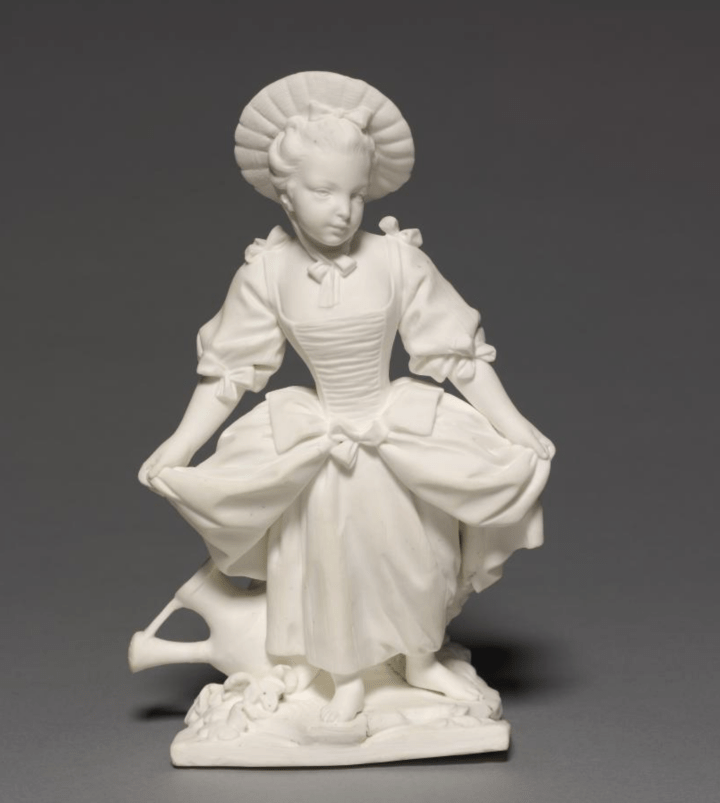
Vincennes Manufactory, after Pierre Blondeau, after François Boucher, La Danseuse (Dancer), ca. 1752, soft-paste biscuit porcelain, 22 × 14 × 8 cm (Cleveland Museum of Art).
• Susan M. Wager, Boucher’s Spirit: Authorship, Invention, and the Force of Porcelain,” pp. 55–83.
Deemed “ridiculous dolls” by Johann Joachim Winckelmann, porcelain figurines have long resided on the outskirts of art history. The exceptional case of biscuit porcelain figurines, invented in France in the 1750s, has been folded into an anachronistic story of stylistic change. This essay disentangles the history of porcelain figurines from the history of Neoclassicism. Through a close reading of the abbé Jean-Bernard Le Blanc’s (1707–1781) art criticism and analysis of a 1761 set of reproductive prints, it shows that biscuit figurines designed by the quintessentially rococo painter François Boucher defied assumptions about porcelain’s irreducible materiality, complicating fundamental eighteenth-century ideas about authorship.
R E V I E W S
• Kirsten Pai Buick, Review of Aston Gonzalez, Visualizing Equality: African American Rights and Visual Culture in the Nineteenth Century (University of North Carolina Press, 2020); Paul Kaplan, Contraband Guides: Race, Transatlantic Culture, and the Arts in the Civil War Era (Penn State University Press, 2020); and Teresa Goddu, Selling Antislavery: Abolition and Mass Media in Antebellum America (University of Pennsylvania Press, 2020), pp. 150–57.
• Atreyee Gupta, Review of Niharika Dinkar, Empires of Light: Vision, Visibility and Power in Colonial India (University of Manchester Press, 2019), pp. 158–60.
• Alina Payne, Review of Fabio Barry, Painting in Stone: Architecture and the Poetics of Marble from Antiquity to the Enlightenment (Yale University Press, 2020), pp. 160–63.
Print Quarterly, September 2022
The long eighteenth century in the latest issue of Print Quarterly:
Print Quarterly 39.3 (September 2022)
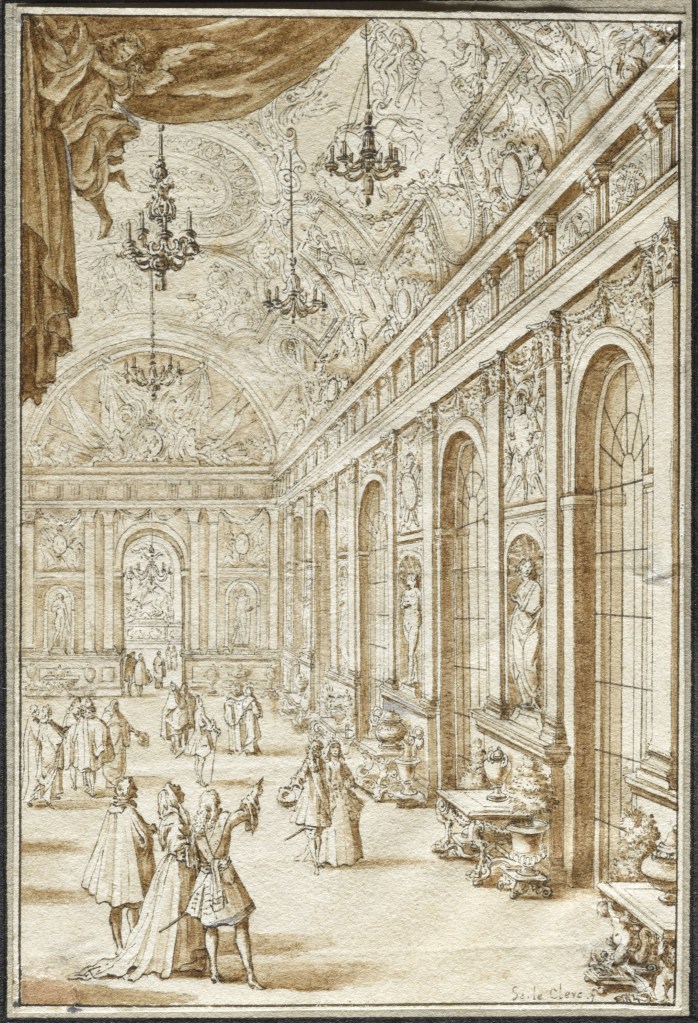
Anonymous artist after Sébastien Leclerc, View of the Hall of Mirrors, ca. 1684, pen and brown ink, brown wash on paper, 13.6 × 9.1 cm (Musée National des Châteaux du Versailles, INV.DESS 1247).
Tomáš Valeš, “Franz Anton Maulbertsch, Jakob Matthias Schmutzer and the Allegory on the Edict of Toleration, 1785”
This article discusses new insights into the painter Franz Anton Maulbertsch (1724–1796) and the creation of his print, the Allegory on the Edict of Toleration (1785). It adduces two letters from the engraver Jakob Mattias Schmutzer (1733–1811), his collaborator since the 1750s and later his father-in-law. The article discusses the strategies used for the print’s distribution and also presents an analysis of the print’s preparatory drawing and three proof impressions.
Antoine Gallay, “Sébastien Leclerc’s Preparatory Drawing for the View of the Hall of Mirrors (1684): A Reassessment”
This short article re-examines the status of a drawing acquired by the Musée National des Châteaux de Versailles et de Trianon in 2008, traditionally attributed to Sébastien Leclerc and thought to have been made in preparation for his famous print of the View of the Hall of Mirror (1684). The author also presents a second little known drawing which was most certainly made by Leclerc himself in preparation for the print. Comparison between this drawing and the print offers new insight on the early appearance of the Hall of Mirrors and on Leclerc’s artistic conception and practices.
The issue also includes these relevant notes and reviews:
 Battle Engravings for the Emperors of China
Jean Michel Massing, Review of Henriette Lavaulx-Vrécourt, Niklas Leverenz and Alexey Pastukhov, Berlin Battle Engravings: 34 Copperplates for the Emperors of China / Berliner Schlachtenkupfer: 34 Druckplatten der Kaiser von China (Berlin: Staatliche Museen zu Berlin and Deutscher Kunstverlag, 2021), p. 305.
Thomas Gainsborough in London
Anne Lyles, Review of Susan Sloman, Gainsborough in London (London: Modern Art Press, 2021), p. 307.
Utamaro and the Spectacle of Beauty
Adam Haliburton, Review of Julie Nelson Davis, Utamaro and the Spectacle of Beauty (London: Reaktion Books, 2021), p. 308.
The Waterloo Map of Pierre-Jacques Goetghebuer
Inge Misschaert has contributed a brief analysis of the much-copied Map of the Battle of Waterloo (1815) by Belgian architect and engraver Pierre-Jacques Goetghebuer. The article elaborates on the production history of Goetghebuer’s map and its context alongside other adventurous competitors seeking to illustrate the famous battle in its immediate aftermath.
The Reception of Raphael
Carlo Schmid, Review of Andres Stolzenburg and David Klemm, eds., Raffael: Wirkung eines Genies (Petersberg: Hamburger Kunsthalle and Michael Imhof Verlag, 2021), p. 315.
The review focuses on the cult of Raphael which took off at the beginning of the nineteenth century.
The Fruitful Encounter Between Engraving and Photography
Francesca Maria Bonetti, Review of Nicolas Devigne and Virginie Caudron, eds., Contacts – Photographie – Gravure: Jeux et Enjeux (Aire-sur-la-Lys: ateliergaleriéditions and éditions Musée de Gravelines, 2020), p. 318.
Bonetti discusses the different photomechanical processes based on proto-photographic experiments carried out between 1824 and 1827 and known as heliography.










 Enfilade
leave a comment