The Burlington Magazine, February 2022
The eighteenth century in February’s issue of The Burlington . . .
The Burlington Magazine 164 (February 2022) — Northern European Art
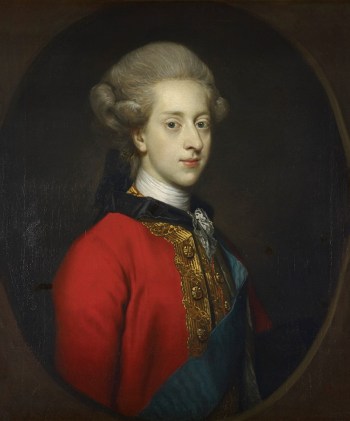
Nathaniel Dance Holland, Portrait of Christian VII, King of Denmark, 1768, oil on canvas, 77 × 63 cm (Royal Collection Trust).
A R T I C L E S
• Sara Ayres, “Christian VII of Denmark’s Lost British Portraits,” pp. 155–63. In 1768–69 the young Christian VII of Denmark visited London and Paris, where several portraits of him were painted. Three were by artists born or working in Britain—Angelica Kauffmann, Edward Cunningham, known as Calze, and Matthew Peters. All are now lost, but evidence about the comissions survives in copies and prints, contemporary descriptions and documents in the Danish State Archives.
• Lars Hendrikman, “The Finding of the Infant Bacchus,” pp. 180–83.
R E V I E W S
• Camilla Pietrabissa, Review of the exhibition Venetia 1600: Births and Rebirths (Venice: Palazza Ducale, 2021–22), pp. 190–92.
• Ivan Gaskell, Review of the new galleries of Dutch and Flemish art at the MFA Boston (open from November 2021), pp. 195–98.
• Richard Stemp, Review of the exhibition Hogarth and Europe (London: Tate Britain, 2021–22), pp. 198–200.
• Maryl Gensheimer, Review of Fabio Barry, Painting in Stone: Architecture and the Poetics of Marble from Antiquity to the Enlightenment (Yale UP, 2020), pp. 216–17.
• Clare Hornsby, Review of Ortwin Dally, Maria Gazzetti, and Arnold Nesselrath, eds., Johann Joachim Winckelmann (1717–1768): Ein Europ isches Rezeptionsph nomen / Fenomeno Europeo della Ricezione (Michael Imhof Verlag, 2021), pp. 217–18.
• Robert Skwirblies, Review of Lea Kuhn, Gemalte Kunstgeschichte: Bildgenealogien in der Malerei um 1800 (Wilhelm Fink Verlag, 2020), pp. 218–19.
• Thomas Stammers, Review of Stacey Boldrick, Iconoclasm and the Museum (Routledge, 2020), p. 222.
O B I T U A R I E S
• Marjorie Trusted, “Christian Theuerkauff (1936–2021),” pp. 223–24. For many years Deputy Director of the sculpture collection at the Bode Museum, Berlin, and honorary professor at the city’s Free University, Christian Theuerkauff was a leading scholar of Baroque ivories, whose expert connosseurship and archival research definitively shaped our understanding of many of the outstanding sculptors in the medium.
Print Quarterly, March 2022
The long eighteenth century in the latest issue of Print Quarterly:
Print Quarterly 39.1 (March 2022) . .
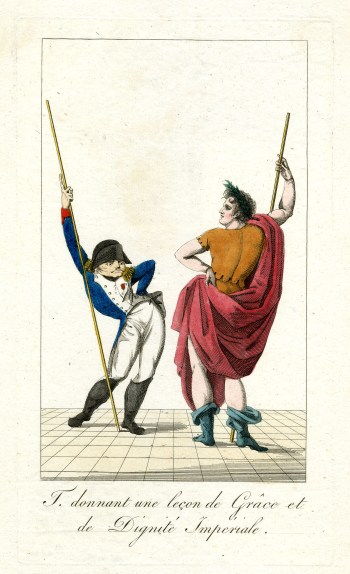
Charles Elie, T[alma] donnant une leçon de grâce et de dignité impériale (T[alma] giving a lesson in grace and imperial dignity), 1814, hand-coloured etching, 244 x 142 mm (London: British Museum).
A R T I C L E S
Antony Griffiths, “The Publication of Caricatures in Paris in 1814 and 1815, Part I: The Established Printsellers, Genty and Martinet,” pp. 31ff.
Two articles by Antony Griffiths on ‘The Publication of Caricatures in Paris in 1814 and 1815’—Part 1 in the March 2022 issue and Part 2 forthcoming—discuss the publication of caricatures in Paris during two years in which there were four regimes in power, and two occupations by foreign armies—a period which led to an unprecedented outpouring of social and political satire. Many works of great quality were produced, but most have only a title and do not reveal the names of the producers. The articles discuss how publishers and artists dealt with the political upheavals and identify some of the many participants who entered the field in these years. Part 1 deals with the caricatures published by members of the established print trade in Paris, and in particular Aaron Martinet and the newcomer Genty, who has previously been misidentified.
R E V I E W S
• Mark McDonald, Review of Juan Agustín Ceán Bermúdez, El Churriguerismo: discurso inédito (Alicante: Biblioteca Virtual Miguel de Cervantes, 2019), p. 79.
• Diana Greenwald, Review of Madeleine Viljoen, Nina Dubin and Meredith Martin, Meltdown! Picturing the World’s First Bubble Economy (Turnhout: Harvey Miller, 2020), p. 80.
• Ann V. Gunn, Review of John Bonehill, Anne Dulau Beveridge, and Nigel Leask, eds., Old Ways New Roads: Travels in Scotland 1720–1832 (Edinburgh: Birlinn, 2021), p. 81.
• Marcia Reed, Review of Troy Bickham, Eating the Empire: Food and Society in Eighteenth-Century Britain (London: Reaktion, 2020), p. 84.
• Nigel Tattersfield, Review of Graham Williams, Thomas Bewick Engraver & the Performance of Woodblocks (Kent: Florin Press, 2021), p. 86.
• Janis A. Tomlinson, Review of Mark McDonald et al., Goya’s Graphic Imagination (New York: The Metropolitan Museum of Art, 2021), p. 102.
Call for Articles | Spring 2023 Issue of J18: Cities
From Call for Proposals for J18:
Journal18, Issue #15 (Spring 2023) — Cities
Issue edited by Katie Scott and Richard Wittman
Proposals due by 15 March 2022; finished articles will be due by 1 September 2022
Art and architectural histories have traditionally approached the city in terms of the monuments and structures of its built environment and the distribution of its spaces. But the city is also, after all, its people: people who occupied and inhabited buildings, shared spaces and resources, and invested in or were inspired by ideas, labor, and beliefs. How did the city make room for that sharing? How did it inhibit it? Institutional structures—those of religion, politics, the economy, of ‘police’ in the broadest early-modern sense—played an essential part in fostering conditions in which social life occurred. How exactly did that fostering happen in the eighteenth century, and what were its intended and unintended consequences? At the same time, urban dwellers, whether elite or subaltern, continually use, transform, exploit, or otherwise make a city their own; the social forms an essential context for such appropriations. How were the limits and possibilities of social life in the eighteenth-century city defined, regulated, and sustained? In what ways did different constituencies represent those limits and possibilities, and discuss and debate them? How were they made visible, made audible, made legible? And how did different categories of labor shape and support a city’s social life?
We invite proposals that engage with the questions asked above, directly addressing relations between built forms and social bodies. These are some themes that are, we feel, raised by the topic: boundaries (walls, ditches) and the exclusion or protection of the faiths, nations, and trades they helped shape; bridges and the connections they cemented between neighborhoods, markets, spaces of leisure, etc.; infrastructure (roads, water, lighting, refuse collection) and the support it gave to the lived experience of the city; beauty and the collective aspiration to care and conservation, and also to better worlds that it proposed. We welcome contributions that consider actual spaces and communities and also ones that reflect critically on projects, both unrealized and utopian. We are open to essays that take as their objects of study built form, the representation of built form and the city generally, and urban material culture (e.g. guidebooks, street maps, shoes, carriages, walking sticks).
Issue Editors
• Katie Scott, Courtauld Institute of Art
• Richard Wittman, University of California, Santa Barbara
Proposals for issue #15 Cities are now being accepted. The deadline for proposals is 15 March 2022. To submit a proposal, send an abstract (250 words) and brief biography to the following three addresses: editor@journal18.org; katie.scott@courtauld.ac.uk; and rwittman@arthistory.ucsb.edu. Articles should not exceed 6000 words (including footnotes) and will be due by 1 September 2022. For further details on submission and Journal18 house style, see Information for Authors.
Metropolitan Museum Journal 2021

Sèvres royal porcelain manufactory, Potpourri vase and pair of elephant-head vases (from a garniture), ca. 1758, soft-paste porcelain; pot-pourri vase approximately 18 inches high, elephant-head vases approximately 16 inches high (New York: The Metropolitan Museum of Art, Gift of Samuel H. Kress Foundation, 1958, 58.75.89a, b; 58.75.90a, b; 58.75.91a, b). Iris Moon’s “article traces the afterlife of the Sèvres elephant garniture in the context of the French Revolution in order to explore how the politics of dispersal opened up new and contested meanings for luxury” (82).
◊ ◊ ◊ ◊ ◊
The 2021 issue of the Metropolitan Museum Journal is now available at The University of Chicago Press website and The Met Store. PDF’s are available for free on MetPublications.
Metropolitan Museum Journal 56 (2021)
S H I F T I N G P E R S P E C T I V E S O N M U S E U M S
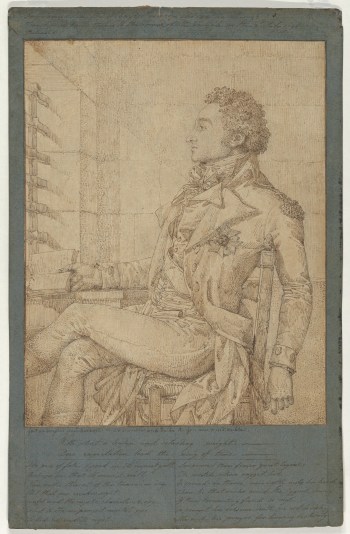
Philippe Auguste Hennequin (1762–1833), Portrait Drawing of Sir Sidney Smith in the Temple Prison, 1796, pen and brown ink over black chalk, 25 × 19 cm (New York: The Metropolitan Museum of Art, Purchase, Stephen A. Geiger Gift, in honor of George R. Goldner, 2015.290).
• Joanne Pillsbury, Aztecs in the Empire City: ‘The People without History’ in The Met
• Maia Nuku (Ngai Tai), ‘Te Maori’: New Precedents for Indigenous Art at The Met
• Tommaso Mozzati, The Vélez Blanco Patio and United States–Cuba Relationships in the 1950s
• Yelena Rakic, Collecting the Ancient Near East at The Met
• Iris Moon, The Sèvres Elephant Garniture and the Politics of Dispersal during the French Revolution
• Rebecca Capua, Facsimiles, Artworks, and Real Things
A R T I C L E S
• Maria Harvey, Icon, Contact Relic, Souvenir: The Virgin Eleousa Micromosaic Icon at The Met
• Kristen Windmuller-Luna, Talismanic Imagery in an Ethiopian Christian Manuscript Illuminated by the Night-Heron Master
• Katherine Gazzard, Philippe Auguste Hennequin’s Portrait Drawing of Sir Sidney Smith in the Temple Prison
• Peter Mallo, Artists’ Frames in Pâte Coulante: History, Design, and Method
R E S E A R C H N O T E
• Elizabeth Rice Mattison, A Source for Two Gilded Silver Figurines by Hans von Reutlingen
Laura Macaluso on Benedict Arnold’s House
We’re used to thinking about how the persistence of artifacts and architecture—especially elite forms of material culture—attest to the social and cultural status of individuals long after their deaths. With a growing scholarly appreciation for how the lack of an enduring material record also speaks to historical priorities, many readers will find this essay by Laura Macaluso interesting. And I would draw your attention more generally to Commonplace, edited by Joshua Greenberg; see the ongoing Call for Submissions below. –CH
From Commonplace:
Laura A. Macaluso, “Benedict Arnold’s House: The Making and Unmaking of an American,” Commonplace: The Journal of Early American Life (October 2021).
Arnold’s unceasing efforts to elevate himself in society through marriage and professional work can be viewed through the lens of the houses he bought or built throughout his life.

Benedict Arnold’s Shop Sign (New Haven Museum). ‘Sibi Totique’ (‘For himself and for everyone’).
Historians have examined the many aspects, both positive and negative, of Arnold’s impact on the course of events leading to the establishment of the United States. Yet the largely unanalyzed material culture of his existence—the objects he acquired and the buildings in which he and his family resided—can offer us much more about the contours of his life as he fashioned it, and how others crafted his historical memory. Arnold’s unceasing efforts to elevate himself in society through marriage and professional work can be viewed through the lens of the houses he bought or built throughout his life. This essay looks at the cultural landscape of one of his homes, the New Haven, Connecticut, house he built and resided in from 1769 until wartime. Through an analysis of the choices Arnold made in location, size, and architectural style, I identify how Arnold began to construct his identity not only as a member of the urban merchant class, but also as a gentleman. The building of the home reads as material evidence of his desire to establish his identity and place in society, but equally the abuse and destruction of Arnold’s house is a parallel to the untimely end of a life and career he worked hard to obtain.
The full essay is available here»
◊ ◊ ◊ ◊ ◊
Commonplace: Call for Submissions
Commonplace is now accepting submissions of approximately 2000 words that analyze vast early America before 1900. We seek a diverse range of articles on material and visual culture, critical reviews of books, films, and digital humanities projects, poetic research and fiction, pedagogy, and the historian’s craft. We are especially interested in deep reads of individual objects, images, or documents (including in the collection of the American Antiquarian Society). Submissions should be written in an accessible style and crafted for a wide audience. Inquiries and submissions can be made to commonplacejournal@gmail.com.
About Commonplace:
A bit less formal than a scholarly journal, a bit more scholarly than a popular magazine, Commonplace speaks—and listens—to scholars, museum curators, teachers, hobbyists, and just about anyone interested in American history before 1900. It is for all sorts of people to read about all sorts of things relating to early American life—from architecture to literature, from politics to parlor manners. It’s a place to find insightful analysis of early American history as it is discussed in scholarly literature, as it manifests on the evening news, as it is curated in museums, big and small; as it is performed in documentary and dramatic films and as it shows up in everyday life. . . .
Commonplace originally launched in 2000 as Common-Place: The Journal of Early American Life and has now been reimagined with a cleaner, more accessible interface. Our articles appear on a rolling basis and are arranged by category instead of being organized by issue and volume. . . .
Sponsored by the American Antiquarian Society, founded by editors Jane Kamensky and Jill Lepore, and designed by John McCoy, Common-Place: The Journal of Early American Life is the product of an amazing team of editors and institutions. Over nearly two decades, the journal has been published in partnerships with Florida State University, the University of Oklahoma, the Gilder Lehrman Institute of American History, and the University of Connecticut. Past editors have included Ed Gray; Catherine Kelly; Anna Mae Duane and Walt Woodward. Past contributors and guest editors have included: Joanna Brooks, Robert A. Gross, Gary B. Nash, Megan Kate Nelson, Mary Beth Norton, and Alan Taylor.
In 2019, the Omohundro Institute of Early American History and Culture joined the AAS in a new partnership to redesign and reinvigorate the site.
Journal18, Fall 2021 — The ‘Long’ 18th Century?
From J18:
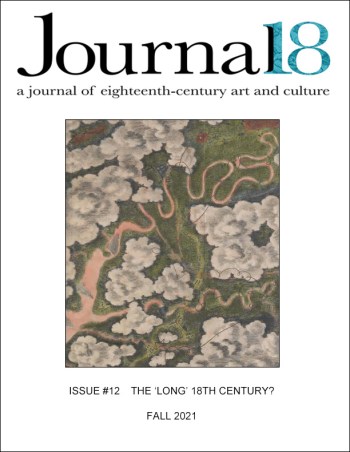
Journal18, Issue #12 (Fall 2021) — The ‘Long’ 18th Century?
Edited by Sarah Betzer and Dipti Khera
 A R T I C L E S
• Architectural ‘Worlding’: Fischer von Erlach and the Eighteenth-Century Fabrication of a History of Architecture — Sussan Babaie
• Enlightenment as Thought Made Public: Joshua Reynolds’s Portrait of a Black Man — Andrei Pop
• Britain, Empire, and Execution in the Long Eighteenth Century — Meredith Gamer
• Maritime Media in the Long Eighteenth Century — Maggie M. Cao
• Poq’s Temporal Sovereignty and the Innuit Printing of Colonial History — Bart Pushaw
C O N V E R S A T I O N S
• The Mughals, the Marathas, and the Refracted Long Eighteenth Century, A Dialogue — Chanchal Dadlani and Holly Shaffer
• Teaching the ‘Long’ Eighteenth Century, A Conversation and Resources — Eleanore Neumann, with Anna Arabindan-Kesson, Nebahat Avcıoğlu, Emma Barker, Sarah Betzer, Ananda Cohen-Aponte, Dipti Khera, Prita Meier, Nancy Um, and Stephen Whiteman
Issue Editors
Sarah Betzer, University of Virginia
Dipti Khera, New York University and Institute of Fine Arts
Cover image: Thomas Baldwin, Detail from A Balloon Prospect from Above the Clouds. Engraving, Plate III, from Airopaidia: Containing the Narrative of a Balloon Excursion (London,1786).
British Art Studies, November 2021
The latest issue of BAS:
British Art Studies 21 (November 2021)
Redefining the British Decorative Arts, Guest Edited by Iris Moon

Michelle Erickson, Cauldron, from the series Ply-MYTH, 2019, wheel thrown with lifecast shell and industrial artifacts, made from indigenous North Carolina woodfired stoneware with copper wash, 16 × 19.5 inches (Collection of the artist). Additional information is available here»
“Decorative arts place pressure upon the hierarchies inherent in British aesthetics, and by extension British culture, from the enlightenment to the present day. The specters of history and the possibilities of the future haunt in equal measure this special issue of British Art Studies, which challenges readers to rethink the British decorative arts. Through a series of thought-provoking articles by artists, curators, scholars, and a scientist, the issue asks readers to question their assumptions about the decorative arts, and by extension, the notions of belonging, possession, and home that such arts have helped to shape in British culture. Issues of race and identity, empire and nation, and collective and subjective desires, far from being alien aspects of the decorative arts, have long gestated within the discourses of taste and aesthetics that emerged in tandem with Britain’s rise as a center of capitalism. Many of the articles have as their touchstone the eighteenth century, when London became the finance capital of the world . . . ” (from Iris Moon’s introductory article).
A R T I C L E S
• Unhomely: Redefining the British Decorative Arts, by Iris Moon
• England Am I? Elizabethan Clothing, Gender, and Crisis in Virginia Woolf’s Between the Acts, by Sarah Bochicchio
• Microorganisms, Microscopes, and Victorian Design Theories, by Ariane Varela Braga
• Tarnished Silver: Interpreting the Material Culture of the Atlantic Slave Trade Negotiations of 1715, by Max Bryant
• Cherokee Unaker, British Ceramics, and Productions of Whiteness in Eighteenth-Century Atlantic Worlds, by R. Ruthie Dibble and Joseph Zordan
• Defining a New Femininity? Josiah Wedgwood’s Portrait Medallions of Sarah Siddons and his Femmes Célèbres by Patricia F. Ferguson
• Classical Histories, Colonial Objects: The Specimen Table Across Time and Space, by Freya Gowrley
• Serving as Ornament: The Representation of African People in Early Modern British Interiors and Gardens, by Hannah Lee
• Ruth Ellis’s Suit, by Lynda Nead
• Colonial Trash to Island Treasure: The Chaney of St. Croix, by Jessica Priebe
• In the Flesh at the Heart of Empire: Life-Likeness in Wax Representations of the 1762 Cherokee Delegation in London, by Ianna Recco
F E A T U R E S
• The Chelsea Porcelain Case, British Galleries, The Metropolitan Museum of Art, convened by Iris Moon
• Unpacking Wedgwood: An Interview with Roberto Visani, by Caitlin Meehye Beach
• Wild Porcelain, cover collaboration with Michelle Erickson
• What’s in a Label? Revising Narratives of the Decorative Arts in Museum Displays, convened by Iris Moon
• Another Crossing: Artists Revisit the Mayflower Voyage, by Glenn Adamson
• In Sparkling Company: Presenting Eighteenth-Century Britain in Western New York State, by Christopher Maxwell
Iris Moon is an assistant curator of European ceramics and glass in the European Sculpture and Decorative Arts Department at the Metropolitan Museum of Art, where she recently participated in the reinstallation of the British Galleries. She has taught at Pratt Institute and The Cooper Union and her research on European decorative arts and architecture has been supported by fellowships from the Metropolitan Museum of Art, the Clark Art Institute, and the Getty Research Institute. Her new book, Luxury after the Terror, will be published in spring 2022 by Penn State Press.
West 86th, Spring–Summer 2021
From West 86th:
West 86th: A Journal of Decorative Arts, Design History, and Material Culture 28.1 (Spring–Summer 2021)
Aaron M. Hyman and Dana Leibsohn, “Lost and Found at Sea, or a Shipwreck’s Art History”
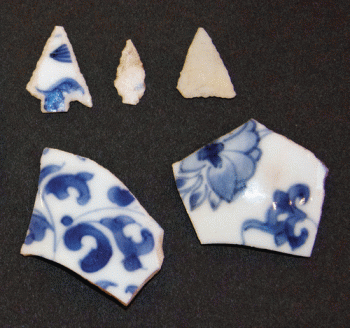
Makers’ names no longer known, arrowheads, 18th or 19th century, porcelain (Tillamook, Oregon: Tillamook County Pioneer Museum).
Abstract: To be lost and found at sea: What kinds of thinking does the shipwreck prompt? This essay pursues this question by centering fragmented remains—large beeswax blocks and Chinese porcelain ware—from the Santo Cristo de Burgos, a Spanish galleon lost while traveling from Manila to Acapulco at the end of the seventeenth century. By considering how durable commodities were recovered and reimagined, primarily by Indigenous inhabitants of the Oregon coast, this essay reflects upon the kinds of histories that can be written around and because of wrecked ships. Tacking between past and present, we use the Santo Cristo de Burgos to draw out the lineaments of a shipwreck’s art history, bringing into focus three interrelated themes, each critical to the material histories of wrecks: the interpretive recalcitrance of cargo, the reframing of value through recovery, and the production of material surplus in the watery depths.
Art Bulletin of Nationalmuseum Stockholm 27.1
Published in November by the Nationalmuseum, with a selection of eighteenth-century topics listed below:
 The Art Bulletin of Nationalmuseum Stockholm is a journal devoted to art history. It is published in English twice a year with a content that ranges from older master paintings to contemporary design. This, the first part of Volume 27, focuses primarily on acquisitions in 2020. The journal is published through DiVA (a publishing system for research publications and student essays and a digital archive for long-term preservation of publications), with all articles available for free download here.
Editors: Ludvig Florén, Magnus Olausson, and Martin Olin.
Editorial Committee: Ludvig Florén, Carina Fryklund, Eva-Lena Karlsson, Helena Kåberg, Ingrid Lindell, Magnus Olausson, Martin Olin, Daniel Prytz, and Cilla Robach.
A R T I C L E S
Magnus Olausson and Martin Olin, “Two Large Covered Beakers with Filigree Ornamentation by Rudolf Wittkopf.”
The two filigree beakers with covers in silver gilt, made by Rudolf Wittkopf (d. 1722) in Stockholm in 1698, are not only notable examples of Swedish goldsmiths’ work from the end of the 17th century, their history also tells of a dramatic diplomatic episode in the history of relations between Sweden and Russia. The beakers were among the presents given to Tsar Peter I by the ambassadors of the Swedish king Charles XII, in the autumn of 1699.
Daniel Prytz, “A Seated Amour: A Drawing by Charles-Joseph Natoire Related to his Painting Apollo and Clytie for the Royal Palace in Stockholm.”
A drawing of a seated Amour by Charles-Joseph Natoire (1700–1777), recently acquired by the Nationalmuseum, can be said to underline the central role of the art of drawing in his oeuvre. In the present article it is posited that it was created as a finished work onto itself and should be viewed as an example of the possibilities Natoire found primarily in drawing.
Daniel Prytz, “The Vatican from the Road to Ponte Mola: A Drawing by the Amateur Artist and Patron of the Arts Sir George Howland Beaumont.”
Sir George Howland Beaumont (1753–1827) was one of the most prominent British amateur artists and important patrons of the arts of his time. The present article concerns a formerly anonymous 18th-century drawing acquired by the Nationalmuseum, here decisively attributed to Beaumont. The work is a concrete example of the artistic output of this influential judge of taste and perfectly reflects both his position in society and his artistic connoisseurship.
Micael Ernstell, “A Writing Bureau from Magistrate Asplind’s Workshop: A Gift from a Friend.”
A writing bureau dating from 1810–20 by the ornamental painter Johan Nils Asplind (1756–1820), has been generously donated to the Nationalmuseum by Margareta Leijonhufvud through the Friends of the Nationalmuseum. Asplind was active in Falun between 1779 and 1820. He produced ornamental paintings for various manor houses and on furniture he ordered from local cabinetmakers, to which he selected suitable designs from a range of originals. The writing bureau has united the influences of Chinese lacquerwork, the painting of the French rococo, and Gustavian furniture design.
Magnus Olausson, “In the Shadow of Horace Vernet: A Swedish Artist in 1820s Paris.”
This article is about the Swedish artist Alexander Clemens Wetterling’s (1796–1858) encounter with the art and artists of Paris in 1826–27. It introduces us to artistic training in the city, to important networks, and to Wetterling’s take on the struggle between Classicists and Romantics at the famous Salon of 1827. The article is based on a combined reading of Wetterling’s letters and several of the study drawings by him from his stay in Paris, recently acquired by the Nationalmuseum.
Daniel Prytz, “Shepherd Playing his Flute: A Proposed Attribution of a Painting Long in the Collections of the Nationalmuseum to Bernhard Keilhau, Called Monsù Bernardo.”
Bernhard Keilhau (1624–1687) must surely be viewed as one of the foremost artists hailing from Scandinavia, from any century. However, he is largely unknown in Sweden and there are no previous works in the collections of the Nationalmuseum attributed to this artist. The present article concerns a proposed attribution to Keilhau of a work long in the collections of the Museum and with the provenance of the Marshall of the Royal Court Martin von Wahrendorff (1789–1861).
Stephen Lloyd, “A Double-Sided Portrait Miniature Attributed to Sir Henry Raeburn (1756–1823).”
A striking and meticulously painted double-sided portrait miniature of an older man on one side and a younger man on the other side was gifted by the collector Consul Hjalmar Wicander to the Nationalmuseum in 1927 as being a work from the later 18th-century English School. By careful comparison with a small group of other miniatures and drawings this double-portrait is now presented as a significant work from the 1780s Scottish School and indeed a significant youthful achievement from the early career in Edinburgh of the great Enlightenment portraitist in oils, Sir Henry Raeburn (1756–1823).
The Burlington Magazine, October 2021
The eighteenth century in October’s issue of The Burlington . . . Rado’s article is not an eighteenth-century essay, but she is a HECAA member (!), and she briefly frames the material in terms of a longer history; the theme for the October issue is ‘art in twentieth-century China’. –CH
The Burlington Magazine 163 (November 2021)
 E D I T O R I A L
• “Art History in the Anthropocene” p. 883.
A R T I C L E S
• Mei Mei Rado, “The Empress Dowager Cixi’s Japanese Screen and Late Qing Imperial Cosmopolitanism,” pp. 886–97.
R E V I E W S
• Arthur Bijl, Review of the exhibition catalogue Kjeld von Folsach, Joachim Meyer, and Peter Wandel, Fighting, Hunting, Impressing: Arms and Armour from the Islamic World, 1500–1850 (Copenhagen: David Collection / Strandberg Publishing, 2021), pp. 946–47.
• Kee Il Jr Choi, Review of John Finlay, Henri Bertin and the Representation of China in Eighteenth-Century France (Routledge, 2020), pp. 966–67.
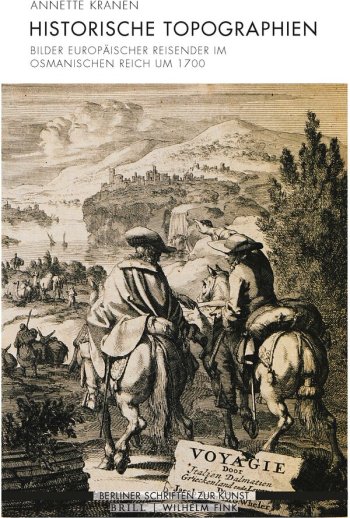
• Mirjam Hähnle, Review of Annette Kranen, Historische Topographien: Bilder europäischer Reisender im Osmanischen Reich um 1700 (Brill, 2020), pp. 971–72.










 Enfilade
leave a comment