Lecture | Hugh Roberts on Ince & Mayhew

Marquetry top of one of a pair of tables made by Ince and Mayhew for the Earl of Caledon, 1785.
◊ ◊ ◊ ◊ ◊
From the FHS:
Sir Hugh Roberts | Ince & Mayhew: Interpreting the Record
The Furniture History Society Annual Lecture
In-person and online, Society of Antiquaries, Burlington House, London, 7 November 2022
The lecture marks the publication by Philip Wilson in 2023 of Industry and Ingenuity: the Partnership of William Ince and John Mayhew by Hugh Roberts and Charles Cator. This book is the culmination of many years of research by both authors. It brings together for the first time a corpus of well documented or firmly attributed work by one of the leading metropolitan cabinet-making firms of the eighteenth century, a firm which was as well-known and successful in its day as that of Thomas Chippendale.
By the time furniture history had become established as a serious area of study in the 20th century, much of the furniture produced by this long-lived business had lost its identity and no clear picture of the firm’s output existed. The lecture will examine the process by which the authors have been able to retrieve evidence of some ninety-seven commissions, and to reconnect around three hundred pieces of furniture with patrons and documents.
Admission to the lecture is free for FHS members, but attendance is by ticket only, which must be acquired in advance. Please apply to the Events Secretary by email or post. Numbers are limited to 90. We plan to live-stream the event for those who cannot attend in person.
Sir Hugh Roberts, GCVO, FSA, is Surveyor Emeritus of The Queen’s Works of Art and former Director of The Royal Collection.
Online Talk | Janet Couloute on Black Presence in the Wallace Collection
From The Wallace Collection:
Janet Couloute, Black Presence in the Wallace Collection
Online, Thursday, 20 October 2022, 13.00 (BST)

Govaert Flinck, A Young Archer, ca. 1639–40, oil on oak panel, 66 × 51 cm (London: The Wallace Collection, P238).
To mark Black History Month in Britain, join Janet Couloute for a virtual African Heritage tour of the Wallace Collection. Spanning 400 years of European art, Dr Couloute will place the presumed peripheral and unimportant black male and female figure centre stage. Through a closer look at how artists have created iconographies of blackness and whiteness, Couloute will illustrate how museums such as the Wallace Collection, through more inclusive and open history telling, can encourage visitors to respond more imaginatively to such iconographies. This talk will be hosted online through Zoom and YouTube. Please click here to register for Zoom.
Janet Couloute is a social work academic and art historian interested in revising and expanding current British art-historical canons. With a particular interest in works that are rarely discussed as visual indexes of ‘race’, she is currently working on a research project entitled Renaissance ‘Whiteness’: Reimaging ‘Race’ through the Prism of Early Modern Portraiture. Dr Couloute has also been a Tate guide for twenty years, and has developed an expertise in encouraging gallery audiences to engage with the histories of the Black presence in Europe.
Seminar Session | Clémence Fort on ‘Porcelaines des Sauvages’
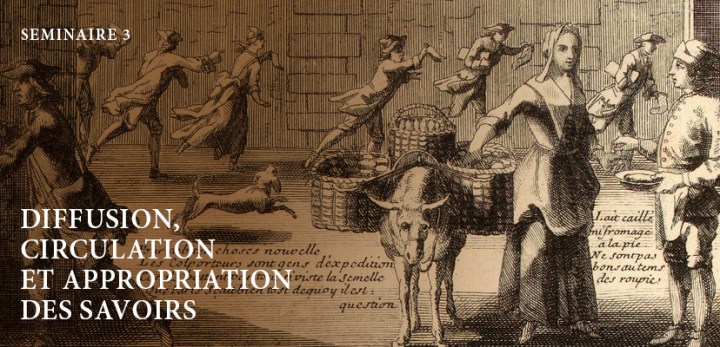
This month’s session from the GRHS series on the circulation of knowledge, with information on other GRHS seminar series available here:
Clémence Fort | ‘Porcelaines des Sauvages’
Circulation, appropriation et représentation d’un objet emblème en France au XVIIIe siècle
Diffusion, circulation et appropriation des savoirs – Séminaire du Groupe de Recherche en Histoire des Sociabilités
In-person and online, Université du Québec, Montréal, 21 October 2022, 12.30pm
Avec l’essor du projet colonial en Amérique du Nord au 18e siècle, les « porcelaines des Sauvages » en provenance de Nouvelle-France et issues de la collecte apparaissent dans les collections françaises. Leur circulation engendre des représentations qui documentent les nombreux imprimés de cette époque allant des récits de voyages aux atlas historiques. Naturalistes et amateurs s’intéressent aussi à la manière dont les objets sont fabriqués et imités. Ils les incluent alors dans une culture visuelle scientifique et esthétique nouvelle. Cette présentation examinera la manière dont « les porcelaines des Sauvages » invitent à repenser la géopolitique du collectionnisme à partir des enjeux artistiques, scientifiques et économiques. Nous étudierons la façon dont les « porcelaines des Sauvages » participent à la diffusion esthétique, historique et scientifique de l’entreprise coloniale de la Nouvelle-France au 18e siècle.
Le séminaire privilégiera les circuits et les transmissions de l’imprimé sous toutes ses formes, sans pour autant exclure les autres productions (et marchandises) de la connaissance. Les séances se tiendront en comodal, au local R-4215 à l’UQAM et par visioconférence.
Clémence Fort est actuellement doctorante contractuelle en deuxième année au sein de l’université PSL (ENS) à Paris. Sa thèse intitulée : « Collecter les Americana : la Nouvelle-France dans les cultures visuelles et l’art des Lumières (v. 1700–1763) » est dirigée par Charlotte Guichard. Les recherches de Clémence s’inscrivent au croisement d’une histoire de l’art renouvelée par l’histoire de la collecte, des collections et des cultures visuelles et matérielles.
Seminar Session | Ersy Contogouris on Vigée-LeBrun’s Self-Portraits
This month’s session from the GRHS series on women’s self-portraits, with information on other GRHS seminar series available here:
Ersy Contogouris | Les autoportraits d’Élisabeth Vigée-LeBrun au Salon de 1787
Autoportraits au féminin (XVIe–XVIIIe siècle) –Séminaire du Groupe de Recherche en Histoire des Sociabilités
Université du Québec, Montréal, Thursday, 13 October 2022, 2.00pm
Cette conférence étudiera l’autoportrait qu’Élisabeth Vigée-LeBrun expose au Salon de 1787. Vigée-LeBrun avait été admise à l’Académie royale de peinture et de sculpture en 1783 aux côtés d’Adélaïde Labille-Guiard, portant ainsi à quatre le nombre de femmes membres de l’Académie pour la première fois depuis sa fondation en 1648, et à quinze le nombre total de femmes y ayant été admises. Cette présence féminine à l’Académie n’étant pas appréciée de tous, les années 1780 et les Salons bisannuels de 1783, 1785 et 1787 furent marqué·es par de nombreux débats portant sur la place des femmes dans le plus important espace artistique français. L’autoportrait de Vigée-LeBrun, dans lequel elle se représente avec sa fille Julie, sera mis en dialogue avec les autres œuvres présentées par Vigée-LeBrun à ce Salon afin de réfléchir à ce groupe de tableaux comme une sorte d’autoreprésentation de l’artiste en 1787.
Lecture | David Cannadine on How to Study Country Houses Now
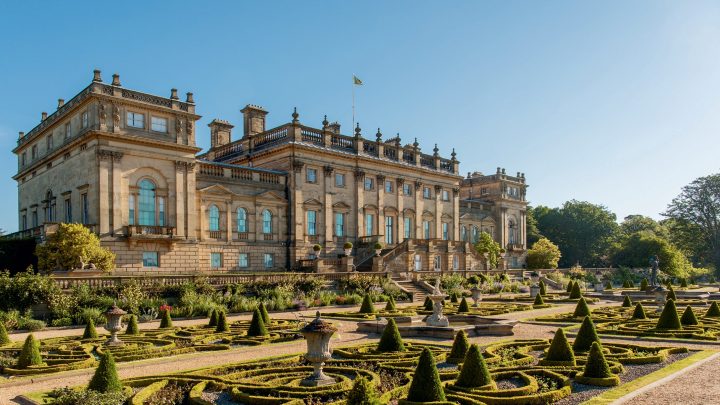
Harewood House, West Yorkshire, designed by John Carr and Robert Adam, and built between 1759 and 1771.
◊ ◊ ◊ ◊ ◊
From The Attingham Trust:
Sir David Cannadine, How Do We Study the Country House Now?
In-person (and recorded), Sotheby’s, London, Tuesday, 8 November 2022
The Attingham Trust has been championing the study of historic houses and their collections for seven decades, aiming to broaden the understanding of the artistic, social and cultural legacies they offer. In this lecture, David Cannadine will look afresh at these buildings and tease out some of the many complex and sometimes challenging narratives to which they bear witness, illustrating how the study of the country house has evolved and how much still remains for us to learn.
5.45pm Drinks on arrival
6.30pm Lecture
Tickets for both in-person attendance and to receive the recording (available for a limited time) can be purchased here. For queries about this event, please contact rebecca.parker@attinghamtrust.org.
Professor Sir David Cannadine is Dodge Professor of History at Princeton University and a visiting professor of history at Oxford University. He has written extensively on the economic, social, political, and cultural history of modern Britain and its empire, on collecting and philanthropy, and on the history of history. In 2018 he co-edited, with Jeremy Musson, The Country House: Past, Present, and Future, exploring how the idea of the country house has changed over the last forty years. Previously Chair of the Trustees at the National Portrait Gallery, President of the British Academy, and on the board of the Royal Oak Foundation, he is a fellow of the Royal Historical Society, the Royal Society for Literature, the Society of Antiquaries, the Historical Association, and the British Academy. He is a patron of The Attingham Trust.
Online Lecture | Andrew Rudd on Print Philanthropy

Jonas Hanway, Thoughts on the Plan for a Magdalen-House for Repentant Prostitutes, second edition (London, 1759). The first edition was published anonymously in 1758.
◊ ◊ ◊ ◊ ◊
From Yale’s Lewis Walpole Library, in connection with the exhibition From ‘Knight Errant of the Distressed’: Horace Walpole and Philanthropy in Eighteenth-Century London:
Andrew Rudd | Print Philanthropy in the Age of Horace Walpole
Online, 28 October 2022, 12.00pm EST
Eighteenth-century England witnessed a remarkable flowering of philanthropic activity as society wrestled with problems such as poverty, disease, mental illness, vice, and suffering caused by war. Walpole boasted in 1760 of what he called “our noble national charity.” While many aspects of philanthropy remain similar today, this lecture will explore how the print culture of Walpole’s era was central in driving charitable behaviour, particularly in terms of creating philanthropic networks and framing relationships between donors and beneficiaries. The talk will showcase the sheer range of printed text and images—fundraising prospectuses, sermons, topographical views of hospitals, tickets to benefit concerts and dinners, and celebratory odes—mobilised in service of good causes during this period, as well as highlight examples of Walpole’s own support for, and portrayals of, philanthropic causes during his lifetime.
Andrew Rudd is Senior Lecturer in the English Department at the University of Exeter. He researches and teaches British literature of the eighteenth century and Romantic period. His monograph Sympathy and India in British Literature 1770–1830 (Palgrave Macmillan) was published in 2011, and he is currently writing a cultural history of charity in the eighteenth century. This builds on experience he acquired as Parliamentary Manager at the Charity Commission for England and Wales before joining Exeter in 2013. Dr. Rudd holds a PhD from the University of Cambridge, and he has studied at the University of Durham, Trinity College, Cambridge, and Yale University. He has held numerous fellowships—most recently at Yale’s Lewis Walpole Library and the School of Advanced Studies in English, University of Jadavpur. Since 2015, he has been a member of the Arts and Humanities Research Council’s Peer Review College.
Public Lecture Course | Georgian Provocations, II

From PMC with registration at Eventbrite:
Georgian Provocations, II
In-person and Online, Paul Mellon Centre, London, 27 October — 8 December 2022
Organized by Martin Postle
The Paul Mellon Centre’s next public lecture course is entitled Georgian Provocations II, a sequel to the highly successful Georgian Provocations, which ran in the summer of 2020. Adopting a similar format, the present course will focus upon a series of provocative artworks from the Georgian era and investigate their contents, contexts, and impact. The series is convened by Martin Postle, Senior Research Fellow at the Paul Mellon Centre. The course runs from 27 October to 8 December 2022 and is in-person and live on Zoom weekly, 6.00–7.30pm GMT on Thursdays.
◊ ◊ ◊ ◊ ◊
Lecture 1 | 27 October 2022
Paris Spies-Gans — Establishing a Female Lineage at the Royal Academy’s Show: Eliza Trotter, Angelica Kauffman, and the Intrigues of Lady Caroline Lamb. Register here»
Lecture 2 | 3 November 2022
Martin Myrone — The Haunted Eighteenth Century: Fuseli’s The Nightmare. Register here»
Lecture 3 | 10 November 2022
Esther Chadwick — A Black King in Georgian London: British Art and Postrevolutionary Haiti. Register here»
Lecture 4 | 17 November 2022
Nicholas Robbins — George Romney in the Prison-World of Europe. Register here»
Lecture 5 | 24 November 2022
Nika Elder — John Singleton Copley’s Watson and the Shark and the Taste for Flesh. Register here»
Lecture 6 | 1 December 2022
Martin Postle — Joseph Wright of Derby: Self-portrait as an Experimental Artist. Register here»
Panel Discussion | 8 December 2022
Discussion with Series Speakers and Q&A. Register here»
Lecture | Thomas Laqueur on Dogs in 18th-C. British Art

From Yale University:
Thomas Laqueur | What Are Dogs Doing in Eighteenth-Century British Art?
The Twenty-Fifth Lewis Walpole Library Lecture
Yale Center for British Art, New Haven, Thursday, 13 October 2022, 5.30pm
Professor Thomas Laqueur will address the ways dogs mediate human sociability and specifically how they function formally in art to bind together the various elements—human and material—of an image. He will discuss images of dogs in the studies of scholars, like the portrait of Walpole and his dog in the library at Strawberry Hill, and move on to a discussion of the various contexts in which it might be understood: from the paintings of Carpaccio and Rubens to the eighteenth century and beyond; dogs in eighteenth-century British art from Hogarth’s Self-Portrait to the many family scenes of the period; and then more generally dogs in art as they constitute part of a symbolic system—world making and critical in our social cognition. A short coda on interpreting Balak, the most famous dog in Hebrew literature, in the Isreali Nobel Prize winning novelist Shmuel Yosef Agnon’s greatest novel, Only Yesterday, will get us back to Walpole in his study and the question the lecture poses: what are all those dogs doing in eighteenth-century British art?
Thomas W. Laqueur is Helen Fawcett Distinguished Professor of History, Emeritus at UC Berkeley. He has written on the history of sexuality, of death and commemoration, of religion, and of human rights and humanitarianism. His most recent book is The Work of the Dead: A Cultural History of Mortal Remains. Laqueur is a regular contributor to the London Review of Books, The Three Penny Review, and other journals. He is currently writing a series of essays each organized around what dogs are doing in canonical works of art by artists including Giotto, Piero di Cosimo, Titian, Durer, Veronese, Valasquez, and Goya, as well around other images and artifacts—paw prints on Babylonian cuneiform tiles and Neolithic rock painting.
The Lewis Walpole Library Lecture is presented in New Haven by a visiting scholar on a topic relevant to eighteenth-century studies. The first Lewis Walpole Library lecture, “The Scourge of the Eighteenth Century: Thomas Carlyle,” was delivered in 1992 by Noel Annan. For a complete list of past Lewis Walpole Library Lectures click here.
Online Talk | Feng Schöneweiß on the Dragoon Vases
From The Wallace Collection:
Provenancing the Dragoon Vases: Porcelain, Architecture and Monumentality in German Antiquarianism, 1700–1933
Feng Schöneweiß, PhD Candidate, University of Heidelberg
Online, Wallace Collection Seminar in the History of Collecting, 26 September 2022, 17.30 BST
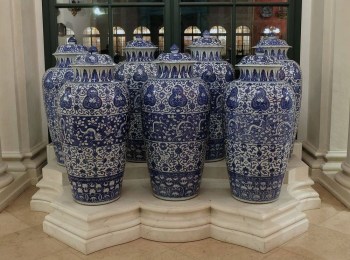
Seven of the Dragoon Vases on display in the Zwinger Palace, Dresden (Porzellansammlung, Staatliche Kunstsammlungen Dresden. Inv. Nos. PO1014/PO2064 (lid), PO1010, PO1011, PO1017, PO9130, PO9172, PO9448/ PO1013 (lid); photograph by Feng Schöneweiß, 2016).
Architects and artisans make monuments, but provenance frames monumentality in the history of collections. This seminar explores how emerging recognition of provenance shaped public perception of monumentality through a study of the transcultural biography of the Dragoon Vases (Dragonervasen).
Since 1900, generations of German antiquarians and museum professionals have celebrated what they have called Chinese monumental vases in their published writings, internal reports, and curatorial practices. Most notable are eighteen Dragoon Vases, which ‘enjoyed special fame without people actually being able to identify them’ in the early twentieth century. The name Dragoon Vases originated from the exchange of dragoon soldiers for porcelain objects between the Saxon and Prussian electors in 1717, but it took 150 years for the designation to emerge in German antiquarian and museological contexts.
Yet, another century later, the notorious Stasi of the German Democratic Republic confiscated Helmuth Meißner’s (1903–1998) art collections in Dresden, which included a large blue-and-white Chinese porcelain vase. With a Palace Number ‘N:2’ and a zigzag line incised on the reverse of its lid, the vase has a manifest provenance from the porcelain collection amassed by Augustus the Strong (1670–1733) in the Dutch Palace, the institutional predecessor of the current Porcelain Collection, Dresden State Art Collections (SKD). Despite the Stasi’s insistence on selling the vase for foreign currency, the SKD successfully claimed it by invoking its value as a ‘nationally valuable cultural property’, a legal category designating objects of national significance for Germany’s cultural heritage. How did Chinese porcelain become monumental in German antiquarian thoughts and practices? The author seeks to answer the question by ‘provenancing’ the vases in their transcultural, architectural, and local contexts during the formative phases of monumentality from 1700 to 1933.
Click here to register to view this talk via Zoom.
Click here to view this talk via YouTube.
Research Lunch Series at the Mellon Centre, Autumn 2022
Selected sessions from this fall’s Research Lunch Series at PMC:
Hans Hönes | Art History in Britain: A Scottish Innovation
Paul Mellon Centre, London, 7 October 2022, 1pm
It is widely assumed that art history made a somewhat belated entry into British academia. The foundation of the Courtauld Institute (1932) and the arrival of the exiled Warburg Institute (1933) have played a pioneering role in the establishment of degree-level teaching of the subject. While such statements are not wrong, they are certainly not the whole story. This paper discusses a range of initiatives to introduce academic art history teaching between ca. 1860 and 1930, focusing in particular on developments at Scottish Universities—Edinburgh, Aberdeen, St Andrews, and Glasgow. At Edinburgh and Aberdeen, the history of art was offered at degree-level as part of the Master of Arts (‘Ordinary’) degree; in the 1920s, Aberdeen even offered a Diploma in ‘Fine Art’. At St Andrews, art historical lectures formed part of the curriculum of disciplines such as classics. I will argue that art history in Britain first gained an institutional footing north of the border, and that this was facilitated by the specificities of Scottish Higher Education. By analysing developments in Scottish higher education I hope to redress a geographical imbalance that permeates much art historiographical writing—the result of a certain southern bias. Book tickets»
Hans C. Hönes is a Lecturer in Art History at Aberdeen University. In 2021–22, he held the Paul Mellon Centre’s Research Collections Fellowship, with a project on British art historiography in the post-war period. He has worked extensively on the history of art history and art theory since the eighteenth century, and has written and edited books on Heinrich Wölfflin (2011), eighteenth-century antiquarianism (2014), Aby Warburg (2015), and art history and migration (2019), as well as publishing articles in journals such as Oxford Art Journal, Architectural History, and Zeitschrift für Kunstgeschichte. He has just completed his third monograph, a new biography of Aby Warburg (forthcoming with Reaktion Books).
◊ ◊ ◊ ◊ ◊
Jake Subryan Richards | Anglo-Dutch Empire and Visual Culture in the Atlantic World
Paul Mellon Centre, 28 October 2022, 1pm
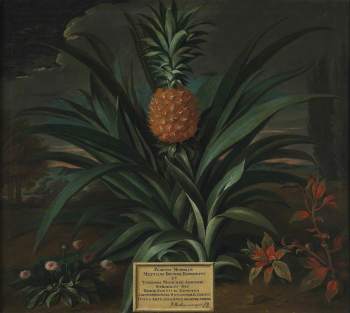
Theodorus Netscher, Pineapple Grown in Sir Matthew Decker’s Garden, 1720, oil on canvas, 85 x 95 cm (Cambridge: Fitzwilliam Museum).
This talk explores the hidden connections between the British and Dutch Empires as revealed by several paintings from the seventeenth and eighteenth centuries. Through formal and contextual analysis, the talk will investigate how artists have established and challenged visual norms related to Atlantic slavery and freedom. Book tickets»
Jake Subryan Richards is a member of the British Art Network’s Emerging Curators Group and is an Assistant Professor in the Department of International History at the London School of Economics. Between 2020 and 2024, he is the external curator of a project to investigate how the collections of the University of Cambridge Museums are connected to Atlantic enslavement and empire. Richards’ interests span Dutch and British fine art in the seventeenth and eighteenth centuries and the art of the African diaspora over the past five hundred years. Richards has published research in Past and Present and Comparative Studies in Society and History. His article on anti-slave-trade law won the 2019 Alexander Prize, and his PhD thesis was co-winner of the 2021 Prince Consort and Thirlwall Prize and Seeley Medal. He is a BBC Radio 3/AHRC New Generation Thinker.
◊ ◊ ◊ ◊ ◊
Dean Hawkes | Architecture and the Climate of England
Paul Mellon Centre, 25 November 2022, 1pm
The first chapter of Nikolaus Pevsner’s The Englishness of English Art (1956) is entitled ‘The Geography of Art’. In this Pevsner examined the influence of climate on national character and, by extension, on the art of a nation, concluding that there is, “a whole string of facts from art and literature tentatively derived from climate.” This is a question that I have explored in relation to the history of architecture, in my research in the last decade or so. In this work I have tried to show how the nature of this climate, defined by meteorologists as ‘temperate maritime’, may be represented and interpreted through the study of historic buildings and that the relationship of architecture and climate is as much a question of history and culture as it is of science and technology.
The background to the talk will be established by a brief outline of the architecture-climate relationship in England from the early modern period to the present. This will be followed by a presentation of material from recent in-depth research carried out at the sixteenth-century Hardwick Hall in Derbyshire, where a full annual cycle (2018–19) of environmental data was collected in five of the major apartments. This research, undertaken in collaboration with Dr Ranald Lawrence of the University of Liverpool, combines the methods of building science and architectural history, providing a basis from which to construct a new description of the environment in the house as it was experienced in the first years of its inhabitation at the turn of the sixteenth and seventeenth centuries, in the midst of the so-called ‘Little Ice Age’. Book tickets»
Dean Hawkes has been a teacher, researcher and practitioner of architecture for over half a century. For thirty years he taught and researched in the Department of Architecture at the University of Cambridge and, between 1995 and 2002, was Professor of Architectural Design at the Welsh School of Architecture at Cardiff University. Following his retirement he returned to Cambridge as a Fellow of Darwin College, where he continues to research and teach. He has held visiting professorships at schools of architecture in Glasgow, Hong Kong, Huddersfield, Leicester, and Singapore. His research is concerned with the relationship of architecture and the environment, with particular emphasis on the evolution of this connection in the history of architecture. This theme has been explored in a sequence of books: The Environmental Tradition (1996), The Selective Environment (2002), The Environmental Imagination (1st ed. 2008, 2nd ed. 2018), and Architecture and Climate: An Environmental History of British Architecture (2012), and in numerous papers. In 2010 he received the RIBA Annie Spink Award for excellence in architectural education.










 Enfilade
leave a comment