Research Seminar | Greg Smith on Girtin and the Artist Catalogue
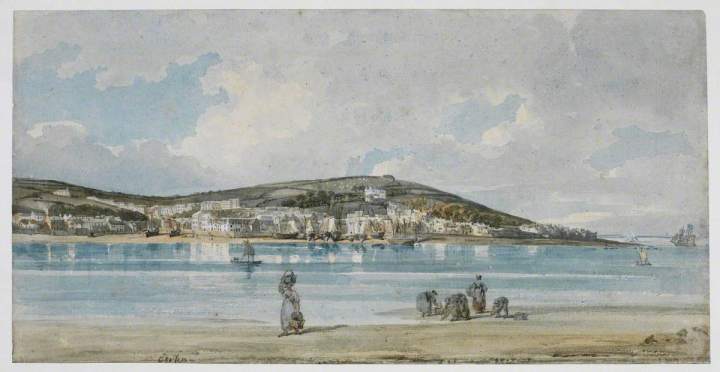
Thomas Girtin, Appledore, from Instow Sands, ca. 1800, graphite and watercolour on laid paper, 25 × 47 cm
(London: The Courtauld, D.1952.RW.846)
◊ ◊ ◊ ◊ ◊
From PMC:
Greg Smith | Rethinking the Artist Catalogue for the Online Age: Thomas Girtin (1775–1802)
Paul Mellon Centre, London, 5 October 2022, 6pm
This lecture relates to the publication Thomas Girtin (1775–1802): An Online Catalogue, Archive, and Introduction to the Artist, due to be released on 4 October.
I will begin by outlining the scope of the project and my thinking behind the site’s tri-partite structure and title: An Online Catalogue, Archive, and Introduction to the Artist. Particular attention will be paid to two challenges: how to make a free-to-access site straightforward to use for a non-specialist audience; and then, how best to ensure the future of the site as an academic resource that can develop through the incorporation of new material and research. I will then move on to consider the different sections of the site, beginning with the approximately 1550 catalogue entries that form its core. Emphasis will be placed on the features that distinguish the site from a conventionally published catalogue and why it is that I have studiously avoided using the term catalogue raisonné. I will then look at each of the sections of the Archive, focusing first on the challenge of relating the material to the rest of the site, and then summarising their current status in relation to my ambition to produce a comprehensive if not definitive record of sales, exhibitions and publications, together with extensive transcriptions of all the early biographical accounts and related manuscript material. I will conclude my introduction to the site by looking at some of its inevitable limitations, not least as a challenge to my audience to use it as a resource for the investigation of themes beyond the project’s scope. Book tickets»
Greg Smith is an independent art historian, who has published extensively on the history of British watercolours and watercolourists, as well as landscape artists working in Italy. He has also worked as a curator at the Whitworth Art Gallery, Manchester, the Design Museum, London, and the Barber Institute of Fine Art, Birmingham, and has organised exhibitions on the work of Thomas Girtin (Tate Britain), Thomas Jones (National Gallery of Wales), and Thomas Fearnley (Barber Institute of Fine Art). As Senior Research Fellow at the Paul Mellon Centre for Studies in British Art, Greg Smith is developing a major online project: Thomas Girtin (1775–1802): An Online Catalogue, Archive and Introduction to the Artist.
Online Seminar | What Does It Mean to Curate a Historic House?

Kingston Lacy, Dorset, designed by Sir Roger Pratt, ca. 1663–65.
◊ ◊ ◊ ◊ ◊
From Eventbrite:
What Does It Mean to Curate a Historic House?
Online, Monday, 26 September 2022, 11.00–12.00 BST
This session will combine a short film and panel discussion based on a British Academy-funded research project led by Dr Tarnya Cooper and Dr Oliver Cox, which explores the contemporary issues and challenges with curating a historic house owned by a heritage organisation. The short film, shot at Kingston Lacy in the summer of 2022, explores the role of the curator in a publicly-accessible historic house, discussing how to prioritise sharing what is significant rather than what is left. Following the film, Cox and Cooper will convene a panel discussion featuring leading specialists from across Europe to discuss the future for historic house curation and interpretation.
Chairs
• Oliver Cox (Head of Academic Partnerships, V&A)
• Tarnya Cooper (Curatorial and Collections Director, National Trust)
Panellists
• Sarah McLeod (Chief Executive, Wentworth Woodhouse Preservation Trust)
• Jeffrey Haworth (Historian and former National Trust Curator)
• Alice Loxton (History Hit)
• John Orna-Ornstein (Director of Curation and Experience, National Trust)
This event is delivered by The National Trust as part of the Art History Festival (20–26 September 2022), presented by the Association for Art History. The full Festival programme is available here»
Lecture | Charles Kang on Antoine Benoist’s Portraits of Louis XIV
From BGC:
Charles Kang | From Wax to Paper: Antoine Benoist’s Portraits of Louis XIV
A Françoise and Georges Selz Lecture on Eighteenth- and Nineteenth-Century French Decorative Arts and Culture
Bard Graduate Center, New York, 28 September 2022, 6.00pm
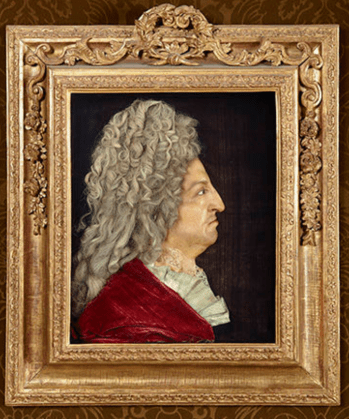
Antoine Benoist (1632–1717), Portrait of Louis XIV, ca. 1705, colored wax with a natural wig. 52 × 42 cm (Musée national des châteaux de Versailles et de Trianon).
Painter and sculptor Antoine Benoist is best known for a profile relief portrait of Louis XIV in polychrome wax. The striking verisimilitude of this work and his other wax creations readily evoke the popular wax statues at Madame Tussauds. In this lecture, Charles Kang explores the outer limits of royal portraiture at the time of Louis XIV, beyond oil paintings, marble busts, bronze statues, and medals. Kang also looks at two other works that Benoist produced towards the end of his career: a group of grisaille miniature portraits in elaborate gilt bronze frames and a manuscript biography of Louis XIV decorated with similar miniatures in gouache. Through these works, Benoist attempted to reposition himself as a chronicler of royal likeness rather than as a wax portraitist.
Charles Kang is Curator of Eighteenth- and Nineteenth-Century Drawings at the Rijksmuseum Amsterdam. Responsible for the museum’s collection of Dutch and European drawings, he is currently working on several projects, including one on the rise of private drawing societies in the Netherlands and another on the relationship between artistic drawing and early ethnography. He trained in eighteenth-century French art and visual culture and holds a PhD from Columbia University and an MA from Williams College in the history of art.
Material and Visual Culture Seminar Series, Fall 2022
From ArtHist.net:
Material and Visual Culture Seminar Series, 17th and 18th Centuries
Online, University of Edinburgh, 28 September — 7 December 2022
Each session we’ll hear from two speakers, sharing their research on, and approaches to, the study of 17th- and 18th-century material and visual culture. From reassessing how the work of female artists is read, to European visualisation of Latin America, and the exchange of objects, this year’s programme covers a broad range of topics. We aim to make a space in which these rich histories can be explored from varied disciplines to enhance our research practices. We’ll be meeting on Wednesdays, 5–6pm GMT, online using Zoom. See Eventbrite to register, view speaker abstracts, receive the joining link and reminders. Registration closes 40 minutes before seminar start time. Please contact materialcultureresearcheca@ed.ac.uk with any queries.
28 September | Approaching Identities
Chair: Georgia Vullinghs
• Emma Pearce
• Ailsa Maxwell
12 October | Patronage and Person under the Stuarts
Chair: Catriona Murray
• Sarah Hutcheson
• Megan Shaw
26 October | Baroque Devotional Visual Culture
Chair: Carol Richardson
• Lucía Jalón Oyarzun
• Sandra Costa Saldanha
9 November | Pasteboard and Printing Plates: Elusive Objects
Chair: Molly Ingham
• Chiara Betti
• Lucy Razzall
23 November | The Social Life of … Tea
Chair: Caroline McCaffrey-Howarth
• Anna Myers
• Lucy Powell
7 December | The Materiality of Making
Chair: Viccy Coltman
• Kerry Love
• Alejandro Octavio Nodarse
Tessin Lecture | Melissa Hyde on Pink and Portraits
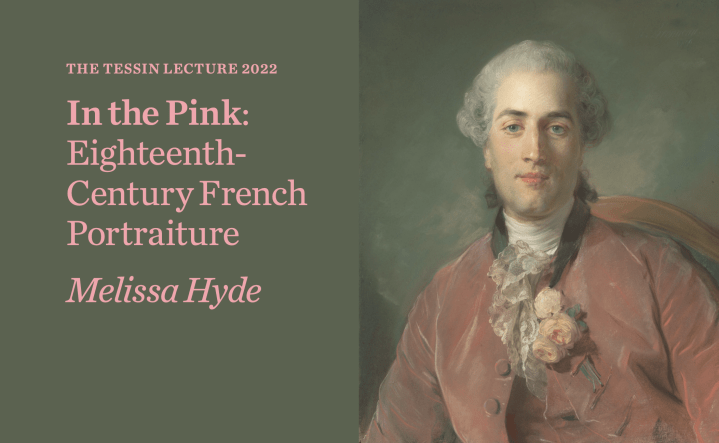
Jean-Baptiste Perronneau, Portrait of Olivier Journu, 1756, pastel on blue-gray laid paper, laid down on canvas, 58 × 47 cm
(New York: Metropolitan Museum of Art, 2003.26)
◊ ◊ ◊ ◊ ◊
This conference marks the 200th anniversary of the establishment of Sweden’s national portrait gallery at Gripsholm. Melissa Hyde will deliver this year’s Tessin lecture as the keynote address on Thursday, 15 September. The full conference schedule is available here.
Statens porträttsamling 200 år / The State Portrait Collection: 200 Years
Nationalmuseum, Stockholm and Gripsholm Castle, Mariefred, 15–16 September 2022
Melissa Hyde, In the Pink: Eighteenth-Century French Portraiture
Though never as ubiquitous in the eighteenth century as the colour blue, pink became the colour par excellence of the French Rococo. The colour was intimately associated with the so-called ‘Godmother of the Rococo’, Madame de Pompadour, the famous mistress of Louis XV. But even before Pompadour, pink was a hue much favored amongst elites in France, where it attained an unprecedented level of visibility in the visual and decorative arts and in the fashions worn by women, children, and men. This talk will demonstrate why, in the eighteenth-century, to wear pink was to make a statement—a statement made all the more emphatic and enduring when memorialized in portraiture; and one in which gender, class and/or race played a fundamental role. These matters concerning portraiture ‘in the pink’ will be addressed by way of some very basic, but actually quite complicated, questions: what did pink mean in the eighteenth century? What colors were comprehended by ‘pink’? Who did or didn’t embrace this color and why? In light of the complexities and nuances of pink, what might it have meant for a racially ‘white’ Frenchman to wear this notionally feminine colour (or to have himself depicted wearing it)?
Melissa Hyde is Professor and Distinguished Teaching Scholar at the University of Florida. Her scholarly interests include: women artists, and more broadly, the gendering of aesthetic culture, the cultural meanings of color, the history of the Salon and art criticism, self-portraiture, and questions of identity and place. She teaches courses on European art (c. 1650–1830), as well as courses on gender and the visual arts from the late Renaissance to the early nineteenth century. Professor Hyde’s research and publications focus on gender and visual culture in eighteenth- century France. Her work has appeared in The Art Bulletin, Eighteenth-Century Studies, Studies in Eighteenth-Century Culture, and numerous edited volumes. Key publications include Making Up the Rococo: François Boucher and His Critics (2006), Becoming a Woman in the Age of Enlightenment (catalogue for an exhibition she co-curated in 2017), and numerous book chapters and articles. She is author of two recent essays on the contemporary pastel artist, Nicolas Party. She is currently completing a book project entitled, Painted by Herself: Marie-Suzanne Giroust: Madame Roslin, the Forgotten Académicienne.
The Tessin Lecture
Once a year the Nationalmuseum, Stockholm invites a prominent international scholar to give a lecture in art history. The lecture, which is public, is a way to pay tribute to an exceptional scholar in art history and emphasize the museum’s commitment to research.
Online Talk | Kay Etheridge on Maria Sibylla Merian
Part of this fall’s offerings from Smithsonian Associates:
Kay Etheridge | Maria Sibylla Merian: A Biologist to the Bone
Online, Smithsonian Associates, Thursday, 17 November 2022, 6.45pm

Maria Sibylla Merian, Metamorphosis insectorum surinamensium (The Metamorphosis of the Insects of Suriname), plate 31 (Amsterdam, 1705).
The aesthetic appeal of the images created by Maria Sibylla Merian (1647–1717) has led history to label her as an artist who painted and etched natural history subjects. However, Merian was as passionate a naturalist (biologist in modern terms) as Charles Darwin or Carl Linnaeus, and like all scientists, she was impelled by her curiosity about nature. Merian was the first person to spend decades studying the relationships of insects and plants, and her work revolutionized what came to be the field of ecology. Kay Etheridge, professor emeritus of biology at Gettysburg College, draws on Merian’s own words to consider her motivations in the context of her time and place, and discusses Merian’s body of work in comparison to that of her near-contemporaries working in natural history. $20 (members) / $25 (nonmembers).
Book Discussion | Grafted Arts
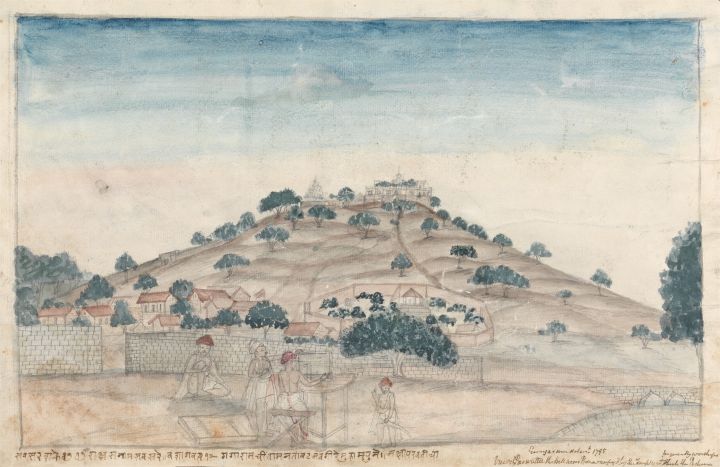
Gangaram Tambat, View of Parbati, a Hill near Poona Occupied by the Temples Frequented by the Peshwa, 1795, watercolor and graphite on paper
(New Haven: Yale Center for British Art, Paul Mellon Collection).
◊ ◊ ◊ ◊ ◊
From YCBA:
Grafted Arts: Art Making and Taking in the Struggle for Western India, 1760–1910
Virtual and in-person, Yale Center for British Art, New Haven, 7 September 2022, 4.00pm
Author Holly Shaffer, Assistant Professor of the History of Art and Architecture, Brown University, in conversation with Laurel Peterson, Assistant Curator of Prints and Drawings, Yale Center for British Art
 During the eighteenth century, Maratha military rulers and British East India Company officials used the arts to engage in diplomacy, wage war, compete for prestige, and generate devotion as they allied with (or fought against) each other to control western India. Shaffer’s book conceptualizes the artistic combinations that resulted as ones of ‘graft’—a term that acknowledges the violent and creative processes of suturing arts, and losing and gaining goods, as well as the shifting dynamics among agents who assembled such materials.
Holly Shaffer’s research focuses on art and architecture in Britain and South Asia across visual, material, and sensory cultures. Her book Grafted Arts: Art Making and Taking in the Struggle for Western India, 1760–1910 was awarded the Edward Cameron Dimock, Jr. Prize in the Indian Humanities by the American Institute of Indian Studies. Shaffer curated the exhibition Adapting the Eye: An Archive of the British in India, 1770–1830 at the Yale Center for British Art. She and Laurel Peterson, Assistant Curator of Prints and Drawings, are co-curators of an upcoming exhibition at the YCBA about artists and the British East India Company.
This program is presented through the generosity of the Terry F. Green 1969 Fund for British Art and Culture.
To watch the livestream on September 7 at 4.00pm, please click here»
◊ ◊ ◊ ◊ ◊
Note (added 15 August 2022) — The posting was updated with the new time (4.00).
Online Talk | Felicity Myrone on Prints and Drawings at the BL

King’s Concordance, C.23.e.4. f.34r (London: The British Library).
◊ ◊ ◊ ◊ ◊
Felicity Myrone | Prints and Drawings at the British Library: Revealing Hidden Collections
Wallace Collection Seminars on the History of Collections and Collectin
Online, Monday, 25 July 2022, 17.30 (BST)
It is our pleasure to invite you to the next Wallace Collection Seminar in the History of Collecting. Viewing options are provided below.
The British Library’s collections contain extensive visual materials, much originating from its foundation as part of the British Museum. While the collections that remained at the Department of Prints and Drawings at the British Museum have now been fully catalogued, there is currently no index or catalogue to the British Library’s far more extensive holdings of prints and drawings. Valuable and diverse collections and materials are usually unlisted and undescribed, found in collective records and in items categorised as other formats.
A project to make more of the Library’s collections accessible is now underway. With the support of a Getty Paper Project grant and building on a Paul Mellon Mid-Career Fellowship, this involves writing the first handbook to the prints and drawings collections. What do we hold and why? How are our prints and drawings currently described, or more commonly, not? How can archival research into the collections—including historic acquisitions and Library/Museum duplication and transfers—help us to question the long-held assumption that art found its natural place at the Print Room? This paper explores how the perceived purpose and status of prints and drawings has varied and developed in the context of library collections in the 18th and 19th centuries, using case studies drawn from the history of the British Museum and Library.
Felicity Myrone is Lead Curator of Western Prints and Drawings at the British Library in London.
Workshop | Japanese Woodblock Printing
The Wonders of Woodblock Printing: Experiencing Early Modern Japan, with block cutter Nagai Saeko and printer Ogawa Nobuto, in conversation with Elenor Ling and Laura Moretti
Fitzwilliam Museum, Cambridge, 13 August 2022, 2pm
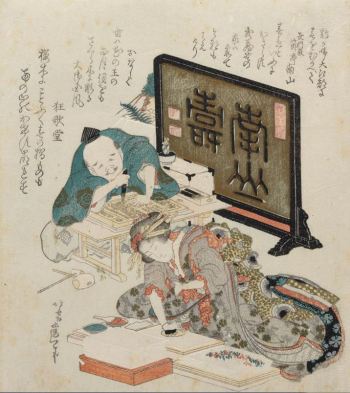
Katsushika Hokusai, Block-cutting and printing surimono, 1825, color print from woodblocks, with metallic pigment and blind embossing, 213 x 191 mm (Cambridge: Fitzwilliam Museum, P.438-1937).
Wonderfully flexible in shaping visionary mise-en-page and in combining text and images, woodblock printing fuelled a buoyant publishing industry in early modern Japan. From the seventeenth century until the end of the nineteenth century woodblock-printed books and ephemera inundated the market, firing the imagination of authors, artists, publishers, and readers. This two-hour workshop brings this rich tradition to your fingertips, featuring professional block cutter Nagai Saeko and printer Ogawa Nobuto from the Sekioka Mokuhanga studio in Tokyo. You will observe how a woodblock is cut, experience how to print from it, and engage with original early modern woodblocks. In conversation with Laura Moretti, there will be a chance to learn more about how a publisher’s workshop would have operated. There will also be an opportunity to view some of the Fitzwilliam’s colour woodblock prints and printed books in the Study Room with Curator Elenor Ling.
This workshop is run in conjunction with the Ninth Summer School in Early Modern Palaeography at Emmanuel College. It is generously sponsored by The Great Britain Sasakawa Foundation, Mitsubishi Corporation London Branch, and Jonathan Hill Bookseller.
Book your place here»
Online | Hogarth’s Topographies: ‘The Five-Day Peregrination’
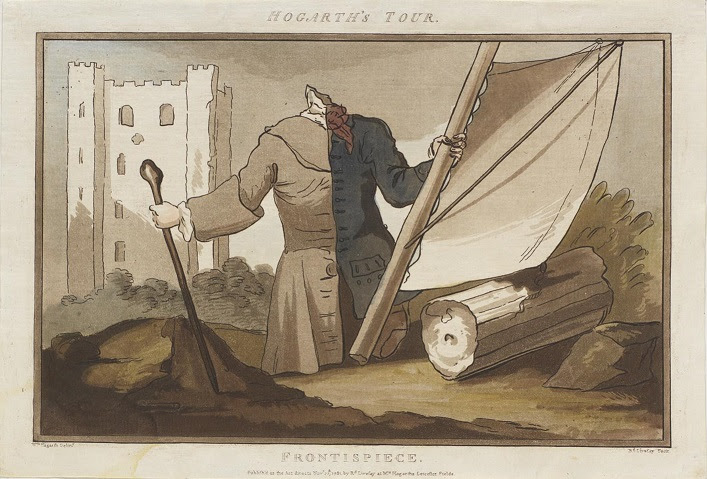
Hogarth’s Tour / Frontispiece, An Account of What Seemed Most Remarkable in the Five Days Peregrination, 27 November 1781, etching and aquatint in sepia ink with hand coloring on laid paper; sheet 23.6 × 34.5 cm (Lewis Walpole Library H67).
◊ ◊ ◊ ◊ ◊
From The Lewis Walpole Library, Yale Library:
Jacqueline Riding and Caroline Patey | ‘The Five-Day Peregrination’: A Dizzy Journey through the Topographical History of Kent
William Hogarth’s Topographies: A Series of Conversations
Online, The Lewis Walpole Library, Wednesday, 20 July 2022, noon (EDT)
Topography is central to William Hogarth’s canonical progress series in which London settings play a decisive narrative role. Lesser-known works by the artist, however, also engage with topographical representation. Pierre Von-Ow’s online exhibition William Hogarth’s Topographies considers the artist’s illustrations of national and colonized geographies beyond the metropole. The county of Kent is the site of a tour undertaken in May 1732 by Hogarth and a group of friends who collectively memorialized the adventure as The Five-Day Peregrination. The exhibition presents the peregrination as both a jesting imitation of the Grand Tour of the landscapes and monuments of Europe and as a satire of the British antiquarians who, since at least the sixteenth century, had minutely inventoried the country’s history and antiquities as a means of reclaiming a glorious past.
Jacqueline Riding and Caroline Patey will discuss the textual and visual representations recorded by Hogarth and his fellow travelers of their tour of Kent, first in manuscript (now in the British Museum) and later published as An Account of What Seemed Most Remarkable in the Five Days Peregrination (1782, etc.). The event seeks to explore the connections between this little-known project and the broader literature of actual and invented travels, as well as the history of Kent and its ties to the global expansion of the British Empire. Dr. Riding has structured her recent biography Hogarth: Life in Progress (2021) with eight interludes that address different aspects of The Peregrination. Dr. Patey is currently working on a translation of The Peregrination into Italian. Riding and Patey will share their thoughts about why the tour of Hogarth and his friends continues to demand attention bringing to this program insights from their recent and current work.
This program is organized by The Lewis Walpole Library, Yale University, in conjunction with the online exhibition William Hogarth’s Topographies curated by Pierre Von-Ow, PhD candidate in Yale’s Department of The History of Art.
This is an online event, and registration is required. Register here»
Professor Caroline Patey has studied English and Comparative literature in Paris (Paris III), Dublin UCD, and the Università degli Studi, Milan, where she was Chair and Professor of English Literature until 2018. Her interests and fields of research include Renaissance literature, late Victorian culture and Modernism with a special focus on intermediality, the intersection between art, museums and literature, and the cross-border circulation of cultures and aesthetic forms. She has edited and co-edited the outcome of various collective explorations of these topics and has published numerous book-length studies on subjects as diverse as Proust and Joyce (1991), Mannerism (1996), Shakespeare and history (1998), and Henry James (2004). Together with Cynthia Roman (Yale) and Georges Letissier (Nantes), she has recently co-edited the two volumes of Enduring Presence: William Hogarth’s Afterlives in British and European Culture (2021). Since her retirement in late 2018, Caroline has taught specialist seminars in Italy and Germany (Bard College, Berlin, 2020). She co-directs a collection of critical essays on British and Anglophone literature, Prismi, Classici nel tempo, Mimesis, Milano, and sits on the board of the journal of comparative literature, Letteratura e Letterature.
Dr Jacqueline Riding specializes in British history and art of the long eighteenth century. She is the author of Jacobites: A New History of the ’45 Rebellion (2016), Peterloo: The Story of the Manchester Massacre (2018), and Hogarth: Life in Progress (2021), which has been awarded the Sunday Times Art Book of the Year 2021 and a Times and Sunday Times Paperback of 2022. Former curator of the Palace of Westminster and director of the Handel House Museum, London, she is a historical adviser on feature films including Mike Leigh’s Mr. Turner (2014) and Peterloo (2018), a consultant for museums and historic buildings including Tate Britain and Historic Royal Palaces, and Books Editor for The Art Newspaper. Jacqueline is a fellow of the Royal Historical Society, the Society of Antiquaries of Scotland, the Paul Mellon Centre for Studies in British Art, the Department of the History of Art, University of York, and trustee of the Jacobite Studies Trust and [JMW] Turner’s House, London.










 Enfilade
leave a comment