Conversations | Regarding History: American Art in Perspective
From The Met:
Regarding History: American Art in Perspective
The Metropolitan Museum of Art, New York, 1 November 2025
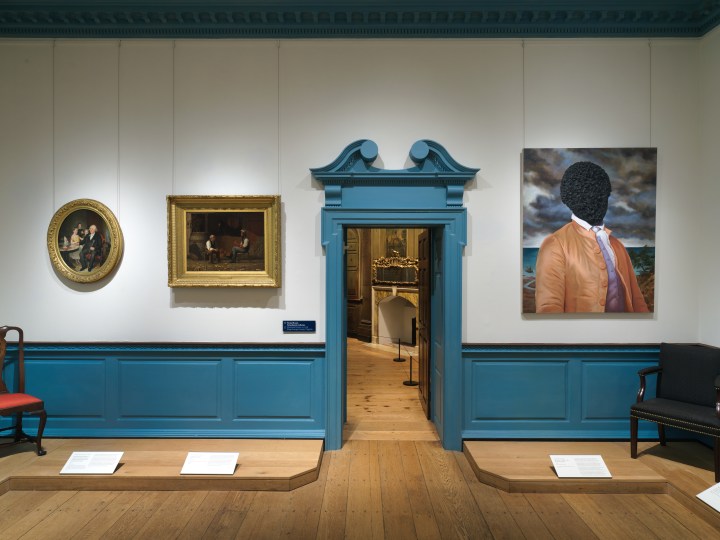 Join curators, academics, and artists to mark the end of the American Wing’s 100th anniversary with dynamic conversations and presentations that explore multilayered interpretations of American art and history. Discover how diverse institutions and individuals are bringing history to life for audiences through a variety of engaging approaches that activate digital technologies, showcase innovations in visual and material object-based displays, and center the power of place and the potential for contemporary artistic interventions. Presentations will be recorded and posted soon after the event on The Met’s YouTube channel.
Registration for in-person attendance is available here»
s c h e d u l e
11.00 Introduction — Sylvia Yount (Lawrence A. Fleischman Curator in Charge of the American Wing, The Met)
11.15 Keynote Conversation
• Edward Ayers (Tucker-Boatwright Professor of the Humanities and President Emeritus, University of Richmond)
• Christy Coleman (Executive Director, Jamestown-Yorktown Foundation)
12.15 Break
1.30 Curatorial Roundtable
Moderated by Sylvia Yount
• Layla Bermeo (Museum of Fine Arts, Boston)
• Kathleen Foster (Philadelphia Museum of Art)
• Sarah Kelly Oehler (Art Institute of Chicago)
2.30 Artist Presentation — Titus Kaphar
3.00 Closing Remarks
New Book | Protestant Relics in Early America
From Oxford UP (use code AAFLYG6 for a 30% discount) . . .
Jamie Brummitt, Protestant Relics in Early America (New York: Oxford University Press, 2025), 560 pages, ISBN: 978-0197669709, $149.
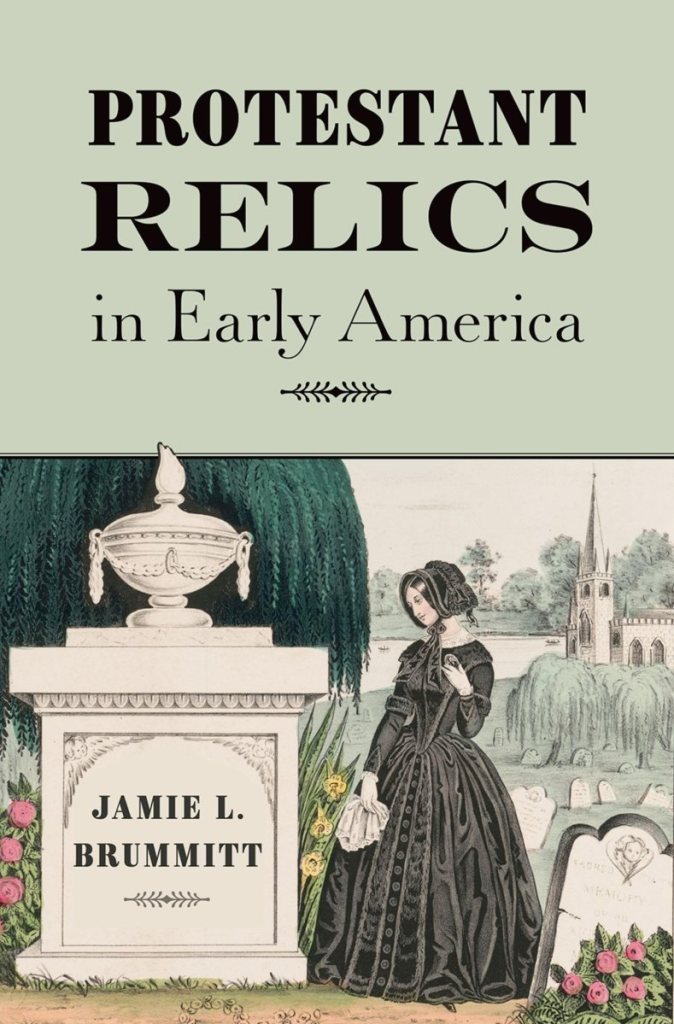 In Protestant Relics in Early America, Jamie L. Brummitt upends long-held assumptions about religion and material culture in the early United States. Brummitt chronicles how American Protestants cultivated a lively relic culture centered around collecting supernatural memory objects associated with dead Christian leaders, family members, and friends. These objects materialized the real physical presences of God, Jesus, the Holy Spirit, and souls of the dead on earth.
As Brummitt demonstrates, people of nearly all Protestant denominations and walks of life—including members of Congress, college presidents, ministers, mothers, free Black activists, schoolchildren, and enslaved people—sought embodied and supernatural sense experiences with relics. They collected relics from deathbeds, stole relics from tombs, made relics in schools, visited relics at pilgrimage sites like George Washington’s Mount Vernon, purchased relics in the marketplace, and carried relics into the American Revolution and the Civil War. Locks of hair, blood, bones, portraits, daguerreotypes, post-mortem photographs, memoirs, deathbed letters, Bibles, clothes, embroidered and painted mourning pieces, and a plethora of other objects that had been touched, used, or owned by the dead became Protestant relics. These relic practices were so pervasive that they shaped systems of earthly and heavenly power, from young women’s education to national elections to Protestant-Catholic relations to the structure of freedom and families in the afterlife.
In recovering the forgotten history and presence of Protestant relics in early America, Brummitt demonstrates how material practices of religion defined early American politics and how the Enlightenment enhanced rather than diminished embodied presence. Moreover, Brummitt reveals how the secular historical method has obscured the supernatural significance of relics for the Protestants who made, collected, exchanged, treasured, and passed them down. This book will be an essential resource for scholars and students of early American history, religion, politics, art, and popular culture.
Jamie L. Brummitt is an Associate Professor of American religions and material culture at the University of North Carolina Wilmington. Brummitt earned her PhD from Duke University. In 2017, Brummitt was the recipient of the Anthony N. B. and Beatrice W. B. Garvan Research Fellowship in American Material Culture at The Library Company of Philadelphia. She is also a past fellow of the George Washington Presidential Library at Mount Vernon; Winterthur Museum, Garden and Library; the Filson Historical Society; and the New England Regional Fellowship Consortium.
c o n t e n t s
Introduction: The History and Presence of Protestant Relics
1 From ‘Memorials and Signs’ to ‘Art That Can Immortalize’: The Evangelical Enlightenment’s Influence on Real Presence in Protestant Relic Culture
2 The ‘Precious Relict[s]’ of George Whitefield: Collecting the Supernatural Memory Objects of a Dead Minister and the Spread of Masculine Mourning in Late Eighteenth-Century Evangelicalism
3 The ‘Invaluable Relique[s]’ of George Washington: Sensing the Heavenly Presence of America’s Savior and the Politics of Protestant Relics in the Early Republic
4 ‘The Reign of Embroidered Mourning Pieces: The Rise and Decline of Handmade Relics in Young Protestant Women’s Education and the ‘Feminization’ of Mourning
5 ‘A Sacred Relic Kept’: The Evangelical ‘Good Death’ Experience and Protestant Relics in the Marketplace
6 ‘Protestant Evidence on the Subject of Relics: Catholic Encounters with Protestant Relic Practices and the Christian Roots of American Civil Religion
7 ‘I Was Not a Slave with These Pictured Memorials’: Supernatural Deathbed Experiences as Justifications for Slavery and the Work of Protestant Relics in Black Liberation
8 The Deaths and Afterlives of Protestant Relics: Or, Why Enlightened People Forgot the History and Presence of Protestant Relics
Notes
Bibliography
◊ ◊ ◊ ◊ ◊
Online Talk | Protestant Relics in Early America with Jamie Brummitt
The Library Company of Philadelphia, Thursday, 20 November 2025, 7pm (ET)
Virtual Event | Free
Registration is available here»
Exhibition | Thomas Patch and the British Grand Tour
Opening this week at the Lewis Walpole Library:
Caricatures, Campagna, and Connoisseurs:
Thomas Patch and the British Grand Tour in Eighteenth-Century Italy
Lewis Walpole Library, Farmington, CT, 10 September — 15 December 2025
Curated by Hugh Belsey
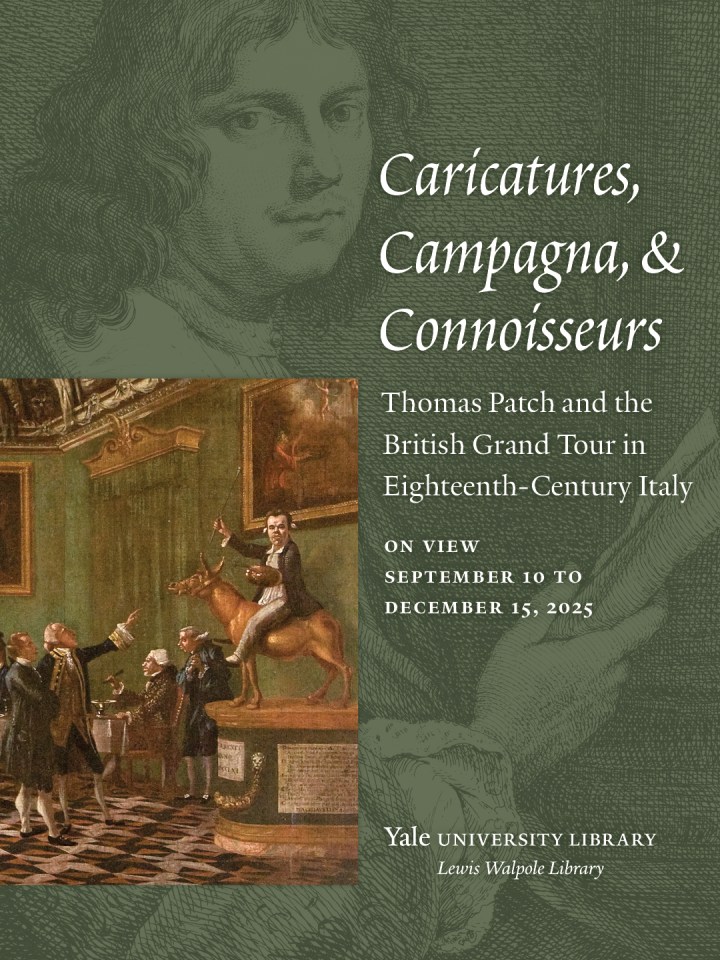 Known primarily as a caricature artist, Thomas Patch (1725–1782) in fact engaged in a much wider array of activities. He was a landscape painter, experimental printmaker, and a dealer of antiquities and old master paintings. He was also among the first scholars of early Renaissance art. This exhibition will explore the many aspects of Patch’s art, life, and associations with the British community of diplomats, tourists, artists, and collectors in Italy.
Hugh Belsey, a graduate of the Universities of Manchester and Birmingham, has lectured to groups in Europe, America, Australia, and Britain. For twenty-three years he was the curator of Gainsborough’s House in Sudbury (UK) where he formed one of the largest collections of the artist’s paintings and drawings. In 2004 he was awarded an MBE in recognition of his museum work. His long-awaited catalogue of portraits by Thomas Gainsborough was published by Yale University Press in February 2019, and was awarded the William W.B. Berger Prize for British Art History in 2020.
The exhibition brochure is available at the Library’s website»
Exhibition Lecture | Caricatures, Campagna, and Connoisseurs
Presented by Hugh Belsey, guest curator and independent scholar
Thursday, October 16, 7pm
Space is limited and advance registration is required.
New Book | Lady Charlotte Schreiber, Extraordinary Art Collector
Coming soon from Lund Humphries (with a related online talk scheduled for October 21) . . .
Caroline McCaffrey-Howarth, Lady Charlotte Schreiber, Extraordinary Art Collector (London: Lund Humphries Publishers, 2025), 192 pages, ISBN: 978-1848226814, £40.
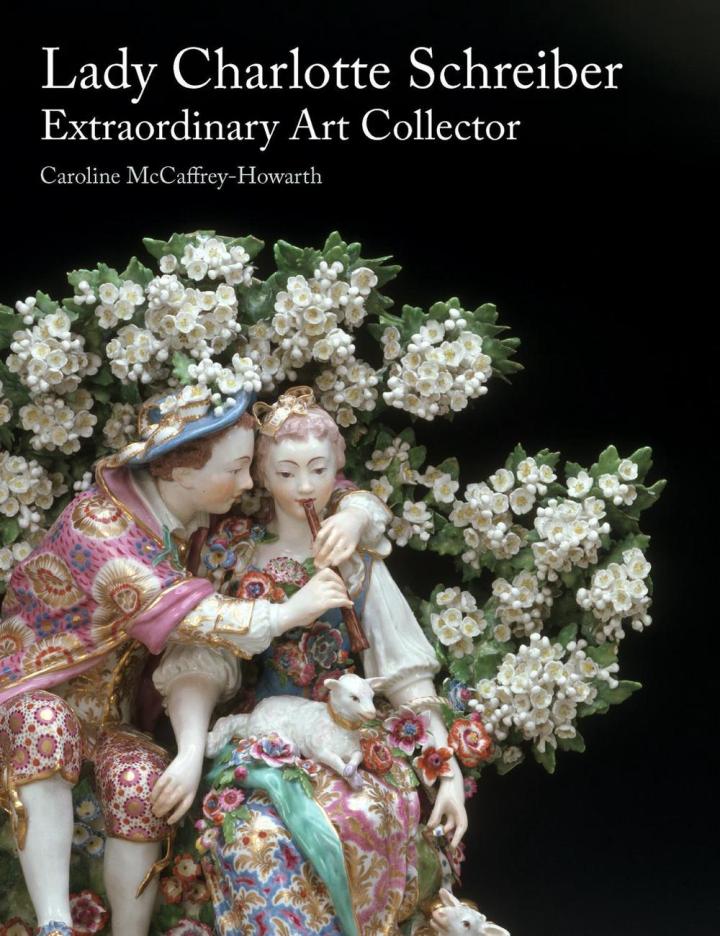 This book emphasises Lady Charlotte Schreiber (1812–1895)—also known as Lady Charlotte Guest, née Bertie—as one of the most significant women in the history of collecting. An extraordinary collector, historian, and philanthropist, Charlotte subverted gendered norms and challenged Victorian conventions. This new study establishes Charlotte’s contribution to ceramic history and cultural education, and demonstrates her influential role in transnational artistic networks. Charting Charlotte’s eventful life, McCaffrey-Howarth focuses on her identity as a renowned connoisseur, whose donation of thousands of objects to the Victoria & Albert Museum and the British Museum marked a pioneering move for a female benefactor. Lady Charlotte Schreiber, Extraordinary Art Collector presents unique insight into the social and cultural world of Victorian England and the role of women within this.
Caroline McCaffrey-Howarth is Lecturer in History of Art at the University of Edinburgh. She was previously Curator of Ceramics and Glass at the Victoria and Albert Museum and Curator of The Chitra Collection.
c o n t e n t s
Acknowledgements
List of Illustrations
Introduction: China-Hunting with Charlotte
1 ‘A Man’s Education’
2 A Welsh Heiress
3 Becoming a Collector
4 ‘Our Ceramic Chasse’
5 English Ceramic Art
6 Collecting World History
7 ‘My Adieux to the Collection’
Conclusion: ‘Old Life Reminiscences’
Bibliography
◊ ◊ ◊ ◊ ◊
Online Talk | Caroline McCaffrey-Howarth on Lady Charlotte Schreiber
Tuesday, 21 October 2025, 14.00–15.30 GMT-4
Part of the series Victorians in the Bookshops, organized by The Victorian Society
Registration is available here»
Lecture | Restoration of the Chancellerie d’Orléans in Paris
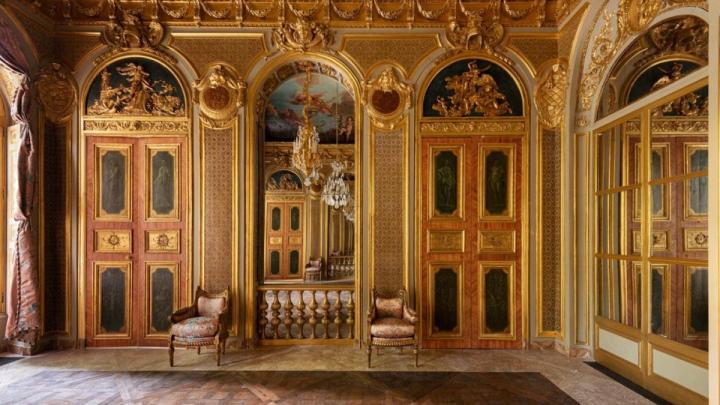
Grand salon de la Chancellerie d’Orléans remonté à l’hôtel de Rohan, 2021 (© Archives nationales de France / Nicolas Dion and Nicolas Cantin).
◊ ◊ ◊ ◊ ◊
In November at BGC:
Bénédicte de Montlaur and Cinzia Pasquali
Reconstructing and Restoring an 18th-Century Parisian Landmark
A Selz Lecture in 18th- and 19th-Century French Decorative Arts and Culture
Bard Graduate Center, New York, 5 November 2025
For over twenty years, World Monuments Fund undertook the remarkable task of restoring the historic Chancellerie d’Orléans. Built in Paris in the early eighteenth century, the Chancellerie displays a decorative program consisting of paintings, stucco, and wood carving by some of the leading artists of the time. In the early twentieth century, the interior was dismantled and put into storage. These treasures were forgotten for nearly a century, until World Monuments Fund began work to reconstruct and restore the spaces. In this presentation, World Monuments Fund president and CEO Bénédicte de Montlaur is joined by the project’s conservator, Cinzia Pasquali. Together, they will narrate the history of the Chancellerie and the conservation work that brought this important example of Rococo interiors back to public view.
Bénédicte de Montlaur is the president and CEO of World Monuments Fund (WMF), leading its mission to safeguard irreplaceable heritage working with local communities worldwide. She is responsible for defining and implementing WMF’s strategic vision in more than thirty countries and leading an international team of seventy employees, as well as an additional four hundred cultural conservation professionals around the world. Under her tenure, WMF has developed the programs Crisis Response Fund and the Climate Heritage Initiative, has opened offices in France and China, and has expanded the International Council of World Monuments Fund, which currently boasts nine chapters globally. De Montlaur’s background mixes culture and the arts, politics, international diplomacy, and human rights. Prior to joining WMF, de Montlaur spent two decades as a senior diplomat with the French Ministry of Foreign Affairs. She served as Cultural Counselor at the French Embassy in the United States, where she led France’s largest international cultural advocacy network and its two partner foundations—Albertine and FACE—directing a team of ninety people in ten US offices. Previously, she was deputy assistant secretary in charge of North Africa at the French Ministry of Foreign Affairs in Paris, United Nations Security Council negotiator on Africa and the Middle East in New York, and French Embassy first secretary in Damascus, Syria. De Montlaur studied sociology and Arabic at the École Normale Supérieure (Ulm) and public affairs at Sciences Po, Paris. She was a Marshall Memorial Fellow at the German Marshall Fund. She has served on the boards of several cultural and educational institutions and is currently a board member of the Maison Francaise at Columbia University. In 2011 she curated an original photographic exhibition entitled Islam and the City. Beyond her professional accomplishments, de Montlaur is a polyglot—speaking French, English, Arabic, and Spanish—and completed the New York City Marathon in 2011 and 2024.
Cinzia Pasquali is a conservator-restorer specializing in painting and sculpture, trained at the Istituto Centrale per il Restauro (ISCR) in Rome and holding a master’s degree in conservation-restoration from Université Paris III. She has led major restoration projects in Italy and France, including the Galerie d’Apollon at the Louvre, the Hall of Mirrors at Versailles, and the Grande Singerie at Chantilly. Cinzia led the restoration of the interior decors of the Chancellerie d’Orléans. Collaborating with the Centre for Research and Restoration of the Museums of France (C2RMF), she has restored key masterpieces by Leonardo da Vinci, Bronzino, and Piero di Cosimo. Internationally recognized for her expertise in painting diagnostics, she frequently works with museums and contributes to academic conferences and publications. She also helped establish a conservation training program in the Maghreb and Middle East through the European TEMPUS project.
Wednesday, 5 November 2025, 6pm
38 West 86th Street, Lecture Hall
gallery@bgc.bard.edu
$15 General | $12 Seniors | Free for people associated with a college or university, people with museum ID, people with disabilities and caregivers, and BGC members. Book tickets here.
Bard Graduate Center is grateful for the generous support of the Selz Foundation.
Lecture | Matthew Hirst on the Restoration of Woburn Abbey
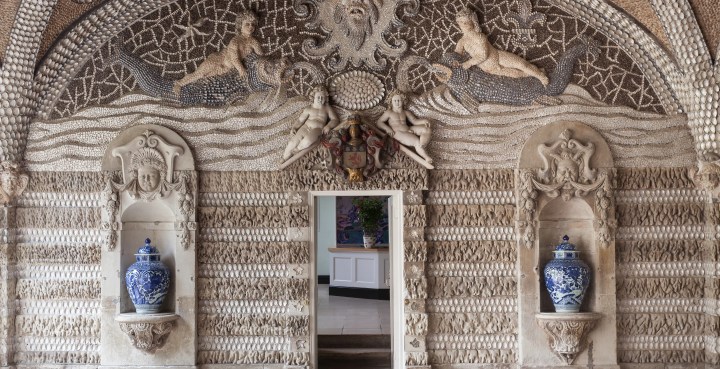
Grotto at Woburn Abbey, Bedfordshire. Originally a Cistercian abbey, Woburn became the seat of the Russell family and the Dukes of Bedford in the 16th century. The house was rebuilt in the early 17th century, with a second rebuilding undertaken in the mid-18th century to designs by Henry Flitcroft and John Sanderson. The Grotto is one of the few surviving 17th-century shellwork rooms in Britain.
◊ ◊ ◊ ◊ ◊
From the Rijksmuseum:
Matthew Hirst | The Transformation of Woburn Abbey
Daniel Marot Lecture, Rijksmuseum, Amsterdam, 16 September 2025
Matthew Hirst will speak about the restoration and refurbishment of Woburn Abbey, home of the Duke and Duchess of Bedford, and one of the great historic treasure houses of Britain.
In November 2019 Woburn Abbey closed to visitors to undergo a generational programme of restoration and refurbishment which will ensure the survival of this remarkable house and collection for centuries to come. Works are still underway—the house has undergone a transformation—and when it reopens the collections, much of which will have been conserved, will be redisplayed to dramatic effect. The new presentation will showcase the history and development of Woburn Abbey from monastic times to the present day. Matthew will highlight some of the changes that can be expected, in particular the renaissance of the Grotto Apartment, a suite of three rooms from the early 17th century created for the 4th Earl of Bedford. He will also share some of the more intriguing discoveries that have been made along the way and give a flavour of what can be expected when the Abbey reopens to the public.
Matthew Hirst is Curator of the Woburn Abbey Collection. He began his career at Waddesdon Manor. In 2007 he took up the new post of Head of Arts & Historic Collections for the Devonshire Collections, managing a major conservation programme and the representation of many of the historic interiors at Chatsworth. In 2015 Matthew moved to Woburn Abbey, and has since researched and developed a major representation and restoration of the house, marking the largest programme of works at the Abbey since it opened to the public in 1955. Matthew is also a trustee of the Wentworth Woodhouse Preservation Trust and the Leche Trust.
Every year, the Daniel Marot Fund/Rijksmuseum Fund organises the Daniel Marot Lecture, which provides a podium for a national or international expert in the field of interior history and applied art.
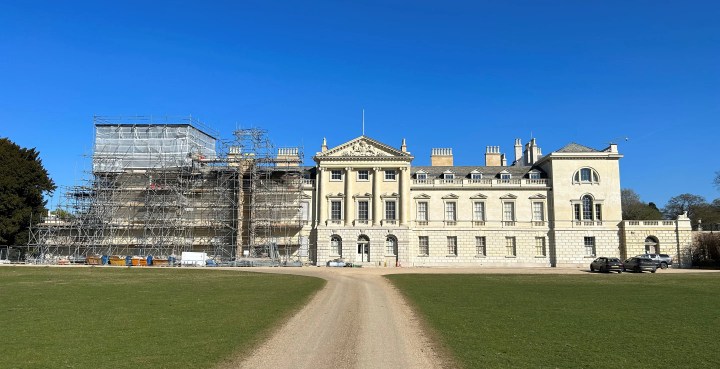
West front, Woburn Abbey, Bedfordshire.
◊ ◊ ◊ ◊ ◊
From Woburn:
Much work has been completed including the project to reinstate and restore the curtain walls that enclose the Great Court to the rear of the Abbey. These impressive structures were in a state of decay due to the nature the stone used to build them in the eighteenth century. Following a lengthy planning process they have now been completely rebuilt, using Portland stone and traditional materials with modern engineering.
The curtain walls project is just one aspect of our current programme of works. Dramatic changes to the guest arrival are now underway, and thanks to a grant from Historic England, we have restored the east range of the North Court and reinstated the original roofline, not seen since it was destroyed by fire in 1947.
Guided both by rigorous research and the requirements of modern family life, the Abbey’s interiors are being conserved and re-presented, underpinned by essential services work and using traditional materials and methods.
Major highlights of our conservation programme include the restoration of Issac de Caus’s 17th-century Grotto with the famous shell-lined interior at its centre. A remarkable survival through successive architectural change, this fantastical room is unique and will be at the heart of the home, serving as the new guest entrance.
For the first time in over 250 years and following a five-year conservation programme, the Mortlake Tapestries will hang once again in the room for which they were commissioned by the 5th Earl of Bedford, and elsewhere wall-finishes will be recreated from historic evidence. The Long Gallery and the family’s Dining Room, with its famous collection of Venetian paintings by Canaletto, will be redecorated to reflect the taste of the present generation, informed and guided by the past.
Exhibition, Panels, and Talks | Trois Crayons Presents Tracing Time
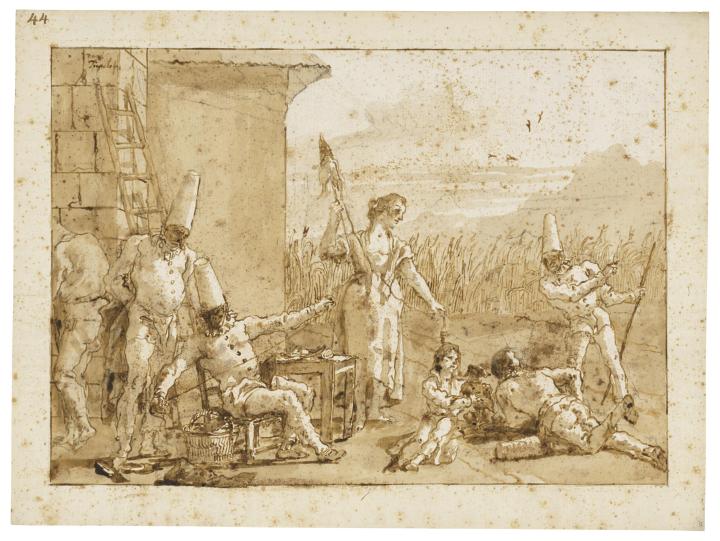
Giovanni Domenico Tiepolo, Punchinello and His Family Spinning Flax, pen and brown ink and wash, over an underdrawing in black chalk, with framing lines in brown ink; signed ‘Domo / Tiepolo f’ at the upper left and numbered 44 in the upper left margin, sheet: 345 × 464 mm (Stephen Ongpin Fine Art). More information about the drawing is available from Christie’s (Sale 21459, 4 July 2023, Lot 41).
◊ ◊ ◊ ◊ ◊
From Trois Crayons:
Tracing Time / Trois Crayons
Frieze No.9 Cork Street, London, 26 June — 5 July 2025
Trois Crayons is pleased to announce Tracing Time, a selling exhibition dedicated to drawings and works on paper held at Frieze No. 9 Cork Street this summer from 26 June until 5 July 2025. Tracing Time is the second annual exhibition hosted by Trois Crayons, an innovative platform which aims to increase the awareness, accessibility and visibility of drawings in all their forms. The exhibition will present the finest drawings and masterpieces on paper from renowned galleries and dealers which span the 15th century until the present day. Tracing Time will showcase works by artists such as Hans Rottenhammer, Giovanni Domenico Tiepolo, J.M.W. Turner, Auguste Rodin, Gustav Klimt, Jean Cocteau, and Françoise Gilot, presenting rare-to-market works.
Breaking from tradition, the Trois Crayons model includes no gallery booths; instead, all artworks are thoughtfully curated by a team of experts to create an enjoyable exhibition of the highest standard. A further deviation from the norm, the Trois Crayons model allows participants the ability to exhibit in London without the need to be physically present; dedicated and knowledgeable Trois Crayons staff will be on hand to assist visitors and buyers.
Tracing Time sees over 35 international galleries participating and more than 250 works being exhibited, doubling in size since its debut exhibition in 2024. New galleries this year include Wildenstein & Co. (New York), Rosenberg & Co. (New York), and Lowell Libson & Jonny Yarker Ltd (London), as well as a collaboration with Maak (London and Berkshire), a contemporary ceramics auction house presenting a selection of ceramic works and accompanying works on paper.
Highlights include
• Day & Faber will present a study of animals from the North Italian school that has survived more than 500 years.
• Surprising works from the world of fashion and jewellery will be presented, such as the creations of jeweller René Lalique (with Agar Marteau Fine Art) and a costume study by Antoine Caron (with Galerie Duponchel).
• John Swarbrooke Fine Art will bring a museum quality drawing by Klimt that relates to the painting Die Hoffnung I (Hope I) that hangs in the National Gallery of Canada, Ottawa.
• Works from the late 19th century to the present day from Sweden will be presented by galleries such as Clase Fine Art and Colnaghi Elliott Master Drawings, depicting the spiritual and emotional essence of Nordic art.
• Celebrating its 150th anniversary, Wildenstein & Co. will be showing a selection of French works on paper including a study for Leda and the Swan by Edmé Bouchardon and a cubist watercolour by Georges Braque.
“We have made it our mission to demystify acquiring drawings by the world’s best artists. Through our innovative presentation model, we are working to create an environment where buying drawings and works on paper is a pleasurable and straightforward experience that both established and new collectors can equally enjoy. From our installation style to our talks programme, each visitor is encouraged to engage with the medium in new and meaningful ways. Works on paper are one of the most democratic areas in the art market, and we hope to share our passion for paper with all who visit.”
–Alesa Boyle, Tom Nevile, and Sebastien Paraskevas (Founders of Trois Crayons)
◊ ◊ ◊ ◊ ◊
At Frieze No.9 Cork Street, the basement auditorium will play host to a series of talks from leaders and specialists in the field of drawings and works on paper, and Trois Crayons will offer off-site tours at The British Museum, The Courtauld Gallery, and Sotheby’s. All events are free to attend with advance registration.
o n – s i t e e v e n t s
Opening Reception (Vernissage)
25 June 2025, 6pm, rsvp@troiscrayons.art
Timeless Materials: A Conversation on Drawing with Contemporary Artists
27 June 2025, 4pm
Moderator: Annette Wickham (Former Works on Paper Curator, Royal Academy of Arts)
Panellists: Joana Galego, Nicholas C. Williams, and Pippa Young
Women Artists in Focus: Curating New Narratives
28 June 2025, 2pm
Moderator: Euthymia Procopé (Director of Development, Rediscovering Art by Women)
Panellists: Jennifer Higgie (author of The Mirror and the Palette: Five Hundred Years of Women’s Self Portraits and The Other Side: A Story of Women in Art and the Spirit World), Amy Lim (Curator of The Faringdon Collection at Buscot Park, Oxfordshire), and Rachel Sloan (Associate Curator of Works on Paper, The Courtauld Gallery)
The Drawings of John Constable
30 June 2025, 4pm
Guest speaker: Susan Owens (former Curator of Paintings at the V&A; her recent book The Story of Drawing: An Alternative History of Art won the Apollo Book of the Year award in 2024; she is currently preparing a book on Constable, to be published in 2026).
Piccadilly Jim: The Discovery of James Gibbs’s Designs for the Façade of Burlington House
1 July 2025, 4pm
Guest speaker: William Aslet (Scott Opler Fellow, Worcester College, University of Oxford)
In partnership with The Burlington Magazine
New Ways of Looking at Italian Renaissance Drawings
2 July 2025, 4pm
Moderator: Luca Baroni (L’IDEA – Testi Fonti Lessico Disegni)
Panellists: Martin Clayton (Head of Prints and Drawings, Royal Collection Trust), Rachel Hapoienu (Assistant Curator of Works on Paper, The Courtauld Gallery), Tom Nevile (co-founder, Trois Crayons), and Catherine Whistler (Research Keeper, Western Art Department, Ashmolean Museum)
In partnership with L’IDEA
The Intimate Collector: Why Drawings Thrive in the Digital Age
3 July 2025, 4pm
Moderator: Bethany Woolfall (Arcarta Vice President of Customers)
Panellists: Alesa Boyle (Co-founder, Trois Crayons, London and Gallery Director, Stephen Ongpin Fine Art, London), Gregory Rubinstein (Sotheby’s, Senior Director and Head of the Old Master Drawings Department Worldwide), and Lorna Tiller (Senior Gallery Partnerships Manager, Artsy)
In partnership with Arcarta
Between Drawings and Ceramics
4 July 2025, 4pm
A lively panel discussion exploring the parallels and contrasts in how drawings and ceramics are collected, appreciated, and understood.
In partnership with Maak
The Drawings of Jean-Antoine Watteau
5 July 2025, 2pm
Moderator: Jennifer Tonkovich (Associate Editor, Master Drawings and Eugene and Clare Thaw Curator, Drawings and Prints, Morgan Library & Museum)
Panellists: Grant Lewis (The Smirnov Family Curator of Italian and French Prints and Drawings, 1400–1880 at the British Museum and curator of Colour and Line: Watteau Drawings, British Museum) and Axel Moulinier (collaborator on A Watteau Abecedario, an online catalogue raisonné of the paintings by Antoine Watteau, and co-curator of The Worlds of Watteau, Château de Chantilly)
In partnership with Master Drawings
o f f – s i t e e v e n t s
Exhibition Visit | Colour and Line: Watteau Drawings
26 June 2025, 10.30am, The British Museum
Host: Grant Lewis (The Smirnov Family Curator of Italian and French Prints and Drawings, 1400–1880)
Auction Visit | Master Works on Paper from Five Centuries
28 June 2025, 11.00am, Sotheby’s
Hosts: Gregory Rubinstein, Cristiana Romalli, Mark Griffith-Jones, and Alexander Faber. Attendance is limited to 25 spaces.
Print Room Visit | The Courtauld Gallery’s Collection of Drawings à Trois Crayons
1 July 2025, 10.30am, The Courtauld Gallery, Somerset House
Hosts: Ketty Gottardo (Martin Halusa Senior Curator of Drawings) and Rachel Sloan (Associate Curator of Works on Paper)
Lecture | Mei Mei Rado on French Tapestries at the Qing Court
From the Bibliotheca Hertziana – Max Planck Institute for Art History:
Mei Mei Rado | From France to the Qing Court: Tapestries as Cross-Cultural Textiles
Online and in-person, Villino Stroganoff, Rome, 24 June 2025, 11am

Left: The Indian Hunter, from the second set of the Tenture des Indes, detail, 1689–90, the Manufacture royale des Gobelins, tapestry, wool and silk (Paris: Mobilier national). Right: Yu Sheng and Zhang Weibang, “Cassowary,” in Manual of Birds (Niaopu), detail, 1774, album leaf, ink and colors on silk (Beijing: Palace Museum).
Large-scale pictorial tapestries ranked among the most precious art forms in the early modern period. While their circulations and functions among European courts have been well studied, less known are their journeys to China and subsequent roles in stimulating new developments in Qing imperial arts.
The first part of this talk uncovers the history of French tapestries that entered the Qing court during the eighteenth century as diplomatic gifts and trade goods, including the first and second Tentures chinoises woven by the Beauvais Manufactory and the Tenture des Indes made by the Gobelins Manufactory. Their trajectories reconstructed from both the French and Qing sides offer a window into the complexity of global networks and contingency of cultural encounters. These tapestries’ themes, marked by idealized exoticism compressing distance and time, functioned as a kind of diplomatic lingua franca adaptable to express divergent cultural and political visions. The second part of this presentation examines how European tapestries gave rise to a new type of textile art form in the Qing imperial workshops and an innovative mode for furnishing the palace interiors. The medium’s architectonic tension and interactive visual potential enabled the Qianlong emperor to envision his own physical presence in relation to the tapestry in space and offered him new ways to reenact narratives charged with imperial significance.
The event will be available online through the Bibliotheca Hertziana’s Vimeo Channel»
Mei Mei Rado is assistant professor at Bard Graduate Center. Her research and teaching focus on the history of textiles, dress, and decorative arts in China and France from the eighteenth to the early twentieth centuries, especially on Sino-French exchanges. Previously she held curatorial and research positions at the Los Angeles County Museum of Art, the Metropolitan Museum of Art, and the Palace Museum, Beijing. She is the author of The Empire’s New Cloth: Cross-Cultural Textiles at the Qing Court (Yale University Press, 2025). Next spring she will be an invited researcher at the Institut national d’histoire de l’art in Paris, where she will work on a new project on the adaptations of baroque and rococo ornament in Qing arts.
Classic Art London, Summer 2025
From Classic Art London’s Instagram account:
Classic Art London, Summer 2025
Galleries around London, Monday, 23 June — Friday, 4 July 2025
 Join us during Classic Art London! Our summer season of old and modern masterworks at London’s leading dealers—in St. James’s, Mayfair, Belgravia, and Cecil Court—welcomes international collectors, curators, and connoisseurs. Selling exhibitions are accompanied by talks and events around art history and topics of debate for collections. From Titian to Turner, Paul Nash to Nordic Cubism, discover the finest works London’s art market has to offer this summer. Pick up an illustrated map from participating dealers and plan a gallery hop or leisurely stroll between venues. Enjoy special offers at Wilton’s, Franco’s, Café Murano, and Fortnum & Mason. Visit the website for full details.
Information on talks is available here»
Celebration of the York Georgian Society’s 2024 Nuttgens Award Winners
From the York Georgian Society:
Celebration of the York Georgian Society’s 2024 Nuttgens Award Winners:
Charlotte Goodge and Constance Halstead
York Medical Society, 18 June 2025, 6pm
Organised by Jemima Hubberstey, Charles Martindale, and Moira Fulton
York Georgian Society is delighted to host two talks given by our 2024 Nuttgens Award Winners: Constance Halstead and Charlotte Goodge. The event will start with a drinks reception in the garden of York Medical Society (weather permitting). Then in the Lecture Room, Professor Mary Fairclough (University of York) will give an introduction, followed by our award winners who will deliver two short talks. It will be a wonderful opportunity to network with other members of the Society and hear exciting new research in eighteenth-century studies. Current students at the University of York also have the chance to learn more about the Nuttgens Award and how the York Georgian Society supports early-career research. Ticket are £15 for members, £25 non-members, and free for students who book in advance. Booking is available here; please note that ticket purchase and free ticket registration must be done separately. In case of any questions, please email jemimahubberstey@hotmail.co.uk.
Charlotte Goodge | Colonial Strategies for Disempowerment and the ‘Deformed’ Mammae of Khoekhoe Mothers
Dr Charlotte Goodge submitted and successfully defended her AHRC-funded PhD thesis in December 2024. Her interdisciplinary doctoral research broadly examines the cultural constructedness of female fatness in the period, demonstrating that both the real-life and the fictional fat female figure was variously used as a vehicle through which ideologies of femininity, class hierarchy, and civilisation were reinforced. Charlotte has held fellowships at the Huntington Library (2023) and Chawton House (2021) and was recently awarded the ASECS Race & Empire Caucus’s Graduate Student Essay Prize (2024). Her work has been published in The Journal for Eighteenth-Century Studies (2023), Eighteenth-Century Life (2025), and in Studies in Eighteenth-Century Culture (2025). This talk will explore the way in which eighteenth-century European commentators and travel writers depicted Khoekhoe mothers and their breastfeeding practices in South Africa.
Constance Halstead | ‘Surely It Was Not Platonic’: Anne Lister’s Queer Account of the Ladies of Llangollen
Constance Halstead is a second year PhD student at the University of York’s Centre for Eighteenth Century Studies, where her research is funded by the Sally Wainwright Scholarship for the Study of Anne Lister. Her thesis, titled “Telling ‘All as It Really Is’: Form and Formation in Anne Lister’s Manuscript and Digitised Journal,” offers a literary study of Lister’s journal. It focuses on Lister’s generic, material, and textual negotiation of eighteenth-century traditions of diary writing. Constance completed her BA at the University of Oxford and MLitt at the University of St Andrews.
◊ ◊ ◊ ◊ ◊
The Nuttgens Award is named in honour of Patrick Nuttgens (1930–2004). A well-known and warmly remembered figure, both locally and nationally, Nuttgens was founding director of the Institute of Advanced Architectural Studies within the University of York and successively served as secretary, chairman, and president of the York Georgian Society. The Nuttgens Award was first offered in 2008, the result of a fruitful collaboration between York Georgian Society and the University of York. It provides a grant of £500 to be awarded annually to two PhD students researching any aspect of the Georgian period.










 Enfilade
leave a comment