Online Talk | Conserving Paper with Live Demonstration
From The Linnean Society:
John Abbott | How to Conserve 18th- and 19th-Century Paper with Live Demonstration
Online and in-person, The Linnean Society, Burlington House, 5 March 2025, 2pm
The Linnean Society takes the preservation of its collections seriously. The Society has a full-time conservator, Janet Ashdown, and an adopt-an-item programme (AdoptLINN). The Society is also incredibly fortunate in having had an experienced volunteer and retired paper conservator, John Abbott, who has been working with Janet since 2018. In the past seven years, John has conserved many illustrations within the Society Papers Collection, and in this talk, he will demonstrate how to conserve loose 18th- and early 19th-century papers. By showcasing papers in need of conservation, John will reveal the decision-making process even before the start of conservation, and then undertake a live conservation demonstration. The demonstration will cover cleaning as well as repairing paper. We will send the link for this online event two hours before it starts.
Registration is available here»
John Abbott is a retired archive conservator who worked for the National Archives and its predecessor The Public Record Office for 43 years. He was involved in the conservation and preservation of archival material including paper and parchment manuscripts, maps, plans, designs, posters, photographs, and seals. Between 1984 and 1986 John was part of a team of three (two archive conservators and one book conservator) involved in the conservation and rebinding of Great and Little Domesday books.
Lectures | Barbara Kirshenblatt-Gimblett on Warsaw’s POLIN Museum
.
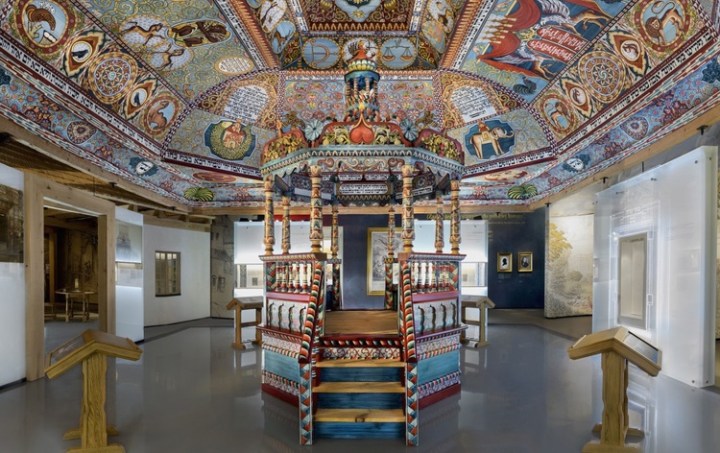
Rebuilding of the painted ceiling, timber-frame roof, and bimah (platform where the public reading from the Torah scroll is performed) of the wooden synagogue that once stood in Gwoździec and is now a centerpiece of the 18th-century gallery, “The Jewish Town” (Warsaw: POLIN Museum of the History of Polish Jews; photo by Magdalena Starowieyska and Darek Golik).
◊ ◊ ◊ ◊ ◊
From BGC:
Barbara Kirshenblatt-Gimblett | Materializing History
The Making of POLIN Museum’s Core Exhibition
Leon Levy Foundation Lectures in Jewish Material Culture
Bard Graduate Center, New York, 27 February, 20 March, 20 April 2025
Each year, Bard Graduate Center presents the Leon Levy Foundation Lectures in Jewish Material Culture, a three-lecture series dedicated to the study of the Jewish past through its material remains. Join us for this year’s lectures.
The Museum of the History of Polish Jews is located on the site of the Warsaw ghetto. It began without a building, collection, or funds. Its greatest asset was the story it would tell, a thousand-year history of Polish Jews. In exploring the creation of POLIN Museum’s Core Exhibition and its extensions, this series of lectures by curator Barbara Kirshenblatt-Gimblett will reveal how the museum materialized history and created and discovered novel kinds of objects.
Bard Graduate Center gratefully acknowledges the Leon Levy Foundation’s support of these lectures.
◊ ◊ ◊ ◊ ◊
Masterplan: Theatre of History
Thursday, February 27, 6pm
This first lecture explores how the Masterplan attempted to plot the thousand-year history of Polish Jews in space, how the exhibition evolved as a theater of history, and how the materializing of history led to the creation of a new kind of object.
Materializing History: The Making of POLIN Museum’s Core Exhibition
Thursday, March 20, 6pm
A centerpiece of the Core Exhibition is the 85 percent-scale painted ceiling and timber-frame roof of the seventeenth-century wooden synagogue that once stood in Gwoździec—today in Ukraine—but was destroyed during World War I. This object exemplifies how material practices produce new knowledge and unique kinds of objects in the process.
The Post-Jewish Object
Thursday, April 20, 6pm
Learn about POLIN Museum’s most recent temporary exhibition, which highlighted ‘post-Jewish’ property, defined by dispossession resulting from the fate of Jews during and after the Holocaust.
Research Seminar | Martin Myrone on the Foggo Brothers’ Parga

.
James and George Foggo, Parga during the Awful Ceremony that Preceded the Banishment of its Brave Christian Inhabitants and the Entrance of Ali Pacha, ca. 1819, lithograph, 42 × 64 cm (London: the British Museum, 1842,0319.14).
◊ ◊ ◊ ◊ ◊
Next month at the Mellon Centre:
Martin Myrone | A Radical Alternative within British Romanticism: The Foggo Brothers’ Parga
Online and in-person, Paul Mellon Centre, London, 19 March 2025, 5pm
This talk focuses on one of the most remarkable—but forgotten—works of British art of any era: The Christian Inhabitants of Parga Preparing to Emigrate (1822) by the brothers George and James Foggo. This huge painting, twenty-six feet long by sixteen high, was exhibited several times in the nineteenth century before disappearing. Recorded in a mezzotint, the picture features a multitude of figures in a scene of horror with the people of Parga in Greece disinterring their ancestors so that their remains were not left on ground falling under Ottoman rule. The incident of 1819 on which the picture was based was an international scandal, identified as an appalling indictment of British foreign policy. Ironically, the very size, political purpose and pictorial ambition of the Foggo brothers’ picture has made it easy to be ignored by art history. This talk will explore how the discipline has by contrast—and this is almost regardless of political orientation—been preoccupied with the subjective and commodified aesthetics assumed to be the enduring legacy of the ‘Romanticism’ of the era.
The event starts with a presentation and talk by Martin Myrone, lasting around 40 minutes, followed by Q&A and a free drinks reception. The event is hosted in our Lecture Room, which is up two flights of stairs (there is no lift). The talk will also be streamed online and recording published on our website.
More information and registration is available here»
Martin Myrone is Head of Research Support and Pathways at the Paul Mellon Centre. Before joining the Centre in 2020, Martin spent over twenty years in curatorial roles at Tate, London. His many exhibitions at Tate Britain have included Gothic Nightmares (2006), John Martin (2011), William Blake (2019), and Hogarth and Europe (2021). His research and publications have focused on eighteenth- and nineteenth-century British art, with a special interest in artistic identity and artists’ labour, class, cultural opportunity and gender. His many published works include Bodybuilding: Reforming Masculinities in British Art 1750–1810 (2005) and Making the Modern Artist: Culture, Class and Art-Educational Opportunity in Romantic Britain (2020), both published by the Paul Mellon Centre.
Online Talks | HECAA Emerging Scholars Showcase, 2025
From the Historians of Eighteenth-Century Art & Architecture:
HECAA Emerging Scholars Showcase
Online, Tuesday, 18 February 2025, 11.00am–12.30pm EST
A beloved HECAA tradition, the Emerging Scholars Showcase serves as a platform for emerging scholars to connect with the wider HECAA community and get feedback on their research. We would appreciate your presence and participation in this meaningful event!
• Emily Hirsch (Brown University) — Flemish Sculptors and Terracotta, ca. 1600–1750
• Siraye Herron (University of Oklahoma) — Degrees of Indigenous Autonomy: Aestheticizing Artistic Survivance in Colonial Cuzco, 1690s–1780s
• Katie DiDomenico (Washington University in St. Louis) — Visions of Colonial Suriname, ca.1667–1795
• Katie Cynkar (University of Delaware) — Myth Making and Remembrance: A Sensorial Examination of Framed North Carolina Plantation-Made Cloth Samples, 1861–1865
• Amelia Goldsby (University of Iowa) — Trees as Bodies of Communication: The Arboreal Aesthetic in French Painting, 1780–1870
• Benet Ge (Williams College) — Looked Through: Edward Orme’s Transparent Prints between Britain and Canton
To attend, please register here»
As always, direct all questions, suggestions (and love) to hecaa.emergingscholarsrep@gmail.com.
Warmly,
Demetra Vogiatzaki
HECAA Board Member At-Large, Emerging Scholars Representative
New Book | Slavery and the Invention of Dutch Art
From Duke UP, with a talk on Thursday at BGC:
Caroline Fowler, Slavery and the Invention of Dutch Art (Durham: Duke University Press, 2025), 176 pages, ISBN: 978-1478028093 (hardcover), $125 / ISBN: 978-1478031321 (paperback), $30.
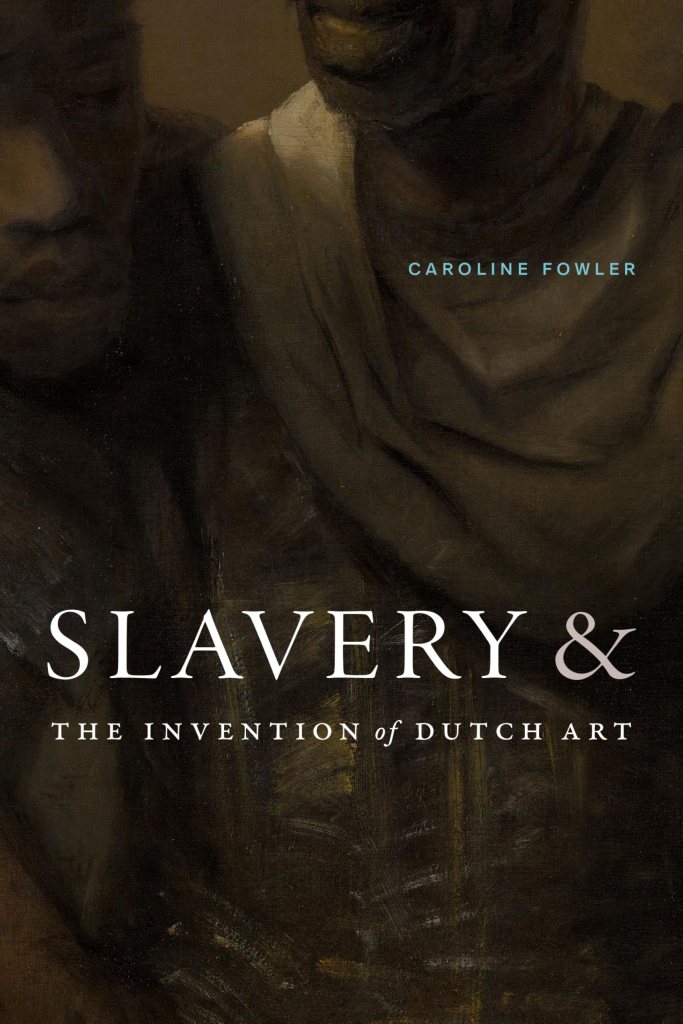 In Slavery and the Invention of Dutch Art, Caroline Fowler examines the fundamental role of the transatlantic slave trade in the production and evolution of seventeenth-century Dutch art. Whereas the sixteenth-century image debates in Europe engaged with crises around the representation of divinity, Fowler argues that the rise of the transatlantic slave trade created a visual field of uncertainty around picturing the transformation of life into property. Fowler demonstrates how the emergence of landscape, maritime, and botanical painting were deeply intertwined with slavery’s economic expansion. Moreover, she considers how the development of one of the first art markets was inextricable from the trade in human lives as chattel property. Reading seventeenth-century legal theory, natural history, inventories, and political pamphlets alongside contemporary poetry, theory, and philosophy from Black feminism and the African diaspora, Fowler demonstrates that ideas about property, personhood, and citizenship were central to the oeuvres of artists such as Rembrandt van Rijn, Hercules Segers, Frans Post, Johannes Vermeer, and Maria Sibylla Merian and therefore inescapably within slavery’s grasp.
Caroline Fowler is Starr Director of the Research and Academic Program at the Clark Institute. She is the author of The Art of Paper: From the Holy Land to the Americas and Drawing and the Senses: An Early Modern History.
c o n t e n t s
Acknowledgments
Introduction: Transubstantiation across Atlantic Worlds
1 Art Markets and Futures Speculation
2 Seascapes and Landscapes
3 Monuments and Architectural Painting
4 Domestic Interiors and Natural History
Conclusion: Historiography and Race
Notes
Bibliography
Index
◊ ◊ ◊ ◊ ◊
Slavery and the Invention of Dutch Art | A Conversation with Caroline Fowler and Helga Davis
Bard Graduate Center, New York, 13 February 2025, 6pm
Caroline Fowler will speak with renowned artist and podcaster Helga Davis about the book Slavery and the Invention of Dutch Art, thinking about the role of poetics in writing history, the importance of Black feminism in rethinking art history, and the ways in which ‘Old Master’ painting continues to impact how the world is seen and interpreted.
Registration is available here»
New Book | The Empire’s New Cloth
Available soon from Yale UP (and please note Rado’s upcoming BGC talk, noted below) . . .
Mei Mei Rado, The Empire’s New Cloth: Cross-Cultural Textiles at the Qing Court (New Haven: Yale University Press, 2024), 208 pages, ISBN: 978-0300275148, $75.
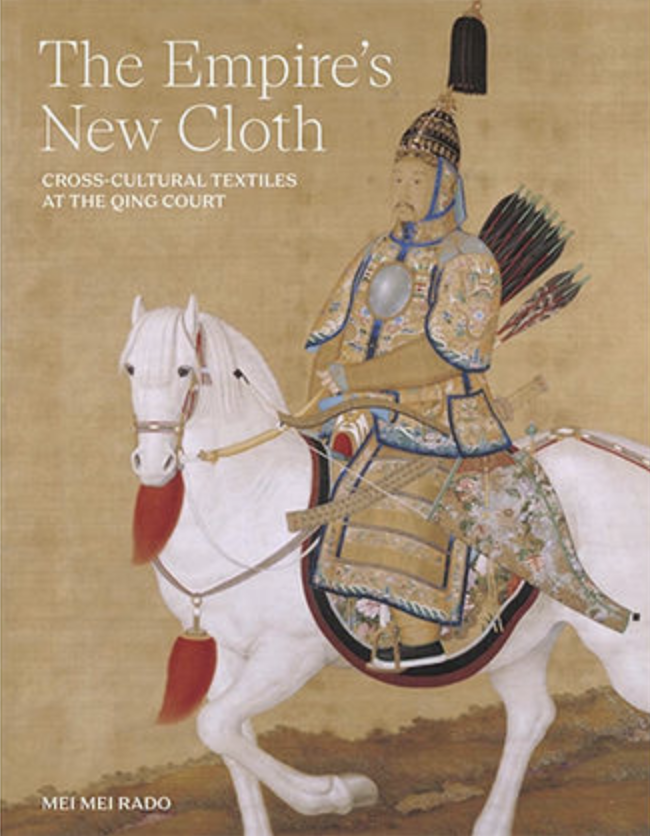 A groundbreaking study of textiles as transcultural objects in the Qing court that provides a new understanding of the interconnectedness of the early modern world
In the early modern period luxury textiles circulated globally as trade goods and diplomatic gifts, fostering cultural exchange between distant regions. By the eighteenth century, both China and Europe had developed a splendid tradition of silk and tapestry weaving. While the role of Chinese silk imports in Europe has been well studied, this book reconstructs the forgotten history of the eastward movement of European textiles to China and their integration into the arts and culture of the Qing Empire. The Empire’s New Cloth explores how Qing court workshops adapted European textile designs and techniques and uncovers the specific uses and meanings of these textiles in imperial military ceremonies, religious spaces, and palace interiors. Through careful study of a wide range of previously unpublished objects, Mei Mei Rado illuminates how these cross-cultural textiles provided the visual and material means for the Qing ruler to convey political messages. By revealing how Qing imperial patrons and artisans responded and assigned meanings to European influences, this beautifully illustrated volume highlights the reciprocity in eighteenth-century Sino-European exchanges and centers textiles within the dynamic global flow of objects and ideas.
Mei Mei Rado received her MA from the University of Chicago and her PhD from Bard Graduate Center, New York, where she is currently an assistant professor. Her research and teaching focus on the history of textiles, dress, and decorative arts in China and France from the eighteenth to the early twentieth centuries, especially on Sino-French exchanges. From 2020 to 2022 she was associate curator of costume and textiles at Los Angeles County Museum of Art, and previously she has held research fellowships in the Department of European Sculpture and Decorative Arts at the Metropolitan Museum of Art and in the Department of Court Arts at the Palace Museum, Beijing..
◊ ◊ ◊ ◊ ◊
Mei Mei Rado | The Empire’s New Cloth
Bard Graduate Center, New York, 19 February 2025, 6pm
Registration is available here»
Master Drawings New York, 2025
Happening this week, with more information here:
Master Drawings New York, 2025
1–8 February 2025, New York
Taking place in more than 25 galleries on New York’s Upper East Side, Master Drawings New York is the premier U.S. art fair for exceptional drawings and works on paper from all periods, paired with complementary paintings, photographs, and sculpture.
◊ ◊ ◊ ◊ ◊
From The Drawing Foundation:
Master Drawings Symposium 2025
Villa Albertine, The Payne Whitney Mansion, New York, 4 February 2025, 4pm
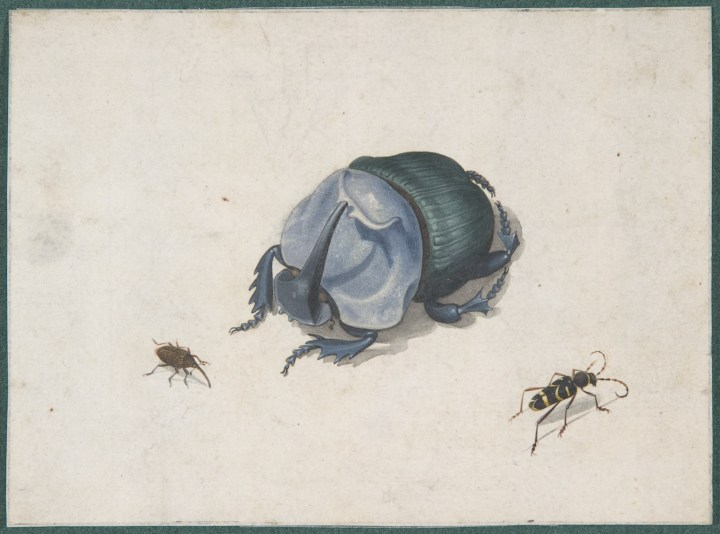
Pieter Holsteyn II, Blue Rhinoceros Beetle, Chestnut Weevil, and Wasp, ca. 1650–60, gouache and watercolor (New York: The Metropolitan Museum of Art).
This year’s winner is Olivia Dill, a PhD candidate at Northwestern University and current Moore Curatorial Fellow at the Morgan Library & Museum. Her prize-winning research was conducted during her two years as the recipient of the Diamonstein-Spielvogel Fellowship at the Metropolitan Museum of Art, a training program combining experience in three departments: Drawings and Prints, Paper Conservation, and Scientific Research. Besides assigning a previously anonymous watercolor of three insects, including an iridescent Rhinoceros beetle native to Brazil, to seventeenth-century Dutch natural history artist Pieter Holsteyn II (1614–1673), Ms. Dill used an interdisciplinary approach and technical analysis of several blue pigments, particularly smalt (ground cobalt and glass), to shed light on the artist’s color choices and his efforts to translate the beetle’s iridescence on a sheet of paper.
2024 runner-up Tamara Kobel, MA from the University of Bern and a former fellow at the Zentralinstitut für Kunstgeschichte in Munich, will delve into the fascinating world of Swiss artist Wilhelm Stettler (1643–1708). Focusing on his ‘Eyerstock’, a rich artistic tool of sketches and doodles that he described as his fertile pantry of motifs, she helps us understand what role his diverse sources (a menagerie of finely drawn animals, war machines, musical instruments, skeletons, flowers, temples, and ships) played in the artist’s career and creative process.
Master Drawings Symposium celebrates winners of its Ricciardi Prize. This event is organized by The Drawing Foundation in partnership with Master Drawings, and in association with Master Drawings New York 2025. The Symposium is made possible through the generous support of the Tavolozza Foundation.
Research Seminar | Artists and the East India Company, 1760–1830
Upcoming at the Mellon Centre:
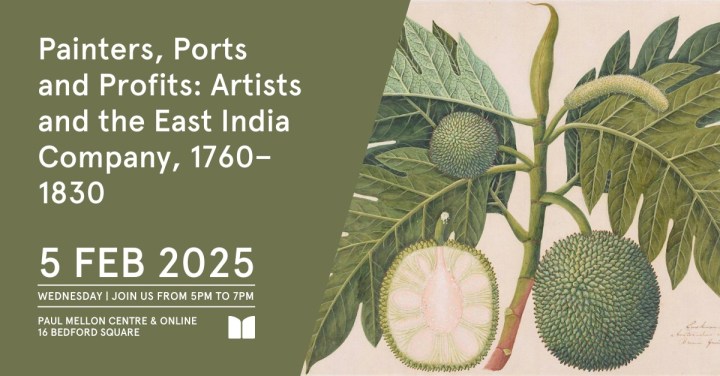
Holly Shaffer and Laurel Peterson | Painters, Ports, and Profits: Artists and the East India Company, 1760–1830
Online and in-person, Paul Mellon Centre, London, 5 February 2025, 5pm
In January 2026, the Yale Center for British Art (YCBA) will open Painters, Ports, and Profits: Artists and the East India Company, 1760–1830. This exhibition explores the interactions between artists trained in India, China, and Britain amid the relentless commercial ambitions of the East India Company at key ports and centres of trade in Asia. Featuring over a hundred objects drawn from the YCBA collection in various media—including architectural drafts, opaque watercolours, hand-coloured aquatints and small- and large-scale portraits—the exhibition highlights works by artists who are no longer well known alongside those of well-established ones. Brought together for the first time, these works tell a story of artists compelled by new subjects, styles and materials in expanding markets, profoundly affecting art within and beyond Asia.
As the power of the British empire waned in the twentieth century, ‘Company painting’ became a prevalent umbrella term to describe works made for Company officials, specifically by Indian artists, and ‘Export art’ became a descriptor for works created by Chinese artists for a European market. Painters, Ports, and Profits challenges and critically rethinks these terms while also putting the arts into dialogue. It presents an expanded conception of arts made under the auspices of the Company by focusing on artists trained in different ways who worked for Company patrons as well as commercial markets in India, China, and Britain; the types of subjects in which they specialised; and the artistic materials with which they experimented. By examining the range of arts and relationships developed during the Company’s relentless pursuit of profits, the exhibition sheds light on aesthetic and colonial discourses that were formed in the eighteenth and nineteenth centuries and persist today. Co-curators Laurel Peterson and Holly Shaffer will preview the themes and objects explored in the exhibition and the related catalogue.
Book tickets here»
Holly Shaffer is Robert Gale Noyes Assistant Professor of Humanities in the department of history of art and architecture at Brown University. Her research focuses on eighteenth- and nineteenth-century arts in Britain and South Asia, and their intersections. Her first book, Grafted Arts: Art Making and Taking in the Struggle for Western India, 1760–1910 (London and New Haven: Paul Mellon Centre with Yale University Press, 2022), was awarded the Edward C. Dimock Jr. Prize in the Indian Humanities and an Historians of British Art Book Award. In 2011, she curated Adapting the Eye: An Archive of the British in India, 1770–1830 at the YCBA, and in 2013, Strange and Wondrous: Prints of India from the Robert J. Del Bontà Collection at the National Museum of Asian Art. She has published essays in Archives of Asian Art, The Art Bulletin, Art History, Journal 18, Modern Philology, and Third Text, and recently edited volume 51 of Ars Orientalis on the movement of graphic arts across Asia and Europe.
Laurel O. Peterson is the Assistant Curator of Prints and Drawings at the Yale Center for British Art. She specialises in British works on paper produced during the long eighteenth century. She served as the organising curator of John Singer Sargent: Portraits in Charcoal in 2019 and as co-curator of Architecture, Theater, and Fantasy: Bibiena Drawings from the Jules Fisher Collection in 2021, both at the Morgan Library and Museum. She received her PhD in the history of art from Yale and her research has been supported by the Sir John Soane’s Museum Foundation, the Paul Mellon Centre for Studies in British Art, and the Lewis Walpole Library. She has held positions at the British Museum and the Morgan Library.
Image: Unknown artist (Company style), Breadnut (Artocarpus camansi), ca. 1825, watercolor, gouache, and graphite (New Haven: Yale Center for British Art, Paul Mellon Fund, B2022.5).
Lecture | Beatrice Glow on Speculative Objects
From the BGC:
Beatrice Glow | Speculative Objects
Bard Graduate Center, New York, 5 February 2025, 6pm

Beatrice Glow, Pax Hollandica (Dutch Peace), 2022. VR-sculpted photopolymer 3D print, metallic paint, acrylic paint, enamel coating, chains (Photo: Aertiron).
Responding to archival research on lesser-known public histories, artist Beatrice Glow creates objects that blend digital processes (such as virtual reality sculpting and 3D printing) with meticulous handcrafting to envision speculative futures. In this talk, Glow will introduce two of her recent projects that leverage playful artistry to foster a deeper public understanding of cultural inheritance. First, she will unpack her recent New York Historical solo exhibition, When Our Rivers Meet, in which she collaborated with culture bearers whose heritages were impacted by Dutch colonialism to create an alternative commemoration of the 400th anniversary of the founding of New Amsterdam. This exploration has continued beyond the exhibition and has taken a new form as a board game—Finding Magic Turtle (Unpacking the Four Continents)—commissioned by the Institute of Contemporary Art, San Diego. Glow will also share her current work-in-progress, Gilt/Guilt, a performance-installation imagined as a speculative auction. The hauntingly luxurious collectibles in this project reveal the cascading impacts of colonial violence and environmental extraction.
Beatrice Glow is an American multidisciplinary artist of Taiwanese heritage whose practice includes examinations of archives and collaboration with culture bearers and researchers in the creation of sculpture, installations, textiles, emerging media, and olfactory experiences to envision a more just and thriving world guided by history. Recent solo exhibitions have taken place at the New York Historical and the Baltimore Museum of Art. Her work has been supported by Creative Capital, the National Endowment for the Arts, Rockefeller Brothers Fund, Smithsonian Artist Research Fellowship, Yale-NUS College, Lower Manhattan Cultural Council, the Asian/Pacific/American Institute at New York University, the Fulbright Program, and many more. More information about her work is available here.
Book Launch | The Dominion of Flowers
From EventBrite:
The Dominion of Flowers: North American Book Launch
Online and in-person, University of Toronto, Thursday, 23 January 2025, 6.30pm
 Between 1760 and 1840, plants were imported into Britain via empire and depicted in periodicals and scientific treatises as specimens alongside objects of natural history. Mark Laird’s provocative new book—part art history, part polemic—weaves fine art, botanical illustration, gender studies, and rare archival material into a political and ethical account of Britain’s horticultural heritage. Drawing on Professor Laird’s genealogical research into his family’s colonial past, The Dominion of Flowers foregrounds Indigenous ideas about ‘plant relations’ in a study that animates trans-oceanic movements of plants and people.
The talk will show how, researched ‘virtually’ in pandemic Toronto, the book’s three-part structure emerged: global, pan-European, and local. His epilogue links New Zealand to Canada, past and present. Following the talk, Therese O’Malley, a historian of landscape and garden design, will facilitate a conversation about Laird’s 40-year career as scholar and practitioner. Prompted by one reviewer who claimed “Laird pioneered plant humanities avant la lettre,” the conversation will turn to botanical studies within the humanities.
Mark Laird is Professor Emeritus at the University of Toronto’s John H. Daniels Faculty of Architecture, Landscape and Design, and a former faculty member of Harvard University. He is the author of The Flowering of the Landscape Garden and A Natural History of English Gardening. The Dominion of Flowers completes his trilogy. In the UK he has been historic planting consultant to Painshill Park Trust, English Heritage, and Strawberry Hill Trust, and in Ontario he has worked on Rideau Hall, Parkwood, and Chiefswood.
Therese O’Malley, FSAH is an historian of landscape and garden design, focusing on the 18th to 20th centuries and the transatlantic exchange of plants and ideas. Former associate dean of CASVA, National Gallery of Art (1984–2021), she continues to lecture and publish internationally. Her many publications include Keywords in American Landscape Design (2010), now expanded as the website, History of Early American Landscape Design (heald.nga.gov). O’Malley has held guest professorships at Penn, Harvard, and Princeton, and serves on boards and advisory committees including those of Dumbarton Oaks, New York Botanical Garden, and the U.S. State Dept. Ambassadors Fund for Cultural Property. She was chair of the Association of Research Institutes in Art History (1994–2000) and president of the Society of Architectural Historians (2000–2006).
Mark Laird, The Dominion of Flowers: Botanical Art and Global Plant Relations (London: Paul Mellon Centre for Studies in British Art, 2024), 277 pages, ISBN: 978-1913107451, £35 / $50.










 Enfilade
leave a comment