YCBA Lecture: Fordham on ‘British Art and the Seven Years’ War’
Lecture and Book Signing: Douglas Fordham, British Art and the Seven Years’ War
Yale Center for British Art, New Haven, 26 January 2011, 5:30pm
 Between the Jacobite Rebellion of 1745 and the American Declaration of Independence, London artists transformed themselves from loosely organized professionals into one of the most progressive schools of art in Europe. In British Art and the Seven Years’ War, Douglas Fordham argues that war and political dissent provided potent catalysts for the creation of a national school of art. Over the course of three tumultuous decades marked by foreign wars and domestic political dissent, metropolitan artists — especially the founding members of the Royal Academy, including Joshua Reynolds, Paul Sandby, Joseph Wilton, Francis Hayman, and Benjamin West — creatively and assiduously placed fine art on a solid footing within an expansive British state. Copies of British Art and the Seven Years’ War signed by the author will be available for purchase.
New Title: ‘Interior Portraiture and Masculine Identity in France’
From Ashgate:
Temma Balducci, Heather Belnap Jensen, and Pamela Warner, eds., Interior Portraiture and Masculine Identity in France, 1789–1914 (Aldershot: Asghate, 2010), 300 pages, ISBN: 9780754667841, $119.95.
 Focusing specifically on portraiture as a genre, this volume challenges scholarly assumptions that regard interior spaces as uniquely feminine. Contributors analyze portraits of men in domestic and studio spaces in France during the long nineteenth century; the preponderance of such portraits alone supports the book’s premise that the alignment of men with public life is oversimplified and more myth than reality.
The volume offers analysis of works by a mix of artists, from familiar names such as David, Delacroix, Courbet, Manet, Rodin, and Matisse to less well-known image makers including Dominique Doncre, Constance Mayer, Anders Zorn and Lucien-Etienne Melingue. The essays cover a range of media from paintings and prints to photographs and sculpture that allows exploration of the relation between masculinity and interiority across the visual culture of the period. The home and other interior spaces emerge from these studies as rich and complex locations for both masculine self-expression and artistic creativity. Interior Portraiture and Masculine Identity in France, 1789–1914 provides a much-needed rethinking of modern masculinity in this period.
Contents: “Introduction,” Temma Balducci, Heather Belnap Jensen and Pamela J. Warner; “The revolution at home: masculinity, domesticity and political identity in family portraiture, 1789–1795,” Amy Freund; “Picturing paternity: the artist and father-daughter portraiture in post-Revolutionary France,” Heather Belnap Jensen; “Public and private identities in Delacroix’s Portrait of Charles de Mornay and Anatole Demidoff,” Jennifer W. Olmsted; “At home with the camera: modeling masculinity in early French photography,” Laurie Dahlberg; “The artist in his studio: dress, milieu, and masculine identity,” Heather McPherson; “Cézanne, Manet, and the portraits of Zola,” Andre Dombrowski; “At home in the studio: two group portraits of artists by Bazille and Renoir,” Alison Strauber; “In bed with Marat: (un)doing masculinity,” James Smalls; “The competing dialectics of the cabinet de travail: masculinity at the threshold,” Pamela J. Warner; “Anders Zorn’s etched portraits of American men, or the trouble with French masculinity,” S. Hollis Clayson; “Auguste Rodin, photography, and the construction of masculinity,” Natasha Ruiz-Gómez; “Matisse and self, the persistent interior,” Temma Balducci; Selected bibliography; Index.
About the Editors: Temma Balducci is an Assistant Professor of Art History at Arkansas State University. She has published on the gaze and spectacle in nineteenth-century French art and on feminist art of the 1970s. Her manuscript in progress, “Beyond the Flâneur: Gender, Space and the Gaze in Post-Haussmann Visual Culture,” challenges the ubiquity of the Baudelairean flâneur in theorizations of gender and space in early Third Republic Paris.
Heather Belnap Jensen is Assistant Professor of Art History at Brigham Young University. Her research and publications examine women’s contributions to early nineteenth-century culture. She is currently co-editing a volume on women, bourgeois femininity and public space with Temma Balducci, as well as working on a book manuscript titled “Art, Fashion and the Modern Woman in Post-Revolutionary France.”
Pamela J. Warner is Assistant Professor of Art History at the University of Rhode Island. Her research focuses on art criticism in France during the nineteenth century, and she has published articles in Nineteenth-Century Art Worldwide, Studies in the Decorative Arts and the Cahiers Edmond et Jules de Goncourt. Her book in progress focuses on the critical reception of Realism and its ties to materialist philosophy.
CAA in New York
The 2011 College Art Association conference takes place in New York, February 9-12, at the Hilton New York. HECAA will be represented by two panels and a reception, as listed here. The following sessions may also be of interest for dix-huitièmistes. A full list of panels is available here»
HECAA EVENTS
New Scholars Session
Thursday, February 10, 12:30–2:00; Beekman Parlor, 2nd Floor, Hilton New York
Chair: Heidi Anne Strobel (University of Evansville)
- Susan M. Wager (Columbia University), “Madame de Pompadour’s Indiscreet Jewels: Boucher, Reproduction, and Luxury in Eighteenth-Century France”
- Heidi E. Kraus (University of Iowa), “Reflections on Civilization: Architecture and Memory in David’s Sabine Women“
- Kristina Kleutghen (Harvard University), “Staging Europe: Theatricality and Painting at the Chinese Imperial Court”
- Sally Grant (University of Sydney), “Garden Chambers and Global Spaces: Giandomenico Tiepolo’s Chinoiserie Room at the Villa Valmarana”
HECAA Reception
Thursday, February 10, 5:30-–8:30; Lincoln Suite, 4th Floor, Hilton New York (note revised time to accommodate the ASECS affiliate session)
◊ ◊ ◊ ◊ ◊
The Global Eighteenth Century
Saturday, February 12, 9:30–12:00; Regent Parlor, 2nd Floor, Hilton New York
Chairs: Kristel Smentek (Massachusetts Institute of Technology) and Meredith Martin (Wellesley College)
- Elisabeth Fraser (University of South Florida), “Miniatures in Black and White: Melling’s Eighteenth-Century Istanbul”
- Daniel McReynolds (Center for Advanced Studies in the Visual Arts), “A Venetian Abroad: Andrea Memmo and the Architecture of Diplomacy in Eighteenth-Century Istanbul”
- Chanchal Dadlani (Columbia University), “Between History, Ethnography, and Autobiography: The Gentil Album (1774) and Artistic Production in Eighteenth-Century India”
- Michele Matteini (Reed College), “The Market for Exotica in Eighteenth-Century Beijing: A View from Liulichang”
- Kevin Chua (Texas Tech University), “Macartney’s Globe, or Cartographic Refusal in 1793”
◊ ◊ ◊ ◊ ◊
OTHER SESSIONS RELATED TO THE 18TH CENTURY
Architecture, Space, and Power in the Early Modern Ibero-American World
Wednesday, February 9, 2:30–5:00; Gramercy B, 2nd Floor, Hilton New York
Chairs: Jesús Escobar (Northwestern University) and Michael Schreffler (Virginia Commonwealth University)
- Barbara Mundy (Fordham University), “Centers and Peripheries in Sixteenth-Century Mexico City”
- Stella Nair (University of California, Riverside), “From Inca Pampa to Spanish Plaza: Theatrical Politics and the Transformation of Imperial Public Space, 1480-1780”
- Catherine Wilkinson Zerner (Brown University), “The Visionary Spatial World of the Ibero-American Retable Altarpiece”
- Sabina de Cavi (Vlaams Academisch Centrum, Brussels), “Natione Italiana: Architecture of the Italian Minorities in Philippine Iberia (1580-1640)”
- Victor Deupi (Fairfield University), “Santissima Trinità degli Spagnoli and Ibero-American Patronage in Eighteenth-Century Rome”
◊ ◊ ◊ ◊ ◊
American Society for Hispanic Art Historical Studies: Rereading Spanish Early Modern Art Theory
Thursday, February 10, 9:30–12:00; Gramercy B, 2nd Floor, Hilton New York
Chairs: Giles Knox (Indiana University) and Carmen Ripolles (Metropolitan State College of Denver)
- Alejandra Giménez-Berger, “Aesthetics of Ideology in Felipe de Guevara’s Comentarios de la Pintura“
- Rebecca J. Long, “Italian Artists within the Spanish System”
- Melody Maxted-Wittry, “Knowing Nature: Artistic Production, Scientific Inquiry, and Catholic Devotion in Seventeenth-Century Spain”
- Ellen Prokop, “The Body of the Artist: An Anatomy of Faith in Early Modern Spain”
- Ray Hernández-Durán (University of New Mexico), “Francisco Pacheco in Sor Juana’s Library: Miguel Cabrera and the Academy in Eighteenth-Century New Spain”
◊ ◊ ◊ ◊ ◊
Representing Gothic
Thursday, February 10, 9:30–12:00; East Ballroom, 3rd Floor, Hilton New York
Chairs: Stephen Murray, Columbia University; Andrew J. Tallon, Vassar College
- Robert Bork (University of Iowa), “Speaking the Un-Speakable: Drawings, Texts, and the Explication of Gothic Design”
- Sarah Guérin (Columbia University), “Micro-Architectural Representation on Gothic Ivories”
- Michèle Hannoosh (University of Michigan), “Michelet and the Gothic: Architecture and the Writing of History in Nineteenth-Century France”
- Matilde Mateo (Syracuse University), “Re-Inventing the Gothic Grove: Recent Metamorphoses in Landscape Art, Science Fiction, and Animated Film”
- Matthew Reeve (Queen’s University), “Queer Gothic: Representing the Gothic at Walpole’s Strawberry Hill”
◊ ◊ ◊ ◊ ◊
Historians of British Art: Seeing through the Medium
Thursday, February 10, 12:30–2:00; Sutton Parlor South, 2nd Floor, Hilton New York
Chairs: Imogen Hart (Yale Center for British Art) and Catherine Roach (Cornell University)
- Holly Shaffer (Yale University), “Ta’ziyeh: Reference and Resemblance in North Indian Ephemeral Shrines, 1770-1830”
- Andrew Stephenson (University of East London), “Ciné-Texts: The Permeability of Modern Art, Film, and Snapshot Cultures in 1920s-1930s London”
- Elyse Speaks (University of Notre Dame), “Dissolution, Disillusion, and Deflation: Damien Hirst’s Double Act”
◊ ◊ ◊ ◊ ◊
Rococo, Late-Rococo, Post-Rococo: Art, Theory, and Historiography
Thursday, February 10, 2:30–5:00; Sutton Parlor Center, 2nd Floor, Hilton New York
Chairs: Melissa Hyde (University of Florida) and Katie Scott (Courtauld Institute of Art)
- Colin Bailey (The Frick Collection), “A Casualty of Style? Reconsidering Fragonard’s Progress of Love from the Frick Collection”
- Satish Padiyar (Courtauld Institute of Art), “Between Early and Late: Fragonard as a Late Rococo Artist”
- Elizabeth Mansfield (New York University), “Rococo Republicanism”
- Marika Knowles (Yale University), “Pierrot’s Periodicity: Watteau, Nadar, and the Circulation of the Rococo”
- Allison Unruh (independent scholar, New York), “Warhol’s Rococo”
◊ ◊ ◊ ◊ ◊
American Society for Eighteenth-Century Studies: Cosmopolitanism and Art in the Eighteenth Century
Thursday, February 10, 5:30–7:00; Petit Trianon, 3rd Floor, Hilton New York
Chair: Jennifer Milam (University of Sydney) — This session is dedicated to Angela Rosenthal
- Jeffrey Collins (Bard Graduate Center)
- Alicia Weisberg-Roberts (The Walters Art Gallery)
- Michael Yonan (University of Missouri)
- Jill Cassid (University of Wisconsin, Madison)
- Mark Cheetham (University of Toronto)
Historians of British Art: Young Scholars Session
Friday, February 11, 7:30-9:00am; Bryant Suite, 2nd Floor, Hilton New York
Chair: Colette Crossman (Blanton Museum of Art, University of Texas at Austin)
- Amanda Lahikainen (Brown University), “‘British Asignats’: Satirical Representation and the Politicization of Paper Currency in 1797”
- Keren Hammerschlag (King’s College London), “Artistic Scientists and Scientific Artists at the British Royal Academy 1860-1900”
- Emily V. Davis (Virginia Commonwealth University), “British Literary Periodicals Transform the Female Form in Turn-of-the-Century Glasgow”
◊ ◊ ◊ ◊ ◊
New Approaches to the Study of Fashion and Costume in Western Art, 1650–1900
Friday, February 11, 2:30–5:00; Clinton Suite, 2nd Floor, Hilton New York
Chairs: Helen Burnham (Museum of Fine Arts, Boston) and Justine De Young (Harvard University)
- Kathleen Nicholson (University of Oregon), “When Isn’t Fashion Fashion? Late Seventeenth-Century French Fashion Prints and Dress in Portraiture”
- Amelia Rauser (Franklin and Marshall College), “Neoclassical Fashion in Art and Life in the 1790s”
- Heather Belnap Jensen (Brigham Young University), “Materializing the Maternal Body in Post-Revolutionary Fashion”
- Jennifer W. Olmsted (Wayne State University), “Fashioning Masculinity: Portraiture, Costume, and the Juste Milieu”
- Alison McQueen (McMaster University), “Empress Eugénie and Representations of Fashion in Second Empire France”
◊ ◊ ◊ ◊ ◊
American Society for Hispanic Art Historical Studies: New Perspectives on Spanish Drawings 1500-1900
Friday, February 11, 5:30–7:00; Gibson Room, 2nd Floor, Hilton New York
Chair: Lisa A. Banner (independent scholar)
- José Manuel Matilla (Museo Nacional del Prado), “Recently Acquired Albums and Sketchbooks at the Prado”
- Zahira Véliz (independent scholar and curator), “Designing the Ensemble: An Altarpiece Drawing by Alonso Cano”
- José Manuel de la Mano (independent scholar, Madrid), “Mariano Salvador Maella: Problems of a Catalogue Raisonné and Exhibition”
◊ ◊ ◊ ◊ ◊
Imitation, Copy, Reproduction, Replication, Repetition, and Appropriation, Part I
Saturday, February 12, 9:30–12:00; Madison Suite, 2nd Floor, Hilton New York
Chairs: Malcolm Baker (University of California, Riverside) and Paul Duro (University of Rochester)
- Maria Loh (University College London), “Time Is Out of Joint: Resetting the Laocoön”
- Lisa Pon (Southern Methodist University), “The Printed Image in the Age of Miraculous Reproduction”
- Ronit Milano (Ben-Gurion University, “Self vs. Collective Identity: The Reproduction of Portrait Busts in Eighteenth-Century France”
- Douglas Fordham (University of Virginia), “The ‘Real Spaces’ of Eighteenth-Century Prints”
- Tom Huhn (School of Visual Arts), “Reflections on the Imitation of Winckelmann”
◊ ◊ ◊ ◊ ◊
Cultural Appropriation, Part II
Saturday, February 12, 9:30–12:00; Concourse G, Concourse Level, Hilton New York
Chairs: Elizabeth K. Mix (Butler University) and Gabriel P. Weisberg (University of Minnesota)
- Annika Johnson (University of Minnesota), “Cahier d’Oiseaux Chinois: The French and Fantastic Appropriation in the Chinoiseries of Jean-Baptiste Pillement”
- Colette Apelian (Berkeley City College), “Bhabha’s Cultural Hybridity and Early Twentieth-Century Modifications of Fez, Morocco”
- Susanne Slavick (Carnegie Mellon University), “Erasure, Eternal Return, and Empathic Restitution”
- Chisato O. Dubreuil (St. Bonaventure University), “A New Look at the Costs of the Cultural Appropriation of Canada’s Traditional Totem Poles”
- A. Joan Saab (University of Rochester), “America Tropical and the Multi-Sited Mural”
◊ ◊ ◊ ◊ ◊
Historians of British Art: Radical Neo: The Past in the Present in British Art and Design
Saturday, February 12, 9:30–12:00; Bryant Suite, 2nd Floor, Hilton New York
Chairs: Jason Rosenfeld (Marymount Manhattan College) and Tim Barringer (Yale University)
- Zirwat Chowdhury (Northwestern University), “The Elephanta in the Room: Indian Antiquity and British Antiquarianism in the Late Eighteenth Century
- Ayla Lepine (Courtauld Institute of Art), “Manifesting the Rule: Designing for Monasticism in Victorian Oxford”
- Katherine Faulkner (Courtauld Institute of Art), “Domestic Dreams and Utopian Idylls: Medieval Dress in the Work of William Reynolds-Stephens”
- Lee Hallman (The Graduate Center, City University of New York), “Unseen Landscapes: Paul Nash and the Geography of History”
- Mark A. Cheetham (University of Toronto), “Yinka Shonibare’s Enlightenment: Revising British Art for the Twenty-First Century”
In Memoriam
Anne Layton Schroder (1954-2010)
By Mary D. Sheriff
For a serious scholar, Anne Schroder certainly laughed a lot. It was such a pleasure to hear that generous, mirthful, and above all contagious laugh, a laugh filled with optimism. That optimism and joy, I also heard in Anne’s serious talk about the scholarship that she loved. But where her laughter came spontaneously and without effort, her scholarly work demanded time, patience and determination as well as intellect and invention. Her keen mind, astute eye, fertile imagination and sheer love of her work are perceptible in all her writings, but her elegant and fluid prose render invisible the effort and labor that went into producing them.
As Anne’s graduate school adviser, and then her friend and colleague, I had the good fortune of working with Anne over many years. Anne, in fact, was my first dissertation student, and I met her when I interviewed for my job at UNC. In those years there were very few art historians specializing in eighteenth-century French art, and to find at UNC a brilliant student who shared my enthusiasms was pure kismet. Over the years I worked with Anne, I saw her perseverance as well as her brilliance. Anne continued her dissertation research in Paris through a season of metro bombings that were frightening indeed, and she continued her dissertation writing while holding a demanding full-time position at the Museum of Fine Arts in Springfield. Anne produced an outstanding and original thesis requiring the sort of detective work that she recently showed in locating an unknown early work by Francois Gérard for the Nasher Museum of Art. In fact, Anne has long been a finder. In the course of her dissertation research, she combed through old records and located a drawing by Fragonard long forgotten in the storerooms of a French museum. She wrote to the museum about the drawing, hoping to see and publish the work. But before she could get there, the museum scooped her, announcing its “discovery” of a previously unknown Fragonard drawing. Like many other scholars, Anne experienced this sort of treachery at different points in her career, but if wiser for such experiences, she remained generous to students and colleagues, optimistic about the future of scholarship, and deeply committed to her own work. Even in professional positions that neither supported nor encouraged her own scholarship, nor gave her the time to pursue it, Anne never stopped writing.
For those who specialize in eighteenth-century art, Anne was not only a well-known scholar, she was also a well beloved colleague and friend. Anne had a knack for getting along with everyone: and I cannot think of a single colleague who was so universally liked and respected. She served the Historians of Eighteenth-Century Art and Architecture, in various roles, including a term as president, and she was instrumental in sustaining and growing the organization. She will be sorely missed by all.
Over the years I knew Anne, she never lost the optimism that always seemed to echo in her laughter. If she experienced setbacks and obstacles, she never gave up her scholarship. If before Spalding there were heartbreaks, she never lost faith in family, and if before Eric there were disappointments, she never lost faith in love.
With Deepest Sympathy
Note from the President

Dr. Anne L. Schroder, 1954-2010
I am very sorry to begin the new year with sad news. Our friend and colleague Anne Schroder passed away after a brief and unexpected illness on December 23. Anne served HECAA as newsletter editor, treasurer, and president. Far beyond these official capacities, she was an extraordinary voice of enthusiasm, support, and good cheer for our community. She will be greatly missed.
The notice from the Nasher Museum of Art is available here»
Cards can be sent to her husband Eric Vance at 2507 Foxwood Drive, Chapel Hill, NC 27514.
In lieu of flowers, the family requests that donations can be made to the Smith College Fund and directed to scholarship support. Gifts may be made online, by calling (800) 241-2056, or by mailing a check to the Gift Accounting Unit, Smith College, 33 Elm Street, Northampton, MA 0106. A memorial service in Chapel Hill, NC, is planned for Saturday, January 15, 2011, at 2 PM at Binkley Baptist Church, 1712 Willow Drive, Chapel Hill, NC, 27514; phone (919) 942-6186. A graveside service will take place in Atlanta at a later date.
Dr. Julie-Anne Plax
Professor of Art History
University of Arizona
jplax@email.arizona.edu
Shortlisted: Mrs. Delany!
 Warm congratulations to Mark Laird and Alicia Weisberg-Roberts. Their edited exhibition catalogue, Mrs. Delany and Her Circle (Yale Center for British Art, 2009) has been shortlisted for CAA’s 2011 Alfred H. Barr, Jr., Award! HECAA’s collective fingers are crossed for you!
Also, addressing the eighteenth century, Molly Emma Aitken’s The Intelligence of Tradition in Rajput Court Painting (New Haven: Yale University Press, 2010) is on the shortlist for the 2011 Charles Rufus Morey Book Award.
The winners of both prizes, along with the recipients of ten other Awards for Distinction, will be announced in December and presented on Thursday, February 10, 6:00–7:30 PM, in the Grace Rainey Rogers Auditorium at the Metropolitan Museum of Art in New York. The event is free and open to the public. The CAA Centennial Reception will follow
(ticket required).
Additional information from CAA News is available here»
New Title on Hubert Robert: ‘Futures & Ruins’
From the Getty’s website:
Nina Dubin, Futures & Ruins: Eighteenth-Century Paris and the Art of Hubert Robert (Los Angeles: Getty Publications, 2010), 210 pages, ISBN: 978-1-60606-023-0, $50.
 In this timely and provocative study, Hubert Robert’s paintings of urban ruins are interpreted as manifestations of a new consciousness of time, one shaped by the uncertainties of an economy characterized by the dread-inducing expansion of credit, frenzied speculation on the stock exchange, and bold ventures in real estate. As the favored artist of an enterprising Parisian elite, Robert is a prophetic case study of the intersections between aesthetics and modernity’s dawning business culture.
At the center of this lively narrative lie Robert’s depictions of the ruins of Paris—macabre and spectacular paintings of fires and demolitions created on the eve of the French Revolution. Drawing on a vast range of materials, Futures & Ruins understands these artworks as harbingers of a modern appetite for destruction. The paintings are examined as expressions of the pleasures and perils of a risk economy. This captivating account—lavishly illustrated with
rarely reproduced objects—recovers the critical significance of the eighteenth-
century cult of ruins and of Robert’s art for our times.
Nina L. Dubin is an assistant professor of art history at the University of
Illinois at Chicago.
Advance praise for Futures & Ruins
Nina Dubin’s incisive readings of Hubert Robert’s ruin pictures, seen through the lens of period financial fears and speculations, will completely alter the prevailing wisdom about these paintings. These artworks were hitherto interpreted exclusively via the rhetorics of “the picturesque,” but Dubin brings their salient modernities to life. The context of economic risk and the concomitant imagination of calamity that she evokes in this beautifully written book could not be more topical if she had invented the whole thing. And she did not!
—Hollis Clayson, Bergen Evans Professor in the Humanities, Northwestern University
An astute reader of images and their cultural implications, Nina Dubin proposes in this beautifully produced study of Hubert Robert’s enigmatic apocalypses a new understanding of how late-eighteenth-century aesthetics responded to the precarious temporality of dislocations that redefined economic value, politics, urbanism, and the very sense of what history might be.
—Thomas Kavanagh, Augutus R. Street Professor of French, Yale University
Symposium: New Research on Giuseppe Vasi
Program for the upcoming Vasi symposium, held in conjunction with the Vasi exhibition:
Una Roma Visuale: New Research on Giuseppe Vasi and the Art, Architecture and Urbanism of Eighteenth-Century Rome
Jordan Schnitzer Museum of Art, University of Oregon, Eugene, 12-13 November 2010
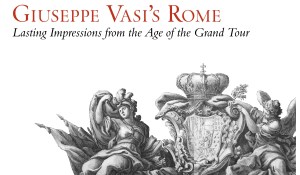 A symposium planned in conjunction with the special exhibition Giuseppe Vasi’s Rome: Lasting Impressions from the Age of the Grand Tour, this two-day event will gather together scholars of national and international reputation, each of whom will present new research on Vasi and eighteenth-century Rome. Sponsored by the Oregon Humanities Center and the Departments of Architecture and Art History, School of Architecture and Allied Arts Organized by the exhibition curators James Harper and James Tice, the symposium will encompass such topics as prints, painting, sculpture, architecture, urbanism and cartography in Vasi’s Rome. A guided tour of the exhibition, with the curators, is included in the program.
F R I D A Y, N O V E M B E R 1 2
Pre-Symposium Presentation (4 p.m.)
Sarah Murray and Molly Taylor-Poleskey (Stanford University), ‘Travelers to Vasi’s Rome: Mapping Eighteenth-Century Mobility’
An introduction to Stanford University’s “Mapping the Republic of Letters” Project’.
Symposium Keynote Lecture (5:30 p.m.)
John Pinto (Princeton University), ‘”The Most Glorious Place in the Universal World”: Architecture and Urbanism in the Rome of Giuseppe Vasi’
This overview of Rome, as defined by architecture, urban design, and city representations in the eighteenth century, addresses the appearance of the papal capital, systematically recorded by Giuseppe Vasi in the Age of the Grand Tour.
S A T U R D A Y, N O V E M B E R 1 3
Morning Sessions (9:45 a.m.–12:00 p.m.)
Mario Bevilacqua (Università degli Studi di Firenze), ‘Etched Towns and Architecture: Vasi and Piranesi in the Italian Eighteenth-Century Print World’
Operating within a tradition of architectural illustration, Vasi and Piranesi were both influenced by scholars and intellectuals who promoted print production as visual documents of a decaying cultural heritage. This paper compares and contextualizes their methods of compiling city views, including their use of texts, indexes and maps to summarize and give order and scope to the individual monuments illustrated in their sheets.
Allan Ceen (Director, Studium Urbis, Rome), ‘Vasi and Urban Space’
This paper examines Vasi’s attitude toward public spaces—the streets and piazzas that appear throughout his Magnificenze—to reveal the artist’s concept of the living city as an urban whole and not merely a collection of discrete monuments.
Katherine Rinne (California College of the Arts, Oakland), ‘The Tiber’s Flow in Mid-Eighteenth Century Rome’
In mid-eighteenth century Rome the Tiber was still the lifeblood of the city, as it had been in antiquity. It was also a site of experimentation, scientific investigation, and the display of wealth, as revealed in the maps and vedute of Vasi and other artists and engineers of his time.
Afternoon Sessions (1:20-4:20 p.m.)
Heather Hyde Minor (University of Illinois, Urbana-Champaign), ‘Piranesi’s Lost City’
This talk will illuminate the precise nature of the scholarly and artistic practices that were used to create Piranesi’s great map of Rome, the “Ichnographiam Campi Martii antiquae urbis,” which appeared in his 1762 book Il Campo Marzio dell’Antica Roma (The Campus Martius of Ancient Rome), accompanied by a sixty-seven page essay and forty-eight figural prints.
Jessica Maier (University of Oregon), ‘Giuseppe Vasi as Cartographer: Influence and Innovation in Early Modern Maps of Rome’
Vasi’s 1778 map of Rome tends to be regarded as derivative by scholars of early modern cartography, overshadowed as it is by the radical innovation of Nolli’s Grande Pianta (1748). This talk proposes a reevaluation of Vasi’s map in light of the practice of cartography in the eighteenth century, when “borrowing” was commonplace and originality a relative term.
Susan Dixon (University of Tulsa), ‘Vasi and Arcadia’
In the 1740s through the 1760s, the Accademia degli Arcadi flourished in Rome, serving as a neutral landscape in which those interested in restoring Italian culture to a position of supremacy gathered to listen to poetic recitations. Those with intense political, theological and social differences flocked pacifically enough to the Bosco Parrasio, the Arcadians’ garden. Vasi found patrons and supporters in Arcadia to help him create the Magnificenze di Roma, among other works.
John Moore (Smith College), ‘Giuseppe Vasi’s “Prospetto dell’Alma Città di Roma”’
First published in December 1765, Vasi’s enormous etched panorama of Rome went together with a guidebook in which one expression unexpectedly provoked complaints from the papal authorities. The resolution of this matter casts light on the diplomatic relationships among the courts of Rome, Naples, and Madrid.
A guided tour of the exhibition with its curators follows at 4:20 p.m.
CASVA Fellowships Announced
A selection of projects in the (long) eighteenth century to be pursued by this year’s CASVA Fellows, as noted in a press release from the National Gallery:
Samuel H. Kress Professor
Joseph J. Rishel — The position of Samuel H. Kress Professor was created in 1965. It is reserved for a distinguished art historian who, as the senior member of CASVA, pursues scholarly work and counsels predoctoral fellows in residence. Rishel, the Gisela and Dennis Alter Senior Curator of European Paintings and Sculpture and curator of the Rodin Museum, has been at the Philadelphia Museum of Art since 1972. He received a BA from Hobart College and earned his MA at the University of Chicago. He has served as the chairman of the Barnes Foundation College Assessment Advisory Committee and has been a member of the American Federation of Arts Exhibitions Committee since 2000. Rishel is a fellow of the American Academy of Arts and Sciences and was made an officier in the Ordre des Arts et des Lettres in 2002. He was elected a member of the American Philosophical Society in 2010 and has been an editor, author, and contributor to many exhibition catalogues specializing in 18th- and 19th-century art.
Edmond J. Safra Visiting Professor
Victor I. Stoichita — The position of Edmond J. Safra Visiting Professor was established in 2002 through a grant from the Edmond J. Safra Philanthropic Foundation. The Safra Professor serves for up to six months, forging connections between the research of the curatorial staff and that of visiting scholars at CASVA. At the same time, the Safra Professor advances his or her own research on subjects associated with the Gallery’s permanent collection. The Safra Professor may also organize colloquia for predoctoral fellows and for emerging scholars and curators. The Safra Professor’s area of expertise varies from year to year, spanning the Gallery’s permanent collection—from sculpture, to painting, to works on paper of all periods. Victor Stoichita is a professor of modern and contemporary art history at Université de Fribourg in Switzerland. He earned a Doctorat d’état from the University of Paris I (Panthéon-Sorbonne) and his PhD from the University of Rome. He was the Rudolf Wittkower Visiting Professor at the Bibliotheca Hertziana, Max-Planck-Institut, in Rome in 2005 and received a fellowship from the Wissenschaftskolleg in Berlin in 2002. Stoichita is the author of The Pygmalion Effect: From Ovid to Hitchcock (2008), Goya: The Last Carnival (with Anna Maria Coderch, 1999), A Short History of the Shadow (1997), Visionary Experience in the Golden Age of Spanish Art (1995), and L’instauration du tableau: Métapeinture à l’aube des temps modernes (1993), all of which have been translated into German, Italian, Spanish, and Japanese, among other languages.
Paul Mellon Visiting Senior Fellows, Fall 2010
Heather McPherson (University of Alabama at Birmingham), The Artist’s Studio and the Image of the Artist in Nineteenth-Century France
Ailsa Mellon Bruce Visiting Senior Fellows, Fall 2010
Todd Longstaffe-Gowan (Todd Longstaffe-Gowan Limited, Landscape Design), The London Square, 1580 to the Present
Predoctoral Fellows (in residence)
Christina Ferando (David E. Finley Fellow, 2008–2011, Columbia University), Staging Canova: Sculpture, Connoisseurship, and Display, 1780–1822
Dipti Khera (Ittleson Fellow, 2009–2011, Columbia University), Picturing India’s “Land of Princes” between the Mughal and British Empires: Topographical Imaginings of Udaipur and Its Environs
Jason David LaFountain (Wyeth Fellow, 2009–2011, Harvard University), The Puritan Art World
Predoctoral Fellows (not in residence)
Razan Francis (Twenty-four-Month Chester Dale Fellow, 2010–2012, Massachusetts Institute of Technology), Secrets of the Arts: Enlightenment Spain’s Contested Islamic Craft Heritage
Meredith Gamer (Paul Mellon Fellow, 2010–2013, Yale University), Criminal and Martyr: Art and Religion in Britain’s Early Modern Eighteenth Century
Anna Lise Seastrand (Ittleson Fellow, 2010-2012, Columbia University), Praise, Politics, and Language: South Indian Mural Paintings, 1500–1800
New Title: ‘British Art and the Seven Years’ War’
Douglas Fordham, British Art and the Seven Years’ War: Allegiance and Autonomy (Philadelphia: University of Pennsylvania Press, 2010), 352 pages, ISBN 9780812242430, $65.00s / £42.50.
 Between the Jacobite Rebellion of 1745 and the American Declaration of Independence, London artists transformed themselves from loosely organized professionals into one of the most progressive schools of art in Europe. In British Art and the Seven Years’ War Douglas Fordham argues that war and political dissent provided potent catalysts for the creation of a national school of art. Over the course of three tumultuous decades marked by foreign wars and domestic political dissent, metropolitan artists—especially the founding members of the Royal Academy, including Joshua Reynolds, Paul Sandby, Joseph Wilton, Francis Hayman, and Benjamin West—creatively and assiduously placed fine art on a solid footing within an expansive British state.
London artists entered into a golden age of art as they established strategic alliances with the state, even while insisting on the autonomy of fine art. The active marginalization of William Hogarth’s mercantile aesthetic reflects this sea change as a newer generation sought to represent the British state in a series of guises and genres, including monumental sculpture, history painting, graphic satire, and state portraiture. In these allegories of state formation, artists struggled to give form to shifting notions of national, religious, and political allegiance in the British Empire. These allegiances found provocative expression in the contemporary history paintings of the American-born artists Benjamin West and John Singleton Copley, who managed to carve a patriotic niche out of the apolitical mandate of the Royal Academy of Arts.
Douglas Fordham teaches art history at the University of Virginia.










 Enfilade
leave a comment