Renovations at The Huntington Library Scheduled to Begin in 2026
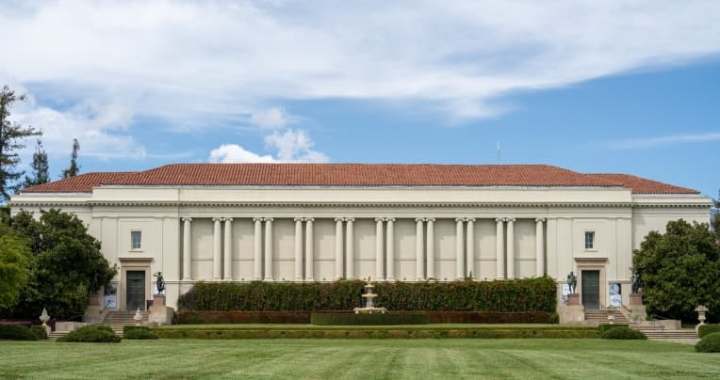
Library Exhibition Hall and West Hall, The Huntington, San Marino, California
(Photo by David Esquivel)
◊ ◊ ◊ ◊ ◊
From the press release (24 June 2025) . . .
Modernization of The Huntington’s Library building aims to connect collections, expand conservation capacity, enhance research access, and deepen public engagement.
Key Takeaways
• A multiyear renovation will strengthen how the Library and Art Museum’s collections support research, conservation, and public engagement.
• Plans include an 8,000-square-foot expansion of conservation studio capacity, redesigned exhibition spaces, and a new gallery focused on the history of science.
• The groundbreaking is planned for spring 2026.
• During construction, the Library will remain open to researchers, while a new exhibition series in the Art Museum showcases the Library’s book and manuscript collections.
In spring 2026, The Huntington will begin an extensive renovation of its Library building, designed in 1919 by architect Myron Hunt, a leading figure of early 20th-century Southern California architecture. The project will revitalize the Library’s landmark exhibition halls and replace outdated back-of-house space with modern facilities that serve both the Library and Art Museum. The unified Library/Art Building (LAB) will be a transformative 83,000-square-foot modernization that honors the building’s historic character while reimagining its spaces for interdivisional collaboration. The design is being led by RAMSA (Robert A.M. Stern Architects). Samuel Anderson Architects is providing expertise on collections storage and conservation studio design.
The idea took shape when President Karen R. Lawrence sought a single solution to meet needs that emerged in both the Library and Art Museum. Her proposal reflected the institution’s strategic plan, which calls for integrated, cross-divisional approaches under the guiding principle of “One Huntington.” With support from senior colleagues and the Board of Trustees, the concept advanced as a unified investment in conservation infrastructure, collections care, and the visitor and researcher experience.
The LAB will replace legacy book stacks with state-of-the-art storage for more than eight linear miles of the Library’s book and manuscript collections, along with the Art Museum’s 38,000 works on paper. Light-filled, modernized spaces for consultation, collaboration, and meetings will support cross-disciplinary exchange among staff, fellows, and general readers. The building will also include a dedicated conservation studio for treating paintings and objects.
“This is the most ambitious building project in The Huntington’s history,” President Lawrence said. “It reflects our commitment to stewardship, scholarship, and public engagement, and to creating spaces that will serve our collections and our communities for the next century.”
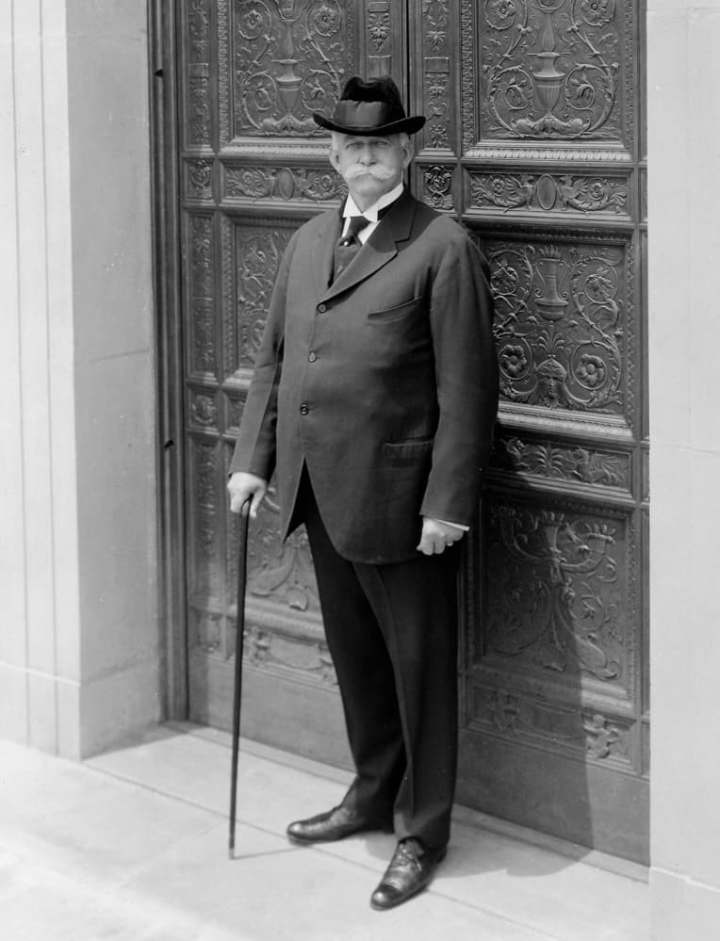
Photograph of Henry E. Huntington in front of the Library’s bronze doors, ca. 1920 (The Huntington Library, Art Museum, and Botanical Gardens).
Henry E. Huntington was once asked whether he planned to write an autobiography describing his career. He demurred and said in response, “This Library will tell the story; it represents the reward of all the work that I have ever done and the realization of much happiness.”
A century later, The Huntington ranks among the world’s great independent research libraries, holding a growing collection of some 12 million rare books, manuscripts, photographs, prints, drawings, and ephemera. Each year, the Library welcomes thousands of researchers, including more than 175 fellows in the nation’s largest humanities research program. To further support these visiting fellows, The Huntington is also developing Scholars Grove—a 33-unit residential complex that will provide convenient, reasonably priced housing and community space on campus.
“The Library has always anchored The Huntington’s commitment to knowledge and public access,” said Sandra Brooke Gordon, Avery Director of the Library. “Now, we’re evolving that legacy with revitalized spaces designed to support collaboration and a broader community of researchers. The LAB will also enhance the experience of the hundreds of thousands of visitors who each year discover the Library’s collections in our exhibition halls.”
While the Library’s exhibition halls are closed for renovation, visitors can experience some of its most iconic and unexpected works in the exhibition series Stories from the Library, located in the Huntington Art Museum.
Stories from the Library debuted 21 June 2025, with two exhibitions: one centered on Geoffrey Chaucer’s Canterbury Tales, the other on visionary figures who have shaped Los Angeles. The series will continue through 2028. The research library will remain open throughout construction of the LAB. All of the Library’s collections will be on site and available to researchers.
The LAB will also become the new home for the Art Museum’s extensive collection of works on paper—over 38,000 drawings, watercolors, and prints, representing upwards of 80% of its holdings. Because these works are light sensitive, this major part of the art collection is rarely accessible to the public in gallery displays. A new Works on Paper Study Center will provide space for consultation, research, and display, expanding access for scholars, students, and early-career professionals.
“Housing the museum’s works on paper and library collections under one roof will deepen scholarship and spark new forms of inquiry,” said Christina Nielsen, Hannah and Russel Kully Director of the Art Museum. “This kind of proximity will foster not only interdisciplinary research but richer, more nuanced exhibitions.”
The Art Museum’s collection features over 45,000 artworks from Europe, America, and East Asia that span more than 2,000 years. Conserving paintings and objects across the Art Museum and Library’s collections helps preserve fragile materials for future generations and yields new information about how they were made and used.
The LAB will not only integrate staff but also significantly enhance experiences for general visitors to The Huntington. A new gallery dedicated to the history of science will replace the former “Beautiful Science” exhibition with “Worlds Unfolding: Science on the Page.” The new installation will showcase the Library’s extensive holdings in science, technology, and medicine. It will feature a diverse selection of medieval through modern works on topics ranging from astronomy, anatomy, and geology to electricity, the aerospace industry, and futuristic dream worlds of science fiction.
Expanding public access to its collections has long been central to The Huntington’s mission, and today, a wide range of readers makes use of its research resources. Any adult working on a research project that is well served by the collections is welcome to apply for a reader’s card. Fifteen percent of recent consultations have come from beyond the traditional ranks of advanced researchers, reflecting the Library’s broadened access for artists, writers, and community researchers. The LAB will support this wider audience with accessible study areas, clearer navigation, and more streamlined access to research materials—ensuring that rare items are both useable and protected.
As groundbreaking approaches in spring 2026, The Huntington nears completion of its $126.6 million fundraising campaign. More than $100 million has already been committed by foundations and donors who recognize the project’s long-term impact.
Generous support for the Stories from the Library exhibition series is provided by the Robert F. Erburu Exhibition Endowment. Additional support is provided by The Neilan Foundation, the Steinmetz Foundation, and Laura and Carlton Seaver.
LACMA Acquires Manuel de Arellano’s Precursors of Casta Painting
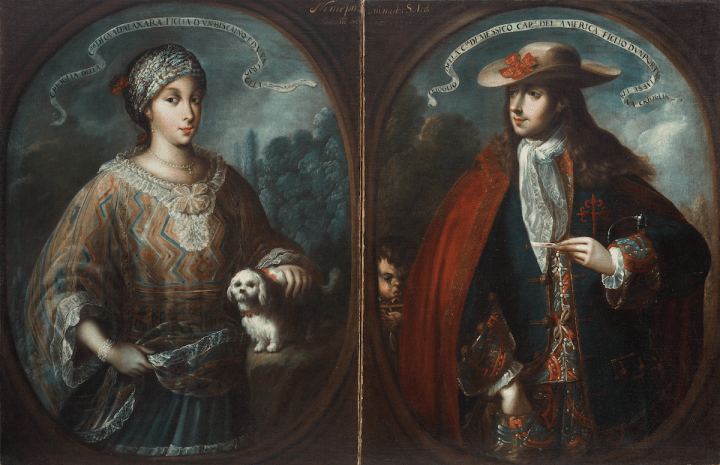
Manuel de Arellano, Creole Woman from the City of Guadalajara and Creole Man from Mexico City, ca. 1710, oil on canvas, each 109 × 84.5 cm (Los Angeles County Museum of Art, gift of the 2025 Collectors Committee with additional funds from an anonymous donor, photo courtesy of Colnaghi, Madrid).
◊ ◊ ◊ ◊ ◊
As noted at the Art History News blog; from the LACMA essay (30 April 2025) by Ilona Katzew, who leads the museum’s Latin American department:
This week we added a unique pair of paintings by Manuel de Arellano (1662–1722) to the collection. The works are remarkable in terms of their execution, subject, and pivotal place in the history of 18th-century Mexican painting. Conceived as a pair, they depict a man and a woman within a fictive oval frame, a format traditionally reserved for distinguished figures. Yet, they are not portraits of actual individuals but of different racial types. In fact, these two paintings are groundbreaking precursors of the famous casta (caste) paintings, a distinctive pictorial genre invented in Mexico to depict multiracial families that spanned the entire 18th century.
Manuel de Arellano came from a prominent dynasty of artists active in Mexico City. He trained with his father, Antonio de Arellano (1638–1714), and by 1690 he was working independently and creating paintings marked by a great deal of experimentation. These works developed during a period of political shifts and mounting social and racial tensions in Mexico City. In 1692, just a few years before the ascent of the Bourbons to the Spanish throne (1700), a major riot erupted in the main square, when the Indigenous population and mixed-raced working-class, outraged over the scarcity of basic food staples and the mishandling of power, set fire to the viceregal palace, threatening to overthrow the colonial government.
Spaniards born in the Americas—known as Criollos (Creoles)—grew equally frustrated with imperial authorities, who treated them as second-class citizens and often passed them over for important civil and ecclesiastical posts. Added to this, the common misconception in Europe that everyone in the Americas was a degraded hybrid further tarnished the reputation of Creoles, casting into question their ability to rule. Arellano’s works responded to these concerns by constructing a view of a mixed yet orderly and prosperous society. His monumental view of the transfer of the original image of the Virgin of Guadalupe to her new shrine is a tour de force that captures Mexico City’s complex social hierarchy in minute detail.
LACMA’s new acquisitions are the first paintings to single out Mexico’s diverse population, setting forth the path for the development of casta painting across the 18th century. The inscriptions on the works identify the racial types and situate them geographically. They read: “Creole Woman from the City of Guadalajara, Daughter of a Basque Man and a Creole Woman” and “Creole Man from Mexico City, Capital of America, the Son of a Portuguese Man and a Creole Woman.” The unusual scrolling banderoles in Italian may be related to the original commission and their intended use, a subject that requires further study. . . .
The full essay (with reading suggestions) is available here»
Xavier Salomon Named Director of the Calouste Gulbenkian Museum
As noted at the Art History News Blog; from the press release (24 June 2025) . . .
 Xavier F. Salomon, the current Deputy Director and Peter Jay Sharp Chief Curator of the Frick Collection in New York, has been chosen by the Gulbenkian Foundation’s Board of Trustees as Director of the Calouste Gulbenkian Museum in Lisbon. Following an international recruitment process, Solomon will succeed António Filipe Pimentel, who will retire at the beginning of next year.
Xavier F. Salomon was born in Rome [in 1979] and grew up between Italy and the United Kingdom. He was educated at the Courtauld Institute of Art in London, where he received his BA in art history, his MA, and his PhD with a thesis on “The Religious, Artistic, and Architectural Patronage of Cardinal Pietro Aldobrandini (1571–1621).”
Salomon worked at the British Museum and at the National Gallery in London, before joining, in 2006, Dulwich Picture Gallery as the Arturo and Holly Melosi Chief Curator. At Dulwich, Salomon curated many exhibitions on artists such as Guido Reni, Paolo Veronese, Salvator Rosa, Anthony van Dyck, Nicolas Poussin, and Cy Twombly. In 2011, he joined the Department of European Paintings at the Metropolitan Museum of Art in New York, as Curator of Southern Baroque, in charge of Italian paintings from the 17th and 18th century, French 17th-century, and Spanish paintings. In 2014, he curated the monographic exhibition Paolo Veronese: Magnificence in Renaissance Venice at the National Gallery in London.
Since 2014, he has been Deputy Director and Peter Jay Sharp Chief Curator at the Frick Collection in New York where he curated exhibitions on artists such as Guido Cagnacci, Paolo Veronese, Antonio Canova, Giambattista Tiepolo, Luigi Valadier, Bartolomé Esteban Murillo, Bertoldo di Giovanni, Giovanni Bellini, and Giorgione. He also worked on projects with contemporary artists such as Doron Langberg, Salman Toor, Jenna Gribbon, Nicolas Party, and Flora Yukhnovich. In 2022, he curated the exhibitions James McNeill Whistler (1834–1903): Masterpieces of the Frick Collection, New York at the Musée d’Orsay in Paris and The Polish Rider: The King’s Rembrandt at the Royal Łazienki Museum, Warsaw and Wawel Royal Castle, Kraków. In recent years, he supervised the renovation of the galleries at the Frick, moving them first in 2021 to Frick Madison and then back to the historic location of the museum, which reopened in April 2025.
Salomon is the author of the acclaimed online series Cocktails with a Curator and Travels with a Curator and of the book thereon (2022). He is widely published and his scholarly articles have appeared in The Burlington Magazine, Apollo, Journal of the History of Collections, Master Drawings, The Metropolitan Museum Journal, and the Boletín del Museo del Prado, among others. He was a Rome Scholar at the British School at Rome in 2002–03; a Fellow at the Robert H. Smith International Center for Jefferson Studies in Monticello, Virginia in 2017; and a Leigh Fermor House Fellow at the Benaki Museum, Athens in 2024.
Salomon’s main areas of expertise are art and patronage in 17th- and 18th-century Rome and Venice, and the painters Paolo Veronese and Rosalba Carriera. He is currently working on a new catalogue raisonné of Paolo Veronese’s drawings and one of Rosalba Carriera’s works, while working also on the catalogue of the Spanish paintings at the Frick Collection. In 2018, Salomon was nominated Cavaliere della Stella d’Italia by the Italian President of the Republic.
The Calouste Gulbenkian Museum in Lisbon, Portugal houses the collection gathered by Calouste Sarkis Gulbenkian throughout his life (1869–1955). The collection includes more than 6,000 pieces from antiquity to the early 20th century, including Egyptian, Greco-Roman, Islamic, and Far Eastern art, as well as European numismatics, paintings, and decorative arts. Currently closed, the museum will reopen in the summer of 2026, after the extensive renovation of the air conditioning, lighting, and security systems in its galleries.
Selldorf Architects to Lead New Masterplan for The Wallace
From the press release:

Annabelle Selldorf, Principal of Selldorf Architects, photographed at The Frick just before it reopened in April following a five-year renovation led by Selldorf.
The Wallace Collection is pleased to announce that Selldorf Architects, in collaboration with Purcell and Lawson Ward Studio, has been appointed to lead the design and delivery of a transformational masterplan for Hertford House, the museum’s historic home in London.
This ambitious project will reimagine and revitalise the museum’s spaces for the 21st century, preserving the charm and unique character of the building while improving access, sustainability, and visitor experience. The masterplan marks a significant investment in the long-term future of the museum and its ability to connect diverse audiences with one of the world’s most remarkable art collections. Selldorf Architects, renowned for their work with leading cultural institutions including The National Gallery, the recently reopened Frick Collection, and the Neue Galerie, will serve as Lead Design Architect.
They are joined by Purcell, the UK’s largest team of heritage architects and long-standing heritage consultants to the Wallace Collection, and Lawson Ward Studio, who developed the original project brief and who bring expertise in cultural learning environments—the practice being responsible for the recently opened Roden Centre for Creative Learning at the National Gallery. Together, the team brings exceptional international experience in museum and gallery design, combined with a deep understanding of Hertford House and the operational needs of the Wallace Collection. Their joint appointment has been made under public procurement regulations and represents a once in a lifetime opportunity to re-visit the collection and its setting and to enhance the experience for its friends and visitors.
The announcement comes in the Collection’s 125th anniversary year and as it celebrates a number of significant milestones in public engagement. It recently welcomed over 500,000 visitors in a single year for the first time, helped by the 2020 launch of an international lending programme that has extended the Collection’s impact and contributed to a series of acclaimed exhibitions. Among these, Frans Hals: The Male Portrait brought together the artist’s best male portraits from collections across the UK, Europe, and North America. In 2023, Portraits of Dogs: From Gainsborough to Hockney proved hugely popular with audiences, and last year, Ranjit Singh: Sikh, Warrior, King made an important contribution to extending the museum’s audience. The forthcoming display of Caravaggio’s Victorious Cupid (1601–02)—a major loan from Berlin’s Gemäldegalerie and the first time the painting has been shown in the UK—will be another landmark moment, reinforcing the Collection’s growing ambition and profile on the international stage.
The masterplan will address a wide range of priorities: from improving visitor welcome and circulation to enhancing gallery spaces, creating a new Learning Centre, upgrading environmental conditions and improving accessibility throughout the historic site. There is also potential to reimagine the museum’s dedicated temporary exhibition space, restaurant and event facilities, and for critical improvements to be made to staff and back-of-house areas—all designed with sensitivity to the listed building and its distinctive character.
Director of the Wallace Collection, Dr Xavier Bray, said: “The Wallace Collection occupies a unique place in the national and international museum landscape—an exceptional collection in an extraordinary historic home. We are delighted to be working with Selldorf Architects, Purcell and Lawson Ward Studio on the next chapter in the museum’s history. Their thoughtful, collaborative approach and track record of working with complex heritage buildings gives us great confidence as we embark on this transformational journey.”
Annabelle Selldorf, Principal of Selldorf Architects, said: “We are looking forward to working with the Wallace Collection to enhance the unique experience of visiting Hertford House, making their magnificent collection of paintings, decorative arts and arms and armour more accessible. Engaging a wider audience with art and the building’s beautiful architecture is vital and the project presents an exciting opportunity to re-examine essential aspects of the visitor’s experience. Bringing people closer to art matters to us and is a core part of our firm’s work.”
The Wallace Collection’s masterplan is currently in its early stages, with detailed design development, stakeholder engagement and technical surveys set to continue throughout 2025. A comprehensive fundraising campaign is being developed to realise the bold ambitions of the masterplan. The project aims to deliver an integrated and phased programme of works that will support the museum’s evolving offer, public engagement ambitions, and long-term sustainability goals.
John Deare’s ‘Edward and Eleanor’ (1790) Acquired by the V&A
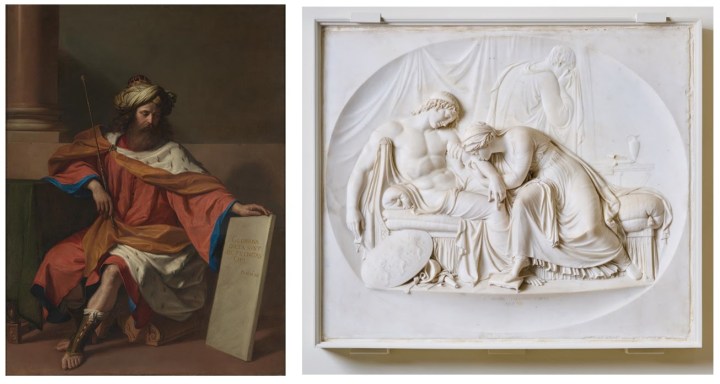
Left: Guercino, King David, 1651, oil on canvas, 224 × 170 cm (Accepted in lieu of Inheritance Tax by HM Government and allocated to the National Gallery). Right: John Deare, Edward and Eleanor, 1790, marble (Accepted in Lieu of Inheritance Tax from the Estate of Jacob, 4th Baron Rothschild and allocated to the Victoria and Albert Museum).
◊ ◊ ◊ ◊ ◊
From the press release:
The legacy of UK cultural luminary Jacob, 4th Baron Rothschild (1936–2024) is being celebrated by two of his artworks joining the collections of the National Gallery and the V&A, through the Acceptance in Lieu scheme. The National Gallery—where Jacob, 4th Baron Rothschild served as Chair of Trustees between 1985 and 1998—will receive King David (1651) by renowned Bolognese painter Giovanni Francesco Barbieri (1591–1666), known as Guercino, reuniting it with the two works both created to be its pendant, already part of the Trafalgar Square collection. The V&A will receive the marble relief Edward and Eleanor (1790) by John Deare (1759–1798), one of the most talented neoclassical sculptors working at the end of the 18th century.
Jacob, 4th Baron Rothschild, in addition to chairing the National Gallery, led the National Lottery Heritage Fund and the family’s flagship, Waddesdon Manor. He supported many causes, some close to his home in Buckinghamshire, others as far afield as Albania, Greece, Israel, and the United States. He was committed to helping communities, the environment, education and above all, the arts. His exemplary service to his country was recognised on several occasions, with a GBE, a CVO and as a member of the Order of Merit.
His daughter, Dame Hannah Rothschild—who also served as Chair of the National Gallery—said, “My father, Jacob, was a devoted patron of the arts and a steadfast champion of the National Gallery. He regarded Guercino’s King David, a masterwork of the Italian Baroque, as one of the crowning acquisitions of his lifetime. It was his wish to see King David reunited with its two Sibyls at the National Gallery and his family is grateful to the AIL Panel and to the National Gallery for giving it a distinguished home amongst such illustrious company. The exquisite marble relief by John Deare is of such rarity and importance that my father, Jacob, felt it must find its home in a national institution. Our family is delighted that the AIL Panel and the V&A have accepted this bequest, fulfilling his vision with such care and distinction.”
◊ ◊ ◊ ◊ ◊
Celebrated as one of the most innovative and gifted British neoclassical sculptors, John Deare (1759–1798) spent most of his career in Rome, where the relief of Edward and Eleanor was carved in 1790. Due to his early death at age 38, his production was limited to around fifty documented works, though very few of these are known today. The majority were reliefs of classical and allegorical subjects or related to English history, commissioned by British Grand Tourists to decorate their country houses.
Until now, only two other marble sculptures by Deare were held in British public collections: Cupid and Psyche (1791) at the Bradford District Museums & Galleries and Julius Caesar Invading Britain (1796) acquired by the V&A in 2011 (on display in the Hintze Gallery, G22). Plaster versions of the Edward and Eleanor composition are held at Wimpole Hall and at the Walker Art Gallery.
The relief depicting Eleanor of Castile sucking poison from the wound of Prince Edward (later Edward I) will be installed in the British Galleries (G119) at V&A South Kensington later this year—the first time it has been on public display. In this exceptional relief, which demonstrates Deare’s virtuoso technique in carving marble with great subtlety, the sculptor has adapted an episode of medieval British history into a depiction of Greek history, in a refined neoclassical style.
The work is of particular interest to the V&A, as it predates the Caesar Invading Britain relief and shows various sources of inspiration in the composition, including the paintings of Angelika Kauffman. The V&A also holds several albums of drawings by John Deare, including a study of a woman (E.260-1968) believed to be preparatory for the figure of Eleanor.
Much remains to be discovered about Deare’s production. The V&A is hosting an international conference on 16 and 17 May 2025 on the theme of sculptural exchanges between Italy and Britain in the 18th and 19th centuries, where the relief will be the focus of a spotlight presentation, marking the start of a new line of research into the artist’s work.
Tristram Hunt, Director of the V&A, said: “These remarkable acquisitions, made possible by the Acceptance in Lieu scheme, will forever represent Lord Rothschild’s legacy as a great connoisseur, champion of the arts and relentless supporter of British cultural institutions.”
John Deare (1759–1798) Edward and Eleanor: Accepted in Lieu of Inheritance Tax from the Estate of Jacob, 4th Baron Rothschild and allocated to the Victoria and Albert Museum. The acceptance of this sculpture settled £1,120,000 in tax.
Additional information about Guercino’s King David is available from the full press release»
The Sainsbury Wing of London’s National Gallery Reopens
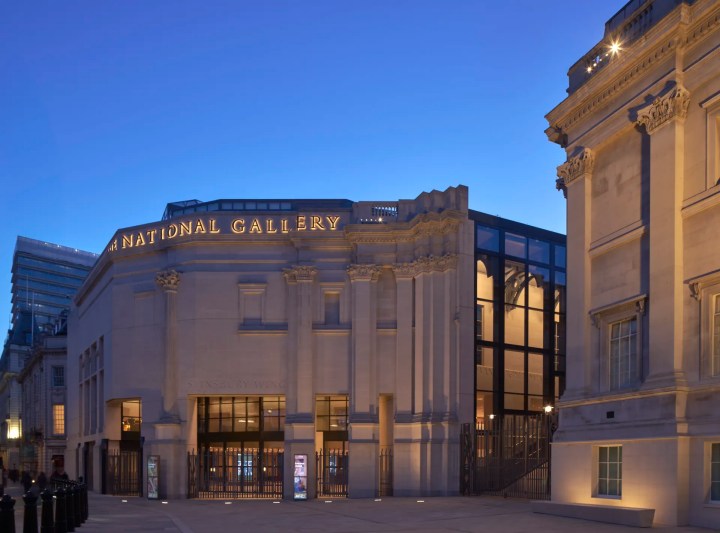
View of the National Gallery Sainsbury Wing from Trafalgar Square. After contentious early designs were scuttled in the 1980s, the Sainsbury Wing, as conceived by Robert Venturi and Denise Scott Brown, opened in 1991. The latest revisioning, an £85m project, was led by Annabelle Selldorf. (Photo by Edmund Sumner, ©The National Gallery, London).
◊ ◊ ◊ ◊ ◊
From the press release (9 May 2025) . . .
The National Gallery’s new main entrance reopened to the public on Saturday 10 May 2025, as part of the Gallery’s 200th birthday celebrations.
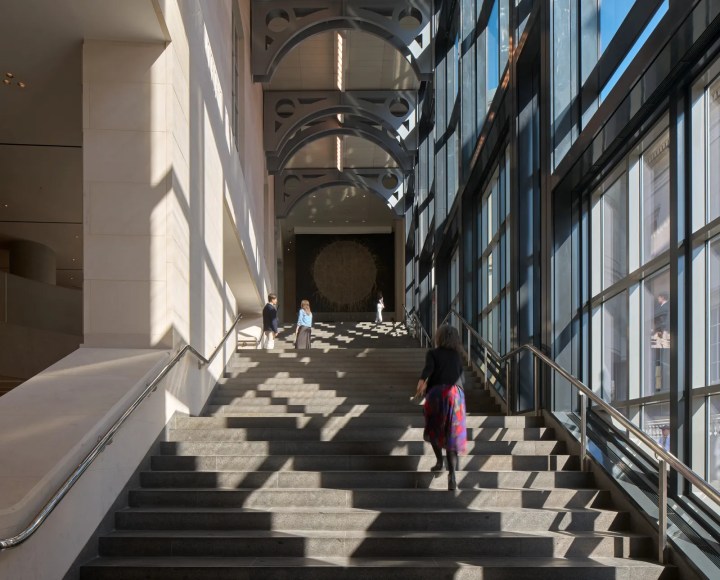
View looking up the main staircase of the Sainsbury Wing (Photo by Edmund Sumner, ©The National Gallery, London).
The Sainsbury Wing closed in February 2023 to undergo sensitive interventions to its external façade, foyer, and first floor, providing a better and more welcoming first experience to the National Gallery’s millions of visitors, in a plan designed by New York-based Selldorf Architects, working with heritage architects Purcell.
At the entrance, some of the Gallery’s footprint has been given over to public realm, creating a ‘square-within-a-square’, and leading to a more spacious entrance to the Gallery. The original dark glass of the stairs up to the gallery spaces has been replaced with clear glazing, bringing daylight across the foyer while revealing subtle views of the 1830s National Gallery building by William Wilkins (1778–1839). The glazing also allows people in Trafalgar Square to see directly into the Gallery for the first time.
This entrance opens into a new double-height foyer, which is larger, more open, and brightly lit. A 12-metre wide, 16K screen shows astounding details of National Gallery paintings. Visitors will find a new espresso bar, ‘Bar Giorgio’, by Giorgio Locatelli, on the ground floor. ‘Locatelli’, the restaurant by the same chef, will be on the mezzanine level, alongside a new bookshop and spaces for meetings and events. A bar will provide the to-date only publicly accessible space in London to enjoy a drink with views onto Trafalgar Square.
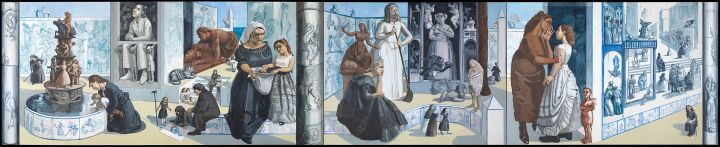
Paula Figueiroa Rego (1935–2022), Crivelli’s Garden, 1990–91, acrylic on canvas. Commissioned by the National Gallery in 1989, the painting responds to the predella of Carlo Crivelli’s Madonna of the Swallow (1491)—with an emphasis on the actions of strong women.
◊ ◊ ◊ ◊ ◊
Facing the restaurant diners will be Paula Rego’s (1935–2022) Crivelli’s Garden (1990–91). Rego was the National Gallery’s first Associate Artist and was inspired to create the work by looking at Renaissance paintings by Carlo Crivelli (about 1430/5 – about 1494) for the Sainsbury Wing Dining Room on its original opening in 1991.
Also reopening is the recently renamed Pigott Theatre, on the lower ground floor. The theatre has been fully refurbished with a new colour scheme and refitted for increased comfort and accessibility, including level access to the stage.
The palette of high-quality materials used throughout the new spaces includes the same grey Florentine limestone (pietra serena) employed in the Venturi-Scott Brown designed gallery spaces, along with Chamesson limestone from northern Burgundy, slate, oak, and black granite. Wherever possible existing materials have been re-used, recycled, or repurposed in other building projects.
The NG200 Welcome project has been made possible thanks to support from many generous donations, from both major benefactors and members of the public. In particular, The Linbury Trust and The Headley Trust which, together with The Monument Trust, funded the original establishment of the Sainsbury Wing 35 years ago, have been instrumental in helping the Gallery to realise the evolution of the building for its changing visitor needs.
Statements by Timothy Sainsbury, Gabriele Finaldi, Annabelle Selldorf, and Chris Bryant are available in the full press release.
◊ ◊ ◊ ◊ ◊
In his review of the newly unveiled spaces, Oliver Wainwright provides a useful summary of the architectural controversies that have always been part of the Sainsbury Wing’s history.
Oliver Wainwright, “‘Tranquillising Good Taste’: Can the National Gallery’s Airy New Entrance Exorcise Its Demons?” The Guardian (6 May 2025). When the Sainsbury Wing opened, it was called ‘vulgar pastiche’. Now, after an £85m revamp, it has become the famous gallery’s main entrance. But have its spiky complexities been tamed? And why all the empty space?
When the Sainsbury Wing first opened in 1991, it was not loved. It was variously slammed as “a vulgar American piece of postmodern mannerist pastiche” and “picturesque mediocre slime.” It was too traditional for modernists and too playful for traditionalists. Its dark, low-ceilinged entrance was damned as “a nasty cellar-like space” cluttered with a maze of (non-structural) columns. “It just didn’t work,” says the gallery’s deputy director, Paul Gray, adding that visitor numbers have swelled from three million back then to approaching six million now. The wing was never intended to handle such volumes. “The modern visitor expects so much more now. They want big, open, welcoming spaces, and it never felt like that.”
But time garners affection. And there is nothing like the threat of change to arouse fondness. When Selldorf’s modernising plans were first unveiled in 2022, the same critics who had pooh-poohed Venturi Scott Brown’s design leapt to its defence. . . .
The full article is available here»
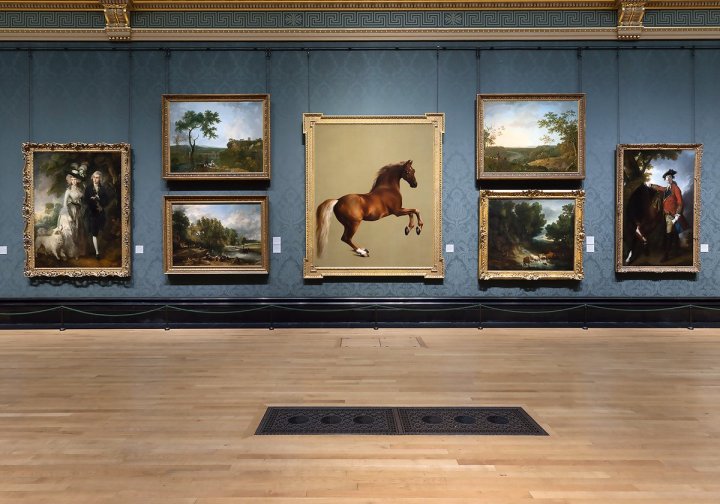
In Room 34 George Stubbs’s Whistlejacket (ca. 1762) is surrounded by a new ‘salon’ hang of British painting, 1740–1800.
◊ ◊ ◊ ◊ ◊
In addition to the reworking of the entrance and secondary spaces, galleries were rehung under the direction of Christine Riding, as described by Martin Bailey for The Art Newspaper:
Martin Bailey, “First Look: The ‘Once-in-a-Lifetime’ Rehang at London’s National Gallery,” The Art Newspaper (5 May 2025).
The Art Newspaper was given an early tour by Christine Riding, the director of collections and research, who has overseen the rehang. She describes her task as a “once-in-a-lifetime” opportunity. Now virtually completed, the rehang means that the National Gallery will show nearly 40% of its collection.
There will be 1,045 paintings hanging in the upper-floor rooms: 919 from the collection, plus 126 on loan. Nearly a third will be in the Sainsbury Wing and the rest on the main floor of the original Wilkins building. . . .
The number of works on display is slightly greater than before, thanks to a marginally denser hang, more glass cases in the centre of rooms, two walls with 34 plein-air landscape oil sketches (Room 39) and an additional space (Room 15a) with small Dutch pictures.
Riding has been particularly keen to emphasise “how artists have been influenced by their predecessors.” For instance, Elisabeth Vigée Le Brun’s Self Portrait in a Straw Hat (1782) is hung in the same octagonal space (Room 15) as the picture that inspired it, Peter Paul Rubens’s presumed Portrait of Susanna Lunden (1622–25). . . .
The Sainsbury Wing will now be the main entry point for visitors, with possibly more than 90% coming through there rather than via the portico or Getty entrances.
The full article is available here»
National Gallery Names Room 34 for the Blavatnik Family Foundation
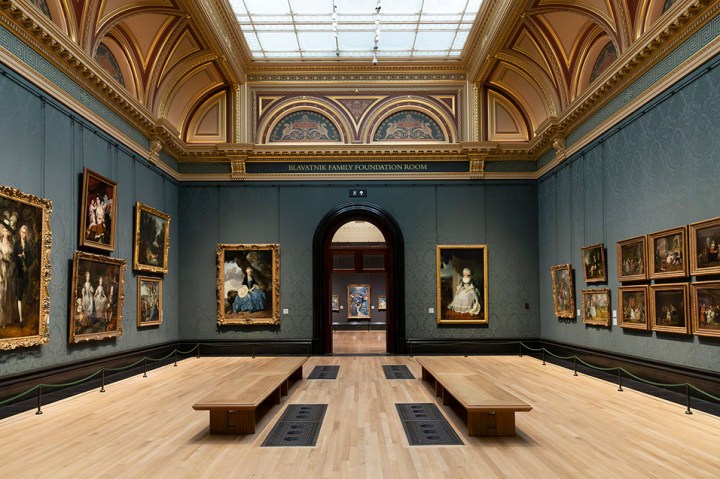
Room 34 of the National Gallery unveiled as the Blavatnik Family Foundation Room in recognition of its significant gift to the NG200 campaign.
◊ ◊ ◊ ◊ ◊
From the press release (7 May 2025) . . .
Room 34 of the National Gallery will today be unveiled as the Blavatnik Family Foundation Room in recognition of its significant gift to NG200. The generous gift marks the culmination of NG200, the National Gallery’s year-long bicentenary celebration of art, creativity, and imagination, marking two centuries of bringing people and paintings together.
Led by Sir Leonard Blavatnik, founder and chairman of Access Industries, the Blavatnik Family Foundation promotes innovation, discovery, and creativity to benefit the whole of society. Through the Foundation, the Blavatnik family has contributed over $1billion globally to advance science, education, arts and culture, and social justice. They have provided essential funding to dozens of scientists in the early stages of their careers through the Blavatnik Awards for Young Scientists, made major gifts to universities such as Harvard and Yale, and funded The Blavatnik School of Government at Oxford University. The Blavatnik Family Foundation has also supported more than 180 leading cultural organisations, including the National Portrait Gallery, Royal Academy, V&A, Courtauld, and the expansion of Tate Modern.
Room 34 of the National Gallery is a showcase of the best of British painting in the second half of the 18th century. It is home to such iconic works as the monumental horse painting Whistlejacket (about 1762) by George Stubbs (1727–1788), Mr and Mrs Andrews (about 1750) by Thomas Gainsborough (1727–1788), and William Hogarth’s (1697–1764) six painting series Marriage A-la Mode (about 1743).
Sir Leonard Blavatnik, said: “I’m delighted to support the National Gallery’s bicentenary and this magnificent room that celebrates Britain’s artistic heritage.”
Sir Gabriele Finaldi, Director of the National Gallery, said: “We are thrilled by the extraordinary and transformative philanthropy of the Blavatnik Family Foundation at this seminal moment in the National Gallery’s history and are delighted to recognise the generosity of the Blavatnik Family in one of our most beautiful and important rooms.”
The Decorative Arts Trust Launches Collecting250

From the press release:
Collecting250
The Decorative Arts Trust
New Online Resource Commemorates the Semiquincentennial through 250 Objects from across America.
The Decorative Arts Trust is pleased to share Collecting250.org, an interactive online resource that celebrates the importance of objects in narrating the history and evolution of the United States and the communities contained within. To commemorate America’s 250th, the United States Semiquincentennial, the Trust asked museums and historical societies to submit images and information about objects in their collections that tell powerful stories about national, state, or local identity. Collecting250 showcases 250 objects from over 140 institutions, and the release is timed in conjunction with the commencement of festivities honoring the 250th anniversary of the American Revolution’s first salvos in Massachusetts in 1775.
“We sought objects that are attached to a specific place, time, and people,” shares Trust Executive Director Matthew A. Thurlow. “Our aim was to present 250 objects from public collections across the country, thereby drawing attention to the broad swath of institutions that steward decorative arts of historical significance. This project aligns beautifully with the Trust’s mission to promote and foster an interest in decorative arts and material culture through our role as a community foundation elevating curatorial efforts to steward and study objects.”
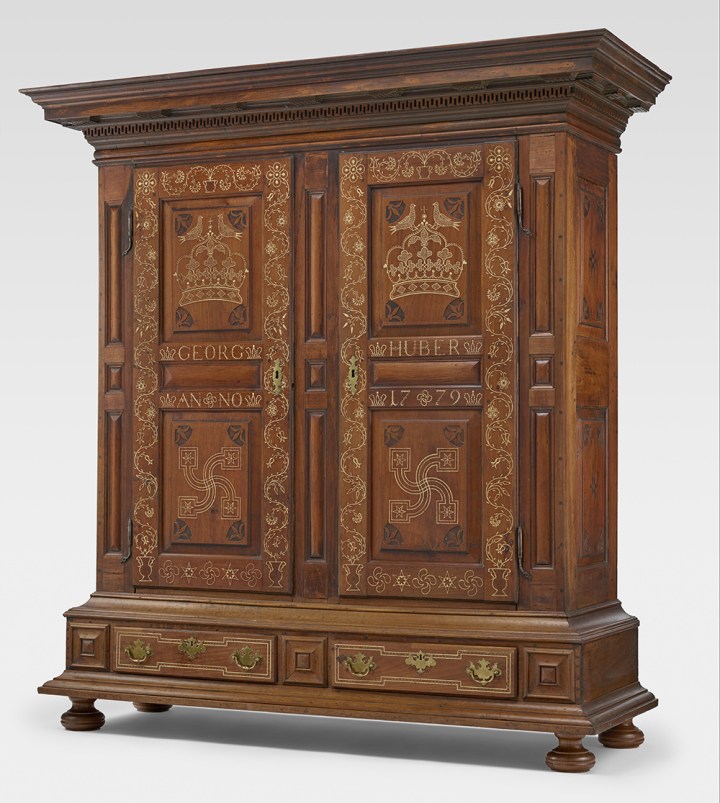
Kleiderschrank (Clothes Press), 1779, Lancaster County, Pennsylvania; walnut, yellow pine, oak, sulfur, iron; 6 feet 10 inches × 6 feet 6 inches × 27 inches (Philadelphia Museum of Art, 1957-30-1).
All 50 states and the District of Columbia are represented, and each record contains an image, tombstone information, and a description of the object’s importance. The ability to search for entries based on location, category, and keyword provides the chance to make exciting and enlightening discoveries in unexpected places. The Trust developed connections with museums and historical societies beyond our traditional network, allowing them to highlight extraordinary artistic achievements in the west, including a mid-19th-century bed covering (New Mexico History Museum) featuring churro wool yarn and colcha embroidery introduced by early Spanish settlers.
There is an interplay between objects that are isolated from one another by time, location, maker, and function. For example, two disparate entries associated with the care and storage of textiles: a humble, late-19th-century pressing iron (Illinois State Museum) that Mississippian Bettye Kelly brought to Joliet, IL, in the 1960s; and a stunning sulfur-inlaid kleiderschrank (Philadelphia Museum of Art) made in Manheim, Pennsylvania, in 1779 for Georg Huber. The former speaks to the Great Migration of African Americans northward in the 20th century; the latter to the Germanic communities that were thriving on the eastern seaboard during the American Revolution.
The tradition of basket weaving has been practiced and perfected by various cultures over the past 10,000 years. Two entries separated by a century and the entire continent of North America illustrate the cultural convergences and impulses behind the production of basketry. In 1905, Aleksandra Kudrin Reinken, the daughter of a Unangax̂ (Aleut) mother and Russian father used her community’s traditional weaving techniques to create a basket (Hood Museum of Art) for a tourist clientele that incorporates ornamentation from prints, magazines, and perhaps even a Whitman’s Chocolate Sampler box. In 2007, Mary Jackson, an internationally recognized master of sweetgrass basketry, completed Never Again (Gibbes Museum of Art), inspired by the traditional Gullah rice fanner baskets that she learned to create from her mother and grandmother and that were once made and used on Lowcountry plantations.
Collecting250 is free and open to the public. Visit Collecting250.org to start exploring. The Decorative Arts Trust, founded in 1977, is a nonprofit organization that promotes and fosters the appreciation and study of the decorative arts through programs, partnerships, and grants. Learn more at decorativeartstrust.org.
Four Educator Guides, designed specifically for the Collecting250 project, are also available.
◊ ◊ ◊ ◊ ◊
Note (added 20 December 2025) — The post was updated to include the link for the educator guides.
Venice Archaeological Museum Reopens Courtyard of Agrippa
The original core collection of ancient sculpture that would become the Archaeological Museum of Venice was on public view in the Marciana Library—built by Sansovino and Scamozzi—starting in 1596. Of the several courtyards of the Procuratie Nuove, the Courtyard of Agrippa is the only one designed by Scamozzi. From the press release (via Art Daily) . . .
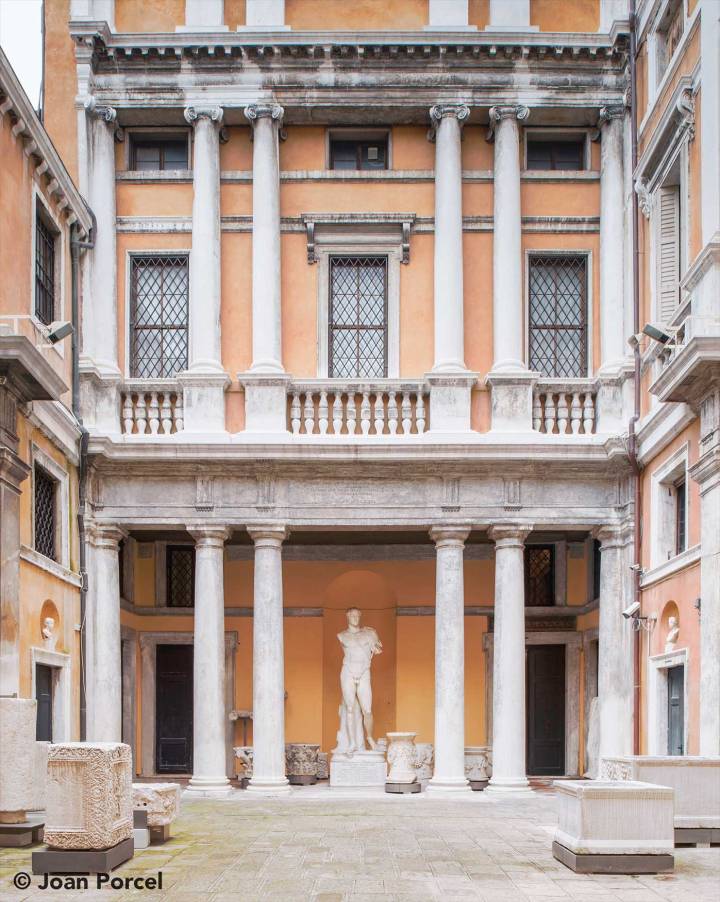
Courtyard of Agrippa. Photo from the website of the National Archaeological Museum of Venice.
The Museo archeologico nazionale di Venezia (National Archaeological Museum of Venice)—part of the Musei archeologici nazionali di Venezia e della Laguna (National Archaeological Museums of Venice and the Lagoon)—announces the reopening of the Courtyard of Agrippa, marking the beginning of a new chapter in the museum’s history. Starting May 6, the museum reopens its historic entrance at No. 17 Piazzetta San Marco, directly facing the Doge’s Palace. This new access complements the existing one through the Correr Museum and signifies the launch of a significant reorganization process. It also underscores the museum’s commitment to accessibility and a renewed, inclusive visitor experience.
In line with this vision, the museum route returns to the original order established between 1924 and 1926 by Carlo Anti, a distinguished classicist, professor of Archaeology, and later rector of the University of Padua. The itinerary offers a chronological narrative of Greek and Roman art through sculpture—from the 5th century BC to the late imperial era—alongside ceramics, bronze statuettes, coins, and other precious objects collected and donated by the Venetian aristocracy between the 16th and 19th centuries.
To enhance the visitor experience, a new independent ticketing system for the Archaeological Museum and the Marciana Library is introduced and added to the existing one, along with an annual subscription that provides unlimited, flexible access to the collections. A newly created multifunctional space will also showcase prestigious artifacts and provide visitors with updates on the museum’s ongoing reinstallation project.

The Courtyard of Agrippa is visible at the left edge of this screenshot from Google Maps.
These initiatives represent the first tangible step in the formation of a new institution under Italy’s Ministry of Culture: the Musei archeologici nazionali di Venezia e della Laguna (National Archaeological Museums of Venice and the Lagoon), established in May 2024 under the direction of Marianna Bressan. This institution encompasses the Museo archeologico nazionale di Venezia, the Museo di Palazzo Grimani, the Parco archeologico di Altino (Archaeological Park of Altino), and the upcoming Museo archeologico nazionale della laguna di Venezia (National Archaeological Museum of the Venice Lagoon) on the island of Lazzaretto Vecchio. Together, they promote an integrated and coherent cultural offering that enhances the archaeological heritage of Venice and its lagoon.
To celebrate this reopening, the courtyard will also host a striking site-specific installation during the preview days of the 2025 Venice Architecture Biennale. Lines by Kengo Kito, curated by Masahiko Haito and supported by anonymous art project, will be installed both in the Courtyard of Agrippa and Room V of the Museum. The work establishes a dialogue with Venetian cultural heritage and Renaissance architecture, sparking a reflection on the interaction between art and public space.
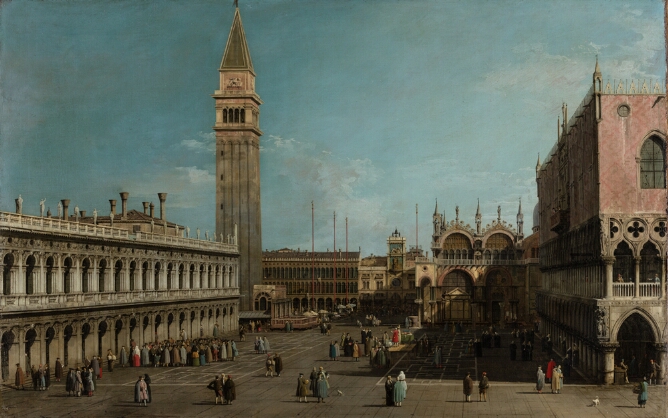
Canaletto, The Piazzetta, Venice, Looking North, ca. 1740 (Pasadena: Norton Simon Museum). The Marciana Library is visible to the left, in front of the bell tower.
Also part of the exhibition, a temporary conservation intervention—also supported by anonymous art project—on the wall behind the statue of Agrippa, weathered by time and humidity. The work includes surface dust removal, consolidation, and subtle tone harmonization, aiming to create a dynamic relationship between ancient, modern, and contemporary art. This experimental restoration model may inform future developments within the museum. The artistic project will contribute to further enhance this restoration, underlining the importance of the continuous comparison between the historicity of the place and current artistic expressions.
“The reopening of the museum’s historic entrance on Piazzetta San Marco,” states Marianna Bressan, Director of the Musei archeologici nazionali di Venezia e della Laguna, “is the first tangible act in Venice by this new institution. It reflects the cultural vision we aim to develop. The intervention in fact returns to the city and to the world a jewel of Renaissance architecture, studies the distribution of ancient sculptures and the architectural space for a mutual valorisation, proposes a conceptually flexible installation, part permanent exhibition and part visitable depot. Furthermore, it intends to reconnect the relationship of the Archaeological Museum with Venice both physically, through the access directly from the Piazza level, and in the proposal of cultural fruition: in the room adjacent to the ticket office, the Museum will recount step by step the phases of its rebirth, visitors, both male and female, by subscribing, will be able to return as many times as they want to see the progress, to participate in the dedicated events, to familiarize themselves with the collections and the history of this place, so linked to the history of Venice itself.”
Crossing the museum’s new threshold, visitors are welcomed into the Courtyard of Agrippa, home to the monumental statue believed to depict the Roman statesman and general Marcus Vipsanius Agrippa (63 BC – AD 12). This space acts as a bridge between the Marciana area’s architecture, Venice’s political centre, and the legacy of classical antiquity collecting. The statue introduces the deep connection between Venice and ancient Rome, a theme echoed throughout the museum’s collection. This link reveals how collecting was a strategic tool to bolster the cultural and political identity of the Serenissima.
Having become part of public collections in the 1860s, the work represents a significant historical testimony, which confirms a long tradition of private collections donated to the Republic and begun in the early decades of the sixteenth century by Domenico Grimani (1461–1523). Integrating his uncle’s donation with his own collections, in 1587 Giovanni Grimani (1506–1593) donated part of his collection to the Serenissima and committed to setting up the Statuary in the anteroom of the then ‘Libreria’ Marciana, opened to the public in 1596 among the first examples of a public museum in the world. The Grimani donations marked the beginning of a process of active involvement of the Venetian patriciate in strengthening the prestige of the State. Numerous members of the Venetian nobility, in fact, would follow their example, donating part of their collections to the city. The predominance of ancient works of art, especially Roman, becomes clear evidence of the desire to associate Venice with a historical tradition that, although not part of its foundation, could legitimise it as a cultural, political and military power. The collection of ancient art thus becomes a bridge between the Serenissima and the great Roman history, strengthening the position of Venice as heir to the dominion and power of the Roman Empire, especially in the eastern Mediterranean.
In a program that aims to offer a complete cultural experience, the new independent entrance to the museum, designed for those who wish to visit only the Archaeological Museum, integrates with the existing access from the Museo Correr.
The addition of a new passageway restores the Courtyard of Agrippa to its original visibility and accessibility: the space, in fact, is the only one among the courtyards of the Procuratie Nuove designed by Vincenzo Scamozzi, one of the greatest interpreters of the Renaissance architectural language.
To re-establish the visit according to the original route, the new entrance corresponds to a separate ticket. To this is also added an adjacent multifunctional space, where stone works belonging to the permanent collection will be set up, creating a real visitable depot. Here, an infographic designed to be flexible and updatable will tell visitors about the process of re-setting up the National Archaeological Museum of Venice, which begins with the reopening of the Courtyard of Agrippa.
Finally, to make the offer as inclusive and usable as possible, an annual subscription will be introduced, which will allow flexible entry to the collections, as well as access to the Museum’s event program. The initiative thus opens the institution to the city, building visitor loyalty and guaranteeing them a more dynamic visit.
The reopening of the Courtyard of Agrippa marks an important step in the process of reorganization and enhancement of the archaeological heritage of Venice, which finds new synergy within the National Archaeological Museums of Venice and the Lagoon. Within this institution, belonging to the Ministry of Culture, the different facets of the identity and history of the Venetian territory are integrated.
The Museum of Palazzo Grimani and the National Archaeological Museum offer a historical-artistic narrative on collecting linked to archaeology and classical art: Palazzo Grimani, in particular, celebrates, through the reorganization of the Tribuna, the collecting experience of the Grimani family—specifically the patriarch of Aquileia, Giovanni—while the National Archaeological Museum of Venice tells the story of Venetian collecting.
New Book | The Fricks Collect
After a $220million renovation that lasted nearly five years, The Frick reopens today. There’s been lots of media coverage; I especially enjoyed Patricia Leigh Brown’s piece in The New York Times (1 April 2025), highlighting various artists and craftspeople who contributed. –CH
From Rizzoli:
Ian Wardropper, with a foreword by Julian Fellowes, The Fricks Collect: An American Family and the Evolution of Taste in the Gilded Age (New York: Rizzoli Electa, 2025), 160 pages, ISBN: 978-0847845750, $50.
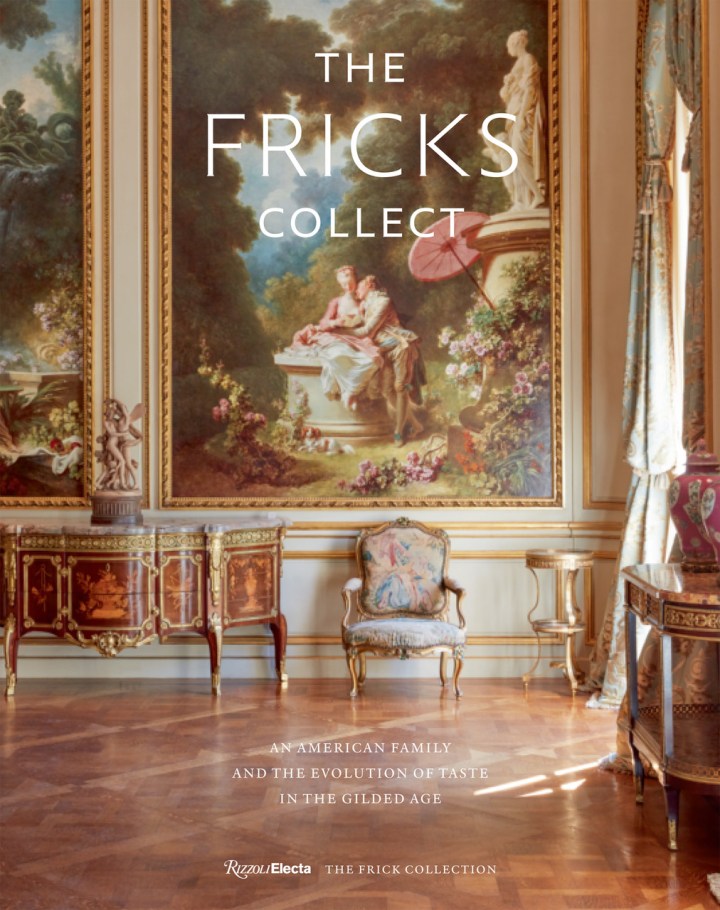 Before his New York home became a museum, Henry Clay Frick engaged some of his era’s most important art dealers to build a notable collection and the best decorators to create suitable Gilded Age interiors to accommodate the works. This story traces the journey that led to the creation of one of America’s finest art collections.
At its heart, this story centers on Frick and his daughter Helen Clay Frick, both pivotal figures in the formation of the renowned Frick Collection. The volume delves into the Fricks’ exposure to and acquisition of some of the finest art of their time. With an exquisite blend of textual narrative and ample imagery showcasing masterpieces and the sumptuous interiors of homes in Pittsburgh and New York, the book offers a captivating narrative of ambition, wealth, and cultural patronage.
White, Allom & Co. and Elsie de Wolfe worked with Frick on the decoration of his houses and influenced the choice of many furnishings the owner acquired and that formed the backdrop for his paintings. As was commonplace at the time, decorators often collaborated with dealers in creating spaces suitable for the esteemed works of art. Further influential figures who shaped the era’s cultural landscape include Frick’s business partner Andrew Carnegie and noted art dealers Joseph Duveen in London and Charles Carstairs of M. Knoedler & Co. in New York. Presenting the glittering halls of their homes and the masterpieces adorning the walls of The Frick Collection, this volume is a testament to the enduring allure of art and the power of patronage in shaping cultural institutions.
Ian Wardropper is the Anna-Maria and Stephen Kellen Director of The Frick Collection. Julian Fellowes is an English novelist, director, and screenwriter, best known as the creator and head writer of the popular TV series Downton Abbey.










 Enfilade
leave a comment