Tavitian Foundation Donates 331 Works and $45millon to The Clark
A belated posting for a major announcement from October:
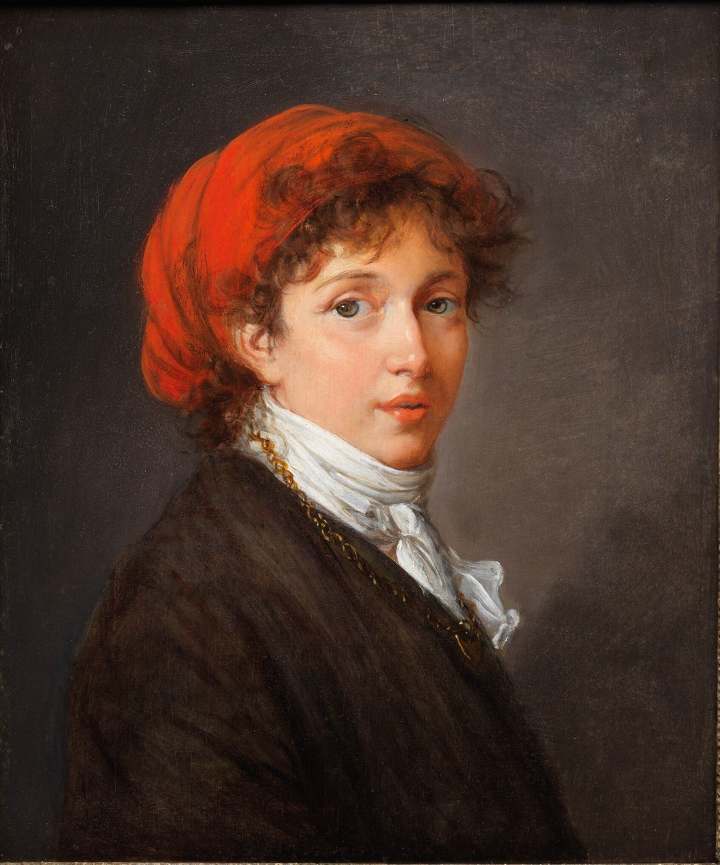
Élisabeth Louise Vigée Le Brun, Self Portrait in Studio Costume, ca. 1800 (Williamstown, Massachusetts: Clark Art Institute).
The Clark Art Institute has received one of the largest gifts in its history from the foundation of the late philanthropist Aso O. Tavitian. The gift includes 331 works of art from Mr. Tavitian’s personal collection and more than $45 million to endow a curatorial position to oversee the collection, provide necessary support for the collection’s long-term care, and fund construction of a new Aso O. Tavitian Wing at the Clark.
“It is an incredible honor to receive this transformational gift,” said Olivier Meslay, Hardymon Director of the Clark Art Institute. “During his lifetime, Aso Tavitian was a wonderful friend to the Clark and a generous supporter who provided us with exceptional leadership and dedication. We are deeply moved by his decision to place the heart of his collection in our trust and immensely grateful to the Trustees of his Foundation for their generosity in ensuring that we can fulfill his desire to share these treasures with the world through the addition of the new Aso O. Tavitian Wing that will house these remarkable works of art.”
Mr. Tavitian, who had homes in New York City and Stockbridge, Massachusetts, died in 2020. He served on the Clark’s Board of Trustees from 2006 to 2012 and remained engaged with the Clark throughout his lifetime. In 2011, Mr. Tavitian loaned thirty paintings and one sculpture from his collection to the Clark for the exhibition Eye to Eye: European Portraits, 1450–1850. Prior to his death, Mr. Tavitian made the decision to gift a significant portion of his collection to the Clark and had numerous conversations with the Institute’s leadership about his intentions.
The 331 works of art in the gift include 132 paintings, 130 sculptures, thirty-nine drawings, and thirty decorative arts objects, creating an important addition to the Clark’s holdings. The entirety of the Tavitian gift will be on view when the new Aso O. Tavitian Wing opens. Following an introductory presentation at the time of the new wing’s opening, the works on paper included in the gift will be made available for study purposes and be presented in periodic displays. The majority of paintings, sculpture, and decorative arts objects will be shown on a continual basis, both in the new Tavitian Wing and in the Clark’s permanent collection galleries.
The Tavitian gift is particularly rich in portraiture, including important works by Parmigianino, Peter Paul Rubens, Elizabeth Vigée Lebrun, Jean-Honoré Fragonard, and Jacques- Louis David, among others. Also included in the collection are landscapes by Hubert Robert, Claude-Joseph Vernet, and others, as well as religious paintings by artists including Jan van Eyck and Agnolo Bronzino. Sculpture is a great strength of the Tavitian Collection, with works in bronze, plaster, terracotta, marble, and other materials dating from the Renaissance through the late nineteenth-century by artists including Gian Lorenzo Bernini, Andrea della Robbia, Gil de Siloé, Clodion (Claude Michel), and Jean-Baptiste Carpeaux.
“Aso Tavitian’s collection of Early Modern paintings, sculpture, decorative arts, and drawings is truly one of the finest in the world,” said Esther Bell, Deputy Director and Robert and Martha Berman Lipp Chief Curator of the Clark. “In making this tremendous gift to the Clark, Aso ensured that the public will have access to these beautiful objects for future generations. We are eagerly anticipating the opportunity to share these works with our visitors.”
The Clark’s existing collection of paintings and sculpture ranges from the Renaissance to the end of the nineteenth century, with strengths in the second half of this period, and greater strength in paintings than in sculpture. The Tavitian gift covers the same period, but with strengths in the earlier periods, and with greater balance between paintings and sculpture. As such, this collection forms a perfect complement and addition to the Clark’s current holdings.
“Aso Tavitian was committed to creating a home for a significant part of his collection at the Clark, where the works that brought him such deep pleasure could be shared with the public,” said Candace Beinecke, President of the Aso O. Tavitian Foundation. “The trustees of the Tavitian Foundation are thrilled to see Aso’s wishes come to life in new galleries that will provide a glorious setting for his magnificent collection and a fitting tribute to this remarkable man’s legacy.”
In addition to the works of art and funding for a new addition, the gift creates an endowment for a new curatorial position, the Aso O. Tavitian Curator of Early Modern European Painting and Sculpture, as well as additional staffing to ensure continuous oversight of the works included in the collection. The gift also supports the publication of a catalogue documenting the collection, as well as the ongoing care and maintenance of the Tavitian Collection and the new facility.
The Aso O. Tavitian Wing
The Clark and the Trustees of the Tavitian Foundation jointly selected Selldorf Architects to design the new Aso O. Tavitian Wing that will be constructed on the Clark’s campus. The new facility will be positioned between the existing Museum Building and the Manton Research Center, creating a completely reconceived and more meaningful link between the two buildings and replacing the ‘bridge’ that was originally created during the 1973 addition designed by Pietro Belluschi and The Architects Collaborative, Cambridge, Massachusetts.
Annabelle Selldorf leads the design team on the project, marking her third major engagement with the Clark. Selldorf previously oversaw the 2014 renovation of the Museum Building and the 2016 renovation of the Manton Research Center’s public spaces and galleries. Completion of the new building is anticipated for some time between 2027 and 2028.
Highlights of the Tavitian Collection at The Clark
Beginning in 2004 and continuing until his death, Mr. Tavitian assembled one of the most important private groupings of Early Modern art amassed in this generation. Mr. Tavitian’s collection reflected his personal taste, his extraordinary eye, and his belief that seeing these works displayed together further illuminated each object.
Following Mr. Tavitian’s death, his foundation gifted two paintings from his collection to The Metropolitan Museum of Art (Francesco Salviati’s Bindo Altoviti, ca.1545) and The Frick Collection (Giovanni Battista Moroni’s Portrait of a Woman, ca.1575). These paintings featured prominently in exhibitions that were presented at these institutions in recent years. The gift to the Clark honors Mr. Tavitian’s wishes to keep a significant portion of his art collection intact so that the artworks could be displayed together.
The collection includes major works by many noted artists. Among the many important works included in the Tavitian gift are:
• Jan van Eyck (Netherlandish, ca. 1390–1441) and workshop, Madonna of the Fountain, ca. 1440, oil on panel. This rare panel is one of several period versions of one of Van Eyck’s last paintings, dated to 1439 and in the Koninklijk Museum voor Schone Kunsten in Antwerp.
• Andrea della Robbia (Italian, 1435–1525/1528), Portrait of a Youth, ca. 1470–80, glazed terracotta. This exceptional work by Ieading Italian Renaissance sculptor della Robbia is modeled in deep relief, with the head and neck set off against a simple roundel glazed in blue, resulting in a sculpture that is remarkably lifelike and modern.
• Gil de Siloé (Spanish, active 1486, died ca. 1501), Saint Cecile, ca. 1500, marble. This rare, delicately carved, sculpture was made by one of the leading Late Gothic artists of fifteenth-century northern Spain, likely as an object of private devotion.
• Jacopo da Pontormo (Italian, 1494–1557), Portrait of a Boy, ca. 1535–40 or later, oil on fired tile. This sensitive, Mannerist depiction of an unknown boy, possibly a studio assistant, is rendered on the unusual support of a thick terracotta tile.
• Peter Paul Rubens (Flemish, 1577–1640), Portrait of a Young Man, ca. 1613–15, oil on panel. While the identity of the sitter is no longer known, this portrait—made following the artist’s return from Rome in what is arguably his most fertile period—is a superb example of Rubens’s ability to capture the subtleties of character.
• Gian Lorenzo Bernini (Italian, 1598–1680), Countess Matilda of Canossa, ca. 1630–39, bronze. This small-scale bronze figure is a reduction of the over life-size marble Bernini made for the tomb of Countess Matilda in St. Peter’s Basilica, Rome. The Tavitian gift also includes a rare painting by Bernini, thought to be a portrait of his brother Luigi.
• Hubert Robert (French, 1733–1808), Colonnade and Gardens at the Villa Medici, ca. 1759, oil on canvas. The collection includes three landscapes by Hubert Robert, including this monumental plein air vista of gentlemen sketching on the grounds of the French Academy in Rome.
• Jean-Antoine Houdon (French, 1741–1828), Little Lise, 1775, marble. The delicate carving of the hair, ribbon, and face of a young woman demonstrates Houdon’s unparalleled artistic refinement.
• Elizabeth Louise Vigée-Lebrun (French, 1755–1842), Self-Portrait in Studio Costume, ca. 1800, oil on panel. Several works by women artists are included in the collection, including eighteenth-century portrait painter Vigée-Lebrun, who is represented by this confident self-portrait.
• Jacques Louis David (French, 1748–1825), Portrait of Dominique-Vincent Ramel de Nogaret, 1820, oil on canvas. The artist painted the former finance minister of France during a period when both men were in exile in Brussels following the final abdication of Napoleon in 1815. The gift also includes two other portraits by David, including the pendant portrait of Ramel de Nogaret’s wife, Ange-Pauline-Charlotte Ramel de Nogaret and the portrait of the artist’s son, Jules.
Norton Museum Names Shawn Yuan Curator of Asian Art
From the press release (via Art Daily) . . .
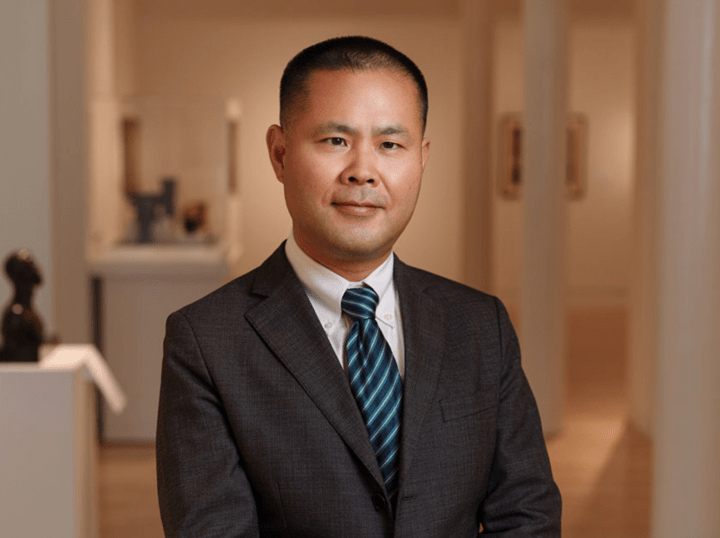
Portrait of Shawn Yuan, courtesy of the San Antonio Museum of Art.
The Norton Museum of Art, in West Palm Beach, has appointed Shawn Yuan as the Elizabeth B. McGraw Senior Curator of Asian Art. The Norton, Florida’s largest art museum, is internationally known for its Collection of Contemporary art, Early European art, Modern art, and Photography, as well as Chinese art. Yuan will oversee the Asian Collection, which primarily focuses on Chinese art. In his new role, Yuan also will focus on works created by artists of other Asian cultures. His tenure at the Museum will begin April 7.
Yuan joins the Norton from the World Heritage Center in San Antonio, Texas. Prior to his role at the World Heritage Center, he held positions at the San Antonio Museum of Art, the Oklahoma State University Museum of Art, and the Crow Museum of Asian Art at the University of Texas, Dallas.
At the Norton, Yuan will be responsible for developing, growing, and interpreting the Museum’s Asian Collection, encompassing more than 700 objects, including bronzes, ceramics, decorative arts, glass, jades, porcelain, and works of various other mediums. The Norton’s Asian Art Collection was an early addition to the Museum’s holdings, which began in 1942 under the Museum’s founder, Ralph Hubbard Norton, just one year after the Museum opened. The Museum’s earliest acquisitions for this area of the Collection consisted of Chinese jade and bronzes, and expanded over the years to include ceramics, lacquer, export and import porcelain, and most recently, paintings. Yuan’s hiring marks the Norton’s broadening scope of collecting to more robustly include other Asian cultures such as Japan, Korea, and India.
“We are impressed by Shawn’s enthusiasm for our collections, and his passion for making these venerable works of art relatable to modern audiences,” said Ghislain d’Humières, Kenneth C. Griffin Director and CEO. “I look forward to working with him and collaborating on the development of innovative, original exhibition programming that expands the Norton’s storied Chinese holdings and welcomes new audiences through the focused inclusion of work from diverse Asian cultures.”
Yuan has curated several original exhibitions, including Samurai Spirit: Swords, Accessories, and Paintings; Creative Splendor: Japanese Bamboo Baskets from the Thomas Collection; Elegant Pursuits: The Arts of China’s Educated Elite, 1400–1900; Korean Ceramics from the San Antonio Museum of Art Collection; Radiant Wisdom: Tibetan and Indian Buddhist and Hindu Art from the John Hendry Collection; Texas Collects Asia; and Tending the Afterlife: Chinese Tomb Art from the Neolithic Period to the Ming Dynasty.
“I have long admired the Norton’s exceptional collection of Asian art, particularly its remarkable holdings of Chinese art,” Yuan said. “Thanks to visionary acquisitions throughout the Museum’s history, the Collection features outstanding examples across all major categories, spanning more than 3,000 years of Chinese history.”
Yuan fills a position that will soon be vacated by Laurie Barnes, who is retiring after 19 years as the Elizabeth B. McGraw Senior Curator of Chinese Art. During her tenure, Barnes expanded the Collection, leading the Norton to acquire several rare and noteworthy works, such as a 10th-century ‘Secret Color’ Yue stoneware box and a set of paintings depicting a late Ming dynasty (1368–1644) Lantern Festival celebration in the city of Nanjing. She also was a contributing author to Chinese Ceramics: From the Paleolithic Period through the Qing Dynasty, a bilingual encyclopedic survey published by Yale University in collaboration with the Beijing Foreign Languages Press and curated the critically acclaimed 2015 exhibition High Tea: Glorious Manifestations East and West, a wide-ranging exploration of the art and culture of tea. Barnes leaves a lasting impact on the Norton’s community and is thrilled to observe the direction that Yuan takes the Museum’s expanded Asian Art department.
“It will truly be an honor to work with this esteemed Collection and contribute to its continued growth,” Yuan said. “I also look forward to collaborating with the Norton team to create exhibitions that serve as a gateway to Asian cultures while enriching the vibrant and diverse cultural landscape of South Florida.”
Exhibition | Designing the Future of The Nelson-Atkins
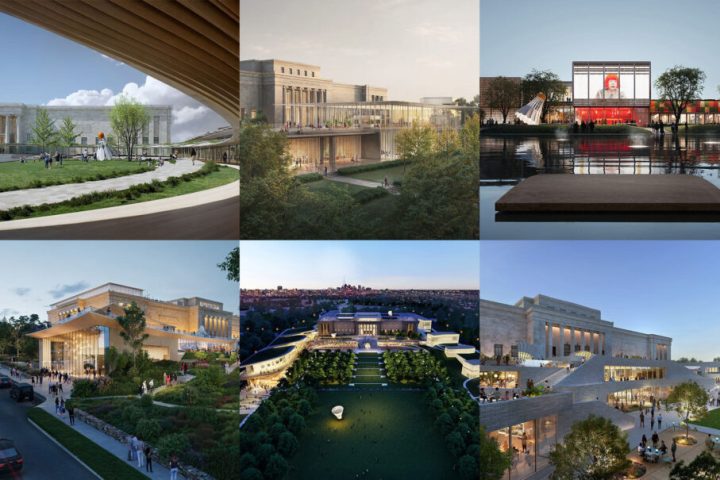
Proposals by the six finalists for The Nelson-Atkins Museum of Art, aimed at integrating the campus, the Donald J. Hall Sculpture Park, and the two existing buildings into a cohesive experience for new wider community engagement.
◊ ◊ ◊ ◊ ◊
It’s not an 18th-century story per se, but interesting to see a museum engage a strong classical facade and an iconic landscape in the 21st century. From the press release (13 March) for the exhibition, which includes an online component:
Building Belonging: Designing the Future of the Nelson-Atkins
The Nelson-Atkins Museum of Art, Kansas City, 15 March — 1 June 2025
The Nelson-Atkins Museum of Art this week revealed the concepts from six finalist teams in the competition to transform the museum with a dynamic, open, and inviting design. The expansion project’s goal is to attract new audiences by creating vibrant spaces for hosting more art, along with new immersive and interactive experiences for the community. The concepts—devised by some of the most respected designers working in museum architecture today—are now available to view in an online gallery here. They can also be seen in a free exhibition at The Nelson-Atkins Museum of Art, Building Belonging: Designing the Future of the Nelson-Atkins, until 1 June 2025. The public is invited to comment at the exhibition or through the portal available here.
The museum’s Architect Selection Committee (ASC) will meet in late spring to interview the finalists and make a recommendation to the Board of Trustees. Following ratification and the winning team’s appointment, the chosen design will be refined in close partnership with the museum and its stakeholders, including local communities. The Board of Trustees aims to broaden the conventions of the museum—which offers free general admission—so it continues evolving as a place where everyone feels they belong. The project will integrate the campus, the Donald J. Hall Sculpture Park, and the two existing buildings into a cohesive new experience. The first stage of the competition, which launched in October 2024, attracted 182 teams from 30 countries on six continents.
“These six concept designs articulate six unique visions of a new and even more dynamic Nelson-Atkins.” said Evelyn Craft Belger, Chair of the museum’s Board of Trustees and the Architect Selection Committee. “This is a thrilling moment for the museum and our community when we start to visualize an identity that will carry us through the coming decades. We encourage our community to visit the exhibition and share your thoughts—which proposal best realizes your aspirations?”
“We asked for bold, inspiring moves that also respected the existing museum campus and I’m so happy to say we’ve received them in these initial designs,’ said Julián Zugazagoitia, Director & CEO of the Nelson-Atkins, “Each is a fascinating response to a complex project brief, together they bring myriad perspectives. The teams have shone their beams of thought on our big questions: how do we synthesize our existing icons with a new proposition? How do we modernize and embrace the future but keep the best of our history? And, most of all, how do we create a museum that is transparent for all and instills a sense of belonging and well-being?”
In conjunction with this exhibition is the release of Director’s Highlights: Celebrating 90 Years of The Nelson-Atkins Museum of Art, which captures the richness and variety of the museum’s collection told through the eyes of the curators and Zugazagoitia himself. It includes about 200 works of art organized by the decade in which they entered the museum. Engaging stories, images, and colorful anecdotes accompany each work, along with historic photos and plans. The publication is available for purchase online and in the museum store.
More information about the six finalists can be found here»
• Kengo Kuma & Associates
• Renzo Piano Building Workshop
• Selldorf Architects
• Studio Gang
• Weiss/Manfredi Architecture/Landscape/Urbanism
• WHY Architecture

◊ ◊ ◊ ◊ ◊
Note (added 25 April 2025) — Weiss/Manfredi will lead the expansion, as announced in the press release:
The Nelson-Atkins Museum of Art has unanimously selected WEISS/MANFREDI Architecture/Landscape/Urbanism as the lead architect for the museum’s upcoming expansion and transformation project. Their guiding theme united the trilogy of architecture, landscape, and community as reciprocal elements that work together while maintaining the majestic south lawn view into the Donald J. Hall Sculpture Park. WEISS/MANFREDI’s concept is aligned with the museum’s goals for a dynamic, open, and inviting design that will create more spaces to present all forms of art, as well as new opportunities for immersive and creative experiences for audiences of every age. The museum’s Architect Selection Committee made the recommendation of WEISS/MANFREDI, describing the project as the best to fulfill the museum’s aspirations, and the team as sensitive to Kansas City while being engaging, smart, creative, and curious. The choice was ratified by the Board of Trustees shortly thereafter. Having selected the lead architect, the museum will now begin the months-long process of turning the concept into more specific and detailed plans to meet the long-term needs and goals of the community. . . .
The full press release is available here»
Bernd Ebert Named General Director of the SKD
From the press release (4 March 2025) . . .
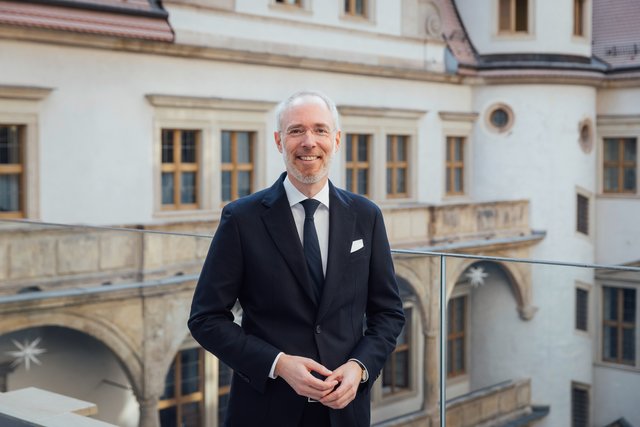
Dr. Bernd Ebert (Photo by Oliver Killig).
The Saxon state government agreed today that Dr Bernd Ebert will become the General Director of the Staatliche Kunstsammlungen Dresden (SKD or Dresden State Art Collections) from 1 May 2025 onwards. His contract will run until 30 June 2033. He will follow in the footsteps of Prof. Dr Marion Ackermann, who is becoming President of the Stiftung Preussischer Kulturbesitz (Prussian Cultural Heritage Foundation).
Dr Bernd Ebert is returning to Dresden after the previous stages in his career ideally prepared him for his new job at Saxony’s Art Collections. He impressed an international selection committee consisting of many prominent personalities, who unanimously recommended him to take up this internationally important museum position following a multi-stage selection procedure. Dr Bernd Ebert will move from his current leadership role at the Bayerische Staatsgemäldesammlungen (Bavarian State Painting Collections) to become the General Director of the SKD.
The Saxon State Culture Minister, Barbara Klepsch, issued the following strong statement. ”l’m delighted that we’ve once again been able to attract an outstanding person to Saxony: a high-profile and sought-after art historian and museum expert is taking over as the new General Director of our Dresden State Art Collections. He convinced us with his clear ideas about how he plans to lead the internationally renowned network of museums into a highly promising future. With his enthusiasm for the collections and thanks to his national and international experience and networks, he’s the ideal person to take over the position of General Director. We’re more than happy to hand over the responsibility for the successful Dresden State Art Collections to him from May 2025 onwards.”
Neil McGregor emphasized, “The search committee was fortunate in having a strong field of candidates, with a wide range of different experience: and we were unanimous in choosing Dr Bernd Ebert as the outstanding candidate to lead the SKD. He is of course a distinguished art historian with an international reputation as a scholar. But he is much more than that. He brings to the role a rare mix of legal, financial, and administrative skills; he has direct experience of tackling the intellectual, practical, and political complexities of a great encyclopaedic collection like the SKD; and he has an impressive track record of exhibitions, designed to win new audiences and to break down the traditional boundaries between art history and other disciplines. What most convinced us was his ambitious vision for the future of the collections as a whole, for what they can mean for Dresden, for Saxony, and for the world — and a clear understanding of how that vision can be made a reality.“
Dr Bernd Ebert comments, “In Saxony, lt’s wonderful to see how amazingly popular the collections and the multi-faceted programme formats at the SKD are with the general public and experience the depth of the bond between the population and their art treasures. Working with the team at SKD, it’s my goal to not only intensify the research work into the many and varied items in the collections, but also promote the way that their message is communicated in our modern world. One of the issues closest to my heart also involves extending the range of services for different groups of visitors and increasing the quality of the time that the general public spends in the SKD centres in order to make their overall experience even more attractive. l’m looking forward to publicising the cultural heritage, which is unique around the world in its quality and variety, to an even greater degree, both nationally and internationally, and l’m more than happy to commit myself to the passion for art that is part and parcel of life here in Saxony.”
Bernd Ebert (who was born in Berlin in 1972) started his career in Dresden with a training course to become a qualified banking clerk at Deutsche Bank AG. He then studied art history, jurisprudence, and business management in Bonn and simultaneously gained practical professional experience at the Metropolitan Museum of Art in New York, the Newtown Galleries in Johannesburg, the National Gallery of South Africa, and the lrma Stern Museum in Cape Town, as well as at renowned private collections and in the art trade.
He gained his doctorate (with the highest possible honours) in 2005 with a thesis focusing on the Dutch baroque painters, Simon and lsaack Luttichuys, having spent several years conducting research in the Netherlands as part of his doctorate.
Dr Ebert worked at the Staatliche Museen zu Berlin (State Museums in Berlin) from 2005 until 2013, initially as an academic museum assistant to the General Directorate and the painting gallery and then as an academic expert for the General Director. In this role, he coordinated the departments of research and scholarship as well as international cooperation arrangements across the collections, such as the EU twinning project with the Georgian National Museum in Tbilisi and the exhibition entitled ”The Art of the Enlightenment” at the Chinese National Museum in Beijing. He was a visiting fellow at the Getty Research Institute in Los Angeles in 2011.
Since 2013, Dr Ebert has been the Head of the Collection of Dutch and German Baroque Paintings at the Bavarian State Painting Collections and has been responsible for the state galleries in Bayreuth and Bamberg. His outstanding special exhibitions include Circle, Sphere, Cosmos (Berlin, Schwäbisch Hall, 2006/07); Utrecht, Caravaggio and Europe (Utrecht, Munich 2018/19); and Rachel Ruysch: Nature into Art (Munich, Toledo, and Boston, 2024/25).
AIC Receives Horvitz Collection of over 2200 Works of French Art
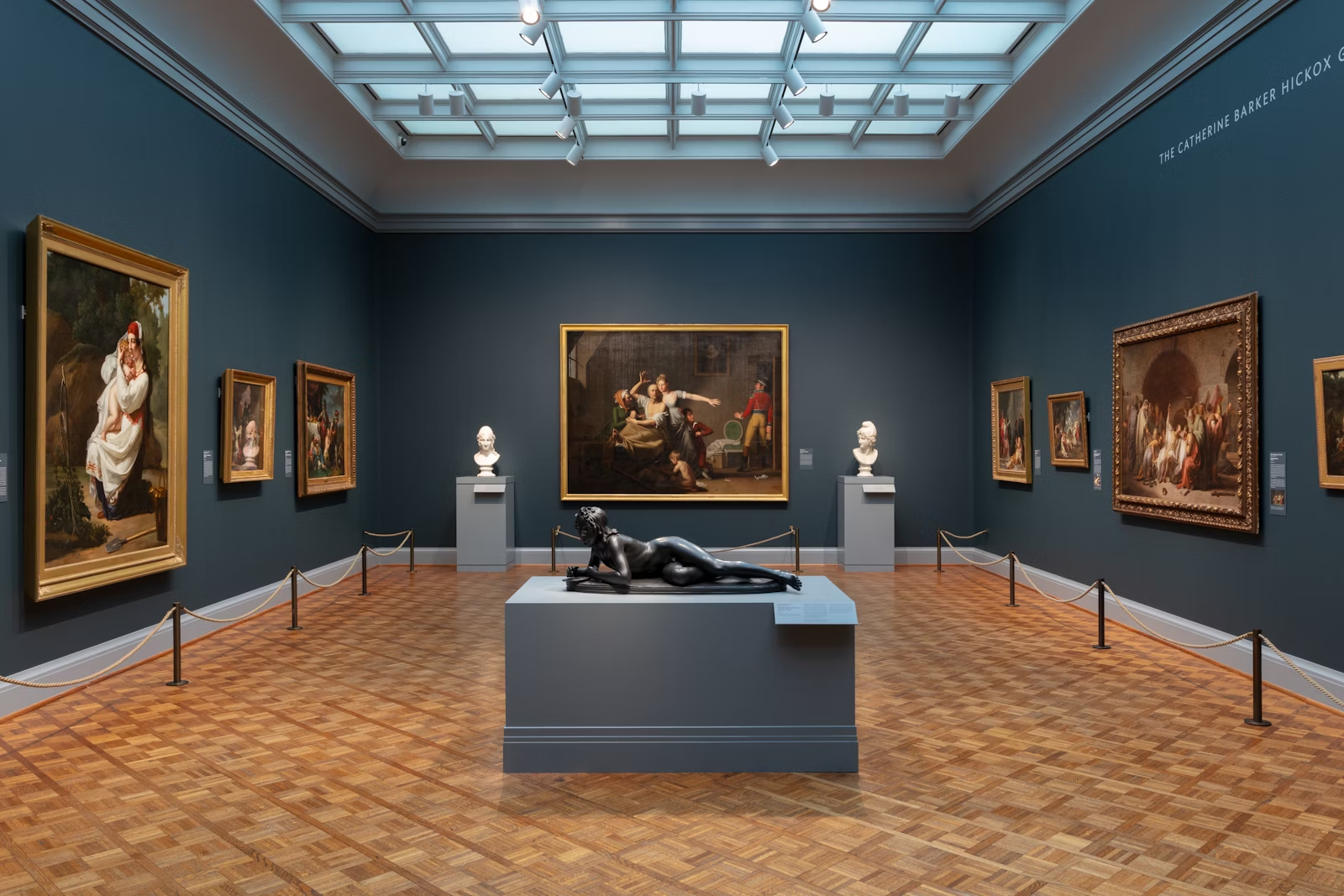
.
Installation view of French Neoclassical Paintings from The Horvitz Collection at the Art Institute of Chicago, 2024.
◊ ◊ ◊ ◊ ◊
From the AIC press release (11 February 2025) . . .
The Art Institute of Chicago is honored to announce a transformative gift of 16th- to 19th-century French art from Jeffrey and Carol Horvitz. The Horvitz Collection is the preeminent collection of French Old Master paintings, drawings, and sculptures in the United States, and while the Art Institute is already renowned for one of the most comprehensive collections of 19th-century French art worldwide, this unparalleled gift will allow the museum to provide its visitors with a 300-year panorama of French art that is wholly unique outside of France.
This gift is made up of nearly 2,000 drawings, 200 paintings, and 50 sculptures, and includes works by well-known artists Charles Le Brun, François Boucher, Jean-Honoré Fragonard, Jacques-Louis David, and Théodore Géricault; numerous works by women artists, including Anne Vallayer Coster, Élisabeth Vigée Lebrun, Marie-Gabrielle Capet, and Adélaïde Labille-Guiard; and rare works of art where few or none otherwise exist in America, such as artworks by Jacques Bellange, Reynaud Levieux, and Nicolas Prevost.

Jean-Charles-Niçaise Perrin, Death of Seneca, ca. 1788 (Chicago: AIC, Horvitz Collection).
The collection has been built over four decades and continues to grow and evolve. For the last three decades, it has been widely featured in thematic exhibitions in museums across the United States and Europe. More recently, two spectacular exhibitions in late 2024 at the Art Institute—French Neoclassical Paintings from The Horvitz Collection and Revolution to Restoration: French Drawings from The Horvitz Collection—featured just a small portion of the paintings and drawings in this vast collection.
To ensure the care, stewardship, accessibility, and long-term sustainability of the collection and programming for French art, phased financial gifts will accompany the collection and are expected to become one of the largest financial gifts in the history of the Art Institute. These funds will be dedicated to supporting French art across the permanent collection—conserving and caring for works, creating special exhibitions, supporting museum staff, and conducting groundbreaking research.
Jeffrey Horvitz explains, “We have always envisioned this collection remaining as a whole in order to be more than the sum of its parts, and for it to go to a major American museum where the most visitors can experience these artistic treasures, where scholars and curators can avail of the resources and advance this important research, and where our enthusiasm will resonate long after we are gone. We spent years thinking about where the collection should ultimately go—there was no more perfect choice than the Art Institute.”
This ongoing collaboration is the result of significant partnership between Jeffrey and Carol Horvitz; Alvin Clark, the Horvitzes’ curator of French drawings, paintings, and sculpture; and the Art Institute. Carol is an active member of the museum’s Board of Trustees and works closely with the museum regarding other aspects of the Horvitz’s collection, including superb Chinese cinnabar lacquer and the most significant collection of contemporary Japanese ceramics outside of Japan. Many of these works were loaned to the recent acclaimed Art Institute exhibition Radical Clay: Contemporary Women Artists from Japan, which was seen by more than 100,000 visitors.
“We are so grateful to Jeffrey and Carol for this impactful gift,” James Rondeau, President and Eloise W. Martin Director of the Art Institute of Chicago said. “Their continued support and passion for the museum is truly special, not only because it will allow millions of visitors to experience a fuller story of French art, but also because their generous financial support of the ongoing care and research of this collection will allow us to continue advancing our broader mission.”
Lea Stephenson Announced as PAFA Curator
From the press release, via Art Daily:
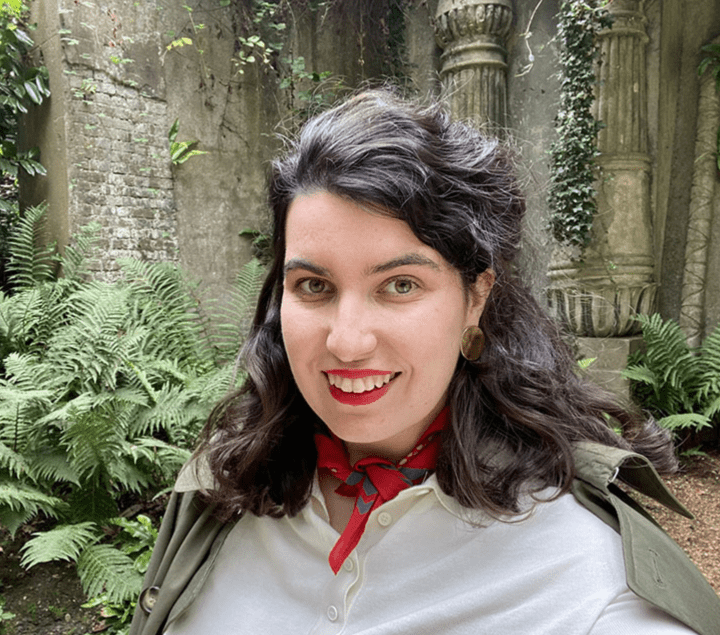 The Pennsylvania Academy of the Fine Arts (PAFA), the first museum and school of fine arts in the United States, today announced Lea Stephenson as the next Kenneth R. Woodcock Curator of Historical American Art, effective 10 February 2025. In this role, Stephenson will work to strengthen the development, research, presentation, and growth of PAFA’s renowned collection of historical American art, reporting directly to Interim Museum Director Harry Philbrick. “We are thrilled to welcome Lea to PAFA,” said Philbrick. “Her extensive background as a curator and educator and her deep knowledge of American art and art history make her an excellent addition to our team.”
Currently, Stephenson is a PhD candidate in art history at the University of Delaware, completing her dissertation on “‘Wonderful Things’: Egyptomania, Empire, and the Senses, 1870–1992,” which looks at American and British artists and collectors in Egypt during the Gilded Age. Stephenson is also the Luce Foundation Curatorial Fellow in American Paintings and Works on Paper for Historic Deerfield in Massachusetts, expanding the collection, curating exhibitions and programming, writing for publication, and fundraising.
“It is an honor to be chosen as the next Kenneth R. Woodcock Curator of Historical American Art,” said Stephenson. “It is an especially exciting time to be joining PAFA, particularly with the work in progress to curate the museum’s first, new permanent exhibition in some 20 years and prepare for its installation in 2026. PAFA is an American treasure and central to the story of America’s art history, and I could not be more excited to join.”
Stephenson’s experience in the museum world includes her recent work as exhibition curator for Historic Deerfield as well as contributions to exhibitions at the University of Delaware, The Preservation Society of Newport County (Rhode Island), Dallas Museum of Art, The Clark Art Institute (Williamstown, Massachusetts), and Marie Selby Botanical Gardens (Sarasota, Florida). A published author, Stephenson has written multiple essays including “Racial Capital: Peter Marié’s Miniatures and Gilded Age Whiteness” and “The Potter Overmantel: Black Presence and the Sense of ‘Touch’.” She has two forthcoming essays: “Early Transformations in American Art: From the Colonies to an Emerging Republic,” which examines Deerfield Academy’s American art collection and major themes in American art history, specifically 18th-century to Federal period paintings and works on paper, and the other on James Wells Champney’s illustrations and collaborations with Elizabeth Williams Champney.
Stephenson holds a BA in art history from Temple University and a MA in the history of art from Williams College.
Nationalmusée Luxembourg Acquires Three Works by Monique Daniche
As noted by Adam Busiakiewicz at Art History News, the Nationalmusée Luxembourg (MNAHA) recently acquired three portraits by Monique Daniche, who worked in Strasbourg at the turn of the 18th and 19th centuries—one from Tajan (12 June, lot 90) and two from Gros & Delettrez (18 November, lot 283). From the MNAHA:
Michelle Kleyr and Ruud Priem, “New Acquisition: A Female Painter from Strasbourg Steps into the Limelight,” MuseoMag #1 (2025).
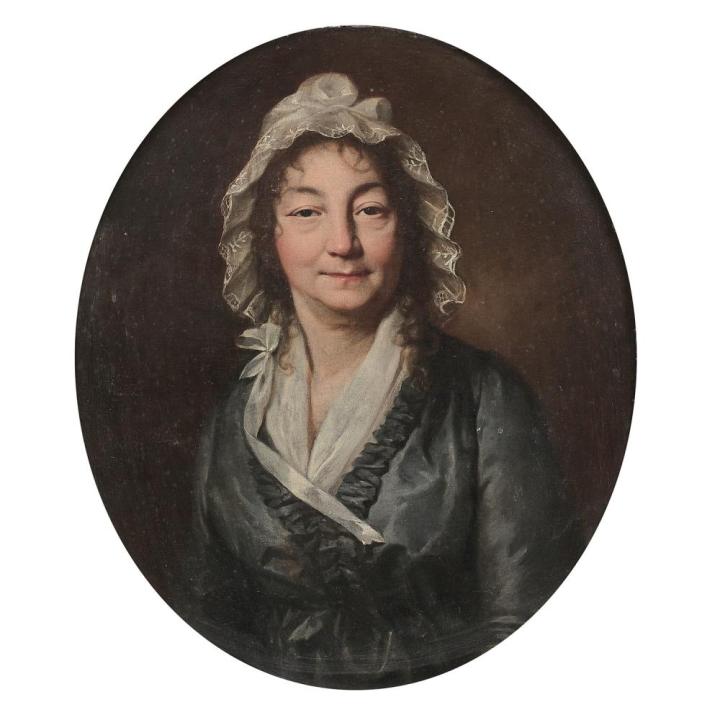
Monique Daniche, Portrait of Catherine Hubscher (1753–1835), known as ‘Madame Sans-Gêne’, ca. 1800 (Luxembourg: MNAHA).
• Monique Daniche, Portrait of Jean Nicolas Michel Tinchant (1770–1835), ca. 1793, oil on canvas, 76 × 62 cm (Luxembourg: MNAHA).
• Monique Daniche, Portrait of Jeanne Louise Thérèse Hebenstreit (1770–1849), ca. 1793, oil on canvas, 76 × 62 cm (Luxembourg: MNAHA).
• Monique Daniche, Portrait of Catherine Hubscher (1753–1835), known as ‘Madame Sans-Gêne’, ca. 1800, oil on canvas, 64 × 55 cm (Luxembourg: MNAHA).
Many museums around the world are actively trying to redress the balance in their collections of European paintings before 1850 where, in general, female portraits and especially works painted by women artists are far outnumbered by their male counterparts. With a limited budget and stiff international competition, the museum’s department of fine arts is always looking for rare opportunities to acquire work in that field on the art market. This year [2024], we were fortunate enough to acquire no less than three works by the French painter Monique Daniche (1737–1824), who was working as a much sought-after portraitist for the Strasbourg elite in the late 18th and early 19th century. Preliminary research on these portraits has revealed some remarkable stories so far.
Little is certain about Daniche’s biography and oeuvre. We know that her father Jean Tanisch (c.1700–1775) was born near Trier and recorded living between 1736 and 1742 in the Valsesia alpine valley, where he married Monique’s Tuscan mother, Rose Rossi (c.1714–1778). Our painter was born in 1737 as Marie Monique Rose Tanisch in Varallo (Piedmont), before her family relocated to Strasbourg around 1743. Although they changed their surname to ‘Daniche’ to make it sound more French, Monique kept signing her work as ‘Tanisch’. Her family was made up of painters, with her father teaching Monique and her younger siblings Ursule (1742–1822), Antoine Clément (b.1744), and Pierre (b.1752).
Almost none of their paintings are signed, and it is difficult to determine which work should be attributed to which specific family member, especially since they worked together on some paintings during their careers, Monique and Ursule in particular. As no signed works by Ursule are known to date, we assume that she collaborated exclusively with her older sister, perhaps as her assistant. Both women lived and worked together in Strasbourg all their lives, did not marry, and never seem to have left Alsace. The early years of their careers focused primarily on religious paintings for the altars of churches in Strasbourg and the surrounding area. With the dispossession and dispersal of church property during the political upheavals of the French Revolution, the sisters’ painting practice shifted to an entirely different genre, with Monique Daniche concentrating almost exclusively on portraiture from 1790 onwards.
Much of the information we have about the life and work of Monique Daniche was unearthed by the Strasbourg historian Alain Luttringer in a publication of Cahiers alsaciens d’archeologie, d’art et d’histoire 43 (2000). The addresses of her residences and workshops, the fact that the sisters employed a servant and lent considerable amounts of money, and an idea of the extent of Monique’s original oeuvre are entirely based on his research. Luttringer identified at least 35 works painted by Monique Daniche, with another 12 works attributed to her. Overall, it is a small artistic oeuvre, of which just over a dozen works have survived. . . .
The full essay is available here»
Martina Droth Named YCBA Director
From the press release:
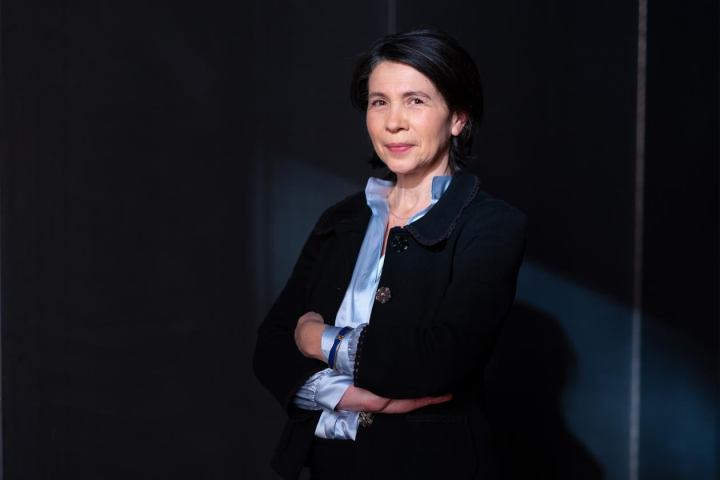
Photo of Martina Droth by Nick Mead.
Martina Droth, an art historian and curator who has served in a series of prominent roles at the Yale Center for British Art (YCBA) over 16 years, will be the museum’s next Paul Mellon Director, Yale President Maurie McInnis announced today.
As the museum’s deputy director and chief curator, Droth has been an integral part of the YCBA team and an active member of the university community, the president wrote in a message to the Yale community, building “an impressive record of achievement through roles of increasing responsibility, from leading the research division and serving as curator of sculpture to her current post. The YCBA will benefit from being led by an art historian and curator who has been instrumental in its success.”
Droth began her new role on January 15. Her tenure begins as YCBA prepares to reopen to the public on March 29, following a two-year renovation that will help safeguard the museum’s collections for generations to come. The museum houses the largest collection of British art outside the United Kingdom.
Droth succeeds Courtney J. Martin, who is now executive director of the Robert Rauschenberg Foundation. Richard Brodhead, a former dean of Yale College and former president of Duke University, has served as YCBA’s interim director since 1 July 2024.
“As interim director I’ve had the privilege to watch the Yale Center for British Art prepare for a dazzling reopening,” Brodhead said. “Martina Droth has been a key driver of this rebirth. With her warmth, breadth of knowledge, transatlantic contacts, and love of the museum’s art and its people, she will make an extraordinary leader for a unique cultural resource. I couldn’t be happier for YCBA’s future.”
Since coming to Yale in 2009, Droth has been instrumental in shaping the museum’s long-range strategy for research, collections, and exhibitions. “She is playing a vital role in reimagining the YCBA’s collection installation and conceiving a new curatorial program in readiness for the museum’s reopening,” McInnis wrote in her message.
Under Droth’s leadership, McInnis said, the YCBA will continue to advance its mission of promoting the understanding and appreciation of British art “through its exceptional collections, groundbreaking exhibitions, field-defining research, and innovative public programs.”
Susan Gibbons, vice provost for collections and scholarly communication at Yale, described Droth as “a brilliant curator with an in-depth understanding of British art history.”
“Her field-changing scholarship on British art studies and extensive experience working with partners across the university and those at external institutions demonstrate her ability to build collaborations and advance YCBA’s mission,” Gibbons said. “Having been such an integral part of the museum for the past 16 years, she will have a seamless transition into her new leadership role.”
As director, Droth, in partnership with staff, faculty, and students, will further enhance educational initiatives, expand community engagement, and foster an intellectual environment that welcomes a breadth of perspectives to be part of the discourse in art and art history, McInnis said. Droth also will build on the museum’s partnerships with Yale’s academic departments to augment its national and international collaborations and outreach.
“My colleagues and I are very much looking forward to working with Martina, who has expertly led the Yale Center for British Art’s curatorial and research endeavors over the past 16 years,” said Stephanie Wiles, the Henry J. Heinz II Director of the Yale University Art Gallery. “We are keen to advance the Art Gallery and the Center’s thriving exhibition partnerships already underway and together to explore new intellectual collaborations engaging Yale’s exceptional art collections.”
Droth has curated numerous high-profile YCBA exhibitions, including Bill Brandt | Henry Moore and Sculpture Victorious: Art in an Age of Invention, 1837–1901, along with the two upcoming exhibitions, Tracey Emin: I Loved You Until the Morning and Hew Locke: Passages, which will mark YCBA’s reopening.
Droth has also secured resources that support the museum’s scholarly initiatives, McInnis noted, including the multi-year Andrew W. Mellon Foundation grants with which she developed the research strategy at the YCBA. Her efforts to advance the museum’s mission have often involved collaborative efforts with renowned external institutions such as Tate Britain, the Fitzwilliam Museum at Cambridge University, and the Getty Museum.
“Hearing the news of Martina’s promotion is a great way to start the year,” said Locke, the British sculptor and contemporary visual artist whose work will be on display during the museum’s reopening. “Having known her for 15 years, it is certain that the institution is in a safe pair of hands. Working with her on my forthcoming exhibition, her support, intellectual rigor and instinctive understanding of the nature of working with artists, made the complex and lengthy process a pleasure. I wish her every success in her new post.”
Beyond her YCBA work, Droth has served on university committees, including the Committee for Art in Public Spaces; co-taught courses with faculty members from the Department of the History of Art in Yale’s Faculty of Arts and Sciences; and brought graduate students into curatorial research.
She oversaw the YCBA’s first joint exhibition with the Yale School of Architecture and facilitated projects integrating visiting artists with students at the Yale School of Art. She has also mentored numerous curators, students, and postdoctoral fellows who have gone on to careers in the academy and museum fields. Her academic work includes many service roles, including co-editing the British Art Studies journal with the Paul Mellon Centre.
Droth said she is deeply honored to step into the role of YCBA director “at this pivotal moment in its history. This wonderful institution has been my home base for 16 years, and I am thrilled to lead it into its next chapter — one where we continue to push the possibilities of scholarship, exhibitions, and public programming. The YCBA’s success has always been built on collaboration—amongst our talented staff, faculty, students, and our wider community—and I look forward to working with all of these groups to continue expanding the museum’s reach, deepen its impact, and make it a vital and welcoming space of cultural exchange, inspiration, and discovery.”
Before coming to Yale, Droth taught at universities and coordinated research and curated exhibitions for major art institutes in the UK. A former chair of the Association of Research Institutes in Art History, she has a deep commitment to the field, characterized by collaborative leadership and excellence in curatorial practice, research, and education, McInnis said.
“Martina’s success over the years is due in large part to her dedication to fostering a culture of collaboration and inclusion,” the president wrote. “A proponent of building partnerships with local communities, Martina has developed programs to connect broad audiences with Yale’s collections.”
At YCBA, Droth initiated “The View from Here: Accessing Art through Photography,” a program for New Haven high school students, in collaboration with the Lens Media Lab at the Institute for the Preservation of Cultural Heritage. And she has introduced students from New Haven Promise into the Curatorial Division of the YCBA and created internship opportunities for undergraduates through, for example, the Association of Research Institutes in Art History. (New Haven Promise is a college scholarship and career development program that supports New Haven Public School students.)
“Martina appreciates how much Yale artists and students are engaged in New Haven, and she partners on and off campus to increase educational opportunities,” said Kymberly Pinder, the Stavros Niarchos Foundation Dean of the Yale School of Art. “She has been a great collaborator with the School of Art, connecting YCBA curators and visiting artists with our students and high school students. She knows the value of the arts to inspire young scholars and create connections within communities. I am excited for how the YCBA, with her leadership, will continue to make these connections and advance the work artists do across Yale and within the city and beyond.”
Droth’s appointment reinforces the YCBA’s dedication to innovative scholarship, teaching, and community engagement, said Paul Messier, the founder and Pritzker Director of the Lens Media Lab at Yale’s Institute for the Preservation of Cultural Heritage. “As an energetic and insightful leader, she combines a collaborative spirit with a distinct vision for the YCBA’s future and its role within Yale, New Haven, and the international landscape of museums and cultural institutions,” he said.
In McInnis’ message, the president thanked Brodhead for providing “exceptional leadership” as interim director. She also thanked members of the search advisory committee, which was chaired by Ned Cooke, the Charles F. Montgomery Professor of American Decorative Arts in the FAS, and members of the Yale community who offered suggestions and ideas during the search process.
“Over the course of the search, the committee learned a great deal about the strengths and untapped potential of the YCBA,” Cooke said. “We gained insight into the established reputation of the institution — its strong collections, ambitious exhibitions, and leading research program — but we also learned about popular perceptions and different audiences.
“The center holds a pivotal role for the Yale community, local audiences, and national and international visitors with a keen interest in British art,” he added. “Martina Droth offers a unique blend of experience at the center, close ties to British art circles, and commitment to a balance of exhibition, research, and outreach. Her experience at the center, collegiality, and passionate insistence on reaching the various potentials of the center give us great confidence in her appointment.”
McInnis said she and the advisory committee benefited from comments they received during the international search. “Based on the insights we gathered, Martina is the ideal leader for the YCBA. I look forward to working with her as she steers the museum toward new heights in realizing its mission and makes it an ever more welcoming space that offers inspiring experiences with art and deepens our engagement with students, scholars, New Haven residents, and visitors from around the world.”
Williamsburg Acquires Green Frog Plate and Related Print

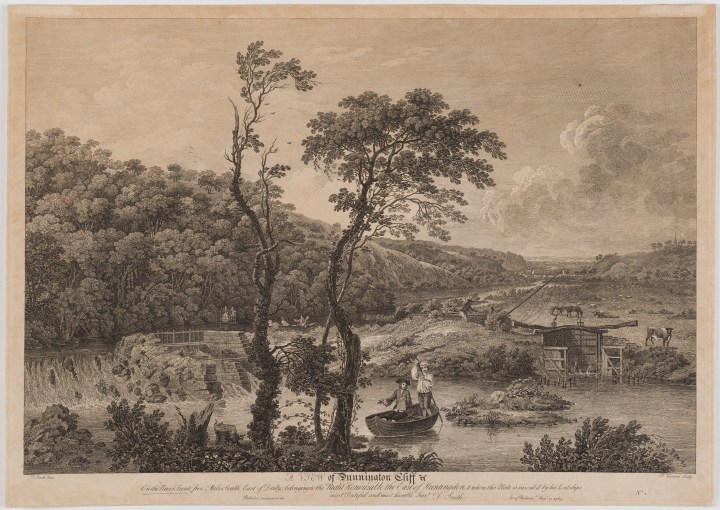
Plate, Wedgwood and Bentley, Etruria, Staffordshire (made in) and Chelsea (decorated in, 1773–74, creamware, OH: 7/8” OH 9-7/8” (Williamsburg: Museum Purchase, The Friends of Colonial Williamsburg Collections Fund, 2024-241). View of Dunnington Cliff on the River Trent, engraved by Francois Vivares after work by Thomas Smith, London, 1745, etching and line engraving on laid paper (Williamsburg: Museum Purchase, The Friends of Colonial Williamsburg Collections Fund, 2024-242).
◊ ◊ ◊ ◊ ◊
From the press release (16 December 2024) . . .
A rare pair of related 18th-century objects were recently acquired by The Colonial Williamsburg Foundation: a creamware plate, made by Josiah Wedgwood in 1773–74 as part of a service commissioned by Catherine the Great to be used at her castle, La Grenouillère or Kekerekeksinen (Frog Marsh); and a fine copy of a 1745 print engraved by François Vivares after work by Thomas Smith. The print depicts Dunnington Cliff on the River Trent in England, which is the motif seen in the center of the plate. By adding the plate to its ceramics collection, the Foundation becomes one of the few American institutions to own a surviving piece from this famous dinner service.
“Colonial Williamsburg’s collection of British-made ceramics is one of the finest in the United States,” said Ronald Hurst, the Foundation’s senior vice president and chief mission officer. “The acquisition of this plate and its printed design source brings new prominence to the collection. We are deeply grateful to the Friends of Colonial Williamsburg Collections for funding both purchases.”

Royal patronage within England and abroad helped Josiah Wedgwood secure a well-respected reputation as a manufacturer of ceramics for all levels of society. Catherine the Great of Russia was a patroness who commissioned two dinner services from his firm; the Frog Marsh service was the second. It encompassed an astounding 952 pieces, each of which was hand painted in monochrome with distinct views of England and bore a splayed frog within a shield to signify the name of the palace for which it was made. To this day, the service remains the most ambitious endeavor by a British ceramics manufacturer. It was more than a mere dinner service; it was a symbol of British diplomacy and shared with the larger world all that England could offer from ancient architectural ruins to imposing country homes in bucolic landscapes to industrial achievements, such as the view of Dunnington Cliff on River Trent shown on this plate. It also symbolizes the importance of the Baltic region in British and American trade in the 18th and early 19th centuries as well as the production of ceramics through the plate’s central image.
“This plate will be very much at home alongside other important Wedgwood-made holdings already in Colonial Williamsburg’s ceramic collection, including a prized Portland vase and a piece from the Husk service, the earlier service commissioned by Catherine the Great,” said Angelika Kuettner, Colonial Williamsburg’s curator of ceramics and glass. “This Green Frog service plate provides so many layers of interpretation for us. Other pieces from the service depicting grand houses are truly lovely, but this example allows us to talk about waterpower in the 18th century and ceramic production, not to mention Wedgwood’s industrial and entrepreneurial influence throughout the world.”
The plate’s molded rim is painted with a meandering oak leaf and acorn border interrupted by a shield enclosing a green painted splayed frog. The cavetto is painted with a neoclassical, scalloped border between concentric lines. The plate’s well is painted with a bucolic scene of a lock on a river, grazing cattle in the background, a sailing vessel on the meandering waterway, and a church spire painted faintly in the distance. The reverse bears a black enamel painted number ‘221’ and an impressed circle.
Of the pieces in the original dinner service, the majority remain in Russia today and have been there since their delivery in the 18th century. A few pieces were not sent and were divided between Wedgwood’s Etruria manufactory and Alexander Baxter, the agent for the purchase. To date, there are 26 extant pieces known that were not delivered to Catherine the Great because, as Wedgwood noted, they were either duplicates or considered by Wedgwood not up to his high standard of quality. Of those, 17 are in museum collections, only 5 of which are in American museums. This acquisition brings that number to 6 in museums in the United States; the remaining 8 pieces are still privately owned.
The view of Dunnington Cliff, located southeast of Derby, is significant as it was the site of King’s Mills, Britain’s largest water-powered manufacturing area in the mid-18th century and home to numerous mills associated with a variety of manufacturers, including flint grinding for the ceramic industry, paper making, iron forging and flour production. The representation of Dunnington Cliff on the plate comes from a 1745 print, View of Dunnington Cliff on the River Trent engraved by François Vivares after the painting on the subject by Thomas Smith. The opportunity for the Foundation to acquire both the source print with the hand-painted ceramic plate from the Frog Marsh service is significant.
“Together they tell an incredible story. Prints like this one were imported in the 18th century from England to decorate the walls of Virginia houses and also served as inspiration for an important dinner service used in a Russian Palace. Being able to show a printed design source alongside the ceramic plate helps us draw connections between mediums within the decorative arts,” said Katie McKinney, Margaret Beck Pritchard Curator of Maps & Prints
The lock at the center of the plate shows the same lock in the print. While the artists painting the plate adapted the print to the circular format, they maintained accuracy with great precision to include even the wispy clouds and a church spire seen faintly in the background.
New Acquisitions at the Raclin Murphy Museum of Art
From the press release (25 September 2024) . . .
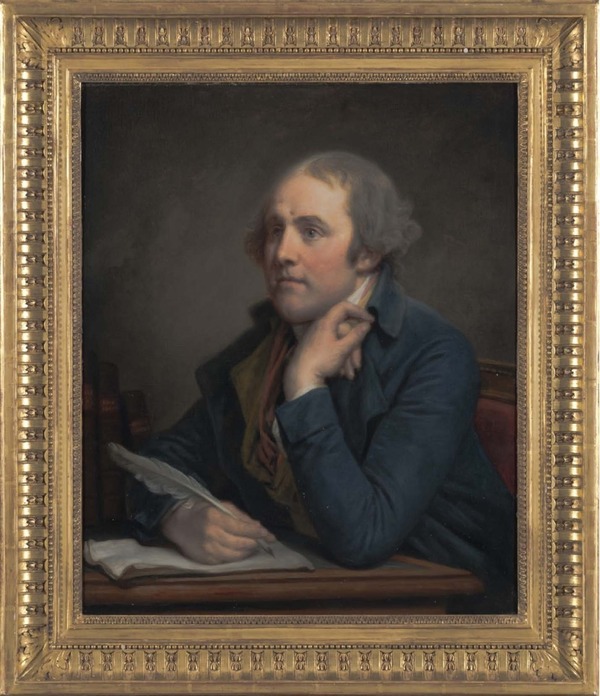
Jean Baptiste Greuze, Portrait of a Man, said to be Louis-François Robin, 1790, oil on walnut panel, 26 × 22 inches (South Bend: Raclin Murphy Museum of Art, 2024.008.006).
The Raclin Murphy Museum of Art is the beneficiary of a significant gift of paintings, sculptures, and decorative art objects from the estate of Ernestine Morris Carmichael Raclin (1927–2024). Iconic masters from Gainsborough and Reynolds, Houdon to Guillaumin, among many others, are included.
A life-long supporter of the arts, Raclin began collecting in earnest in the 1980s and 1990s, assembling the highest quality works that reflected her taste for old master and nineteenth-century aesthetics. A devoted supporter of the University of Notre Dame, and its first female Trustee, and committed to cultural institutions in and around her home of South Bend, Indiana, Raclin planned the donation to further the University’s mission to foster an appreciation for the greatest human achievements and intellectual exchange. She sincerely wished to encourage the growth of the museum that now bears her name, the Raclin Murphy Museum of Art.
“Our mother loved the arts and was devoted to the community in which she lived,” shared daughter, Carmi, and son-in-law, Chris Murphy. “She collected and displayed beautiful things in her home and joyously shared her art collection entertaining people from across the region and country. It is only appropriate that this gift can now be shared with the community she loved through the beautiful new Raclin Murphy Museum of Art and the University of Notre Dame.”

Joshua Reynolds, Portrait of Miss Barwell, 1785, oil on canvas, 30 × 25 inches (South Bend: Raclin Murphy Museum of Art, 2024.008.014).
The Raclin Bequest includes works from the fifteenth through the early twentieth centuries but is especially strong in eighteenth-century art. A portrait by Jean-Baptiste Greuze, a landscape sketch by Hubert Robert, and a fête champêtre by Nicolas Lancret, for example, offer further depth to holdings by French masters Elisabeth Vigée Lebrun and François Boucher already in the University’s collection. Portraits by Thomas Gainsborough and Joshua Reynolds bolster the representation of British art in the collection with impressive demonstrations of costume and technique. Jean-Antoine Houdon’s patinated terracotta portrait bust of his infant daughter is the first of its kind in the collection.
The University’s nineteenth-century collection is best known for its French academic works and oil sketches. The Raclin gift complements those holdings with proto-Impressionist, Impressionist, and post-Impressionist examples. Landscapes by Camille Corot and Johan Jongkind are the types of paintings that inspired the Impressionists and heralded a new approach to painting founded on advances in color theory. Hippolyte Petitjean, for example, is most closely aligned with Pointillism, a technique of placing dots or very short strokes of pure color next to each other recognizing that the human eye will combine the colors when viewed at a distance. In his painting of the Cathedral of Notre Dame, he uses a seemingly mechanical technique and further suggests the angst of an increasingly industrialized world by juxtaposing the buttresses of the medieval church with the crane in the foreground loading cargo onto a barge. The lone American work in the gift, John Alexander White’s Reflection, is notable for its synthesis of various avant-garde trends that make it difficult to categorize his work. He combines sinuous lines, abstract shapes, the limited, muted tones of his American compatriot J.A.M. Whistler, and a deep interest in psychological effects and technical experimentation to arrive at a unique revelation of the fin-de-siècle spirit.
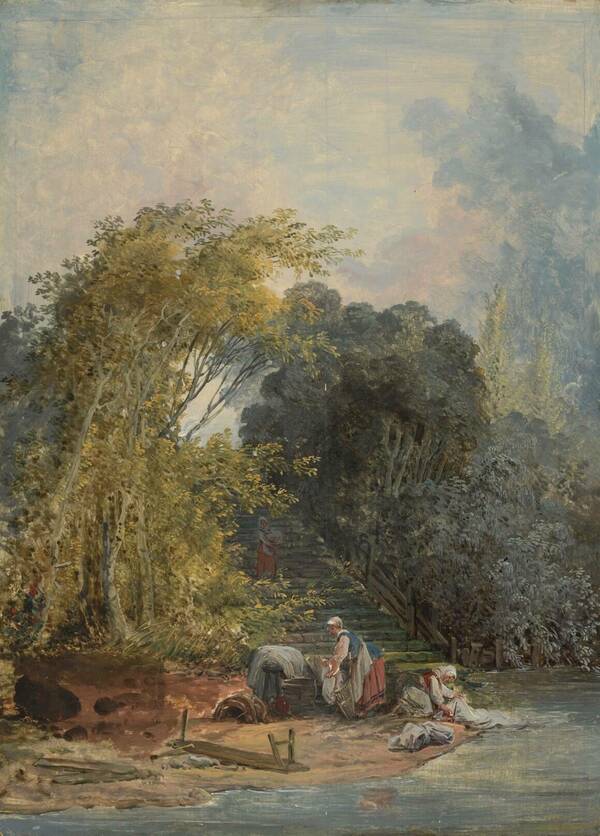
Hubert Robert, The Washerwomen of Charenton, 1767–70, oil on cradled panel, 15 × 11 inches (South Bend: Raclin Murphy Museum of Art, 2024.008.011).
“Throughout her extraordinary life, Ernestine Raclin demonstrated time and again her commitment to her local community and to increasing accessibility and appreciation of the arts,” said Rev. Robert Dowd, C.S.C., University president. “We are grateful for her generous support that enabled the creation of the Raclin Murphy Museum of Art, as well as this additional gift which will delight museum attendees for many generations to come.”
With origins that date to 1875, the University’s art museum is among the first and most esteemed academic art museums in the nation. The Raclin Bequest is cornerstone to a major initiative, 150 for 150: Art for Notre Dame the Sesquicentennial Campaign, to strategically build the collection for students, faculty, researchers, and the nation. The goal is to achieve 150 gifts for 150 years. A gift could be a single object or, as with the Raclin Bequest, an entire collection.
The campaign is focused on Museum collecting priorities including: Art of the Indigenous Americas, European and American Art before 1900, International Modern and Contemporary Art, Irish Art, Sculpture, and Works on Paper (prints, drawings and photographs). Such extraordinary generosity is not limited to the Notre Dame family. Friends, old and new, have stepped forward with great care. The Raclin Bequest and other gifts will debut at the end of the campaign in a major celebratory exhibition in early 2026.
“Although Ernie had long been a supporter of the Museum and generously gifted numerous works to the collection over decades, this gift is quite special,” shares Joseph Antenucci Becherer, PhD, Director and Curator of Sculpture. “To know that she lived with and found profound enjoyment and inspiration in these objects, and wanted to share that with the world, fills the Museum with her spirit of grace, passion, and love of others.”
It is critical to note that art is central to learning and research across the academy, and the Museum collections are available to the region, the nation, and beyond. At Notre Dame, the collections are annually utilized by more than forty departments, representing nearly every college and school on campus. Recent research shows that 91% of graduating seniors had visited the museum—an astonishing number. Additionally, the Museum welcomes more than 11,000 K-12 students yearly from a three-state area. Beyond those outreach efforts, the Museum lends works to the highest caliber exhibitions nationwide and worldwide; recently, works were lent to venues in Los Angeles, New York, Paris, Rome, and Washington, DC, among others.










 Enfilade
leave a comment