Museum News | Serena Urry and Esther Bell Move to Cincinnati
The Cincinnati Art Museum has just announced two appointments: Serena Urry as Chief Conservator and Esther Bell as Curator of European Painting, Sculpture and Drawings. Bell completed her Ph.D. at the Institute of Fine Arts, New York University, writing on “Charles-Antoine Coypel: Painting and Performance in Eighteenth-Century France,” under the direction of Mariët Westermann and Mark Ledbury. The press release as noted at ArtDaily (30 October 2012) . . .
◊ ◊ ◊ ◊ ◊
The Cincinnati Art Museum announced Serena Urry as Chief Conservator. Before coming to the Cincinnati Art Museum, Serena served as Senior Conservator of Paintings at the Barnes Foundation, preparing its Impressionist and Post-Impressionist collection for the historic move to downtown Philadelphia. Prior to that, Serena was Conservator of Paintings at the Detroit Institute of Arts where she conserved paintings ranging in date from the 14th to the 20th century. Among the exhibitions she worked on were American Beauty (2002-2004) and Masterpieces from the Detroit Institute of Arts at TEFAF in 2005.
Serena has a B.A. from Tufts University, and a M.A. in art history and a diploma in Conservation from the Institute of Fine Arts of New York University. She was awarded a residency by the Rockefeller Foundation in Bellagio in 1996, and a fellowship by Save Venice in Venice in 1999-2000. She has lectured and published about many of the conservation projects she has undertaken. “We are so excited to have somebody of Serena’s experience and insights joining the Art Museum. She will be able to build on the terrific work past Chief Conservators have done to make our art shine forth in all its beauty,” says Cincinnati Art Museum Director Aaron Betsky. Serena grew up in the Boston area and holds dual American and Italian citizenship. She has six nephews and nieces in an extended family that stretches from East cost to the West. Serena looks forward to exploring all that Cincinnati has to offer.
 The Cincinnati Art Museum also announced Esther Bell as Curator of European Painting, Sculpture and Drawings. Esther received her doctorate from the Institute of Fine Arts, New York University with a specialization in 17th- and 18th-century European art. She received a Masters in the history of art at Williams College and a bachelor of arts from the University of Virginia. With over ten years of experience in some of the nation’s finest museums, Dr. Bell has worked at the Sterling and Francine Clark Art Institute, Williamstown, MA; the Metropolitan Museum of Art, New York; and the Morgan Library & Museum, New York. At the Morgan, she recently organized exhibitions such as Ingres at the Morgan and Rembrandt’s World: Dutch Drawings from the Clement C. Moore Collection.
Dr. Bell lived extensively in Paris during her graduate work; she was a Fulbright Scholar with an affiliation at the Musée du Louvre, Paris and a Theodore Rousseau Fellow in Paris in association with the Metropolitan Museum of Art. She has delivered lectures in many distinguished international venues such as the University of St. Andrews, Scotland; the Musée des Beaux-Arts, Nantes; and the Metropolitan Museum of Art, New York, and she has published numerous articles and exhibition catalogues. “Esther brings an enthusiasm to her art history that is positively electrifying. She combines thorough knowledge and expertise with the desire to have everybody share her love of art, and we look forward to her contributions here,” says Cincinnati Art Museum Director Aaron Betsky. Esther is a self-proclaimed “foodie” and enjoys travel, reading fiction, and yoga. She will move to Cincinnati with her husband, Jason, and they look forward to exploring Blue Grass music, Graeter’s, and the local contemporary art scene.
Rijks Studio Offers 125,000 Images Free of Copyright
After years of hearing that museums couldn’t provide high resolution reproductions of works in their collections because people might make t-shirts with them, we now learn that the Rijkmuseum is inviting us to do precisely that . . . and more. -CH

◊ ◊ ◊ ◊ ◊
As a prelude to its reopening 13 April 2013, one of the world’s leading museums, the Rijksmuseum in Amsterdam, will launch Rijks Studio, a ground-breaking new online presentation of 125,000 works in its collection. Rijks Studio invites members of the public to create their own masterpieces by downloading images of artworks or details of artworks in the collection and using them in a creative way. The ultra high-resolution images of works, both famous and less well-known, can be freely downloaded, zoomed in on, shared, added to personal ‘studios’, or manipulated copyright-free. Users can have prints made of entire works of art or details from them. Other suggestions for the use of images include creating material to upholster furniture or wallpaper, or to decorate a car or an iPad cover for example.
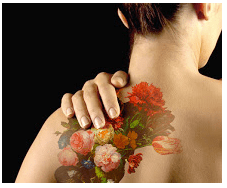 To celebrate this digital milestone, the Rijksmuseum is asking leading international artists, designers and architects to become pioneers of Rijks Studio by selecting one work from the collection and using it creatively to create a new artwork. These will be released in the run up to the reopening of the museum. The first work to be unveiled, by Droog Design, is a tattoo inspired by a flower painting in the collection called Still-Life with Flowers by Jan Davidszn. de Heem and Rachel Ruysch from the 17th century.
Taco Dibbits, Director of Collections, said: “The Rijksmuseum is a museum for and of everyone, and with the launch of Rijks Studio we are excited to share the extensive collection with art lovers around the world using the latest digital technology. We created Rijks Studio based on the belief that the collection of the Rijksmuseum belongs to us all. The collection inspires, we want to unleash the artist in everyone.”
Study Day in Sydney To Celebrate Major Ceramics Gift
To celebrate a major gift of maiolica and porcelain, the Art Gallery of New South Wales in Sydney is presenting a study day toward the end of this month. From the museums’ website:
◊ ◊ ◊ ◊ ◊
Renaissance and Rococo Ceramics Study Day: The Arts of Maiolica and Porcelain
Art Gallery of New South Wales, Sydney, 28 October 2012
Discover two of the most significant material innovations in the history of European decorative arts with this study day focused on the extraordinary Kenneth Reed Collection, in the European galleries. Comprising 16th- and 17th-century maiolica (tin-glazed earthenware) and 18th-century porcelain, the Reed Collection offers insight into Renaissance and rococo art and material culture.
Curator Richard Beresford and art historian Mark de Vitis outline the history of the two ceramic traditions, illustrated with examples from the Reed Collection, followed by a demonstration of materials and processes by noted Sydney ceramicist Bronwyn Kemp.
◊ ◊ ◊ ◊ ◊
From the press release (16 October 2012) . . .

Meissen (Germany), Parrots, 1745, hard-paste porcelain, 39 x 27 x 18 cm (on loan from Kenneth Reed) The group was originally modeled by Joseph Joachim Kändler in April 1745 for Augustus III’s consort Maria Josepha of Austria.
Kenneth Reed today announced his intention to bequeath to the Art Gallery of New South Wales his entire private collection of 200 pieces of rare and valuable 18th-century European porcelain valued at $5.4 million. Mr Reed also helped the Gallery acquire an important Italian renaissance maiolica masterpiece, Francesco Xanto Avelli’s Sack of Rome plate of 1530 with his generous donation of $550,000.
‘This most generous gift to the Gallery represents a significant addition to the Gallery’s European collection. Ken has been one of our most generous benefactors in the history of this Gallery’, said Michael Brand, director, Art Gallery of New South Wales.
Mr Reed, a Sydney-based retired lawyer, has been a collector of European paintings and decorative arts for more than 25 years. He says that he was inspired by visits as a child to the Art Gallery of New South Wales where his father used to take the family on Sunday afternoons.
The Gallery is to receive a spectacular group of parrots originally modelled at Meissen by Joseph Joachim Kändler for Augustus III’s consort, Maria Josepha of Austria, superlative examples of Vincennes and Sèvres porcelain, including a rare rose marbré tea service, a unique piece of experimental hard paste from the early 1760s, plus
exquisite Chelsea figures and wares from all periods of the factory’s
production.
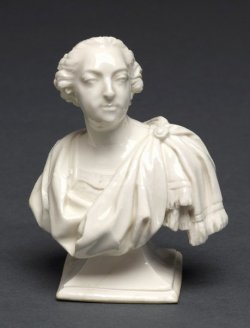
Sèvres, Bust of Louis XV, ca. 1762-63, hard-paste porcelain, 11 x 9 x 6 cm
(on loan from Kenneth Reed)
In the words of Richard Beresford, senior curator of European art, “This promised gift transforms the Gallery’s presentation of European art. We have never owned anything comparable in range and quality to this collection but now the Gallery will be able to show some of the highest quality 18th-century porcelain in the world. The Gallery has had neglected holdings of European decorative arts until now. The decision to show 16th-18th-century ceramics alongside paintings of the same period will add a new dimension to the Gallery’s collection display. The Gallery is now also better placed to respond to an expected rise in public interest in ceramic history.”
In 2010 Kenneth Reed announced a bequest to the Gallery which then consisted of 25 old master paintings, 25 pieces of 18th-century porcelain and 22 pieces of Italian maiolica from the 16th and 17th centuries. The addition to his bequest of this European porcelain brings the total value of the bequest to almost $13 million, ranking Mr Reed among the top benefactors in the Gallery’s history.
William Morris Gallery Reopens after Renovation
Yes, I realize William Morris stretches the long eighteenth century to the breaking point. I note the reopening of the museum because of the building itself, which dates to around 1744. The official ceremony marking the completion of the renovation took place on 2 August 2012. The following is an excerpt from Alastair’s Sooke’s response for The Telegraph. -CH
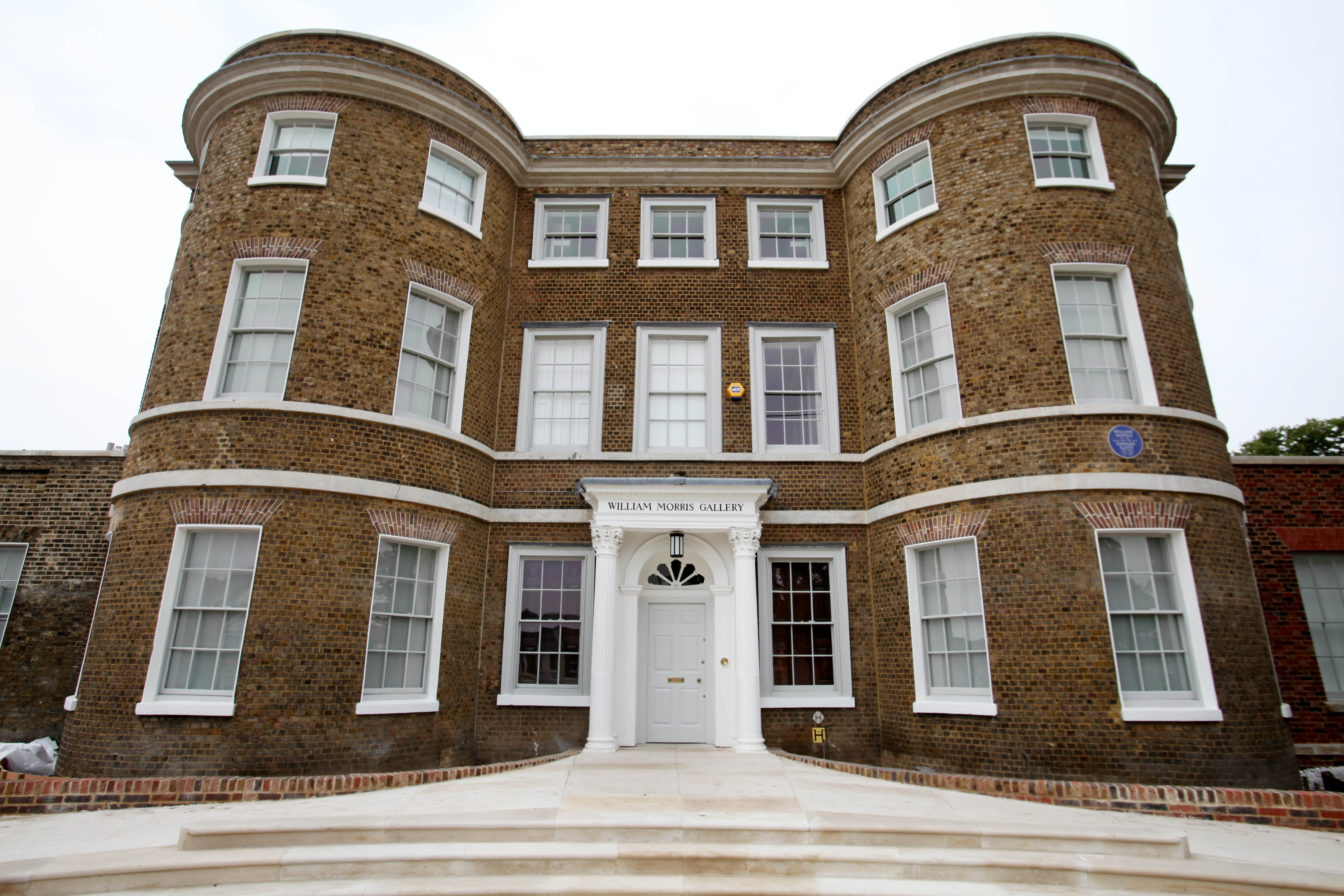
William Morris Gallery, Walthamstow, London © Oliver Dixon / Imagewise — The building dates to ca. 1744
. . . Making sense of the personality, achievements and legacy of such a visionary polymath is a complicated task. Yet that is what the new-look William Morris Gallery, which reopens this week following a year-long £5 million refurbishment, manages to do. The gallery occupies a magnificent Grade II-listed Georgian villa, with a front boasting full-height semicircular bays and a white-painted timber porch with Corinthian columns. Situated in Lloyd Park in Walthamstow in northeast London, like a beacon of beauty amid the local asphalt-benighted urban sprawl, the three-storey building was home to the Morris family between 1848 and 1856, when William was at Marlborough College and then Oxford University, where he met his lifelong friend and collaborator, the painter Edward Burne-Jones, as well as Jane Burden, whom he married in 1859. . .
The full review is available here»
Ethan Lasser Announced as New Curator of American Art at Harvard
Ethan Lasser, the new curator of American Art at the Harvard Art Museums, completed his dissertation at Yale in 2007, writing on “Figures in the Grain: The Enlightenment of Anglo-American Furniture, 1660-1800.” Press release (dated 15 August 2012) . . .
◊ ◊ ◊ ◊ ◊
 The Harvard Art Museums are pleased to announce the appointment of Ethan Lasser as Margaret S. Winthrop Associate Curator of American Art, effective September 18, 2012. Lasser will join the Art Museums’ Division of European and American Art.
Lasser’s innovative work as a curator and academic experience align well with the Art Museums’ teaching and research mission. From 2007 to the present, Lasser has been curator of the Chipstone Foundation in Milwaukee, Wisconsin, a research institute committed to advancing progressive scholarship in American art through exhibitions, publications, teaching, and public programming. In 2008, he reinstalled the foundation’s permanent galleries at the Milwaukee Art Museum, a 13,000-square-foot exhibition space for American paintings and decorative arts. He has also served as adjunct professor in the Department of Art History at the University of Wisconsin–Madison, where he initiated the Object Lab, a summer program for undergraduates focused on teaching American art and craft history through hands-on research with artifacts. Lasser is currently developing two new exhibitions—The Practice and Poetics of Repair and Makers: Craft and Industry in American Art—both of which explore his interest in art-making processes and materiality. Lasser, who graduated magna cum laude from Williams College, has a PhD in art history from Yale University. (more…)
Philadelphia Museum of Art Acquires ‘Fox and the Grapes’ Table
Thanks to Courtney Barnes for passing along this press release from the Philadelphia Museum of Art (dated 3 August 2012) . . .
 The Philadelphia Museum of Art has agreed to purchase the exceptional mahogany dressing table that has been on loan to the Museum for 36 years. Made in Philadelphia in the late 1760s or early 1770s, the table is the mate to the Museum’s monumental high chest, which was donated in 1957 by Amy Howe Steel Greenough. The dynamic carved decoration on both the high chest and the dressing table depicts a scene from Aesop’s fable of “The Fox and the Grapes” on their central drawers. The impressive proportions of these remarkable examples of 18th-century craftsmanship echo the architectural framework of the bedchamber for which they were made. Together, they epitomize the elegance and sophistication that distinguish Philadelphia furniture as the finest produced in British colonial North America.
“The Museum has now realized its cherished dream of keeping ‘The Fox and the Grapes’ dressing table together with its companion high chest,” said Timothy Rub, the Museum’s George D. Widener Director and Chief Executive Officer. “The two anchor our galleries of early American art; and now that their future together is secure, we can continue to display and interpret them as superlative artistic achievements.”
The high chest was known to Museum curators early in the 20th century when it was borrowed from Mary Fell Howe for the 1924 exhibition Philadelphia Chippendale. Lauded for its stately presence, highly figured mahogany, abundant carved ornament, and the rare depiction of a narrative from one of Aesop’s fables, the high chest also generated curiosity about whether or not its companion piece—the dressing table—was still in existence. “The Fox and the Grapes” dressing table was soon discovered and made its debut in William MacPherson Hornor, Jr.’s 1935 publication The Blue Book of Philadelphia Furniture: William Penn to George Washington. Joseph Kindig, Jr., the preeminent York, Pennsylvania, furniture and gun dealer, purchased the dressing table from Miss Eliza Davids in the late 1930s. Though Kindig was an antiques dealer, the dressing table was not offered for sale. Instead, it remained in the Kindig’s private home. Mr. Kindig died in 1971, and soon thereafter a friend of the Museum alerted curators to the whereabouts of the coveted “Fox and Grapes” dressing table. The Kindigs agreed to lend the dressing table so it could be displayed next to its high chest in 1976 for Philadelphia: Three Centuries of American Art, the great survey celebrating American art exhibited at the Museum during the bicentennial year. The two looked superb together—each had found its accompaniment—and after the exhibition closed, the dressing table remained on loan to the Museum. (more…)
Petition Related to Old Masters at the Gemäldegalerie
The following petition, written by Jeffrey Hamburger, Kuno Francke Professor of German Art & Culture at Harvard University, voices concerns for the exhibition fate of Old Masters at the Gemäldegalerie in Berlin. The German text is available at the petition website. Kate Connolly reported on the story for The Guardian (12 July 2012).
◊ ◊ ◊ ◊ ◊
We write to you to ask that you reconsider the current plan to empty the Gemäldegalerie to make room for a display of twentieth-century art from the Pietzsch collection.
We understand that Mies van der Rohe’s Nationalgalerie provides inadequate space for Berlin’s growing collections of modern art, and we welcome the prospect of a permanent home for them.
However, finding that space in the Gemäldegalerie at the expense of one of the world’s premier collections of Old Master paintings, without also making concrete plans to display that collection concurrently in its entirety, would be a tragedy. In the current plan, it appears that once again the past is being asked to make way for the present without sufficient attention to its future. The disappearance into storage of whatever paintings cannot be displayed in the Bode Museum – which we call on you to disclose — is not acceptable, even for only six years. In the current political and economic climate, and with stiff competition for funding from politically more expedient, if culturally more dubious, plans to rebuild the Stadtschloß, we fear that six years could easily become a decade or more.
All too often, it seems, great works of art in Berlin serve as pawns in a seemingly endless chess game, to be moved about and sacrificed at the will and whim of politicians. Germany is fortunate in that culture remains a focus of political and public concern. That concern, however, would best be expressed by finding a reasonable solution, one that respects a legacy that barely survived the centuries and that deserves better than to be rendered invisible for an indeterminate length of time.
We therefore write to ask, not that you shelve your plans for the Pietzsch collection, but rather that you complement them with an adequate strategy that will do justice to the whole of Berlin’s extraordinary collections. We believe that the Old Master collection should be moved to make way for the Pietzsch collection only after space on the Museuminsel has been found to accommodate it – hardly a rash proposal.
Yours sincerely, Jeffrey Hamburger, Kuno Francke Professor of German Art & Culture, Harvard University
To add your name to the petition, click here»
Catalogue for a New Museum | Simone Handbag Museum
This new book from Yale UP is published in conjunction with the new Simone Handbag Museum in Seoul, opening 16 July 2012 (the catalogue is scheduled to appear in September). Yuri Chong writes about the museum for The New York Times Magazine (12 June 2012).
◊ ◊ ◊ ◊ ◊
Judith Clark, ed., Handbags: The Making of a Museum (New Haven: Yale University Press, 2012), 272 pages, ISBN: 9780300186185, $50.
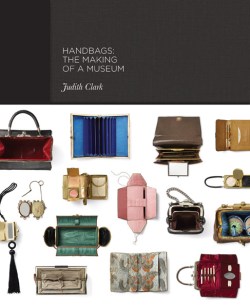 The history of the handbag—its design, how it has been made, used, and worn—reveals something essential about women’s lives over the past 500 years. Perhaps the most universal item of fashionable adornment, it can also be elusive, an object of desire, secrecy, and even fear. Handbags explores these rich histories and multiple meanings.
This book features specially commissioned photographs of an extraordinary, newly formed collection of fashionable handbags that date from the 16th century to the present day. It has been acquired for exhibition in the first museum devoted to the handbag, in Seoul, South Korea. The project is a commission undertaken by experimental exhibition-maker Judith Clark, whose innovative practices are revealed in Handbags.
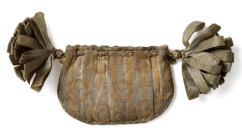
Sweetmeat purse, French, ca. 1670–80. Silk and metal brocade, braid and ribbon.
Essays by leading fashion historians and an acclaimed psychoanalyst investigate the history of gesture, the psychoanalysis of bags, and the museum’s state-of-the-art mannequins and archive cabinets. In order to preserve the words that describe the unique qualities of each bag, a terminology of handbags has been compiled.
Judith Clark is professor of fashion and museology at London College of Fashion. Caroline Evans is professor of fashion history and theory at Central St. Martin’s College of Art & Design. Amy de la Haye is professor of dress history and curatorship, Rootstein Hopkins Chair, at London College of Fashion. Adam Phillips is a psychoanalyst and writer. Claire Wilcox is senior fashion curator at the Victoria and Albert Museum.
Versailles 3D
Thanks to David Pullins for sharing news of this collaborative project between Versailles and Google:
◊ ◊ ◊ ◊ ◊
Palace History Gallery at Versailles
Château de Versailles, opened 14 June 2012
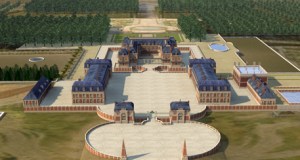 What did Versailles look like before Louis XIV? How did the small hunting lodge of Louis XIII become the largest Palace in Europe? What embellishments did the young Sun King want in his Palace of festivities and amusements? Did you know that the Hall of Mirrors was originally a terrace overlooking the gardens?
The palace of Versailles is a unique place, a royal residence, a history museum and a Republican palace. The complexity of the site needs to be explained to the over 6 million visitors from all over the world who come to Versailles each year. The Palace of Versailles, in partnership with Google, opens the Palace History Gallery on 14 June 2012. As a prologue to the visit to the State Apartments, eleven rooms explain to visitors the richly varied functions of the places they are about to explore. The visit combines the presentation of the collections of Versailles with physical scale models and striking 3D reconstructions.
Google / Versailles Partnership
The technological programme rolled out to accompany the opening of the Palace History Gallery is the fruit of close collaboration over more than a year between the teams of the Palace and those of Google. An ambitious technological policy has been implemented in Versailles for several years now to back up its scientific and cultural communication, disseminate knowledge about it more widely and develop new links with the visitors and with new audiences. From the origin of the project, the exhibition curators decided on the role and the scope of the multimedia in each exhibition and online. The partnership with Google provided the opportunity for a more in-depth approach to the use of technologies to develop, enliven and make more incisive its scientific and cultural communication. 3D technology, in particular, is used extensively in different media (in the rooms, on the Internet, on mobile terminals). Google’s Cultural Institute develops technological solutions for viewing, hosting and digitising materials to favour the creative presentation, protection and promotion of culture online.
Thanks to its dedicated team of engineers, Google’s Cultural Institute has already collaborated with organisations in several countries on different projects, notably for putting online thousands of artworks in the framework of the Art Project, the digitisation of the archives of Nelson Mandela and the Dead Sea Manuscripts.
Workshops on Sloane’s Treasures: A Plan for Reconstructing Sloane
I was lucky enough to attend the second workshop for the Sloane’s Treasures Project, held on 31 May at The British Museum, and I’m thrilled at the prospects of this massive research programme. The benefits will be enormous for a wide range of audiences. In addition to the following description from the BM’s website, see the advertisement for two collaborative doctoral awards. -CH
◊ ◊ ◊ ◊ ◊
Sloane’s Treasures
The Natural History Museum, The British Museum, The British Library, London, 2012
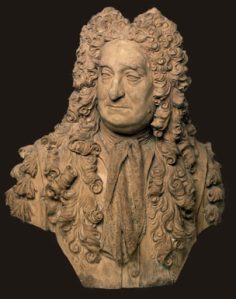 From the time of his voyage to Jamaica in the 1680s, Sir Hans Sloane (1660-1753), physician, natural historian and man of letters, began to gather together one of the largest and most comprehensive collections of ‘natural and artificial rarities’ ever formed. Sloane was later Physician to Queen Anne, George I and II, President of both the Royal College of Physicians and the Royal Society, and his manor in Chelsea included the Apothecaries’ Garden (now the Chelsea Physic Garden). At the centre of a worldwide network, he created an encyclopaedic collection of mineral, botanical, and zoological specimens, ethnographic objects, antiquities, prints, drawings, books and manuscripts, often inheriting or purchasing entire collections formed by others.
On his death in 1753 Sloane’s collection was acquired for the nation by an Act of Parliament which created the British Museum. But as the Museum re-organized its collections and acquired further objects, Sloane’s collection was dispersed among different departments and eventually also to the Natural History Museum in 1881 and to the British Library in 1973. This dispersal has hindered the study and understanding of ‘Sloane’s Treasures’, their sources, and their historical relationships with each other. This project will begin to address these problems.
Between February and September 2012, an Advisory group will be formed, workshops with invited attendees will be held (Natural History Museum, April, British Museum, May and British Library, July) and reports created, including recommendations for a larger project. The constitution of the Advisory group, summaries and videos of parts of the workshops, and updates on their outcomes will be made available, and news of project developments, including information on other research and public events related to Sloane and his collections, will be published here. If you are working on a Hans Sloane-related project or have an associated research or public engagement idea, contact a member of the project team.
Project Team
• Kim Sloan, Curator of British Drawings and Watercolours before 1880, The British Library, Department of Prints and drawings
• JD Hill, Research Manager
• Arnold Hunt, Curator of Modern Historical Manuscripts, The British Library
• Julie Harvey, Manager, Centre for Arts and Humanities Research, The Natural History Museum










 Enfilade
leave a comment