Mount Vernon Enters Next Phase of $30million Restoration
From coverage of the project by The Washington Post:
Michael Ruane, “George Washington’s Mansion Gets First Major Rehab in More than 150 Years,” The Washington Post (17 October 2024). Much of the historic Mount Vernon home in Virginia will close starting next month for a massive preservation project.
. . . On Nov. 1, the bulk of Washington’s famous home is due to close for several months as it undergoes the next phase of its largest-scale rehabilitation in over 150 years.
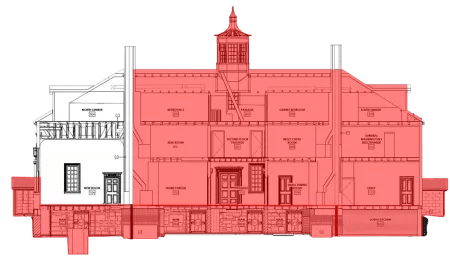
In Phase 2, scheduled to run from November 2024 until January 2025, the New Room, Servants’ Hall, and Kitchen are open; all other rooms will be closed to visitors.
The $30 million project is the most complicated preservation effort since the house was saved from decay in 1860 by the private, nonprofit Mount Vernon Ladies’ Association of the Union, which still owns it, said Douglas Bradburn, president of George Washington’s Mount Vernon. “We’re shutting down a big chunk of it for the next eight months or so,” he said. “I would say that’s two-thirds of the house.”
Other parts of the house, along with the extensive grounds, Washington’s tomb, the quarters for enslaved people and other outbuildings will remain open, Bradburn said in a recent interview. Mount Vernon gets about 1 million visitors a year, and millions more check out the historic estate online, he said.
The historic structure had become loosened from its foundation over time, and the work will resecure it, Bradburn said. There also will be restoration work done in the basement and on flooring, among other things. He said the goal is to complete the project in 2026.
“It’s some of the most important work that’s ever been done at Mount Vernon,” Bradburn said. Earlier repair projects have been piecemeal. At one point, ship masts were used to help support the roof of the crumbling piazza that overlooks the Potomac River. “They’re dealing with problems as they come,” he said. This is a chance for a more complete approach. . .
The full article is available here»
Exhibition | The Birch Trials at Fraunces Tavern
From the press release for the exhibition:
The Birch Trials at Fraunces Tavern
Fraunces Tavern Museum, New York, opening 23 October 2024
Curated by Craig Hamilton Weaver
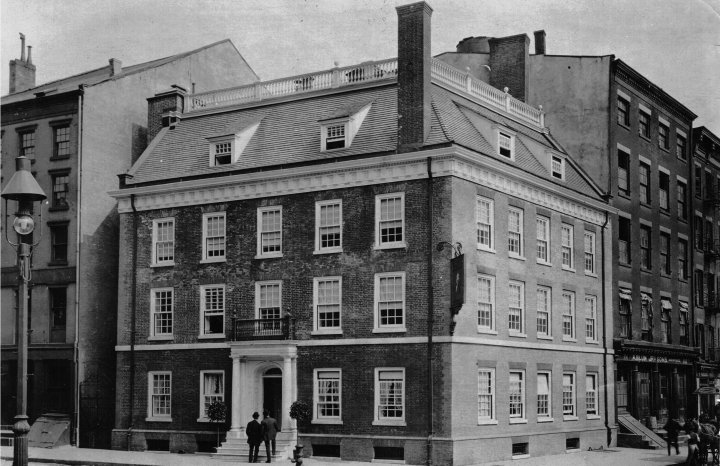
As noted at the museum’s website: “Built by the De Lancey family in 1719, 54 Pearl Street has been a private residence, hotel, and one of the most important taverns of the Revolutionary War.” It is the oldest standing structure in Manhattan.
On 23 October 2024, the Fraunces Tavern Museum, located in the oldest building in Manhattan, will unveil a vastly enlarged permanent exhibition entitled The Birch Trials at Fraunces Tavern. The exhibition highlights the role of Fraunces Tavern in the emancipation of thousands of Black Loyalists at the end of the Revolutionary War (enabling them to leave New York City) and in the creation of the Book of Negroes (the record created of those who departed with the British). The exhibition expands upon one opened at the Museum in June 2023. Recognition is also given to the thousands of Black Patriots who fought to further the cause of American Independence. The previous exhibition attracted a multitude of visitors from around the world, including large numbers of school children. Relocating the exhibition to a larger permanent gallery will enable the Museum to provide a better visitor experience as well as include recent new discoveries of significant information concerning the identities of individuals participating in the Birch Trials and their inclusion in the Book of Negroes.
The exhibition reflects several years of exhaustive research on both sides of the Atlantic in thousands of pages of existing original documents. Museum and Art Committee Co-Chairman and Chief Curator of the exhibition, Craig Hamilton Weaver, emphasizes that “this exhibition is the most comprehensive ever organized on this tremendously significant event in the history of Black emancipation in the United States and is made all the more compelling because it can be viewed within the very walls of the building within which the events occurred.”
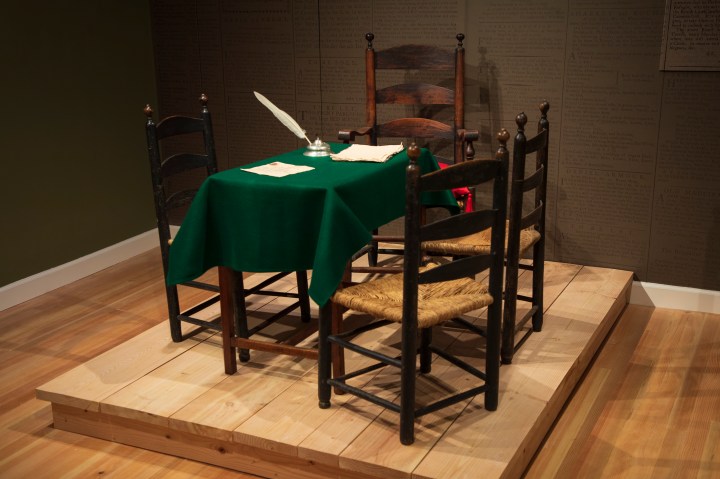
Installation view of The Birch Trials at Fraunces Tavern, 2024.
In 1783, as the Revolutionary War was drawing to a close, a joint British and American Commission met weekly at Fraunces Tavern from April until November. The proceedings of the Commission are known as the ‘Birch Trials’, named after Brigadier General Samuel Birch who oversaw the proceedings. The Commission reviewed and deliberated upon the eligibility of some Black Loyalists to evacuate with the British Army. Testimonies were provided by individuals in person and through documentary evidence to enable the Commissioners to render final decisions. Given that the Commissioners met at Fraunces Tavern weekly and had the responsibility “to superintend all embarkation,” it is reasonable to conclude that the British and American Commissioners reviewed and compiled the lists of names for inclusion in the Book of Negroes during the course of their weekly sessions at Fraunces Tavern. The names would later be inscribed neatly into the final Book of Negroes by staff.
Visitors will observe chairs and a table arranged as if waiting for the Commissioners to enter the room and hear cases. The exhibition also contains reproductions of pages from the Book of Negroes as well as the advertisement in the 30 May 1783 New York Gazette stating that the Commissioners would meet at Fraunces Tavern. Recent discoveries featured in this newly expanded exhibition include the identities of two women, Dinah Archey and Judith Jackson, whose fates were undecided by the Commission at their hearings, but who ultimately were recorded in the Book of Negroes as having evacuated New York City on departing ships.
Major support for this exhibition has been provided by the Robert David Lion Gardiner Foundation. The purpose of the Robert David Lion Gardiner Foundation is to educate, cultivate, and encourage the study and understanding of Long Island and New York’s historic role in the American experience. The Foundation also supports scholarships and historic preservation, including study, stewardship, and promotion of Long Island’s historic educational aspects. The Robert David Lion Gardiner Foundation remains inspired by Robert David Lion Gardiner’s personal passion for Long Island and New York history.
The Descendants Project Purchases Woodland Plantation House
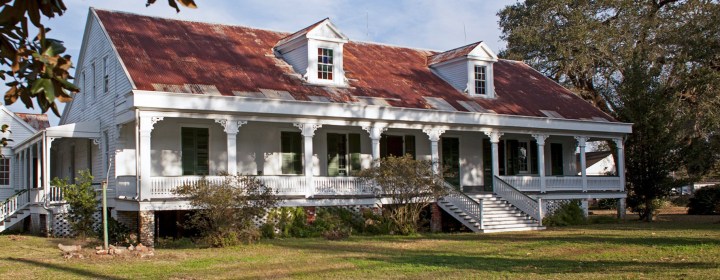
Woodland Plantation House, LaPlace, Louisiana, the oldest portions of which date to 1793. The Descendants Project purchased the house and four acres of land in January 2024 for $750,000. More information is available here»
◊ ◊ ◊ ◊ ◊
From National Public Radio:
Debbie Elliott, “Louisiana Plantation Where Historic Slave Revolt Started Now under Black Ownership,” NPR Morning Edition (9 July 2024).
Jo Banner is excited to show the newly acquired Woodland Plantation House near the banks of the Mississippi River.
“We have still a lot of work to do, but I think for the home to be from 1793, it looks rather good,” she beams.
The raised creole-style building has a rusty tin roof and a wide front porch. Forest green wooden shutters cover the windows and doors. The site is historically significant because this is where one of the largest slave revolts in U.S. history began. It’s also known as the German Coast Uprising because this region was settled by German immigrants.
“The start of the 1811 revolt happened here, on this porch,” Banner says.
Banner and her twin sister Joy are co-founders of the Descendants Project, a non-profit in Louisiana’s heavily industrialized river parishes—just west of New Orleans. Early this year, the group bought the Woodland Plantation Home, putting it in Black ownership for the first time [in its over 200-year history] . . .
“Our mission is to eradicate the legacies of slavery so for us, it’s the intersection of historic preservation, the preservation of our communities, which are also historic, and our fight for environmental justice,” says Joy Banner.
The full report is available here»
More information on the house is available at the Society of Architectural Historians’ Archipedia site»
◊ ◊ ◊ ◊ ◊
About The Descendants Project:
The Descendants Project is an emerging organization committed to the intergenerational healing and flourishing of the Black descendant community in the Louisiana river parishes. The lands of the river parishes hold the intersecting histories of enslavement, settler colonialism, and environmental degradation.
We are descended from the enslaved men, women, and children who were forced to labor at one or more of the hundreds of plantations that line the Mississippi River from New Orleans to Baton Rouge. Starting in the 1970s, large industrial petrochemical plants began purchasing the land of these plantations still surrounded by vulnerable Black descendant communities. The region is now known as ‘Cancer Alley’ for the extreme risks of cancer and death due to pollution. The community faces many other problems such as food insecurity, high unemployment, high poverty, land dispossession, and health issues that stem from a culture of disregard for Black communities and their quality of life.
Through programming, education, advocacy, and outreach, The Descendants Project is committed to reversing the vagrancies of slavery through healing and restorative work. We aim to eliminate the narrative violence of plantation tourism and champion the voice of the Black descendant community while demanding action that supports the total well-being of Black descendants.
Andalusia Acquires Portrait of Adèle Sigoigne by Bass Otis
From the press release from Andalusia Historic House, Gardens & Arboretum:
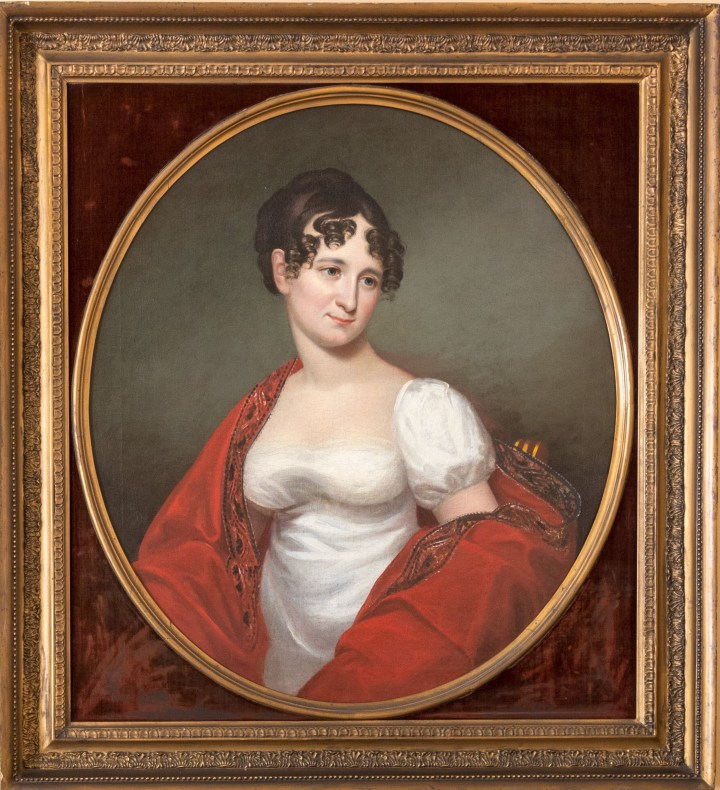
Bass Otis, Portrait of Miss Adèle Sigoine, 1815, oil on canvas (Bensalem, Pennsylvania: The Andalusia Foundation).
An oil painting by Philadelphia artist Bass Otis (1784–1861), Portrait of Miss Adèle Sigoigne (1815)—which has been on view at Andalusia Historic House, Gardens & Arboretum (Andalusia) in Bensalem, Pennsylvania since 2014 as a long-term loan from the Independence Seaport Museum (ISM) in Philadelphia—now joins Andalusia’s permanent collection in an act of collegial partnership. Adèle Sigoigne was a good friend of Jane Craig Biddle (1793–1856) who lived at Andalusia with her husband, Nicholas Biddle (1786–1844). ISM has deaccessioned the painting and transferred its ownership to Andalusia.
“We are overjoyed to have Adèle’s portrait now part of our permanent collection,” said Andalusia’s executive director John Vick. “Every piece of art in the historic house has a unique story to tell about the property and the people who lived here or visited. Adèle was practically family to the Biddles, making this a fitting home for her portrait. We are grateful to our partners at Independence Seaport Museum for recognizing what the painting means to Andalusia and for making this momentous transfer possible.”
“Our staff and Board were unanimous in wanting to transfer this painting permanently to Andalusia,” said Peter Seibert, ISM’s president and chief executive officer. “Its history and associations with the Biddle family are significant, and thus the painting is imminently relevant to their mission. For us, the transfer is a visible reminder of how two museums can come together to ensure that the history and heritage of our community is preserved in public trust for future generations.”
Although it is unclear how or when Jane and Adèle met, their lasting friendship is certain. Close in age and of similar social standing, the two women came from very different backgrounds, however. Jane was a Philadelphian by birth, the only daughter of John and Margaret Craig, the couple who first established Andalusia as a country estate in 1795. Adèle, by contrast, was French-born and had lived in Haiti. After the Haitian Revolution began in 1791, she moved to Philadelphia with her mother, Aimée Sigoigne, who started a school for young women at 128 Pine Street. Adele was one of a few guests who attended Jane’s wedding to Nicholas Biddle, held at Andalusia on 3 October 1811. The Biddles’ three daughters would later attend Madame Sigoigne’s school, including Adèle who was named for her mother’s dear friend. (The name Adèle remained popular for several generations of Biddle descendants.)
Although the portrait is unsigned, its attribution is firm; it is nearly certain that the Biddles commissioned Bass Otis to paint Adèle’s portrait as he also painted Jane’s portrait around 1815. (This painting is in the collection of the Second Bank of the United States Portrait Gallery in Philadelphia.) Both women are shown in fashionable, Empire-style dresses with luxurious fabrics draped over their shoulders: Jane’s is white and sheer while Adèle’s is a vibrant red. Their hair is also similarly styled in an updo with ringlets framing their faces. Nicholas Biddle conveyed his appreciation of Adèle’s portrait to Otis in a letter, which remains with and will be transferred with the painting from ISM.
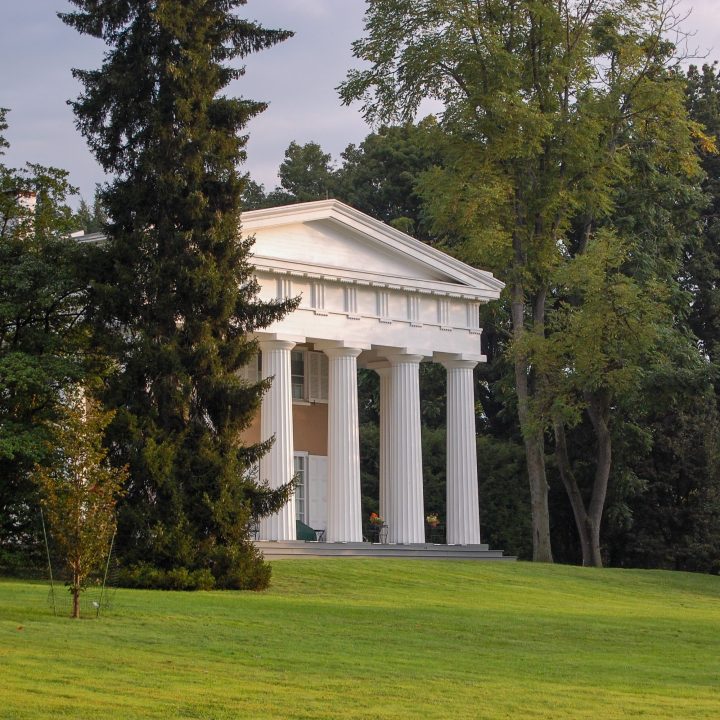
With its oldest portions dating to the 1790s, the house at Andalusia was expanded by Benjamin Latrobe in 1806 and then again in the 1830s, when an addition with a Doric columned porch was constructed according to designs by Thomas Ustick Walter (Walter had trained under William Strickland).
Since the portrait of Sigoigne has been on loan at Andalusia, it has been on view in the historic house’s library, which was part of the 1830s addition designed by architect Thomas Walter. Now in Andalusia’s permanent collection, it will be moved to what is known as the Painted Floor Bedroom. This room is part of the original 1797 construction and could have been where Adèle stayed when she visited Jane around the time that the portrait was made.
The Biddles’ patronage of Bass Otis continued for many years. In 1827, Nicholas Biddle commissioned the artist to paint a copy of Jacques-Louis David’s famous scene Napolean Crossing the Alps (1801). The oil on canvas copy, also on view at Andalusia, was owned by Napoleon’s brother Joseph Bonaparte, who knew the Biddles, lived near them in Philadelphia, and owned a country estate (Point Breeze) near Andalusia. By the 1820s, however, the Biddles began to favor another Philadelphia artist, Thomas Sully, who painted the couple’s portraits in 1826, both of which are on view at Andalusia. In 1829 the Biddles commissioned him to paint another portrait of Adèle Sigoigne, which is in the collection of The Huntington Library, Art Museum and Botanical Gardens in San Marino, California.
◊ ◊ ◊ ◊ ◊
Andalusia Historic House, Gardens & Arboretum is a non-profit organization and a scenic 50-acre property overlooking the Delaware River in Bensalem, Pennsylvania. Established more than 225 years ago, the site is a natural paradise of preserved native woodlands and spectacular gardens, as well as museum with an exceptional collection of paintings, sculptures, decorative art, and rare books and manuscripts.
Zoë Colbeck Named Director of Strawberry Hill
From the press release, via Art Daily (8 June 2024) . . .
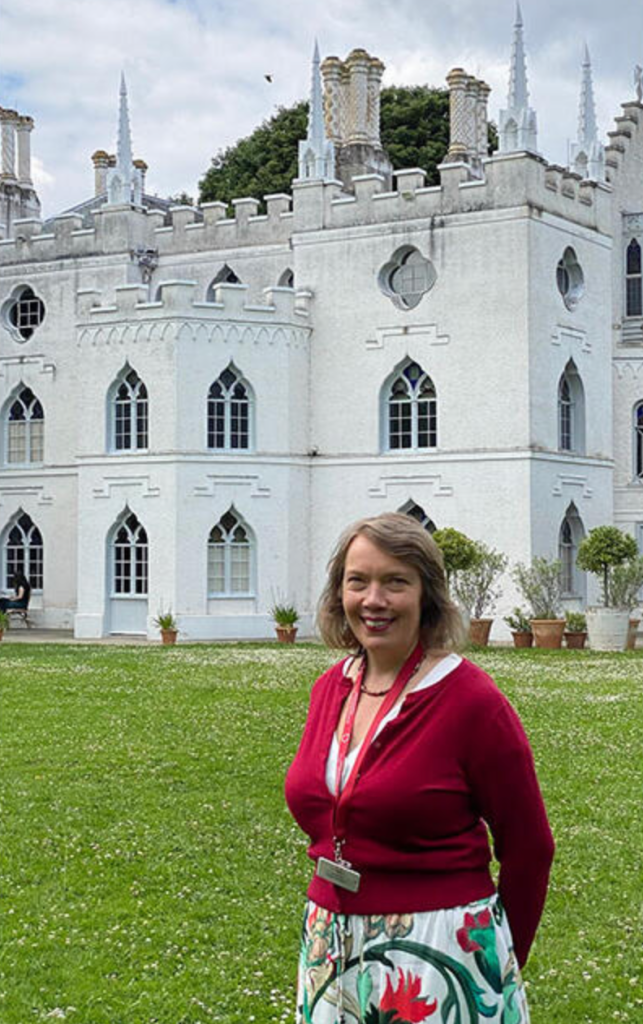 Strawberry Hill House announced that Zoë Colbeck will succeed Derek Purnell as Executive Director of the historic South West London attraction. Zoë joins the team from her previous role as Project Manager at the Solent Cluster, a major decarbonisation initiative based in Hampshire, bringing over 20 years of experience in the heritage sector to Strawberry Hill House and Garden.
Having read chemistry at university, Zoë worked for one of the UK’s largest retailers, specialising in logistics and people management, before joining the National Trust (NT) to combine her passion for heritage with her commercial background. She left the NT in 2021 after 18 years, ultimately as General Manager of the Chartwell Portfolio, one of the NT’s top properties. More recently, she was Commercial and Operations Director with the Mary Rose Trust in Portsmouth.
Zoë took up her new position at Strawberry Hill on 3 June—after her predecessor, Derek Purnell, left to take up an opportunity with the Frederick Ashton Foundation, based at the Royal Opera House in Covent Garden.
Announcing the appointment, Paul Kafka, Chairman of Strawberry Hill Trust, said: “During her time at the National Trust, Zoë led three transformational projects, which, in turn gave her extensive knowledge and vital experience in the fields of climate change mitigation, sustainable management, and heritage conservation. She has a passion for working collaboratively and making a difference for museums, communities, and the planet.” He added: “I am delighted that Zoe is joining Strawberry Hill at this moment in our history. 2024 is going to be a year of change and new directions. Our quest for a sustainable business model continues, even as our reputation as a museum and cultural destination continues to grow.”
Zoë commented: “I am passionate about making a difference for our history and heritage and making it relevant for different audiences. Horace Walpole is such an interesting character, and I am looking forward to leading the team at Strawberry Hill House and Garden through the next stage of development, preserving his legacy and contributing to its future.”
Cultural Heritage Magazine, Spring/Summer 2024

◊ ◊ ◊ ◊ ◊
From the National Trust:
Launched in October 2022 and published twice a year, the National Trust Cultural Heritage Magazine (CHM) showcases the latest curatorial findings, conservation projects, and research initiatives; keeps readers up to date with relevant National Trust publications and events; and shares other insights into the houses, collections, and gardens in the Trust’s care.
In the latest issue, readers will find:
• A conversation between writer and curator Robin Muir and National Curator for Photography Anna Sparham
• A long-term project to revitalise the historic designed landscape at Lodge Park
• Expert insights into a rare 18th-century doll at Dudmaston
• New research on Coleridge Cottage, the Trust’s first literary home
• Research and conservation project round-ups
• Cultural heritage news, events and publications
• Highlights of recent exhibition loans from the National Trust
The full issue is available here»
Upcoming Events from The Georgian Group
Upcoming events from the The Georgian Group:
Hampshire Visit: Stratfield Saye House
Tuesday, 7 May 2024
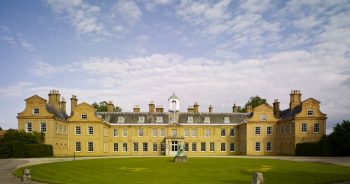
Stratfield Saye House
In the heart of the English countryside on the Hampshire/Berkshire border, you’ll find the elegant, but intimate, Stratfield Saye House, home to the Dukes of Wellington since 1818. After the Battle of Waterloo the First Duke of Wellington, or the Great Duke as he was universally known, was regarded as the saviour of his country and of Europe. A grateful nation voted a substantial sum of money to enable him to buy a house and an estate worthy of a great national hero. After considering many far grander properties, he chose Stratfield Saye. Stratfield Saye House does not compare in either size or grandeur with the other great ducal houses, and it was the Great Duke’s intention to build a huge palace in the northeast corner of the park, but fortunately the money was not available. He therefore set about making his home convenient and comfortable and, as a very practical man, he was well satisfied with the results. The House today is lived in by the 9th Duke of Wellington and his family. Whilst the Great Duke’s wonderful collection of pictures are at Apsley House, which was given to the nation by the 7th Duke in 1947, Stratfield Saye House contains a fascinating collection of paintings and furniture purchased by the Great Duke with many mementos of his occupation of his modest country home. This visit is for Georgian Group members only, and participants must make their own arrangements for transport. Refreshments and lunch are included (£50).
Sue Berry | Builders as Architects and Their Significant Influence in Town and Country: The Morris and Wild Families of Sussex, 1720–1840
Online, 7 May 2024, 6.30pm
Arthur and John Morris played an important role in the development of Coombe, Firle, and Glynde Places in Sussex and worked on houses in Lewes. They dealt directly with clients even when there was an architect. Amon and Amon Henry Wilds worked mainly in two towns, Amon Henry shifting from builder to architect. He made a big impact on Brighton, designing houses, projects, churches, and chapels. There must have been many more local entrepreneurs like these, and we need to know more about them. The Wilds moved to Brighton and undertook speculative development as well as worked for clients. The Morris family did not, as Lewes did not offer the same opportunities. £5 members / £7 non-members.
Steven Brindle | The Greek Revival in England
In-person, The Georgian Group, Fitzroy Square, London, 6.30pm
In the 1750s a debate unfolded in Rome as to which was superior: Greek or Roman art? Despite the publication of volume 1 of Stuart and Revett’s Antiquities of Athens (1762), British architects and clients instinctively took their inspiration from Roman art for another generation or more. Steven Brindle considers the development of the Greek style in England, from its tentative and experimental mid-Georgian beginnings, to its sudden triumph in the Regency age, its establishment as the ‘public style’ in the 1810s and 20s, its relationship to the mainstream neoclassicism of the late-Georgian age, its decline—and its somewhat different course in Scotland. £15 members / £18 non-members.
St Paul’s Cathedral Library Restored
Following a five-year restoration, the 18th-century library at St Paul’s Cathedral is once again open to researchers and tourists (look for the the special Triforium Tour). From Architecture Today (6 November 2023).

Christopher Wren, St Paul’s Cathedral Library, following restoration; completed in 1709, the library is on the Triforium level, behind the southwest tower ((Photo by Graham Lacdao for St Paul’s Cathedral).
◊ ◊ ◊ ◊ ◊
Completed in 1709, the library reaches two stories high and contains more than 13,000 volumes of books and manuscripts, the oldest of which dates back to 1313. Here, Portland stone panelling surround a gallery, with these panels enamoured with deep, ornate carvings. Beneath, an array of brackets supporting the gallery enjoy decoration of equal measure, this time carved out of wood. (Recent research, however, uncovered the fact that the gallery walkway is cantilevered from the wall, with the brackets being purely decorative).

Christopher Wren, Dean’s Staircase, with ironwork by Jean Tijou (Photo by Richard Holltum, from August 2007, from the website of the World Monuments Fund).
Before work began on the restoration in 2018, the most significant changes to the library were the addition of electrical lights and a heating system in the early 1900s. In fact, the cathedral nearly didn’t have a library at all, with its collection almost entirely destroyed by the Great Fire of London in 1666. Following the damage, however, Sir Christopher Wren’s Library chamber was restocked by the cathedral’s Commissioners for rebuilding St Paul’s following the damage.
The £800,000 refurbishment, funded mostly through donations and benefactors of St Paul’s, saw books cleaned, walls re-painted, a new lighting scheme put in place, new desks for readers, as well as a new display case. Work was also done to the cantilevered gallery which was showing signs of sagging. . . .
“The Cathedral Library is a remarkable room, and remains one of Sir Christopher Wren’s great achievements. It is fitting that, as we mark 300 years since his death, his Library is able to reopen after five years of painstaking restoration,” the Dean of St Paul’s Cathedral, the Very Reverend Andrew Tremlett said in a statement. . . .
The full article is available here»
Tour and Talk | Pitzhanger Manor
From Pitzhanger Manor & Gallery:
Collecting in 18th-Century London’s Grand Houses: Pitzhanger Manor, Orleans House, and More
Pitzhanger Manor & Gallery, London, 2 May 2024, 5.30–9pm
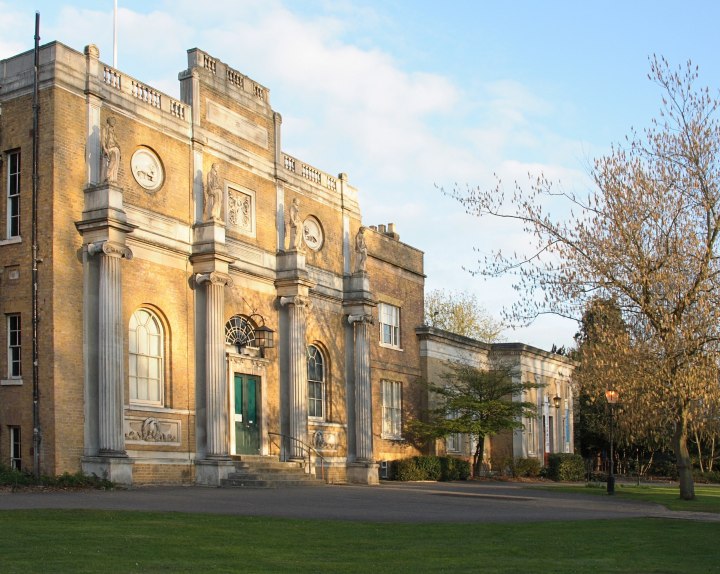
John Soane, Pitzhanger Manor, Walpole Park, Ealing, London, 1800–04 (Photo: Wikimedia Commons, April 2008).
Experience the first-ever in-person event presented by London Luminaries
The evening will include guided tours of Pitzhanger Manor, showcasing Sir John Soane’s architectural marvels, followed by an enlightening talk. Experts in historic estates—Clare Gough, Director of Pitzhanger Manor & Gallery; Tim Corum, Head of Richmond Arts Service; and Emily Burns, Curator of Collections and Interiors for English Heritage—will illuminate the art of collecting in 18th-century London, offering insights into the prestigious collections in Pitzhanger Manor, Orleans House, Marble Hill, Chiswick House, and more. Join us for an evening of history, art, and connectivity.
• Guided tours of the house commence at either 5.30 or 6pm. Guests are welcome to explore freely should they wish to arrive earlier or attend solely for the talk, which starts at 6.45.
• Tickets are £12, with all profits supporting the London Luminaries properties, an initiative born during the COVID lockdown to enhance connections between properties and people.
• Drinks and refreshments will be available for purchase at Soane’s Garden Room until 9pm, not included in the ticket price.
Pitzhanger Manor was the country home of Sir John Soane, one of the most influential architects in British history. Soane designed many extraordinary buildings, but Pitzhanger is unique as a building because it was designed, built and lived in by Soane himself. Following a major three-year conservation project, Pitzhanger reopened in March 2019. The Manor has been revitalised to take it back to Soane’s original designs, its extraordinary architecture restored for the public to see. Pitzhanger Gallery, housed in the 1939 library building, has been improved to allow for major loans and a series of contemporary exhibitions by artists, architects, and designers.
Emily Burns is the Curator of Collections & Interiors (West London) for English Heritage. Properties in her portfolio include Marble Hill, Chiswick House, and the Jewel Tower. Previously, she was a Curator at Watts Gallery – Artists’ Village (2021–23), Vivmar Curatorial Fellow at the National Gallery (2018–20), and Assistant Curator at the National Portrait Gallery (2013–18). Emily’s specialism is in British and Old Master painting and collecting. She holds degrees from the University of Cambridge and UCL and completed her AHRC-funded PhD on art and collecting in England during the Civil Wars and Interregnum, c.1640–1660 (University of Nottingham, 2018). Emily was a contributor to the Paul Mellon Centre’s research project Art and the Country House (2020), and she is the founding Editor of the Jordaens Van Dyck Journal (2021–present).
Tim Corum has worked in the arts for over 30 years, principally in museums and galleries, developing museum exhibitions and festivals at Oldham, Leeds, Bristol, the Horniman in London, and now with Richmond Arts Service. In Leeds and Oldham, he worked on developing international art programmes and a series of major capital projects. In Bristol, Tim led the development of the City Museum and Art Gallery, encouraging artists to intervene in and reframe the museum and art gallery. Though most widely known for the exhibition Banksy versus Bristol Museum, this programme also embraced a diversity of projects with both local and international partners. At the same time, he developed a new international contemporary art collection, building on Bristol’s rich historic art collection. He also led the creative team that developed the new museum, M Shed. In 2015, Tim became a director at the Horniman, where his work focussed on developing participatory programmes, bringing artists and scientists from a wide variety of backgrounds together with communities to create exhibitions and festivals that cast new light on the museum’s internationally significant collections. Tim moved to Richmond during the pandemic to lead the Borough’s Arts Service and direct the development of Orleans House Gallery.
Clare Gough is Director of Pitzhanger Manor & Gallery, architect Sir John Soane’s ‘country’ house in Ealing, West London and its adjacent contemporary gallery. Clare led Pitzhanger through a major conservation project to restore the house to Soane’s innovative design and upgrade the gallery, so it now stages exhibitions with artists ranging from Anish Kapoor to Es Devlin and Rana Begum. Clare is a Trustee of the Art Fund and was previously a Trustee of the Museum of the Home. She formerly worked at the National Gallery and National Gallery Co. Ltd before setting up an art consultancy working with the V&A and other art institutions.
Judith Hawley is Professor of Eighteenth-Century Literature in the Department of English, Royal Holloway, University of London. She frequently appears on BBC radio and TV and is a Trustee of the Pope’s Grotto Preservation Trust. Her research interests range from gin to Grub Street, and she has a particular interest in the history of amateur performance.
Wentworth Woodhouse Visit
From the York Georgian Society:
Wentworth Woodhouse Visit with the York Georgian Society
24 April 2024
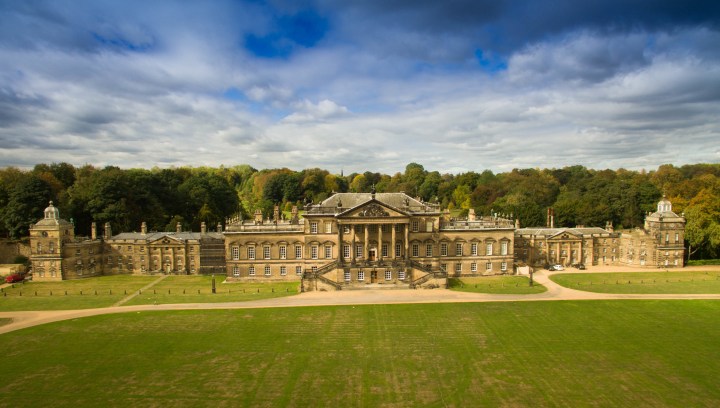
Wentworth Woodhouse, South Yorkshire.
An opportunity to visit one of England’s greatest Georgian country houses—rebuilt by the 2nd Marquess of Rockingham in the mid-18th century—to view the latest developments in its ambitious conservation and restoration programme.
The day will begin with a guided tour of the State Rooms on the main floor. Lunch will be followed by a look at the newly restored Camellia House in the company of Dorian Proudfoot, lead conservation architect for the Wentworth Woodhouse Restoration Project. Originally built in 1738 as an orangery and tea room, the building was later converted to house camellias and other rare plants from China and Japan. After complete restoration from dereliction it is now back in use as a tea room and events venue. Dorian will then take us to the magnificent stable block, originally built in 1782 to house 84 horses and more than 30 staff, together with a riding school, carriage house, and saddlery. The stables and courtyard are being transformed in a £5 million regeneration plan to accommodate a visitors’ centre, kitchen, café, and events venue.
Bookings: YGS members and Friends of York Art Gallery: £43; non-members: £48. Places are limited to 25 persons. The cost includes tea/coffee and biscuits on arrival, lunch, and tours of the State Rooms, Camellia House, and Stables. Book your place here.










 Enfilade
leave a comment