Lecture | Anne Lafont on Africaneries
From The Institute of Fine Arts:
Anne Lafont | Africaneries, or, Stylistic Dismemberment
Online and in-person, The Institute of Fine Arts, New York University, 22 April 2026, 6pm
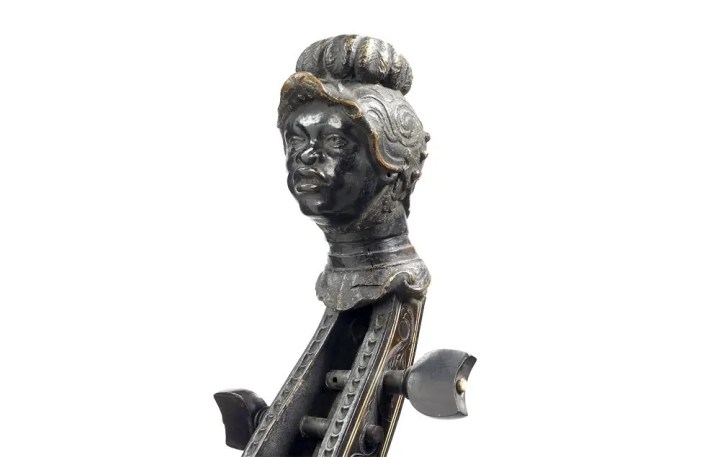
Scroll of a viola da gamba, late 18th century, Italy (Paris: Musée de la musique, D.AD.23470).
The European Enlightenment invented a new exoticism from within the Rococo tradition. Informed by the craftsmanship, lines, and colors of the Far East, European artisans appropriated motifs, imitated them, and revived them in contexts of refined metropolitan luxury. A geography of taste thus emerged—one might even speak of a qualitative hierarchy of stylistic skills operating at the peripheries of European empires, which served as major suppliers of materials and decorative schemes for the applied arts in eighteenth-century Delft, Meissen, London, and Paris. At the heart of this cultural economy of sophisticated objects, one motif stands out: miniaturized and, in most cases, objectified Black figures. These are what I propose to call Africaneries—artworks whose cultural roots and formal qualities dissolved in the wake of the transatlantic slave trade, which accelerated the social and cultural death of Africans. My central question is this: how was the thread severed that once connected so-called African fetishes to the material culture of Black people in the Americas and, ultimately, to the decorative objects known as au Nègre in imperial Europe? In this experimental study, I attempt to restore the connections between these various objects of the early modern Black Atlantic.
Part of the Conversations in Modern European Art series.
Anne Lafont is an art historian and professor at École des hautes études en sciences sociales in Paris (EHESS). She is interested in material culture and aesthetics of the Black Atlantic and researches notion of African art in historiography. In 2019, she published a book entitled L’art et la Race: L’Africain (tout) contre l’œil des Lumières (to be published in English by the Getty Institute in 2027: Art and Race: The African (up) against the Enlightenment’s Eye) and participated in the exhibition Le modèle noir de Géricault à Matisse (Musée d’Orsay). During the 2021–22 academic year, she was Clark Professor in Williamstown and was awarded the Iris Foundation Award by the Bard Graduate Center for outstanding mid-career scholar. With François-Xavier Fauvelle, she co-edited the book L’Afrique et le monde: Histoires renouées de la préhistoire au XXIe siècle (La découverte, 2022). Her latest book is a collection of articles published in Brazil: A Arte dos mundos negros: historia, teoria, critica (Bazar do Tempo, 2023). She is now researching circulations of African objects in early modern Europe at the time of slavery as their presence and reception gave grounding to the conceptualization of fetishism in Western humanities (to be published in 2027). Another book in the making addresses how the Black Lives Matter movement specifically impacted the politics of French Heritage.
Symposium | (In)Visible Faces
From Syracuse University:
(In)Visible Faces: The Politics of Portraiture and Social Change, 1700–the Present
Online and in-person, Syracuse University, 26–27 March 2026
The 2025–2026 Ray Smith Symposium features a two-day conference that focuses on portraiture, the British empire, and the visual legacies of imperial portraiture in our current times. Building on a recently discovered 18th-century portrait of a Mrs. Seaforth painted by Sir Joshua Reynolds, the first president of the Royal Academy in London, the symposium will analyze portraiture, textile trade, and the East India Company on the first day, before shifting to print culture, photography, media, and social justice on the second day. Bringing together curators from the Syracuse University Art Museum (in whose collections Reynolds’s ‘lost’ painting was found) and Special Collections Research Center, as well as art historians, historians, curators, art and textile conservators, and communication scholars, the symposium will feature keynote lectures by acclaimed art historian Tim Barringer (Yale University) and renowned social psychologist Nilanjana (Buju) Dasgupta (University of Massachusetts Amherst).
Co-sponsored by Art and Music Histories. Chemistry. CODE^SHIFT. English. Goldring Arts, Style and Culture Journalism. History. Lender Center for Social Justice. Light Work. Premodern Global Studies. Ray Smith Symposium. South Asia Center. Syracuse University Art Museum. Syracuse University Humanities Center. Syracuse University Libraries. The Alexia at Newhouse. Women’s and Gender Studies. Psychology. The Rubin Family Foundation.
t h u r s d a y , 2 6 m a r c h
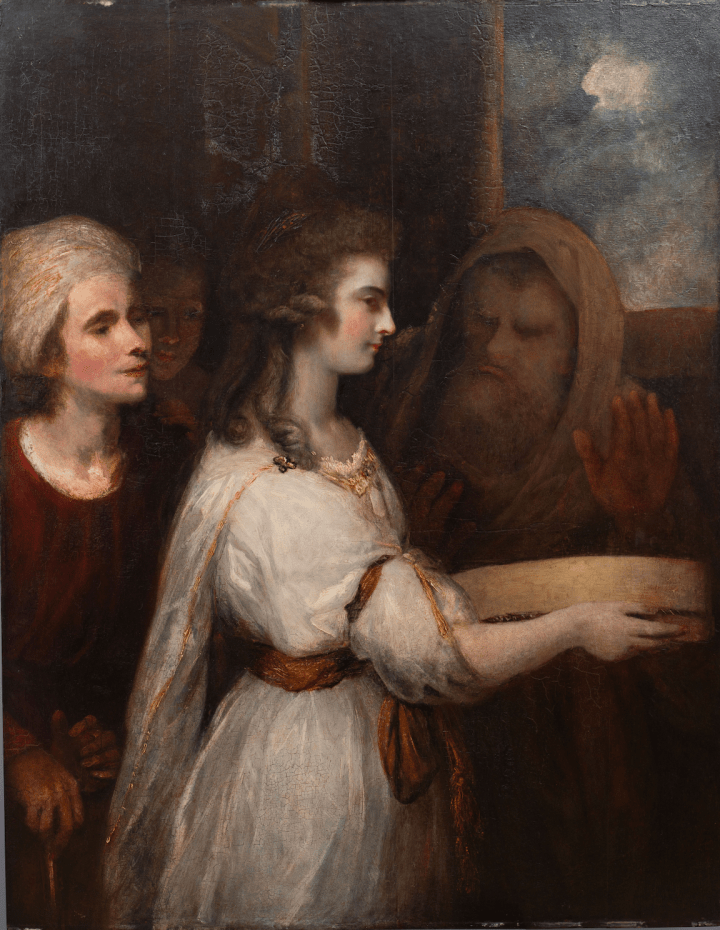
Joshua Reynolds, Tuccia, The Vestal Virgin, 1786, oil on panel (Syracuse University Art Museum, gift of Theodore Newhouse, 1968.329).
11.30 Welcome
11.45 Session 1
Moderator: Radha Kumar
• Robert Travers (Cornell University) — The Return of the Nabob: Richard Barwell and Warren Hastings in 1780s Britain
• Melinda Watt (Art Institute of Chicago) — The Lore and Allure of Woven Air
12.35 Session 2
Moderator: Irina Savinetskaya
• Debarati Sarkar (CUNY Graduate Center) — ‘My Black Servant Juba’: Sir Joshua Reynolds’s Earliest South Asian Ayah Portrait in 18th-Century Britain
• Jennifer Germann (Independent Scholar and Affiliated Scholar, Institute for European Studies, Cornell University) — Dressing up Dido: Constructions of Gender, Race, and Social Rank in the Portrait of Dido Elizabeth Belle and Lady Elizabeth Murray
1.30 Lunch Break
2.40 Session 3
Moderator: Jeffrey Mayer
• Amelia Rauser (Franklin and Marshall College) — Veritable Athenians: How Artistic Dress Became Neoclassical Fashion
• Joanna Marschner (Historic Royal Palaces) — Muslin in Western Fashion in the Later 18th Century: Lady Rockingham’s Muslin Sack-Back Dress c.1775, A Case-Study
3.30 Session 4
Moderator: Kate Holohan
• Raphael Shea (Westlake Art Conservation Center) — A Considered Approach to the Conservation Treatment of Reynolds’s Tuccia, The Vestal Virgin
• Kirsten Schoonmaker (Syracuse University) — Muslin, Magnified: Material Evidence in Local Collections
4.20 Tea and Coffee Break
5.00 Keynote Lecture
Moderator: Junko Takeda
• Tim Barringer (Paul Mellon Professor of the History of Art, Yale University) — A Suitable Ornament: Reynolds, the Royal Academy, and the British Empire
f r i d a y , 2 7 m a r c h
10.00 Welcome
10.10 Session 5 — virtual
Moderator: Durba Ghosh
• Adam Eaker (The Metropolitan Museum of Art) — Two New Indian Portraits for the Met
• Alice Insley (Tate Britain) — TBA
11.00 Session 6
Moderator: Romita Ray
• Melissa Yuen (Syracuse University Art Museum) — ‘And every body may know her’: The Display and Circulation of Mrs. Seaforth’s Image as Tuccia, the Vestal Virgin
• Elizabeth Mitchell (McNay Art Museum) — Anatomy of an Exhibition: From Reynolds to Warhol and Back Again
11.50 Lunch Break
2.15 Keynote Lecture
Moderator: Srividya ‘Srivi’ Ramasubramanian
• Nilanjana ‘Buju’ Dasgupta (Provost Professor and Inaugural Director, Institute of Diversity Sciences, University of Massachusetts Amherst) — How ‘Wallpaper’ Creates Inequality: A Science-Driven Approach to Change It
3.30 Closing Remarks
3.35 Tea, Coffee, Conversation
Lecture | Ana Lucia Araujo on the Work of Black Artists in the Americas
From The Institute of Fine Arts:
Ana Lucia Araujo | The Power of Art: The World Black Artists Made in the Americas
Daniel H. Silberberg Lecture Series
Online and in-person, The Institute of Fine Arts, New York University, 30 March 2026, 6pm
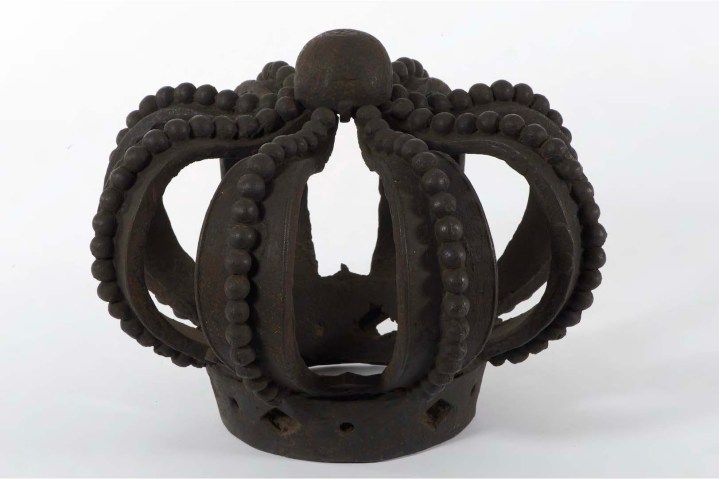
Iron crown, 34 × 45 cm, Real Fábrica de Ferro São João do Ipanema (Museu Paulista, Universidade de São Paulo, Brazil).
Throughout human history, men and women have used artistic expression to overcome the most horrible atrocities. Africans and their descendants also embraced artistic creation to survive the horrors of the Atlantic slave trade and slavery in the Americas, and to soothe their physical and spiritual wounds. Drawing on written and visual primary sources, artifacts, and artworks housed in archives and museums in the United States, Brazil, the United Kingdom, France, and the Netherlands, my book The Power of Art: The World Black Artists Made in the Americas combines history, art history, and art to tell the story of enslaved artists and examine the works they created in the Americas during the eighteenth and nineteenth centuries. I argue that Black creators drew on the long and powerful heritage of African arts and knowledge, which they combined with European and Native American artistic traditions, to design artworks and objects that asserted a defying world of their own.
Many enslaved and freed artists modeled clay objects, forged magnificent iron pieces, wove textiles, mats, and baskets, carved wood and stone sculptures. These artists embraced the knowledge transmitted to them by their African ancestors, while also introducing innovations learned from European and indigenous creators. Drawing on these rich economic and cultural exchanges, African artists and their descendants in the Americas adapted and developed new techniques and combinations of forms and colors. When creating new artworks, these artists also embraced new materials to which they assigned new uses and meanings. I contend that artistic creation offered bondspeople relief and hope, and sometimes also opened to them a path to emancipation. Ultimately, by shedding new light on the works of enslaved Africans and their descendants, which still remain largely invisible in most museum collections, The Power of Art illuminates their long-lasting contributions to the development of visual arts in the Americas.
Registration is available here»
Ana Lucia Araujo is a historian of slavery, the transatlantic slave trade and the global African diaspora. Trained as a historian and as an art historian, she has explored the legacies of slavery, including the history of calls for reparations, memory, heritage, material, and visual culture of slavery. Her recent books are Humans in Shackles: An Atlantic History of Slavery (University of Chicago Press, 2024), The Gift: How Objects of Prestige Shaped the Atlantic Slave Trade and Colonialism (Cambridge University Press, 2024), and Reparations for Slavery and the Slave Trade: A Transnational and Comparative History (Bloomsbury, 2017, 2023). A John Solomon Guggenheim Fellow (2025), her work has also been supported by the American Council of Learned Societies, the Getty Research Institute, the Institute of Advanced Study (Princeton, NJ), the Bonn Center for Dependency and Slavery Studies at Universität Bonn (Germany), the Clark Art Institute, and the American Philosophical Society.
Online Conversation | Architecture’s Archive, 1400–1800
From the Society of Architectural Historians:
Architecture’s Archive: Paperwork in Early Modern Practice, 1400–1800
With Christine Casey, Farshid Emami, Eleonora Pistis, and Saundra Weddle
Online, An SAH Connects Session, Friday, 20 March 2026, noon EST
From drawings and invoices to maps, inventories, and account books, early modern architectural practice abounded with paperwork. These documents emerged from a historical moment beginning around 1400 that witnessed the rise of new technologies and regimes for the management of information. While essential to historical scholarship, documents have long been taken for granted merely as sources to mine for data. Towards a fuller view of paperwork, this SAH Connects event invites a reframing of documents as spatial objects whose form, use, content, and production merit critical consideration.
Documents call attention to questions of process but also, more generally, the material realities of building in the early modern world. Panelists will speak about the historiographic and methodological stakes of a document that has animated their scholarship. Among the questions to be considered are: What do documents clarify or obscure? How did documents serve institutions, particular those that oversaw building activity? How did architectural documents circulate? What new possibilities do documents provide for uncovering non-elite figures or extra-architectural actors who shaped the built environment? Who is absent from documents? What temporal, material, or scalar slippages exist between documents and buildings? How do we wrestle with fragmentary or compromised documentary evidence? While anchored in the early modern world, this conversation will invite broad critical reflection on the documentary sources that underpin architectural history.
With the goal of highlighting new work, we have invited authors whose recently published books engage with a variety of building cultures at a range of scales from across the early modern world. Speaking from their books, each participant will discuss a single historical document that was central to their analysis of the actors, systems and processes that shaped the built environment.
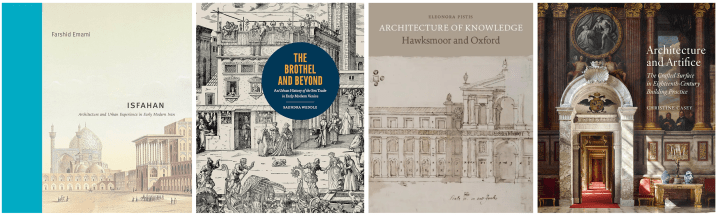
• Christine Casey, Trinity College Dublin | Architecture and Artifice: The Crafted Surface in Eighteenth-Century Building Practice (Yale University Press, 2025).
• Farshid Emami, Rice University | Isfahan: Architecture and Urban Experience in Early Modern Iran (Penn State Press, 2024).
• Eleonora Pistis, Columbia University | Architecture of Knowledge: Hawksmoor and Oxford (Harvey Miller, 2024).
• Saundra Weddle, Drury University | The Brothel and Beyond: An Urban History of the Sex Trade in Early Modern Venice (Penn State Press, 2026).
The session will be moderated by Matthew Gin (University of North Carolina, Charlotte), Ann C. Huppert (University of Washington), and Kristin Triff (Trinity College).
Registration is available here»
SAH CONNECTS, a year-round series of virtual programs related to the history of the built environment, provides a platform for the SAH community to collaborate, share their work, engage in timely discussions, and reach worldwide audiences.
Symposium | El Prado en femenino III: Queen Isabel de Farnesio
Next month from The Prado, with some simultaneous translation planned:
Key Women in the Creation of the Collections of the
Museo del Prado III: Isabel de Farnesio
Online and in-person, Museo Nacional del Prado, Madrid, 9–10 March 2026
Organized by Noelia García Pérez
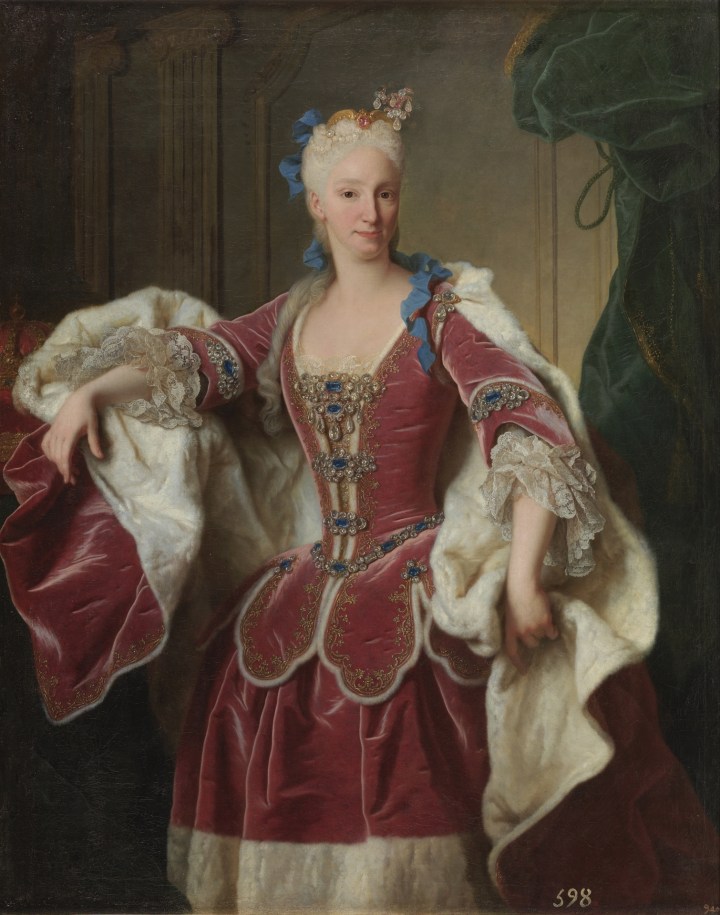
Jean Ranc, Isabel de Farnesio, 1723, oil on canvas, 144 × 115 cm (Madrid: Museo Nacional del Prado).
It was probably Queen Isabel de Farnesio (1692–1766), patron of the arts, who most decisively contributed to giving shape to the Museo del Prado’s collections. This third edition of the series Protagonistas femeninas en la formación de las colecciones del Museo del Prado invites us to reconsider the significance of her patronage and her pivotal contribution to the artistic collection that the Museum now preserves. As in previous editions, this scientific meeting was designed with the intention of recovering, studying, and disseminating the cultural agency of the women of Europe’s royal houses, whose collections and artistic decisions have left a profound imprint on the identity of the Museum.
Throughout the sessions, a group of notable national and international specialists will examine the political, cultural, and dynastic context in which Elisabeth Farnese advanced her patronage; the mechanisms through which she built her public image as queen consort in the exercise of her power; the complex network of mediators that made the realization of her collections possible; and her extraordinary relevance in the fields both of painting and classical sculpture. From an initial analysis of the interests of other queenly European patrons—for instance, Maria Theresa of Austria, Catherine II, and Sophia Charlotte of Mecklenburg-Strelitz—to a specific consideration of Isabel de Farnesio’s own collecting activities, this symposium invites reflection on female artistic agency in the Modern Age and its impact on the circulation of works, the promotion of artists, and the consolidation of new narratives of power.
As complementary activities, the meeting will include the screening of a documentary dedicated to Isabel de Farnesio and a visit to the exhibition El Prado en femenino III. The exhibition explores the legacy this queen passed on, underscoring how her work in the field of artistic promotion definitively contributed to enriching the Museum’s collection. With this initiative, the Museo del Prado consolidates an essential line of work that explores the actions of these queens who made possible an essential part of the legacy that we are fortunate to continue to admire today.
m o n d a y , 9 m a r c h
9.30 Registration
10.00 Introductions
• Alfonso Palacio (Museo del Prado)
• Cristina Hernández Martín (Women’s Institute)
• Noelia García Pérez (University of Murcia)
10.30 Empress Maria Theresa and the Politics of Habsburg Imperial Art — Michael Yonan (University of California)
11.15 Power and Paint: The Patronage of Women Artists at the Court of Catherine II — Rosalind Polly Blakesley (University of Cambridge)
12.30 Sophia Charlotte of Mecklenburg-Strelitz: How a Queen Promoted Both Art and Female Artists in English Society — Heidi A. Strobel (University of North Texas)
16.00 Round table | Isabel de Farnesio: A Queen Consort in the Exercise of Power
Moderator: Carlos González Navarro (Museo del Prado)
• María de los Ángeles Semper (University of Barcelona)
• Giulio Sodano (Università della Campania Luigi Vanvitelli)
• Pablo Gestal (Sorbonne Université, Centre Roland Mousnier)
17.00 Round table | The Patronage of Isabel de Farnesio: State of the Art
Moderator: Ana González Mozo (Museo del Prado)
• Ángel Aterido (Complutense University of Madrid)
• Antonio Iommelli (Farnese Palace Museums)
t u e s d a y , 1 0 m a r c h
10.00 Isabel de Farnesio en las colecciones del Museo del Prado — Noelia García Pérez (University of Murcia)
10.45 Round table | The Construct of the Image of the Queen: From Molinaretto to Van Loo
Moderator: Noelia García Pérez
• Sandra Antúnez (Complutense University of Madrid)
• Andrés Úbeda (Museo del Prado)
• Mercedes Simal (University of Jaén)
12.00 Round table | From Christina of Sweden to Isabel de Farnesio: Collections of Classical Sculpture
Moderator: Ana Martín (Museo del Prado)
• Manuel Arias (Museo del Prado)
• Juan Ramón Sánchez del Peral (Museo del Prado)
• Mercedes Simal (University of Jaén)
16.00 El boceto de Santa Ana enseñando a leer a la Virgen: La sustracción y retorno del boceto de Murillo del Museo del Prado — Benito Navarrete (Complutense University of Madrid)
16.45 Screening of the documentary
17.15 Viewing of the exhibition The Female Perspective III
Cambridge Material Culture Workshop, Lent 2026
The Material Culture Workshop schedule for the current term:
Cambridge Material Culture Workshop, Lent 2026
We’re delighted to share our Lent 2026 term card. Each of the four sessions will meet online and in-person at St. John’s, Cambridge, starting at 5pm. For more information, please contact Tomas Brown (tbnb2@cam.ac.uk) or Sophia Feist (stcf2@cam.ac.uk). In addition to our talks this term, the Material Culture Workshop is hosting an exhibition tour of Tudor Contemporary at the Heong Gallery, Downing College, on Friday, 13 March, led by curator Dr. Christina Faraday and artist and academic Dr. Jane Partner. This is sign-up only, so send us an email if you’d like to attend.
Monday, 9 February
• Jordan Mitchell-King (De Montfort), The Significance of Getting Dressed for Elite Women in the 18th Century
• Charlotte Stobart (Cambridge), Technological Embodiment: Examining Experiences of Calliper Usage among British Polio-disabled Individuals, 1950–2025
Friday, 20 February
• Laura Granda-Mateu (Edge Hill), Binding Worlds: Women’s Albums and Transnational Material Practices
• Ella Gaskell (York), Sanctified Materiality and the Dormition Icon in Post-Iconoclastic Byzantium
Monday, 9 March
• Joe Clarke (Cambridge), Sa(l)vage Anthropology: Wynfrid Duckworth and the Lost Cambridge Anatomy Museum
• Charlotte Wood (Cambridge), Natural Objects of Affection: Emotion, Materiality, and the Care of Museum Specimens in the Making of Wildlife Conservation Mentalities in Colonial East Africa
Friday, 20 March
• Cecilia Eure (Cambridge), Alternative Means of Decorating in Poor and Labouring-Class British Homes, 1600–1800
• Emma Piercy-Wright (Exeter), Small Trifles, Big Ideas: Mother-of-Pearl Trinkets as Enlightenment Transcripts
Online Conversation | Reflecting on Turner in 2025
Registration for this HECAA Great Conversation (open to non-HECAA members) is available here:
Turner in 2025: Reflecting on the Anniversary Year’s Exhibitions
With Chloe Wigston Smith, Richard Johns, Lucinda Lax, and Melissa Gustin
Online, 23 January 2026, 12.30 EST / 5.30 GMT
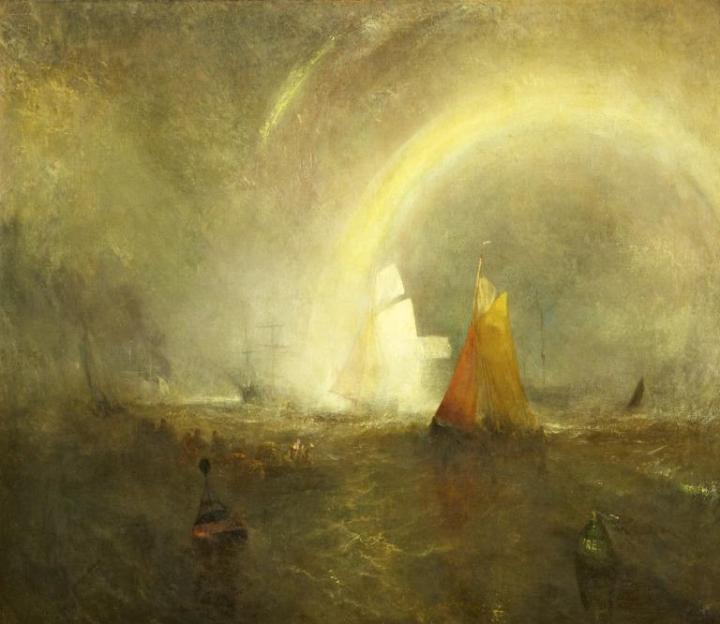
J.M.W. Turner, The Wreck Buoy, first exhibited in 1849, oil on canvas, canvas: 93 × 123 cm (Liverpool: Walker Art Gallery).
Joseph Mallord William Turner was born in 1775. To mark 250 years since his birth, a number of anniversary exhibitions were organized across the United Kingdom and the United States in 2025. Some contextualized Turner with other notable contemporaries; others focused on specific aspects of his career or mined collection holdings. This roundtable will bring together four curators of three Turner anniversary exhibitions to ask them to reflect on their exhibitions and ponder together what it means to exhibit Turner today.
• Melissa Gustin is Curator of British Art at the National Museums Liverpool, and curator of Turner: Always Contemporary at the Walker Art Gallery.
• Lucinda Lax is Interim Head of the Curatorial Division and Curator of Paintings and Sculpture at the Yale Center for British Art, and curator of J.M.W. Turner: Romance and Reality.
• Richard Johns is Senior Lecturer in the Department of History of Art at the University of York. Along with Smith, he was a co-curator of Austen and Turner at Harewood House.
• Chloe Wigston Smith is Professor in the Department of English at the University of York and Director of its Centre for Eighteenth-Century Studies. Along with Johns, she was a co-curator of Austen and Turner at Harewood House.
Join us on Friday, 23 January 2026 at 12.30pm EST / 5.30pm GMT for this HECAA Great (Zoom) Conversation. The event is open to current and prospective HECAA members; so please share widely in your networks.
Online Talks | Patricia Ferguson, Ivan Day, Neil Buttery, and Paul Crane
From the Museum of Royal Worcester:
Museum of Royal Worcester | Online Winter Talk Series, 2025–26
The Museum of Royal Worcester is thrilled to present another season of fascinating online talks to keep the winter blues at bay. Curl up with a warm drink and join us as we explore art, food, and history with three brilliant speakers.
◊ ◊ ◊ ◊ ◊
Ivan Day | Frozen Delights: A History of Porcelain and Ice Cream
Wednesday, 21 January 2026, 6pm
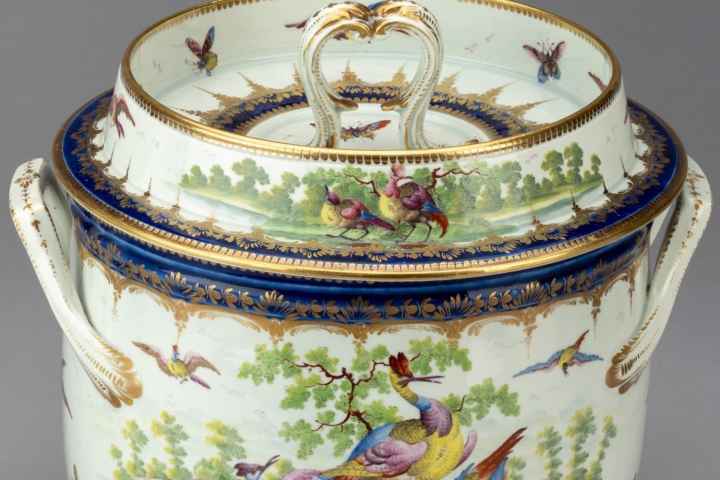
Ice Pail, 1776, William Davis Factory (Museum of Royal Worcester).
During the eighteenth century, ice cream became the ultimate show-off luxury for adorning a fashionable dinner table. As a result, new items for serving this novelty dish started to appear on the market. The challenge was to produce an attractive container which could be displayed centre stage on the sideboard or table, but which was also capable of preventing the ice cream from melting. These specialised three-part vessels first appeared in France in 1720s, where they were called seaux à glace—ice cream coolers. They employed a mixture of ice and salt to refrigerate their contents. By the 1770s the fashion for these beautiful vessels became an aristocratic craze, and nearly every European manufactory was producing them. In England, the Worcester factory played a leading role in developing some of the finest of these vessels. Ivan Day will guide us through the development of ice cream coolers and ice cream cups, with a focus on the marvellous examples produced at Worcester. Book here»
Ivan Day is one of the UK’s most celebrated food historians, broadcasters, writers, and curators, specialising in the reconstruction of period kitchens and historic table displays. His work has been exhibited in many institutions worldwide, including the Museum of London, the Metropolitan Museum of Art, and the Getty Research Institute. His publications include Cooking in Europe, 1650–1850 and Ice Cream: A History.
◊ ◊ ◊ ◊ ◊
Neil Buttery and Paul Crane | Sugar, Slavery and Empire / The Evolution of Worcester Sucriers
Wednesday, 4 March 2026, 6pm

A rare early Dr Wall Worcester Sucrier and Cover with Flame finial, ca. 1753. A unique example retaining its cover, the shape derived from silver. Ex Rous Lench collection Worcestershire.
Join food historian Neil Buttery and ceramics expert Paul Crane in a presentation discussing the role of sugar and the associated enslavement of African peoples in the growth and development of the British Empire and Worcester Porcelain in the eighteenth century. Neil will explore how the reach of the ‘sugar-slave complex’ was all-pervading, influencing the sale and evolution of fancy goods, especially those associated with the tea table, which, of course, included porcelain. As a case study, Paul will focus on the evolution of the sucrier in the first fifty years of Worcester Porcelain. Book here»
Neil Buttery is a multi award-winning food historian, author, podcaster, and chef. He hosts The British Food History Podcast and co-hosts A is for Apple: An Encyclopaedia of Food & Drink. His publications include A Dark History of Sugar, Before Mrs Beeton: Elizabeth Raffald, England’s Most Influential Housekeeper, Knead to Know: A History of Baking, and The Philosophy of Puddings. Dr. Buttery has recently collaborated with the Museum of Royal Worcester on projects to deliver narratives on the history of food and porcelain to wider communities. His permanent display “Dr. Wall’s Dinner” at MoRW recently won the Food on Display Award at the British Library Food Season Awards in 2025.
Paul Crane is an independent historian and consultant to the Brian Haughton Gallery, London. He is a descendant of Dr. John Wall (1708–1776), who founded the Worcester Porcelain Manufactory in 1751. Paul presently sits as a Trustee of the Museum of Royal Worcester, formerly the Dyson Perrins Museum in the city of Worcester. He also is a Fellow of the Society of Antiquaries, an independent historian and researcher, and a Liveryman of the Worshipful Company of Art Scholars.
◊ ◊ ◊ ◊ ◊
Patricia Ferguson | Exploring the Rococo through Chelsea’s Gold Anchor Vases
Tuesday, 2 December 2025, 6pm — A recording is available here»
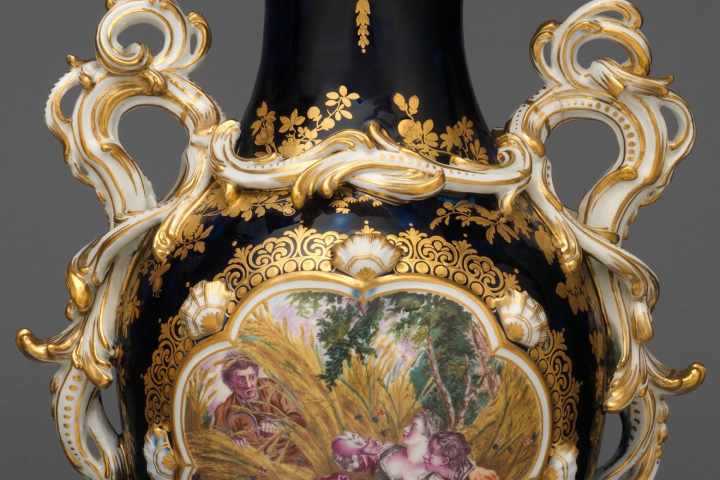
Vase (one of a pair), Chelsea Porcelain Factory, ca. 1762 (New York: The Metropolitan Museum, 1970.313.2a, b).
Of all design styles, Rococo was perhaps the most rebellious—ornate, theatrical, and a true ‘style without rules’. Emerging in France in the 1720s–30s, it featured curved, asymmetrical motifs drawn from nature, especially the acanthus leaf, and marine-inspired forms that gave rise to its name, from rocaille (‘rock’ or ‘shell’). Its greatest achievements appeared in the decorative arts—furniture, silver, and ceramics. By the 1750s–60s, English porcelain factories like Worcester and Chelsea embraced Rococo, even as taste was shifting toward Classical order. Worcester adapted Rococo silver shapes for tablewares, but Chelsea—under Flemish silversmith Nicholas Sprimont—produced some of the boldest Rococo porcelain in Europe, rivaling Meissen and Sèvres. This talk explores Chelsea’s gold anchor period (ca. 1758–64), its spectacular vases, its rivals, and its enduring legacy.
Patricia F. Ferguson is a ceramic researcher, a former curatorial consultant at the Victoria and Albert Museum and the British Museum, she is an advisor on ceramics for the National Trust and other heritage organizations. Her publications include Pots, Prints, and Politics: Ceramics with an Agenda, from the 14th to the 20th Century (2021); Ceramics: 400 years of British Collecting in 100 Masterpieces (2017); and Garnitures: Vase Sets from National Trust Houses (2017).
Study Day | Relevance and Reception of Anton Raphael Mengs
From ArtHist.net and Zentralinstitut für Kunstgeschichte:
Die ‘allgemeine Erwartung besserer künstlerischer Zustände’:
Relevanz und Rezeption von Anton Raphael Mengs
Online and in-person, Zentralinstitut für Kunstgeschichte, Munich, 28 January 2026
Organized by Steffi Roettgen and Ulrich Pfisterer

Anton Raphael Mengs, Self-Portrait, 1773, oil on panel 28 × 22 inches (Munich: Bayerische Staatsgemäldesammlungen, Neue Pinakothek).
Dem steilen Aufstieg von Anton Raphael Mengs (1728–1779) zu einem der, wenn nicht dem berühmtesten Maler Europas ab der Mitte des 18. Jahrhunderts entsprach der nicht minder steile Absturz in der allgemeinen Wertschätzung bereits wenige Jahre nach seinem Tod. Das Kolloquium untersucht die Faktoren, die sowohl die Relevanz als auch die wechselhafte Rezeption von Mengs zu verstehen helfen. Für eine differenzierte Einschätzung scheint es dabei wichtig, deutlicher als bislang geschehen zwischen den Wirkungsbereichen von Ästhetik, Antike(nrezeption), Akademie und Kunsttheorie zu unterscheiden.
Die Teilnahme ist kostenlos. Die Veranstaltung wird parallel via Zoom übertragen. Dem Zoom-Meeting können Sie unter folgendem Link beitreten. Das Mitschneiden der Veranstaltung oder von Teilen der Veranstaltung sowie Screenshots sind nicht gestattet. Mit der Teilnahme akzeptieren Sie diese Nutzungsbedingung.
Konzeption
Steffi Roettgen (LMU München)
Ulrich Pfisterer (Zentralinstitut für Kunstgeschichte)
p r o g r a m m
14.00 Ulrich Pfisterer (ZI) — Begrüßung und Einführung
14.15 Session 1
Moderation: Steffi Roettgen (LMU München)
• Gernot Mayer (Universität Wien) — Auf der Jagd nach Mengs: Die Rezeption von Anton Raphael Mengs im Spiegel transnationaler Netzwerke
• Susanne Adina Meyer (Università di Macerata) — Zwischen Malerei und Philosophie: Anton Raphael Mengs im Spiegel römischer Kunstzeitschriften des 18. Jahrhunderts
• Andrés Úbeda de los Cobos (Museo del Prado, Madrid) — Mengsianus Methodus, or the Limits of a Strict System of Thought
15.45 Kaffee
16.15 Session 2
Moderation: Hubertus Kohle (LMU München)
• Susanne Müller-Bechtel (Julius-Maximilians-Universität Würzburg) — Antike – Rezeption – Modell: Anton Raphael Mengs’ Studien des menschlichen Körpers
• Roland Kanz (Rheinische Friedrich-Wilhelms-Universität Bonn) — Casanova als Mengs-Adept
• Steffi Roettgen (LMU München) — ‘Ikonen‘ mit Verfallsdatum: Zum Einfluss der Kopien auf Mengs’ Nachruhm
17.45 Pause
18.00 Session 3
Moderation: Ulrich Pfisterer (ZI)
• Tilman Schreiber (Friedrich-Schiller-Universität Jena) — Anton Raphael Mengs als ‘(Neo)Klassizist’: Überlegungen aus heuristischer Perspektive
• Michael Thimann (Georg-August-Universität Göttingen) — Der kalte Weg: Mengs unter den Romantikern
19.00 Abschlussdiskussion
Online Seminar | Casts Collections across Time and Borders
From ArtHist.net:
Plaster and Bronze Legacies: Rediscovering, Preserving, and
Teaching with Casts Collections across Time and Borders
Online, 25 November 2025, 14.00–18.00 (CET Paris/Rome/Berlin)
Organized by Sarah Coviello, Valeria Paruzzo, and Giuseppe Rizzo
The Research & Development Committee of the Society for the History of Collecting is happy to announce the online seminar Plaster and Bronze Legacies: Rediscovering, Preserving and Teaching with Casts Collections across Time and Borders, the second of the cycle Unveiling Hidden Histories, Creating New Narratives: The Collections of Teaching Institutes. Attendance is free. Please register in advance here.
p r o g r a m m e
14.00 Introduction — Sarah Coviello, Valeria Paruzzo, Giuseppe Rizzo (The Society for the History of Collecting)
14.15 Session 1 | Origins and Early Histories of Cast Collections
• Tanja Kilzer (University of Trier) — The Plaster Cast Collection of the University of Bonn: Lost Works and Major Classical Sculptures in Plaster since 1818
• Jelena Todorović (University of the Arts Belgrade) — Bronze Casts with a Curious History: How a Collection of Bronzes from 1930s Became a Teaching Tool at the Faculty of Fine Arts Belgrade
• Rebecca Yuste (Columbia University, New York City) — Classicism in Mexico: Plaster Casts at the Royal Academy of San Carlos, 1791
15.15 Session 2 | Past and Present of a Fragile Heritage
• Linca Kucsinschi (Jean Moulin University, Lyon 3) — Reviving Classical Antiquity: The Gypsothèque of the University of Bucharest
• Ioana Rus-Cacovean and Tereza Pop (University of Art and Design in Cluj-Napoca) — The Collection of Classical and Hellenistic Plaster Casts of the University of Art and Design in Cluj-Napoca, Romania
• Flaminia Ferlito (IMT School for Advanced Studies in Lucca) — Provenance Studies of Sacred Art in Post-unitary Timeframe: Oronzo Lelli and the Plaster Casts Collection of the Liceo Artistico di Porta Romana in Florence
16.30 Session 3 | Contemporary Uses and New Narratives
• Milena Gallipoli (Museo de la Cárcova, Universidad Nacional de las Artes, Buenos Aires) — Reframing America within ‘Universal Art History’: The Collection of Mesoamerican Plaster Casts and Visual Resources at the Museo de la Cárcova (Buenos Aires, Argentina)
• Emy Faivre (Université Marie & Louis Pasteur, Besançon), Arianna Esposito (Université Bourgogne Europe, Dijon), and Sophie Montel (Université Marie & Louis Pasteur, Besançon) — Sharing Collections for Teaching Purposes (Museums, Art Schools, and Universities): Viewpoint of Preserving and Present-day Learning Practices from France
• Giulia Coco (Galleria dell’Accademia di Firenze e Musei del Bargello) — Enhancement, Research, and Inclusion at the Galleria dell’Accademia di Firenze e Musei del Bargello: The New Acquisition of Venus Entering the Bath by Luigi Pampaloni for the Plaster Casts Collection
17.15 Roundtable Discussion and Networking: Towards a Shared Framework for Cast Collections in Teaching










 Enfilade
leave a comment