Online Conference | Reproductive Prints in the 18th and 19th Centuries
From ArtHist.net (8 June) and the programme (as a PDF file) . . .
La Storie dell’Arte Illustrata e la Stampa di Traduzione, 18 e 19 Secolo
Online, Università di Chieti Gabriele d’Annunzio, Chieti, 10–11 June 2021
La storia dell’arte illustrata e la stampa di traduzione tra XVIII e XIX secolo
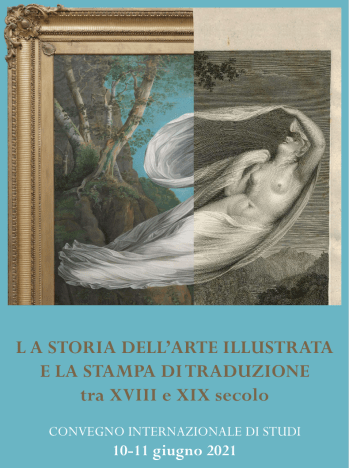 «Un coup d’oeil sur l’objet ou sur sa représentation en dit plus qu’une page de discours». Così scrive Diderot nel 1751 nell’Encyclopédie, introducendo un concetto rivoluzionario nella metodologia storico-artistica, che dalla descrizione letteraria passava all’analisi dei monumenti attraverso la loro riproduzione o supposta «replica». Nel XVIII secolo si assiste infatti alla «difficile nascita del libro d’arte» (F. Haskell) che segnerà un punto di non ritorno nella storiografia artistica. Prima dell’avvento della fotografia, infatti, è la stampa di traduzione, spesso al semplice contorno lineare ed eseguita rigorosamente al cospetto dell’opera, a essere la protagonista indiscussa della nuova storia dell’arte.
La cattedra di “Storia della Critica d’arte” del Dipartimento di Lettere, Arti e Scienze Sociali dell’Università degli Studi di Chieti-Pescara “G. D’Annunzio” organizza un convegno internazionale di studi dedicato a quel particolare momento aureo della stampa di traduzione come parte integrante della produzione storico-artistica tra XVIII e XIX secolo, indagandone i vari aspetti metodologici e i molteplici apporti nazionali e internazionali.
Le giornate di studio si svolgeranno in modalità online, sulla piattaforma Microsoft Teams. Per partecipare e registrarsi inviare una mail a lastoriadellarteillustrata@gmail.com. Si rilasciano attestati di frequenza su richiesta.
Responsabilità scientifica
Ilaria Miarelli Mariani con Valentina Fraticelli, Tiziano Casola, Vanda Lisanti
Segreteria organizzativa
Laura Palombaro, lastoriadellarteillustrata@gmail.com
T H U R S D A Y , 1 0 J U N E 2 0 2 1
9:45 Apertura del collegamento e introduzione
10.00 Sezione 1 | LA STAMPA DI TRADUZIONE TRA RIFLESSIONE E DIBATTITO
Chair: Ilaria Miarelli Mariani (Università degli Studi di Chieti-Pescara “G. D’Annunzio”)
• Stefano Ferrari (Accademia Roveretana degli Agiati), I “Monumenti antichi inediti” di Winckelmann e la riproducibilità dell’opera d’arte
• Paolo Pastres (Deputazione di Storia Patria per il Friuli), Tradurre o tradire? Il dibattito sulle stampe di traduzione in Italia nella seconda metà del Settecento
• Sara Concilio (Università degli Studi di Torino), Giovanni Gaetano Bottari e il libro illustrato: «un’opera utilissima e immortale»
• Susanne A. Meyer (Università degli Studi di Macerata), Una storia dell’arte da leggere in biblioteca: la “Geschichte der zeicnenden Künste” (1796–1821) di J. D. Fiorillo
11.15 Sessione 2 | STORIOGRAFIA E IMPRESE EDITORIALI
Chair: Gaetano Curzi (Università degli Studi di Chieti-Pescara “G. D’Annunzio”)
• Chiara Lo Giudice (Università degli Studi di Padova), Stampe di traduzione come modelli: il caso della calcografia Wagner
• Tomáš Valeš Masaryk (University, Brno; The Czech Academy of Sciences, Praha), Between Original and Reproduction: Jakob Matthias Schmutzer as a Reproductive Engraver
• Antonella Bellin (ricercatrice indipendente) / Elena Catra (Università Ca’ Foscari di Venezia), “Quaranta quadri fra i più celebri della scuola veneziana”. Il progetto di Leopoldo Cicognara per la conoscenza del patrimonio pittorico veneziano
• Valentina Borniotto (Università di Genova), Pittura stampata. Scelte iconografiche nella “Storia della Pittura Italiana” di Giovanni Rosini: il caso genovese
• Raffaella Fontanarossa (ricercatrice indipendente), «Di queste pitture ne disegnai un riparto che il fu Gio. Rosini pose nelle tavole della sua Storia della Pittura»: il contributo di Santo Varni alla storia dell’arte illustrata
• Luca Mattedi (Fondazione Federico Zeri), Bologna, “Un grand nombre de productions des maîtres les plus célèbres, ignorées depuis longues années”: una panoramica sui dipinti di epoca rinascimentale della Recueil di Jean-Baptiste-Pierre Lebrun
12.45 Discussione
14.30 Sessione 3 | LA STAMPA DI TRADUZIONE OLTRE I CONFINI STORIOGRAFICI
Chair: Francesco Leone (Università degli Studi di Chieti-Pescara “G. D’Annunzio”)
• Jessica Calipari (Università degli Studi di Chieti-Pescara “G. D’Annunzio”), Il racconto biografico tradotto nella pubblicistica romana della prima metà dell’Ottocento
• Giuliano Colicino (Università degli Studi di Salerno), Illustrare la storia dell’arte per le famiglie: il “Poliorama Pittoresco” (1836–1846)
• Ilenia Falbo (Università della Calabria), I giornali eruditi dell’ultima Roma papalina (1846-1870). Illustrazioni e cronache d’arte
• Fernando González Moreno / Alejandro Jaquero Esparcia (Universidad de Castilla-La Mancha), Guido Reni’s Pietà and Edgar A. Poe’s “The Assignation”: A Singular Case of Reception in 19th-Century North American Literature through the Reproductive Print
15.45 Sessione 4 | MUSEI E COLLEZIONISMO
Chair: Paolo Coen (Università degli Studi di Teramo)
• Martina Lerda (Università di Pisa), Le pinacoteche illustrate. L’uso delle riproduzioni in cataloghi e guide delle raccolte pittoriche italiane nel corso dell’Ottocento
• Francesco Paolo Campione (Università degli Studi di Messina), Le “Dipinture scelte del Morrealese” di Agostino Gallo (1821): stampa di traduzione e divulgazione artistica nella Sicilia del primo Ottocento
• Sandra Condorelli (Università di Catania), La “Descrizione de’ principali quadri esistenti nelle pinacoteche di Catania” di Agatino Longo
• Antonella Gioli (Università di Pisa), Circolazione e fortuna delle “Vedute del Museo Pio Clementino” (1791–1796)
• Ilaria Arcangeli (Università di Roma Sapienza), I “Disegni litografici dei Quadri Classici della Galleria di S. S. R. M. il Re di Sardegna”: un’impresa associativa promossa da Carlo Felice (1825–1840)
• Vanda Lisanti (Università degli Studi di Chieti-Pescara “G. d’Annunzio”), I cataloghi illustrati del Museo Capitolino nell’Ottocento e l’équipe di artisti per la “Descrizione del Campidoglio” di Pietro Righetti (1833–1836)
• Elisa Acanfora (Università della Basilicata) I rapporti tra centro e periferie: la diffusione delle stampe di traduzione nell’Italia meridionale nel Settecento
17.30 Discussione
F R I D A Y , 1 1 J U N E 2 0 2 1
9.30 Apertura collegamento
9.45 Sessione 5 | RIPRODURRE LE GLORIE LOCALI TRA MEDIOEVO E PRIMO RINASCIMENTO
Chair: Alessandro Tomei (Università degli Studi di Chieti-Pescara “G. D’Annunzio”)
• Paolo Delorenzi (Università Ca’ Foscari, Venezia), «Ces morceaux viennent d’être gravés pour la première fois». L’arte quattrocentesca nell’incisione veneta del XVIII secolo
• Manuela Gianandrea (Università di Roma Sapienza), Illustrare la storia della scultura romana dei bassi tempi: Ferdinando Mazzanti e il suo corpus di disegni
• Daniel Crespo Delgado (Universidad Complutense de Madrid), Tradurre un’architettura eterodossa. Sessanta stampe e poche parole per le “Antigüedades Árabes de España” (1787–1804)
• Elena Dodi (Università degli studi di Chieti-Pescara “G. d’Annunzio”), La diffusione e ricezione europea degli affreschi del Camposanto di Pisa attraverso le incisioni di Carlo Lasinio
11.00 Sessione 6 | LE STAMPE CHE IMITANO I DISEGNI
Chair: Tiziano Casola (Università degli studi di Chieti-Pescara “G. d’Annunzio”)
• Benedetta Spadaccini (Veneranda Biblioteca Ambrosiana), Le stampe che imitano i disegni dal XVII al XIX secolo
• Francesca Guglielmini (The British Museum, Prints and Drawings Department), Giovanni Antonio Armano and the Publication of Zanetti’s Parmigianino Drawings
• Laura Palombaro (Università degli Studi di Chieti-Pescara “G. d’Annunzio”), La Raccolta di incisioni di Francesco La Marra e la fortuna della pittura barocca napoletana nella stampa del Settecento
• Hannah Lyons (Birkbeck College University of London, with the Victoria & Albert Museum), Imitations, Impressions, and Female Industry: Maria Cosway (1760–1838) and the British Print Market
• Gennaro Rubbo (Università degli Studi di Chieti-Pescara “G. d’Annunzio”), La stampa di traduzione nel collezionismo inglese tra la fine del Settecento e gli inizi dell’Ottocento. Il caso di Francesco Bartolozzi: un italiano a Londra nel fondo Douce
12.15 Discussione
14.30 Sessione 7 | TRADURRE I GRANDI MAESTRI
Chair: Carla Mazzarelli (Università della Svizzera italiana)
• Anna Cerboni Baiardi (Università degli Studi di Urbino), Raffaello e i testi illustrati tra Sette e Ottocento
• Elena Petracca (Università degli Studi di Firenze), L’eredità romana di Robert van Audenaerde e Nicolas Dorigny nel Settecento.
• Francesca Cocchiara (Fondazione Centro Studi Tiziano e Cadore, Pieve di Cadore), Tiziano nelle stampe di traduzione tra XVIII e XIX secolo
• Ilaria Fiumi Sermattei (Istituto Centrale per la Grafica), La fortuna critica e visiva del Sassoferrato nella committenza della Calcografia Camerale negli anni della Restaurazione pontificia
• Michela Gianfranceschi (Università di Roma Sapienza), La sfida della pittura caravaggesca alla cultura classicista. Recueils di stampe e fogli sciolti tra XVIII e XIX secolo
• Alessio Costarelli (Università degli Studi di Bologna), Antonio Canova, gli Inglesi e la circolazione delle immagini
• Angelo Maria Monaco (Università Ca’ Foscari, Venezia), Veronese e i monumenti dei Dogi nelle incisioni di Giacomo Barri. Episodi singolari e precursori nel collezionismo veneziano nella seconda metà del Seicento
16.30 Sessione 8 | LE TECNICHE E IL COLORE
Chair: Valentina Fraticelli (Università degli Studi di Chieti-Pescara “G. D’Annunzio”)
• Chiara Piva (Università Ca’ Foscari, Venezia), Stampare a colori nel Settecento: sperimentazioni e dibattito critico
• Teresa Montefusco (Università della Svizzera Italiana), «La vera idea di quel magico incanto dei colori»: l’incisione e la traduzione del colorito nella pubblicistica romana (XVIII–XIX secolo)
• Maria Beatrice Failla (Università degli Studi di Torino), La litografia e la sfida del colore nel XIX secolo
• Alessandro Botta (Università degli Studi di Udine), Pittura divisionista e stampa di traduzione
17.30 Discussione
FPS Online Symposium | The Art of the Dealer
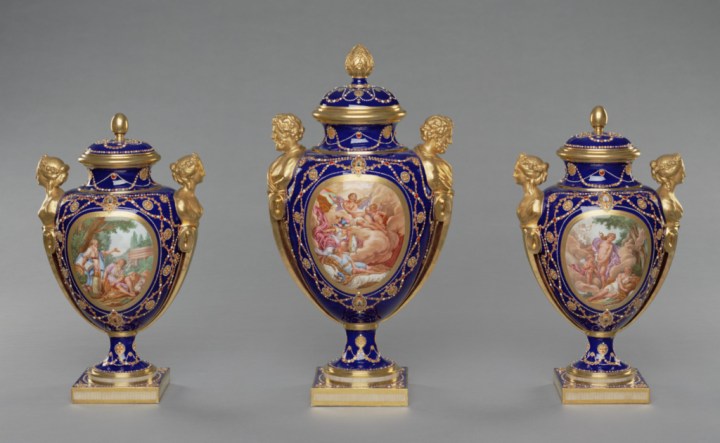
Garniture of Three Vases (vases des âges), Sèvres, 1781
(Los Angeles: J. Paul Getty Museum, 84.DE.718).
◊ ◊ ◊ ◊ ◊
From the FPS:
The Art of the Dealer: Selling Antique Ceramics, 1850 to 2000
Online, 12–13 June 2021
The French Porcelain Society is delighted to announce a two-day webinar on selling antique ceramics in the pre-digital age from 1850 to 2000.
The first day will focus on the dealer in the long nineteenth century, emerging from his chrysalis as a seller of ‘curiosities’ and ‘Old Sèvres porcelain’ to modern scholar-dealer, trading on an international stage, selling to museums through antiques fairs, themed exhibitions, lectures, specialist monographs, and catalogues devoted to ceramics. Papers will consider the Parisian dealer Beurdeley, the furnishing of J. Pierpont Morgan’s London home and the dealers who supplied him, and the rising market for oriental ceramics popularised by Edgar Gorer.
On day two, speakers will consider the legacy and change that characterised porcelain dealing in the twentieth century with papers on Marjorie Merriweather Post and French & Company in the United States, the activities of Hanns Weinberg in the 1950s for the Antique Porcelain Company, and finally Robert Williams at Winifred Williams Antiques. Each day will conclude with a panel discussion.
Zoom link for both days on our website soon. The full programme, with abstracts, is available here. Registration in advance is required. This symposium is free and open to all, but donations (here) are appreciated.
The programme is made possible with the generous support of Richard Baron Cohen.
All times are BST/UK
S A T U R D A Y , 1 2 J U N E 2 0 2 1
17.00 Session 1
• Caroline McCaffrey-Howarth (Visiting Research Fellow, History of Art and Museum Studies, University of Leeds and Curator, 17th- and 18th-Century Ceramics and Glass, V&A Museum), Marks, Monographs, and Mediators: The Long Nineteenth Century
• Camille Mestdagh (Associate Researcher, LARHRA), The Importance of Porcelain in the Business of a Parisian Curiosity Dealer: The Beurdeley Dynasty, a Case Study
17.50 Break
17.55 Session 2
• Linda H. Roth (Director of Special Projects/Curatorial and Charles C. and Eleanor Lamont Cunningham Curator of European Decorative Arts, Wadsworth Atheneum Museum of Art, Hartford, Connecticut), Mr. Morgan’s London House
• Nick Pearce (Richmond Chair of Fine Art, School of Culture & Creative Arts, University of Glasgow), ‘Sheer Cleverness and Courage’: Edgar Gorer (1872–1915) and the Rise of the Specialist Dealer in Chinese Art
19.00 Panel discussion and Q&A
S U N D A Y , 1 3 J U N E 2 0 2 1
17.00 Session 3
• Diana Davis (Independent researcher), The Twentieth Century: Legacy and Change
• Rebecca Tilles (Associate Curator of 18th-Century French and Western European Fine and Decorative Arts, Hillwood Estate, Museum and Gardens) Marjorie Merriweather Post and the Role and Influence of French & Company
17.50 Break
17.55 Session 4
• John Whitehead, FSA (Antique dealer and author), The Antique Porcelain Company: Porcelain Dealing in the Post-war Period
• Errol Manners, FSA (Antique dealer and author), Robert Williams of Winifred Williams Antiques
19.00 Panel discussion and Q&A
Online Conference | Finding Shakespeare in the Royal Collection
Begun in September 2018, ‘Shakespeare in the Royal Collection’ is a three-year AHRC funded project, focusing primarily on the period 1714–1945. From the project website:
Finding Shakespeare in the Royal Collection
Online, 17–19 June 2021
The Royal Collection contains Shakespeare-related items collected by generations of British monarchs, stretching back as far as Charles I, though principally concentrated in the eighteenth and nineteenth centuries. Including paintings, rare books, prints, watercolours, furniture, decorative objects, and photographs, these items tell a fascinating and overlapping set of stories about Shakespeare’s afterlife, the history of collecting, the histories of royalty and empire, and the histories of elite and popular culture. This conference brings together an international group of experts from fields including Shakespeare studies, history of art, collection studies, Romantic literature, and royal history.
Participants are invited to attend live online panels, or to view recorded panels for a limited time afterwards. We have speakers from Singapore to Texas, and the panels are timed across the day to maximise the possibility of attendance worldwide. A full conference programme, including abstracts and speaker bios, can be downloaded here.
The online conference platform is Zoom webinar, registered attendees will be emailed details of how to join the day before the event. To join, simply click on the join link in the email, your web browser will open up and you may be prompted to open Zoom. For further details of how to join Zoom meetings, see the company’s webpage. Live panels will be recorded, by attending you consent to the filming of the event and to being filmed yourself should you ask questions and in any other way participate live.
The conference is free to attend, but registration is essential. Tickets are available from Eventbrite. By registering, you agree to abide by the conference’s Code of Conduct. Participants violating the Code of Conduct will be removed from the event and will not be able to rejoin. For further information please email sharc@kcl.ac.uk.
All times are BST/ UTC+1 and subject to confirmation
T H U R S D A Y , 1 7 J U N E 2 0 2 1
Panel 1 | Exhibiting Shakespeare 10.00–11.30am
Chair: Gordon McMullan
• Michael Dobson (Shakespeare Institute), Hamlet Disowned: Kemble, Lawrence, and Royal Legitimacy
• Kate Retford (Birkbeck University of London), ‘A Wild and Unruly Youth’: Princes of Wales and The Harry the Fifth Club
• Shormishtha Panja (University of Delhi), ‘Moral Painting’: Nathaniel Dance Holland’s Timon of Athens, c. 1765–70
• Rosie Dias (University of Warwick), Personalising Public Art: Royal Narratives in Boydell’s Shakespeare Prints
Panel 2 | Shakespearean Relics 1.00–2.30pm
Chair: Kirsten Tambling
• Anna Myers (University of Edinburgh), David Garrick and the President’s Chair: Embodying Shakespeare through Intermedial Adaptation
• Mark Westgarth (University of Leeds), ‘Well-authenticated Blocks’: Materiality and the Market for Shakespearean ‘Mulberry Tree’ Relics in the Late Eighteenth and Early Nineteenth Centuries
• Simon Spier (University of Leeds), For Leisure or Learning?: An As You Like It Make-up Box by Hester Marian Wagstaff
Panel 3 | Shakespearean Reputations 4.00–5.30pm
Chair: Elizabeth Eger
• Kate Heard (Royal Collection Trust), ‘Pistol’s a Cuckold – or Adultery in Fashion’: Following a Print from Performance to Portfolio
• Arthur Burns (King’s College London), George III and the Other ‘Mad King’
• Essaka Joshua (University of Notre Dame), ‘I Only Change When I Die’: Gainsborough’s Portrait of Mary Robinson and Mutable Spectatorship
• Fiona Ritchie (McGill University), Fake and Authentic Shakespeare in the Diaries of Joseph Farington
F R I D A Y , 1 8 J U N E 2 0 2 1
Panel 4 | Shakespearean Books 10.00–11.30am
Chair: Sally Barnden
• Emma Stuart (Royal Collection Trust), Why did George IV Own a First Folio?
• Gordon McMullan (King’s College London), The ‘Disappointment’ of Charles I’s Second Folio
• Eleine Ng-Gagneux (National University of Singapore), Crossing Straits with Shakespeare Translation
‘Shakespeare in the Royal Collection’ Project Overview 12.00–1.00pm
Gordon McMullan, Kate Retford, Kirsten Tambling, Sally Barnden, and Felicity Roberts
Panel 5 | Shakespearean Interiors 2.00–3.30pm
Chair: Gail Marshall
• Elizabeth Clark Ashby (Royal Collection Trust), Shakespeare in Miniature: Shakespeare, Queen Mary, and Books for Dolls
• Kirsten Tambling (King’s College London), ‘All England in Warm Sepia’: Queen Mary and the Church of the Holy Trinity
• Morna O’Neill (Wake Forest University), Much Ado about Tapestry: Shakespeare, the Royal Family, and National Identity
S A T U R D A Y , 1 9 J U N E 2 0 2 1
Panel 6 | Mementoes of Performance 3.00–4.30pm
Chair: Richard Schoch
• Karen Harker (Shakespeare Institute), Remediation and Memory: Egron Sellif Lundgren’s Watercolours of The Winter’s Tale in Queen Victoria’s Theatrical Album
• Sally Barnden (King’s College London), Monument and Montage: Horatio Saker’s Visual History of the Stage
• Éilís Smyth (King’s College London), The Politics of Shakespeare at Windsor Castle in Louis Haghe’s The Performance of Macbeth in the Rubens Room
• Martin Blazeby (Blazebuild), Visualising Shakespearean Spaces and Stages of Performance at Windsor Castle
Panel 7 | Education and Performance 6.00–7.30pm
Chair: Kate Retford
• Lynne Vallone (Rutgers University), Princess Victoria and the Cult of Celebrity
• Gail Marshall (University of Reading), Puck and the Prince of Wales
• Vijeta Saini (Northeastern University), Disappearances and the Durbar: The Hidden Colonial Legacy of Queen Victoria’s Shakespearean Tableaux Vivants
• Kathryn Vomero Santos (Trinity University), ‘In Shakespeare’s Land’: Education, Cultural (Dis)inheritance, and the Decline of Empire in and around The Prince’s Choice
Online Conference | Friedrich Christian von Sachsen (1722–1763)
From the Sächsischen Akademie der Wissenschaften zu Leipzig:
Friedrich Christian von Sachsen (1722–1763): Thronfolger und Förderer der Künste
Online, Saxon Academy of Sciences in Leipzig, 3-5 June 2021
Organized by Susanne Müller-Bechtel

Pierre Subleyras, Portrait of Friedrich Christian von Sachsen (Gemäldegalerie Alte Meister, Staatliche Kunstsammlungen Dresden, Foto: Elke Estel/ Hans-Peter Klut).
Vom 3. bis 5. Juni 2021 findet an der Sächsischen Akademie der Wissenschaften zu Leipzig die internationale Tagung Friedrich Christian von Sachsen (1722–1763): Thronfolger und Förderer der Künste statt. Sie wird ausgerichtet von Dr. phil. habil. Susanne Müller-Bechtel, Mitglied des Jungen Forums der Akademie, in Kooperation mit der Strukturbezogenen Kommission „Kunstgeschichte Mitteldeutschlands“ und dem Institut für Kunst- und Musikwissenschaft der TU Dresden. Die Tagung findet als virtuelle Veranstaltung statt.
Intention der Tagung ist die Erarbeitung eines aktuellen und methodisch avancierten Kenntnisstands zum kulturellen Wirken Friedrich Christians und seines Umfelds, nicht nur am Hof in Dresden. Damit sollen zudem in mikrohistorischer Perspektive konkrete Ergebnisse zur Rolle der Künste für Thronfolger zusammengetragen werden — eine wichtige Grundlage für weitere Forschungen zum dynastischen Nachwuchs und seiner Bedeutung für Geschichte und Kultur. Außerdem bietet die Tagung methodisch zahlreiche Ansatzpunkte für die Bewältigung künftiger kunsthistorischer Forschungsfragen an den Schnittstellen zwischen Biographie, Netzwerk und kulturellen Objekten.
D O N N E R S T A G , 3 J U N I 2 0 2 1
ab 13.30 Konferenzsaal geöffnet | Virtuelles Eintreffen
14.00 Eröffnung & Grußworte, Susanne Müller-Bechtel, Prof. Bruno Klein, Prof. Dr. Wolfgang Huschner
14.20 Susanne Müller-Bechtel (Leipzig), Einführung ins Tagungsthema
14.40 Sektion 1: Historischer Rahmen
Moderation: Susanne Müller-Bechtel
• Werner Telesko (Wien), Herrscherrepräsentation und bildende Kunst im europäischen 18. Jahrhundert – Möglichkeiten und Grenzen der Visualisierung von Macht
• Joachim Schneider (Dresden), Friedrich Christian und die sächsisch-polnische Union
• Matthias Müller (Mainz), Kranke Herrscher – mächtige Körper: zum Problem der Darstellung physisch kranker Regenten und ihrer bildlichen Sublimierung am Beispiel Karls II. von Spanien und Friedrich Christians von Sachsen
17.10 Pause | Aperitif
18.00 Keynote / Abendvortrag
Moderation: Susanne Müller-Bechtel
• Maureen Cassidy-Geiger (New York), A Princely Muse: Friedrich Christian of Saxony/Poland and our Adventures in the Archives and on the Road
19.00 Online Reception
F R E I T A G , 4 J U N I 2 0 2 1
9.00 Sektion 2: Grand Tour
Moderation: Peter Heinrich Jahn (Dresden)
• Peter Björn Kerber (London)‚ The Adriatic Sea Receiving into Her Arms the Hope of Saxony: Friedrich Christian in Venice
• Tobias Weissmann (Mainz), Die Nation auf dem Wasser. Inszenierung venezianischer Identität bei Fürstenbesuchen von Heinrich III. (1574) bis Friedrich Christian von Sachsen (1740)
• Pilar Diez Del Corral Corredoira (Madrid), Don Carlos in Parma: A Sort of ‚Prinzenreise‘ for the King In-being
11.40 Kurzpräsentationen: Kunst und Geschichte in Dresden im 18. Jahrhundert
• Alexander Röstel (Dresden), Bernardo Bellotto und Friedrich Christian von Sachsen zwischen Venedig und Dresden
• Sabine Peinelt-Schmidt (Dresden), Im Wettstreit mit dem Kaiser von China – Digitalisierung und Erschließung der Porzellansammlung Augusts des Starken und Augusts III.
• Stefanie Wenzel (Dresden) & ANDREAS RUTZ (Dresden), Weibliche Herrschaftspartizipation in der Frühen Neuzeit. Regentschaften im Heiligen Römischen Reich in westeuropäischer Perspektive – ein DFG-Projekt des Lehrstuhls für Sächsische Landesgeschichte, TU Dresden
• Tobias Knobelsdorf (Dresden), Architektur für das Kurprinzenpaar 1747–1764
12.30 Mittagspause
14.00 Sektion 3: Kindheit
Moderation: Marina Beck (Erlangen)
• Ulrike Marlow (München), Das Taufzeremoniell anlässlich der Geburt von Friedrich Christian und seiner Kinder
• Annette C. Cremer (Giessen), Zur Materialität hochadeliger Kindheit
• Anselm Hartinger (Leipzig), Mein hoffnungsvoller Held‘ – Eine Huldigungskantate als tönender Regentenspiegel
16.00 Kaffeepause
16.30 Sektion 4: Friedrich Christian von Sachsen & Maria Antonia Walpurgis von Bayern
Moderation: Marina Beck
• Christine Fischer (Luzern), Oronte als Grenzgänger: Maria Antonia Walpurgis’ Talestri neu gedacht
• Carolin Köhler (Leipzig), Die Beziehungen zwischen dem Gelehrtenpaar Gottsched und dem sächsischen Thronfolgerpaar Friedrich Christian und Maria Antonia Walpurgis
• Sabrina Leps (Münster), Reliquien und Reliquienkult bei Friedrich Christian von Sachsen
18.45 Online Reception
S A M S T A G , 5 J U N I 2 0 2 1
9.00 Sektion 5: Beziehungen und Netzwerke
Moderation: Annette C. Cremer
• Pablo Vázquez Gestal (Paris), Maria Amalia of Saxony, Queen of the Two-Sicilies and Spain, and the Politics of Art, 1738–1760
• Jakub Sito (Warschau), Maria Josepha und ihre Kinder als Architektur- und Kunstförderer in Warschau. Ein unbekanntes Kapitel in der Geschichte des Sächsischen Mäzenatentums in Polen
• Ute Christina Koch (Münster), Heinrich Graf Brühl und Friedrich Christian
• Wiebke Fastenrath Vinattieri (Florenz), Joseph Anton Gabaleon Graf Wackerbarth-Salmour (1685–1761): Oberhofmeister und Kunstberater des Kurprinzen Friedrich Christian von Sachsen in der Zeit von 1731 bis 1761
12.20 Abschlussdiskussion mit Kurzstatements
• Helen Watanabe O’Kelly (Oxford) und Matthias Müller (Mainz)
13.00 Susanne Müller-Bechtel, Schlusswort
Journée d’étude | Figures of Widows in the 17th and 18th Centuries

This GRHAM study day takes place next month online:
Widows in the 17th and 18th Centuries: Images of Social Status—Accepted, Hidden, Claimed?
Figures de veuves à l’époque moderne (XVIIe et XVIIIe siècles): Images d’un statut social accepté, caché, revendiqué?
Online, 15 June 2021
How did the image of the widowed woman develop during the 17th and 18th centuries? This study day aims to question the identity of widows during the period—famous or unknown—in order to better understand their intellectual, political, and social influence. To register for a Zoom link for the event, please email asso.grham@gmail.com.
P R O G R A M M E
9.00 Accueil des participants
9.15 Introduction — Scarlett BEAUVALET-BOUTOUYRIE (professeure à l’Université de Picardie)
9.45 Pouvoir et rôle politique dans « l’Europe » de l’Ancien Régime
Modération : Maël Tauziède-Espariat (chercheur associé à l’Université de Bourgogne)
• Veuves royales : représentations politiques du veuvage en France et en Angleterre à l’époque moderne (XVIIe–XVIIIe) — Julie ÖZCAN (doctorante en Histoire et Civilisation, l’École des Hautes Études en Sciences Sociales)
• Christine de France, duchesse et régente de Piémont-Savoie (1619–1663). Entre l’être et le paraître, le statut politique et social d’une veuve Femme d’État — Florine VITAL-DURAND (chercheuse associée à l’Université Grenoble Alpes)
• L’obscur et l’éclat : concilier gouvernement et viduité sous la régence d’Anne d’Autriche — Damien BRIL (chercheur à l’École du Louvre)
11.30 Identité, codes et normes vestimentaires
Modération : Marine Roberton (doctorante à l’Université Paris 1 Panthéon-Sorbonne)
• Apparences et images des veuves à la cour de France au cœur du XVIIIe siècle. L’exemple des dames de la reine Marie Leszczynska (1725–1768) — Aurélie CHATENET-CALYSTE (maître de conférences en histoire moderne, l’Université Rennes 2)
• Refashioning and Identity in the Mourning Portraits of Katherine Villiers, Duchess of Buckingham — Megan SHAW (PhD Candidate in Art History, The University of Auckland)
12.30 Pause
14.00 Représentations de veuves dans la peinture
Modération : Florence Fesneau, doctorante à l’Université Paris 1 Panthéon-Sorbonne
• La Vierge-Veuve, un modèle accompli de la viduité ? — Alysée LE DRUILLENEC (doctorante à l’Université Paris 1 Panthéon-Sorbonne)
• The Virtuous Widow in Late 18th-Century Art — Emma BARKER (Senior Lecturer, The Open University)
15.00 Se distinguer ou perpétuer l’œuvre de l’époux
Modération : Maxime-Georges Métraux (Université Gustave Eiffel / Galerie Hubert Duchemin)
• Derrière la veuve, la maîtresse peintresse ? Être veuve de peintre à Paris aux XVIIe et XVIIIe siècles — Bruno GUILOIS (chercheur associé au Centre André Chastel, Sorbonne Université)
• Business ‘as Usual’: What We Know of Jane Hogarth, the Printseller — Cristina S. MARTINEZ (Adjunct Professor, University of Ottawa)
16.15 Conclusion, Pierre-Antoine FABRE (Directeur d’études à l’École des Hautes Études en Sciences Sociales)
Online Conversation | Future of Publishing, Art and Architectural History
The Future of Art and Architectural History in Publishing: A Conversation
Online, University of Buckingham, 27 May 2021, 5pm (UK)
 The last of this academic year’s Research Days organised by the Department of History and History of Art at the University of Buckingham is structured as a conversation with some of the most prominent editors in history of art and architecture. To register, please send an email to Seminars-HRI@buckingham.ac.uk. Questions may be addressed to Adriano Aymonino, who will be moderating the event, adriano.aymonino@buckingham.ac.uk.
• Mark Eastment, Editorial Director, Art and Architecture Editor, Yale University Press, London
• Michelle Komie, Publisher, Art & Architecture, Princeton University Press
• Alodie Larson, Art and Art History Editor, Oxford University Press
• Thomas Weaver, Senior Acquisitions Editor, Art and Architecture, MIT Press
New Book and Podcast | 125 Treasures
Hubert Martinet, Elephant Automaton, ca. 1770
(National Trust / Waddesdon Manor)
◊ ◊ ◊ ◊ ◊
In addition to this book celebrating the 125th anniversary of the National Trust (in 2020), the project includes a podcast, hosted by Alison Steadman, the first episode of which addresses Waddesdon Manor’s Elephant Automaton, made by Hubert Martinet (ca. 1770). Tessa Murdoch writes about the elephant for Apollo Magazine (14 May 2021), noting that “an in-depth study of the automaton, written by Jonathan Betts and Roger Smith, is also forthcoming.”
◊ ◊ ◊ ◊ ◊
Tarnya Cooper, 125 Treasures from the Collections of the National Trust (Swindon: National Trust Books, 2021), 224 pages, ISBN: 978-0707804538, £10.
 This engaging, beautifully illustrated book brings together a selection of highlights from the National Trust’s vast collection. Arranged chronologically, starting with Roman sculpture and ending with 20th-century design, it focuses on museum-quality objects as well as important examples of decorative arts, furniture, textiles and objects with fascinating stories. The highlights—from Cardinal Wolsey’s purse to Rodin’s bust of George Bernard Shaw—are illustrated with exquisite photography and accompanied by illuminating captions. Based on the dedicated research of over 60 curators across the organisation, the book also includes a timeline of key moments in the Trust’s history.
Tarnya Cooper is the Curatorial and Collections Director at the National Trust.
Online Symposium | Opening Up! Collection Centre Strategies
From ArtHist.net:
Opening Up! Collection Centre Strategies
Online, SBMK and Museum Boijmans Van Beuningen, 28 May 2021
As a museum professional, how often have you invited a visitor into your museum’s storage facility? Probably never. As a museum visitor, how often have you thought, “I’d really like to see the works in storage?” Undoubtedly very often. Museum storage facilities have traditionally been invisible and inaccessible to the public, usually housed in anonymous warehouses outside the city or in cellars beneath the museum’s building. But there have been changes in recent years.
An iconic example is the new Depot Boijmans Van Beuningen in Rotterdam, which will open in the autumn of 2021. This storage facility will be fully accessible to the public and occupies a prominent position, right next to the museum. The Netherlands is not alone in developing new ideas about preserving collections and opening them up to the public. The Foundation for the Conservation of Contemporary Art (SBMK) and Museum Boijmans Van Beuningen have organised the online event Opening Up! Collection Centre Strategies about interesting international developments in the field of museum storage.
An international panel of six speakers will share their experiences of combining collection care with public access within their storage facility. How did they conceive and design the building? To what extent is it publicly accessible? How do they guarantee the safety of the collections? And how do they approach their visitors? The symposium will conclude with a round-table discussion with all speakers. As a participant, you will be actively involved in the online event: there will be lots of time for questions and comments from the international audience. The event will have a strong visual component with videos of the buildings’ architecture and internal layouts.
Participation costs €25 (€12.50 for students). You can register via the online form here. For the student registration rate, please also send a copy of your student card to aanmelden@sbmk.nl; otherwise the registration will not apply. The symposium is free for a number of museum employees who pay an annual contribution to the SBMK.
F R I D A Y , 2 8 M A Y 2 0 2 1
2.45 Virtual Walk-in
3.00 Paulien ‘t Hoen (Coordinator SBMK) and Sandra Kisters (Head of Collections and Research, Museum Boijmans Van Beuningen), Welcome
3.10 Sjarel Ex (Director, Museum Boijmans Van Beuningen, Depot), Depot Boijmans Van Beuningen: A New Typology in Reconsidering Art and Conservation?
3.35 Joachim Huber (Consultant, Prevart GmbH, Konzepte für die Kulturgütererhaltung / Concepts for the Preservation of Cultural Assets, Winterthur, Switzerland), Clarifying Collections: An Approach in Seven Acts
4.00 Tim Reeve (Deputy Director and Chief Operating Officer, Victoria and Albert Museum, London), Designing a New Paradigm for Access to the Nation’s Attic
4.25 Break
4.45 Markus Leuthard (Head of the Collections Center, Swiss National Museum, Affoltern am Albis, Switzerland), The Swiss National Museum’s Collections Centre: Our Approach to Collections Care and Public Access
5.10 Jane Dini (Senior Curator of American Art, Brooklyn Museum, New York), Shimmering Shelves and Tiffany Lighting: Glamming-up Luce Visible Storage
5.35 Round Table Discussion with Speakers and Isabel Friedli (Curator at Schaulager, Basel, Switzerland)
Online Talk | Building a Print Collection in Malta
This month’s installment of The Wallace Collection Seminars on the History of Collections and Collecting:
Krystle Attard Trevisan, The ‘Primo Costo’ Inventory of Count Saverio Marchese (1757–1833)
Wallace Collection Seminars on the History of Collections and Collecting
Online, The Wallace Collection, London, 24 May 2021, 17.30
Print collecting was considered a noble and erudite activity from the sixteenth and well into the nineteenth century. Collectors in major cities purchased prints from dealers and publishers and traded with other collectors. Malta’s role in the print market has so far been overlooked. There were no dealers in prints on the island. However, the Maltese nobleman and collector Count Saverio Marchese built a collection of 4,500 high quality prints. We know how he did this through his ‘Primo Costo’ manuscript in which he recorded all his purchases. The manuscript reveals who formed part of Marchese’s widespread network of print sellers in European cities such as Paris, Munich, Rome, and Milan. It confirms that there were local suppliers, though not specialised print dealers. It reveals the various collecting methods that Marchese adopted to obtain prints from Malta. The ‘Primo Costo’ is a rare type of document which gives invaluable insight into European print trading, making it essential for studying collecting practices. Marchese recorded the names of continental and local dealers, auctioneers, and other suppliers. The manuscript also refers to other Maltese collectors. Using the information found in the ‘Primo Costo,’ this paper will identify key figures not only within the Maltese print market but also within the European one.
Krystle Attard Trevisan is a PhD Candidate at the Institute of English Studies, School of Advanced Study, University of London.
Register here to view this talk via Zoom.
To view the talk via The Wallace Collection’s YouTube channel, please click here.
Some of the previous seminars are now available on YouTube.
Online Discussion | Advancing Equity in & through Academic Footnotes
Information on The Italian Art Society, which is dedicated to the study of Italian art and architecture from prehistory to the present day, is available here:
Citing Truth to Power: Advancing Equity in & through Academic Footnotes
The Emerging Scholars Committee of The Italian Art Society
Online, 2 June 2021, 12pm (CST)
 Footnotes are the fundamental building blocks of academic arguments. They not only validate new ideas, they also situate us scholars within larger academic conversations and serve as a roadmap for how those conversations have developed over time. But this relationship is reciprocal. When appealing to the authority of these previous scholars, our footnotes also amplify their voices and argue implicitly for what conversations are worth being had, and by whom. As a result, footnotes often serve to reinforce the dominance of a narrow range of (usually European and American, white, fully-able, male) academics, limiting both the kinds of conversations that can be had within a field as well as who can have them. For this reason, we invite you to our virtual open forum. By bringing scholars of Italian Art History and related art historical and humanities fields into conversation with each other, we hope to interrogate what is at stake in both our footnotes and the citational process.
Allison Levy is Digital Scholarship Editor for Brown University Library’s Digital Publications Initiative. She has authored or edited five books on early modern Italian visual culture and is co-chair of the College Art Association’s Committee on Research and Scholarship.
Julia DeLancey is Professor of Art History at the University of Mary Washington. She specializes in the visual culture of early modern Venice and, most recently, works on questions related to disability, art, and visual culture.
Robert Clines is Assistant Professor of History and International Studies at Western Carolina University. His first book A Jewish Jesuit in the Eastern Mediterranean appeared in 2019. He’s currently writing a book tentatively entitled Ancient Others: Essays on Race, Empire, and the Mediterranean in Italian Renaissance Humanism.










 Enfilade
leave a comment