Online Talks | European Prints in Museums in the American South
From ArtHist.net:
Paper Backstories: European Prints in Southern Museums
Online, hosted by Vanderbilt University, 16 October 2025
Staged in conjunction with the Vanderbilt University Museum of Art’s Fall 2025 exhibition Paper Backs: Hidden Stories of European Prints from the VUMA Collection, this virtual symposium will bring together curators who oversee collections of European prints at museums spread across the South. Each curator will give a lightning-style, 10-minute presentation about their museum’s pre-1915 European print holdings, with the goal of making these collections better-known amongst local, regional, and global audiences of both amateurs and professionals. The symposium also seeks to initiate a collective discussion about how and why European prints often served as catalysts for the formation of institutional art collections in a region with limited public art infrastructure before the turn of the twentieth century. How did old master and early modernist European prints in particular support various progressive and post-World War I- era agendas? What challenges and opportunities face the study and promotion of such objects in the South today? Attendance is free and open to all.
Please register to receive the Zoom link.
s c h e d u l e
12pm (Central Standard Time) Courtney Wilder, The Vanderbilt University Museum of Art, Nashville
12.15 Sarah Cartwright, The John and Mable Ringling Museum of Art, Florida State University, Sarasota
12.25 Dana E. Cowen, The Ackland Art Museum, University of North Carolina-Chapel Hill, Chapel Hill
12.35 Maggie Crosland, The Birmingham Museum of Art
12.45 Nelda Damiano, The Georgia Museum, University of Georgia, Athens
1.00 Alyssa M. Hughes, The Virginia Museum of Fine Arts, Richmond
1.10 Q&A
1.30 Event concludes
Conference | Sacred Ceramics
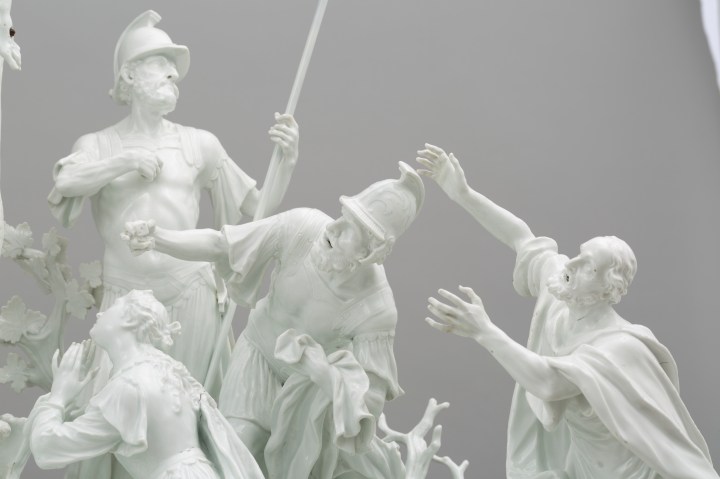
Johann Joachim Kaendler, Crucifixion Group, detail, Meissen, 1743
(Porzellansammlung, Staatliche Kunstsammlungen Dresden; photo by Adrian Sauer)
◊ ◊ ◊ ◊ ◊
Details of this conference appeared here at Enfilade several weeks ago; please note, however, that registration now includes an online option (with recordings sent out afterwards) for anyone who is interested but unable to attend on Tuesday.
Sacred Ceramics: Devotional Images in European Porcelain
Online and in-person, Victoria & Albert Museum, London, 30 September 2025
Organized by Matthew Martin and Rebecca Klarner
Was eighteenth-century European porcelain just a ceramic material to be moulded into useful objects—or could it mean more? This conference explores what European porcelain might have communicated when it was used to create devotional objects.
This conference explores the phenomenon of religious sculpture produced in European porcelain in the eighteenth century. Sculptures on religious subjects represent some of the most ambitious and complex productions in European porcelain of the period, yet they remain relatively understudied. Meissen, Doccia Vienna, Höchst, Fulda, Nymphenburg—all these factories produced devotional images in porcelain. Even factories in mid eighteenth-century Protestant England—Chelsea and Derby—produced sculptures employing Catholic devotional imagery. In each instance, cultural-political motives for the creation of these images can be reconstructed.
The 1712 letter penned by the Jesuit Father François Xavier d’Entrecolles not only conveyed to Europe first-hand knowledge of Chinese porcelain production at Jingdezhen, but it also construed access to this knowledge as a triumph of the Jesuit global mission—the successes of the Jesuits in China made the secret of kaolinic porcelain available to the Catholic princes of Europe.
Porcelain’s alchemical heritage was also not without significance: success at the alchemical enterprise had always been deemed dependent on divine favour. These factors could lead to porcelain assuming a sacral character in Catholic court contexts. Devotional images in European porcelain exploited these cultural associations of the medium itself.
This international conference will explore the religious production of European ceramic factories and consider questions such as: Who were the artists and patrons involved in these sculptures’ creation? How did these sculptures function in private and public contexts? What significance lay in the use of porcelain to create devotional images?
More information is available here»
Conference | Impressions of Empire: Works on Paper
From ArtHist.net:
Impressions of Empire: Works on Paper as
Agents of Intermedial Translation and Cultural Exchange
Online and in-person, Colnaghi Gallery, London, 25–26 September 2025
The Colnaghi Foundation and Athena Art Foundation in London are delighted to host this symposium exploring how works on paper were used to construct meaning and identity, and engendered the intermediary exchange of artistic ideas during the period of global empire and colonisation. The symposium will be hosted both online and in the Colnaghi Gallery in London.
t h u r s d a y , 2 5 s e p t e m b e r , online and in-person
12.30 Arrival
13.00 Welcome
13.15 Session One
• Chloé Glass (Research Associate, Prints and Drawings, Art Institute of Chicago) — Decoding Stefano della Bella’s Etchings
• Eunice Yu (DPhil Candidate, University of Oxford) — Collecting and Constructing National Identity in Print: Translations of Empire from the Black Sea to the Adriatic
14:20 Coffee and Tea Break
14.45 Session Two
• Emily Cadger (PhD candidate, University of British Columbia and Adjunct Lecturer at the University of Western Washington) — Political Poppies and Beautiful Books: Illustrated Floral-hybrids as Interpreters of Empire in the Fin-de-siècle Children’s Books of Walter Crane
• Vivian Tong (Lecturer in Chinese Art History at the Hong Kong Baptist University) — Images of Nature in a Global Horticultural Expansion: Sketching a Story of Sino-European Commerce, Cultural Exchange, and Colonial Expansion with Chinese Export Watercolours in the 18th and 19th Centuries
• Joseph Litts (PhD Candidate, Department of Art & Archeology, Princeton University) — The Plantation Landscapes of Anna Atkins and Anne Dixon, online presentation
16.15 Break
16.30 Session Three
• Linda Mueller (Post-doctoral Researcher, University of Zurich) — Drawing the Contract: Visualizing Obligation in the Early Modern Mediterranean and Atlantic Worlds
• Gonzalo Munoz-Vera (Assistant Professor, Virginia Tech School of Architecture) — Rediscovering Latin America: Robert Burford’s Panorama of Lima (1834) through the Eyes of Lieutenant William Smyth, online presentation
17:45 Drinks
f r i d a y , 2 6 s e p t e m b e r , online only
11.00 Welcome
11.10 Session One
• Victoria Adams (PhD, the University of Auckland Waipapa Taumata Rau) — The Art of the Empire in the ‘Britain of the South’: Works on Paper in the British Art Section of the 1906–1907 New Zealand International Exhibition
• Chandni Jeswani (Art and Architectural Historian) — Mapping Kashi: Pilgrimage Cartographies and Colonial Translations on Paper
12.15 Break
12.45 Session Two
• Michael Hartman (Jonathan Little Cohen Associate Curator of American Art, Hood Museum of Art, Dartmouth) — Collecting Portraits to Control Land in 18th-Century British North America
• Catherine Dossin (Associate Professor of Art History, Purdue University) — Harbors of Power: Maritime Identity and Colonial Ambition in 18th-Century French Prints
14.00 Break
14.30 Session Three
• Annemarie Iker (Lecturer in Writing, Princeton University) — Cuba and Catalan Modernisme
• Ashar (Usher) Mobeen (PhD Candidate, Western University) — Palimpsests of the Heavens: Empire, Epistemicide, and the Papered Sky
15.15 Closing Remarks
New Book | Protestant Relics in Early America
From Oxford UP (use code AAFLYG6 for a 30% discount) . . .
Jamie Brummitt, Protestant Relics in Early America (New York: Oxford University Press, 2025), 560 pages, ISBN: 978-0197669709, $149.
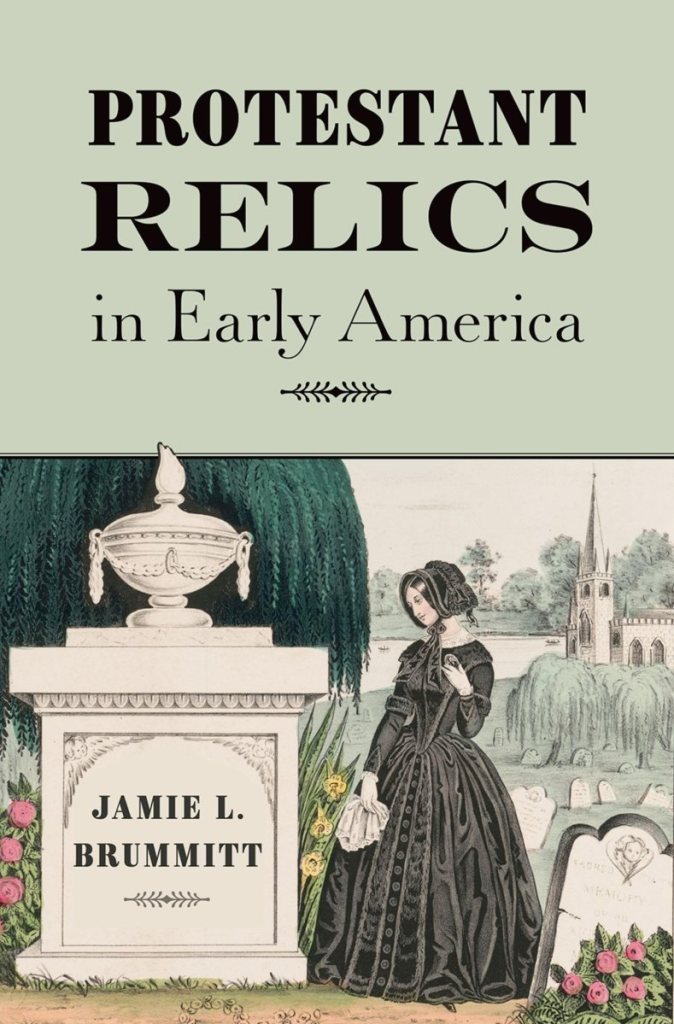 In Protestant Relics in Early America, Jamie L. Brummitt upends long-held assumptions about religion and material culture in the early United States. Brummitt chronicles how American Protestants cultivated a lively relic culture centered around collecting supernatural memory objects associated with dead Christian leaders, family members, and friends. These objects materialized the real physical presences of God, Jesus, the Holy Spirit, and souls of the dead on earth.
As Brummitt demonstrates, people of nearly all Protestant denominations and walks of life—including members of Congress, college presidents, ministers, mothers, free Black activists, schoolchildren, and enslaved people—sought embodied and supernatural sense experiences with relics. They collected relics from deathbeds, stole relics from tombs, made relics in schools, visited relics at pilgrimage sites like George Washington’s Mount Vernon, purchased relics in the marketplace, and carried relics into the American Revolution and the Civil War. Locks of hair, blood, bones, portraits, daguerreotypes, post-mortem photographs, memoirs, deathbed letters, Bibles, clothes, embroidered and painted mourning pieces, and a plethora of other objects that had been touched, used, or owned by the dead became Protestant relics. These relic practices were so pervasive that they shaped systems of earthly and heavenly power, from young women’s education to national elections to Protestant-Catholic relations to the structure of freedom and families in the afterlife.
In recovering the forgotten history and presence of Protestant relics in early America, Brummitt demonstrates how material practices of religion defined early American politics and how the Enlightenment enhanced rather than diminished embodied presence. Moreover, Brummitt reveals how the secular historical method has obscured the supernatural significance of relics for the Protestants who made, collected, exchanged, treasured, and passed them down. This book will be an essential resource for scholars and students of early American history, religion, politics, art, and popular culture.
Jamie L. Brummitt is an Associate Professor of American religions and material culture at the University of North Carolina Wilmington. Brummitt earned her PhD from Duke University. In 2017, Brummitt was the recipient of the Anthony N. B. and Beatrice W. B. Garvan Research Fellowship in American Material Culture at The Library Company of Philadelphia. She is also a past fellow of the George Washington Presidential Library at Mount Vernon; Winterthur Museum, Garden and Library; the Filson Historical Society; and the New England Regional Fellowship Consortium.
c o n t e n t s
Introduction: The History and Presence of Protestant Relics
1 From ‘Memorials and Signs’ to ‘Art That Can Immortalize’: The Evangelical Enlightenment’s Influence on Real Presence in Protestant Relic Culture
2 The ‘Precious Relict[s]’ of George Whitefield: Collecting the Supernatural Memory Objects of a Dead Minister and the Spread of Masculine Mourning in Late Eighteenth-Century Evangelicalism
3 The ‘Invaluable Relique[s]’ of George Washington: Sensing the Heavenly Presence of America’s Savior and the Politics of Protestant Relics in the Early Republic
4 ‘The Reign of Embroidered Mourning Pieces: The Rise and Decline of Handmade Relics in Young Protestant Women’s Education and the ‘Feminization’ of Mourning
5 ‘A Sacred Relic Kept’: The Evangelical ‘Good Death’ Experience and Protestant Relics in the Marketplace
6 ‘Protestant Evidence on the Subject of Relics: Catholic Encounters with Protestant Relic Practices and the Christian Roots of American Civil Religion
7 ‘I Was Not a Slave with These Pictured Memorials’: Supernatural Deathbed Experiences as Justifications for Slavery and the Work of Protestant Relics in Black Liberation
8 The Deaths and Afterlives of Protestant Relics: Or, Why Enlightened People Forgot the History and Presence of Protestant Relics
Notes
Bibliography
◊ ◊ ◊ ◊ ◊
Online Talk | Protestant Relics in Early America with Jamie Brummitt
The Library Company of Philadelphia, Thursday, 20 November 2025, 7pm (ET)
Virtual Event | Free
Registration is available here»
New Book | Lady Charlotte Schreiber, Extraordinary Art Collector
Coming soon from Lund Humphries (with a related online talk scheduled for October 21) . . .
Caroline McCaffrey-Howarth, Lady Charlotte Schreiber, Extraordinary Art Collector (London: Lund Humphries Publishers, 2025), 192 pages, ISBN: 978-1848226814, £40.
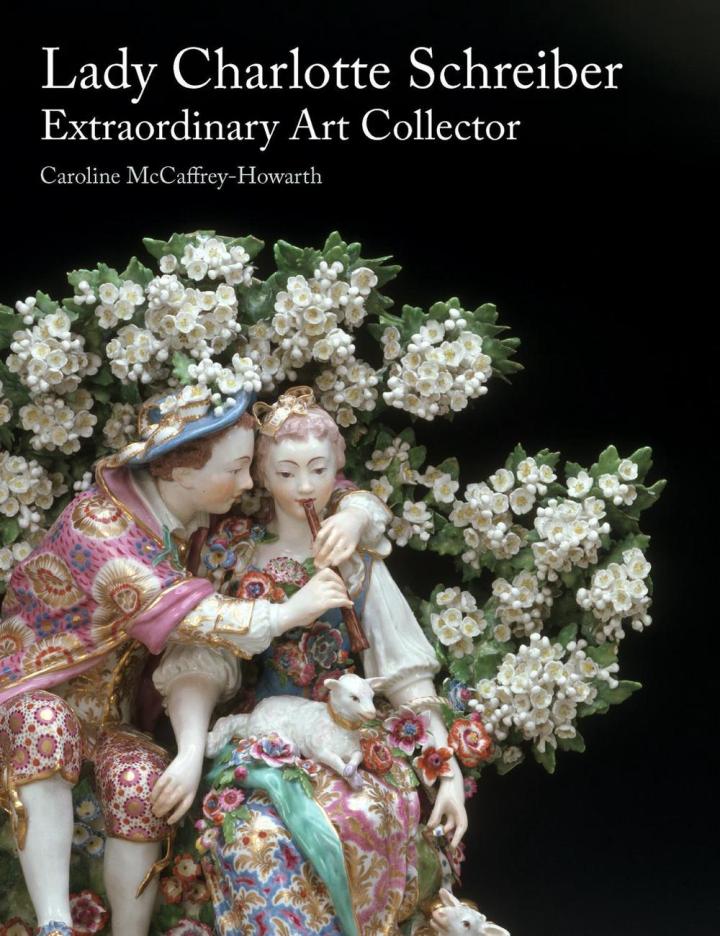 This book emphasises Lady Charlotte Schreiber (1812–1895)—also known as Lady Charlotte Guest, née Bertie—as one of the most significant women in the history of collecting. An extraordinary collector, historian, and philanthropist, Charlotte subverted gendered norms and challenged Victorian conventions. This new study establishes Charlotte’s contribution to ceramic history and cultural education, and demonstrates her influential role in transnational artistic networks. Charting Charlotte’s eventful life, McCaffrey-Howarth focuses on her identity as a renowned connoisseur, whose donation of thousands of objects to the Victoria & Albert Museum and the British Museum marked a pioneering move for a female benefactor. Lady Charlotte Schreiber, Extraordinary Art Collector presents unique insight into the social and cultural world of Victorian England and the role of women within this.
Caroline McCaffrey-Howarth is Lecturer in History of Art at the University of Edinburgh. She was previously Curator of Ceramics and Glass at the Victoria and Albert Museum and Curator of The Chitra Collection.
c o n t e n t s
Acknowledgements
List of Illustrations
Introduction: China-Hunting with Charlotte
1 ‘A Man’s Education’
2 A Welsh Heiress
3 Becoming a Collector
4 ‘Our Ceramic Chasse’
5 English Ceramic Art
6 Collecting World History
7 ‘My Adieux to the Collection’
Conclusion: ‘Old Life Reminiscences’
Bibliography
◊ ◊ ◊ ◊ ◊
Online Talk | Caroline McCaffrey-Howarth on Lady Charlotte Schreiber
Tuesday, 21 October 2025, 14.00–15.30 GMT-4
Part of the series Victorians in the Bookshops, organized by The Victorian Society
Registration is available here»
Conference | Sacred Ceramics
Johann Joachim Kaendler, Crucifixion Group, detail, Meissen, 1743
(Porzellansammlung, Staatliche Kunstsammlungen Dresden; photo by Adrian Sauer)
◊ ◊ ◊ ◊ ◊
Registration is open for this conference, with a limited number of bursaries available for early career scholars (online registration is available here):
Sacred Ceramics: Devotional Images in European Porcelain
Online and in-person, Victoria & Albert Museum, London, 30 September 2025
Organized by Matthew Martin and Rebecca Klarner
Was eighteenth-century European porcelain just a ceramic material to be moulded into useful objects—or could it mean more? This conference explores what European porcelain might have communicated when it was used to create devotional objects.
This conference explores the phenomenon of religious sculpture produced in European porcelain in the eighteenth century. Sculptures on religious subjects represent some of the most ambitious and complex productions in European porcelain of the period, yet they remain relatively understudied. Meissen, Doccia Vienna, Höchst, Fulda, Nymphenburg—all these factories produced devotional images in porcelain. Even factories in mid eighteenth-century Protestant England—Chelsea and Derby—produced sculptures employing Catholic devotional imagery. In each instance, cultural-political motives for the creation of these images can be reconstructed.
The 1712 letter penned by the Jesuit Father François Xavier d’Entrecolles not only conveyed to Europe first-hand knowledge of Chinese porcelain production at Jingdezhen, but it also construed access to this knowledge as a triumph of the Jesuit global mission—the successes of the Jesuits in China made the secret of kaolinic porcelain available to the Catholic princes of Europe.
Porcelain’s alchemical heritage was also not without significance: success at the alchemical enterprise had always been deemed dependent on divine favour. These factors could lead to porcelain assuming a sacral character in Catholic court contexts. Devotional images in European porcelain exploited these cultural associations of the medium itself.
This international conference will explore the religious production of European ceramic factories and consider questions such as: Who were the artists and patrons involved in these sculptures’ creation? How did these sculptures function in private and public contexts? What significance lay in the use of porcelain to create devotional images?
A small number of early career bursaries to attend the conference will be available (including a contribution towards travel cost), generously funded by the French Porcelain Society. To apply, please email fhrlmk@leeds.ac.uk by 5 September 2025, outlining in 150 words or less how you would benefit from attending this conference.
Generously supported by the French Porcelain Society
s c h e d u l e
10.00 Museum Opens / Registration
10.30 Welcome
10.45 Introduction — Julia Weber (Director, Porcelain Collection, Staatliche Kunstsammlung Dresden)
11.00 Catholic China: Porcelain, the Jesuits, and Counter-Reformation Propaganda — Matthew Martin (Senior Lecturer in Art History and Curatorship, The University of Melbourne)
11.20 Religious Sculpture in Meissen Porcelain — Maureen Cassidy-Geiger (Independent Curator and Scholar)
11.40 Break
11.55 Marian Figures in Meissen Porcelain: A Female Body between a Catholic Court and a Protestant State — Rebecca Klarner (Collaborative Doctoral Partnership Researcher, University of Leeds/V&A and Assistant Curator, V&A Wedgwood Collection)
12.15 The Divine Mission of Du Paquier: Grace, Virtue, and Propaganda in the Context of Habsburg Piety — Claudia Lehner-Jobst (Director and Collections Curator, Augarten Porcelain Museum, Vienna)
12.30 Q&A
12.40 Lunch Break
13.30 Handling Session | Ceramics, Terracotta, and Ivory — Simon Spier, (Curator Ceramics & Glass 1600–1800, V&A) and Kira d’Alburquerque, (Senior Curator Sculpture, V&A), places are limited; please sign up during registration.
14.10 Handling Session Repeated
14.50 A Reliquary Made by the Imperial Vienna Porcelain Manufactory — Manuel von Aufschnaiter (Postgraduate Student, Art History, University of Vienna)
15.10 The Influence of Religious Patronage on European Porcelain Commissioning: Investigating the Rarest Monumental Sacral Porcelain Ensembles and the Ritual Use of the Porcelain Objects in European Ecclesiastical Rites — Carina Nathalia Madonna Visconti Paff (Art Historian, Licensed Art Expert and Embassies Art Advisor)
15.30 St Augustine’s Church at Hammersmith: A Contemporary Ceramic Commission for a Catholic Church — Julian Stair (Ceramic Artist, Academic, and Writer)
15.45 Q&A
15.55 Tea and Coffee Break
16.20 Piety and Politics in Italian Porcelain — Errol Manners (Historic Ceramics Specialist)
16.40 Reflections on the Devotional Sculpture from Buen Retiro — Félix Zorzo (Assistant Curator European Decorative Arts, National Museums Scotland)
17.00 Porcelain for the Pope: Sacred Ceramics in Eighteenth-Century France — Susan Wager (Assistant Professor of Art History, University of New Hampshire, Durham)
17.15 Q&A and Closing Remarks
Abstracts for papers are available here»
◊ ◊ ◊ ◊ ◊
Note (added 28 September 2025) — The posting was updated to included the online registration link.
Online Talk | Alexandra Kirtley on the Work of Black Artisans
As noted at Events in the Field, administered by The Decorative Arts Trust:
Alexandra Kirtley | Thomas Gross in Context: Black Artisans in Early Philadelphia
Online, DAR Museum, 9 September 2025, noon (Eastern Time)
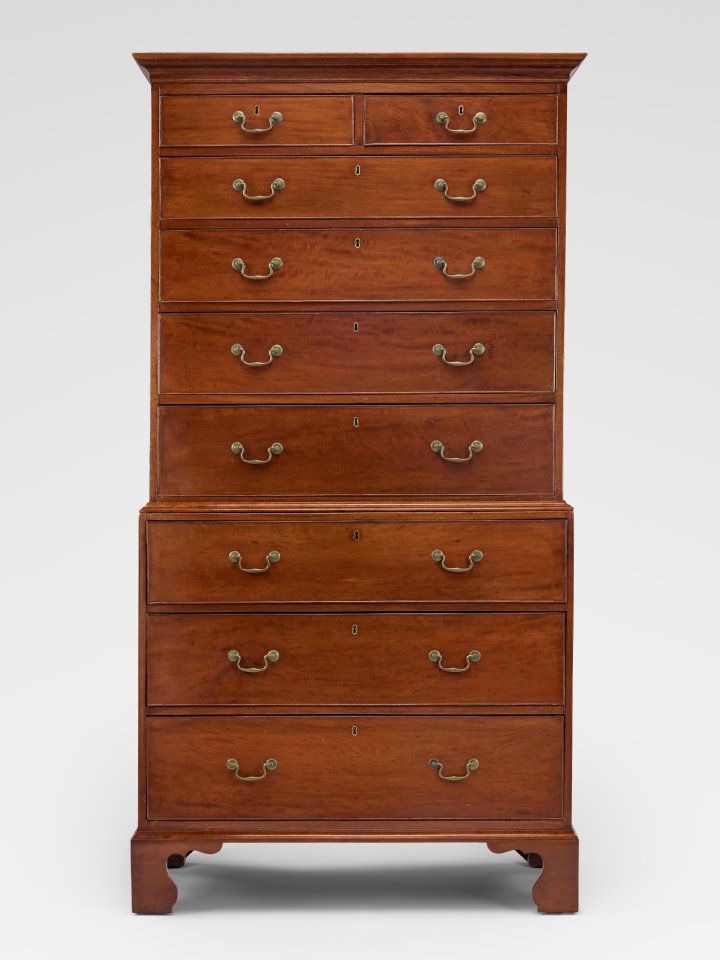
Thomas Gross Jr., Double Chest (Chest-on-Chest), made in Philadelphia, 1805–10, mahogany, tulip poplar, and yellow pine with brass, 83 inches high (Philadelphia Museum of Art, 1983-167-1a,b).
The work of cabinetmaker Thomas Gross (1775–1839) provides the centerpiece to the study and understanding of Black artists and artisans who contributed to the fabric of the prolific art community in early Philadelphia. This richly illustrated talk will share the documentary evidence of the names of those people as well as the work they made, from silversmiths, upholsterers, potters, and cabinetmakers to painters like David Bustill Bowser and his seamstress wife Elizabeth Harriet Stevens Gray Bowser.
Please note that this event is taking place online only; Alexandra Kirtley will not be present at the DAR Museum.
Registration is available here»
Alexandra Kirtley is the Montgomery-Garvan Curator of American Decorative Arts at the Philadelphia Museum of Art.
Workshop | Art and Conflict in Times of Climate Change
From the conference programme:
Art and Conflict in Times of Climate Change
Forum Transregionale Studien, Berlin, 17–18 July 2025
Organized by Emily McGiffin, Feng Schöneweiß, T Pritchard, and Antonio Montañes Jimenez
A British Academy SHAPE Research Project in collaboration with the 4A_Lab (KHI in cooperation with Stiftung Preußischer Kulturbesitz) and the Forum Transregionale Studien.
Climate change has happened more than once in the histories of planet Earth and those of human beings. Notably more recent, and historically documented, occurrences include the so-called Medieval Climate Anomaly (ca. 950–1250 CE), the Little Ice Age (ca. 1300–1850) and indeed the contemporary Anthropogenic climate crisis in times of the Anthropocene. From the Russian famine at the beginning of the 17th century following severe winters triggered by volcanic eruptions in Peru, to severe flooding in Kenya, Tanzania and Burundi displacing almost a million people, such climatic shifts have affected and are affecting enormous numbers of people around the planet.
Unsurprisingly, endemic to the periods of climate changes are conflicts. These conflicts drastically affect human lives, thus we find both conflicts and the climatic shifts that precipitated them reflected in and entangled with cultural productions. One example is the paintings created by Dutch masters of people ice-skating and revelling on frozen rivers and enjoying the curious prosperity brought by conflict with Spain. Another is from Song-dynasty China: Facing deforestation and military conflicts with northern Jurchen powers, metropolitan regions of the Song increasingly shifted from firewood to coal as energy source, which corelated with producing some of the finest porcelain glazes in Chinese history. These historical instances resonate strongly with the contemporary music of Syrian activists, who are grappling with the effects of drought and Civil war. In multifaceted ways, the making of arts, broadly defined as the cultural expression of human lived experience, has been entangled with both the violent forces of climatic change, conflicts, and crises.
To examine the complex connections and correlations between art and conflict in times of climate change, this workshop focuses on (1) how cultures have been shaped by the concurrent forces of war and changing environments, and (2) how these lived experiences are expressed through art and literature. Researchers will contribute works-in-progress across disciplinary boundaries, including anthropology, art and cultural history, environmental and digital humanities, postcolonial literature, besides film and media studies. Taking a necessarily planetary perspective, the workshop will interrogate and explore artistic creation and armed conflicts in historical and contemporary climate changes, and will explore pertinent and indeed timely topics across historical and geographical boundaries.
Core questions
• How was/is artistic creation, and cultural expression in general, conditioned and/or oriented by non-human beings and beyond-human factors, such as deforestation, ocean currents, monsoon, El Niño, orbital facing, and volcanic activities?
• How have these factors been represented, and what are the complexities of representing and recording such profound cultural memories?
• How were/are violence and environmental disruption intertwined within cultural memories, and constituted in material, oral, visual and textual cultures?
• What methodologies could contemporary researchers use and develop to address the aforementioned questions from interdisciplinary perspectives?
• How could formats of interdisciplinary collaboration, such as this workshop, enhance academic research on common questions, further knowledge transfer across sectors, and enable actions for positive changes?
Contacts
Feng Schöneweiß, 4A_Lab Postdoctoral Fellow, feng.schoeneweiss@khi.fi.it
Antje Paul, 4A_Lab Program Coordinator, antje.paul@khi.fi.it
t h u r s d a y , 1 7 j u l y
9.30 Welcome by Georges Khalil (Forum Transregionale Studien) and Hannah Baader (4A_Lab / Kunsthistorisches Institut in Florenz – Max-Planck-Institut)
9.50 Welcome by Feng Schöneweiß (4A_Lab)
10.00 Concept Note by T Pritchard (The University of Edinburgh)
10.20 Keynote
• Katrin Kleemann (German Maritime Museum – Leibniz Institute for Maritime History) — Climate History Perspectives: Echoes of Conflict and Culture
11.00 Coffee Break
11.30 Panel 1 | Extraction, Transition, and Repair
Chair: T Pritchard (The University of Edinburgh)
• Rebecca Macklin (University of Aberdeen) — Visualising Relations in the Tar Sands: Extraction, Aesthetics, and Repair
• Emily McGiffin (The University of Warwick) — ‘God has riches, I have cows’: Field Notes on Cultural Heritage in the Bauxite Zone
12.30 Lunch
13.30 Panel 2 | Anthropologies of Collaboration and Conflicts
Chair: Christopher Williams-Wynn (Freie Universität Berlin)
• Antonio Montañes Jimenez (University of Oxford) — Scarcity, Family Memories, and Conflict: Methodological Notes and Collaborative Insights
• Freya Hope (University of Oxford) — Anarchy, Art, and Alternative Worldmaking: New Travellers’ Historicity of Resistance
14.30 Coffee Break
15.00 Film Screening (work in progress) and Discussion (hybrid)
Film and presentation: Matthias De Groof, University of Antwerp / University of Amsterdam
Discussants: Antonio Montañes Jimenez, Rebecca Macklin, Emily McGiffin, and Feng Schöneweiß
16.30 Coffee Break
17.00 Lecture (online and in-person)
Chair: Hannah Baader (4A_Lab / KHI)
• Sugata Ray (UC Berkeley) — Das Paradies: The Anthropocene Extinction in the Early Modern World
f r i d a y , 1 8 j u l y
9.30 Panel 3 | Climate and the Arts of Change
Chair: Parul Singh (Kunsthistorisches Institut in Florenz – Max-Planck-Institut)
• Tenaya Jorgensen (Trinity College Dublin) — Climatic Stress and Political Fragmentation: Environmental ‘Pull Factors’ in Viking Raiding Strategies in Ninth-Century Francia
• Feng Schöneweiß (4A_Lab) — Celadon Aesthetics, Gunpowder, and Energy Transition in Song-dynasty China
• T Pritchard (The University of Edinburgh) — ‘As if the world should straight be turn’d to ashes’: Comprehending Climate Change and Conflict in the Early 17th Century
11.00 Coffee Break
11.30 Panel 4 | Resilience and Memories (hybrid)
Chair: Mahroo Moosavi (4A_Lab)
• Ammar Azzouz (University of Oxford) — A Revolution of Art
• Rebecca Hanna John (Zentralinstitut für Kunstgeschichte) — Preservation and Extinction: On the Entanglement of Ecological and Decolonial Perspectives in Jumana Manna’s Artistic Practice
12.30 Lunch
13.30 Roundtable Discussion
15.00 Concluding Remarks by Emily McGiffin and Feng Schöneweiß
Symposium | Culture and Heritage in Napoleonic Spain
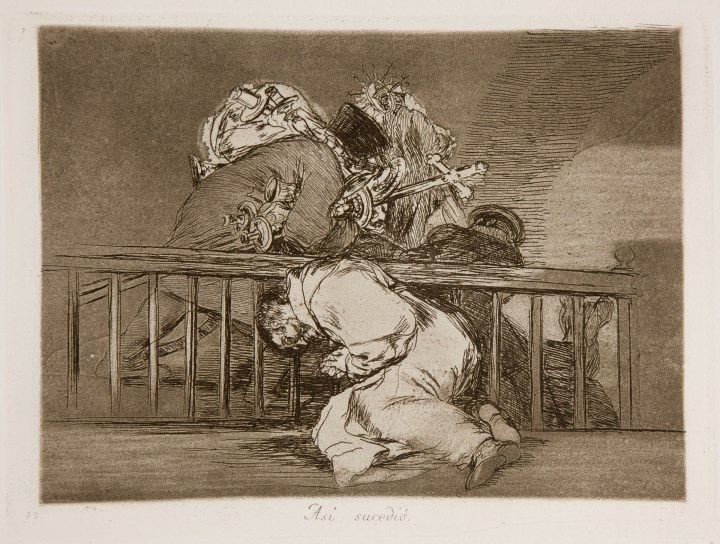
Francisco José de Goya y Lucientes, Así sucedió (This is How It Happened), from Los desastres de la guerra (The Disasters of War), 1810–14
(Madrid: Museo Nacional del Prado)
◊ ◊ ◊ ◊ ◊
From The Prado:
Cultura y Patrimonio en la España napoleónica:
Expolio, protección y transformación
In-person and online, Museo Nacional del Prado, Madrid, 22–23 September 2025
En los últimos años han sido numerosos los estudios que han valorado con mayor perspectiva el gobierno de José I (1808–1813) y la España napoleónica, entendiéndola como un periodo de plena correspondencia con la crisis general del entorno europeo. Se trataría no tanto de un periodo de ‘gobierno intruso’, sino del reflejo del orden napoleónico que trataba de imponerse en Europa y que suponía, también para nuestro país, una iniciativa reformadora que acababa definitivamente con el Antiguo Régimen, lo que motivó que contara con firmes defensores. Sus iniciativas culturales y artísticas tuvieron igualmente gran repercusión, por más que el desarrollo de la guerra dificultara su realización. La eliminación de las órdenes religiosas liberalizó un gran patrimonio artístico que, aunque se trató de vehicular en iniciativas tan novedosas como el llamado Museo Josefino, en ocasiones terminó siendo motivo de expolios y destrucciones. En este simposio se estudiarán estos fenómenos complejos y su repercusión, contemplándolos en relación al entorno europeo contemporáneo. El simposio se vincula temáticamente a la Cátedra del Prado 2024, que impartió la profesora Bénédicte Savoy, si bien atiende prioritariamente al específico caso de lo ocurrido en España con las políticas napoleónicas que afectaron al patrimonio cultural.
Es posible la asistencia presencial a las sesiones hasta completar el aforo, así como la asistencia en línea, mediante el enlace a la plataforma Zoom que se facilitará a los inscritos. Al realizar la inscripción es necesario escoger una modalidad de asistencia. Las ponencias se impartirán en la lengua en la que aparecen enunciados sus títulos. Habrá traducción simultánea. Contacto: centro.estudios@museodelprado.es.
Actividad realizada en colaboración con el proyecto de I D I Bellas artes, cultura e identidad nacional. La construcción del relato artístico entre la Ilustración y el Liberalismo. Textos e imágenes (PID20222-136475OB-I00), financiado por el Ministerio de Ciencia e Innovación y de la Fundación Séneca, proyecto 21936/PI/22, titulado Cultura y nación. Las bellas artes entre la Ilustración y el Liberalismo.
m o n d a y , 2 2 s e p t e m b e r
9.00 Acreditación de asistentes
9.30 Inauguración y Presentación
• Javier Arnaldo (Museo Nacional del Prado)
• David García López (Universidad de Murcia)
10.00 Sección 1 | Expoliaciones artísticas en la época napoleónica
Modera David García López
• Pillage et appropiations d’art à l’époque napoléonienne en Allemagne et en Autriche (Expolios y apropiaciones de arte durante la época napoleónica en Alemania y Austria) — Bénédicte Savoy (Technische Universität Berlin)
• La ocupación napoleónica y la usurpación de los bienes artísticos — Manuel Moreno Alonso (Universidad de Sevilla)
• El expolio artístico del Mariscal Soult en España y el saqueo sevillano — Ignacio Cano Rivero (Museo de Bellas Artes de Sevilla)
• Las colecciones reales durante el periodo napoleónico — Virginia Albarrán Martín (Patrimonio Nacional)
13.00 Debate
16.00 Sección 2 | Espacios para la protección de las artes
Modera: Joaquín Álvarez Barrientos
• El Museo Josefino: una institución cultural en su contexto nacional y europeo — Pierre Géal (Université Stendhal)
• El museo napoleónico en el Real Alcázar de Sevilla — Rocío Ferrín Paramio (Patrimonio Nacional, Reales Alcázares de Sevilla)
• La Academia de San Fernando como instrumento del poder napoleónico en las políticas culturales — Itziar Arana (Museo Nacional del Prado)
• El tráfico de pinturas en el Madrid josefino — David García López (Universidad de Murcia)
18.30 Debate y fin de la jornada
t u e s d a y , 2 3 s e p t e m b e r
10.00 Sección 3 | Transformaciones y nuevos horizontes de las políticas relativas a los bienes culturales
Modera: Javier Arnaldo
• Le Musée Napoléon, aux sources du mythe du musée universel (El Museo Napoleón, los orígenes del mito del museo universal) — Philippe Malgouyres (Musée du Louvre)
• Debates artísticos y sus consecuencias en la restauración de las obras requisadas durante las campañas napoleónicas — Ana González Mozo (Museo Nacional del Prado)
• La política cultural de José I, proyectos y consecuencias — Joaquín Álvarez Barrientos (CSIC)
• Le Gallerie private romane all’inizio dell’Ottocento: dispersioni, riorganizzazioni, riallestimenti (Las galerías privadas en Roma al inicio del siglo XIX: dispersiones, reorganizacines y reordenamientos) — Giovanna Capitelli (Università Roma Tre)
• La nascita delle Gallerie dell’Accademia di Venezia negli anni del Regno d’Italia, 1805–1814 (El nacimiento de la Galería de la Academia de Venecia durante los años del Reino de Italia, 1805–1814) — Giulio Manieri Elia (Gallerie dell’Accademia di Venezia)
13.30 Debate y conclusiones finales
Online Event | 18th-C American Furniture from The Met
From The Met:
Alyce Perry Englund | Art History Study Group: 18th-Century American Furniture
Online, Wednesday, 16 July 2025, 3–4:30 pm
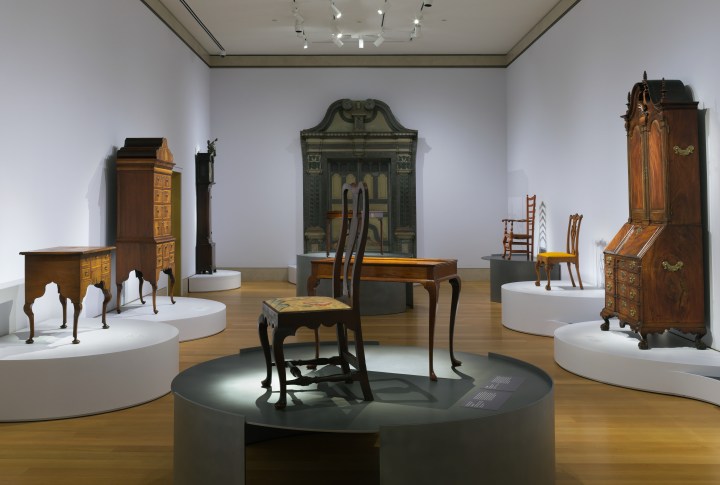 Join curator Alyce Perry Englund, Associate Curator of American Decorative Arts of the American Wing, to talk about The Calculated Curve: Eighteenth-Century American Furniture and delve into a pivotal moment in American furniture design from 1720 to 1770. Take a closer look at the materials, ergonomics, and sculptural expression embedded in furniture design during a critical age of global exchange and social stratification. This live event will take place on Zoom. Space is limited, and advance registration is required. Registration closes Tuesday, July 15, or when registration is full. Fee: $40.
Presented in conjunction with the exhibition The Calculated Curve: Eighteenth-Century American Furniture.










 Enfilade
leave a comment