Mellon Centre Funding Opportunities
From the Mellon Centre:
Paul Mellon Centre for Studies in British Art
Funding Opportunities for Autumn 2025
Applications due by
The Paul Mellon Centre’s autumn 2025 round of funding opportunities is now open for applications. This round is primarily designed to support organisations undertaking research, projects and activities concerned with British art or architectural history and the opportunities we offer for organisations this year are as follows:
• Curatorial Research Grants: designed to support the costs of employing an individual (full or part time) to undertake a large-scale research project which often results in an exhibition.
• Collaborative Project Grants: support the early days of a research project between two or more organisations, providing funding to facilitate meetings, research trips and workshops for participants.
• Conservation Research Project Grant: helps support an organisation when undertaking a project concerning conservation research and technical analysis.
• Digital Project Grants: designed to support the costs of employing an individual to undertake innovative and large-scale projects that use digital media.
• Digitisation Grants: designed to support organisations wishing to digitise materials and assets from their own collections, and make them available to a wide online audience.
• Event Support Grants: supporting costs incurred by an organisation when hosting an event or series of events (including workshops, symposiums and lectures).
• Exhibition Publication Grants: designed to support the costs of publishing written material relating to an exhibition.
We also have some grants on offer for individuals which include:
• Andrew Wyld Research Support Grants: a grant to support individuals who wish to travel to see works on paper and in person which is funded by the Andrew Wyld Fund.
• Author Grants (Large): amounts that range from £2,001–£6,000 to help support costs incurred by individuals when publishing books.
• Author Grants (Small): amounts of up to £2,000 to help support costs incurred by individuals when publishing articles or books.
• Research Support Grants: support costs relating to undertaking travel for research purposes.
If you are interested in applying to any of our funding opportunities we recommend reading our FAQ page and our Grant Making Policy first. Our Grants and Fellowships Manager is also available if you have any questions or if you would like to arrange a pre-application discussion
Call for Applications | Getty Residential Grants, 2026–27
The Getty Research Institute is pleased to invite applications for 2026–27 residential grants for predocs, postdocs, and scholars. Applications are due by 1 October 2025 at 5pm PT.
Getty Scholars Program | Provenance
For the 2026–2027 year, the Getty Scholars Program invites innovative proposals for projects that explore provenance and adjacent research areas, including but not limited to the history of collecting, the study of the art market, and broader explorations around the ownership of art objects. Relevant to all periods and areas of art production, the scholar cohort will be invited to examine and critique the arena of provenance studies while also envisioning its future, situated between the practices and demands of source communities, art historians, museums, and the market. Digitization and databases, such as the Getty Provenance Index, have also opened up the interdisciplinary possibilities of provenance research and laid the ground for art restitution efforts and other forms of reparation. Applicants are invited to propose projects, either individual or collaborative, that reflect upon the ownership, transfer, and movement of art objects from all world regions and time periods.
For this year, the Getty Scholars Program aims to link scholars with Getty resources and researchers and foster a lively community around the study of provenance—an increasingly significant domain of art historical and curatorial practice that centers the histories of both objects and people. While in residence, scholars will have the opportunity to delve into the Getty Research Institute’s vast collections of rare materials that support provenance research and explore the newly remodeled Getty Provenance Index, which lays the ground for cutting-edge computational approaches to the field.
Please find the full call for applications and theme text on the Getty Scholars Program and Getty Pre- and Postdoctoral Fellowships webpages.
Alixe Bovey Appointed Editor-in-Chief at British Art Studies
From the Paul Mellon Centre announcement (16 June 2025) . . .
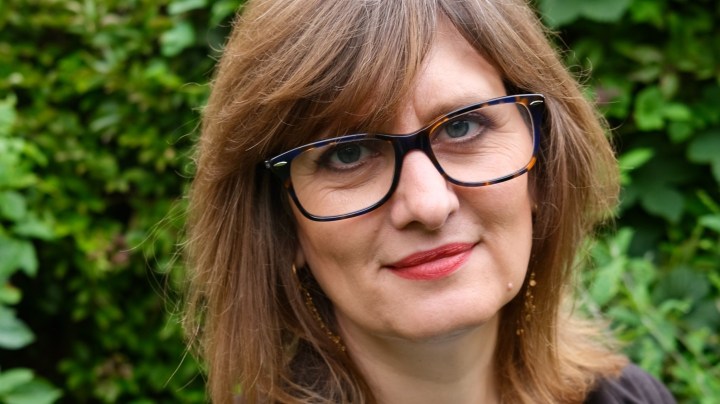 Alixe Bovey has been appointed to the position of British Art Studies (BAS) Editor-in-Chief. In this role she will lead on the development of material for publication in the journal, commission new articles and projects, and work collaboratively with authors. BAS is an innovative space for new peer-reviewed scholarship on all aspects of British art, co-published by Paul Mellon Centre for Studies in British Art and the Yale Center for British Art.
Alixe is Professor of Medieval Art History at The Courtauld, where she specialises in the art and culture of the Middle Ages. Her particular interests include illuminated manuscripts, visual storytelling and the relationship between myth and material culture across historical periods and geographical boundaries. Her publications explore a variety of medieval and early Renaissance topics, including Gothic art and immateriality (2015), monsters (2002, 2013), English genealogical rolls (2005, 2021), and monographic studies including Jean de Carpentin’s Book of Hours (Paul Holberton Press, 2011). Following a ten-year stint as Head of Research then Executive Dean and Deputy Director of The Courtauld, she is currently at work on a new book exploring the vibrant culture of storytelling in word and image in fourteenth-century London. Alongside her historical research, she is keenly interested in the creative relationship between practice and art history, and has organised a variety of programmes that bring works of art, artists and art historians together.
Sarah Victoria Turner, Director of PMC, comments: “We are so excited to have Alixe leading British Art Studies and I know she will do this with huge curiosity and commitment to publishing original research on British art. She has been an advocate for the journal and our approach to digital publishing.”
Alixe took up the role in June 2025 with a tenure of two years. Researchers interested in publishing with BAS are warmly encouraged to contact Alixe with questions, ideas or manuscripts for submission at baseditor@paul-mellon-centre.ac.uk.
Decorative Arts Trust, Research Grant Recipients, 2025
From The Decorative Arts Trust:
In 2025, the Decorative Arts Trust celebrates another record-breaking year for our Research Grants program, with 16 recipients receiving travel funding to study objects and archival records.
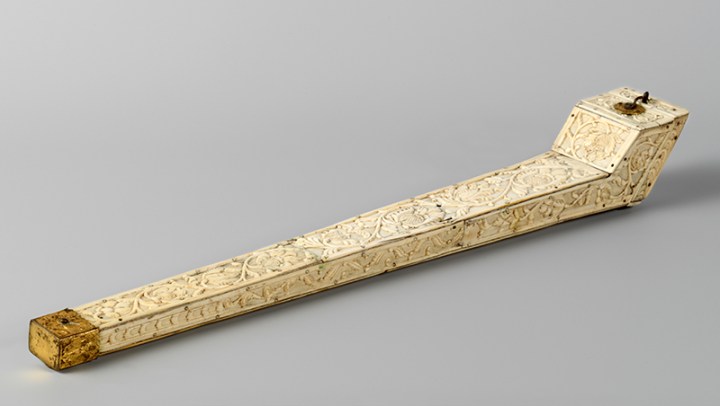
Nur’Ain Taha is studying ivory pipe cases. Pictured: Pipe case from Ceylon, 1799–1825, Sri Lanka, ivory, tropical wood, copper (Amsterdam: Rijksmuseum, NG-453).
The Trust congratulates the 2025 Research Grant recipients:
• Carson L. Beauman, MA Student, Georgia Southern University, the curriculum of Boston schools run by women, 17th–18th centuries
• Anna Flinchbaugh, PhD student, University of Southern California, embroidery’s intersection of craft and industry in the Britain and the United States, late 19th–early 20th centuries
• Kathryn Griffith, PhD student, University of Southern California, Italian goldwork in textiles and the decorative arts, 15th–16th centuries
• Julia LaPlaca, PhD student, University of Michigan, tapestries in European altar environments, 14th–16th centuries
• Jasper Martens, PhD student, University of California Santa Barbara, Netherlandish portrait miniatures with translucent mica overlays, mid-17th century (The Decorative Arts Society of Orange County Grant)
• Fiona Owens, MA student, Winterthur Program in American Material Culture, University of Delaware, the framing of Pre-Raphaelite artist Mary Macomber’s paintings, late 19th century (The Marie Zimmermann Grant)
• Emma Piercy-Wright, PhD student, University of Exeter, mother-of-pearl in French decorative arts, late 17th–early 19th centuries
• Sarah Rapoport, PhD student, Yale University, French transfer-printed ceramics, late 19th century
• Servane Rodie-Dumon, PhD student, Universite d’Artois, the career of French architect-decorator Émile Peyre, late 19th century
• Joseph Semkiu, PhD student, University of Southern California, materiality of radio chassis, mid-20th century
• Arielle Suskin, PhD student, Case Western Reserve University, Roman figural balsamaria, 3rd century BCE – 3rd century CE
• Nur’Ain Taha, PhD student, Utrecht University, ivory pipe cases that connect the early Dutch Republic and Ceylon, 17th century
• Ashley Vernon, MA student, Winterthur Program in American Material Culture, University of Delaware, ‘paper home’ collages crafted by women, late 19th century
• John White, PhD student, Princeton University, walrus and narwhal ivory in Germanic decorative arts, 15th–17th centuries
• Natalie Wright, PhD student, University of Wisconsin-Madison, The Functional Fashions Line of the Clothing Research and Development Foundation, late 20th century
• Rebecca Yuste, PhD student, Columbia University, the importation of Neoclassical style to New Spain, late 18th century
The application deadline for Research Grants is April 30 annually. For more information on grants and scholarships from the Decorative Arts Trust, read about our Emerging Scholars Program, generously supported by Trust members and donors. For deadline reminders, sign up for our e-newsletter and follow us on Facebook and Instagram. The deadline for institutions to apply for the 2025 Prize for Excellence and Innovation is approaching on June 30.
Week-Long Courses at The Courtauld, Summer 2025

Jean-Baptiste Raguenet, A View of Paris from the Pont Neuf, 1763, oil on canvas, 46 × 84 cm
(Los Angeles: J. Paul Getty Museum, 71.PA.26)
◊ ◊ ◊ ◊ ◊
From The Courtauld, with a few of the 20 offerings noted below (there also are 5 online courses available) . . .
Summer School at The Courtauld
The Courtauld, London, June — July 2025 (each class lasts one week)
Each in-person Summer School course is full-time, and while you can take only one course per week, you are able to pursue a particular interest in a period or theme across two or more weeks. The teaching day generally lasts from 10:00 to 16:30, with registration from 9:30 on the first day. Morning or afternoon classroom sessions are complemented by object-focused study in London’s museums, galleries, printrooms, churches, and other sites. We benefit greatly from The Courtauld Gallery. It features as a teaching resource in many of our courses, and is the venue for post-graduate talks introducing aspects of our collections and for our Summer School party. The fee for all Summer School on-campus courses is £645 (each online course is £395).
◊ ◊ ◊ ◊ ◊
#6 Harvey Shepherd | Rococo to Revolution: French Art and its Geographical Contexts, 1700–1789
In-person, 23–27 June 2025
This course will examine the ever-changing roles of French art during the turbulent eighteenth century, from the later years and death of Louis XIV to the Revolution of 1789. Students will consider the role that French art played in forming identities and tastes across the world; from shaping desirable aristocratic luxury to envisaging radical futures.
French art and taste of the eighteenth century will be encountered through a series of ever-widening geographical contexts. The opening classes will examine the political and economic centres of France, looking at the Château de Versailles, as well as the artistic culture of Paris and its society during the Enlightenment and the early years of the French Revolution. Alongside the court and the capital, we will consider France’s periphery and its neighbours, examining interactions with cities like Lyon and Marseille, and both peacetime connections and wartime rivalries with European states such as Great Britain, The Netherlands, and the Holy Roman Empire. Lastly, the course considers the wider global contexts of French art as it was both collected and sent abroad, examining the colonial and imperial interactions of France in an increasingly connected world, from the court of Qing China to Senegal, India, and the Caribbean.
◊ ◊ ◊ ◊ ◊
#7 Nicola Moorby | Travelling Light: Turner, Constable, and the Shape of British Art
In-person, 23–27 June 2025
This course will explore a fascinating aspect of British art history, the parallel careers of John Constable and J.M.W. Turner. Between them, these giants of landscape painting revolutionised the status of their genre, transforming the depiction of place through empirical experience and emotive response.
However, their approaches were very different. Turner roamed throughout Britain and the Continent in search of inspirational scenery, combining observation of nature with literary and historical references. By contrast, Constable nurtured his vision at home, rooting himself in the familiar and the everyday. As well as comparing differences and similarities within their works, we shall examine the wider cultural contexts pertinent to their careers: the reproductive print market, the nineteenth-century experience of travel, and particularly the role of the Royal Academy in London, the arena where their robust professional rivalry was played out. We shall also look closely at the artists’ materials and techniques, particularly their innovations with oil paint, watercolour and their use of sketchbooks. The course culminates with a discussion of their respective artistic legacies and their changing reputations through the twentieth century and beyond.
◊ ◊ ◊ ◊ ◊
#13 Kyle Leyden | Constructing the Heart of Empire: London’s Public Architecture
In-person, 30 June – 4 July 2025 (the course is booked, but there is a waiting list)
Architecture is the art form whose presence, symbolic message and socio-political legacy cannot be avoided. The construction of great buildings is an undertaking imbued with significant symbolic and political currency which continues to have an unavoidable resonance with those who continue to interact with these spaces today.
Through an overview of key historical moments and an examination of several major architectural projects, this course will present London as a city in which architecture was consciously deployed as a potent device through which the changing essential values of, and core political vision for, the British Empire were communicated to Londoners, the wider British population and to foreign observers. It will also consider current debates about how post-imperial societies can and ought to deal with the highly contested legacies of these prominent urban spaces.
Engaging with diverse issues and concepts, the course gives students an opportunity to gain a solid understanding of the social and artistic history of London and its critical role as a stage for the theatre of Empire. It features visits to major public buildings and royal palaces and includes spaces that are otherwise inaccessible to the general public including the Royal Apartments of the Palace of Westminster, and the spectacular interiors of the Foreign, Commonwealth and Development Office.
◊ ◊ ◊ ◊ ◊
#17 Giulia Martina Weston | Beyond Artemisia: Italian Women Artists in the Long 17th Century
In-person, 7–11 July 2025
Over the last decade a conspicuous number of monographic exhibitions has been devoted to Italian women artists of the early modern period, paving the way for notable scholarly findings, chief rediscoveries and newly emerged research avenues. Focusing on the careers and production of a selected group of artists, this course will unveil the most significant discoveries gathered so far, aiming to engage its attendees in a rich exchange on the roles played by these extraordinary women in their society as well as consider what lesson can be drawn today from their experiences.
Ranging from the pioneering examples set by Sofonisba Anguissola and Lavinia Fontana to the versatile output of Artemisia Gentileschi and Giovanna Garzoni, our enquiry will look at specific geographical areas (such as the Bologna of Elisabetta Sirani and Ginevra Cantofoli) and consider a wealth of artistic media, from minute artworks on parchment to Plautilla Bricci’s grand architectural designs. Visits to the National Gallery and The Courtauld Print Room will allow us to gain first-hand knowledge of this exquisite group of artists, and to consider their legacy in dialogue with the predominant art-historical canon.
◊ ◊ ◊ ◊ ◊
#23 Sheila McTighe | Re-Imagining the Everyday: Genre Paintings and Prints in 16th- to 18th-Century Europe
In-person, 14–18 July 2025
The secular subject matter we now call ‘genre’ imagery grew steadily in popularity through the early modern period across Europe. From depictions of peasants at work or play to the erotic intrigues of the aristocracy, genre imagery explores the full range of human behaviours, sometimes imagined, and sometimes rooted firmly in real life. We shall investigate this subject matter and the artistic practices of naturalism or realism with which it was often allied in works by artists like Pieter Bruegel the Elder, Sofonisba Anguissola, Caravaggio, Jacques Callot, Diego Velazquez, Georges de La Tour, Judith Leyster, Rembrandt, Johannes Vermeer, Antoine Watteau, and Jean-Siméon Chardin.
In contemporary writings about art, genre painting was often decried as unworthy of an ambitious artist. However, primary sources show that such art was highly sought after, whether by elite patrons commissioning paintings or by ‘middling’ people buying images made for the marketplace. Printed images were a constant source of new subjects drawn from modern life, while prints reproducing paintings further expanded the range of genre art and reached a wide audience. Among other, we shall discuss what the functions of everyday imagery might have been for such a diverse body of people. Classroom sessions will be complemented by visits to London’s rich collections of paintings and prints.
Prize for Research on South Netherlandish Art, 1400–1800
From The Burlington:
Prize for Research on South Netherlandish Art, 1400–1800
Applications due by 1 September 2025
The Burlington Magazine and the University of Cambridge are happy to announce the launch of a new annual prize established to inspire the development and publication of innovative object-based scholarship on South Netherlandish Art, 1400–1800. The winning entrant will receive a prize of £1000, with publication in The Burlington Magazine’s annual issue dedicated to Northern European Art, plus a one-year print and digital subscription.
We seek previously unpublished essays of 1000–1500 words from early career scholars worldwide. This is defined as within 15 years of their most recent post-graduate degree. Preference will be given to object-related scholarship such as is published in The Burlington Magazine. Submissions should be in English and should include candidate’s CV, all as a single PDF.
Decorative Arts Trust Prize for Excellence and Innovation
From The Decorative Arts Trust:
Decorative Arts Trust Prize for Excellence and Innovation, $100,000
Application due by 30 June 2025
The nomination deadline for this year’s $100,000 Decorative Arts Trust Prize or Excellence and Innovation is Monday, 30 June 2025. The Prize funds outstanding projects that advance the public’s appreciation of decorative art, fine art, architecture, or landscape. Awarded to nonprofit organizations in the United States, the Prize recognizes exceptional scholarly endeavors such as museum exhibitions, print and digital publications, conservation and preservation projects, and online databases. The Trust’s selection committee aims to recognize impactful and original projects that advance scholarship in the field while reaching a broad audience. Recent recipients include the Drayton Hall Preservation Trust; the Concord Museum; Cooper Hewitt, Smithsonian Design Museum; the Black Craftspeople Digital Archive; and Craft in America.
Cultural institutions are encouraged to learn more about the nomination process here»
Study Course | Drawings in Theory and Practice
From ArtHist.net:
Drawings in Theory and Practice: Connoisseurship – Collecting – Curatorial Practice
Albertina, Vienna, 28 July — 1 August 2025
Applications due by 6 June 2025
We are pleased to announce the Albertina’s 7th annual study course on drawings. The course is designed for doctoral students and early post-doc-researchers who are working in the field of drawings and prints and are interested in exploring curatorial practices. The course offers the opportunity to discuss current research on the graphic arts and, at the same time, to gain insight into one of the most renowned collections of prints and drawings. The course is organized jointly by the Institute of Art History at the University of Vienna and the Albertina and is generously supported by the Wolfgang Ratjen Foundation.
Participants are expected to present aspects of their current research in a 30-minute paper. Together we will discuss relevant drawings in the Albertina and gain insight into different curatorial practices: conception and planning of exhibitions, publication of catalogues, conservation and marketing, collecting and provenance research. Accommodation in Vienna will be covered as well as documented travel costs (economy flight, 2nd class train ticket) up to 350 Euros. The general course language is English, while individual papers can be presented in German, Italian, and French. The course is directed by Univ.-Prof. Dr. Sebastian Schütze and Dr. Christof Metzger.
Applications—including a cv, short description of the drawing or print related research project, and a reference letter from a university professor—should be sent by 6 June 2025 to Dr. Silvia Tammaro, silvia.tammaro@univie.ac.at. Applicants will be notified by 15 June 2025.
Call for Applications | Associate Editor, J. of the History of Collections
From Oxford UP:
Journal of the History of Collections
Associate Editor applications invited
Applications due by 19 May 2025
Oxford University Press (OUP) invites applications for the position of Associate Editor for the Journal of the History of Collections. We are particularly seeking candidates with expertise in Eastern European, Asian, 18th–21st-century Western art histories, and Classical art more broadly. We are not looking to expand our expertise in early modern or Renaissance art at this time. Ideally, the candidate will take up the position in mid-2025.
The journal is dedicated to the investigation and exploration of all aspects of collecting activity, with no limits on time period or subject matter. From its inception in 1989, the journal has sought to provide a platform from which researchers can speak to each other across disciplinary boundaries. The journal appeals to those with an interest in ethnography, natural sciences, archaeology, the history of medicine, decorative arts, the social history of museums and galleries, the collecting and display of painting and sculpture, and related fields.
Candidates should have a broad base of knowledge in the field of the journal; considerable experience in peer-reviewing; a strong record of recognised scholarship; time to devote to the journal; a strong grasp of the English language (particularly in written form); an interest in reading and publishing in the field of the history of collecting; the ability to undertake critical review of manuscripts; good communication skills; an appreciation of publication ethics; and good networks in the field. Previous journal editor experience is beneficial but not required.
Applicants can be based in any country. We particularly welcome applications from groups traditionally under-represented in academic publishing, including but not limited to women, Black and minority ethnic candidates, and those with disabilities. If you are interested in the role but unsure whether it is appropriate for you, please don’t hesitate to reach out to the Publisher for the Journal of the History of Collections at Oxford University Press, Sharmin Islam: sharmin.islam@oup.com.
8th Annual Ricciardi Prize from Master Drawings
From Master Drawings:
Eighth Annual Ricciardi Prize from Master Drawings
Submissions due by 15 November 2025
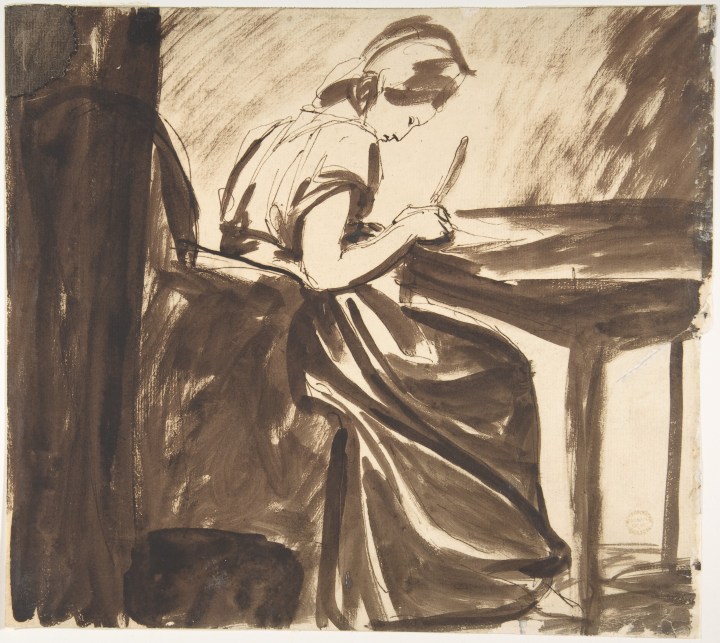
George Romney, Lady Seated at a Table (recto); pen and brown ink, brush and brown wash (NY: The Metropolitan Museum of Art, 11.66.3).
Master Drawings is now accepting submissions for the 8th Annual Ricciardi Prize of $5,000. The award is given for the best new and unpublished article on a drawing topic (of any period) by a scholar under the age of 40. Candidates are also eligible for a $1000 runner-up prize and publication. Prize winners are eligible for reimbursement of costs associated with obtaining image publication permissions. They will be invited to present their research at a symposium held during Master Drawings Week in New York (January 2026). Information about essay requirements and how to apply can be found here. Information about past winners and finalists is available here.
The average length is between 2,500 and 3,750 words, with five to twenty illustrations. Submissions should be no longer than 7,500 words and have no more than 75 footnotes. All submissions must be in article form, following the format of the journal. Please refer to our Submission Guidelines for additional information. We will not consider submissions of seminar papers, dissertation chapters, or other written material that has not been adapted into the format of a journal article. Written material that has been previously published, or is scheduled for future publication, will not be eligible. Articles may be submitted in any language. Please be sure to include a 100-word abstract outlining the scope of your article with your submission.










 Enfilade
leave a comment