Masterclass in Palermo | European Collectors as Patrons
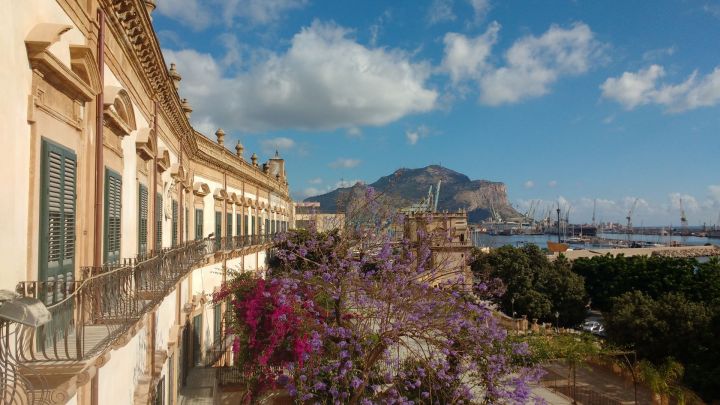
The oldest portions of the Palazzo Butera date to the early eighteenth century, when the Duke of Branciforti constructed a grand house according to designs produced by the Palermo architect Giacomo Amato. In 1759, fire destroyed a portion of the palazzo. Prince Butera responded by acquiring the adjacent property and rebuilding, doubling the size of the Palazzo Butera. More information is available here»
◊ ◊ ◊ ◊ ◊
From ArtHist.net and the Palazzo Butera:
Masterclass in Palermo: European Collectors as Patrons
Palazzo Butera, Palermo, 28–30 June 2023
Applications due by 30 April 2023
European Collectors as Patrons is a three-day masterclass based in Palermo, Sicily focused on how patronage supports and defends artistic and cultural activity. Bertrand du Vignaud and Claudio Gulli will outline how over the last three centuries a range of historical and current European patrons have advocated for art and culture by building their own private collections. These individuals have contributed both to social progress and urban development. Examples will include the Roman Cardinals Alessandro Albani and Pietro Ottoboni, along with the English amateur-architects Lord Burlington and Sir John Soane, and the Spanish Count Alexandre Aguado. From more recent history, we will consider Harry Kessler, Vittorio Cini, and Calouste Gulbenkian. Professors Andrea Rurale and Piergiacomo Mion, of the SDA Bocconi School of Management, will discuss the economic longevity and long-term impact of these enterprises.
During these three days, lectures will take place at Palazzo Butera, and visits across the city will include both well-known and lesser known places. In the evenings, private dinners have been arranged in historic houses and other places of significant cultural importance. The dinners are designed as an integral part of the masterclass allowing for a greater depth of understanding. They also offer time for discussion and reflection on the days’ experiences and learning.
The use of Palazzo Butera as host to this masterclass is intentional as it represents a fine example of the sort of enlightened patronage being discussed. This eighteenth-century seafront palace, once the home of the Branciforti family, was purchased by Francesca and Massimo Valsecchi in 2016. The new owners privately undertook a complete restoration of the building and have transferred their art collection to the palazzo. Since the 1960s the Valsecchi’s collecting has been guided by a fascination in cultural exchanges and the cross-pollination of ideas. Assembled quietly over decades of intense research, the collection opened to the public in the spring of 2021. The main works in the collection arrived in Palermo after long-term loans to the Fitzwilliam Museum in Cambridge and the Ashmolean Museum in Oxford (2016–2020).
Classes will be held in English. The course fee, excluding dinners, is €350; including dinners, the cost is €700. It is possible to receive a grant to cover €350 (applicants will be selected by Bertrand du Vignaud and Claudio Gulli). Lunch is included in the price, except on June 29, when lunch will take place at Villa Tasca. Registration is open to anybody, there is no age limit, and an educational qualification is not a requirement. To register, please send an email to info@palazzobutera.it. For those applying for a grant, please include your CV and a personal statement. We also advise staying in Palermo, if possible, some days prior to or after the course, so as to visit the city’s main points of interest.
W E D N E S D A Y , 2 8 J U N E 2 0 2 3
10.00 Visit to the Francesca and Massimo Valsecchi Collection
12.00 Meet with Francesca and Massimo Valsecchi
15.00 Lecture by Bertrand du Vignaud and Claudio Gulli — European Collectors as Patrons, Part 1
18.30 Visit to the Chiaramonte Bordonaro Collection
Dinner at Villa Chiaramonte Bordonaro (optional)
T H U R S D A Y , 2 9 J U N E 2 0 2 3
10.00 Visit to Villa Tasca
15.00 Lecture by Bertrand du Vignaud and Claudio Gulli — European Collectors as Patrons, Part 2
19.00 Visit to Palazzo Mazzarino
Dinner at Palazzo Mazzarino (optional)
F R I D A Y , 3 0 J U N E 2 0 2 3
10.00 Lecture by Bertrand du Vignaud — Heritage at Risk
11.00 Lecture by Andrea Rurale — Art Orientation vs Market Orientation
12.00 Lecture by Piergiacomo Mion — A New Model for Cultural Business: Key Issues Faced by Art Managers
15.00 The Financing of Restorations, Museums, and Heritage. Attended by Bertrand du Vignaud, Claudio Gulli, Andrea Rurale, and Piergiacomo Mion (open to the public)
16.15 Walking Tour of Palermo’s Historical Center: Restored Churches and Churches To Be Restored, curated by Claudio Gulli
17.30 Gallery of Francesco Pantaleone
18.15 Meeting with Alexandre Giquello and Cocktails
S I T E S
Villa Chiaramonte Bordonaro alle Croci
In 1892, Ernesto Basile designs an extension for Gabriele Chiarmonte Bordonaro’s (1835–1914) villa to house his art collection. Assembled at the end of the 19th century, it included works by Giotto, Botticelli, and Van Dyck. Today you can still see many of these works here, even though the collection was divided in three parts in 1950.
Villa Tasca
The origins of Villa Tasca date from the 16th century, though it was restored with its current decorations beginning in 1855. It has since been called the ‘Villa Borghese of Palermo’ because of the eight hectares of surrounding park, preserved to this day. It includes a swan lake and a temple to Ceres. Richard Wagner was a long-time guest of the villa and during his stay in Palermo wrote much of Parsifal. The park opened to the public in 2020. The visit will be guided by Giuseppe Tasca owner and CEO of Villa Tasca.
Palazzo Mazzarino
Within walking distance of Teatro Massimo, Palazzo Mazzarino, belongs to Marquis Berlingieri. Historically it has been one of the city’s most important palazzi, because of its links to the Lanza family. In the Minerva Hall, where a sculpture of Valerio Villareale towers, you will also find butterfly paintings by Damien Hirst. The palazzo is a showcase for this type of cross-pollination between new and old. The visit will be guided by Marialda Berlingeri.
FPAC
Contemporary art gallery founded in Palermo by Francesco Pantaleone in 2003, located at the Quattro Canti.
House of Alexandre Giquello
Alexandre Giquello is co-owner of the Parisian auction house Binoche-Giquello and president of Drouot. He owns an apartment in Palermo at the Quattro Canti.
L E C T U R E R S
Art historian Bertrand du Vignaud has been Chairman of Christie’s Monaco and Vice-Président of Christie’s France. Passionate about the safeguarding the world cultural heritage, he has been President of the World Monuments Fund organisations for Europe, France, and Italy. Currently, he advises the Fondation Evergète in Geneva and is the scientific advisor of Dassault Histoire et Patrimoine in France and is the President of the Comité International des Amis de la Bibliothèque Vaticane in Rome. For more than 40 years, he has launched numerous projects to save and restore masterpieces of cultural heritage in danger or in urgent need of work around the world: from baroque churches in Peru, Brazil, and Austria, to the Queens’ Theatre at Trianon, from the Carracci Gallery in Rome to the Palace of Dario in Persepolis; the most original and iconic of these was the reinstallation of the spectacular decors of an 18th-century mansion, the Hôtel de Voyer d’Argenson, or Chancellerie d’Orléans, in Paris. He is also a great nephew of the painter Henri de Toulouse-Lautrec, and through his writing and lectures, works to make the little-know aspects of this artist’s life better known to the public. His last book, Les Thellusson. was published in French and English by In Fine in 2021 and is dedicated to an important European family of collectors and art patrons.
Claudio Gulli was born in Palermo in 1987. He read History of Art at the Università degli Studi di Siena and gained his PhD at the Scuola Normale Superiore in Pisa, with a thesis on the late-nineteenth century Chiaramonte Bordonaro collection (published by Officina Libraria in 2021). Between 2009 and 2011, he worked in the Paintings Department of the Louvre Museum in Paris, where his contributions to the research on Leonardo da Vinci focused on the literary popularity of the master’s Saint John the Baptist (2009) and Saint Anne (2011). He is involved in the project of Palazzo Butera in Palermo, where he is now director, since the acquisition of the building by Francesca and Massimo Valsecchi
Andrea Rurale is a Lecturer at the Department of Marketing at Università Bocconi. At SDA Bocconi, he is the Director of the Master in Arts Management and Administration (MAMA). He has conducted research and education projects with major enterprises. His research activities focus on cultural marketing, consumer behaviour, experiential marketing, CRM, and marketing communication. He is the author of books and articles on his topics of interest. His works have been published in Psychology and Marketing. He has been a Visiting Professor in many international universities, including Simon Fraser in Vancouver (Canada), Tinsgua University in Beijing (China), SMU in Dallas (USA), UTS in Sydney (Australia), and Universidad de Aguascalientes (Mexico). He is President of the Istituto musicale superiore Monteverdi Conservatory in Cremona. Andrea earned a degree from Università Bocconi and a PhD in Marketing from Universitat de València. He is President of the Lombardy Delegation of FAI – Fondo Ambiente Italiano.
Piergiacomo Mion Dalle Carbonare is SDA Junior Lecturer of the Government, Health and Non-Profit Division and Coordinator of the Master in Arts Management and Administration (MAMA) at SDA Bocconi School of Management. He is Deputy Director of the Master of Science in Economics and Management for Arts, Culture, Media, and Entertainment (ACME) at Bocconi University where he also teaches courses related to Cultural Policies, Public Management, and Territorial Marketing. He holds a PhD in Marketing from the University of Valencia. He has been visiting scholar at SMU Dallas. Piergiacomo is also Head of the Milan Delegation of FAI – Fondo Ambiente Italiano.
6th Annual Ricciardi Prize from Master Drawings
From Master Drawings:
Sixth Annual Ricciardi Prize from Master Drawings
Submissions due by 15 November 2023

Édouard Manet, Woman Writing, brush and black ink on paper (Clark Art Institute, MA).
Master Drawings is now accepting submissions for the Sixth Annual Ricciardi Prize for Young Scholars. The $5,000 award is given to the best new and unpublished article on a drawing topic (of any period) by a scholar under the age of 40. The winning submission will be published in a 2024 issue of Master Drawings. Information about past winners and finalists is available here.
The average article length is between 2,500 and 3,750 words, with five to twenty illustrations. Submissions should be no longer than 10,000 words and have no more than 100 footnotes. Please note that all submissions must be in article form, following the format of the journal. We will not consider submissions of seminar papers, dissertation chapters, or other written material that has not been adapted into the format of a journal article. Written material that has been previously published, or is scheduled for future publication, will not be eligible. Articles may be submitted in any language. Be sure to include a 100 word abstract outlining the scope of your article with your submission, along with a current CV or resume, as well as your birth date. Please submit your application online by 15 November 2023. If the file is too large, please use Wetransfer.com addressed to administrator@masterdrawings.org.
Workshop | Provenance Research in Action
From the Society for the History of Collecting:
Provenance Research in Action: Theory, Tools and Implementation
London, 12–16 June 2023
Organized by Adriano Ayomino, Silvia Davoli, Lisa de Zoete, and Barbara Furlott
Applications due by 10 March 2023
 Join a week-long, hands-on workshop on provenance research and due diligence in the heart of the London art world. Run by the Society for the History of Collecting in partnership with some of the most relevant London-based museums, libraries, and academic institutions, the workshop aims to introduce students and young professionals to the tools, good practices, and best methodologies involved in researching provenance for paintings, decorative arts, books, archives, etc. Small group workshops, run by professionals in the sector, have been designed to provide an effective method of teaching of the theoretical and practical aspects of provenance research today.
Applicants should send a letter of motivation (no longer than 750 words) and a brief CV (no longer than 1 page) to barbara.furlotti@courtauld.ac.uk by 10 March, 2023. The workshop does not include travel, accommodation, or food (unless specified in the program). Cost for participation is £150 for the full workshop.
A pdf version of the schedule is available here»
Call for Contributions | Antiquitatum Thesaurus Blog
From ArtHist.net, which includes the call in German as well:
Antiquitatum Thesaurus Blog
Berlin-Brandenburg Academy of Sciences and Humanities
Antiquitatum Thesaurus is the youngest research project hosted at the Berlin-Brandenburg Academy of Sciences and Humanities (BBAW). The project investigates drawings and prints of the 17th and 18th centuries based on artefacts from antiquity, and links them with the ancient objects that they document as well as with other evidence of their reception in a digital repository. In addition, we are interested in establishing a platform for an ongoing exchange of information to complement and enrich the database and the digital environment.
Cataloguing the graphic material and the connected artefacts, numerous questions arise, further research areas open up, and interesting connections emerge that cannot always be discussed in depth within the framework of a fixed and preset input mask of a database.
We are very keen to build a long lasting and fruitful contact with the academic community through
• the research tools we make available in our database by cataloguing the graphic material and artefacts represented, and for which we would appreciate your feedback
• an academic dialogue and exchange by blog entries
For our blog section, we are looking for writers interested in contributing essays written to show individual insights and expertise on a specific topic. Blogs are a great way to generate fresh content; they are quick and easy to assimilate, thought provoking, able to generate academic discussion, to take stock of a situation, to give a precise answer to an open question, and much more. In addition, blogs offer the authors the opportunity to introduce themselves to the academic community and draw attention to their websites, academic interests, research fields, and possibly help to establish contacts for cooperation.
Blog contributors could cover one of the following topics, though other proposals are welcome as well:
• methodological approaches in dealing with graphic arts (drawings and prints) in their documentary value
• insights into collectors or personalities involved in either collecting ancient artefacts or exchanging graphic materials
• short reports on ongoing research related to the interests and research areas of Antiquitatum Thesaurus
• short reports on comparable projects dealing with digital humanities
• new finds and discoveries
Some simple guidelines
• Blog postings should be no less than 700 and no more than 2,000 words in length and should contain essential references.
• Postings can include illustrations (no more than 10) provided with captions and rights cleared for website use.
• We would appreciate the provision of links to bibliography (DOI), digital copies and websites (permalink).
• Languages: German, English, Italian, French.
To better evaluate the content of postings and coordinate their sequence, we ask for short proposals first. If you are interested in providing a guest contribution for the Antiquitatum Thesaurus blog page, please send us your application by completing the submission form available at our website. Blog proposals can be submitted at any time to thesaurus@bbaw.de.
Summer Course | The Age of Rubens
From ArtHist.net:
The Age of Rubens: 2023 Summer Course for the Study of the Arts in Flanders
Belgium, 18–28 June 2023
Applications due by 20 February 2023
Annually, the Summer Course brings a select group of 18 highly qualified young researchers to Flanders. They are offered an intensive 11-day programme of lectures, discussions, and visits related to a specific art historical period of Flemish art. The Summer Course provides the participants with a clear insight into the Flemish art collections from the period at hand, as well as into the current state of research on the topic. The 7th edition of the Summer Course will focus on ‘The Age of Rubens’. It will be held 18–28 June 2023. Excursions will be made to Antwerp, Mechelen, Leuven, Scherpenheuvel, Bruges, Ghent, Liège, and Brussels. The language of the Summer Course is English.
Who can apply?
Participants have a master’s degree or are PhD student, junior curator, or restorer, and they are specialised in art in the Age of Rubens. The master’s degree was earned maximum 10 years ago.
Participation fee
The participation fee of the Summer Course is fixed at €1280 (including VAT) per person. The fee includes the full 11-day programme, 10 overnight hotel stays in a single-occupancy room, all transportation within the programme, all entry tickets, 2 receptions, 5 lunches, and 5 dinners. Not included in the participation fee is the transport to and from Belgium.
How to apply?
All applicants should send a resume, a letter of motivation, and a letter of recommendation from a faculty member or a museum professional to an.seurinck@vlaamsekunstcollectie.be.
Grants
In addition to the regular applications materials, candidates applying for financial aid are asked also to send a statement explaining their financial need.
Partners
The Summer Course for the Study of the Arts in Flanders is a joint initiative of the KMSKA (Royal Museum of Fine Arts Antwerp), Musea Brugge, Museum of Fine Arts Ghent, M Leuven, Mu.ZEE Ostend, Ghent University, KU Leuven, the Flemish research centre for the arts in the Burgundian Netherlands, the Rubenianum, and the Flemish Art Collection. Structural content partners for this edition are the KBR (Royal Library of Belgium), The Royal Institute for Cultural Heritage (KIK-IRPA), and the Royal Museums of Fine Arts of Belgium. This edition is coordinated by Flemish Art Collection, KMSKA, and Rubenianum.
Attingham Courses in 2023

This year’s Attingham course offerings:
The Attingham Trust offers specialist courses for the study of historic houses and their collections based on contextual, in-situ study. Course members are drawn from different fields of the heritage sector, including curators, architects and architectural historians, conservators, academics, historic house managers, and decorative arts specialists from around the world. The clear objectives of the courses are to examine the architectural and social history of historic houses and palaces, to study their contents and collections, and to stimulate discussion on conservation, preservation, display, and interpretation. Group discussion is core to the programmes, and participants are expected to share their knowledge and expertise and engage with current debates.

Members of the Royal Collection Studies programme in the Print Room at Windsor Castle, looking at drawings by Holbein.
70th Attingham Summer School, 1–16 July 2023
Applications due by 29 January 2023
This intensive residential course will include visits to country houses in Sussex, Oxfordshire, Derbyshire, Northamptonshire, Norfolk, and Cambridgeshire. The course directors and visiting lecturers are established specialists in their fields, and the range of study is specifically chosen to address a wide curriculum with hands-on object study. In addition to architecture and planning, the focus is on the study of interiors, furniture, paintings, sculpture, ceramics, metalwork, plasterwork, textiles, and other applied arts. Limited scholarship funding is available. More detailed information can be found here»
Royal Collection Studies, 3–12 September 2023
Applications due by 12 February 2023
This annual course, a collaboration now in its 27th year with The Royal Collection, provides a ten-day immersive opportunity to study the British royal collection, one of the most outstanding collections of art and decorative art in the world. Based near Windsor, the course also examines the history of the collection and the key roles played by monarchs and their consorts over the centuries. Combining a mixture of lectures and tutorials, visits to both the occupied and unoccupied palaces in and around London, and close-up object study, Royal Collection Studies aims to give experienced professionals in the heritage sector a deeper understanding of this remarkable collection. Limited scholarship funding is available. More detailed information can be found here»
Attingham Study Programme: Andrea Palladio, Venice, and the Veneto, 18–26 September 2023
Applications due by 12 February 2023
The 2023 Study Programme will consider the impact of Palladian architecture, Venetian painting, sculpture, and decorative art on the development of the country house in Europe, Britain, and the USA. Based in and around Venice and its lagoon and accompanied by specialists in their field, the course will also consider the preservation, conservation, and ecology of Venice and its artistic legacy. More detailed information can be found here»
The London House Course, October 2023
Applications details forthcoming
This non-residential week-long course studies the development of the London house from the Renaissance to the present. It combines visits to houses with lectures by leading authorities. Progressing broadly chronologically and exploring all over London, the course takes members inside grand aristocratic buildings, smaller domestic houses, artists’ studios, and the garden suburb. More detailed information can be found here»
Call for Collaborators | The Digital Piranesi

View of the Flavian Amphitheatre, called the Colosseum (Veduta dell’Anfiteatro Flavio detto il Colosseo), from Giovanni Battista Piranesi’s Opere, volume 1 of 29 (Paris: Firmin Didot, 1837–39). Piranesi’s original copper plates were used for this posthumously published collection; this specific print comes from a complete set of volumes at the University of South Carolina, home to The Digital Piranesi project.
◊ ◊ ◊ ◊ ◊
From the Call for Participants:
Essay Contributors for The Digital Piranesi
Applications due by 1 March 2023
 Digital art history, word-image studies, architectural history, and book history meet in The Digital Piranesi, a developing digital humanities project devoted to the complete works of Giambattista Piranesi (1720–1778). With funding from the Kress Foundation, six collaborators will be invited to contribute to the project. Following an introductory in-person workshop in Columbia, South Carolina, in late Summer 2023, regular virtual meetings through Summer 2024 will be dedicated to writing brief, impactful scholarly essays about each image in the first volume of his Roman Antiquities / Le Anthichità Romane (1756). Travel and accommodation will be supported by grant funds.
Each image of the first volume of the Roman Antiquities appears with original annotations and (in metadata) English translations here.
Please send a CV and one-page statement detailing qualifications, experience, and interest to Jeanne Britton at jbritton@mailbox.sc.edu by 1 March 2023. Inquiries are welcome.
The Digital Piranesi has received generous support from the NEH Division of Preservation and Access, the Kress Foundation, and, at the University of South Carolina, the Office of the Vice President for Research, the Center for Digital Humanities, the Magellan Scholar Program, the Maners-Pappas Endowment, the Humanities Collaborative, and the Irvin Department of Rare Books and Special Collections.
Decorative Arts Trust Announces Failey Grant Recipients for 2023

The British and Irish Furniture Makers Online (BIFMO) project researches makers such as Giles Grendey, whose 1735–40 card table is in The Metropolitan Museum of Art’s collection; lacquered and gilded beech, lined with felt (New York: The Met, Gift of Louis J. Boury, 1937, 37.114).
◊ ◊ ◊ ◊ ◊
From the press release:
The Decorative Arts Trust announced that the 2023 Dean F. Failey Grant recipients will be British and Irish Furniture Makers Online (BIFMO) in London, England; The Center for Painted Wall Preservation (CPWP) in Hallowell, Maine; Preservation Long Island (PLI) in Cold Spring Harbor, New York; and Stenton in Philadelphia, Pennsylvania. The Failey Grant program provides support for noteworthy research, exhibition, publication, and conservation projects through the Dean F. Failey Fund, named in honor of the Trust’s late Governor. Preference is given to projects that employ or are led by emerging professionals in the museum field. Failey Grant applications are due October 31 annually.

Anne Reckless Emlen, Shellwork grotto, 1757, Philadelphia (Stenton, The National Society of The Colonial Dames of America in the Commonwealth of Pennsylvania).
• BIFMO will hire interns to research immigrant tradespeople in New York City, Philadelphia, Annapolis, and Baltimore under the guidance of BIFMO managing editor Laurie Lindey, digital editor Jonathan Blaney, and BIFMO project manager Adriana Turpin.
• CPWP will develop a virtual museum of historic painted interiors under the direction of project coordinators Margaret Gaertner and Linda Carter Lefko.
• PLI will produce the book Promoting Long Island: The Art of Edward Lange, 1870–1889, edited by PLI curator Lauren Brincat and PLI curatorial fellow Peter Fedoryk with essays from these editors as well as from Jennifer L. Anderson, Thomas Busciglio-Ritter, Sarah Kautz, and Joshua Ruff.
• Stenton, a historic house museum administered by The National Society of the Colonial Dames of America in the Commonwealth of Pennsylvania, will conserve a 1757 shellwork grotto by Anne Reckless Emlen, led by Stenton curator Laura Keim, Stenton curatorial assistant Kaila Temple, and conservator Lara Kaplan.
More information is available here»
Last Call for Entries for the 2022 George Clarke Prize

From the Call for Proposals:
2022 George Clarke Prize for Research Proposal Pertinent to Stowe
Proposals due imminently (first week of December 2022)
Applications are invited for the 2022, biennial Prize of £2000, run by the Hall Bequest Trust. The prize is named after George Clarke, who was associated with Stowe for over more than 60 years—not least as historian of the building and temples. As editor of The Stoic for seven years, he published definitive articles on the history of the gardens and its buildings. In 1990, the Bucks Record Society published his edition of the Descriptions of Lord Cobham’s Gardens at Stowe 1700–1750. He established a close working relationship with the Huntington Library, where the 350,000 Stowe papers are. He is a founding trustee and past Chairman of the Hall Bequest Trust, which was established in 1983 with three aims: purchasing and displaying historic and cultural items relevant to Stowe, supporting educational projects, and providing bursaries for pupils at Stowe.
The George Clarke Prize is awarded for the best proposal for original archival research pertinent to Stowe within the fields of architecture, architectural history, and the material arts such as sculpture, collecting, or landscape design. The winner, who applies with evidence of their research record and a relevant and pertinent proposal, undertakes to pursue the research within the year of the award, and to write an article and to give a lecture within six months of completion of the research. Previous winners include Dr Myles Campbell, of the Office of Public Works, Dublin; Rhiannon Clarricoates, wallpaintings conservator at Lincoln University; and William Aslet, PhD candidate at the University of Cambridge.
Please email the prize administrators as soon as possible at amcevoy@stowe.co.uk for full application details.
Call for Applications | Printmaking for Curators and Scholars
From ArtHist.net:
Printmaking for Curators and Scholars
Highpoint Center for Printmaking, Minneapolis Institute of Art, 24–28 July 2023
Proposals due by 1 November 2022
The Association of Print Scholars (APS) is currently accepting applications for the second of its two-part series of intensive hands-on printmaking workshops for emerging scholars and curators, which is generously funded by The Getty Foundation’s initiative, The Paper Project: Prints and Drawings Curatorship in the 21st Century. This five-day workshop will be dedicated to intaglio techniques (etching, drypoint, engraving) and will be hosted in Minneapolis, MN, in partnership with the Highpoint Center for Printmaking and the Minneapolis Institute of Art.
A thorough comprehension of various printmaking methods is critical to producing scholarship and exhibitions on these media. Yet, many early-career print curators and scholars lack such practical experience as they embark on their careers due to competing professional and academic demands that make it difficult to enroll in a semester-long printmaking course. With the technical intricacies of printmaking difficult to grasp through text alone, an intensive workshop provides an invaluable technical and material knowledge of printmaking that will not only contribute to, but also enhance, a print curator and scholar’s understanding of a work’s content, intention, and aesthetic. The aim of this workshop is to further prepare participants to better communicate these complex techniques in an accessible language to a general museum audience and contribute new personal insight to the field.
Ten early-career curators and scholars will be selected to participate in the workshop, which will be held between July 24 and July 28, 2023. The intensive program will include a visit to MIA’s Herschel V. Jones Print Study Room to examine a selection of intaglio prints from the museum’s collection. Participants will also engage in hands-on work in drypoint, engraving, and etching at the Highpoint Center studio as well as explore the Highpoint’s facilities, library, galleries, and print room. A day will be devoted to print identification, including a second visit to MIA’s Study Room to scrutinize variant intaglio techniques (aquatint, mezzotint, etc.). The workshop will conclude with Highpoint staff leading demonstrations of other intaglio techniques as informed by participant projects and a final seminar and reflection led by APS organizers. The workshop will be organized and led by current APS President, Dr. Elisa Germán, and APS Workshop Coordinator, Dr. Sarah Bane.
Applications to the workshop are open to candidates who have a graduate degree (or equivalent experience), but must be within 10 years of receiving their terminal degree. Preference will be given to early-career curatorial professionals (curators, curatorial or research assistants/associates, postdoctoral fellows), although advanced graduate students and independent scholars with a long-held demonstrated interest in printmaking and curatorial practice will also be considered. APS is committed to supporting the professional development of a diverse and inclusive community within the field of print scholarship and strongly encourages candidates from underrepresented groups to apply.
Travel, accommodation, and meal expenses will be covered.
To apply, please submit the following documents via an online application form that requires
• A brief statement (500 words max.) describing your research and how it would be enriched by a workshop on intaglio techniques
• A current CV or resume
• One letter of reference, sent directly to workshops@printscholars.org
Please note that for full consideration, all materials, including the reference letter, must be received by the workshop organizers no later than 1 November 2022. Successful applicants will be notified by 1 December 2022.
The Association of Print Scholars (APS) is a non-profit organization that encourages innovative and interdisciplinary approaches to the history and practice of printmaking. It aims to promote the dissemination of print scholarship and to facilitate dialogue and community among its members. It sponsors collaboration and publication grants, as well as article prizes for emerging scholars, and hosts public programs on printmaking throughout the year. APS hopes to bring together the diverse print community of curators, collectors, academics, artists, conservators, critics, independent scholars, dealers, and graduate students. Membership is open to anyone.
The Getty Foundation fulfills the philanthropic mission of the Getty Trust by supporting individuals and institutions committed to advancing the greater understanding and preservation of the visual arts in Los Angeles and throughout the world. Through strategic grants initiatives, it strengthens art history as a global discipline, promotes the interdisciplinary practice of conservation, increases access to museum and archival collections, and develops current and future leaders in the visual arts. The Getty Foundation carries out its work in collaboration with the other Getty Programs to ensure that they individually and collectively achieve maximum effect.










 Enfilade
leave a comment