Call for Applications | Painted Wall Preservation Scholarship
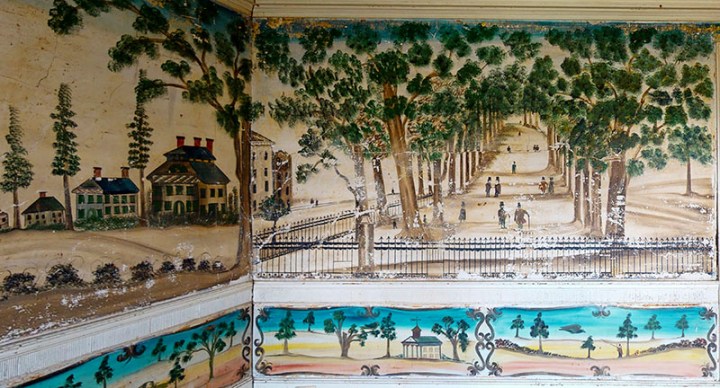 Interior of the Hersey-Whitten House, which was constructed in the late-18th or early-19th century in the village of Center Tuftonboro, New Hampshire. Originally built for the Copp family, it was once a dance hall and inn. Learn more from The Center for Painted Wall Preservation»
◊ ◊ ◊ ◊ ◊
From the scholarship announcement:
The Center for Painted Wall Preservation Scholarship
Applications due by 30 April 2026
The Center for Painted Wall Preservation (pwpcenter.org) invites undergraduate and graduate students, independent scholars, and artisans, whether established or in training, to apply for this scholarship, which aims to develop educational projects that further our mission through documentation, conservation, and preservation—where art, history, craft, and science meet.
This year’s scholarship of $2000 will be awarded to the individual whose proposal for an educational, scholarly project is deemed best designed to further the stated mission of our organization—to further the study, understanding, and appreciation of paint-decorated plaster walls and associated interior colorized items of the 18th and early 19th centuries in New England and New York, and to educate the public about this unique and vulnerable cultural heritage. Interested parties may apply for an Application Process Summary and Application Form by contacting info@pwpcenter.org with ‘Scholarship Fund’ in the subject line. Applications will be accepted from 1 January until midnight, 30 April 2026.
The Center for Painted Wall Preservation is a nationally recognized 501(c)(3) Nonprofit Organization.
Fellowships | The Reception of Antique Works of Art and Architecture
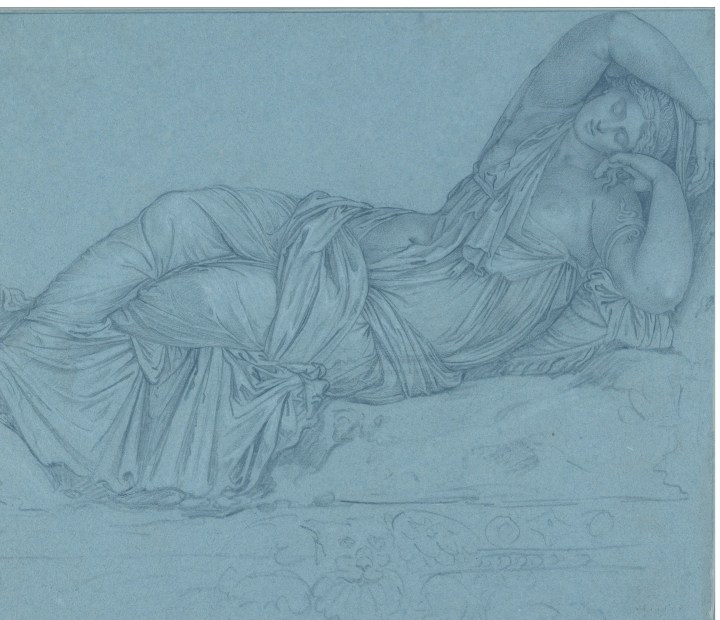
Hendrick Goltzius, Cleopatra/Ariadne, 1590–91, black and white chalk with pencil on blue paper, 25 × 30 cm
(Haarlem: Teylers Museum, purchased from the Odescalchi heirs in Rome, 1790, N061; CensusID 47461)
◊ ◊ ◊ ◊ ◊
From ArtHist.net:
Census Fellowship in the Reception of Antiquity, 1350–1900
Humboldt-Universität (Berlin), Bibliotheca Hertziana (Rome), Warburg Institute (London), March–December 2026
Applications due by 31 January 2026
The Institut für Kunst- und Bildgeschichte, Humboldt-Universität zu Berlin, the Bibliotheca Hertziana – Max Planck Institute for Art History, and the Warburg Institute, School of Advanced Study, University of London, are pleased to announce a fellowship in Berlin, Rome, and London, offered at either the predoctoral or postdoctoral level. These fellowships grow out of the longstanding collaboration between the Humboldt, the Hertziana, and the Warburg in the research project Census of Antique Works of Art and Architecture Known in the Renaissance.
The fellowships extend the traditional chronological boundaries of the Census and are dedicated to research and intellectual exchange on topics related to the reception of antiquity in the visual arts from approximately 1350 to 1900. In the context of the fellowships, the topic of the reception of antiquity is also broadly conceived without geographical restriction. Proposals can optionally include a digital humanities perspective, engage with the database of the Census, or make use of the research materials of the Census project available in Berlin, Rome, and London.
The Humboldt, the Hertziana, and the Warburg sponsor a research grant of 6 months for students enrolled in a PhD program (predocs), or 4 months for candidates already in possession of a PhD (early career postdocs). Fellows can set their own schedule and choose how to divide their time evenly between at least two institutes, of which one must be the Hertziana. The stipend will be set at about 1,500 EUR per month at the predoctoral level and about 2,500 EUR per month at the postdoctoral level, plus a travel stipend of 500 EUR. The fellowship does not provide housing.
The sponsoring institutes adhere to the principles of diversity, equity, and inclusion, and therefore encourage applications from underrepresented groups. Candidates can apply via the portal available on the Hertziana website. They should upload the requested PDF documents in English, German, or Italian by 31 January 2026, with details of their proposed dates for the fellowship during the year 2026 (starting earliest March, ending latest December 2026).
Collecting250 Educator Guides Available from The Decorative Arts Trust
From the press release:
 The Decorative Arts Trust is excited to announce the publication of four complimentary educator guides related to Collecting250.org, a free, public resource that commemorates the United States Semiquincentennial with a celebration of 250 historic objects from all 50 states and the District of Columbia. The online collection includes meaningful and impactful objects that represent independence, identity, and community, which were submitted by over 140 museums and historic associations from across the country. This resource demonstrates how objects can tell the story of America.
The Trust’s new educator guides feature complimentary lessons and worksheets to teach art and history through the exploration of objects on Collecting250. A team of experienced educators provided lesson plans, worksheets, and extension ideas aligned with the National Standards for Visual Arts Education and the Common Core Standards. These exciting and interactive lessons are designed to encourage students at the middle and high school levels to view objects—whether historic or more modern—in a whole new way.
The educator guides focus on four themes: function, collecting, story, and traditions. The Functions of Objects: An American Collection asks students to examine various objects in Collecting250 and determine their function through the question, “What job does this object do?” Students present a proposal (in trading card form) for the acquisition of an object, antique or present-day, that they believe should be included in the collection. Students’ trading cards can be shared in a school display in recognition of the Semiquincentennial.
For Collecting: Uncovering America through Its Objects, students explore reasons why humans engage in collecting. They share their knowledge of collections and role-play as private collectors. Then students curate a series of objects from Collecting250 for their own museum spaces, with peers discussing which collection is the most historically significant, the most expensive, etc. Students also investigate an object and create a ‘missing’ poster.
The Weaving a Storyline across 250 Years guide has students investigating various objects in Collecting250 and considering the underlying history of those objects through the question, “What story does this object have to share?” Students create a historical fiction narrative that threads the stories of various objects from the collection into a storyboard that interweaves personal student stories with the stories told by objects found in the collection.
Objects and Traditions: History Revealed guides students to consider Collecting250 objects through the lens of tradition. Students discuss traditions that are important in their families and communities, and then students examine objects and discuss how they might have been made in association with traditions. As students investigate objects, they discuss how cultural beliefs, values, and artistic expression influence the making of an object.
The Decorative Arts Trust would like to thank Dr. Marilyn Stewart, Professor Emerita of Art Education at Kutztown University of Pennsylvania, for coordinating the team that developed these educator guides. The Trust learned of Dr. Stewart and her talented colleagues through the fantastic resources they have developed for Craft in America. Collecting250 will be available for the next few years, so these lessons will be applicable for the 2026–27 and 2027–28 school years as well. Visit Collecting250.org to explore these new resources.
Call for Contributions | Towards a Blue Art History
From ArtHist.net:
Online Platform: Towards a Blue Art History
Hosted on Arcade by the Stanford Humanities Center
Curated by Juliette Bessette and Margaret Cohen
Proposals for contributions accepted on an ongoing basis
The visual arts hold a privileged position in exploring human connections to the ocean. Across history, they have expressed ocean emotions and ocean knowledge. In the modern and contemporary periods, they have been associated with its scientific, popular, poetic, mythical, and political approaches. Increasingly, visual studies scholars are surfacing the connections among human practice, the imagination, and the environment to reveal the power of the image, in all its forms, to probe and expand the human relationship with the seas.
The importance and critical role of visual studies within the field of blue humanities, or ocean humanities originated from the interdisciplinary symposium A Blue Art History (Marseille, France, 2024, organized by Juliette Bessette, with Margaret Cohen as keynote speaker). Bringing together insights from ocean sciences and the humanities, as well as from art historians, artists, and museum professionals, it highlights key issues through which art has shaped conceptions of the ocean across different periods and contexts, as well as specific oceanic modes of understanding the world. These issues include the porous boundaries between artistic and scientific representations of the sea, the emotions and ethics of fishing, and the cultural significance of the marine environment and its biodiversity, whether shown in conventional art venues or visited in underwater installations.
Towards a Blue Art History is a scholarly platform bringing together contributions from current research on art and visual culture related to the ocean. Its aim is to foster the development of a Blue Art History: a historical approach to the arts grounded in the blue humanities and attentive to how artworks, across periods, articulate and shape human relationships with the sea. The platform is curated by Juliette Bessette (Université de Lausanne) and Margaret Cohen (Stanford University) and is hosted by the Stanford Humanities Center on Arcade. A more detailed introductory text is available on the platform here.
Proposals are welcome from all disciplines, provided they engage in sustained and critical attention to artworks or visual objects and make them central to the argument; hence art historians are especially encouraged to contribute. All historical periods and a wide range of visual media are encouraged. There is no submission deadline. Contribution formats are open and can be defined in dialogue with the editors, ranging from written essays to short video capsules, interviews, or other alternative formats discussed collaboratively. Contributions should help expand and structure the emerging field of Blue Art History. To submit a contribution idea (no more than 500 words) outlining the topic, corpus, and approach, please write to juliette.bessette@unil.ch.
Completing the Turner Cataloguing Project
◊ ◊ ◊ ◊ ◊
In 2012, updates on the Turner Bequest cataloging project described the effort as a 30-year initiative with a completion date of 2014. A decade later, this short film marks the close of the project’s final phase.
“Completing the Turner Cataloguing Project | What Can Turner’s Sketchbooks Tell Us? New Discoveries,” 11 minutes, produced by Storya, 2025. Featuring Matthew Imms, Hayley Flynn, Hannah Kaspar, and Vanessa Otim.
Marking 250 years since the birth of J.M.W. Turner, this short documentary explores the closing chapter of a decades-long cataloguing project that has transformed how we see one of Britain’s greatest artists. Commissioned by the Paul Mellon Centre in collaboration with Tate, the film captures the final phase of cataloguing Turner’s 37,000 drawings, sketchbooks, and watercolours—the largest holding of preparatory works by a single artist in the world.
◊ ◊ ◊ ◊ ◊
◊ ◊ ◊ ◊ ◊
The catalogue is available here»
David Blayney Brown, ed., J.M.W. Turner: Sketchbooks, Drawings, and Watercolours (London: Tate Research Publication, 2012).
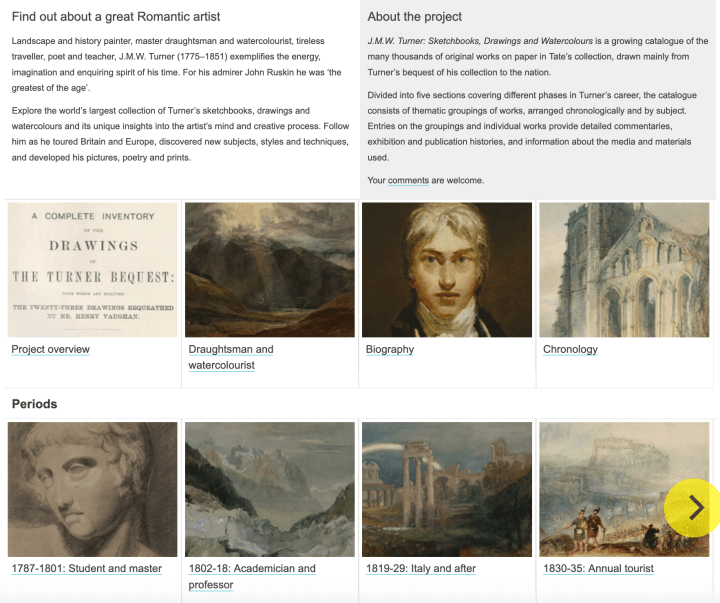
Landscape and history painter, master draughtsman and watercolourist, tireless traveller, poet and teacher, J.M.W. Turner (1775–1851) exemplifies the energy, imagination and enquiring spirit of his time. For his admirer John Ruskin he was “the greatest of the age.” Explore the world’s largest collection of Turner’s sketchbooks, drawings and watercolours and its unique insights into the artist’s mind and creative process. Follow him as he toured Britain and Europe, discovered new subjects, styles and techniques, and developed his pictures, poetry and prints.
J.M.W. Turner: Sketchbooks, Drawings and Watercolours is a growing catalogue of the many thousands of original works on paper in Tate’s collection, drawn mainly from Turner’s bequest of his collection to the nation. Divided into five sections covering different phases in Turner’s career, the catalogue consists of thematic groupings of works, arranged chronologically and by subject. Entries on the groupings and individual works provide detailed commentaries, exhibition and publication histories, and information about the media and materials used.
Research Leads
Martha Barratt — Senior Research Editor
Amy Concannon — Manton Senior Curator, Historic British Art
Project Editors
David Blayney Brown — Curator British Art, 1790–1850
Matthew Imms — Senior Cataloguer
Jennifer Mundy — Head of Art Historical Research
The full contributor list is available here»
Research Project | Generation Landscape
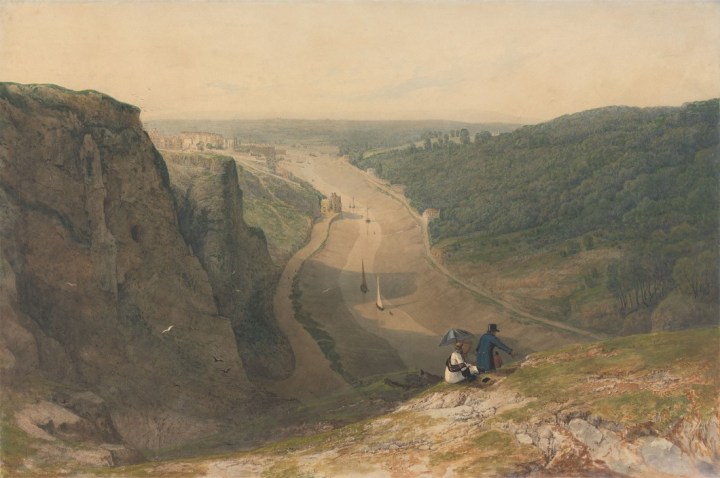
Francis Danby, The Avon Gorge, Looking toward Clifton, ca. 1820
(New Haven: Yale Center for British Art, Paul Mellon Collection)
◊ ◊ ◊ ◊ ◊
From the Paul Mellon Centre:
With the completion of the online catalogue of the Turner Bequest at Tate, supported by the PMC and launched with a major international conference, Turner 250 at Tate, this is a watershed moment for the study and understanding of the contribution of English landscape painting within the wider contexts of European and world culture. Generation Landscape will bring art historians, curators, academic researchers, and creative voices together to think afresh about this significant moment in art history, when a generation of emerging artists created paintings and graphic works offering bold and often experimental new visions of nature, the landscape and the purpose of art itself—and why these images continue to carry such imaginative force today.
Sarah Turner, Director of the PMC, said: “Collaborating to support a vibrant infrastructure of research is at the heart of the PMC’s approach. Through our funding, we are really delighted to bring together the convening potential and academic expertise offered by the Courtauld’s new Manton Centre with our partners at museums and galleries in Ipswich, Bristol, and Margate. This partnership is going to build on the foundations of the extraordinary body of scholarship that already exists on artists such as Turner and Constable and will support a new generation of curators, researchers, and artists to engage with it and shape different and original responses for audiences today. “
Steve Edwards, Director of the Manton Centre at The Courtauld, said: “Sir Edwin Manton built an art collection centred around the important generation of English landscape painters: Constable, Gainsborough, Girtin, Turner, and others. This collaboration between the Manton Centre and the Paul Mellon Centre for Studies in British Art establishes a dialogue with the artists at the heart of his interests to consider the meanings and values that have shaped Britain. Generation Landscape will support and promote new scholarship and curatorial work concerned with landscape and nature, providing an exciting opportunity to place contemporary research in conversation with a moment when both British art and British society were undergoing profound change.”
Generation Landscape is a three-year programme of research and events organised by the Paul Mellon Centre for Studies in British Art and the Manton Centre at The Courtauld.
With additional information here:
This research project is founded upon the simple fact that a stellar collection of British landscape artists—including J.M.W. Turner, John Constable, Thomas Girtin, and John Sell Cotman—were born within just a few years of each other (1775 in the case of the earliest, Girtin and Turner, and 1782 in the case of the latest, Cotman). Generation Landscape is intended to look afresh at the kinds of landscape imagery produced by these individual artists and their contemporaries. It will do so from a variety of art-historical perspectives, including those that are being newly developed in response to our current environmental crisis.
Generation Landscape encompasses and complements detailed new research on a number of the individual practitioners listed above. This activity includes the production of a new online catalogue of Thomas Girtin’s works, written by Dr. Greg Smith, published in 2022. Research undertaken as part of the project fed into the major 2025 Tate Britain exhibition Turner and Constable: Rivals & Originals. More broadly, Generation Landscape aims to chart the trajectories of this distinctive cohort of landscape artists in relation to a shared set of interests, experiences, and circumstances. It will look at how these practitioners and their works interacted with, and differed from, each other, and responded in both comparable and contradictory ways to the challenges—artistic, cultural, political, and environmental—thrown up by their era.
Generation Landscape was initiated in 2021 by Mark Hallett, former Director of the Paul Mellon Centre.
Thematic Route | Queen Isabel de Farnesio (1692–1766)
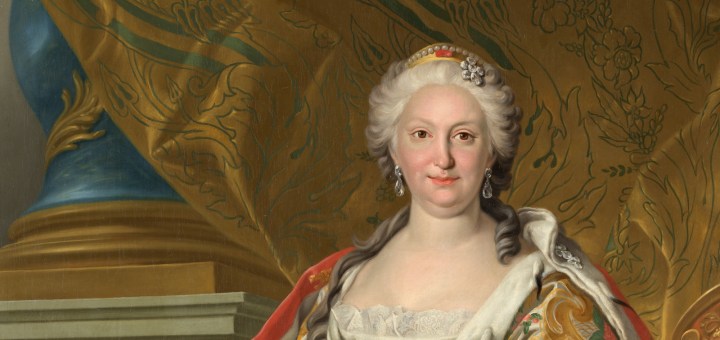
Louis-Michel van Loo, Queen Elisabetta Farnese, detail, ca. 1739, oil on canvas, 152 × 110 cm
(Madrid: Museo Nacional del Prado, P002397)
◊ ◊ ◊ ◊ ◊
From the press release for the new edition of the Prado’s Female Perspective initiative:
El Prado en femenino III: Queen Isabel de Farnesio (1692–1766)
Museo Nacional del Prado, Madrid, 1 December 2025 — 26 May 2026
Curated by Noelia García Pérez
The Museo Nacional del Prado shines a long-overdue spotlight on one of the most influential yet often overlooked women in European art history: Queen Isabel de Farnesio. With the third edition of its acclaimed initiative El Prado en femenino, the museum invites visitors to rediscover the 18th-century monarch whose passion for collecting helped shape what is now one of the world’s great art museums. Running until 26 May 2026, the new itinerary, created in collaboration with Spain’s Women’s Institute and supported by Iryo, moves the focus into the 18th century, following earlier editions devoted to Renaissance and Baroque royal women. This time, the star is a queen whose impact on the arts remains quietly yet unmistakably present throughout the Prado: Isabel de Farnesio (1692–1766), wife of King Philip V and one of the most active artistic patrons of her era.
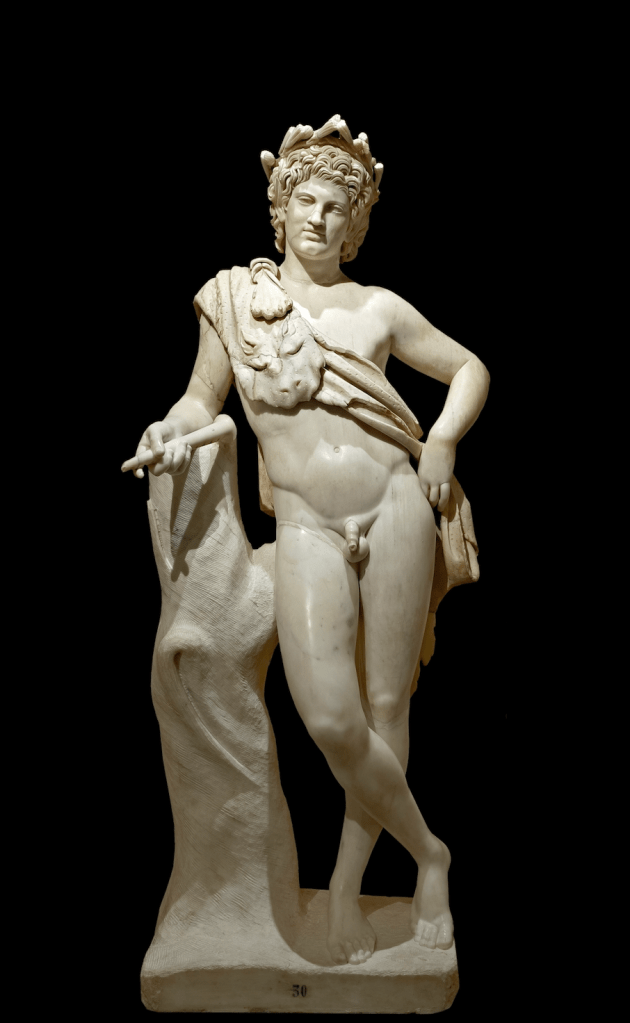
Resting Satyr, an ancient Roman copy of a work by Praxiteles, ca. 150–75 CE, Carrara marble (Madrid: Museo Nacional del Prado, E000030). The work was restored in the 17th century by Bernini’s workshop.
Few visitors realize that nearly 500 works in today’s Prado once belonged to her—paintings, drawings, and sculptures that now hang in almost half the museum’s galleries. The itinerary traces her unmistakable imprint, marked historically by a tiny fleur-de-lis stamped on the back of the works she owned. These include masterpieces like Rubens’s Apostolate, Ribera’s Jacob’s Dream, Velázquez’s Sibyl, Guido Reni’s Saint Sebastian, Correggio’s Virgin and Child with Saint John, and dozens of luminous works by Murillo, her favorite painter. Her taste was cosmopolitan and bold. Drawing on her Italian upbringing and a sharp eye for quality, Isabel assembled one of the finest painting collections of her time, particularly strong in the Flemish and Italian schools. She relied on a network of diplomats, agents, and noble intermediaries—yet maintained striking independence through her own private funds known as ‘the queen’s purse’.
Isabel’s legacy is not only pictorial. She was also responsible for bringing to Spain one of the most coveted collections of ancient sculpture in Europe: the classical masterpieces once owned by Queen Christina of Sweden. Works such as the Group of San Ildefonso, the Faun with a Kid, the Diadoumenos, and the Resting Satyr—cornerstones of the Prado’s classical sculpture galleries—arrived in Spain because Isabel insisted on acquiring them. She personally selected the pieces, reserved the finest for herself, and ensured they would become part of the Royal Collection.
The 45 works featured in this edition of El Prado en femenino, curated under the academic direction of Professor Noelia García Pérez, span newly rediscovered paintings, long-hidden works pulled from storage, and pieces returned from university and embassy loans. A recently identified Murillo sketch—found in the Musée de Pau during an inventory—appears at the Prado for the first time.
The project extends beyond the walls of the museum with the launch of an ambitious programme of talks, symposia, audiovisual productions, guided tours, family resources, a teacher-training course, concerts, and a new Wikipedia Editathon dedicated to expanding the online presence of women who shaped art history. With El Prado en femenino III, the museum takes another major step in reframing its collection through a gender-aware lens. In giving Isabel de Farnesio the attention she long deserved, the Prado not only revisits its past—it redefines the future of how art history is told.
The brochure for the thematic route is available here»
The website for the broader initiative of The Female Perspective is available here»
Princeton University Library Special Collections Research Grants
From Princeton University Library:
Princeton University Library Special Collections Research Grants
Applications due by 14 January 2026
The Friends of the Princeton University Library Research Grants Program, funded by the Friends of PUL, is now accepting applications through noon on 14 January 2026. With grants of up to $6,000, plus travel expenses, this competitive grant program offers researchers from around the world access to PUL’s rare and unique collections. Awarded to short-term research projects lasting between two and four weeks, the grants aim to promote scholarly use of the Library’s special collections. Research projects are focused on scholarly use of archives, manuscripts, rare books, and other rare and unique holdings of PUL.
A new grant is available this year: the “Will Noel Innovative Cultural Heritage Research Grant,” specifically for cultural heritage professionals to work with PUL’s Special and Distinctive Collections and the Library IT Digital Studio’s specialized photographic equipment to gain new insights into our collective past.
Find out more and how to apply here. Questions can be directed to pulgrant@princeton.edu.
The Decorative Arts Trust Announces 2025 Publishing Grants
From the press release:
The Decorative Arts Trust is thrilled to announce the five recipients of our 2025 Publishing Grants. The Birmingham Museum of Art in Birmingham, Alabama; the Florence Griswold Museum in Old Lyme, Connecticut; The Preservation Society of Newport County in Newport, Rhode Island; and Victoria Mansion in Portland, Maine, received Publishing Grants under the ‘Collections and Exhibitions’ category. Dr. Mariah Kupfner received a Publishing Grant for ‘First-Time Authors’.
In August 2026, the publication of Roll Call: 200 Years of Black American Art will be an integral part of the 75th anniversary celebration of the Birmingham Museum of Art. Planned alongside a companion exhibition, the publication will also serve as a comprehensive survey of the Museum’s collection of works by African American and Black American artists who live(d) and work(ed) in America, including its superb holdings of Southern quilts and ceramics.
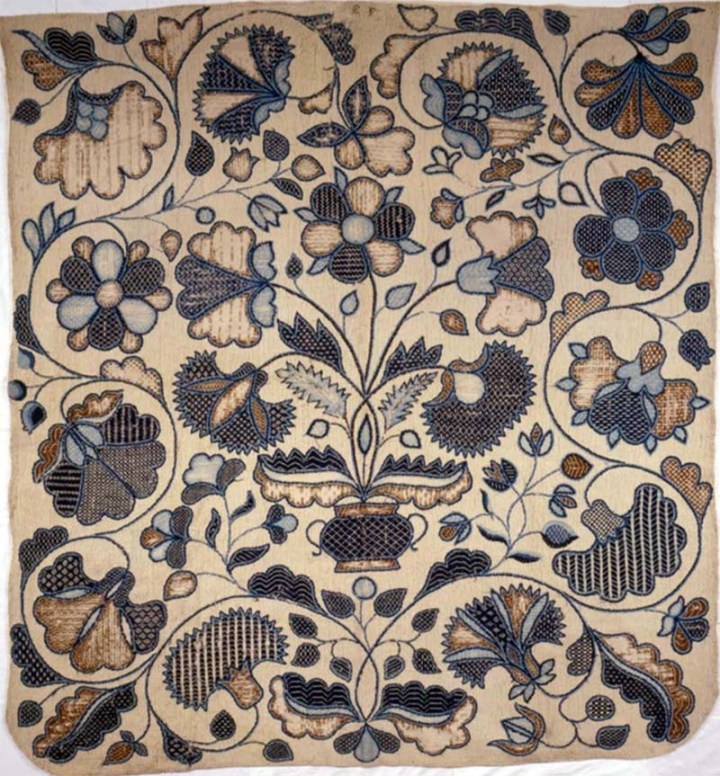
Elizabeth Foote, Bed rug, ca. 1778, Colchester, CT, hand-embroidered wool on plain woven wool ground (Courtesy of the Connecticut Historical Society, Gift of Mrs. J.H.K. Davis).
In 2022, the Florence Griswold Museum presented the exhibition New London County Quilts & Bed Covers, 1750–1825, which showcased exquisite, rarely-seen quilted petticoats, appliqued bed covers, bed rugs, and stuffed whitework quilts hand-crafted by women and girls of this region of Connecticut. The accompanying publication, set to be completed by April 2027, shares the scholarship generated for the exhibition, addressing an understudied and continuously evolving area of material culture that will open emerging areas of study for rising scholars.
Treasures of the Newport Mansions, the first ever collections catalogue for The Preservation Society of Newport County (PSNC), will span centuries and highlight the organization’s distinctive material content. Among the most significant in the United States, PSNC’s holdings uniquely encompass extraordinary objects within their original historical contexts. Presenting approximately 100 objects, the catalogue, which will be published by February 2027, will highlight advanced research made by experts and early-career scholars across multiple disciplines.
Victoria Mansion’s ‘Bold, Designing Fellows’: Italian Decorative Painters and Scenic Artists in the United States, 1820–1880 is inspired by many years of research on the Bolognese artist Giuseppe Guidicini. Previously unknown, Guidicini was responsible for the 1860 design and decoration of the wall and ceiling paintings that fill Victoria Mansion. The publication is set to be completed by May 2026 and will chronicle Guidicini’s history from his training in Bologna to his accomplishments in New York, Cincinnati, and Richmond.
Publishing Grant recipient Dr. Mariah Kupfner is an Assistant Professor of American Studies and Public Heritage at Penn State Harrisburg and earned her PhD from Boston University. She will publish Crafting Womanhood: Needlework, Gender, and Politics in the United States, 1810–1920 with the University of Delaware Press in August 2026. This publication looks closely at gendered textiles, reading them as essential sources of historical meaning and self-making.
Visit the Decorative Arts Trust’s website to learn more about the Publishing Grants program. Applications for the next round of grants are due by 31 March 2026.
Exhibition | Philadelphia, The Revolutionary City
From the APS:
Philadelphia, The Revolutionary City
American Philosophical Society Museum, Philadelphia, 11 April — 28 December 2025
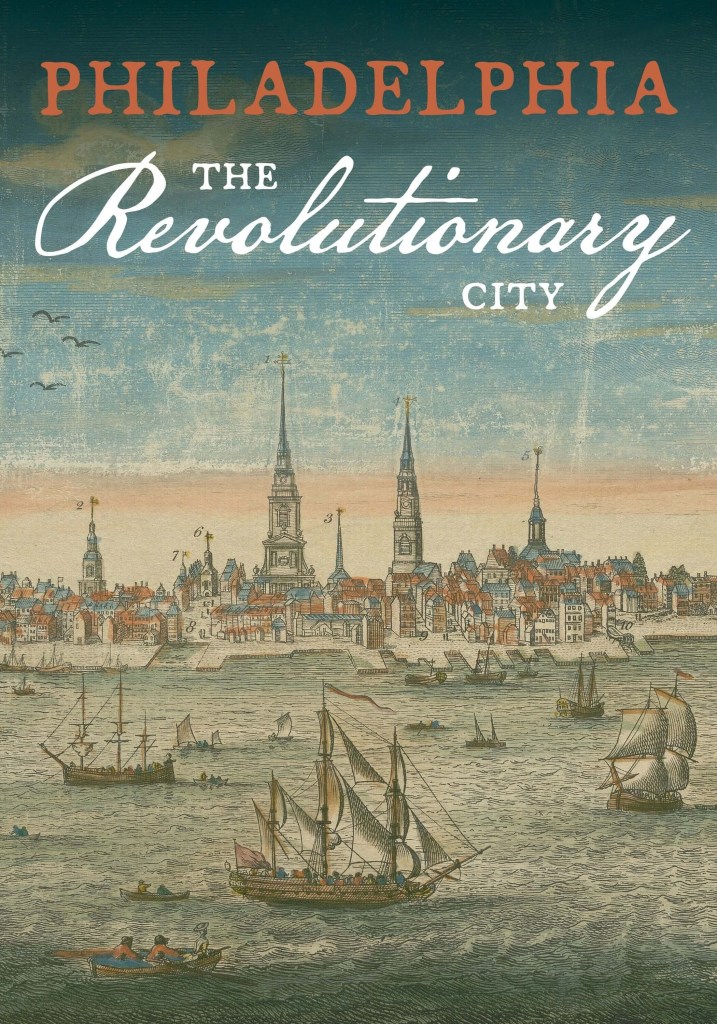 Philadelphia, The Revolutionary City illuminates the lived experiences of Philadelphians leading up to, during, and after the fight for independence. It showcases historic documents and material culture, ranging from diaries and newspapers to political cartoons and household objects. Beginning with the Stamp Act in 1765, the exhibition traces key events through the late 1780s and the impacts they had on communities living within and around the city. The exhibition features a range of voices and stories, offering windows into this turbulent period of change and presenting Revolution-era Philadelphia as a vibrant and growing city.
This exhibition is inspired by the innovative digital archive The Revolutionary City: A Portal to the Nation’s Founding, recently launched by the American Philosophical Society, the Historical Society of Pennsylvania, and the Library Company of Philadelphia, in partnership with the Kislak Center for Special Collections, Rare Books and Manuscripts and the Museum of the American Revolution. Philadelphia, The Revolutionary City brings together rare manuscript material and objects from the APS’s Library and Museum holdings, and the collections of these partners, as well as loans from regional institutions, and nearby historic houses and museums.
The related publication is distributed by the University of Pennsylvania Press:
Philadelphia, the Revolutionary City (Philadelphia: The American Philosophical Society Press, 2025), 110 pages, ISBN: 978-1606181225, $30. With contributions by Patrick Spero, Michelle Craig McDonald, John Van Horne, David R. Brigham, Caroline O’Connell, and Bayard Miller.
The book includes a fully-illustrated object checklist with information for each item as well as a curatorial statement about the project’s development. Additionally, it features three essays, one from each of the directors of the special collection libraries, focusing on key objects within each collection, plus an essay on the origins of the digital project and its ongoing work. Each essay offers a unique perspective on Philadelphia’s revolutionary history and a range of stories that can be found in these archives and on the digital portal.










 Enfilade
leave a comment