Exhibition | Black Atlantic: Power, People, Resistance
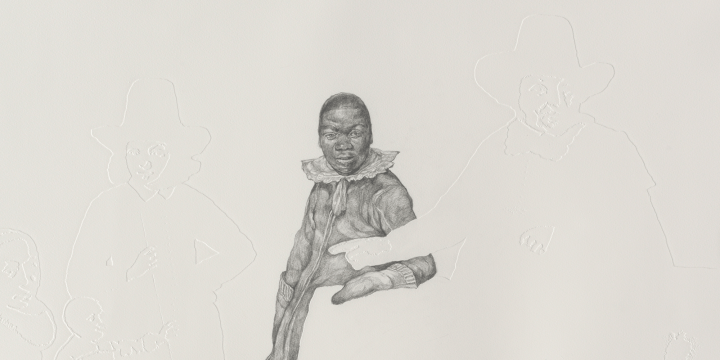
Barbara Walker, Vanishing Point 29 (Duyster), 2021 / © Barbara Walker, 2023.
More information on the Vanishing Point series is available here»
◊ ◊ ◊ ◊ ◊
Opening soon at The Fitzwilliam:
Black Atlantic: Power, People, Resistance
The Fitzwilliam Museum, Cambridge, 8 September 2023 — 7 January 2024
Curated by Jake Subryan Richards
A landmark exhibition exploring the impact of the Black Atlantic staged in the Museum’s historic Founder’s Galleries, which were built using the profits from enslavement and exploitation.
Black Atlantic: Power, People, Resistance brings together significant national and international loans with collections from across the University of Cambridge’s museums, libraries, and colleges to tell both a Cambridge story and a global one. Using as its starting point the story of the Museum’s founder, Viscount Richard Fitzwilliam, whose family wealth came in part from the South Sea Company and East India Company, the exhibition charts a history from pre-colonial Africa and the Caribbean, the rise and racialisation of Atlantic enslavement, and histories of resistance by enslaved people and their allies. Artworks and other objects illustrating the financial, scientific, and commercial transformations in seventeenth- and eighteenth-century Britain that came about because of enslaved labour are shown in dialogue with modern and contemporary artworks by artists including Donald Locke, Barbara Walker, Keith Piper, and Jacqueline Bishop that respond to hidden histories and reveal stories of courage, resistance, hope, and repair.
Black Atlantic is curated by Dr Jake Subryan Richards, acclaimed early career historian of law, empire, and the African diaspora in the Atlantic world at the London School of Economics. It is the first in a series of exhibitions and gallery interventions planned for 2023–2026.
The catalogue is published by Bloomsbury:
Victoria Avery and Jake Subryan Richards, eds., Black Atlantic: Power, People, Resistance (London: Philip Wilson Publishing, 2023), 192 pages, ISBN: 978-1781301234, £30 / $40.
Published to accompany the landmark exhibition on view at the Fitzwilliam Museum in autumn 2023, the catalogue contains contributions by curators, historians, and artists.
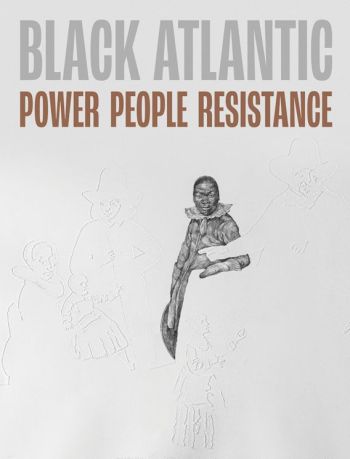 Black Atlantic: Power, People, Resistance brings together significant national and international loans with exhibits from the Fitzwilliam’s collection and from other University museums, colleges, and libraries. Objects and artworks illustrating the financial, scientific, and commercial transformations in seventeenth- and eighteenth-century Britain that came about because of enslaved labour are shown in dialogue with modern and contemporary artworks by artists including Donald Locke, Barbara Walker, Keith Piper, and Jacqueline Bishop that respond to hidden histories and reveal stories of courage, resistance, hope, and repair.
c o n t e n t s
Contributor Biographies
Acknowledgements
Foreword by Luke Syson
Introduction
Section 1 | Before Atlantic Enslavement
• Africa: Akan Region
• Indigenous Islands in the Caribbean Sea
• Europe: Slavery before Racism, Blackness before Slavery
Section 2 | Cambridge Wealth from Atlantic Enslavement
• Royal Patronage
• Making Money: Dutch Connections
• Technology for the Transatlantic Trade
• Warfare between the British, Dutch, and Spanish Empires
Section 3 | Fashion, Consumption, and Racism
• Blackness in European Art
• Enslavement and Fashion
Section 4 | Plantations: Production and Resistance
• Production, Knowledge Generation, and Exploitation
• Plantation Violence
• Remembering
Further Reading
Image Credits
Index
New Book | Transpacific Engagements
From The Getty:
Florina Capistrano-Baker and Meha Priyadarshini, eds., Transpacific Engagements: Trade, Translation, and Visual Culture of Entangled Empires, 1565–1898 (Los Angeles: Getty Publications, 2022), 320 pages, ISBN: 978-6218028258 (hardback), $55 / ISBN: 978-6218028227 (paperback), $45.
 This wide-ranging collection of scholarly essays explores the hybrid cultures, intellectual clashes, and dynamic exchanges of the transpacific region in the age of imperialism.
Between the sixteenth and nineteenth centuries, competing European empires vied for commercial and political control of oceanic routes between Asia and the Americas. Transpacific Engagements addresses the resulting cultural and artistic exchanges with an emphasis on the Spanish and American enterprises in the Asia-Pacific region. This volume explores artistic expressions of imperial aspirations and imaginaries in the Philippines, Spain, Japan, and Hawaii; the transformations of texts, images, and culinary practices as they moved from one cultural context to another; and the movement of objects and people across the transpacific, with particular attention to the Manila Galleon trade that flourished from 1565 to 1815. Featuring contributions by art historians, anthropologists, historians, and cultural studies scholars, Transpacific Engagements gathers groundbreaking investigations of objects and histories to illustrate the role of East, South, and Southeast Asian polities and dynasties in these multilateral exchanges.
Published by the Ayala Foundation, Inc. in association with the Getty Research Institute and Kunsthistorisches Institut in Florenz (Max-Planck-Institut).
Florina H. Capistrano-Baker is the former director of the Ayala Museum and its current consulting curator and project consultant for international operations. Meha Priyadarshini is assistant professor in the Department of History at the University of Edinburgh.
New Book | Pet Revolution
From Reaktion Books and The University of Chicago Press:
Jane Hamlett and Julie-Marie Strange, Pet Revolution: Animals and the Making of Modern British Life (London: Reaktion Books, 2023), 256 pages, ISBN: 978-1789146868, £20 / $35.
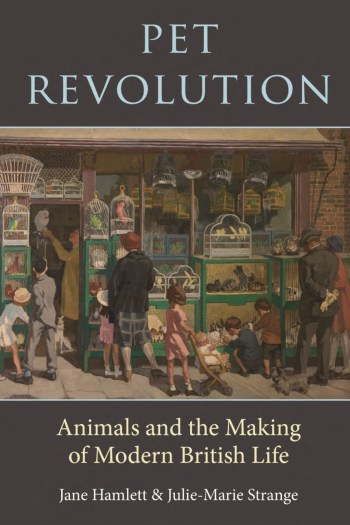 Pet Revolution tracks the British love affair with pets over the last two centuries, showing how the kinds of pets we keep, as well as how we relate to and care for them, has changed radically. The book describes the growth of pet foods and medicines, the rise of pet shops, and the development of veterinary care, creating the pet economy. Most importantly, pets have played a powerful emotional role in families across all social classes, creating new kinds of relationships and home lives. For the first time, through a history of companion animals and the humans who lived with them, this book puts the story of the ‘pet revolution’ alongside other revolutions—industrial, agricultural, political—to highlight how animals contributed to modern British life.
Jane Hamlett is professor of modern British history at Royal Holloway, University of London. Her books include Material Relations: Middle-Class Families and Domestic Interiors in England, 1850–1910.
Julie-Marie Strange is professor of modern British History at Durham University. Her books include The Invention of the Modern Dog: Breed and Blood in Victorian Britain.
Exhibition | Portraits of Dogs

Jean-Jacques Bachelier, Dog of the Havana Breed, detail, 1768, oil on canvas, 70 × 91 cm
(The Bowes Museum, Barnard Castle, BM 913)
◊ ◊ ◊ ◊ ◊
For anyone celebrating, a very happy National Dog Day to you and yours! Now on at The Wallace Collection:
Portraits of Dogs: From Gainsborough to Hockney
The Wallace Collection, London, 29 March — 15 October 2023
The exhibition Portraits of Dogs: From Gainsborough to Hockney explores our devotion to four-legged friends across the centuries. Through carefully selected paintings, sculptures, drawings, works of art and even taxidermy, the exhibition highlights the unique bond between humans and their canine companions. Dog portraiture developed as an artistic genre contemporaneously with its human counterpart—dogs are represented in the earliest cave paintings alongside humans—and it flourished, particularly in Britain, from the 17th century onwards. More than any other nationality perhaps, the British have both commissioned and collected portraits of dogs. Bringing over 50 works of art to Hertford House, Portraits of Dogs presents a broad range of portraiture showing dogs in all their different shapes and sizes, with each painter or sculptor challenging themselves how best to represent mankind’s most faithful and fearless friend.
From Giles:
Xavier Bray and Bruce Fogle, Faithful and Fearless: Portraits of Dogs (London: Giles, 2021), 160 pages, ISBN: 978-1913875015, £25 / $35.
 Throughout history, dogs and humans have had a special relationship based on trust, loyalty, and friendship—a relationship frequently immortalised in art. Faithful and Fearless: Portraits of Dogs features 50 works of art depicting the bond between people and their beloved pet—from members of the British Royal Family, to artists themselves. Organised in a series of thematically grouped sections—the dog as hero, as a companion to royals, aristocrats and artists, or as an allegory of the human condition—the book explores the canine portrait in its many guises and features dogs belonging to many celebrated figures, including Queen Victoria’s Tilco, Lucian Freud’s Pluto, and David Hockney’s portraits of his dachshunds, Stanley and Boodgie. The pieces are all drawn from major British collections including the Royal Collection, the V&A, Tate Britain, the British Museum, and a wealth of regional museums and private collections. In “A Vet’s Point of View,” renowned clinical veterinarian Bruce Fogle examines the many reasons for the extraordinary bond between dogs and their owners. At a time of rising dog ownership, this enchanting volume is a welcome reminder of our devotion to our four-legged friends.
c o n t e n t s
Director’s Foreword
Faithful and Fearless: Portraits of Dogs by Xavier Bray
Catalogue: Introduction
• The Aristocratic Dog
• The Royal Dog
• Kylin and AhCum: Two Pekinese
• The Artist’s Dog
• The Allegorical Dog
• The Heroic Dog
• The Dog Immortal
• Until Death
A Vet’s Point of View by Bruce Fogle
Notes
Index
Photo credits
At Sotheby’s | Delamarre’s Portrait of a Small Poodle
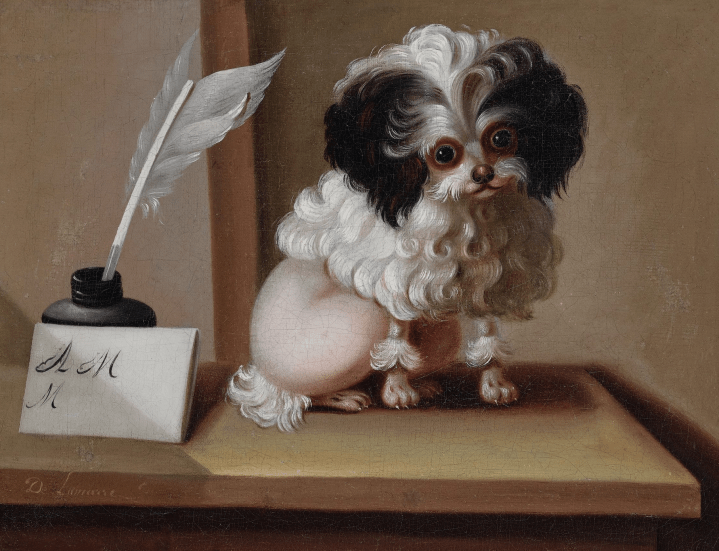
Jacques Barthélémy Delamarre, Portrait of a Small Poodle, Said to be ‘Pompon,’ a Beloved Dog of Marie Antoinette, oil on canvas, 34 × 41 cm
(Sotheby’s)
◊ ◊ ◊ ◊ ◊
For anyone who missed this story from a few months back . . . As reported by HyperAllergic:
Elaine Velie, “Portrait of Marie Antoinette’s Dog Skyrockets at Auction,” HyperAllergic (26 May 2023). Jacques Barthélémy Delamarre’s 18th-century canine portrait, said to depict the French queen’s beloved ‘Pompon’, sold for a whopping $280K.
A delightful little dog portrait made a royal showing at Sotheby’s this morning (26 May 2023), where it sold for $279,400 including fees—nearly 56 times its high estimate of $5,000. Jacques Barthélémy Delamarre’s late 18th-century oil painting is thought to be a depiction of Marie Antoinette’s ‘Pompon’, one of the French queen’s many canine companions. Mystery shrouds the subject of the portrait, but little is known about the artist, too. . .
The full article is available here»
New Book | Venice: City of Pictures
Coming this fall from Thames & Hudson:
Martin Gayford, Venice: City of Pictures (London: Thames & Hudson, 2023), 384 pages, ISBN: 978-0500022665, $40.
 A visual journey through five centuries of the city known for centuries as, ‘La Serenissima’—a unique and compelling story for both lovers of Venice and lovers of its art.
Enchanting, captivating, precious—Venice is one of the most cherished cities in the world. For centuries it was the heart of a global maritime power and a crossroads for diverse cultures. Today the city attracts millions of visitors each year, enticed by its irresistible beauty. Art lovers are drawn here by the paintings, prints, drawings, and films made by generations of artists who have captured its magical allure. It is through images—both of the city and the art created there—that Venice’s identity has been forged and spread so powerfully. Venice was a major center of art in the Renaissance: the city where the medium of oil on canvas became the norm. The achievements of the Bellini brothers, Vittore Carpaccio, Giorgione, Titian, Tintoretto, and Paolo Veronese are a key part of this story. Nowhere else has been depicted by so many great painters in so many diverse styles and moods. Venetian views were a specialty of native artists such as Canaletto and Francesco Guardi, but the city has also been represented by outsiders: William Turner, Claude Monet, John Singer Sargent, Howard Hodgkin, and many more. Then there are those who came to look at and write about art. The reactions of Henry James, George Eliot, Richard Wagner, and others enrich this tale. Nor is the story over. Since the advent of the Venice Biennale in the 1890s, the city has become a shop window for the contemporary art of the whole world. In this elegant volume, Martin Gayford takes us on a visual journey through the past five centuries of the city known as “La Serenissima,” the ‘Most Serene’.
Martin Gayford is art critic for The Spectator. His books include Man with a Blue Scarf; Modernists and Mavericks; Spring Cannot Be Cancelled, with David Hockney; A History of Pictures, with David Hockney; Shaping the World, with Antony Gormley; and Love Lucian: The Letters of Lucian Freud, 1939–1954, with David Dawson.
Exhibition | Drawings by Giambattista and Domenico Tiepolo
Opening this fall at The Morgan:
Spirit and Invention: Drawings by Giambattista and Domenico Tiepolo
The Morgan Library & Museum, New York, 27 October 2023 — 28 January 2024
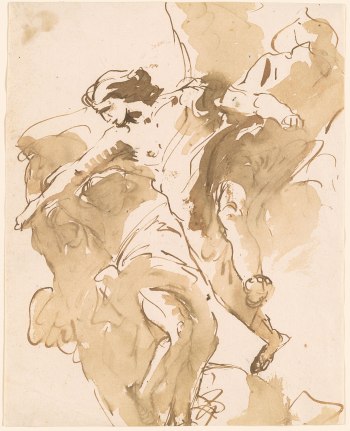
Giovanni Battista Tiepolo, Three Angels in Flight, 1754, pen and brown ink, with brown wash on paper, 26 × 20 cm (New York: The Morgan Library & Museum, IV, 95a).
The Morgan is home to one of the world’s largest and most important collections of drawings by Giambattista Tiepolo (1696–1770) and his eldest son Domenico (1727–1804), with more than 300 representative examples of their lively invention and masterful techniques. Combining highlights from the Morgan’s collection with carefully selected loans, this exhibition will provide a comprehensive look at the the Tiepolos’ work as draftsmen, focusing on the role of drawing in their creative process and the distinct physical and stylistic properties of their graphic work.
At the core of the collection and exhibition are substantial groups of Giambattista’s drawings that relate to major ceiling fresco projects of the 1740s and 1750s. A fresh look at the style, function, and material properties of these working drawings has yielded new insights into their purposes. Most significantly, the exhibition presents for the first time extremely rare pen studies for Tiepolo’s magnum opus, the ceiling fresco above the staircase of the Würzburg Residenz of 1752, and a group of bold sketches newly connected with his ceiling fresco of 1754 at the Venetian church of Santa Maria della Pietà. Other sections of the exhibition highlight the introduction of Domenico to the family workshop, the exchanges between father and son, and the great series drawings by both: Giambattista’s fantastic heads and figures seen di sotto in su, and Domenico’s drawings of animals, biblical scenes, and contemporary life. The exhibition will end with a wall including striking examples from Domenico’s late Punchinello series.
r e l a t e d p r o g r a m m i n g
Friday, 27 October 2023, 6.00pm
Lecture by John Marciari (Charles W. Engelhard Curator, Drawings and Prints), A Magical Performance: Drawings by Giambattista and Domenico Tiepolo
Thursday, 16 November 2023, 7.30pm
Concert — I Gemelli, A Room of Mirrors: Music by d’India, Marini, Frescobaldi, Calestani, and Gregori | Emiliano Gonzalez Toro, director and tenor; Zachary Wilder, tenor
Since 1980, the Boston Early Music Festival has been at the forefront for excellence in the field of Early Music throughout North America; BEMF began co-presenting concerts and opera productions at the Morgan in 2006.
Friday, 15 December 2023, 5.30pm
Gallery Talk by John Marciari (Charles W. Engelhard Curator, Drawings and Prints)
Exhibition | La Serenissima: Drawing in 18th-Century Venice
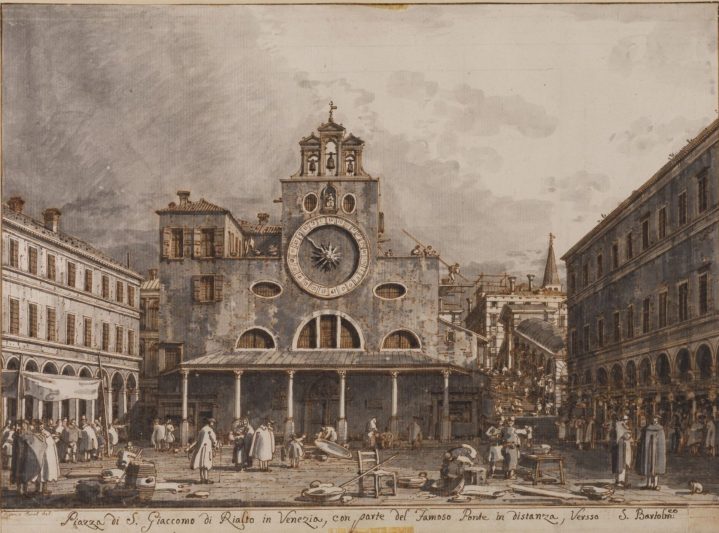
Giovanni Antonio Canaletto, Piazza San Giacomo di Rialto, 1760–69
(London: The Courtauld)
◊ ◊ ◊ ◊ ◊
Opening in October at The Courtauld:
La Serenissima: Drawing in 18th-Century Venice
The Courtauld, London, 14 October 2023 — 11 February 2024
Curated by Marco Mansi with Ketty Gottardo
La Serenissima: Drawing in 18th-Century Venice presents an outstanding group of around twenty Venetian drawings from The Courtauld’s collection. They evoke the energy and creativity of Venice at a time when the city flourished as one of the great cultural capitals of Europe. At the dawn of the 18th century, Venice was a magnet for visitors from across Europe, drawn by its architecture, history, and cosmopolitan atmosphere. Many of the artists featured in this exhibition produced works for an international clientele, who avidly collected images of the city, its inhabitants, and its colourful traditions. Landmarks such as St Mark’s Square and the Grand Canal set the stage for Canaletto’s celebrated views of the city’s lively streets and waterways. Piazzetta’s evocative head studies and Giambattista Tiepolo’s playful caricatures depict an early modern metropolis populated by a myriad of characters of different social backgrounds, while Guardi’s panoramic Feast of Ascension Day records the formal splendour and ceremony of the city known as La Serenissima—the most serene.
The display is curated by Marco Mansi, PhD candidate and Print Room Assistant at the Courtauld, under the supervision of Ketty Gottardo, Curator of Drawings.
Exhibition | Allegories for Learning: Italian Works on Paper

Guido Reni, Allegory of Learning (Seated Woman Holding a Tablet and Compass, alongside a Winged Putto), detail, ca. 1600–40, etching, Bartsch XVIII.289.16 (Athens: Georgia Museum of Art).
◊ ◊ ◊ ◊ ◊
Now on view at the Frost Art Museum in Miami:
Allegories for Learning:
16th- to 18th-Century Italian Works on Paper from the Georgia Museum of Art
Patricia & Phillip Frost Art Museum, Florida International University, Miami, 10 June — 10 September 2023
Curated by Nelda Damiano
Drawing became valued as an independent art form in Europe around the end of the 14th century. In studios and academies, apprentices repeatedly copied prints and drawings to improve their observational skills and hone their technique. With increased proficiency came more challenging exercises, such as using plaster casts and live models for arts instruction. This exhibition of works on paper illuminates how a drawing’s appearance reflects its geographical origin and the hand of an artist. The work’s formal qualities—media, support, variation of the lines—can point to a specific region in Italy. The location then makes it easier to narrow the list of contenders for authorship. This attribution process illustrates how influential artists who primarily lived in cultural centers, such as Florence, Bologna, and Venice, shaped generations of pupils and followers throughout Italy and beyond. Drawing played a central role in the creative process, the transmittal of ideas, and the spread of artistic styles. The works included here reinforce the power of drawings as a rich and varied medium. The exhibition is curated by Nelda Damiano, the Pierre Daura Curator of European Art at the Georgia Museum of Art in Athens.
New Book | Lauritz de Thurah: Architecture and Worldviews
From Strandberg Publishing:
Peter Thule Kristensen, ed., with contributions by Thomas Lyngby, Else Marie Bukdahl, Martin Søberg, Sanne Maekelberg, Natalie Körner, and Nina Ventzel Riis, Lauritz de Thurah: Architecture and Worldviews in 18th-Century Denmark (Copenhagen: Strandberg Publishing, 2023), 432 pages, ISBN: 978-8794102704, £70.
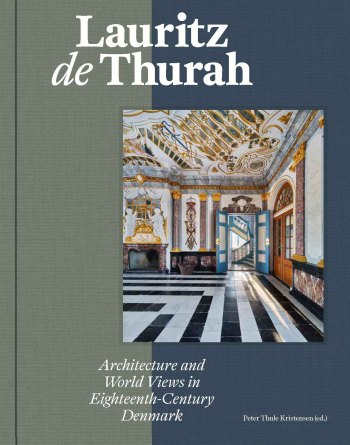 Lauritz de Thurah (1706–1759) was one of Denmark’s most significant architects of the Baroque period. He created several important buildings—including the Hermitage Hunting Lodge, the Royal Palace in Roskilde, Gammel Holtegaard, and the famous spire of the Church of Our Saviour in Copenhagen—and masterminded conversions and extensions of properties such as Ledreborg, Frederiksberg Castle, Børglum Kloster, and the now demolished summer residence Hirschholm Palace (widely known as the ‘Versailles of the North’). The mainstay of this monograph is Peter Thule Kristensen’s presentation of Thurah’s rich and complex architecture. The other chapters—written by experts Else Marie Bukdahl, Martin Søberg, Thomas Lyngby, Natalie Patricia Körner, Sanne Maekelberg, and Nina Ventzel Riis—describe Thurah’s roles as a leading architectural historian, topographer, grand tour traveller, civil servant, military man, and trailblazer within the new social structure in Denmark under absolute rule. The book also sheds light on the Baroque period in a broader sense, delving into the era’s court culture, garden design, and church architecture. Finally, the afterlife of Thurah’s works is addressed: how do his buildings function in our present day, having been adapted to the needs and users of a new era?
Peter Thule Kristensen is Professor, Head of the Master Programme Spatial Design at the Royal Danish Academy – Institute of Architecture and Design and a Core Scholar at the Centre for Privacy Studies at University of Copenhagen. He is M.Arch. from The Royal Danish Academy of Fine Arts, School of Architecture (1994), Ph.D. in architectural history from the same institution (2014), and dr.phil. in art history from Aarhus University (2014).










 Enfilade
leave a comment