Call for Articles | Japonisme and Fashion

From the Call for Papers:
Japonisme and Fashion — Special Issue of the Journal of Japonisme, 2024
Edited by Elizabeth Emery and Mei Mei Rado
Articles due by 1 July 2023
Japanese garments and textiles have captured the European imagination since the seventeenth century, exerting particular influence on European and American fashion after the 1860s when artists such as Whistler, Tissot, and the Rossettis competed to acquire kimono from shops such as that of Emile and Louise Desoye at 220 rue de Rivoli in Paris. They promptly emulated Japanese motifs in their own artistic creations, such as Whistler’s Princesse du pays de la porcelaine (1864–65). From paintings, poetry, and music to clothing, costume design, and cosplay, artists and designers from around the world have continued to create new japoniste works inspired by Japanese fashion.
Building on recent interest on the worldwide impact of Japanese fashion (museum exhibits and publications by scholars such as Akiko Fukai), this special issue of the Journal of Japonisme, to be published in 2024, welcomes complete essays in English (translation from French may be possible; please enquire) dedicated to figures or movements from around the world that have taken Japanese garments, textiles, or patterns as inspiration for new artistic creations. Each submission should be no longer than 20 pages (including notes) and may include up to 12 images, which will appear in color online, but black and white in print. Authors are responsible for obtaining the relevant permissions. For information about format, submission, and peer review please consult the Author Instructions. Articles should be submitted by 1 July 2023 via Editorial Manager. For more information or questions, please contact submissionsJOJ@gmail.com.
The Journal of Japonisme accepts submissions dedicated to the worldwide reception of Japanese art and culture in history, visual culture including the history of art and design, the decorative arts, painting and the graphic arts, architecture, fashion, film, literature, aesthetics, art criticism, and music. Articles related to collectors of Japanese art, either specific museums or individuals, are also encouraged.
Call for Articles | Gastronomic Criticism
From the Appel à contribution:
La critique gastronomique : histoire, rhétorique, valeurs, institutions
Edited by Julia Csergo and Frédérique Desbuissons
Proposals due by 15 February 2023, with full texts due by 15 January 2024
Il s’agit de produire un volume de synthèse (reader) qui analyse, dans une perspective tant historique que contemporaine, le phénomène de la critique gastronomique : son émergence, ses relations avec la critique s’exerçant dans les autres domaines de la création, en s’attachant à ses fonctions, ses formes et sa rhétorique, aux valeurs qui la structurent, aux institutions, media et instances qui la légitiment, et à l’économie dans laquelle elle s’inscrit.
Plutôt qu’une approche monographique des figures célèbres de la gastronomie, nous aborderons la question à partir d’une grille d’analyse organisée selon les thématiques suivantes :
1. L’émergence du phénomène de la critique gastronomique : généralement datée du tournant des XVIIIe et XIXe siècles, en lien avec l’essor des commerces de bouche, puis des restaurants, elle connaît des développements inédits et des métamorphoses au cours des XXe et XXIe siècles. Ce chapitre vise à mieux définir sur cette période les quatre fonctions principales de la critique — informer, instruire, juger, promouvoir — telles qu’elles sont perceptibles dans le domaine spécifique de la gastronomie. L’objectif est de souligner ses liens avec la critique s’exerçant dans les autres domaines de la création, sa spécialisation et sa professionnalisation.
2. Les formes et les rhétoriques : ce chapitre portera sur les discours produits à travers la littérature, la philosophie, l’érudition, la chronique, le billet, etc. Il scrutera les postures auctoriales — qui parle ? de quel point de vue ? — autant qu’il interrogera l’existence d’éventuels mouvements ou styles à partir desquels les autres formes de critique ont pu structurer leurs propos. Il abordera aussi la place qu’y occupent les illustrations, la façon dont celles-ci contribuent aux fonctions dévolues à la critique afin de s’écarter du logocentrisme souvent associé à la gastronomie.
3. Les valeurs qui structurent la production et la diffusion de la critique : à partir de quels critères ou indicateurs — esthétiques, éthiques, sociaux, économiques, politiques — s’opèrent les jugements de goût, et plus largement les évaluations particulières ? Sont-elles toujours explicitées et justifiés ? Les valeurs généralement reconnues à l’art constituent-elles une grille d’analyse pertinente pour la critique gastronomique ? Qu’en est-il de l’indépendance dont elle revendique les vertus ? Entre mise en ordre et représentation du « bien manger » seront abordées les questions de genre, d’identité et de pouvoirs.
4. Institutions critiques : ce chapitre vise à analyser le rôle des clubs, sociétés, réseaux, médias dans la légitimation de la critique gastronomique. Le rôle des palmarès, ainsi que des transformations induites par les nouvelles technologies, réseaux sociaux, influenceurs, etc.
Les articles proposés, rédigés en français, devront contenir une part inédite de recherche, d’hypothèses ou de mises à jour ; ils ne sauraient reprendre la totalité d’un article déjà paru. La taille des articles sera d’environ 35 000 signes, notes comprises. Propositions et articles seront adressés conjointement à : csergo.julia@uqam.ca / frederique.desbuissons@univ-reims.fr
Calendrier
Soumission des propositions accompagnées d’une notice bio-bibliographique : 15 février 2023
Sélection des propositions par le Comité scientifique : 15 mars 2023
Remise des textes par les auteur·e·s pour double évaluation : 15 janvier 2024
Retours aux auteur·e·s : 15 mars 2024
Remise des textes définitifs : 30 juin 2024 Sortie du volume : automne 2024
Éditeur
Menu Fretin, Chartres
Éditrices
Julia Csergo (université du Québec à Montréal / Chaire de recherche du Canada en patrimoine urbain)
Frédérique Desbuissons (université de Reims Champagne-Ardenne / HiCSA)
Comité scientifique
Matthieu Aussudre (historien et critique indépendant, Paris)
Benedict Beaugé (auteur gastronomique, Paris)
Michael Garval (North Carolina State University, Raleigh)
Bertrand Marqueur (université de Strasbourg)
Catherine Méneux (université Paris 1 Panthéon-Sorbonne)
Laure Ménétrier (musée du vin de Champagne et d’Archéologie d’Épernay) Sidonie Naulin (Sciences Po Grenoble)
Denis Saillard (université Versailles Saint-Quentin-en-Yvelines)
Display | Print and Prejudice: Women Printmakers, 1700–1930
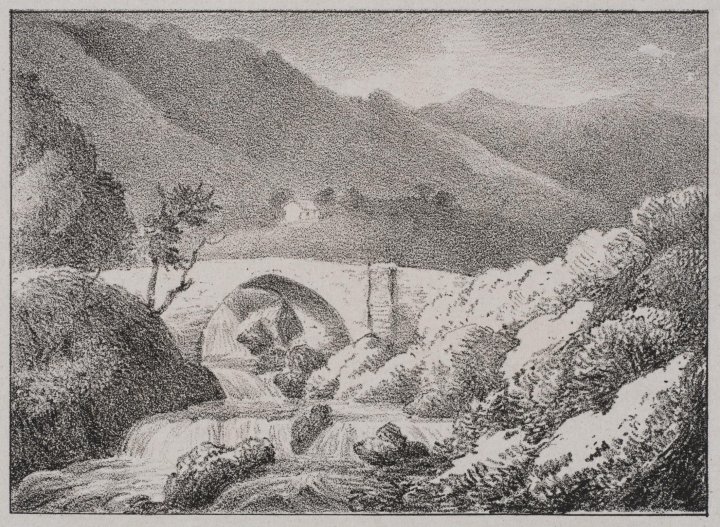
Dorothea Knighton (1780–1862), Landscape, early nineteenth century, lithograph, 6.4 × 9 cm
(London: V&A, E.343-2017)
◊ ◊ ◊ ◊ ◊
From the V&A:
Print and Prejudice: Women Printmakers, 1700–1930
Victoria & Albert Museum, 5 November 2022 — 1 May 2023
This display charts the development of women artists’ remarkable but overlooked engagement with printmaking from the 18th to early 20th centuries—from picturesque landscapes, to intimate portraits and vibrant botanical works.
Online Talk | Malcolm Baker on Canova’s Three Graces at the V&A

Antonio Canova, The Three Graces (detail), 1814–17 (London: V&A Museum, no. A.4-1994).
This evening (London time), from the V&A:
Malcolm Baker with Kira d’Alburquerque | Canova’s Three Graces and the V&A
Online and in-person, Victoria and Albert Museum, London, 19 January 2023, 7pm
Malcolm Baker joins V&A curator Kira d’Alburquerque for a look at Antonio Canova’s The Three Graces (1814–17) and the campaign to save the celebrated group in the early 1990s. Baker played a significant role in the acquisition of the work for the V&A nearly three decades ago. He joins Kira d’Alburquerque to discuss the campaign to “Save the Three Graces” and how attitudes toward Canova’s sculpture have changed. The talk will be held in-person and on Zoom. Online tickets are £5. If, as a ticket-holder, you have not received a link by noon on the day, contact membershipevents@vam.ac.uk.
New Book | Heritage
Available from Blackwell’s:
James Stourton, Heritage: A History of How We Conserve Our Past (London: Apollo, 2022), 496 pages, ISBN: 978-1838933166, £40.
 Heritage is all around us: millions belong to its organisations, tens of thousands volunteer for it, and politicians pay lip service to it. When the Victorians began to employ the term in something approaching the modern sense, they applied it to cathedrals, castles, villages, and certain landscapes. Since then a multiplicity of heritage labels have arisen, cultural and commercial, tangible and intangible—for just as every era has its notion of heritage, so does every social group, and every generation. In Heritage, James Stourton focuses on elements of our cultural and natural environment that have been deliberately preserved: the British countryside and national parks, buildings such as Blenheim Palace and Tattersall Castle, and the works of art inside them. He charts two heroic periods of conservation—the 1880s and the 1960s—and considers whether threats of wealth, rampant development, and complacency are similar in the present day. Heritage is both a story of crisis and profound change in public perception, and one of hope and regeneration.
James Stourton is a British art historian, a former Chairman of Sotheby’s UK, and the author of Great Houses of London, British Embassies, and the authorized biography of Kenneth Clark. Stourton frequently lectures for Cambridge University History of Art Faculty, Sotheby’s Institute of Education, and The Art Fund. In addition, he is a senior fellow of the Institute of Historical Research, and he sits on the Heritage Memorial Fund, a government panel that decides what constitutes heritage and thus what should be saved for the nation.
C O N T E N T S
Preface
Introduction
1 The First Threats
2 The Search for Arcadia
3 Assembling a National Collection
4 The Exodus of Paintings
5 Brave New World
6 Birmingham and Anti-Heritage
7 The Backlash: The Heroic Period of Conservation
8 Rescuing a City: York
9 The Sack of Bath
10 The Archaeologists
11 Beyond the Town
12 The Fall and Rise of Country Houses
13 The Enthusiasts: Canals and Railways
14 Regeneration: Mills, Housing, and Power Stations
15 Regeneration: Cities, Docklands, and Basins
16 Liverpool Story
17 Margate Sands
18 The Heritage Industry and the Lottery
19 Churches
20 Museums
21 Heritage: An Unfinished History
Acknowledgments
Endnotes
Select Bibliography
Dulwich Loans over 50 Paintings to Strawberry Hill
From the press release, via Art Daily and Richmond.gov.uk:
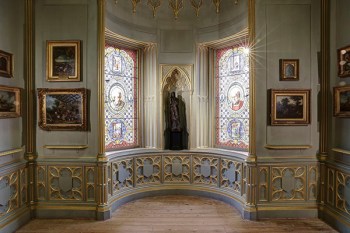
The Tribune, Strawberry Hill House, with loans from Dulwich Picture Gallery (Photo by Matt Chung).
Over fifty Old Master paintings on long-term loan from Dulwich Picture Gallery—and a further eight works from a private English collection—have just gone on display at Strawberry Hill House, helping to recreate the atmosphere of how the house would have appeared over 250 years ago.
As part of an ambitious project—through acquisitions and loan agreements, including the partnership with Dulwich Picture Gallery—Strawberry Hill House, the remarkable former home of the writer, antiquarian, and politician, Horace Walpole (1717–1797) is endeavouring to return some of the 6000 objects from the collection that Walpole amassed during his lifetime and, where possible, to recreate the original atmosphere of the house, when the rooms were filled with fantastic works of art.
In 1842, following Walpole’s death, the contents of the house were dispersed in a famous auction, known as the Great Sale. Since then, it has been a long-held desire of the Strawberry Hill Trust to bring as many pieces possible back to the historic villa in Twickenham. Indeed, its efforts have recently seen the acquisitions of an extraordinary portrait of Catherine de Medici and a celebrated Chinese ceramic fish tub with a macabre past. This appetite to acquire original objects and to display contemporaneous artworks has helped to create an atmosphere that would be familiar to Walpole were he alive today.
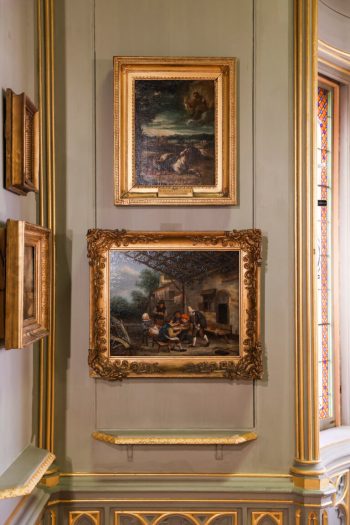
Detail of the Tribune, Strawberry Hill House, with loans from Dulwich Picture Gallery (Photo by Matt Chung).
The relationship between Strawberry Hill House and Dulwich Picture Gallery began in 2011 with the long-term loan of the portrait of Dorothy, Viscountess Townshend, ca. 1718 by Charles Jervas. Dorothy Walpole (1628–1726) was the sister of Sir Robert Walpole, Horace’s father. This portrait of his great aunt now hangs in its original position in the Great Parlour, where Walpole displayed portraits of both his family and some of his closest friends.
Among the paintings from the latest loan is a set of twenty-six British monarchs, assembled by the founder of Dulwich College, Edward Alleyn. These include Henry VIII, ca. 1618; Queen Anne Boleyn, ca. 1618; and Queen Mary, ca. 1618. These royal portraits have been hung in the Holbein Chamber, reflecting Walpole’s passion for history and its protagonists, which also influenced the overall arrangement of the artworks throughout the house. As an antiquarian and writer possessed of a vivid imagination, Walpole had a deep interest in royal and historical figures, evident throughout his collection, as well as in the designs of the house itself. The ceiling in the Holbein Chamber is a copy of the Queen’s Dressing Room in Windsor Castle, while the one in the Library is decorated with heraldic emblems, mythical beasts, coats of arms, and images of mounted crusaders, all reflecting Walpole’s various interests in the medieval period.
Dr Silvia Davoli, Strawberry Hill House Curator says: “Our collaboration with Dulwich Picture Gallery offers us the unique opportunity to borrow a substantial number of paintings that are very similar in style, period, and schools to those once collected by Horace Walpole; and it is thanks to these artworks that the rooms of Strawberry Hill finally appear to us in all their glory, much as they did in Walpole’s time.”
Attingham Courses in 2023

This year’s Attingham course offerings:
The Attingham Trust offers specialist courses for the study of historic houses and their collections based on contextual, in-situ study. Course members are drawn from different fields of the heritage sector, including curators, architects and architectural historians, conservators, academics, historic house managers, and decorative arts specialists from around the world. The clear objectives of the courses are to examine the architectural and social history of historic houses and palaces, to study their contents and collections, and to stimulate discussion on conservation, preservation, display, and interpretation. Group discussion is core to the programmes, and participants are expected to share their knowledge and expertise and engage with current debates.

Members of the Royal Collection Studies programme in the Print Room at Windsor Castle, looking at drawings by Holbein.
70th Attingham Summer School, 1–16 July 2023
Applications due by 29 January 2023
This intensive residential course will include visits to country houses in Sussex, Oxfordshire, Derbyshire, Northamptonshire, Norfolk, and Cambridgeshire. The course directors and visiting lecturers are established specialists in their fields, and the range of study is specifically chosen to address a wide curriculum with hands-on object study. In addition to architecture and planning, the focus is on the study of interiors, furniture, paintings, sculpture, ceramics, metalwork, plasterwork, textiles, and other applied arts. Limited scholarship funding is available. More detailed information can be found here»
Royal Collection Studies, 3–12 September 2023
Applications due by 12 February 2023
This annual course, a collaboration now in its 27th year with The Royal Collection, provides a ten-day immersive opportunity to study the British royal collection, one of the most outstanding collections of art and decorative art in the world. Based near Windsor, the course also examines the history of the collection and the key roles played by monarchs and their consorts over the centuries. Combining a mixture of lectures and tutorials, visits to both the occupied and unoccupied palaces in and around London, and close-up object study, Royal Collection Studies aims to give experienced professionals in the heritage sector a deeper understanding of this remarkable collection. Limited scholarship funding is available. More detailed information can be found here»
Attingham Study Programme: Andrea Palladio, Venice, and the Veneto, 18–26 September 2023
Applications due by 12 February 2023
The 2023 Study Programme will consider the impact of Palladian architecture, Venetian painting, sculpture, and decorative art on the development of the country house in Europe, Britain, and the USA. Based in and around Venice and its lagoon and accompanied by specialists in their field, the course will also consider the preservation, conservation, and ecology of Venice and its artistic legacy. More detailed information can be found here»
The London House Course, October 2023
Applications details forthcoming
This non-residential week-long course studies the development of the London house from the Renaissance to the present. It combines visits to houses with lectures by leading authorities. Progressing broadly chronologically and exploring all over London, the course takes members inside grand aristocratic buildings, smaller domestic houses, artists’ studios, and the garden suburb. More detailed information can be found here»
Call for Papers | (Dis-)Appropriation of Synagogue Architecture

Pałac Karnickich, Warsaw. Constructed in 1877 for a government official and rebuilt after World War II, the building now houses the Deutsches Historisches Institut Warschau.
◊ ◊ ◊ ◊ ◊
From ArtHist.net and the Deutsches Historisches Institut Warschau:
Jewish or Common Heritage? (Dis-)appropriation of Synagogue Architecture in East-Central Europe since 1945
POLIN Museum of the History of Polish Jews and the German Historical Institute, Warsaw, 12–14 September 2023
Proposals due by 31 January 2023
The synagogues that remained standing after World War II have faced an uncertain destiny. As abandoned buildings, they were susceptible to decay quickly and, as former buildings of worship—for legal, cultural, and architectural reasons—posed a great challenge in terms of their reuse. Consequently, many synagogues simply fell into ruins, some were turned into secular buildings of various purposes, and few could have been used as houses of prayer again.
In postwar Europe, synagogue architecture was culturally categorized as an element of Jewish heritage that appeared to be isolated from the common heritage of a city or town—wherever a synagogue stood. At first, synagogues were not considered a shared but a distinct patrimony of a place. A shift in such a state of affairs could have been observed in the last three decades that witnessed a ‘rediscovery’ of synagogues. Though one can still find abandoned synagogues in small towns, in most of the bigger municipalities, these buildings were ‘rediscovered’ as a part of local history and culture and thus became part of the common heritage. In many regions of Europe, the ‘rediscovery’ of the former synagogues led to their restoration and opening to the public, and in rare cases, to their reuse by Jewish communities.

“The Jewish Town / Muranów (1648–1772),” gallery of the Core Exhibition at the POLIN Museum of the History of Polish Jews, Warsaw (Photo by M. Starowieyska and D. Golik). More infromation»
These processes have already been quite well researched in western parts of Europe. A desideratum, however, is approach to the Jewish architectural heritage in those East-Central European territories, whose state affiliation changed after 1945 and whose population was exchanged. For example, in the former Eastern German territories, synagogues still standing at the end of the war became a foreign body in the urban space in a double sense. They neither belonged to the heritage of the new inhabitants, understood as ‘national’ or ‘own’, nor were they clearly attributable to the heritage of the pre-war German population. Synagogues were, therefore, not ‘hostile’ buildings, but in any case, they were irritating as characteristic objects of architecture. A contributing factor was that Jewish communities lasted only in a few cities in these areas.
The aim of the conference is a historicization of the processes of rediscovery in the recent past. We invite contributions linking the historical dimension in dealing with the Jewish architectural heritage with current developments in this field. The focus will be on the historical, political, and cultural preconditions and present processes having an impact on the handling of the Jewish built heritage. The key actors and decision-makers should also be taken into account. Therefore, the connection of the micro and macro levels is indispensable for the understanding of these developments because the impact of local actors and political decisions at the central level are closely interrelated. Global and memory culture trends have also contributed to the interest or disinterest in the respective religious buildings. In addition, transnational networks that influenced the preservation of synagogues will be considered, for example, in the context of the Polish-German dialogue.
The conference will not only discuss examples of a ‘successful rediscovery’ of Jewish architectural monuments. The aim is rather to draw conclusions about broader contexts based on concrete examples. It may be possible to identify patterns that indicate ‘success’ or ‘failure’ of the rediscovery. We also invite contributions that would pose the question of a model of a ‘successful’ or ‘failed’ rediscovery. If possible, however, the focus should be on those East- Central European cities or regions whose territorial affiliation changed in the wake of World War II.
The conference is a cooperation of Bet Tfila – Research Unit for Jewish Architecture in Europe at TU Braunschweig, GHI Warsaw and POLIN Museum of the History of Polish Jews. It takes place within the framework of the “DFG Priority Program 2357: Jewish Cultural Heritage,” which is funded by the German Research Foundation. The conference will take place 12–14 September 2023 at the POLIN Museum for the History of Polish Jews and at the German Historical Institute in Warsaw. Travel costs to and from the conference can be reimbursed within the usual limits.
Submissions will be accepted from any discipline as long as the topic relates to this broad theme. Scholars, experts, and practitioners are welcome. Abstracts should be 200–300 words. Although we welcome speakers from any country, the language of the conference will be English. For best consideration, please submit your abstract and a short CV by 31 January 2023 to Kamila Lenartowicz (k.lenartowicz@tu-braunschweig.de) and Christhardt Henschel (henschel@dhi.waw.pl). Applicants will be informed about their participation by 14 March 2023.
Organizers
• Kamila Lenartowicz and Zuzanna Światowy (Bet Tfila – Research Unit for Jewish Architecture in Europe, Technische Universität Braunschweig)
• Christhardt Henschel (German Historical Institute, Warsaw)
• Aleksandra Jakubczak-Gabay (POLIN Museum of the History of Polish Jews)
◊ ◊ ◊ ◊ ◊
For the American context, see Mark Gordon, “Rediscovering Jewish Infrastructure: 2022 Update on United States Eighteenth- and Nineteenth-Century Synagogues,” American Jewish Historical Society (4 November 2021), available here. –CH
◊ ◊ ◊ ◊ ◊
Note (added 18 January 2023) — More information on the polychrome ceiling, a life-sized wooden replica of the ceiling of the synagogue of Gwoździec at the POLIN Museum, is available here at Enfilade (now largely out-dated) and here with Ariel Fein’s essay for SmartHistory (4 April 2022).
Call for Papers | Listening In: Architectures, Cities, Landscapes

From the conference website:
Listening In: Conversations on Architectures, Cities, and Landscapes, 1700–1900
ETH Zurich, 14–15 September 2023
Proposals due by 10 March 2023
Who do we listen to when we write histories of architectures, cities, and landscapes? How many women authors can we find among our sources? How many of them are cited by those whose research we read? We argue that women and other marginalised groups have always been part of conversations on architectures, cities, and landscapes—but we have not had the space to listen to them. This conference is an invitation to reconstruct such conversations, real, imagined, and metaphorical ones, taking place in the 18th and 19th centuries, in any region, in order to diversify the ways we write histories. Taking the art of conversation, integral as both practice and form to the period in Western thought, and repurposing it to dismantle the exclusivity of historiography, this conference calls for contributions which bring women into dialogue with others.
Listening In proposes a new approach to the ‘canon’ and its protagonists. Rather than either fighting its existence or expanding it by means of ‘exceptions to the rule’, we call for the setting up of productive conversations. We acknowledge that the canon never exists on its own; instead, it is shaped by what Griselda Pollock has called “that which, while repressed, is always present as its structuring other” (1999, 8). This conference is envisaged as a listening exercise. We regard a conversation as both codified practice as well as a specific act of verbal exchange, spoken or written, on a particular subject—here architectures, cities, and landscapes—occurring in a specific site, from street to salon, kitchen to court, construction site to theatre, field to church, or book to newspaper, to name but a few.
We invite papers on conversations that grapple with hierarchies and inequalities, incorporating asymmetrical power relationships while taking care not to gloss over the struggle, pain, and conflict often occurring in these situations. Papers should highlight at least one protagonist identifying as a woman, and are encouraged to also listen to
• persons marginalised because of their race, class, religion, sexual orientation, or else,
• so-called ‘canonical’ figures, both architects and critics as well as those from other professions, disciplines, or domains,
• individuals from different geographical regions, including those affected by the violence of imperialism and colonialism.
Can a focus on conversations help to include in historiography new protagonists as well as sites which we have so far not seen? How about printed sites, in pamphlets, books, magazines, newspapers, or letter writing? And what are the critical notions around which these conversations occur, such as the sublime, character, or sensibility, but also those emerging from indigenous or non-western knowledges, on different sites and in different media? Further, what shifts, if we start from conversations, rather than, for instance, drawings and buildings? How will it affect histories of architectures, cities, and landscapes if these conversations are inclusive rather than exclusive?
This call invites contributions from and on all regions, particularly those that centre intersectional marginalisations. We are interested to hear about every-day experiences and sites so far less explored as well as new reflections on better-known events and structures. We hope to attract speakers from diverse regions, disciplines, backgrounds, and career stages, who are willing to engage with new materials in innovative ways, listening to each other and our sources. The conference is planned as a focused, single-strand event aimed at creating networks of scholars, facilitating exchanges, stimulating groundbreaking discussions, and producing new knowledges.
Listening In is organised in the context of two externally funded research projects based at gta, ETH Zurich: WoWA (Women Writing Architecture 1700–1900) is funded by the ERC, led by Anne Hultzsch, and studies female experiences of architecture and landscapes as recorded in women’s writings from South America and Europe. The SNSF-funded project Building Identity: Character in Architectural Discourse and Design 1750–1850, led by Sigrid de Jong and Maarten Delbeke, focuses on the uses and meaning of the notion of ‘character’ in architectural criticism and practice. Both projects share an interest in the experiences of marginalised groups, especially those who identified as women, and strive to have them heard not in a niche, but in the centre of our field. With this conference we wish to open up our approaches to a wider field of research, going beyond our respective geographical frameworks.
Please submit the following by 10 March 2023 to listening@arch.ethz.ch
• an abstract of no more than 300 words
• your name and professional affiliation if any
• a short curriculum vitae (ca 100 words)
Key Dates
1 December 2022 Launch call for papers
10 March 2023 Deadline to submit abstracts
April 2023 Paper selection and notification of authors
1 May 2023 Speakers confirm their participation
14–15 September 2023 Conference at ETH Zurich, Switzerland
Organisers
PD Dr Anne Hultzsch
Dr Sigrid de Jong
Prof Maarten Delbeke
Dr Sol Pérez Martínez
New Book | Portraits of Resistance
From Yale UP:
Jennifer Van Horn, Portraits of Resistance: Activating Art during Slavery (New Haven: Yale University Press, 2022), 344 pages, ISBN: 978-0300257632, $60.
 A highly original history of American portraiture that places the experiences of enslaved people at its center
This timely and eloquent book tells a new history of American art: how enslaved people mobilized portraiture for acts of defiance. Revisiting the origins of portrait painting in the United States, Jennifer Van Horn reveals how mythologies of whiteness and of nation building erased the aesthetic production of enslaved Americans of African descent and obscured the portrait’s importance as a site of resistance. Moving from the wharves of colonial Rhode Island to antebellum Louisiana plantations to South Carolina townhouses during the Civil War, the book illuminates how enslaved people’s relationships with portraits also shaped the trajectory of African American art post-emancipation. Van Horn asserts that Black creativity, subjecthood, viewership, and iconoclasm constituted instances of everyday rebellion against systemic oppression. Portraits of Resistance is not only a significant intervention in the fields of American art and history but also an important contribution to the reexamination of racial constructs on which American culture was built.
Jennifer Van Horn is associate professor of art history and history at the University of Delaware.
C O N T E N T S
Acknowledgments
Introduction: Neptune Thurston’s Portraits
1 Making Portraits
2 Fleeting Portraits
3 Haunted Portraits
4 Viewing Portraits
5 Destroying Portraits
Epilogue: Archibald Motley’s Portraits
Notes
Illustration Credit
Index










 Enfilade
leave a comment