Burlington Magazine Scholarship | French 18th-Century Art
The application period closes next Tuesday, from The Burlington:
The Burlington Magazine Scholarship | French 18th-Century Fine and Decorative Art
Applications due by 31 March 2026
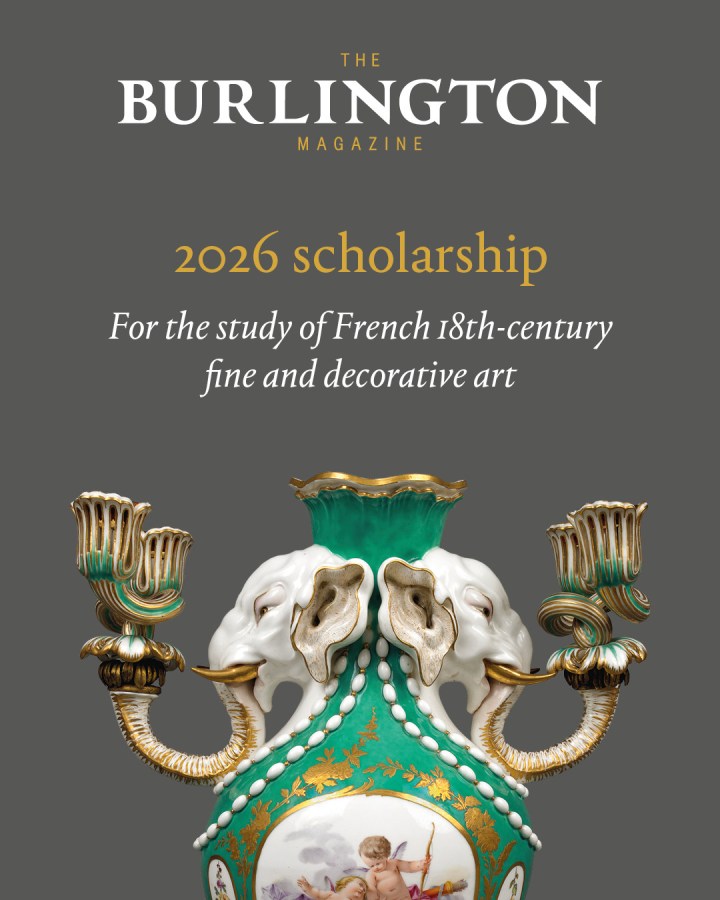 The Burlington Magazine is pleased to announce its ninth annual scholarship to provide funding over a 12-month period to those engaged in the study of French 18th-century fine and decorative art, enabling them to develop new ideas and research that will contribute to this field of art historical study.
Eligibility
Applicants must be studying, or intending to study, for an MA, PhD, post-doctoral or independent research in the field of French 18th-century fine and decorative arts within the 12-month period the funding is given (i.e. September 2026 – August 2027). The funding is open to UK and international applicants.
Research funded by this scholarship may lead to the submission of articles for publication in the Magazine: as such, the panel are looking for object related research, of the kind that the Burlington publishes.
Support and Duration
£12,000 is awarded to one recipient per year and applies to a 12-month period. Payments are made in Pound Sterling. Payments of £3,000 are normally made on a quarterly basis, with the first payment being disbursed within one month of the recipient being formally notified that they have been awarded the scholarship. Some flexibility in the payment schedule can be made, with prior approval, depending on the recipient’s circumstances. Before payment can be made, the recipient must have formally accepted the grant. Any unspent funds at the end of the grant period must be returned to The Burlington.
Eligible costs
• Travel and subsistence costs
• Book costs related to the research
• Image costs related to the research
• Facility/museum/archive access costs or related fees, such as photocopying
Cost NOT allowed
• Travel or registration costs for conference/meeting/workshop/training attendance, collaborative visits, or any training.
• Computer costs, unless it is a dedicated cost that is essential to the proposal and the importance has been clearly justified within the application.
• Any staff costs, whether personal payments (including salary) to the applicant or to other individuals including overseas collaborators, postgraduate, doctoral students and for other members of staff.
• Membership costs to any association(s)/organisation(s)
• General journal subscription costs
Key Dates
The start date of successful applications should be at the beginning of the academic year (generally September). Earlier start dates will be considered for independent scholars or post-doctoral research. The closing date is Tuesday, 31 March 2026. The successful applicant will be notified by 29 May 2026.
Application Procedure
Applicants must provide
• CV
• Description of project/research (no longer than 2 pages of A4)
• Budget
• Proof of Institution you are attending/will attend – if applicable
Applications can only be submitted via email. All application documents must be submitted in PDF or Word document (.docx) format and emailed to scholarship@burlington.org.uk. Shortlisted candidates will be contacted and asked to provide two references for further review by the Selection Panel. All correspondence should be conducted in English.
Monitoring the Award
Grant recipient(s) will provide two reports:
• The first, to be submitted six (6) months after receiving notification of the grant, is an interim written report to the panel on the status and progress of their research. It should be no less than 2-pages of A4 paper, in English.
• The second is a final report to submitted no later than two months after the grant comes to an end. The written report will consist of no less than 2-pages of A4 paper, in English, summarising the results of the research, as well as the spending allocation of the funds received. The recipient will also provide a copy of the thesis or independent research document or publication when it is completed.
Award Acknowledgement and Logo
We ask all award-holders to acknowledge our support in any publicity, conference or workshop talks, promotional material or publications associated with the research funded by The Burlington Magazine. Logos can be provided upon request.
Enquiries
If you have any enquiries about the submission of your application, please contact us at scholarship@burlington.org.uk.
Previous Recipients
2025 Ane Cornelia Pade (University of Cambridge)
2024 Pierre Marty (University of Toronto)
2023 Geoffrey Ripert (Bard Graduate Center)
2022 Alexander Dencher (Leiden University)
2021 Raha Shahidi (University of Sydney)
2020 Axel Moulinier (École du Louvre / University of Bourgogne)
2019 Aurora Laurenti (University of Turin)
2018 Konrad Niemira (University of Warsaw)
Haughton Seminar | Courtly Magnificence
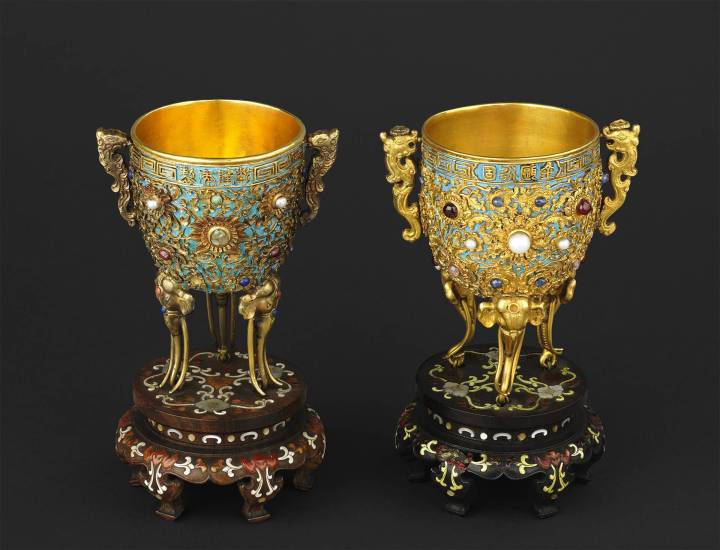
Imperial Wine Cups: Gold Cups of Eternal Stability 金甌永固杯, 1740–41 (Qing dynasty, Qianlong period), gold, kingfisher feathers, pearls, sapphires, spinels, tourmalines, carnelian, quartz, chrysoberyl, lapis, turquoise, ivory, mother of pearl and wood; 18 cm high, including stand (London: Wallace Collection, W112 / W113).
◊ ◊ ◊ ◊ ◊
This year’s Haughton International Seminar:
Courtly Magnificence: Gender, Dynasty, and Politics
The British Academy, 11 Carlton House Terrace, London, 24–25 June 2026
Addressing topics ranging from the royal courts of the Middle Ages to those of the 20th century, this seminar will look at how some of the world’s greatest art collections were formed. It will explore how political intrigue and power were involved in their accumulation and how the personalities of these royal collectors—women as much as men—were reflected in their collections.
Two-day seminar: £140
Two-day seminar including a champagne reception and dinner at The Athenaeum on Wednesday, 24th: £230
Student tickets for two-day seminar (on production of ID): £60
p r e s e n t a t i o n s
• Silvia Davoli — Thinking outside the Court: Horace Walpole, Prince of Strawberry Hill
• Lisa Skogh de Zoete — A Family Network of Collectors: Maria Eleonora of Brandenburg, Christina of Sweden, and Hedwig Eleonora of Schleswig-Holstein-Gottorp
• Mia Jackson — Madame de Pompadour: Love, Friendship, and the Arts
• Rose Kerr — Collections of the Forbidden City
• Tim Knox — China Queens: 20th-Century Royal Collectors of Porcelain
• Caroline McCaffrey-Howarth — Our Ceramic Chasse’: The Exceptional Legacy of Lady Charlotte Schreiber
• Lara Virginie Pitteloud — An Imperial ‘Gluttony’: Art Collecting and the Self-Fashioning of Catherine II’s Court
• Ivan Day and Timothy Schroder — Service a la Francaise
• Christopher (Kit) Maxwell — Staging the Past: The Thorne Miniature Rooms and the Theatre of Historic Interiors
• Timothy Wilson — The Earliest Royal Maiolica Commission: The Service for Matthias Corvinus, King of Hungary, and His Wife Beatrice of Aragon
• Catriona Seth— Virtuous Circulations? Maria Theresa and Marie Antoinette’s Family Portraits
• Claudia Wagner — Collecting Intaglios: Princes as Scholars
Call for Papers | Art as Luxury, Luxury as Art
From TIAMSA:
Art as Luxury, Luxury as Art: Markets and the Making of Value
The International Art Market Studies Association Conference
Sotheby’s Institute of Art, New York, 22–24 October 2026
Proposals due by 29 May 2026
Luxury has long been an important context for art. In sixteenth-century Antwerp, art was a key part of the city’s thriving luxury trade; Our Lady’s Pand—the first permanent art market in Europe—was one of several panden that served these new industries. In eighteenth-century Paris, marchands-merciers such as Edme-François Gersaint sold paintings, drawings, and engravings alongside porcelain, lacquer, jewelry, and shells. At the turn of the twentieth century, the dealer Joseph Duveen not only cultivated in his American industrialist clients a taste for Old Master painting but also promoted European furniture, tapestries, and objets d’art, staging these works in lavish period rooms in his New York gallery to underscore their sumptuousness.
Art has likewise provided a crucial context for luxury. In Belle Époque Paris, Paul Poiret—the designer who arguably created fashion’s first modern lifestyle brand—used art to elevate his enterprise, enlisting artists to create textile designs and sponsoring an avant-garde art gallery. “The designer is, by definition, an artist in luxury,” he wrote. Today’s luxury fashion houses follow Poiret’s model, integrating artworks into their retail spaces, establishing their own art foundations, and developing products in collaboration with artists. Eschewing the labels ‘luxury’ and ‘fashion’, they recast themselves as ‘cultural brands’. At the same time, art businesses situate themselves ever-more explicitly within the luxury sphere. In 2019, Sotheby’s auction house reorganized into two divisions—fine art and luxury—and in 2021, Christie’s revised its website to identify itself as “a world-leading art and luxury business.”
The tenth annual TIAMSA conference focuses on the relationship between the art and luxury markets, both historically and in the contemporary moment, examining their points of intersection, their reciprocal influences, and the ways in which each has shaped—and defined itself in relation to—the other.
Proposals may consider (but are not limited to) the following themes:
• The evolving definitions of ‘art’ and ‘luxury’ over time, and the shifting status of the applied and decorative arts.
• The relative value of art vis-à-vis luxury and the influence of industrialization.
• Historical figures and businesses associated with the art market who also dealt in luxury objects.
• Historical figures and businesses in luxury fields—such as fashion and jewelry—who aligned themselves with fine art.
• Modes of display and sale across art and luxury, historically and today.
• Contemporary art businesses that increasingly rely on the sale of luxury objects, or that adopt sales and marketing tactics from the luxury sector.
• The conditions that historically led auction houses such as Christie’s and Sotheby’s to specialize in fine art—and that more recently have driven their expansion into luxury categories.
• The ‘artification’ of luxury as a business strategy, from artist-brand collaborations to art-filled retail spaces.
• The phenomenon of luxury brands establishing their own art museums, staging pop-up art exhibitions, and transforming their flagship stores into museum-like spaces.
• Art museum exhibitions focused on luxury brands, such as the Metropolitan Museum of Art’s 1983 Yves Saint Laurent exhibition, the Guggenheim’s 2000 Armani show, and the Victoria & Albert Museum’s Alexander McQueen, Dior, and Cartier exhibitions.
• Luxury’s role in expanding the definition of art, including collaborations with artists on NFTs.
• How the values of luxury are shaping art and vice-versa.
We welcome proposals from scholars at all career stages and from a variety of disciplines, including art market studies, luxury studies, art history, economic history, fashion studies, museum studies, cultural sociology, business history, and other related fields.
Please submit an abstract (no more than 300 words) and a short bio by Friday, 1 May 2026, using this form: https://forms.office.com/r/Husr007JDz
Successful papers will be notified by 29 May 2026. For inquiries, please contact tiamsaconference@sia.edu.
New Book | Bicentennial: A Revolutionary History of the 1970s
From The University of Chicago Press:
Marc Stein, Bicentennial: A Revolutionary History of the 1970s (Chicago: The University of Chicago Press, 2026), 416 pages, ISBN: 978-0226847412, $30.
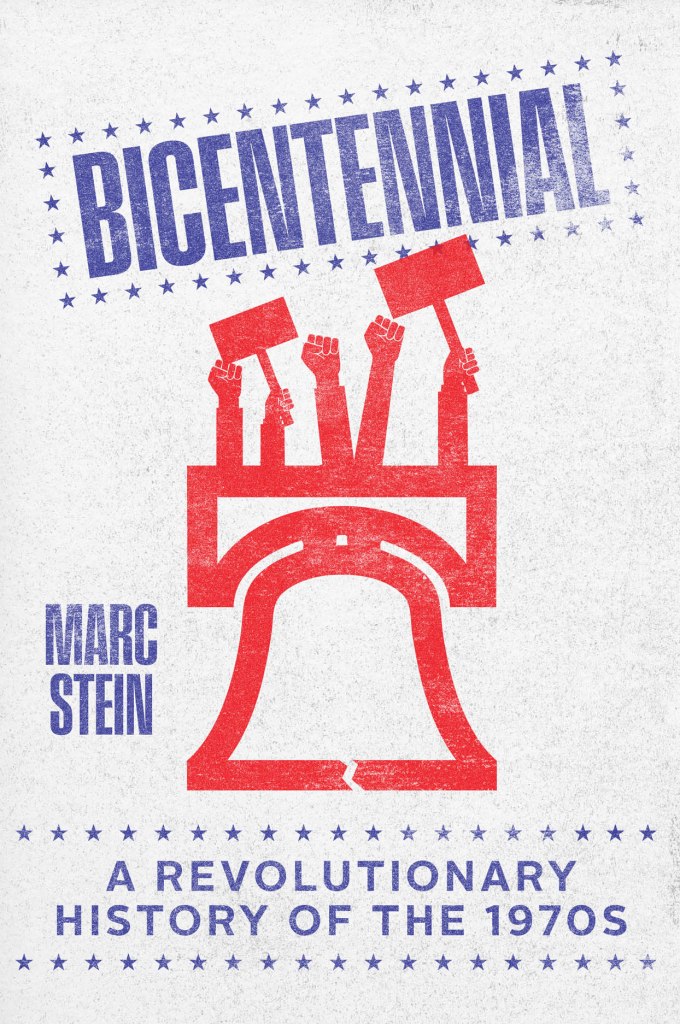 As the United States marks its semiquincentennial in 2026, renowned historian Marc Stein looks back at the politics of another landmark celebration during a time of striking similarities and surprising differences: the US bicentennial in 1976. In the aftermath of Vietnam and Watergate, the bicentennial sparked an extraordinary national conversation about the country’s past, present, and future. As patriots, planners, profiteers, and protesters argued about how to commemorate the national birthday, they collectively reimagined the promises and perils of democracy during a transformational decade.
From award-winning historian Marc Stein, Bicentennial: A Revolutionary History of the 1970s is an original, illuminating, and insightful study of that era. While focusing on festivities and fights in Philadelphia, the nation’s birthplace, the book also explores the many proposed and abandoned celebrations that percolated up around the country. It tells a broadly democratic story of both the ‘official’ bicentennial and counter-bicentennial activism, offering revolutionary perspectives on national politics, social movements, and popular culture. From the queer courtship of President Richard Nixon and Philadelphia Mayor Frank Rizzo to parades and protests with millions of participants, and from a deadly outbreak of Legionnaires’ disease at Philadelphia’s most prestigious hotel to the establishment of groundbreaking African American, ethnic, and Jewish museums, the bicentennial reveals a kaleidoscope of American peculiarities, problems, and possibilities. The lasting influence of 1976 on one of the nation’s great urban centers and the United States as a whole is undeniable. As the nation—once again enmeshed in political and social upheaval—marks its two-hundred-fiftieth birthday in 2026, there is no better time to look back at its two-hundredth and marvel at what has changed, and what has not.
Marc Stein is the Jamie and Phyllis Pasker Professor of US History and Constitutional Law at San Francisco State University. He is the 2026–27 president of the Organization of American Historians and director of the OutHistory website. His previous books include City of Sisterly and Brotherly Loves, Sexual Injustice, Rethinking the Gay and Lesbian Movement, The Stonewall Riots, and Queer Public History.
c o n t e n t s
Introduction
1 The Queer Courtship of Richard Nixon and Frank Rizzo
2 The Rise and Fall of Five Bicentennial Plans
3 The ‘Do-It-Yourself’ Bicentennial
4 Ford to Bicentennial City: Drop Dead
5 ‘We Are the Bicentennial’
6 ‘Freedom’s Way—U.S.A.’
7 Philadelphia Renaissance
8 Happy Birthday, USA
9 Let Freedom Ring
Conclusion
Acknowledgments
Notes
Index
Exhibition | Unrelenting: Cherokee People and the American Revolution
From the press release for the exhibition:
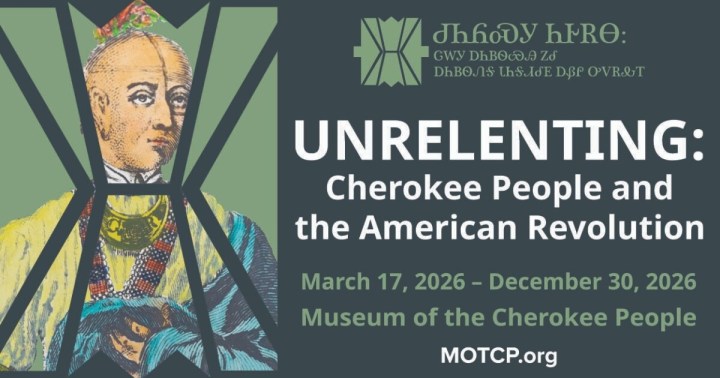
Unrelenting: Cherokee People and the American Revolution
Museum of the Cherokee People, Cherokee, North Carolina, 17 March — 30 December 2026
Curated by Dakota Brown, Brandon Dillard, and Evan Mathis
On 17 March 2026, the Museum of the Cherokee People (MotCP) opened Unrelenting: Cherokee People and the American Revolution, a first-of-its-kind exhibition centering Native voices, perspectives, and creativity in response to the 250th anniversary of the founding of the United States. The exhibition features historic objects in conversation with works by Cherokee artists, merging cultural heritage, military history, and contemporary art for a nuanced examination of a pivotal moment in Cherokee and American history.
“As a sovereign nation and the tribal museum of the Eastern Band of Cherokee Indians, we are so pleased we can present this self-funded, independent exhibition from a Cherokee perspective,” says Executive Director Shana Bushyhead Condill (Eastern Band of Cherokee Indians).
With research beginning in 2022, the exhibition’s curators—MotCP Director of Education Dakota Brown (Eastern Band of Cherokee Indians), MotCP Director of Collections and Exhibitions Evan Mathis, and guest curator Brandon Dillard (Cherokee Nation), Director of Historic Interpretation and Audience Engagement at Monticello—sought Cherokee accounts of the American Revolution (1775–1783) and the Cherokee American War (1776–1794), highlighting the complexities of memory and commemoration.
“For those of us from the South, memory is inscribed on the landscape in countless ways that are so naturalized that they feel omnipresent,” says Dillard. “Most people drive by roadside markers commemorating long-forgotten battles every day. We pass statues in public squares, learn and work in buildings named after complicated and often fraught people, and we partake in rituals commemorating historical events. But how often do most people sit around and actually talk about those events?”
In addition to showcasing historic objects, including weapons, adornments, and archival materials, MotCP invited Cherokee artists to create new works in response to historic treaties and documents from the Revolutionary era. Ranging in medium from spoken word songs to paintings to beadwork, these contemporary creative expressions “make it impossible for the viewer to put us, as Cherokee people, in the past,” says Condill.
As the nation commemorates the 250th anniversary of the signing of the Declaration of Independence, Unrelenting’s curators aspire to spark conversation about American identity and sovereignty among visitors of all walks of life, sharing new research in the first exhibit about Cherokees in the American Revolution by Cherokee scholars.
“Because American nationalist mythology pretends like Native people belong in the past, our contemporary existence contradicts the dominant memory and commemorative landscape of the United States,” says Dillard. “With Unrelenting, we just wanted to invite people to think about some of those things and recognize how complicated it all is…and most importantly, to welcome complexity when thinking about the past.”
Curators
Dakota Brown (EBCI), Brandon Dillard (Cherokee Nation), and Evan Mathis
Featured Artists
Joshua Adams (EBCI), Beth Anderson (Cherokee Nation), Karen Berry (Cherokee Nation), Martha Berry (Cherokee Nation), Anagali Shace Duncan (Cherokee Nation), Keli Gonzales (Cherokee Nation), Aaron Lambert (EBCI), Robert Lewis (Cherokee Nation, Navajo Nation, Apache), Louwana Jo “ᏍᎩᎵᎡᏆ” Montelongo (EBCI), Paula “Qualla” Nelson (EBCI), Isabella Saunooke (EBCI), Laura Walkingstick (EBCI), Tara White (Cherokee Nation), Alica Murphy Wildcatt (EBCI)
Call for Papers | Location in Early Modern Netherlandish Art, 1550–1800
From the MFA Boston:
Location, Location, Location: Artistic Procedures, Knowledge, and
Place in Early Modern Netherlandish Art, 1550–1800
Center for Netherlandish Art Colloquium
Online, Museum of Fine Arts Boston, 15 May 2026
Organized by Renata Nagy, Hannah Prescott, and Henrike Scholten
Proposals due by 29 March 2026
Artistic practice and practical forms of expertise do not occur in a vacuum, but are situated in a particular place, whether globally or locally. For instance, the Center for Netherlandish Art (CNA) supports the study of art from the Low Countries, but is situated in Boston; this location influences the work CNA fellows do, the objects they examine, and the networks that enhance their scholarship. This year’s CNA colloquium explores how the particularities of place shaped not just the lives of early modern artists and scholars, but also influenced their work. Talks may consider how trade networks, interpersonal dynamics, and local ecologies influenced the possibilities for learning, the availability of technical procedures, and the markets accessible to artistic practitioners.
The CNA seeks papers from emerging scholars that explore the connections between knowledge and locality in Dutch and Flemish art from approximately 1550 to 1800. We invite contributions from MA and PhD students, PhD candidates, postdoctoral researchers, and early-career museum professionals. As we amplify our efforts toward becoming truly inclusive, ensuring that diversity and equity are lived values, we actively encourage candidates from all backgrounds and in any discipline that interacts closely with art or material culture.
In the early modern period, making sense of the world encompassed a wide variety of practices, from observing objects of art and nature firsthand to learning and sharing expertise through established social networks. For instance, women active in the home displayed and disseminated knowledge through the use of everyday materials and objects; readers of natural history publications shaped visual and textual knowledge based on their own local experience; and artists active outside of artistic centers like Amsterdam were limited but also propelled by their local environments. These varied practices provide a shared terrain rather than a single interpretive framework for the exploration of knowledge and its relationship to place.
Paper topics may include but are not limited to:
• The influence of local networks on artistic production and scientific visual culture
• How the material culture of the domestic sphere shaped the development and demonstration of knowledge
• The extent that place (whether as a site of production or origin of a particular object or material) impacted art historical interpretations of something as central or peripheral
• The ways people consumed knowledge in the early modern Low Countries
• The extent that knowledge consumption can be divided into the categories of ‘local’ and ‘global’
• How global trade and the consumption of foreign materials revised established methods of artistic or craft production
• How the peripheries of artistic production, as opposed to cosmopolitan centers such as Antwerp or Amsterdam, influenced artists and scholars
• How size and portability impacted where objects were used
Two to three papers will be selected for presentation during colloquium. Selected candidates will have the opportunity to workshop their papers during a rehearsal presentation one week before the colloquium.
Please submit a title and abstract (300 words maximum) together with a CV in a single PDF file to cna@mfa.org, using ‘Call for Papers’ as the email subject line. Submissions are accepted on a rolling basis through 29 March 2026. Selected participants will be notified by 3 April 2026.
The Founders of the Center for Netherlandish Art at the MFA are Rose-Marie and Eijk van Otterloo and Susan and Matthew Weatherbie. The conference is organized by CNA Fellows Renata Nagy, Hannah Prescott, and Henrike Scholten.
Call for Papers | Baroque Stucco Marble Altars
From ArtHist.net:
Baroque Stucco Marble Altars: Materials, Conservation, and Meaning
National Gallery of Slovenia, Ljubljana, 15–16 September 2026
Proposals due by 15 April 2026
The Restoration Centre – Institute for the Protection of Cultural Heritage of Slovenia, in collaboration with the Faculty of Arts, University of Ljubljana, the Academy of Fine Arts and Design, University of Ljubljana, and the Faculty of Chemistry and Chemical Technology, University of Ljubljana, invites proposals for the international conference Baroque Stucco Marble Altars: Materials, Conservation and Meaning.
The conference will explore the complex phenomenon of Baroque stucco marble altars as both material and cultural artefacts. By bringing together experts from various disciplines, the event aims to encourage a comprehensive discussion on the artistic, technical, and historical significance of these works of art. Special attention will be given to questions of materiality, workshop practices, artistic exchanges, and the conservation and restoration of stucco marble. The conference seeks to highlight not only the aesthetic and symbolic meaning of these altars but also the diverse methods and approaches used to study, preserve, and interpret them today. We welcome contributions from conservators, restorers, art historians, and scientists investigating stucco marble from any perspective. The working language of the conference is English.
Please submit your proposal for a 20-minute paper (complete with a title, a 250-word abstract, and a short biography of no more than 100 words) to stuccomarble2026@gmail.com by 15 April 2026. Further practical information regarding the conference programme will be provided after the selection of papers.
Organisers
Restoration Centre – Institute for the Protection of Cultural Heritage of Slovenia
Faculty of Arts, University of Ljubljana
Academy of Fine Arts and Design, University of Ljubljana
Faculty of Chemistry and Chemical Technology, University of Ljubljana
Co-organisers
Slovenian Research and Innovation Agency (ARIS)
Slovenian Society for Conservation-Restoration (DRS)
National Gallery of Slovenia
Call for Papers | Creating the Sacred at Court, 1300–1800
From ArtHist.net:
Creating the Sacred at Court:
Sensorial Practices and Experiences in Europe, 1300–1800
Slovak University of Technology, Bratislava, 21–23 September 2026
Proposals due by 15 May 2026
How does the sacred come into being? Art history, architectural history, and religious studies have long demonstrated that the sacred is not merely an inherent property of spaces, objects, or images, but is constituted in part through (worldly) staging. Light regimes, overwhelming chromatic effects, dense olfactory atmospheres, architectural materials, and spatial structures capable of producing resonances, all contribute to the sensorial construction of the holy. Yet sacred space is never purely environmental. Singing and speaking, moving and sometimes even dancing participants and audiences are integral to the performative creation of the sacred as well as to its perception.
But how can we approach such past sensorial enactments and experiences today? How can we model the historical sensory dimensions of ceremonies and devotional acts on the basis of surviving spaces, furnishings, or liturgical and courtly sources? And how might contemporary cognitive science alongside digital, virtual, and AI-based methods enable new forms of analysis, simulation, and interpretation? These questions lie at the centre of the working group ‘Sacred Spaces’ within COST Action 24164: Sensing Europe’s Court Spaces at the Crossroads of Past, Present and Future (SENSES). ‘Court Space(s)’ should be understood here as the spatial and material environment of medieval and early modern courts in Europe (1300–1800), seen as playing a significant role in shaping social structures, behaviours, and ways of life. The Action explores the full gamut of sensory experiences linked with the court residence and its life throughout history until today to build a better understanding of this complex cultural phenomenon, to support its survival as European heritage, and to contribute actively to its role as shaper of a collective identity for the future.
Sacred space at court should be understood as a multiple ranging from the smallest scale to the largest. Architecturally speaking, it comprises the court chapel, or as the case may be, the church, even an entire monastery (e.g. the convent palaces of the Hispanic world, such as the Escorial and the Descalzas Reales in Madrid, Spain, but also the monastery at Brou, France, built by the widowed regent of the Habsburg Low Countries). As part of the private apartments, the oratories constitute another component, one which serves as connection. But sacred space at court includes much more, the courtly organization behind the chapel’s service frequently taking care of worldly matters such as the prince’s valuables, for instance; the great hall adjacent to the smaller chapel actually serving as auditorium of the Mass for the lower ranks at court, and so on. On a larger scale, courts established religious networks extending across their lands, such as the Habsburg archdukes serving as regents establishing seven Marian shrines in strategic sites of the Low Countries around 1600.
Focusing on courtly contexts from 1300 to 1800, the conference intends to explore the inter-sensorial performances and experiences within religious spaces of European court residences. It is explicitly conceived as forward-looking, aiming to open future avenues of research and foster shared methodological standards across disciplines.
We especially welcome contributions that
• explore inter-sensorial experience from an interdisciplinary perspective
• address the performative and embodied dimensions of sacred space at court in all its forms (such as court chapels, churches, monasteries, oratories)
• reflect epistemological questions of approaching past perception
• present proof-of-concept projects using digital, virtual, or AI-based methods
We encourage participation from art and architecture historians, scholars in cognitive sciences and historical cognition studies, olfactory heritage studies, digital humanities researchers, heritage specialists and curators, as well as digital designers and simulation experts. Early career researchers are strongly encouraged to apply.
Please submit an abstract (max 300 words) and a short CV (max one page) by 15 May 2026 to krista.dejonge@kuleuven.be and joanna.olchawa@lmu.de. Participants must register with COST (free of charge). Travel and accommodation costs of accepted speakers will be reimbursed according to COST rules. Early career researchers may also apply for Short-Term Scientific Missions. More information is available here and here.
Organisation
Andrea Vargová (Slovak U. of Technology, Bratislava)
Monika Rychtáriková (KU Leuven / Slovak U. of Technology, Bratislava)
Magdaléna Kvasnicová (Slovak U. of Technology, Bratislava)
Vojtech Chmelík (Slovak U. of Technology, Bratislava)
Scientific Committee
Krista De Jonge (KU Leuven), Chair
Monika Rychtáriková (KU Leuven)
Andrea Vargová (Slovak U. of Technology, Bratislava)
Joanna Olchawa (Ludwig-Maximilians-Universität München)
Dubravka Botica (U. of Zagreb)
Jiří Kubeš (U. of Pardubice)
Philippe Vendrix (Tours, RicercarLab, Centre d’Études supérieures de la renaissance)
Pedro Luengo Gutiérrez (U. of Seville)
Mona Hess (Otto-Friedrich-Universität Bamberg)
José Eloy Hortal Muñoz (U. Juan Carlos, Madrid)
Call for Applications | Debenedetti Prize for 18th-C. Art History
From the Call for Applications:
The Elisa Debenedetti Prize for Research Writing in the
History of 18th-Century Art — Inaugural Award 2026
Sapienza Università di Roma, the Centro di Studi sulla
Cultura e l’Immagine di Roma, and the Fondazione Ernesta Besso
Applications due by 31 October 2026
Elisa Debenedetti (1933–2024), professor of art history at Sapienza Università di Roma, promoted the study and research of 18th-century arts for decades. Author of important contributions, essays, and monographs, she founded and edited the journals Studi sul Neoclassico (1973–80) and Studi sul Settecento Romano (since 1985), essential points of reference and discussion for researchers and scholars.
The Debenedetti family, in agreement with the Department of History, Anthropology, Religions, Art, and Entertainment at Sapienza Università di Roma, the Centro di Studi sulla Cultura e l’Immagine di Roma and the Fondazione Ernesta Besso, have established a biennial prize for an unpublished long-form study on the arts of the eighteenth century, focused, though not exclusively so, on Roman culture. The prize is open to young scholars of any nationality who are under 40 years of age on the closing date of the call for applications, for independent, research-based, long-form writing (i.e. degree theses, specialisation theses, doctoral theses, etc.) written in Italian, English, French, or Spanish. The prize consists of publication as a monograph by L’ Erma di Bretschneider in Rome, in the series Inchiostri di Storia dell’arte e dell’architettura.
Each application must contain, in PDF format:
• Text and images (low resolution)
• Abstract (maximum 900 words)
• Brief curriculum vitae et studiorum
Applications must be received by 31 October 2026 at the email address premioelisadebenedetti@gmail.com. Confirmation of receipt of applications will be sent.
The jury is composed of a representative of the Debenedetti family, the director of the Centro di Studi sulla Cultura e l’Immagine di Roma, two representatives of Sapienza Università di Roma (SARAS and DSDRA Departments), two representatives of the Fondazione Ernesta Besso, and a representative of a foreign research institution. The jury’s decision is final. The winner will be announced by 30 November 2026. The prize ceremony will take place in Rome in December 2026, and the publication will be released within the following year.
Premio Elisa Debenedetti per uno studio di Storia delle arti del Settecento
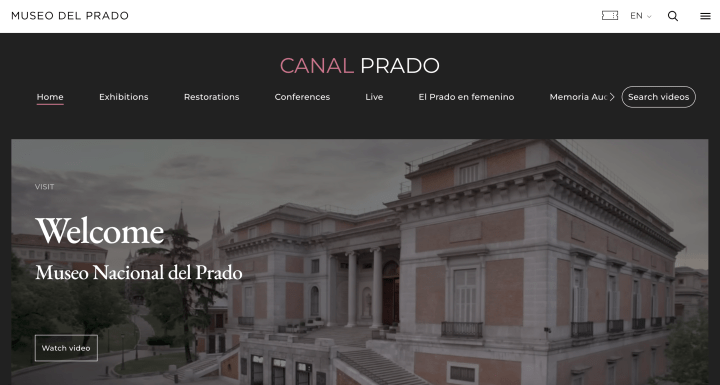
The Prado Launches New Online Platform
◊ ◊ ◊ ◊ ◊
From the press release for the new platform Canal Prado. The social media clip with Michael Yonan is a perfect example of content that will now be easier to find!
The Museo Nacional del Prado has unveiled Canal Prado, a new online platform designed to gather and organize the institution’s growing library of audiovisual content. Accessible through the museum’s website, the channel brings together everything from interviews and lectures to educational videos and documentary-style features, offering visitors a new way to explore the Prado beyond the gallery walls. The launch represents a significant step in the museum’s digital strategy. For years, the Prado has produced a wide range of videos tied to exhibitions, research, and public programs. Canal Prado now places all of that material in one curated space, making it easier for audiences around the world to discover, revisit, and explore the museum’s knowledge resources. The platform emphasizes content that remains relevant over time—conversations about art, scholarship, and the enduring questions that paintings and artists continue to raise.
One of the highlights of the launch is “Thinking the Prado,” a new series created and presented by art historian Alejandro Vergara, who invites viewers to consider some of the fundamental questions that surround works of art. Why do we value certain paintings? What kind of knowledge can art offer us? How have artistic judgments changed over the centuries? And, in practical terms, how long does it actually take to paint a masterpiece? Rather than presenting quick answers, the series takes a reflective approach, encouraging viewers to think about art as historians and curators do. The goal is not to promote the museum’s latest exhibition, but to create a thoughtful, lasting resource for anyone curious about art history. Vergara, who has worked at the Prado since 1999, has played a key role in shaping the museum’s understanding of Flemish painting and Northern European schools, and has curated numerous exhibitions during his career. He holds a doctorate in art history from the Institute of Fine Arts at New York University and has taught at institutions including Columbia University and Universidad Carlos III in Madrid.
The new platform also integrates “Stories of Art,” the extensive audiovisual archive created by the Fundación Amigos del Museo del Prado. The archive includes more than 1,300 videos and audio recordings, documenting decades of lectures, courses, and cultural programming dedicated to the study of art. Many of these materials were originally produced for members and participants in the foundation’s educational initiatives.
Now, through Canal Prado, the public can explore collections such as:
• Courses on art history
• “Sundays at the Prado” lecture programs
• Educational series like “Art Lessons”
Together, these recordings represent more than forty years of intellectual life connected to the Prado, turning the platform into an evolving archive of art scholarship. To make such a large body of material easier to explore, Canal Prado organizes videos into clear thematic categories. Visitors can browse content based on their interests—whether that means restoration projects, exhibition insights, behind-the-scenes stories, or expert conversations. The platform will also highlight special thematic selections throughout the year. In March, for example, the focus is on material related to women connected to the Prado, from artists to scholars and historical figures. The museum plans to continue expanding the channel with new episodes, interviews, and original series, gradually building a rich audiovisual archive.
The launch of Canal Prado coincides with a broader update to the museum’s website through the Plataforma Prado digital initiative. Among the most notable improvements is a new semantic search engine that allows users to explore the museum’s information system more intuitively. Instead of searching only by titles or keywords, visitors can now navigate by connections such as:
• artists
• techniques
• themes
• places
• historical figures depicted in artworks
The redesign also includes improved mobile navigation, updated menus, and newly structured pages that make the site easier to use on smartphones and tablets. Another new feature allows visitors to revisit exhibition itineraries even after exhibitions have closed, preserving the educational value of past shows. With Canal Prado, the Prado continues expanding its presence beyond Madrid, transforming decades of lectures, scholarship, and research into a resource accessible worldwide. For art lovers, students, and researchers alike, the platform offers something rare: direct access to the voices and ideas that shape one of the world’s great museums.










 Enfilade
leave a comment