Michael Yonan—Alan Templeton Professor of European Art, UC Davis
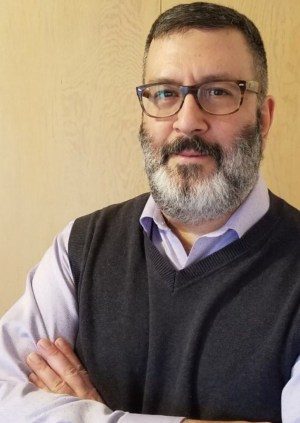 Michael Yonan has been named the inaugural Alan Templeton Endowed Professor of European Art, 1600–1830, at the University of California, Davis. Professor Yonan received his PhD from the University of North Carolina at Chapel Hill and taught previously at the University of Missouri. In 2019 he was visiting guest professor in the Department of Culture and Aesthetics, Stockholm University, Sweden.
Yonan is the author of Empress Maria Theresa and the Politics of Habsburg Imperial Art (Penn State, 2011) and Messerschmidt’s Character Heads: Maddening Sculpture and the Writing of Art History (Routledge, 2018). With Stacey Sloboda he co-edited the volume Eighteenth-Century Art Worlds: Global and Local Geographies of Art (Bloomsbury, 2019). His most recent articles are “Martin van Meytens’s Portrait of Johann Michael von Grosser (c. 1700–1784): The Business of Nobility,” which appeared in Art Bulletin of Nationalmuseum Stockholm (2019); and “Knowing the World through Rococo Ornamental Prints,” in Organic Supplements: Bodies, Objects, and the Natural World, 1580–1750, ed. Miriam Jacobson and Julie Park (University of Virginia Press, 2020). From 2012 to 2016 he was president of HECAA and now serves on the ASECS Executive Board.
Currently he is researching a book-length study of south German rococo design and with colleagues in Stockholm is planning a collection of essays on global material culture in early modern Sweden. He welcomes undergraduates interested in eighteenth-century art to apply to the MA program at UC Davis.
Walpole Library Pauses Visiting Fellowship and Travel Grant Program
The Lewis Walpole Library announces the temporary suspension of its Visiting Fellowship and Travel Grant program due to the pandemic.
The program has been postponed indefinitely, and we will not be accepting applications this year. We hope to be able to put out a call in the autumn of 2021 for applications with a deadline in January 2022 for Fellowships to be taken up between July 2022 and June 2023.
The Library is committed to ensuring that this postponement is temporary, and 2019–20 and 2020–21 Fellowship and Travel Grant award recipients who have not been able to come to the Library to take up their research know they will be accommodated when we are finally able to resume welcoming in-person residential non-Yale researchers.
Details of the Visiting Fellowship and Travel Grant program and information about application requirements are still on our website where we will post updates as we have them. Be sure to check the page from time to time to get the most current information.
We look forward to brighter days when we can restart our active Fellowship program. Please contact us at walpole@yale.edu with any questions.
New Book | Organic Supplements: Bodies and Things
From the University of Virginia Press:
Miriam Jacobson and Julie Park, eds., Organic Supplements: Bodies and Things of the Natural World, 1580–1790 (Charlottesville: University of Virginia Press, 2020), 296 pages, ISBN 978-0813944937 (hardback) / ISBN 978-0813944944 (paperback) / ISBN 978-0813944951 (Ebook), $35.
 From the hair of a famous dead poet to botanical ornaments and meat pies, the subjects of this book are dynamic, organic artifacts. A cross-disciplinary collection of essays, Organic Supplements examines the interlaced relationships between natural things and human beings in early modern and eighteenth-century Europe. The material qualities of things as living organisms–and things that originate from living organisms– enabled a range of critical actions and experiences to take place for the people who wore, used, consumed, or perceived them.
Miriam Jacobson is Associate Professor of English at the University of Georgia and author of Barbarous Antiquity: Reorienting the Past in the Poetry of Early Modern England.
Julie Park is Assistant Curator and Faculty Fellow at the Special Collections Center of Elmer Holmes Bobst Library, New York University, and author of The Self and It: Novel Objects in Eighteenth-Century England.
C O N T E N T S
Acknowledgments
Introduction: Process and Connection
Part 1. Inscription and Incorporation
• Julie Park, Feather, Flourish, and Flow: The Organic Technology of Early Modern Handwriting
• Rebecca Laroche, The Flower of Ointments and Early Modern Transcorporeality
• Kevin Lambert, The Paris Opéra as a Vibrating Body: Feeling Pygmalion’s Kiss
Part II. Interface and Merger
• Jessica Wolfe, Gorgonick Spirits: Myth, Figuration, and Mineral Vivency in the Writings of Thomas Browne
• Lynn Festa, Things with Kid Gloves
• Miriam Jacobson, Vegetable Loves: Botanical Enthrallment in Early Modern Poetry
Part III. Vitality and Decay
• Michael Yonan, Knowing the World through Rococo Ornamental Prints
• Diane Purkiss, Fingers in the Pie: Baked Meats, Adultery, and Adulteration
• Jayne Lewis, Milton’s Hair
• Julia Reinhard Lupton, Afterword: Virtuous Properties of the Organic Supplement
Notes on Contributors
Index
Call for Papers | ECRS Series, 2021
From ECRS:
The Eighteenth-Century Research Seminar Series
(Online) Fortnightly on Wednesdays, from 27 January to 7 April 2021
Proposals due by 15 December 2020
The Eighteenth-Century Research Seminar (ECRS) series invites proposals for twenty-minute papers from postgraduate and early career researchers addressing any aspect of eighteenth-century history, culture, literature, art, music, geography, religion, science, and philosophy. The seminar series seeks to provide a regular interdisciplinary forum for postgraduate and early career researchers working on the eighteenth century to meet and discuss their research.
ECRS will be hosted online by the University of Edinburgh. Seminars will take place on Wednesdays between 4:30 and 6:00pm on a fortnightly basis from 27 January to 7 April 2021. Each seminar will consist of two papers.
Abstracts of up to 300 words along with a brief biography and institutional affiliation should be submitted in a Word document to: edinburgh18thcentury@gmail.com. In your email, please also indicate any scheduling restrictions you may have. The closing date for submissions is Tuesday, 15 December 2020.
The Eighteenth-Century Research Seminar is kindly sponsored by the University of Edinburgh’s Eighteenth-Century and Enlightenment Studies Network.
Online Exhibition | Participez à la vie des académies d’art
Announcing the exhibition:
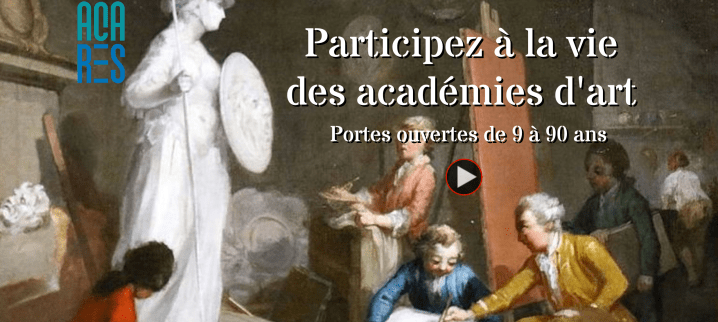
Participez à la vie des académies d’art… Portes ouvertes de 9 à 90 ans
An online exhibition of the ACA-RES programme
Organized by Émilie Roffidal and Anne Perrin Khelissa
How were artists and craftsmen trained in French art academies in the age of Enlightenment? The virtual exhibition Participez à la vie des académies d’art. Portes ouvertes de 9 à 90 ans is now available online. The result of a collective work combining research and training, the exhibition presents a selection of works from the teaching material and artistic production of art academies and provincial art schools in the 18th century. Most of the collections from these institutions were dispersed during the French Revolution between city museums, libraries, and other heritage collections such as art schools. Painted portraits of teachers, pupils, or amateurs are included, providing a more vivid testimony of the institutions. A whole little-known part of French heritage is honoured here.
This exhibition has been developed within the framework of the ACA-RES research programme on art academies and their networks in pre-industrial France (Les Académies d’art et leurs réseaux dans la France préindustrielle) supported by the FRAMESPA UMR 5136 laboratory of the Toulouse-Jean Jaures University, the Labex SMS, the Deutsches Forum Für Kunstgeschichte of Paris and the Centre National d’Histoire de l’art.
Call for Papers | The [After]Lives of Objects
From ArtHist.net:
The [After]Lives of Objects: Transposition in the Material World
(Online) University of Virginia Art & Architectural History Graduate Symposium, 18–19 March 2021
Proposals due by 15 December 2020
Transposition involves the movement of people, objects, and ideas from one context to another. The reverberating impacts of such regional and transregional exchanges have shaped artistic expressions, systems of knowledge, and relationships among polities. Recently, scholarship has turned to the object as a material manifestation of cross-cultural, transregional, and imperial encounters. [After]Lives is an interdisciplinary symposium that explores how transposition has materialized throughout history. How are objects changed when they are activated as mediums of encounter? In what ways do makers and users negotiate their positionality between and within societies through objects? How have artists and other creators problematized binary ideas of encounter and exchange in their works? When should adaptations be considered cultural appropriation instead of cross-cultural connectors? Can they be both? What is at stake when materials, artistic techniques, and/or technologies originating from one region are duplicated outside of that region?
Possible topics include, but are not limited to:
• Mediation of transcultural encounters through visual and material objects
• Processes of adaptation and assimilation in visual and material culture
• History of looting, collecting, and the art market
• Role of institutions in the (re)contextualization of objects
• Studies that problematize notions of influence, exchange, and reception across social, cultural, and artistic hierarchies
• Imperial and colonial networks of collection, trade, and exchange
We welcome submissions from graduate students at all stages and areas of study. Papers should be 20 minutes in length and will be followed by a Q&A plenary session. Papers must be original and previously unpublished. Graduate students are invited to submit a CV and an abstract (250 words) in a single PDF file by 15 December 2020 to the symposium committee at uvaartandarch@gmail.com. Applicants will be notified of decisions by 15 January 2021. Limited funds will be available to cover expenses associated with presenting at the symposium.
Keynote Speaker: Kristel Smentek, Associate Professor of Art History, Department of Architecture, MIT | Author of Mariette and the Science of the Connoisseur in Eighteenth-Century Europe (2014) and Objects of Encounter: China in Eighteenth-Century France (forthcoming).
Call for Papers | New Directions in 18th- and 19th-Century Art, Season 3
From NDENCA:
New Directions in Eighteenth- and Nineteenth-Century, Art Season 3
Digital Seminar Series
Abstracts due by 30 November 2020
This digital seminar series seeks to showcase new and innovative research being undertaken on eighteenth- and nineteenth-century art and its histories. We invite contributions for papers investigating any aspect of the artistic, visual, and material cultures of this period, and produced across the globe. Sessions will be hosted via video conferencing software and will take the form of a 40-minute seminar, with time following for questions.
We welcome proposals from PhD researchers, early career academics and museum professionals, particularly those from underrepresented groups. Please send your abstracts to ndencaseminar@gmail.com.
Annibel Jenkins Prize in Performance and Theater Studies
Have you published an article on 18th-century performance studies or theater in the past two years? Consider submitting it for the Annibel Jenkins Prize in Performance and Theater Studies. From SEASECS:
Annibel Jenkins Prize in Performance and Theater Studies
Awarded under the auspices of SEASECS
Submissions due by 30 November 2020
In 2012, SEASECS established a prize in honor of its founding member, Annibel Jenkins. This biennial prize of $500 recognizes the best article in performance and theater studies published in a scholarly journal, annual, or collection. The Jenkins Prize will next be awarded at the 2021 SEASECS conference. Eligible publications for this award must have been published between 1 September 2018 and 31 August 2020. Authors must be members of SEASECS at the time of submission. Articles may be submitted by the author or by another member.
The deadline for submissions is 30 November 2020. Please send submissions as PDF files and address any queries about the prize to the Committee Chair, Diane Kelley, at dkelley@pugetsound.edu.
P A S T W I N N E R S
2019 Leah Benedict, “Impotence Made Public: Reading Sex on the Stage and in the Courtroom,” ELH 85 (Summer 2018): 441–69.
2018 Diana Solomon, “The Jolt of Jacobean Tragicomedy: Double Falsehood on the Eighteenth-Century English Stage,” in Revisiting Shakespeare’s Lost Play: Cardenio/Double Falsehood in the Eighteenth Century, edited by Deborah Payne (Palgrave, 2016).
2017 Terry F. Robinson, “Becoming Somebody: Refashioning the Body Politic in Mary Robinson’s Nobody,” Studies in Romanticism 55 (Summer 2016): 143–84.
2016 Heather McPherson, “Tragic Pallor and Siddons,” Eighteenth-Century Studies 48 (Summer 2015): 479–502.
2015 Daniel J. Ennis, “Christopher Smart, Mary Midnight and the Haymarket, 1755,” in Reading Christopher Smart in the 21st Century, edited by Min Wild and Noel Chevalier (Lewisburg: Bucknell University Press, 2013).
2014 Anne Greenfield, “D’Avenant’s Lady Macduff: Ideal Femininity and Subversive Politics,” Restoration 37 (Spring 2013): 39–60.
Online Conference | Décoration intérieure et plaisir des sens, 1700–1850

From the conference programme:
Décoration intérieure et plaisir des sens, 1700–1850
Online Colloquium, 3-4 December 2020
Organisé par l’Université de Genève (Unité d’histoire de l’art) et l’Université Paris 1 Panthéon-Sorbonne (Equipe de recherche HiCSA et Ecole doctorale d’histoire de l’art)
Lien pour l’inscription – jeudi 3 décembre :
https://unige.zoom.us/webinar/register/WN_6uqfcGYcTPKviyDc7H_sQA
Lien pour l’inscription – vendredi 4 décembre :
https://unige.zoom.us/webinar/register/WN_oe2wR8RUSAe1DNOS34S9EQ
Colloque organisé par Noémi Duperron (Université de Genève), Barbara Jouves-Hann (Université Paris 1 Panthéon-Sorbonne), Maxime Georges Métraux (Université Paris-Sorbonne/Galerie Hubert Duchemin), Bérangère Poulain (Université de Genève) et Marc-André Paulin (Université de Lille/Centre de Recherche et de Restauration des Musées de France).
Informations et contact : decoration.et.plaisir@gmail.com
◊ ◊ ◊ ◊ ◊
J E U D I , 3 D E C E M B R E 2 0 2 0
14.00 Introduction, Bérangère Poulain (Université de Genève) et Barbara Jouves-Hann (Université Paris 1 Panthéon-Sorbonne)
14.30 Session 1A: Mobilier
Modérée par Jean-Jacques Gautier (Mobilier national)
• Thibaut Wolvesperges (Université Paris-Sorbonne), Dessin d’ornemaniste et création du meuble
• Daniel Alcouffe (Musée du Louvre), La naissance du bureau et de la commode au XVIIe siècle
• Élisabeth Caude (Château de Versailles) et Frédéric Leblanc (C2RMF), Le cabinet particulier du roi Louis XIV à Versailles secrets autour des transformations d’un bureau
16.00 Pause
16.30 Session 1B: Mobilier
Modérée par Jean-Jacques Gautier (Mobilier national)
• Muriel Barbier (Mobilier national), « Une tente sous laquelle on dort » : l’alcôve et le lit d’alcôve dans la chambre au XVIIIe
• Ulrich Leben (Indépendant), Formes, matérialité et usages du mobilier
17.30 Conclusion, Marc-André Paulin (Université de Lille/C2RMF)
V E N D R E D I , 4 D E C E M B R E 2 0 2 0
9.00 Introduction, Noémi Duperron (Université de Genève) et Maxime Georges Métraux (Université Paris-Sorbonne/Galerie Hubert Duchemin)
9.30 Session 2A: Théorie
Modérée par Carl Magnusson (Université de Lausanne)
• Desmond-Bryan Kraege (Université de Lausanne), Fraîcheur, odeurs et procédés narratifs : Le génie de l’architecture de Le Camus de Mézières à la lumière de la théorie des jardins
• Aurélien Davrius (École nationale supérieure d’architecture Paris-Malaquais), Nouvelles typologies d’habitation au XVIIIe siècle
10.30 Pause
11.00 Session 2B: Théorie
Modérée par Carl Magnusson (Université de Lausanne)
• Joséphine Grimm (École nationale des Chartes), Construire le boudoir idéal : état de l’influence réciproque de la littérature sur les traités d’architecture au XVIIIe siècle
• Christina Contandriopoulos (Université du Québec à Montréal), Une spatialité intérieure, Madame de Maisonneuve et le Dôme des Invalides
14.30 Session 3A: Techniques
Modérée par Jan blanc (Université de Genève)
• Johanna Ilmakunnas (Åbo Akademi University), Thermal comfort, spatial order, and objects in country houses, Sweden c.1740–1800
• Olivier Jandot (Université Artois), Le feu caché. Introduction du confort thermique et métamorphoses de l’économie des sens, France, 1700–1850
15.30 Pause
16.30 Session 3B: Techniques
Modérée par Jan blanc (Université de Genève)
• Erika Wicky (Université Lumière Lyon 2), L’odeur des vernis ou la toxicité du confort au XVIIIe siècle
• Carine Desrondiers (Université Rennes 2), Les effets magnifiques ou les agréments de la serrurerie dans la décoration intérieure française de la fin du règne de Louis XIV à la Monarchie de Juillet
17.30 Conclusion générale et pistes de réflexion, Christian Michel (Université de Lausanne)
New Book | Merchants of Medicines
From The University of Chicago Press:
Zachary Dorner, Merchants of Medicines: The Commerce and Coercion of Health in Britain’s Long Eighteenth Century (Chicago: University of Chicago Press, 2020), 280 pages, ISBN: 978-0226706801, $50.
 The period from the late seventeenth to the early nineteenth century—the so-called long eighteenth century of English history—was a time of profound global change, marked by the expansion of intercontinental empires, long-distance trade, and human enslavement. It was also the moment when medicines, previously produced locally and in small batches, became global products. As greater numbers of British subjects struggled to survive overseas, more medicines than ever were manufactured and exported to help them. Most historical accounts, however, obscure the medicine trade’s dependence on slave labor, plantation agriculture, and colonial warfare.
In Merchants of Medicines, Zachary Dorner follows the earliest industrial pharmaceuticals from their manufacture in the United Kingdom, across trade routes, and to the edges of empire, telling a story of what medicines were, what they did, and what they meant. He brings to life business, medical, and government records to evoke a vibrant early modern world of London laboratories, Caribbean estates, South Asian factories, New England timber camps, and ships at sea. In these settings, medicines were produced, distributed, and consumed in new ways to help confront challenges of distance, labor, and authority in colonial territories. Merchants of Medicines offers a new history of economic and medical development across early America, Britain, and South Asia, revealing the unsettlingly close ties among medicine, finance, warfare, and slavery that changed people’s expectations of their health and their bodies.
Zachary Dorner is the Patrick Henry Postdoctoral Fellow in history at Johns Hopkins University.
C O N T E N T S
List of Figures and Tables
Introduction
1 Toward an Industry
2 Distance’s Remedies
3 The Possibility of Unfree Markets
4 Pine Trees and Profits
5 Self-Sufficiency in a Bottle
Conclusion
Acknowledgments
Notes
Bibliography
Index










 Enfilade
leave a comment