Call for Papers | Sensory Experience in 18th-Century Art Exhibitions
From ArtHist.net:
Sensory Experience in 18th-Century Art Exhibitions / L’expérience sensorielle dans les expositions d’art au XVIIIe siècle
Musée du Louvre, Paris, Autumn 2020; Louvre-Lens Museum, Spring 2021
Proposals due by 15 December 2019
Throughout the 18th century, the exhibitions of the Royal Academy of Painting in Paris—by setting the horizon of expectation—have created a habitus among European visitors and especially Parisians. Moreover, they have aroused the curiosity and the desire of the French public and of other nations who where inspired by the Salon. During this period, the Salon du Louvre became a highly popular event, where crowds gathered to see, be seen and to learn. Hence, the Salon embodied without any doubt the image of the Parisian social theatre and thus also indirectly that of the pleasure of the senses for educated European audiences. In other words, visiting the Salon or any other art exhibition in the 18th century, where the desire to be entertained and to learn was intertwined, presented itself as an experience in which the various senses were invoked and stimulated. The notion of a ‘sensory body’ becomes relevant: not only sight, but also the senses of hearing, taste, touch, and smell were interpolated in a varied and complex manner at various moments during the visit.
The conference will focus on the sensations that visitors felt during their experience of art exhibitions. The latter are to be understood in their broadest sense during the long 18th century (1665–1815). The starting point is the moment when the Salon du Louvre became the role model for a growing number of temporary exhibitions, in Paris and in French provinces, at the Royal Academy in London, and, more broadly in Europe. All other spaces of sociability where works of art were subjected to the critical gaze of the public must be taken into account: galleries and private art collections, royal collections, temporary exhibitions, auction rooms, museums… In the context of research about the history of sensibilities and senses, this conference thus aims at defining the new perceptions that flourish in the Age of Enlightenment by questioning the sensory experience and the constitution of the sensory body in the specific context of exhibition spaces.
The understanding of this sensory body in its entirety implicates numerous elements that play an essential role in its constitution. Given the richness of the topic related to the sensory experience in 18th-century art exhibitions, the conference will be divided into two sessions that will take place a few months apart, and in two different locations.
Session 1
The Experience of the Visit: From Spectator to Critic
This first session focuses on the sensory experience of the public when visiting an exhibition – whether it is a collection, a museum, or a temporary presentation of works of art. While 18th century art exhibitions in Europe contributed to urban identity, they also helped to define the identity of the larger public, as well as the single spectator, and the critic. It will be a question of capturing these actors, their visits to exhibitions, their sensory impressions, and the emergence of feelings as they developed along an exhibition tour, likewise further encounters with other visitors, with the spatial context and display of art. In order to encourage comparative research, we call for proposals on various exhibition spaces in various European cities, relating to the following two axes:
• The public, an individual or a group of individuals visiting the exhibition, engaged in the activity and experiences emotional, sensory and physical effects during the whole visit of the exhibition. The presence of other visitors, this more or less colourful crowd that implied a perpetual body interaction, as well as the view of the exhibition played a central role on the senses, the sensitivity and the body of each visitor. Within this audience, the writers that appear at the time of the exhibitions related these experiences to their readers, qualifying and theorizing them. Art criticism is thus no longer simply a primary source for art history, the history of the senses, and questions of reception, but becomes also a research subject by itself. How, in other words, did the sensations, emotions and feelings experienced by critics stimulate and transform art criticism itself? The reality and the sensory experience of the visitor are not necessarily the same in Paris as elsewhere in Europe: Hence, we would like to discover and understand these differences and similarities.
• The space and the exhibition, meaning the immediate environment, the exhibition design, but also the geographical territory with which the individual and its senses are engaged, play a central role in the experience of the spectator’s sensory body. By providing stimuli, they cause sensations and an intense and specific cognitive activity. What kind of effects did the dimensions of the room(s), the movements of the body in the space, the encounter with the art and the exhibition design, the lighting as well as the symbolic aspects of the space have on visitors’ sensory experiences, both in their expectation and during the visit of the exhibition? We will therefore focus on the different affects and effects that this experience catalyzed for each of the senses, sensations, and emotions that inhabited the spectator during and beyond the visit. An experience that is constituting an important part of the horizon of expectation for exhibitions. We can ask ourselves about the different approaches to installation and hanging, but also about the extent to which these approaches had an impact on visitors’ sensations, their perceptions, and their feelings, whatever nature they are, and on the evolution and constitution of their sensibility, of their sensitive body. What role do the symbolic and physical aspects of space play in this experience? How are these effects translated through the written word?
Session 2
The Experience of the Work of Art: From Emotion to Sensation
The second session is intended to invite reflection on the representation of emotions and human sensorium as well as on the reception of these elements when works of art were exhibited publicly in 18th-century Europe. The objective is to study how artists express their perception of the sensitive and the sensory, and how the spectator’s senses react while looking at the works. We will take into account all aspects of the Fine Arts (painting, sculpture, drawing, engraving) and consider also different genres (history, portrait, genre scene, landscape, still life). For this session, we call for proposals around two axes:
• The works, these modes of representation of feelings and the sensory, evoke the sensitivity of the artist as well as that of the human being in general. According to what theoretical and practical criteria did artists translate the spectrum of emotions, but also that of sensory perceptions through the represented body, its gestures, its personality traits or its staging? We are obviously thinking of the rules governing the representation of passions such as those of the ‘ut pictura poesis’, but especially of the attempts to renew them during the 18th century. It is not only a question of revisiting the interactions between theatrical staging and pictorial composition, but also of exploring all the components of mimesis, that is common to the Fine Arts and the performing arts, in order to reinforce the sensory and sensitive delight of art: expression, gestures, costume, decor, colour.
• The senses, (inter)linked with the organs of perception (sight, taste, hearing, smell and touch), are defined by and react to the contact with context, the exhibition as a whole, other individuals, and specific works of art. We would like to understand how the spectator’s senses apprehend, perceive—or even feel—the encounter with a particular work or with the ensemble of works. According to which criteria does sensory perception stop at the level of analysis and reasoning? When and how does this experience lead to a true reaction, whether it is sensitive, sensory or physical? We know that in the 18th century, the research on perception and cognition led to numerous publications on sensualist philosophy, physiology and physiognomy. How did artists consider these new contributions to the history of medicine, science and technology, and how did they translate them within their works? This axis will explore the boundaries between the experience of each of the senses and the relationships that emerge between them in order to get an overall picture of all the sensations and feelings provoked by specific works, particularly by those representing feelings, emotions and allusions to the senses. In this axis, priority will be given to proposals based on sources from various fields (history, literature, philosophy, but also science and medicine) in order to renew the reflection on the phenomenon of exhibitions.
Schedule
Proposals for original contributions in English or French (title and abstract of up to 300 words and short CV of up to 250 words) should be sent by 15 December 2019 to corps.sensoriel@gmail.com
Response from the Scientific Committee: January 2020
Conference dates: Autumn 2020 and Spring 2021
Selected papers will be published after the conference.
Scientific Committee
Markus A. Castor (German Center for Art History, Paris)
Guillaume Faroult (Louvre Museum, Painting Department)
Dorit Kluge (hwtk, Berlin)
Gaëtane Maës (Université de Lille, IRHiS)
Françoise Mardrus (Louvre Museum, Dominique-Vivant Denon Center, Research and Collection Director)
Isabelle Pichet (UQTR, Québec)
Luc Piralla (Louvre-Lens Museum)
New Book | The New Town of Edinburgh
From Birlinn Ltd:
Clarisse Godard Desmarest, ed., The New Town of Edinburgh: An Architectural Celebration (Edinburgh: John Donald, 2019), 336 pages, ISBN: 978-1910900352, £40.
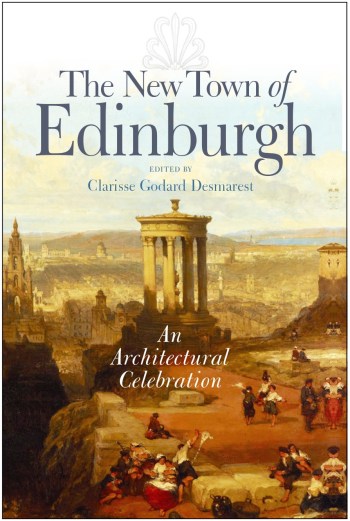 This collection of innovative essays celebrates the New Town of Edinburgh over the 250 years since its original creation. The contributing authors discuss the intellectual, economic, and political contexts that provided the impetus for the city of Edinburgh to expand north of the Old Town, and analyse the New Town’s unique architectural status in terms of its size, monumentality, and degree of preservation. For centuries, Scotland has pursued innovation, improvement, commerce, and contact with England and the Continent; and since medieval times it has been an urbanising land of planned towns. This book reflects on the constantly changing dialogue between Edinburgh’s Old and New Towns—from the eighteenth century to the present time—as the city became increasingly commercialised. It also compares Edinburgh’s New Town with more recent new towns elsewhere, notably nineteenth-century Dunedin in New Zealand and Scotland’s planned new-town movement of the twentieth century. The age of conservation is another of the central themes. By drawing on different approaches to the new town phenomenon in Scotland, this volume pays tribute to Scotland’s vibrant capital and offers insights into new research on Scotland’s urban development.
Clarisse Godard Desmarest is a lecturer at the University of Picardie Jules Verne, Amiens, and a fellow of the Institut Universitaire de France. She specialises in Scottish architectural history and heritage, and has held fellowships at the Institute of Advanced Studies in the Humanities (IASH), Edinburgh College of Art and the School of History, Classics and Archaeology at the University of Edinburgh. She holds an ‘Agrégation in English’ and is a graduate of Sciences Po Paris. Her doctorate at the Sorbonne, jointly supervised by the University of Edinburgh, was awarded a national prize in France for the best thesis on a Scottish subject.
New Book | Calton Hill
From Birlinn Ltd:
Kirsten Carter McKee, Calton Hill and the Plans for Edinburgh’s Third New Town (Edinburgh: John Donald, 2018), 224 pages, ISBN: 978-1910900178, £25.
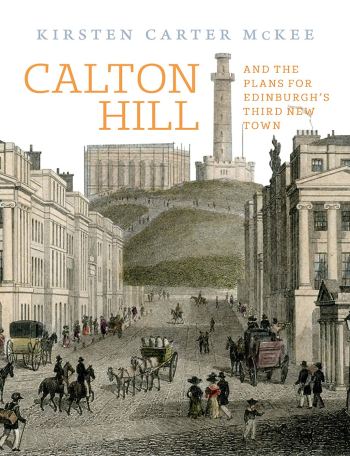 Calton Hill, on the eastern edge of Edinburgh’s centre, has a special relationship with the city. Development of the hill and its surrounding area (often referred to as Edinburgh’s ‘Third New Town’) began in the late eighteenth and early nineteenth centuries by a decision-making elite, who proposed to change the site from a rural periphery into the new urban core of the city. This book shows that the architecture and urban design on Calton Hill was a demonstration of Scotland’s cultural identity and political allegiance to the British State—as key enlightenment figures and theories were celebrated alongside the British naval heroes and the House of Hanover in the early stages of its development. However, as Scotland’s identity within Britain evolved through changes in governance in the nineteenth and early twentieth centuries, Calton Hill—and all that its neo-Greek architecture came to represent—became a metaphor for the friction between Scottish and British Nationalism, resulting in it being considered a ‘Nationalist Shibboleth’ by the last years of the twentieth century. This book considers how the architectural expression of Calton Hill has been perceived, accepted and rejected as ideas surrounding cultural identity, governance and nationalism have changed over the last 200 years.
Kirsten Carter McKee is an architectural historian and cultural landscape specialist. She has a PhD from the University of Edinburgh and has worked for a number of organisations as an archaeologist, historic buildings specialist, and heritage consultant. She is currently a research and teaching fellow in architectural history and conservation at the University of Edinburgh.
New Book | A Rare Treatise on Interior Decoration and Architecture
From Getty Publications:
Simon Swynfen Jervis, ed., A Rare Treatise on Interior Decoration and Architecture: Joseph Friedrich zu Racknitz’s Presentation and History of the Taste of the Leading Nations, translated by Simon Swynfen Jervis (Los Angeles: Getty Publications, 2020), 368 pages, ISBN: 978-1606066249, $85.
 Baron Joseph Friedrich zu Racknitz’s pioneering Presentation and History of the Taste of the Leading Nations in Relation to the Interior Decoration of Rooms and to Architecture (Darstellung und Geschichte des Geschmacks der vorzüglichsten Völker in Beziehung auf die innere Auszierung der Zimmer und auf die Baukunst), published between 1796 and 1799, is little known today. Racknitz, a German aristocrat, traced an early global history of design and ornament through discussions of what he distinguished as twenty-four essential regional historical tastes. He included those of a diverse group of ancient classical civilizations, European nations and peoples, Eastern civilizations, and more exotic reaches of the world.
This sensitive and informed translation also includes reproductions of the original color plates and essays on Racknitz’s biography, his publication, and the German Enlightenment context, making this an essential volume for studying eighteenth- and nineteenth-century architecture, decorative arts, and garden design.
Simon Swynfen Jervis has worked extensively as a curator, writer, and scholar of decorative arts. He has authored dozens of books, articles, guidebooks, and exhibition catalogues and organized exhibitions at British, European, and American institutions.
Master Drawings, Ricciardi Prize
From Master Drawings:
Master Drawings, Ricciardi Prize
Applications due by 15 December 2019
 Master Drawings announces an extended deadline of 15 December for submissions to the second annual Ricciardi prize. $5,000 for the best new and unpublished article on a drawings topic (of any period) by a scholar under the age of 40.
The average length is between 2,500 and 3,750 words, with five to twenty illustrations. Submissions should be no longer than 10,000 words and have no more than 100 footnotes. Please note that all submissions must be in article form, following the format of the journal. We will not consider submissions of seminar papers, dissertation chapters, or other written material that has not been adapted into the format of a journal article. Articles may be submitted in any language.
New Book | The Dramaturgy of the Spectator
From the University of Toronto Press:
Tatiana Korneeva, The Dramaturgy of the Spectator: Italian Theatre and the Public Sphere, 1600–1800 (Toronto: University of Toronto Press, 2019), 274 pages, ISBN 978-1487505356, $80.
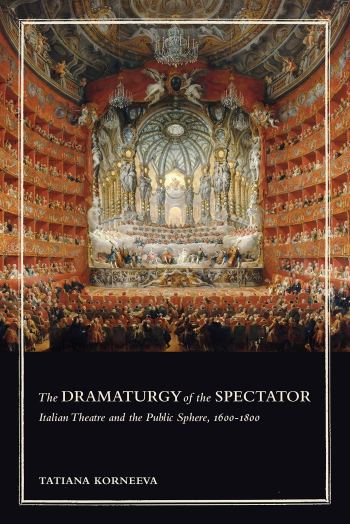 The Dramaturgy of the Spectator explores how Italian theatre consciously adjusted to the emergence of a new kind of spectator who became central to society, politics, and culture in the mid-seventeenth and eighteenth centuries. The author argues that while a focus on spectatorship in isolation has value, if we are to understand the broader stakes of the relationship between the power structures and the public sphere as it was then emerging, we must trace step-by-step how spectatorship as a practice was rooted in the social and cultural politics of Italy at the time. By delineating the evolution of the Italian theatre public, as well as the dramatic innovations and communicative techniques developed in an attempt to manipulate the relationship between spectator and performance, this book pioneers a shift in our understanding of audience as both theoretical concept and historical phenomenon.
Tatiana Korneeva is an assistant professor in Comparative Literature at the Freie Universität, Berlin.
C O N T E N T S
Acknowledgements
Chronology
Introduction
1 How Theatre Invents the Public Sphere
2 The Privileged Visibility of the Viewer
3 The Politics of Spectatorship
4 Public Emotions and Emotional Publics
5 Playwrights Fight Back
6 Liberty and the Audience
Epilogue
Bibliography
Index
Reopened: August the Strong’s State Apartments and Porcelain Cabinet
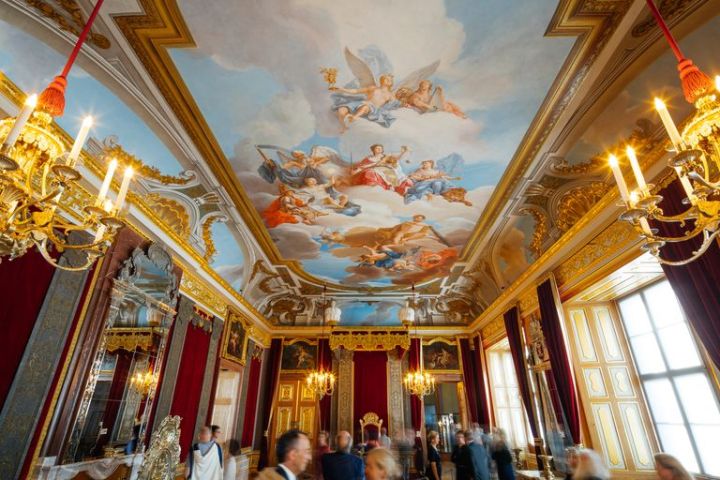
Audience Room of the State Apartments of Dresden’s Residenzschloss (28 September 2019)
Photo by Oliver Killig
◊ ◊ ◊ ◊ ◊
Press release (26 September 2019) from the SKD:
August the Strong’s Royal State Apartments (Paraderäume) and the Porcelain Cabinet in the Turmzimmer (Tower Room) were opened on Saturday, 28 Saturday 2019, marking the culmination of the restoration of Dresden’s Residenzschloss, which started in 1986. The prestigious suite of rooms in the west wing—conceived by the Elector-King personally as a ceremonial centrepiece of his residence—takes visitors to the pinnacle of ostentatious princely splendour on their tour of the museum palace.
Together with original artworks from several of Staatliche Kunstsammlungen Dresden’s museums, the painstakingly restored rooms form a unique ensemble of museum-grade rooms. The harmonious interplay of wall textiles, paintings, precious ornamental furniture and porcelains, magnificent robes of state, and August the Strong’s royal insignia let visitors experience both the standard of European artistry in the early 18th century and the ceremonial court culture.
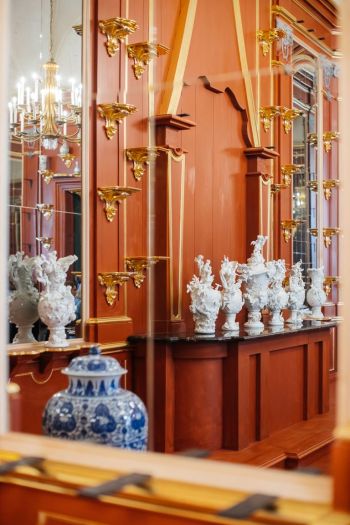
Porcelain Cabinet in the Tower Room of Dresden’s Residenzschloss (28 September 2019); photo by Oliver Killig.
August the Strong opened the State Apartments exactly 300 years ago, in September 1719, to celebrate the wedding of Crown Prince Friedrich August and daughter of the Emperor and Archduchess Maria Josepha of Austria. The construction and craft works continued from March 1717 to 2 September 1719—the day on which the Habsburgian daughter-in-law of August the Strong and his wife Christiane Eberhardine was welcomed in the new staterooms. Not only were the nine rooms of the State Apartments built in the west wing to mark this occasion, the entire second floor of the palace was renovated. The resulting ceremonial, prestigious suite began at the Englische Treppe (English Staircase) and led on through the Riesensaal (Hall of the Giants) and the Turmzimmer (Tower Room) to the west wing.
It housed the most important ceremonial and splendid rooms in the residence, enabling the Prince-Elector of Saxony to prove that his palace was truly the palace of a king, rivalling the residences of other European kings and the Emperor. The interiors grow increasingly luxurious from room to room: Whether in the corner state room to the two antechambers, to the audience chamber and the state bedroom, the rooms seemed to outdo one another in the number and splendour of the candelabras, wall textiles and furniture. This prestigious suite combined touches of the ceremonial style of the French royal court at Versailles with that at the imperial court of Vienna, whereby the state bedroom in the Viennese tradition was used as the most private ceremonial venue, and not for the opulent lever, the morning reception, as was the case under Louis XIV.
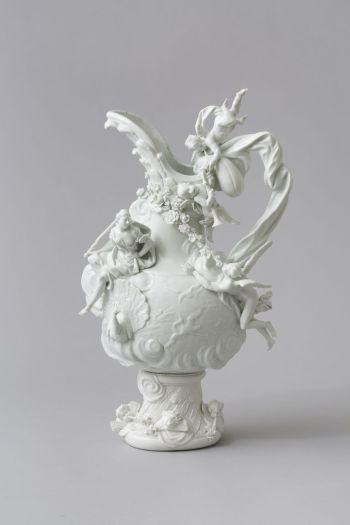
Johann Joachim Kaendler, Johann Friedrich Eberlein, Elementvase Luft aus dem fünfteiligen Satz der Elementvasen, Meissen, 1742
(Porzellansammlung der SKD; photo by Adrian Sauer).
In 1997, the Saxon State Government decided that the ceremonial rooms, which had been completely destroyed in the Second World War, should be rebuilt as far as possible. The present meticulous restoration of the rooms to their historic, 18th-century condition is an immense achievement by Staatsbetriebe Sächsische Immobilien- und Baumanagement (Saxon Real Estate and Construction Management, SIB) and many regional and international artists and craftspeople. Comprehensive records allowed the rooms to be restored as closely as possible to the original. For instance, Louis de Silvestre’s monumental ceiling paintings were recreated based on colour photographs taken in 1942/1944. The preserved baroque ornamental textiles of the audience chamber with pilasters adorned in intricate gold embroidery and trim were restored and the crimson silk velvet was reproduced to cover the entire wall surface with ‘thread-true’ recreations based on a fragment. Lost tapestries were replicated based on comparable examples. Overall, 300 craft firms from around Europe that have preserved the traditional skills worked together on this project.
Thanks to timely removal for safekeeping, many of the precious items of furniture from the early 18th century and the following decades, which were in the ceremonial rooms’ inventory, were preserved. They had been stored by the Kunstgewerbemuseum (Museum of Decorative Arts) since the end of the Second World War: the throne, rare silver furniture from Augsburg, French ornamental furniture using the Boulle marquetry technique. Paintings and overdoors by Louis de Silvestre from Gemäldegalerie Alte Meister now complete the current restoration project. As surviving historical pieces, the preserved originals tell the tale of the original interior and the rooms’ eventful past.
In four other rooms that, like the restored State Apartments, are in the west wing, exhibits from the Rüstkammer (Armoury) showcase the overwhelming splendour with which August the Strong staged his own persona and power. The two retirades (private refuges)—a suite of rooms leading from the corner state room to the state bedroom—house an exhibition on the ‘Royal Wardrobe’ of the Elector-King. The robes of state reflect his biography and significant events in his reign. Precious royal baroque fashions from the baroque period share space with August the Strong’s favourite weapons and diplomatic gifts received from the kings of Europe and the Czar. The picture cabinets located behind the audience chamber are dedicated to his royal majesty August the Strong and his son Augustus III. Besides the royal insignia of the Saxon-Polish union, the figurine dressed in the coronation regalia of 1697 with the face of August the Strong from the life mask of 1704 is particularly impressive. Other royal artefacts, like the Saxon electoral hat and the ceremonial royal flags and swords of Poland and Lithuania, reveal the European dimension of the linked Saxon and Polish monarchy.
The route to the State Apartments also takes visitors through the 100 m² Turmzimmer (Tower Room) in Hausmannsturm of the Residenzschloss. At the time of the wedding, August the Strong displayed his state treasury in the form of the exceptionally precious monumental silver vessels on pedestals and wall shelves there. In the 1730s under August III, the silver buffet was turned into a porcelain cabinet that went on to serve as a prominent showroom for the electoral and royal porcelain collection for 200 years. Now hosting a selection of porcelain, the recreated room has regained its historical function. It houses unique masterpieces from the manufactory in Meissen, like the Johann Joachim Kaendler’s outstanding, highly sculptural vases depicting the elements, returning to their original home after more than 75 years in the depot.
Eva-Maria Stange, State Minister for Higher Education, Research and the Arts: “Restoring the State Apartments to their resplendent former glory, gives the Residenzschloss its soul back. Visitors to the rooms get a great impression of life in the royal court. We must also remember that the principality and its prosperity were built on the work and hardships of the miners who extracted the silver that made Saxony rich, among other things. Even at that time, the economy, science and the arts stimulated one another, creating the admirable halo effect that is still maintained today.”
Marion Ackermann, Director General of Staatliche Kunstsammlungen Dresden: “When opened in 1719, August the Strong’s State Apartments and the Tower Room were the expression of an axiomatically European understanding of culture. Influences from many European countries inspired the efforts to attain perfection and outstanding artistic achievements. 300 years later, we can experience this phenomenon again: It was only the cooperation of many extraordinary Saxon and European craftspeople, artists and restorers, who still master the ancient techniques at a high level that made restoration of the State Apartments, and the Tower Room as a Porcelain Cabinet possible. With respect and admiration, I would like to thank everyone who worked on the project under the guidance of Staatsbetrieb Sächsisches Immobilien- und Baumanagement and collaborated to complete this unique architectural masterpiece.”
Dirk Syndram, Director of Grünes Gewölbe and Rüstkammer: “Nowhere else can you feel as close to August the Strong as in the State Apartments. And no other rule of baroque Europe left behind so many, so magnificent and so personal material testimonies to his time. These many originals make the splendour with which August the Strong surrounded himself directly tangible.”
New Book | Worn on This Day
From Running Press:
Kimberly Chrisman-Campbell, Worn on This Day: The Clothes That Made History (Philadelphia: Running Press, 2019), 336 pages, ISBN: 978-0762493579, $28.
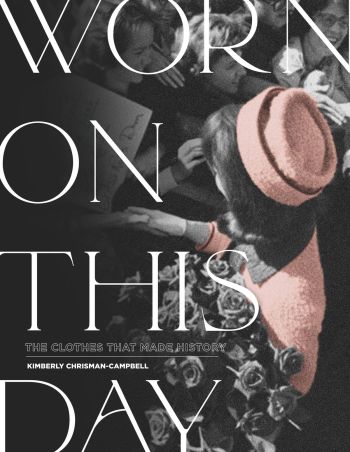 This stunning visual guide is a journey of discovery through fashion’s fascinating history, one day at a time. Beginning on January 1st and ending on December 31st, Worn On This Day looks at garments worn on monumental occasions across centuries, offering capsule fashion histories of everything from space suits to wedding gowns, Olympics uniforms, and armor. It creates thought-provoking juxtapositions, like Wallis Simpson’s June wedding and Queen Elizabeth’s June coronation, or the battered shoes Marie-Antoinette and a World Trade Center survivor wore to escape certain death, just a few calendar days apart. In every case there is a newsworthy narrative behind the garment, whether famous and glamorous or anonymous and humble. Prominent figures like Abraham Lincoln, Marilyn Monroe, and the Duchess of Cambridge are represented alongside ordinary people caught up in extraordinary events. Beautifully illustrated throughout, Worn On This Day presents a revelatory mash-up of styles, stories, and personalities.
Kimberly Chrisman-Campbell is a fashion historian, curator, and journalist. She is the author of the award-winning book Fashion Victims: Dress at the Court of Louis XVI and Marie-Antoinette. Kimberly lives in Los Angeles.
Symposium | Ornamenta Sacra, 1400–1800

From ArtHist.net:
Ornamenta Sacra: Late Medieval and Early Modern Liturgical Objects in a European Context, 1400–1800
Brussels and Leuven, 24–26 October 2019
We are pleased to invite you to Ornamenta Sacra: Late Medieval and Early Modern Liturgical Objects in a European Context, 1400–1800 October 24–26 in Brussels and Leuven. The symposium is organised in the framework of a Brain-Belspo funded project, led by Ralph Dekoninck (GEMCA, UCLouvain), Barbara Baert (IRG/Illuminare, KU Leuven), and Marie-Christine Claes (KIK-IRPA). You can confirm your participation by registering here.
The symposium is dedicated to the iconological and anthropological study of late medieval and early modern liturgical objects (1400–1800), once known as ornamenta sacra. This notion encompasses a wide range of objects made of various materials and techniques (such as chalices, censers, and chasubles), which are not only essential for the rites, but also hold a central position in the religious artistic production of the past. Yet, a large portion of recent studies related to the connections between art and liturgy mainly focuses on paintings and sculptures, leaving aside other cult objects. The few studies that take these ritual instruments into account are primarily devoted to the Middle Ages. The late Middle Ages and the early modern period have attracted far less attention, whereas liturgy underwent profound transformations. Although studies limited to certain collections or types of objects are available, we are still in need of a broader analysis instigated by recent methodological trends in historical anthropology and iconology, which have renewed our understanding of images and art objects. We have therefore invited an international group of scholars, experts in their fields and specialized in exactly these methodologies. As a result, the symposium will contribute to this broader analysis and will offer new insights on the material dimension of objects, the place of works of art within a network of relationships, the history of senses and the sensible, and the way in which ornamentation affects meaning.
T H U R S D A Y , 2 4 O C T O B E R 2 0 1 9
Royal Institute for Cultural Heritage (KIK-IRPA), Brussels
9:30 Coffee and tea
9:50 Welcome by Hilde De Clercq (dir. KIK-IRPA) and Georges Jamart (Belspo)
10:00 Introduction by Ralph Dekoninck (UCLouvain), Barbara Baert (KU Leuven), and Marie-Christine Claes (KIK-IRPA)
10:30 Morning Papers
• Eric Palazzo (Université de Poitiers), Le Christ énergétique, la spirale et la monstrance
• Frédéric Tixier (Université de Lorraine), Voir et entendre ou entendre et voir? Les objets liturgiques en procession (XIIIe–XVIIe s.)
12:30 Lunch
14:00 Afternoon Papers
• Cynthia Hahn (Hunter College and Graduate Center CUNY, New York), Reliquaries as Mediation in Liturgy and Ecclesiastical Space
• Frédéric Cousinié (Université de Rouen-Normandie) and Alysée Le Druillenec (Université Paris 1 Sorbonne-Panthéon), Objets de dévotions: Figures de la liaison au divin
• Michele Bacci (Université de Fribourg), Western Liturgical Vessels and the Byzantine Rite in the Late Middle Ages
• Sébastien Bontemps (Ecole du Louvre, Université de Bourgogne), Le trophée d’église: Système décoratif et illustration de la liturgie en France au XVIIIe siècle
• Caroline Heering (UCLouvain), Ornamenta Sacra: De l’ornement des objets aux objets comme ornements
F R I D A Y , 2 5 O C O T O B E R 2 0 1 9
Royal Institute for Cultural Heritage (KIK-IRPA), Brussels
9:00 Coffee and tea
9:30 Morning Papers
• Herman Roodenburg (Vrije Universiteit Amsterdam and Meertens Instituut), The Eucharist and not so sensuous worship: Shedding tears among the Modern Devout
• Anne-Laure Van Bruaene (Universiteit Gent), Viglius’s Mitre: Clerical Self-fashioning in Sixteenth-century Ghent
• Anne-Clothilde Dumargne (Université de Versailles, Saint-Quentin-en-Yvelines), Ornamenta ou ministeria? Statut et fonction des chandeliers en alliages de cuivre dans l’espace ecclésial de la fin du Moyen Âge à l’époque moderne
• Wendy Wauters (KU Leuven), Smellscapes and Censers: Strategies behind their Ritual Use and Iconographic Meaning
12:30 Lunch
14:00 Afternoon Papers
• Marie Lezowski (Université d’Angers), Le corps du délit: Les objets liturgiques volés dans les sources inquisitoriales (Italie, XVIIe–XVIIIe siècles)
• Emmanuel Joly (KIK-IRPA), Financer et entretenir les ornements liturgiques: Le cas des paroisses rurales du diocèse de Liège, 1400–1700
• Soetkin Vanhauwaert (KU Leuven), Worthy of Imitation: The Holy Sacrament and the Relic Cult of the Forerunner in Mechelen
• Anne Lepoittevin (Université Paris-Sorbonne), Les Agnus Dei en cire: Des objets de culte?
• Nicole Pellegrin (CNRS-ENS, Paris), Chapes en Révolution: Quelques traces d’abandons, destructions, réemplois et mutations, 1790–1820
S A T U R D A Y , 2 6 O C T O B E R 2 0 1 9
Katholieke Universiteit (KU), Leuven
9:00 Coffee and tea
9:30 Morning Papers
• Ethan Matt Kavaler (University of Toronto), The Netherlandish Carved Altarpiece as Miniature
• Kamil Kopania (The Aleksander Zelwerowicz National Academy of Dramatic Art, Warsaw), Animated Sculptures of the Crucified Christ in Context of Liturgical Space, Objects, and Gestures
• Ruben Suykerbuyk (Universiteit Gent), The Ritual Use of Memoria Monuments in the Low Countries, ca. 1520–85
• Charles Caspers (Titus Brandsma Instituut, Nijmegen), Wax and the Ghent Altarpiece: A New Interpretation
12:10 Discussion and concluding remarks
12:30 Lunch
14:30 Visit to the exhibition Borman and Sons at Museum M, Leuven
New Book | A History of Art History
From Princeton UP:
Christopher S. Wood, A History of Art History (Princeton: Princeton University Press, 2019), 472 pages, ISBN: 978-0691156521, $35.
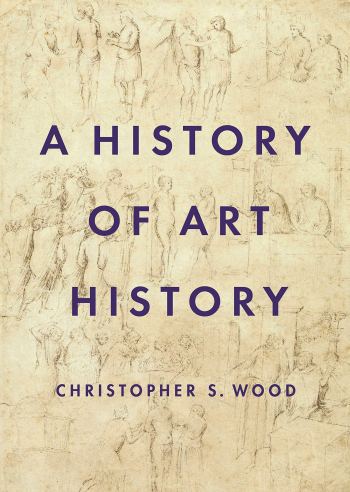 In this wide-ranging and authoritative book, the first of its kind in English, Christopher Wood tracks the evolution of the historical study of art from the late middle ages through the rise of the modern scholarly discipline of art history. Synthesizing and assessing a vast array of writings, episodes, and personalities, this original and accessible account of the development of art-historical thinking will appeal to readers both inside and outside the discipline.
The book shows that the pioneering chroniclers of the Italian Renaissance—Lorenzo Ghiberti and Giorgio Vasari—measured every epoch against fixed standards of quality. Only in the Romantic era did art historians discover the virtues of medieval art, anticipating the relativism of the later nineteenth century, when art history learned to admire the art of all societies and to value every work as an index of its times. The major art historians of the modern era, however—Jacob Burckhardt, Aby Warburg, Heinrich Wölfflin, Erwin Panofsky, Meyer Schapiro, and Ernst Gombrich—struggled to adapt their work to the rupture of artistic modernism, leading to the current predicaments of the discipline. Combining erudition with clarity, this book makes a landmark contribution to the understanding of art history.
Christopher S. Wood is a professor at New York University. He is the author of Forgery, Replica, Fiction: Temporalities of German Renaissance Art and Albrecht Altdorfer and the Origins of Landscape, the coauthor of Anachronic Renaissance, and the editor of The Vienna School Reader: Politics and Art Historical Method in the 1930s.










 Enfilade
leave a comment