Steven Parissien Named Palace House Chief Executive
Press release (via ArtDaily). . .
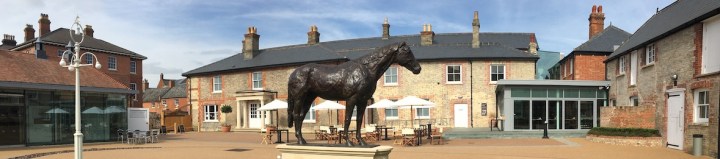
Palace House, The National Heritage Centre for Horseracing and Sporting Art, in Newmarket, announced the appointment of Professor Steven Parissien as its new Chief Executive. Parissien will assume the role in June 2019, taking over from Chris Garibaldi, who is stepping down in order to embark on full-time research at the University of Cambridge.
Beginning in 2010, Garibaldi delivered the ambitious £19m project to create a national gallery of British sporting art—alongside a new national horseracing museum—in the palace that Charles II originally built for himself in Newmarket, Suffolk. In its first year (2016), Palace House attracted around 30,000 visitors, was short-listed for the Art Fund Museum of the Year in 2017, and in 2018 became an Arts Council National Portfolio Organisation.
 Parissien was Director (and subsequently Chief Executive and Artistic Director) of Compton Verney Art Gallery and Park in Warwickshire from 2009 to November 2018. Since then he has completed a project as a directorial consultant at the Bata Museum in Toronto, Canada. Under his leadership, Compton Verney saw its visitor numbers soar, whilst the historic manor house and Lancelot ‘Capability’ Brown landscape were extensively restored. Parissien also introduced a series of critically-acclaimed and hugely popular exhibitions including Turner and Constable (2013), Canaletto in Britain (2015), Britain in the Fifties (2016), and Whistler and Nature (2018). Parissien introduced a number of commercial initiatives, including a lucrative wedding and corporate hire business. At the same time, Compton Verney’s Education and Learning team developed extensive relations with local schools, children’s centres, care homes, and other organisations—enabling under-engaged and under-represented groups to access high-quality artistic experiences on their doorstep. Parissien was also instrumental in building partnerships with museums, galleries, and arts organisations across the UK, whilst also forging strong links with some of the country’s most respected higher education institutions, most notably the Universities of Oxford (whose partnership enabled the re-launch of the Victorian Women’s Library in 2017), Warwick, and Coventry. The latter awarded Parissien a Visiting Professorship in 2015.
Announcing the appointment of his successor, Mr. Garibaldi said: “It has been a true privilege to lead the organisation over the nine years of my tenure, and I am extremely proud of what has been achieved over that time by the incredibly dedicated team at Palace House. It has been an honour to have been part of such an exciting project. I am delighted to be handing over to Professor Parissien whose outstanding work at Compton Verney is well known and makes him, in my opinion, the perfect choice. I couldn’t be more pleased that the Board has recruited Steven to take Palace House through the next stage of its extraordinary history and I wish him every success in his new post.”
Rachel Hood, Chair of Trustees said: “I would like to take this opportunity to reiterate the Trustees’ and my sincere thanks for the tremendous job that Chris has done to produce such a brilliant Museum and we all wish him well on his return to academia. We are absolutely thrilled to have recruited Professor Parissien as our new Chief Executive. We looked far and wide for a suitable candidate and are immensely pleased to have persuaded Steven to return from Canada to take forward our ambitions for the organisation.”
Commenting on his appointment Professor Parissien said: “I am absolutely delighted to be returning to the UK and taking over the reins from Chris at Palace House. They have achieved a vast amount as an organisation over the past nine years with him at the helm, and I am incredibly excited to be bringing my experiences at Compton Verney and in the wider museum sector to help lead them in their—and indeed my—ambitions and plans for the future and growth of Palace House, The National Heritage Centre for Horseracing and Sporting Art.”
At Christie’s | Asian Art
Press release (via Art Daily) . . .
Art d’Asie (Sale 17457)
Christie’s, Paris, 12 June 2019
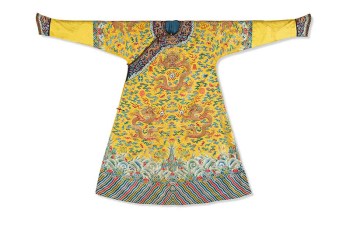
Imperial embroidered silk robe dating from the end of the Qianlong period (1736–1795). Estimate: €80,000–120,000.
On 12 June, Christie’s Paris will present its Asian Art sale (17457), which will offer high quality items, including a large range of works of art coming from European private collections.
The section dedicated to China will offer a beautiful white jade and rust ‘double-gourd’ vase. Dating from the Qianlong period (1736–1795), named for the sixth emperor of the Qing dynasty, this vase is meticulously carved and stands on a delicate circular foot. It is adorned with a double handled decorated with bats flying among clouds; the upper and lower parts are respectively embellished with the characters ‘da’ and ‘ji’, thus forming the term ‘da ji’, which means ‘great luck’. The neck is flanked with two handles holding a mobile ring with a bat carved in relief with outstretched wings holding a lingzhi (auspicious mushroom). The decoration of this remarkable object comprises promising symbols such as its double-gourd shape, associated with prosperity and abundance (estimate: €150,000–200,000).
The sale will also offer an imperial vase made of cloisonné enamel of striking beauty from the Kangxi period (1662–1722). Baluster-shaped, resting on a flared foot decorated with archaic chilong, the whole is enhanced with crenelated ridges in gilt-bronze. The body is decorated with stylized lotus, as well as the foot and the neck. The latter is highlighted by three gilt-bronze ram heads and chiseled nails intersected with banana leaves (estimate: €70,000–90,000).
Asian art lovers will have the chance to acquire an exceptional imperial embroidered silk robe dating from the end of the Qianlong period and the early Jiaqing period (1796–1820). The embroideries adorning this item are extremely delicate, as evidenced by the nine ‘five-claw’ dragons in the pursuit of the flaming pearl represented in gold and silver threads. In addition, the subtle shades of colors and the stylized clouds evoking ruyi heads are shown in multi-colour threads. The whole is embroidered on a bright yellow background, above a terrestrial diagram which emerges from tumultuous waves below which appears a large band of lishui, echoed on the sleeves as well. The neck is highlighted by a border embroidered with dragons on a black background (estimate: €80,000–120,000).
Coming from a French private collection, a celadon-glazed vase with molded decoration with a Qianlong impressed six-character seal mark will also be offered at auction. The body is magnified with molded decoration of blooming peonies among elegantly arranged foliage leaves. Separated by a band of ruyi and a band of stylized flowers, the tubular neck is embellished with petals and foliage (estimate: €100,000–150,000).
Other highlights include a superb zitan cabinet from the Qianlong period. This cabinet is composed of two very finely worked door panels. Four dragons, in pursuit of the inflamed pearl, seem to fly on a background of stylized clouds evoking ruyi heads. The gilt-bronze hinges are finely incised with dragons also represented on a background of clouds; the central fitting is decorated with stylized ‘shou’ characters and two small mobile plates adorned with bats (estimate: €120,000–150,000).
The section dedicated to Japan will offer a stunning samurai armor dating from the second half of the Edo period, at the end of the 18th century. Two coats of arms are visible, one representing the character ‘ue’, the other figuring an oxalis (katabami) flower probably belonging to the Sakai clan. The armor also includes an eboshi style helmet topped by two wakidate in the shape of lacquered wood horns. The frontal ornament depicts the sun in gilded wood. The breastplate is made of yokohagi-dô natural iron while its upper front and back parts as well as the shoulders are covered with brass inlaid of gold hira zogan decorated with coat of arms and foliages (estimate: €20,000–30,000).
Finally, the Asian Art department will be pleased to present, in its next sale, a rock crystal deer from the former personal collection of Coco Chanel. Executed during the Qing dynasty, the statuette represents a seating deer with its head turned to the right, holding a branch of lingzhi in its mouth (estimate: €2,000–3,000). Presented under a glass protection, the auspicious animal symbolizing longevity has adorned the coffee table of Coco Chanel’s suite at the Ritz Hotel for years.
Call for Papers | Art and the Sea
From H-ArtHist:
Art and the Sea
Centre for Port and Maritime History Annual Conference
Liverpool John Moores University, 13 September 2019
Proposals due by 1 July 2019
Interest in maritime art and its role in art history has reignited in recent years, and this conference provides an opportunity for examination and reassessment of this field. The theme of Art and the Sea lends itself to interdisciplinary approaches and subject matter. It is anticipated that interest will arise from those working in art history, transport history, sociology, maritime studies, natural history, engineering, biology, and other areas. Submissions for conference papers on the theme of Art and the Sea from these and other disciplines are welcome.
The sea and maritime travel are subjects of universal fascination. For centuries, the sea inspired both fear and fascination and, unsurprisingly, these emotions fuelled artists and craftspeople to create work in response. Traversing the sea was often laborious which led to sailors developing new crafts or to vessels being decorated to entertain or provide interest. For the 2019 CPMH Conference, we consider these themes and aim to discover what current, cutting-edge research is revealing about the role of art and design in relation to the sea. We encourage the discussion of previous debates in the light of new evidence or approaches and the introduction of entirely new subject matter and methods. The conference theme is deliberately broad in scope, but potential themes / topics for discussion could include (but are not limited to)
• Maritime vessels as sites for art or art making
• The depiction of ships / ports / sea conditions in art
• Ship figureheads (significance / symbolism / creation)
• Art under the surface of the sea
• Maritime artists and their role in art history
• Museology of maritime art
• The intersection of natural history and maritime art
• Interior design of vessels
• Use of images of the sea for commercial purposes
Registration fees are £10 for non-concessions or free for concessions. There will be a conference reception during the evening of Friday, 13 September. Details will be circulated to delegates in due course. To submit an abstract for this year’s conference, please email a 250-word abstract to Dr Emma Roberts, CPMH Committee (e.e.roberts@ljmu.ac.uk) by the 1st of July 2019.
The Centre for Port and Maritime History—a collaborative venture between The University of Liverpool, Liverpool John Moores University, and Merseyside Maritime Museum—exists to further and facilitate historical research on port cities and their relationship to maritime endeavour and enterprise. Launched in 1996, the Centre builds on two Liverpool-based traditions. The School of History at The University of Liverpool has long been a respected centre for research and teaching in maritime history, particularly through the work of Francis Hyde, Peter Davies, and Sheila Mariner. Equally, curatorial staff at the Museum have established a strong record of research in the field, and of making their collections accessible to the scholarly community. The Centre is intended as an enabling forum, offering a focus for existing activity and a vehicle for launching new initiatives.
New Book | History of Illustration
From Bloomsbury:
Susan Doyle, Jaleen Grove, and Whitney Sherman, eds., History of Illustration (London: Fairchild Books, 2018), 592 pages, ISBN: 978-1501342110 (hardback), $240 / ISBN: 978-1501342103 (paperback), $90.
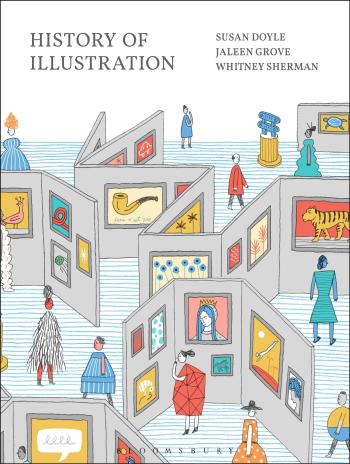 History of Illustration covers image-making and print history from around the world, spanning from the ancient to the modern. Hundreds of color images show illustrations within their social, cultural, and technical context, while they are ordered from the past to the present. Readers will be able to analyze images for their displayed techniques, cultural standards, and ideas to appreciate the art form. This essential guide is the first history of illustration written by an international team of illustration historians, practitioners, and educators.
Susan Doyle is Chair and Associate Professor at Rhode Island School of Design in Providence.
Jaleen Grove is a Post-Doctoral Fellow at the Douglas B. Dowd Modern Graphic History Library at Washington University.
Whitney Sherman is Director of the MFA in Illustration Practice at Maryland Institute College of Art.
C O N T E N T S
Preface
Acknowledgements
Introduction
I. Illustrative Traditions in Europe, Asia, and Africa
1 Image and Meaning, Prehistory to 1500 by Robert Brinkerhoff and Margot McIlwin Nishimura
2 Illustration in Printed Matter in Early Modern Europe, 1400–1660 by Susan Doyle
3 Pluralistic View of Indian Images: 2nd BCE to the 1990s by Binita Desai and Nina Sabnani
4 Illustrative Traditions in the Muslim Context by Irvin Cemil Schick
5 Chinese Illustration before 1900 by Sonja Kelley and Frances Wood
6 Prints and Books in Japan’s Floating World by Daphne Rosenzweig
7 Illustration in Latin America from Pre-Columbian to Modern 1990s by Maya Stanfield-Mazzi
8 Illustration in the African Context by Bolaji Campbell with contributions by Winifred Lambrecht
II. Images as Knowledge, Ideas as Power
9 Observation and the Representation of Natural Science Illustration, 1450–1900 by Shelley Wall
10 Visualizing Bodies: Anatomical and Medical Illustration from the Renaissance to the Nineteenth Century by Shelley Wall
11 Dangerous Pictures: Social Commentary in Europe, 1720–1860 by Robert Lovejoy
12 From Reason to Romanticism by Hope Saska
III. The Advent of Mass Media
13 Illustration on British and North American Printed Ephemera of the Nineteenth and Early Twentieth Centuries by Graham Hudson
14 Illustration in the Expansion of the Graphic Journalism and Magazine Fiction in Europe and North America, 1830–1900 by Brian Kane and Page Knox
15 Beautifying Books and Popularizing Posters: Illustration in the Later Nineteenth Century by Susan Ashbrook and Alison Syme
16 Fantasy and Children’s Book Illustration Nineteenth and Early Twentieth-Century England by Alice Carter
17 Six Centuries of Fashion Illustration by Pamela Parmal
IV. Diverging Paths in 20th-Century American and European Illustration
18 American Narratives: Periodical Illustration in the Late Nineteenth and Early Twentieth Century by Mary Holahan with contributions by Alice Carter and Joyce Schiller
19 Avant-garde Illustration, 1900–1950 by Jaleen Grove
20 Diverse American Illustration Trends in Periodicals, 1915–1940 by Roger Reed
21 Wartime Imagery and Propaganda, 1890–1950 by Thomas LaPadula
22 Illustrating Alternate Realities in Pulps and Other Popular Fiction by Nicholas Egon Jainschigg with contributions by Robert Lovejoy
23 Overview of Comics and Graphic Narratives by Brian M. Kane with contributions by Loren Goodman and Michelle Nolan
V. The Evolution of Illustration in an Electronic Age
24 The Shifting Postwar Marketplace: Illustration Competes with Growing Media Options in the United States and Canada, 1940–1970 by Stephanie Plunkett
25 Children’s Book Illustration, 1920–2000 by H. Nichols B. Clark
26 Countercultures: Underground Comix, Rock Posters, and Protest Art, 1960–1990 by Robert Lovejoy
27 Print Illustration in the Postmodern World by Whitney Sherman
28 Medical Illustration after Gray’s Anatomy: 1859 to the Present by David M. Mazierski
29 Digital Forms by Nanette Hoogslag and Whitney Sherman
Bibliography
Glossary
Index
DMA Names Julien Domercq Assistant Curator of European Art
Press release (29 April 2019) from the DMA:
 Julien Domercq has been named The Lillian and James H. Clark Assistant Curator of European Art at the Dallas Museum of Art. The appointment was announced today by Dr. Agustín Arteaga, the DMA’s Eugene McDermott Director. Domercq joins the DMA after serving as the Vivmar Curatorial Fellow at the National Gallery in London from 2016 to 2018. He will begin his new role in Dallas on May 14, 2019.
Under the direction of Dr. Nicole R. Myers, the Museum’s Barbara Thomas Lemmon Senior Curator of European Art, Domercq will actively contribute to the European department’s robust research, exhibition, and collection programs. The DMA’s European collection encompasses more than 1,900 paintings, sculptures, and works on paper from the Renaissance to the mid-20th century. Domercq will focus his efforts on the Old Master collection, rethinking its presentation and interpretation in the galleries and strategizing on collection growth in this area. Among his first exhibition projects are focused presentations of master paintings by Caravaggio and Frans Hals.
“Julien is a remarkable young talent, with impressive scholarship and international experience working in one of Europe’s most important public art institutions,” said Arteaga. “He has an incredible passion for making the presentation of European art exciting and accessible to a wide and multi-generational audience. This practice aligns well with the DMA’s mission to connect people and art. As we usher in a dynamic chapter in the European Art Department that was announced by the extraordinarily generous gift in 2013 of the Marguerite and Robert Hoffman Fund for European Art Before 1700, we are excited to welcome Julien to Dallas, and look forward to the work that he and Nicole Myers will accomplish together.”
At the National Gallery, London, Domercq curated the exhibition Drawn in Colour: Degas from the Burrell (2017), a presentation of 23 works by Edgar Degas loaned from the Burrell Collection in Glasgow paired with selections from the National Gallery’s collection. The Guardian praised the exhibition as “a ravishing, revealing window on Degas’s inner world.” He assisted in the final stages of the exhibition Painters’ Paintings: From Freud to Van Dyck (2016) and also worked on major redisplays of the post-1800 and Italian Renaissance galleries, including reimagining the presentation of the National Gallery’s paintings by Titian and Raphael.
“With his breadth in European Old Masters, Julien will bring fresh eyes and new scholarship to the extant collection while expanding our holdings to reflect the DMA’s encyclopedic aim. I am excited for us to work together to reinvigorate the Museum’s Old Master exhibition program, an area that has been relatively underserved,” added Myers. “We are thrilled to welcome him to the curatorial team.”
Additionally, Domercq has contributed to a number of catalogues published by the National Gallery, London; Houghton Hall, Norfolk; and the Royal Academy of Arts, London. He has written articles as well as online reviews for Apollo magazine.
Domercq earned his bachelor’s (with first class honors) and master’s (with distinction) degrees in art history from King’s College, Cambridge, where he is currently completing his PhD. While there, his doctoral research was supported by a prestigious Gates Scholarship. His dissertation research explores shifts in European depictions of indigenous people in the Pacific Islands at the end of the 18th century.
“I am delighted to be moving to Dallas to join the curatorial team of the DMA at a time it is being dynamically reimagined under Dr. Arteaga’s direction,” said Domercq. “From my very first visit to Dallas, I was impressed by the central role the Museum plays for its community. Today, I am thrilled to be joining this great civic institution, with encyclopedic collections that reflect the vibrant multicultural city it serves. I am looking forward to immersing myself in the Dallas community and to devising ambitious Old Master exhibitions in partnership with other institutions internationally, collaborating on innovative programming and research with my new colleagues, and caring for, interpreting, and growing the DMA’s European Old Master collection, making it ever more accessible to the people of Dallas, and beyond.”
Journée d’étude | Le marché de l’art, 1750–1800
From H-ArtHist:
Le marché de l’art dans la seconde moitié du XVIIIe siècle: Expertises, négociations et controverses
Institut national d’histoire de l’art, Paris, 5 June 2019
Les marchands se trouvent au cœur d’un vaste réseau culturel et artistique à cette période et deviennent les premiers intermédiaires entre l’œuvre et l’amateur d’art. Objets de curiosité, arts décoratifs, tableaux, dessins et gravures font tous partie des biens constituant ce négoce. Durant cette époque particulièrement dynamique, tant du point de vue historique que culturel, plusieurs controverses se font jour en lien avec ce commerce florissant. De nombreuses polémiques émergent entre différentes figures de marchands influents, certains qualifiant même leurs confrères de « brocanteurs ». Ces polémiques signalent-elles une volonté de s’imposer dans un secteur devenu fortement concurrentiel ? Où ne sont-elles que la manifestation de l’ambition de voir reconnaître une réelle distinction de compétences entre les marchands ? Des débats éclatent aussi entre les marchands et leur clientèle. Les amateurs, à la recherche constante d’œuvres authentiques, originellement créées par un artiste, sont ainsi confrontés aux problèmes que posent la copie et le faux, et à l’honnêteté parfois contestable des négociants. S’agit-il alors d’un problème de connaissances et de compétences des marchands ou d’un manque manifeste de sincérité au profit d’un désir grandissant d’enrichissement ? Enfin, cette journée s’intéressera aux échanges entre la France et ses pays voisins et, plus particulièrement, à la visibilité des pratiques marchandes contestées et à la manière dont les Français sont perçus à l’étranger durant cette période.
Journée d’étude organisée par le GRHAM (Groupe de Recherche en Histoire de l’Art Moderne)
• Florence Fesneau (université Paris 1 – Panthéon-Sorbonne)
• Barbara Jouves (université Paris 1 – Panthéon-Sorbonne)
• Maxime Georges Métraux (Sorbonne université)
• Alice Ottazzi (université Paris 1 – Panthéon-Sorbonne / Université de Turin), Marine Roberton (université Paris 1 – Panthéon-Sorbonne)
• Maël Tauziède-Espariat (université de Bourgogne)
P R O G R A M M E
9.00 Accueil des participants et du public
9.15 Introduction du GRHAM
9.30 Session 1: Réputation et autorité
Modération: Darius Spieth
• Ginevra Odone (Doctorante en histoire de l’art, Université de Lorraine / Università La Sapienza di Roma), Processus de négociation et renommé des Antiquaires à travers les lettres du comte de Caylus
• Moana Weil-Curiel (Historien de l’art indépendant), De Strasbourg à Paris, ascension et chute de Jean-Henri Eberts (1726–1803): De la banque au négoce, des tableaux au mobilier de la couronne
10.45 Pause
11.00 Session 2: Création de valeurs
Modération: Darius Spieth
• Patrick Michel (Professeur des universités, Université de Lille 3), Les marginalia d’un exemplaire du catalogue de la vente du prince de Conti: Un regard critique sur l’une des grandes ventes publiques de la seconde moitié du XVIIIe siècle
• Vincent Chenal (Chargé d’enseignement pour la Maîtrise d’études avancées en conservation du patrimoine et muséologie, Université de Genève), Établir une « échelle moyenne » de la valeur des œuvres d’art dans la « patrie des fantaisies et de l’inconstance dans les goûts » : Quelques aspects de cette pratique Jean-Baptiste-Pierre Lebrun prêteur sur gages
12.45 Déjeuner
14.00 Session 3: L’objet en question
Modération: Patrick Michel
• Jean-Baptiste Corne (Doctorant, École Pratique des Hautes Etudes /École du Louvre), De bric et de broc: Aux origines du marché de la boiserie
• Darius Spieth (San Diego Alumni Association Chapter Alumni Professor of Art History), Le paradoxe du marché de l’estampe pendant la Révolution française
15.15 Pause
15.30 Session 4: Regards sur le marché de l’art européen
Modération: Patrick Michel
• Bénédicte Miyamoto (Maître de conférences, Université Sorbonne Nouvelle –Paris 3), Visibilité des pratiques marchandes controversées outre-Manche: Intermédiaires polémiques, lots ravalés, et transparence
• Paolo Coen (Professor, Università degli studi di Teramo), The Art Market in Rome in the Second Half of the Eighteenth Century: Some Internal and External Communication Tools
16.45 Conclusion du GRHAM
• Claude Aguttes (Commissaire-priseur), Passé-présent, réflexion sur le marché de l’art
Cambridge Launches Inquiry into Historical Links to Slavery
I learned of this press release from the University of Cambridge through The Society of Antiquaries of London Online Newsletter (Salon) issue 426 (30 April 2018), which also notes that the University of Glasgow recently completed a similar study of its own historical ties to slavery. The report “Slavery, Abolition and the University of Glasgow,” published in September 2018, concludes that “although the University of Glasgow never owned enslaved people or traded in the goods they produced, it is nonetheless clear that the university received significant financial gifts and support from people who derived some or occasionally much of their wealth from slavery. . . The issue facing the university today is how to address this history? We deeply regret that during a crucial period of its growth and development the University of Glasgow indirectly benefitted from racial slavery, and this is a past which clashes with our proud history of support for the abolition of both the Slave Trade and slavery itself. We believe that what is most important, however, is how we intend to use our knowledge of this past in a ‘Programme of reparative justice’.” –CH
From the Cambridge press release (30 April 2019) . . . .

Josiah Wedgewood, Emancipation Badge, 1787, jasperware, commissioned by the Society for Effecting the Abolition of the Slave Trade, designed by Henry Webber and modelled by William Hackwood (Cambridge: Fitzwilliam Museum).
The University of Cambridge will conduct an in-depth academic study into ways in which it contributed to, benefited from or challenged the Atlantic slave trade and other forms of coerced labour during the colonial era.
The two-year inquiry will explore University archives and a wide range of records elsewhere to uncover how the institution may have gained from slavery and the exploitation of labour, through financial and other bequests to departments, libraries, and museums. It will also investigate the extent to which scholarship at the University of Cambridge, an established and flourishing seat of learning before and during the period of Empire, might have reinforced and validated race-based thinking between the 18th and early 20th century.
A specially commissioned Advisory Group appointed by the Vice-Chancellor, Professor Stephen J Toope, has been asked to recommend appropriate ways to publicly acknowledge past links to slavery and to address its impact. The eight-member Advisory Group overseeing the work is being chaired by Professor Martin Millett, the Laurence Professor of Classical Archaeology, and draws its membership from relevant academic departments across the University. The panel will call on further external expertise as necessary. The inquiry will be conducted by two full-time postdoctoral researchers, based in the Centre of African Studies, part of the School of Humanities and Social Sciences. The research will examine specific gifts, bequests, and historical connections with the slave trade. Researchers will also look into the University’s contribution to scholarship and learning that underpinned slavery and other forms of coerced labour.
Professor Millett said: “This will be an evidence-led and thorough piece of research into the University of Cambridge’s historical relationship with the slave trade and other forms of coerced labour. We cannot know at this stage what exactly it will find but it is reasonable to assume that, like many large British institutions during the colonial era, the University will have benefited directly or indirectly from, and contributed to, the practices of the time. The benefits may have been financial or through other gifts. But the panel is just as interested in the way scholars at the University helped shape public and political opinion, supporting, reinforcing and sometimes contesting racial attitudes which are repugnant in the 21st century.”
Professor Toope, the Vice-Chancellor, said: “There is growing public and academic interest in the links between the older British universities and the slave trade, and it is only right that Cambridge should look into its own exposure to the profits of coerced labour during the colonial period. We cannot change the past, but nor should we seek to hide from it. I hope this process will help the University understand and acknowledge its role during that dark phase of human history.”
The Advisory Group’s work comes amid a wider reflection taking place in the United States and Britain on the links between universities and slavery. It is among a number of race equality initiatives currently being pursued at the University of Cambridge. In February, the Centre of African Studies hosted a round table on ‘Slavery and its Legacies at Cambridge’. The Advisory Group is expected to deliver its final report to the Vice-Chancellor in autumn 2021. Alongside its findings on historical links to the slave trade, the report will recommend appropriate ways for the University to publicly acknowledge such links and their modern impact.
Lecture | Wolf Burchard on the Rothschild Savonneries
From Waddesdon Manor:
Wolf Burchard, The Rothschild Savonneries: An Encyclopaedia of French Royal Carpet Weaving
Spencer House, 27 St James’s Place, London, 13 May 2019
 Join Wolf Burchard for this Spencer House Lecture, The Rothschild Savonneries: An Encyclopaedia of French Royal Carpet Weaving. The Rothschild Collection at Waddesdon Manor comprises the largest and most comprehensive collection of Savonnerie carpets and upholstered furniture outside France. Dr Burchard will revisit the history of the Savonnerie manufactory for its beginnings under Henri IV and Louis XIII to the present day, focusing on its major commissions for the Louvre, Versailles, and Notre Dame. His talk will also examine the dispersal of many of these weavings after the French Revolution in 1789, both through sale and as diplomatic gifts, as well as the rising British and American taste for Savonnerie carpets beginning around 1900.
The lecture will take place on Monday, 13 May at 6.30pm (doors open at 6.00pm). It will be followed by drinks and an opportunity to look at the restored 18th-century State Rooms at Spencer House. Adult ticket price (£15) includes one complimentary drink.
Wolf Burchard is Associate Curator of European Sculpture and Decorative Arts at The Metropolitan Museum of Art, New York, formerly Furniture Research Curator at the National Trust. He is the author of The Sovereign Artist: Charles Le Brun and the Image of Louis XIV, which was partly funded by The Rothschild Foundation. Burchard has worked extensively on the Savonnerie manufactory and in 2012 published an update of Pierre Verlet’s catalogue of Louis XIV’s carpets for the Louvre’s Long Gallery, adding newly discovered carpets, carpet fragments, and designs.
Display | Madame de Pompadour in the Frame
Opening in a few weeks at Waddesdon Manor:
Madame de Pompadour in the Frame
Waddesdon Manor, Buckinghamshire, 23 May – 27 Octotber 2019
 This exhibition will shine a spotlight on how technology is being used to enhance our understanding of art history, enabling masterpieces which have been victims of circumstance or history to be seen as they were once intended.
François Boucher’s famous portrait of Madame de Pompadour (1756) is today one of the most prized paintings on display at the Alte Pinakothek in Munich*, yet this monumental portrait was once owned by Baron Ferdinand de Rothschild. Ferdinand had acquired it in 1887, and displayed it in his London house, 143 Piccadilly. Either before, or shortly after he acquired it, the portrait was re-framed. When he died, Ferdinand bequeathed the painting to his brother Nathaniel, but while the canvas eventually found its way to Germany, the impressive 18th-century frame was retained and ended up at Waddesdon Manor.
Now, thanks to a collaboration with Factum Foundation, specialists in high-resolution digital scanning technology, and with the support of the Alte Pinakothek, this new exhibition will recreate the masterpiece as it would have been known in the 19th century by Baron Ferdinand. In a marriage of traditional conservation and restoration techniques with the most advanced 3D digital reproduction technology, it will place a facsimile of the portrait back in Baron Ferdinand’s frame, which has been conserved especially for the show. Visitors will be able to explore for themselves other digital and 3D reproductions in touch displays, and a film will illustrate Factum Foundation’s process of re-creating Madame de Pompadour.
The exhibition will also explore the historical connection between the Madame de Pompadour painting and frame and Waddesdon and the Rothschild family. A particular highlight will be a 1757 Charles-Germain de Saint-Aubin caricature from a unique book of satirical cartoons, which is seldom on display.
* François Boucher’s Madame de Pompadour (1756) is on display at the Alte Pinakothek in Munich (on permanent loan from the HypoVereinsbank, Member of UniCredit).
New Book | Textiles of Japan
From Prestel:
Thomas Murray and Virginia Soenksen, with a foreword by Anna Jackson, Textiles of Japan (London: Prestel, 2018), 520 pages, ISBN: 978-3791385204, $85 / £65.
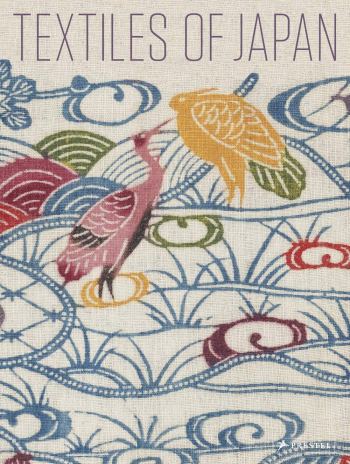 From rugged Japanese firemen’s ceremonial robes and austere rural work-wear to colorful, delicately-patterned cotton kimonos, this lavishly illustrated volume explores Japan’s rich tradition of textiles.
Textiles are an eloquent form of cultural expression and of great importance in the daily life of a people, as well as in their rituals and ceremonies. The traditional clothing and fabrics featured in this book were made and used in the islands of the Japanese archipelago between the late 18th and the mid 20th century. The Thomas Murray collection featured in this book includes daily dress, work-wear, and festival garb and follows the Arts and Crafts philosophy of the Mingei Movement, which saw that modernization would leave behind traditional art forms such as the hand-made textiles used by country people, farmers, and fisherman. It presents subtly patterned cotton fabrics, often indigo dyed from the main islands of Honshu and Kyushu, along with garments of the more remote islands: the graphic bark cloth, nettle fiber, and fish skin robes of the aboriginal Ainu in Hokkaido and Sakhalin to the north, and the brilliantly colored cotton kimonos of Okinawa to the far south. Numerous examples of these fabrics, photographed in exquisite detail, offer insight into Japan’s complex textile history as well as inspiration for today’s designers and artists. This volume explores the range and artistry of the country’s tradition of fiber arts and is an essential resource for anyone captivated by the Japanese aesthetic.
Thomas Murray is a dealer of Asian and tribal art and has an extensive personal collection of Japanese and Indonesian textiles. He is a past president of the Antique Tribal Art Dealers Association (ATADA), and served on President Obama’s Cultural Property Advisory Committee at the Department of State in Washington, D.C.
Virginia Soenksen is Associate Director of the Madison Art Collection at James Madison University in Virginia.
Anna Jackson is Keeper of the Asian Department at The Victoria and Albert Museum in London, where she is responsible for the museum’s collection of Japanese textiles and dress.










 Enfilade
leave a comment