Exhibition | Madame de Maintenon
Now on view at Versailles:
Madame de Maintenon: In the Corridors of Power
Château de Versailles, 16 April — 21 July 2019
Curated by Alexandre Maral and Mathieu da Vinha
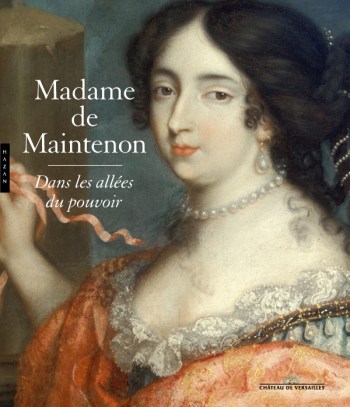 The first exhibition entirely devoted to the Marquise of Maintenon, on the tercentenary of her death on 15 April 1719, recounts the extraordinary life of Françoise d’Aubigné (1635–1719). She was born in a prison yet went on to become the Sun King’s wife in 1683.
The different stages of her life are shown in around 60 works from the collections of Versailles and other museums, including paintings, drawings, engravings, books, sculptures, medals, and so on. The visit passes through the four adjoining rooms of the apartment she lived in from 1682 until 1715, on the first floor of the Palace’s central section.
The scenography returns the walls to their original colours at the time. They are richly draped in alternating silk panels as described in the Furniture Store-House inventories from 1708: red damask, crimson damask, and red taffeta for the second antechamber; green and gold damask for the bedroom; and crimson and gold flower damask for the Chambers. This installation was made possible thanks to the restoration of these wall hangings by Tassinari et Chatel, the nation’s oldest silk manufacturer, founded in Lyon by Louis XIV.
The exhibition is curated by Alexandre Maral (Head Curator for Heritage and Director of the Centre de recherche du château de Versailles) and Mathieu da Vinha (Scientific Director of the Centre de recherche du château de Versailles), with scenography by Jérôme Dumoux.
Alexandre Maral and Mathieu da Vinha, Madame de Maintenon: Dans les allées du pouvoir (Paris: Hazan, 2019), 192 pages, ISBN: 978-2754110723, 35€.
The exhibition brochure (in French and English) is available as PDF file here
◊ ◊ ◊ ◊ ◊
Symposium | Madame de Maintenon, 1719–2019
Château de Versailles, 21–23 March 2019
This international symposium offered a fresh look at this multifaceted historical figure, reviewing the biographical aspects of the Marquise, as well as her correspondence and the literary and iconographic legend surrounding her.
Details along with audio recordings are available here.
Exhibition | The Taste of Marie Leszczyńska
Now on view at Versailles:
Le Goût de Marie Leszczyńska
Château de Versailles, open from 16 April 2019
Curated by Gwenola Firmin and Marie-Laure de Rochebrune, with Vincent Bastien
 During the 42 years she spent at Versailles, Marie Leszczyńska (1703–1768) had a profound impact on both the layout of the Palace and artistic life at the time. Her influence has inspired this dedicated exhibition. A Taste of Marie Leszczyńska is presented in the Dauphine’s Apartments, which have been reopened for the occasion. Although few traces of her 42 years at the Palace remain—most were wiped out as a result of the changes wrought by Marie-Antoinette—the wife of King Louis XV nevertheless made her mark through the art she commissioned and the private chambers she created.
The exhibition gathers together around 50 paintings and other works of art, most of which are from the Palace collections and include several recent acquisitions of great significance for the Musée National des Châteaux de Versailles et de Trianon. The aim is to illustrate how her personal taste evolved throughout the course of her reign and thus get to know her better.
In Pursuit of Privacy
Throughout her reign, Marie Leszczyńska abided by the ceremonial rules required in the Queen’s State Apartment, endeavouring always to lead an exemplary life free of any scandal. As for the layout of the Palace, from 1725 she set about redesigning her chamber in the style of the time: wood panelling carved by Vassé was installed over the fireplace, which was replaced with one in Sarrancolin marble. The décor between the windows was created by the master sculptors Verbeckt, Dugoulon, and Le Goupil. The overdoor panels, which are still in place today, were commissioned by the Queen in 1734 from Jean-François de Troy—whose La Gloire des princes s’empare des Enfants de France features the Dauphin and his two eldest sisters—and Charles-Joseph Natoire, who painted La Jeunesse et la Vertu présentent les deux princesses à la France.
In 1735, Gilbert de Sève’s ceiling painting of Apollon au milieu des Heures was replaced by a geometric design adorned with intertwined figures of the royal couple. At the same time, on the order of Louis XV, the managers of the King’s buildings asked François Boucher to decorate the arches with four grisaille paintings representing the Virtues: Prudence, Piety, Charity, Generosity. But Marie Leszczyńska had to wait another 13 years, until 1764, before the tarnished gilt was restored under the supervision of François Vernet.
The Queen liked to live a simple life, even if only for a few hours a day, so she had private chambers installed directly behind her parade apartment, and it was to these she withdrew for a number of hours each day to pray, meditate, read, and spend time with those closest to her.
Painting, Master of Arts

Marie Leszczyńska after the work by jean-Baptiste Oudry, The Farm (Château de Versailles; photo by Gérard Blot).
Marie Leszczyńska spoke several languages and was highly cultured, with a great interest in the creative occupations, literature, music and art—especially painting. Indeed, one of the rooms in her private apartment was laid out as a studio. Her ‘colourist’, Etienne Jeaurat, guided her paintbrush for 15 years, and she was advised by Jean-Baptiste Oudry. Among other works attributed to the Queen is a faithful rendition of a painting by the latter, called Une Ferme (A Farm).
One of her favourite painters was Jean-Marc Nattier, whose portrait of her wearing ‘town clothing’ was completed in 1748. But the one she regarded most highly was Charles-Antoine Coypel, who produced no fewer than 34 religious paintings for the Queen’s private chambers. She also liked to contemplate lightweight subjects, chinoiserie, pastoral scenes, and landscapes.
A Touch of the Exotic
Marie Leszczyńska had a particular affinity for China. In 1747, she created an oriental chamber in her ‘laboratory’, in the heart of her private apartment. In 1761, she decided to replace it with a collection of canvases known as the Chinese Chamber. The paintings were produced by five painters of the King’s State Apartments—Coqueret, Frédou, de la Roche, Prévost and Jeaurat—as well as Marie Leszczynska herself. They portray a picturesque image of China, inspired by the tales of travellers to the land of Cathay. The tea ceremony, evangelisation of the Chinese by the Jesuits, and a fair in Nanking are among the events depicted. Chinese architecture, dress and landscapes are portrayed in minute detail, while the bird’s-eye perspective is taken directly from Chinese painting.
During the last 15 years of her reign, a new artistic trend emerged in France, which, from the 18th century, was referred to as à la grecque (‘in the Greek style’). The trend marked the onset of the neoclassical movement and rejected the outmoded Rococo style in favour of a deliberate return to the simplicity of classical antiquity and a more decorative repertoire of subjects drawn from Greek art. The Queen participated in this movement in her own way.
For example, in 1753, she commissioned an overdoor panel for her chamber, depicting the arrival of Saint Francis Xavier in China, from Joseph Marie Vien (1716–1809), who would go on to become the leading exponent of this style in terms of painting. Later, in 1766, she appointed Richard Mique (1728–1794) to carry out a project that was particularly close to her heart: the construction at Versailles of a convent for the canonesses of Saint Augustine, who provided education for young girls (it is now the Hoche school). It was decided to lay the convent chapel out in the form of a Greek cross within a square, accessed by an entrance portal comprising an arcade of Ionic columns capped by a pediment. The chapel was completed after the Queen’s death thanks to the determined efforts of her daughter, Madame Adelaide.
From the early 1760s, the new style was also adopted by the Royal Sèvres porcelain manufacture for its service pieces, as well as vases and sculpted ornaments. Étienne-Maurice Falconet (1716–1791), head of the sculpture studio from 1757 to 1766, produced many bisque figures and vases with a neoclassical look and feel.
Through her architectural alterations, her style and, above all, the way in which she conducted herself as queen, Marie Leszczyńska led a quiet revolution.
The exhibition is curated by Gwenola Firmin, chief curator at the Musée National des Châteaux de Versailles et de Trianon, and Marie-Laure de Rochebrune, chief curator at the Musée National des Châteaux de Versailles et de Trianon, with assistance from Vincent Bastien, doctor of art history.
The exhibition brochure (in French and English) is available as PDF file here»
Brooklyn Museum Acquires Portrait by Vigée Le Brun
From the press release (26 April 2019) . . .

Elisabeth Louise Vigée Le Brun, Portrait of Countess Maria Theresia Czernin, 1793, oil on canvas, 54 x 39 inches (Brooklyn Museum, Gift of Lilla Brown in memory of her husband John W. Brown, Mrs. Watson B. Dickerman, A. Augustus Healy, Helen Babbott MacDonald, Charles H. Schieren, and L.L. Themal, by exchange, 2018.53).
The Brooklyn Museum announced significant new acquisitions that emphasize the institution’s dedication to presenting diverse narratives through its collection. The artists represented by these acquisitions span a wide range of aesthetic styles, mediums, eras, and nationalities. Highlights include over 3,000 vernacular photographs documenting a century of women’s history from the Kaplan-Henes Collection; a work by eighteenth-century French portrait painter Elisabeth Louise Vigée Le Brun; a portrait gifted by Supreme Court Justice Ruth Bader Ginsburg; a significant gift of over fifty photographs by experimental Chinese contemporary artists; and a painting created specifically for the Brooklyn Museum by one of China’s most important living artists, Xu Bing. Works by Al Held, Chris Martin, and Joan Snyder also join the collection.
Anne Pasternak, Shelby White and Leon Levy Director, Brooklyn Museum, says, “We are so excited by these transformational works of art that add significantly to the strengths of our exceptional collections, and we are tremendously grateful to the generous donors behind them who make it possible for our institution to continue telling trailblazing stories of inclusion through art.”
Portrait of Countess Maria Theresia Czernin by Elisabeth Louise Vigée Le Brun
Elisabeth Louise Vigée Le Brun is one of the most celebrated portrait painters of late eighteenth- and early nineteenth-century Europe. She secured the patronage of the French aristocracy and served as portrait painter to Marie Antoinette. Vigée Le Brun became one of only four women members of the French Royal Academy in 1783 and spent her later years enjoying fame and financial success. This large, striking portrait by Vigée Le Brun is notable for the way it presents the sitter, Countess Maria Theresia Czernin. Vigée Le Brun paints the countess holding an open book about ancient Greece, suggesting that she was engaged in scholarship and history, qualities that were more often seen in portraits of men at the time.
The portrait allows the Brooklyn Museum to present a more inclusive narrative of European art with regard to the contributions of women and to further explore how identity in portraiture is visually constructed and constituted along cultural, class, political, and gender lines. It will strengthen the current presentation of historical portraiture in the Museum’s European Art galleries. It also provides an important link between our historical collections and Judy Chicago’s The Dinner Party, where Vigée Le Brun is referenced on the floor of the work and in the historical timeline. . . .
The full press release is available here»
Exhibition | A Return to the Grand Tour: Micromosaic Jewels
Opening this weekend at the VMFA:
A Return to the Grand Tour: Micromosaic Jewels from the Collection of Elizabeth Locke
Virginia Museum of Fine Arts, Richmond, 27 April — 2 September 2019
The Gibbes Museum of Art, Charleston, 2020
Curated by Susan Rawles
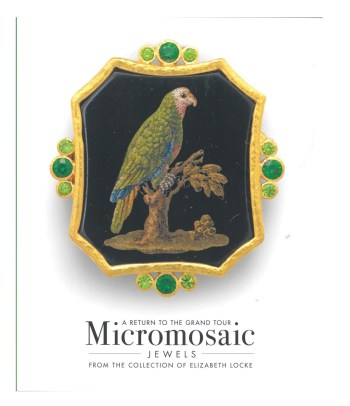 The wide range of subjects depicted in these 92 intricately crafted works of art—precious souvenirs designed for Grand Tour travelers of the mid-18th to late-19th centuries—include Renaissance paintings, architecture, birds, animals, historical sites, landscapes, and portraits. These micromosaic jewels reflect the sophisticated pursuits of elite Europeans for whom travel was a rite of passage.
Diminutive forms of ancient Roman, Grecian, and Byzantine mosaics, ‘micromosaics’—a term coined in the 1970s by collector Sir Arthur Gilbert—are made using a painstaking technique that involves tesserae, small pieces of opaque enamel glass. The tiny mosaics were first developed with regularity in the second half of the 18th century by the Vatican Mosaic Workshop. By the 19th century, numerous independent studios devoted to the production of these small keepsakes were established to meet travelers’ demands and to capitalize on the increasing popularity of micromosaics as symbols of status, sophistication, and social polish. For an English traveler to Rome, Venice, or Milan, for example, a micromosaic of an Italian Renaissance painting or ancient architectural monument captured the journey and today reflects that era’s fascination with the classics and societal requisite travel to the ‘cradle of western civilization’.
The works of art on view in this exhibition, which are predominantly stunning pieces of jewelry, are dazzling in their exquisite detail and craftsmanship. In addition to the tiny enameled glass that forms the mosaic, eye-catching designs include gold, precious stones, and diamonds. VMFA is pleased to present this decorative arts exhibition and to share these fine works of art from the Elizabeth Locke Collection of Micromosaics.
The exhibition is organized by the Virginia Museum of Fine Arts and curated by Dr. Susan J. Rawles, Associate Curator of American Painting and Decorative Arts, VMFA.
Susan Rawles, with a foreword by John Guare, A Return to the Grand Tour: Micromosaic Jewels from the Collection of Elizabeth Locke (Richmond: Virginia Museum of Fine Arts, 2019), 118 pages, ISBN: 978-1934351154, $25.
Conference | New Directions in British Art and Architecture, 1550–1850
Next week at Columbia:
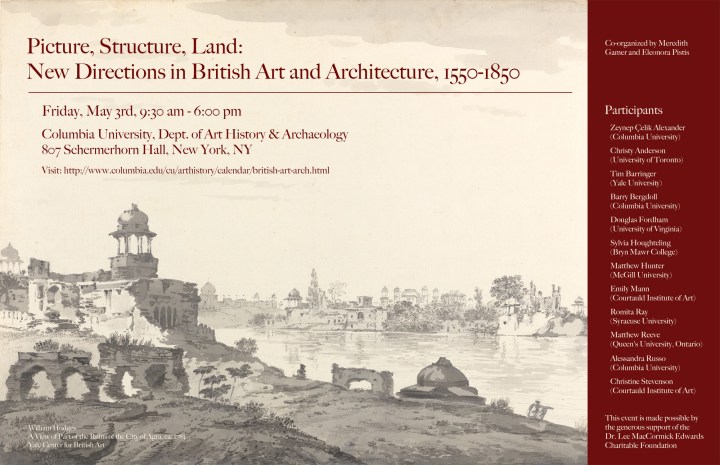
Picture, Structure, Land: New Directions in British Art and Architecture, 1550–1850
Columbia University, New York, 3 May 2019
Organized by Meredith Gamer and Eleonora Pistis
This one-day conference will bring together leading and emerging scholars working in and across the fields of British art and architectural history, broadly defined. Even with the rise of interdisciplinary studies, the study of the visual arts and the built environment in early modern Britain have remained largely separate endeavors. Our aim is to put the two in dialogue and, in doing so, to test, blur, and redraw the boundaries of each. For any questions, please contact britishartarch@gmail.com.
Register here»
P R O G R A M
9:30 Opening Remarks from Meredith Gamer and Eleonora Pistis (Columbia University)
10:00 Fluid Boundaries
Moderator: Alessandra Russo (Columbia University)
• Christy Anderson (University of Toronto), Castles of the Sea: Ships and Architecture in Early Modern England
• Emily Mann (Courtauld Institute of Art), Land, Sea, and the Space in Between: The Visual World of the Overseas Trading Company
11:15 Coffee Break
11:45 Shifting Perspectives
Moderator: Zeynep Celik Alexander (Columbia University)
• Christine Stevenson (Courtauld Institute of Art), Naming Names in Early Modern English Architecture
• Matthew Hunter (McGill University), ‘The Sun is God’: Turner’s Insurance
1:00 Lunch Break
2:30 Performing Identities
Moderator: Barry Bergdoll (Columbia University)
• Matthew Reeve (Queen’s University), Body Politics and Gothic Architecture in the Long Eighteenth Century
• Douglas Fordham (University of Virginia), Discovering Britain in Aquatint: William Daniell’s A Voyage Round Great Britain (1814–25)
3:45 Coffee Break
4:15 Transitional Objects
Moderator: Tim Barringer (Yale University)
• Sylvia Houghteling (Bryn Mawr College), Tapestry between Architecture and Chintz: A Medium in Transition, ca. 1700
• Romita Ray (Syracuse University), China Connections: Tea and Colonial Calcutta
5:30 Refreshments
This event is made possible by the generous support of the Dr. Lee MacCormick Edwards Charitable Foundation, which honors the legacy of Columbia alumna Dr. Lee MacCormick Edwards, GSAS’78, GSAS’81, GSAS’84, an art history scholar, author, and photographer who contributed richly to the cultural and artistic life of both the United States and Australia.
Conference | (Un)Like: Life Writing and Portraiture
From King’s College:
(Un)Like: Life Writing and Portraiture, c.1700–the Present
King’s College London, Strand Campus, 3 May 2019
 Portraiture and life-writing have long been understood as genres that, for all their differences, share key concepts. As both genres are concerned with the individual figure, they rely on particularities and specificities, on telling events and characteristic anecdotes and, most importantly, on a representative depiction of the subject in question which was similar or like. Resemblance, similarity, likeness—these were the terms by which works were judged. A letter to the Daily Gazetteer remarked in 1742: “I think it is agreed on all Hands that in Biography, as it is in Portrait Painting, a Likeness is to be preserved, if we would give satisfaction in either Science.” Importantly (and to complicate the study of likeness), the media concerned with likeness were likewise considered to be alike. The art theorist Jonathan Richardson famously wrote in 1715: “to sit for one’s Portrait is like to have an Abstract of one’s Life written and published, and to have one consigned over to Honour or Infamy.” Richardson referred to the long tradition of inter- or multi-media portraying and life-writing practices, the linking of literary with visual portraits for mutual benefit and the reciprocal bolstering of genres by providing additional information or another perspective. Next to resemblance and medial proximity, Richardson introduces a third aspect: appreciation or emotional response to portraits and biographies. Samuel Johnson would later write in the Idler no. 45 (1759) that “Every man is always present to himself, and has, therefore, little need of his own resemblance; nor can he desire it, but for the sake of those whom he loves, and by whom he hopes to be remembered.” Likeness, it appears, therefore intersects with the representation’s potential to make a person not only like, but also likeable, to have third parties appreciate both the individuals and their representations. This notion of recognition—understood as identification—being closely linked with respect and social approval still shows in such phenomena as Facebook and Instagram, where ‘to like’ equals acceptance, affirmation, or recommendation, signalling approval of the online persona.
This one-day conference explores the different layers of likeness in portraiture and life writing in Europe, from the beginning of the eighteenth century to the present day. Subjects include authors, inventors, painters, self-painters and selfie-takers, robots, realists, surrealists, expressionists, and others, from literature, painting, photography, and film. How does the concept of likeness appear, converge and change across these instances of portraying and portraiture?
Registration information is available here»
P R O G R A M M E
9.00 Welcome and Introduction by Clare Brant
9.15 Panel 1
• Franziska Gygax, Portraying (in) Language: Gertrude Stein’s Literary Portraits
• Max Saunders, Imaginary Portraits: Alfred Cohen and the Rabbi from Dublin
• Alex Belsey, Maintaining Distance: Techniques of Removal and Depersonalisation in the Work of Keith Vaughan
10.30 Panel 2
• Nadja Gernalzick, Queerly (Un)Recognizable: Jerome Hill’s Film Portrait
• Darragh O’Donoghue, Auto/biography in the Work of Disabled Artist Stephen Dwoskin
11.20 Coffee
11.35 Panel 3
• Tim Gorichanaz, Self-Portraiture: A Conceptual Exploration
• Eliza Maureen Altenhof, Describing One’s Self, Depicting One’s Self: The Self-Portrait in Contemporary Literature and Visual Arts in the Context of Illness and Death
• Ksenia Gusarova, Posing as Oneself: Normativity and Individuality in Current Photographic Practice
12.15 Panel 4
• Santiago Gonzales Villajos, Portraying Miguel de Cervantes: An Enlightenment’s Task and Its Factual Deconstruction
• Emrys Jones, The Portrait on the Screen: Film Narrative and Eighteenth-Century Art
• Sofya Dmitrieva, Fancy Picture / Sujet de Caprice: Defining the Genre in the Eighteenth-Century European Painting
1.15 Lunch
2.00 Panel 5
• Claudine van Hensbergen, Behn’s Elusive Likeness, Portraiture’s Place in the Biographical Account
• Olivia Ferguson, ‘The Worst Part of Wordsworth’: Intimacy, Accuracy, and the Author Portrait in the Romantic Period
• Leigh Wetherall Dickson, Painting Celebrity: Capturing the Character of Lady Caroline Lamb
3.15 Panel 6
• Julian North, Portraits for the People: Margaret Gillies’s Portrait of Charles Dickens
• Alba Campo Rosillo, The Medium Makes Publicity: Materiality in The Inventor Portrait by George Peter Alexander Healy
• Ana Belén Martinéz García, Portraying the Activist Likeness as/in Intermedia Practice
4.30 Tea
5.00 Panel 7
• David Veltman, Portraiture as a Mirror: Transcending the Limits of Representativeness in Felix de Boeck’s ‘Double’ Portraits
• Martin Schieder, The Non-Pictorial Portrait: Armani Portrait-robot d’Iris Clert (1960)
• Teresa Bruś, Increase and Excess in Portraiture: S. I. Witkiewicz
6.15 Drinks
6.30 Discussion led by Kerstin Pahl and Kate Retford
Call for Panel Proposals | ASECS 2020, St. Louis
2020 American Society for Eighteenth-Century Studies Conference
Hyatt Regency at the Arch in St. Louis, 19–21 March 2020
Session proposals due by 15 May 2019
 The 51st annual meeting of the American Society for Eighteenth-Century Studies takes place at the Hyatt Regency at the Arch in St. Louis, 19–21 March 2020. Proposals for panels, roundtables, and other sessions are now being accepted. The online submission form is available here. The deadline for proposal submissions is Wednesday, 15 May 2019.
The Program Committee also invites proposals for sessions in other formats, as well as for pre-conference workshops. In addition to explaining what the session would contribute to the annual meeting, special proposals should include a detailed description of the format and logistical requirements (e.g., technology, type of meeting space, particular days/times); an estimate of additional costs to participants or to ASECS (if any); and an explanation of how people would be chosen to participate (if it is not open to all conference attendees). If the event is a workshop that would have a facilitator or main presenter(s), provide a brief description of their expertise. The Program Committee may contact proposers for additional information before deciding on whether special sessions will be included on the Annual Meeting program. Proposals that cannot be accommodated in St. Louis may be considered for later annual meetings. If you have any questions, please contact the ASECS Business Office at asecsoffice@gmail.com.
Lectures | ‘Orientalism’ after 40, with Elisabeth Fraser and Mary Roberts
During the two-year, £50-million renovation of Somerset House, classes and lectures at The Courtauld are held at Vernon Square, near King’s Cross.
Orientalism after 40, with Elisabeth Fraser and Mary Roberts
The Courtauld Institute of Art, Vernon Square, London, 25 April 2019
This term’s Visiting Expert series is a joint collaboration with Professor Mary Roberts (University of Sydney) and Professor Elisabeth Fraser (University of South Florida). This series of events was curated by The Courtauld Institute of Art’s Dr Sussan Babaie. Whilst our Visiting Experts are here, we will reflect upon the 40th anniversary of the publication of Edward Said’s seminal text Orientalism on Thursday, 25 April, 6:00–7:00pm. The event consists of two separate lectures.
Elisabeth Fraser, The Ottoman Costume Album as Collaborative Object and Agent of Contact
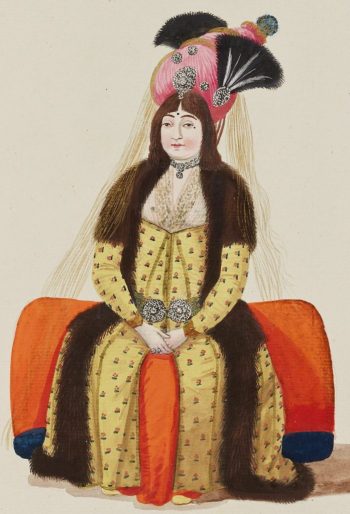 The Ottoman costume album served as a vital agent of contact in the early modern world. Conceived and collected through the movement of people, bound, rebound, sold, gifted, copied and reworked, Ottoman costume albums—produced from the sixteenth through nineteenth centuries—are mobile objects constituted by a flexibility that lends itself to reinvention and reconfiguration. The costume album transcended geographic points of origin, connecting artisans of the book and diverse audiences across time and space in unforeseeable ways. Composed of individual sheets, each bearing a single costumed figure representing variously the Ottoman court, military, professions, and civil society, a costume album was custom made and inflected according to the interests of the owner; the collector and professionals of the book trade determined sequence, thematic emphasis, presentation, and numbers of folios to include. The Ottoman costume album is defined by an essential mutability.
This talk will explore these ideas in relation to one particular eighteenth-century album, Costumes turcs, now in the British Museum, and its connection to a network of other albums and books. Containing 225 costume images painted in Istanbul in the 1780s, this magnificent album was transported to Berlin and then London; at each stop on its journey the album was added to, modified, and redefined. Following the trail of this object reveals the essentially collaborative nature of costume albums.
Elisabeth Fraser is Professor of Art History at the University of South Florida. A specialist of European art and interactions between European and Islamicate cultures, she is the author of Mediterranean Encounters: Artists between Europe and the Ottoman Empire, 1774–1839 and Delacroix, Art and Patrimony in Post-Revolutionary France. She has recently published an essay, “The Color of the Orient: On Ottoman Costume Albums, European Print Culture, and Cross-Cultural Exchange,” in Visual Typologies from the Early Modern to the Contemporary (T. Zanardi and L. Klich, eds., 2018), and edited a volume of essays The Mobility of People and Things in the Early Modern Mediterranean, which will be published by Routledge in 2019. A recipient of an International Scholarship from the Staatliche Museen in Berlin in 2018, she is writing a book on Ottoman costume albums and their relationship to European print culture, Dressing the Ottoman Empire: Early Modern Costume Albums and Transculturation.
Mary Roberts, Edward Said and the Epistolary Interior
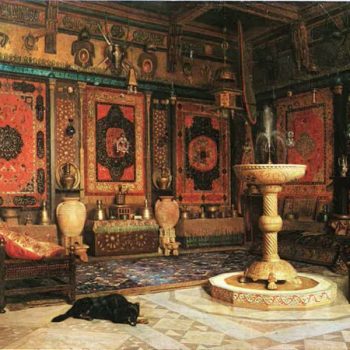 “to [some] theorists of civilization identity is a stable and undisturbed thing, like a room full of furniture at the back of your house. This is extremely far from the truth, not just in the Islamic world but throughout the entire surface of the globe.” –Edward Said, 1996
In histories of modernism the orientalist interior has been consigned like furniture at the back of the house. I resist this formulation by addressing the life of Islamic art as it moved into and out of these spaces. Commencing with Duranton’s painting of Albert Goupil’s Oriental Salon in Paris before the 1888 sale that catalysed movement of his Islamic art into collections across Europe, including the Louvre’s inaugural acquisitions. It is a foundational interior for the history of Islamic art. Goupil’s acquisition channels reveals this interior as the tip of an iceberg that exists in a set of linked relations with Ottoman and Orientalist interiors in Istanbul and Kraków with Polish artist Stanisław Chlebowski as the linchpin. The iceberg, with its north/south axis proves a limited geographic metaphor. It is tempting to construe these Islamic art supply lines through a network model, but that too fails to capture the way these interiors were imagined or lived. In letters to his family in Kraków, written inside the Ottoman Sultan’s Beaux-Arts Palace, Chlebowski articulated one interior within others. I propose that Chlebowski’s epistolary Ottoman and Orientalist interiors exist according to a logic of enfolding. It’s a model for construing the role of historic Islamic art in multiple modernities.
Mary Roberts is John Schaeffer Professor of Art History at the University of Sydney. She specialises in late Ottoman visual culture, British art, and the art of empire and has published extensively on the history of artistic exchanges between the Ottoman Empire and Europe. Her book Istanbul Exchanges: Ottomans, Orientalists and Nineteenth-Century Visual Culture, published by the University of California Press in 2015, was awarded the Art Association of Australia and New Zealand’s Book Prize in 2016 and translated into Turkish the same year. She is also the author of Intimate Outsiders: The Harem in Ottoman and Orientalist Art and Travel Literature (Duke, 2007) and four co-edited books. Mary has been a Getty Scholar, CASVA senior fellow, YCBA fellow, and Clark-Oakley fellow and is currently completing her next book Inside Networks: Orientalist Interiors and Islamic Art in Transit.
Concert and Symposium | Black Music in Eighteenth-Century London
This Thursday at YCBA:
Black Music in Eighteenth-Century London
Yale Center for British Art, New Haven, 25 April 2019

Tunde Jegede (Photo by Yoshitaka Kono).
This concert will feature Tunde Jegede, a renowned cellist and master kora player who specializes in the West African classical music tradition; Robin Jeffrey, a versatile performer on instruments of the lute and guitar families; Corey Shotwell, a celebrated vocalist; and Nathaniel Mander, an exciting young harpsichordist. The performances are free and open to all.
In October 2017, the Yale Center for British Art, Paul Mellon Centre for Studies in British Art (PMC), Historic Royal Palaces (HRP), and Handel & Hendrix in London (HHL) co-hosted a scholarly workshop entitled Black Music: Its Circulation and Impact in Eighteenth-Century London. The program was produced in association with Enlightened Princesses: Caroline, Augusta, Charlotte, and the Shaping of the Modern World, an exhibition that had been co-organized by the Center and HRP, and which then was on display at Kensington Palace. Moderated by Michael Veal (Professor of African Music, African American Studies, and American Studies at Yale) and attended by scholars from around the world, the workshop opened with a series of concerts and performances held throughout HHL, which set the stage for a rich and productive exchange the following day at the PMC. Thanks to the generosity of Laura and James Duncan, Yale BA 1975, Friends of the Center who underwrote the original workshop, this program will be reconstituted for a New Haven audience on Thursday, April 25, at 5:30pm. The performance will be followed on Friday, April 26, by a daylong symposium Black Music: Its Circulation and Impact in Eighteenth-Century London, also at the Center.
This Friday at YCBA:
Black Music: Its Circulation and Impact in Eighteenth-Century London
Yale Center for British Art, New Haven, 26 April 2019
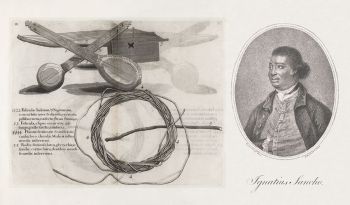 This daylong symposium, which follows the musical performance Black Music in Eighteenth-Century London at the Center on Thursday, April 25, will explore the complex, long-standing relationship between African and Western musical traditions, especially within London metropolitan society, and to recognize the brilliance of black composers and performers who, against great odds, contributed to the musical culture of the age. The program is hosted by the Yale Center for British Art and co-organized with Historic Royal Palaces, Handel & Hendrix in London, and the Paul Mellon Centre for Studies in British Art, with generous support from Laura and James Duncan, Yale BA 1975. Admission is free, though space is limited.
New Book | Joseph Rose: Working Drawings. Facsimile of a Sketchbook
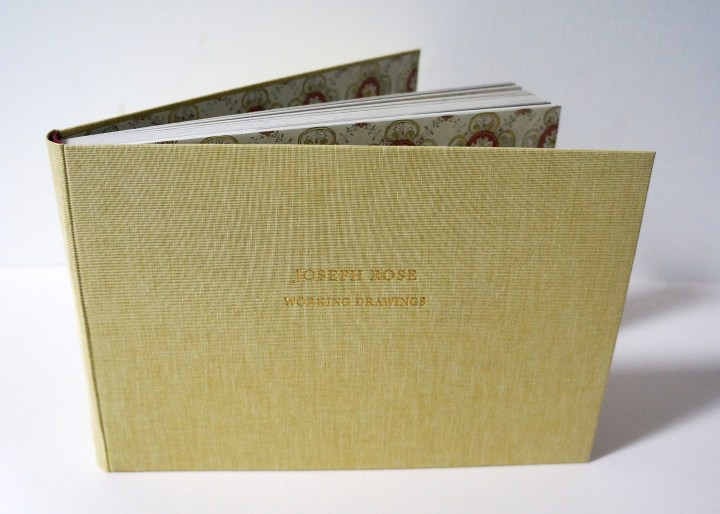
Joseph Rose: Working Drawings. Facsimile of a Sketchbook at Harewood House, with an introduction by Ashleigh Murray (Frome, Somerset: Kate Holland, 2019). Limited edition of 50, of which 48 are ‘ordinary’ (£150) and 2 ‘extraordinary’ (£3000).
The two extraordinary copies are bound in full alum tawed calfskin with hand dyed calfskin inlays and blind and gold tooling. A plasterwork rosette by Hayles and Howe, gilded by Glenny Thomas, is inset into the front board. Hand coloured edges. Hand sewn silk endbands. Printed endpapers from an original watercolour.
This book came about following an invitation to Kate Holland to exhibit as one of the 26 makers selected to feature in the inaugural celebration of contemporary craft at Harewood House, Useful/Beautiful: Why Craft Matters, on view from 23 March until 1 September 2019. A preliminary visit to the house culminated in a behind-the-scenes tour of the archives. In one drawer was a small, nondescript, slightly battered book that revealed a series of working drawings by both Joseph Rose Senior (ca. 1723–1780) and Joseph Rose Junior (1745–1799).
The Roses were the pre-eminent master plasterers of their day and worked closely with Robert Adam (1728–1792) on the ceilings at Harewood in the 1760s as well as on many other big houses, several of which feature in this book. The sketchbook gives a fascinating glimpse into the minds of two incredible craftsmen working on highly significant commissions with some of the foremost architects and interior designers of their time. It is the perfect record of the link between commissioner, designer, and craftsman. Particularly because craftsmen too often fade into the background, Holland wanted to celebrate them especially for this celebration of craft.
As well as the facsimile sketchbook, there is also included an introduction by Ashleigh Murray, currently the academic expert on Joseph Rose in the UK. There are also contemporary images from the workshop floor of Hayles and Howe in Bristol, who still use the same techniques as Joseph Rose today—as well as a full list of plates, transcribed from the manuscript titles, as written by Joseph Rose.
This book is intended to serve not only as an important reference tool for those researching ornamental plasterwork or the work of Robert Adam but also to appeal to a wider audience with an interest in Georgian architecture or the history of interior design and craftsmanship.
For those visiting Harewood House, copies are available at the gift shop. Mail order copies can be arranged by contacting Kate Holland directly, katehollandbookbinder@gmail.com.
More information on the exhibition Useful/Beautiful: Why Craft Matters is available here.











 Enfilade
leave a comment