New Book | Io Sono ‘700: L’anima di Venezia
Published by Cierre and available from Artbooks.com:
Federica Spadotto, Io Sono ‘700: L’anima di Venezia tra pittori, mercanti e bottegheri da quadri (Caselle di Sommacampagna: Cierre, 2018), 232 pages, ISBN: 978-8898768806, $34 (marked down from $68).
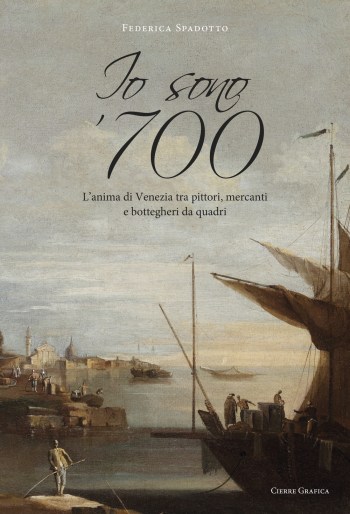 Il volume illustra il mercato dei quadri a Venezia nel Settecento. Per la prima volta l’attenzione critica si sposta dai grandi collezionisti alle dinamiche commerciali vere e proprie, che coinvolgevano gli stessi artisti, oltre a intermediari, diplomatici ed i cosiddetti ‘botegheri da quadri’. Questi ultimi, titolari di negozi/ laboratori per la vendita di dipinti al dettaglio, decreteranno, insieme a figure come il Console Smith o John Strange—di cui è resa nota l’inedita corrispondenza con l’intendente veneziano Giovanni Maria Sasso—le sorti di Michele Marieschi, Canaletto e molti protagonisti del paesaggio e della veduta, ovvero i generi che hanno reso celeberrima Venezia nel suo secolo d’oro. Tra aneddoti, riflessioni e documenti, i dipinti sfilano ad illustrare uno scenario dai risvolti inaspettati, dove luci e ombre del mercato lagunare divengono metafora del nostro tempo.
Call for Papers | Encounters, Entanglements, and Exchanges

Basket, American China Manufactory, Philadelphia, 1770–72 , soft-paste porcelain
(New Haven: Yale University Art Gallery). More information is available here»
◊ ◊ ◊ ◊ ◊
Encounters, Entanglements, and Exchanges
Fifteenth Annual Yale American Art History Graduate Student Symposium
Yale University, New Haven, 6 April 2019
Proposals due by 1 February 2019
Points of encounter can occur across time and space. In the colonial Americas, both blue and white earthenware vessels made in the Mexican city of Puebla and soft-paste porcelain wares produced at the American China Manufactory in Philadelphia, Pennsylvania, responded to East Asian hard-paste porcelain. At the same time, ceramic manufacturers in China adapted designs that catered to pan-American tastes. More recently, Carrie Mae Weems’s The Hampton Project reexamined a nineteenth-century vocational school that served as a cultural crossroads for formerly enslaved African Americans, American Indians, and white Americans to raise pressing questions of race, imperialism, and nationalism in the twenty-first century. These points of convergence between individuals, groups, places, and objects often instigate shifts in creative production with lasting and global resonances. The interaction of disparate cultures offers a rich nexus for artistic creation. Yet such encounters are also inseparable from the shifting dynamics of power that operate along gendered, racial, economic, and political lines. What can exchanges and entanglements reveal about the nature of encounter? How do encounters shape exchanges? In what ways do exchanges propagate new encounters?
The Fifteenth Annual Yale University American Art Graduate Symposium invites papers that interrogate the dialectical relationship between encounter and exchange and explore the legacies of cultural intersection. We invite submissions that address art across North, Central, and South America and the Caribbean, that engage a range of critical perspectives, and that speak to a variety of time periods and artistic practices.
Possible topics include, but are not limited to:
• Activism, coalition building, and the arts
• Micro-histories that address a specific instance of encounter
• Collaborations that problematize narratives of ‘influence’ across social, cultural, or political hierarchies
• Impact of religious proselytization and conversion in the arts
• Gift exchange, diplomacy, and trade
• Appropriation, fetishism, and mimicry
• Contact zones, intersectionality, and peripheries
• Imbalanced power dynamics within systems of colonialism, racism, homophobia, or sexism
• Immigration, migrants, and refugees
• Authorship and ownership
• Tourism and travel narratives
• Global encounters with the notion of ‘Americanness’
• Networks created via technology, globalization, and media
Interested participants are invited to submit an abstract of no more than 350 words along with a CV to americanist.symposium@gmail.com by 1 February 2019. Accepted participants will be notified in mid-February. Accommodations will be provided for all participants in New Haven, Connecticut.
New Book | The Rebirth of an English Country House: St Giles House
From Rizzoli:
Tim Knox and The Earl of Shaftesbury, with photographs by Justin Barton and an introduction by Nick Ashley-Cooper and Jenny Chesher, The Rebirth of an English Country House: St Giles House (New York: Rizzoli, 2018), 256 pages, 978-0847863204, $55.
 The brilliantly restored St. Giles House, in the idyllic Dorset countryside, offers high-point Georgian architecture and interiors that bridge many historical styles.
The 12th Earl of Shaftesbury, 39-year-old Nicholas Ashley-Cooper, invites the reader into the house that his family has called home since the fifteenth century. In recent years, his award-winning restoration has brought the house back to life, transforming exquisite spaces that honor the past while being suited to twenty-first-century living. English country-house splendor, through the hands of some of the world’s top artisans and craftspeople, returns to the house in the form of re-created wallpapers, customized paints, revived furniture from the Georgian and Victorian periods, reworked antique Brussels tapestries, restored plasterwork and textiles, and a complete overhaul of the landscape, with its sunken garden, woodlands, avenue of beeches, lake, and shell-encrusted grotto.
With stories of noteworthy architecture, beautiful interiors, and centuries of a single family’s involvement in British and world history, this book will appeal to devotees of country living, the aristocratic life, historic houses, and English interior design.
The 12th Earl of Shaftesbury, Nicholas Ashley-Cooper, is an English peer and philanthropist. Tim Knox is a British art historian and director of the Royal Collection Trust. Justin Barton is a London-based photographer.
New Book | Great English Interiors
Featuring twenty-two interiors, including five eighteenth-century houses; from Prestel:
David Mlinaric and Derry Moore, Great English Interiors (London: Prestel, 2018), 224 pages, ISBN: 978-3791381985, £40 / $60.
 Famed photographer Derry Moore and renowned interior designer David Mlinaric offer a panoramic tour inside some of Britain’s finest manor houses, halls, castles, and public buildings. Bridging five centuries, this lavishly illustrated book looks at houses such as Haddon Hall, Chastleton, and Knole, each with superb examples of Tudor and Stuart interiors. Including Houghton Hall from the 18th century and Waddesdon Manor from the 19th century, the book continues into the 20th century to feature the homes of such influential figures as Nancy Lancaster, Pauline de Rothschild, and David Hicks, guiding readers through the finest examples of English interior design. The work of British masters including Inigo Jones, William Kent, and Robert Adam is beautifully portrayed in striking photographs while complementary essays enlighten readers on the events and personalities that lend each site cultural significance. Anglophiles, armchair tourists, and lovers of grand interiors will enjoy these gorgeous photographs while discovering more about the designers, architects, and trends that have made British style so alluring and enduring over the centuries.
Derry Moore is a British architectural photographer and portraitist. He is the author of An English Room and In the Shadow of the Raj (both by Prestel).
David Mlinaric is a British interior designer whose work ranges from commissions for private clients such as Lord Rothschild and Mick Jagger to public galleries and museums, including the National Gallery, and the Victoria and Albert Museum in London.
New Book | The Country House Past, Present, Future
From Rizzoli:
Jeremy Musson and David Cannadine with a foreword by Tim Parker and Lynne Rickabaugh, The Country House Past, Present, Future: Great Houses of The British Isles (New York: Rizzoli, 2018), 432 pages, ISBN: 978-0847862726, $85.
 From Brideshead to Downton Abbey, the country house is a subject of fantasy and curiosity, as well as a rich resource to explore the history of great architecture and decoration and the lives of landowners and those who made the houses work. With hundreds of photographs from the National Trust, and others from public and private collections, this visually lavish volume draws back the curtain on important historic homes in England, Wales, Scotland, and Ireland. At the same time it reveals the complex stories of these interiors, both grand and hidden, from great halls, libraries and entryways to the kitchens and stables and gardens. Locations featured include Knole, Cragside, Castle Howard, Chatsworth, Polesden Lacey, Petworth, Bodiam Castle, Blenheim, Longleat, and dozens more.
An insightful essay by renowned British author and historian David Cannadine explores how the idea of the country house has changed over the past forty years. Additional essays reflect on how changing twentieth century values have impacted the country house, with contributions by writers and scholars such as Sarah Callander-Beckett on the private house, Dr. Madge Dresser on slavery and the country house, and Dr. Oliver Cox on the ‘Downton Abbey effect.’ The texts are woven around extensive picture essays, introduced and curated by country house specialist Jeremy Musson, which look at the identity and image of British country houses of all kinds and the stories they contain.
David Cannadine is on the board of the Royal Oak Foundation (the American arm of the National Trust in Britain). The author of seventeen books, Cannadine has taught at Oxford, Cambridge, and Princeton. He is the president of the British Academy and editor of the Oxford Dictionary of National Biography and has served as chairman of the trustees of the National Portrait Gallery in London.
Jeremy Musson is a leading commentator and author on the British country house. He was architectural editor of Country Life from 1998 to 2007 and remains a regular contributor. Musson is the author of seventeen books including English Country House Interiors, Robert Adam, and The Drawing Room. A trustee of the Country Houses Foundation and the Stowe House Preservation Trust, he is also the co-writer and presenter of the BBC2’s The Curious House.
C O N T E N T S
Tim Park and Lynne Rickabaugh, Foreword
• David Cannadine The British Country House Revisited
• Jeremy Musson, Design and Construction
• Sarah Callander-Beckett, An Inheritance Restored: A Private Owner’s Experience
• David Adshead, Sharing Treasures: The National Trust for England, Wales, and Northern Ireland
• Jeremy Musson, Magnificence and Power
• Jeremy Musson Wealth and Consumption
• Terence Dooley, Stories of the ‘Big House’: New Approaches in Irish Country House Studies
• Jeremy Musson, Pleasure and Recreation
• Jeremy Musson Household and Function
• Madge Dresser, Legacies of British Slave Ownership: Facing a Difficult Past
• James Raven, When the Walls Come Down: After the Destruction of Marks Hall
• Jeremy Musson, Destruction and Survival
• Oliver Cox, Downton Abbey and the Country House: Exploring New Fictions
Notes
About the Royal Oak Foundation
Contributions and Acknowledgments
Photographic and Copyright Credits
Index
New Book | Dudley House
Published by Swan Éditeur and available from Artbooks.com:
James Stourton, with photographs by Marc Walter and a foreword by the Prince of Wales, Dudley House (Paris: Swan Editeur, 2018), 496 pages, ISBN: 979-1097529017, $275.
 A faithful and inspired rendition of Dudley House, a rare Park Lane survivor, the only great aristocratic house in the capital from the 18th/19th centuries that is now fully occupied as a family home—an exceptional residence, as lavishly restored in accordance with its owner’s wishes. To give the most comprehensive idea of the beauty, style, and treasures of Dudley House, this book is a room-to-room visit of the place, revealing both the overall harmony of the house and the wealth of detail in its interior layout and furniture. A fresh view of Dudley House by contrasting overall perspectives and close-ups and by varying angles and viewpoints to recreate the essence of the house.
C O N T E N T S
Introduction
Entrance Hall
Waiting Room
Library
Morning Room
Evening Room
Dining Room
Breakfast Room
Grand Staircase
Atrium
Le Boudoir
Conservatory
Yellow Drawing Room
Blue Drawing Room
Ballroom
Picture Gallery
Symposium | The Orléans Collection

In conjunction with the exhibition now on view at NOMA:
The Orléans Collection: Tastemaking, Networks, and Legacy
New Orleans Museum of Art, 11–12 January 2019
The New Orleans Museum of Art and the Frick Collection’s Center for the History of Collecting will host a symposium in conjunction with The Orléans Collection exhibition, dedicated to the collecting and collection of Philippe II, Duc d’Orléans, (1674–1723) and on view at the New Orleans Museum of Art through 27 January 2019.
In the course of just two decades in the early eighteenth century, Philippe II d’Orléans amassed one of the most important collections of European paintings in the history of art, which he displayed in his Palais-Royal in Paris. This celebrated collection assembled over 500 masterpieces of European art and this landmark exhibition reunites a representative group of thirty-eight works to tell the complex story of the collection’s formation and character and the impact of the sales of the collection in London during the French Revolution, a watershed event in the history of collecting.
The symposium will consider Philippe d’Orléans’s taste and the impact the collection had for generations of collectors and artists, and an increasingly wider public throughout the eighteenth century. Subjects of interest include Philippe II’s patronage network, fellow collectors and trends in collecting in Paris, dealers and the art market in eighteenth-century Paris, connections with contemporary collections in the German principalities, the ‘Orleans Effect’ in Great Britain and later entrance into public collections.
Admission: $100 for adults | $75 NOMA members | $30 Graduate students with ID (please use a university email address). Hotel blocks have been reserved for symposium participants at the Hampton Inn on Saint Charles; register using the codeword NOMAFRICKSYMPOSIUM. Register here.
F R I D A Y , 1 1 J A N U A R Y 2 0 1 8
6:00pm Keynote Lecture
• Vanessa Schmid (Senior Research Curator for European Art at the New Orleans Museum of Art), Repositioning Philippe’s Collecting
S A T U R D A Y , 1 2 J A N U A R Y 2 0 1 8
9:00am Registration
9:30 Welcome
• Inge Reist (Director Emerita, The Frick Center for the History of Collecting), The Legacy of The Orléans Collection
10:30 Tastemaking in Paris: Philippe, His Circle, and Connections in Eighteenth-Century France
• François Marandet (Independent Scholar), Philippe d’Orléans and Artists and Dealers in Paris
• Aaron Wile (University of Southern California), Absolutism and the Politics of Affect in Antoine Coypel’s Aeneas Gallery
• Sophie Raux (University of Lyon), Alternatives to the French Academy: Painters and the Public Spaces during the Regency
• Everhard Korthals Altes (Delft Technical University), The Craze for Dutch Painting in Eighteenth-Century Paris
12:30 Lunch — A boxed lunch will be provided to all full-price participants, excluding graduate student admission.
1:30 The Orléans Effect in Great Britain
• Julia Armstrong-Totten (Independent Scholar), Crossing the Channel: The Orléans Pictures Arrive in London
• Peter Humfrey (Professor Emeritus, University of St. Andrews), The Orléans Collection Reborn in Regency London: The Stafford Gallery
• Elizabeth Pergam (Sotheby’s Institute), Decline and Fall: The Fate of the Orléans Pictures in Britain
• Alison Clarke (Independent Scholar), ‘Looking at the £100,000 Picture’: Responses to Raphael and Rembrandt at the National Gallery, London at the Turn of the Twentieth Century
Early Career Fellowships | Göttingen Institute for Advanced Study
Early Career Fellowships
The Lichtenberg-Kolleg, the Göttingen Institute for Advanced Study, October 2019 — July 2021
Opening its doors in 1737 Göttingen quickly established itself as one of Europe’s leading Enlightenment universities. Named after one of the most important and versatile representatives of the Göttingen Enlightenment, the Lichtenberg-Kolleg is an interdisciplinary research institute with a strong focus not only on religion in the modern world, the Enlightenment(s) as well as the history of political thought/intellectual history but also on ‘bridges’ between the human and natural sciences. For the period October 2019 to July 2021 we are inviting early career scholars to join one of the following research groups:
• Globalising the Enlightenment: Knowledge, Culture, Travel, Exchange and Collections
• Human Rights, Constitutional Politics and Religious Diversity
• European Intellectual History / History of Political Thought
• Moritz Stern Fellowships in Modern Jewish Studies: Cultural, Intellectual and Literary History (in cooperation with the Göttingen Academy of Sciences and Humanities)
Please find more information here.
Searching for the 1725 Portrait of Esther Barbara von Sandrart
From H-ArtHist:

Georg Daniel Heumann, after Georges Desmarees, Portrait of Esther Barbara von Sandrart, 1727, 34 × 23 cm (Herzog Anton Ulrich-Museum).
Im Rahmen der Vorbereitung für die Ausstellung Die Welt im Bildnis: Frankfurter Porträtsammlungen vom 16.–18. Jahrhundert, die unter der Leitung von Prof. Dr. Jochen Sander im Frühjahr 2020 im Museum Giersch der Goethe-Universität stattfinden wird, wird nach dem Porträt der Esther Barbara von Sandrart gesucht.
Kernelement der geplanten Ausstellung ist eine Sammlung von Porträtgrafiken aus dem Bestand der Universitätsbibliothek Johann Christian Senckenberg, die aus dem Besitz der Frankfurter Patrizierfamilie Holzhausen stammt. 1923 gelangten die druckgrafischen Blätter gemeinsam mit dem Büchernachlass Adolf von Holzhausens in die Universitätsbibliothek. Unter diesen knapp 1200 Blättern (meist Kupferstiche und Schabkunstblätter, aber auch Holzschnitte und Radierungen) befindet sich das Porträt der Esther Barbara von Sandrart im Kupferstich von Georg Daniel Heumann.
Esther Barbara von Sandrart (1651–1731/33), geb. Bloemart, war die Ehefrau des Joachim von Sandrart und selbst Kunstsammlerin. Ihr Porträt hielt man oft fälschlicherweise für das der Maria Sibylla Merian. Der Stich Heumanns von 1727 basiert auf einem Gemälde des Malers Georges Desmarees aus dem Jahr 1725. Es zeigt die Witwe von Sandrart in einem Studierzimmer vor einer Karte Südostasiens (?), ein Detail, das im Stich fehlt. Auf dem Tisch vor ihr ausgebreitet und in dem kleinen geöffneten Kabinettschrank präsentiert sich dem Betrachter eine Naturaliensammlung bestehend aus Muscheln, präparierten Schmetterlingen und Insekten.
In der Ausstellung im Museum Giersch soll der Stich in einer Sektion zum Porträt des Wissenschaftlers und Naturforschers präsentiert werden. Wünschenswert wäre eine Gegenüberstellung mit dem Gemälde Desmarees‘. Bisher ist es aber nicht gelungen, dieses zu lokalisieren. Im Wikipedia-Artikel zur Person Joachim von Sandrarts wird es ohne Verweis auf die Bildquelle gezeigt.
Jeglicher Hinweis zur Ermittlung des Aufenthaltsorts von diesem Gemälde ist von großer Hilfe. Bitte setzten Sie sich mit uns in Verbindung:
Corinna Gannon M.A.
Kunstgeschichtliches Institut Frankfurt am Main
Senckenberganlage 31
60325 Frankfurt am Main
gannon@kunst.uni-frankfurt.de
Call for Papers | Late Venetian Fortification
From the Call for Papers:
Late Venetian Fortification
Split, Croatia 4–5 October 2019
Proposals due by 15 January 2019
Until now, research on Venetian fortifications has given considerable more attention to Cinquecento works than to the achievements of the following centuries. This is why the aim of the conference is to focus on the later period. New material and insights are expected on the period starting with the War of Candia (1645–1669). Relevant topics include but are not limited to:
• important fortification sites and projects: Morea, Corfu, Corinto, Dalmatia, etc.
• activities of military engineers
• procedures and institutions involved in the construction of fortifications
• involvement of Johann Matthias von der Schulenburg (1661–1747) in fortification construction
Proposals for 30-minute talks should be submitted to azmegac@ipu.hr no later than 15 January 2019. Applicants will be notified by 15 February 2019. Proposals should include the title of the paper, an abstract (max 1500 characters), a short CV with bibliography, affiliation, and contact information. The conferences languages are English and Italian. Presenters are expected to cover their travel and accommodation expenses. Selected contributions will be published in the conference proceedings.
The conference is part of the research project Antun Jančić and Fortification Architecture of the Venetian Republic funded by the Croatian Science Foundation and conducted at the Institute of Art History in Zagreb.










 Enfilade
leave a comment