New Book | The Eighteenth Centuries: Global Networks of Enlightenment
The essays in this collection, which includes a contribution by Mary Sheriff, are accompanied by “The Digital Eighteenth Centuries,” a digital atlas created on the MapScholar platform, available here. From the University of Virginia Press:
David Gies and Cynthia Wall, eds., The Eighteenth Centuries: Global Networks of Enlightenment (Charlottesville: University of Virginia Press, 2018), 316 pages, ISBN 978 0813940755, $40.
 Today, when ‘globalization’ is a buzzword invoked in nearly every realm, we turn back to the eighteenth century and witness the inherent globalization of its desires and, at times, its accomplishments. During the chronological eighteenth century, learning and knowledge were intimately connected across disciplinary and geographical boundaries, yet the connections themselves are largely unstudied. In The Eighteenth Centuries, twenty-two scholars across disciplines address the idea of plural Enlightenments and a global eighteenth century, transcending the demarcations that long limited our grasp of the period’s breadth and depth.
Engaging concepts that span divisions of chronology and continent, these essays address topics ranging from mechanist biology, painted geographies, and revolutionary opera to Americanization, theatrical subversion of marriage, and plantation architecture. Weaving together many disparate threads of the historical tapestry we call the Enlightenment, this volume illuminates our understanding of the interconnectedness of the eighteenth centuries.
David T. Gies, Commonwealth Professor of Spanish at the University of Virginia, is the author of The Theatre in Nineteenth-Century Spain and editor of The Cambridge History of Spanish Literature. Cynthia Wall, Professor of English at the University of Virginia, is the author of The Prose of Things: Transformations of Description in the Eighteenth Century and The Literary and Cultural Spaces of Restoration London.
C O N T E N T S
Acknowledgments
Part I | Knowledge and the Lives of Books
• Sophia Rosenfeld, Introduction
• Brad Pasanek and Chad Wellmon, Enlightenment, Some Assembly Required
• Michael Pickard, An Inventory of the Estate of William Straham in 1759
• Patricia Meyer Spacks, Understanding and Obscure Text: The Fortunate Foundlings and the Limits of Interdisciplinarity
Part II | Human Economies
• Andrew O’Shaughnessy, Introduction
• Ruth Hill, How Long Does Blood Last? Degeneration as Blanqueamiento in the Americas
• Carrie B. Douglass, Thomas Jefferson: Breeding and Buying Horses, Connecting Family, Friends, and Neighbors
• Louis P. Nelson, The Jamaican Plantation: Industrial, Global, Contested
Part III | Artists’ Geographies
• Richard Will, Introduction
• Mary D. Sheriff, Emotional Geographies: Watteau and the Fate of Women
• Katelyn D. Crawford, Painting New England in the Dutch West Indies: John Greenwood’s Sea Captains Carousing in Surinam
Part IV | Dramatic Politics
• Bonnie Gordon, Introduction
• Pierpaolo Polzonetti, Mozart and the American Revolution
• Adrienne Ward, The Drama of Marriage in Eighteenth-Century Venice: Carlo Goldoni’s La locandiera
• Jennifer Reed, Performances of Suffering and the Stagecraft of Symathy
• Casey R. Eriksen, The Aesthetics of Excess: Rococo Vestiges of Tartuffe in Isla’s Father Gerundio
• James P. Ambuske and Carol Guarnieri, About MapScholar
Notes on Contributors
Index
V&A Cabinet of Curiosity Project, with Artist Victoria Adukwei Bulley
As Eileen Budd writes on the V&A’s blog (28 February 2018) . . .

Cupboard, unknown, 1678–80, possibly Rotterdam, Netherlands (London: Victoria and Albert Museum, W.7-1914).
The Project
The Cabinets of Curiosity project examines the History of Collecting over the centuries, from Early Modern, to 19th Century to Contemporary. Dr Hannah Young is currently undertaking research that seeks to uncover some of the unexplored histories of the V&A, which in many respects became a large-scale nineteenth-century ‘cabinet of curiosity’. In particular, she is investigating some of the links between British slave-ownership and the development of the museum. Her research focuses on absentee slave-owners who used their wealth, rooted in the exploitation of enslaved people, to invest in collections in the metropole. Objects that were once collected by absentees and their descendants can now be found throughout the museum.
Why Involve an Artist in Residence?
There are multiple histories (our histories) that are hidden in plain sight within our collections. Such a wealth of stories, voices and lives that surfacing these and even knowing where to begin, can be challenging. We want to open up a new dialogue around our collections and so it’s vital that we have these conversations beyond academia. Artists are often better able to ask questions beyond historical ones. Inviting an artist to interrogate how this history has (and has not) been remembered and how the legacies of this history continue to shape the world we live in today can help change the way we think about the museum collections. We had an amazing response to our open call, from so many talented artists that selecting the right person for the project was incredibly hard. However, I am now delighted to announce that we have selected Victoria Adukwei Bully.
The Artist
 Victoria Adukwei Bulley is a British-born Ghanaian poet, writer and filmmaker based in London. Her work explores memory and cultural heritage—their loss and (re)creation—from a diasporic vantage point. Engaging with archival texts in addition to oral and indigenous histories, her practice posits memory as a form of creative activism which seeks to revivify bodies of knowledge that face erasure.
An alumna of the Barbican Young Poets programme, Victoria’s work has been commissioned by the Royal Academy of Arts, in addition to featuring on BBC Radio 4 Woman’s Hour. She was shortlisted for the Brunel University African Poetry Prize 2016, and is a Complete Works Poetry fellow. Her debut pamphlet, Girl B, edited by Kwame Dawes, forms part of the 2017 New-Generation African Poets series. Victoria is the director of MOTHER TONGUES, a poetry translation and film initiative supported by Arts Council England and visual arts charity Autograph ABP.
We are excited to be working with her and can’t wait to share the work with you as it progresses.
Cabinets of Curiosity project duration: 2016–18
Project co-leads: Dr Marta Ajmar, Deputy Director VARI, Dr Hannah Young (Maternity cover); Dr Lisa Skogh, external fellow
V&A co-investigator: Dr Martha Fleming, Previous Deputy Director VARI
Artist in Residence: Victoria Adukwei Bulley
Visiting researcher: Earle Havens, William Kurrelmeyer Curator of Rare Books and Manuscripts, Sheridan Libraries and Adjunct Associate Professor, Department of German and Romance Languages and Literatures, Johns Hopkins University
Exhibition | Like Life: Sculpture, Color, and the Body
Press release from The Met:
Like Life: Sculpture, Color, and the Body, 1300–Now
The Met Breuer, New York, 21 March — 22 July 2018
Curated by Luke Syson and Sheena Wagstaff, with Brinda Kumar, Emerson Bowyer, and Elyse Nelson
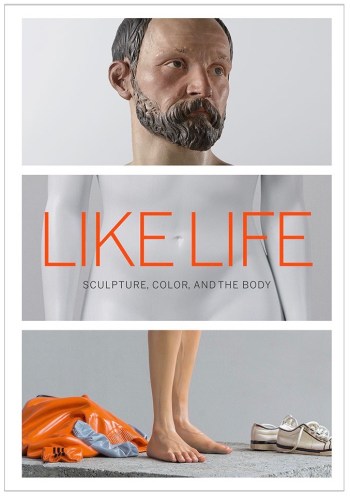 Seven hundred years of sculptural practice—from 14th-century Europe to the global present—will be examined anew in the groundbreaking exhibition Like Life: Sculpture, Color, and the Body (1300–Now). On view at The Met Breuer from March 21 through July 22, 2018, the exhibition will explore expanded narratives of sculpture through works in which artists have sought to replicate the literal, living presence of the human body. A major international loan exhibition of approximately 120 works, Like Life will draw on The Metropolitan Museum of Art’s rich collection of European sculpture and modern and contemporary art, while also featuring a selection of important works from national and international museums and private collections.
Just how perfectly should figurative sculpture resemble the human body? Histories and theories of Western sculpture have typically favored idealized representations, as exemplified by the austere, white marble statuary of the classical tradition. Such works create the fiction of bodies existing outside time, space, and personal or cultural experience. This exhibition, by contrast, will place key sculptures from different eras in conversation with each other in order to examine the age-old problem of realism and the different strategies deployed by artists to blur the distinctions between original and copy, and life and art. Foremost among these is the application of color to imitate skin and flesh. Other tactics include the use of casts taken from real bodies, dressing sculpted figures in clothing, constructing movable limbs and automated bodies, even incorporating human blood, hair, teeth, and bones. Uncanny in their approximation of life, such works have the potential to unsettle and disarm observers, forcing us to consider how we see ourselves and others, and to think deeply about our shared humanity.

Thomas Southwood Smith and Jacques Talrich, ‘Auto-Icon’ of Jeremy Bentham (1748–1832), wax figure built around Bentham’s own skeleton, with human hair, wool, cotton, linen textiles, straw hat, glasses, wood walking stick, table, and chair (London: UCL).
Juxtaposing well-known masterpieces with surprising and little-seen works, the exhibition brings together sculptures by artists from Donatello, El Greco, Jean-Léon Gérôme, Antonio Canova, Auguste Rodin, and Edgar Degas to Louise Bourgeois, Meret Oppenheim, Isa Genzken, Charles Ray, Fred Wilson, Robert Gober, Bharti Kher, Duane Hanson, Jeff Koons, and Yinka Shonibare MBE, as well as wax effigies, reliquaries, mannequins, and anatomical models. Together these works will highlight the continuing anxieties and pleasures attendant upon the three-dimensional simulation of the human body.
Like Life: Sculpture, Color, and the Body (1300–Now) is curated by Luke Syson, Iris and B. Gerald Cantor Chairman of European Sculpture and Decorative Arts, and Sheena Wagstaff, Leonard A. Lauder Chairman of Modern and Contemporary Art, both at The Met, with Brinda Kumar, Assistant Curator of Modern and Contemporary Art, The Met, and Emerson Bowyer, Searle Associate Curator of European Painting and Sculpture at the Art Institute of Chicago, with the assistance of Elyse Nelson, Research Associate, European Sculpture and Decorative Arts, The Met. The catalogue is made possible by the Mary C. and James W. Fosburgh Publications Fund.
Luke Syson and Sheena Wagstaff, with Emerson Bowyer, Brinda Kumar, Barti Kher, Jeff Koons, Schwartz Hillel, Marina Warner, and Fred Wilson, Like Life: Sculpture, Color, and the Body (New York: The Metroplitan Museum of Art, 2018), 312 pages, ISBN: 978 1588396440, $65.
A symposium explores themes raised by the exhibition on Saturday, 14 April 2018, from 10:30am until 6:30pm.
Conference | Artistic Trade between Spain and Its Viceroyalties

Plaza Mayor in Lima, 1680, oil on canvas
(Madrid: Museo de América)
◊ ◊ ◊ ◊ ◊
From the conference flyer:
Artistic Trade between Spain and Its Viceroyalties, 1500–1800
Keynes Hall, King’s College, University of Cambridge, 22 June 2018
This is the first conference in the United Kingdom devoted to artistic trade between Spain and its viceroyalties. Referring to Cambridge’s Spanish and colonial art collections and with the indispensable support of the King’s College Nigel Glendinning studentship, this conference brings together scholars specialized in the art from the Spanish Viceroyalties. The speakers will trace the artworks from their production, their movement with the help of agents and their collection and display at their destination. For further information, please contact Akemi Herráez Vossbrink at alh64@cam.ac.uk, and register for free at Eventbrite.
P R O G R A M M E
9:15 Akemi Herráez Vossbrink (University of Cambridge), Introductory Remarks
9:30 Keynote Speaker | Luisa Elena Alcalá (Universidad Autónoma de Madrid), Passageways of Art in the Atlantic World: Artists, Patrons, and Agents
10:00–11:30 | Workshops and Artists Producing Art for the Spanish Viceroyalties and Transitory Spaces
Chaired by Akemi Herráez Vossbrink (University of Cambridge)
• Holly Trusted (Victoria and Albert Museum), Shipwrecked Ivories: The Confluence of East and West
• Piers Baker Bates (The Open University), Traveling between the Viceroyalties: Artistic Translation in the Sixteenth-Century Hispanic World
• Escardiel González Estevez (Universidad de Sevilla), Alonso Vázquez between Seville, Mexico, and Manila, 1603–1608: The Paradigm of a ‘Global Artist’
13:30-15:00 | The Role of Agents Commercializing Artworks between Spain and Its Viceroyalties
Chaired by José Ramón Marcaida López (University of Saint Andrews)
• Sandra Van Ginhoven (Getty Research Institute, Research Associate), Spanish Transatlantic Agents and the Flemish Guilliam Forchondt in the Overseas Paintings Trade
• Corinna Gramatke (Technical University of Munich Chair of Conservation-Restoration), ‘The Portable Europe’: European Artworks for the Jesuit Province of Paraguay, 1608–1767
• Eduardo Lamas Delgado (Royal Institute for Cultural Heritage, Brussels), Madrilenian Painters and America: Artistic Production for Overseas Trade Networks and Their Possible Agents
16:00–17:30 | Collecting and Display in Private, Civil, and Religious Spaces in the Spanish Viceroyalties
Chaired by Jean Michel Massing (University of Cambridge)
• Kathryn Santner (Leverhulme Trust Fellow, ILAS, London), Conventual Art Collections and Artistic Exchange in the Colonial Viceroyalties
• Isabel Oleas Mogollón (University of Delaware), The Divine and the Self: Uses and Meanings of Mirrors in Quito’s Jesuit Church
• Veronika Winkler (Ludwig-Maximilians-Universität, München), Witnessing the Saint’s Life: Patrons and Hagiographical Painting Cycles of Viceregal Peru
New Book | The Women Who Built the Ottoman World
From I. B. Tauris:
Muzaffer Özgüles, The Women Who Built the Ottoman World: Female Patronage and the Architectural Legacy of Gülnus Sultan (London: I. B. Tauris & Co, 2017), 304 pages, ISBN: 9781784539269, £64 / $99.
 At the beginning of the eighteenth century, the Ottoman Empire remained the grandest and most powerful of Middle Eastern empires. One hitherto overlooked aspect of the Empire’s remarkable cultural legacy was the role of powerful women—often the head of the harem, or wives or mothers of sultans. These educated and discerning patrons left a great array of buildings across the Ottoman lands: opulent, lavish, and powerful palaces and mausoleums, but also essential works for ordinary citizens, such as bridges and waterworks. Muzaffer Ozgules here uses new primary scholarship and archaeological evidence to reveal the stories of these Imperial builders. Gulnus Sultan (1642–1715), the favourite of the imperial harem under Mehmed IV and mother to his sons, was exceptionally pictured on horseback, travelled widely across the Middle East and Balkans, and commissioned architectural projects around the Empire. Her buildings were personal projects designed to showcase Ottoman power and they were built from Constantinople to Mecca, from modern-day Ukraine to Algeria. Ozgules seeks to re-establish the importance of some of these buildings, since lost, and traces the history of those that remain. The Women Who Built the Ottoman World is a valuable contribution to the architectural history of the Ottoman Empire and to the growing history of the women within it.
Muzaffer Özgüles is Assistant Professor in the Faculty of Architecture at Gaziantep University, Turkey, and was the Barakat Trust Post-Doctoral Research Fellow at the Khalili Research Centre at the University of Oxford from 2014 to 2015. He gained his PhD in Architectural History at Istanbul Technical University in 2013.
Exhibition | Thomas Gainsborough: Experiments in Drawing
From The Morgan:
Thomas Gainsborough: Experiments in Drawing
The Morgan Library & Museum, New York, 11 May — 19 August 2018
Curated by Marco Simone Bolzoni
 The eighteenth-century British master Thomas Gainsborough (1727–1788) is celebrated for his portraiture and for his depictions of rural landscapes. Although he was best known as a painter, he was also a draftsman of rare ability. Gainsborough experimented with various media to sketch preparatory studies, finished works, and in some cases exercises for his own enjoyment. Thomas Gainsborough: Experiments in Drawing brings together more than twenty works primarily from the Morgan’s collection that reveal the artist’s technical innovations, his mastery of materials, and his development of a new and original mode of drawing.
The exhibition is sponsored by Lowell Libson and Jonny Yarker Ltd. and generously supported by Mr. and Mrs. Clement C. Moore II and the Eugene V. and Clare E. Thaw Charitable Trust.
Marco Simone Bolzoni, Thomas Gainsborough: Experiments in Drawing (London: Holberton, 2018), 84 pages, ISBN: 9781911300458, $25.
Call for Panels | CAA in New York, 2019
From CAA:
107th Annual Conference of the College Art Association
New York Hilton Midtown, 13–16 February 2019
Most Panel Proposals due by 27 April 2018
The CAA Annual Conference is the largest professional convening of art historians, artists, designers, curators, and others in the visual arts. Each year we offer sessions submitted by our members, committees, and affiliated societies offering a wide range of program content. The Annual Conference Committee members review over 800 submissions each year. They take into account subject areas and themes that arise from accepted proposals to present as a broad and diverse a program as possible. The Committee selects approximately 250 sessions for each conference, and it must, at times, make difficult decisions on submissions of high merit. This means that on occasion, quality submissions may not be selected.
General Proposal Submission Information
• Session and paper/project abstracts should be no more than 250 words in length.
• Please follow The Chicago Manual of Style for your submission.
• The accuracy of information in the submission is important as, if selected, it will be transferred to the conference program, abstracts booklet, website, etc., exactly as written.
P R O P O S A L S U B M I S S I O N T Y P E S
Complete Session
Proposals due by 27 April 2018
The organizer has complete information about the session including names and affiliations of all session participants, presentation titles, abstract texts, etc.
Session Soliciting Contributors
Proposals due by 27 April 2018
The organizer proposes a session title and abstract that will require a call for participation. Session organizers review and select papers and projects based on their own requirements. The 2019 Call for Participation (CFP) for accepted Sessions Soliciting Contributors will be posted on the CAA Annual Conference website on May 14, 2018. Submissions will be accepted for review through June 21, 2018. Submissions should be sent directly to the session chair(s)—if there is more than one session chair, send materials to both chairs. Proposals should include a proposal form (found at the end of the CFP), an abstract of your presentation, a cover letter to chair(s), a shortened CV, and work documentation (if necessary).
Individual Paper/Project
Proposals due by 27 April 2018
An individual CAA member may submit an abstract (with title), which, if accepted, will be included in the 2019 conference as part of a composed session with others accepted in this category based on subject area or compatible content.
Professional Development Workshops
Proposals due between 15 May and 15 August 2018
CAA welcomes current CAA members to share their expertise with colleagues in Professional Development Workshops. Workshops are ninety minutes in length and content ranges from business strategies and negotiation, finding grants and fellowships, marketing, audience engagement, education on new technologies, and more.
Exhibitor Session
Proposals due between 15 May and 14 September 2018
Registered exhibitors at the 2019 conference are welcome to propose full sessions or workshops (ninety minutes in length) for inclusion in the full-conference program. These sessions should convey practical information, professional expertise, or historical/scholarly content and may not be used for direct marketing, sales or promotion of products, publications, or services or programs.
New Book | François de Cuvilliés
From Allitera Verlag:
Albrecht Vorherr, ed., François de Cuvilliés: Rokokodesigner am Münchner Hof (Allitera Verlag, 2018), 280 pages, ISBN: 978-3962330224, 30€.
 Zum 250 Todestag von Francois de Cuvilliés (1695–1768) am 14. April 2018 erscheint diese Anthologie mit pointierten Texten namhafter Wissenschaftler zum großen Architekten und Designer des Rokokos. Elf Beiträge widmen sich dem stilsicheren Genie und vergessen dabei nicht die bitteren Seiten seiner Vita. Vor dem Hintergrund aktueller Forschung wird Cuvilliés zum einen als Künstler und Mensch vorgestellt, zum anderen auch ein Schlaglicht auf die Epoche des Rokoko in München geworfen: Handwerker- und Hofleben, Verwaltung und Realisierung barocker Bauprojekte, luxuriöses Design öffentlicher Bauten, Palais und Schlösser, Theater- und Festkultur. Der Belgier François de Cuvillies hat wie kein anderer die Haupt- und Residenzstadt mit seiner Bau- und Ausstattungskunst geprägt und das kurfürstliche München auf dem Niveau von Paris, Dresden und Venedig zum Strahlen gebracht.
Mit Beiträgen von, Magdalena Bayreuther, Neven Denhauser, Gabriele Dischinger, Hanna Dornieden, Ernst Götz, Alexandra Loske, Stefan Nadler, Hermann Neumann, Max Tillmann, Christian Quaeitzsch, Albrecht Vorherr.
Albrecht Vorherr ist Kunstpädagoge und Autor. Sein besonderes Interesse gilt der Kunst- und Kulturgeschichte des 18. Jahrhunderts. Mit Doris Fuchsberger veröffentlichte er im Allitera Verlag Schloss Nymphenburg unterm Hakenkreuz (2014) und den Bildband Schloss Nymphenburg: Menschen – Bauwerke – Geschichte (2015).
Exhibition | Royal and Imperial Clocks
From the press release, via Art Daily, for the exhibition:
Royal and Imperial Clocks: Romantic and Scientific
The David Roche Collection, Adelaide, 27 February — 19 August 2018
Curated by Martyn Cook
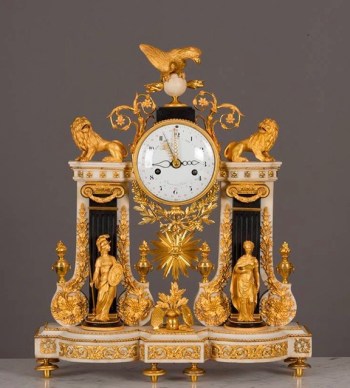
Louis XVI Portico Mantel Clock, ca. 1787–93 (Adelaide: The David Roche Collection).
The David Roche Collection will stage a new exhibition of 34 exquisite French and English clocks, dating from the late 17th century to the early 20th century. Imperial & Royal Clocks: Romantic & Scientific is the first time these rare and opulent clocks have been on public display together.
David Roche (1930–2013)—who left his entire collection of more than 3,500 decorative arts to the people of Adelaide—had, during his long life, been immersed in the intricacies of clocks for their decorative appeal. No matter the horological significance of the movement within the clocks, Roche was only interested in the clock’s decorative façade. He was obsessed with time though struggled to be on time said Martyn Cook, Museum Director of The David Roche Collection and curator of the exhibition.
Roche focused his collection on the French Empire and the Regency period in England. When he acquired an item for his collection, he had in mind exactly where it should be placed in his home—it was no different with his clocks. Roche called Fermoy House—the house in which he spent most of his life—Australia’s ‘Bermuda Triangle’ for clocks because very few worked for more than two weeks, largely through movement in the ground, which made it unstable for the clocks. Though it annoyed him intensely, he learned to live with it, said Cook.
With loans of seven rare clocks from private collections, the exhibition showcases some of the world’s most opulent clocks. Included are the rare Automata Smoking African Clock from The Johnston Collection; a Henry Hindley Table clock c.1760–65, made for the 8th Duke of Norfolk; and a very rare John Shelton Floor-standing Regulator c.1760. Shelton made this type of astronomical clock for the Royal Society of London, and Captain James Cook used Shelton’s regulators to observe the 1769 transit of Venus in Tahiti.
Provenance was always of interest to Roche. He acquired a Laurent Ridel Trophies of War mantel clock c.1780, from the sale of Mrs. Robert Lehman in 2010, following the collapse of the Lehman Bank. His Robert Adam style Long case clock c.1780, belonged to Mildred Hilson, a New York grande dame, while his Balthazar Martinot Boulle mantle clock c.1690, came from Kym Bonython, Adelaide identity and motor racing driver. Although Roche loved all his clocks, two favourites were the jewel-like Joseph Coteau Mantel clock 1796 and the Louis Moinet Prince of Hanover urn clock c.1810, from the Hanover estate at Schloss Marienburg, in Germany. The exhibition is accompanied by a fully illustrated catalogue.
NMWA’s Wikipedia Edit-a-thon, 2018

Today at the NMWA:
Wikipedia Edit-A-Thon 2018
National Museum of Women in the Arts, Washington, D.C., 17 March 2018
Celebrate Women’s History Month and help us improve Wikipedia articles about women artists.
In honor of Women’s History Month, NMWA will host its 5th annual Art+Feminism Edit-A-Thon focused on improving Wikipedia entries related to notable women artists and art world figures. This event is part of a global initiative to help improve Wikipedia’s gender imbalance. A 2010 Wikimedia survey found that less than 13% of its contributors are women. The lack of female participation has contributed to the absence of notable women on Wikipedia. In more than 480 events, over 7,100 people have created and improved more than 11,000 Wikipedia articles.
No experience necessary—just bring a laptop, motivation to combat gender bias, and a belief in equal access to quality information resources. People of all gender identities and expressions are invited to participate.
Schedule
10:00–11:00 Welcome and editing tutorial
11:00–3:00 Research and editing
Lunch at noon
Use the hashtags #ArtAndFeminism and #NowEditingAF to share about the event on social media!
Reservations required—use the passcode ‘AF’. Please bring a laptop with power cord. Extension cords and power strips are highly recommended.










 Enfilade
leave a comment