New Book | Material Witnesses
From The University of Virginia Press:
Camille Wells, Material Witnesses: Domestic Architecture and Plantation Landscapes in Early Virginia (Charlottesville: The University of Virginia Press, 2018), 416 pages, ISBN: 978 08139 40366 (hardcover), $75 / ISBN: 978 08139 40373 (paperback), $40.
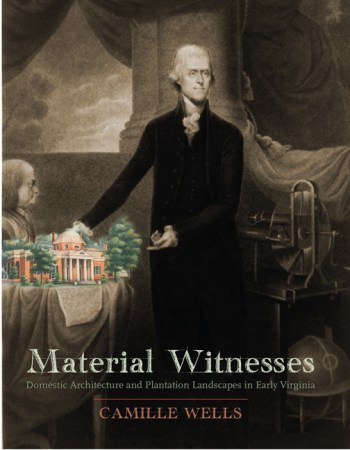 The Chesapeake region of eastern Virginia and Maryland offers a wealth of evidence for readers and researchers who want to discover what life was like in early America. In this eagerly anticipated volume, Camille Wells, one of the foremost experts on eighteenth-century Virginia architecture, gathers the discoveries unearthed during a career spent studying the buildings and plantations across this geographic area. Drawing on the skills and insights of archaeologists and architectural historians to uncover and make sense of layers of construction and reconstruction, as well as material evidence and records ranging from ceramics, furniture, and textiles to estate inventories and newspaper advertisements, Wells poses meaningful questions about the past and proposes new ways to understand the origins of American society.
The research gathered in this cohesive and engaging collection views the wider history of the colonial and early national periods through the lens of lauded as well as previously unrecorded sites in the Tidewater and Piedmont regions. The subjects are equally wide-ranging, from the way domestic architecture articulates problems and possibilities that found forceful expression in the Revolution; to the values and choices made by those who lived in unprepossessing circumstances as well as those who built statement gentry houses intended to dominate the landscape. Other essays address the challenges of discovering historically accurate room functions and furnishings as well as the way Colonial Revival attitudes still dominate much of what is imagined about the early Virginia past. Taken together, these beautifully written and accessible essays will be essential reading for those interested in architecture, material culture, and the ways they reveal the complexities of the nation’s history.
Camille Wells was most recently a fellow at the Virginia Foundation for the Humanities.
Warm Thanks to the Fall 2017 Intern, Julia Bouwkamp
 With the new year upon us, it seems like a fine time to introduce and publicly thank Julia Bouwkamp, who has done an amazing job as an intern here at Enfilade for the last few months! Julia is another one of my former students (like Rebecca Woodruff, she was part of the May-term course I taught in Sweden and Denmark in 2016).
Since then, Julia has been busy with lots of things. She was a historic interpreter at Colonial Michilimackinac, a reconstructed 18th-century fort in Michigan where the lower and upper peninsulas touch. She worked as an AmeriCorps VISTA member in Wayland, Michigan marketing the economic development and historic preservation potential of the town’s Main Street program. She’s presently interning with the Greater Grand Rapids Women’s History Council, where she also serves on the board. In particular, Julia is preparing entries for Her Hat Was in the Ring, a national crowd sourcing effort mapping women who ran for elected office before the passage of the Nineteenth Amendment to the United States Constitution in 1920 (in Grand Rapids, over fifty women stood for election in the late 19th and early 20th in various school board and local government positions). In addition, Julia is doing supporting research for an upcoming documentary on the history of kindergarten in the U.S.
Clearly Julia’s interests are diverse, but there are typically a series of reliable, coherent threads: gender, the history of fashion, material culture, the mediation of the past, and history as lived experience with real world consequences (then and now).
Many thanks, Julia!
–Craig Hanson
New Book | American Furniture 1650 to the Present
From Rowman and Littlefield:
Oscar Fitzgerald, American Furniture, 1650 to the Present (Rowman & Littlefield Publishers, 2017), 630 pages, ISBN: 978 144227 0381, $130 / £85.
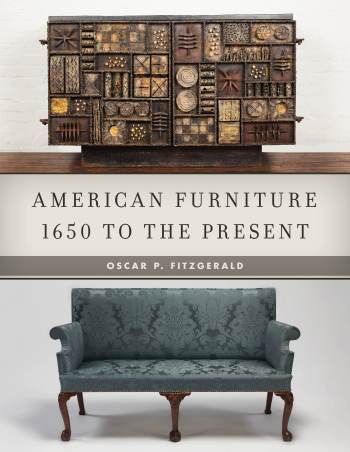 Drawing on the latest scholarship, this comprehensive, lavishly illustrated survey tells the story of the evolution of American furniture from the 17th century to the present. Not viewed in isolation, furniture is placed in its broader cultural, historic, and aesthetic context. The focus is not only on the urban masterpieces of 18th-century William and Mary, Queen Anne, Chippendale, and Federal styles but also on the work of numerous rural cabinetmakers. Special chapters explore Windsor chairs, Shaker, and Pennsylvania German furniture which do not follow the mainstream style progression. Picturesque and anti-classical explain Victorian furniture including Rococo, Renaissance, and Eastlake. Mission and Arts and Crafts furniture introduce the 20th century. Another chapter identifies the eclectic revivals such as Early American that dominated the mass market throughout much of the 20th century. After World War II American designers created many of the Mid-Century Modern icons that are much sought after by collectors today. The rise of studio furniture and furniture as art which include some of the most creative and imaginative furniture produced in the 20th and 21st centuries caps the review of four centuries of American furniture. A final chapter advises on how to evaluate the authenticity of both traditional and modern furniture and how to preserve it for posterity. With over 800 photos including 24 pages of color, this fully illustrated text is the authoritative reference work.
Oscar P. Fitzgerald is a nationally known historian, author, lecturer, and consultant on American furniture from colonial times to the present. He retired as the director of the Navy Museum in Washington, DC and curator of Tingey House, to pursue full time his first love which is the history of furniture from antique to modern. As a member of the faculty of the Smithsonian Institution/George Washington University Master’s program in Decorative Arts & Design History, he teaches all the furniture classes. As a decorative arts consultant, he advises on the furniture collections of a number of historic houses including the Frederick Douglass House, the Clara Barton National Historic Site, and the Custis-Lee Mansion. His publication range from a study of The Green Family of Cabinetmakers: An Alexandria Institution (of the Mercy Street TV series fame) to the catalog of the studio furniture at the Renwick Gallery of the Smithsonian American Art Museum.
C O N T E N T S
1 The Jacobean Period: Joiners and Cabinetmakers in the New World
2 William and Mary: The Years of Transition
3 Queen Anne: The Line of Beauty
4 The Chippendale Style
5 Furniture of the Federal Period
6 American Empire
7 Windsor Chairs
8 Country Furniture: New England
9 Southern Furniture
10 Furniture of Rural Pennsylvania, the Mid-Atlantic, and the Mid-West
11 Shaker Furniture: The Gift to Be Simple
12 Victorian Furniture: Gothic and Rococo Revivals
13 Victorian Furniture: The Renaissance Revival
14 Eastlake, the Aesthetic Movement, and the Colonial Revival
15 American Mission Furniture and the Arts & Crafts Movement: 1900–1915
16 Traditional Revivals for a Conservative Public
17 Modern Furniture, 1920–1941: Is It Here to Stay?
18 America Takes the Lead: Mid-Century Modern, 1950s and 1960s
19 Post-Modern and Avant-Garde Furniture since 1975
20 Studio Furniture and Furniture as Art
21 Connoisseurship of American Furniture
Exhibition | Faces of China
From the Staatliche Museen zu Berlin:
Faces of China: Portrait Paintings from the Ming and Qing (1368–1912)
Gesichter Chinas: Porträtmalerei der Ming- und Qing-Dynastie (1368–1912)
Royal Ontario Museum, Toronto, 18 May 2013 — 23 February 2014
Kulturforum, Berlin, 12 October 2017 — 7 January 2018
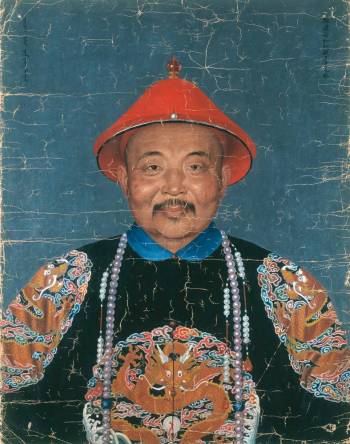
Unidentified Painter, Portrait of Dawaci, 佚名 達瓦斉像, Qing dynasty, Qianlong period (1736–1795), ca. 1756, oil on Korean paper (Ethnologisches Museum – Staatliche Museen zu Berlin, I D 22242, Waltraut Schneider-Schütz).
Faces of China is the first exhibition explicitly dedicated to Chinese portrait painting. A selection of more than 100 paintings from the collections of the Palace Museum Beijing and the Royal Ontario Museum Toronto, most of which have never been shown in Europe, spans a period of more than 500 years. The main focus is on the unique portraits of the Qing Dynasty (1644–1912), including images of members of the imperial court, ancestors, military figures, and informal portraits of artists and famous women. These portraits evidence a blossoming of the genre that had never been seen before.
Portrait painting has a 2000-year-old tradition in China. Beginning in the middle of 16th century, the late Ming Dynasty brought with it an economic boom and great intellectual openness that spurred a significant moment of florescence. It was in this period that Italian Jesuit painters visited the country, such as Matteo Ricci, who brought new techniques of European portrait painting with him in 1583. After the Manchu people conquered China in 1644 and established the Qing Dynasty, the imperial court in Beijing was host to a lively cultural exchange between China and Europe. This is particularly well reflected in the portrait paintings. The Jesuit painter Giuseppe Castiglione (Chinese name: Lang Shining; Milan 1688–Beijing 1766) is a key figure of this period.
Chinese portrait painting is characterized by two traditions of representation: images of ancestors and images of living figures. Ancestor portraits were created to honor deceased family members, who were venerated as part of religious observance within the family. Most were painted by professional but anonymous artists and are unsigned. On the other hand, there are portraits signed by often famous artists depicting well-known figures, such as officials, artists, poets, or those in the military, along with ordinary citizens shown in both single and group family portraits.
In exhibitions on Chinese portrait painting to date, only one of these traditions of representation has always been the central theme. However, Faces of China is deliberately dedicated to both of these two traditions, as developments in one always informed developments in the other. While the upper exhibition hall is dedicated to portraits of princely figures, officials, and artists, the focus in the galleries on the lower exhibition hall is on private individuals, families, and ancestral portraits.
The works are placed in carefully chosen relationships in light of their original social and religious contexts, as well as their circumstances of production. Thus, large-scale imperial portraits are surrounded by imperial silk garments once worn in the Palace—both groups of objects are on loan from the Palace Museum Beijing. The ancestor portraits—loans from the Royal Ontario Museum Toronto—are placed alongside an altar table with a censer, candlesticks, and flower vases, intended for honoring deceased relatives. Further objects on display come from the extensive Chinese collections of the Staatliche Museen’s own Ethnologisches Museum and Museum für Asiatische Kunst.
A collection of 365 preparatory studies for ancestral portraits that have never gone on display before, along with a series of presentation pieces in album form that artists showed potential clients as a way of sampling their wares, offers insight into workshop practices of the time. Also included in this collection are handbooks for portrait painters with woodcut illustrations, such as Ding Gao’s Secret Workshop Traditions of Portrait Painting, which not only gives details on technique, but also explores scientific approaches to the art of portraiture, such as physiognomy.
In addition, the exhibition deliberately highlights transcultural relationships to European portraiture by placing the Chinese portraits alongside a handful of European masterworks from the same time. So Anthony van Dyck’s Portrait of a Genovese Lady (ca. 1623) from the collection of the Gemäldegalerie appears next to a Chinese portrait of similarly large dimensions and from the same time, depicting a male ancestor.
The exhibition is organized by the Museum für Asiatische Kunst – Staatliche Museen zu Berlin and the Palace Museum Beijing, in cooperation with the Royal Ontario Museum Toronto (at the ROM, the exhibition was entitled Faces to Remember: Chinese Portraits of the Ming and Qing Dynasties). An extensive catalogue, published by Imhof Verlag, will accompany the exhibition.
Klaas Ruitenbeek, Gesichter Chinas: Porträtmalerei der Ming- und Qing-Dynastie, 1368–1912 (Petersberg: Michael Imhof Verlag, 2017), 368 pages, ISBN: 978 37319 05875, 50€.
Exhibition | Gainsborough’s Family Album
Looking ahead to the fall with a reminder that paper proposals for the coordinated conference on Portraiture and Biography, to take place at the end of November, are due by 1 February 2018; from the NPG press release (6 December 2017). . .
Gainsborough’s Family Album
National Portrait Gallery, London, 22 November 2018 — 3 February 2019
Princeton University Art Museum, 23 February — 5 June 2019.
Curated by David Solkin with Lucy Peltz

Thomas Gainsborough, The Artist’s Daughters, Mary, and Margaret, Chasing a Butterfly, ca. 1756, 113.5 × 105 cm (London: National Gallery).
The National Portrait Gallery London is to bring together for the first time all twelve surviving portraits of Thomas Gainsborough’s daughters in a major new exhibition, Gainsborough’s Family Album, opening on 22 November 2018. The portraits, which trace the development of the Gainsborough girls from playful young children to fashionable adults, include such famous images as The Artist’s Daughters Chasing a Butterfly (ca. 1756) and The Artist’s Daughters with a Cat, (ca. 1760–61). These will be shown alongside rarely seen paintings, such as the grand double full-length portrait of Mary and Margaret Gainsborough as sumptuously-dressed young women (ca. 1774).
Featuring over fifty works from public and private collections across the world, Gainsborough’s Family Album will provide a unique insight into the private life and motivations of one of Britain’s greatest artists. The exhibition will include a number of works that have never been on public display in the UK, including an early portrait of the artist’s father John Gainsborough (ca. 1746–48) and a drawing of Thomas and his wife Margaret’s pet dogs, Tristram and Fox.
Thomas Gainsborough (1727–1888) was one of Britain’s most successful eighteenth-century portraitists, but in his private correspondence he lamented that the need to earn his living from an endless parade of “damnd Faces” prevented him for pursuing his devotion to landscape, the branch of art he most loved. Nonetheless, he still managed to find the time, the energy and the desire to paint more portraits of his family members than any other artist of his or any earlier period is known to have produced. These include pictures of himself, his father, his wife, his daughters, two sisters and two brothers, a brother-in-law, two nephews, one niece, and a few more distant connections, not to mention his dogs. The vast majority of these works stayed with the family throughout the painter’s lifetime, by the end of which he had single-handedly created an unusually comprehensive visual record of an eighteenth-century British kinship network, with several of its key players shown more than once, at different stages of their lives.
Gainsborough’s Family Album will chart Gainsborough’s career from youth to maturity, telling the story of a provincial artist’s rise to metropolitan fame and fortune. However, alongside this runs a more private narrative about the role of portraiture in the promotion of family values, at a time when these were in the process of assuming a recognizably modern form. The exhibition will both offer a new perspective on Gainsborough the portraitist and challenge our thinking about his era and its relationship to our own.
Dr Nicholas Cullinan, Director, National Portrait Gallery, London, says: “We are delighted to be able to bring together so many of Gainsborough’s family portraits for the first time. The exhibition, which is unique in focusing on his paintings made for love, rather than for money, provides an unprecedented opportunity to see the intimate and personal aspect of Gainsborough’s portraits through this remarkable body of works depicting ‘ordinary people’ from a time when portraiture was almost exclusively confined to the rich, the famous and the upper classes.”
Professor David Solkin, Exhibition Curator and Emeritus Professor of the Courtauld Institute of Art says: “My hope is that Gainsborough’s Family Album will prompt new ways of thinking about Gainsborough and about the family albums that so many of us create.”
Gainsborough’s Family Album is curated by Professor David Solkin, with support from Dr Lucy Peltz, Senior Curator, 18th-Century Collections and Head of Collections Displays (Tudor to Regency), at the National Portrait Gallery. Professor Solkin is one of the world’s leading authorities on the history of British art. He joined The Courtauld Institute of Art in 1986 and completed his career there as Walter H. Annenberg Professor of the History of Art and Dean and Deputy Director. Solkin has published extensively on eighteenth-century art and culture and is the author of four major books, the latest of which are Painting out of the Ordinary: Modernity and the Art of Everyday Life in Early Nineteenth-Century Britain (2008) and Art in Britain 1660–1815 (2015). He has also curated several important exhibitions including, most recently, Turner and the Masters (2009).
Dr Peltz joined the National Portrait Gallery in 2001 as Curator of 18th-Century Collections and has curated several permanent galleries, temporary exhibitions and displays including The Regency in the Weldon Galleries (2003–); Brilliant Women: 18th-Century Bluestockings (2008); Thomas Lawrence: Regency Power and Brilliance (2010–11) and Simon Schama’s Face of Britain (2014–15), a project which resulted in a television series, a Viking-Penguin book, and an exhibition at the National Portrait Gallery.
David Solkin, Ann Bermingham, and Susan Sloman, Gainsborough’s Family Album (London: National Portrait Gallery Publications, 2018), 192 pages, ISBN: 978-1855147904, £30.
The exhibition will be accompanied by a fully illustrated book featuring fifty beautifully reproduced portraits from public and private collections around the world. The book includes essays by exhibition curator David Solkin, Ann Bermingham, Professor Emerita of Art History at the University of California, Santa Barbara and Susan Sloman, independent art historian and author of Gainsborough in Bath.
Exhibition | Fans of the Eighteenth Century

T. Ballister (English publisher), Traveling Fan, 1788; paper, wood, bone or ivory, and metal; engraved with stippling; opaque watercolor (hand-coloring) and sticks and guards; rivet; 24.4 cm length, 41.9 cm width open (Fine Arts Museums of San Francisco, Gift of Mrs. S. Conning, 9206).
◊ ◊ ◊ ◊ ◊
The exhibition is presented as a complement to Casanova: The Seduction of Europe, on view at the Legion of Honor from February 10 until May 28.
Fans of the Eighteenth Century
de Young Museum, San Francisco, from 31 March 2018
Fans have served as accessories of fashion and utility since antiquity but reached their peak production and use in eighteenth-century Europe. Made from and embellished by precious materials such as ivory, mother-of-pearl, and silver and gold leaf, eighteenth-century fans also featured designs that reflected the spirit of their times. Fans addressed current events as well as themes of broad interest, including biblical and mythological tales and romanticized domestic and pastoral vignettes. Fans of the Eighteenth Century explores this quintessential period of fan production through a selection of examples from the permanent collection.
Inches or centimeters?
A New Year’s Resolution (the sort that I regularly make and rarely keep) . . . This object seems like a perfect way to introduce my (largely) American students to the utility of the metric system in thinking about the sizes of works of art in centimeters rather than inches. Yes, I realize this is specifically a measure of weight rather than distance, but it nicely takes the story back to the 1790s.
To all of you who keep reading, warmest wishes for a very happy 2018! –CH
As reported by Joe Palca for NPR’s All Things Considered (28 December 2017). . .

This 1793 grave is an early version of the kilogram. It is possible this object, now owned by the National Institute of Standards and Technology museum in Gaithersburg, MD, was once pirate treasure.
Jefferson knew about a new French system and thought it was just what America needed. He wrote to his pals in France, and the French sent a scientist named Joseph Dombey off to Jefferson carrying a small copper cylinder with a little handle on top. It was about 3 inches tall and about the same wide.
This object was intended to be a standard for weighing things, part of a weights and measure system being developed in France, now known as the metric system. The object’s weight was 1 kilogram.
Crossing the Atlantic, Dombey ran into a giant storm.
“It blew his ship quite far south into the Caribbean Sea,” says [Keith] Martin, [of the research library at the National Institute of Standards and Technology].
And you know who was lurking in Caribbean waters in the late 1700s? . . .
The pirates took Joseph Dombey prisoner on the island of Montserrat, hoping to obtain a ransom for him. Unfortunately for the pirates, and for Dombey as well, he died in captivity. The pirates weren’t interested in the objects Dombey was carrying. They were auctioned off along with the rest of the contents of his ship. . . .
Would it really have made any difference if Dombey had been able to deliver his kilogram to Jefferson?
“We don’t know for sure, but it seems like there was a missed opportunity there,” says Martin. . .
The full article is available here»
Reproduction of Art and Cultural Heritage
Writing for Apollo Magazine (15 December 2017), Maggie Gray suggests “it’s time to talk seriously about digital reproductions.” A version of the declaration signed on 8 December 2017 at the V&A is available as a PDF file here. From the V&A Research Projects / ReACH
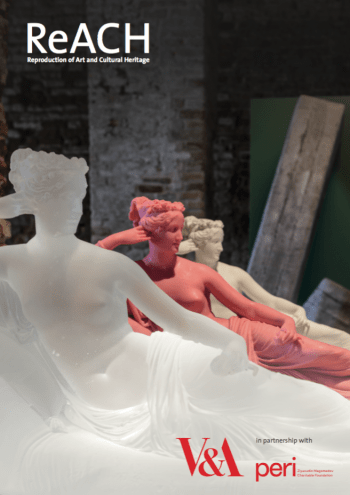 ReACH (Reproduction of Art and Cultural Heritage)
A global research programme exploring the digital reproduction of cultural heritage — #ReACHdialogue
Launched at UNESCO in May 2017, ReACH (Reproduction of Art and Cultural Heritage) is a global initiative spearheaded by the V&A in partnership with the Peri Charitable Foundation that explores how to re-think our approach to reproducing, storing and sharing works of art and cultural heritage.
Digital technologies are changing the cultural landscape, offering new ways to produce, store and share museum and heritage assets. However, there is no clear methodology for how museums and heritage organisations should engage with these technologies. To complicate matters, legal protocols and procedures have not adapted to these new realities, and often act as roadblocks to new practice. ReACH will bring clarity—by highlighting best practices, debating pressing issues, and drafting a convention—and offer our community a useful roadmap for dealing with reproductions in the future.
There are two fundamental goals of the ReACH programme. The first is to share best practices concerning the production, storage and dissemination of digital and physical reproductions. This will be achieved by inviting key speakers to the roundtables to share their professional experiences and to flag some of the broader challenges and opportunities. The second goal is to use the information gathered from the 5 roundtables to draft a new convention concerning the role of museums and other organisations in the reproduction of works of art and cultural heritage, which can be shared and adopted.
The ReACH project coincides with the 150th anniversary of Henry Cole’s 1867 Convention, which helped usher in a period where museums actively engaged in the creation of reproductions of objects from around the world. The document is inspiring in its clarity, practicality and openness to the creation and sharing of reproductions. Along with an updated version of the Convention we will produce a publication that compiles examples of the best practices selected from the roundtable discussions—as a roadmap for museums working with reproductions, as instruments for preservation and accessibility.
New Book | Art, Passion & Power: The Story of the Royal Collection
From Penguin Books:
Michael Hall, with a foreword by the Prince of Wales, Art, Passion & Power: The Story of the Royal Collection (London: BBC Books, 2017), 352 pages, ISBN: 978 17859 42617 £30.
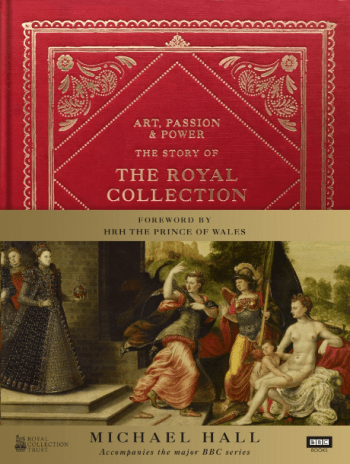 The Royal Collection is the last great collection formed by the European monarchies to have survived into the twenty-first century. Containing over a million artworks and objects, it covers all aspects of the fine and decorative arts, from paintings by Rembrandt and Michelangelo to grand sculpture, Fabergé eggs and some of the most exquisite furniture ever made. The Royal Collection also offers a revealing insight into the history of the British monarchy from William the Conqueror to Queen Elizabeth II, recording the tastes and obsessions of kings and queens over the past 500 years.
With unprecedented access to the royal residences of St James’ Palace, Windsor Castle, and Buckingham Palace, Art, Passion & Power traces the history of this national institution from the Middle Ages to the present day, exploring how royalty used the arts to strengthen their position as rulers by divine right and celebrating treasures from the Crown Jewels to the Abraham tapestries in Hampton Court Palace. Michael Hall examines the monarchy’s response to changing attitudes to the arts and sciences during the Enlightenment and celebrates the British monarchy’s role in the democratisation of art in the modern world. Accompanying the upcoming BBC television series—and coinciding with two exhibitions, Charles I: King and Collector at the Royal Academy and Charles II: Art and Power at the Queen’s Gallery, Buckingham Palace—Art, Passion & Power is the definitive statement on the British monarchy’s treasures of the art world.
Michael Hall is the editor of art-history periodical The Burlington Magazine. He has published several books on 19th-century art, architectural history, and the history of collecting, including Waddesdon Manor: The Biography of a Rothschild House and The Harley Gallery: Treasures of the Portland Collection. He has recently completed a history of the Royal Mausoleum at Frogmore, to be published by the Royal Collection.
Celebrating Repton 200
From The Gardens Trust:
 Aylsham in Norfolk will host the official launch of Repton 200—a year of nationwide celebrations coordinated by the Gardens Trust marking the bicentenary of the death of Humphry Repton, who succeeded Capability Brown as Britain’s greatest landscape gardener.
Norfolk is where Repton first worked as a landscape gardener, at Catton Park, and where he was buried, at St Michael and All Angels Church in Aylsham, in March 1818. To mark the bicentenary of his death, a programme of events celebrating his life and work have been planned in Norfolk and around the country.
Humphry Repton, whose works include Tatton Park and Woburn Abbey, was the successor to Capability Brown and the first to coin the term ‘landscape gardening’. Born in Bury St Edmunds in April 1752, he attended Norwich Grammar School and trained to work in the textile business but was not successful in the industry. After trying his hand at a number of careers—including dramatist, artist, journalist, and secretary—Repton set himself up as a landscape gardener and gained work through his social contacts. He went on to work on estates across the country, producing his famous Red Books which showed his clients ‘before’ and ‘after’ views of how he would improve their land.
The Gardens Trust are co-ordinating the national celebrations, which start in March 2018, and include the Repton Season organized by Aylsham and District Team Ministry, Aylsham Town Council, community groups and Broadland District Council.
Events in Norfolk include a history workshop with Dr. Tom Williamson, professor of landscape history and archaeology at the University of East Anglia, a Repton 200 Memorial Choral Evensong, a Humphry Repton Memorial Lecture with Professor Stephen Daniels of the University of Nottingham, and a Red Book competition involving pupils from local schools.
Cllr Karen Vincent, Member Champion for Heritage at Broadland District Council, said: “We are lucky as a district to have links to such an important and fascinating figure. Repton’s work remains on show throughout the country, with his first work being here in Broadland at Catton Park. We would encourage anyone interested in one of the country’s most important landscape gardeners to come and help us celebrate his achievements in the spring.”
Dr James Bartos, Chairman of the Gardens Trust, said: “Humphry Repton designed around 400 landscapes across the country, many of which remain much-loved historic gardens. His picturesque designs featured terraces, gravel walks and flower beds around the house, as well as themed flower gardens. Next year will see a host of events celebrating his enduring influence, and drawing attention to gardens which need help to survive.”
For more information about Repton events in 2018 visit www.humphryrepton.org or follow #Repton200 on Twitter.










 Enfilade
leave a comment