Terracottas from Tomasso Brothers on View in New York
European Terracottas from Tomasso Brothers Fine Art
Carlton Hobbs LLC, New York, 25 January — 2 February 2018

Giovanni Bonazza, Allegory of Winter, ca. 1710, terracotta, 34 cm high.
Tomasso Brothers Fine Art of Leeds and London is participating in Master Drawings New York (MDNY) for the first time this coming winter when they hold their annual catalogued exhibition at Carlton Hobbs LLC on the Upper East Side from 25 January to 2 February 2018. Tomasso Brothers has for a number of years held a highly-regarded exhibition in New York in January. The decision this year by MDNY to additionally encompass painting and sculpture at its next edition (Saturday 27 January to Saturday 3 February 2018, Preview Friday 26 January 2018) offered a golden opportunity for the gallery to take part in this preeminent event.
This year Tomasso Brothers will present a selection of important European terracotta sculptures from the neolithic to the neoclassical periods. The exhibition traces the history of ‘fired clay’ starting with the Vinca civilisation of South-Eastern Europe in the fifth millennium BC, which produced the fascinating Idol of a Mother and Child in the show and from there, via the ancient classical period and the Renaissance, to the high baroque, ending with the neoclassical era.
Among the works to be offered is a North Italian idealised Portrait Relief of a Lady from the late fifteenth century, and an attentively described Portrait Bust of a Man from Emilia in Northern Italy, ca. 1500. Both testify to the birth of terracotta as a medium for portraiture which continued well into the early modern era. Among further highlights is a Portrait Bust of a Gentleman by the rare Flemish sculptor Servatius Cardon (1608–1649) and a poignant Portrait of a Young Man attributed to the great French artist Philippe-Laurent Roland (1746–1816). The latter work is a beautiful representation of the birth of the modern portrait, where hierarchy and status give way to the expression of individuality and emotion.
Parallel to this, the exhibition also demonstrates how terracotta was essential to artistic practice as a means for sculptors to develop ideas and compositions, shown by a recently rediscovered terracotta model for an allegorical representation of Winter, by the Venetian baroque master Giovanni Bonazza (1654–1736), which offers a crucial insight into the work of the sculptor, presenting a highly accomplished model for a finished work to be carved in either stone or marble.
A similar case is illustrated by a Character Head executed by Antonio Canova (1757–1822) around 1780, when he was still a young sculptor on the cusp of greatness. Inspired by the famous Laocoön group in the Vatican, this terracotta exists as an invenzione in its own right, and so a testimony to the sculptor’s search for his own artistic vocabulary. Deeply and richly modelled, the Character Head betrays a preoccupation with the representation of emotions, framed within a wider exploration of antiquity that would be a central theme throughout Canova’s career.
Another remarkable discovery and a highlight of the exhibition to be presented by Tomasso Brothers Fine Art is a terracotta model for a figure of Saint Mark by Giuseppe Piamontini (1664–1742), a colossal marble statue carved for the new baroque church of Santi Michele e Gaetano in Piazza Antinori on the central Via Tornabuoni in Florence.
Important European Terracottas, presented by Tomasso Brothers Fine Art as part of Master Drawings New York 2018, will take place at Carlton Hobbs LLC at 60 East 93rd Street NY from 25 January through 2 February 2018. A fully illustrated catalogue will be available. Prices will range from around $15,000 to $500,000.
Call for Papers | CSECS 2018, Niagara Falls
From the Call for Papers, which includes the full French version:
CSECS, 2018: Wonder / L’émerveillement
Four Points Sheraton, Niagara Falls, Canada, 10–13 October 2018
Organized by Christina Ionescu and Christina Smylitopoulos
Proposals due by 15 April [extended from 20 February]
 The 2018 annual meeting of the Canadian Society for Eighteenth-Century Studies will take place at Niagara Falls, Ontario. Comprised of three distinct cascades that monumentally culminate to drain Lake Erie into Lake Ontario, Niagara Falls occupies a significant place in eighteenth-century contemplations of natural wonder. When confronted with the unparalleled sight of a “vast and prodigious cadence of water,” the mesmerised Franciscan missionary Louis Hennepin (1626–1704) attempted to capture “this wonderful downfall” with both text and image in his travelogue, and his account had a long-lasting effect on how Niagara Falls was perceived in the following centuries. Niagara Falls, today considered one of the most spectacular natural wonders of the world, was more often imagined than visited during the Enlightenment years, when wonder-seekers relied upon the accounts of travellers who had experienced firsthand this natural masterpiece. During the Enlightenment, this preoccupation with the wonder of nature can be tied to engagements with wonder more generally. Despite Samuel Johnson’s disdain for wonder as “the effect of novelty upon ignorance,” contemporaneous writers, artists, thinkers, historians, travellers, and scientists sought to seize and understand this feeling of surprise mixed with admiration, caused by something beautiful, unexpected, unfamiliar, or inexplicable, which manifested itself across a broad spectrum of human experience and creative output.
This conference organizers invite papers that consider wonder as deployed, depicted, and discussed in a range of contexts: Enlightenment thought, natural science treatises, religious works, cultures of collecting, historical accounts, literary texts, visual production, as well as travel narratives. Possible topics include, but are not limited to the following:
• the theorisation of wonder as a concept
• the wonder of everyday life and material culture
• the cultivation of (or scepticism toward) wonder in Enlightenment thought
• spectacle and spectatorship in visual representation and culture
• artistry and wonder
• narrative strategies and rhetorical devices for producing wonder
• wonder as an affective response or aesthetic experience
• wonder and scientific knowledge
• wonder and its miraculous manifestations
• collections displaying wondrous thing
In keeping with CSECS tradition, proposals for papers devoted to elements of the long eighteenth century not directly related to the general theme of the conference are also welcome. Individual proposals should include a 150-word abstract of the paper and its title, as well as a biographical statement including the presenter’s name, academic status, institutional affiliation, and e-mail address. Panel proposals should include the above, as well as a brief description of the panel itself. Participants can present in either English or French. An issue of the Society’s bilingual journal, Lumen, will feature a selection of revised proceedings from this conference. Deadline to submit proposals for panels and integrated workshops: January 5, 2018. Deadline to submit individual proposals: February 20, 2018. Proposals should be emailed to csecs2018@yahoo.com.
Invited Speakers
Nathalie Ferrand (École Normale Supérieure / Institut des Textes et Manuscrits Modernes, Paris)
Sandro Jung (Herzog August Bibliothek, Wolfenbüttel)
Sarah Tindal Kareem (University of California, Los Angeles)
New Book | British Embassies
From Francis Lincoln, and imprint of The Quarto Group:
James Stourton, with photographs by Luke White, British Embassies: Their Diplomatic and Architectural History (Frances Lincoln, 2017), 352 pages, ISBN: 978 071123 8602, $65 / £40.
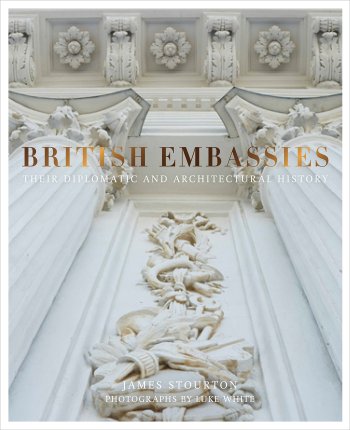 British Embassies have a special role in British history. They represent the country in bricks and stone and have often expressed—at least in the eyes of foreigners—British national character. Whether they are Lutyens buildings in Washington, grand palaces in Europe, beautiful old colonial buildings in Asia, or secure compounds in the Middle East, they all have stories to tell and reveal the changing face of British diplomacy. A mixture of history, architectural description, diplomacy and anecdote, this large format picture book covers residences and embassies in twenty-six countries to provide an authoritative text, accompanied by newly commissioned photography.
James Stourton is the prize-winning author of five books including Great Houses of London and the authorised biography of Kenneth Clark, Life, Art and Civilization. He is a former Chairman of Sotheby’s UK, he sits on the Heritage Memorial Fund panel and the Acceptance in Lieu panel, and is a senior fellow of the Institute of Historical Research, London University.
Luke White’s photographs have been widely published in interior design and architectural magazines including Architectural Digest, Vogue, and Homes and Gardens. His books include Sally Storey’s Lighting by Design and The Irish at Home by Jane and Sarah McDonnell.
Exhibition | San Antonio 1718: Art from Viceregal Mexico

José de Páez, Mexican Castes (Castas mexicanas), (15 total), ‘1. De Español, e India, produce mestizo’, oil on canvas, 1780
(Private Collection)
◊ ◊ ◊ ◊ ◊
From the San Antonio Museum of Art:
San Antonio 1718: Art from Viceregal Mexico, A Tricentennial Exhibition
San Antonio Museum of Art, 17 February 2018 — 13 May 2018
Three hundred years ago the city of San Antonio was founded as a strategic outpost of presidios defending the colonial interests of northern New Spain and missions advancing Christian conversion. The city’s missions bear architectural witness to the time of their founding, but few have walked these sites without wondering who once lived there, what they saw, valued, and thought. San Antonio 1718: Art from Viceregal Mexico tells the story of the city’s first century through more than one hundred landscapes, portraits, narrative paintings, sculptures, and devotional and decorative objects, many of them never before exhibited in the United States. The exhibition is organized in three sections: People and Places, The Cycle of Life, and The Church.
San Antonio 1718 includes portraits of political and economic power, Spanish viceroys and military leaders who helped shape the destiny of the city. It explores the intrepid Franciscan missionaries who spearheaded the evangelization of the region, including Fray Antonio Margil de Jésus, known as the ‘Patron Saint of Texas’, and the religious figures who anchored their teachings such as the Virgin of the Immaculate Conception and her American manifestation, the Virgin of Guadalupe. Many works are more personal: portraits of poised young women whose marriages will solidify status, aspirational paintings of young families at home, nuns depicted at the threshold of their vows or at their death, intimate miniatures of lovers and soldiers, post-mortem portraits of infants. Throughout, the works invoke the lineage and authority of mainland Spain, while revealing the lives and times of San Antonio’s earliest inhabitants.
Celebrating the city’s deep Hispanic roots and cultural ties with Mexico, San Antonio 1718 features works by New Spain’s most talented eighteenth-century artists, including Cristόbal de Villalpando (1649–1714), Miguel Cabrera (1695–1768), and José de Páez (1720–1790), as well as pieces by talented unknown vernacular artists.
Marion Oettinger, ed., with essays by Jaime Cuadriello, Cristina Cruz González, Ray Hernández-Durán, Katherine Luber, and Gerald Poyo, San Antonio 1718: Art from Mexico (San Antonio: Trinity University Press, 2018), 288 pages, ISBN: 9781595348340, $33.
◊ ◊ ◊ ◊ ◊
Note (added 19 February 2018) — The original posting did not include the catalogue details.
Call for Articles | Stay Still: Tableau Vivant
From the Call for Papers:
Stay Still: Past, Present, and Practice of the Tableau Vivant
RACAR Special Issue, October 2019
Guest Edited by Mélanie Boucher and Ersy Contogouris
Proposals due by 1 February 2018; final essays will be due by 15 August 2018

Jules-Ernest Livernois, Mrs. Ed Foley’s Statuary Group, 1893 © Jules-Ernest Livernois/Library and Archives Canada/PA-024050.
While the conceptualization and modern incarnation of the tableau vivant are rooted in eighteenth-century Europe, its origins can be traced back to antique pantomime and to royal entrances in the early modern period. Presented first at the theatre, and then in private settings, for the pleasure and education of the aristocracy and bourgeoisie, the tableau vivant quickly migrated to other areas of the world, including North America. It decisively marked the beginning of photography and was fundamental to pictorialism and early cinema. Its practice was abandoned during the first half of the twentieth century, then re- emerged in 1960s experimental cinema, while its mise-en-scène and its exploration of immobility were exploited in contemporary art during this same period. The use of the term ‘tableau vivant’ to refer to contemporary artistic performances appeared in the mid-1990s, and probably stemmed from the interest then shown for Vanessa Becroft’s practice. In the early 2000s, the markedly growing engagement with the tableau vivant, the re-enactment of performances, and their presentation over long periods of time, in turn deeply impacted on museum practices. If it is in literature studies that reflexive analyses of the tableau vivant first appeared, recent scholarship—whether informed by literature, theatre, cinema, the visual arts, museology, or other fields of knowledge—is contributing to the rediscovery of the tableau vivant and to its recognition as a hybrid practice, the study of which can be productive in different areas.
The tableau vivant raises various issues that relate to its mechanisms of presentation as a performance, among them, theatrical, narrative, spatial, pictorial, and temporal. It also engages with social and political issues such as gender, race, sexuality, class, and the relationship of the subject to the material world. As an object that is collected and exhibited, it is inscribed in the history of analogical museography, but also raises present-day issues linked to conservation and exhibition. As an artistic practice today, it enters into dialogue with other forms of appropriation and relates to practices of re-enactment, reconstitution, remake, citation, and remixing that are particularly popular in contemporary art as well as in other areas of art and culture. What sets it apart from these other practices, its characteristic of immobility, in turn brings into play its own set of theoretical and interpretative questions.
By looking at the tableau vivant from a variety of standpoints, this special issue of RACAR aims to contribute to the knowledge and to the current thinking on this subject. We welcome historical or theoretical pieces that address either specific works or more general concerns relating to the tableau vivant; accounts of artistic and museological practices; as well as portfolios. The call is open to topics relating to all historical periods, all geographical and cultural areas, and all artistic media.
To this end, we are soliciting three types of proposals, in either French or English: articles (maximum 7,500 words, including notes), accounts of practices (maximum 3,500 words, including notes), and portfolios (maximum 10 images and 1,000 words, including notes). The articles and accounts of practices will be submitted to double-blind peer review. Please submit your proposals of a maximum of 250 words and a short CV before February 1, 2018, to Mélanie Boucher, Université du Québec, (melanie.boucher@uqo.ca) and Ersy Contogouris, Université de Montréal (ersy.contogouris@umontreal.ca).
Exhibition | ‘He First Brought it to Perfection’: John Smith and Mezzotint
From the Agnes Etherington Art Centre
‘He First Brought it to Perfection’: John Smith and the Mezzotint in Early Modern England
Agnes Etherington Art Centre, Queen’s Unversity, Kingston, Ontario, 6 January — 8 April 2018
Curated by Andrea Morgan under the supervision of Jacquelyn Coutré

John Smith (after Godfrey Kneller), Portrait of John Smith, mezzotint on paper, 1716 (Gift of Mary C. Stewart in memory of J. Douglas Stewart, 2013, 56.014.04)
The new printmaking technique of mezzotint found a modest audience in continental Europe, but, around 1700, it achieved incredible popularity in England. This exhibition focuses on the printmaker-publisher John Smith (1652–1743), who captured the market with his sophisticated mezzotint prints after Renaissance and contemporary masters. It frames his achievements within the context of the printmaking tradition in England and evinces his savviness on the art market.
Artists represented in this show include Isaac Beckette, Anthony van Dyck, John Faber, Jr., John Smith, Wallerant Vaillant, and William Vincent.
The show is curated by Andrea Morgan under the supervision of Dr Jacquelyn N. Coutré as part of the practicum course in the graduate program of the Department of Art History and Art Conservation at Queen’s University.
Mia Receives Funding for Empathy and Diversity Initiatives

Installation view of Living Rooms: The Many Voices of Colonial America, on view in the Charleston Drawing Room at Mia from 22 April 2017 until 15 April 2018 (Minneapolis Institute of Art)
◊ ◊ ◊ ◊ ◊
Press release (13 December 2017) from Mia:
The Minneapolis Institute of Art (Mia) announced today that it has received two major grants: a $750,000 grant from the Andrew W. Mellon Foundation in support of the museum’s Center for Empathy and the Visual Arts and a $520,000 grant from the Ford Foundation and the Walton Family Foundation supporting Mia’s ongoing Inclusion, Diversity, Equity, and Accessibility (IDEA) initiative.
Center for Empathy and Visual Arts / Andrew W. Mellon Foundation
The Andrew W. Mellon Foundation funding will enable Mia to establish the first-ever Center for Empathy and the Visual Arts (CEVA) within an art museum. Mia is spearheading the project, collaborating with researchers, scholars, philosophers, content experts, artists, thought leaders, and colleagues at other museums to explore and research best practices to foster compassion and enhance related emotional skills. This ambitious initiative will span nearly five years, providing Mia and other art museums ample opportunities to purposefully build empathy into their learning practices as a strategy for impacting positive social change.
Kaywin Feldman, Nivin and Duncan MacMillan Director and President of Mia, said, “A visitor to our museum has the opportunity to experience works of art made over the course of some 5,000 years, from every corner of the globe. One of the most meaningful aspects of this encounter is the awareness it can awaken of a common humanity—an immediate sense of connection between the viewer and someone who may have lived in a very different time and place. Thanks to the Mellon Foundation, we’re proud to take the lead with partners across the country, in studying how to spark and nurture empathy through the visual arts, so that Mia and all art museums can contribute even more toward building a just and harmonious society.”
The first phase of this initiative kicked off in October, when Mia invited experts from fields as diverse as the social sciences, empathy research, virtual reality, and neuroscience fields, as well as museum curators and directors, artists, and educators, to discuss empathy and the art museum at the University of California, Berkeley—a partner in this research project. The ideas generated by the think tank will be developed and tested with the aim of fostering greater awareness and understanding, wonder, and/or global awareness among visitors.
“To be human is to express our emotions in art,” said Dacher Keltner, PhD, Professor of Psychology at University of California, Berkeley, Director of the Berkeley Social Interaction Lab and Co-Director of the Greater Good Science Center. “Aesthetic experiences—in viewing a painting, sculpture, photograph, or dance, or in music—are sources of awe and wonder. They enable us to solve a complex mystery—to understand what our fellow humans think and feel. For these reasons, the museum may be one of the great catalysts of human empathy and compassion. That possibility is the focus of Mia’s new scientific initiative with UC Berkeley and the Greater Good Science Center.”
During the initiative’s second phase, the Center will disseminate easy-to-use tools that guide museum educators and curators in using their collections to foster empathy among their own visitors. The initiative’s leaders at Mia hope that museums across the country and abroad will be inspired to build upon this work by incorporating the key learnings into their own practices, resulting in far-reaching impact inside the field and beyond.
Inclusion, Diversity, Equity, and Accessibility / Ford Foundation and Walton Family Foundation
The Ford Foundation and the Walton Family Foundation will provide resources for Mia’s Inclusion, Diversity, Equity, and Accessibility (IDEA) efforts, which strengthen the pipeline of art museum leadership positions for those who have been historically underrepresented: people of color and indigenous people. With the funding, the museum will hire a Diversity & Inclusion Manager, who will research, develop, and launch a robust fellowship program for college students of diverse cultural backgrounds. The IDEA program expands upon Mia’s current Native American Fellowship Program, which has been active for more than 10 years through financial support from the Shakopee Mdewakanton Sioux Community.
“At Mia, we believe that embracing diversity as a core value, not just as a program, will bring more voices, perspectives, and experiences to the field and its practice,” Feldman said. “Within the next decade, we hope to see a significant impact on young leadership in the museum field.”
Mia will collaborate with Twin Cities’ colleges and other organizations to develop networks to recruit candidates for fellowships, full-time openings, unpaid internships, and volunteer opportunities. To do so, it will work with other institutions’ H.R. and diversity inclusion departments, college career advisors, and campus student groups.
“We are delighted to partner with Mia on this important initiative,” said Patricia Pratt-Cook, Senior Vice President for Human Resources, Equity and Inclusion at St. Catherine University. “St. Kate’s, home to one of the nation’s largest colleges for women and a student population that is 37.7% diverse, serves diverse students with an innovative approach to learning and a faculty that has been recognized nationally for their commitment to teaching. We look forward to supporting Mia’s success through this grant by sharing our experiences with the museum and connecting our students to opportunities available through Mia’s IDEA project.”
Lecture | Claudia Johnson on the Rice Portrait of Jane Austen
Happy Birthday, Jane Austen! (she was born on 16 December 1775). From The Lewis Walpole Library:
Claudia Johnson | Pride, Prejudice, and Portraits: The Rice Portrait of Jane Austen
Twenty-third Lewis Walpole Library Lecture
Yale Center for British Art, New Haven, 4 April 2018
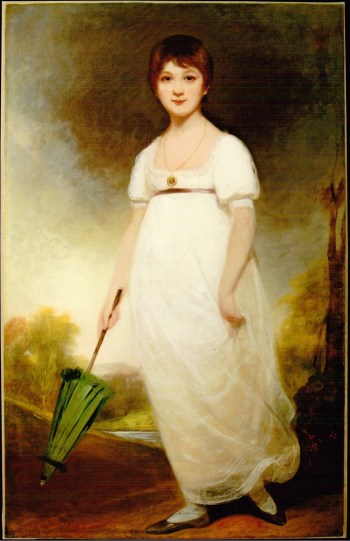
Ozias Humphry, Rice Portrait of Jane Austen, 1788.
Examining the controversial reception of the Rice Portrait of Jane Austen, by Ozias Humphry, this illustrated talk ponders the stakes of legitimacy in general as well as the unusual acrimony this portrait in particular has often inspired. Wednesday, April 4, 2018, 5:30pm, Yale Center for British Art Lecture Hall.
Claudia L. Johnson joined the faculty at Princeton in 1994 and was Chair of the English Department from 2004 to 2012. She specializes in 18th- and early 19th-century literature, with a particular emphasis on the novel. In addition to 18th-century courses, she teaches courses on gothic fiction, sentimentality and melodrama, the history of prose style, film adaptations of novels into film, detective fiction, Samuel Johnson, and, of course, Jane Austen. She has strong research interests in 18th-century music, in voice, in letterpress printing, in Yiddish story, and in the American Songbook of the 1930s and 1940s.
Johnson’s most recent book, Jane Austen’s Cults and Cultures (Chicago, 2012) won the Christian Gauss Award in 2103. Her other books include The Blackwell Companion to Jane Austen, ed. with Clara Tuite (Blackwell, 2005); The Cambridge Companion to Mary Wollstonecraft (Cambridge, 2002); Equivocal Beings: Politics, Gender and Sentimentality in the 1790s (Chicago, 1995), which won an Honorable Mention for the MLA Lowell Prize; and Jane Austen: Women, Politics, and the Novel (Chicago, 1988). In addition, she is keenly interested in textual scholarship and has prepared editions of Jane Austen’s Mansfield Park, Sense and Sensibility, Northanger Abbey, and (with Susan Wolfson) Pride and Prejudice. Her research has been supported by major fellowships such as the NEH and the Guggenheim.
Johnson is working on several book-length projects: an edition of Austen’s The Beautifull Cassandra, with drawings by Leon Steinmetz, forthcoming from Princeton University Press, 2018; 30 Great Myths about Jane Austen, with Clara Tuite, forthcoming from Wiley-Blackwell in 2019; and Raising the Novel, which explores key phases the history of the history of the novel in which critics have attempted to elevate them to keystones of high culture.
Conference | Global Encounters and the Archives
From The Lewis Walpole Library:
Global Encounters and the Archives: Britain’s Empire in the Long Eighteenth Century
The Graduate Club, New Haven, 9–10 February 2018
As part of the Lewis Walpole Library’s celebration of Horace Walpole’s tercentenary and the 100th anniversary of W.S. Lewis’s Yale class of 1918, the library is working with Steve Pincus, Bradford Durfee Professor of History, Yale University, to organize a two-day conference on Friday and Saturday, February 9 and 10, 2018, to consider how current multi-disciplinary methodologies invite creative research in archival and special collections at the Lewis Walpole Library and beyond. Planned thematic sessions include “What is Empire?,” “Conceptualizing Political Economy,” “Slavery,” “Indigenous Peoples,” “Diplomacy,” and “Material Culture.” This conference is organized in association with the exhibition, Global Encounters and the Archives: Britain’s Empire during the Age of Horace Walpole. The conference will be held at The Graduate Club, 155 Elm Street, New Haven Connecticut 06511.
F R I D A Y , 9 F E B R U A R Y 2 0 1 8
9:45 Registration and Coffee
10:15 Opening Remarks
10:30 1 | What is Empire?
• Onur Ulas Ince , School of Social Sciences, Singapore Management University
• Douglas Fordham, Art History, University of Virginia
• James Vaughn, History, University of Texas, Austin
12:00 Lunch
1:00 2 | Conceptualizing Political Economy
• Ashley L. Cohen, English, Georgetown University
• David Stasavage, Silver Professor of Politics, New York University
• Abigail Swingen, Department of History, Texas Tech University
2:30 3 | Indigenous Peoples
• Brendan Kane, History, University of Connecticut
• Gregory E. Dowd, History, University of Michigan
• Maxine Berg, History, University of Warwick
S A T U R D A Y , 1 0 F E B R U A R Y 2 0 1 8
9:45 Coffee
10:15 Welcome
10:30 4 | Slavery
• Marissa Fuentes, History and Women’s and Gender Studies, Rutgers University
• James Oakes, Distinguished Professor, American History, The Graduate Center, CUNY
• Julia Gaffield, History, Georgia State University
12:00 Lunch
1:00 5 | Material Culture
• Robbie Richardson, English, University of Kent
• Catherine A. Molineux, History, Vanderbilt
• Margaret M. Bruchac, Anthropology, University of Pennsylvania
2:30 6 | Alliance and Diplomacy
• Eric Hinderaker, History, University of Utah
• Sarah Rivett, English, Princeton University
• Holly Shaffer, Art History, Brown University
• Stephen Conway, History, University College London
Exhibition | Travesty in the 18th Century: William Hogarth
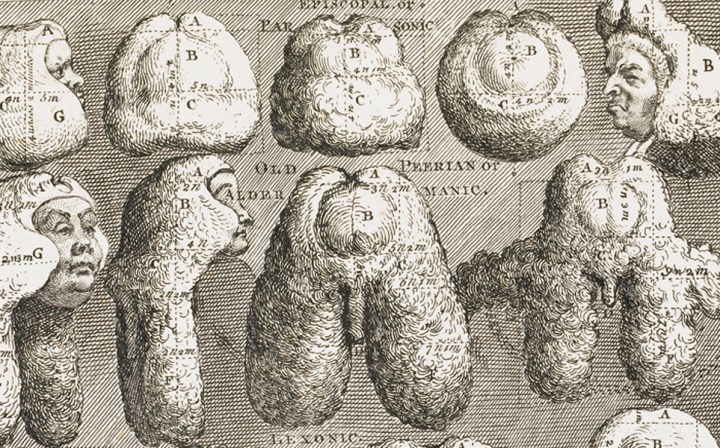
William Hogarth, The Fiver Orders of Periwigs, detail, 1761
(Honolulu Museum of Art, Gift of Andrew Adams Collection)
◊ ◊ ◊ ◊ ◊
Now on view at the Honolulu Museum of Art
Travesty in the 18th Century: William Hogarth’s Modern Moral Subjects
Honolulu Museum of Art, Honolulu, 14 September 2017 — 11 March 2018
The Honolulu Museum of Art’s Works on Paper Gallery comes alive with the work of the hilarious William Hogarth (1697–1764). One of the eighteenth century’s most influential artists, Hogarth is best known for his complex, satirical, and uncannily prescient images, through which he exposed humanity’s foibles by lampooning the conventions, lifestyles, and scandals of contemporary England. Inspired by the popular and plot-driven literary forms of the day—the comic opera, the bourgeois tragedy, and the serialized novel—Hogarth approached his subjects in the spirit (as he put it) of a “dramatic writer,” inventing a new genre called the “modern moral subject,” in which humor and tragedy merged with the purpose of teaching a lesson.
The exhibition focuses on a selection of prints from the museum’s collection, including The Rake’s Progress, a serialized group of eight images that mock the pitfalls of decadence by tracing the fortunes of the fictitious gambler Tom Rakewell; Beer Street and Gin Lane, which warn against the consequences of alcoholism by mordantly blaming gin for the ruin of a working-class neighborhood; and The Five Orders of Periwigs, which chart the elaborate and often absurd semiotics of modish men’s hairstyles.










 Enfilade
leave a comment