Expansion of Gainsborough’s House in Sudbury

Plans by ZMMA for the Gainsborough Museum in Sudbury, Suffolk.
◊ ◊ ◊ ◊ ◊
As reported by the BBC (17 November 2017). . .
The latest plans for an £8.5m centre to commemorate a world-renowned artist have been revealed. Gainsborough’s House wants to redevelop a former labour exchange building at the rear of its existing museum in the centre of Sudbury, Suffolk. The plans include a gallery showing the best of Thomas Gainsborough’s full-length portraits.
Museum director Mark Bills said the project would “give the nation a centre for one of its greatest artists.”
The plans were drawn up following a public consultation earlier this year.
Thomas Gainsborough was born in 1727, the youngest of nine children, and spent much of his childhood sketching in the woods and fields surrounding Sudbury. . .
The full article is available here»
Conference | Fans as Images, Accessories, and Instruments of Gesture
From H-ArtHist:
‘Num’rous Uses, Motions, Charms, and Arts’: Fans as Images, Accessories, and Instruments of Gesture in the 17th and 18th Centuries
Der Faecher als Bild, Accessoire und gestisches Instrument im 17. und 18. Jahrhundert
Kunsthistorisches Institut, Universität Zürich, 29 November — 1 December 2017
Organized by Danijela Bucher, Fabienne Ruppen, and Miriam Volmert
This interdisciplinary conference discusses the cultural role of European folding fans in art, fashion, and material culture in the seventeenth and eighteenth centuries. In eighteenth-century Europe, fans became important fashion accessories across social classes and were almost omnipresent in social interaction. Painted and printed fans presented a wide variety of social knowledge through fast and fleeting pictures, in this way conveying personal statements of those who carried them. Early modern fan depictions were often inspired by or based on Renaissance and contemporary paintings. In the course of the eighteenth century, fan leaves displayed an increasing variety of cultural themes, thereby also functioning as souvenirs as well as conveyors of political and social messages.
The conference aims to take a closer look at the pictorial and intermedial interplay of ornamental patterns, figurative elements, and artistic subject matters against the background of European fan manufacture, artistic networks and international trade. Furthermore, it seeks to closer examine fans as gender-specific instruments of gesture and communication. The conference is funded by Schweizerischer Nationalfonds zur Förderung der wissenschaftlichen Forschung (SNF), Graduate Campus der Universität Zürich, and UZH Alumni. Please direct any questions to miriam.volmert@khist.uzh.ch.
2 9 N O V E M B E R 2 0 1 7
20.00 Welcome and introduction
3 0 N O V E M B E R 2 0 1 7
9.15 Welcome (Bettina Gockel) and introduction (Danijela Bucher and Miriam Volmert)
9.30 I | Fans as Accessories and Instruments of Gesture
Moderation: Danijela Bucher and Miriam Volmert
• Pascale Cugy, ‘La Dame paroist badiner avec son Eventail qu’elle porte au coin de sa bouche’: Les éventails dans la gravure de mode féminine sous Louis XIV
• Allison Goudie, The 18th-Century Mask Fan: More than the Sum of its Parts
• Pierre-Henri Biger, Faux et vrais langages de l’éventail
11.00 Coffee
11.30 II | History Painting on Folding Fans in the late 17th and in the 18th Centuries
Moderation: Fabienne Ruppen
• Christl Kammerl-Baum, Bilder-Sprache auf Fächern – eine ikonographische und ikonologische Bedeutungsanalyse anhand eines Fallbeispiels
• Georgina Letourmy-Bordier, De Coriolan à la rosière de Salency, le héros et l’incarnation de la vertu au XVIIIe siècle
12.30 Lunch
14.00 III | Fans as Media of Memory and Souvenirs in the 18th Century
Moderation: Miriam Volmert
• Mary Kitson, ‘Thanks for the Memory’: Typical Imagery of the Grand Tour Fan Leaf
• Heiner Krellig, Souvenir der Grand Tour: Ein Fächer als Erinnerung an Venedig
• Adelheid Müller, Reputation in Falten: Elisa von der Reckes Autographenfächer, ein Zeugnis selbstvergewissernder Positionierung
15.30 Coffee
16.00 IV | Fans as Political Media in 18th-Century France
Moderation: Danijela Bucher
• Aurore Chéry, La représentation de la famille royale de France sur les éventails du XVIIIe siècle
• Rolf Reichardt, Bild-Kompositionen revolutionärer Faltfächer in Frankreich, 1789–94
17.00 Discussion
1 D E Z E M B E R 2 0 1 7
9.00 Introduction
9.15 V | Artistic Networks, Paths of Reception, and Production Sites
Moderation: Patrizia Munforte
• Kirsty Hassard, Sarah Ashton and Her Contemporaries: Female Fan Makers and Publishers in 18th-Century London
• Geneviève Dutoit, Les éventails décorés d’après les œuvres d’Angelica Kauffmann à la fin du XVIIIème et du début du XIXème siècle
10.15 Coffee
10.45 VI | Fans in the Context of Historical Material and Textile Cultures
Moderation: Katharina Haack
• Suet May Lam, From Ephemeral to Eternal: Unfolding Early Modern ‘Fashion’ for Asia
• Isa Fleischmann-Heck, Textile Dekore auf Fächerblättern des 18. Jahrhunderts – Formen, Erscheinung, Wirkung
11.45 End of Public Conference Program
Afternoon Workshop (Limited to Conference Speakers) at the Collection Centre of the Swiss National Museum, Affoltern am Albis
14.30 Round Table | Fans in Museum Collections
Markus Leuthard, Welcome
• Mathilde Semal, L’éventail du XVIIIe siècle, véritable attribut social ? La richesse des montures de la collection Preciosa (Musée du Cinquantenaire, Bruxelles)
• Annette Kniep/Maike Piecuch, Neulagerung und Konservierung der Fächer im Bernischen Historischen Museum – Konzept und Umsetzung
• Yolaine Voltz, Principes et compromis de la restauration des éventails : étude de cas particuliers
15.30 Guided Tour
Conservation and Restoration of Fans in the Swiss National Museum with Nikkibarla Calonde, Véronique Mathieu, and Isabel Keller
Call for Papers | Women Inventors in Architecture, 1700–2000
From SAH:
Women Inventors in Architecture, 1700–2000
International Archive of Women in Architecture 2018 Symposium
School of Architecture + Design, Virginia Tech, Blacksburg, Virginia, 28–30 March 2018
Proposals due by 15 December 2017
For centuries, women in architecture have been involved in pushing the boundaries of architecture and architectural practice. Whether as registered architects, members and leaders of architectural firms, academics and scholars, or in any of the less conventional capacities, women have helped transform the discipline of architecture and the related design fields shaping the built environment. The 2018 IAWA Symposium invites abstracts that address specific women or gendered natures of architectural invention. We welcome papers that tackle subjects or inventions generated between the years 1700-2000, and that are international or domestic in scope. We seek papers that conceptualize architectural invention in its many guises, including (but not limited to) ideas, technology, form-making, modes of professional practice that present views into and histories of practices of women in architecture. We encourage abstracts that address how women’s practices have been expanded through invention, as well as how architectural practice has been expanded or impacted by inventions by women.
Please email 300-word abstract and a one-page CV to Donna Dunay, Chair, Board of Advisors, International Archive of Women in Architecture Center (ddunay@vt.edu) with the subject heading ‘2018 IAWA Symposium’.
The International Archive of Women in Architecture (IAWA) was established in 1985 as a joint program of the College of Architecture and Urban Studies and the University Libraries at Virginia Tech. The purpose of the Archive is to document the history of women’s contributions to the built environment by collecting, preserving, and providing access to the records of women’s architectural organizations and the professional papers of women architects, landscape architects, designers, architectural historians and critics, and urban planners as well as the records of women’s architectural organizations, from around the world.
New Book | Francis Towne’s Lake District Sketchbook
Timothy Wilcox, Francis Towne’s Lake District Sketchbook: A Facsimile Reconstruction (Birmingham: The Winterbourne Press, 2017), 200 pages, ISBN: 978 099548 5709, £40.
 The watercolours of Francis Towne (1739–1816) are among the most admired in eighteenth-century British art. After his trip to Italy and the Alps, it was his subsequent tour, to the Lake District in 1786, which marked the true climax of his career. He created a series of 40 views in a single sketchbook, which he then dismantled and exhibited separately. The scattered pages are here reassembled and reproduced at their original size for the first time. The sketchbook itself is accompanied by an introduction, along with detailed notes on the individual subjects, which include classic locations such as Windermere, Ambleside and Coniston, along with far less familiar Buttermere and Bassenthwaite. The result is a unique document of British watercolour painting, and a testament both to the artistic discovery of the Lake District and to the great age of Picturesque travel.
Timothy Wilcox is a leading authority on British painting, especially the watercolour and landscape artists of the Romantic era. He is a writer, lecturer and the curator of exhibitions on Constable, John Sell Cotman, and the bicentenary celebration of the Royal Watercolour Society in 2005. His books include Samuel Palmer (2005), Turner and His Contemporaries: The Hickman Bacon Watercolour Collection (2012), and contributions to The Solitude of Mountains: Constable in the Lake District (2006).
Call for Papers | Public Agency in Private Spaces, Female Agency
Public Agency in Private Spaces: Politics, Painting, and Patronage in the Long Eighteenth Century
Christie’s Education Symposium 2018: Celebrating Female Agency in the Arts
New York, Christie’s, 26–27 June 2018
Proposals due by 10 January 2018
Scholars across disciplines have long probed the relationship between politics and art in the public sphere in the long eighteenth century—the tumultuous, seminal historical period that saw the rise of the Enlightenment, modern systems of representative democracy, and, eventually, the Industrial Revolution. Yet, to date, scholarship of this period has largely failed to notice female artists and patrons, despite their omnipresence in public shows and frequent initiation of substantial commissions. Similarly, political history has overlooked non-royal women, despite their strong influence as the wives, mothers, and sisters of politicians.
This interdisciplinary panel explores ways in which elite women wielded power through the active fusion of politics and art. Domestic and other private spaces often provided fertile ground for the cultivation of wide-ranging artistic production. In these spaces, women made decisions that both mirrored and diverged from the (often public) actions of their male contemporaries. They exercised their own, distinct agency to establish relationships with male and female artists and designers, to initiate commissions, and to oversee these projects, most of which were undeniably infused with cultural, social, national, and even international politics.
We seek papers that work to reveal women’s central role as patrons and artists at this key moment in time, when the nature of politics itself was changing—and, with it, the production of art. Contributors might consider a wide range of female patrons and artists, and the historical context of their activities. Topics might include: the ways in which female sitters fashioned political personae through portraiture; the commissioning of original artworks or the production of copies for domestic interiors; gendered dynamics of the art market; or elite women’s growing engagement with methods of print artistry. We see this topic as a transnational story, and encourage approaches that upend prevailing narratives regarding individual works of art.
Organized by Laurel O. Peterson (Yale University) and Paris Spies-Gans (Princeton University)
Proposals for 20-minute papers, consisting of an abstract of 250–300 words and a brief bio of the presenter, should be submitted by January 10, 2018, to laurel.peterson@yale.edu and spies@princeton.edu.
Additional information on the symposium is available here»
The Wallace’s History of Collecting Seminars, 2018
From the 2018 schedule:
History of Collecting Seminars
The Wallace Collection, London, 2018
The seminars, typically held on the last Monday of each month, act as a forum for the presentation and discussion of new research into the history of collecting. Seminars are free and open to curators, academics, historians, archivists, and all those with an interest in the subject. Papers are generally 45–60 minutes long and take place at the Wallace Collection between 5.30 and 7pm (except for December’s presentation as noted below). For inquiries, please contact: collection@wallacecollection.org.
29 January
Tessa Murdoch (Deputy Keeper of Sculpture, Metalwork, Ceramics and Glass, Victoria & Albert Museum) and Matthew Winterbottom (Curator of Sculpture and Decorative Arts, Ashmolean Museum, Oxford) , ‘This Jew of Taste’: Sir Ernest Cassel’s Collection of Silver
26 February
Alden Gordon (Paul E. Raether Distinguished Professor of Fine Arts, Trinity College, Hartford), ‘Heureux ceux qui ont un Coeur de bronze . . . “: The French Financial Crisis in the Late Reign of Louis XV and Its Impact on Royal Manufactures and Royal Patronage
26 March
Barbara Pezzini (PhD candidate, University of Manchester, and Editor-in-chief, Routledge-Taylor & Francis Journal), The Politics of Public Collecting: William Gladstone and the National Gallery
30 April
C. Tico Seifert (Senior Curator, Northern European Art, Scottish National Gallery), Collecting Rembrandt’s Art in Britain Please note that this event will take place in the Regatta Room in Durrants Hotel on George Street, located directly behind the Wallace Collection; the 60 available seats will be allocated on a first come first serve basis.
21 May
Kajal Meghani (Exhibition Assistant Curator, Royal Collection Trust), The Prince of Wales’s Indian Collection: The Circulation of Giften from the 1875–76 Tour of India
25 June
Caroline McCaffrey-Howarth (PhD Candidate and History of Art Tutor, University of Leeds), Sèvres Mania? The History of Collection Sèvres Porcelain in Britain in the Later Nineteenth Century
30 July
Elizabeth Pergam (Lecturer, Sotheby’s Institute of Art, New York), Paris over London: Victorian Curator J. C. Robinson’s Collection at Auction
24 September
Saskia van Altena (Cataloguer of prints, Rijksprentenkabinet, Rijksmuseum, Amsterdam), The Sale of Sir Peter Lely’s Paintings and Prints: A Breaking Point in the History of Collection in Britain?
29 October
Alexandre Tissot Demidoff (Independent scholar), The Last Great Demidoff Sale of Paintings
26 November
Catrin Jones (Curator of Decorative Arts, Holburne Museum, Bath), Piercing Together a Collection: Sir William Holburne’s Display Mounts
10 December (please note the 5:00pm start time)
Robert Wenley (Deputy Director, Head of Collections, Barber Institute of Fine Arts, University of Birmingham), ‘Rare and Most Magnificent’: The Picture Collection of Stephen Alers Hankey (1809–1878)
◊ ◊ ◊ ◊ ◊
Note (added 26 April 2018) — The venue change for the April 30 seminar was added.
Research Lunch | Helen Whiting on Duff House and the House of Duff
From the Paul Mellon Centre:
Helen Whiting, ‘Your Beautiful and Hopeful Family’: Dynasty, Duff House, and the House of Duff
Paul Mellon Centre for Studies in British Art, London, 24 November 2017

William Mosman, William Duff, Lord Braco (1697–1763) and His Son George, detail, signed and dated: ‘Gul Mosman Pingebat, 1741’.
This paper will consider the link between a set of family portraits and the house within which they were intended to hang. I will discuss the idea of the ‘family group portrait’ not simply existing in one frame but depicted across several canvases nevertheless conceived as a coherent whole. The focus will be a group of five portraits executed by William Mosman (c1700–1771) in 1741 for William Duff of Braco. The portraits were commissioned to hang in Duff House, the grand family seat designed for Braco by the architect William Adam and built between 1735 when its foundation stone was laid and 1741 when work came to halt due to a dispute between architect and patron. The connection between the portraits, those of other family members and worthies, and the place in which they were designed to hang, I will be argue, constituted a conscious, indeed ostentatious, act of dynastic establishment which was orchestrated by Braco and further developed by his son, James. The tools used in establishing ‘the house of Duff’ as a noble entity was, for both men, a partnership of paint and stone. The paper will offer a close reading of the featured portrait group along with consideration of archival material which highlights the changes in display patterns over time, family relations and dynastic concerns.
Friday, 24 November 2017, 12:30–2:00pm.
Nel Whiting is undertaking an AHRC funded inter-disciplinary PhD at the University of Dundee. She is using Scottish family group portraits from the second half of the eighteenth century along with archival sources to investigate gendered constructions of national and familial identity. She was awarded the Leah Leneman Essay Prize 2010 by Women’s History Scotland for new writing in Scottish gender history and is author of “Gender and National Identity in David Allan’s ‘Small, Domestic and Conversation’ Paintings,” in the Journal of Scottish Historical Studies 34 (May 2014), and “Depictions of Childhood in David Allan’s Family Group Portraiture,” in Childhood and Youth in Pre-Industrial Scotland, ed. Elizabeth Ewan and Janay Nugent (Boydell and Brewer, 2015).
As our events are free, not everyone who asks for tickets comes to our events. To make sure we have a full house we allocate more tickets than there are seats. We do our best to get the numbers right, but unfortunately we occasionally have to disappoint people. Admission is on a first come, first served basis, so please arrive in good time for the start of the event.
Rijksmuseum Fellowship Programme, 2018–19

Cuypers Research Library at the Rijksmuseum (Photo by Davidh820, Wikimedia Commons, September 2017). From the Rijksmuseum: “The Cuypers Library is the largest and oldest art historical library in the Netherlands. Following an intensive restoration campaign, it has now been fully returned to its former glory. In the newly reopened museum, the visiting public will finally be able to admire the nineteenth-century library’s splendid reading room.”
◊ ◊ ◊ ◊ ◊
Rijksmuseum Fellowship Programme, 2018–19
Applications due by 14 January 2018
We welcome international research proposals which open new perspectives on the Rijksmuseum’s collection, its history, and activities. The purpose of the programme is to enable applicants to base part of their research at the Rijksmuseum and thus to strengthen the bonds between the museum and universities. The focus of research should relate to the Rijksmuseum’s collection and activities and may encompass any of its varied holdings, including paintings, sculpture, decorative arts, prints, drawings, photography, and historical artefacts. The programme offers students and academic scholars access to the museum’s collections, library, conservation laboratories, and curatorial expertise. Furthermore, the museum facilitates opportunities for fellows to engage in workshops and excursions to encourage the exchange of knowledge—both amongst themselves and the broader museum audience.
Please review the eligibility, funding and application requirements by visiting the Rijksmuseum website. For the 2018–2019 academic year, candidates can apply for
• Andrew W. Mellon Fellowship for art historical research – Apply here
• Johan Huizinga Fellowship for historical research – Apply here
• Migelien Gerritzen Fellowship for conservation research – Apply here
• Anton C.R. Dreesmann Fellowship for art historical research – Apply here
The closing date for all applications is 14 January 2018, at 6:00pm (Amsterdam time/CET). No applications will be accepted after this deadline. All applications must be submitted online and in English. Applications or related materials delivered via email, postal mail, or in person will not be accepted. Selection will be made by an international committee in February 2018. The committee consists of eminent scholars in the relevant fields of study from European universities and institutions and members of the curatorial and conservation staff of the Rijksmuseum. Applicants will be notified by 1 March 2018. All fellowships will start in September 2018.
Further information and application forms are available here. For questions concerning the application procedure, contact Marije Spek, Coordinator of the Fellowship Programme, m.spek@rijksmuseum.nl.
New Book | Writing Britain’s Ruins
Michael Carter, Peter Lindfield, and Dale Townshend, eds., Writing Britain’s Ruins (London: British Library Publishing, 2017), 240 pages, ISBN: 978 07123 09783, £30.
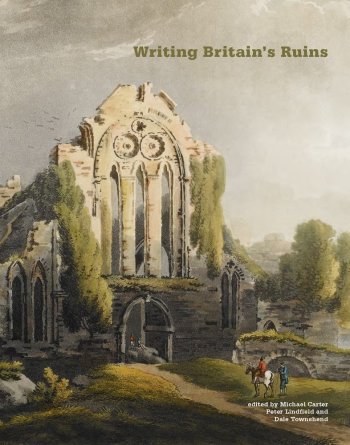 Over the course of the long eighteenth century, Britain’s ruined medieval or ‘Gothic’ abbeys, castles, and towers became the objects of intense cultural interest. Turning their attention away from Classical to local and national sites of architectural ruin, antiquaries and topographers began to scrutinise and sketch, record, and describe the material remains of the British past, an expression of interest in domestic antiquity that was shared by many contemporary painters, poets, writers, politicians, and tourists. This book traces the ways in which a selection of English, Scottish, Welsh, and Irish ruins served as the objects of continuous cultural reflection between 1700 and 1850, drawing together essays on the antiquarian, poetic, visual, oral, fictional, dramatic, political, legal, and touristic responses that they engendered. Writing Britain’s Ruins provides an accessible and engaging interdisciplinary account of the ways in which Britain’s ruins inspired writers, artists, and thinkers during a period of extraordinary cultural richness.
Michael Carter is Senior Properties Historian at English Heritage. Peter N. Lindfield is a Leverhulme Early Career Fellow based at the University of Stirling. Dale Townshend is Professor of Gothic Literature in the Centre for Gothic Studies at Manchester Metropolitan University.
Call for Papers | Kings & Queens Conference #7, Ruling Sexualities
From the call for papers, via the Royal Studies Network:
Kings & Queens Conference 7, Ruling Sexualities
Hampton Court Palace and the University of Winchester, 9–12 July 2018
Proposals due by 31 December 2017
The Kings & Queens conference series will be hosted by Historic Royal Palaces and the University of Winchester for its seventh edition on 9–12 July 2018. The first day will be held at Hampton Court Palace with the remaining days at the University of Winchester. We aim to connect scholars across the world whose research focuses on topics related to royal history, diplomacy, art history, political history, biographical studies or any other issues included in the scope of royal studies. This edition of the Kings and Queens conference will have a particular focus on gender and sexuality as central themes. We are especially interested in studies relating to Lesbian, Gay, Bisexual, Trans, and Queer (LGBTQ) identities and the role of sexuality and gender to royal histories.
We look to gain an understanding of the perceptions, practices, and legacies of gender and sexual identities relating to monarchs, royals and their courts, realising that these may have been very different in historic periods to our contemporary understandings. All topics related to these issues will be welcomed, from diverse chronological periods and parts of the world. We hope that interpretation of these topics for the public in heritage contexts will form a particular focus of the day at Hampton Court Palace. We also welcome papers which are unrelated to our central theme and subtopics but contribute more widely to the field of royal studies.
The following list includes potential topics for papers, panels or posters, which are suggested as inspiration. Proposers should not feel limited by these topics and we welcome a broad range of ideas and interpretations.
Perceptions and Performance
• The self-representation of monarchs, royals, and courtiers
• Royal and court fashion, including cross-dressing
• The construction and definition of royal sexual and gender identities, including LGBTQ identities, heterosexuality, and straight identities
• Asexuality and virgin monarchs
Practices
• The lives and roles of companions and influencers, including concubines, mistresses, and same-sex favourites
• The biographies of LGBTQ monarchs, royals, and courtiers
• Propaganda around sexuality and gender identity, whether positive or negative
• Concealed, illicit, or hidden royal relationships
• Close same-sex friendships
Legacies
• The posthumous perception and representation of royal sexuality and gender identity, and how this defines legacy and dynasty
• The changing historiography and perception of royal sexuality, gender identity, and LGBTQ histories
• The interpretation of royal gender and sexuality in museum and heritage contexts
The conference will include both paper sessions and a poster session at Hampton Court Palace to highlight the developing research of students and early career scholars. Please note that postgraduate students and early career scholars are welcome to give either posters at the Hampton Court session or papers in the general sessions at Winchester, depending on their preference.
Individual proposals should indicate whether it is for a poster or paper and include a title, institutional affiliation, an abstract of 250–300 words, and a one-page CV or biography. For panels, the proposal should include a maximum of four different papers accompanied by the same information required for individual proposals and a short rationale of approximately 100 words for the panel. If the panel has an institutional or societal sponsor, please include this with the panel proposal. All proposals should be submitted by 31 December 2017, to kq7winchester@gmail.com, and any queries about the conference can also be directed to this address.










 Enfilade
leave a comment