Exhibition | Jane Austen by the Sea
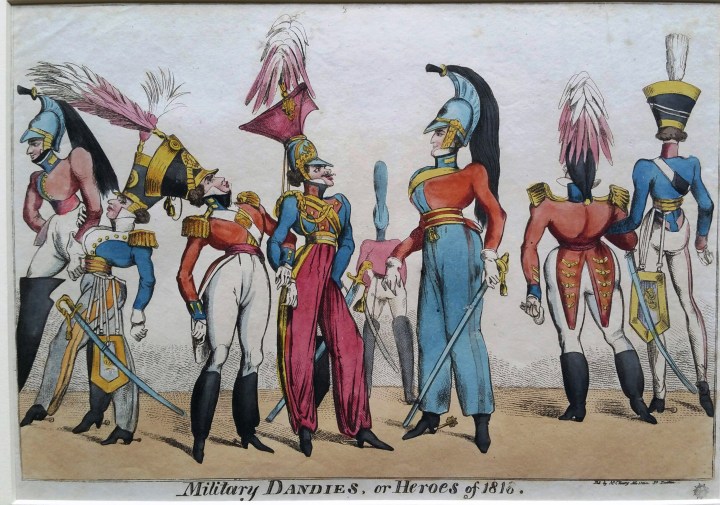 William Heath, Military Dandies or Heroes of 1818, published by M. Cleary.
◊ ◊ ◊ ◊ ◊
Opening this summer in Brighton:
Jane Austen by the Sea
Royal Pavilion, Brighton, 17 June 2017 — 8 January 2018
Curated by Alexandra Loske
A new display at the Royal Pavilion will explore Jane Austen’s relationship with coastal towns and life in Brighton during her time, to mark the bicentenary of her death. The display will reassess Austen’s relationship with the town in the light of a long-term misunderstanding, arising from a hand-written letter of 8 January 1799. Curator Dr Alexandra Loske said, “For many years, Austen has been quoted as having written: ‘I assure you that I dread the idea of going to Brighton as much as you can do..’, but her sentence actually referred to Bookham, a village in Surrey, rather than Brighton. We now know that Austen may not have felt as negatively about the town as has been thought.”
Jane Austen by the Sea will look at the seaside context of Austen’s plots and paint a picture of the leading resort of Brighton in the early 1800s, when it was a fashionable ‘watering place’ featured in novels like Pride and Prejudice. George IV, who created the Royal Pavilion and spent long periods living there when he was Prince Regent, was a high-profile fan of Austen’s—and although she seemed not to approve of his lifestyle she was encouraged to dedicate Emma to him in 1815.
Highlights include
• The King’s personal, specially-bound copy of Emma—on display at the Royal Pavilion for the first time (generously lent by Her Majesty The Queen from the Royal Collection)
• A mourning brooch containing a lock of Jane Austen’s hair
• The manuscript of Jane Austen’s unfinished novel, Sanditon, set in a seaside town in Sussex
• Examples of Regency costume and accessories, including a wedding dress that has never been on show before and a dress in the style of the ‘Brighton Walking Dress’ featured in a London fashion magazine in 1817
• Letters from Jane Austen to the Prince Regent’s librarian, James Stanier Clarke
• One of Jane Austen’s music books
• Prints, paintings, and caricatures of the resorts and fashions popular with seaside visitors
• Rare images of Brighton as it looked in Jane Austen’s lifetime
Jane Austen by the Sea will form part of our Regency Season in 2017, which will also include the exhibition Constable and Brighton and the display Visions of the Royal Pavilion Estate (both at Brighton Museum & Art Gallery).
Exhibition | Visions of the Royal Pavilion Estate
Press release for the exhibition:
Visions of the Royal Pavilion Estate
Brighton Museum & Art Gallery, 14 March — 3 September 2017
Curated by Alexandra Loske

Colin Jones, Digital model of the Royal Pavilion Estate as it is believed to have looked in 1832, with lost servants’ dormitory in the foreground.
A new display at Brighton Museum & Art Gallery will showcase rarely-seen views of the Royal Pavilion Estate dating back to the 1760s, as well as cutting-edge digital reconstructions of how it might have looked. According to curator Dr Alexandra Loske,“This display will survey the Royal Pavilion and its estate as it was and might have been, featuring rarely-seen views alongside discarded designs and recent digital re-creations. It will give visitors an opportunity to see unfamiliar, unusual and lost images, sourced almost exclusively from the city’s own archives and collections.”
Illustrations from the earliest printed books about the estate will sit beside unrealised designs, early municipal maps, and 20th-century plans and images. Highlights include
• Images of the Estate before the Royal Pavilion was built, and early designs commissioned by the Prince Regent by Henry Holland (1786, Marine Pavilion).
• Unrealised designs by Humphry Repton (published 1808), who George, as Prince of Wales, appointed to apply his romantic style to the Marine Pavilion and its grounds. When his beautiful, hand-produced ‘Red Book’ of designs failed to win him a commission, he had the book published for commercial sale, with fewer than 250 copies thought to have been printed. Delicate ‘overlays’ pasted onto the images provided before-and-after perspectives, with Repton’s ambitious proposals including a glass corridor around the entire East Lawn, an aviary, a pheasantry, a water feature and a clearer view of the sea.
• Lost designs and aquatints giving a lively impression of the Royal Pavilion Estate in the 18th and 19th century, sourced from the city’s collection and early popular guide books.
• Depictions of fashionable Georgian society in and around the Estate, in rare watercolours, prints and drawings from the city’s collection.
• 1830s drawings by Joseph Henry Good, who was commissioned by William IV to survey the Royal Pavilion Estate and drew up around 200 architectural plans. Detailed plans of now-lost servants’ quarters and the area around the South Gate will give a new perspective on everyday life for staff on the estate.
• Detailed digital 3D images of lost areas and structures of the Royal Pavilion Estate by RPM volunteer Colin Jones, largely based on the Good plans (will also be available online).
• Photography of the Estate’s use in the 20th century, including images from World War II and never-before-seen inter-war designs for the Royal Pavilion Garden.
• Real and imagined views of the Estate in popular culture, including illustrations and cover designs for books like Malcolm Saville’s children’s adventure story The Long Passage (1954) and Georgette Heyer’s popular novel Regency Buck (1935).
Alexandra Loske has sourced almost all the display’s inclusions from the city of Brighton & Hove’s own archives and collections. She said, “We’re keen to really make use of the city’s incredible collections and keep making new items available for the public to see.”
The display will accompany RPM’s project to digitise Humphry Repton’s Designs for the Pavilion at Brighton (1808) and John Nash’s The Royal Pavilion at Brighton (1826) and to publish the books online. It also comes as RPM works with Brighton Dome & Brighton Festival and Brighton & Hove City Council to realise a future vision for the Royal Pavilion Estate, starting with a major refurbishment of Brighton Dome’s Corn Exchange and Studio Theatre. Visions of the Royal Pavilion Estate will form part of Royal Pavilion & Museums’ Regency Summer season in 2017, which will also include Jane Austen by the Sea at the Royal Pavilion and Constable and Brighton at Brighton Museum.
Exhibition | The Woodner Collections: Master Drawings
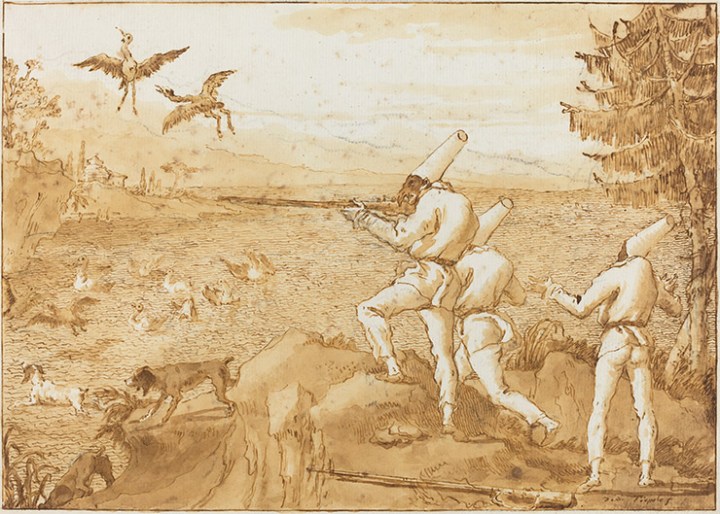
Giovanni Domenico Tiepolo, Punchinellos Hunting Waterfowl, ca. 1800, pen and ink with wash over charcoal (Washington, D.C.: National Gallery of Art, Gift of Dian Woodner, 2006).
◊ ◊ ◊ ◊ ◊
From the press release (10 January 2017) for the exhibition:
The Woodner Collections: Master Drawings from Seven Centuries
National Gallery of Art, Washington, D.C., 12 March — 16 July 2017
Curated by Margaret Morgan Grasselli
Ian Woodner (1903–1990) assembled an extraordinary collection of over 1,000 old master and modern drawings, making him one of the 20th century’s most important collectors. More than 150 works from his collection now reside at the National Gallery of Art in Washington. While Ian Woodner gave some works himself in the 1980s, the majority have been donated by his daughters, Dian and Andrea. His daughters have also made other gifts and have pledged works from their personal collections. The Woodner Collections: Master Drawings from Seven Centuries brings together for the first time the best of Ian Woodner’s collection with some of the works given and promised by Dian and Andrea Woodner. More than 100 major works of art will be on view in the West Building of the National Gallery of Art from March 12 through July 16, 2017.
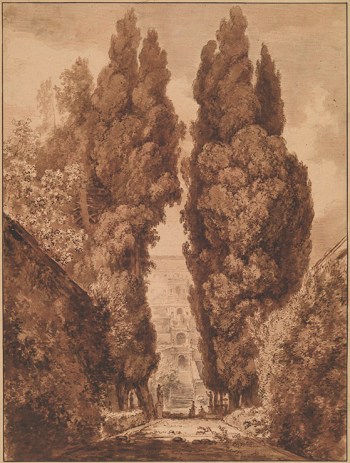
Jean-Honoré Fragonard, Avenue of Cypresses at Villa d’Este, 1760/65, pen and ink with wash over chalk counterproof (Washington, D.C.: National Gallery of Art, Gift of Dian Woodner, 2013).
The Woodner Collections includes some 100 drawings dating from the 14th to the 20th century executed by outstanding draftsmen such as Leonardo da Vinci, Albrecht Dürer, Raphael, Jean-Auguste-Dominique Ingres, Edgar Degas, and Pablo Picasso, among many others. Two highlights in the exhibition are Ian Woodner’s greatest acquisitions, known as his ‘crown jewels’: Giorgio Vasari’s Libro de’ Disegni (sheets probably 1480–1504 and after 1524) and A Satyr (1544/45) by Benvenuto Cellini. Vasari’s Libro de’ Disegni consists of ten drawings by the Renaissance masters Botticelli, Filippino Lippi, and Raffaellino del Garbo arranged harmoniously on both sides of the sheet. It is widely regarded as one of the most beautiful and impressive of the few pages surviving intact. Cellini’s monumental nude is a finished study of a bronze sculpture designed to stand at the entrance to the French royal palace at Fontainebleau.
“Included in the exhibition are many impressive works by well-known artists, all acquired by the Woodner family with an intrepid spirit and exquisite taste. A visit to the exhibition will offer a remarkable journey through many facets of European draftsmanship, revealing the broadly diverse ways the artists responded to their individual worlds and expressed their unique creativity,” said Margaret Morgan Grasselli, curator and head of the department of old master drawings, National Gallery of Art.
The earliest works in the exhibition are two rare sheets from the 14th century: a page from a model book by an unknown Austrian artist, and the other, attributed to the Paduan painter Altichiero da Zevio, shows a band of knights in armor storming a medieval castle. Nearly half of the exhibition is devoted to works from the 15th and 16th centuries, including drawings by Raphael, Leonardo, and Albrecht Dürer. The most important figure in German Renaissance art, Dürer is represented by an outstanding group of five drawings: four figurative works and one vividly colored book illumination, A Pastoral Landscape with Shepherds Playing a Viola and Panpipes (1496/97). Leonardo’s petite Grotesque Head of an Old Woman (1489/90) is both touching and comical. The study of Eight Apostles (ca. 1514), a fragment of a preparatory drawing for a tapestry cartoon, shows the classical rhythms and expressive qualities that are typical of the ‘divine’ Raphael. By contrast, a rare study by Pieter Bruegel the Elder humorously depicts a musician tipping precariously on a three-legged stool. It combines the artist’s lively pen strokes with a keen eye for pose and expression and captures both the boisterous spirit and the clumsy charm of the peasants that populate so many of Bruegel’s compositions.

Henry Fuseli, Satan Defying the Powers of Heaven, late 1790s, graphite, black chalk, and gray wash (Washington, D.C.: National Gallery of Art, purchased as the Gift of Andrea Woodner 2015.10.1.b).
Among the small group of works by the 17th-century artists, Rembrandt’s evocative View of Houtewael near the Sint Anthoniespoort (ca. 1650) demonstrates his remarkable ability to express space, light, and atmosphere with an economy of means. The 18th century is particularly rich in examples by many French and Venetian artists, including François Boucher, Giovanni Battista Tiepolo, Giovanni Battista Piranesi, and Jean-Honoré Fragonard. A more emotional tone is struck in a drawing of Satan Defying the Powers of Heaven by the Swiss-Anglo artist Henry Fuseli and in two enigmatic compositions by the great Spaniard, Francisco de Goya.
The 19th-century drawings include three elegant works by Jean-Auguste-Dominique Ingres and the eerie, powerful image Cactus Man (1881) by French symbolist Odilon Redon, one of Woodner’s favorite artists. Several works from the 20th century close the exhibition: three masterly drawings by the young Pablo Picasso, Two Fashionable Women (1900), a blue-period Head of a Woman (c. 1903), and a cubist Standing Nude (summer 1910); an imposing study of a female nude by Georges Braque (1927); and three drawings by Louise Bourgeois, including M is for Mother (1998), a drawing of a large, red letter M that conveys both maternal comfort and maternal control.
Symposium | Bouchardon and His Contemporaries
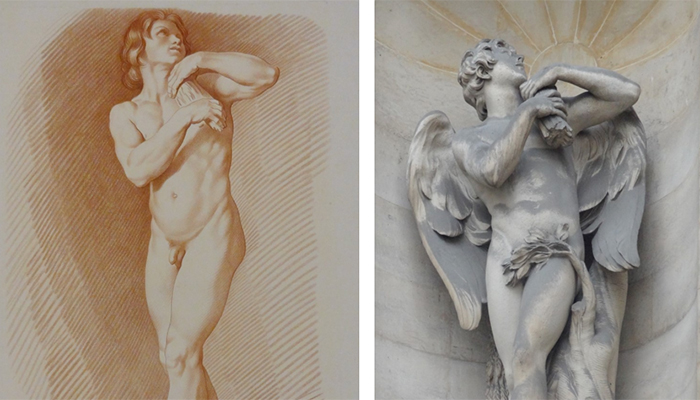
Left: Gilles Demarteau after Edme Bouchardon, Model Posing for ‘The Genius of Summer’, ca. 1740s–50s (Los Angeles: Getty Research Institute, 2015.PR.58). Right: Edme Bouchardon, The Genius of Summer, 1745 (Paris: Grenelle Fountain).
◊ ◊ ◊ ◊ ◊
In February, I noted the symposium; here’s the schedule:
Bouchardon and His Contemporaries
The Getty Center, Los Angeles, 2 April 2017
Organized in conjunction with the exhibition Bouchardon: Royal Artist of the Enlightenment (J. Paul Getty Museum, 10 January — 2 April 2017), this symposium explores the relationships that Bouchardon (1698–1762), an extraordinarily talented sculptor and draftsman, had with his contemporaries (artists, patrons, and connoisseurs). It also investigates the diffusion and reception of his oeuvre. Bouchardon’s career as a sculptor appears exceptional in several respects when compared to that of other artists active during the eighteenth century in France, England, or Italy. Atypically, most of his work (whether drawn, printed, modeled, cast, or carved) related to three-dimensional objects in a wide range of scales, from small gems to monumental sculpture, such as the Grenelle Fountain.
The human body was a constant subject of interest to Bouchardon. He explored its inner structure by conceiving and publishing a treatise on artistic anatomy, and he devised a very personal and elaborate aesthetic of the body that subtly blended his passion for antiquity and his commitment to the truthful depiction of nature. His experiments in the graphic arts and his interest in human expression also led him to make grotesque depictions of the human figure in the genre of caricature. Bouchardon’s masterpieces, especially those staged in public spaces, such as the Grenelle Fountain and the Equestrian Monument to Louis XV, had a critical impact on the artist’s contemporaries. In this regard, the reception and portrayal of these artworks through drawings and prints made by Gabriel de Saint-Aubin during the two decades that followed Bouchardon’s death are particularly enlightening.
P R O G R A M M E
10:00 Welcome by Thomas Gaehtgens (The Getty Research Institute)
10:05 Introductions: Anne-Lise Desmas (The J. Paul Getty Museum) and Édouard Kopp (Harvard Art Museums)
10:10 Morning Session
Moderator: Guilhem Scherf (Musée du Louvre)
• Malcolm Baker (University of California, Riverside), Some Ways of Carving out a Sculptural Career: Bouchardon, Roubiliac, Pigalle
• Anne-Lise Desmas, Bouchardon and Early Modern Sculptors in Rome
• Kristel Smentek (Massachusetts Institute of Technology), Bouchardon, P.-J. Mariette, and the ‘Pure Taste’ of the Antique
• Katie Scott (The Courtauld Institute of Art), Modelling Water: Bouchardon and the Fountain at the rue de Grenelle
12:30 Lunch
2:30 Afternoon Session
Moderator: Juliette Trey (Musée du Louvre)
• Monique Kornell (University of California, Los Angeles), Bouchardon’s Unusual Anatomy Book for Artists: L’anatomie nécessaire pour l’usage du dessein [1741] in Context
• Ewa Lajer-Burcharth (Harvard University), Bouchardon’s Body
• Édouard Kopp, Bouchardon, Caricature, and the Grotesque
• Perrin Stein (The Metropolitan Museum of Art), Activating Public Space: Bouchardon through the Eyes of Saint-Aubin
Call for Papers | Baroque Parish Churches and Their Decoration
From H-ArtHist:
Die Barocken Pfarrkirchen und ihre Dekoration
Österreichische Akademie der Wissenschaften, Vienna, 23–25 October 2017
Proposals due by 30 April 2017
Im Rahmen der Forschungsgruppe „Baroque Ceilling Painting in Central Europe (BCPCE)“ veranstaltet das Institut für Kunst- und Musikhistorische Forschungen der ÖAW gemeinsam mit dem Institute of Art History of the Czech Academy of Sciences, dem Königgrätzer Landkreis und dem Verein Omnium von 23. bis 25. Oktober 2017 in Wien ein Symposium zu den malerischen Ausstattungen von Pfarrkirchen katholischer und lutherischer Konfession. Die Veranstaltung greift damit ein in der kunsthistorischen Forschung sehr stiefmütterlich behandeltes Thema auf, standen doch bisher vor allem die zum Teil weitgespannten Dekorationen der Kloster- und Wallfahrtskirchen im Zentrum des Interesses.
Die Analyse der wandfesten Malereiausstattungen—gleichsam als Kerngeschäft der BCPCE—macht in diesem Fall nur im Rahmen einer breiten historischen Kontextualisierung Sinn. Allgemeinhistorische und kirchenhistorische Rahmenbedingungen sind als Voraussetzung ebenso zu diskutieren wie theologische und liturgische Aspekte. Der Zeitraum ist durch die Konfessionalisierung im 16. Jahrhundert einerseits und die josephinischen Reformen im späten 18. Jahrhundert vorgegeben; der geographische Raum mit dem zum Großteil habsburgisch regierten Mitteleuropa sowie mit Mitteldeutschland—also mit wesentlichen Teilen des Alten Reichs.
I Rechtliche Situation und institutionelle Organisation
Grundlegend ist hier die Frage nach der kirchenrechtlichen Entwicklung der Pfarrkirche und ihrer Funktion im Laufe der Zeit. Die katholische Kirche macht einen Unterschied zwischen den (den Stiften inkorporierten) Klosterpfarren und den bischöflichen Pfarren. Gab es zwischen Bistum und Stift Auffassungsunterschiede und Konflikte (etwa in Bezug auf Kirchensteuer, Pfründe, Stolgebühren)? Anders liegen die Verhältnisse bei protestantischen Pfarrkirchen: Es gibt lediglich Kirchen mit Gemeinde und solche ohne Gemeinde. Eine kirchenrechtliche Unterscheidung existiert zwischen den Bauten nicht. Der weltliche Landesherr ist gleichzeitig oberster Bischof, von ihm getroffene Regelungen sind nur für seine Landeskirche verbindlich. Welche Rolle spielten die Landesfürsten in der Organisation des Pfarrkirchenwesens? Welche Auswirkungen hat die Organisation des religiösen Lebens in den Pfarren (Bruderschaften und die von ihnen vorgenommenen Stiftungen) auf Architektur und Ausstattung der Pfarrkirchen bei Katholiken, Lutheranern und Reformierten?
II Räume der Herrschaft
Der funktionelle Radius und damit die angesprochene Öffentlichkeit von Pfarrkirchen sind im katholischen Bereich wesentlich weiter gefasst als bei Schlosskapellen, Bischofs- oder Ordenskirchen. Dies führt zur prinzipiellen Annahme, dass die Pfarrkirchen in vielleicht höherem Ausmaß als die anderen Kirchentypen Orte von Überlagerung vielfältiger Ansprüche auf Herrschaft gewesen sein könnten. Auf dieser Annahme basierend ergibt sich eine Reihe von Fragen: Existieren Herrschaftsinteressen und entsprechende Strategien von Seiten der Orden, der bischöflichen Kanzleien bzw. der protestantischen Patronatsherren in Bezug auf die Pfarren und der mit ihnen verbundenen
Rechte? Welche Rolle spielt katholischerseits die Pfarrkirche in der fein abgestimmten Hierarchie der Kirchenbauten von der Bischofskirche bis zur kleinen Filialkirche. Welche Auswirkungen haben Interessen der kommunalen Verwaltung, aber auch der Landesherren für Architektur und Ausstattung, im Besonderen der Deckenmalerei? Werden von der Obrigkeit andere Interessen kommuniziert als in den großen Wallfahrts- und Klosterkirchen? Im lutherischen Bereich stellt sich die Frage nach der Einflussnahme auf die Kirche und ihre Ausstattung durch die Gemeinde, den Patronatsherrn oder auch den Landesherrn.
III Räume der Theologie
Gerade mit dem Medium der Decken- und Wandmalerei sollten im Rahmen der Tagung an Hand ausgewählter Fallstudien zu katholischen und lutherischen Pfarrkirchen die theologischen, liturgischen und territorialen Konfessionsspezifika und ihre künstlerischen Reflexe beleuchtet werden. Etwa: Hat die unterschiedliche Auffassung von der Heiligkeit des katholischen bzw. protestantischen Sakralraums Auswirkung auf die formale Beschaffenheit der Pfarrkirchen? Ergeben sich daraus Tendenzen einer Normierung oder Typisierung von Architektur und Ausstattung? Man weiß, dass das lutherische Bekenntnis zur Realpräsenz Christi am Altar ihren (katholisch anmutenden) Niederschlag im Altarbau der lutherischen Pfarrkirche gefunden hat. Ist diese göttliche Realpräsenz auch in der Deckenmalerei reflektiert? Oder bleibt letztere didaktisch der Auslegung des Wortes verpflichtet? Öffnet sich in der lutherischen Pfarrkirche die Decke in den Himmel gleich der katholischen, oder findet man dort lediglich ein Bild des Göttlichen? Gibt es in den katholischen Pfarrkirchen spezifische, an der Deckenmalerei manifeste Programme oder entsprechen sie weitestgehend den Themenbereichen in den Ordens- und Bischofskirchen? Ist die jeweilige Ordensspiritualität in den Ausstattungen der Pfarrkirchen fassbar?
IV Räume der Vergangenheit und ihre Neuausstattung
Ein spezifisches Problem der barocken Ausstattung von Pfarrkirchen mit Malerei und Skulptur besteht im signifikanten Umstand, dass es im 17. und 18. Jahrhundert keineswegs flächendeckend zu Neubauten von Pfarrkirchen gekommen ist. Aus verschiedenen Motiven heraus wurden ältere, vorwiegend spätmittelalterliche Bauten weiter als Pfarrkirchen benutzt und barock ausgestaltet. Dabei konnte sich die Neuausstattung nur auf Bereiche konzentrieren, die nicht in direkten Konflikt mit der mittelalterlichen Substanz gerieten: Die Wand- und Deckenmalerei spielt deshalb im Verhältnis zu Hoch- und Seitenaltären eine nur geringe Rolle. Diese Reduktion erforderte zugleich eine Konzentration auf bestimmte Themen. Die entsprechenden Forschungsfragen und Fallbeispiele sollten sich hier auf die Konflikte und Synergien richten, die sich aus der Koexistenz von Mittelalter und Barock ergaben. Dieser Koexistenz verschiedener Ausstattungen setzt der josephinische Kirchenbau mit seiner strikten Normierung von außen und innen ein deutliches Ende.
Abstracts für Vorträge, nicht länger als eine halbe Seite, gemeinsam mit einem kurzen Curriculum, bis spätestens 30. April 2017 zu senden an Herbert Karner, Herbert.Karner@oeaw.ac.at, und Martin Mádl, madl@udu.cas.cz.
Exhibition | Canaletto and the Art of Venice
Press release (14 December 2016) from the Royal Collection Trust:
Canaletto and the Art of Venice
The Queen’s Gallery, Buckingham Palace, London, 19 May — 12 November 2017
The Queen’s Gallery, Palace of Holyroodhouse, Edinburgh, 11 May — 21 October 2018
National Gallery of Ireland, Dublin, 5 December 2018 — 24 March 2019
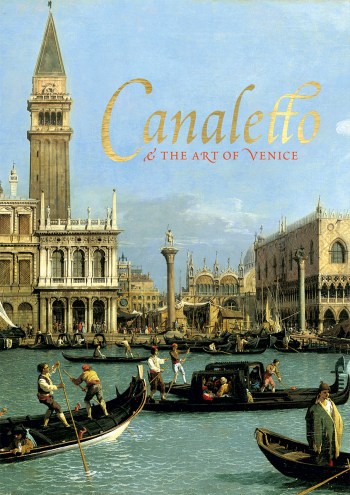 In 1762 the young monarch George III purchased virtually the entire collection of Joseph Smith, the greatest patron of art in Venice at the time. Thanks to this single acquisition, the Royal Collection contains one of the finest groups of 18th-century Venetian art in the world, including the largest collection of works by Giovanni Antonio Canal, better known as Canaletto.
Through over 200 paintings, drawings, and prints from the Royal Collection’s exceptional holdings, Canaletto and the Art of Venice presents the work of Venice’s most famous view-painter alongside that of his contemporaries, including Sebastiano and Marco Ricci, Rosalba Carriera, Francesco Zuccarelli, Giovanni Battista Piazzetta, and Pietro Longhi and explores how they captured the essence and allure of Venice for their 18th-century audience, as they still do today.
Joseph Smith (c.1674−1770) was an English merchant and later British Consul in Venice, a post dealing with Britain’s maritime, commercial, and trading interests. He had moved to Italy in around 1700 and over several decades built up an outstanding art collection, acting as both patron and dealer to many contemporary Venetian artists. Smith was Canaletto’s principal agent, selling his paintings to the wealthy Grand Tourists who were drawn to Venice’s cultural attractions. His palazzo on the Grand Canal became a meeting place for collectors, patrons, scholars, and tourists, where visitors could admire his vast collection and commission their own versions of Canaletto’s views to take home.
One of the most important of Smith’s commissions from Canaletto was the series of 12 paintings of the Grand Canal, which together create a near complete journey down the waterway. Canaletto’s sharp-eyed precision makes these views seem powerfully real; yet he rearranged and altered elements of each composition to create ideal impressions of the city. Two larger paintings are of festivals, including the ‘Sposalizio del Mar’, or ‘Wedding of the Sea’, which took place on Ascension Day and attracted crowds of British visitors. The Grand Canal was a subject frequently captured by Canaletto, including in a series of six drawings, among them Venice: The central stretch of the Grand Canal, c.1734. Intended as works of art in their own right, rather than as preparatory studies for paintings, the drawings are carefully constructed and rich in tone and detail.
Alongside the grand public entertainments, Venice boasted a thriving opera and theatre scene, especially during carnival season. The need to create stage sets within a very short period of time provided plentiful employment for Venetian artists. Both Marco Ricci and Canaletto worked for the theatre, where they learned how to manipulate perspective to heighten drama. The exhibition includes several of Ricci’s designs for the Venetian stage, such as A room with a balcony supported by Atlantes, c.1726. Marco Ricci also produced caricatures of opera singers, such as the drawing of the internationally famed castrato Farinelli, which were circulated among Joseph Smith and his fellow Venetian collectors and opera aficionados.
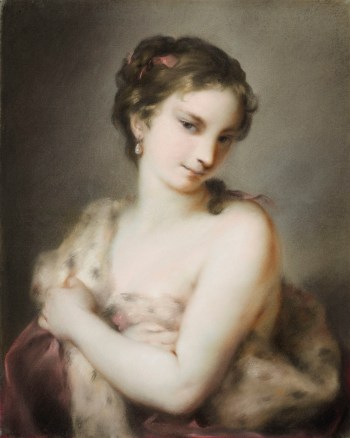
Rosalba Giovanna Carriera, A Personification of Winter, ca. 1726, pastel on paper (London: Royal Collection Trust, 400647).
On display together for the first time are personifications of the Four Seasons by Rosalba Carriera, whose pastels were highly prized by European collectors. They were intended to be hung in private domestic spaces, such as dressing rooms, bedrooms, or small antechambers. Carriera was one of the first artists to develop a commercial relationship with Joseph Smith, and her sensual pastel of Winter, c.1726, an allegorical female figure wrapped in furs, was one of the most admired works in Smith’s collection.
Canaletto, Marco Ricci, and Francesco Zuccarelli all contributed to the development of the genre known as the capriccio—scenes combining real and imaginary architecture, often set in an invented landscape, to create poetically evocative works. Ruins of ancient Rome in both Ricci’s Caprice View with Roman Ruins, c.1729, and Zuccarelli’s pastoral Landscape with Classical Ruins, Cattle and Figures, c.1741–42, convey a sense of the irrevocable loss of a great age.
There was a major revival in printmaking in Venice in the 18th century, with many publishers recruiting established artists, such as Giovanni Battista Piazzetta and Antonio Visentini, to provide designs for their publications. Joseph Smith was an enthusiastic print collector and one of the major supporters of contemporary printmaking in Venice. Smith financed and directed the Pasquali press, which contributed to the circulation of Enlightenment ideas, such as those of Isaac Newton, and imported banned foreign texts into Venice, including the work of Voltaire. Visentini was the chief draughtsman for the press, providing many hundreds of pen and ink drawings of initials and tailpieces, several of which will be on display in the exhibition.
The catalogue is distributed by The University of Chicago Press:
Lucy Whitaker and Rosie Razzall, Canaletto and the Art of Venice (London: Royal Collection Trust, 2017), 320 pages, ISBN: 978 190974 1409, $60.
Note (added 22 November 2018) — The posting was updated to include dates for Edinburgh and Dublin.
Exhibition | La Serenissima: Celebrating Venice
From the press release for the exhibition:
Sérénissime! Venise en fête, de Tiepolo à Guardi
La Serenissima: Celebrating Venice, from Tiepelo to Guardi
Musée Cognacq-Jay, Paris, 25 February — 25 June 2017
Curated by Rose-Marie Herda-Mousseaux and Benjamin Couilleaux
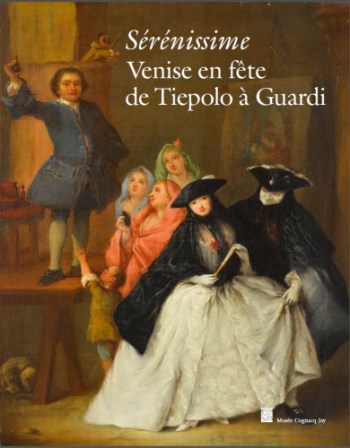 In the eighteenth century, the political and economic stability of the Serenissima Repubblica di Venezia gave rise to the last golden age of Venice, which would end with the Napoleonic conquest of 1797. This last chapter of a millenary history was marked by an unprecedented deployment of public and private events. Festivities, celebrations, regattas, and other spectacles set the tempo of city life and attracted the curious from all over Europe. Much more than simple amusements, these festivities were part of a political and religious pageant designed to promote Venice. Immortalized by some of the great names in painting—Tiepolo, Guardi, Longhi—they created a lasting impression and made known the charms of the City of the Doges throughout Europe. Over forty paintings, engravings, and drawings from prestigious French and European collections are presented to the public, bringing to life once again, for the duration of the exhibition, the opulence of the Most Serene Republic of Venice in the Age of Enlightenment.
The exhibition layout focuses on four themes related to Venetian celebrations:
Festivities Large and Small
Dance and music were highly esteemed by Venetian society, among both the aristocracy and the people.
From City to Stage
In the eighteenth century, the commedia dell’arte achieved unprecedented popularity, in particular with playwright Carlo Goldoni. Opera also benefited from majestic settings, the most famous of which is still La Fenice.
Power as Spectacle
Both secular and sacred institutions in the Most Serene Republic encouraged the crowds to attend major festivities that crystallized the image of Venice as a powerful and sumptuous city. Receptions for foreign princes, notably French, also provided an opportunity to organize extraordinary celebrations on Piazza San Marco or the Grand Canal.
At the Carnival
What would Venice be without its carnival? Dating from the Middle Ages, this colorful masked festival brought together an eighteenth-century cosmopolitan crowd that loved the open-air fairground attractions as much as it did the more discreet amusements of the Ridotto, the ancestor of the casino.
Rose-Marie Herda-Mousseaux and Benjamin Couilleaux, Sérénissime: Venise en fête, de Tiepolo à Guardi (Paris: Editions Paris Musées, 2017), 176 pages, ISBN: 978 27596 03428, 30€.
Symposium | Neo-Classical Gilt Bronze

Detail of a Table by Etienne Levasseur, ca.1785–87; gilt-bronze mounts by an unidentified maker
(London: The Wallace Collection, F319).
◊ ◊ ◊ ◊ ◊
From The Furniture History Society:
‘In the True Spirit of Corinth and Athens’: Neo-Classical Gilt Bronze
The 41st Annual Symposium of the Furniture History Society
The Wallace Collection, London, 6 May 2017
To coincide with the international interest in gilt bronze in 2016/17 and the three exhibitions devoted to Pierre Gouthière and his contemporaries in New York (The Frick Collection), Paris (Musée des Arts Décoratifs), and London (The Wallace Collection), this year’s Furniture History Society symposium is devoted to European gilt bronze of the neoclassical period (1770–1830), a time when the passion for the Antique world affected all aspects of artistic production. Speakers from the US, France, Britain, Russia, and Spain will present the latest research on a variety of topics, including aspects of design, production, and patronage. Gilt bronze is a subject that often presents more questions than answers, and recent scholarship has unearthed fascinating insights into this often overlooked art form and the symposium promises to be an important and illuminating day for anyone interested in bronze d’ameublement. It is being hosted at The Wallace Collection, which will stay open for FHS members after the symposium to allow them to see the exhibition Gilded Interiors: French Masterpieces of Gilt Bronze. The day will be chaired by Philip Hewat-Jaboor.
Tickets must be purchased in advance, and early booking is recommended. Fee: £50 for FHS members/£30 for members under 30/ All non-members: £65 with a reduction of £5 if joining the FHS, Ticket price includes morning coffee and afternoon tea. A light lunch will be available for FHS members in the Meeting Room at The Wallace Collection at a cost of £20, to include a glass of wine. Tickets for lunch must be purchased at least 7 days in advance from the Events Secretary or online. The Wallace Collection Restaurant will be open for bookings, and there are plenty of local cafés and restaurants. Tickets can be booked on-line via the FHS website (members only) or via the Events Secretary, e-mail: events@furniturehistorysociety.org.
• Joseph Godla (Chief Conservator, The Frick Collection), ‘Twenty Fingers on Each Hand’: A Study of Pierre Gouthière’s Techniques
• Charlotte Vignon (Curator of Decorative Arts, The Frick Collection), Pierre Gouthière: Bringing a Virtuoso Chaser and Gilder back into the Light
• Anne Forray-Carlier (Curator, 17th & 18th century Decorative Arts, Musée des Arts Décoratifs), In the Context of Neo-Classical Gilt Bronze: The Relationship between Gouthière and Dugourc
• Helen Jacobsen (Senior Curator, Wallace Collection), Gilded Interiors: The Antique as a Design Source for French Gilt Bronze
• Diana Davis (Independent Decorative Arts Researcher), Matt and Burnished Gold: The Regency Taste for Gilt Bronze
• Wolfram Koeppe (Curator, European Sculpture & Decorative Arts, Metropolitan Museum), An Enduring Mystery: Bronze Manufacturing in Vienna, 1775–1825
• Olga Bazhenova (Curator, Metal, Sculpture & Stone, Pavlovsk-Palace Museum, St Petersburg), The Secrets of Russian Bronze
• María Jesús Herrero Sanz (Curator of Sculpture, Patrimonio Nacional, Madrid), Between Neo-Classicism and Antiquity: French Bronzes and Palace Furnishings at the 18th-Century Spanish Court
Exhibition | Gilded Interiors: French Masterpieces of Gilt Bronze

Jean-Baptiste Lepaute, Mantel clock, detail, 1781
(London: The Wallace Collection)
◊ ◊ ◊ ◊ ◊
From the press release for the exhibition:
Gilded Interiors: French Masterpieces of Gilt Bronze
The Wallace Collection, London, 4 May — 30 July 2017
Curated by Helen Jacobsen
Often designed by leading architects and modeled by important sculptors, gilt bronze was used to create beautiful yet functional objects such as clocks, candelabras, and firedogs and to decorate and embellish highly refined furniture and porcelain. This exhibition showcases luxurious artworks commissioned and owned by the wealthiest patrons and collectors, including leading figures of pre-revolutionary France like Marie-Antoinette, the duc d’Aumont, and the comte d’Artois as well international patrons such as the Prince of Wales (later George IV). Artists such as Pierre Gouthière, François Rémond, and Claude Pition, who ran the finest chasing and gilding workshops, created beautiful works, equal in expense and craftsmanship to some of the greatest paintings and sculpture of the period.
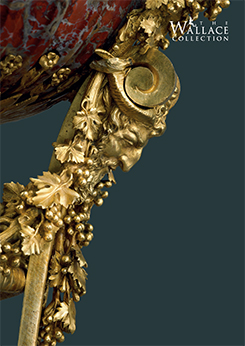 Largely drawn from The Wallace Collection, home to one of the world’s most important collections of French eighteenth-century gilt bronze, these exceptional objects include the exquisite perfume burner by Gouthière once owned by Marie-Antoinette and a pair of candlesticks made for the French Queen to celebrate the birth of her son. The Wallace Collection works will be shown alongside loans from other world-class collections including drawings from the Bibliothèque Municipale in Besançon.
The exhibition will feature drawings by Pierre-Adrien Pâris, one of the foremost architects and interior designers of the period. His highly-detailed works, never before seen in the UK, illustrate how buildings from ancient Rome were used as a fertile source of design for gilt-bronze masterpieces and reveal how the antique world provided artists with contemporary ideas for architecture and decorative art. Architects and designers who travelled to Rome took inspiration from the classical ruins with which they were surrounded and their drawings of architecture and Antique monuments provided the basis for some of the greatest gilt-bronze works ever created.
Gilded Interiors: French Masterpieces of Gilt Bronze will be an opportunity for visitors to engage more fully with these magnificent works, which will be given centre stage in the special exhibition galleries. Well-lit and with the works fully visible ‘in the round’, the exhibition will enable the viewer to experience these works of art in a different way, allowing the exquisite beauty and technical accomplishments of these pieces to be properly admired and enjoyed.
◊ ◊ ◊ ◊ ◊
From I. B. Tauris:
Helen Jacobsen, Gilded Interiors: Parisian Luxury and the Influence of Rome, 1770–1790 (London: Philip Wilson, 2017), 112 pages, ISBN: 978 178130 0589, £20 / $30.
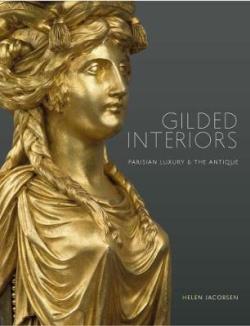 The Wallace Collection has an internationally-renowned collection of French eighteenth-century art but perhaps lesser known today is their stunning collection of gilt-bronze objects. These bronzes d’ameublement—from clocks and mounted Sevres porcelain to wall lights and candelabra—epitomise the levels of luxury achieved in Parisian interiors. Highly expensive and expertly wrought, they illustrate the heights of skilled craftsmanship achieved by French bronze workers in the eighteenth century as well as showcasing the wealth and connoisseurship of their owners. Lavishly illustrated with new photography, this publication will be a book of ‘highlights’ to include the very best of what the Wallace Collection has to offer in this field.
Helen Jacobsen is senior curator and curator of French eighteenth-century decorative arts at the Wallace Collection.
Research Seminar | Sigrid de Jong on British and French Architecture
From the Paul Mellon Centre:
Sigrid de Jong, Dialogues across the Channel: British and French
Architects on Architectural Experience, 1750–1815
Paul Mellon Centre, London, 22 March 2017

Thomas Sandby, Receipt for a Set of Six London Views (Design for a Bridge), ca. 1758, pen and black ink and gray wash, incised for transfer on medium, moderately textured, cream laid paper mounted on thick, moderately textured, cream laid paper (Yale Center for British Art, B1977.10.5).
The notion that buildings are foremost objects to be experienced and that the intended experience of buildings should guide their design became a key concept in the period 1750–1815. At that time, Paris and London, the main centres of cultural debates, went through major urban and architectural developments. In my research project, entitled “Experience and Design: The Emergence of Architectural Experience in Paris and London, 1750–1815,” I argue that architectural experience emerged there as a crucial new element. The project examines how the relationship between experience and design evolved: how eighteenth-century architects described their observations on buildings in their writings; which theoretical concepts they used to translate these into design theories for their lectures at the academies of architecture; and how they used them in their designs of buildings. This research seminar focuses on some of the dialogues of British and French architects across the Channel in the context of public architectural debates and on some key projects in eighteenth-century London and Paris that are exemplary for the interactions between experience and design. Wednesday, 22 March 2017, from 6:00 to 8:00pm. Registration information is available here.
Sigrid de Jong is an architectural historian at Leiden University, the Netherlands. Since 2016 she conducts a research project on “Experience and Design: The Emergence of Architectural Experience in Paris and London, 1750–1815,” funded by NWO (Netherlands Organisation for Scientific Research). Her previous postdoctoral research was on primitivism and architectural theory in the NWO-VIDI project “The Quest for the Legitimacy of Architecture 1750–1850,” with Maarten Delbeke. She obtained her PhD in art and architectural history at Leiden University in 2010. Her book Rediscovering Architecture: Paestum in Eighteenth-Century Architectural Experience and Theory (based on her PhD thesis) was published by Yale University Press in 2014. Together with Caroline van Eck she is the editor of the Companion to Eighteenth-Century Architecture (series editor Harry Mallgrave, Wiley-Blackwell, to be published in 2017).










 Enfilade
leave a comment