Exhibition | Pleasures Houses in the Paris Countryside
Now on view at the Museum of the Royal Estate of Marly:
Maisons de Plaisance des Environs de Paris de Louis XIV à Napoléon III
Musée du Domaine royal de Marly, Marly-le-Roi, 11 April — 31 August 2025
Curated by Anaïs Bornet
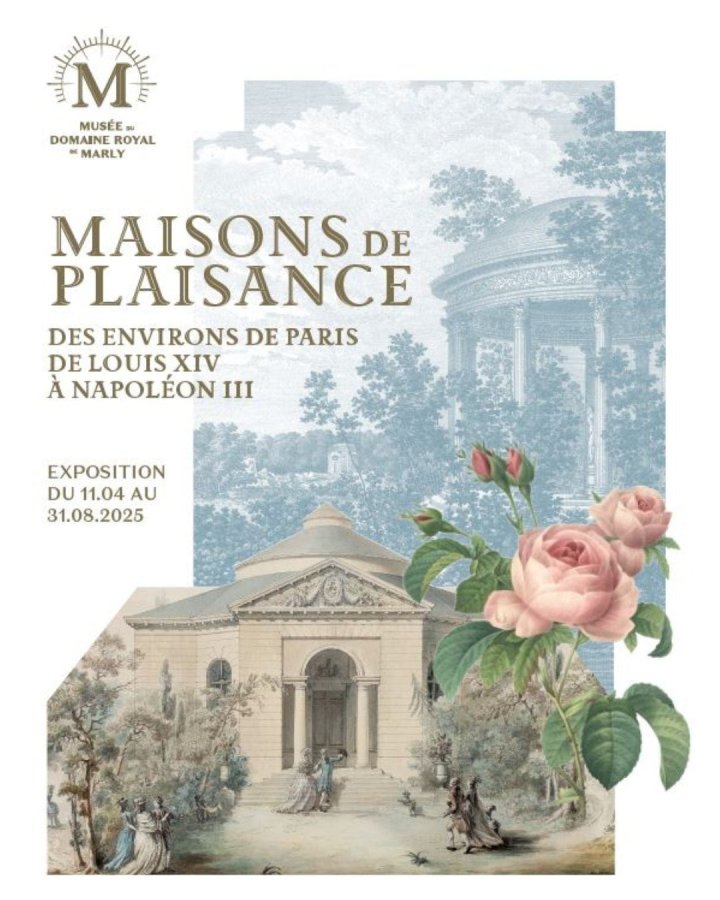 Dès la Renaissance, en Ile-de-France, une élite fortunée quitte la ville à la belle saison et s’installe dans de somptueuses résidences « aux champs » pour s’y détendre et s’y divertir. La maison de plaisance est un lieu de représentation autant que de détente. Elle incarne la richesse et le goût de son propriétaire. Estampes, peintures et objets décoratifs des XVIIe, XVIIIe et XIXe siècles témoignent de cette histoire qui a contribué à façonner le paysage francilien. Ces œuvres illustrent un art de vivre et les transformations sociales de la fin de l’Ancien Régime et du XIXe siècle : divertissements en vogue, désir d’intimité et de confort, place des femmes et développement de la bourgeoisie, lien avec la nature… Environ soixante-dix œuvres empruntées à des collections publiques et privées prennent place au sein du parcours permanent du musée du Domaine royal de Marly pour dialoguer avec ses collections.
Also, see the recent publication:
Anaïs Bornet and Francesco Guidoboni, eds., Maisons de plaisance des environs de Paris (Rome: Edizioni Artemide, 2023), 232 pages, ISBN: 978-8875754402, €30.
New Book | Maisons de plaisance des environs de Paris
Co-editor Anaïs Bornet has curated an exhibition on the same topic, which recently opened at the Musée du Domaine royal de Marly. From Edizioni Artemide:
Anaïs Bornet and Francesco Guidoboni, eds., Maisons de plaisance des environs de Paris (Rome: Edizioni Artemide, 2023), 232 pages, ISBN: 978-8875754402, €30.
Texts by Janine Barrier, Andrea Baserga, David Beaurain, Hervé Bennezon, Karine Berthier, Anaïs Bornet, Françoise Brissard, Roselyne Bussière, Ekaterina Bulgakova, Bernard Chevallier, Jérémie David, François de Vergnette, François Gilles, Francesco Guidoboni, Laetitia Jacquey-Achir, Desmond-Bryan Kraege, Louis-Joseph Lamborot, Marianne Mercier, Alexandra Michaud, Lucie Nottin, Claire Ollagnier, Camilla Pietrabissa, Jean Potel, Daniel Rabreau, Gabriel Wick.
 Autrefois situées « aux champs », les demeures de plaisance franciliennes—châteaux, maisons, pavillons aux dimensions variées—permettaient à une élite fortunée de quitter Paris lors de la belle saison, et de se détendre dans un environnement champêtre loin du tumulte de la ville. Avec l’annexion à la capitale de nombreuses anciennes résidences de villégiature, et le développement continu de la métropole parisienne menant au Grand Paris d’aujourd’hui, s’ouvrent de nouveaux questionnements sur les liens existants entre la ville et ce patrimoine autrefois éloigné.
Cet ouvrage collectif s’intéresse particulièrement aux maisons de plaisance bâties entre la moitié du XVIIe siècle et la fin du XIXe siècle, au sein des limites actuelles de l’Ile-de-France. Souvent méconnus et peu valorisés, les vestiges de la villégiature francilienne (non royale) de cette période se trouvent au cœur de l’actualité; ces bâtiments, pour certains encore préservés, se trouvent aujourd’hui face à diverses problématiques de conservation, d’adaptation aux nouveaux besoins, d’accueil du public, etc., mais sont également souvent menacés par les transformations urbaines qui répondent aux évolutions de la société du XXIe siècle.
Dans l’espoir de permettre aux franciliens de se réapproprier leur patrimoine, les textes réunis dans le présent volume s’attachent à offrir aux lecteurs un aperçu du phénomène de la villégiature en Ile-de-France, en retranscrivant l’histoire d’anciennes maisons de plaisance, certaines disparues, d’autres réhabilitées ou encore à l’avenir incertain, entre art de vivre, décors raffinés, jardins sophistiqués, réceptions et promenades dans des sites naturels aux vues panoramiques spectaculaires…
The table of contents can be seen here»
Exhibition | Biedermeier: The Rise of an Era
Now on view at the Leopold Museum, with the full press release available at Art Daily . . .
Biedermeier: The Rise of an Era / Eine Epoche im Aufbruch
Leopold Museum, Vienna, 10 April — 27 July 2025
Curated by Johann Kräftner with Lili-Vienne Debus
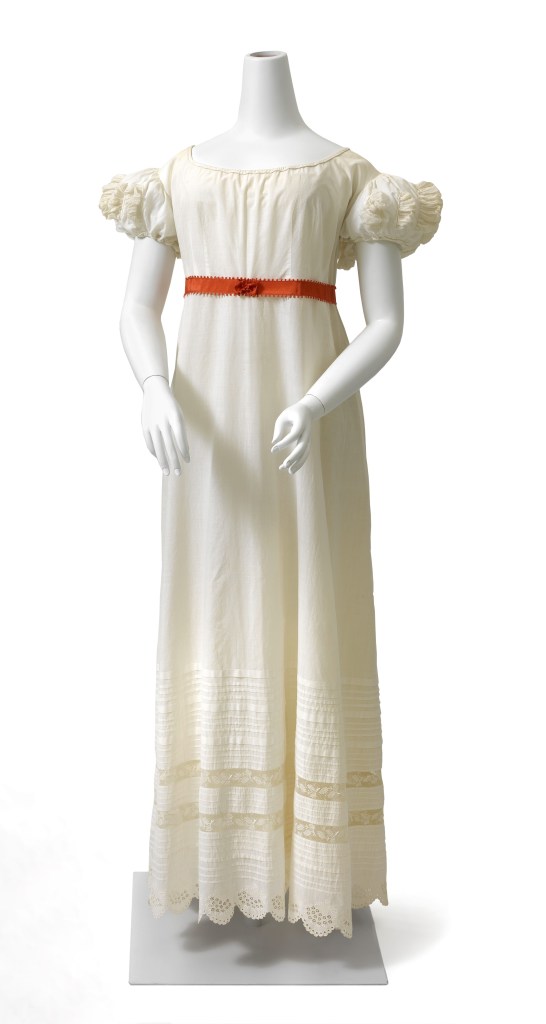
Day Dress, ca. 1816 (Wien Museum; photo by Birgit and Peter Kainz).
The fascinating era of the Biedermeier, which lasted from around the time of the Congress of Vienna in 1814/15 to the revolutions of 1848, delineates a period in Europe that was shaped by political upheaval and social revolts, which profoundly changed society. The congress resulted in the restitution of absolutism and princely rule, heralding a long phase of political restoration founded on a suppression of democratic aspirations. The resigned population turned away from politics and revolutionary ideals for fear of reprisals, seeking refuge in the private sphere. Themes of longing for security and harmony in everyday life entered the pictorial worlds of the Biedermeier.
Aside from all the political friction, the Biedermeier was also an era of great innovation and esthetical changes. The most important driving force was the industrial progress, which led to the construction of the first railway lines and spectacular suspension bridges, like the one connecting Buda and Pest. These technological revolutions resulted in decisive changes in the development of art. Many of these innovations did not emanate from Vienna as the center of the Habsburg Monarchy, but rather from the splendid cities of the crown lands, such as Budapest, Prague, Ljubljana, Trieste, Venice, and Milan.
The art of the monarchy was shaped by international exchange. Thus, the exhibition showcases not only the Viennese masters, including Ferdinand Georg Waldmüller and Friedrich von Amerling, but also Miklós Barabás and József Borsos from Budapest, Antonín Machek and František Tkadlík from Prague, as well as the artists active in Lombardy-Venetia Francesco Hayez and Jožef Tominc (Giuseppe Tominz).

Secretary, Bohemia, ca. 1820 (Prague: The Museum of Decorative Arts; photo by Gabriel Urbánek and Ondřej Kocourek).
Despite the severe poverty of the time, which affected large segments of the population, the simultaneous economic upturn yielded a bourgeoisie whose members wanted to be depicted in confident portraits. Alongside portraits celebrating realistic likenesses of the depicted and the documentation of their social status, the pictorial worlds were dominated by themes from everyday life: family portraits, genre paintings, and renderings of the artists’ own surroundings. Despite the Biedermeier’s typical restrictions to the microcosm of the everyday and one’s immediate surroundings, artists of the period also looked further afield to far-flung countries and cities in order to satisfy people’s curiosity and interest in foreign cultures. Featuring around 190 works from Austrian and international collections, ranging from paintings and graphic works to furnishings, glassware and dresses, the exhibition presents a varied picture of this era.
Curator: Johann Kräftner
Curatorial Assistance and Project Coordination: Lili-Vienne Debus
Johann Kräftner and Hans-Peter Wipplinger, eds., Biedermeier: Eine Epoche im Aufbruch / The Rise of an Era (Cologne: Walther König, 2025), 328 pages, ISBN: 978-3753308159, €40.
The catalogue, in German and English, includes essays by Lili-Vienne Debus, Sabine Grabner, Johann Kräftner, Stefan Kutzenberger, Michaela Lindinger, Fernando Mazzocca, Juliane Mikoletzky, Adrienn Prágai and Radim Vondráček, as well as a prologue by Hans-Peter Wipplinger.
◊ ◊ ◊ ◊ ◊
Note (added 23 April 2025) — This posting originally appeared April 22; it was moved back to April 21st for improved continuity with other posts.
Call for Papers | 18th-C. Painting between Italy and the Hapsburg Empire
From ArtHist.net:
Settecento Malerei: Cultural Transfer between Italy and the Habsburg Territories
Department of Art History of the University of Vienna, 23–24 October 2025
Organized by Eleonora Gaudieri and Erika Meneghini
Proposals due by 30 May 2025
This two-day workshop aims to explore 18th-century Italian painting as the focus of transfer phenomena between the Italian peninsula and the territories of the then Habsburg Empire, with Vienna at its centre. The high quality and renowned tradition of Italian painting, fostered by a dense network of international connections, enabled numerous artists of Italian origin or Italians by adoption to pursue successful careers at the Habsburg imperial court in Vienna. This phenomenon must be understood within the context of broader diplomatic and artistic networks that connected Vienna with key centres on the Italian peninsula such as Venice, Bologna, Rome, and Naples.
The beginning of the Settecento was characterised by a considerable expansion of the transalpine art market, driven by a strong interest in collecting Italian artworks. This phenomenon attracted numerous Italian artists, including many painters, to Vienna and to the allied courts of the German prince-electors, such as the Schönborn and Wittelsbach Houses. At the same time, a number of Austrian painters were encouraged to further their training in Italy, where they were profoundly influenced by the local visual language.
The workshop will address two main currents. First, it will investigate the meanings and functions of Italian painting within the socio-political and cultural context of the Habsburg imperial court in Vienna and its allied courts. Second, it seeks to explore the various dynamics that fostered the transfer of Italian painting and Italian artistic knowledge to Vienna and the territories of the then Habsburg Empire. We welcome innovative proposals that address the following topics:
• The reception of Italian painting in Vienna and allied territories, and the role of workshops and art academies in this process
• Italian painting as a medium of Habsburg representation
• The role of regional schools of Italian painting in the context of Viennese and Central European art collections
• Grand Tour and Kavalierstour
• The reconstruction of networks of diplomatic, artistic, and patronage relations
Contributions addressing other topics relevant to the workshop’s main focus are also welcome.
Please send your proposal—in English, German, or Italian—including the title of your presentation, an abstract (approx. 300 words), and a short CV to settecentomalerei@gmail.com by 30 May 2025. Speakers will have 20 minutes for their presentations. Applicants will be informed about the acceptance of their proposals by 30 June 2025. The conference languages are English, German, and Italian. The conditions and procedures for reimbursement of travel and accommodation costs will be communicated following confirmation of participation.
If you have any questions, please contact the organisers:
Dr. Eleonora Gaudieri, eleonora.gaudieri@univie.ac.at
Project assistant (APART-GSK funding programme)
Department of Art History, University of Vienna
Erika Meneghini, erika.meneghini@univie.ac.at
PhD Candidate
Department of Art History, University of Vienna
Conference | Textiles in Early Modern Venice
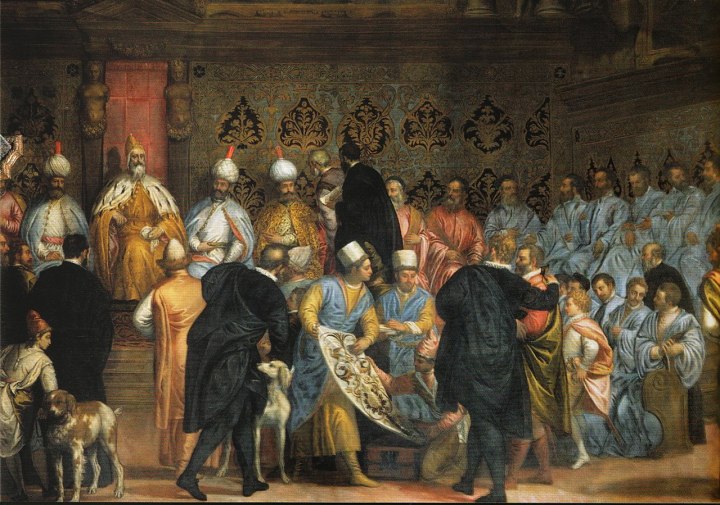
Carlo Caliari, Embassy of Shah ‘Abbas I to Venice, 1595
(Venice: Doge’s Palace)
◊ ◊ ◊ ◊ ◊
From ArtHist.net:
Trade, Production, and Consumption of Textiles and Dress in Early Modern Venice
Centro Tedesco di Studi Veneziani, Venice, 28–29 May 2025
Organized by Jola Pellumbi, Sara van Dijk, and Torsten Korte
Registration due by 25 May 2025
Venice in the early modern period flourished as a centre of textile production and trade, shaping and fostering global networks of connections that directly impacted dress in Europe and elsewhere. Due to Venice’s impenetrable location, its proximity to the centre of Europe, and a long-standing tradition of merchants and seafarers, Venice had positioned itself as a principal gateway between Europe and the East. Whether it was through the importation of luxury goods such as textiles and carpets, exports of beauty products and perfumes, or exchanges of ambassadorial gifts, Venice aided in the dissemination and infiltration of ideas, styles, and designs between Europe and the East. Furthermore, due to the flourishing art production and the thriving printing press in 16th-century Venice, textile patterns and dress styles were able to spread throughout Europe and the rest of Venice’s trading posts around the world influencing fashions, designs, methods of production, and patterns of consumption. Apart from the unaffected patrician government attire, infiltrations of new styles were particularly noticeable in Venice itself, throughout Carnival festivities, dogal and ambassadorial processions, operas and theatres, gambling dens, and in everyday life where both spaces and bodies were adorned.
This conference aims to generate a discussion about the role of Venice as a centre of a global network of connections as seen through its trade, production, and consumption of textiles and dress as well as carpets, haberdashery, beauty products, perfumes, dyes, feathers, jewellery, and design. Registration (€15 + €2 administrative costs) can be booked here until 25 May.
Organised by Jola Pellumbi and Sara van Dijk (Dressing the Early Modern Network) and Torsten Korte (University of Bern), in collaboration with the Centro Tedesco di Studi Veneziani and the University of Bern, and generously supported by the Fritz Thyssen Foundation.
w e d n e s d a y , 2 8 m a y
18.00 Evening Lecture
The Mysterious Blue in Dürer’s Feast of the Rosary (1506): On the Problem of Interpreting Textile Colours in the Painting — Philipp Zitzlsperger (University of Innsbruck)
19.00 Ricevimento at the Centro Tedesco di Studi Veneziani
t h u r s d a y , 2 9 m a y
9.30 Registration and coffee
10.00 Welcome
10.10 Session 1 | Luxury and Trade
Chair: Luca Molà
• From Venice to Lyon and Vice Versa: The Road to a New Trade in Fashionable Silk Fabrics, 17th to 18th Century — Moïra Dato (University of Bern)
• Francesco Zen: Luxury Trade and Technological Innovation between Venice and Constantinople in the Early 16th Century — Elisa Puppi (Università Ca’ Foscari Venezia)
• Venetian Trade of Italian Textiles in Hungary until the End of the 16th Century — Maxim Mordovin (Eötvös Loránd University, Budapest)
• Beyond Luxury: The Circulation of Silk Waste in Early Modern Venice (1500–1650) — Sofia Gullino (Università degli Studi di Padova)
12.00 Lunch break
14.00 Session 2 | Global Connections
Chair: Catherine Kovesi
• Circulating Civilisation: Venetian Glass Beads as Agents of Global (Ex)Change — Sandrine Welte (Università Ca’ Foscari Venezia)
• ‘Sempre Magnifico’: Catherine de’ Medici through the Eyes of Venetian Ambassadors — Emily Averiss (Warburg Institute, University of London)
• Under the Radar or over the Top? Clothing of Jerusalem Pilgrims in the Late 15th Century — Alicia Wolff (University of Heidelberg)
15.30 Coffee and tea break
16.00 Session 3 | The Politics of Dress
Chair: Jola Pellumbi
• Sartorial Rhetoric: Dress and Anglo-Venetian Relations in the Early 16th Century — Grace Waye-Harris (University of Adelaide)
• The Collective Wig: Political Power and Periwigs in 18th-Century Venice — Liz Horodowich (New Mexico State University)
17.00 Closing remarks
17.15 Farewell and aperitivo
◊ ◊ ◊ ◊ ◊
Note (added 23 April 2025) — This posting originally appeared April 22; it was moved back to April 19th for improved continuity with other posts.
Venice Archaeological Museum Reopens Courtyard of Agrippa
The original core collection of ancient sculpture that would become the Archaeological Museum of Venice was on public view in the Marciana Library—built by Sansovino and Scamozzi—starting in 1596. Of the several courtyards of the Procuratie Nuove, the Courtyard of Agrippa is the only one designed by Scamozzi. From the press release (via Art Daily) . . .
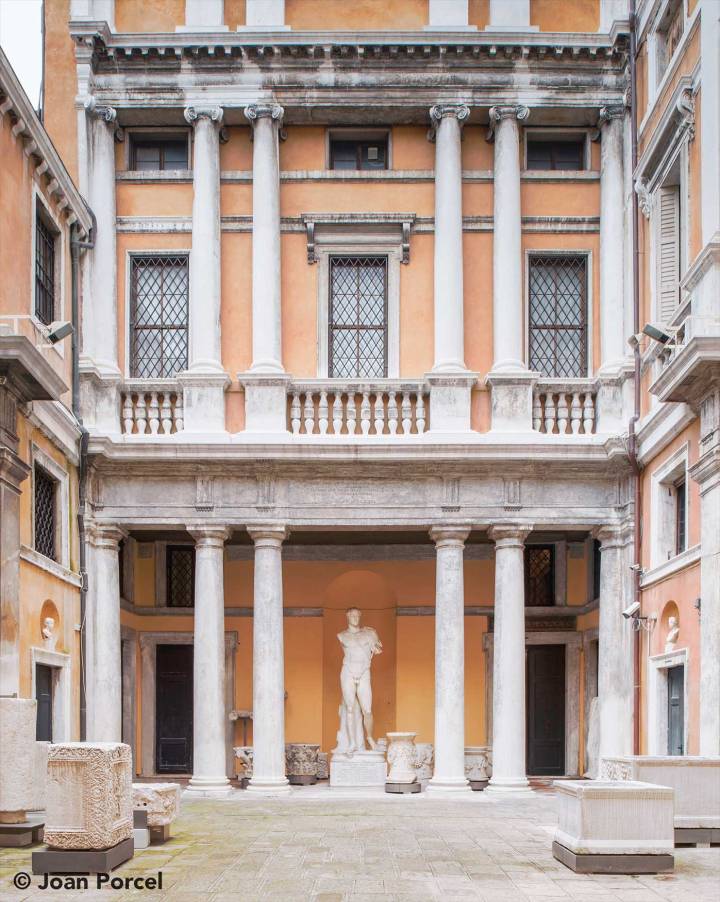
Courtyard of Agrippa. Photo from the website of the National Archaeological Museum of Venice.
The Museo archeologico nazionale di Venezia (National Archaeological Museum of Venice)—part of the Musei archeologici nazionali di Venezia e della Laguna (National Archaeological Museums of Venice and the Lagoon)—announces the reopening of the Courtyard of Agrippa, marking the beginning of a new chapter in the museum’s history. Starting May 6, the museum reopens its historic entrance at No. 17 Piazzetta San Marco, directly facing the Doge’s Palace. This new access complements the existing one through the Correr Museum and signifies the launch of a significant reorganization process. It also underscores the museum’s commitment to accessibility and a renewed, inclusive visitor experience.
In line with this vision, the museum route returns to the original order established between 1924 and 1926 by Carlo Anti, a distinguished classicist, professor of Archaeology, and later rector of the University of Padua. The itinerary offers a chronological narrative of Greek and Roman art through sculpture—from the 5th century BC to the late imperial era—alongside ceramics, bronze statuettes, coins, and other precious objects collected and donated by the Venetian aristocracy between the 16th and 19th centuries.
To enhance the visitor experience, a new independent ticketing system for the Archaeological Museum and the Marciana Library is introduced and added to the existing one, along with an annual subscription that provides unlimited, flexible access to the collections. A newly created multifunctional space will also showcase prestigious artifacts and provide visitors with updates on the museum’s ongoing reinstallation project.

The Courtyard of Agrippa is visible at the left edge of this screenshot from Google Maps.
These initiatives represent the first tangible step in the formation of a new institution under Italy’s Ministry of Culture: the Musei archeologici nazionali di Venezia e della Laguna (National Archaeological Museums of Venice and the Lagoon), established in May 2024 under the direction of Marianna Bressan. This institution encompasses the Museo archeologico nazionale di Venezia, the Museo di Palazzo Grimani, the Parco archeologico di Altino (Archaeological Park of Altino), and the upcoming Museo archeologico nazionale della laguna di Venezia (National Archaeological Museum of the Venice Lagoon) on the island of Lazzaretto Vecchio. Together, they promote an integrated and coherent cultural offering that enhances the archaeological heritage of Venice and its lagoon.
To celebrate this reopening, the courtyard will also host a striking site-specific installation during the preview days of the 2025 Venice Architecture Biennale. Lines by Kengo Kito, curated by Masahiko Haito and supported by anonymous art project, will be installed both in the Courtyard of Agrippa and Room V of the Museum. The work establishes a dialogue with Venetian cultural heritage and Renaissance architecture, sparking a reflection on the interaction between art and public space.
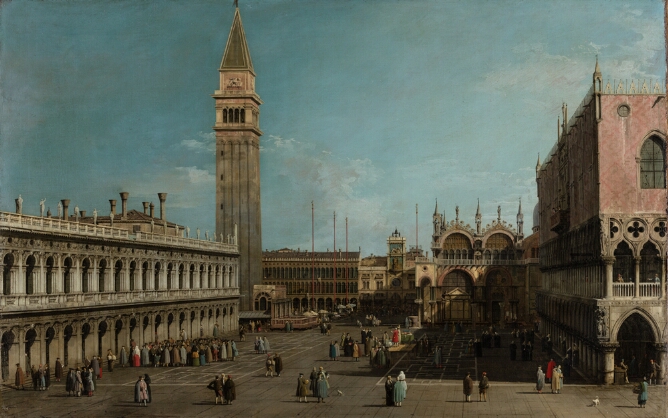
Canaletto, The Piazzetta, Venice, Looking North, ca. 1740 (Pasadena: Norton Simon Museum). The Marciana Library is visible to the left, in front of the bell tower.
Also part of the exhibition, a temporary conservation intervention—also supported by anonymous art project—on the wall behind the statue of Agrippa, weathered by time and humidity. The work includes surface dust removal, consolidation, and subtle tone harmonization, aiming to create a dynamic relationship between ancient, modern, and contemporary art. This experimental restoration model may inform future developments within the museum. The artistic project will contribute to further enhance this restoration, underlining the importance of the continuous comparison between the historicity of the place and current artistic expressions.
“The reopening of the museum’s historic entrance on Piazzetta San Marco,” states Marianna Bressan, Director of the Musei archeologici nazionali di Venezia e della Laguna, “is the first tangible act in Venice by this new institution. It reflects the cultural vision we aim to develop. The intervention in fact returns to the city and to the world a jewel of Renaissance architecture, studies the distribution of ancient sculptures and the architectural space for a mutual valorisation, proposes a conceptually flexible installation, part permanent exhibition and part visitable depot. Furthermore, it intends to reconnect the relationship of the Archaeological Museum with Venice both physically, through the access directly from the Piazza level, and in the proposal of cultural fruition: in the room adjacent to the ticket office, the Museum will recount step by step the phases of its rebirth, visitors, both male and female, by subscribing, will be able to return as many times as they want to see the progress, to participate in the dedicated events, to familiarize themselves with the collections and the history of this place, so linked to the history of Venice itself.”
Crossing the museum’s new threshold, visitors are welcomed into the Courtyard of Agrippa, home to the monumental statue believed to depict the Roman statesman and general Marcus Vipsanius Agrippa (63 BC – AD 12). This space acts as a bridge between the Marciana area’s architecture, Venice’s political centre, and the legacy of classical antiquity collecting. The statue introduces the deep connection between Venice and ancient Rome, a theme echoed throughout the museum’s collection. This link reveals how collecting was a strategic tool to bolster the cultural and political identity of the Serenissima.
Having become part of public collections in the 1860s, the work represents a significant historical testimony, which confirms a long tradition of private collections donated to the Republic and begun in the early decades of the sixteenth century by Domenico Grimani (1461–1523). Integrating his uncle’s donation with his own collections, in 1587 Giovanni Grimani (1506–1593) donated part of his collection to the Serenissima and committed to setting up the Statuary in the anteroom of the then ‘Libreria’ Marciana, opened to the public in 1596 among the first examples of a public museum in the world. The Grimani donations marked the beginning of a process of active involvement of the Venetian patriciate in strengthening the prestige of the State. Numerous members of the Venetian nobility, in fact, would follow their example, donating part of their collections to the city. The predominance of ancient works of art, especially Roman, becomes clear evidence of the desire to associate Venice with a historical tradition that, although not part of its foundation, could legitimise it as a cultural, political and military power. The collection of ancient art thus becomes a bridge between the Serenissima and the great Roman history, strengthening the position of Venice as heir to the dominion and power of the Roman Empire, especially in the eastern Mediterranean.
In a program that aims to offer a complete cultural experience, the new independent entrance to the museum, designed for those who wish to visit only the Archaeological Museum, integrates with the existing access from the Museo Correr.
The addition of a new passageway restores the Courtyard of Agrippa to its original visibility and accessibility: the space, in fact, is the only one among the courtyards of the Procuratie Nuove designed by Vincenzo Scamozzi, one of the greatest interpreters of the Renaissance architectural language.
To re-establish the visit according to the original route, the new entrance corresponds to a separate ticket. To this is also added an adjacent multifunctional space, where stone works belonging to the permanent collection will be set up, creating a real visitable depot. Here, an infographic designed to be flexible and updatable will tell visitors about the process of re-setting up the National Archaeological Museum of Venice, which begins with the reopening of the Courtyard of Agrippa.
Finally, to make the offer as inclusive and usable as possible, an annual subscription will be introduced, which will allow flexible entry to the collections, as well as access to the Museum’s event program. The initiative thus opens the institution to the city, building visitor loyalty and guaranteeing them a more dynamic visit.
The reopening of the Courtyard of Agrippa marks an important step in the process of reorganization and enhancement of the archaeological heritage of Venice, which finds new synergy within the National Archaeological Museums of Venice and the Lagoon. Within this institution, belonging to the Ministry of Culture, the different facets of the identity and history of the Venetian territory are integrated.
The Museum of Palazzo Grimani and the National Archaeological Museum offer a historical-artistic narrative on collecting linked to archaeology and classical art: Palazzo Grimani, in particular, celebrates, through the reorganization of the Tribuna, the collecting experience of the Grimani family—specifically the patriarch of Aquileia, Giovanni—while the National Archaeological Museum of Venice tells the story of Venetian collecting.
Exhibition | Art and Power in the Age of the Doges of Genoa
Some 100 works—paintings, sculpture, and decorative arts—from the 17th and 18th centuries are now on view in Turin for this exhibition produced in collaboration with the National Museums of Genoa–Palazzo Spinola and the National Gallery of Liguria.
Magnificent Collections: Art and Power during the Age of the Doges of Genoa
Reggia di Venaria, Torino, 10 April — 7 September 2025
Curated by Gianluca Zanelli, Marie Luce Repetto, Andrea Merlotti, and Clara Goria, with Donatella Zanardo

Anton von Maron, Portrait of Maria Geronima Pellegrina ‘Lilla’ Cambiaso and Her Daughter Caterina, 1792, oil on canvas (Genoa: Palazzo Spinola di Pellicceria).
In mostra alla Reggia di Venaria le straordinarie raccolte d’arte di alcune delle più importanti famiglie del patriziato genovese (i Pallavicino, i Doria, gli Spinola, i Balbi) conservate a Palazzo Spinola di Pellicceria, insieme alle più recenti acquisizioni dei Musei Nazionali di Genova con prestiti da altri musei e collezioni private.
Un patrimonio unico di arte e storia che annovera celebri dipinti di Peter Paul Rubens, Antoon Van Dyck, Orazio Gentileschi, Guido Reni, Carlo Maratta, Luca Giordano, e poi ancora Hyacinthe Rigaud e Angelica Kauffman, oltre ai maestri della grande scuola figurativa genovese. Attraverso un centinaio di opere tra dipinti, sculture, argenti e arredi del Sei e Settecento, si proporrà un percorso espositivo, suddiviso in sei sezioni, riferito alle raccolte del palazzo poi divenuto museo, ma anche il racconto del secolo d’oro di Genova ‘la Superba’, teatro del Barocco, antica repubblica retta dai dogi, con la sua regalità e fasto. La mostra continua il grande filone dedicato alla storia, all’arte, alla cultura e alla magnificenza delle corti inaugurato dalla riapertura della Reggia e proseguito negli anni.
Gianluca Zanelli and Marie Luce Repetto, eds., Magnifiche collezioni: Arte e potere nella Genova dei Dogi (Genoa: Sagep Editori, 2025), 128 pages, ISBN: 979-1255902041, €18.
New Book | The Fricks Collect
After a $220million renovation that lasted nearly five years, The Frick reopens today. There’s been lots of media coverage; I especially enjoyed Patricia Leigh Brown’s piece in The New York Times (1 April 2025), highlighting various artists and craftspeople who contributed. –CH
From Rizzoli:
Ian Wardropper, with a foreword by Julian Fellowes, The Fricks Collect: An American Family and the Evolution of Taste in the Gilded Age (New York: Rizzoli Electa, 2025), 160 pages, ISBN: 978-0847845750, $50.
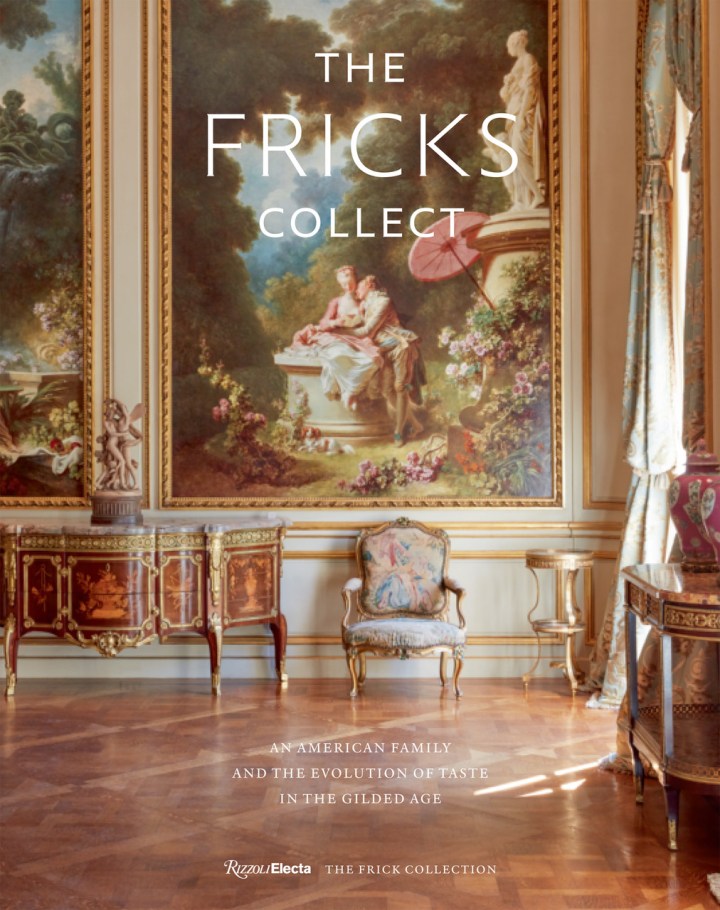 Before his New York home became a museum, Henry Clay Frick engaged some of his era’s most important art dealers to build a notable collection and the best decorators to create suitable Gilded Age interiors to accommodate the works. This story traces the journey that led to the creation of one of America’s finest art collections.
At its heart, this story centers on Frick and his daughter Helen Clay Frick, both pivotal figures in the formation of the renowned Frick Collection. The volume delves into the Fricks’ exposure to and acquisition of some of the finest art of their time. With an exquisite blend of textual narrative and ample imagery showcasing masterpieces and the sumptuous interiors of homes in Pittsburgh and New York, the book offers a captivating narrative of ambition, wealth, and cultural patronage.
White, Allom & Co. and Elsie de Wolfe worked with Frick on the decoration of his houses and influenced the choice of many furnishings the owner acquired and that formed the backdrop for his paintings. As was commonplace at the time, decorators often collaborated with dealers in creating spaces suitable for the esteemed works of art. Further influential figures who shaped the era’s cultural landscape include Frick’s business partner Andrew Carnegie and noted art dealers Joseph Duveen in London and Charles Carstairs of M. Knoedler & Co. in New York. Presenting the glittering halls of their homes and the masterpieces adorning the walls of The Frick Collection, this volume is a testament to the enduring allure of art and the power of patronage in shaping cultural institutions.
Ian Wardropper is the Anna-Maria and Stephen Kellen Director of The Frick Collection. Julian Fellowes is an English novelist, director, and screenwriter, best known as the creator and head writer of the popular TV series Downton Abbey.
New Book | Le Comte d’Angiviller
From Éditions Monelle Hayot:
Monelle Hayot and Antoine Maës, Le Comte d’Angiviller: Directeur des Arts sous Louis XVI (Saint-Rémy-en-l’Eau: Éditions d’art Monelle Hayot, 2025), 384 pages, ISBN: 979-1096561421, €60.
 Gentilhomme de la manche, le comte d’Angiviller (1730–1809) élève le futur Louis XVI et ses frères. Dès son accession au trône en 1774, Louis XVI le nomme directeur des Bâtiments. Son rôle est immense. Fondateur du musée du Louvre il orchestre les travaux et constitue les collections en acquérant des œuvres majeures. Il est responsable de tous les bâtiments royaux, achète Rambouillet pour le roi. Angiviller préside au sort des manufactures de Sèvres et des Gobelins, dirige l’Académie de peinture et de sculpture, ainsi que l’Académie de France à Rome.
L’époque révolutionnaire fait de lui un témoin oculaire majeur de faits historiques auxquels il participe. Le roi lui demande d’émigrer en Espagne. D’une fidélité sans faille, il revient pour aider le roi en danger, mais sa tête est sur la liste des aristocrates à décapiter. Il part pour l’Allemagne dont il ne reviendra jamais.
Angiviller avait un secrétaire, Narcisse, qui recopiait toute sa correspondance avec le roi. Il fut le témoin de sa vie et émigra avec lui. Sur ses vieux jours, Narcisse écrit ses mémoires pour la marquise de Capellis qui vit au château de Saint-Rémy-en-l’Eau, lieu de naissance d’Angiviller. Ce manuscrit inédit est entièrement retranscrit à la fin de cet ouvrage.
Lecture | Meredith Martin on Unpacking the Choiseul Box
This month at BGC:
Meredith Martin | Unpacking the Choiseul Box
An Iris Foundation Awards Lecture
Bard Graduate Center, New York, 22 April 2025

Louis-Nicolas van Blarenberghe (miniaturist; 1716–1794) and Louis Roucel (goldsmith; ca. 1756–1787), tabatière Choiseul (Choiseul snuffbox), ca. 1770/71, gouache on vellum, assembled in an architectural gold setting, 8 × 6 × 2.4 cm (Paris: Louvre).
This interactive lecture will explore the famous Choiseul snuffbox, a tiny but extraordinary monument of the eighteenth century that features views of the Parisian mansion and art collection of the Duc de Choiseul, foreign minister to Louis XV. The snuffbox, or tabatière, became a cause célèbre in France in 2023 when it was offered for sale to the tune of nearly four million euros. The Louvre launched a massive public campaign to raise funds to acquire the box and published a scholarly tome dedicated to giving readers “all the keys you still need to unlock the secrets of this highly prized tabatière.” And yet in all the recent literature around this object, no mention has been made of its deep, unsettling connections to colonialism and enslavement at the level of material, iconography, patronage, and use. This talk will seek to ‘unpack’ this box and will invite attendees to confront its materiality and multisensory dimensions through digital reconstructions produced in collaboration with Bard Graduate Center’s digital humanities team.
Meredith Martin is a professor of art history at New York University and a founding editor of Journal18. A specialist in early modern French art and empire, she is the coauthor (with Gillian Weiss) of the prizewinning book The Sun King at Sea: Maritime Art and Galley Slavery in Louis XIV’s France (Getty, 2022; French edition 2022), which is related to an exhibition that she and Dr. Weiss are co-curating for the Institut du monde arabe in Paris. Martin is also the author of Dairy Queens: The Politics of Pastoral Architecture from Catherine de’ Medici to Marie-Antoinette (Harvard, 2011), and a coauthor of Meltdown: Picturing the World’s First Bubble Economy (2020), which is related to an exhibition she co-curated for the New York Public Library. Together with Phil Chan, Martin reimagined and restaged a lost French ballet from 1739 known as the Ballet des Porcelaines, which premiered at the Metropolitan Museum of Art in 2021 and was performed throughout the US and Europe in 2022. She is currently working on a multimedia collaborative project called Colonial Networks, which explores links between Haiti/Saint-Domingue and the Paris art world during the late eighteenth and early nineteenth centuries.
28th Annual Iris Foundation Awards — In 1997 Susan Weber created the Iris Foundation Awards to recognize scholars, patrons, and professionals who have made outstanding contributions to the field of decorative arts, design history, and material culture. Meredith Martin will receive the Iris Award for Outstanding Mid-Career Scholar on April 23 at the Cosmopolitan Club. This year’s other recipients are Irene Roosevelt Aitken (Outstanding Patron), Julius Bryant (Outstanding Lifetime Achievement), and Katherine Purcell (Outstanding Dealer). Proceeds benefit the Bard Graduate Center Scholarship Fund.










 Enfilade
leave a comment