Call for Papers | Collecting Raphael
From H-ArtHist:
Collecting Raphael: Raffaello Sanzio da Urbino in the History of Collections
Bibliotheca Hertziana, Rome, 12–14 October 2017
Proposals due by 31 December 2016
In view of the forthcoming 500th anniversary celebration of Raphael’s death (Raffaello Sanzio da Urbino, Urbino 1483 – Rome 1520), an international conference to focus on the reception of Raphael and the history of collections will draw together scholars of collecting and history of taste with curators of the main collections of Raphael’s paintings and drawings in both Italy and abroad. The conference, organised by Sybille Ebert-Schifferer and Claudia La Malfa, will be held at the Bibliotheca Hertziana – Max-Planck-Institut für Kunstgeschichte, in Rome in October 2017.
Raphael’s works have enjoyed an uninterrupted fortuna in the history of collecting. His fame has fueled collectors’ passions for centuries, which in turn has contributed to his fortuna, never challenged through the changing cultural and artistic periods. His works were considered symbols of power by those popes, princes and nobles who owned them, eventually becoming the identity matrix of many important European museums in the 19th and 20th centuries. The aim of the conference is to explore the various mechanisms that have contributed to this phenomenon. Suggested topics include: the role of the great collectors of Raphael between the 16th and the 19th centuries, including the Gonzaga and Borghese families, Christina of Sweden, Charles I of England, Louis XIV of France, and the Kings of Spain; the function of antiquarians and art dealers, such as Daniel Nijs, Pierre Crozat, Pierre-Jean Mariette, and John Julius Angerstein, in the diffusion of Raphael’s works and copies in 17th- and 18th-century collections in Italy and abroad; the part played by figures like Filippo Baldinucci for the Uffizi, Everhard Jabach for the Louvre, and Sir Joshua Reynolds for collections in England; the influence of academies in the diffusion of the master’s oeuvre through collections of drawings and reproduction prints in the Age of the Grand Tour; the relationship between art historians and collectors, and the role of early biographers like Johann David Passavant, Bernard Berenson, Oskar Fischel, in the creation of the 19th- and 20th-century museums; the issue of connoisseurship from the 17th century on and the problem of originals, workshop productions, copies and fakes.
Please send an abstract of 250 words and a CV to c.lamalfa@aur.edu and to albl@biblhertz.it by December 31th 2016.
Exhibition | 350 Years of Creativity
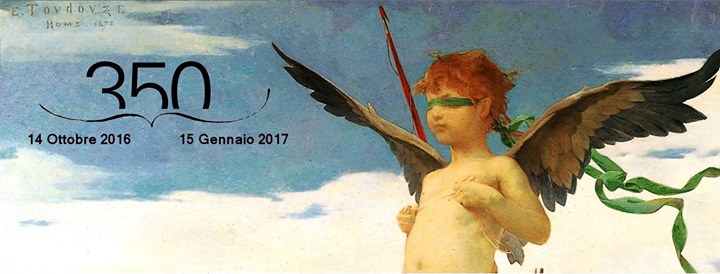
Now on view at the French Academy in Rome:
350 Years of Creativity: The Artists of the French Academy in Rome from Louis XIV to the Present
350 ans de création: Les artistes de l’Académie de France à Rome de Louis XIV à nos jours
Académie de France à Rome – Villa Medici, 14 October 2016 — 15 January 2017
Curated by Jérôme Delaplanche
Founded by Louis XIV in 1666, the Academy is celebrating its 350th anniversary this year with a special series of events retracing its history. This exhibition is one of the program’s high points and is accompanied by two others in Rome, organized by the Accademia Nazionale di San Luca and the Accademia di Belle Arti di Roma and focusing on their relationships with the French Academy. 350 Years of Creativity is a chance for the visitor to discover the creative output of artists at the Academy—both residents and directors—during their stays in Rome. It includes over a hundred works dating from 1666 to the present day, by artists including Fragonard, David, Ingres, Berlioz, Garnier, Carpeaux, Debussy, and Balthus. In the course of a fascinating journey through three and half centuries of French art, visitors are offered a closer look at the Academy and its successive generations of creators.
350 Years of Creativity illustrates the high points of the Academy’s long life with works by its leading artists presented under the following headings: the ancient and modern quest for the ideal; the discovery of picturesque reality; the relationship with the body and the nude; the significance of the move to the Villa Médicis; eclecticism and the value of originality; new life for tradition; and the Academy as a center for creative experiment. The exhibition itinerary brings together paintings, drawings, statues, prints, musical scores, and archival material as testimony to the sheer artistic variety the institution has produced. Some of these works come from the Academy’s own collection, notably portraits by residents and the plaster statues. The exhibition closes with a video of works created by residents over the last few decades. For the visitor all this adds up to an opportunity to survey the history of French art from 1666 to 2016.
 350 Years of Creativity will also be accompanied by other events—screenings, encounters, concerts—presented at the Villa Médicis as part of the series ‘Thursdays at the Villa: Art Matters’. It will conclude with a symposium on 11–13 January 2017 with the Accademia Nazionale di San Luca and the Accademia di Belle Arti di Roma, titled Art Academies: Heritage and Contemporary Art Issues.
Jerome Delaplanche, ed., 350 anni di creatività: Gli artisti dell’Accademia di Francia a Roma da Luigi XIV ai nostri giorni (Milan: Officina Libraria, 2016), 224 pages, ISBN: 978 8899765101 (Italian), ISBN: 978 8899765088 (French), 35€.
Doctoral Study Day | In Situ / Ex Situ
From H-ArtHist (25 November 2016). . .
In Situ / Ex Situ — The Art of Exhibiting Art: Relationships between Art and Architecture in Their Spatial Context / L’arte di esporre l’arte: relazioni nel contesto spaziale tra arte e architettura
Rome Art History Network (RAHN), 27–28 April 2017
Proposals due by 15 December 2016
The fifth international doctoral study day of the Rome Art History Network—organised in partnership with the University of Notre Dame Rome Global Gateway and the Sovrintendenza Capitolina ai Beni Culturali, Museo di Roma di Palazzo Braschi—proposes a theoretical and methodological reflection upon the relationships and strategies of installing art and architecture, both inside and outside their original spatial contexts. It is evident that the work of art always relate to the surrounding spaces. Indeed, the strategies and methods of exhibiting works in situ / ex situ are at the heart of contemporary art-historical debates. But how does the manipulation of the original spatial context alter the perception of a work of art, or the organic nature of an architectural system? How does a given layout highlight specific characteristics of an artwork? What new meanings does an object assume, following its contextual switch? Are traditional concepts of historiographical concepts still valid for current issues of museology or museography? Does an object’s de-contextualization potentially ‘save’ the art in critical cases, or does it always imply an alteration of its original meanings? The study day aims to encourage an interdisciplinary and cross-temporal debate on the issue of location and spatial relationship between the works of art and architecture and the reciprocal exchanges between these artistic domains.
Proposals may include, but are not limited to, topics about
• The role of spatial contexts in the display of and the relationship between the works of art
• How the alteration of spatial context affects of in situ / ex-situ works
• Relationships between art and architecture in the exhibitions/museographical or museological cases
• Gesamtkunstwerke, site-specific works of art, mise en scéne projects, or visual theme concepts
• Dispositio of a museum/architectural/urban system
The call for papers is open to art and architectural history graduate students of Italian and foreign academic institutions. We encourage candidates to submit 20-minute talks that, through case studies and theoretical observations, focus on the methodologies and key themes listed above. The study day (27–28 April 2017) will be held both in Italian and English, and we welcome submissions in both languages. The organization cannot cover any travel or residence costs. Proposals, in the form of an abstract (max. 400 words), should be sent, together with a short CV (max. one page), by 15 December 2016 to romearthistorynetwork@gmail.com.
Organized by
Alina Aggujaro (Bibliotheca Hertziana, Max Planck Institut for the History of Art / Sapienza, Università di Roma)
Dario Beccarini (Statens Museum for Kunst, Copenaghen / Università degli Studi di Roma ‘Tor Vergata’ )
Coordination by
Ariane Varela Braga (Coordinator Rome Art History Network / Universität Zürich)
Previous Editions
• Now or (n)ever — I tempi dell’opera: temi, teorie e metodi nella storia dell’arte (28–29 April 2016)
• Tra assenza e presenza: opere perdute e frammentarie (19–20 March 2015)
• Sopravvalutata, sacrosanta, scandalosa? La figura dell’artista nella storia dell’arte oggi (3–4 April 2014)
• La storia dell’arte tra scienza e dilettantismo: Metodi e percorsi (24 April 2012)
Conference | More Than Meets the Page: Printing Text and Images
From Warwick’s Humanities Research Centre:
More Than Meets the Page: Printing Text and Images in Italy, 1570s–1700s
University of Warwick, 4 March 2017
For Italy, the ‘long seventeenth century’ was a period of considerable financial challenges. This was especially evident on the book market. Nevertheless, thanks to new techniques and formats that mutually related text and images within the same publication, innovative genres were born that were marketed towards both ends of the audience spectrum, from the learned to the illiterate.
More Than Meets the Page: Printing Text and Images in Italy, 1570s–1700s aims to investigate the ways in which the consolidation of the book and print trade influenced the development of such new book genres from the late sixteenth to the early eighteenth century. The new commercial items, moreover, contributed to the spread of cultural phenomena, for instance the Grand Tour through its souvenir prints that were sometimes incorporated in atlases. This one-day interdisciplinary conference seeks to examine these matters by focusing on the products, audiences, and professionals involved. By doing so, it sets out to lay the foundations for a shared history of printed products and markets in the early modern period. The conference promotes a multidisciplinary perspective, bridging the gaps between art history, history of the book, and other disciplines such as intellectual history and communication studies.
◊ ◊ ◊ ◊ ◊
P R O G R A M M E
9.45 Registration and coffee
10.10 Welcome and introduction
10.20 Session 1: Understanding Techniques and Genres
Chair: Rosa Salzberg (University of Warwick)
• Angela McShane (RCA/V&A), Keynote Lecture
• Liz Miller (V&A), Libri et Stampe in Rame’: A Bound Volume of Antonio Lafreri’s Architectural and Ornament Publications
• Loretta Vandi (Scuola del libro, Urbino), Handy and Cheap: Giovanni Baleni Printer and Seller of Chap-books in Late Sixteenth-Century Florence and Lucca
• Floriana Giallombardo (University of Palermo), The Venetian Musei by Paolo Boccone (1697): The Illustrated Natural Book and the Social Production of Natural Knowledge
12.10 Lunch
13.10 Session 2: Tracing Networks
Chair: Max Engammare (Institut de l’Historie de la Réformation, University of Geneva)
• Marika Keblusek (Leiden University), Keynote Lecture
• Ingeborg van Vugt (Scuola Normale Superiore di Pisa/Amsterdam University), Books beyond Borders? The Circulation of Prohibited Books in the Epistolary Network of Antonio Magliabechi (1633–1714)
• Huub van der Linden (École Française de Rome/University College Roosevelt), The Private Exchange of Printed Ephemera between Bologna and Rome around 1700
• Nina Lamal (University of St Andrews), Challenges and Opportunities: Printing and Marketing the First Italian Newspapers
15.00 Tea and coffee
15.30 Session 3: Evolving Markets and Audiences
Chair: Ingrid de Smet (University of Warwick)
• Julia Martins (The Warburg Institute), Illustrating Alchemical Recipes: Books of Secrets and the Case of I Secreti della Signora Isabella Cortese in Early Modern Italy
• Domenico Ciccarello (University of Palermo), Baroque Imagery and Literary Genres in Sicily: An Overview across Print Books with Illustrations
• Flavia Bruni (Sapienza University/University of St Andrews) ‘Becoming Peripheral: The Decline of the Italian Book Market in the Seventeenth Century’
16.45 Roundtable and closing remarks
17.15 Wine reception and buffet
The Burlington Magazine, November 2016
The eighteenth century in The Burlington:
 The Burlington Magazine 158 (November 2016)
A R T I C L E S
• Lucia Simonato, “A New Work by Domenico Guidi: The Bust of Cardinal Gianfrancesco Albani,” pp. 885–90.
• Bent Sørensen, “The Parisian Career of Jacques François Saly, 1749–53,” pp. 891–99.
L E T T E R
• Kim Legate, “More on Chippendale at Hestercombe House,” p. 904.
R E V I E W S
• Anthony Geraghty, Review of Owen Hopkins, From the Shadows: The Architecture and Afterlife of Nicholas Hawksmoor (Rekation Books, 2015), p. 907–08.
• Tessa Murdoch, Review of Malcolm Baker, The Marble Index: Roubiliac and Sculptural Portraiture in Eighteenth-Century Britain (Paul Mellon Centre for Studies in British Art, 2015), p. 908.
• Martin Postle, Review of James Ayres, Art, Artisans, and Apprentices: Apprentice Painters and Sculptors in the Early Modern British Tradition (Oxbow Books, 2014), p. 909.
• Loyd Grossman, Review of Susan Rather, The American School: Artists and Status in the Late-Colonial and Early National Era (Yale University Press, 2016), pp. 909–10.
• François Quiviger, Review of Andrea Daninos, Una Rivoluzione di Cera: Francesco Orso e e i «cabinets de figures» in Francia (Officina Libraria, 2016), pp. 911–12.
• Philip Ward-Jackson, Review of Vanessa Brett, Bertrand’s Toyshop in Bath: Luxury Retailing, 1685–1765 (Oblong Creative, 2014), p. 912.
• Jamie Mulherron, Review of the exhibition Marseille au XVIIIe siècle: Les années de l’Académie, 1753–1793 (Le Musée des Beaux-Arts, Marseille, 2016), pp. 921–23.
• Jeremy Warren, Review of the exhibition Splendida Minima (Tesoro dei Granduchi, Palazzo Pitti, Florence, 2016), pp. 923–24. [Includes the eighteenth-century reception of these small-scale sculptures.]
New Book | The Neapolitan Crèche at the Art Institute of Chicago
Distributed by Yale University Press:
Sylvain Bellenger, Carmine Romano, and Jesse Rosenberg, with a preface by Riccardo Muti, The Neapolitan Crèche at the Art Institute of Chicago (Chicago: Art Institute of Chicago, 2016), 176 pages, ISBN: 978 0300222357, $40.
 The 18th-century Neapolitan crèche at the Art Institute of Chicago, which contains over 200 figures arranged in a panorama of street life, represents the pinnacle of a rich artistic heritage. This luxurious catalogue is the first to study the crèche in the context of art and music history. Essays explore the Neapolitan crèche tradition and examine the design of Chicago’s example with reference to other important crèches in Europe and the United States. Entries on individual figures identify the characters and types they represent, as well as their social and historical meaning and religious significance. Other entries address groups of figures, animals, and cultural themes present in the creche. Together the essays and entries highlight the astonishing realism and potent symbolism of these figures, which range from heavenly angels and the Holy Family around the manger to street vendors and revelers feasting, drinking, and dancing in a tavern. Nativity scene.
Sylvain Bellenger is director of the Museo de Capodimonte, Naples; Carmine Romano is a PhD student at Paris-Sorbonne University; and Jesse Rosenberg is clinical associate professor, musicology, at the Northwestern University Bienen School of Music.
Exhibition | Salzillo’s Nativity Scene
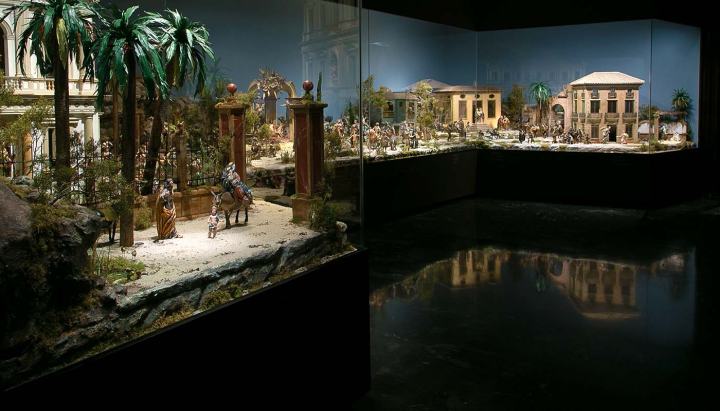
Francisco Salzillo, with Roque López, Nativity Scene of around 300 Polychromed Figures, 1776–83; clay, carved wood, and fabric
(Murcia: Museo Salzillo)
◊ ◊ ◊ ◊ ◊
Now on view at the Bilbao Fine Arts Museum:
Salzillo’s Nativity Scene / Salzilloren Jaiotza / El Belén de Salzillo
Bilboko Arte Ederren Museoa / Museo de Bellas Artes de Bilbao, 28 October 2016 — 6 February 2017
For its latest edition and thanks to the sponsorship of Fundación Banco Santander, the ‘Invited Work’ programme presents a significant part of the famous Nativity Scene by the sculptor and religious image maker Francisco Salzillo (Murcia, 1707–1783). It has been loaned by the Museo Salzillo (Murcia), to which the Bilbao Fine Arts Museum will be lending in exchange seventeen works on the Christmas theme, to be exhibited with the title Nativitas Domini until 12 February next year.
 Comprising around 300 polychromed figures (of the 556, including figures and six architectural structures, that make up the entire work), the Nativity was made by Salzillo between 1776 and 1783 for his fellow Murcian, the aristocrat Jesualdo Riquelme y Fontes, and was completed by his pupil Roque López and his studio. It was finished around 1800 and only one of the six architectural elements is a modern creation. Throughout the entire 19th century, it was in the Palacio Riquelme, entering the collection of the Museo Salzillo as one of the key works within Salzillo’s oeuvre.
The narrative structure of the Nativity follows various canonical and apocryphal texts in order to establish a chronological sequence that runs from the Annunciation to the Flight into Egypt and in which the figures occupy a predetermined position while the other elements can vary. The scenes include magnificent architectural structures, some copies of buildings of the period when the work was made—such as Herod’s palace, which imitates a local Murcian aristocratic residence; Mary’s house, which reflects urban dwellings of the time; and Saint Elizabeth’s house, which echoes the sophisticated typology of the small rural house. Others, however, employ classical or Renaissance references, such as the ruined portico in which the Birth of Christ takes place, or the Temple of Solomon, based on the Roman church of San Pietro in Montorio. Mary’s house retains its Rococo furnishings, which must have been added in the 19th century.
The biblical episodes are acted out by a wide range of picturesque figure types that are also to be found in painting and literature of the day. In this respect, the Enlightenment writer Ceán Bermúdez observed that Salzillo gave lodgings to beggars in his house in exchange for them posing for him. These popular types co-exist with the solemn figures that act out the religious mysteries, as well as sumptuously dressed angels and nobles. Some of them are portraits of real people of the day, including Riquelme y Fontes himself, the Marquis of Beniel and the Count of Flordablanca.
 Despite his Italian origins (his father was an Italian sculptor based in Murcia who ran an important family workshop principally producing religious images), Salzillo’s Nativity Scene is notable for its inspiration in popular life and customs, its profound religious sentiment, and the narrative character of the scenes.
The figures, which are about 30 centimetres high, are modelled in clay or carved in wood. They have complex polychromy, in some cases applied directly onto the wood using a finely detailed technique that reflects the Rococo tradition. The clothes are made from glue-sized fabric over which the paint, applied with brushes of different thicknesses, creates a range of textures from the softness of silk to the rough clothing of the shepherds. Other techniques, such as the incising of the estofado, add richness to the mantles and tunics of the holy figures. Blue, red, and green are the predominant colours, combined with gilding. The angels, such as those present in the Dream of Saint Joseph, are the most sophisticated figures. The work as a whole includes a wide range of clothing, from the plain local jerkin and embroidered skirts to be seen in the Massacre of the Innocents to the gleaming armour worn by the Roman soldiers.
Through these gospel scenes Salzillo offers a fascinating image of the habits and customs of the Spanish peasantry, showing the finest aspects of their dress and their amusements and pastimes such as music and dancing. In this folk universe the rustic shepherds happily co-exist with the sophisticated local nobility. The grace of the pages in their coloured livery, silk stockings and elegant hats contrasts with the roughness of the shepherds and the rags of the blind man’s guide. Alongside them we also see supernatural beings such as the angels in their richly patterned and gilded tunics who add delicacy to the overall composition.
The scene as a whole includes a wide range of figure types, poses and notably realistic portraits despite the small size of these figures, some of whom represent trades and activities, such as the groups of butchers, musicians, and hunters. Alongside them we also see a remarkable variety of animals, including the migrating birds that nested in the region of Murcia called the Mar Menor and different types of bulls, goats, and sheep.
Salzillo’s Nativity Scene thus combines the inspiration of the Gospel texts with a wide range of figure types, clothes, trades and activities of the day, all taken directly from life. The narration, with its colourful incidental details, the setting, and the figures together create an intimate, domestic atmosphere that is notably different to the more worldly one of the Neapolitan presepe, the other preeminent type of Nativity scene at this date. While the latter are characterised by an urban context inspired by the Commedia dell’Arte, Salzillo made use of Spanish rural life and its traditions to transmit a devotional mood of a more intimate, accessible nature.
Concepción de la Peña, Maria Teresa Marín, and Carlos Moisés García, El Belén de Salzillo / Salzillo’s Nativity Scene (Murcia: Museo Salzillo, 2013), 143 pages, ISBN: 978-8415369509 (Spanish and English), 25€.
Exhibition | Nativitas Domini: Art and Devotion
On view at the Museo Salzillo:
Nativitas Domini: Art and Devotion / Arte y Devoción
Museo Salzillo, Murcia, 14 October 2016 — 12 February 2017
 La Natividad es una festividad litúrgica que se celebra popularmente desde el siglo XVI, la cual, con el paso del tiempo, se ha convertido en una de las representaciones más recurrentes dentro de la iconografía cristiana. Las diferentes escuelas artísticas europeas han sabido adaptar este episodio con sus misterios a los diferentes estilos y gustos de cada época.
Durante el Renacimiento la representación pictórica de este acontecimiento alcanzó gran auge, y en su representación los artistas mostraron el concepto de ‘belleza ideal’, tan característico tanto de las escuelas del norte como las italianas.
Se muestra así una selección de pinturas y esculturas del Museo de Bellas Artes de Bilbao con representaciones que van desde el citado Renacimiento hasta el siglo XVIII, pasando por trabajos del manierismo y del Barroco, que se inician con Los desposorios de la Virgen, la Adoración de los pastores, los Magos de Oriente concluyendo con la representación de la Virgen.
Exhibition | Robert Adam’s London
Press release (26 October 2016) for the exhibition:
Robert Adam’s London
Sir John Soane’s Museum, 30 November 2016 — 11 March 2017
Curated by Frances Sands
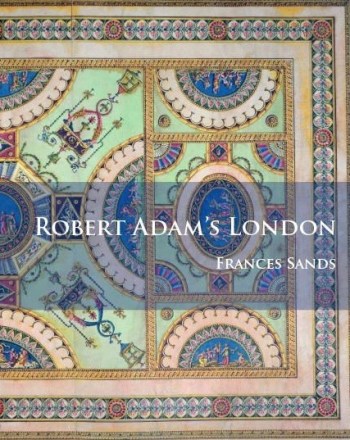 The work of one of the greatest British architects of all time is examined in a new exhibition at Sir John Soane’s Museum. Robert Adam’s London takes an in-depth look at some of the Scottish architect’s work which helped change the landscape of the capital. Some of the famous buildings looked at in the exhibition include Buckingham Palace, the Admiralty Screen on Whitehall and Portland Place. Robert Adam’s London is the first time the architect’s work across the city as a whole has been examined in a London museum. It will showcase his ground-breaking neo-classical style and his desire to unify architecture and interior design. It will also feature both completed buildings alongside those, which were never realised, offering a glimpse into the architect’s ambitious vision for London.
On display will be some of Sir John Soane’s Museum’s most beautiful, influential, and rarely seen designs of Adam’s projects in London, taken from their 9,000-strong Adam drawing collection. The Museum holds 80% of the world’s surviving Adam drawings which are of huge international-significance for our understanding of Georgian architecture and interior design. Projects on show include the famous Admiralty Screen on Whitehall, Portland Place, and six monuments for Westminster Abbey, as well as projects subsequently demolished or never realised, such as the interiors of Buckingham House (before it became Buckingham Palace), 15 Downing Street, Lansdowne House, and Adelphi. A large-scale facsimile of an eighteenth-century map of London will form the centrepiece of the show, plotting Adam’s various projects across the city, creating an ‘in-exhibition’ trail for visitors. Alongside this will be a portrait of Robert Adam by George Williamson, on loan from the National Portrait Gallery, and a pedestal designed by Adam from Kenwood House.
Robert Adam had a long and enduring connection to London, establishing his London practice in 1758 and remaining in the city until his death in 1792. There is a greater density of his work for this city than anywhere else, as he focused on designing complete schemes for the decoration of domestic, public, commercial, speculative and commemorative buildings. His work in London demonstrates how his style evolved past the fashionable Palladian design of the time, into a new, more flexible style, incorporating influences from Roman, Etruscan, and Baroque styles. Adam’s radical style was often attributed to a desire to design everything down to the smallest detail.
Adam regularly favoured large-scale and grandiose designs, many of which remained purely speculative as their ambitions—and cost—were often prohibitive. One such project examined in the exhibition in detail is for Portland Place, where he hoped to construct detached aristocratic palaces which might rival noblemen’s urban homes in Europe. Palaces for the Earls of Kerry and Findlater were designed, but never came to fruition. If they had, central London would have looked significantly different to how it is today.
Bruce Boucher, Director of Sir John Soane’s Museum says: “The Adam Drawings at the Soane Museum is one of our most important collections. Not only is it an invaluable record of the work of one of this country’s most innovative architects, but also a fascinating glimpse into what London could have been had all his projects survived or come to fruition. People have always cared passionately about the architecture of London, as today’s fierce debates testify, so it is wonderful to be able to examine this fascinating chapter in the architectural history of this great city, right in the heart of the city itself.”
Dr Frances Sands, Curator of Drawings and Books at Sir John Soane’s Museum comments: “The Adam office provided designs in deliberate contrast to the more severe neo-Palladian style that had dominated Britain in earlier decades. Adam instigated a fashion for his own recognisable and characteristic style, one not based on dogmatic archaeological accuracy, but rather a creative fusion of all that he had seen abroad. With his distinctive, delicate interior decorative style and bold, rippling architecture, Adam became enormously successful; his practice catered to clients across Britain—and occasionally beyond—but nowhere more heavily than in London. Often remembered as an architect of great country houses, this exhibition celebrates the skill and dexterity of his numerous works here in town.”
◊ ◊ ◊ ◊ ◊
Frances Sands, Robert Adam’s London (Oxford: Archaeopress, 2017), 142 pages, ISBN: 978-1784914622, £18.
The iconic eighteenth-century architect Robert Adam was based in London for more than half of his life and made more designs for this one city than anywhere else in the world. This book reviews a wide variety of his designs for London, highlighting lesser known buildings as well as familiar ones. Each of Adam’s projects explored in this book is plotted on Horwood’s map of London (1792–99), enabling readers to recognise Adam’s work as they move around the city, as well as to envisage London as if more of his ingenious designs had been executed or survived demolition.
Frances Sands is Curator of Drawings and Books at Sir John Soane’s Museum.
New Book | The Prints of Paul Sandby: A Catalogue Raisonné
From Brepols:
Ann Gunn, The Prints of Paul Sandby (1731–1809): A Catalogue Raisonné (Turnhout: Brepols, 2016), 339 pages, ISBN: 978-1909400160, £127 / $195.
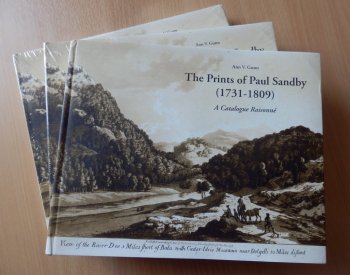 Born in Nottingham, Paul Sandby (1731–1809) is best known as a founder member of the Royal Academy and a prominent figure in the development of British watercolour painting. However, he was also one of the most prolific and inventive printmakers in eighteenth-century Britain. From his early years as a draughtsman for the military survey of Scotland, and later from his extensive tours throughout England and Wales, he depicted the people, towns, castles, and landscapes of the nation. He provided the public with images of their country which contributed to the emerging appreciation of native landscape, to antiquarian interests, and to the development of picturesque tours within the British Isles. Although he never travelled abroad, he reproduced the work of fellow artists who had, tapping into the Grand Tour market with prints of Ionian antiquities, Neapolitan landscapes, and the Roman carnival. But his work encompassed more than landscape; he could move from the pastoral humour of illustrations to Allan Ramsay’s poem The Gentle Shepherd, through the urban realism of his Cries of London to the merciless satire of his attacks on William Hogarth. From the 1740s to the 1780s, he made over 380 prints: engravings, etchings, soft ground etchings, and finally aquatints, a medium in which he was a pioneer. Aquatint enabled printmakers to reproduce the effects of watercolour paintings; Sandby gave the process its name and developed varied techniques which allowed the exact reproduction of the artist’s brush strokes, producing some of the most beautiful prints ever made in this medium.
Ann V. Gunn, a lecturer at the University of St Andrews, has worked as Keeper of Art at Nottingham City Museums, Assistant Registrar at Princeton Art Museum, and Registrar of the University of St Andrews Art Collection. She also ran her own gallery, which specialised in contemporary Scottish art. She is Honorary Curator of the University’s Fine Art Collection. She is also Chair of Fife Contemporary Art & Craft and a member of the Fife Committee of the Art Fund. She is the author of The Prints of Wilhelmina Barns-Graham: A Complete Catalogue (2007).










leave a comment