Digital Exhibition | Reframing, Refocusing, Reimagining Disability
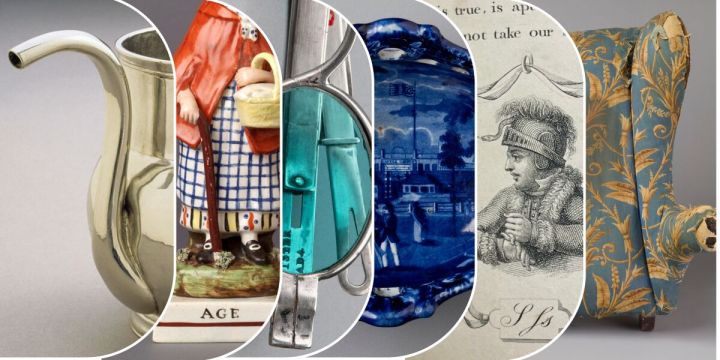
Now available online from Winterthur:
Reframing, Refocusing, Reimagining Disability
Winterthur Museum, Garden & Library Collections
We are very excited to announce a new digital exhibit. Reframing, Refocusing, Reimagining Disability engages with select artifacts from the Winterthur Museum & Library collections created by disabled makers, for disabled users, or about disabled people.
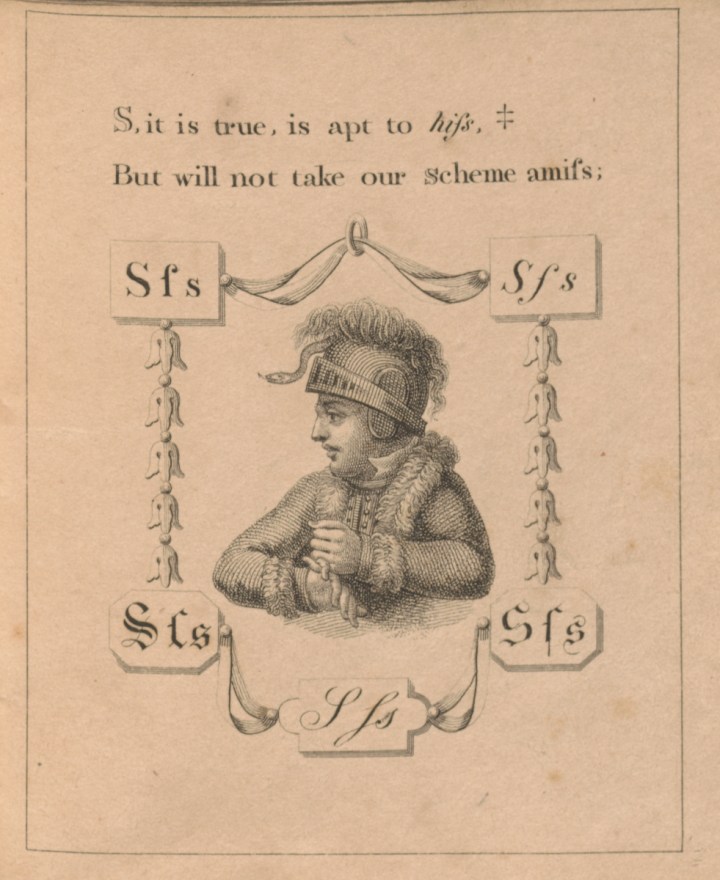
Page from The Invited Alphabet, or Address of A to B: Containing His Friendly Proposal for the Amusement and Instruction of Good Children (London: 1809 / Winterthur Library, PZ6 R7in).
In three thematic sections, the exhibit shares stories about caretaking, aging, and disability education with artifacts that date from the seventeenth, eighteenth and nineteenth centuries that were used or made in North America. From Shaker walkers to silver mugs and eyeglasses, disability stories are everywhere in Winterthur’s collection and beyond. Co-curated by graduate students enrolled in a University of Delaware Art History seminar, along with collaborators within and beyond Winterthur Museum, Garden & Library, this digital exhibit prioritizes access and inclusion through visual description, audio recordings, and alt-text. The student co-curators hope Reframing, Refocusing, Reimagining Disability will foster conversations about how access, inclusion, and disability histories are fundamental to the study of art history, and will enable artworks and objects at Winterthur Museum & Library to testify to past disabled persons’ experiences, connections, and communities. We invite you to visit, respond to, teach with, and share the exhibit widely.
This exhibition was co-curated and co-authored by graduate students enrolled in the “Disability and American Art Histories” seminar in the Department of Art History at the University of Delaware during the 2025 fall semester. Led by Dr. Jennifer Van Horn, and undertaken in partnership with Winterthur Museum & Library, graduate curators include: Phoebe Caswell, Gabrielle Clement, Sydney Collins, Sandra James, Cameron ‘Joey’ Koo, Bella Lam, Sheng Ren, Julia Rinaudo, Lauren Teresi, and Madeleine Ward-Schultz.
This digital exhibit was made possible thanks to the generous participation of our Advisory Council, the Interdisciplinary Humanities Research Center at the University of Delaware, the Department of Art History, and Winterthur Museum, Garden & Library.
Call for Essays | History of Emotions in Visual Culture
From the Call for Contributions, via ArtHistory.net:
Edited Volume | The History of Emotions Seen through Visual Culture
Proposals due by 30 March 2026
Today, emotions are present in every aspect of daily life: think of how joy, sadness, loneliness, and compassion, to name just a few, are emotional axes that underpin the experiences of the 21st century. This premise not only marks the contemporary, but also colours all cultural production created throughout time. To speak of a history of emotions linked to visual culture is to understand that images not only shape or produce emotions and feelings in a viewer, but also act as an active instrument that represents them. See how paintings, engravings, sculptures, films, and digital images themselves participate in the configuration of an emotional language, illustrating what should be felt, how it should be done, and how it is expressed.
From this framework, the image must be understood as a located affective element, that is, its emotionality is linked to specific practices, modes of circulation, and reception that mark the entire history. Thus, proposing an examination of visual culture from the history of emotions allows us to establish a dialogue focused on tracing how all these feelings are translated through gestures, attitudes, poses, in short, any visual message, and how these, in turn, operate in processes of power, identity, memory and individual or collective experience.
This collective volume aims to explore how emotions are produced, questioned, circulated, and perpetuated through visual practices in any historical context. The resulting book is intended to form a dialogue between the history of emotions and visual culture.
The suggested thematic areas are as follows—they are not exclusive:
1 Iconography of feeling: gestures, expressions, bodies, pain, grief, fear, desire, shame, pride, tenderness, etc. All those emotions that can be gleaned from the iconographic and iconological study of a work.
2 Emotions and the politics of images: propaganda, iconoclasm, censorship, mobilisation, memory.
3 Tactics of reception: gaze, empathy, identification, and interpretive communities.
4 The materiality of affections: image objects, relics, and transmission in museums.
5 Technologies of affections: visual technologies and affections: photography, cinema, TV, social networks, AI, digital archives.
This volume seeks relevant chapters that deal with specific and broad visual corpora (painting, engraving, illustrated press, photography, cinema, memes, video games, family archives, museography, etc.), open to any period. The interest lies in proposing an argument focused not only on representations, but also on how they were used, circulated, or in which practices they were inscribed. Proposals are accepted in Spanish and English.
To be considered, please submit a proposal with a title, an abstract (300–400 words), a brief CV (100–150 words), and five keywords by 30 April 2026 to emocionesyculturavisual@hotmail.com with the subject: “CFP — Emotions and visual culture — Surname.” Notification of acceptance will be sent by 15 May 2026. Complete chapters will be due by 30 September 2026 (extendable).
Exhibition | Rome and Milan as Capitals of Neoclassicism
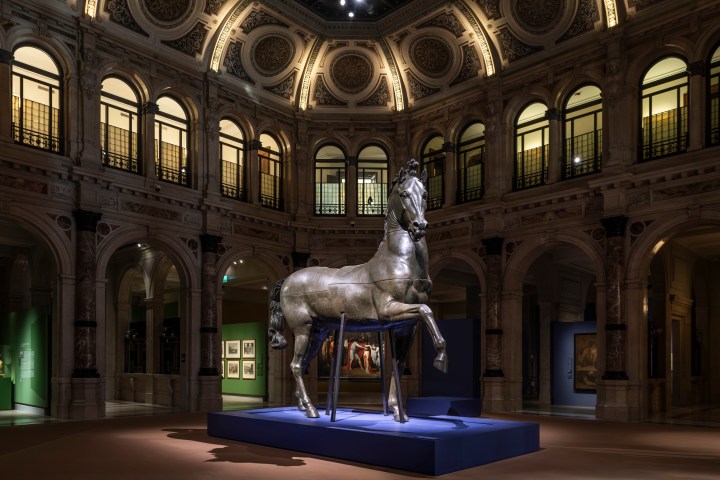
Installation view of the exhibition Eterno e Visione: Roma e Milano Capitali del Neoclassicismo
(Milan, Gallerie d’Italia, 2025)
◊ ◊ ◊ ◊ ◊
Now on view at the Gallerie d’Italia in Milan:
Eterno e Visione: Roma e Milano Capitali del Neoclassicismo
Gallerie d’Italia, Milan, 28 November 2025 — 6 April 2026
Curated by Francesco Leone, Elena Lissoni, and Fernando Mazzocca
From 1796, the year of Napoleon’s descent into Italy, until 1815, marked by the defeat at Waterloo and the Congress of Vienna, a radical political, economic, and social change took place on the peninsula. The momentous turning point of the Napoleonic Age also significantly involved the artistic scene. Only Rome and Milan escaped the decadence of major artistic centres like Florence, Venice, Genoa, and Naples. The Eternal City persisted as the universal capital of the arts due to the abundance of its heritage, from both antiquity and the Renaissance of Raphael and Michelangelo. Artists from all over the world continued to flock to Rome to learn their trade, and the city’s economy profited greatly from the presence of their studios and the activity of various workshops, which produced internationally appreciated bronzes and mosaics. The exhibition aims to evoke this exceptional creative season, comparing the highest level of artistic production of these two ‘capitals’, projected towards modern Europe while remaining firmly attached to the greatness of the past.
The leading artists in the exhibition are two brilliant men who were close friends: Antonio Canova, one of the most important artists of all time, and Giuseppe Bossi, an extraordinary painter, great connoisseur of Leonardo, and a sophisticated collector, as well as founder of the Pinactoca di Brera. Visitors can admire Antonio Canova’s masterpiece—previously thought to have been lost—the large model of a horse currently undergoing exceptional restoration. Other masterpieces by Bossi, Canova, and Andrea Appiani illustrate the creation of the image of Italy, in its well-known and then more popular iconography, due precisely to their genius.
The exhibition also highlights of one of history’s most ambitious architectural projects, conceived by the Bolognese architect Giovanni Antonio Antolini: the famous Foro Bonaparte, which, although never realised, had a major influence on the transformation of Napoleonic Milan into a modern city inspired by the magnificence of antiquity. With this utopian and visionary undertaking, Milan aspired to become the new Rome, pursuing the great ideal dream of classicism. Equally fascinating will be the re-enactment of Napoleon’s coronation as King of Italy in Milan Cathedral, through the exhibition of the so-called Italian Honours: the cape, crown, sceptre, and other splendid objects used during the ceremony, all of which underwent major restoration by Intesa Sanpaolo for the 19th edition of “Restituzioni” in 2022.
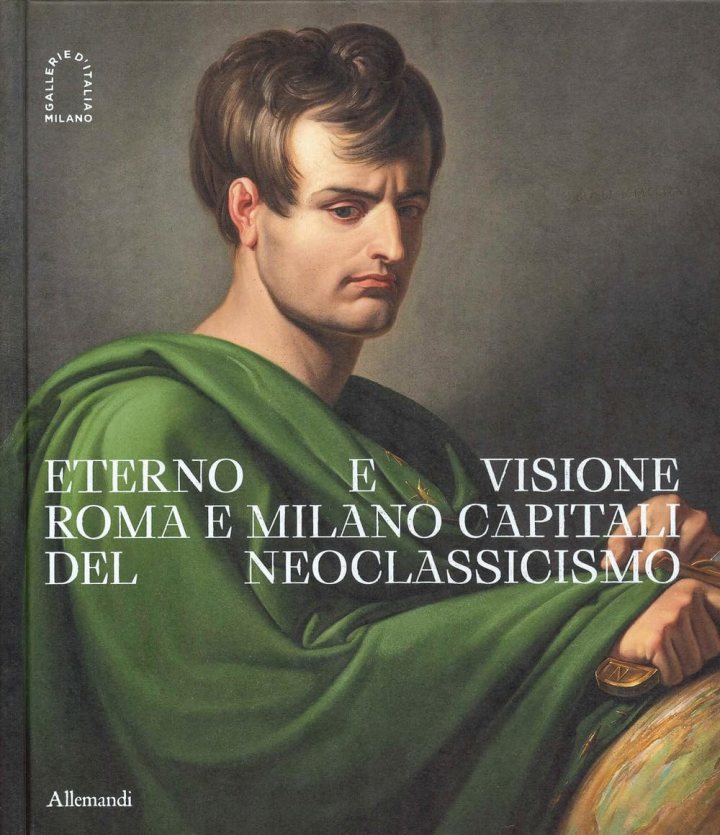
Roberto Bizzocchi, Elisa Baccini, Fernando Mazzocca, Francesco Leone, Elena Lissoni, Charles-Eloi Vial, et al., Eterno e Visione: Roma e Milano Capitali del Neoclassicismo (Turin: Allemandi, 2025), 368 pages, ISBN: 978-8842227137, €39.
Installation | Marie-Antoinette: An Eye for Beauty
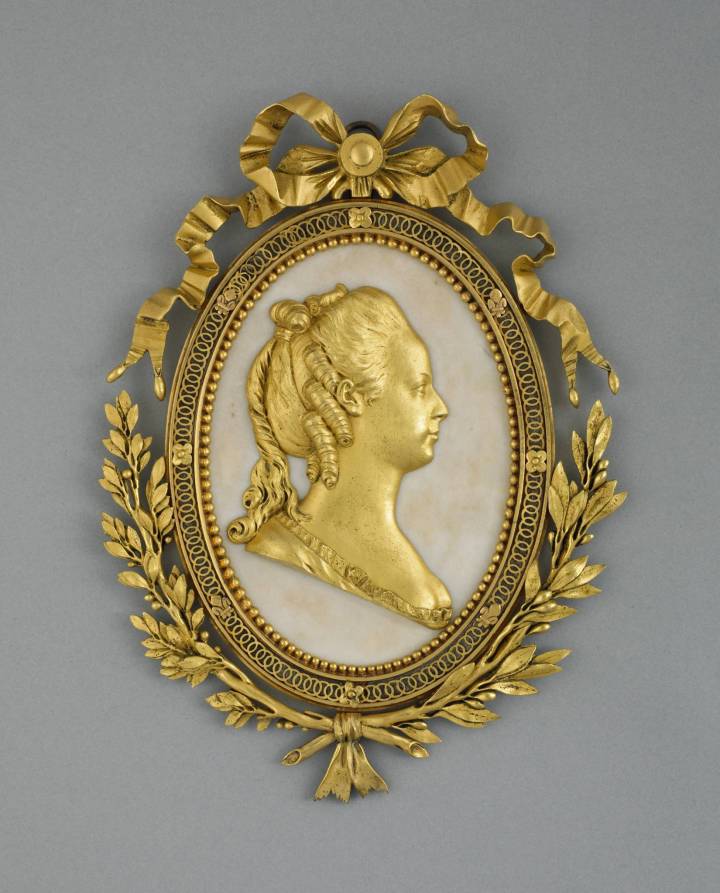
Antoine-François Lebrun (possibly), Queen Marie Antoinette Medallion, ca. 1774, bronze, marble, and gilt, 13 inches high (London: The Wallace Collection, S393; S392 is the object’s paired partner).
Now on view at The Wallace Collection:
Marie-Antoinette: An Eye for Beauty
The Wallace Collection, London
2 February — 31 March 2026
Few figures fire the imagination quite like Marie-Antoinette (1755–1793). Born an archduchess at the glittering Austrian court, her destiny was decided by her marriage to the future Louis XVI of France. She soon attuned herself to the French vogue and the glamour of life at Versailles, while also cultivating a discerning eye for the beautiful. Once crowned queen, she used her almost limitless wealth and influence to commission interiors and artworks of unparalleled refinement, right up until the dawn of revolution. The Wallace Collection cares for some of the world’s greatest works of art associated with the ill-fated queen. Discover a selection of these during this special two-month trail, which offers a tantalising glimpse into her sumptuous, lost world.
Exhibition | 1725: Native American Allies at the Court of Louis XV
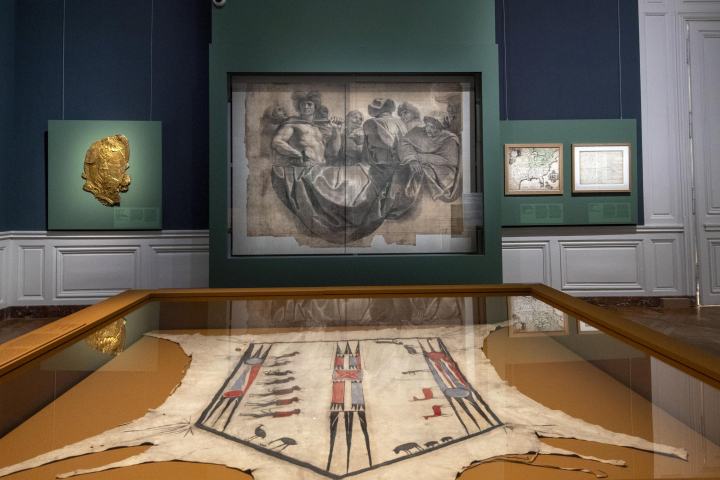
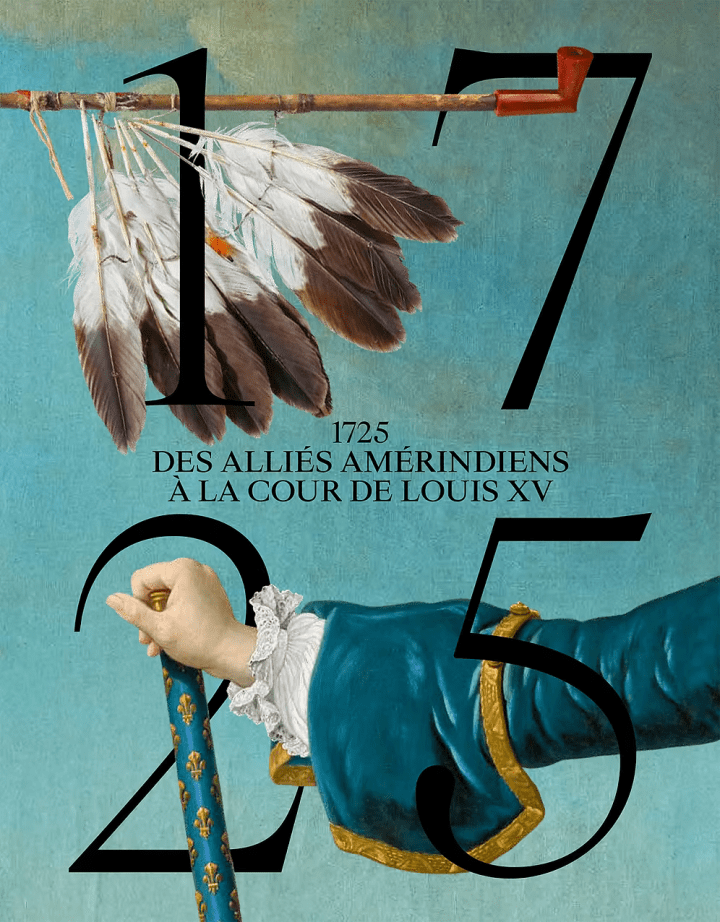
1725: Native American Allies at the Court of Louis XV
1725: Des alliés amérindiens à la cour de Louis XV
Château de Versailles, 25 November 2025 — 3 May 2026
Curated by Jonas Musco, Paz Núñez-Regueiro, and Bertrand Rondot
In 1725, four Native American chiefs and a Native American woman from the Mississippi Valley were received in France as part of an unprecedented diplomatic mission. The event marked the climax of efforts by the French crown to build relationships with Indigenous nations in North America, amidst ongoing conflicts between European colonial powers and the Indigenous allies. This exhibition offers a rare opportunity to explore the history and lives of the Native American nations of the Mississippi Valley in the 18th century, their connections with France, the extraordinary Atlantic crossing undertaken by their leaders, and their meeting with Louis XV, the royal court, and the capital.
The Indigenous Mississippi Valley in the 18th Century
 The first section of the exhibition immerses visitors in the complex world of Native American societies of the Mississippi Valley at the time the French began exploring and settling the area. The encounter between these two civilizations soon led to a lasting alliance based on close diplomatic ties. The exhibition introduces the major Indigenous nations at the heart of this story through a contemporary map specially created for the show, alongside rare 18th-century maps. Some of these nations were already allied with the French through earlier treaties, notably reinforced in 1701 by the Great Peace of Montreal, a historic treaty exceptionally presented to the public.
Through a series of rare portraits—some of the only surviving from that period—a different image of Native societies emerges, far from the 19th-century Plains stereotypes. The selection of artefacts includes a remarkable feathered headdress made in the 18th century for a high-ranking chief, likely the oldest of this type known in the world. The presentation continues with a glimpse into their seasonal way of life, alternating between farming and hunting. Their relationship with the living world is also spiritual, involving social connections with more-than-human beings, such as the thunderbirds—powerful spirits often depicted on hides presented to the French as diplomatic gifts.
The Founding of a French Colony: Louisiana
The second section focuses on the close ties developed between the French and their Indigenous allies after the founding of the Louisiana colony. A selection of objects illustrates the cultural blending that emerged in the early 18th century: war clubs decorated with fleur-de-lis, necklaces made of imported beads, and European knives sheated in Native-style scabbards. The most emblematic items are a peace pipe richly decorated with feathers and a painted hide depicting it.
In 1724, to strengthen the alliance, the Compagnie des Indes proposed inviting the Native leaders to the court of young Louis XV. Étienne Véniard de Bourgmont, commander of the Missouri post, contacted the Otoe, Osage, and Missouria nations—their responses, transcribed in diplomatic correspondence, will be featured in the exhibition—while the Illinois sent Chicagou, the Michigamea chief and conveyed the words of Mamantouensa, chief of the Kaskadia, through Jesuit missionary Nicolas Ignace de Beaubois.
Forming the delegation was not without difficulty. Several other nations planned to send representatives, but the shipwreck of the vessel meant to transport them to France discouraged many from continuing. Ultimately, the delegation consisted of four chiefs and the daughter of a Missouri chief. They set sail in the spring of 1725. From that moment, the delegates were treated as international ambassadors, and a document reveals they were served ‘at the captain’s table’, an honor reserved for elite guests.
The Delegation’s Reception at Court
The final section traces the steps of the Native American chiefs’ visit to France—Paris, Versailles, and Fontainebleau—and details the royal court’s diplomatic protocol for receiving foreign embassies. Thanks to invaluable accounts from the Mercure de France, we follow their movements: meetings with the directors of the Compagnie des Indes, the organizers of the journey, and with princes and princesses of the royal blood.
The exhibition highlights the audience granted by Louis XV to the chiefs on November 25, 1725, at Fontainebleau. This was the most symbolic moment of the visit, during which the chiefs gave speeches to the king, who responded with marked interest in his guests. After touring Versailles, Marly, and Trianon, the delegates were honored with an invitation to hunt alongside with the king at Fontainebleau. They gladly accepted and participated ‘in their own way’—on foot and armed with bows.
The exhibition pathway, punctuated with excerpts from the Mercure de France, presents gifts similar to those exchanged between the Native delegates, the king and the government: prestigious headdresses, bows, and a peace pipe for the Native visitors, and a gold medal and other precious artifacts for the French. Portraits of the main French figures and, for the first time in France, a portrait of a Miami Native American will bring this historic meeting to life.
The exhibition concludes with a reference to the ‘Danse des Sauvages’, a famous piece by Jean-Philippe Rameau added to his opera Les Indes galantes. Inspired by the dance of two Native chiefs at the Comédie-Italienne, this rarely discussed source of inspiration reveals the enduring cultural impact of the 1725 delegation in France.
A special visitor program will allow guests to hear from Native members of the exhibition’s scientific committee as they reflect on the modern-day relationship between their nations and France, echoing this long-shared history.
Curators
• Jonas Musco, Historian, Research Associate
• Paz Núñez-Regueiro, Chief Curator of Heritage, Musée du quai Branly–Jacques Chirac
• Bertrand Rondot, Chief Curator of Heritage, Palace of Versailles
The exhibition is developed within the framework of the research project CRoyAN – Royal Collections of North America—coordinated by the musée du quai Branly–Jacques Chirac, in dialogue with four Native nations: the Choctaw Nation of Oklahoma, the Quapaw Nation, the Miami Tribe of Oklahoma, and the Peoria Tribe of Indians of Oklahoma. The exhibition is organized thanks to the patronage of The CORA Foundation. The exhibition is co-organized with the musée du quai Branly–Jacques Chirac.
Jonas Musco, Paz Núñez-Regueiro, and Bertrand Rondot, 1725: Des alliés amérindiens à la cour de Louis XV (Paris: Liénart, 2025), 160 pages, ISBN: 978-2359064766, €29.
Call for Applications | Histories and Futures of Indigenous Print Cultures
From the American Antiquarian Society:
Paper Relations: Histories and Futures of Indigenous Print Cultures
A Summer Seminar in the History of the Book Led by Kathryn Walkiewicz and Kelly Wisecup
American Antiquarian Society, Worcester, Massachusetts, 21–26 June 2026
Applications due by 3 April 2026
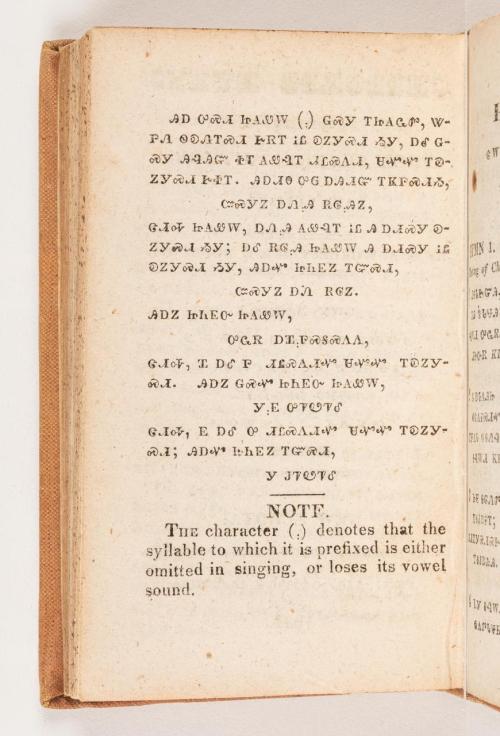
Cherokee Hymns (New Echota, 1833) (Worcester: American Antiquarian Society, Worcester, #226669).
What relationships are necessary to make Indigenous books? What relations are held in paper, bindings, and ink? And what relations are generated by the circulation and use of Indigenous print?
This seminar will examine Indigenous cultures of print between the seventeenth and nineteenth centuries. Our focus on relations extends from collaborations with publishers, patrons, and printers to considering plants, trees, animals, and rags in paper and bindings―as well as the complex connections books have to the archives where they are held. Specific topics will be driven by participants’ interests but may include periodical networks, relations between Black and Indigenous print cultures, environmental histories of the book, Indigenous language revitalization, Tribal nations’ acts of archival creation and activism, and more.
Throughout the seminar, participants will examine both conceptual and methodological questions using AAS’s vast holdings of Indigenous printed materials. Using readings drawn from Indigenous studies and history of the book scholarship, we will consider how this scholarship might be put in conversation with Indigenous peoples’ use of print and the book. Building on influential research that has recovered histories of Indigenous writing and challenged the oral-literacy binary, we will ask how Indigenous books manifest, contest, and make relations with living beings, with other books, and with communities.
Guest speakers for the seminar include Ellen Cushman (Northeastern University), David Aiona Chang (University of Minnesota Twin Cities), and Kimberly Toney (Brown University). Paper Relations coincides with the James Russell Wiggins Lecture in the History of the Book in American Culture, which will be given by Phillip Round (University of Iowa) on 24 June 2026.
Participants will be encouraged to think about how to take insights from the seminar into their own classrooms, libraries, and communities, as well as to their networks for mentoring and collegial support. Early career scholars, library and museum professionals, and Tribal staff are especially encouraged to apply.
PHBAC is committed to creating an environment that welcomes all people and meets their access needs. The AAS library and classroom facilities are wheelchair accessible. Other accommodations may be available upon advance request. Participants are encouraged to indicate any accessibility needs in their applications.
Tuition for the five-day seminar is $1000. This includes meals throughout the week and a guided field trip to the Hassanamesit Woods in Grafton, Massachusetts. Two tuition scholarships to attend the seminar are generously funded by the Bibliographical Society of America. Additional scholarships are available for students and scholars specializing in Indigenous studies, including community members or staff affiliated with Tribal organizations. See the application form for more information about scholarships to attend the seminar. The cost of housing is not included in the tuition fee. Participants will have the option of staying in dormitory housing on the Worcester Polytechnic Institute campus (within easy walking distance of AAS) for approximately $80 per night.
For questions about the seminar, please contact John J. Garcia, AAS director of scholarly programs and partnerships, at jgarcia@mwa.org. Applications can be submitted here»
Kathryn Walkiewicz (enrolled citizen, Cherokee Nation/ᏣᎳᎩᎯ ᎠᏰᎵ) is an associate professor of literature and faculty director for the Indigenous Futures Institute at the University of California, San Diego. Walkiewicz is the author of Reading Territory: Indigenous and Black Freedom, Removal, and the Nineteenth-Century State (University of North Carolina Press, 2023) and co-editor of The People Who Stayed: Southeastern Indian Writing after Removal (University of Oklahoma Press, 2010). Their research and teaching interests include Native American and Indigenous studies, print culture, early American literature and culture, nineteenth-century American studies, Southern studies, speculative fiction, and horror. Walkiewicz held an AAS-National Endowment for the Humanities Long-Term Fellowship in 2021 and was elected to AAS membership in 2022.
Kelly Wisecup is the Arthur E. Andersen Teaching and Research Professor in the Department of English at Northwestern University, where she is also an affiliate of the Center for Native American and Indigenous Research. Her research brings together early American studies, Native American and Indigenous Studies, and histories of books and archives. She is the author of Assembled for Use: Indigenous Compilation and the Archives of Early Native American Literature (Yale University Press, 2021) and is principal investigator for the Ojibwe Muzzeniegun Digital Edition Project, a project to create a collaborative digital edition of the nineteenth-century literary magazine made by the Ojibwe poet Jane Johnston Schoolcraft and her family. Wisecup was a Peterson Fellow at AAS in 2014–15 and was elected to membership in the Society in 2022.
The Frick Appoints Aaron Wile as John Updike Curator
From the press release:
 The Frick Collection announces the appointment of Dr. Aaron Wile as its new John Updike Curator. He will take up the post on 6 April 2026. In this senior curatorial role, Wile succeeds Dr. Aimee Ng, who became the museum’s Peter Jay Sharp Chief Curator last fall. Wile returns to the Frick having held a formative position as Anne L. Poulet Curatorial Fellow from 2014–16, during which he organized the acclaimed exhibition Watteau’s Soldiers: Scenes of Military Life in Eighteenth-Century France. For his work on the show’s catalogue, he received the 2017 Award for Outstanding Article, Essay, or Extended Catalogue Entry from the Association of Art Museum Curators—an appropriate accolade for his new position, which is named in memory of the American novelist, poet, and critic John Updike.
Since 2019, Wile has served as Associate Curator of French Paintings at the National Gallery of Art in Washington, D.C. In this position, he has co-curated innovative installations such as Back and Forth: Rozeal., Titian, Cezanne (2025). He also helped design the Department of French Painting’s first comprehensive collection plan; spearheaded acquisitions, particularly of works by women artists; cultivated donor and collector relationships; and contributed to cross-departmental initiatives related to reinstallations and the presentation of scholarship on digital platforms.
Commented Axel Rüger, the Frick’s Anna-Maria and Stephen Kellen Director, “We are excited for Aaron to contribute his expertise and experience in support of the Curatorial Department as its next chapter unfolds. He joins us at a remarkable time, as this April we celebrate one year since the museum’s historic reopening following the renovation and enhancement of our buildings.”
Added Aimee Ng, “Aaron brings a fresh perspective to the Frick’s collection, especially to its foundational holdings of French paintings. Since he served as a fellow over a decade ago, his curatorial and academic experiences have enhanced his considerable talents, and he returns to the museum with exceptional scholarly rigor, expert communication and interpretive skills, and seasoned and versatile professionalism. We could not be more thrilled to welcome Aaron back to the Frick as John Updike Curator.”
Prior to the National Gallery, Wile held a Postdoctoral Fellowship at the Society of Fellows in the Humanities at the University of Southern California (2017–19) and a Chester Dale Fellowship at The Metropolitan Museum of Art (2016–17). He earned a BA in History from Haverford College and an MA and PhD in the History of Art and Architecture from Harvard University, specializing in seventeenth- and eighteenth-century French art.
9th Annual Ricciardi Prize from Master Drawings
From Master Drawings:
Ninth Annual Ricciardi Prize from Master Drawings
Submissions due by 15 November 2026
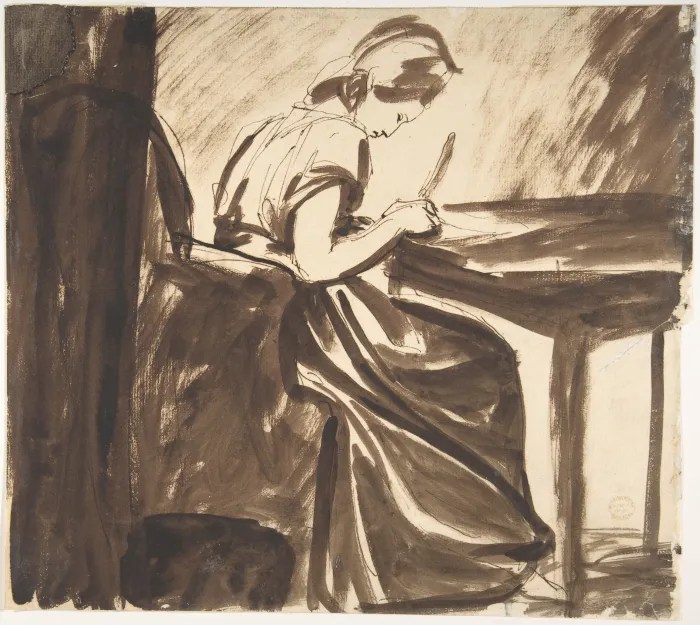
George Romney, Lady Seated at a Table (recto); pen and brown ink, brush and brown wash (NY: The Metropolitan Museum of Art, 11.66.3).
Master Drawings is now accepting submissions for the 9th Annual Ricciardi Prize of $5000. The award is given for the best new and unpublished article on a drawing topic (of any period) by a scholar under the age of 40. Candidates are also eligible for a $1000 runner-up prize and publication. Prize winners are eligible for reimbursement of costs associated with obtaining image publication permissions. They will be invited to present their research at a symposium held during Master Drawings Week in New York (January 2027). Information about essay requirements and how to apply can be found here. Information about past winners and finalists is available here.
The average length is between 2500 and 3750 words, with five to twenty illustrations. Submissions should be no longer than 7500 words and have no more than 75 footnotes. All submissions must be in article form, following the format of the journal. Please refer to our Submission Guidelines for additional information. We will not consider submissions of seminar papers, dissertation chapters, or other written material that has not been adapted into the format of a journal article. Written material that has been previously published, or is scheduled for future publication, will not be eligible. Articles may be submitted in any language. Please be sure to include a 100-word abstract outlining the scope of your article with your submission.
New Film | The Testament of Ann Lee
◊ ◊ ◊ ◊ ◊
From Searchlight Pictures:
The Testament of Ann Lee, directed by Mona Fastvold, written by Mona Fastvold and Brady Corbet, starring Amanda Seyfried as Ann Lee, the 18th-century founding leader of the Shakers, 2025, 137 minutes.
Reviewing the film for The New York Times, Alissa Wikinson describes it as a “singular, astonishing, otherworldly biographical musical about the founder and spiritual leader of the Shakers.” She goes on: “That’s a lot of adjectives, I know, but I can’t pick one to remove—and even those don’t quite capture how unusual and terrific this movie is. That it may not be to everyone’s taste, or to yours, feels almost besides the point. When an artist takes a swing this colossal and stays true to their vision in every way, the resulting work deserves respect, and is always worth seeing.”
The full review is available here»
Exhibition | Drawn to Venice
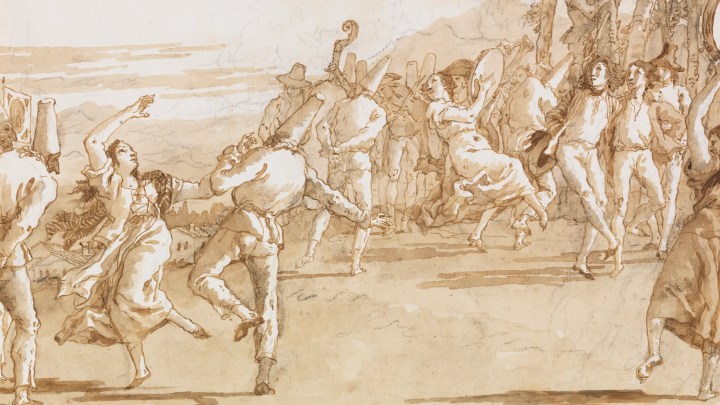
Giovanni Domenico Tiepolo, La Furlana (The Friulian Dance), detail, no. 31 from the series Divertimento per li regazzi (Entertainment for Children), ca. 1790–1800, pen and brown ink and brown wash over black chalk, 35 × 47 cm (Fine Arts Museums of San Francisco, 1967.17.133).
◊ ◊ ◊ ◊ ◊
Now on view in San Francisco:
Drawn to Venice
Legion of Honor, Fine Arts Museums of San Francisco, 24 January — 2 August 2026
Spanning the Renaissance to the Rococo period, this exhibition celebrates the vitality and originality of the arts in Venice and the Veneto region through more than 30 drawings and prints. In the 16th century, Venice became a thriving artistic center rivaling Rome and Florence. Patronage fostered creative competition among family workshops, such as the Bassano and Tintoretto families. After a period of decline, Venice experienced a second golden age in the 18th century. This was illustrated with dazzling bravura by humorous scenes from contemporary life by Giovanni Battista Tiepolo (1696–1770) and his son Giovanni Domenico Tiepolo (1726–1804), as well as alluring portraits by Rosalba Carriera (1673–1757). Glistening maritime views by Francesco Guardi (1712–1793) and Canaletto (1697–1768) crystallized the imagery of the Venetian landscape for centuries to come. From landscapes and figure studies to designs for sumptuous decorations, the works presented in this exhibition offer a fresh look at this memorable place in history and art.
This exhibition is designed in dialogue with Monet and Venice, on view from 21 March until 26 July 2026 at the de Young.










 Enfilade
leave a comment