Call for Papers | Cities and Citizens, ca. 1580–1720
From the Call for Papers:
Cities and Citizens: Seventeenth-Century Studies Conference
Institute of Medieval and Early Modern Studies, Durham University, 13–15 July 2015
Proposals due by 1 November 2014
Durham’s Centre for Seventeenth-Century Studies—now part of the Institute of Medieval and Early Modern Studies—has, since its foundation in 1985, organized over a dozen high-profile international conferences. Next year’s conference will address the topic of ‘Cities and Citizens’ and will focus on the ways in which urban centres were perceived, experienced, understood and represented in the ‘long seventeenth century’ (c.1580–1720). The conference will be held within the UNESCO World Heritage Site on Palace Green in the heart of the medieval city of Durham.
The built environment of the city was represented in cartography, painting, printed images and in literary and dramatic works. What were the physical and sensory characteristics of the urban environment? How did the material form of the city change? Especially important here is architectural form—civic, ecclesiastical, official and vernacular. How did urban and rural people read the urban landscape? Here we hope to draw on the insights of archaeological theory as well as on recent findings in post-medieval urban archaeology.
The distinctiveness of the urban experience will be explored. What were the effects of inter-urban trade and of trade and migration between town and countryside? What were the economics of urbanization? In what ways did urban labour differ from that in rural communities and how was it regulated? How did urban people understand customary law and access to common resources? How did civic remembrance connect with popular memory? How did religious conflict change cities and in what ways were confessional identities inflected by the urban experience?
Special emphasis will be placed upon the idea and practice of citizenship. Who did this term include and who was left out? In what ways were ideas about citizenship inflected by nationality, ethnicity, belief, class, gender, property, skill, schooling and age? How far were early modern ideas about citizenship reflective of classical ideals, and how did they connect to those of the late medieval period? To what extent did citizenship guarantee inclusion within the urban polity, and what rights and obligations came with that inclusion? In what ways did those excluded from citizenship nonetheless participate in the urban polity?
We invite proposals either for single papers or for 3-paper panels. Papers should last for 20 minutes, with half an hour at the end of each panel for discussion. Panels may be specific to a particular town or city, or might be national or international in scope, including New World urban centres. Potential subjects might include (but are not restricted to):
• Defining towns, cities and urban communities
• The urban environment and the urban landscape
• Perceptions of space and time
• Gender, age, household and citizenship
• Social relations and social conflicts
• Crime, authority, resistance and the law
• Civic identities and vernacular urban cultures
• Urban customary rights and common resources
• Urban political cultures and public spheres
• Work and leisure
• Print, literacy and education
• Cities and international trade and exchange
• Fuelling and feeding the city
• Migration and social mobility
• Urban parish identities and patterns of belief
• Monastic houses, cathedrals and religious authority
• Occupations, social structures and demographics
• Disease, famine, medicine, and social policy
• Siege warfare
• Urban revolt
• Art, architecture and civic portraiture
Proposals for 20-minute papers and full panels should be submitted to early.modern@durham.ac.uk by 1 November 2014. Replies will be sent in early December 2014. Details concerning travel and accommodation for both speakers and delegates will be made available around the same time. It is hoped that the conference will give rise to an edited volume of selected essays.
New Book | Built to Brew: The History and Heritage of the Brewery
From English Heritage:
Lynn Pearson, Built to Brew: The History and Heritage of the Brewery (Swindon: English Heritage, 2014), 264 pages, ISBN: 978-1848022386, £25.
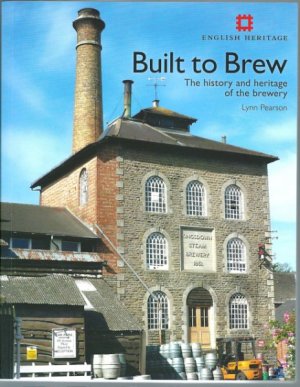 Beer has been brewed in England since Neolithic times, and this book combines a thoroughly enjoyable exploration of beer’s history and built heritage with new in-depth research into the nuts and bolts of its production. Based around England’s breweries, but occasionally ranging further afield, it tells the intriguing story of the growth of this significant industry. From Georgian brewing magnates who became household names—and their brewhouses notable tourist attractions—through magnificently ornate Victorian towers to the contemporary resurgence of microbreweries, the text throws new light on brewers and the distinctive architecture of their buildings.
Detailed chapters explain what makes a brewery work, revealing the functions of sometimes enormous brewing vessels, the astonishing skills of coppersmiths and engineers, the work of heroic mill horses and the innovative steam engines which replaced them. The wider context of the brewing industry is also investigated, bringing out the breadth of the ‘beerscape’, including those buildings put up with brewing profits such as the original Shakespeare Memorial Theatre in Stratford-upon-Avon.
Lynn Pearson is an independent architectural historian, writer and photographer specialising in the brewing industry, sporting architecture, postwar decorative arts and architectural ceramics. She has been based in Newcastle upon Tyne since 1984 and has published 20 books including pioneering works on seaside architecture, the architectural history of British breweries, and the architecture of cooperative living. More information is available at her website.
◊ ◊ ◊ ◊ ◊
C O N T E N T S
Preface
Acknowledgements
1. The Prologue: Beer
2. The Emergence of the Brewery
3. The Development of the Brewery
4. Designing and Planning the Brewery
5. Inside the Brewery
6. Powering the Brewery
7. Burton upon Trent – Beer Capital of Britain
8. Beyond the Brewery
9. The Buildings of the Brewing Industry Today
Notes
Bibliography
Glossary
Brewery Index
Geographical Index
General Index
New Book | Support for the Fleet

The former home for injured seamen established
at Greenwich by Queen Mary
◊ ◊ ◊ ◊ ◊
From English Heritage:
Jonathan Coad, Support for the Fleet: Architecture and Engineering of the Royal Navy’s Bases, 1700–1914 (Swindon: English Heritage, 2013), 464 pages, ISBN: 978-1848020559, £100.
Joint winner of the Association for Industrial Archaeology’s Peter Neaverson Award for Outstanding Scholarship in Industrial Archaeology (2014)
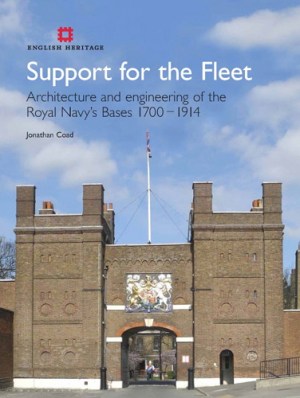 This major new book traces for the first time the architectural and engineering works in the Royal Navy’s shore bases at home and overseas and the political imperatives and technologies that helped shape them up to the First World War. Based on detailed archival research, it concentrates on the remarkable legacy of surviving structures. The varied requirements of the sailing navy and its steam-driven successor are reflected in successive dockyard remodellings and expansions. The book reveals the close links that developed with a rapidly industrialising Britain at the end of the eighteenth century, showing contributions of figures such as Samuel Bentham, Thomas Telford, Henry Maudslay, the Rennies, the Jessops and James Watt.
The influence of the Royal Engineers is traced from early beginnings in the 1700s to their major role in the dockyard expansions from the late 1830s into the twentieth century. The architectural development of victualling and ordnance yards, naval hospitals, schools and coaling stations are all described, together with their key contributions to Great Britain’s long naval supremacy. Copiously illustrated with maps, plans and photographs, this important and lively work will appeal to naval historians, industrial archaeologists and students of British history.
Jonathan Coad is a former Inspector of Ancient Monuments. He is a Vice-President of the Society for Nautical Research and a former President of the Royal Archaeological Institute of Great Britain and Ireland.
◊ ◊ ◊ ◊ ◊
C O N T E N T S
1. The Royal Dockyards in Great Britain, 1700–1835
2. The Royal Dockyards in Great Britain, 1835–1914
3. Planning and Building the Royal Dockyards to 1795
4. Planning and Building the Royal Dockyards, 1795–1914
5. Engineering Works of the Sailing Navy, 1700–1835
6. Buildings of the Sailing Navy
7. Dockyard Housing, Offices and Chapels
8. Buildings and Engineering Works of the Steam Navy, 1835–1914
9. Growth of Empire: The Overseas Bases of the Sailing Navy, 1700–1835
10. Heyday of Empire: The Overseas Bases, 1835–1914
11. The Mediterranean Bases: Buildings and Engineering Works, 1700–1914
12. The West Indies and North American Bases: Buildings and Engineering Works, 1700–1914
13. South Atlantic and Australian Bases: Buildings and Engineering Works, 1700–1914
14. Feeding the Fleet: The Royal Victualling Yards
15. Naval Ordnance Yards
16. Care of the Sick and Wounded: Naval Hospitals
17. Barracks and Training Establishments
Call for Papers | The Travellers’ Tails Seminars: Exploration

George Stubbs, Portrait of the Kongouro (Kangaroo)
from New Holland, 1772 (National Maritime Museum)
◊ ◊ ◊ ◊ ◊
From the Call for Papers:
The Travellers’ Tails Seminars: Exploration
National Maritime Museum, Greenwich, Four Thursdays, 9 October 2014 — 29 January 2015
Proposals due by 5 September 2014
The Art Fund and Heritage Lottery Fund have generously funded a series of seminars at the National Maritime Museum and partner museums around the UK to investigate the histories, practices and interpretation of art, science and exploration from the Enlightenment to the present day. The seminars will bring together scholars, artists, scientists, explorers, members of the public and museum professionals to examine the changing nature, impact and legacies of European exploration since the mid-18th century. The seminars will focus on today’s audiences and discuss the display and interpretation of the material culture of exploration within gallery, heritage and museum environments. Seminars will interrogate the relevance of the subject and issues surrounding its presentation in a post-imperial world. George Stubbs’ iconic paintings of a kangaroo and dingo, recently acquired by the National Maritime Museum, will provide a starting point for wider-ranging papers and discussion within a multi-disciplinary environment.
Thursday, 9 October 2014: Lost in Translation
• How are the experiences and the material culture of exploration translated for those back at ‘home’?
• How have new places and frameworks of knowledge been introduced to Western societies?
Thursday, 20 November 2014: Finding Voices and Re-shaping History
• How might established narratives of exploration be accommodated within modern interpretations?
• To what extent and with what effect did indigenous peoples contribute to the making and dissemination of European knowledge?
Thursday, 4 December 2014: Empire and the Museum
• How and with what effects is Empire represented in museums?
• How can historical and contemporary exploration be documented and displayed to ensure other voices are included?
Thursday, 29 January 2015: Arts and Science: An Enlightened Approach
• How does bringing together the arts and sciences add to the interpretation of exploration?
• Where were the cross-overs between the arts and sciences historically, how are they viewed today and why?
Proposals of no longer than 250 words, for presentations of 20 minutes, should be sent to research@rmg.co.uk by no later than Friday, 5 September 2014. We welcome submissions for papers and less-formal presentations from academics, curators, artists and other specialists in the fields. Proposals from postgraduate students and early career scholars are encouraged.
Exhibition | Australian Encounters: Charting a Continent
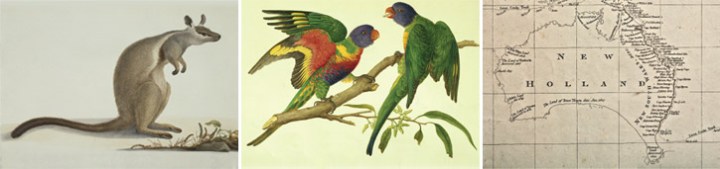
Rock Wallaby © Natural History Museum, London; Rainbow Lorrikeets © Natural History Museum; London, and Cook’s Map of Australia 1773
◊ ◊ ◊ ◊ ◊
From the museum:
Australian Encounters: Charting a Continent
Captain Cook Memorial Museum, Whitby, North Yorkshire, 1 March — 3 November 2014
Cook and his successors completed the chart of the continent’s coastline and marvelled at the strange new creatures they saw—’unlike anything encountered before!’ He and his crew navigated in unknown treacherous waters, where the ship was holed on a coral reef, and then had to be beached and repaired. The voyage, however, led to the choice of Botany Bay as the site of a new colony, starting a trail of immense change throughout Australasia. This year marks the bicentenary of the publication of the entire coastline, completed by Matthew Flinders in 1814.
The Captain Cook Memorial Museum is housed in an historic building on the harbourside: John Walker’s House. In 1746 James Cook, then a youth aged seventeen, came here to be apprenticed to Captain John Walker. A beautiful 17th-century house, this is the sole remaining building which can with certainty be connected to Cook.
Historic Willoughby-Baylor House Reopens
◊ ◊ ◊ ◊ ◊
From the Chrysler Museum:
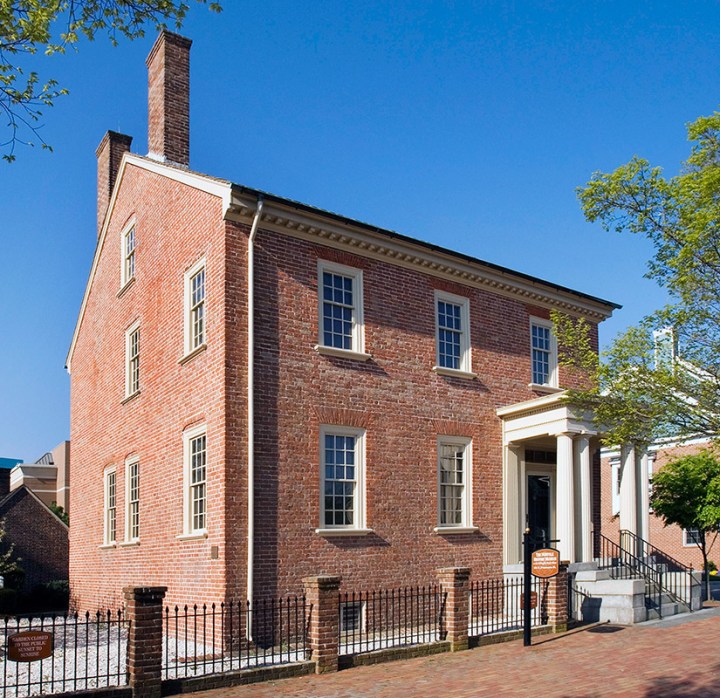
The Willoughby-Baylor House, the long-time home of the Norfolk History Museum, reopens August 16 after a long closure for structural renovations and a complete re-imagination of the displays and artifacts related to the history and art of one of America’s original heritage port cities.
The ground floor greets visitors with a new exhibition, Democratic Designs: American Folk Paintings from the Chrysler Museum. “This exhibition is our largest display of American folk art in more than three decades,” said Crawford Alexander Mann III, the Brock Curator of American Art at the Chrysler Museum. “Few museums surpass the Chrysler’s depth in this field, and it’s time to put our masterpieces in the spotlight.”
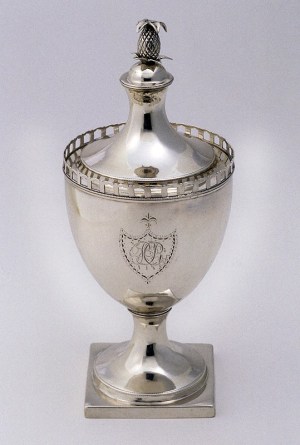
Jeremiah Andrews, Covered Sugar Bowl, silver, ca. 1791 (Chrysler Museum)
On the second floor you’ll find The Norfolk Rooms. This suite of Norfolk-made art and artifacts includes period paintings, furniture, and silver. Highlights includes Cephas Thompson’s stately portrait of Norfolk attorney John Nivison, painted in 1812, and a delicately engraved silver sugar bowl by Jeremiah Andrews created around 1791. “Andrews and other local silversmiths often embossed their wares with both their initials and the word Norfolk, building name recognition for this city as a source of fine craftsmanship,” said Mann. “We’ve built new cases to show off more of their work, and we will switch these displays periodically.”
The Willoughby-Baylor House is a two-story brick townhouse built in 1794 by Captain William Willoughby, a descendent of one of Norfolk’s founding families. After falling into disrepair, it was saved from demolition and opened as a house museum in 1970. A complete look at the history of the Willoughby-Baylor House is available here.
Exhibition | Democratic Designs: American Folk Paintings
From the Chrysler Museum:
Democratic Designs: American Folk Paintings from the Chrysler Museum
Willoughby-Baylor House, Norfolk, Virginia, 16 August 2014 — 5 April 2015
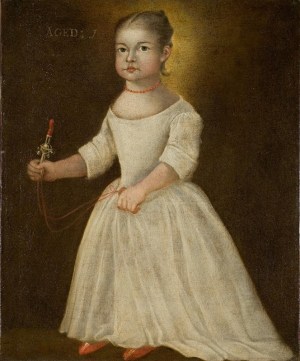
Attributed to Joseph Badger, Portrait of a Child, oil on canvas, ca. 1750 (Chrysler Museum of Art)
The Federal-era Willoughby-Baylor House provides a perfect historical setting for an exhibition of highlights from the Chrysler Museum’s deep early American collections.
Democratic Designs explores the work of artists with considerable ambition and talent, but limited access to professional training. The exhibition includes works by Ammi Phillips, Edward Hicks, Erastus Salisbury Field, and their contemporaries. The exhibition triumphantly displays individual creativity and native genius. Many pieces in this show are gifts from the pioneering collectors Bernice Chrysler Garbisch, sister of Walter P. Chrysler, Jr., and her husband Col. Edgar William Garbisch.
The Baroque in the Construction of a National Culture in Francoist Spain
From Taylor & Francis:
Bulletin of Spanish Studies: Hispanic Studies and Researches on Spain, Portugal and Latin America 91.5 (2014).
Special issue on ‘The Baroque in the Construction of a National Culture in Francoist Spain’, edited by Paula Barreiro López, Carey Kasten and Tobias Locker.
The baroque was both praised and attacked by critics for overwhelming the viewer through art. Yet its indisputable importance in Hispanic tradition and its characteristic intensity made the baroque an important element of culture during the regime of Francisco Franco (1939–1975). Not only did the baroque anchor official Francoist culture, its influence was also apparent in the regime’s politics, which used the baroque as an ideological legitimising tool in intellectual discourses. This interdisciplinary special issue is the first single volume to examine the influence of baroque tradition on Francoist Spain, analyzing cultural and political examples of twentieth-century reinterpretations of the baroque. For example, the concept of hispanidad, which underpinned Spain’s foreign policy and influenced international perceptions of the country, contained many baroque elements. By analysing its imprint on Spain’s culture industry both at home and abroad this special issue demonstrates the essential role the baroque played in the creation of a national and cultural identity during the dictatorship in Spain.
• Tobias Locker, “The Baroque in the Construction of a National Culture in Francoist Spain: An Introduction,” pp. 657–71.
• Till Kössler, “Education and the Baroque in Early Francoism,” pp. 673–96.
• Carey Kasten, “Staging the Golden Age in Latin America: José Tamayo’s Strategic Ascent in the Francoist Theatre Industry,” pp. 697–714.
• Paula Barreiro López, “Reinterpreting the Past: The Baroque Phantom during Francoism,” pp. 715–34.
• Noemi De Haro-García and Julián Díaz-Sánchez, “Artistic Dissidence under Francoism: The Subversion of the Cliché,” pp. 735–54.
• Johannes Großmann, ” ‘Baroque Spain’ As Metaphor. Hispanidad, Europeanism and Cold War Anti-Communism in Francoist Spain,” pp. 755–71.
• Julio Montero and María Antonia Paz, “Lo barroco en la televisión franquista: tipos y temas; actores y escenarios,” pp. 773–92.
Exhibition | Caroline Watson and Female Printmaking
Opening next month at The Fitzwilliam:
Caroline Watson and Female Printmaking in Late Georgian England
The Fitzwilliam Museum, Cambridge, 23 September 2014 — 4 January 2015
Curated by David Alexander
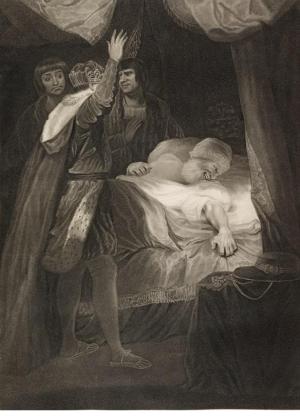
Caroline Watson, The Death of Cardinal Beaufort, stipple and etching after Sir Joshua Reynolds, 1792.
Caroline Watson (1760/61–1814) can be seen as the first British woman professional engraver. Many women in Britain had made prints before her day, but she was the first to make an extended career as an independent engraver. Nearly all those who had earlier made prints were either amateurs, making prints for amusement, or members of printmakers’ families, playing their part in family enterprises. The interest of her career is increased because she was working at a time when women were becoming more important as print buyers; some of her output reflected this change and the accompanying popularity of prints catering to feminine taste. She received support from other women, including recognition from Queen Charlotte, who appointed her ‘Engraver to the Queen’ in 1785, after she had been working for only five years. Later she was encouraged by the wealthy Bute family, particularly by the 4th Earl’s second wife, whose guest she was on several occasions at Luton Park, where Lord Bute, had one of the finest picture collections in England.
At the same time as finding support from other women Caroline Watson was encouraged by several influential men who saw advantage in using her skills; at the start of her career there were the painters Robert Edge Pine, Sir Joshua Reynolds and Ozias Humphry, as well as the printseller John Boydell, all of whom must have known her father; at the end of her career there was William Hayley, a poet and man of letters who befriended many artists. He both admired her as an ailing woman working on her own, and saw her as a reliable and talented collaborator. Having previously employed William Blake to engrave book illustrations he instead employed Caroline Watson on his Life of Romney, 1809. She did not owe her success to patronage, but to her great skill and dedication as an engraver; however the accidents of patronage were an important element in any artist’s career, especially for a woman who was of a retiring nature and not particularly robust in health.
The 200th anniversary of Watson’s death and the fact that the Fitzwilliam and the Folger Library own a number of unpublished letters by her to Hayley, which throw much light on her situation and way of life, provide a suitable opportunity not just to look at her career but to examine printmaking by women in the Britain of her time.
◊ ◊ ◊ ◊ ◊
Caroline Watson and Female Printmaking in Late Georgian England
The Fitzwilliam Museum, Cambridge, 24 September 2014
David Alexander, Honorary Keeper of British Prints and curator of the exhibition, will give a lunchtime talk at 1:15 on Wednesday, 24 September in the Seminar Room. Free admission is by token, 1 per person, available at the Courtyard Entrance desk from 12.45 on the day of the talk.
◊ ◊ ◊ ◊ ◊
Note (added 28 September 2014) — The catalogue is available from the Fitzwilliam:
David Alexander, Caroline Watson and Female Printmaking in Late Georgian England (Cambridge: Fitzwilliam Museum, 2014), 126 pages, ISBN 978-0957443464, £15.
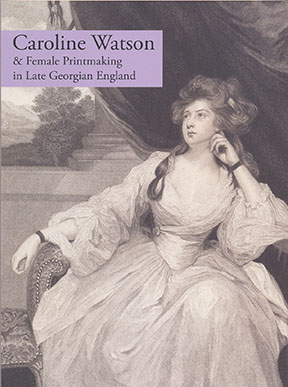 Caroline Watson, who died in 1814, can be seen as the first professional woman engraver, in the sense that she worked independently rather than as a member of a family of engravers. Over a career of thirty years she engraved more than a hundred very delicate prints in the stipple, or dotted manner, which was particularly suited for reproducing miniature portraits. The catalogue, which contains a chronological list of her prints, puts her in the context of the female printmaking of her time, and shows how exceptional was her achievement in working in a male dominated profession. The catalogue carries a transcription of sixteen letters written to her last major employer, William Hayley, which throw much light on the working methods of engravers in general.
Exhibition | Silent Partners: Artist and Mannequin
Press release (4 August) from The Fitzwilliam:
Silent Partners: Artist and Mannequin from Function to Fetish
The Fitzwilliam Museum, Cambridge, 14 October 2014 — 25 January 2015
Musée Bourdelle, Paris, 31 March — 12 July 2015
Curated by Jane Munro
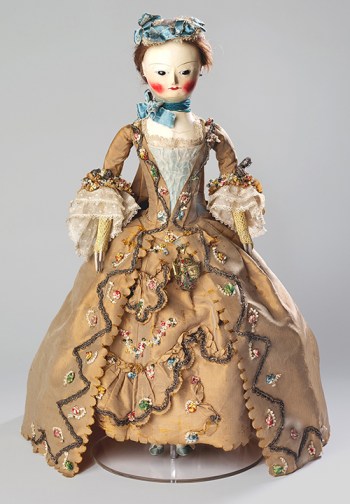
Fashion doll with costume and accessories, 1755–60; wood, gesso, paint, glass, human hair, knitted cotton, satin, silk, gilt braid, wire, silk gauze, linen, cotton, and silk satin, 60 x 42 x 43 cm (London: V&A Museum)
Every picture tells a story … but it does not always give away its secrets. For much of its existence, the artist’s mannequin, or lay figure, was one of art’s best-kept.
Now, for the first time, Silent Partners will unveil the mannequin’s secret life to show how, from being an inconspicuous studio tool, a piece of equipment as necessary as easel, pigments and brushes, the lay figure became the fetishised subject of the artist’s painting, and eventually, in the twentieth century, a work of art in its own right.
A common figure in the studios of painters and sculptors from the Renaissance onwards, this ‘artful implement’ was used to study perspective, arrange compositions, ‘rehearse’ the fall of light and shade and, especially, to paint drapery and clothing. But, while even the very greatest artists condoned its use, the mannequin best served its purpose by remaining ‘silent’: too present or visible in the finished picture, the mannequin could make figures appear stiff and unnatural, and so betray the tricks of the artist’s trade.
The nineteenth century was a turning point. Mannequin-making became a profession in its own right and Paris, especially, became a leading centre of production. Competition was fierce to create and perfect the ‘naturalistic’ mannequin, one that was life-size with an articulated skeleton that could move in realistic ways and an exterior finish that was painted and padded to look—sometimes eerily—human.
And as the mannequins became an increasingly sophisticated human replica, so they emerged from the anonymity of the studio to take their place, centre stage, on the canvas. At first the mannequin featured humorously, in witty visual games of ‘hide and seek’ and double entendre. However, throughout the course of the nineteenth century, painters such as Degas began to represent it in more troubling ways, playing on the unnerving psychological presence of a figure that was realistic, yet unreal, lifelike, yet lifeless. Others—photographers especially—explored in more voyeuristic terms how the relationship between male painter and female mannequin played out behind closed doors, revealing the studio as a place of potent erotic encounter.

Paul Huot, Female Mannequin, ca. 1816; wood, metal, horsehair, wax, silk, cotton and painted papier-mâché head, 163 x 65 cm, (Museumslandschaft Hessen Kassel, Sammlung Angewandte Kunst)
By the end of the century, innovations in the manufacture of mannequins shifted to the shop window dummy, the lay figure’s closest kin. Again, Paris led the way, and the fashion mannequin was transformed by firms such as Pierre Imans and Siégel from a schematic approximation of the human form into an uncannily realistic surrogate that inspired both consumerist longing and sexual fantasy.
This distinctively modern mannequin—one that reflected the life and elegance of its era—set a new challenge for twentieth-century painters and photographers. Featureless and expressionless, they haunted the paintings of the Italian metaphysical painters Giorgio de Chirico and Carlo Carrà, while the Surrealists celebrated the ‘modern’ mannequin as a manifestation of the ‘marvellous’, an object that could reveal the artist’s—and our—secret unconscious desires.
One of the most wide-ranging and ambitious shows ever hosted at the Fitzwilliam, the exhibition will feature over 180 paintings, drawings, books and photographs as well as fashion dolls, trade catalogues, a series of extraordinary patent documents and videos that will surprise and at times disturb. There will be paintings and drawings by Fra Bartolommeo, Cézanne, Poussin, Gainsborough, Millais, Ford Madox Brown, Courbet, Wilhelm Trübner, Kokoschka and Degas as well as photographs by and of Surrealist artists such as Bellmer, Raoul Ubac, Dalì and Man Ray; two works by Jake and Dinos Chapman will form a twenty-first-century coda. But among the most striking and fascinating exhibits will be the mannequins themselves: from beautifully carved sixteenth-century figures to haunting wooden effigies once belonging to Sickert (and maybe Hogarth) and painted dolls of full human height, top-of-the range models that were highly sought after by artists throughout Europe.
◊ ◊ ◊ ◊ ◊
From Yale UP:
Jane Munro, Silent Partners: Artist and Mannequin from Function to Fetish (New Haven: Yale University Press, 2014), 280 pages, ISBN: 978-0300208221, $65.
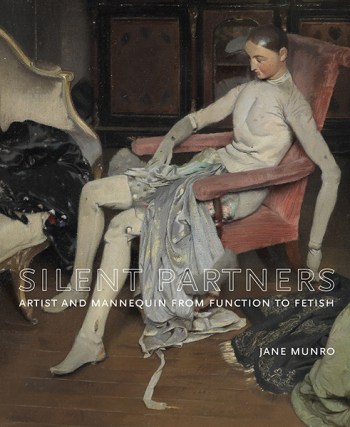 The articulated human figure made of wax or wood has been a common tool in artistic practice since the 16th century. Its mobile limbs enable the artist to study anatomical proportion, fix a pose at will, and perfect the depiction of drapery and clothing. Over the course of the 19th century, the mannequin gradually emerged from the studio to become the artist’s subject, at first humorously, then in more complicated ways, playing on the unnerving psychological presence of a figure that was realistic, yet unreal—lifelike, yet lifeless.
Silent Partners locates the artist’s mannequin within the context of an expanding universe of effigies, avatars, dolls, and shop window dummies. Generously illustrated, this book features works by such artists as Poussin, Gainsborough, Degas, Courbet, Cézanne, Kokoschka, Dalí, Man Ray, and others; the astute, perceptive text examines their range of responses to the uncanny and highly suggestive potential of the mannequin.
Jane Munro is a curator in the Department of Paintings, Drawings and Prints at the Fitzwilliam Museum and director of studies in history of art at Christ’s College at the University of Cambridge.










 Enfilade
leave a comment