Exhibition | Collecting History
From The Wallace Collection:
Collecting History
The Wallace Collection, London, 6 November 2014 — 15 February 2015

George Cruishank, Polly and Lucy Takeing off the Restrictions, 1812, Hertford House Historic Collection (2007.36).
The Wallace Collection is not allowed to add to its main collection, which remains as it was when bequeathed by Lady Wallace in 1897. But ever since the foundation of the Wallace Collection, the library has acquired archival material and works of art to help illuminate the history of the collection and its founders. This exhibition will showcase the wide variety of the Hertford House Historic Collection including the often hilarious satirical cartoons concerning the Prince Regent’s obsessive passion for the 2nd Marchioness of Hertford.
Exhibition | Body and Soul: Munich Rococo from Asam to Günther
◊ ◊ ◊ ◊ ◊
the Kunsthalle Munich:
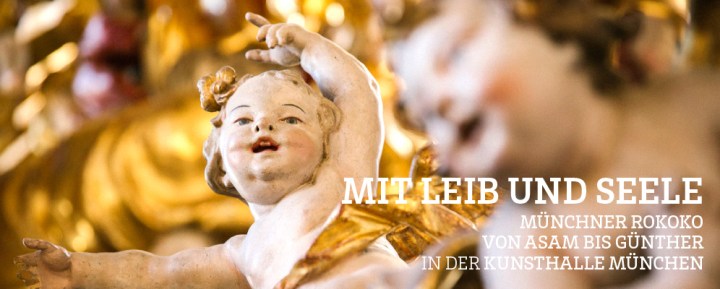
Body and Soul: Munich Rococo from Asam to Günther
Mit Leib und Seele: Münchner Rokoko von Asam bis Günther
Kunsthalle der Hypo-Kulturstiftung, Munich, 12 December 2014 – 12 April 2015
The Kunsthalle Munich and the Diocesan Museum Freising are organising a joint exhibition on Munich rococo—a golden age of Bavarian art, unparalleled even by international standards.
The exhibition presents numerous outstanding artists who lived in Munich between 1720 and 1770, like the Asam brothers, Cosmas Damian (1686–1739) and Egid Quirin (1692–1750), along with Johann Baptist Straub (1704–1784), Anton Bustelli (1723–1763) and Ignaz Günther (1725–1775). On the one hand, their exceptionally aesthetic language is characterised by an almost unprecedented jocular vitality, then again it is pervaded with a refined elegance. Visitors will be treated to a unique exhibition experience as numerous significant works from Bavaria and Germany’s wealth of churches, museums and castles come together in a fascinating journey. Thanks to the cooperation with the diocesan, many of the works have been loaned by churches and monasteries for the very first time and are being presented in the rooms of the Kunsthalle in this unique exhibition. Rarely in the past have visitors been given the opportunity to behold these otherwise almost inaccessible works in such proximity, allowing their artistic and technical qualities to be unveiled.
The Many Faces of Rococo
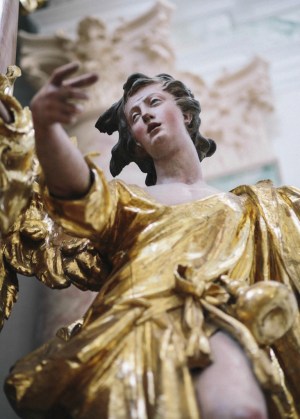
Johann Baptist Straub, Raphael the Archangel from the high altar, 1767, gilt and polyhcrome wood, 200 cm (Munich: Parish Church of St. Michael, © Thomas Dashuber).
The exhibition is showing approximately 160 rococo masterpieces, particularly sculptures in wood and other materials like stucco, clay, porcelain and silver, together with paintings, drawings and graphic prints. The starting point of the exhibition is the baroque artwork combining architecture, painting, stucco and sculpture, which reached its final, particularly impressive culmination in the hands of the Asam brothers. Contextualised by Bozzetti (sculptural designs) and drawings, the sculptures of Johann Baptist Straub and Ignaz Günther are at the very heart of the exhibition. Straub is considered to be the founding father of rococo sculpture, while Günther marks the pinnacle, and yet also the grand finale, of the epoch. Christian Jorhan the Elder (1727–1804) and Franz Xaver Schmädl (1705–1777) represent the generation of students who propagated Munich’s rococo beyond the city walls and out into the surrounding areas. Anton Bustelli introduces a mundane aspect: the effortless sophistication and playfulness of his renowned porcelain figures, which were popular table decorations at court, symbolise the entire era. The final chapter of the exhibition is dedicated to the sculptor Roman Anton Boos (1733–1810). Although his works are clearly rooted in the tradition of his predecessors, at the same
time they presage the emerging art of classicism.
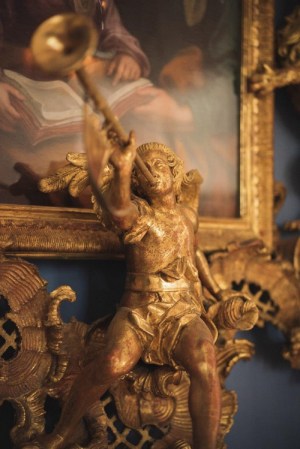
François Cuvilliés, detail of the decorative frame from the St Anne Altar, 1742–44 (Munich: Wallfahrts-kirche St. Anna, © Thomas Dashuber)
Between Play and Earnest
The exhibition aims to offer fresh insight with an unadulterated look at the epoch and, in so doing, not merely showcase the high artistic quality of the works but also to integrate them in the zeitgeist and the spiritual world. In the process, rococo art is taken literally in its specificity and its characteristics—the playful, delicate elements—turn out to be its inherent strengths. Far-reaching issues, relating to the mounting of the sculptures, their architectural integration or workshop practice for example, are also addressed.
The art of Munich rococo interfuses sacrality and profanity, the ecclesiastical and courtly worlds, but also play and earnest. Thus, an aesthetic language emerges that is unique in Europe, yet entirely its own.
A lavishly illustrated catalogue with further essays and detailed information on all the exhibits has been published by Sieveking Verlag to accompany the exhibition.
◊ ◊ ◊ ◊ ◊
From the publisher:
Christoph Kürzeder, Ariane Mensger, Peter Volk, et al. Mit Leib und Seele: Münchner Rokoko von Asam bis Günther (Sieveking Verlag, 2014), 384 pages, ISBN 978-3944874159, 50€.
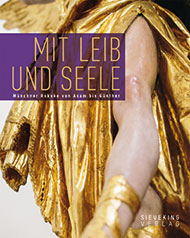 The exhibition Mit Leib und Seele (Body and Soul) aims to shed new light on the astounding stylistic diversity of the Munich Rococo between the years 1720 and 1770. The accompanying publication illustrates how a fresh consideration of the era provides illuminating insights into works by a range of artists, including the Asam brothers, Johann Baptist Straub, Franz Anton Bustelli, and Ignaz Günther. While the focus is on sculpture, the exhibition also features porcelain, silverwork, paintings, and drawings. The high art of the Rococo is presented in the context of its zeitgeist and religious milieu and appears more vibrant and more spectacular than ever: with their elegant, refined physicality and profound spirituality the artworks of this important period enter into a dialogue with viewers—and engage both body and soul.
The Kunsthalle of the Hypo Cultural Foundation in Munich is exhibiting these epochal works in partnership with the Diözesanmuseum Freising. The result of this collaboration is a unique exhibition in which the Munich Rococo will be seen in a presentation unprecedented in its magnitude and quality.
New Book | The Rise of Heritage: Preserving the Past
From Cambridge UP:
Astrid Swenson, The Rise of Heritage: Preserving the Past in France, Germany and England, 1789–1914 (New York: Cambridge University Press, 2013), 432 pages, ISBN: 978-0521117623, $99.
 Where does our fascination for ‘heritage’ originate? This groundbreaking comparative study of preservation in France, Germany and England looks beyond national borders to reveal how the idea of heritage emerged from intense competition and collaboration in a global context. Astrid Swenson follows the ‘heritage-makers’ from the French Revolution to the First World War, revealing the importance of global networks driving developments in each country. Drawing on documentary, literary and visual sources, the book connects high politics and daily life and uncovers how, through travel, correspondence, world fairs and international congresses, the preservationists exchanged ideas, helped each other campaign and dreamed of establishing international institutions for the protection of heritage. Yet, these heritage-makers were also animated by fierce rivalry as international tension grew. This mixture of international collaboration and competition created the European culture of heritage, which defined preservation as integral to modernity, and still shapes current institutions and debates.
Astrid Swenson is Lecturer in European History at Brunel University, London. Her previous publications include From Plunder to Preservation: Britain and the Heritage of Empire, c.1800–1940 (co-edited with Peter Mandler, 2013).
◊ ◊ ◊ ◊ ◊
C O N T E N T S
Introduction
Part I. National Heritage Movements
1. In search of origins
2. The heritage-makers
Part II. International Meeting-Points
3. Exhibition mania
4. ‘Peace and goodwill among nations’
Part III. Transnational Campaigns
5. ‘A Morris dance ’round St Mark’s’
6. ‘A yardstick for a people’s cultural attainment’
Conclusion
Bibliography
Conference | Travel and the Country House

From the conference programme:
Travel and the Country House: Places, Cultures, and Practices
University of Northampton, 15–16 September 2014
Registration due by 31 August 2014
Keynote speakers: Roey Sweet (University of Leicester) and Margot Finn (University College London)
Travel has long played a vital role in shaping the country house, opening up horizons and exposing both house and owner to a variety of external influences. Travel impacted upon values, tastes, material culture and money, and helped to articulate the flow of ideas, information, goods and capital. The importance of the Grand Tour and Empire to the country house has long been recognised, but domestic tourism and travel for more mundane purposes—to visit family or friends, engage in political life or go to town—were also significant. In this conference, we wish to explore a wide range of travel experiences and consider how these impacted on the country house. How were travel choices made and how were impacts articulated? How did new influences mesh with existing tastes and goods? What impact did its status as a place to visit have upon the country house? And how do we communicate the importance of travel to those visiting country houses today?
This conference addresses these questions and others, drawing together research from Sweden, Hungary, the Netherlands and Ireland as well as all corners of England. It thus offers a comparative perspective on the relationship between travel and the country house, and an opportunity for academics, curators and managers to discuss the ways in which travel continues to shape the ways in which country houses are interpreted, presented and experienced.
For more details and a booking form, contact Professor Jon Stobart at jon.stobart@northampton.ac.uk or visit the Consumption and Country House website.
◊ ◊ ◊ ◊ ◊
M O N D A Y , 1 5 S E P T E M B E R 2 0 1 4
10.00 Registration and coffee
10.40 Welcome and introduction
10.45 Keynote: ‘The Italian Grand Tour and the 18th-Century Country House’, Roey Sweet (University of Leicester)
11.45 Session 1: The Practicalities and Pleasures of Travel
• ‘Visiting London for business and pleasure in the years 1599–1623: On the road (and the Thames) with William Cavendish, 1st Earl of Cavendish’, Peter Edwards (University of Roehampton)
• ‘Travelling for Pleasure: Carriages and the country house’, Lizzy Jamieson (Independent Scholar)
• ‘“Wintering in the ‘shires”: Foxhunting and travel’, Mandy de Belin (University of Leicester)
1.00 Lunch
2.00 Session 2: European Travel, Networks, and Influences
• ‘The Grand Tour and Episcopal domesticity: The case of Martin Benson, Bishop of Gloucester (1735–52)’, Michael Ashby (University of Cambridge)
• ‘“Antiquity mad”: The Earl Bishop and the translation of continental style in an Irish context’, Rebecca Campion (National University of Ireland at Maynooth)
• ‘Centre and periphery: The world brought to the ironmasters’ mansions’, Marie Steinrud (Stockholm University)
• ‘The English Rothschild family and their country houses: A distinctive style’, Nicola Pickering
3.45 Tea and coffee
4.15 Session 3: Views of England from Overseas Travellers
• ‘The English country house as (proto) museum: Dutch travel accounts explored, 1677–1750’, Hanneke Ronnes (University of Amsterdam)
• ‘“… enjoying country life to the full—only the English know how to do that!”: Appreciation of the British country house by Hungarian aristocratic travellers’, Kristof Fatsar (Corvinus University of Budapest)
• ‘Stourhead: All roads lead to Rome—and back again’, John Harrison (Open University)
• ‘A Dutch view on the English country house and landscape garden’, Hélène Bremer (University of Leiden)
6.30 Reception
7.30 Dinner
T U E S D A Y , 1 6 S E P T E M B E R 2 0 1 4
9.30 Session 4: The Mobile House
• ‘Manors, towns and spas: A household on the move in late 18th-century Sweden’, Göran Ulväng (University of Uppsala)
• ‘The travels of an aristocratic family in the early 19th century: The Braybrookes of Audley End, Essex’, Andrew Hann (English Heritage)
• ‘Moving households: Problems, choices and new possibilities facing the country house family in the 1820s and 1830s’, Pamela Sambrook (Independent Scholar)
10.45 Tea and coffee
11.15 Session 5: Travel, Tourism, and Guides
• ‘Domestic tourism, the country house, and the making of respectability in the travel journals of Caroline Lybbe Powys’, Freya Gowrley (University of Edinburgh)
• ‘Country house visiting and improvement at Herriard House in Hampshire, 1794–1821’, Nicky Pink (Independent Scholar)
• ‘Arthur Young’s Tours: Architecture, painting, sculpture, and the art of adorning grounds’, Jocelyn Anderson (The Courtauld Institute of Art)
• ‘The representation of the country house in individual books and guides, 1720–1845’, Paula Riddy (University of Sussex)
1.00 Lunch
2.00 Keynote: ‘Duleep Singh and the Country House Tradition: Making and Unmaking the Victorian Global Home’, Margot Finn (UCL)
3.00 Session 6: Looking beyond Europe
• ‘Travel to the East- and West-Indies and Groningen country house culture in the 18th Century’, Yme Kuiper (University of Groningen)
• ‘Appuldurcombe House and the ‘Museum Worsleyanum’: Sir Richard Worsley’s forgotten collection’, Abigail Coppins (Independent Scholar)
• ‘Diaries, decoration and design: The Courtaulds’ travels and the effects on Eltham Palace’, Annie Kemkaran-Smith (English Heritage)
4.15 Closing comments and discussion
New Book | Bluestockings Displayed
From Cambridge UP:
Elizabeth Eger, ed., Bluestockings Displayed: Portraiture, Performance and Patronage, 1730–1830 (New York: Cambridge University Press, 2013), 323 pages, ISBN: 978-0521768801, £60.
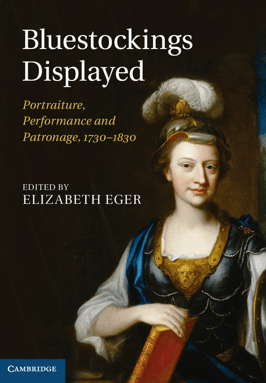 The conversation parties of the bluestockings, held to debate contemporary ideas in eighteenth-century Britain, were vital in encouraging female artistic achievement. The bluestockings promoted links between learning and virtue in the public imagination, inventing a new kind of informal sociability that combined the life of the senses with that of the mind. This collection of essays, by leading scholars in the fields of literature, history and art history, provides an interdisciplinary treatment of bluestocking culture in eighteenth-century Britain. It is the first academic volume to concentrate on the rich visual and material culture that surrounded and supported the bluestocking project, from formal portraits and sculptures to commercially reproduced prints. By the early twentieth century, the term ‘bluestocking’ came to signify a dull and dowdy intellectual woman, but the original bluestockings inhabited a world in which brilliance was valued at every level and women were encouraged to shine and even dazzle.
Elizabeth Eger is Reader in Eighteenth-Century Literature at King’s
College London.
◊ ◊ ◊ ◊ ◊
C O N T E N T S
Introduction, Elizabeth Eger
I. Portraits
1. Romantic bluestockings: From muses to matrons, Anne Mellor
2. ‘To dazzle let the vain design’: Alexander Pope’s portrait gallery, or, the impossibility of brilliant women, Emma Clery
3. Virtue, patriotism and female scholarship in bluestocking portraiture, Clare Barlow
4. Anne Seymour Damer: A sculptor of ‘republican perfection’, Alison Yarrington
5. The blues gone grey: Portraits of bluestocking women in old age, Devoney Looser
II. Performance
6. Sacred love: Eliza Linley’s voice Joseph Roach
7. The learned female soprano Susan Staves
8. Roles and role models: Montagu, Siddons, Lady Macbeth Shearer West
9. Hester Thrale: ‘What trace of the wit?’ Felicity A. Nussbaum
III. Patronage and Networks
10. Reading practices in Elizabeth Montagu’s epistolary network of the 1750s, Markman Ellis
11. The queen of the blues, the bluestocking queen, and bluestocking masculinity, Clarissa Campbell Orr
12. Luck be a lady: Patronage and professionalism for women writers in the 1790s, Harriet Guest
Reworking the Family Portraits of Schloss Grafenstein
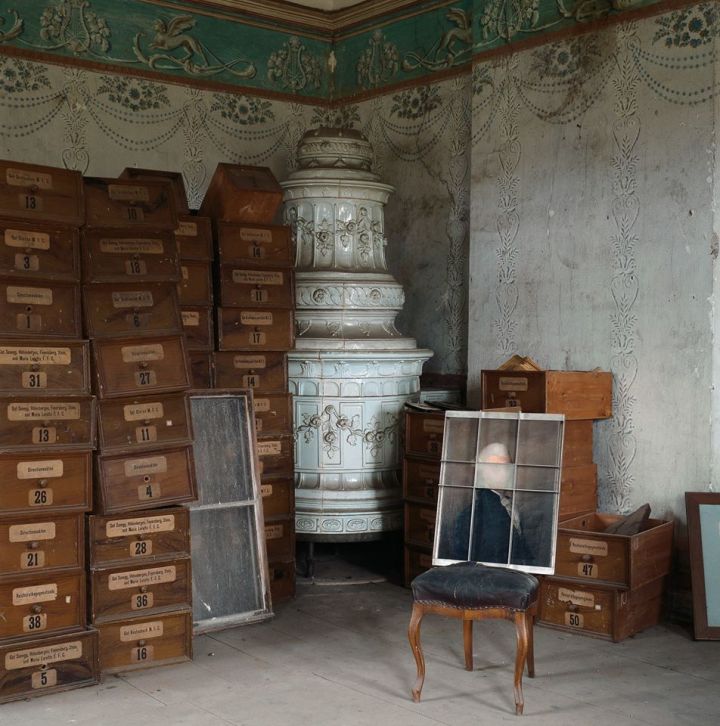
In this sitting room, drawers painted with faux bois woodgrain and labelled with family estates are from the denuded archive shelves in the next room. On the chair is an unsigned oil portrait of Count Vinzenz Ferrerius Orsini-Rosenberg (1722–1794), an ancestor of Count Ferdinand used as the basis for a new work by Armin Guerino, titled 20130630-001. Photography by Fritz von der Schulenburg.
◊ ◊ ◊ ◊ ◊
This instance of recycling eighteenth-century source material for subsequent artistic production might fall somewhere between the collages of James Northcote (the subject of an exhibition this fall at the YCBA) and the work of Ai Weiwei (I’m thinking, for example, of Painted Vases). The article mentions an exhibition, but I could find nothing about it online and don’t know if it’s already happened or might still take place. –CH
From WoI’s Facebook page and the print edition of the article:
Michael Huey, “Relative Freedom,” The World of Interiors (August 2014): 70–79.
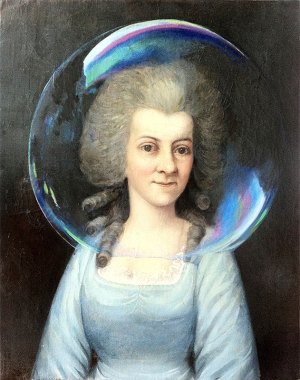
Original: Artist, Date, Sitter unknown, 69 x 55 cm. Revision: Alina Kunitsyna, Mlle Sphæræ, 2013
Seeking works of art to fill newly renovated living quarters, Austrian count Ferdinand Orsini-Rosenberg turned to the 90-odd ancestral portraits deteriorating in his ruined schloss next door. But instead of merely dusting off his forebears’ likenesses, he gave a crew of contemporary artists free rein to ‘refresh’ the originals.
Ferdinand Orsini-Rosenberg, second son of the late Prince Heinrich, presides over about 1,500 state square meters of what is basically storage space in the form of Schloss Grafenstein, the Carinthian palace built by his seventh great-grandfather and enlarged a century later—around 1730—by his fifth. Grafenstein, with is impressive facade and ruined interior, makes up part of his title and much of his patrimony, and in this way he is bound to it for life. At times the attachment is akin to being chained to a cadaver, and he is often sleepless as a result. “If an earthquake reduced it to rubble overnight,” he says, “I would thank God.” . . .
After an initial phase of consolidation [of family portraits], during which a local historian aided him in sorting, photographing, identifying and documenting the paintings, he assembled (with curatorial guidance) a group of 35 artists to whom they would be offered as raw material. Each artist would be allowed to select a single portrait to use as the basis for a new work—no strings attached and with a modest fee for the commission. The results would be gathered together for a summer exhibition in the colonnaded inner courtyard at Grafenstein and later hung in Ferdinand’s rooms in the granary. . . .
While his courageous, uncompromising idea did lead to a few crass and brazenly ruthless results, it also gave rise, at the other end of the spectrum, to a handful of marvels—works both highly moving and of considerable aesthetic relevance by Alina Kunitsyna, Armin Guerino, Manfred Bockelmann, Helmut Grill, Johanes Zechner, Siegfried Zaworka and Alex Amann among others. . .
A regular contributor to The World of Interiors, Michael Huey, as an artist himself interested in issues of archives and loss, is an interesting part of the story.
Exhibition | Picture Talking: James Northcote and the Fables
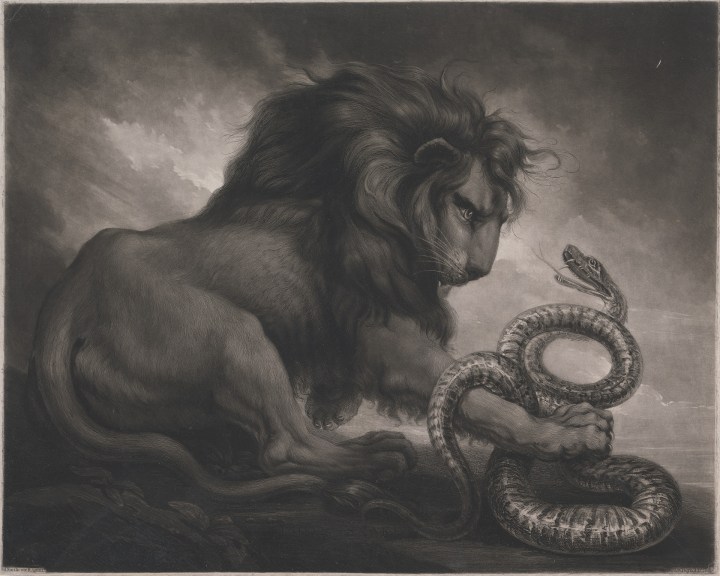
Samuel William Reynolds, after James Northcote, Lion and Snake (detail), 1799, mixed method engraving (New Haven: Yale Center for British Art, Paul Mellon Collection)
◊ ◊ ◊ ◊ ◊
The prints Northcote used in the collages date from the eighteenth century. Press release from the YCBA:
Picture Talking: James Northcote and the Fables
Yale Center for British Art, New Haven, 2 October — 14 December 2014
Curated by Mark Ledbury and A. Cassandra Albinson
The first exhibition solely dedicated to James Northcote’s art and career, Picture Talking: James Northcote and the Fables will present a fascinating look at one of Britain’s most imaginative and eccentric painters.

William Daniell, after George Dance, James Northcote, between 1798 and 1819, graphite and red chalk on medium, slightly textured, cream wove paper mounted on moderately thick, moderately textured, beige laid paper (New Haven: Yale Center for British Art, Paul Mellon Collection)
Northcote (1746–1831) has been remembered primarily as a memoirist, a writer on art and artists, and a conversationalist whose strong opinions on diverse topics were often repeated in print. A pupil of Sir Joshua Reynolds, the first president of the Royal Academy, Northcote enjoyed a popular reputation in his time for painting portraits of historical subjects, scenes from Shakespeare’s plays, and animals. This subsequently was overshadowed by his prominence as a source of information on his contemporaries. This exhibition, drawn exclusively from the rich holdings of the Yale Center for British Art, will redress that imbalance by presenting an array of Northcote’s art: paintings, drawings, prints, and, at its center, a practically unknown manuscript for Northcote’s One Hundred Fables, Original and Selected (1828).
Northcote wrote and illustrated these fables for adults during the last twenty years of his life. They convey moral lessons, often with themes comparing the similarities of humans to animals. Using techniques well ahead of his time, Northcote created collaged illustrations for the Fables by cutting humans, other animals, and background details from his collection of historical engravings, then reassembling them into chimerical scenes. This exhibition will explore the translation of Northcote’s highly original designs from collages to their ultimate form as wood engravings for two series of Fables, the first published in 1828, the second, posthumously, in 1833. The wood engravings provided simplified, but highly popular, interpretations of the original fables for mass production and consumption. Picture Talking will consider the questions of originality versus pastiche and image versus text through careful consideration of Northcote’s art. It will argue that in his earlier work as a history painter and print designer, Northcote worked through the process of borrowing and collage. Thus, the fables represent a culmination of his career.
Picture Talking: James Northcote and the Fables has been organized by the Yale Center for British Art. The co-curators are Mark Ledbury (Power Professor of Art History and Visual Culture and Director of the Power Institute at the University of Sydney) and A. Cassandra Albinson (Curator of Paintings and Sculpture at the Yale Center for British Art).
Opening Lecture
Mark Ledbury | Inspiration and Eccentricity: The Ups and Downs of James Northcote
Yale Center for British Art, New Haven, 1 October 2014, 5:30
◊ ◊ ◊ ◊ ◊
From Yale UP:
Mark Ledbury, James Northcote, History Painting, and the Fables (New Haven: Yale Center for British Art, 2014), 256 pages, ISBN: 978-0300208139, $65.
 The artistic accomplishments of James Northcote (1746–1831) have tended to be overshadowed by his role as a biographer of Joshua Reynolds, first president of the Royal Academy of Arts, with whom Northcote apprenticed. Here, Mark Ledbury constructs a very different image of Northcote: that of a prolific member of the Royal Academy and an active participant in the cultural and political circles of the Romantic era, as well as a portrait and history painter in his own right. This book focuses on Northcote’s One Hundred Fables (1828), a masterpiece of wood engraving, and the unconventional, collaged manuscripts for the volume. The Fables, extensively published here for the first time, were an early experiment in what is now a familiar multimedia practice. Idiosyncratic, personal, and visionary, One Hundred Fables serves as a lens through which to examine Northcote’s long, complex, and fruitful artistic career.
Mark Ledbury is Power Professor of Art History and director of the Power Institute at the University of Sydney.
Call for Papers | 2015 Wallace Seminars on Collections and Collecting
From The Wallace:
2015 Wallace Collection Seminars on the History of Collections and Collecting
The Wallace Collection, London, 4th Monday of the Month
Proposals due by 30 September 2014
The seminar series has been established as part of the Wallace Collection’s commitment to the research and study of the history of collections and collecting, especially in the eighteenth and nineteenth centuries in Paris and London. In 2015, as in previous years, we plan to organise a series of around 10 seminars. We are keen to encourage contributions covering all aspects of the history of collecting, including:
• Formation and dispersal of collections
• Dealers, auctioneers and the art market
• Collectors
• Museums
• Inventory work
• Research resources
The seminars, which are normally held on the 4th Monday of every month during the calendar year, act as a forum for the presentation and discussion of new research into the history of collecting. Seminars are open to curators, academics, historians, archivists and all those with an interest in the subject. Papers are generally 45–60 minutes long and all the seminars take place at the Wallace Collection between 5.30 and 7pm. If interested, please send a brief text (500–750 words), including a brief CV and an indication of which month you free to speak at, by 30 September 2014. For more information and to submit a proposal, please contact collections@wallacecollection.org.
Research Grant | The Andrew Wyld Research Support Grant
From The Paul Mellon Centre:
The Andrew Wyld Research Grant for the Study of Works on Paper
Applications due by 15 September 2014
The Paul Mellon Centre for Studies in British Art is delighted to announce that it will administer a new category of award from September 2014 on behalf of the Andrew Wyld Fund.
Andrew Wyld was a well-known and much respected London art dealer, specialising in eighteenth and nineteenth-century British watercolours. After his death in 2011, a group of friends and family decided to set up a fund in his memory; its aim is to enable students to do exactly as he did, namely to look at, and judge, works of art on paper for themselves. Andrew Wyld Research Support Grants of up to £2,000 will be offered annually to gradute, doctoral and undergraduate students (undertaking dissertation research) working in the field of British works of art on paper of the eighteenth and nineteenth centuries. Grants may be used towards expenses incurred in visiting prints and drawings collections, galleries, museums, sale rooms and other institutions for the purpose of studying British works of art on paper.
More information is available here and at The Paul Mellon Centre.
Reviewed | Judith Bonner on ‘The Coast and the Sea’
Linda S. Ferber, The Coast and the Sea: Marine and Maritime Art in America (New York and London: New-York Historical Society in association with D. Giles Limited, 2014), 104 pages, ISBN 978-1907804311, $30 / £20.
Reviewed for Enfilade by Judith H. Bonner
 The New-York Historical Society, that city’s oldest museum, is celebrating its recent reopening after its lengthy renovation with a traveling exhibition and accompanying catalogue by Linda S. Ferber.1 The exhibition features more than 60 artworks and artifacts, primarily paintings, including portraits, genre scenes, and marine and maritime scenes. Overall, the images document the development of the New York area with its harbor and its close relationship with the Atlantic Ocean, the great maritime highway for trade and immigration.
Works selected for the exhibition have their origins in the eighteenth century, beginning in 1728 and ending in 1904. Maritime-related artifacts include a vintage spyglass, scrimshaw, snuff boxes, and an 1816 silver presentation soup tureen commemorating acts of bravery during the War of 1812. The provenance of each artwork documents the development of the New-York Historical Society, as well as the city’s art collectors, their tastes, and their interests.
The exhibition features work by artists whose names are familiar, as well as those who are unfamiliar. The painters include Thomas Birch, Thomas Buttersworth, Carlton Theodore Chapman, Thomas Cole, Jasper Francis Cropsey, Julian Oliver Davidson, Mauritz Frederick Hendrick De Haas, James Guy Evans, Robert Havell Jr., John Frederick Kensett, Rembrandt Peale, Francis Augustus Silva, and John Vanderlyn.
Several artists had nautical experience that informed their art in subject, rigging, and construction of the vessels. Buttersworth served in the British navy, while De Haas held an artist’s commission in the Dutch navy. James Guy Evans possibly served in the American navy. Chapman ran away to sea as a teenager; and Davidson sailed the globe, making sketches that provided visual sources for many years. Evident in these artists’ works is their understanding of the action of waves and atmospheric effects over the seas at different times of the day or season.
The marine subjects include frigates engaged in famous sea battles, working vessels and bustling port scenes, marine recreation scenes, portraits of heroic sea captains, and pioneering merchants. Marine scenes focus on recreation, shipwrecks, disasters, and military encounters, particularly those in the War of 1812 and Civil War. The exhibition spreads its reach down the East Coast, swinging farther south to the Battle of Mobile Bay in the Gulf of Mexico and the Battle of Port Hudson up the Mississippi River about 100 miles above New Orleans.
Portraitists range from eighteenth-century painter John Wollaston to early nineteenth-century painters John Vanderlyn and Rembrandt Peale, the latter of whom executed a portrait of naval hero Commodore Stephen Decatur in dress uniform and set against a dramatic stormy sky. Wollaston’s circa-1750 portrait of wealthy colonial merchant-shipbuilder Captain John Waddell, who owned a fleet of ships, sets the stage for the succession of ships’ portraits seen throughout the catalogue. Early portraits include personages having distinguished careers or an association with maritime enterprises. The sitter is often shown near an open window through which one views a conventionalized seascape or harbor scene with masted vessels. Other sitters are shown with maps, globes, compass, a spyglass, or other maritime instruments.
The catalogue is well researched and documented with a select bibliography. Explanations of the marine scenes are succinct yet vivid; the prose is fluid and often poetic. Ferber distinguishes between marine scenes—which focus on the pure seascape, its coast and environs—and maritime paintings. The latter, Ferber explains, emphasize human activity and other enterprises on shore or at sea. Her knowledge of nautical terminology and national history is evident throughout. She traces visual conventions from their development in seventeenth-century Holland, their passage into the British school of marine painting, and subsequent introduction into English colonies in the New World.
Ferber consistently places artworks within a broader historical context and, when appropriate, within a cultural narrative. Brief biographical sketches of artists trace their artistic development within the maritime tradition. Ferber discusses allegorical themes in paintings, as well as the effect that nostalgic longing for historically simpler times had upon the proliferation and re-creation of popular scenes celebrating heroic national victories and spirited naval encounters.
The book invites readers to the repeated examination of the images, some of which, like those illustrating the America’s Cup, are iconic. Truly memorable is a painting by Howard Pyle, A Privateersman Ashore (1893), shown in historically correct clothing and accouterments. The privateer stands near the Battery and Castle Clinton at the time of the War of 1812, posed and preening, with smoke from his cigar curling upward from the corner of his mouth as townspeople in the distance look toward him with disdain. The latter is a comment about the disapprobation citizens held for such freebooters, who preyed upon British ships.
Closing this maritime jaunt through history are two paintings. The first, by Andrew Meyer, shows President Grover Cleveland reviewing a naval parade in New York Harbor as the setting for opening ceremonies of Chicago’s Columbian Exposition in 1893, with the Statue of Liberty clearly visible, as though she also stands in review of the parade. Lastly, in 1904 Chapman portrays the Great East River Bridge (now Brooklyn Bridge) over the East River, celebrating New York’s location on the rim of the Atlantic, the gateway to America.
1. Venues for exhibition include: The Society of the Four Arts, Palm Beach, Florida (25 January — 9 March 2014); The Baker Museum of Art, Naples, Florida (19 April — 6 July 2014); Portland Museum of Art, Portland, Maine (January — May 2015); The Mattatuck Museum, Waterbury, Connecticut (6 June — 13 September 2015); and The New York State Museum, Albany, New York (24 October 2015 — 22 February 2016).
◊ ◊ ◊ ◊ ◊
Judith H. Bonner is Senior Curator and Curator of Art at The Historic New Orleans Collection.










 Enfilade
leave a comment