Exhibition | Art in Focus: Wales

John Warwick Smith, Ruins of Cricceith Castle and Part of the Town on the Bay on Cardigan, East View, Carnarvonshire, 1790 (London: Yale Center for British Art, Paul Mellon Collection)
◊ ◊ ◊ ◊ ◊
Now on at YCBA:
Art in Focus: Wales
Yale Center for British Art, New Haven, 4 April — 10 August 2014
In 1737, Thomas Herring, bishop of Bangor, made what has been described as the first tour of Snowdonia, in North Wales, and observed of its wild and mountainous scenery that “[t]he face of it is grand, and bespeaks the magnificence of nature, and enlarged my mind so much . . . that it was some time before I could be reconciled again to the level countries.” Although much of Wales had been considered remote and inaccessible to English travelers, in the 1750s a burgeoning interest in the remnants of ancient Britain led antiquarians in search of ruins. Later in the eighteenth century, particularly during periods when war with European powers restricted travel to the Continent, the mountains of North Wales offered experiences of the sublime to rival those of the Alps. By the beginning of the nineteenth century, the region had become part of the standard itinerary of British landscape artists.
This Art in Focus exhibition explores the history of interest in Welsh landscape, ruins, and the bardic tradition through oil paintings, finished watercolors, and plein-air sketches in the Center’s collections by artists such as Richard Wilson, Thomas Rowlandson, James Ward, J. M. W. Turner, David Cox, Thomas Girtin, John Martin, John Linnell, William Blake, and Samuel Palmer. The display is augmented by key publications of the period that encouraged the aesthetic appreciation of Welsh landscape.
◊ ◊ ◊ ◊ ◊
Art in Focus is an annual initiative for members of the Center’s Student Guide program, providing curatorial experience and an introduction to all aspects of exhibition practice. The student guide curators for this exhibition are Emily Feldstein, PC ’16; Kathryn Kaelin, SY ’15; Olga Karnas, SM ’16; Rebecca Levinsky, MC ’15; Anna Meixler, ES ’16; Daniel Roza, SM ’15; Katharine Spooner, TD ’16; and Lynnli Wang, TD ’15. In researching and presenting the exhibition, the students were guided by Eleanor Hughes, Associate Director of Exhibitions and Publications, and Associate Curator; Linda Friedlaender, Curator of Education; and Jaime Ursic, Assistant Curator of Education.
The press release is available here»
The image sheet is available here»
Exhibition | In the Company of Cats and Dogs

Thomas Gainsborough, Spitz Dog, 24 x 30 inches, (61 x 74.9 cm), ca. 1765 (New Haven: Yale Center for British Art, Paul Mellon Collection B1977.14.92).
◊ ◊ ◊ ◊ ◊
Press release for the exhibition:
In the Company of Cats and Dogs
Blanton Museum of Art, The University of Texas at Austin, 22 June — 21 September 2014
In the Company of Cats and Dogs provides a multifaceted look at our relationship with felines and canines through the ages. On view at the Blanton Museum of Art at The University of Texas at Austin from June 22 – September 21, 2014, the exhibition features over 150 works by masters such as Albrecht Dürer, Jean-Honoré Fragonard, William Blake, Francisco Goya, Paul Gauguin, Takahashi Hiroaki (Shotei), Pablo Picasso, Henri Cartier-Bresson, Edward Hopper, Louise Bourgeois, and others. Examining the ever-changing roles of cats and dogs and our enduring fascination with them, the presentation includes Egyptian sculpture, Chinese and pre-Columbian ceramics, medieval and Renaissance manuscripts, and prints, books, photographs, and paintings from the Blanton’s collection and those of the Amon Carter Museum of American Art; Dallas Museum of Art; the Menil Collection; Museum of Fine Arts, Houston; the San Antonio Museum of Art; Yale Center for British Art; the Harry Ransom Center at The University of Texas at Austin, and of the private collections of UT alumni and others.
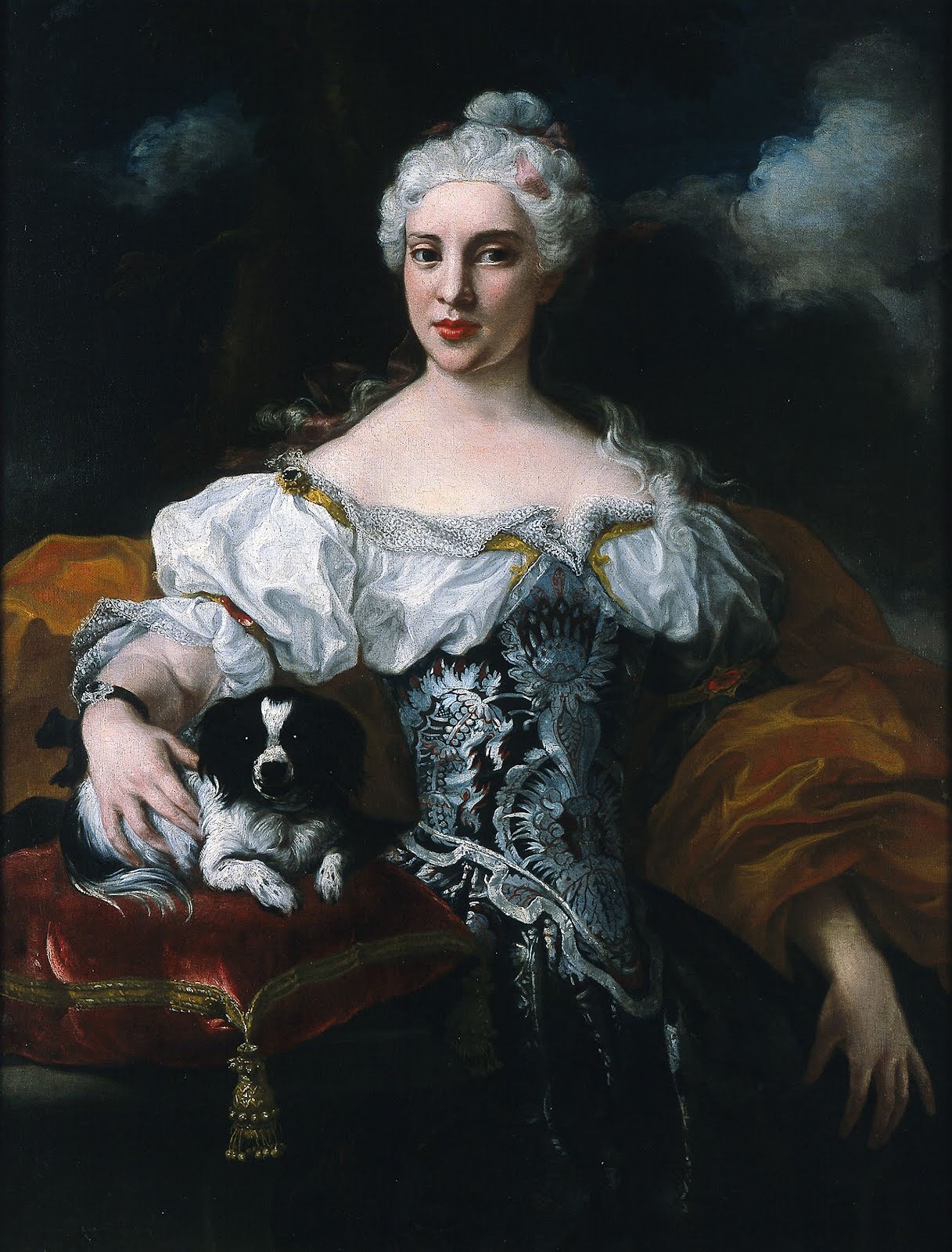
Marco Benefial, Portrait of a Lady with a Dog, 1730s,
45 1⁄2 x 34 inches (Blanton Museum of Art)
“This exhibition sheds new light on a subject artists have depicted throughout history—our relationships with cats and dogs,” states Blanton Director Simone Wicha. “It provides us an opportunity to collaborate with some of the best and brightest minds on the University of Texas campus—from psychologists to historians—in a presentation that offers new research and fresh perspectives, giving us a deeper understanding of our own identities and relationships. It also gives us a chance to connect with our pet-friendly community, who will undoubtedly enjoy these dynamic portrayals of well-loved animals. In the Company of Cats and Dogs serves as a model of what a great university art museum can do.”
Drawing on research from several disciplines in the humanities and sciences, In the Company of Cats and Dogs considers some of the inherent personalities and temperaments of these animals as well as those imposed or projected by humans onto them. Throughout history, these animals have been viewed and represented as family members, hunters of prey, strays, and as figures and symbols in mythological, religious, political, and moral images. The exhibition probes these characterizations through numerous lenses, including anthrozoology (a new discipline that studies the interactions between humans and other animals) and social histories concerned with animal welfare, child development, and hunting and land rights. Francesca Consagra, the Blanton’s Senior Curator of Prints, Drawings, and European Paintings remarks, “Through especially beautiful and affecting works of art, we hope to make our visitors aware of some of the diverse and complex histories we have had with cats and dogs over a period of thirty-three centuries.”
Highlights of the exhibition include ancient Egyptian sculptures of the gods Bast and Anubis on loan from the San Antonio Museum of Art, a folio from the Tegernsee Miscellany aka Bede Compendium—an eleventh-century manuscript depicting a zodiac dog from the Harry Ransom Center, and Thomas Sully’s Cinderella at the Kitchen Fire from the Dallas Museum of Art, along with Albrecht Dürer’s St. Eustace, a group of important and rare prints by Paul Gauguin, and contemporary works by Louise Bourgeois, William Wegman and Sandy Skoglund. Also included are Blanton visitor favorites such as Marco Benefial’s Portrait of a Lady with a Dog and Arthur Fitzwilliam Tait’s Huntsman with Deer, Horse, and Rifle.
In the Company of Cats and Dogs makes connections across centuries and genres and underscores our complex relationships to these animals, revealing the many ways in which they say as much about us as we do about them.
New Book | Reynolds: Portraiture in Action
Forthcoming in September from Yale UP:
Mark Hallet, Reynolds: Portraiture in Action (London: The Paul Mellon Centre for Studies in British Art, 2014), 496 pages, ISBN: 978-0300196979, £50 / $75.
 A deeply researched and elegantly written study on Sir Joshua Reynolds (1723–1792)—Georgian England’s most celebrated portraitist and the first president of the British Royal Academy of Arts—this lavishly illustrated volume explores all aspects of Reynolds’s portraiture. Mark Hallett provides detailed, compelling readings of Reynolds’s most celebrated and striking works, investigating the ways in which they were appreciated and understood in his own lifetime. Recovering the artist’s dynamic interaction with his sitters and patrons, and revealing the dramatic impact of his portraits within the burgeoning exhibition culture of late-18th-century London, Hallett also unearths the intimate relationship between Reynolds’s paintings and graphic art. Reynolds: Portraiture in Action offers a new understanding of the artist’s career within the extremely competitive London art world and takes readers into the engrossing debates and controversies that captivated the city and its artists.
Mark Hallett is director of studies at The Paul Mellon Centre
for Studies in British Art.
Exhibition | Swedish Wooden Toys
On view this summer at Les Arts Décoratifs in Paris, the exhibition comes to the Bard Graduate Center next fall:
Swedish Wooden Toys / Les jouets en bois suédois
Les Arts Décoratifs, Paris, 19 June 2014 — 11 January 2015
Bard Graduate Center, New York, September 2015
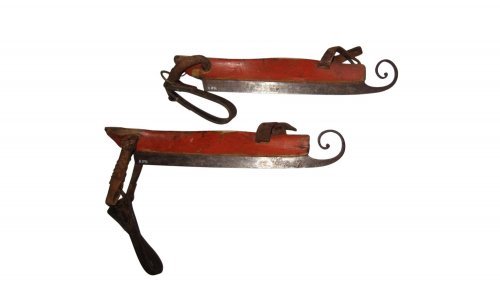
Patins à glace pour enfants, 1800-1850, Suède
Focusing on the Swedish tradition of wooden playthings derived from abundant forests of fir, pine, spruce, and birch and the rural pursuits of woodworking and carpentry, curators BGC Founder and Director Susan Weber and Professor Amy F. Ogata investigate their histories of manufacture, consumption, and representation from the seventeenth century to the present. Although Germany, Japan, and the United States have historically produced and exported the largest numbers of toys worldwide, Sweden has a long and enduring history of designing and making wooden toys—from the simplest handmade plaything to more elaborate forms reflecting the computer age. For the presentation in Paris, Swedish Wooden Toys features more than 250 toys and related objects drawn primarily from the collections of the Sovrintendenza ai Beni Culturali di Roma Capitale, Italy, the BRIO Lekoseum in Osby, Sweden, and Les Arts Décoratifs.
◊ ◊ ◊ ◊ ◊
Catalogue published by Yale UP:
Amy F. Ogata and Susan Weber, eds., Swedish Wooden Toys (New Haven: Yale University Press, 2014), 432 pages, ISBN: 978-0300200751, $65.
 The Swedish toy industry has long produced vast quantities of colorful, quality wooden items that reflect Scandinavian design and craft traditions. This superbly illustrated book, including specially commissioned photography, looks at over 200 years of Swedish toys, from historic dollhouses to the latest designs for children. Featuring rattles, full-size rocking horses, dollhouses, and building blocks to skis, sleds, and tabletop games with intricate moving parts, Swedish Wooden Toys also addresses images of Swedish childhood, the role of the beloved red Dala horse in the creation of national identity, the vibrant tradition of educational toys, and the challenges of maintaining craft manufacturing in an era of global mass-production.
Amy F. Ogata is professor of 19th- and 20th-century architectural and design history, Bard Graduate Center, New York. Susan Weber is founder and director of the Bard Graduate Center, New York, and Iris Horowitz Professor in the
History of the Decorative Arts.
Exhibition | Goya: Order and Disorder

Press release (29 May 2014) from the MFA:
Goya: Order and Disorder
Museum of Fine Arts, Boston, 12 October 2014 — 19 January 2015
This fall, the Museum of Fine Arts, Boston (MFA), presents Goya: Order and Disorder, a landmark exhibition dedicated to Spanish master Francisco Goya (1746–1828). The largest retrospective of the artist to take place in America in 25 years features more than 160 paintings, prints and drawings—offering the rare opportunity to examine Goya’s powers of observation and invention across the full range of his work. The MFA welcomes many loans from Spain and throughout Europe, including 21 works from the Museo Nacional del Prado in Madrid, along with loans from the Musée du Louvre, the Galleria degli Uffizi, The Metropolitan Museum of Art, the National Gallery of Art (Washington) and private collections throughout Europe and the US. Goya: Order and Disorder includes some 60 works from the MFA’s collection of Goya’s works on paper, one of the most important in the world. Many of these prints and drawings have not been on view in Boston in 25 years.
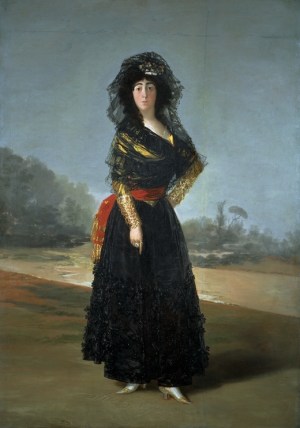
Francisco José de Goya y Lucientes, The Duchess of Alba, 1797 (New York, The Hispanic Society of America).
Employed as a court painter by four successive rulers of Spain, Goya managed to explore an extraordinarily wide range of subjects, genres and formats. From the striking portrait Duchess of Alba (1797) from the Hispanic Society of America, to the tour de force of Goya’s Seated Giant (by 1818) in the MFA’s collection, to his drawings of lunacy, the works on view demonstrate the artist’s fluency across media. On view in the Museum’s Ann and Graham Gund Gallery from October 12, 2014 to January 19, 2015, the MFA is the only venue for the exhibition, which is accompanied by a publication revealing fresh insights on the artist.
“This exhibition offers a once-in-a-generation look at one of the greatest, most imaginative artists of all time,” said Malcolm Rogers, Ann and Graham Gund Director at the MFA. “Goya: Order and Disorder reflects the Museum’s close collaboration with the Prado, and builds on our proud tradition of Goya scholarship.”
As 18th-century culture gave way to the modern world, little escaped Goya’s penetrating gaze. Working with equal prowess in painting, drawing and printmaking, he was the portraitist of choice for the royal family as well as aristocrats, statesmen and intellectuals—counting many as acquaintances or friends. Living in a time of revolution and radical social and political transformations, Goya witnessed drastic shifts between “order” and “disorder,” from relative prosperity to wartime chaos, famine, crime and retribution. Among the works he created—some 1,800 oil paintings, frescoes, miniatures, etchings, lithographs and drawings—many are not easy to look at, or even to understand. With a keen sensitivity to human nature, Goya could portray the childhood innocence of Manuel Osorio Manrique de Zuñiga (about 1788, The Metropolitan Museum of Art, New York)—his most famous portrait of a child—or the deviance of the Witches’ Sabbath (1797–98, Fundación Lázaro Galdiano, Madrid).
The full arc of Goya’s creativity is on display in the exhibition, from the elegant full-length portraits of Spanish aristocrats that first brought the artist fame, to caustic drawings of beggars and grotesque witches, to his series of satirical etchings targeting ignorance and superstition, known as the Caprichos. Rather than a chronological arrangement, exhibition curators Stephanie Loeb Stepanek, Curator of Prints and Drawings, and Frederick Ilchman, Chair, Art of Europe and Mrs. Russell W. Baker Curator of Paintings, grouped the works in Goya: Order and Disorder, and its accompanying publication, into eight categories highlighting the significant themes that captured Goya’s attention and imagination. From tranquil to precarious, Goya’s art made the diversity of life, and the conflicting emotions of the human mind, comprehensible to the viewer—and to himself.
“We decided to juxtapose similar subjects or compositions in different media in order to allow visitors to examine how Goya’s choice of technique informed and transformed his ideas, since the characteristics of each medium—and the intended audience—influenced the final appearance of the work,” said Stepanek.
Noted for his satirical eye, Goya reserved his closest scrutiny for himself. The first section of the exhibition, Goya Looks at Himself, is a sweeping group of self-portraits. In the MFA’s etching, The Sleep of Reason Produces Monsters (El sueño de la razon produce monstruos), Caprichos 43 (1797–99), Goya offers himself as a universal artist sleeping at a desk, while the creatures of his dreams swirl about his head. This print is grouped with two loans from Madrid, The Artist Dreaming (about 1797), a drawing from the Prado that preceded the famous print, and Self-Portrait while Painting (about 1795), from the Museo de la Real Academia de Bellas Artes de San Fernando. Together, these works reflect Goya’s tendency to insert his persona into allegories and fantasies. At the entrance of this section is an imposing group portrait of The Family of the Infante Don Luis (1784, Fondazione Magnani Rocca, Parma, Italy)—the brother of King Charles III—which features 14 figures, including Goya, who depicts himself working on a sizeable canvas on an easel.
“Just as Goya’s imagery is determined by whether he painted, drew or made a print, he also reconsidered certain favored subjects, reviving them from his memory and returning to them again and again during his long career,” said Ilchman. “Examining his compositional preoccupations across decades—often in the same room of the exhibition—reveals the continuity of Goya’s imagination.”
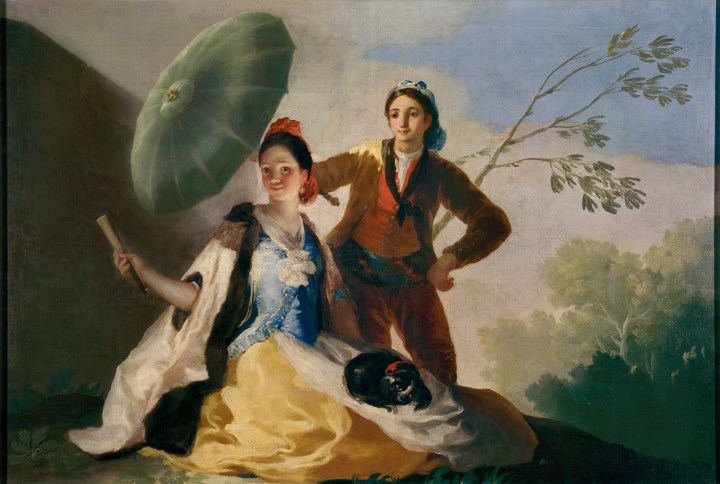
Francisco José de Goya y Lucientes, The Parasol, 1777
(Madrid: Prado)
Click here for a higher resolution image.
◊ ◊ ◊ ◊ ◊
Through his art, Goya sought to describe, catalogue and satirize the breadth of human experience—embracing both its pleasures and discomforts. The artist tackled the nurturing of children, the pride and infirmity of old age, the risks of romantic love, and all types of women—from young beauties to old women. In the section dedicated to Goya’s depictions of the stages of life, Life Studies, the exhibition explores how the artist transformed observations of human frailty, creating allegories of vanity and the passage of time. A wizened woman, who is unsuccessfully attempting to adopt youthful styles in Until Death (Hasta la muerte), Caprichos 55 (1797–99, The Boston Athenaeum), is revived in one of Goya’s most haunting monumental paintings—Time (Old Women) (about 1810–12, Palais des Beaux-Arts de Lille). The aged woman is now decayed and diseased, but still clings to her outdated fashions, and is soon to be swept away by the broom of Time. Goya’s tapestry designs frequently depict young people, with relationships between men and women marked by affection, disaffection and tension. The Parasol (1777, Museo Nacional del Prado) presents a young woman who poses under a parasol with her docile lapdog—she seems to ignore her male companion in favor of engaging viewers who would look up at this tapestry, which was meant to hang over a door.
Francisco José de Goya y Lucientes, Straw Mannequin (El pelele), 1791–92 (Madrid: Prado)
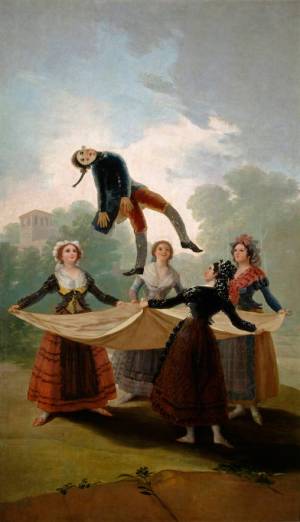
In the Play and Prey section, Goya’s creative process is revealed through representations of a popular game in which young women toss a well-dressed mannequin in a blanket. In Straw Mannequin, this carnivalesque reversal of class and gender roles is seen in a tapestry (1792–93, Patrimonio Nacional, Spain), as well as two preparatory paintings (1791, Hammer Museum, Los Angeles and Museo Nacional del Prado). A late print, Feminine Absurdity (Disparate femenino) Disparates 1 (1815–17, Fundación Lázaro Galdiano), imparts new meaning to the previously simple image of young women at play, as the women now strain to lift several figures, including a peasant and donkey. This more sinister vein is reflected in many of the subjects the artist returned to later in life, following the devastation of the Peninsular War and its political reversals. “Play and Prey” also explores Goya’s famous images of men engaging in hunting (his own favorite pastime) and the bullfight. In these works, including examples from the series of prints, the Tauromaquia and the Bulls of Bordeaux, Goya celebrates both activities while also subtly portraying their darker sides.
The precarious relationship between order and discord, balance and imbalance, is fundamental to Goya’s work, and the subject of the section In the Balance. The theme appears vividly in images of the punishing forces of nature, figures losing their balance and others fighting. This topic is particularly noteworthy given the tumultuous social and political change during Goya’s lifetime, as well as the artist’s own struggles with illness, dizzy spells and deafness. The MFA’s print, The Agility and Audacity of Juanito Apiñani in the Ring at Madrid (Ligereza y atrevimiento de Juanito Apiñani en la de Madrid (Tauromaquia 20) (1815–16) depicts a precarious matador, who is poised midair as he vaults over a charging bull, anchored only by his upright pole.
Goya earned widespread fame through grand portraits executed in the 1780s and 1790s, and the exhibition displays some of these masterpieces alongside more intimate likenesses of his artistic and family circle. Focusing on the painter’s approach to portraiture—from relations with sitters to his handling of paint—Portraits explores the discipline that remained central to his reputation as Spain’s leading painter and helped sustain him financially throughout his career. Paintings of the Duke of Alba (1795, Museo Nacional del Prado) and Duchess of Alba (1797, Hispanic Society of America), shown together for the first time since the early 19th century, are superb examples of his aristocratic portraits and illustrate two of his most important patrons. In the Duchess of Alba, the darkly clothed sitter points a finger to the ground, where the words “Solo Goya” are written in the sand. The assertion that only Goya was worthy of this commission and that only he could have pulled off such a dramatic likeness, changes the painting’s focus from the aristocrat to the artist.
Francisco José de Goya y Lucientes, Yard with Madmen, 1794 (Dallas: Meadows Museum)
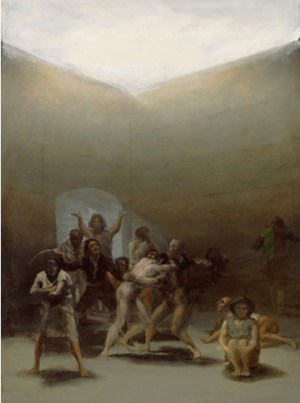
Other Worlds, Other States features two facets of Goya’s spiritual explorations—Christian religious belief and its opposite, superstition. While Goya frequently focused on clerical abuses, religious commissions helped pay the bills throughout his life, and there is no evidence that he lacked personal piety. One of Goya’s greatest legacies is his ability to represent mental and psychological conditions. His depictions of illusions and inner reality are also on view in this section, and include visions, nightmares and the deluded mind of the insane. An imaginative rendering of a particular Spanish nightmare—a witch riding a bull through the air—is depicted in the drawing Pesadilla (Nightmare) (1816–20). Many of Goya’s deranged characters highlight the fragile boundary between lunacy and sanity. A luminous painting on copper from the Meadows Museum in Dallas, Yard with Madmen of 1794—which shows distressed and helpless lunatics—anticipates a sequence of black crayon drawings made three decades later. In these later works, the individuals, whom Goya labeled as “locos,” are in even more desperate condition, restrained in straitjackets or trapped behind bars. Also in this gallery, a “learning space” offers a map, timeline and additional educational materials that offer insight into the mind of the Spanish Master.
A keen awareness of the weight of historical events pervades Goya’s work. Although he belongs in the ranks of great history painters who narrated courageous acts, he is not preoccupied with generals, patriots and battles. Instead, he focuses attention on the anonymous victims of the horrors of war or the Spanish Inquisition, and rarely fails to raise moral questions in these works. In Capturing History, works that blend the epic and mundane include a painting of an imagined scene, Attack on a Military Camp (about 1808–10, Colección Marqués de la Romana), in which a woman holds a screaming infant as she runs from assailants who have already wounded several people. In One Can’t Look (No se puede mirar), Disasters of War 26 (1810–14), the viewer is only a step or two away from the victims and the advancing bayonets of the print’s aggressors. The work is part of the wrenching print series, Disasters of War, which depict the artist’s thoughts on violence during the Peninsular War that ripped Spain apart from 1808 to 1814.
The final section of the exhibition, Solo Goya, summarizes the characteristics that establish the artist’s greatness—exploring themes such as Goya’s imagery of swarms of human figures as well as his periodic reflection on the concept of redemption. The same artist who took on the abuses of war could also evoke the most sympathetic and poignant moments of human experience, such as the Last Communion of Saint Joseph of Calasanz (1819, Collection of the Padres Escolapios). The altarpiece depicts Joseph of Calasanz, from Goya’s home region of Aragón, who founded the order of the Padres Escolapios (Piarists) to educate poor children. Goya may have attended one of the order’s schools, known as the Escuelas Pías, and might have felt a personal connection to the protagonist of the painting—his final major religious work—which comes to the US for the first time in this exhibition.
One of Goya’s most resonant themes addresses the problem with power, embodied by a central character: the giant. Conditioned by the events of his day, particularly the sudden rise and fall of military and institutional fortunes, Goya explores how power is not necessarily inherent, but comes with a cost. Goya’s Seated Giant (by 1818), from the MFA’s renowned collection of Goya prints and drawings, is among the most enigmatic and compelling of the artist’s graphic works, depicting a looming figure immobilized by the burden of power. While no single work can epitomize an artist’s achievement, this figure embodies the grandest of Goya’s great themes.
The MFA’s Goya collection owes a great debt to former MFA Curator of Prints and Drawings, and esteemed Goya scholar, Eleanor A. Sayre, who worked on the exhibitions The Changing Image: Prints by Francisco Goya (1974) and Goya and the Spirit of Enlightenment (1989) at the MFA. Many of the works on view in Goya: Order and Disorder were acquired by the Museum during her tenure, including the Seated Giant; Woman Reading to Two Children (about 1819); Resignation (La resignacion) (1816–20); Merry Absurdity (Disparate alegre) (1816–19); and the oil sketch on canvas of the Annunciation (1785). The Sleep of Reason Produces Monsters (El sueño de la razon produce monstruos), Caprichos 43 (1797–99) and the drawing of Two Men Fighting (1812–20) were part of Sayre’s bequest to the MFA after she passed away in 2001.
Generous support for this exhibition provided by Highland Street Foundation and the Thompson Family Foundation. Additional support from the Samuel H. Kress Foundation. This exhibition is supported by an indemnity from the Federal Council on the Arts and the Humanities. Organized by the Museum of Fine Arts, Boston, with the special collaboration of the Museo Nacional del Prado. Generous support for this publication was provided by the Andrew W. Mellon Publications Fund, with additional support from Isabelle and Scott Black.
◊ ◊ ◊ ◊ ◊
The catalogue is scheduled to be released in October:
Stephanie Loeb Stepanek, Frederick Ilchman, and Janis A. Tomlinson, with contributions by Manuela B. Mena Marques, Gudrun Maurer, Juilet Wilson-Bareau, et al., Goya: Order and Disorder (Boston: MFA Publications, 2014), 400 pages, ISBN: 978-0878468089, $65.
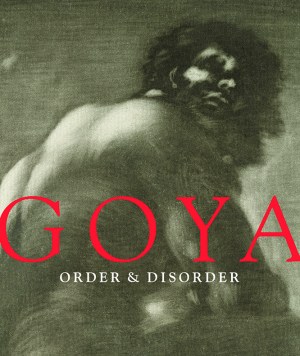 Francisco Goya is widely celebrated as the most important Spanish artist of the late eighteenth and early nineteenth centuries, the last of the Old Masters and the first of the Moderns, and an astute observer of the human condition in all its complexity. Few, however, have attempted to explore his work as a painter, printmaker, and draftsman across media and the timeline of his life. This book does just that, presenting a comprehensive and integrated view of Goya’s most important work through the themes that continually challenged or preoccupied the artist. They reveal how he strove relentlessly to understand and describe human behavior and emotional states, even at their most orderly or disorderly extremes. Derived from the research for the largest Goya exhibition in North America in a quarter century, this book takes a fresh look at one of the greatest artists in history by examining the fertile territory between the two poles that defined the range of his boundlessly creative
personality.
Stephanie Loeb Stepanek is Curator of Prints and Drawings, Museum of Fine Arts, Boston.
Frederick Ilchman is Mrs. Russell W. Baker Curator of Paintings, Art of Europe, Museum of Fine Arts, Boston.
Janis A.Tomlinson is Director, University Museums, University of Delaware.
Enfilade Turns Five, So Buy an Art Book (and have some ice cream)!
◊ ◊ ◊ ◊ ◊
Here, after five years, 1056 subscribers, and 421,000 hits, I’m as excited as ever about what Enfilade has become, thanks to such loyal readers. Thank you!
If you’re reading this with any measure of kind-hearted gratitude, here’s what you can (I dare say should) do:
1) Join HECAA (Historians of Eighteenth-Century Art & Architecture). It’s quick and inexpensive—just $30 (only $5 for students)—with the money going to promote the field of eighteenth-century studies, much of it to graduate students at that. Or you can donate whatever amount you choose. Think your $3 doesn’t matter? Well, if all 312 of you visiting the site today gave that much, we would bring in close to a $1000. For an organization like HECAA, that’s enormous. Click here to join or contribute.
2) Buy an Art Book. If readers like you aren’t buying art books, then who do we expect will? So if you’ve not bought an art book within the past month, buy one today (and ‘no’, remainders, used books, and the like don’t count).
Thanks for reading; thanks for writing in with news to share.
–Craig Ashley Hanson
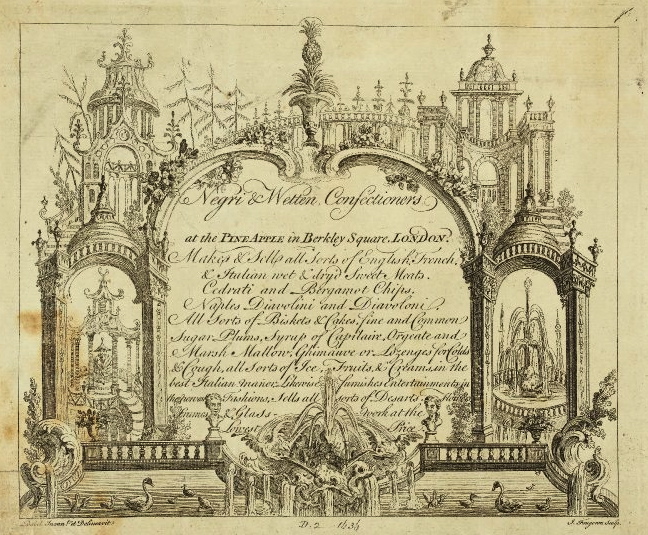
Image: Trade card of Negri & Wetten, Confectioners at the Pineapple, Berkeley Square. Print by Ignatius Fougeron, after Peter Babel, ca. 1799 (London: British Museum, D,2.1636). From the collection of Sarah Sophia Banks. Food historian Ivan Day writes about eighteenth-century ice creams with reference to Negri, and last summer Vic Sanborn provided a fine summary of Negri’s business, “The Pot and Pineapple and Gunter’s: Domenico Negri, Robert Gunter, and the Confectioner’s Art in Georgian London,” published at her ever interesting blog Jane Austen’s World.
New Book | Fashion Prints in the Age of Louis XIV
From Texas Tech UP:
Kathryn Norberg and Sandra Rosenbaum, eds., Fashion Prints in the Age of Louis XIV: Interpreting the Art of Elegance (Lubbock: Texas Tech University Press, 2014), 320 pages, ISBN: 978-0896728578, $46.
 Between 1678 and 1710, Parisian presses printed hundreds of images of elegantly attired men and women dressed in the latest mode, and posed to display every detail of their clothing and accessories. Long used to illustrate dress of the period, these fashion prints have been taken at face value and used uncritically. Drawing on perspectives from art history, costume history, French literature, museum conservation and theatrical costuming, the essays in this volume explore what the prints represent and what they reveal about fashion and culture in the seventeenth century.
With more than one hundred illustrations, Fashion Prints in the Age of Louis XIV constitutes not only an innovative analysis of fashion engravings, but also one of the most comprehensive collections of seventeenth-century fashion images available in print.
Kathryn Norberg is a professor of history and gender studies at the University of California, Los Angeles. She has published on French history and is the coeditor of Furnishing the Eighteenth Century: What Furniture Can Tell Us about the European and American Past.
Sandra Rosenbaum is the retired curator-in-charge of the Doris Stein Research Center for Costume and Textiles, a part of the Department of Costume and Textiles, at the Los Angeles County Museum of Art, for which she developed and supervised an extensive library of primary and secondary source materials.
◊ ◊ ◊ ◊ ◊
C O N T E N T S
Illustrations
Acknowledgments
Introduction: Fashion and Fashion Prints in the Age of Louis XIV
Part One: The Fashion Print
1. The Fashion Print: An Ambiguous Object, Françoise Tétart-Vittu
2. Fashioning Fashionability, Kathleen Nicholson
3. The Cris de Paris in the LACMA Recueil des modes, Paula Rea Radisich
4. Fashions in Prints: Considering the Recueil des modes as an Album of Prints, Marcia Reed
Part Two: Contextualizing the Fashion Print
5. Fashion as Concept and Ethic in Seventeenth-Century France, William Ray
6. The Fashion Run Seen from Backstage: Saint-Simon’s Memoirs of Louis XIV’s Court, Malina Stefanovska
7. Louis XIV: King of Fashion?, Kathryn Norberg
8. Oriental Connections: Merchant Adventurers and the Transmission of Cultural Concepts, Mary Schoeser
Part Three: The Fashion Print as a Historical Resource
9. The LACMA Recueil des modes, Sandra L. Rosenbaum
10. Fashion Illustration from the Reign of Louis XIV: A Technical Study of the Paper and Colorants Used in the LACMA Recueil des modes, Soko Furuhata
11. Performing Fashion, Michael J. Hackett
12. Recreating an Entrée, a Minuet, and a Chaconne, Emma Lewis Thomas
13. Recreating a Grand Habit, Maxwell Barr
14. A Seventeenth-Century Gown Rediscovered: Work in Progress, Catherine McLean, Sandra L. Rosenbaum, and Susan Renate Schmalz
Selected Bibliography
Contributors
Index
Illustrations
Exhibition | Ireland: Crossroads of Art and Design, 1690–1840
Looking ahead to next spring at the AIC:
Ireland: Crossroads of Art and Design, 1690–1840
Art Institute of Chicago, 17 March — 21 June 2015 (extended from June 7)
Curated by Christopher Monkhouse

John Kirkhoffer, Secretary Cabinet, 1732
(Art Institute of Chicago)
Ireland on a World Stage, 1690–1840 will present 300 objects drawn from public and private collections across North America to provide a richly layered overview of the Emerald Isle during its first ‘Golden Age’. The seeds of this exhibition were first planted by Desmond FitzGerald, the Knight of Glin, who in his 2007 book Irish Furniture outlined his vision for:
a major exhibition on Ireland’s decorative arts of the 18th century, which would include furniture [and] bring together the common threads of the different fields. It would give an overview of the shared patrimony with England and the Continent and show the high level of craftsmanship achieved in Ireland at that time. A show of this stature would waken up the world to a staggering array of art that was manufactured in Ireland during this period.
Surprisingly, such an exhibition has never before been undertaken on either side of the Atlantic. Ireland on a World Stage, 1690–1840 will expand on the Knight of Glin’s vision to also include paintings, sculpture, and architecture in addition
to bookbindings, ceramics, glass, furniture, metalwork, and
textiles.
◊ ◊ ◊ ◊ ◊
Note (added 18 February 2015) — The original posting included the preliminary exhibition title Ireland on a World Stage, 1690–1840. The link has also been updated.
At Auction | The Contents of Bantry House

◊ ◊ ◊ ◊ ◊
Press release from Edinburgh’s Lyon & Turnbull, as posted at Art Daily:
Lyon & Turnbull | The Contents of Bantry House (Sale #426)
Bantry House, County Cork, 21 October 2014
Lyon & Turnbull are to sell the contents of Bantry House, County Cork, one of the finest and best loved historic houses in the Republic of Ireland. The sale will take place the 21st of October, 2014 on the premises at Bantry House. Formerly the principal seat of the Earls of Bantry, the house was owned and run by the late Egerton Shelswell-White and his wife, latterly with the help of their eldest daughter Sophie, who has been General Manager since 2010.
“It is a wonderful house with an extraordinary history” says Mrs. Shelswell-White, whose husband’s family have lived in the house for over 300 years. “It has been a very difficult decision, but also an exciting and stimulating one. The funds from the sale will inject a new energy into the house and also into us, as a family. This decision will free us to make new plans and allow us to be open to different proposals and new ideas. I feel it will make it possible for Bantry House to have a future as a successful place, more in step with the times we live in.” She continued: “I feel certain that every single item will go to a good home and be treasured and looked after as we have tried to do. Many of the objects in the sale are of museum quality and need to be expertly cared for, a luxury we could only afford with great difficulty. The house and gardens will continue to be open to the public and we will continue to run and possibly expand our successful bed and breakfast business. We will be able to hold more weddings, concerts, exhibitions and other events, aiming to extend the season into the winter months, securing and creating jobs for those involved with the house. This season will be the last opportunity to see the house with its contents as it is now and has been for many years.”
Items in the sale include many paintings, furniture and books collected by the second Earl of Bantry, including some exquisite French tapestries that adorn the walls of several of the rooms. Produced in the workshops of Gobelins and Aubusson in the 18th century, one of the two Gobelins panels is said to have hung in the Palace of Versailles and there is a particularly beautiful rose-coloured set of Aubussons, which are said to have been made by order of Louis XV for Marie Antoinette on her marriage to the Dauphin of France.
Gavin Strang, Director of Lyon & Turnbull said “Lord Bantry’s collection has long been recognised as having great artistic and historical interest. As a young man, Viscount Berehaven, who later became the second Earl, travelled extensively in Europe; visiting countries as far distant as Russia and Poland, seeking out the pieces which were to form his remarkable collection of furniture, tapestries and other works of art that are included in the sale.”
Among the furniture in the sale is a Russian household shrine which contains 15th- and 16th-century icons and an impressive pair of William Kent style console tables. The paintings in the collection include a pair of portraits from the studio of Allan Ramsay of George III and Queen Charlotte, presented by King George to the First Earl of Bantry on his elevation to the peerage. Immediately prior to the sale the house and contents will be on view to the public on October the 17th, 18th 19th and 20th of October, with the sale on the 21st October 2014.
At Auction | From the Collections of the Dukes of Northumberland

From Sotheby’s (click to view the very grand 3-minute preview). . .
Spanning 2000 years of art history and formed over several centuries, the collection of the Dukes of Northumberland, from Syon House and their primary residence Alwnick Castle, is one of the great British collections. Henry Wyndham, Mario Tavella and Andrew Fletcher present a selection of the 73 lots from this remarkable collection to be sold at Sotheby’s in 2014.
◊ ◊ ◊ ◊ ◊
Property from the Collections of the Dukes of Northumberland
Medieval and Renaissance Manuscripts
8 July 2014, London
Old Master Drawings
9 July 2014, London
Treasures
9 July 2014, London
Old Master and British Paintings
9 July 2014, London
English Literature and History
15 July 2014, London
Indian and South East Asian
1 October 2014, New York
Arts of the Islamic World
8 October 2014, London
Travel, Atlases and Natural History
4 November 2014, London
Clive Aslet writes about the family for Sotheby’s Magazine (30 May 2014).










 Enfilade
leave a comment