Call for Panel Proposals | CAA in Washington, D.C., 2016
From the College Art Association:
104th Annual Conference of the College Art Association
Washington, D.C., 3–6 February 2016
Proposals due by 12 September 2014
The CAA 104th Annual Conference will take place February 3–6, 2016, in Washington, DC. The Annual Conference Committee invites session proposals that cover the breadth of current thought and research in art, art and architectural history, theory and criticism, pedagogical issues, museum and curatorial practice, conservation, and developments in technology. Deadline: Friday, September 12, 2014. In order to submit a proposal, you must be a current CAA member. For full details on the submission process for the conference, please review the information available here.
Call for Papers | Political, Religious, and Aesthetic Transgressions
As noted at H-ArtHist:
LUCAS International Graduate Conference 2015
Breaking the Rules! Cultural Reflections on Political, Religious, and Aesthetic Transgressions
Leiden University Center for the Arts in Society, 29–30 January 2015
Proposals due by 15 October 2014
Society, religion and art have always been defined and governed by certain (un-)written rules. Yet there have always been those who willingly transgressed communal norms. Throughout history, from Antiquity, through the Middle Ages, up to the present day, these transgressors have met with either praise or disapproval. Some have been heralded as heroes, great thinkers or revolutionary artists, while others have been branded as exiles, sinners or outcasts. In Greek mythology, Prometheus was punished for defying the Gods and gifting humanity with fire; Christianity, Judaism and Islam condemn Adam and Eve’s transgression of divine command. The legacy of prominent rule-breakers, such as Socrates, Jeanne d’Arc, Pablo Picasso and Martin Luther King, can still be felt today.
This multi-disciplinary conference focuses on the wide range of cultural reflections on the violation of laws, traditions and conventions in the political, religious and aesthetic domains. Central questions, applicable to all three domains, include: Who breaks the rules? What are the aims of the offender: identification, protest or innovation? How can the authority of rules be undermined? How has transgression been perceived through the ages? Is the rule breaker punished or praised? To what extent is an act of rule breaking a confirmation of the existence of certain rules? What role does gender play in rule breaking? How do various cultures define transgression?
Papers in the political domain may focus on artistic perspectives on social taboos, the ethics of rule breaking, revolt, emancipation, disobedience, identity through rule breaking, the absence of rules (anarchy, freedom), protest through art or any other topic related to this domain. Papers in the religious domain may deal with cultural perspectives on the various aspects of religious rule breaking, such as sin, confession, penance, damnation, redemption, heresy and inquisition, as well as iconoclasm and idolatry. Other topics include, but are not limited to, sin as a political instrument, religious taboos and forbidden pleasures. Papers in the aesthetic domain may focus on boundaries of what is considered to be art, changing perceptions of beauty/ugliness in art, deviations from stylistic conventions and artistic traditions, plagiarism, the tension between resisting convention and embracing innovation or any other topic related to this domain. Creative and engaging ideas which fall outside the three domains described above will also be considered.
The LUCAS Graduate Conference aims to reflect the institute’s interdisciplinary and international character. As such, this two-day conference will provide a platform for PhD students in the humanities, from Leiden as well as other universities in the Netherlands and abroad, to present and exchange their ideas in an international and interdisciplinary environment. The organising committee invited two internationally renowned senior academics from different disciplines to act as keynote speakers, participate in the discussions and provide feedback to the papers presented at the conference.
Confirmed Keynote Speakers
Lorraine Daston, Professor and Executive Director of the Max Planck Institute for the History of Science (MPIWG) in Berlin
Barbara H. Rosenwein, Professor of History at Loyola University Chicago
Proposals
The LUCAS Graduate Conference welcomes papers from all disciplines within the humanities. The topic of your proposal may address the concept of rule breaking/transgression from a cultural, historical, classical, artistic, literary, cinematic, political, economic, religious or social viewpoint. Possible themes for papers may revolve around, but are not limited to, the following concepts:
• Heresy, Agnosticism, Sin, Adultery, Immorality, Redemption
• Rebellion, Revolt, Revolution, Conflict, Anarchy, Emancipation
• Corruption, Criminality, Outlawry, Oath Breaking
• Innovation, the Sublime, Supernaturalism, Ugliness, Obscenity
• Illegal Migration, Crossing Borders, Exile, Nomadism, Exclusion
• Cultural or Sexual Hybridity, Creolization
• Exoticism, Orientalism, Barbarism, Savagism
Please send your proposal (max. 300 words) to present a 20-minute paper along with a brief bio (150 words) before 15 October, 2014 to lucasconference2015@gmail.com. You will be notified whether or not your paper has been selected by 1 November, 2014. Should you have any question regarding the conference and/or the proposal, please do not hesitate to contact the organizing committee at the same email address. The conference website can be found here. A selection of papers will be published as conference proceedings in the Journal of the LUCAS Graduate Conference. For those who attend the conference, there will be a registration fee of €50 to cover the costs of lunches, coffee breaks, excursions and other conference materials. Unfortunately, we cannot offer financial support for travel or accommodation expenses.
The Organizing Committee
Nouzha Baba
Cui Chen
Katarzyna Durys
Wieneke Jansen
Thijs Porck
Conference | The Cabinet of Paintings of Karoline Luise von Baden
As noted at H-ArtHist (click for the German version). . .
Aufgeklärter Kunstdiskurs und Höfische Sammelpraxis:
Das ‘Mahlerey-Cabinet’ Karoline Luise von Baden (1723–1783) im Europäischen Kontext
Enlightened Discourse in Art and Courtly Collecting Practices:
Caroline Louise of Baden’s (1723–1783) ‘Cabinet of Paintings’ in a European Context
Staatliche Kunsthalle Karlsruhe, 10–12 September 2014
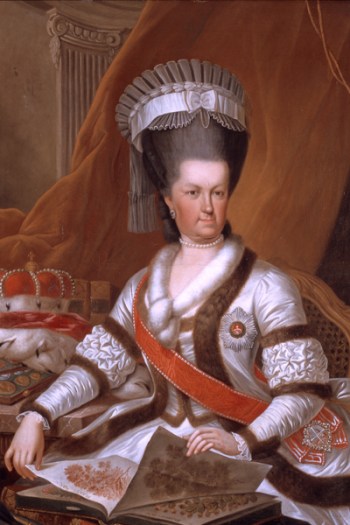
J.W. Hauwiller, Portrait of Margravine Caroline Louise of Baden (1723–1783)
This research project is an interdisciplinary cooperation between the Staatliche Kunsthalle Karlsruhe, the Generallandesarchiv Karlsruhe and the University of Mendrisio (Switzerland). The project focuses on the comprehensive study into the history of art and ideas of Caroline Louise’s ‘cabinet of paintings’, an extensive collection that once included more than 200 paintings.
Participating at the conference are eighteen academics from Germany, Switzerland, France, England, Sweden and the Netherlands who will be investigating in four separate sections the central questions of this research project. To some extent, the conference’s scholarly impulses will also benefit the exhibition concept of the upcoming Baden Wurttemberg State Exhibition Caroline Louise of Baden (1723–1783): A Collector of European Standing. This exhibition will be on display at the Staatliche Kunsthalle Karlsruhe for the 300th anniversary of the city’s founding from 30 May to 6 September 2015. The conference is open to public and participation is free of charge. Please confirm by sending us an email with the subject heading ‘Conference Enlightened Discourse’ to Sarah Salomon at salomon@kunsthalle-karlsruhe.de.
◊ ◊ ◊ ◊ ◊
W E D N E S D A Y , 1 0 S E P T M B E R 2 0 1 4
19.00 Christoph Frank (University of Mendrisio, Switzerland),’Where Europe Ends: Caroline Louise, Her Agents and Correspondents’ (Lecture in German)
T H U R S D A Y , 1 1 S E P T E M B E R 2 0 1 4
9.00 Introduction by Wolfgang Zimmermann, Generallandesarchiv, Karlsruhe
1. Regionalism and European Perspective during the Ancien Régime
9.30 Wilhelm Kreutz (University of Mannheim), ‘Enlightenment along the Upper Rhine: People, Societies, and Institutions’ (Lecture in German)
10.00 Wolfgang Zimmermann (Generallandesarchiv, Karlsruhe), ‘Political Alliances—Grand Rivalry—Cultural Ambitions: The Upper Rhine Valley in the Mid-18th Century’ (Lecture in German)
10.30 Thorsten Huthwelker (Generallandesarchiv, Karlsruhe), ‘The Correspondence Network of Caroline Louise of Baden’ (Lecture in German)
11.00 Coffee

Jean-Étienne Liotard, Portrait of Princess Caroline Louise of Hessen-Darmstadt, 1745 (Staatliche Kunsthalle Karlsruhe)
2. Connoisseurship and Artistic Practice
11.30 Charlotte Guichard (CNRS – École Normale Supérieure, Paris) ‘“Amatrice “: Women in the Arts during the Age of Enlightenment in Europe’ (Lecture in French)
12.00 Katharina Weiler (Staatliche Kunsthalle Karlsruhe), ‘The Art of Copying: Caroline Louise of Baden and the Loans from the Electoral Painting Cabinet of Mannheim’ (Lecture in German)
12.30 Lunch
14.30 Sarah Salomon (Staatliche Kunsthalle Karlsruhe), ‘Seeing and Knowing: The Cabinet of Paintings—a Laboratory of Pictures?’ (Lecture in German)
15.00 Astrid Reuter (Staatliche Kunsthalle Karlsruhe),’The Significance of Jean-Etienne Liotard and Pastel Painting for Caroline Louise’ (Lecture in German)
15.30 Coffee
19.00 Bénédicte Savoy (Technical University Berlin) ‘Temples of Art: Collections and their Audiences in the 18th Century’ (Lecture in German)
F R I D A Y , 1 2 S E P T E M B E R 2 0 1 4
3. The Art Market and the Development of Taste in the 18th Century
9.00 Everhard Korthals Altes (Delft University of Technology), ‘Caroline Louise’s Collecting Activities and the Dutch Art Market: The Role of Catalogues, Letter Correspondences and Agents’ (Lecture in English)
9.30 Holger Jacob-Friesen (Staatliche Kunsthalle Karlsruhe), ‘Caroline Louise and her Agent in The Hague, Gottlieb Heinrich Treuer’ (Lecture in German)
10.00 Max Tillmann (Staatliche Kunsthalle Karlsruhe), ‘Caroline Louise of Baden and the French Enthusiasm for Netherlandish Painting in the 18th Century’ (Lecture in German)
10.30 Coffee
11.00 Thomas Kirchner (German Forum for Art History, Paris), ‘Caroline Louise of Baden and Contemporary French Painting’ (Lecture in German)
4. Representation and Aesthetics: Form and Function of European Art Collections
11.30 Ulrike Grimm (formerly Schlösserverwaltung, Baden-Württemberg) ‘”… Enfin cet appartemênt fera mes délices …” – Caroline Louise’s Apartments in the Palace of Karlsruhe’ (Lecture in German)
12.00 Dietmar Lüdke (formerly Staatliche, Kunsthalle Karlsruhe) ‘Form and Function of the Picture Frames in the Apartment of Margravine Caroline Louise of Baden’ (Lecture in German)
12.30 Lunch
14.00 Christoph Vogtherr (The Wallace Collection, London), ‘Caroline Louise of Baden and Frederick II of Prussia: Two Royal Art Collectors of the Ancien Régime in Comparison’ (Lecture in English)
14.30 Merit Laine (The Swedish Royal Collections, Stockholm),'”Y avoir tout ce qu’on peut s’imaginer” The Painting Collection of Queen Lovisa Ulrika Collection of Sweden and its Context at Drottningholm Palace’ (Lecture in English)
15.00 Coffee
15.30 Frédéric Bußmann (Museum of Fine Arts, Leipzig), ‘Parisian Collections in the Second Half of the 18th Century: Between Connoisseurship and Representation’ (Lecture in German)
16.00 Concluding remarks
◊ ◊ ◊ ◊ ◊
Note (added 9 July 2014) — The lovely portrait by Liotard was not included as part of the original posting.
New Book | Wasteland: A History
From Yale UP:
Vittoria Di Palma, Wasteland: A History (New Haven: Yale University Press, 2014), 280 pages, ISBN: 9780300197792, $45.
 In Wasteland, Vittoria Di Palma takes on the ‘anti-picturesque’, offering an account of landscapes that have traditionally drawn fear and contempt. Di Palma argues that a convergence of beliefs, technologies, institutions, and individuals in 18th-century England resulted in the formulation of cultural attitudes that continue to shape the ways we evaluate landscape today. Staking claims on the aesthetics of disgust, she addresses how emotional response has been central to the development of ideas about nature, beauty, and sublimity. With striking illustrations reaching back to the 1600s—husbandry manuals, radical pamphlets, gardening treatises, maps, and landscape paintings— Wasteland spans the fields of landscape studies, art and architectural history, geography, history, and the history of science and technology. In stirring prose, Di Palma tackles our conceptions of such hostile territories as swamps, mountains, and forests, arguing that they are united not by any essential physical characteristics but by the aversive reactions they inspire.
Vittoria Di Palma is assistant professor in the School
of Architecture of the University of Southern California.
Exhibition | Spirit and Splendour of the Dresden Picture Gallery

Bernardo Bellotto, called Canaletto, The Ruins of the Old Kreuzkirche in Dresden, 1765, 80 x 110 cm (Gemäldegalerie Alte Meister, Staatliche Kunstsammlungen Dresden; photo by Elke Estel/Hans-Peter Klut)
◊ ◊ ◊ ◊ ◊
From the museum:
Rembrandt—Titian—Bellotto: Spirit and Splendour of the Dresden Picture Gallery
Rembrandt—Tizian—Bellotto: Geist und Glanz der Dresdner Gemäldegalerie
Kunsthalle der Hypo-Kulturstiftung, Munich, 22 August — 23 November 2014
Groninger Museum, Groningen, 13 December 2014 — 25 May 2015
Belvedere Winterpalais, Vienna, 11 June — 26 October 2015
The Kunsthalle München is showing some one hundred masterpieces by famous painters including works by Caracci, Velázquez, van Dyck, Lorrain, Watteau and Canaletto. They illustrate the roots of the legendary rich Dresden Picture Gallery and its flourishing throughout the Baroque era and the Age of Enlightenment.
The exhibition focuses on the reign of Augustus II, Elector of Saxony and King of Poland (1670–1733), also known as the Strong, and his son Augustus III (1696–1763). During the ‘Augustan Age’, an era of economic and cultural efflorescence, the manifold building projects, vibrant cultural life and the enhancement of the royal collections all embodied the electoral court’s new claim to power. The construction of the Cathedral and the Frauenkirche during this era gave Dresden its world famous silhouette. Moreover, prestigious painters like the Italian Bernardo Bellotto (1721–1780) or Louis de Silvestre (1675–1760) were drawn to Dresden, where they were engaged as court artists. This vibrant, innovative era forms the backdrop behind the painted masterpieces and their stories.
The development of the Dresden Picture Gallery, its presentation, focus and appeal throughout the 18th century is expounded in seven chapters. The exhibition examines the inception of the painting collection under Augustus the Strong, which may be interpreted as the expression of his heightened need to demonstrate his status on being crowned king of Poland in 1697. Significant works from various genres like history painting, landscape, still life and portraiture highlight the profile of the royal collection, which continued to grow throughout the 18th century. A frequent visitor to the Dresden Picture Gallery was the famous art historian and archeologist Johann Joachim Winckelmann (1717–1768), who wrote an account of his experiences, thereby contributing to immortalise the collection’s legendary reputation. The exhibition presents numerous works that he encountered while roaming the royal gallery and which found his appreciation. Thus, over the course of the 18th century, the collection evolved into a place of learning and exchange of ideas, luring numerous artists to draw inspiration from the Old Masters. The exhibition concludes with the reopening of the Dresden Academy of Fine Arts under the direction of Christian Ludwig von Hagedorn (1712–1780); he succeeded in engaging prestigious painters as teachers, who gave the development of art in Dresden fresh momentum, thereby foreshadowing the modern trends of the 19th century.
Roger Diederen, Bernhard Maaz, and Ute Christina Koch, eds., Rembrandt—Tizian—Bellotto: Geist und Glanz der Dresdner Gemaldegalerie (Munich: Hirmer Verlag, 2014), 272 pages, ISBN: 978-3777422022, €40.
◊ ◊ ◊ ◊ ◊
Note (added 15 December 2014) — The original posting omitted information on the catalogue as well as the Groningen and Vienna venues. At the Groninger Museum the exhibition is entitled The Secret of Dresden: From Rembrandt to Canaletto (in Dutch Het geheim van Dresden – Van Rembrandt tot Canaletto).
Journal of the History of Collections, July 2014
The eighteenth century in the Journal of the History of Collections (though other pieces for periods both earlier and later will likely also be of interest) . . .
Journal of the History of Collections 26 (July 2014)
A R T I C L E S
Alexander Echlin, “Dynasty, Archaeology and Conservation: The Bourbon Rediscovery of Pompeii and Herculaneum in Eighteenth-Century Naples,” pp. 145–59 (first published online 1 April 2014).
The rediscovery of the ancient sites of Pompeii and Herculaneum in the eighteenth century attracted a huge response from contemporary commentators. Many of these, as well as almost all subsequent judgements from historians, are very critical of the Bourbon excavators. Charles, King of Naples, and his team of antiquaries have been depicted as charlatans, treating ancient artefacts and the sites poorly, interested in them only in so far as they glorified their kingdom. In this article it is argued that, with an understanding of contemporary approaches to antiquity and conservation, this verdict on the Bourbons seems unduly harsh. Their archaeological methods and treatment of classical art were typical for the eighteenth century and were, in some ways, progressive. In support of this harsh judgement of Charles, Winckelmann has been portrayed as a savage critic of the excavations; in reality he was kinder to the Bourbons than historians have believed.
Julia Lenaghan, “The Cast Collection of John Sanders, Architect, at the Royal Academy, ” pp. 193–205 (first published online 4 November 2013).
John Sanders (1768–1826) was an architect and a Fellow of the Society of Antiquaries of London. He was the first student and a life-long friend of Sir John Soane. In 1817 in retirement he travelled to the Continent, where he studied and recorded with academic zeal the architectural monuments of the classical world which had so influenced his mentor and his world. In Rome he amassed a comprehensive and original collection of plaster casts of ‘architectural’ details. This collection was purchased by the Royal Academy in 1830, and much of it remains today part of the permanent collection of the Academy. This article presents the history and use of this early, non-figural, collection of plaster casts.
Paulo Oliveira Ramos, “The Royal Decree of 1721 and the Ephemeral Archaeological Collection of the Royal Academy of Portuguese History,” pp. 223–27 (first published online 22 January 2014).
In the great Lisbon earthquake of 1755, the palace of the Dukes of Braganza collapsed and its priceless treasures were lost forever. Although the content of its archaeological collection—said to constitute the first Portuguese museum of archaeology—is almost impossible to recover in detail today, the process behind its formation can be glimpsed in the documentary record. Two main aspects have emerged in the course of the present research: on the one hand, the relevance of the Royal Decree of 1721 as a crucial moment in the history of heritage preservation in Portugal and in Europe—and also as the inspiration for the archaeological collection; and, on the other hand, the antiquarian commitment of the Marquis of Abrantes.
Stephen Clarke, “Rosamond’s Bower, The Pryor’s Bank, and the Long Shadow of Strawberry Hill,” pp. 287–306 (first published online 4 March 2014).
The influence of Horace Walpole’s Strawberry Hill is traced in the little-known collections created in the 1830s and early 1840s at Rosamond’s Bower by the writer and antiquary Thomas Crofton Croker (joint author of the Gooseberry Hall satire of the Strawberry Hill sale of 1842) and by Thomas Baylis and Lechmere Whitmore at The Pryor’s Bank, both at Fulham. They were active purchasers at the sale (particularly Baylis), and Walpole’s Description of Strawberry Hill is a continuing presence behind Croker’s accounts of both collections. Both houses were social spaces, presented for antiquarian display, and in the case of The Pryor’s Bank in particular that display was played out in entertainments and Dickensian amateur theatricals. An under-explored element in this combination of collecting, antiquarianism, and jocularity is the Noviomagian Society, an antiquarian dining club of which Croker was a founder and which has connections to both houses.
R E V I E W S
• Jeremy Coote, Review of Holophusicon: The Leverian Museum – An Eighteenth-Century English Institution of Science, Curiosity, and Art,” pp. 317–18 (first published online 18 April 2014).
• Jörg Zutter, Review of Houghton Revisited: The Walpole Masterpieces from Catherine the Great’s Hermitage, pp. 319–21 (first published online 11 June 2014).
• Arthur MacGregor, Review of Natural Histories: Extraordinary Rare Book Selections from the American Museum of Natural History Library, pp. 322–23 (first published online 8 May 2014).
• Peter Mason, Review of Historias Naturales: Un Proyecto de Miguel Ángel Blanco, pp. 323–24 (first published online 16 May 2014).
• Charles Sebag-Montefiore, Review of Provenance: An Alternate History of Art, pp. 324–25 (first published online 18 April 2014).
Call for Papers | CAA 2015 Session, Art Editing on the Web
A late addition to the CAA 2015 sessions:
Did You Read That? Art Editing on the Web
Session at the 103rd Annual Conference of the College Art Association
New York, 11–14 February 2015
Proposals due by 31 July 2014
Sponsored by the Association of Art Editors, the session “Did You Read That? Art Editing on the Web” will explore the current state of art editing on the web. Panelists will discuss the varying levels of work and practices involved in editing texts for publication online, from the mechanical and technical aspects (research, fact checking, making corrections after publishing) to larger conceptual and ethical matters (changing attitudes toward quality). Writers and editors today have access to a wide range of resources—from Google searches and Wikipedia to JSTOR and Oxford Art Online—that were unavailable (and even unimaginable) twenty or thirty years ago. How has the advent of such resources affected the editorial process?
This session, whose format will be a roundtable conversation, with the chair serving as an active interviewer rather than a passive moderator, will focus on specific examples and case studies rather than on generalizations and abstractions. Speakers, who may include authors, critics, editors, or publishers, will address personal and academic
websites, online versions of printed publications, born-digital journals, and blogs; they may also consider the training of younger writers, critics, historians, and editors.
The chair seeks four participants for the session. Speakers are not required to present a paper prepared in advance, although a brief presentation of five to ten minutes can be accommodated. Please send a letter of interest, a CV, and your area(s) of professional interest and expertise to Christopher Howard at chris@christopher-howard.net.
Exhibition | Chinoiserie Prints

Antoine Watteau, gravé par Michel Aubert, Idole de la Déesse Ki Mâo Sao
dans le royaume de Mang au pays des Laos, Paris, 1731.
◊ ◊ ◊ ◊ ◊
As noted by Hélène Bremer, from Les Arts Décoratifs:
La Chine des Ornemanistes: Gravures de Chinoiseries
Bibliothèque des Arts Décoratifs, Paris, 5 May — 31 July 2014
En écho aux expositions du musée, Les secrets de la laque française : le vernis Martin et De la Chine aux Arts Décoratifs : l’art chinois dans les collections du musée des Arts décoratifs, la Bibliothèque vous invite à découvrir la Chine fantaisiste et fantasmée, inventée et gravée par les ornemanistes français du XVIIIe siècle. D’Antoine Watteau à Jean Pillement, les artistes créèrent avec la chinoiserie une des formes les plus originales de l’art du siècle des Lumières.
Au début du XVIIIe siècle, en réaction aux lourdeurs du grand style du siècle précédent, les artistes s’affranchirent des modèles rigides aux significations codées, hérités des Métamorphoses d’Ovide et de l’Iconologie du chevalier Ripa, grâce à l’assimilation et la réappropriation des motifs chinois. La légèreté et la fantaisie de cette Asie recomposée étaient parfaitement adaptées à la société hédoniste qui s’établit en France à partir de la Régence et durant le règne de Louis XV. Cantonnée aux arts décoratifs, aux pièces intimes et aux pavillons ornementaux, la chinoiserie ne fut pas entravée par les règles de la convenance. Elle put rester le lieu du plaisir et du rêve.
The press release is available here»
Call for Papers | The Beauty of Letters: Text, Type, and Communication
From the conference website:
The Beauty of Letters: Text, Type, and Communication in the Eighteenth Century
Birmingham, 14–15 March 2015
Proposals due by 1 July 2014
 The Baskerville Society, in conjunction with the University of Birmingham and Birmingham City University, is pleased to announce the theme for its second two-day conference, The Beauty of Letters: Text, Type, and Communication in the Eighteenth Century.
In his preface to Paradise Lost (1758), John Baskerville described himself as ‘an admirer of the beauty of letters’. This conference takes his phrase as a starting point to explore the production, distribution, consumption and reception, not only of letters, but also words, texts and images during the long eighteenth century (c. 1688–1820). This conference will consider how writing, printing, performance and portrayal contributed to the creation of cultural identity and taste, assisted the spread of knowledge and contributed to political,
economic, social and cultural change in Britain and the wider world.
Writing: teaching of writing and penmanship; styles of handwritten script; copybooks; shorthand; handwritten documents such as diaries, account books, letters, legal and parliamentary documents; the creation of texts by authors, poets and playwrights of the eighteenth century.*
Printing: printers and typefounders; technology and technology transfer; typefaces and typography; manufacture and distribution of texts; libraries, and education; publishing and bookselling; the production of different forms of print media: books, newspapers, encyclopaedias, dictionaries, conduct manuals, scientific and medical literature, histories, travel literature, religious, legal and political texts, ephemera and street literature.
Performance: the enactment and communication of text in theatre, music, politics and education through writing and performance of plays, ballad operas, songs and lyrics; the presentation of scripts and musical scores; censorship; theatre programmes; theatre merchandising; speeches; sermons; scientific lectures.
Portrayal: the visual representation of text in maps; scientific drawings; architectural drawings; astronomical sketches; political/satirical cartoons; posters, labels; signs and shop-fronts including both architectural and fascia lettering; advertising.
*please note the conference is not exploring literary criticism
The Conference organisers, Professor Caroline Archer and Dr Malcolm Dick are inviting contributions from academics, heritage professionals, research students and independent scholars. Please send a suggested title, synopsis (200 words) and biography (100 words) via a word attachment to both: caroline.archer@bcu.ac.uk and m.m.dick@bham.ac.uk; by: 1 July 2014.
◊ ◊ ◊ ◊ ◊
The Baskerville Society is an international society dedicated to the study of the eighteenth-century typographer, printer, industrialist and Enlightenment figure, John Baskerville (1707–75).
Call for Papers | The Intelligent Hand, 1500–1800
From The Courtauld:
Sixth Early Modern Symposium | The Intelligent Hand, 1500–1800
The Courtauld Institute of Art, London, 8 November 2014
Proposals due by 30 June 2014
Organised by Austeja Mackelaite and Camilla Pietrabissa
The hand—the ‘instrument of instruments’—has fascinated artists, scientists and philosophers from Aristotle onwards. Its remarkable dexterity, anatomical complexity, and the ability to manipulate were seen as defining features distinguishing humanity from animality, as well as indicators of the superiority of the former. Taking as its starting point the sixteenth-century humanist Dominicus Lampsonius’ claim that ‘the Netherlander / Has intelligence in his hand’, this one-day Symposium will investigate the hand both as the means and the subject of representation in Early Modern art and visual culture.
Participants are invited to explore the hand as the locus where the relations between manual labour and ingenium, workshop and academy, the ‘low’ and the ‘high’ are defined and negotiated in the production of artistic value and new knowledge. Traditionally held to be subordinate to the creative drive of the mind, the artist’s hand may also be considered as an autonomous agent, manifesting itself on the surface of artworks through individual style, the manipulation of media or as an iconographic motif.
We welcome proposals for papers that explore the theme of the intelligent hand from the early modern period (c.1500–1800) including painting, sculpture, architecture, decorative arts, graphic arts, and the intersections between them. Papers can explore artistic exchanges across nations and cover non-European subjects. Contributions from other disciplines, such as anthropology and the history of science, are also welcome. Topics for discussion may include, but are not limited to:
· Formal and informal training of the artist’s hand
· The hand of the master and the ‘hands’ of his workshop
· The relationship between an artist’s hand and his individual style
· The sense of touch in relation to sight and other senses
· Gesturing as the language of the hand in visual representations
· The hand in anatomical and scientific treatises
· The hand as a mnemonic device
· Historiography of the hand
Please send proposals of no more than 300 words along with a 150 word biography by 30 June 2014 to austeja.mackelaite@courtauld.ac.uk and camilla.pietrabissa@courtauld.ac.uk. Organised by Austeja Mackelaite and Camilla Pietrabissa (The Courtauld Institute of Art).










 Enfilade
leave a comment