Call for Articles | The Eighteenth-Century Bird in Literature
Edited Volume | The Eighteenth-Century Bird in Literature, 1660–1830
Proposals due by 1 July 2014
A great deal of scholarly effort has been made over the years to gather together, analyze, and anthologize eighteenth-century bird poetry, paintings, and other material cultures that describe and represent birds in this period. Very few publications, however, have attempted to bring together the wide range of different approaches that scholars have adopted. This new project, The Eighteenth-Century Bird in Literature, 1660–1830, accordingly aims to further extend the discussion of the eighteenth-century bird and bring incisive, new critical approaches to the topic of birds and the representations of birds in eighteenth-century literature and cultural life. The editors are particularly interested in ways in which a deeper understanding of the bird in eighteenth-century cultural life shapes our twenty-first century notions of birds, our behaviors towards birds, and towards the environments that birds inhabit.
Chapters may include (but are not limited to) engagement with additional perspectives on eighteenth-century birds. These are just a few suggested topics:
• The eighteenth-century bird in the visual arts of the period
• Natural histories and the eighteenth-century bird
• Print cultures and the eighteenth-century bird
• Animal welfare and animal rights discourses around eighteenth-century birds
• Figurative birds
• The languages of eighteenth-century birds
• The exotic, the local, and the eighteenth-century bird
• The eighteenth-century bird as pet
• Ecocriticism and the eighteenth-century bird
• Science, culture, and the eighteenth-century bird
• Animal studies and the eighteenth-century bird
• Co-evolutions: the eighteenth-century bird and other animals (human and non-human)
• Eighteenth-century bird habitats, land-use transformations, and cultures
• Migrations, diasporas, and the eighteenth-century bird
We ask that anyone interested in contributing to this volume submit a one page CV (including previous publications) and an abstract of no more than 500 words by July 1, 2014 in docx or pdf format. Please send abstracts and direct any questions to the volume editors: Anne Milne (anne.milne@utoronto.ca), Brycchan Carey (brycchan@brycchancarey.com) and Sayre Greenfield (sng6@pitt.edu).
Online Course | Conservation of Globes
From the Hornemann Institute in Hildesheim:
Online Course | Patricia Engel and Michael Højlund Rasmussen, Conservation of Globes
Through the Hornemann Institute, 31 March — 1 June 2014
Historic globes exist all over Europe, in public collections and libraries, but also as private property. While older celestial globes were made of metals, since Behaim’s Erdapfel from 1492, globes have been made of paper, papier-mâché, wood, and parchment. In contrast to this omnipresence of globes, there is a sort of vacuum in conservation expertise concerning globe conservation. Today there are only a few conservators working in different European countries, who, due to their individual careers, are able to deal with the conservation of globes. Isolated articles in various journals have so far been the only competent publications in the field of globe conservation.
Course Structure
The first chapter of the course gives a description of the cultural and historical background of the topic and describes the history of the globes from 3000 BC to the 20th century. This is followed by helpful suggestions for the documentation of a globes material and an overview of damages. The latter provides pictures of typical damages on the globes along with case-by-case explanations. It will enable conservators to identify damages – even rare ones – and help the laymen to deal with their problems. The main chapters deal with specific suggestions for conservators concerning concrete practical conservation requests including the preparation of some materials and the techniques of surface cleaning on globes. The last chapter explains the practical storage problems, the climatic conditions and the correct packing and transportation of globes. Fee: 198€ (20% reduction for students).
Instructors: Based on her broad experiences in globe conservation Dr. Patricia Engel (European Research Centres for Book and Paper Conservation-Restoration in Horn, Austria) developed an e-learning course with the most up-to-date technical possibilities. Michael Højlund Rasmussen (Conservation Centre Vejle, Dänemark) cooperated in this project. For further information ask: hentschel@hornemann-institut.de
If you also want to deepen practically your new knowledge, please contact directly the author Dr. Patricia Engel, who offers regularly workshops for the conservation of globes in the European Research Centre for Book and Paper Conservation-Restoration in Horn, Austria. Further information can be found here.
New Book | Art, Theatre, and Opera in Paris, 1750–1850
Due out from Ashgate in April:
Sarah Hibberd and Richard Wrigley, eds., Art, Theatre, and Opera in Paris, 1750–1850: Exchanges and Tensions (Aldershot: Ashgate, 2014), 288 pages, ISBN: 978-1409439479, £65.
 Art, Theatre, and Opera in Paris, 1750–1850: Exchanges and Tensions maps some of the many complex and vivid connections between art, theatre, and opera in a period of dramatic and challenging historical change, thereby deepening an understanding of familiar (and less familiar) artworks, practices, and critical strategies in the eighteenth and nineteenth centuries. Throughout this period, new types of subject matter were shared, fostering both creative connections and reflection on matters of decorum, legibility, pictorial, and dramatic structure. Correspondances were at work on several levels: conception, design, and critical judgement. In a time of vigorous social, political, and cultural contestation, the status and role of the arts and their interrelation came to be a matter of passionate public scrutiny.
Scholars from art history, French theatre studies, and musicology trace some of those connections and clashes, making visible the intimately interwoven and entangled world of the arts. Protagonists include Diderot, Sedaine, Jacques-Louis David, Ignace-Eugène-Marie Degotti, Marie Malibran, Paul Delaroche, Casimir Delavigne, Marie Dorval, the ‘Bleeding Nun’ from Lewis’s The Monk, the Comédie-Française and Etienne-Jean Delécluze.
Sarah Hibberd is Associate Professor in the Department of Music at the University of Nottingham, UK. Richard Wrigley is Professor of Art History at the University of Nottingham, UK.
C O N T E N T S
Sarah Hibberd and Richard Wrigley, Introduction
David Charlton, Hearing through the eye in eighteenth-century French opera
Mark Darlow, Nihil per saltum: Chiaroscuro in eighteenth-century lyric theatre
Mark Ledbury, Musical mutualism: David, Degotti, and operatic painting
Thomas Grey, Music, theatre, and the Gothic imaginary: Visualising the ‘Bleeding Nun’
Sarah Hibberd, Belshazzar’s Feast and the operatic imagination
Olivia Voisin, Romantic painters as costumiers: The stage as pictorial battlefield
Stephen Bann, Delaroche off stage
Patricia Smyth, Performers and spectators: Viewing Delaroche
Beth S. Wright, Delaroche and the drama of history: Gesture and impassivity from The Children of Edward IV to Marie-Antoinette at the Tribunal
Céline Frigau Manning, Playing with excess: Maria Malibran as Clari at the Théâtre Italien
Richard Wrigley, All mixed up: Etienne-Jean Delécluze and the théâtral in art and criticism
Bibliography
Index
Catalogue | Art and Music in Venice
This catalogue accompanies the exhibition Venice: The Golden Age of Art and Music, which opened last weekend at the Portland Museum of Art. From Yale UP:
Hilliard T. Goldfarb, ed., Art and Music in Venice: From the Renaissance to Baroque (New Haven: Yale University Press, 2013), 240 pages, ISBN: 978-0300197921, $65.
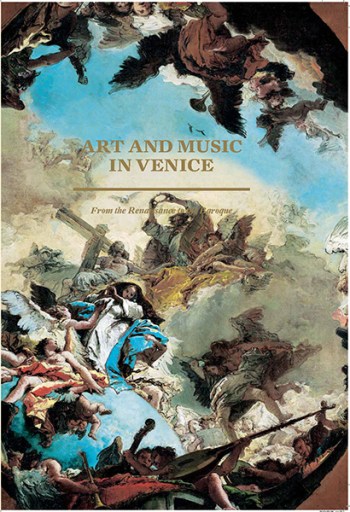 Artistic and musical creativity thrived in the Venetian Republic between the early 16th century and the close of the 18th century. The city-state was known for its superb operas and splendid balls, and the acoustics of the architecture led to complex polyphony in musical composition. Accordingly, notable composers, including Antonio Vivaldi and Adrian Willaert, developed styles that were distinct from those of other Italian cultures. The Venetian music scene, in turn, influenced visual artists, inspiring paintings by artists such as Jacopo Bassano, Canaletto, Francesco Guardi, Pietro Longhi, Bernardo Strozzi, Giambattista and Domenico Tiepolo, Tintoretto, and Titian. Together, art and music served larger aims, whether social, ceremonial, or even political. Lavishly illustrated, Art and Music in Venice brings Venice’s golden age to life through stunning images of paintings, drawings, prints, manuscripts, textbooks, illuminated choir books, musical scores and instruments, and period costumes. New scholarship into these objects by a team of distinguished experts gives a fresh perspective on the cultural life and creative output of the era.
Hilliard T. Goldfarb is associate chief curator and curator of Old Masters at the Montreal Museum of Fine Arts.
Eighteenth-Century Studies 47 (Winter 2014)
Eighteenth-Century Studies 47 (Winter 2014) | Special Issue: Eighteenth-Century Easts and Wests
A R T I C L E S
Chi-ming Yang, “Eighteenth-Century Easts and Wests: Introduction,” pp. 95–101.
 The essays in this “Eighteenth-Century Easts and Wests” issue of Eighteenth-Century Studies inaugurate the journal’s institutional relocation from California to New Haven, by way of India, China, Russia, and the Levant. Far from peripheral, the histories and perspectives that emerge from these sites are central to their interdisciplinary remapping of traditional eighteenth-century encounters of enlightenment and of imperialism. The virtues of a collection that is organized at this moment in time by an East-West rubric are several: it signals a regional, relational, and critical orientation that at once refuses the catchall, and too often Eurocentric, categories of the “exotic” or the “global,” and yet invites questions of comparison across and between cultures. Although seemingly axiomatic, it also calls into question its own bipartite structure of analysis by foregrounding the heterogeneity of the Easts and Wests under consideration here. The vector of a Pondichéry, Morocco, Andalusia, or Kiakhta shifts in relation to the particular local or intra-regional network of exchange in which it is situated. At the same time, the attention to place, and the importance of place to textual and archival analysis, keeps us attuned throughout to the larger structures of European and Asian states, companies, and institutions, as well as the continuing role of Western institutions in structuring the distinctions between Orient and Occident that open up fields of inquiry even as they push Asia to the margins of the modern academic mainstream. . . .
Matthew W. Mosca, “The Qing State and Its Awareness of Eurasian Interconnections, 1789–1806,” pp. 103–16.
This article examines the response of the Qing state to two instances in its foreign relations that required long-distance coordination between overland and maritime frontiers: the implementation of a rhubarb embargo in 1789 and the emergence between 1792 and 1806 of clear links between affairs at Kiakhta and Canton. It argues that Qing emperors and minsters had the intelligence capabilities to perceive that their empire was encircled within global networks of economic exchange and political rivalry. Unlike their Russian and British competitors, however, they pursued their interests primarily by seeking to break rather than forge these connections, designing their frontier as a series of discrete sectors rather than one integrated entity.
Kristina Kleutghen, “Chinese Occidenterie: The Diversity of ‘Western’ Objects in Eighteenth-Century China,” pp. 117–35.
The eighteenth-century Chinese taste for European things was met less by importing foreign goods than by domestically producing occidentalizing works of art, a diverse category of objects that can be termed “occidenterie.” This essay redirects the previous consideration of occidenterie from the Jesuit mission and imperial court painting toward a diversity of examples that span geography, material, format, and social class. The various ways in which Chinese occidenterie produced in different places and for different audiences employed elements connoting the West, thereby acquiring their foreign or exoticizing auras, more accurately reflects the empire-wide complexity of this phenomenon.
Danna Agmon, “The Currency of Kinship: Trading Families and Trading on Family in Colonial French India,” pp. 137–55.
In the French colony of Pondichéry, French and local actors alike drew on the shared idiom of kinship to strategically advance their political and commercial agendas. Recent scholarship has shown that the structures of family underlay early modern European state building and imperial expansion. This essay deploys this insight in the colonial context, to examine how indigenous families in the Tamil region entered into the European colonial project. For native commercial brokers, involvement with European newcomers could actually strengthen local family ties. Simultaneously, French employees of the Compagnie des Indes were eager to insert themselves into Tamil networks and did so by deploying public and inscribed performances of kinship.
Suzanne Marchand, “Where Does History Begin?: J. G. Herder and the Problem of Near Eastern Chronology in the Age of Enlightenment,” pp. 157–75.
This essay treats the very long set of debates concerning biblical and oriental chronology in early modern Europe down to the time of J. G. Herder and William Jones in the later eighteenth century. It shows that sacred chronology remained a burning issue for Herder; controversy about dating “oriental” texts did not wane, even as a series of newly-readable, original texts made their way westward. What did happen in Herder’s lifetime, however, was that a more specialized classical philology began to set the standards for what counted as wissenschaftlich, making it more difficult for scholarly “orientalists” to make the case that the cultures that they studied really had been at the forefront of cultural developments.
Nabil Matar, “Christians in the Eighteenth-Century Ottoman Mashriq,” pp. 177–94.
The article examines a selection of writings and icons by and about the Christian Arabs of the Middle East. Living under Ottoman rule, from Syria to Egypt, they became aware of an Arabic linguistic identity that helped them write and translate numerous chronicles, disputations, theological commentaries, sermons, and histories, in verse and prose. At the same time, they engaged the larger Muslim population in dialogue. While their legal status was that of second class dhimmis, they enjoyed their own religious space, by far more secure than was allowed minorities in the European World of expanding empires.
Srinivas Aravamudan, “East-West Fiction as World Literature: The Hayy Problem Reconfigured,” pp. 195–231.
This article focuses on the reception history of translations of Ibn Tufayl’s Hayy ibn Yaqzan and how natural theodicy, empiricist experimentalism, and philosophical fiction influenced eighteenth-century England. Discussing the status of Ibn Tufayl’s ideas in relation to Edward Pococke, John Locke, Robert Boyle, and Daniel Defoe allows scholars to go beyond the East-West dichotomy and instead create an opening from eighteenth-century studies onto recent debates around world literature. Using Hayy as a prism, we can understand the opportunities as well as the drawbacks of a world literature paradigm, as theorized by Wolfgang von Goethe, Erich Auerbach, and more recent scholars.
R E V I E W A R T I C L E S
Ruth P. Dawson, “Actress Images, Written and Painted, Famed and Defamed, British and German,” pp. 233–35.
Review of Mary Helen Dupree, The Mask and the Quill: Actress-Writers in Germany from Enlightenment to Romanticism (2011); Laura Engel, Fashioning Celebrity: Eighteenth-Century British Actresses and Strategies for Image Making (2011); and Gill Perry with Joseph Roach and Shearer West, The First Actresses: Nell Gwyn to Sarah Siddons (2011).
Suzanne Desan, “Gender, Intimacy, and Politics in the French Revolutionary Era,” pp. 236–40.
Review of Andrew Cayton, Love in the Time of Revolution: Transatlantic Literary Radicalism and Historical Change, 1793–1818 (2013); Lindsay Parker, Writing the Revolution: A French Woman’s History in Letters (2013); and Annie Smart, Citoyennes: Women and the Ideal of Citizenship in Eighteenth-Century France (2011).
Call for Participation | British Print Culture in a Transnational Context
Call for Participation from The Paul Mellon Centre for Studies in British Art:
Graduate Summer Seminar | British Print Culture in a Transnational Context, 1700–2014
The Paul Mellon Centre for British Art, London, 21–25 July 2014
Applications due by 10 March 2014
In July 2014, the Paul Mellon Centre for Studies in British Art will offer a week-long graduate student seminar focusing on British print culture. This is open to doctoral candidates who are working on related topics, or whose research would benefit from a deeper knowledge of the subject. There is a substantial body of literature on British prints that takes the form of survey publications, monographic studies of individual printmakers, and studies of individual techniques, and a number of scholars and doctoral students are currently undertaking research related to these topics. However, the broad field of British print culture still remains relatively underexplored, and its importance for those working in other areas of British visual culture tends to be underestimated. Two related areas, in particular, have been neglected and offer rich possibilities for further study: the reproductive print and the transnational aspect of the British print. The now canonical division between reproductive and ‘original’ prints has tended to elevate the latter category at the expense of the former, and the long-held perception of the status of professional engravers working in Britain as inferior to the artists whose work they translated has obscured appreciation of the collaborative relationships between artist and engraver, and so inhibited our understanding of the complexities of British artistic production. Secondly, Stephen Bann’s research on Anglo-French exchange in nineteenth-century reproductive printmaking has provided an important model for investigating the transnational nature of the British print trade, the various different manifestations of which include: British engravers working elsewhere in the world; foreign engravers working in Britain; the circulation of British prints around the world; the appropriation of imagery from non-British prints in Britain and vice-versa; and indeed the emergence of global modes of representation transmitted by way of prints throughout the former British empire.
The seminar will engage with the development of British print culture, in a transnational context, from 1770 to the present day. It will offer an opportunity for consideration of the state of the field, through a series of sessions taught at the Paul Mellon Centre and at various print rooms in central London, including the British Museum, the Courtauld Institute of Art, University College London, and the V & A Museum. Students will have the chance to see and discuss a wide range of primary materials. The seminar will also offer an introduction to the different techniques of printmaking in relation to their historical development, and includes a visit to a print studio. (more…)
Exhibition | The Material World of the Early South
From the press release (10 February 2014). . .
A Rich and Varied Culture: The Material World of the Early South
DeWitt Wallace Decorative Arts Museum, Colonial Williamsburg, opens 14 February 2014
Curated by Ronald Hurst and Margaret Beck Pritchard

Powder Horn, attributed to Jonathan Sarrazin, Charleston, South Carolina, cow horn, 1762–64 (Winston-Salem, NC: The Museum of Early Southern Decorative Arts)
◊ ◊ ◊ ◊ ◊
A groundbreaking exhibition examining the material culture of the early South from the 17th century through 1840—the first of its kind to include a wide variety of media—will open at the DeWitt Wallace Decorative Arts Museum, one of the Art Museums of Colonial Williamsburg, on February 14. A Rich and Varied Culture: The Material World of the Early South will feature a dozen categories of media and represent three geographic regions of the South.
Some 350 objects will be drawn from the Colonial Williamsburg collections, those of 10 other institutions and 14 private collections. Many of the items in the exhibition will be on public view for the first time in a museum setting. Like the culture they represent, the objects are diverse, chronologically telling the story of the region’s population as it expanded westward and southward toward the frontier.
“The early American South has long been depicted as a society that produced almost none of the objects used by its substantial populace,” said Ronald L. Hurst, Colonial Williamsburg vice president for collections, conservation, and museums and its Carlisle H. Humelsine Chief Curator. “However, the opposite is true. Southern artists and artisans generated a vast body of material in virtually every medium. The abundance and diverse cultural resonance of these goods will be powerfully conveyed by the objects assembled for this exhibition.”
Featured in A Rich and Varied Culture will be furniture, paintings, prints, metals (silver and pewter), ceramics, mechanical arts and arms, architectural elements, archaeological objects, rare books, maps, costumes and accessories and musical instruments. These objects are each receiving detailed, exhaustive research that sometimes challenges previous research. In one example, a remarkable painting of Frances Parke Custis, on loan from Washington and Lee University, has recently been identified as the work of the Broadnax Limner, a little-known artist who worked in Virginia during the 1720s. Similarly, an elaborately decorated 1770s ‘dresser’ or hutch was long thought to be a Pennsylvania product, but has proven instead to be the work of a Quaker cabinetmaker working in Alamance County, N.C.
While the majority of the objects and paintings in the exhibition come from the various collections of the Colonial Williamsburg Foundation, several sister institutions are also lending to this important undertaking in an example of unprecedented partnership. Chief among them is The Museum of Early Southern Decorative Arts (MESDA) at Old Salem Museums and Gardens in Winston-Salem, N.C., with which the Art Museums recently announced a five-year partnership. It is the largest lender with 39 objects. Other lenders include Drayton Hall, a Historic Site of the National Trust for Historic Preservation in Charleston, S.C..; The Charleston Museum; Washington and Lee University in Lexington; The Winterthur Museum, Garden, and Library in Winterthur, Del.; Historic Charleston Foundation; Tennessee State Museum; the University of Tennessee’s Department of Anthropology and McClung Museum of Natural History and Culture; Marble Springs State Historic Site in Knoxville, Tenn.; and The President’s House Collection at The College of Williams & Mary in Williamsburg. Fourteen private collectors are also generously lending to the exhibition. (more…)
Colloque | The Artist and the Antiquary
From the programme:
L’artiste et l’antiquaire: L’étude savante de l’antique
et son imaginaire à l’époque moderne, XVIe–XVIIIe siècles
Institut national d’histoire de l’art, Paris, 6–7 March 2014
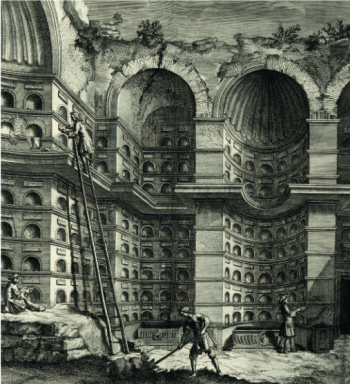
Francesco Bianchini, Camera Ed Inscrizioni Sepulcrali (1727)
L’ambition de ce colloque, dont le sujet se situe à la croisée de l’archéologie et de l’histoire de l’art, est d’analyser les formes de collaborations savantes entre les « antiquaires » et les artistes à l’époque moderne. De la Renaissance à la fin du XVIIIe siècle, la recherche savante sur les civilisations antiques à partir de leurs différents vestiges, écrits et matériels, fut aussi bien le fait de grands lettrés que celui de nombreux artistes et praticiens. Si les hommes de lettres eurent souvent besoin de dessinateurs pour les seconder dans leur travail de documentation des objets et des sites, ceux-ci se sont révélés à l’occasion d’excellents collaborateurs, voire même de fins connaisseurs de l’Antiquité classique qui ont contribué directement à la construction de la discipline.
Le colloque réunira des spécialistes de tous horizons – archéologues, historiens de l’art antique et moderne, historiens de l’archéologie – en vue d’une réflexion commune sur la recherche antiquaire, ses méthodes et ses enjeux, ainsi que sur la fécondité de ces études sur les plans artistique et culturel. Les travaux mettront l’accent sur les réseaux socio-professionnels, sur les pratiques de documentation et l’illustration des traités, ainsi que sur les relations entre savoir et invention, érudition antiquaire et création artistique.
J E U D I , 6 M A R S 2 0 1 4
9.15 Ouverture, Delphine Burlot (INHA) et Emmanuel Lurin (université Paris-Sorbonne)
Artistes et lettrés étudiant l’Antique : commandes, collaborations, rivalités scientifiques
Présidente de séance : Martine Denoyelle (INHA)
9.45 Alain Schnapp (université Paris 1 Panthéon-Sorbonne), Le scribe, l’artisan et le poète : aux origines du savoir antiquaire
10.30 Peter N. Miller (New York, Bard Graduate Center), Peiresc and Marseille: A ‘Knowledge Community’ in the Seventeenth-Century Mediterranean
11.15 Pause
11.45 Colin Debuiche (université Toulouse-Le Mirail), Les artifices du passé : Antiquité et mythes urbains de la Palladia Tolosa au XVIe siècle
12.30 Delphine Burlot, « La querelle des antiquaires et des graveurs n’est pas prête de finir ». Concurrence entre artistes et antiquaires dans la documentation et la restauration de l’Antique
13.15 Pause déjeuner
Les pratiques de documentation : reproductions, relevés, corpus documentaires et collections
Président de séance : Jean-Louis Ferrary (EPHE, IV e section)
14.45 Jean Guillemain (université Paris Descartes, bibliothèque H. Piéron), Les débuts de la numismatique grecque en France (Lyon, 1552)
15.30 Florian Stilp (université Paris Ouest Nanterre La Défense, labex « Les passés dans le présent »), À chacun son arc d’Orange. La vision variable d’un monument romain à l’époque moderne
16.15 Pause
16.45 Helen Whitehouse (University of Oxford, Oriental Institute), Records of Egyptian Antiquities in the ‘Paper Museum’ of Cassiano dal Pozzo
17.30 Pierre Gros (université de Provence, Académie des Inscriptions et Belles-Lettres), Le coeur antique du futur. Lectures palladiennes des vestiges des temples romains dans le dernier des Quattro Libri
18.15 Discussion générale
V E N D R E D I , 7 M A R S 2 0 1 4
Une démonstration par l’image : le discours antiquaire et son illustration scientifique
Président de séance : Philippe Sénéchal (INHA)
10.00 Emmanuel Lurin, L’antiquaire, l’artiste et le graveur (Rome, XVIe siècle) : autour des relevés « archéologiques » du Codex Orsini et des gravures d’antiquités de Jacob Bos
10.45 Frédérique Lemerle-Pauwels (CNRS, université François Rabelais, Tours), Représenter l’antique : architectes et antiquaires en France (XVIe–XVIIe siècles)
11.30 Pause
12.00 Carmelo Occhipinti (Università di Roma Tor Vergata), Mariette e Bouchardon. Ricerca antiquaria e storia artistica
12.45 Adriano Aymonino (University of Birmingham), Giovanni Pietro Bellori and Pietro Santi Bartoli’s Publications: Their Reception during the Eighteenth Century
13.30 Pause
Un laboratoire pour la création ? Érudition antiquaire et invention artistique
Président de séance : Claude Mignot (université Paris-Sorbonne)
15.00 Flaminia Bardati (Università di Roma La Sapienza), Bâtir à l’antique, sur l’antique, pour l’antique
15.45 Daniela Gallo (université Pierre Mendès-France Grenoble 2), Entre érudition et création artistique. Les objets antiques en marbre au xviiie siècle
16.30 Pause
17.00 Ingo Herklotz (Philipps-Universität Marburg), Visualizing the Catacombs: Between Legend and Scholarship in Early Modern Painting
17.45 Discussion générale
Renseignements: Elsa Nadjm (elsa.nadjm@inha.fr), Marine Acker (marine.acker@inha.fr)
Conference | Objects, Images, and Texts: Pope and Roubiliac
Objects, Images, and Texts: Pope, Roubiliac, and Representations of Authorship
Yale Center for British Art, 21–22 February 2014

Photographer unknown, William Kurtz Wimsatt, ca 1961,
© National Portrait Gallery, London
◊ ◊ ◊ ◊ ◊
This two-day international conference explores the relationship between authorship and the visual arts in the eighteenth century, focusing on the poet Alexander Pope. Building on the work of Yale scholar W. K. Wimsatt, an interdisciplinary panel of speakers will situate Pope’s portraits, both sculpted and painted, within the framework
of debates about his often ambiguous modes of authorial self-presentation involving the design of his printed texts as well as the complexities of the verse itself. The conference coincides with the Center’s exhibition Fame and Friendship: Pope, Roubiliac, and the Portrait Bust in Eighteenth-Century Britain, which focuses on a series of busts of Pope made by the French émigré sculptor Louis François Roubiliac. The conference is free and open to the public. Advance registration is recommended. Register online through February 20. On-site registration will be available at the event.
F R I D A Y , 2 1 F E B R U A R Y 2 0 1 4
10:00 Amy Meyers (YCBA), Welcome
10:15 Panel 1
Malcolm Baker (University of California, Riverside), Introduction to the Exhibition and Conference
Joseph Roach (Yale), Pope at Yale: The Intentional Fallacy and the Life of the Poet
12:00 Lunch Break
2:45 Panel 2
Session Chair: Gordon Turnbull (Yale)
Jill Campbell (Yale), ‘Give Me Back My Tears’: Monuments and Feeling in the Poetry of Pope
Greg Sullivan (Tate Britain), Roubiliac’s Biographers and his Place in Histories of British Sculpture
2:45 Break
3:15 Panel 3
Session Chair: Matthew Hargraves (YCBA)
Nigel Wood (Loughborough University), Pope and the Reading Public
Matthew Craske (Oxford Brookes), Roubiliac and the Business of Making Sculpture
5:00 Break
5:30 Keynote Lecture
Helen Deutsch (University of California, Los Angeles), ‘Ev’ry Coxcomb knows me by my Style’: Alexander Pope and the Art of Authorship
S A T U R D A Y , 2 2 F E B R U A R Y 2 0 1 4
10:00 Martina Droth (YCBA), Welcome
10:15 Panel 4
Session Chair: David Bromwich (Yale)
Janine Barchas (University of Texas at Austin), Counterfeit Authority: Frontispiece Portraits of Fictional Authors and Authors of Fiction
James Raven (University of Essex), Images of Authors Within Eighteenth-Century Libraries
12:00 Lunch Break
1:15 Breakout Sessions
Malcolm Baker (UCR), Martina Droth (YCBA), and Anne Gunnison (Yale University Art Gallery), Looking at Busts of Pope
Kathryn James (Beinecke Library) and Margaret Powell (Lewis Walpole Library), Reading Pope: Rare Books and Documents in the Yale Collections
2:30 Break
2:45 Panel 5
Session Chair: Langdon Hammer (Yale)
David Brewer (Ohio State University), Hanging Pope in Effigy
Richard Wendorf (American Museum in Britain), Classicizing Alexander Pope
Malcolm Baker (UCR), Confronting Pope’s Portraits
5:00 Closing Reception
New Book | Early American Silver in The Metropolitan Museum of Art
Distributed by Yale UP:
Beth Carver Wees with Medill Higgins Harvey, Early American Silver in The Metropolitan Museum of Art (New York: The Metropolitan Museum of Art, 2013), 340 pages, ISBN: 978-0300191837, $75.
 This lavishly illustrated book documents the most distinguished works from The Metropolitan Museum’s extensive collection of domestic, ecclesiastical, and presentation silver from the Colonial and Federal periods. Detailed discussions provide a stylistic and socio-historical context for each piece, offering a wealth of new information to both specialist and non-specialist readers. Every object is documented with new photography that captures details, marks, and heraldic engraving. Finally, accompanying essays discuss issues of patronage and provenance, design and craft, and patterns of ownership and collecting, providing windows onto the past that help bring these pieces to life.
Beth Carver Wees is curator of American decorative arts, and Medill Higgins Harvey is a research associate in the American Wing, both at The Metropolitan Museum of Art, New York.










 Enfilade
leave a comment