In Theaters This Spring: Belle
◊ ◊ ◊ ◊ ◊
Belle is inspired by the true story of Dido Elizabeth Belle (Gugu Mbatha-Raw), the illegitimate mixed race daughter of a Royal Navy Admiral. Raised by her aristocratic great-uncle Lord Mansfield (Tom Wilkinson) and his wife (Emily Watson), Belle’s lineage affords her certain privileges, yet the color of her skin prevents her from fully participating in the traditions of her social standing. Left to wonder if she will ever find love, Belle falls for an idealistic young vicar’s son bent on change who, with her help, shapes Lord Mansfield’s role as Lord Chief Justice to end slavery in England.
◊ ◊ ◊ ◊ ◊
From Jamie Doward’s article for The Observer (12 January 2014) . . .
Directed by Amma Asante, who . . . was born in Britain but lives in the Netherlands, the film tells the story of Dido Elizabeth Belle, the daughter of an enslaved mother in the Caribbean, who went on to live at Kenwood House in north London under the protection of Lord Mansfield, the lord chief justice. While she was living there, in 1772, Mansfield ruled that a master could not carry a slave out of Britain by force, a judgment seen as a crucial step towards the abolition of slavery.
Misan Sagay, who wrote the screenplay, has said that understanding Belle is crucial to understanding Mansfield’s motivation. “The abolition story is often told without a black person being there,” she said recently. “But Belle, living with such a power whose judgments affected slavery, must have had some impact.”
◊ ◊ ◊ ◊ ◊
Exhibition | Dessins de François-André Vincent
From Paris Musées:
Le Trait en liberté: Dessins de François-André Vincent, 1746–1816
Musée Cognacq-Jay, Paris, 29 March — 29 June 2014
Curated by Benjamin Couilleaux
L’exposition présente l’étendue du talent de François-André Vincent, tout au long de sa carrière de dessinateur, à travers la variété de ses sujets et techniques.
Artiste aussi talentueux que protéiforme, et néanmoins méconnu, François-André Vincent (1746–1816) a marqué le paysage artistique français entre la fin du XVIIIe siècle et le début du XIXe. À partir d’une cinquantaine de feuilles issues de grandes collections publiques et privées de Paris, l’exposition présente l’étendue du talent de Vincent dessinateur, tout au long de sa carrière, à travers la variété de ses sujets et techniques. Débutant dans un style très esquissé, proche de Fragonard, Vincent s’est progressivement rallié à la majesté héroïque du néoclassicisme. Il s’est intéressé aussi bien au paysage qu’à la scène de genre, à la peinture d’histoire comme au genre animalier. Portraitiste génial, Vincent a produit toute une série de caricatures, comiques et fascinantes, mais aussi des portraits psychologiques d’une immense sensibilité. L’exposition permet ainsi de montrer des dessins rarement, voire jamais vus par le public, avec des regroupements inédits.
En parallèle, l’artiste fait l’objet d’un catalogue raisonné par Jean-Pierre Cuzin, ainsi que d’une grande rétrospective, d’abord présentée au musée des Beaux-Arts de Tours (du 18 octobre 2013 au 19 janvier 2014) puis au musée Fabre à Montpellier (du 8 février au 11 mai 2014). L’exposition du musée Cognacq-Jay s’intègre également dans l’actualité parisienne en s’associant à la Semaine du dessin 2014.
Lecture | Reynolds, Replication and Restoration
From The Institute of Conservation (ICON). . .
Alexandra Gent | Reynolds, Replication and Restoration:
Some Results from the Wallace Collection Reynolds Research Project
Grand Robing Room, Freemason’s Hall, 60 Great Queen Street, London 27 February 2014

Joshua Reynolds, The Strawberry Girl, 1772–73
(London: Wallace Collection)
The four-year Wallace Collection Reynolds Research Project is funded by The Paul Mellon Centre for Studies in British Art and the Wallace Collection’s Benefactors and donors. The Project will investigate Reynolds’ techniques and materials by examining twelve of his paintings in the Collection. The project is a collaboration between the Wallace Collection and the Conservation and Scientific Departments at the National Gallery.
The Project’s recent investigations have helped develop a better understanding of two elements of Reynolds’s practice: replication of images and the restoration of paintings. This talk will draw on historical sources coupled with technical analysis of paintings to explore these activities in Reynolds’s busy studio.
Replication
It is a well-known that Reynolds’s studio practice incorporated the production of copies. Often made by students or copyists, there is, however, anecdotal evidence Reynolds himself sometimes worked simultaneously on more than one version of the same subject; The Strawberry Girl may be one such painting. Technical analysis of the Wallace Collection’s Strawberry Girl will be discussed in relation to Reynolds’s own technical notes and contemporary accounts of his practice, together with technical analysis of Tate’s Age of Innocence, which overlies another version of the Strawberry Girl.
Restoration
The Wallace Collection’s portrait of Baltasar Carlos in Black and Silver, was owned by Reynolds and is thought to have been restored by him. The portrait’s technical analysis will be presented showing how its technique relates to that of Velazquez, what can be revealed about Reynolds’s restoration of the painting and how this compares to the analysis of Reynolds’s materials.
Alexandra Gent joined the Wallace Collection in December 2010 as Paintings Conservator for the Reynolds Research Project. She trained as a paintings conservator at The University of Canberra, Australia, graduating with a Bachelor of Applied Science in the Conservation of Cultural Materials in 1999. Since coming to the UK in 2000 she has been employed by English Heritage, Tate and the National Galleries of Scotland, as well as private studios in London and Oxfordshire. She is an accredited member of Icon and has a Masters in Culture, Policy and Management from City University London (2008).
Venue: In the Grand Robing Room at Freemason’s Hall, 60 Great Queen Street London WC2B 5AZ. Close to both Covent Garden and Holborn Tube Stations. Doors open at 6pm. Talk 6.30–8pm. Tickets: Icon members: £10, non-members: £15. Free wine and cheese including in price of ticket. Please register by sending your name and stating if you are an Icon member. Your name must be on the security list no later than Tuesday, 25th February 2014. RSVP Clare Finn +44 20 7937 1895 or finnclare@aol.com.
Lecture | Boulle as a Collector of Old Master Drawings
Later this month at The Wallace in connection with its History of Collecting Seminars:
Mia Jackson | Boulle the Connoisseur: ‘An Incurable Mania’
André-Charles Boulle as a Collector of Old Master Drawings
The Wallace Collection, London, 27 January 2014
André-Charles Boulle (1642–1732) was the most renowned ébéniste of his time, giving his name to the marquetry of turtleshell and brass that he brought to such perfection. He was also a voracious collector of works on paper and despite the success of his furniture, he died in debt. This is unsurprising given that the great collector, Pierre-Jean Mariette, his near-contemporary, said of him: ‘there was never a sale of prints and drawings at which he was not present and buying, often without having the means to pay’.
This seminar will focus on Boulle’s drawings—the types of drawings Boulle collected, the rôle drawings may have played in the production of his furniture and the importance of his collection in relation to those of his contemporaries and clientèle. This will reveal a collection much more complex than the ‘source délicieuse’ beloved of furniture scholars, that included not only the works of his fellow ‘illustres’ in the Louvre, but also works by artists such as Raphael, van Dyck, the Carraccis and a much-regretted lost theoretical notebook by Rubens.
Admission is free and booking is not required.
Mia Jackson (Queen Mary, University of London)
Monday, 5:30, 27 January 2014
Lecture Theatre, The Wallace Collection
Call for Articles | Living Images
2015 Issue of Horti Hesperidum: Living Images
Proposals due by 28 February 2014; complete papers due by 31 July 2014
The biannual journal Horti Hesperidum intends to devote the first issue of 2015 to ‘Living Images’. Literary texts can serve as a source for documenting an anthropological phenomenon during Classical Antiquity, the Middle Ages and the Modern Age: images perceived as living beings, capable of talking, acting and interacting with us. Special attention will be paid to the following topics:
1. The relationship between believers and devotional images;
2. Ekphrastic descriptions of living, talking, ‘real’ images;
3. Iconoclasm, i.e. the desire to ‘kill’ images in each historical age.
The titles of proposed contributions, together with an abstract of not more than 2500 characters (including spaces) and a CV, should be e-mailed to the journal’s editors by 28th February 2014 (horti-hesperidum@libero.it).
Whenever an abstract is accepted, the editorial board will consider the complete paper by 31 July 2014. This should not exceed 65,000 characters, including spaces, and may be accompanied by up to 10 images at a resolution of 300 dpi. If protected by copyright, permission to reproduce images should already have been obtained.
Call for Papers | The Sculpture of the Écorché
The Sculpture of the Écorché
Henry Moore Institute, Leeds, 7 June 2014
Proposals due by 17 February 2014
This one-day conference takes the écorché as its subject, reconsidering the many ways in which it has been understood in relation to sculpture from the sixteenth century to the present day. We are interested in how the écorché has been variously seen and employed:
• as a teaching tool and as a model for the education of sculptors
• as a scientific, three-dimensional demonstration model
• in relation to the idealised forms of classical sculpture
• as sculpture in its own right, produced, reproduced and circulated in different forms
• as sculptural process and in relation to the figurative sculptural imagination
The écorché has frequently operated across disciplinary boundaries and registers of respectability. Makers of wax écorchés in the eighteenth century, such as the Florentine Clemente Susini (1754–1814), were highly acclaimed during their lifetimes, with their work sought by prestigious collectors. For instance in 1781 the Holy Roman Emperor Joseph II commissioned Susini to make a collection for the Museum of the Medical University of Vienna. From 1799 Susini was engaged as a professor at the Accademia di Belle Arti in Florence, demonstrating the regard in which his work was held for the education of artists.
By the nineteenth century, however, wax came to be seen as a merely preparatory or even a disreputable medium for sculpture, with its capacity for forensic detail and mimetic reproduction of bone, muscle and skin operating against the prevailing neoclassical tendency towards ideal form. As a result of this change in taste, the écorché in plaster of Paris, with both plain and coloured surfaces, became the primary teaching object for anatomical studies in European Academies and Schools of Art.
Papers are invited which draw out the relationships between sculpture and the écorché, looking at objects and makers from the sixteenth century onwards. Please send a 250-word abstract and a short CV to Dr Rebecca Wade (rebecca.wade@henry-moore.org) by Monday 17 February 2014.
This conference coincides with the Artistic Practice and the Medical Museum conference at the Hunterian Museum of the Royal College of Surgeons in London on 6 June 2014.
Exhibition | Nepal Natural History Drawings, 1802–03
As recently posted on the ever-informative C18-L, from the new listserv, HEMPS, History of Early and Modern Plant Sciences (1450–1850) . . .
Nepal Natural History Drawings: Francis Buchanan-Hamilton, 1802–03
Embassy of Nepal, 12A Kensington Palace Gardens, London, 7–24 January 2014
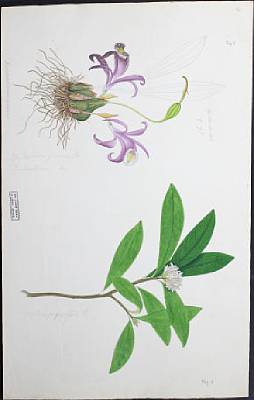 The first natural history collections from Nepal were made by Dr Francis Buchanan (later known as Buchanan-Hamilton) in 1802–03, whilst surgeon-naturalist on the British Mission led by Captain Knox. During his year in the Kathmandu Valley he documented more than a thousand plant species, many of which are now rarely seen. This Scottish ‘father of Nepalese botany’ laid the foundation of botanical knowledge for this Himalayan country, and over 500 new species have been described using his collections.
Buchanan-Hamilton took with him to Nepal a Bengali artist from Calcutta who prepared exquisite coloured watercolour drawings of over a hundred species—27 of which have been selected for this exhibition. On his return to England in 1806, Buchanan-Hamilton gave these drawings, and his other scientific records, to his friend from University days, James Edward Smith, and they have lain virtually unknown in the archives of the Linnean Society of London (which Smith founded) ever since. This exhibition is the first public viewing outside Nepal of Buchanan-Hamilton’s drawings, made by a talented but sadly un-named
Indian artist. Current research is uncovering the scientific and cultural value of these early collections.
Buchanan-Hamilton placed great importance on local names people were using for plants and instructed his Indian pandit, Babu Ramajai Bhattacharji, to record these spoken names and translate them into English. Buchanan-Hamilton frequently used these common names for the new scientific names that he coined and wrote on the drawings—some of these are still in use today. Buchanan-Hamilton is now recognised as the pioneer of biodiversity research in Nepal, but he could not have done this by himself and he needed to collaborate with Nepalese and Indian people. As he was one of the first foreigners to spend any length of time in Nepal, he had an unsurpassed understanding of the people, their cultures and traditions, which later helped underpin the developing relationship between Britain and Nepal. Two centuries on, botanical research continues with British and Nepalese scientists working together on the Flora of Nepal—www.floraofnepal.org. This facsimile exhibition has been produced by the Linnean Society of London and Royal Botanic Garden Edinburgh, with the support of the Embassy of Nepal and the UK Foreign and Commonwealth Office.
Admission free: open to the public 7th to 24th January 2014, Monday to Friday, 10am–1pm, 2–4pm, Embassy of Nepal, 12A Kensington Palace Gardens, London, W8 4QU.
Sponsored by Nature & Herbs UK Ltd. Drawings online here»
Contact: Dr Mark Watson, Royal Botanic Garden Edinburgh, m.watson@rbge.org.uk
Exhibition | Medicine and the Eighteenth Century
As noted by Hélène Bremer, from the Château de Seneffe:
Le XVIIIe et la Médecine
Château de Seneffe, Hainaut, Belgium, 5 October 2013 — 21 April 2014
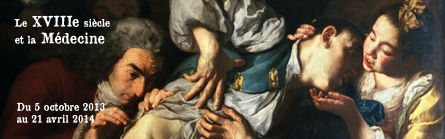 L’exposition « Le XVIIIe et la Médecine » sort des sentiers battus par son contenu et son approche scientifique. Elle présente le thème de la médecine non pas uniquement du point de vue purement médical mais bien dans le contexte de la vie de l’époque. En tant que témoins privilégiés- et avec l’apport des instruments scientifiques, d’objets mis en relation avec les thématiques abordées, d’extraits littéraires,…-nous racontons l’existence d’une société en pleine évolution sociologique.
Découvrir ce que signifie la médecine au XVIIIe siècle c’est lever le voile sur différentes pratiques peu conventionnelles, c’est aborder le corps et l’esprit sous différents angles, c’est observer les avancées en la matière qui vont bousculer les tabous et révolutionner les façons de penser et de voir d’une façon plus rationnelle. C’est comme un kaléidoscope de découvertes inattendues et surprenantes. Le XVIIIe avait à cœur de replacer l’homme, en tant qu’être humain, au centre de la société. Les individus sont alors en quête de bien être, comme aujourd’hui. Et depuis, tout continue.
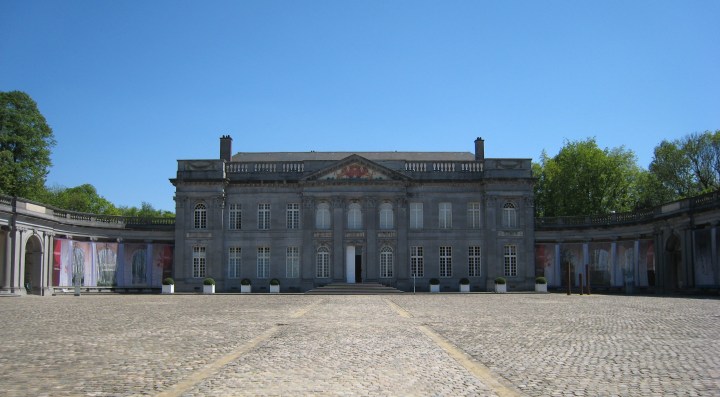
Château de Seneffe
(Photo: Wikimedia Commons, May 2007)
◊ ◊ ◊ ◊ ◊
According to Wikipedia:
In 1758 the ‘Seigneurie de Seneffe’ was bought by Joseph Depestre, a Walloon merchant who earned a fortune by selling goods to the Imperial Austrian troops stationed in the Austrian Netherlands. Depestre’s new status as a wealthy and influential individual was also confirmed by the acquisition of noble titles such as ‘Seigneur de Seneffe’ (Lord of Seneffe) and ‘Count of Turnhout’. The new castle designed by Laurent-Benoît Dewez had to match with Depestre’s new noble status. It was erected between 1763 and 1768 in a novel neoclassical style. When Joseph Depestre died in 1774 the decoration of the château and the embellishment of the park were continued by his widow and his eldest son Joseph II Depestre. . .
Exhibition | Unflinching Vision: Goya’s Rare Prints
From the exhibition press release (August 2013):
Unflinching Vision: Goya’s Rare Prints
Norton Simon Museum, Pasadena, 6 December 2013 — 3 March 2014
Curated by Leah Lehmbeck
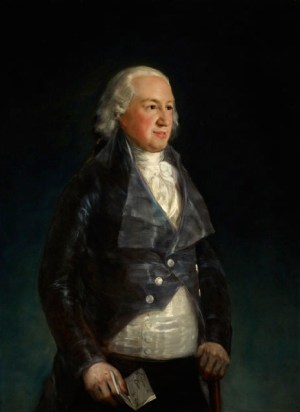
Francisco de Goya y Lucientes, Don Pedro, Duque de Osuna, ca.1790s. Oil on canvas, 54 x 43 x 4 inches (137.8 x 109.2 x 10.2 cm). The Frick Collection; photo: Michael Bodycomb.
In celebration of the rare loan of The Frick Collection’s Don Pedro, Duque de Osuna by Spanish master Francisco de Goya y Lucientes (1746–1828), the Norton Simon Museum presents the exhibition Unflinching Vision: Goya’s Rare Prints. While the majority of the artist’s prints were published posthumously, this exhibition presents a selection of works that Goya himself worked on during his lifetime. More than 30 working proofs, trial proofs and published prints made under his supervision are on view, as well as a small selection of posthumous examples from his later numbered editions. With exceptional examples from his series Los Caprichos, The Disasters of War, La Tauromaquia, and Los Proverbios, these artworks demonstrate Goya’s mastery of printmaking and, most significantly, his care in meaningfully capturing the spirit of his time.
From royal portraiture to scenes in a bullring, Goya infused his keen vision of the observed world with his own creative impulses. This delicate dance is visible throughout the artist’s incredible output of prints. Goya began to experiment with printmaking well after he had established himself as a successful painter to the royal court in Madrid. He started, tentatively, etching a few religious subjects, yet rather quickly he began his first ambitious series of etchings: 11 copies after masterpieces by the father of Spanish painting, Diego Velázquez. Goya’s skill as a draftsman is pronounced in these prints, as is his facility with working on a copper plate, for it is in this series that he first experiments with aquatint, a technique that allows the artist to create subtle tonal areas in the image rather than just scratched lines. “Un Infante de España,” on view in this exhibition, not only presents the formality of Velázquez’s composition but also exhibits Goya’s growing skill with intaglio techniques. Though aquatint is used here primarily in the background, Goya came to master its use, harnessing its subtlety to create depth and even to draw entire compositions.
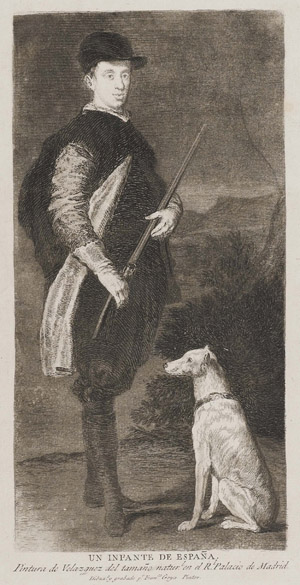
Francisco de Goya y Lucientes, Copies After Velázquez: Un Infante de España, Infante Don Fernando, ca. 1778–79, etching with burnished aquatint and drypoint
(Norton Simon Art Foundation)
By the mid-1790s, Goya began to work on Los Caprichos, the first of four major print series that came to define his career as a printmaker. Images of people, witches and imagined creatures identifying specific social and cultural problems, with titles carefully narrating the scenes, make up this series. An early working proof of plate 6, “Nobody Knows Himself,” presents Goya’s concerns with deception and artifice, and it shows the print before numbering and with the title handwritten in ink. In plate 20, “There They Go Plucked (i.e. Fleeced),” prostitutes sweep out their customers, cowering and pathetic, as the women prepare for the next group of clients who hover above. The drama of the scene is enhanced by the contrast between completely uninked areas and the various gradations of aquatint that define recessional space, but as the edition was printed, this contrast was lost as the aquatint faded nearly completely. Exhibiting the working proof alongside the first, second and eighth editions of the same plate highlights this degradation.
While Los Caprichos describes a time before the turn of the century, when the French monarchy fell and Napoleon rose to power, Goya’s next series tells of the grueling six-year war between France and Spain that began in 1808. In addition to its cruel, disorganized and prolonged combat (the term ‘guerilla’ warfare was coined from this war), it caused a disastrous famine. Many of its battles and events, including torture and starvation, are depicted brutally in the 82 plates of Goya’s print series The Disasters of War. “One Can’t Look,” plate 26, is a triumph of Goya’s compositional acumen. Men and women cower, plead and surrender in desperation within a web of dramatic shadows, and only the tips of the executioners’ bayonets reveal the reason for their suffering.
Perhaps due to the sensitivity of the subject, Goya decided not to publish an edition of The Disasters during his lifetime. Turning instead to a public project that was more benign, Goya prepared a series of bullfighting scenes, equally brilliantly executed and known ultimately as La Tauromaquia. This group of 33 prints traces the history of bullfighting in the country and can be read as being both respectful and critical of the pastime. In plate 20, the theatrical physical feats accomplished by a torero are on display. Yet, in the following plate, Goya reminds us of the deadly nature of the sport. His interest in the popular subject matter and its connection to his national identity were further illuminated when Goya was living in exile in Bordeaux, France. There, in 1825, he used lithography for the first time. The technique is very similar to drawing, and Goya was immediately able to create lively compositions with greater ease than aquatint, in a series of four prints with the same theme, known as The Bulls of Bordeaux.
Whereas the two intaglio series—La Tauromaquia and The Disasters—depict real-life events, Goya continued to create wildly imaginative scenes that comment on contemporary behavior as in Los Caprichos. In the group of 18 prints gathered together and sold as Los Proverbios upon their first publication in 1864, Goya magnificently illustrates a number of human follies. Two-headed women, animals, giants and monsters are all situated in a world with no setting, no real context. The scenes are executed with brilliant technical facility: etched lines creating dynamic scenarios set off against the rich darkness of a field of aquatint, as in “A Way of Flying,” a fantastical illustration of the idea that “Where there’s a will, there’s a way.”
Unflinching Vision: Goya’s Rare Prints is organized by Curator Leah Lehmbeck. It is presented in conjunction with The Frick Collection’s loan of Goya’s Don Pedro, Duque de Osuna, and in anticipation of the scholarly catalogue Goya in the Norton Simon Museum, to be published in 2014.
New Book | Gardens of a Chinese Emperor
From Lehigh UP:
Victoria M. Cha-Tsu Siu with the posthumous assistance of Kathleen L. Lodwick, Gardens of a Chinese Emperor: Imperial Creations of the Qianlong Era, 1736–1796 (Bethlehem, PA: Lehigh University Press, 2013), 300 pages, ISBN: 978-1611461282, $85.
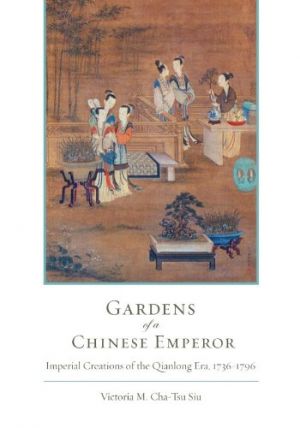 The Garden of Perfect Brightness (Yuanming Yuan) in the western suburbs of a Qing capital, Beijing, was begun by the great Kangxi emperor (r. 1661–1722), expanded by his son, the Yongzheng emperor (r. 1722–1736), and brought to its greatest glory by his grandson, the Qianlong emperor (r. 1736–1796). A lover of literature and art, the Qianlong emperor sought an earthly reflection of his greatness in his Yuanming Yuan. For many years he designed and directed an elaborate program of garden arrangements. Representing two generations of painstaking research, this book follows the Qianlong emperor as he ruled his empire from within his garden. In a landscape of lush plants, artificial mountains and lakes, and colorful buildings, he sought to represent his wealth and power to his diverse subjects and to the world at large. Having been looted and burned in the mid-nineteenth century by Western forces, it now lies mostly in ruins, but it was the world’s most elaborate garden in the eighteenth century. The garden suggested a whole set of concepts—religious, philosophical, political, artistic, and popular—represented in landscapes and architecture. Just as bonsai portrays a garden in miniature, the imperial Yuanming Yuan at the height of its splendor represented the Qing Empire in microcosm.
Victoria M. Siu (1935–2010), a member of the Religious of the Sacred Heart, U.S. province (RSCJ), held a Ph.D. from Georgetown University where her dissertation was on U.S.-Chinese relations.










 Enfilade
leave a comment