Exhibition | Giacomo Ceruti: On the Eve of the Enlightenment
Press release from Robilant-Voena:
Giacomo Ceruti (1698–1767): Popolo e nobiltà alla vigilia dell’età dei lumi
Robilant-Voena, Milan, 30 October — 13 December 2013
Curated by Francesco Frangi and Alessandro Morandotti
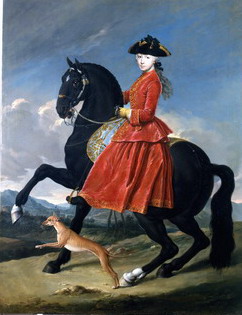 Robilant-Voena presenta nella sua sede milanese una mostra che indaga uno dei più grandi artisti del Settecento italiano: Giacomo Ceruti. Nell’occasione sarà possibile apprezzare un cospicuo nucleo di opere di questo protagonista della “pittura della realtà” lombarda, riscoperto a partire dagli anni venti del Novecento per merito degli studi di Roberto Longhi, Giuseppe Delogu, Giovanni Testori e Mina Gregori. Grazie ai prestiti di importanti collezioni private di formazione antica o recente, la mostra affiancherà a dipinti già noti da tempo, alcune tele finora sconosciute, che contribuiranno a mettere a fuoco i diversi aspetti del linguaggio di questo formidabile pittore.
Nato a Milano e precocemente trasferitosi a Brescia, Ceruti è infatti una personalità dal percorso articolato, che in una prima fase della sua carriera seppe imporsi come ritrattista dai vigorosi accenti realistici e soprattutto come attento indagatore della vita quotidiana delle classi sociali più disagiate. Molto spesso, infatti, le opere che l’artista realizza tra gli anni venti e i primi anni trenta del Settecento per la nobiltà bresciana hanno come protagonisti i cosiddetti pitocchi: mendicanti, vagabondi, filatrici, contadini e artigiani. Un mondo di emarginati e di umili lavoratori che, a differenza di quanto era avvenuto nella pittura dei decenni precedenti, Ceruti mette in scena senza ironia, conferendo anzi ai protagonisti una solenne dignità, cui contribuisce il formato monumentale dei dipinti. Questa propensione raggiunge i più alti risultati nel famoso ciclo di Padernello, la serie di tele pauperistiche che sancì la riscoperta dell’artista a partire dagli anni venti del Novecento.
Verso la metà degli anni trenta del Settecento Ceruti si sposta in terra veneta, lavorando tra Padova e Venezia dove ottenne importanti commissioni da uno dei più illustri collezionisti del tempo, il maresciallo Matthias von der Schulenburg. Il confronto con la cultura figurativa lagunare segna una cesura nel percorso di Ceruti, le cui conseguenze si faranno sentire per tutto il seguito della carriera dell’artista che, fatta eccezione per un soggiorno a Piacenza nel corso degli anni quaranta, si svolgerà in prevalenza a Milano, dove Ceruti morirà nel 1767.
In questa sua seconda stagione il pittore dimostra di privilegiare un linguaggio più elegante e raffinato, aggiornato sulle mode della coeva cultura figurativa europea. Così i suoi ritratti perdono la ruvida dimensione naturalistica degli anni giovanili per acquisire un tono mondano e internazionale, bene esemplificato in mostra dal Ritratto del Marchese Orsini a cavallo, proveniente dalla villa Orsini di Mombello di Imbersago. Lo stesso avviene per le scene di tema popolare, che sostituiscono ai toni drammatici degli esordi un registro più rasserenato, di cui è testimonianza l’idillio sentimentale rappresentato nell’Incontro al pozzo già parte della decorazione di palazzo Busseti a Tortona. Notevole è poi la serie di teste di carattere (Ritratto di fumatore in costume orientale; Vecchio con gatto; Vecchio con colbacco e cane) che fanno di Ceruti un grande interprete di quel genere pittorico mondano (e tipicamente settecentesco) molto amato a Venezia e in Francia. Questi trapassi stilistici lasciano comunque inalterato il dato saliente della poetica cerutiana, da riconoscere nella capacità di restituire le diverse realtà del proprio mondo con uno sguardo schietto e disincantato; una lucida razionalità di osservazione che rende Ceruti perfettamente in linea con la sensibilità dell’età dei lumi che si andava allora diffondendo in tutta Europa.
◊ ◊ ◊ ◊ ◊
Published by Skira, the catalogue is available from Artbooks.com:
Francesco Frangi and Alessandro Morandotti, Giacomo Ceruti (1698–1767): Popolo e nobiltà alla vigilia dell’età dei lumi (Milan: Skira, 2013), 96 pages, ISBN: 978-8857222547, $75. Italian text with English insert.
 Artista di spicco del Settecento italiano, Giacomo Ceruti detto “il Pitocchetto” è un importante protagonista della “pittura della realtà” lombarda, riscoperto a partire dagli anni venti del Novecento per merito degli studi di Roberto Longhi, Giuseppe Delogu, Giovanni Testori e Mina Gregori. Questo catalogo, che accompagna l’esposizione milanese, ripercorre la carriera artistica di Ceruti, a partire dagli anni bresciani, spesi sul binario di una ricerca realista, fino agli anni veneti e milanesi, quando il suo linguaggio diventa internazionale, e i pitocchi lasciano spazio ai ritratti nobiliari e alle teste di fantasia. Attraverso ventiquattro opere provenienti da prestigiose collezioni private oltre che dal patrimonio della galleria (alcune delle quali completamente sconosciute al pubblico e riscoperte in occasione della mostra), si vuole indagare questa dicotomia dell’opera di Ceruti, dove la realtà declinata nei suoi aspetti più poveri, fatta di storpi e mendicanti, stracci e polvere, si contrappone a un’eleganza di gusto internazionale, nella quale trionfano velluti e marsine.
Call for Papers | Art, Music, and Spectacle, 1400–1800
From the session Call for Papers for the 2014 Symposium on Medieval and Renaissance Studies:
Intersection of Art, Music, and Spectacle, 1400–1800
Second Annual Symposium on Medieval and Renaissance Studies, St Louis, 16–18 June 2014
Proposals due by 15 December 2013
Art, music, and spectacle in the Early Modern period intersect on multiple levels: sharing similar themes, formal characteristics, patrons, and artists; drawing on similar sources, from mythologies to religious texts; sharing the same physical space; and appealing to similar audiences—secular and sacred, public and private. Music and the visual arts also paralleled one another in their functions, creating avenues for developing national style, for codifying devotional practices, or for propagandistic positioning.
This panel seeks to open up a discourse on the intersection of music, spectacle, and the visual arts in order both to showcase the breadth of possibility for topics and to spark conversations between scholars interested in interdisciplinary studies. We invite presentation proposals from scholars at all levels (graduate students, as well as more advanced faculty) that address any type of connection between art, music, or spectacle in the Early Modern period. In addition to more traditional studies of patronage, iconography, and artistic collaboration, we welcome papers addressing more theoretical approaches, such as constructions of space, mnemonics and memory, sensory and phenomenological experience. The panel seeks to incorporate papers from a variety of disciplines—art history, musicology, theater and dance history, performative studies, etc.—and from a variety of geographic and historical periods.
Nicole N. Conti, nicolenconti@umn.edu
The complete call for papers is available here»
Call for Papers | The Gesamtkunstwerk for All Times and Places
Conference and Edited Volume | The Gesamtkunstwerk: A Concept for All Times and Places
University of Lisbon, 12–14 March 2014
Proposals due by 15 January 2014
 The Gesamtkunstwerk: A Concept for All Times and Places is integrated in the programme Art from a Global Perspective, which began in 2011 at the Artistic Studies Research Centre (CIEBA) of the Faculty of Fine Arts of the University of Lisbon (FBAUL).
The concept Gesamtkunstwerk (or total work of art) is defined by the universal, globalizing and totalizing nature of a work of art when it combines painting, sculpture, architecture, music, poetry and other arts. In the specific context of German Post-Romanticism, Richard Wagner (1813–1883) attempted to synthesize the work of art in a resounding combination between symphonic music, dramatic action in text interpretation and stage representation, through painting and sculpture, seeking to awaken in audiences subtle and deep emotions. Although the German concept Gesamtkunstwert was not originally used by Wagner, the eloquent way he refers to an ideal of unification of all art forms by means of theatrical representation presents the «consummation of the artwork of the future».
This conference seeks to rethink the concept of Gesamkunstwerk, analyzing the way artists before and after Wagner, in Europe and the World, combined different forms of art, establishing unequivocal relationships between concepts and materials. We aim at systematizing creative processes that rely on the transgression of the individualizing tradition of the art forms in favour of symbiotic mechanisms between visual arts, multimedia art, performative arts, popular arts, and “primitive” arts. This conference seeks to put into perspective theoretical and practical models of synthesis of arts patent in the several cultural contexts all over the world.
In the context of the Gesamtkunstwerk, beyond these issues, it is important to examine not only the synthesis models of artistic forms, but also textual and visual references often aggregated by works of art. Discussion themes include, although are not limited to:
• Contextualization of historical and aesthetic reflection on the concept Gesamtkunstwerk
• Coalescence of visual arts, performance arts, multimedia art, popular art, and “primitive” arts
• The Gesamtkunstwerk in the context of architecture: Design for the Total Building
• Film as synthesis of poetics, performance, music, and photography
• The impact of globalization in the combination of art forms
• Collaborative art
• Anthropophagy as an aesthetic procedure (adaptation and appropriation of styles and artistic forms by other artists, of others works or other cultures)
• Museums and exhibition programming as unifying element of art forms (exhibition and curatorial harmonization of different art forms, settings and interactions between the museum’s architecture programme and museum practice)
• Decorative Arts: application and ornament (decorative arts as an expression of the combination of different forms of art, collaboration between artists – woodcarvers, designers, goldsmiths, painters,
sculptors, upholsterers, etc.)
• Appropriation and Remediation (analysis of processes of artistic recreation, especially via digital art;
• Modern and contemporary perspectives on the Gesamtkunstwerk (extensions of the notion of the Gesamtkunstwerk in Modernism and the contemporary world
• New definitions for the notion of Gesamtkunstwerk
• Questions suggested by installation and the notion of place
• Pastiche and the reinvention of the work of art
We particularly encourage the submission of proposals that crosscut cultural contexts, present diachronic perspectives or establish relationships between different universes. Submissions for a 20-minute presentation and/or edited volume should be forwarded to the Scientific Committee, which will proceed to a peer review. Submissions should be sent by email to agp@fba.ul.pt until 15th January 2014, with CFP Gesamtkunstwerk as subject message. The abstract should only include title and a maximum of 500 words. The abstract must be accompanied by a different file with a curriculum vitae (maximum: 1 page) that includes personal identification elements, the submission title, academic affiliation, and a selection of a maximum of 5 bibliographic references. Notification of acceptance will be announced until 15th February 2014. Papers accepted for the conference will be published in a volume. The committee may accept proposed papers only for the edited book. For further information, please send an email to agp@fba.ul.pt.
Organization
Artistic Studies Research Centre, University of Lisbon (CIEBA/FBAUL)
Co-ordination
Rui Oliveira Lopes, PhD (CIEBA/FBAUL)
Fernando António Baptista Pereira, PhD (CIEBA/FBAUL)
Maria João Ortigão, PhD (CIEBA/FBAUL)
Fernando Rosa Dias, PhD (CIEBA/FBAUL)
Working Languages
English / Portuguese
Forthcoming Book | The Curious Mister Catesby

◊ ◊ ◊ ◊ ◊
From the Catesby Commemorative Trust:
The University of Georgia Press has just advised that it is enthusiastically going to publish The Curious Mister Catesby: A ‘Truly Ingenious’ Naturalist Explores New Worlds (expected publication of December 2014). While accessible to the interested general reader, it will be to a technical standard that is usable academically. Containing significant new information, this work is intended to be the most comprehensive and accurate book written about Catesby and is the legacy of the Catesby Commemorative Trust’s Mark Catesby Tercentennial symposium in 2012.
Proposed Table of Contents
• E. Charles Nelson (FLS, Editor and author, Wisbech, UK): “The truly honest, ingenious, and modest Mr. Mark Catesby, F. R. S.” – documenting his life
• Cynthia Neal (Film producer and director, Nashville): Behind the scenes – Catesby, the man, viewed through the lens of a camera
• Karen Reeds (Independent scholar, Princeton): Mark Catesby’s botanical forerunners in Virginia
• Diana and Michael Preston (Authors, London): William Dampier (1651–1715): the pirate of exquisite mind
• Kay Etheridge (Professor, Gettysburg College, PA) and Florence F. J. M. Pieters (University of Amsterdam): Maria Sibylla Merian: pioneering naturalist, artist, and inspiration for Catesby
• Marcus B. Simpson, Jr (Wake Forest University, Winston Salem, NC): John Lawson’s A new voyage to Carolina and his “Compleat History”: the Mark Catesby connection
• Janet Browne (Professor, Harvard University): Mark Catesby’s world: England
• Sarah Meacham (Associate Professor, Virginia Commonwealth University): Mark Catesby’s world: Virginia
• Suzanne Linder Hurley (Historian and author, Davidson, NC): Mark Catesby’s Carolina Adventure
• Robert Robertson (Curator Emeritus, Philadelphia Academy of Natural Sciences): Mark Catesby’s Bahamian natural history (observed in 1725-1726)
• Henrietta McBurney (formerly Deputy Keeper, Royal Library, Windsor Castle): Mark Catesby’s preparatory drawings for his Natural history of Carolina, Florida and the Bahama islands
• Leslie K. Overstreet (Curator, Smithsonian Institution Libraries, Washington, D.C.): The publication of Mark Catesby’s Natural history of Carolina, Florida and the Bahama islands
• Stephen A. Harris (Oxford University, UK): The plant collections of Mark Catesby in Oxford
• Charles E. Jarvis (Natural History Museum, London): Linnaeus and the influence of Mark Catesby’s botanical work
• Hardy Eshbaugh (Professor Emeritus, Miami University, OH): The economic botany and ethnobotany of Mark Catesby
• Shepard Krech III (Professor Emeritus, Brown University, RI): Mark Catesby’s “Of birds of passage”
• Aaron M. Bauer (Professor, Villanova University, PA): Catesby’s science: zoology (other than ornithology) in The natural history of Carolina, Florida and the Bahama islands
• Kraig Adler (Cornell University): Catesby’s fundamental contributions to Linnaeus’s binomial catalogue of North American animals
• Mark Laird (Adjunct Professor, Harvard University): Mark Catesby’s plant introductions and English gardens of the eighteenth century
• Judith Magee (Natural History Museum, London): Following in the footsteps of Mark Catesby
• Ghillean T. Prance (FRS, Technical Director, the Eden Project, UK): Inspiration from Mark Catesby’s natural history
• David J. Elliot (FLS, Associate Editor and author, Seabrook Island, SC): Conclusions: The Account, Appendix, Hortus and other endings among Mark Catesby’s work.
• James L. Reveal (Adjunct Professor, Cornell University): Identification of the plants and animals illustrated by Mark Catesby for his Natural History of Carolina, Florida and the Bahama Islands
A Bibliography for Mark Catesby
Indexes
Exhibition | Cleopatra’s Needle
Press release (20 November 2013) from The Met:
Cleopatra’s Needle
The Metropolitan Museum of Art, New York, 3 December 2013 — 8 June 2014
Curated by Diana Craig Patch with Dieter Arnol and Janice Kamrin
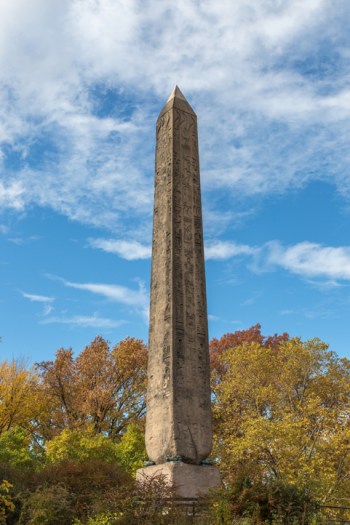 Since 1881, an ancient Egyptian monument—the obelisk of Pharaoh Thutmose III, popularly known as “Cleopatra’s Needle”—has stood in New York’s Central Park, a gift to the City of New York from the khedives of Egypt. It is the only monumental obelisk from ancient Egypt in the United States. The obelisk can be seen from several vantage points within The Metropolitan Museum of Art, which is located nearby. As the Central Park Conservancy begins to develop a plan to conserve the monument, the Metropolitan Museum will present an exhibition about the construction and evolving symbolism of obelisks from antiquity to the present day.
Cleopatra’s Needle will feature objects from the Museum’s Egyptian Art Department and a selection of prints, textiles, and other works of art from the departments of Drawings and Prints, European Paintings, European Sculpture and Decorative Arts, Photographs, and The American Wing. Nine additional works from the Brooklyn Museum, American Numismatic Society, Chancellor Robert R Livingston Masonic Library of Grand Lodge, Museum of the City of New York, Cooper-Hewitt National Design Museum, and private collections, most of which are seldom on display, will also be included. A highlight of the installation will be a dramatic time-lapse video of the obelisk in Central Park taken during the course of a day.
Obelisks originated in ancient Egypt and—like statues—were intended to house divine powers, even the spirit of a king or god. They were placed at the entrance of temples and tombs, where their presence was believed to radiate protection. The obelisk was a solar symbol and its soaring form connected the earth to the sky. Its tip, often sheathed in gold to suggest the sun, was a pyramidion, a shape sacred to Re, the sun god. The exhibition will include a five-foot-high obelisk from the entrance to an ancient Egyptian mortuary chapel devoted to sacred rams.
The obelisk in Central Park is one of a pair—each of which has come to be called “Cleopatra’s Needle”—originally installed by Thutmose III (r. ca. 1479–1425 B.C.) in front of the sun temple in Heliopolis, the ancient Egyptian city dedicated to the sun god Re. Over time, both obelisks toppled. Discoloration indicates that they may have also been burned in antiquity, and that exposure to the elements eroded some of the hieroglyphs. Augustus Caesar (63 B.C.–14 A.D.) took the two obelisks to Alexandria and installed them at the Caesareum, the temple built by Cleopatra VII to honor the deified Julius Caesar. (This episode may explain how the name of Cleopatra became attached to these two obelisks.) The Romans recognized the solar imagery of obelisks and connected them to their own sun god, Sol. For Augustus, the link may have been personal as well, since Apollo, another Roman sun god, was his patron deity. Included in the exhibition will be a late 16th-century map and a late 17th-century Dutch watercolor, both showing the obelisk standing in Alexandria.
Egypt became a province of Rome under Augustus Caesar, and many artifacts—including numerous obelisks—were taken from Egypt to Rome. Some four centuries later, when Rome was sacked and the Roman Empire fell, all but one of the obelisks toppled, victims of vandalism or earthquakes, and were buried and forgotten.

Giovanni Battista Piranesi, The Piazza della Rotonda, with the Pantheon and Obelisk (Veduta della Piazza della Rotonda), etching,
ca. 1751 (New York: The Metropolitan Museum of Art)
The rediscovery of these objects during the Renaissance renewed popular interest in antiquities. Several popes organized new building projects in Rome around the ancient Egyptian monuments. There, obelisks were often placed at the center of public squares, such as the one in front of St. Peter’s Basilica. Domenico Fontana (1543–1607), an engineer in the service of Pope Sixtus V, raised at least four obelisks in public places. Through this connection with the Vatican, the obelisk became a symbol of eternal papal power. The exhibition will include drawings by Giovanni Battista Piranesi (1720–1778) that show obelisks in the Piazza della Rotonda and Piazza del Popolo.
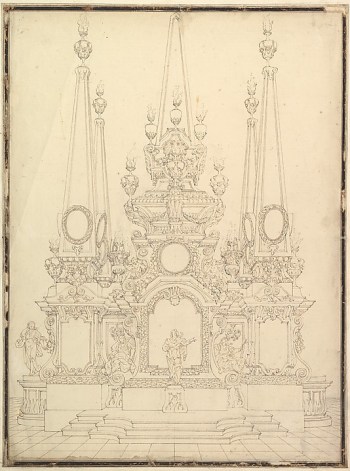
Workshop of Giuseppe Galli Bibiena, Elevation of a Catafalque: Four Large Obelisks at the Corners with Large one Surmounting the Top, drawing, ca. 1720–40 (New York: Metropolitan Museum of Art)
Obelisks continued to be regarded as powerful symbols of an ancient civilization, and scholars in Europe began to study their inscriptions in the 16th and 17th centuries to understand the secret knowledge they believed obelisks held. The monuments were used in drawings and paintings to indicate a connection to antiquity, establish a harmonious landscape, or communicate the concept of eternity. Not only were obelisks used in landscape scenes—as in the drawings of Rembrandt or Francesco Guardi on view in the exhibition—but also in actual funerary monuments where the connection to eternity was most important. An example is the catafalque designs of the Italian theatrical designer Giuseppe Galli Bibiena (1696–1757).
The association between obelisks and eternity remained widely accepted, and obelisk forms began to be used as tomb markers in the early 18th century in America. A silk painting by a Connecticut schoolgirl shows such a tomb marker. The obelisk form also became a popular for war memorials, as recorded in a photograph of the General William Jenkins Worth Monument located on Fifth Avenue in New York City.

Ferdinando Galli Bibiena, Design for a Stage Set: Semi-Circular Architectural Ruins, Fountains, and an Obelisk, drawing (New York: Metropolitan Museum of Art)
In the late 19th century, after Khedive Ismail offered the United States the obelisk of Thutmose III as a gift, U.S. Navy engineer Lieutenant-Commander Henry Honeychurch Gorringe (1841–1885) was charged with the task of transporting the monument to New York and installing it in Central Park. He studied drawings made of Fontana’s earlier work—one of which will be on display—to learn how the feat had been accomplished in earlier times. Gorringe successfully lowered the obelisk in Alexandria, Egypt and loaded it after some difficulty into the hold of his ship the S.S. Dessoug.
Unloading the monument in New York was no easy task. It took nearly six months to move the obelisk from the dock in Staten Island to the East River at 96th Street, and finally to Central Park. On October 9, 1880, a crowd of 9,000 Freemasons led a parade to Central Park for a cornerstone ceremony for the foundation platform of the obelisk, which had also been brought from Egypt. The baton carried in that parade by the Grand Secretary of the New York Grand Lodge Edward M. L. Ehlers will be on view in the exhibition. On January 22, 1881, after months of effort, the obelisk reached its destination, Greywacke Knoll in Central Park. Gorringe carried out his task perfectly and the obelisk rose into position. He received a gold medal to commemorate his amazing feat.
Exhibition Credits
The exhibition was organized by Diana Craig Patch, Lila Acheson Wallace Curator in Charge, with Dieter Arnold, Curator, and Janice Kamrin, Associate Curator, of the Museum’s Egyptian Art Department. Exhibition design is by Brian Cha, Exhibition Design Associate; graphics are by Constance Norkin, Graphic Design Manager, with James Vetterlein, Associate Graphic Designer; lighting is by Clint Ross Coller and Richard Lichte, Lighting Design Managers, all of the Museum’s Design Department. The exhibition is made possible by Dorothy and Lewis B. Cullman.
Call for Papers | Artistic Practice and the Medical Museum, 1600–2014

Image credits available at the conference website.
◊ ◊ ◊ ◊ ◊
Collect, Exchange, Display: Artistic Practice and the Medical Museum
MacRae Gallery, Hunterian Museum of the Royal College of Surgeons, London, 6 June 2014
Proposals due by 15 January 2014
For hundreds of years, medical collections have been sites of medical and artistic exchange. Not only were many of their contents created by artists and physicians, but the collections were also often compiled by doctors, who were themselves artistes manqués. Although medical museums have recently received attention in museological and historical studies, they remain relatively ignored within art historical scholarship.
This one-day conference will look at the anatomical, pathological or medical museum from the perspectives of art history and visual culture. Artists have utilised these spaces for the study of anatomy and pathology—as well as for ideas and inspiration—but what do we know about the artists, photographers and craftsmen and women who have
worked within the museum? How can we theorise the collecting practices of the doctors who founded and/or ran these museums? What influence did these spaces and their contents have on artistic practice, visual representation and the writing of art and medical histories? How does the medical museum continue to play a role in contemporary art-making and medical learning? From the wax modelers to the commissioning physicians to the painters and sculptors who were inspired by its contents, this conference will spark a dialogue about the artistry of the medical museum. We encourage papers on all visual aspects of the medical museum in any country from the seventeenth century to the present, and welcome papers from artists, curators and scholars from any discipline, as well as medical professionals. We anticipate publishing a selection of papers from the conference in an edited anthology.
Paper Proposals are due by 15 January 2014. Please send a 250-word abstract, along with a short CV (no more than two pages), to the conference organisers:
• Dr Natasha Ruiz-Gómez, Lecturer in Art History in the School of Philosophy and Art History at the University of Essex, natashar@essex.ac.uk
• Dr Mary Hunter, Assistant Professor of Art History in the Department of Art History and Communication Studies at McGill University, Mary.Hunter2@mcgill.ca
This conference has been generously funded by the Wellcome Trust.
Exhibition | The Age of Pleasure and Enlightenment
From the museum’s website:
The Age of Pleasure and Enlightenment
Wadsworth Atheneum Museum of Art, Hartford, Connecticut, 10 August 2013 — 27 April 2014

Pompeo Batoni, Portrait of Sir Humphry Morice, 1762 (Hartford, CT: Wadsworth Atheneum Museum of Art)
European art of the 18th century increasingly emphasized civility, elegance, comfort, and informality. During the first half of the century, the Rococo style of art and decoration, characterized by lightness, grace, playfulness, and intimacy, spread throughout Europe. Painters turned to lighthearted subjects, including inventive pastoral landscapes, scenic vistas of popular tourist sites, and genre subjects—scenes of everyday life. Mythology became a vehicle for the expression of pleasure rather than a means of revealing hidden truths. Porcelain and silver makers designed exuberant fantasies for use or as pure decoration to complement newly remodeled interiors conducive to entertainment and pleasure.
As the century progressed, artists increasingly adopted more serious subject matter, often taken from classical history, and a simpler, less decorative style. This was the Age of Enlightenment, when writers and philosophers came to believe that moral, intellectual, and social reform was possible through the acquisition of knowledge and the power of reason. The Grand Tour, a means of personal enlightenment and an essential element of an upper-class education, was symbolic of this age of reason.
The installation highlights the museum’s rich collection of 18th-century paintings and decorative arts. It is organized around four themes: Myth and Religion, Patrons and Collectors, Everyday Life, and The Natural World. These themes are common to art from different cultures and eras, and reveal connections among the many ways artists have visually expressed their cultural, spiritual, political, material, and social values.
23 Things for Research: Teaching with Digital Tools
For anyone thinking about introducing digital tools into the classroom in connection with structured assignments, you might find this model from Oxford’s Bodleian Library useful. -CH
◊ ◊ ◊ ◊ ◊
23 Things for Research
An online learning programme for researchers, students and staff at the University of Oxford
 23 Things is a self-directed course, run as part of the Engage programme, that aims to expose you to a range of digital tools that could help you in your personal and professional development as a researcher, academic, student or in another role. The aim is for you to spend a little time each week over Michaelmas Term, building up and expanding your skills. Each week, we’ll talk about one or more of the tools/tasks from our 23 Things programme and encourage you to try it out and reflect on it. We hope that the programme presents a realistic challenge and will allow you to fit it into your schedule. 23 Things for Research is inspired by the first 23 Things Oxford and based on the original 23 Things program, which ran at the
Public Library of Charlotte & Mecklenburg County in the USA in 2006.
Continue reading here»
At Auction | Passover Haggadah from 1726
The story of this recently discovered manuscript was featured at The Antiques Trade Gazette back in September and then at the BBC in October; but it has received lots of attention over the past few days after being featured in The Daily Mail and The Independent. It’s estimated to fetch between between £100,000 and £150,000.
Update (added 24 November): As reported by the Manchester Evening News, the Haggadah fetched £210,000.
Silver, Judaica, Jewellery, and Watches Sale
Adam Patridge Auctioneers, Macclesfield, 22 November 2014
 In July 2013 this important Haggadah was found in a routine house contents valuation. It will be offered for auction on the 22nd November at The Cheshire Saleroom as part of a specialist one day auction of Judaica, Silver, Jewellery & Watches.
A rare and important 18th-century Passover Seder Haggadah, written and illuminated on vellum by Aaron Wolff Shreiber Herlingen of Gewitsch, Pressberg, 5486 [1726 CE]. The pictorial title border depicts Aaron and Moses and is inscribed in Hebrew “Written by Aaron son of Benjamin Wolff 1726 for Mendel Oppenheimer. This Aaron was a friend of Moses Mendelsohn.” Aaron Wolff Herlingen was active 1721–1755 and held the position of official scribe at the Imperial Library in Vienna.
Original Viennese red-dyed vellum binding over pasteboard, 20-leaf, each 242mm x 162mm, containing 45 coloured vignettes of 27mm x 45mm and 11 coloured vignettes of 77mm x 120mm. Slight food and wine staining throughout.
It is thought that the manuscript was commissioned to mark the birth of Emanuel Mendel Oppenheimer (1726–80), the first child of Samuel Emanuel Oppenheimer of Vienna and a close descendant of the great banker and imperial court diplomat Samuel Oppenheimer (1630–1703).
Provenance: This was inherited by the current vendor in 2007. It has been in the family for over 100 years.
Call for Papers | The Enlightened Image: History and Uses of Projection
From ArtHist:
The Enlightened Image: History and Uses of Projection
Université du Québec à Montréal, 22–24 May 2014
Proposals due by 6 January 2014
The purpose of this conference is to reflect on the issues concerning the projection of still images as this way of presenting images, used by museums and universities, plays an increasingly important role in the visual landscape. A projection can be part of an exhibition by artists or curators, its vocation can be recreational or educational, in any situation, the projection still monumentalises the image, which is placed in the heart of a collective experience. Thus, from the early development of magic lanterns in the middle of the seventeenth century, the intermedial transposition has made the projection dedicated to the collective use of the image and gives it a status of mediator to the public.
The sharing of images provided by the projection is transformative: the projection dematerializes images, distances them, changes their scales and proportions, makes them ephemeral, etc. The projection also affects the way images are perceived in particular by focusing its iconicity at the expense of its texture. All these mutations influence how the projected image is received and creates perceptual habitus. The new visual literacies, which inaugurated the conception of numeric screens and their uses, seem to have been initiated by the luminosity of the projected image. Microsoft PowerPoint, for instance, borrows the word ‘slides’ from projection lexicon.
The aim of this conference is to investigate the issues concerning the intermedial transposition operated by projection in order to understand what projection does to the image, how it is used, perceived and its received. These questions will be investigated through a long historical period (from the eighteenth century to today), to build a cultural history of the projection including the paradigm, rather than considering the projection as a pre-cinematographic phenomenon. By tracing the genealogy of techniques dedicated to the exhibition of images, the conference will outline the anchoring of the transition between a print culture and a screen culture.
The expected contributions will explore various aspects of the projection and its history through specific cases (exhibitions, art history lectures, etc.), narratives or representation of projections (advertising posters, scenes in novels, etc.), specific relationships between projection and print, photography or soundscape, technical
developments (Kodachrome, e-readers, etc.) or metaphorical uses of the word ‘projection’ (psychoanalysis, etc.).
Organised by Joanne Lalonde, Vincent Lavoie and Érika Wicky (Department of Art History, UQAM), this conference is held under the auspices of RADICAL (Repères pour une articulation des dimensions culturelles, artistiques et littéraires de l’imaginaire contemporain), a component of FIGURA, centre de recherche sur le texte et l’imaginaire. A 300-word proposal in English or in French, with a brief CV, should be submitted by the 6th January 2014 to wicky.erika@uqam.ca.










 Enfilade
leave a comment